
How Customer Data Platforms (CDPs) Power Growth in the Retail Sector

Post
Insights

How Customer Data Platforms (CDPs) Power Growth in the Retail Sector

Have you ever wondered why, despite collecting vast amounts of customer data, your marketing campaigns still miss the mark?

You’re not alone. 44% of marketers say they struggle with fragmented data scattered across multiple databases, making it nearly impossible to deliver the kind of personalised experiences customers now expect. Many retailers struggle with fragmented information spread across various channels that prevents them from seeing a clear, unified picture of their customers. Without that single view, opportunities for stronger loyalty, smarter promotions, and more informed decision-making are often lost.

This is where a Customer Data Platform (CDP) comes in. A customer data platform for retail businesses solution centralises, unifies, and manages customer data from multiple sources to create comprehensive customer profiles. In the retail sector, it provides businesses with a complete view of their customers, enabling more targeted marketing, improved retention, and sustainable growth. By working with unified data, retailers can strengthen engagement and loyalty programmes while ensuring every interaction feels more relevant.

How CDPs Benefit the Retail Sector

Retailers today generate huge amounts of data from websites, mobile apps, loyalty schemes, email campaigns and in-store systems. Without a way to bring this data together, valuable insights remain hidden and customer experiences stay fragmented.

A retail CDP solves this challenge by serving as a central hub that gathers customer data from every online and offline touchpoint.  This includes online purchases, point-of-sale transactions, customer support interactions, social engagement and third-party sources. It then organises, cleans and unifies this information into individual customer profiles, and forms a unified customer view that serves as a reliable source of truth for marketing and engagement

With the rise of AI-driven personalisation and tighter privacy regulations, building this unified data foundation is no longer optional, it’s now the cornerstone of competitiveness. Retailers that embrace a unified retail data strategy through a modern, omnichannel-capable CDP can unlock richer insights, deliver consistent engagement across channels, and ensure compliance without sacrificing personalisation.

This process matters because it creates a single, accurate source of truth about each customer. Retailers can see patterns that would otherwise go unnoticed, such as repeat purchasing behaviour or signs that a customer may be about to leave. With this clarity, marketing and operations teams can plan actions based on real evidence rather than guesswork.

The benefits extend beyond marketing teams. Product managers gain a clearer view of demand trends, helping them choose which products to stock or promote. Customer service teams can personalise support by accessing a customer’s complete history. Senior decision-makers can forecast more accurately and allocate budgets more effectively.

In short, a Customer Data Platform for retail businesses doesn’t just store data, it transforms scattered information into actionable intelligence. This unified approach allows retailers to deliver more relevant offers, strengthen loyalty programmes, reduce churn and make smarter operational decisions across the business.

Overcoming CDP Implementation Challenges in Retail 

Even with the right strategy, implementing a CDP e-commerce solution can be challenging when deeper organisational silos exist. Data is often scattered across regions, systems, and teams, the result of years of growth without clear integration or governance. This leads to inconsistent data quality, duplicated records, and fragmented customer journeys that limit the effectiveness of the CDP solution.

Technology alone cannot fix data silos. The real issue often lies in alignment between marketing, IT, and operations. A successful retail CDP strategy depends on collaboration and shared ownership of data governance, ensuring every department contributes to and benefits from a unified customer view.

When these problems are identified early, retailers can take proactive steps to address them before they affect performance. This may include setting clear data standards, developing a cross-department integration plan, and selecting a CDP service that can connect seamlessly to existing systems. Early action makes it far easier to ensure a smooth rollout and minimise disruption.

If the issues are discovered later, such as when campaigns begin to underperform or customers start receiving inconsistent messages, recovery is still possible. It typically involves a structured clean-up phase where data is audited, duplicate records are removed, and a phased integration approach is implemented. The key to long-term success is a strong data governance framework that aligns IT, marketing, and operations teams around a shared goal of delivering consistent, personalised experiences.

Regardless of timing, there are three essential steps to overcoming these challenges:

  • Choose a scalable CDP that supports multiple data sources.
  • Strengthen collaboration to improve accuracy and trust.
  • Enforce privacy and compliance to maintain customer confidence.

Together, these steps represent retail CDP integration best practices that turn data challenges into strategic advantages.

Key CDP Use Cases in Retail

1. Personalised Marketing Campaigns

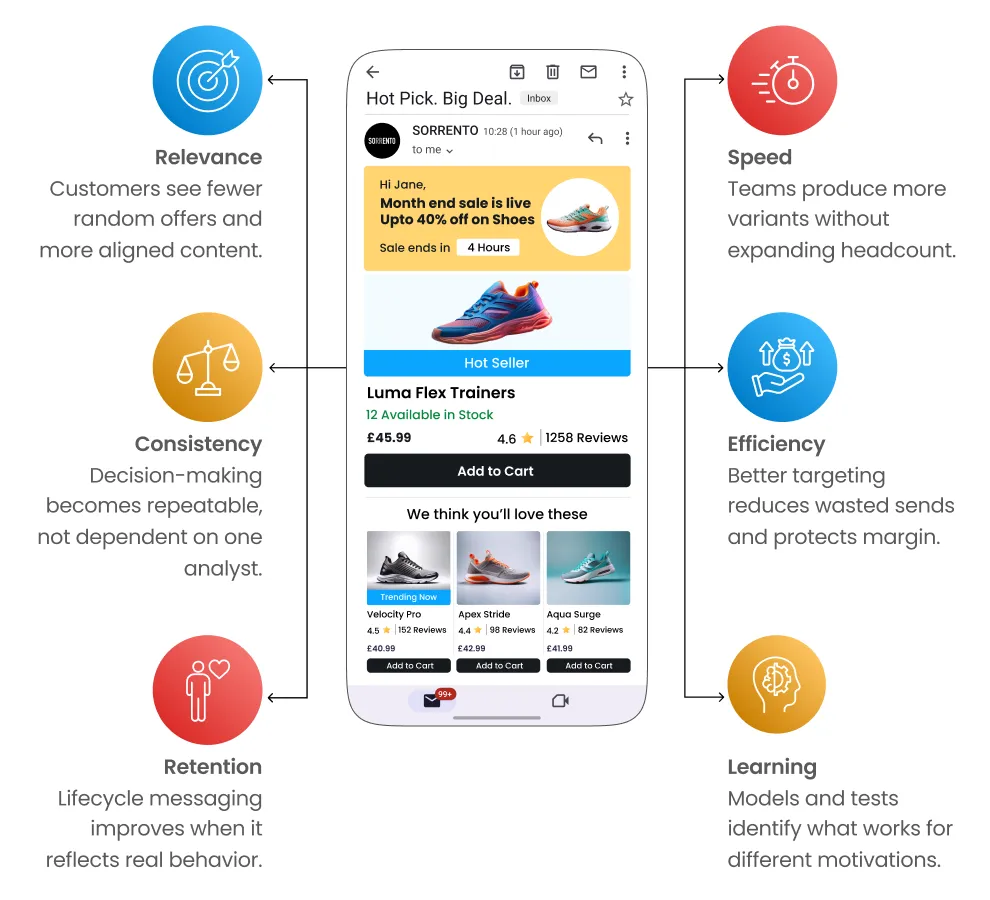
How it works: A CDP gathers purchase history, browsing behaviour and customer preferences from every channel and builds a unified profile for each shopper. This data allows marketing teams to craft messages, offers and promotions that directly match what individual customers are most likely to respond to.

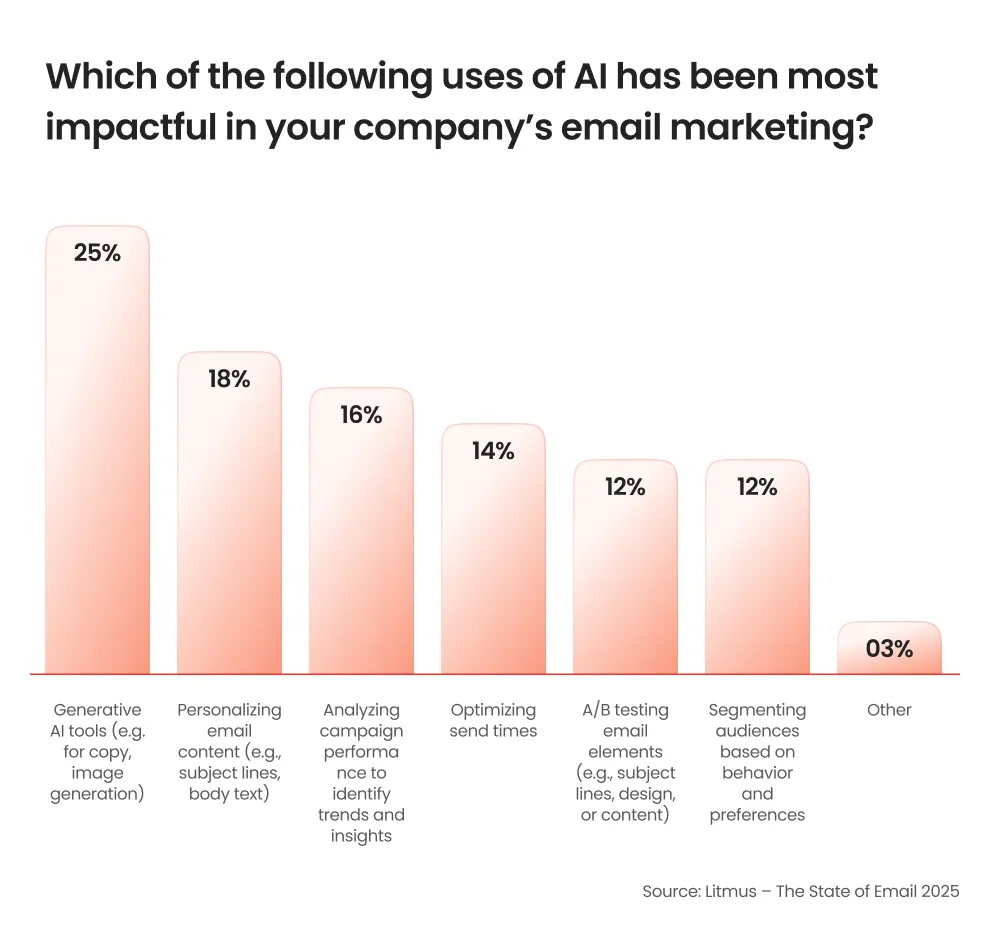
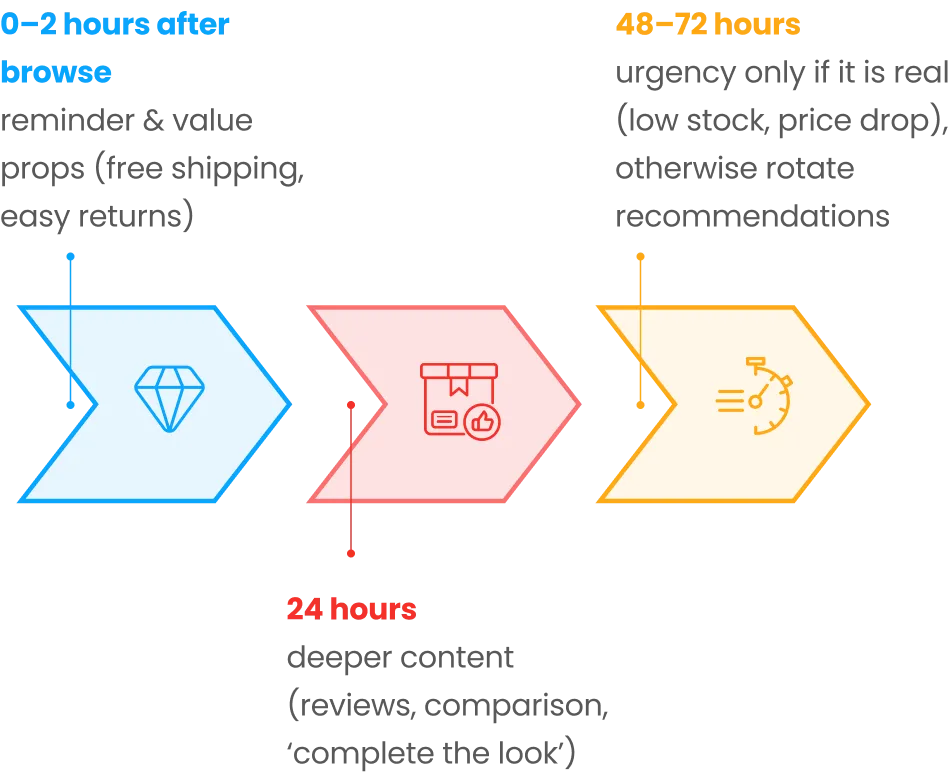
Example: A fashion retailer can identify customers who frequently browse but rarely buy, then send them targeted discounts on the items they view most often. With AI-powered insights from CDPs”, these campaigns can also be automated and optimised in real time, improving conversion rates and reducing ad waste.

2. Omnichannel Customer Engagement

How it works: By combining data from physical stores, e-commerce sites, mobile apps and email, a CDP creates a consistent customer identity across all channels. This makes it possible to deliver the same message and level of service regardless of where the customer interacts.

Example: A homeware brand uses its CDP to recognise a customer who browses products online and then visits the store. Staff can instantly access the customer’s browsing history and recommend matching items in person, creating a seamless shopping experience.
3. Loyalty and Rewards Optimisation

How it works: A CDP analyses loyalty programme data alongside purchase behaviour and engagement patterns. This enables retailers to adjust reward tiers, timing and incentives based on what motivates each customer segment.

Example: A supermarket chain notices that a group of customers regularly buy premium products but rarely redeem loyalty points. By offering tailored double-point promotions on those items, it encourages repeat spending and deeper loyalty.

4. Product Recommendations and Upselling

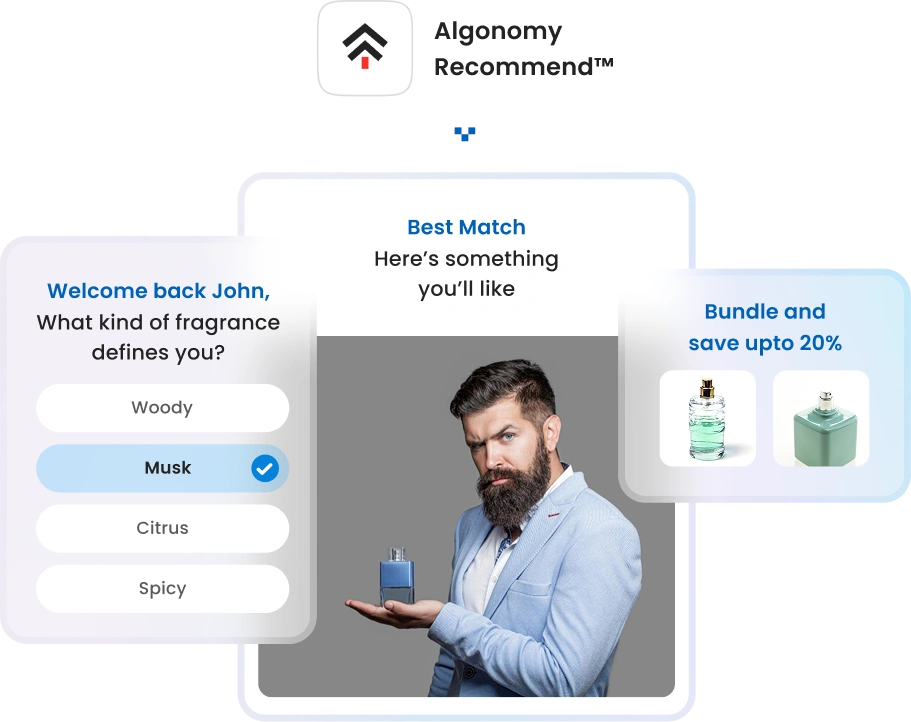
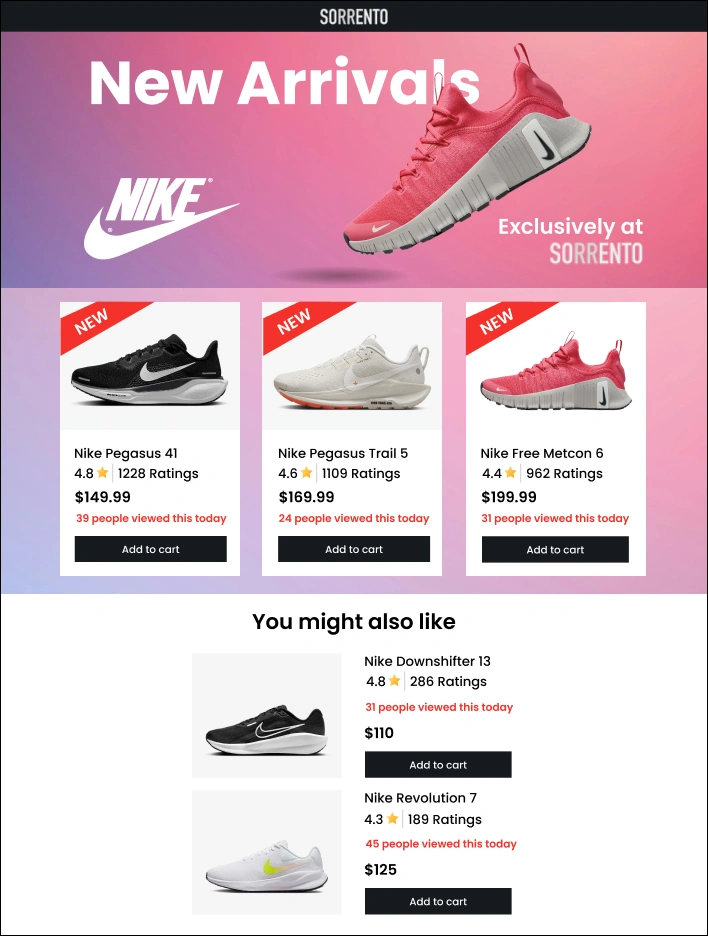
How it works: Using real-time behavioural data, CDPs generate product suggestions linked to each customer’s purchase history and interests. These insights can be applied online, in email campaigns or even in-store via staff devices.

Example: An electronics retailer can automatically recommend compatible accessories after a customer buys a new phone. AI-enabled product recommendation engines with CDPs can refine suggestions with every interaction, maximising relevance and upsell opportunities.

5. Customer Segmentation for Targeted Offers

How it works: A CDP allows for dynamic segmentation by blending demographic, transactional and behavioural data. Retailers can quickly identify high-value groups, new customers or at-risk segments and address each with a specific marketing message.

Example: A beauty brand uses its CDP to create a segment of customers who purchased skincare products within the last three months. It then sends those customers a personalised trial offer for a new complementary product, resulting in higher take-up rates.

6. Reducing Churn with Predictive Analytics

How it works: Some CDPs include predictive models that flag customers likely to reduce their spending or leave entirely. Retailers can then take proactive measures to re-engage them.

Example: A subscription box company sees that a segment of customers has reduced their order frequency. With an AI-powered CDP, it automatically triggers a personalised offer to re-engage the group, improving retention and protecting revenue.

7. Inventory and Demand Planning Insights

How it works: By analysing aggregated purchase patterns and customer interest trends, a CDP can reveal which products are gaining or losing popularity. This helps retailers plan stock levels and forecast demand with greater accuracy.

Example: A sports retailer notices through its CDP that a new line of trainers is trending among a certain age group before sales peak. It increases orders in time to meet the surge in demand, reducing stockouts and lost sales.

Real-World Example: How Zalora Uses Data to Power Retail Success

A strong example from Southeast Asia is Zalora’s Southeast Asia Trender Report 2022. As one of the region’s leading online fashion retailers with over 59 million monthly visits, Zalora taps into extensive customer transaction and behavioural data collected through its platform. It uses these insights to help brands understand shifting preferences, purchase behaviour and emerging retail trends across diverse, mobile-first markets.

This data-driven approach powers hyper-personalisation, targeted marketing and accurate trend forecasting, illustrating how a unified view of customer data can drive better experiences and stronger results. The report is publicly available and offers a clear example of how Asian retailers are already using integrated data to transform marketing and customer engagement, even if they do not specifically refer to it as a CDP. For retailers seeking a customer data platform case study, it serves as a strong demonstration of what effective data integration can achieve.

As more Southeast Asian retailers adopt CDP frameworks, the competitive advantage will shift from access to insight, from who has data to who uses it best.

Mapping Out a CDP Strategy for Retail

Retailers that successfully embed a CDP into their operations often see transformational results. By moving from scattered, inconsistent information to a unified customer view, they are able to deliver experiences that feel personal at scale, strengthen loyalty programmes, and make smarter inventory and marketing decisions. In highly competitive markets, this capability can be the difference between incremental growth and a real step change in performance.

To achieve this, retailers need more than just the technology. They need a clear, deliberate strategy. A CDP is most effective when it is aligned with the business’s wider objectives and supported by consistent processes across departments. When implemented correctly, it becomes not only a source of customer insights but also a driver of operational efficiency and long-term value.

The most successful approaches typically follow four key steps:

  • Define clear goals linked to business priorities. Start by identifying what you want the CDP to achieve, such as increasing customer lifetime value, improving campaign effectiveness or gaining better demand forecasts. Goals provide a benchmark for measuring success.
  • Integrate customer data from all relevant sources. Bring together data from online and offline interactions, loyalty schemes, support channels and third-party sources. Make sure the data is accurate, complete and compliant with privacy regulations to ensure the insights are reliable.
  • Use insights to execute personalised campaigns and consistent engagement across channels. With a unified customer view, marketing teams can deliver offers and content that resonate, while customer service teams can provide informed support across every touchpoint.
  • Continuously measure results and refine tactics using real-time analytics. Monitoring outcomes allows you to adapt campaigns, optimise incentives and adjust operations to maintain impact over time.

Conclusion

Retailers that follow these steps can expect tangible benefits: higher conversion rates, stronger repeat purchase behaviour, more effective loyalty programmes and better demand planning. Over time, a CDP strategy can shift customer relationships from transactional to truly personalised, creating a competitive advantage that is difficult for others to replicate.

True transformation does not come from adding another system. It happens when data, people, and purpose work in alignment. Retailers that establish clear objectives, enforce strong data governance, and activate insights in real time will define the next era of customer experience.

The future of retail growth will belong to those who use better data and make it unified, governed, and AI-ready.


At ADA, our AI-Powered Customer Data Platform solutions help retailers integrate, govern and optimise their data so they can deliver measurable results from day one.

By taking this step now, retailers can move from fragmented data and missed opportunities to a future of stronger loyalty, higher growth and truly personalised customer experiences.

Get in touch with ADA today.

ADA and Opptra Partner to Bring Hasbro and Other Powerhouse Global Consumer Brands to Asia’s Ecommerce Market

Post
News

ADA and Opptra Partner to Bring Hasbro and Other Powerhouse Global Consumer Brands to Asia’s Ecommerce Market

ADA partners with Opptra to bring Hasbro and global brands into SEA’s ecommerce market, combining AI insights with regional expertise for scale. Learn more!

Singapore, 10 October 2025 – ADA, the leading independent Data and AI company and Asia’s largest integrated digital commerce player, has partnered with Opptra, a global commerce company enabling the expansion of leading consumer brands into Asia. The strategic collaboration has already brought Hasbro, one of the world’s most iconic toy and entertainment brands, into Southeast Asia’s fast-growing ecommerce market, with many more global powerhouse brands soon to follow, accelerating their digital-first growth across the region.

The collaboration unites ADA’s digital, data, and AI capabilities with Opptra’s portfolio of global brands and category expertise. As Southeast Asia’s digital economy continues its rapid rise this partnership creates a powerful bridge for international brands to tap into the region’s massive ecommerce opportunity.

Through the partnership, ADA will manage and operate flagship marketplace stores for Opptra’s global brand portfolio, providing a full suite of ecommerce growth services including digital store operations, AI-powered prediction for scale and efficiency, marketing, creative, and analytics solutions. The collaboration aims to go beyond growing brands’ presence across marketplaces, but also to lay the groundwork for direct-to-consumer and omnichannel expansion. Together, ADA and Opptra will onboard and grow leading global brands across key categories including toys, electronics, baby care, and general merchandise.

Southeast Asia is one of the world’s most exciting digital commerce frontiers,” said Srinivas Gattamneni, CEO at ADA.“ Our partnership with Opptra will bring global brands into the region’s digital marketplaces today, and in the long run, transform how they connect, sell, and grow through data, AI, and technology. Together, we’re building a foundation for sustained digital growth that extends beyond marketplace into direct-to-consumer, conversational AI, and next-generation customer experiences.”

At Opptra, we’ve always believed that global brands can win in Asia if they get two things right: understanding each market deeply and executing locally with precision,” said Ranjit Babu, CEO at Opptra, Electronics and General Merchandise.“ Partnering with ADA helps us do both, and at scale. Together, we can help brands reach millions of young, digital-first consumers across Southeast Asia quickly, efficiently, and with real impact.”

The partnership’s first milestone, bringing Hasbro into Southeast Asia, marks the beginning of a broader journey. With a strong pipeline of global brands across multiple categories, ADA and Opptra are set to expand their collaboration, deepening their role in shaping the region’s digital commerce and transformation landscape.

-End of Release-

About ADA

ADA is the data and AI company that designs, builds, and scales trusted AI-powered commerce experiences that drive measurable outcomes, combining AI Identity & Trust, AI-Powered Personalisation & Commerce, and AI-Ready Data Stack Enablement Solutions. Headquartered in Singapore and Malaysia, and operating across 14 markets with a 1,000-strong team serving 1,500 clients across Retail, CPG, BFSI, and more, ADA helps enterprises unlock value from data and transform marketing and commerce with data, AI, and technology.

Learn more: www.adaglobal.com

Media Relations
Klara Grintal
Chief Marketing Officer, ADA
klara.grintal@adaglobal.com

About Opptra

Opptra is an AI-native franchising and licensing partner dedicated to launching and scaling global brands across Asia. Founded with the backing of Binny Bansal, co-founder of Flipkart, Opptra blends deep domain expertise with advanced technology and a consolidated global supply chain. The company offers end-to-end capabilities including digital brand building, sourcing and manufacturing, and future-ready distribution. With an ecommerce-first approach and omnichannel technology, Opptra empowers brands to penetrate markets swiftly and efficiently.

Learn more: www.opptra.com

How to Use Customer Data Platforms (CDP) for Ecommerce Personalization

Post
Insights

How to Use Customer Data Platforms (CDP) for Ecommerce Personalization

Every ecommerce brand wants to make shopping feel personal,  yet few truly succeed. Despite investing in marketing, promotions and technology, customers are often met with generic offers, irrelevant emails and fragmented journeys. The result is lower engagement, reduced loyalty and lost revenue.
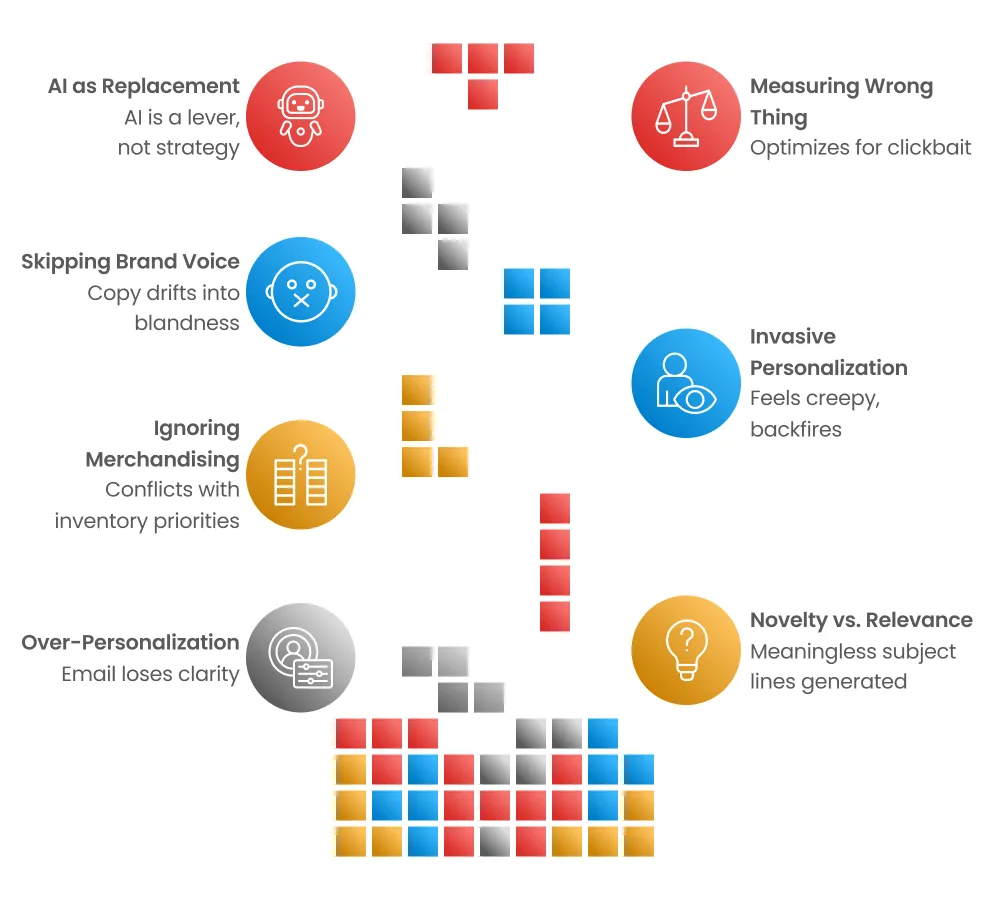
The truth is, most retailers don’t have a personalisation problem, they have a data problem. Personalisation fails when customer data lives in silos, updates slowly, or lacks the consistency needed to reflect real customer behaviour. Without a reliable data foundation, even the most advanced AI models or marketing automations can’t deliver the contextual relevance customers expect. This is where Customer Data Platforms (CDPs) come in. Rather than just another marketing tool, a CDP serves as the connective tissue powering intelligent commerce. It unifies customer information from every channel into a single, usable view, enabling brands to deliver targeted experiences that feel seamless, timely, and relevant. But personalisation is not just about sending the right email. It is about building trust, improving lifetime value and moving beyond one-size-fits-all campaigns.

But adopting a CDP isn’t just about technology; it’s about building the right data foundation to turn insight into action, and shifting from campaigns that speak to audiences, to conversations that speak to individuals.

Stages of Customer Data Maturity

Although all customer data solutions share the same ultimate goal of unifying and activating customer data, every retailer is at a different stage of data maturity.  The real question is: where is your organisation on its journey from data collection to data-driven personalisation? Broadly, customer data solutions can be viewed across four maturity stages with Customer Data Platforms (CDPs) sitting at the core bridging insight and activation

1. Data Integration Systems  – Building the Foundation 

These focus on collecting data from multiple sources such as websites, apps, CRM and loyalty systems, and merging them into a single customer profile. They are ideal for businesses that struggle with fragmented data and need a strong foundation before moving into analytics or campaigns.

2. Analytics-Driven Services – Turning Data into Insight

Once data is unified, analytics-driven services provide insights: who your customers are, what they want and what they are likely to do next. They excel at segmentation and predictive analytics, making them a good fit for retailers ready to optimise their targeting and forecast trends.

3. Campaign Execution Services – Turning Insight into Action

These are designed to act on insights in real time by triggering personalised marketing campaigns across email, SMS, apps and websites. They are perfect for brands focused on outreach, engagement and retention. But when built on incomplete data, they can do more harm than good by amplifying inconsistencies instead of relevance.

4. Enterprise-Grade Solutions – Scaling with Trust and Governance

For large retailers with complex needs, enterprise-grade systems offer scalability, robust security, advanced compliance features and deep integration with other business systems. They are suited for organisations managing millions of records across multiple geographies.

Each of these categories sits under the same umbrella of customer data solutions but solves a different problem. Choosing the right one depends on whether your priority is building the data foundation, gaining insights, activating campaigns or scaling securely. When selecting among top customer data platforms, knowing which category you need is critical.

Core Features That Power Ecommerce Customer Data Solutions

Behind every truly personalised shopping experience is a powerful data foundation, not just the right tools, but the right capabilities working together. These features work together to create the backbone of personalisation.

1. Identity Resolution – Building the Single Source of Truth

This capability recognises and merges data from multiple touchpoints such as mobile, desktop, in-store and email to build a single view of each customer. This “single customer view” is the backbone of personalisation. Without it, personalisation efforts remain fragmented and inaccurate.

2. Segmentation – From Demographics to Intent

Traditional segmentation stops at demographics; modern CDPs go deeper, grouping customers dynamically based on behaviour, purchase patterns and engagement signals. This makes campaigns more precise, such as targeting high-value customers with exclusive offers or sending timely reminders to lapsed shoppers.

3. Real-Time Data Processing – Keeping Personalisation Relevant

In today’s e-commerce landscape, relevance has a shelf life of seconds. Customer behaviour changes constantly. Real-time processing ensures that profiles are updated immediately, so the recommendations or offers a shopper sees today reflect their latest actions, not outdated information.

4. AI-Driven Recommendations – Turning Data into Experience

Machine learning is where insights become action. It analyses vast amounts of data to predict what customers might want next. This could be suggesting complementary products, personalising homepage content or recommending loyalty rewards likely to motivate purchase.

Together, these features turn raw information into actionable insights and automated personalisation at scale, a capability often associated with leading CDP platforms.

Applications of Customer Data Solutions in Ecommerce Personalisation

Once a strong data foundation is in place, the power of a Customer Data Platform (CDP) for ecommerce becomes tangible. Personalisation powered by customer data services can be applied across many areas of the online shopping experience. Here are some of the most common examples.

1. Personalised Product Recommendations

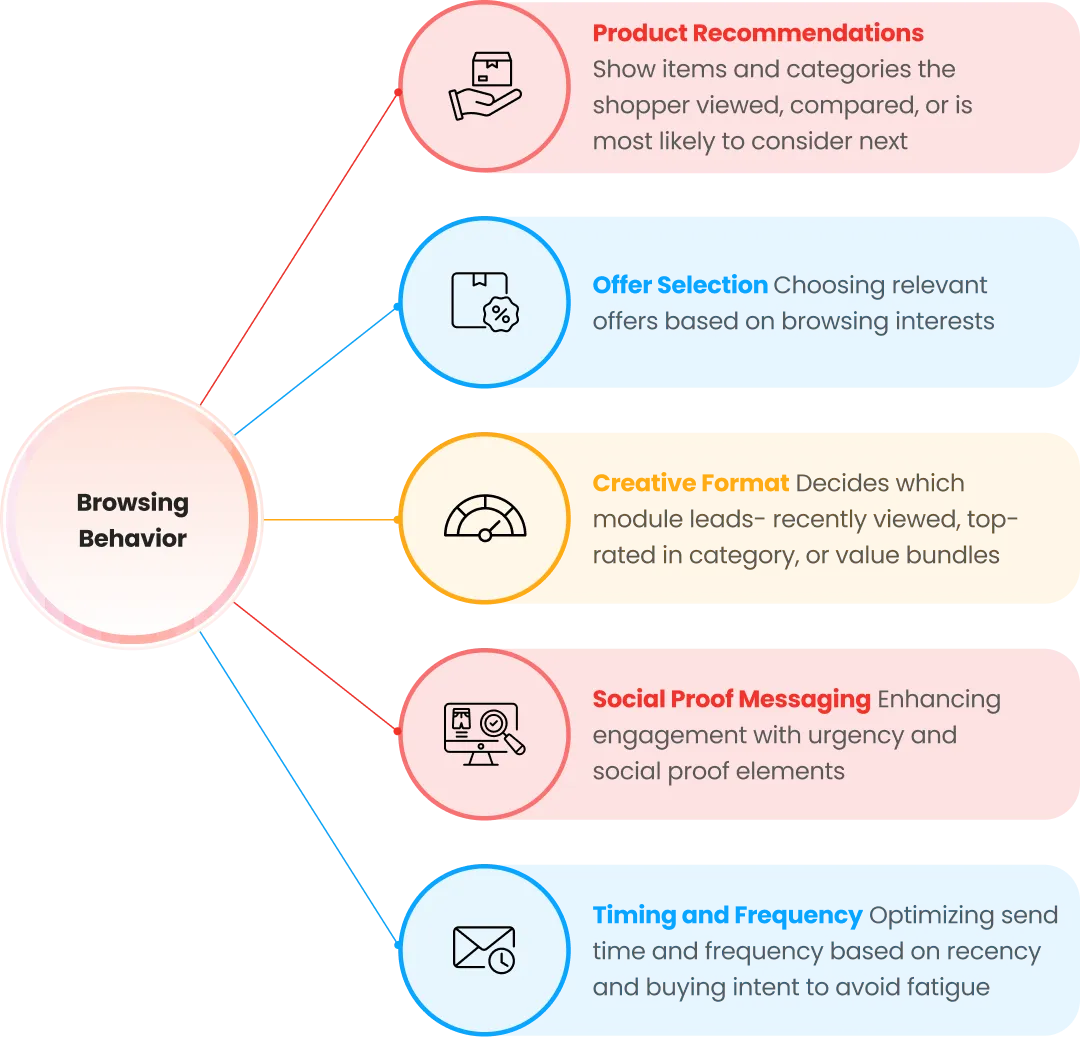
An online fashion retailer uses browsing history and past purchases to recommend outfits that complement items already in a customer’s basket. This increases average order value through cross-selling.

2. Dynamic Website and App Content

A beauty brand shows personalised banners on its homepage, promoting skincare routines based on a visitor’s previous purchases and preferences, creating a more relevant shopping journey.

3. Email and SMS Personalisation and Targeting

A pet supply store sends follow-up emails timed to when customers typically reorder dog food, boosting repeat purchases and retention.

4. Abandoned Cart Recovery with Tailored Offers

A home décor shop sends a discount code on the exact lamp a customer left in their cart, prompting them to complete the purchase.
5. Loyalty and Retention Campaigns Based on Behaviour

A subscription box service identifies its most active subscribers and offers them early access to new products, while also re-engaging at-risk customers with special renewal offers.

6. Lookalike Audience Building for Acquisition

A sports equipment retailer analyses its top customers’ profiles and then syncs these high-value segments to ad platforms, where algorithms identify similar prospects for targeting. This enables more efficient acquisition and mirrors a capability often supported by leading CDPs.

Across industries, brands applying these practices report higher order values, lower cart abandonment and stronger long-term customer loyalty.

Challenges and Best Practices When Implementing Customer Data Personalisation

Many retailers underestimate the complexity of personalisation. Ignoring the real challenges can lead to costly mistakes. Some of the most common pain points include:

1. Fragmented and Inconsistent Data

Retailers often underestimate how legacy systems quietly sabotage personalisation. Customer information is often spread across multiple systems such as e-commerce websites, mobile apps, CRM, email marketing and loyalty schemes. Without proper integration, data becomes duplicated, outdated or incomplete. This results in inaccurate profiles and ineffective targeting.

Principle: Data unification before activation. 

Every successful CDP implementation is built on the journey toward a single, trusted view of the customer. The one that consolidates, cleanses and governs data before it reaches any marketing layer.

2. Compliance and Privacy Risks

With regulations like GDPR and other data protection laws, collecting and using customer data incorrectly can lead to legal penalties and reputational damage. Many retailers lack clear processes for consent management and secure data handling.

Principle: Compliance is not a checklist, it’s a trust strategy. 

Retailers that integrate privacy by design, audit data flows regularly, and make consent management visible don’t just avoid risk; they build loyalty through integrity.

3. Siloed Teams and Poor Adoption

Marketing, IT and customer experience departments often work separately. This makes it difficult to share insights and coordinate campaigns. We often see brands rush to adopt advanced CDPs without first aligning on shared goals or KPIs, resulting in inconsistent execution and underused capabilities.

4. Slow or Outdated Data Processing

If customer data updates only once a day or once a week, recommendations and campaigns become irrelevant by the time they reach the customer. Real-time interactions require systems capable of instant updates.

Principle: Real-time intelligence drives real-time engagement.

Modern CDPs for ecommerce process updates instantly, allowing brands to react to intent as it happens, not after it fades.

5. Overly Complex Implementations

Jumping straight into enterprise-scale personalisation without a phased plan can overwhelm teams, delay results and waste budget.

Principle: Maturity is built in phases, not leaps.

Start with the use cases that bring visible impact such as abandoned cart recovery, replenishment reminders, or loyalty reactivation. Then scale into predictive and AI-driven personalisation as your data foundation strengthens.

With these practices in place, customer data personalisation moves from a difficult, risky undertaking to a powerful driver of growth and customer satisfaction.

Conclusion

Ecommerce personalisation isn’t just about knowing what to recommend next, it’s about knowing your customer well enough to act on that insight instantly and responsibly. That level of intelligence doesn’t come from more marketing tools, but from a stronger data foundation.

With a modern customer data solution for ecommerce, brands can turn fragmented data into a powerful engine for engagement, loyalty and growth.

Ecommerce personalisation succeeds when it’s built on a strong data foundation, not just more technology. The real advantage comes from data maturity: connecting strategy, infrastructure, and execution through a single, trusted view of the customer.

Forward-thinking retailers are already moving this way, using customer data strategies powered by AI to turn insight into real-time engagement.

At ADA, we help businesses build that foundation, from unifying data, ensuring governance, and activating intelligence across every channel. The result is scalable, AI-driven personalisation that turns every interaction into a moment of value.

Headless, Hybrid, DXP: Confusion Solved

Digital Commerce
White Paper

Headless, Hybrid, DXP: Confusion Solved

Stop Guessing Your Next Digital Move.

If you’re in FMCG or CPG or even in the ecommerce space, your current website is costing you speed and conversions. Simple templates can’t deliver the personalized, omnichannel experiences required to win today.

You need clarity to move forward. This handbook provides a simple, side-by-side comparison of the world’s leading digital solutions, from basic Content Management System (CMS) to full Digital Experience Platform (DXP) Suites.

Download now and prepare to:

  • Launch Campaigns Faster: Discover the systems that let your marketing team roll out campaigns and product updates in days, not months.
  • Get Editorial Freedom: Stop relying on IT for every single change and empower your content team to publish updates whenever they need to.
  • Deliver Seamless Experiences: Learn how to use one system to instantly update content across your website, mobile app, and in-store displays.
  • Future-Proof Your Brand: Make a smart investment that can easily grow with your business and handle your global scaling needs without expensive rebuilds.
Download Now

Lead the next era of data-driven AI


How AI Transforms Healthcare: Risk Prediction to Clean Claims

Post
Insights

How AI Transforms Healthcare: Risk Prediction to Clean Claims

What If AI Could Reshape Healthcare?

This is no longer science fiction, this is healthcare’s reality in Southeast Asia alone, healthcare spending is projected to soar from USD 420 billion in 2023 to USD 740 billion by 2030, while AI in healthcare SEA is expanding at over 30% annually. The opportunity is immense, but so is the challenge. This explosive growth means healthcare providers face a critical decision: scale AI responsibly, or risk wasted investments.

The real question is not whether AI can transform healthcare, but whether organisations have the strong healthcare data foundation required to unlock its potential. Without high-quality, well-governed data, even the most advanced AI solutions fall short, leaving efficiency gains and revenue opportunities unexploited.

The Visible Challenge: Why AI Falls Short in Healthcare

Every healthcare executive knows the pain: data scattered across hospitals, labs, insurers, and regulators creates a fragmented system where no single source tells the whole story.

For all the promise of AI, many healthcare organisations struggle to see consistent results. The issue is rarely the algorithms, it is the data behind them.

Today, patient information is trapped within fragmented ecosystems. Hospitals, diagnostic labs, insurers, and national health systems each hold parts of the puzzle, but rarely in a unified way.

On top of that, issues like incomplete records, inconsistencies, and duplicates make the data unreliable from the start

The outcome? Predictive models trained on weak data deliver unreliable insights, eroding clinical trust and stalling ROI. Instead of driving smarter decisions, whether in predicting patient risks or ensuring accurate claims, AI risks becoming another expensive, short-lived experiment. These are the very healthcare data challenges that must be solved before AI can deliver lasting impact.

What is predictive analytics in healthcare?

Predictive analytics in healthcare uses patient data and AI models to forecast outcomes,  from disease risk and hospital readmissions to treatment effectiveness and fraud detection.

Despite these challenges, leading healthcare organisations are showing how predictive analytics in healthcare is becoming the engine of modern care, creating measurable value across the system:

  1. Patient risk and deterioration prediction enables earlier intervention, reducing readmissions and optimising bed utilisation. For example, AI can analyse vital signs and lab results in real time to flag when a patient in recovery is at risk of sepsis or cardiac arrest. Clinicians can then act before the condition escalates, preventing an ICU transfer and keeping hospital beds available for others.
  2. Population health management identifies at-risk groups, allowing for preventive strategies that reduce treatment costs. For instance, predictive models can flag communities with rising diabetes or hypertension rates. Health systems can then launch targeted screening or lifestyle intervention programmes, catching conditions early and lowering the long-term burden on the system.
  3. Resource optimisation helps hospitals forecast demand, improving staffing and inventory efficiency. AI can use seasonal patterns and local event data to predict patient surges, such as seasonal events like haze-related respiratory surges common in Southeast Asia. Hospitals can then adjust their staffing schedules, stockpile ventilators and oxygen, and avoid the bottlenecks that often overwhelm emergency departments.
  4. Insurance risk assessment and clean claims improve risk scoring, tailor coverage plans, and strengthen fraud detection, reducing disputes and payment delays. For example, AI can cross-check claims data with patient records to ensure that procedures billed actually occurred, flagging suspicious patterns like duplicate submissions. This not only reduces fraud but also speeds up claims approval for genuine patients, improving trust between insurers, providers, and members.

Predictive analytics in healthcare is no longer a “nice-to-have”, it is now essential in healthcare. From preventing patient deterioration to processing clean claims, the value is clear. But these results are only possible with the right healthcare data foundation. The data must be unified across systems, governed for quality and compliance, and trusted by both clinicians and administrators. Without this, even the best predictive models cannot deliver reliable outcomes.

The Limitation of Predictive Analysis No One Talks About

Here lies the uncomfortable truth. Across Southeast Asia, healthcare organisations are pouring millions into AI tools without addressing the data problem first.

Take the example of predictive readmission models. If the patient records being fed into the model are incomplete or inconsistent, for instance, if a patient’s medication history is recorded in one system but missing from another, the algorithm will deliver flawed predictions. The result is that doctors lose trust in the tool, patients miss out on timely interventions, and hospitals fail to see the promised efficiency gains.

The same applies to insurance claims. Without proper governance, duplicate or misclassified records can create errors in risk scoring or flag false positives for fraud. Claims get delayed, disputes increase, and instead of saving money, insurers end up adding costs and frustrating customers.

The reason is simple: data governance is often an afterthought. Information stays scattered across different systems, creating errors and inconsistencies that weaken trust in AI results. And when the predictions don’t work, AI takes the blame. But the real problem isn’t the algorithm, it’s the poor-quality, unmanaged data it depends on.

Until this limitation is addressed, investments in AI will continue to under-deliver, and the technology itself risks being seen as overhyped and less impactful than it truly is.

The New Standard: A Data-First Strategy

To unlock predictive analytics at scale, healthcare organisations need to flip the approach. Rather than starting with AI, they must adopt a data-first strategy, and this is where ADA differentiates itself. Healthcare leaders are realising that AI success depends less on the algorithm and more on the foundation beneath it. ADA sees this foundation as four pillars: interoperability, governance, scalability, and security

  • Unified data pipelines create a single source of truth across hospitals, labs, insurers, and regulators.

  • Governance-first design ensures quality, compliance, and security are embedded from the outset.

  • Scalable architecture future-proofs operations for advanced AI, precision medicine, and even cross-border health exchanges.

  • Interoperability at the core enables seamless data sharing across fragmented systems and devices.

This is ADA’s strength. We deliver not just AI capabilities, but the end-to-end, governed healthcare data foundation that makes predictive healthcare possible, sustainable, and trusted.

Building the Data Foundation: From Patient 360 to Hospital Command Center

Before AI delivers on its promise, the real work is in bringing all the data together. At ADA we’ve designed two key platforms, the Hospital Command Center and Patient 360 via Data Accelerator that underpin our predictive and governance capabilities.

The Building Blocks: What Powers ADA’s Healthcare AI

  • Clinical Data: Admissions, discharges, readmissions; ER wait times and triage scores; diagnosis and treatment records.
  • Operational Data: Bed occupancy & availability; staff scheduling and workload; equipment and medicine stock usage.
  • Administrative Data: Financial performance metrics; resource utilisation; hospital-wide KPIs.
  • External Data Integration: Standards-based ingestion via HL7, FHIR and REST APIs connecting labs, pharmacies and national health records.

How does it all come together?

  • Canonical data models (CDMs) to unify structured and unstructured input: IoT sensors (patient monitoring), EMR systems, logs and clinical notes.
  • Governed, curated datasets for reliable healthcare KPIs and analytics-ready assets.
  • Real-time pipelines and dashboards that deliver a unified source of truth for clinical, operational and administrative users.

Turning Data Into Impact

  • For the Hospital Command Center, real-time dashboards monitor bed occupancy, staff capacity and discharge planning. Predictive intelligence flags patient inflow/outflow trends and readmission risk. Automation and resource optimisation lead to measurable operational efficiency gains.

  • For Patient 360 / Data Accelerator, providers gain one unified view of each patient across systems. Prebuilt pipelines accelerate time-to-value. Data quality and governance improve markedly. Analytics scale across both clinical and operational decision-making.

And Powering All Of This: AI Accelerators

  • Hospital Command Center platform: ML modules for readmission prediction, triage scoring, clinical decision support, resource optimisation; predictive analytics for ER wait-times and outcomes; automated data cleansing, validation and enrichment.

  • Data Accelerator: Upcoming AI/ML automation for source-to-CDM mapping, synthetic data generation for testing and demo use-cases; embedded governance and quality checks via canonical models and config-driven transformations.

With these data foundations firmly established, healthcare organisations are positioned to advance from predictive intelligence to the next phase of innovation. The integration of governed, interoperable, and analytics-ready datasets not only enables immediate operational and clinical gains but also creates the necessary infrastructure for emerging AI capabilities.

Generative AI: The Next Frontier

While predictive analytics in healthcare drives today’s gains, generative AI (GenAI) is rapidly emerging as the next frontier. A recent McKinsey survey found that 85% of healthcare leaders, from payers to health systems, are already exploring or implementing GenAI capabilities.

Key trends are shaping adoption:

  • Rapid implementation: Most organisations are moving beyond proofs of concept, progressing to real-world deployments. Early adopters are already seeing measurable impact, while laggards risk falling behind.

  • Partnerships over in-house builds: 61% of organisations are pursuing partnerships with vendors or hyperscalers, reflecting the complexity of building GenAI capabilities alone. Hyperscalers, in particular, bring critical expertise in data management and scale.

  • Focus on efficiency and engagement: Early GenAI use cases are streamlining administrative workflows, boosting clinical productivity, and improving patient engagement. These efficiencies create space for providers to focus on higher-value patient care.

  • Positive ROI: Among those who have implemented solutions, 64% report quantifiable positive returns, underscoring both the maturity and business case for GenAI in healthcare.

Still, the opportunities come with risks. Evolving regulations, compliance challenges, and internal capability gaps demand governed, interoperable, and value-driven strategies, the very areas where ADA’s data-first approach provides an advantage. With strong foundations, GenAI can move beyond back-office efficiencies into quality-of-care innovations that reshape patient experiences and define the future of healthcare AI.

The Future of Healthcare AI in Southeast Asia

The future of healthcare AI in Southeast Asia will not be defined by who adopts AI first, but by who builds the strongest data foundations. Those who invest today will lead in predictive care, precision medicine, and population health, delivering better outcomes for patients while improving efficiency and growth.

The stakes are clear: weak foundations lead to wasted AI spend, compliance gaps, and erosion of trust. Strong foundations, on the other hand, unlock scalable AI impact, governed and secure systems, and trusted adoption across clinicians and insurers.

The message is clear. The future of SEA healthcare depends on reliable, governed data foundations. And this is where ADA can help.

With our end-to-end solutions spanning data collection, organisation, analytics, and predictive as well as generative AI, we enable healthcare organisations to make informed decisions faster, reduce costs, and improve patient experiences. Contact ADA today to start building a data foundation your AI can truly trust.

Data-First AI in Healthcare: Unlocking Personalised Care

Post
Insights

Data-First AI in Healthcare: Unlocking Personalised Care

Healthcare stands at a turning point. The sector is under immense pressure to harness artificial intelligence (AI) not as a distant possibility, but as an urgent necessity. The familiar phrase rings true: AI will not replace doctors, but those who work effectively with AI will outpace those who do not. This reflects a profound shift where clinical expertise, supported by intelligent systems, becomes the benchmark of modern medicine. The rise of AI in healthcare in Southeast Asia exemplifies this transformation, but its success depends not on algorithms alone, but on a strong foundation of healthcare data governance and predictive analytics in healthcare.

The promise is immense. Globally, the healthcare AI market is projected to reach USD 200 billion by 2030 (Statista), with Southeast Asia among the fastest-growing regions for adoption. Yet, the real challenge is often overlooked: AI is only as effective as the data it relies on. Without a well-governed healthcare data foundation of accurate and reliable data, even the most advanced systems cannot deliver the improvements that healthcare so urgently requires.

Solving Data Silos in Healthcare Systems

The warning signs often appear before the root cause is understood. Healthcare providers may notice delays in diagnosis, inconsistencies in patient records, or inefficiencies in operations, yet struggle to identify why these issues persist. What sits beneath many of these challenges is not a lack of clinical expertise or medical technology, but the way data is managed, highlighting gaps in data maturity in healthcare.

In most healthcare organisations, data lives in silos:

  • Electronic Medical Records (EMRs)
  • Insurance claims
  • Connected medical devices
  • Imaging systems

Electronic Medical Records, insurance claims, connected medical devices, and imaging systems each hold valuable information, but they rarely communicate with one another. This fragmentation prevents clinicians from seeing the complete picture of a patient’s health, making decision-making slower and sometimes less accurate.

The impact is felt on multiple levels. Patients, who increasingly expect care tailored to their individual needs, can be left frustrated when their care providers only see partial information. For organisations, the risks are equally significant. Disconnected data increases the likelihood of fraud going undetected, regulatory requirements being missed, and resources being wasted on redundant or inefficient processes.

To meet modern expectations and deliver safe, effective, and personalised care, healthcare must address this challenge directly. The priority is not simply to collect more data, but to unify and govern it in a way that makes it accessible, reliable, and actionable across the entire system of care.

Predictive Analytics in Healthcare: From Data to Foresight

For many healthcare providers, the first wave of digital transformation has already taken place. Records have been digitised, and basic systems provide snapshots of recent information through visual summaries and reports. This represents progress, but it is also a limitation. Static dashboards are like looking in the rear-view mirror: they tell you what has already happened but cannot predict what lies ahead.

The next step is predictive analytics in healthcare.  This approach moves beyond describing the past to forecasting what is likely to happen in the future. By applying statistical models and machine learning techniques to unified data, predictive systems can highlight patterns that are invisible to the human eye and alert clinicians or administrators before an issue escalates.

The potential applications of predictive models in healthcare are far-reaching.

  • Identifying patients at risk of developing post-surgical complications, so care teams can intervene earlier and prevent costly readmissions

This shift from reactive care to proactive prevention is not optional; it is the natural evolution of healthcare in a data-driven world. Predictive analytics equips providers with foresight, helping them not only to improve patient outcomes but also to manage costs, reduce inefficiencies, and build trust with patients who expect care that is anticipatory rather than delayed.

Despite the clear benefits, adoption remains uneven. Many organisations still struggle with the technical and operational barriers of implementing predictive systems, such as integrating data across departments, ensuring its quality, and aligning staff to new ways of working. These challenges reflect a deeper issue: healthcare AI often suffers from “fragile AI”,  predictive systems trained on fragmented or low-quality data that cannot be trusted in critical settings.

This points to a deeper issue: if predictive analytics depends on trust, then healthcare must first solve the Data Trust Problem.

The Data Trust Problem in Healthcare AI

If predictive analytics depends on trust, what exactly is missing? The answer is the data trust problem. Healthcare data today is fragmented, inconsistent, and often unreliable, making it unfit for powering life-critical AI. Hospitals, labs, insurers, and regulators each hold pieces of the puzzle, but rarely in a unified, interoperable form. The result is that AI systems, no matter how advanced, inherit the weaknesses of the data they are trained on.

Build, Scale, and Automate

The promise of predictive analytics in healthcare cannot be realised without a stronger foundation. Many organisations have already seen the limitations of AI models that deliver inconsistent results or fail to reflect the realities of clinical practice. The issue is rarely the technology itself, but the quality and governance of the data it depends on.

Trust, therefore, is central to progress. Clinicians, patients, and regulators are right to demand clarity and reliability from AI-driven insights. This is why ADA frames healthcare’s AI journey through its Data Maturity Curve: Build, Scale, Automate.

This is where a new standard is taking shape, built on three essential stages: Build, Scale, and Automate.

  • Build: Consolidate and govern data across the ecosystem into a secure, trusted source of truth. This is the foundation stage, where ADA helps providers move from fragmented records to unified, reliable data.

  • Scale: With solid foundations, predictive analytics can be applied with confidence. At this stage, providers begin to uncover trends, forecast risks, and improve care quality. On the data maturity curve, this is the point where organisations evolve beyond basic reporting and optimisation into advanced, predictive systems — and ADA has guided many providers through this progression.

  • Automate: Once predictive systems are reliable, automation allows healthcare to achieve efficiency at scale. From fraud detection to personalised care plans, automation not only streamlines operations but also gives clinicians more time to focus on what matters most: patient care. ADA has been at the forefront of helping providers implement these intelligent automation services (the higher end of the data maturity curve) in ways that build long-term resilience.

Each stage builds on the one before it, forming a pathway that transforms data from a fragmented liability into an enabler of progress. This structured journey reflects the data maturity curve that many organisations now find themselves navigating. ADA’s leadership in guiding providers along this path shows how healthcare can advance towards a future where trustworthy data fuels predictive, proactive, and patient-centred care.

Conclusion

The path to better healthcare is no longer optional; it is essential. The next decade will not be about whether hospitals adopt AI, but about which health systems can turn their data into a trusted asset fast enough to keep pace with rising patient demand, stricter regulations, and cost pressures.

Organisations that move deliberately through the stages of Build, Scale, and Automate will not just improve efficiency, they will set the standard for predictive, patient-centred care in Southeast Asia’s rapidly evolving healthcare landscape.

The real future of AI in healthcare is not defined by breakthrough algorithms, but by the resilience of the data foundation beneath them. Those who invest early in trustworthy, governed data will unlock AI that is reliable, explainable, and future-proof, while those who hesitate risk building fragile systems that collapse under real-world pressure.

ADA is already helping healthcare providers turn disconnected data into a reliable foundation for smarter, more sustainable AI. To take the first step towards this new standard, get in touch with ADA today.

Redefining Fraud Detection in BFSI: Why Generative AI is the New Standard

Post
Insights

Redefining Fraud Detection in BFSI: Why Generative AI is the New Standard

Fraud in the banking, financial services and insurance (BFSI) sector is no longer what it used to be. It’s faster, more elusive, and increasingly powered by artificial intelligence. Deepfakes, synthetic identities, and AI-generated scams have emerged, often evading traditional rule-based detection.

Yet, many organisations are still relying on manual reviews and outdated fraud prevention measures, struggling to keep up with threats that change day by day. The result is a growing gap between the nature of modern fraud and the systems designed to stop it.

We’re reaching a turning point where the scale and complexity of AI fraud detection in BFSI demands more than just incremental change. The question now is not whether generative AI will redefine fraud detection in BFSI, but whether businesses and consumers are prepared for what comes next.

Business Challenges 

Fraud detection has always been a high-stakes game. A missed incident can lead to severe financial loss, regulatory scrutiny, and customer fallout. But when systems are too strict and wrongly flag genuine activity, they can cause just as much harm.

This often leads to frustrated customers, delayed transactions, and a slow loss of trust. In many cases, it becomes too easy to cross the line between being careful and creating unnecessary friction.

The nature of fraud has changed. Fraudsters now use generative AI in financial services to fake identities, forge documents, and create lifelike deepfakes. These attacks happen quickly, on a large scale, and often come from many directions at once.

Yet many businesses are still relying on static rules and siloed systems that lack real-time visibility. This creates blind spots across operations, and these vulnerabilities are being exploited more frequently.

Meanwhile, internal teams are increasingly under pressure. Manual fraud reviews and compliance checks have become time-consuming and difficult to sustain. As case volumes rise and regulatory demands grow more complex, businesses find themselves allocating more resources just to stay afloat. The results are often inconsistent, and the operational cost continues to climb.

Outdated systems may create the appearance of control, but often confuse rigidity with safety. False positives become routine, causing unnecessary delays for legitimate users and damaging the customer experience. Rising expectations around Anti-Money Laundering (AML) and Know Your Customer (KYC) compliance only add to the strain, increasing the risk of operational errors, regulatory findings, and customer churn. These challenges are not just the result of evolving threats. They are symptoms of systems that have not kept up with AI in fraud detection and prevention. To move forward, businesses first need to understand why their current approach is no longer effective and what signs to look for before small inefficiencies turn into systemic vulnerabilities.

Traditional Systems Are Falling Behind

Many fraud detection systems in use today were built for a different kind of threat landscape. Most are based on static rules or pre-trained machine learning models, which work reasonably well for known attack patterns. But modern fraud is anything but predictable. It evolves quickly, often in ways these systems were never designed to handle. As a result, they struggle to detect unfamiliar tactics, missing the subtle context and complexity that define today’s AI-driven fraud.

The core problem is that traditional systems are not flexible. They follow fixed rules and need manual updates to handle new risks. So when new types of fraud appear, like synthetic identities or deepfakes, rule-based engines and static models often miss them until rules are updated. As a result, businesses have to rely on people to catch what the system overlooks, which slows everything down and puts more pressure on teams.

Fragmentation is another common challenge. In many businesses, fraud detection capabilities are spread across departments, channels, or business units. Without integration, insights remain trapped in silos. This makes it harder to see patterns across the organisation or respond quickly when incidents occur. Blind spots emerge, and teams are left reacting instead of staying ahead.

If your fraud response feels reactive, overly dependent on manual review, or inconsistent across teams and systems, it may be time to re-evaluate. These are strong indicators that the current setup is no longer equipped to support scalable, proactive AI in fraud detection and prevention.

The Limitations Are Costly

The biggest weakness in traditional fraud systems is not just that they are outdated. They were never designed to keep up with an opponent that evolves. In today’s environment, that opponent is generative AI, and the legacy systems in place simply cannot match its pace or intelligence.

Current systems operate on predefined rules or old data models. As a result, they can only detect what they already know. This reactive posture creates critical blind spots, especially as fraud becomes more dynamic, creative, and unpredictable.

Scalability is another mounting concern. As transaction volumes grow and fraud techniques become increasingly complex, manual and semi-automated processes begin to collapse under the weight. What once worked for smaller volumes now introduces operational bottlenecks, delays, and missed risks at scale. Businesses are left in a position where they cannot grow confidently because their systems cannot grow with them.

Compliance is also becoming harder to manage. Regulatory expectations continue to shift, and interpreting these changes manually increases the risk of falling out of step. More than 60% of wealth managers are already utilising generative AI in financial services to support their compliance functions. Businesses that rely solely on manual reviews or fragmented systems are falling behind—not just in efficiency, but in regulatory readiness.

All of this reflects a deeper issue. Traditional fraud systems are not just falling short. They are actively holding businesses back from the agility, scale, and intelligence required in today’s landscape. The inability to fight AI with AI has become the defining limitation of current fraud strategies—and the reason generative AI fraud detection is no longer optional.

A Generative AI Approach That Works for BFSI

Addressing modern fraud threats requires more than incremental upgrades. It calls for a new standard—one that replaces rigid detection methods with systems that learn, adapt, and improve.

Generative AI offers exactly that. It can interpret complex regulatory frameworks, detect emerging fraud patterns, and understand behavioural context in real time. The result is fewer false positives, smarter anomaly detection, and faster responses to evolving threats. By analysing both structured and unstructured data, these systems can flag unfamiliar typologies and predict risks such as deepfakes or synthetic accounts before they escalate.

It also helps streamline compliance by analysing regulatory texts, mapping them to internal policies, and flagging potential considerations for expert review. With human oversight guiding final decisions, this approach reduces the lag between regulatory change and implementation, improving both efficiency and assurance.

These benefits are already visible in practice. Leading financial institutions have reported tangible results, such as fewer account validation rejections and stronger fraud prevention, while also enhancing the customer experience.

What sets ADA apart is not just the technology, but the way it is delivered. Rather than offering an off-the-shelf product, ADA takes a consultative, end-to-end approach. It starts with a deep understanding of each organisation’s risk landscape, operational realities, and growth objectives. From there, solutions are tailored and seamlessly integrated across existing systems, ensuring both immediate effectiveness and long-term sustainability. This approach ensures businesses are equipped with solutions that evolve with them, not just for them.

It is a strategic transformation, not just a technical one. One that demands continuous model optimisation, cross-functional alignment, and a shared commitment to evolving with the threat landscape.

For BFSI businesses looking to close the gap between risk and response, ADA’s generative AI solution doesn’t just offer improvement. It offers measurable gains in precision, speed, and scalability.

Conclusion

By now, it’s clear that the biggest risks in fraud prevention aren’t just from outside threats. They also come from using outdated systems that can’t keep up with the speed, complexity, and intelligence of modern fraud.

Many of today’s challenges stem from not embracing newer, more adaptive approaches. Legacy systems create blind spots, waste resources, and increase the risk of regulatory penalties, customer dissatisfaction, and financial loss.

The businesses that will stay ahead are those that recognise the need to evolve and take meaningful steps forward. Generative AI in financial services is no longer a distant idea, it’s already making a difference in how organisations approach fraud detection, compliance, and customer trust.

The real question is no longer if you should upgrade your fraud prevention strategy, but how soon.

To explore how ADA’s services can support smarter, more proactive approaches to risk and compliance in the BFSI sector, visit our core service pages or explore our latest insights. The future of fraud prevention begins with the right knowledge—and the right partner.

10 Proven Ecommerce Promotion Strategies to Boost Sales and Revenue

Post
Insights

10 Proven Ecommerce Promotion Strategies to Boost Sales and Revenue

1. Free Shipping (Threshold-Based or Sitewide)

How and Why It Works:
Free shipping removes one of the biggest barriers to purchase, helping to reduce basket abandonment. Threshold-based free shipping encourages customers to add more items to reach the minimum spend, increasing average order value (AOV). Sitewide free shipping, on the other hand, simplifies the decision-making process by eliminating unexpected fees altogether.

Example:
Amazon offers free shipping on orders over $25, encouraging customers to add extra items to qualify.

What to Avoid:

  • Setting thresholds that are far above the average order value
  • Ignoring the impact on margins when shipping costs are absorbed
  • Adding shipping fees late in the process, which creates frustration

Tips for Success:

  • Position free shipping thresholds just above your average order value to drive upsells
  • Communicate shipping policies clearly and early
  • Use sitewide free shipping during key holidays to maximise conversions

2. Limited-Time Flash Sales or Deal of the Day

How and Why It Works:
Flash sales create urgency and scarcity, prompting quick decisions from shoppers who fear missing out. These ideas for promotions generate short bursts of traffic and are effective at converting hesitant buyers.

Example:
Sephora’s “Deal of the Day” encourages daily check-ins as customers look for limited-time offers.

What to Avoid:

  • Overusing flash sales, which trains customers to wait for discounts
  • Poorly communicating the sale duration, leading to confusion
  • Frequent sales that weaken brand perception

Tips for Success:

  • Build anticipation by promoting sales in advance through email and social channels
  • Use countdown timers to make urgency visible and credible
  • Focus discounts on specific, high-impact products rather than across the board

3. First-Order “Welcome” Discount

How and Why It Works:
A first-order discount lowers the barrier to entry for new customers, encouraging trial while also building your email list. This marketing promotion idea can be highly effective for acquisition.

Example:
New customers get 15% off their first purchase after subscribing to its newsletter.

What to Avoid:

  • Offering discounts so large that they undermine profitability
  • Allowing discounts to be used repeatedly
  • Forcing signups without a clear and immediate benefit

Tips for Success:

  • Deliver welcome offers instantly after signup to capture interest
  • Set expiry dates to create urgency
  • Keep redemption simple with automatic discounts or easy codes

4. BOGO, Multi-Buy and Quantity Breaks

How and Why It Works:
Buy One, Get One (BOGO) deals and tiered discounts encourage larger purchases. They also help clear inventory while being one of the best eCommerce offers for high-margin items.

Example:
CVS Pharmacy often runs BOGO promotions on health and beauty items, increasing sales volume.

What to Avoid:

  • Applying BOGO to low-margin products
  • Making rules overly complex
  • Offering deals on clearance stock not intended for fast turnover

Tips for Success:

  • Clearly display the savings customers will enjoy
  • Focus promotions on strong-margin products
  • Use tiered discounts to motivate higher spending

5. Product Bundles to Lift AOV

How and Why It Works:
Bundling complementary items enhances perceived value and convenience while increasing average order value. Customers see ready-made solutions, not just individual products.

Example:
Dollar Shave Club offers bundles of razors, blades and shaving cream at a discounted price, encouraging larger purchases.

What to Avoid:

  • Bundling unrelated or slow-moving products
  • Applying discounts so steep that they erode margins
  • Failing to promote bundles prominently

Tips for Success:

  • Group naturally related products together
  • Balance discounts to remain profitable
  • Feature bundles on key site pages to maximise visibility

6. Gift with Purchase (GWP)

How and Why It Works:
A free gift adds perceived value without heavy discounts. This marketing promotion idea motivates customers to increase spend while leaving a positive impression.

Example:
Clinique offers travel-sized products free with orders over $50, boosting average basket size.

What to Avoid:

  • Giving irrelevant or low-value gifts
  • Providing costly items without setting a minimum spend
  • Failing to explain the qualification clearly

Tips for Success:

  • Choose gifts that are desirable and relevant to your audience
  • Set spend thresholds to increase order size
  • Promote the offer widely and clearly across your site

7. Loyalty Rewards and Referral Incentives

How and Why It Works:
Rewards programmes encourage repeat purchases through points or perks, while referral incentives leverage existing customers to bring in new ones. Both approaches strengthen customer lifetime value.

Example:
Starbucks Rewards offers points for purchases and bonuses for referrals, boosting both frequency and acquisition.

What to Avoid:

  • Making the reward structure too complicated
  • Allowing rewards to expire without reminders
  • Overlooking referral fraud risks

Tips for Success:

  • Keep rewards simple and achievable
  • Offer exclusive perks or early access to make programmes attractive
  • Provide easy-to-use referral tools with clear benefits

8. Abandoned-Basket and Exit-Intent Offers

How and Why It Works:
Targeting customers who leave without completing their purchase helps recover lost sales. Timely offers or reminders address hesitation and nudge them to return.

Example:
Wayfair uses exit-intent pop-ups with discounts, as well as abandoned-basket emails, to re-engage potential buyers.

What to Avoid:

  • Sending too many messages or intrusive pop-ups
  • Offering discounts so steep that they cut too deeply into profit
  • Sending generic, impersonal reminders

Tips for Success:

  • Send personalised recovery emails within an hour
  • Use exit-intent offers such as free shipping or small discounts
  • Include product images and details to jog memory

9. Seasonal and Holiday Campaigns

How and Why It Works:
Tying promotions to seasonal moments or holidays creates relevance and urgency. Customers are more motivated to buy when offers align with current needs or occasions.

Example:
Macy’s runs back-to-school promotions with targeted discounts, driving seasonal demand.

What to Avoid:

  • Launching too late and missing peak shopping windows
  • Using generic campaigns that lack emotional connection
  • Discounting too heavily, damaging margins

Tips for Success:

  • Plan campaigns early and align creative to the season
  • Use themed visuals and copy that connect emotionally
  • Combine offers such as free shipping with a percentage discount

10. Influencer, Affiliate Promo Codes and Social Giveaways

How and Why It Works:
identifies the best eCommerce offers for your business context, helps you optimise pricing, personalise offers and allocate resources to maximise ROI. With continuous tracking and actionable recommendations, ADA ensures every marketing promotion idea is data-driven and performance-focused.

With ADA’s technology and strategic guidance, businesses can move beyond guesswork to run smarter, data-driven promotions that increase revenue while protecting margins. This ensures promotional efforts not only deliver short-term sales uplifts but also build long-term customer loyalty and sustainable growth.

Ready to unlock the full revenue potential of your eCommerce promotions?

Partner with ADA to harness tailored strategies, expert support and impactful ideas for promotions that deliver measurable results. Influencers and affiliates help brands reach targeted audiences with authentic endorsements. Promo codes enable tracking, while giveaways build excitement and expand reach.

Example:
A fitness apparel company partners with micro-influencers who share unique promo codes, increasing sales and followers.

What to Avoid:

  • Working with influencers who lack audience alignment
  • Running campaigns without clear KPIs
  • Overusing giveaways, which can dilute brand value

Tips for Success:

  • Vet influencers carefully to ensure relevance
  • Create exclusive, trackable codes
  • Encourage sharing through engaging social giveaways

How to Choose the Right Promotion and Measure Its Effectiveness

The most effective promotions are not chosen at random but carefully designed to balance profitability, inventory priorities and customer behaviour. Measuring impact is just as important as execution, ensuring that promotions genuinely grow revenue instead of simply shifting sales or cutting into margins.

Selecting the Right Promotion

  1. Consider Your Margin
    Choose promotions that protect profitability. High-margin products can support deeper discounts or BOGO deals, while low-margin or commodity items are better suited to offers such as free shipping or gift-with-purchase. Always evaluate the expected margin impact before launching.

  2. Evaluate Inventory Levels
    Promotions are a powerful tool for managing stock. Use flash sales or multi-buy offers to clear excess inventory, but avoid heavy discounts on popular items that sell well at full price. Bundling slow-moving products with bestsellers can increase appeal without hurting profits.

  3. Understand Your Audience
    Tailor promotions to different customer segments. First-time buyers may respond strongly to welcome discounts, while returning customers are often motivated by loyalty rewards, bundles or exclusive perks. Analysing purchasing patterns helps ensure offers meet expectations and resonate.

Measuring Lift and Avoiding Cannibalisation

  1. Track Incremental Sales Lift
    Compare promotional sales against historical baselines. True lift means attracting new customers or higher spend per order, not simply shifting the timing of purchases.

  2. Monitor AOV and Customer Acquisition Cost (CAC)
    Ensure promotions drive meaningful improvements. For example, a free shipping threshold that raises order size by 20 per cent with minimal margin impact is a positive outcome.

  3. Segment Customers for Cannibalisation Analysis
    Determine whether promotions are attracting new customers or simply encouraging existing ones to make purchases earlier at a discount. Use A/B testing or control groups for reliable insights.

  4. Avoid Common Pitfalls
    Too many discounts, or those applied too broadly, can train customers to delay purchases. Instead, use exclusivity such as first-time buyer offers or bundles to create value without undermining full-price sales.

Conclusion

Promotions are some of the most powerful levers for accelerating eCommerce growth when used strategically. From free shipping and flash sales to loyalty rewards and influencer campaigns, each tactic provides distinct ways to attract, engage and retain customers. The key lies in selecting the right promotion ideas for your margin and inventory position, executing them with precision, and measuring impact carefully to ensure incremental revenue without cannibalisation.

This is where ADA’s expertise becomes invaluable. By combining advanced analytics and artificial intelligence, ADA uncovers customer insights and behavioural predictions.

ADA and AWS Strengthen Strategic Partnership as AWS Malaysia Region Launch Drives Future Cloud Possibilities

Post
News

ADA and AWS Strengthen Strategic Partnership as AWS Malaysia Region Launch Drives Future Cloud Possibilities

ADA partners with Opptra to bring Hasbro and global brands into SEA’s ecommerce market, combining AI insights with regional expertise for scale. Learn more!

Kuala Lumpur, August 27, 2024 – ADA, a leader in digital, data, and AI-driven business transformation across Asia, has announced plans to deepen its partnership with AWS by doubling down on its Data and AI vertical. The focus will be on expanding Data Engineering capabilities in Malaysia, particularly in Cloud Implementation on Amazon Web Services’ (AWS). This strategic initiative is a response to AWS’s recent launch of the AWS Asia Pacific (Malaysia) Region.

AWS recently announced the launch of the AWS Asia Pacific (Malaysia) Region. This strategic move provides enterprises and other stakeholders with greater options for running their applications and serving end users from AWS data centers located in Malaysia. The new AWS Region offers customers the ability to run workloads and securely store data in Malaysia while delivering services to end users with even lower latency.

Since 2022, ADA and AWS have been building a strategic partnership that reflects a long-term commitment to meeting the growing demand for Cloud Services in Malaysia and across the Asia Pacific region – a demand that ADA, in collaboration with AWS, is well-prepared to fulfill.

Regionally, ADA has deep expertise in Data Analytics and Engineering solutions, as well as in implementing Customer Data Platforms (CDP), which transform marketing and digital commerce for enterprises by creating data and AI-driven outcomes. The partnership with AWS is crucial in bringing these outcomes to life for ADA’s growing customer base, and ADA is proud to be recognized as one of AWS’s key partners in the region.

“We’re thrilled about the launch of AWS’s Infrastructure Region in Malaysia,” said Srinivas Gattamneni, CEO of ADA. “This launch aligns perfectly with our strategy to double down on Data Analytics, Engineering, and CDP services across Asia. It strengthens our ability to transform our clients’ marketing and commerce through strategic data services. Our multifaceted partnership with AWS underscores ADA’s commitment to leveraging premier technologies to drive digital transformation in Malaysia and the broader region.”

ADA has built numerous successful solutions on AWS Cloud, such as revolutionizing customer engagement for Malaysia’s leading integrated food operator by delivering a comprehensive solution for unified customer data. By implementing a state-of-the-art Customer Data Platform (CDP) built on AWS Cloud, ADA consolidated first-party and third-party data into a singular, cohesive view. This enabled the creation of precise customer segments and the automation of real-time marketing campaigns.

Additionally, ADA’s advanced data analysis addressed the client’s key business challenges, including identifying common traits among dormant customers, setting a new standard for personalized customer experiences.

In addition to the solutions ADA is building on AWS Cloud for their clients, ADA is introducing a suite of data solutions to AWS Marketplace. These offerings provide enterprises with direct access to strategic data sets and AI models  grounded in ADA’s deep expertise in ecommerce and digital marketing, as well as a thorough understanding of common customer challenges in these areas:

  • AI Accelerators: ADA will offer a set of proprietary AI models on AWS Marketplace, specifically designed to address key client challenges in ecommerce and marketing. These readily-available models will help ensure speed to market while delivering outcomes.
  • Data Solutions: ADA will provide sample sets of its proprietary XACT data segments on AWS Marketplace, available for free. These data segments are designed to help clients enhance their segmentation strategies and delve deeper into location insights and analytics, enabling more robust retail strategies.

With AWS officially establishing its presence in Malaysia, new opportunities arise for enterprises ready to turn their data into action – opportunities that ADA is uniquely positioned to help them seize.

-End of the Release-

About ADA

ADA offers a comprehensive suite of services that empower enterprises and brands to bolster digital marketing, sales transformation, and data transformation across Asia. The company has a multi-faceted, data-driven approach that encompasses:

The company’s dual headquarters are in Singapore and Malaysia. Notably, ADA’s shareholders include industry giants like Softbank, Axiata, Mitsui, and Sumitomo Corporation.

For more information about ADA and its AI CoPilots, please visit www.adaglobal.com or contact the ADA team.

Contact:

Klara Grintal

Head of Brand and Customer Experience

klara.grintal@ada-asia.com

From Guesswork to Growth: On-the-Go Sales Intelligence for Modern CPG & FMCG

Data & AI
White Paper

From Guesswork to Growth: On-the-Go Sales Intelligence for Modern CPG & FMCG

Is your field sales team wasting time on outdated routes, disconnected tools, and missed opportunities?

This exclusive thought leadership dives deep into the unseen challenges faced by modern field sales teams and reveals why outdated methods and rigid tools are holding you back. Discover how to move beyond guesswork and empower your teams with the precise, on-the-go intelligence needed to capture every market opportunity.

Download our thought leadership now.

This thought leadership covers:

  • The true cost of outdated field sales strategies
  • Why your current tools are failing you
  • The critical gap between fixed information and dynamic usefulness
  • A new standard for sales intelligence

Download Now

Lead the next era of data-driven AI