
Driving 32X ROAS: ADA’s Zero-Risk Acquisition Model Success with Matahari

Case Study

Driving 32X ROAS: ADA’s Zero-Risk Acquisition Model Success with Matahari

The Results
0 %
Monthly Transaction Growth Within First 3 Months
0 x
Monthly Repeated Transaction
0 x
Return on Ad Spend
0 x
Average Basket Value Compared to Historical Campaign
The Challenge

Matahari, Indonesia’s largest retail platform, has been a cornerstone of the retail industry since 1958. As a well-established brand, Matahari has continuously adapted to the changing landscape of commerce, particularly in the digital age. The latest campaign aimed to enhance in-app first-time and repeat transactions among both new and existing users. This ambitious objective was crucial for maintaining their market leadership and ensuring sustained growth in an increasingly competitive environment.

ADA achieved +68% month-on-month transaction growth, maintained high customer retention rates, tripled average basket values, and achieved a 32X return on ad spend (ROAS) compared to previous campaigns. Through strategic cost optimization and effective Conversion Rate Optimization (CRO), ADA showcased its ability to deliver substantial ROI in a competitive market.

The Strategy

We employed advanced analytics and machine learning algorithms to better understand consumer behavior and optimize targeting strategies. These technologies enabled the campaign to identify high-potential customer segments and tailor marketing messages to their specific needs and preferences. Additionally, the use of dynamic pricing and personalized promotions helped attract and retain customers by offering them the best possible deals. to ensure higher relevance and conversion potential, the campaign targeted users interested in retail shopping, bargain hunting, and family-oriented activities. Additionally, an extensive inclusion strategy was employed by overlaying GAIDs (Google Advertising IDs) and IDFAs (Identifier for Advertisers) of existing customers with ADA’s XACT, a data management platform, to refine the targeting accuracy.

Awards
  • Gold in Excellence Marketing to Specific Audience at Marketing Excellence Awards 2023
  • Gold in Excellence in Mobile Marketing at Marketing Excellence Awards 2023
  • Silver in Best in Mobile Campaign for a Specific Audience at Mob-Ex Awards 2023

Content
The Results
The Challenge
The Strategy
Awards
Get in touch

Let’s turn your data and AI into measurable outcomes!

ADA drives daily sales for Thailand Burger King with consumer data & insights

Case Study

ADA drives daily sales for Thailand Burger King with consumer data & insights

The Results
0 %
growth in daily sales
0 %
growth in brand consideration
0 m
video views on YouTube
0 reach
via digital ads on Facebook and Instagram
The Challenge

Although Burger King in Thailand already had a dedicated fanbase, growth had stagnated over the past two years without major campaigns. Recognizing the need to expand their customer base, they conducted a survey which revealed that Thai consumers perceived the brand as less approachable. To rejuvenate their image, Burger King introduced a new Thai menu, launching a two-month campaign to attract new customers.

The Strategy

To meet their objectives, a comprehensive data-driven strategy was devised. The primary goals were to pioneer a unique campaign approach and gain valuable insights into consumer preferences. This involved strategic partnerships with Facebook and Google to analyze user behavior and tailor impactful ads. Additionally, a thorough competitor analysis identified the need for Burger King to establish a distinct identity in offering traditional Thai meals.

Advanced data extraction techniques, including Audience Explorer, Location Analytics, and Consumer Profiling, were employed to predict consumer purchasing behavior accurately. Hyper-specific audience targeting was executed, focusing on locations with Burger King outlets and leveraging geolocation data to pinpoint areas with high competitor footfall. Precision was maintained by excluding users who had already viewed the new menu.

Content
The Results
The Challenge
The Strategy
Get in touch

Let’s turn your data and AI into measurable outcomes!

We helped a leading ecommerce brand enhance efficiency and decision-making through data automation

Case Study

We helped a leading ecommerce brand enhance efficiency and decision-making through data automation

The Results
Reduction in analyst time consumption
Improve data accuracy, faster decision making
The Challenge

The client faced a challenge of synthesizing sales data from multiple channels without a centralized source, complicating real-time access to key performance indicators such as revenue, orders, and click data, and necessitating frequent manual calculations for reporting to management.

The client’s reporting ecosystem was hindered by a lack of data centralization, creating a significant lag between data generation and executive insight.

  • Data Silos: Sales, revenue, and engagement data (clicks/orders) were scattered across multiple unlinked channels.

  • Lack of Real-Time Visibility: High-level KPIs were inaccessible in real-time, preventing agile decision-making.

  • High Manual Overhead: Analysts were burdened with frequent manual calculations and spreadsheet consolidation to produce management reports, increasing the risk of human error.

The Strategy

ADA engineered a centralized, automated system to replace manual workflows with a robust data “single source of truth.”

  • Unified Pipeline: Developed a custom architecture to ingest disparate sales and customer interaction data into one streamlined flow.

  • Advanced Processing: Utilized Python for data preparation and refinement, transforming raw inputs into high-clarity, analysis-ready datasets.

  • Orchestrated Reporting: Implemented server-based scripts to schedule and push reports automatically, ensuring management received updates without manual intervention.

  • Quality Governance: Integrated real-time verification protocols to audit data accuracy and maintain reporting integrity.

Content
The Results
The Challenge
The Strategy
Get in touch

Let’s turn your data and AI into measurable outcomes!

We empowered a leading retail group to drive revenue growth with advanced data analytics dashboards

Case Study

We empowered a leading retail group to drive revenue growth with advanced data analytics dashboards

The Results
0 %
Revenue Increase at organizational level by enabling CXOs to access critical data
0 %
Reduction in Monthly Man Hour Investment by shifting from manual reporting to advanced dashboards
The Challenge

TMRW, a dynamic venture backed by the prestigious Aditya Birla Group, is poised to revolutionize India’s fashion and lifestyle landscape. With a visionary approach, TMRW is on a mission to construct the nation’s premier House of Brands, setting the stage for unparalleled growth in the direct-to-consumer (D2C) sector across India.

Our client’s leadership faced a pressing challenge: a lack of visibility into business performance and key metrics due to unorganized data. This deficiency not only inhibited their ability to measure profitability accurately, particularly CM2, but also undermined investor confidence, as CM2 tracking is a key investor initiative. Urgent action was needed to implement a solution that enabled real-time data tracking and informed decision-making to ensure profitability and investor satisfaction.

The Execution

By leveraging the capabilities of the BI tool Metabase, we have successfully developed a robust CXO Dashboard designed to provide comprehensive insights into key performance indicators (KPIs).

This dashboard meticulously covers essential metrics such as Gross Merchandise Value (GMV), Net Sales Value (NSV), Gross Margin, Seller Expenses, Contribution Margin 1 (CM1), Marketing Spends, and Contribution Margin 2 (CM2) at various levels including brand, platform, category, and style.

The implementation of this dashboard has proven instrumental in enabling users to monitor the impact of even minor experiments and adjustments in real-time, thereby enhancing the understanding of profitability dynamics for the brand.

By resolving this critical issue, stakeholders are now empowered to extract actionable insights and make informed decisions based on the wealth of data at their disposal. This sophisticated solution represents a significant advancement in client’s analytical capabilities, fostering a more agile and data-driven approach to decision-making within their organization.

Content
The Results
The Challenge
The Execution
Get in touch

Let’s turn your data and AI into measurable outcomes!

ADA revolutionizes digital growth for a Philippines nutrition brand with integrated campaign

Case Study

ADA revolutionizes digital growth for a Philippines nutrition brand with integrated campaign

The Results
  • FB / CPAS ROAS outpaced competing eTailer platforms by 43%
  • Performance of Super Brand Day (SBD) excelled, delivering 10x growth with up to 45% contribution from new buyers
  • Drove Campaign-On-Campaign improvements by 161%
  • Achieved over 100% of growth for their key brands
  • Promil and Promama stores experienced 125% of growth YoY
  • Followers increased by 35%
  • New orders grew by 1.4x
0 %
growth for their key brands
0 %
contribution from new buyers
0 x
on Super Brand Day
The Strategy

In response to the profound shifts brought on by the pandemic, ADA partnered with a leading nutrition brand in the Philippines to navigate the challenges posed by retail closures and the subsequent surge in online shopping. The goal was to seamlessly transition offline customers to the brand’s digital platforms while ensuring an enhanced level of convenience and customer satisfaction.

The Approach

ADA’s approach involved in-depth market analysis, leveraging industry best practices to optimize the customer experience, and deploying sophisticated customer engagement tools to identify opportunities. This was complemented by strategic media efforts, always-on thematic campaigns, and innovative pilot initiatives on platforms like Shopee. Additionally, the brand’s integration into Shopee’s supermarket and synergies with the ParenTeam Rewards program further expanded its reach.

Content
The Results
The Strategy
The Execution
Get in touch

Let’s turn your data and AI into measurable outcomes!

Enhancing branch digital transformation for an Indonesian commercial bank with location analytics

Case Study

Enhancing branch digital transformation for an Indonesian commercial bank with location analytics

The Results
  • Non-performing branches were identified and relocated to locations with the highest concentration of the desired target audience.
  • Strategic locations with a richer concentration of high affluent population (wealth managers, businesses, and employee personas) without any banking service presence were identified.
  • ADA’s Location Planner insights were integrated into the core of the client team’s 5-year branch transformation blueprint.
The Challenge

As Indonesia’s banking landscape grew more competitive, the client needed to find their competitive edge to continue growing in times of critical uncertainty.

The client turned to ADA to leverage our data analytics expertise to evaluate several key locations to determine the presence and distribution of Syariah banking competitors. In addition, our heatmap enables our client to optimize the blueprint of their branches for the next 5 years.

The Strategy

1. Derive insights from XACT, ADA’s proprietary DMP

We were able to draw fundamental information to assess location opportunities for customer profiling: Audience Movement, Area Density, Competitive Intensity.

2. Identify low / non-penetrated hotspot location

We identified unpenetrated “hotspots” by using the customer and Point of Interest (POI) filters to validate the branch model and identify a new location with minimal competition.

3. Identify underserved hotspot locations

Besides identifying the underserved areas for a new branch concept, we also assessed competitive intensity and uncovered underserved hotspots for the right branch mix.

4. Determine whether to retain or relocate branches

Using heatmap, we determined whether its several existing branches can be retained, or if a new branch or relocation would be necessary.

The Execution

1. Regional Location Planner

Split into 8 different regions with multiple filters, e.g., home vs. footfall density, segment, age, affluence, and more were applied to verify the customer behaviour of a particular location.

2. Commercial Dashboard

The Commercial Dashboard enables the client to choose multiple variables on province and industry type, with colour-concentration intensity.

3. Customer Zip Dashboard

Displays the density of the client’s customer in particular areas based on customer segments such as company/merchants/premier customers with activity status (dormant vs. active).

Content
The Results
The Challenge
The Strategy
The Execution
Get in touch

Let’s turn your data and AI into measurable outcomes!

ADA reduces defects by 4% through machine learning for quality control in soap manufacturing

Case Study

ADA reduces defects by 4% through machine learning for quality control in soap manufacturing

The Results
  • Overall defect rate was reduced from 5% to 1%
  • Successfully identified recommended parameter settings for the most significant features
  • Simulations were conducted to demonstrate that by manipulating the top 18 important variables, approximately 75% of the undesirable PV values were eliminated
The Challenge

Our client is a prominent multinational consumer goods company headquartered in London, England, with operations spanning across food and homecare products.

The client operates a detergent bar manufacturing plant with a production capacity of 1 million soap bars per day. However, they faced two primary types of defects in their manufacturing process: soft bars and bar cracks. These defects collectively contributed to an overall defect rate of approximately 5%.

The client’s primary objective is to reduce the defect rate in the manufacturing process. By doing so, they aim to enhance the overall product quality, optimise production efficiency, and minimise costs associated with rework and wast

The Strategy
1 Identify operational parameters for defects

After processing operational data spanning four months, we identified approximately 1,500 batches, revealing 55 valid parameters.

2 Develop machine learning models

We developed machine learning models to implement clustering and identifying similar batches based on the operational parameters. The objective is to identify the top 18 parameters among the 55 that are responsible for causing defects.

3 Identify the parameter ranges for golden batches

Based on data generated from benchmarked batches, ideal range recommendations were provided for all the identified important features.

4 Develop and deploy a simulator application

A web application was developed to assist floor operators to make informed decisions regarding input parameter ranges and obtain predictions on bar softness and cracks. Regression techniques are employed to predict bar softness, while classification techniques are used to predict bar cracks within a batch.

The Execution
5 Understanding the manufacturing process and factor mapping

We initiated the project by conducting internal research on the soap manufacturing process, engaging with industry experts, and visiting the client’s manufacturing plant to communicate with their on-site team. We also collaborated with SMEs to identify potential factors that could contribute to defects. Based on this, a factor map was developed, and hypotheses were formulated for testing.

6 Data ingestion

The client uploaded data from legacy systems onto a drive. However, as the data was not initially intended for analytics, it was scattered across numerous unstructured files. To address this, custom algorithms were developed to clean and consolidate the data. Around 1,500 batches were identified, and the analytical dataset (ADS) was constructed.

7 EDA and Golden batch analysis and recommendations

Once the data processing was complete, an exploratory data analysis (EDA) was performed to assess data sufficiency, accuracy, and eliminate unnecessary information. Clustering techniques were employed to identify similar batches within the dataset, which led to the formation of four distinct clusters. From these clusters, two were singled out: one characterised by low bar softness and the other by high bar softness.

Subsequently, we merged these clusters, and machine learning algorithms were employed to determine key factors contributing to bar softness. Upon further analysis, it was found that out of the 55 parameters, 18 were identified as highly influential in determining bar softness. By leveraging advanced statistical techniques, optimal parameter ranges were derived and shared with the plant team.

During EDA, we also discovered that implementing golden batch recommendations to minimise bar softness resulted in a reduction in bar cracks. To validate this hypothesis, a simulation analysis was conducted.

8 Creating a simulator

A web application was created. This application served as a platform for operators to input parameter values conveniently. In the backend, machine learning models were utilised to retrieve the predicted Penetration Value (PV) and the probability of encountering bar cracks. These models analysed the provided values, delivering precise predictions for PV, and evaluating the likelihood of bar cracks.

Content
The Results
The Challenge
The Strategy
The Execution
Get in touch

Let’s turn your data and AI into measurable outcomes!

Acquiring high-value users for Tokocrypto with predictive analysis and lowering customer acquisition costs

Case Study

Acquiring high-value users for Tokocrypto with predictive analysis and lowering customer acquisition costs

The Results
0 %
reduction in CAC against benchmark
0 %
growth in Monthly Active Users
0 %
growth in funnel conversion rates
The Challenge

As the crypto industry experienced a global boom in late 2021, Tokocrypto, an Indonesian-based crypto trading app, faced the challenge of sustaining growth amid increased market volatility in early 2022. To tackle our goals, we focused on the following:

  • Not just the number of new users but also those who successfully completed registration and nurtured them to KYC completion, i.e., CRO (Conversion Rate Optimisation) tactics
  • Not just the number of trading users but also the number of users completing registration and KYC steps in the journey, i.e., cross-sellability
  •  Not just cost per download but also driving down the Customer Acquisitions Cost (CAC)
The Solution

The strategy began with targeting a broad audience and refining actions based on gathered insights. Additional factors like offline and online behavior were considered, focusing on a mid to high affluence demographic in Jakarta and Java. Customized creatives were produced to align with specific audience segments, and programmatic affiliate channels were utilized to build look-a-like audiences. Predictive analysis models, behavior-based targeting, and device-based targeting were employed for optimization.

Awards
  • Silver in Excellence in Data-Driven Marketing & Consumer Insights category at Marketing Excellence Awards 2022
  • Gold in Excellence in Mobile Marketing category at Marketing Excellence Awards 2022
Content
The Results
The Challenge
The Solution
Awards
Get in touch

Let’s turn your data and AI into measurable outcomes!

We helped improve operational agility and reduce turnaround time by implementing Customer Data Platform (CDP)

Case Study

We helped improve operational agility and reduce turnaround time by implementing Customer Data Platform (CDP)

The Results
Substantial decrease in BI team workloads
Achieved faster data retrieval times, enhancing overall operational efficiency.
A single customer view across products promotes consistency and coherence in customer data.
Enabled the creation of segments based on different criteria and conditions across various products.
The Challenge
1 Data Fragmentation and Management Complexity​​

The client, a credit service company offering a range of credit and finance products, manages data for approximately 2 million actively transacting customers. ​ The client grappled with challenges related to ineffective marketing efforts and missed revenue opportunities. The business units heavily relied on the BI team for data extracts due to siloed datasets, causing operational inefficiencies, execution delays, and straining resources.​​

As the company expanded, the surge in customer data across multiple systems and marketing channels led to fragmented data silos. This resulted in incomplete records and inconsistent data quality, impacting all business units. This fragmentation hindered a comprehensive view of the customer journey, undermining the accuracy of customer analysis for segmentation strategy and activation approaches.​​

2 Overreliance on BI for Data Access​

Business units were reliant on the BI team for data extracts due to the isolated nature of datasets, preventing them from obtaining data autonomously. This caused a bottleneck, resulting in time-consuming processes, project timeline delays, and an overburdened BI team. These challenges collectively impact the overall agility and performance of the business.​

ADA implemented a system that enables direct, self-service data access for business units, crucial to streamlining workflows, expediting decision-making, and relieving the excessive demands placed on the BI team.​

The Solution

With the implementation of the Customer Data Platform (CDP), the client could unify customer data from all sources, cleanse it, and make it available for analysis, segmentation, and activation. The solution enabled the client to personalise interactions and deliver a better customer experience. By consolidating customer data into a single source of truth, they could perform credit criteria analysis and improve the SLA / abandoned rate when handling customer inquiries. Furthermore, the CDP solution eliminated the need for multiple tabs to view customer information in our core system, thereby increasing productivity.​​

The Master Segment Creation feature was used to develop a Centralised Customer Data Repository. This repository efficiently stores all relevant customer data, including personal details, contact information, current active product details, past application history, card transaction details, loan repayment history, etc. Additionally, a comprehensive Data Dictionary was created for business users.​​

This implementation provided the client with a unified 360-degree view of customer data, significantly enhancing data integrity and management. It aided in the accurate creation of customer segments, enhancing marketing and customer service strategies.​​

To address the challenge, ADA developed three automated dashboards using Power BI, exporting unified customer data from the CDP. These dashboards include a Single Customer View Dashboard, a Cross-Sell Campaign Report, and a Customer Demographic Dashboard. The primary goal was to reduce the reliance on the BI team by providing direct access to essential data visualisations and insights.​

The dashboards featured performance metrics, interactive filters, and clear data visualisations to track progress towards specific goals, customising views based on individual needs, and displaying data in an easily understandable format.​

This implementation enabled business unit teams to take swift actions, reduced the turnaround time for generating insights, and ensured data accuracy by eliminating manual processes. The prioritisation of these dashboards was determined by the project team, aligning with the specific needs of different business units within the company.​

Content
The Results
The Challenge
The Solution
Get in touch

Let’s turn your data and AI into measurable outcomes!

We helped a digital-first company create major cost & time savings with data synchronisation and automation

Case Study

We helped a digital-first company create major cost & time savings with data synchronisation and automation

The Results
0 hrs
Time saved every month.Finance now relies on a singular, definitive source for reporting regulatory reports.
0 %
Of the cost saved on the monthly fines previously accrued for tardy tax filings with the government.
The Challenge

Our client is a major player in India’s digital healthcare realm, operating in both B2B and B2C sectors. Offering medicines, diagnostics tests, online consultations, and healthcare products, the platform connects users and retailers with trusted vendors and professionals, revolutionizing healthcare accessibility in the nation.

The client’s finance team faced significant challenges in their monthly processes, spending a minimum of 40 labour-intensive hours manually verifying and correcting missing data in Microsoft D365.

With no unified source of truth, they struggled to consolidate data from disparate sources, leading to manual reconciliation efforts and delays in filing regulatory financial reports. Consequently, these inefficiencies resulted in fines imposed by the government due to late submissions.

The Solution
__wf_reserved_inherit
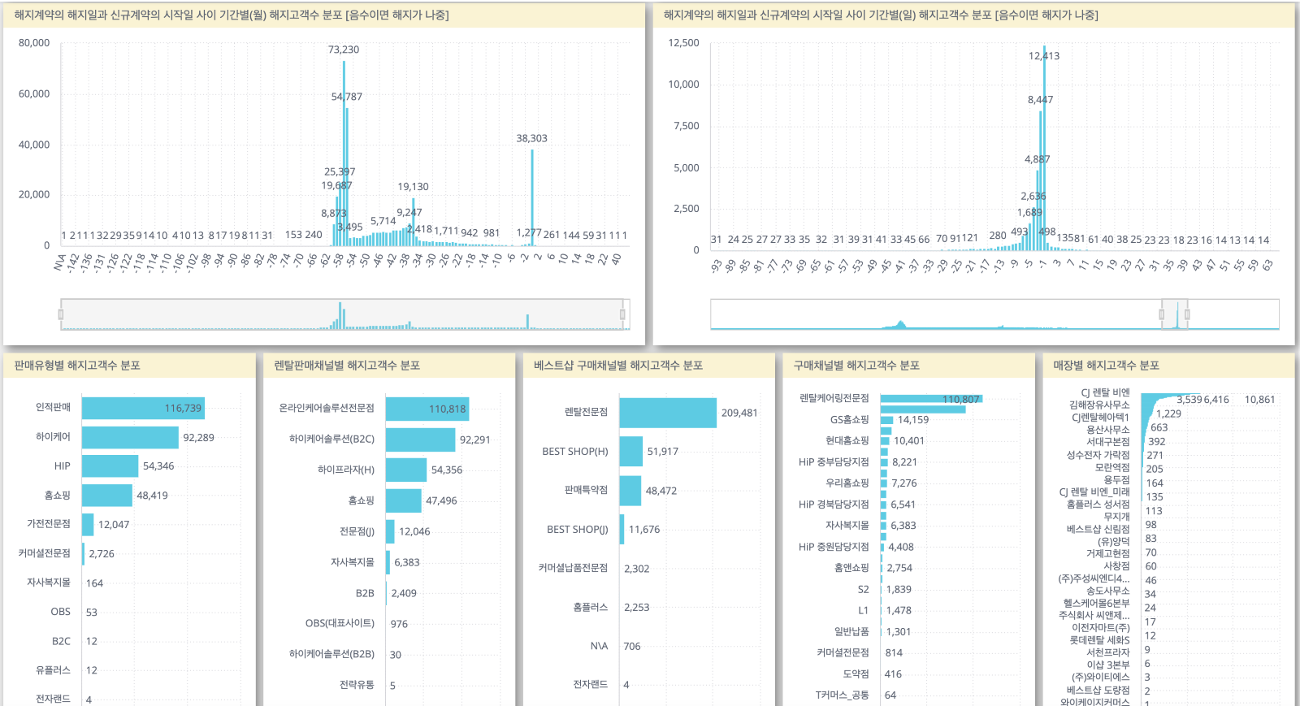
Bar charts showing the number of terminated customers between the termination of the contract and the start date of the new contract, the number of unsubscribed customers by sales channel, the number of unsubscribed customers through purchasing channel, the number of customers lost by store, and more.
Content
The Results
The Challenge
The Solution
Get in touch

Let’s turn your data and AI into measurable outcomes!