

Live Commerce: From Product Discovery to Real-Time Sales
TL;DR: Live commerce
Live commerce combines live video with instant checkout. Viewers watch a host show a product, ask questions in the chat and buy without leaving the stream. Unlike a regular online store, everything happens in one place and in real time. With an omnichannel commerce solution, brands can shorten the path to purchase and catch buyers while their interest is high. They can also grow sales on D2C sites and social marketplaces like TikTok Shop, Shopee and Lazada.
What Is Live Commerce?
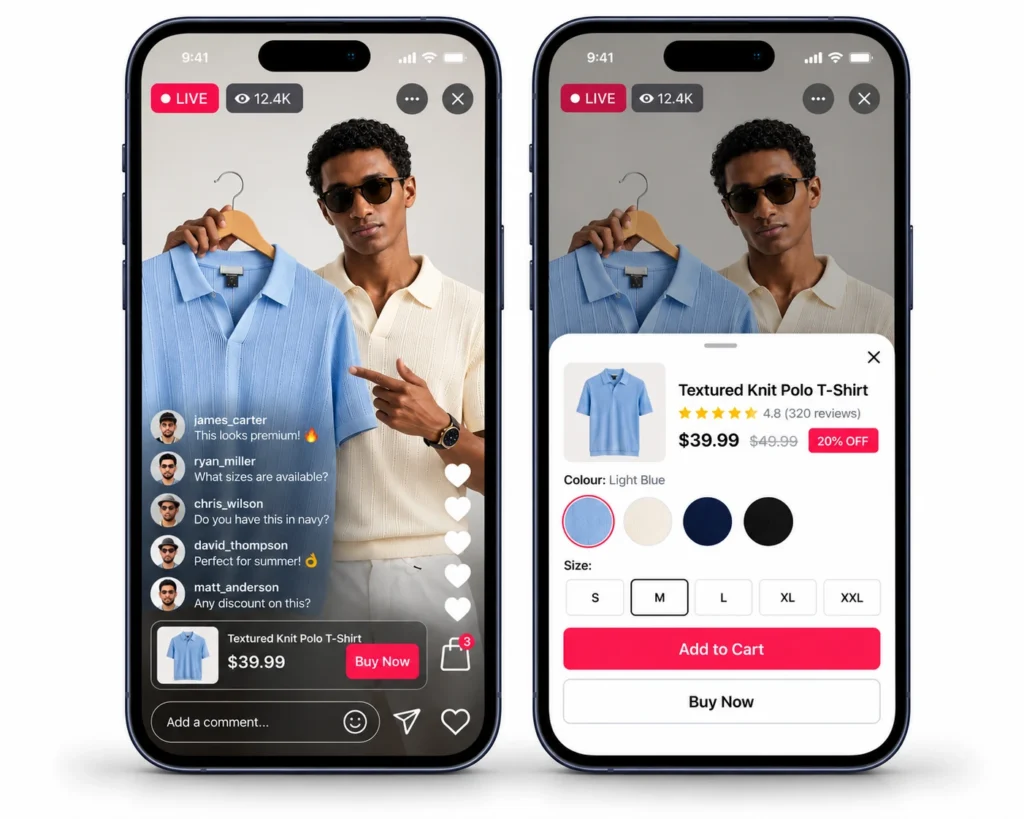
Live commerce is also called live streaming commerce or live shopping. A brand or creator broadcasts live video. Viewers can browse, pick and buy products right inside the video player or chat.
It blends entertainment, social chat and checkout into one experience. Viewers don’t leave the stream to pay. Every step, from choosing a size to paying, happens in real time.
How Does Live Streaming Commerce Work?
Behind the scenes, four things come together: video production, hosts, product listings, and instant payments. Here’s the flow:
- Set up the broadcast and pin products. The brand sets up a stream on a social network or its own D2C site. It pins specific products (SKUs) to the screen.
- Show the products live. Creators present items, answer questions from the chat and try products out based on what viewers ask for.
- Trigger offers at the right moment. Flash discounts, limited vouchers and live stock counters pop up when viewers are most engaged.
- Check out inside the stream. Viewers tap a pinned product card and pay. They never lose the stream.
How Live Commerce Turns Product Discovery Into Real-Time Sales
An enterprise live commerce solution moves viewers through five stages.
1 Discovery: Show the Right Products to the Right People
Strong livestreams start with data. Brands group their audience into segments and send products to creators who reach them. They then promote specific categories to people who are ready to buy. That brings in engaged shoppers instead of people who just scroll past.
2 Engagement: Turn Product Content into a Conversation
Live video does what a product page can’t. Viewers ask questions, vote on colors in the comments and ask the host to demo an item.
3 Decision: Personalize Offers and Next Steps
A social commerce solution lets your stream team send personal voucher drops and limited-time bundles. They act on what viewers are doing and saying in the chat right now.
4 Conversion: Remove Friction Between Interest and Checkout
Major platforms like Shopee, Lazada and TikTok Shop already have checkouts built into their streams. Shoppers pay with saved cards or digital wallets. They can buy it in one tap without leaving the video.
That removes the two biggest reasons people abandon a cart: being sent to another site, and long checkout forms. Live commerce turns interest into a sale on the spot.
5 Learn: Turn Every Live Interaction Into Data
Every chat question, product tap, watch time and voucher use tells you something. Feed that back into your planning. It helps you stock the right items and choose better creators next time.
Why Live Commerce Matters for Retailers and Brands
A connected live shopping solution helps in five ways:
- Faster sales. Urgency, social proof and limited stock turn “maybe later” into “buy now.”
- Higher conversion. Live streams often convert better than static product pages.
- A wider audience. Social video isn’t just for young shoppers anymore. That puts you in front of older shoppers with more spending power.
- Fewer returns. Live demos, fit reviews and Q&A set the right expectations before checkout.
- Honest feedback. Live chat shows you what people really think about your products, prices and features.
ADA proof: We help a CPG brand in SEA to set up a live SKY-level ROI dashboard to 441% increase in conversion rate and a 51% increase in click-through rate by helping the brand optimize ad creatives around its most profitable products.
Read the case study
What Types of Live Commerce Can Brands Use?
The right format depends on your goal. Here are four to choose from.
- Social commerce streams (TikTok Shop, Instagram Live). Creators entertain while viewers discover and buy on impulse. This matters for consumer packaged goods (CPG) brands, especially in APAC.
- Marketplace livestreams (Shopee Live, Lazada Live). These are high-volume streams built for sales. They use the platform’s own traffic, flash vouchers and search visibility.
- Streams on your own D2C site. These are brand-owned, higher-production streams. They work well for your best customers and for exclusive product drops.
- Private streams (WhatsApp or VIP shopping). These are 1:1 or small-group video calls. They suit luxury, high-consideration or specialized B2B products.
To run all of these well, brands need one omnichannel commerce platform. It keeps catalogs, inventory, creator networks and media budgets in sync.
How to Build a Live Commerce Strategy That Works
A strategy that scales needs a clear plan. Follow these five steps:
- Set your goals and pick your channels. Match each stream format (TikTok Shop, Shopee or D2C) to your audience and your margins.
- Choose the right creators and hosts. Look for people who know the product and can ask for the sale, live.
- Plan your offers. Build stream-only bundles, tiered vouchers and flash discounts. Time them for when viewers are most engaged.
- Sync inventory and POS. Pinned products should update instantly from your central inventory. That stops you from overselling when demand spikes.
- Go live on a schedule. Move from one-off events to a weekly or daily schedule. Regular streams build a habit with your audience.
How AI Is Changing Live Commerce
AI takes live streaming from a manual show to a system that learns and automates.
- Live stream insights. Machine learning tracks chat mood, viewer drop-off and sales spikes as they happen. It then suggests changes for the host.
- AI hosts and digital avatars. These tools can run overnight streams when your team is off. They answer chats, explain products and reach shoppers in other time zones, 24/7.
- Smarter offers. AI works out the best voucher value and bundle mix during a broadcast. That lifts gross merchandise value (GMV) while protecting profit margins.
How Should Brands Measure Live Commerce Performance?
Don’t stop at total revenue. To see the real return on a live commerce solution, track the whole funnel.
| Stage | What to track | What good looks like |
| Reach | Peak concurrent viewers (PCV) and total views | Steady growth in viewers over time |
| Engagement | Comments, shares and likes per minute | High activity shows people are considering a buy |
| Conversion | Click-through rate (CTR) and instant conversion rate | Beats your static product page rates |
| Sales impact | GMV and average order value (AOV) | Bigger baskets from stream-only bundles |
| Efficiency | Net margin per stream, after vouchers and creator fees | Every stream turns a profit |
Conclusion: Turning Live Moments Into Connected Commerce
Live commerce is no longer a test. It’s now a core part of how brands grow online. Combine live video, creators people trust and real-time selling on an enterprise omnichannel commerce solution. You’ll turn passive viewers into loyal, high-value customers.
See how ADA’s Marketplace & Social Commerce Solutions can help you build and grow live commerce that converts.
Live Commerce
FAQs
What should retailers look for in a live commerce solution?
Look for four things. First, checkout inside the stream. Second, real-time inventory sync across marketplace and D2C channels. Third, clear stream analytics. Fourth, easy links to your CRM and MarTech tools.
How can brands keep converting shoppers after a livestream ends?
Turn recordings into short, shoppable videos. Send follow-up messages on channels like WhatsApp to people who added items to their cart. You can also retarget viewers with ads that match what they watched.
Is live commerce the same as social commerce?
No. Social commerce means selling through social media in general. Live commerce is one format within it. It uses live video to get shoppers to buy in the moment.
