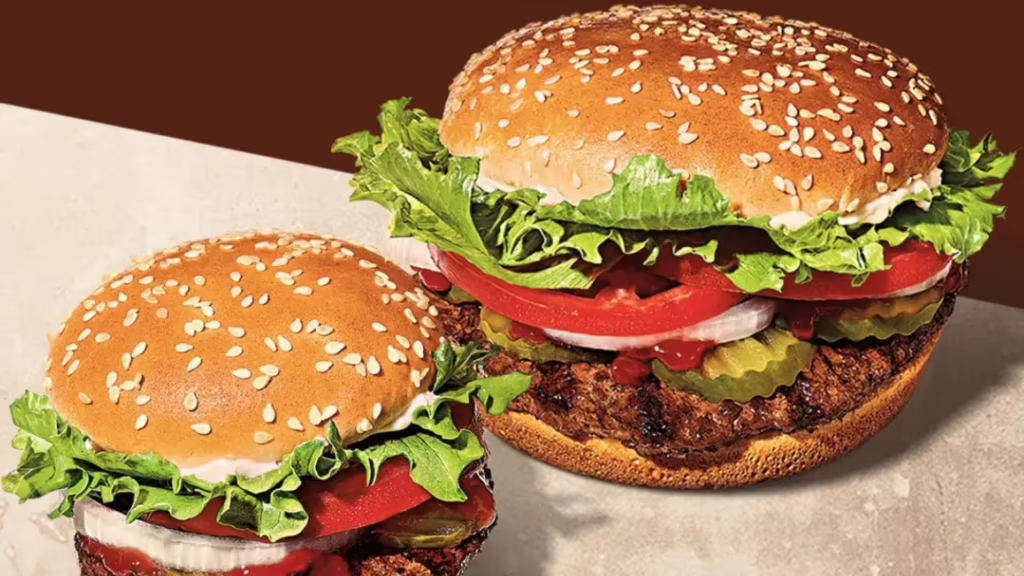
ADA drives daily sales for Thailand Burger King with consumer data & insights
Case Study

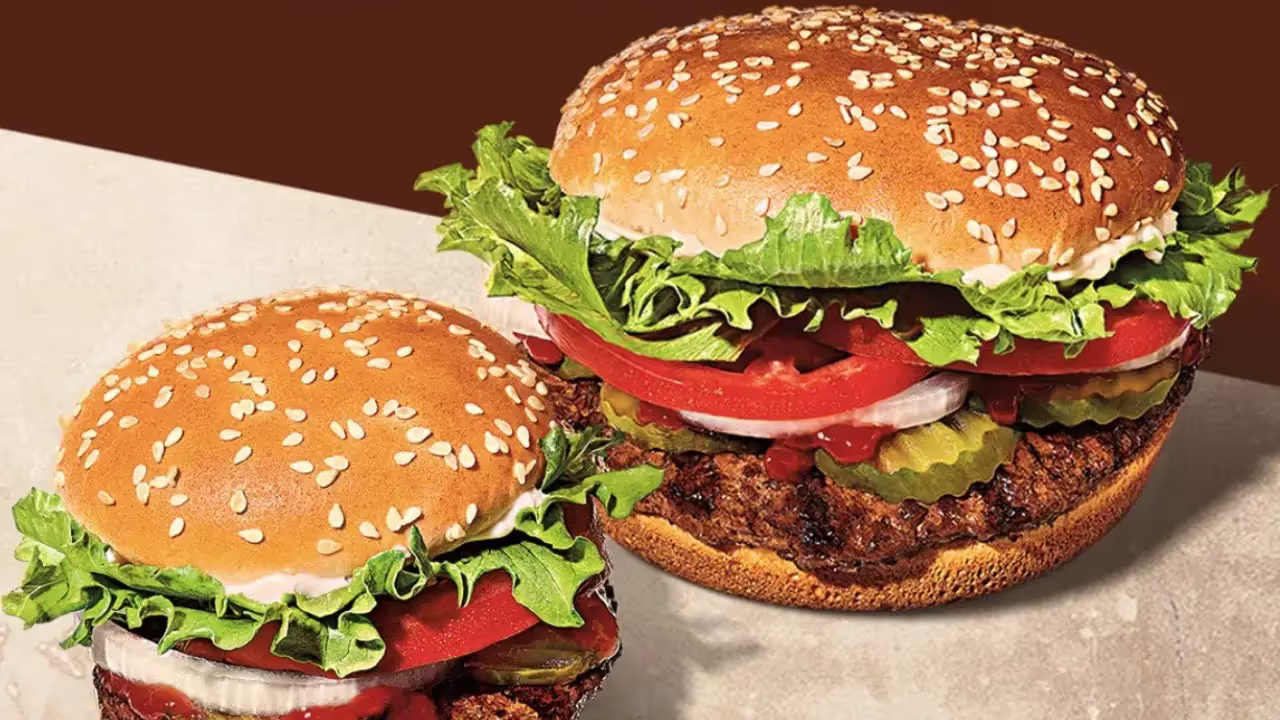
ADA drives daily sales for Thailand Burger King with consumer data & insights

The Results
0 %
growth in daily sales
0 %
growth in brand consideration
0 m
video views on YouTube
0 reach
via digital ads on Facebook and Instagram
The Challenge

Although Burger King in Thailand already had a dedicated fanbase, growth had stagnated over the past two years without major campaigns. Recognizing the need to expand their customer base, they conducted a survey which revealed that Thai consumers perceived the brand as less approachable. To rejuvenate their image, Burger King introduced a new Thai menu, launching a two-month campaign to attract new customers.

The Strategy

To meet their objectives, a comprehensive data-driven strategy was devised. The primary goals were to pioneer a unique campaign approach and gain valuable insights into consumer preferences. This involved strategic partnerships with Facebook and Google to analyze user behavior and tailor impactful ads. Additionally, a thorough competitor analysis identified the need for Burger King to establish a distinct identity in offering traditional Thai meals.

Advanced data extraction techniques, including Audience Explorer, Location Analytics, and Consumer Profiling, were employed to predict consumer purchasing behavior accurately. Hyper-specific audience targeting was executed, focusing on locations with Burger King outlets and leveraging geolocation data to pinpoint areas with high competitor footfall. Precision was maintained by excluding users who had already viewed the new menu.


Content
The Results
The Challenge
The Strategy
Get in touch

Let’s turn your data and AI into measurable outcomes!

ADA reduces defects by 4% through machine learning for quality control in soap manufacturing

Case Study

ADA reduces defects by 4% through machine learning for quality control in soap manufacturing

The Results
  • Overall defect rate was reduced from 5% to 1%
  • Successfully identified recommended parameter settings for the most significant features
  • Simulations were conducted to demonstrate that by manipulating the top 18 important variables, approximately 75% of the undesirable PV values were eliminated
The Challenge

Our client is a prominent multinational consumer goods company headquartered in London, England, with operations spanning across food and homecare products.

The client operates a detergent bar manufacturing plant with a production capacity of 1 million soap bars per day. However, they faced two primary types of defects in their manufacturing process: soft bars and bar cracks. These defects collectively contributed to an overall defect rate of approximately 5%.

The client’s primary objective is to reduce the defect rate in the manufacturing process. By doing so, they aim to enhance the overall product quality, optimise production efficiency, and minimise costs associated with rework and wast

The Strategy
1 Identify operational parameters for defects

After processing operational data spanning four months, we identified approximately 1,500 batches, revealing 55 valid parameters.

2 Develop machine learning models

We developed machine learning models to implement clustering and identifying similar batches based on the operational parameters. The objective is to identify the top 18 parameters among the 55 that are responsible for causing defects.

3 Identify the parameter ranges for golden batches

Based on data generated from benchmarked batches, ideal range recommendations were provided for all the identified important features.

4 Develop and deploy a simulator application

A web application was developed to assist floor operators to make informed decisions regarding input parameter ranges and obtain predictions on bar softness and cracks. Regression techniques are employed to predict bar softness, while classification techniques are used to predict bar cracks within a batch.

The Execution
5 Understanding the manufacturing process and factor mapping

We initiated the project by conducting internal research on the soap manufacturing process, engaging with industry experts, and visiting the client’s manufacturing plant to communicate with their on-site team. We also collaborated with SMEs to identify potential factors that could contribute to defects. Based on this, a factor map was developed, and hypotheses were formulated for testing.

6 Data ingestion

The client uploaded data from legacy systems onto a drive. However, as the data was not initially intended for analytics, it was scattered across numerous unstructured files. To address this, custom algorithms were developed to clean and consolidate the data. Around 1,500 batches were identified, and the analytical dataset (ADS) was constructed.

7 EDA and Golden batch analysis and recommendations

Once the data processing was complete, an exploratory data analysis (EDA) was performed to assess data sufficiency, accuracy, and eliminate unnecessary information. Clustering techniques were employed to identify similar batches within the dataset, which led to the formation of four distinct clusters. From these clusters, two were singled out: one characterised by low bar softness and the other by high bar softness.

Subsequently, we merged these clusters, and machine learning algorithms were employed to determine key factors contributing to bar softness. Upon further analysis, it was found that out of the 55 parameters, 18 were identified as highly influential in determining bar softness. By leveraging advanced statistical techniques, optimal parameter ranges were derived and shared with the plant team.

During EDA, we also discovered that implementing golden batch recommendations to minimise bar softness resulted in a reduction in bar cracks. To validate this hypothesis, a simulation analysis was conducted.

8 Creating a simulator

A web application was created. This application served as a platform for operators to input parameter values conveniently. In the backend, machine learning models were utilised to retrieve the predicted Penetration Value (PV) and the probability of encountering bar cracks. These models analysed the provided values, delivering precise predictions for PV, and evaluating the likelihood of bar cracks.

Content
The Results
The Challenge
The Strategy
The Execution
Get in touch

Let’s turn your data and AI into measurable outcomes!

Revitalizing a healthy food chain’s brand with first-party data & location analytics

Case Study

Revitalizing a healthy food chain’s brand with first-party data & location analytics

The Results
0 %
surge in sales
0 %
rise in new customers
0 %
boost in profitability
Challenge

This innovative food brand was conceived to revolutionize salads and redefine fast food. However, the onset of COVID-19 dealt a severe blow to the food retail industry, and this brand was not exempt from the challenges. They grappled with dwindling profit margins, necessitating the closure of 25% of their outlets. Additionally, the burden of ongoing rental costs and delivery platform commissions made it challenging to sustain operations, even with subsidies. In response, they pivoted from selling salads to offering ingredients and meal kits to cater to the WFH crowd. However, this transition fell short, with the website experience falling below par and weekly orders languishing in the single digits.

The Solution

ADA conducted a comprehensive audit, identifying quick-win opportunities and deeper challenges. Customer-centric insights emerged:

  • Surge in home-based, healthy cooking
  • Willingness to invest in higher-quality ingredients with delivery savings
  • Openness to explore alternative ordering channels

Observing a preference for low-rental shophouses near private estates, ADA recommended launching a cloud kitchen operation. This liberated the brand from commission levies imposed by retail mall landlords.

The establishment of a “Cloud Kitchen” emphasized zonal targeting and differentiated offers, driving both awareness and cost efficiency. Paid media played a pivotal role in conversion, with RFM analysis optimizing customer lifetime value. The brand’s focus on plant-based protein aligned with health-conscious trends, fortified by collaborations with local chefs.

Awards
  • Gold in Best Response to Change category at The Drum Digital Advertising Awards 2021
  • Silver in Retail, Ecommerce and Consumer Goods category at The Drum Digital Advertising Awards 2021
  • Silver in Food & Beverage category at Mob-Ex 2021
  • Bronze in Best Launch / Relaunch at Mob-Ex 2021
Content
Results
Challenge
Solution
Awards
Get in touch

Let’s turn your data and AI into measurable outcomes!

ADA executed precision targeting for BonusLink, resulting in a surge in app installs and registrations

Case Study

ADA executed precision targeting for BonusLink, resulting in a surge in app installs and registrations

The Results
0 x
ROI on digital welcome offers and registration drives
Challenge

BonusLink needed to transition from physical loyalty cards to a digital platform to engage younger Malaysians.

The Solution

BonusLink targeted a diverse audience to transition from physical cards to digital app users, retaining loyal customers while acquiring new ones. Focusing on Baby Boomers, frequent Shell patrons,Generation Y, and bargain hunters, they blended tradition with innovation,leveraging familiarity and value. Targeting tech-savvy younger generations ensured room for future growth.

ADA used data insights from XACT to refine targeting strategies and crafted custom creatives for different segments. A compelling welcome offer incentivised app installations and registrations. Continuous optimisation ensured sustained success.

The Execution
1 Custom Creatives
2 Real-Time Optimization

Continuous monitoring and refinement of targeting, messaging, and incentives.

3 Precision Targeting

Data-driven techniques to identify and convert high-propensity users

Content
Results
Challenge
Solution
Execution
Get in touch

Let’s turn your data and AI into measurable outcomes!

ADA designed and built a Consent Management System for a fast-food chain company to ensure all campaigns remained customer privacy compliant ​

ADA designed and built a Consent Management System for a fast-food chain company to ensure all campaigns remained customer privacy compliant ​

The Results

▲ Compliance

Improved customer privacy compliance through the streamlined and automated consent management system​

▲ Brand & Trust

The consent filtering ensured campaign is sent to only opt-in customers strengthen the brand and enhanced customer trust ​

The Challenge

A franchisee of global fast-food chains with more than 1,000 restaurants across SEA, is looking for a unified Consent Management System to collect and organize customer consent from various sources. This is crucial to the client in building trust and brand image as they would like to automatically filter customers who have given them the consent for email campaigns.​

The Solution

ADA designed and built an automated Consent Management System to enhance how customer consents are captured and managed across various channels. This streamlined system ensures compliance with privacy regulations and timely updates of consent data to the marketing activation platform.​

Results
Challenge
Solution
Get in touch

Let’s turn your data and AI into measurable outcomes

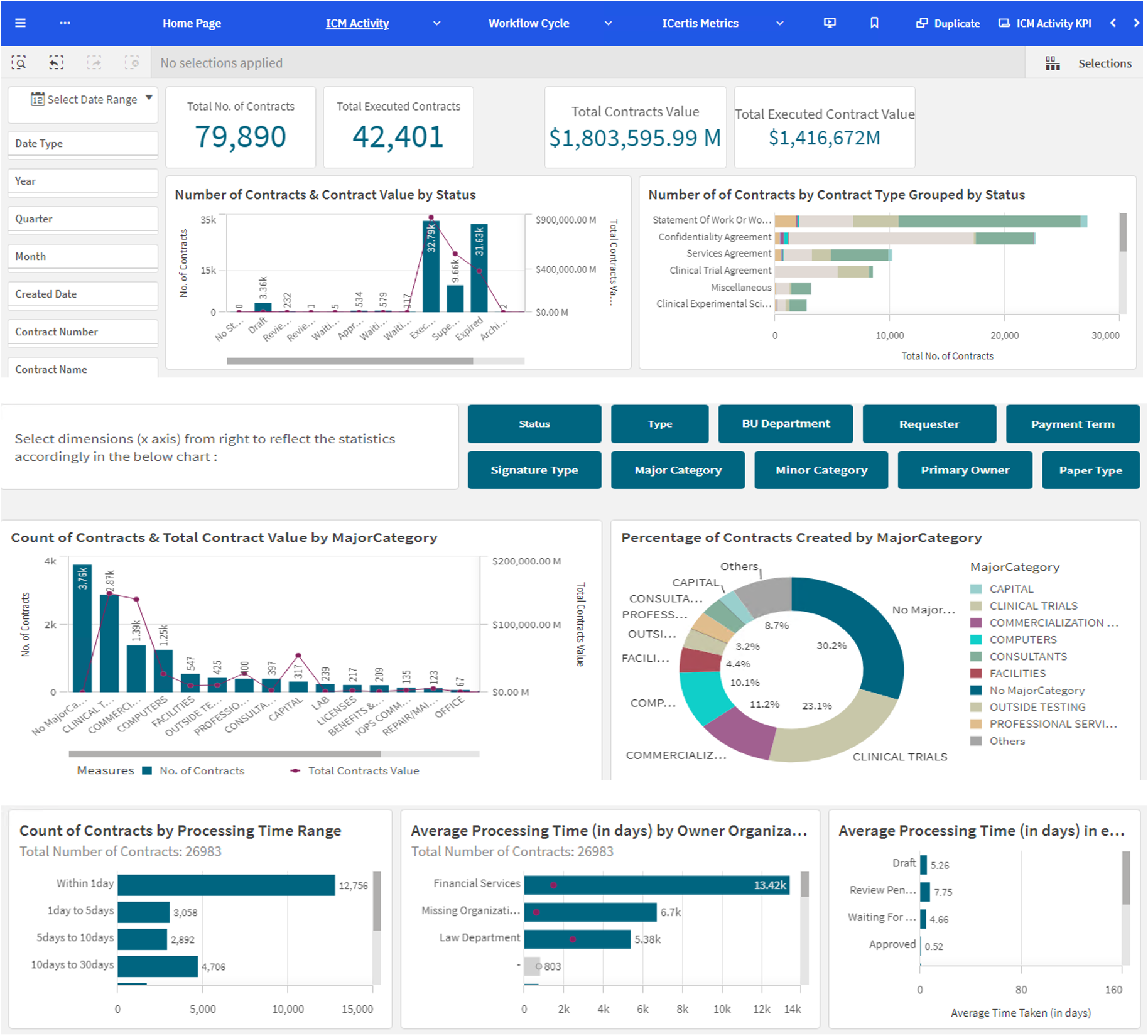
We assisted a prominent regional company in enhancing their contract management process, resulting in significant time savings​

We assisted a prominent regional company in enhancing their contract management process, resulting in significant time savings​

The Results
0 %
Reduced Processing Time at the Contract Review Phase​
Easier identification of critical contract groups & corresponding processing time. Automated report refresh with no manual effort & zero errors​
The Challenge

In the fast-paced realm of biotechnology, strategic decision-making is imperative for success. Our client, a prominent biotechnology company, is dedicated to pioneering scientific advancements to deliver life-saving medicines to those in need. ​

However, amidst their commitment to innovation, they faced a significant operational challenge: effectively managing contracts across diverse categories. ​

Recognizing the need for data-driven insights to streamline contract processing, our client sought to implement a robust Business Intelligence (BI) Dashboard. This dashboard would offer a comprehensive overview of contract categories and processing times, enabling informed decisions to optimize efficiency and drive operational excellence.​

The Solution
1 Contract Management Dashboard
  • Summary of Contract by Status.​
  • Distribution of contract across owner organization.​
  • Contract distribution & USD value across business category.​
  • Dynamic charts whose X axis changes based on selection.​
2 Average Processing Time​

We developed a Business Intelligence (BI) Dashboard that offers a comprehensive overview of contract categories and processing times, enabling informed decisions to optimize efficiency and drive operational excellence, including matrix on​

  • Target metric for the dashboard.​
  • Track Average Processing time across Contract Owner Org, Workflow stage.​
3 Trend​
  • Contract Value Growth over time.​
  • Contract Value Growth over time and contract category.​

The Results
The Challenge
The Solution
Contact

Let’s turn your data and AI into measurable outcomes

We empowered a leading food delivery player to improve customer experience with impact analysis and SOP change

We empowered a leading food delivery player to improve customer experience with impact analysis and SOP change

Results
We observed a drop in wrong order % by one point
Challenge

The client is a leading food delivery and Q-Commerce platform in India, with over 100 million customers and a revenue of $900 million. They are revolutionizing the industry with their  technology and commitment to customer satisfaction.

The client faced a challenge in ensuring the accuracy of food orders delivered to customers through its platform. Instances of incorrect orders being handed over to delivery executives by restaurants have led to a surge in customer complaints and a decline in overall order ratings.

The absence of a centralized tracking system further exacerbated the issue, resulting in low visibility and hindering the client’s ability to effectively monitor and address these discrepancies. Thus, there was a need to conduct an impact analysis of reforming the Order Handover Standard Operating Procedure (SOP) to mitigate the frequency of wrong order deliveries and enhance customer satisfaction.

The Solution
1 Pre-Post Analysis to asses impact

In addressing the challenge, we adopted a structured approach involving Pre-Post Analysis to comprehensively assess the impact of the proposed SOP reform. Our solution entailed the introduction of QR scanning during order handover from restaurants to delivery executives. To evaluate the effectiveness of this reform, we conducted a 1-month transaction period pilot with selected restaurants.

During this pilot phase, restaurants were categorized into different cohorts based on their adherence to the reform and the type of Kitchen Order Ticket (KOT) system used (handwritten/POS). We meticulously assessed both check and success metrics across these cohorts to gauge the reform’s impact.

Dashboarding

To facilitate ongoing monitoring and analysis post-scale-up, we developed a robust dashboard. This dashboard provides a clear and concise view of various metrics related to the reform’s impact. It offers insights at multiple levels, including city, brand, restaurant, and KOT type, enabling stakeholders to track performance effectively and make informed decisions.

Results
Challenge
Solution
Contact

Let’s turn your data and AI into measurable outcomes

We helped leading Food Delivery and Quick Commerce brand increase orders through increased partner restaurant ratings

We helped leading Food Delivery and Quick Commerce brand increase orders through increased partner restaurant ratings

Results
0 %
Increase in platform level restaurant ratings
0 %
Of restaurants observed improved restaurant ratings
0 %
increase in OPD (Order per day)
Challenge

The customer is a leading food aggregator connecting restaurants to over 100M customers across the continent, generating $900M in revenue.​

The client faced challenges with its monthly payout protocol and SOP, which led to restaurant partner attrition and lower NPS, partly due to non-collaborative deductions for customer complaints.​

ADA helped to revamp SOP by addressing partner concerns with a restructured SOP for equitable gratification practices and a Power BI dashboard for real-time performance tracking and monitoring complaints such as viewing rates, response rates and gratification acceptance.​

The strategic changes resulted in a 7% increase in NPS, a 3% decrease in partner attrition, and improved engagement with the revised SOP.​

Solution

ADA designed a data-driven Strategic Pricing Solution that replaced broad, one-size-fits-all promotions with precise, behaviour-based incentives aligned to the client’s growth and profitability goals.

We began by analysing historical order data, customer lifetime value, and price sensitivity patterns to identify meaningful behavioural segments. Customers were then grouped into frequency-based and value-based buckets, enabling tailored cashback strategies that encouraged faster repeat purchases without overspending on incentives.

Results
Challenge
Solution
Contact

Let’s turn your data and AI into measurable outcomes

Gaining 6x ROAS for an Indonesian dairy-based nutrition company with CPAS campaign

Case Study

Gaining 6x ROAS for an Indonesian dairy-based nutrition company with CPAS campaign

The Results

Successfully established itself on Lazada in Indonesia

0 M
people reached
0 x
growth in ROAS
The Challenge

Our client, a prominent global dairy-based nutrition specialist, known for providing essential milk products for children and families, had been a market leader in Indonesia for generations. However, with increasing competition in the category, they faced a challenge in converting their market awareness into sales. Despite multiple engagement and sales campaigns, their efforts were falling short.

The Strategy

To address this issue, we shifted our focus towards channel selection and product platform optimization to drive tangible sales growth with trackable and optimizable conversions. This involved a comprehensive business expansion strategy on the eCommerce platform, particularly targeting major sales events like Singles’ Day and 12.12. We employed broad audience targeting, emphasizing Indonesian women in the 20 to 35 age range, particularly those in the motherhood phase who value quality products. Additionally, retargeting was implemented for users who had previously shown interest in products but had not completed a purchase. Automatic placements and campaign budget optimization were utilized to ensure cost-effective ad delivery across various platforms.

Awards
  • Bronze in Best Use of Gamification category at Loyalty & Engagement Awards 2020
  • Bronze in Best Use of Technology category at Loyalty & Engagement awards 2020
  • Bronze in Best Use of Mobile ‚Äì Food & Beverage category at Mob-Ex 2020
  • Bronze in Best Use of Mobile ‚Äì Gaming category at Mob-Ex 2020
  • Silver in Innovation category at MMA SMARTIES APAC 2020
  • Silver in Innovation category at MMA SMARTIES Indonesia 2020
  • Bronze in Most Engaging Mobile Creative category at MMA SMARTIES Indonesia 2020
Content
Results
Challenge
Strategy
Awards
Get in touch

Let’s turn your data and AI into measurable outcomes!

Scoring 450k engagements for a top butter brand on TikTok

Case Study

Scoring 450k engagements for a top butter brand on TikTok

The Results
0 K
Total Page Views in the HTC page
0 K
Total Engagements with Campaign Hashtag
0 M
Total Video Views against benchmark of 6M to 25M
The Challenge

A multinational butter brand in the Philippines faced the challenge of declining market share amid stiff competition and a prolonged absence from advertising campaigns. To regain relevance, ADA devised a unique strategy leveraging TikTok to engage and entice users

The Strategy

The approach involved launching a branded hashtag challenge (HTC) on TikTok, a platform known for its trend-driven content. By encouraging users to participate, the campaign aimed to create a viral trend showcasing the brand’s versatility in cooking. Additionally, the product was introduced on TikTok to expand its reach and attract new and returning customers. To incentivize participation, rewards were offered to challenge participants.

The Awards
  • Silver in Excellence in Brand Strategy category at Marketing Excellence Awards 2022
  • Bronze in Excellence in Mobile Marketing category at Marketing Excellence Awards 2022
  • Bronze in Social Media Marketing category at Marketing Excellence Awards 2022
Content
Results
Challenge
Strategy
Awards
Get in touch

Let’s turn your data and AI into measurable outcomes!