
Redefining Fraud Detection in BFSI: Why Generative AI is the New Standard

Identity
Blogs

Redefining Fraud Detection in BFSI: Why Generative AI is the New Standard

Fraud in the banking, financial services and insurance (BFSI) sector is no longer what it used to be. It’s faster, more elusive, and increasingly powered by artificial intelligence. Deepfakes, synthetic identities, and AI-generated scams have emerged, often evading traditional rule-based detection.

Yet, many organisations are still relying on manual reviews and outdated fraud prevention measures, struggling to keep up with threats that change day by day. The result is a growing gap between the nature of modern fraud and the systems designed to stop it.

We’re reaching a turning point where the scale and complexity of AI fraud detection in BFSI demands more than just incremental change. The question now is not whether generative AI will redefine fraud detection in BFSI, but whether businesses and consumers are prepared for what comes next.

Business Challenges 

Fraud detection has always been a high-stakes game. A missed incident can lead to severe financial loss, regulatory scrutiny, and customer fallout. But when systems are too strict and wrongly flag genuine activity, they can cause just as much harm.

This often leads to frustrated customers, delayed transactions, and a slow loss of trust. In many cases, it becomes too easy to cross the line between being careful and creating unnecessary friction.

The nature of fraud has changed. Fraudsters now use generative AI in financial services to fake identities, forge documents, and create lifelike deepfakes. These attacks happen quickly, on a large scale, and often come from many directions at once.

Yet many businesses are still relying on static rules and siloed systems that lack real-time visibility. This creates blind spots across operations, and these vulnerabilities are being exploited more frequently.

Meanwhile, internal teams are increasingly under pressure. Manual fraud reviews and compliance checks have become time-consuming and difficult to sustain. As case volumes rise and regulatory demands grow more complex, businesses find themselves allocating more resources just to stay afloat. The results are often inconsistent, and the operational cost continues to climb.

Outdated systems may create the appearance of control, but often confuse rigidity with safety. False positives become routine, causing unnecessary delays for legitimate users and damaging the customer experience. Rising expectations around Anti-Money Laundering (AML) and Know Your Customer (KYC) compliance only add to the strain, increasing the risk of operational errors, regulatory findings, and customer churn. These challenges are not just the result of evolving threats. They are symptoms of systems that have not kept up with AI in fraud detection and prevention. To move forward, businesses first need to understand why their current approach is no longer effective and what signs to look for before small inefficiencies turn into systemic vulnerabilities.

Traditional Systems Are Falling Behind

Many fraud detection systems in use today were built for a different kind of threat landscape. Most are based on static rules or pre-trained machine learning models, which work reasonably well for known attack patterns. But modern fraud is anything but predictable. It evolves quickly, often in ways these systems were never designed to handle. As a result, they struggle to detect unfamiliar tactics, missing the subtle context and complexity that define today’s AI-driven fraud.

The core problem is that traditional systems are not flexible. They follow fixed rules and need manual updates to handle new risks. So when new types of fraud appear, like synthetic identities or deepfakes, rule-based engines and static models often miss them until rules are updated. As a result, businesses have to rely on people to catch what the system overlooks, which slows everything down and puts more pressure on teams.

Fragmentation is another common challenge. In many businesses, fraud detection capabilities are spread across departments, channels, or business units. Without integration, insights remain trapped in silos. This makes it harder to see patterns across the organisation or respond quickly when incidents occur. Blind spots emerge, and teams are left reacting instead of staying ahead.

If your fraud response feels reactive, overly dependent on manual review, or inconsistent across teams and systems, it may be time to re-evaluate. These are strong indicators that the current setup is no longer equipped to support scalable, proactive AI in fraud detection and prevention.

The Limitations Are Costly

The biggest weakness in traditional fraud systems is not just that they are outdated. They were never designed to keep up with an opponent that evolves. In today’s environment, that opponent is generative AI, and the legacy systems in place simply cannot match its pace or intelligence.

Current systems operate on predefined rules or old data models. As a result, they can only detect what they already know. This reactive posture creates critical blind spots, especially as fraud becomes more dynamic, creative, and unpredictable.

Scalability is another mounting concern. As transaction volumes grow and fraud techniques become increasingly complex, manual and semi-automated processes begin to collapse under the weight. What once worked for smaller volumes now introduces operational bottlenecks, delays, and missed risks at scale. Businesses are left in a position where they cannot grow confidently because their systems cannot grow with them.

Compliance is also becoming harder to manage. Regulatory expectations continue to shift, and interpreting these changes manually increases the risk of falling out of step. More than 60% of wealth managers are already utilising generative AI in financial services to support their compliance functions. Businesses that rely solely on manual reviews or fragmented systems are falling behind—not just in efficiency, but in regulatory readiness.

All of this reflects a deeper issue. Traditional fraud systems are not just falling short. They are actively holding businesses back from the agility, scale, and intelligence required in today’s landscape. The inability to fight AI with AI has become the defining limitation of current fraud strategies—and the reason generative AI fraud detection is no longer optional.

A Generative AI Approach That Works for BFSI

Addressing modern fraud threats requires more than incremental upgrades. It calls for a new standard—one that replaces rigid detection methods with systems that learn, adapt, and improve.

Generative AI offers exactly that. It can interpret complex regulatory frameworks, detect emerging fraud patterns, and understand behavioural context in real time. The result is fewer false positives, smarter anomaly detection, and faster responses to evolving threats. By analysing both structured and unstructured data, these systems can flag unfamiliar typologies and predict risks such as deepfakes or synthetic accounts before they escalate.

It also helps streamline compliance by analysing regulatory texts, mapping them to internal policies, and flagging potential considerations for expert review. With human oversight guiding final decisions, this approach reduces the lag between regulatory change and implementation, improving both efficiency and assurance.

These benefits are already visible in practice. Leading financial institutions have reported tangible results, such as fewer account validation rejections and stronger fraud prevention, while also enhancing the customer experience.

What sets ADA apart is not just the technology, but the way it is delivered. Rather than offering an off-the-shelf product, ADA takes a consultative, end-to-end approach. It starts with a deep understanding of each organisation’s risk landscape, operational realities, and growth objectives. From there, solutions are tailored and seamlessly integrated across existing systems, ensuring both immediate effectiveness and long-term sustainability. This approach ensures businesses are equipped with solutions that evolve with them, not just for them.

It is a strategic transformation, not just a technical one. One that demands continuous model optimisation, cross-functional alignment, and a shared commitment to evolving with the threat landscape.

For BFSI businesses looking to close the gap between risk and response, ADA’s generative AI solution doesn’t just offer improvement. It offers measurable gains in precision, speed, and scalability.

Conclusion

By now, it’s clear that the biggest risks in fraud prevention aren’t just from outside threats. They also come from using outdated systems that can’t keep up with the speed, complexity, and intelligence of modern fraud.

Many of today’s challenges stem from not embracing newer, more adaptive approaches. Legacy systems create blind spots, waste resources, and increase the risk of regulatory penalties, customer dissatisfaction, and financial loss.

The businesses that will stay ahead are those that recognise the need to evolve and take meaningful steps forward. Generative AI in financial services is no longer a distant idea, it’s already making a difference in how organisations approach fraud detection, compliance, and customer trust.

The real question is no longer if you should upgrade your fraud prevention strategy, but how soon.

To explore how ADA’s services can support smarter, more proactive approaches to risk and compliance in the BFSI sector, visit our core service pages or explore our latest insights. The future of fraud prevention begins with the right knowledge—and the right partner.


Table Of Contents
Business Challenges 
Traditional Systems Are Falling Behind
The Limitations Are Costly
A Generative AI Approach That Works for BFSI
Conclusion

10 Proven Ways to Attract Customers and Boost Business Sales

Digital Commerce
Blogs

10 Proven Ways to Attract Customers and Boost Business Sales

10 Proven Ways to Attract Customers and Boost Business Sales

Attracting new customers is essential for both new and established businesses. The goal isn’t just to generate a one-time sale, but to build a loyal customer base that supports long-term growth.

The key lies in understanding your target audience—who they are, where they are, and what motivates them. With these insights, you can tailor your marketing, communication, and engagement strategies to attract them and make them come back for more.

Below are 10 proven strategies to help you attract more customers and increase sales, enriched with modern digital, data-driven, and AI technologies.

1 Define a Clear Brand Identity

Your brand is more than just a logo; it’s the perception your customers have of your business.

  • Establish clear business goals and identify the audience you want to reach.
  • Build consistent brand elements (name, logo, slogan, communication tone) that are easily recognizable.
  • Use data analytics to refine audience segmentation based on demographics, location, and shopping behavior.

A strong and clear identity will make it easier for customers to trust and remember you.

2 Offer a Unique Product

Differentiate your business by creating a product or service that stands out.

  • This could be in terms of design, quality, sustainability, ethical sourcing, or social contribution.
  • Regularly evaluate market needs and update your offerings to stay relevant.
  • Use competitor analysis tools to find gaps that your competitors haven’t filled.

A unique product offering makes it harder for customers to switch to other alternatives.

3 Use Content Marketing Strategically

High-quality, relevant content builds awareness and credibility.

  • Publish articles, videos, and infographics that educate, entertain, or solve customer problems.
  • Distribute content through your website, email newsletters, and social media.
  • Collaborate with influencers in your niche to expand your reach and credibility.
  • Use AI-powered content recommendations to personalise the content customers see based on their browsing history.

4 Leverage Social Media Engagement

Social media platforms are powerful tools for attracting and engaging customers.

  • Be active on the platforms your audience uses most (Instagram, LinkedIn, TikTok, Facebook, X, Xiaohongshu).
  • Use short videos, trending challenges, live streams, and polls to encourage interaction.
  • Combine organic posts with targeted paid ads for faster reach.
  • Track engagement using social media analytics to understand which content is most effective at generating conversions.

5 Optimise Your Website for Sales

Your website is often a customer’s first impression; make sure it’s the best one.

  • Ensure a professional, mobile-friendly design with clear navigation and fast loading times.
  • Provide complete product information, high-quality visuals, and customer reviews.
  • Implement best SEO practices to be easily found on search engines.
  • Offer a secure and smooth checkout process with various payment methods.
  • Use heatmaps and user behaviour analytics to refine the user experience.

6 Offer Discounts and Loyalty Programs

Reward new and existing customers to encourage repeat purchases.

  • Use limited-time discounts to attract new buyers.
  • Create a loyalty program with points, rewards, or special perks for loyal customers.
  • Add referral incentives to turn loyal customers into brand promoters.
  • Track loyalty program data to identify high-value customers and personalise rewards.

7 Provide an Exceptional Customer Experience

Customer service can be your strongest sales driver.

  • Respond to inquiries quickly and professionally across all channels.
  • Provide a flexible return policy, easy payment process, and transparent communication.
  • Surprise customers with small touches, such as handwritten thank-you notes or free samples.
  • Use an AI chatbot for 24/7 support and to instantly resolve common issues.

8 Create a Sense of Urgency for Your Products

Urgency leverages the fear of missing out (FOMO).

  • Use phrases like “limited edition,” “only 3 left,” or “offer ends in 24 hours.”
  • Highlight exclusive benefits for immediate purchases.
  • Combine urgency with personalisation, for example, “The size you’re viewing is almost sold out.”

Display real-time stock updates on your site to reinforce the message of scarcity.

9 Host Monthly Promotional Events

Regular events keep your brand top-of-mind and create anticipation.

  • Schedule promotions on key shopping dates (e.g., 11.11, Black Friday).
  • Include discounts, bundling, free shipping, or special gifts.
  • Host online webinars, product demos, or interactive Q&A sessions to build engagement.
  • Track event performance to refine your next campaign.

10 Leverage Reviews and Testimonials

Customer reviews are one of the strongest signals of trust.

  • Encourage satisfied customers to leave reviews via follow-up emails or incentives.
  • Feature the best reviews on your website and social media.
  • Respond to all reviews, even negative ones, to show that you value customer feedback.
  • Use review aggregator tools to automatically collect and display testimonials.

Why is Attracting Customers Important?

  • Business Growth: New customers increase sales and long-term revenue.
  • Building a Reputation: Positive experiences and word-of-mouth increase trust.
  • Competitive Advantage: Unique offerings and great service help you win in a crowded market.
  • Customer Retention: Loyal customers are cheaper to retain and tend to buy more.
  • Valuable Insights: More interactions mean more data for improvement.

Conclusion: Maximise Customer Acquisition with ADA Global

Attracting customers in today’s market requires more than just traditional marketing; it demands data-driven personalisation, multi-channel engagement, and AI-powered insights.

That’s exactly what ADA Global offers. Our integrated solutions help you:

  • Identify and target your ideal audience with precision.
  • Engage customers through personalised content and offers.
  • Optimise every interaction point for higher conversion and retention.

With ADA Global’s Customer Data Platform, Digital Commerce solutions, and Conversational AI, you can transform these 10 strategies into measurable growth for your business.

Find out how ADA Global can help you attract, convert, and retain more customers. Visit adaglobal.com.

Table Of Contents
10 Proven Ways to Attract Customers and Boost Business Sales
Why is Attracting Customers Important?
Conclusion: Maximise Customer Acquisition with ADA Global

GMV vs. Revenue: A Complete Guide to Ecommerce Metrics & 2025 Strategy

Data & AI
Blogs

GMV vs. Revenue: A Complete Guide to Ecommerce Metrics & 2025 Strategy

So What is GMV and Why is It Important for Ecommerce?

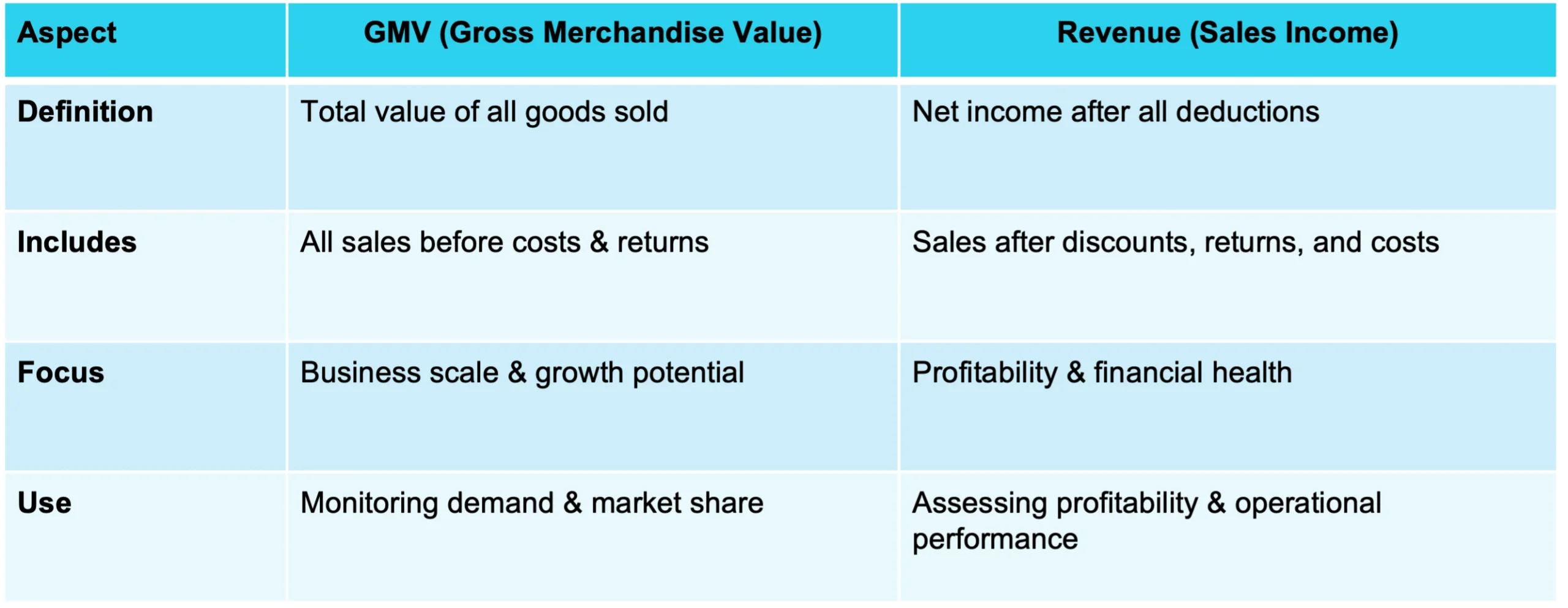
GMV (Gross Merchandise Value) is the total value of all goods sold through your platform within a certain period. GMV is calculated before deducting discounts, returns, or other costs, making it a top-line metric that shows the overall scale of sales.

While revenue describes net income after ALL deductions, GMV provides a big picture of sales activity, regardless of operational costs.


Benefits of monitoring GMV:

1. Complete Picture of Sales Activity‍

Includes all transactions, including those that have not yet generated net revenue, providing a total view of customer spending across all product categories.‍

2. Identifies Growth Potential‍

An increase in GMV is an early indicator of business expansion and positive market trends.‍

3. Measures Marketing Campaign Impact‍

Comparing GMV before and after a campaign helps to accurately evaluate marketing ROI.

Want to monitor GMV across all marketplaces with integrated data? Use eCommerce Analytics Services from ADA Global for more precise insights.


GMV vs. Revenue: Key Differences

Why GMV is More Consistent for Cross-Platform Comparison

Revenue is often difficult to compare across platforms like Shopee, Lazada, Tokopedia, or TikTok Shop due to differences in:

  • Cost and commission structures
  • Discount policies
  • Return procedures

A revenue number from one platform isn’t directly comparable to another. That’s why GMV is so useful. It gives you a consistent way to measure sales size, without being changed by the different policies and fees each platform has.

GMV Formula:
GMV = Number of Units Sold × Selling Price per Unit

Examples:

  • Shopee: Product price × number sold (before discounts & returns)
  • Tokopedia: Product price × number sold (does not include shipping)
  • TikTok: Sales Price per Unit x Number of Units Sold
  • Lazada: Product price × number sold before adjustments

Need to standardise cross-channel GMV reports? Use ADA Global’s Multi-Channel Sales Management Services.

Other KPIs to Monitor Along with GMV

GMV will be more useful if analysed along with other key metrics:

  • Revenue – Assesses actual profitability.
  • Net Merchandise Value (NMV) – GMV minus discounts & returns, for a picture of actual sales.
  • Customer Lifetime Value (CLV) – Projected total revenue from a single customer over their time with your brand.

Combining GMV with these metrics helps maintain a balance between growth (top-line) and profitability (bottom-line).

How to Leverage GMV Data to Grow Your Business

  • Analyse Trends & Sales Patterns – Identify peak seasons, best-selling products, and changes in demand
  • Customer Segmentation – Categorise customers based on spending value to create more relevant promotions
  • Evaluate Product Performance – Focus campaigns on products with the largest GMV contribution
  • Optimise Pricing Strategy – Monitor the impact of price changes on GMV to find the optimal point
  • Increase Operational Efficiency – Combine GMV data with metrics like shipping time and return rates.
  • Measure Marketing ROI – Find out which marketing channels are most effective and allocate the budget appropriately.

Conclusion

Revenue is important for understanding profitability, but GMV provides a comprehensive view of growth and market demand. By monitoring GMV along with other KPIs, you can make smarter decisions, optimise strategies, and strengthen your eCommerce business operations.

Want to turn GMV data into real growth strategies? ADA Global’s eCommerce Data Analytics team is ready to help you combine cross-platform data, analyse trends, and drive sustainable sales.

Learn more at adaglobal.com

Table Of Contents
So What is GMV and Why is It Important for Ecommerce?
Why GMV is More Consistent for Cross-Platform Comparison
Other KPIs to Monitor Along with GMV
How to Leverage GMV Data to Grow Your Business
Conclusion

From Reactive to Predictive: The AI Leap in Grocery Retail Replenishment

Merchandising and Supply Chain
Blogs

From Reactive to Predictive: The AI Leap in Grocery Retail Replenishment

The gap between “digitized” and “intelligent” replenishment is where millions in revenue, customer loyalty, and operational efficiency are won or lost. Whether your grocery store replenishment is going to be a tale of success or a saga of misery from wastage or losses hinges on the accuracy of your forecasts and the adaptability of your order plans.

Many grocery retailers believe that replacing manual number-crunching with an inventory management system is the ultimate hack to cut stock issues, reduce waste, and unlock millions in savings. In reality, replenishment is far more intricate and influenced by complex variables, like volatile demand patterns, promotional demand fluctuations, supply chain disruptions, and ever-changing consumer preferences.

Moving from reactive number-crunching to predictive, AI-driven replenishment isn’t just an upgrade; it’s the new competitive baseline for grocery retailers.

Overlooking the Step Zero

Retailers may collect mountains of data, which is critical for demand and replenishment planning. But because the data is highly unstructured and riddled with gaps or noise, traditional modeling methods tend to over-engineer corrections, distorting the demand signals or discarding “problematic” inputs entirely, leaving critical demand insights on the table.

This snowballs into erroneous forecasts, faulty replenishment, and ultimately stock imbalances across all store locations, driving loss, wastage, and capital lock-ins.

This is exactly where AI-led demand modeling kicks off the transformative leap in forecasting accuracy and replenishment automation.

Instead of handling data noise and sparsity as exceptions, it automatically detects outliers and models demand at an ultragranular level, think SKUs and store location combinations, instead of category or sub-category level modeling.

Getting Equipped for Scale and Complexities

Thousands of SKUs across hundreds of store locations make the grocery store replenishment a massive puzzle of scale and complexity. Standard demand modeling approaches are static rule-based, meaning they can neither identify nor plan for demand dynamics for similar or different SKUs at different store locations.

Further, the actual grocery store sales are hugely influenced by external factors, such as holidays, festivals, seasons, weather, and promotions. AI-led demand forecasting and replenishment naturally incorporates all these influencers as variables and models demand for all SKUs and store location combinations, achieving hyperlocal stock precision, something that is beyond the scope of traditional tools.

Understanding Promotional Demand and Its Impact

One of the most critical aspects of in-store promotions is often overlooked and unaccounted for in traditional demand planning and replenishment scenarios. While they plan for demand “lifts” that are expected during promotions, they tend to overlook any kind of demand “shifts” that might happen due to promo-induced demand fluctuations.

Let’s zoom out on this.

A top-seller during promotions also draws demand away from the regular performer on the shelves (same or different category). Inability to account for such demand shifts can not only cause overstock of non-promoted items, but also make promoted items go out of stock.

Projecting the problem over hundreds of stores gives a reality check of how food and grocery retailers miss out on promotional gains despite planning for them in the first place.

AI-led promotional planning accounts for both demand shifts and lifts for each SKU-store combination, offering highly precise order plans that ensure stock balance, minimize wastage due to overstocking, and boost promotional revenue.

Interface Switching for Vendor and Supply Variations

Grocery retailers are working with multiple service providers and vendors at a time. This means they are switching among multiple management software or interfaces. Now, despite having the automation at their disposal, the inability to integrate supply and vendor-side factors with demand planning and replenishment systems renders it inefficient.

Standard, one-size-fits-all inventory planning systems plan for days of stock, safety stocks, etc. They don’t allow retailers to actually input supply and vendor-side variables, like supply calendars, blackout days, local holidays, fill rates, etc., for optimizing the order plans for each location.

On the other hand, AI-driven demand planning and replenishment inherently factor in all such variables, ensuring a highly robust, wholesome, and reliable replenishment planning that adapts to the supply chain realities.

Siloed Planning Across Warehouse, Distribution Centres, and Stores

Another bottleneck for grocery retailers is the inability to look beyond the store inventory during replenishment planning. This gives a siloed view of store-level inventory, while stock could be languishing across warehouses, distribution centres, or dark stores.

AI-led demand planning and replenishment automation consider inventory at all locations, and help optimize stock for direct-to-store orders, warehouse orders, DC orders, and so on. Hence, retailers can unlock holistic inventory optimization, which reduces stock imbalances, boosts inventory turnover, and minimizes wastage.

The Takeaway

The exhaustive planning and modeling superiority deliver both strategic resilience and near-term ROI, stemming from the unparalleled computation power of AI-led demand planning and auto-replenishment frameworks.

Be it the agility and demand modeling finesse required for an uncertain market, or sustainability goals, be it multi-format retailing or improvements in margins – AI-led solutions deliver across all business goals, setting them class apart from traditional systems and the game-changers in modern grocery retail.

Table Of Contents
Overlooking the Step Zero
Getting Equipped for Scale and Complexities
Understanding Promotional Demand and Its Impact
Interface Switching for Vendor and Supply Variations
Siloed Planning Across Warehouse, Distribution Centres, and Stores
The Takeaway

9 Alasan Mengapa Digital Marketing itu Penting untuk Bisnis Anda

Data & AI
Blogs

9 Alasan Mengapa Digital Marketing itu Penting untuk Bisnis Anda

Tidak bisa dimungkiri bahwa digital marketing sudah menjadi strategi pemasaran unggulan di masa sekarang ini. Buktinya, semakin banyak perusahaan di Indonesia menerapkan digital marketing, bahkan perusahaan yang sudah lama berdiri pun mulai beralih ke pemasaran digital dalam mempromosikan produk atau layanannya, mulai dari iklan di media sosial hingga strategi Search Engine Optimization alias SEO.

Fenomena di atas menunjukkan bahwa digital marketing sudah menjadi hal yang tidak bisa diabaikan dalam dunia bisnis. Pertanyaannya, mengapa digital marketing itu penting? Apa saja kegunaan yang bisa dicapai dari digital marketing? Baca artikel ini untuk menemukan alasannya!

Mengapa Digital Marketing Itu Penting?

Digital marketing kini memegang peranan penting dalam bisnis Anda. Keberadaan digital marketing tidak hanya membuat bisnis Anda bisa tetap eksis dan bersaing di tengah kemajuan teknologi. Justru ada beberapa alasan digital marketing menjadi strategi pemasaran yang penting untuk bisnis Anda, yaitu:

1 Meningkatkan Jangkauan Bisnis

Dalam era digital ini, konsumen menghabiskan banyak waktu mereka secara online, baik itu di media sosial, mesin pencari (search engine), atau yang paling populer adalah platform e-commerce.

Melalui pemasaran digital, Anda dapat mencapai audiens yang lebih luas. Melalui berbagai platform online seperti, Anda dapat menjangkau lebih banyak orang bahkan secara global. Dengan menciptakan kampanye yang efektif, Anda dapat menarik perhatian calon pelanggan di seluruh dunia.

2 Meningkatkan Brand Awareness

Membangun brand awareness yang kuat sangat penting di tengah persaingan yang ketat ini. Digital marketing memberikan kesempatan yang sempurna untuk mencapai tujuan ini. Berbagai strategi seperti konten berkualitas tinggi, kampanye iklan, dan interaksi aktif dengan audiens melalui media sosial membuat merek Anda makin dikenal oleh target audiens. Brand awareness yang baik akan membangun reputasi bisnis yang kuat dan memberikan kepercayaan kepada konsumen.

3 Meningkatkan Konversi dan Penjualan

Salah satu keunggulan digital marketing adalah kemampuannya untuk mencapai pelanggan potensial yang siap melakukan pembelian. Melalui strategi yang tepat, Anda dapat menarik target audiens atau pelanggan potensial dan mengubahnya menjadi pelanggan setia. Strateginya mencakup penggunaan kampanye email marketing yang tersegmentasi dengan baik, pembuatan tautan yang relevan, dan penawaran yang menarik. Selain itu, digital marketing juga dapat meningkatkan loyalitas pelanggan dan memperkuat hubungan bisnis dengan pelanggan.

4 Target Audiens yang Lebih Presisi

Dengan data demografis, perilaku ketika menggunakan platform online, dan preferensi konsumen, Anda dapat mengarahkan pesan pemasaran kepada audiens yang relevan. Artinya, Anda tidak perlu khawatir jika mengirimkan iklan secara acak kepada semua orang.

Namun, Anda dapat memilih siapa yang akan melihat iklan melalui pengaturan tertentu. Manfaat ini tentunya meningkatkan efektivitas kampanye sehingga menghasilkan lebih banyak konversi.

5 Fleksibel dalam Menyesuaikan Strategi Pemasaran

Digital marketing memberikan fleksibilitas untuk mengubah strategi Anda seiring perkembangan bisnis. Pasalnya, bisnis tidak selalu berjalan dengan cara yang diharapkan. Dengan berbagai tools analitis dan data yang diperoleh dari kampanye digital marketing, Anda dapat mengukur hasil dan menyesuaikan strategi sesuai kebutuhan. Jika beberapa metode tidak efektif, Anda dapat menghentikan metode tersebut dan mencoba pendekatan lain yang lebih efisien.

6 Bisa Langsung Mengukur Hasil Kampanye Pemasaran Digital

Anda bisa langsung melihat seberapa baik performa kampanye dengan tools analitis digital. Anda dapat melihat jumlah orang yang melihat iklan, jumlah orang yang mengkliknya, jumlah orang yang melakukan pembelian, dan masih banyak lagi.

Anda pun memiliki insight yang rinci tentang efektivitas kampanye. Melalui data ini, Anda dapat mengidentifikasi area yang perlu ditingkatkan dan mengoptimalkan strategi.

7 Mampu Berinteraksi dengan Pelanggan secara Langsung

Salah satu aspek penting dari digital marketing adalah kemampuan untuk berinteraksi langsung dengan pelanggan Anda. Kehadiran media sosial, email, dan berbagai interaksi online lainnya dapat membantu Anda dalam membangun hubungan yang kuat dengan pelanggan.

Anda dapat berkomunikasi, menjawab pertanyaan, mengatasi masalah, dan mendengarkan masukan mereka dengan mudah. Anda pun memiliki kesempatan untuk memahami kebutuhan dan keinginan pelanggan Anda dengan lebih baik.

8 Efisiensi Biaya Pemasaran

Perusahaan dapat memulai usaha digital marketing mereka dengan biaya yang relatif rendah. Selain biaya awal yang relatif rendah, digital marketing memiliki kelebihan dalam segi meningkatkan skala; Anda bisa secara perlahan meningkatkan biaya pemasaran digital Anda dan juga menurunkannya ketika diperlukan.

Lalu, seperti yang telah dijelaskan sebelumnya, Anda dapat melakukan targeting dalam pemasaran digital yang dapat membantu memastikan Anda hanya mengeluarkan uang untuk benar-benar menjangkau audiens yang relevan dengan bisnis Anda.

9 Memenuhi Ekspektasi Pelanggan

Tidak bisa dipungkiri bahwa di era digital seperti saat ini, pelanggan cenderung memilih untuk berinteraksi dengan bisnis secara digital, mulai dari mencari, membeli, hingga kepada pelayanan pasca pembelian. Laporan dari Google menunjukkan bahwa 68% pelanggan mengatakan akan membeli dari bisnis atau brand yang menyediakan layanan komunikasi yang mudah.

Dengan kata lain, bisnis yang mengabaikan pemasaran digital dengan tujuan membangun komunikasi dua arah dengan pelanggan secara tidak langsung mengabaikan kebutuhan pelanggan dan calon pelanggan mereka. Tanpa membangun keberadaan digital dengan baik dan kuat, bisnis bisa saja kehilangan pelanggan-pelanggan mereka.

Semua penjelasan di atas menunjukkan alasan mengapa digital marketing itu penting bagi bisnis Anda. Melalui strategi yang tepat, digital marketing dapat mencapai tujuan bisnis, mulai dari meningkatkan jangkauan dan kesadaran merek hingga meningkatkan konversi dan penjualan.

Jadi, jangan ragu untuk mengintegrasikan digital marketing ke dalam strategi bisnis Anda dan memanfaatkan potensinya. Agar strategi digital marketing bisnis Anda berhasil, Anda bisa bermitra dengan ADA Asia melalui Full Funnel Marketing Management.

Layanan digital marketing ADA Asia berbasis data sehingga kami bisa membangun strategi berdasarkan fenomena dari perilaku konsumen dan target audiens Anda. Hubungi kami dan mulailah bekerja sama dengan ADA Asia dalam menerapkan digital marketing yang sukses untuk bisnis Anda sekarang juga!

8 Jenis Media Iklan dan Bagaimana Cara Memanfaatkannya

Data & AI
Blogs

8 Jenis Media Iklan dan Bagaimana Cara Memanfaatkannya

Iklan sudah lama dimanfaatkan oleh bisnis sebagai alat untuk menyampaikan pesan mengenai produk atau layanan kepada target pasarnya. Kini, iklan tidak hanya disiarkan menggunakan media tradisional seperti media cetak dan televisi, iklan justru makin berkembang dengan kehadiran platform digital seperti Google Search dan media sosial.

Pengenalan Tentang Media Iklan

Sebelum beranjak lebih jauh ke berbagai jenis iklan yang bisa Anda gunakan, pemahaman dasar mengenai media iklan itu sendiri sangat krusial. Itu sebabnya pastikan Anda memahami definisi dan alasan mengapa media iklan memiliki peranan yang besar dalam memasarkan produk. Simak selengkapnya di bawah ini!

1 Apa itu Media Iklan?

Media iklan adalah alat untuk menyampaikan pesan atau informasi tentang produk atau layanan yang ditawarkan oleh sebuah bisnis kepada target audiens. Media iklan dapat berupa media cetak, media elektronik, atau yang terbaru adalah media digital.

Media iklan merupakan salah satu alat penting dalam upaya pemasaran. Melalui media iklan, bisnis bisa berkomunikasi dengan target audiens dengan berbagai cara, baik melalui media konvensional yang telah ada sejak lama maupun melalui platform digital yang semakin berkembang dengan pesat.

2 Mengapa Media Iklan Penting bagi Bisnis Anda?

Anda mungkin bertanya-tanya, mengapa media iklan begitu penting bagi bisnis? Jawabannya sederhana: media iklan mampu menjangkau audiens yang lebih luas. Saat memasarkan produk atau layanan, Anda bisa memastikan bahwa pesan pemasaran sampai ke orang yang membutuhkannya. Inilah sebabnya mengapa media iklan penting. Dengan kata lain, media iklan adalah alat untuk mengomunikasikan nilai produk atau layanan Anda kepada pelanggan potensial.

Dalam dunia yang makin kompetitif, pesan promosi yang kuat hanya bermanfaat jika disampaikan kepada audiens yang tepat dan media iklan memberikan wadah untuk melakukannya dengan efisien. Sebagai pemilik bisnis, Anda ingin memastikan bahwa produk yang ditawarkan dikenal oleh target audiens.

3 Bagaimana Media Iklan dapat Meningkatkan Penjualan?

Salah satu aspek kunci media iklan adalah kemampuannya dalam mencapai target audiens yang sesuai dengan profil pelanggan ideal Anda. Melalui penggunaan media iklan yang tepat, Anda dapat menargetkan orang-orang yang memiliki minat, kebutuhan, dan preferensi yang sesuai dengan produk atau layanan yang Anda tawarkan. Anda tidak hanya menjangkau lebih banyak orang, tetapi juga orang yang berpotensi tertarik dan siap untuk membeli.

Hal ini tentunya berbeda dengan pendekatan iklan tanpa target yang jelas, di mana pesan iklan mungkin mencapai banyak orang, termasuk yang audiens tidak relevan. Dalam hal ini, Anda bisa membuang waktu dan anggaran iklan pada audiens yang tidak tertarik dengan produk atau layanan yang ditawarkan.

Jenis-Jenis Media Iklan

Di bawah ini adalah penjelasan lebih lanjut mengenai media iklan yang bisa Anda gunakan dalam mempromosikan produk atau layanan.

1 Televisi

Televisi adalah salah satu media iklan tradisional yang populer. Generasi milenial pada zaman dahulu pun banyak terpengaruh iklan televisi dalam mengambil keputusan pembelian. Pasalnya, iklan televisi dapat menjangkau target audiens yang luas dan memberikan pengalaman visual yang kuat.

Untuk memanfaatkannya, Anda perlu mengidentifikasi saluran televisi yang sesuai dengan target audiens dan membuat pesan visual yang kuat yang dapat menarik perhatian pemirsa Anda dalam beberapa detik.

2 Radio

Keunggulan menggunakan radio adalah audiens bisa mendengarkan iklan Anda di mana pun ketika mereka bepergian. Selain itu, iklan radio dapat disesuaikan dengan jenis musik atau program yang ditayangkan untuk menarik minat target audiens. Radio memberikan fleksibilitas dalam hal waktu, sehingga Anda dapat menyesuaikan jadwal iklan sesuai kebutuhan bisnis Anda.

3 Koran

Sebelum televisi dan radio, iklan media cetak seperti koran sudah dahulu populer dan digunakan untuk promosi produk. Iklan koran digunakan untuk menyasar audiens secara demografis, seperti koran lokal untuk masyarakat dengan segmentasi di kota atau desa tertentu.

Pemanfaatan yang efektif dari iklan koran adalah memilih koran dengan sirkulasi yang cocok dengan target audiens. Selain itu, Anda juga perlu memperhatikan penempatan iklan dalam halaman koran.

4 Majalah

Iklan media cetak lainnya yang tidak kalah populer adalah majalah. Jika koran memilih target audiens secara demografis, maka majalah bisa menjangkau target audiens yang lebih spesifik berdasarkan minat atau hobi. Iklan majalah perlu dibuat dengan visual yang menarik dan sesuai selera target audiens. Majalah sering memiliki daya tarik visual yang tinggi, jadi pastikan iklan Anda dapat bersaing dengan konten majalah yang lain.

5 Google Search

Google Search adalah media iklan digital yang populer pada saat ini. Iklan Google Search dapat menjangkau target audiens yang sangat spesifik berdasarkan kata kunci pencarian atau lokasi geografis. Biaya iklan Google Search dapat disesuaikan dengan anggaran iklan dan efektivitasnya dapat diukur dengan mudah.

6 Media Sosial (Facebook, Instagram, Twitter, dll.)

Selain Google Search, media sosial menjadi platform yang populer untuk menjalankan iklan. Anda dapat memanfaatkannya dengan membuat kampanye iklan yang disesuaikan dengan target audiens di berbagai platform media sosial. Melalui iklan media sosial, Anda dapat membangun kesadaran merek dan berinteraksi langsung dengan pelanggan potensial.

7 Email Marketing

Email marketing adalah media iklan digital yang dapat menjangkau target audiens yang spesifik berdasarkan daftar email yang ada dalam bisnis Anda. Anda bisa memulai strategi ini dengan membangun daftar langganan email dari pelanggan yang telah berinteraksi dengan bisnis. Setelah memiliki daftar ini, Anda dapat mengirim penawaran, promosi, newsletter, atau informasi penting melalui email kepada mereka.

8 Konten Berbayar (Sponsored Content)

Konten berbayar adalah strategi memasarkan produk atau layanan Anda melalui konten yang relevan di website atau platform lain. Konten berbayar bisa berupa ulasan produk, artikel sponsor, atau publikasi di media online.

Itu berarti Anda dapat memanfaatkan audiens yang sudah ada di platform tersebut untuk mempromosikan produk atau layanan Anda. Konten berbayar biasanya terlihat lebih organik daripada iklan konvensional, sehingga dapat lebih menarik bagi audiens.

Tips Memilih Media Iklan yang Tepat untuk Bisnis Anda

Setelah mengetahui berbagai jenis media iklan, sekarang saatnya untuk mengetahui tips memilih media yang tepat untuk bisnis Anda. Berikut beberapa tips yang dapat membantu Anda dalam proses ini:

1 Tentukan Target Audiens Anda

Sebelum memilih media iklan, tentukan terlebih dahulu target audiens Anda. Identifikasi karakteristik, preferensi, dan kebutuhan mereka. Hal ini akan membantu Anda memilih media iklan yang paling sesuai.

2 Pilih Media Iklan yang Sesuai dengan Target Audiens

Setelah Anda memahami audiens Anda, pilih media iklan yang paling sesuai dengan mereka. Misalnya, jika audiens Anda adalah milenial yang aktif di media sosial, maka media sosial mungkin menjadi pilihan yang tepat

3 Sesuaikan Anggaran Iklan dengan Media Pilihan

Perhatikan anggaran iklan Anda. Pastikan Anda memilih media yang dapat Anda atur dengan anggaran yang Anda miliki. Anda tidak perlu menghabiskan semua anggaran Anda pada satu jenis media iklan.

4 Lakukan Riset Pasar sebelum Memilih Media Iklan

Lakukan riset pasar untuk memahami tren dan preferensi konsumen saat ini. Melalui pemahaman yang dalam tentang target pasar maka Anda jadi dapat membuat keputusan yang lebih baik dalam pemilihan media iklan.

Apakah Anda ingin memaksimalkan penggunaan media iklan? Bermitralah bersama ADA Asia melalui Full Funnel Marketing Management kami. Tersedia penawaran layanan lengkap untuk mendukung perusahaan Anda dalam meraih kesuksesan melalui media iklan yang sesuai dan terintegrasi dengan data.

Hubungi kami hari ini dan temukan bagaimana ADA Asia dapat meningkatkan performa bisnis Anda.

Pertanyaan Umum tentang Media Iklan

Media iklan tradisional, seperti televisi, radio, koran, dan majalah, adalah sarana periklanan yang telah ada sejak lama dan biasanya mencakup iklan media cetak atau siaran. Media iklan digital, di sisi lain, melibatkan platform online seperti Google Search, media sosial, email marketing, dan konten berbayar.

Perbedaannya terletak pada cara iklan disampaikan dan cara audiens dijangkau. Media iklan digital cenderung lebih interaktif dan dapat menyediakan data yang lebih rinci tentang perilaku audiens.

1 Apa Perbedaan Media Iklan Tradisional dan Digital?

Untuk menentukan jenis media iklan yang sesuai dengan bisnis Anda, pertimbangkan audiens target Anda, tujuan kampanye, dan anggaran yang tersedia. Media iklan tradisional lebih cocok jika Anda ingin menjangkau audiens yang luas dan memiliki anggaran besar, sementara media iklan digital menawarkan fleksibilitas yang lebih besar dalam menargetkan audiens dan mengukur hasil kampanye. Anda juga dapat mengombinasikan berbagai jenis media iklan untuk mencapai hasil yang optimal.

2 Bagaimana Menentukan Jenis Media Iklan yang Cocok untuk Bisnis Saya?

Anda dapat mengukur keberhasilan kampanye iklan melalui sejumlah metrik yang berbeda, tergantung pada jenis media iklan yang digunakan. Misalnya, dalam iklan digital, Anda dapat mengukur tingkat klik, konversi, jumlah orang membuka email, atau ROI (Return on Investment). Dalam media iklan tradisional seperti televisi, Anda dapat melihat peningkatan penjualan yang terhubung dengan periode kampanye.

Table Of Contents
Pengenalan tentang Media Iklan
Jenis-Jenis Media Iklan
Tips Memilih Media Iklan yang Tepat untuk Bisnis Anda
Pertanyaan Umum tentang Media Iklan

6 Steps to Conduct Effective Market Analysis

Data & AI
Blogs

6 Steps to Conduct Effective Market Analysis

In the fast-paced realm of business, where change is constant and competition is fierce, companies find themselves navigating through an intricate web of challenges and opportunities. To thrive in such an environment, businesses must possess an invaluable knowledge of how to do market analysis to understand the market, and this is precisely where the art and science of market analysis come into play.

In this comprehensive guide, we will unravel the intricacies of market analysis, exploring its significance and unveiling the steps companies can take to conduct it effectively.

What is Market Analysis?

Market analysis is the systematic process of evaluating, interpreting, and understanding the dynamics of a market. It thoroughly examines various factors that can impact a business, ranging from the market’s size and trends to consumers’ behaviour and preferences.

In essence, market analysis equips businesses with the knowledge needed to make informed decisions, seize opportunities, and navigate the complexities of the market landscape.

Market analysis is not a one-size-fits-all concept; it can be tailored to specific objectives, such as entering a new market, launching a new product, or simply gaining a deeper understanding of the existing market conditions. It’s a multifaceted tool that empowers companies to position themselves strategically, ultimately fostering long-term success.

How to Do a Market Analysis in 6 Steps

Embarking on a market analysis journey requires a structured approach to unravel the complexities of the market. By breaking down the process into six steps, companies can systematically gather insights to make informed decisions and drive strategic actions.

1 Understanding the Purpose of Market Analysis

Defining the purpose behind the endeavour is crucial before diving into the intricate details of market analysis. Are you looking to explore new markets, launch a new product, or assess the current market conditions? Clearly articulating the goal of your analysis will serve as the guiding beacon throughout the process.

Understanding the purpose also involves identifying the specific questions you aim to answer. Whether understanding customer needs, assessing industry trends, or evaluating the competitive landscape, a clear purpose sets the tone for a focused and effective market analysis.

2 Identifying the Target Market

The heart of any market analysis lies in identifying and understanding the target market. This involves creating a detailed profile of your ideal customer, considering demographics, psychographics, and geographic factors. By defining your target market, you can tailor your products or services to meet your audience’s needs and preferences.

Understanding your target market goes beyond demographics; it includes delving into your customers’ motivations, challenges, and aspirations. This step forms the foundation for subsequent analyses, ensuring that your strategies align with the characteristics of your core audience.

3 Analysing the Industry

A comprehensive industry analysis provides a broader context for your market position. Identify key players, assess industry trends, and understand the factors that drive success in the industry. Industry analysis includes studying the overall market size, growth potential, and the influence of external factors such as economic trends and regulatory changes.

4 Evaluating the Competition

Competitive analysis is a critical aspect of market analysis. Identify both direct and indirect competitors, analysing their strengths and weaknesses. Assess their market share, pricing strategies, and marketing approaches. Understanding your competition lets you differentiate your offerings, identify unique selling propositions, and strategically position your brand in the market.

5 Gathering and Analysing Market Data

Data is the backbone of market analysis. Collect relevant data through market research, surveys, and industry reports. Utilise both qualitative and quantitative data to gain a comprehensive understanding of your market. Leverage tools and analytics to identify patterns, trends, and potential areas for growth.

6 Taking Action Based on Market Analysis

The ultimate goal of market analysis is to inform strategic decision-making. Translate your findings into actionable strategies. Whether refining your marketing approach, adjusting pricing, or developing new products, the insights gained from market analysis should drive concrete actions for your business.

In the intricate dance of business, where success is often measured by adaptability and strategic foresight, market analysis emerges as a guiding light for companies navigating the complexities of their chosen landscapes.

As we draw the curtains on this comprehensive guide to market analysis, it becomes evident that this strategic tool is not just a process; it’s a cornerstone for informed decision-making, risk mitigation, and sustained growth.

Market analysis is not a static endeavour but a dynamic and ongoing process, reflecting the ever-evolving nature of markets. The steps outlined in this guide, from understanding the purpose to taking actionable steps, serve as a roadmap for businesses seeking to harness the power of market analysis.

Transform Valuable Data and Enhance Market Analysis to the Next Level with ADA

Businesses can effectively utilise market analysis with data transformation services from ADA Asia due to the company’s advanced capabilities and integrated approach to data analytics.

ADA Asia offers a comprehensive suite of services designed to help businesses harness the power of their data. Through advanced technology and expert analysis, ADA Asia transforms raw data into actionable insights that drive strategic decision-making and enhance overall performance.

By leveraging ADA Asia’s data transformation services, businesses gain access to valuable information about their markets, customers, and competitors. This deeper understanding allows businesses to identify emerging trends, anticipate market shifts, and uncover new growth opportunities.

Moreover, ADA Asia’s approach to datatransformation is highly customised and flexible, ensuring that businesses receive insights tailored to their specific needs and objectives. Whether refining marketing strategies, optimising operations, or improving customer experiences, ADA Asia’s data analytics solutions empower businesses to make smarter, more informed decisions.

By harnessing the power of data analytics, businesses can unlock new opportunities, drive innovation, and achieve sustainable growth.

Contact us to find out how our service can help you expand the capabilities of your business.

Table Of Contents
What is Market Analysis?
How to Do a Market Analysis in 6 Steps
Transform Valuable Data and Enhance Market Analysis to the Next Level with ADA

5 Cara Mengukur Efektivitas Pemasaran dengan Tepat

Data & AI
Blogs

5 Cara Mengukur Efektivitas Pemasaran dengan Tepat

Pemasaran merupakan elemen kunci dalam strategi bisnis, terutama di era yang sudah modern seperti sekarang. Namun, bagaimana kita dapat memastikan bahwa upaya pemasaran yang dilakukan memberikan hasil yang optimal? Inilah saatnya untuk memahami cara mengukur efektivitas pemasaran dengan tepat.

Melalui artikel ini, Anda akan mempelajari secara mendalam mengenai cara mengukur efektivitas pemasaran dengan tepat, memberikan Anda wawasan yang diperlukan untuk meningkatkan kinerja pemasaran. Mari simak penjelasan lengkapnya di bawah ini!

Apa yang Dimaksud dengan Efektivitas Pemasaran?

Efektivitas pemasaran merupakan ukuran keberhasilan suatu strategi pemasaran dalam mencapai tujuannya. Penting untuk dicatat bahwa bagian pemasaran suatu perusahaan menggunakan metrik yang berbeda dibandingkan dengan bagian penjualan untuk menentukan keberhasilan. Jika tim penjualan berfokus pada jumlah barang yang terjual, maka tim pemasaran berfokus pada Return on Investment (ROI) atau profitabilitas. Artinya, makin efektif pemasaran yang dilakukan, maka makin tinggi juga profit yang bisa dihasilkan.

Bagaimana Cara Mengukur Efektivitas Pemasaran?

Mengukur efektivitas pemasaran adalah langkah kunci untuk memastikan bahwa setiap upaya yang dilakukan oleh tim pemasaran dapat memberikan hasil yang optimal. Berikut ini adalah langkah-langkah yang dapat diambil untuk mengukur efektivitas pemasaran dengan lebih mendalam.

1 Analisis Tujuan Pemasaran

Langkah awal yang krusial dalam mengukur efektivitas pemasaran adalah melakukan analisis tujuan pemasaran. Perusahaan harus memahami dengan jelas apa yang ingin dicapai melalui setiap kampanye atau strategi pemasaran. Apakah tujuannya meningkatkan penjualan, kesadaran merek, atau keterlibatan pelanggan? Dengan menetapkan tujuan yang spesifik, perusahaan dapat mengukur sejauh mana mereka berhasil mencapai tujuan tersebut.

2 Evaluasi Kinerja Berdasarkan Metrik Utama

Melibatkan diri dalam evaluasi kinerja berdasarkan metrik utama adalah langkah berikutnya untuk mengukur efektivitas pemasaran. Sebagai contoh, jika fokus kampanye adalah pada peningkatan penjualan, perusahaan perlu memantau secara rutin data penjualan dan membandingkannya dengan periode sebelumnya. Hal yang sama berlaku untuk metrik-metrik lain seperti tingkat konversi, keterlibatan pelanggan, dan tingkat retensi pelanggan.

3 Pengukuran Return on Investment (ROI)

Efektivitas pemasaran dapat diukur dengan memperhitungkan Return on Investment (ROI), yaitu perbandingan antara keuntungan yang diperoleh dari kegiatan pemasaran dengan biaya yang dikeluarkan untuk melaksanakan strategi pemasaran tersebut. Metode ini membantu menentukan sejauh mana investasi pemasaran telah memberikan hasil positif.

4 Survei dan Feedback Pelanggan

Melakukan survei dan mendapatkan feedback langsung dari pelanggan dapat memberikan wawasan yang berharga mengenai sejauh mana pemasaran telah mencapai tujuan dan memenuhi kebutuhan pelanggan. Analisis ini mencakup kepuasan pelanggan, persepsi merek, dan faktor-faktor lain yang memengaruhi keputusan pembelian.

5 Analisis Tren Pasar dan Persaingan

Menganalisis tren pasar dan aktivitas pesaing membantu mengevaluasi posisi merek dan pemasaran perusahaan dalam konteks industri. Pemahaman ini dapat membantu menilai sejauh mana strategi pemasaran dapat bersaing di pasar dan mengidentifikasi peluang atau ancaman yang mungkin timbul.

Bagaimana Cara Meningkatkan Efektivitas Pemasaran?

Setelah mengetahui bagaimana cara mengukur efektivitas pemasaran, sekarang Anda dapat menyusun strategi untuk meningkatkannya. Beberapa langkah yang dapat Anda ambil untuk meningkatkan efektivitas pemasaran termasuk:

1 Personalisasi Konten

Langkah pertama dalam meningkatkan efektivitas pemasaran adalah melalui personalisasi konten. Dengan memanfaatkan data pelanggan, perusahaan dapat membuat konten yang disesuaikan dengan kebutuhan dan preferensi individu. Personalisasi tidak hanya menciptakan keterlibatan yang lebih besar, tetapi juga dapat meningkatkan tingkat konversi karena pelanggan merasa lebih terhubung dengan pesan yang mereka terima.

2 Optimalisasi Pengalaman Pelanggan

Meningkatkan efektivitas pemasaran juga melibatkan optimalisasi pengalaman pelanggan di semua titik kontak. Baik itu di situs web, aplikasi, atau layanan pelanggan, memberikan pengalaman yang mulus dan memuaskan dapat memberikan dampak besar pada bagaimana pelanggan merespons dan berinteraksi dengan merek atau produk. Pengalaman pelanggan yang positif dapat menciptakan hubungan jangka panjang dan meningkatkan loyalitas.

3 A/B Testing

A/B testing merupakan strategi yang efektif untuk meningkatkan efektivitas pemasaran. Dengan menguji variasi pesan, gambar, atau strategi penempatan, perusahaan dapat mengidentifikasi elemen-elemen yang paling efektif dalam menarik perhatian dan merespons dari audiens. Proses ini membantu perusahaan untuk terus beradaptasi dan meningkatkan strategi pemasaran berdasarkan data yang diperoleh dari percobaan-percobaan tersebut.

4 Peningkatan Tentang Sustainability

Strategi pemasaran yang fokus pada keberlanjutan atau sustainability dan tanggung jawab sosial dapat memberikan keunggulan kompetitif dan meningkatkan efektivitas pemasaran. Konsumen makin cenderung memilih merek yang memiliki komitmen terhadap isu-isu lingkungan atau sosial. Oleh karena itu, memasukkan elemen-elemen tersebut dalam kampanye pemasaran dapat menciptakan dampak positif dan meningkatkan citra merek yang positif di mata konsumen.

5 Pemanfaatan Teknologi AI

Dengan memanfaatkan teknologi AI, perusahaan dapat menganalisis data pelanggan secara lebih mendalam, meramalkan tren pasar, dan mengoptimalkan kampanye pemasaran secara real-time. Pemanfaatan teknologi AI dapat membantu dalam pengambilan keputusan yang lebih cerdas dan memberikan pengalaman yang lebih personal dan relevan kepada pelanggan.

Tingkatkan Efektivitas Pemasaran bersama ADA

Dalam era digital yang terus berkembang, Anda dapat mengeksplorasi performance marketing yang telah menjadi salah satu strategi dalam meningkatkan efektivitas pemasaran. Jika Anda tertarik untuk menerapkan performance marketing untuk salah satu metode pemasaran bisnis Anda, jangan ragu untuk menggunakan jasa ADA. Bersama ADA, Anda dapat meningkatkan efektivitas pemasaran dengan melakukan kampanye pemasaran yang berbasis data.

Data memainkan peran penting dalam mengoptimalkan strategi pemasaran, meramalkan tren pasar, dan memberikan pengalaman yang lebih personal kepada pelanggan. Dengan memanfaatkan data dalam strategi pemasaran, perusahaan dapat mencapai tingkat efisiensi dan hasil pemasaran yang luar biasa.

Jangan lewatkan kesempatan untuk menjadi yang terdepan dalam pemasaran berbasis data. Hubungi ADA sekarang juga dan tingkatkan efektivitas pemasaran Anda dengan kecerdasan buatan yang canggih!

Pertanyaan Tentang Cara Mengukur Efektivitas Pemasaran

Apa Saja Indikator Efektivitas Pemasaran?

Dalam mengukur efektivitas pemasaran, perusahaan dapat menggunakan beberapa statistik yang berhubungan dengan proses atau hasil kampanye yang dilakukan. Beberapa statistik pemasaran yang dapat digunakan untuk mengukur efektivitasnya termasuk:

1. Leads (Calon Pelanggan)

Mengukur efektivitas pemasaran dapat dimulai dengan mengevaluasi jumlah leads atau calon pelanggan yang bersedia dan berkomitmen untuk melakukan pembelian setelah terpapar strategi pemasaran. Leads tidak hanya mencakup jumlah, tetapi juga kualitasnya, dengan leads berkualitas tinggi menjadi indikator utama keberhasilan dalam mengonversi prospek menjadi pelanggan sejati.

2. Reaksi Pelanggan

Indikator efektivitas pemasaran berikutnya adalah mengukur reaksi pelanggan terhadap kampanye yang dilakukan. Hal ini melibatkan analisis mendalam terhadap interaksi dan respons pelanggan terhadap pesan pemasaran, membantu perusahaan untuk memahami sejauh mana kampanye berhasil menciptakan keterlibatan dan hubungan positif dengan audiensnya.

3. Penjualan Tambahan

Penting untuk mengidentifikasi seberapa banyak upaya pemasaran yang mampu menghasilkan peluang penjualan baru bagi perusahaan. Penjualan tambahan (incremental sales) menjadi tolok ukur yang signifikan, karena memberikan pandangan yang jelas tentang seberapa efektif kampanye pemasaran dalam merangsang minat pelanggan dan mendorong tindakan pembelian tambahan.

4. Tingkat Retensi Pelanggan

Satu dari indikator efektivitas pemasaran yang penting adalah tingkat retensi pelanggan. Meningkatkan jumlah pelanggan bukanlah satu-satunya tujuan, tetapi juga mempertahankan pelanggan yang sudah ada. Tingkat retensi pelanggan memberikan gambaran seberapa baik perusahaan memelihara hubungan jangka panjang dengan pelanggan, yang pada gilirannya dapat memperkuat basis pelanggan dan meningkatkan loyalitas.

5. Return on Investment (ROI)

Return on Investment (ROI) merupakan pengukuran krusial yang mencerminkan seberapa besar manfaat bersih yang diperoleh perusahaan dari investasi dalam strategi pemasaran. Dalam mengevaluasi ROI, perusahaan dapat menilai efisiensi dan efektivitas pengeluaran pemasaran, memberikan gambaran yang jelas tentang seberapa besar keuntungan yang dihasilkan setiap rupiah yang diinvestasikan.

Table Of Contents
Apa yang Dimaksud dengan Efektivitas Pemasaran?
Bagaimana Cara Mengukur Efektivitas Pemasaran?
Bagaimana Cara Meningkatkan Efektivitas Pemasaran?
Tingkatkan Efektivitas Pemasaran bersama ADA
Pertanyaan Tentang Cara Mengukur Efektivitas Pemasaran

9 Ways on How Digital Marketing Shaped Customer Behaviour for Your Business

Data & AI
Blogs

9 Ways on How Digital Marketing Shaped Customer Behaviour for Your Business

In today’s fast-paced digital landscape, understanding customer behaviour is pivotal to the success of any business. The advent of digital marketing has not only revolutionised the way businesses reach their target audience but has also significantly shaped customer behaviour.

In this article, we will delve into the changing consumer attitudes towards digital marketing and explore nine ways digital marketing has influenced customer behaviour, providing insights and strategies for businesses looking to thrive in this digital age.

Understanding the Changing Consumer Attitudes in Digital Marketing

The digital revolution has fundamentally altered how we interact with brands and make purchasing decisions. With the rise of online platforms, consumers can access a wealth of information, reviews, and options. As a result, businesses need to adapt their marketing strategies to align with the shifting sands of customer behaviour in the digital realm.

Before we delve into the nine ways digital marketing has shaped customer behaviour, you must grasp consumers’ evolving attitudes in the digital era. Consumers today are more empowered, informed, and discerning than ever before. They rely heavily on digital channels for information, validation, and brand engagement.

9 Ways on How Digital Marketing Shaped Customer Behaviour

The shift in consumer behaviour is a direct consequence of the following nine factors, such as:

1 Increased Research

Digital marketing has elevated the significance of online research in consumer decision-making. Consumers now actively seek information about products and services online before purchasing. This makes it imperative for businesses to provide comprehensive and accurate information on their digital platforms.

To cater to the research-driven consumer, businesses should focus on creating informative content. Detailed product descriptions, how-to guides, and comparison tools can empower consumers to make informed choices.

Content marketing plays a pivotal role in addressing consumer research needs. Blog posts, articles, and videos that provide valuable insights and answer common queries can establish your brand as a trusted source of information.

2 Importance of Reviews

Online reviews have become a cornerstone of consumer trust and decision-making. Positive reviews can boost credibility, while negative ones can deter potential customers. Businesses should actively encourage and manage online reviews.

Encourage satisfied customers to leave reviews on platforms like Google My Business, Yelp, or TripAdvisor. Respond promptly and professionally to negative reviews, showing a commitment to resolving issues.

Social proof, in the form of testimonials and user-generated content, can build trust with potential customers. Incorporate these elements into your website and marketing materials to establish credibility.

3 Desire for Personalisation

Consumers appreciate tailored experiences. Digital marketing personalisation involves using data to deliver content, product recommendations, and offers that align with individual preferences.

Implement data collection methods such as website cookies, surveys, and user profiles. Leverage this data to segment your audience and provide personalised content and recommendations.

Artificial Intelligence (AI) is a game-changer in personalisation. AI algorithms can analyse vast amounts of data to deliver hyper-personalised recommendations, enhancing customer engagement and loyalty.

4 Optimising for Mobile

Mobile devices are many consumers’ primary gateway to the digital world. Ensure your website and marketing materials are mobile-friendly to cater to this audience.

Responsive web design, fast loading times, and intuitive mobile navigation are essential. Mobile optimisation enhances user experience and positively impacts search engine rankings.

Google’s mobile-first indexing means that your website’s mobile version is now the primary factor in determining search engine rankings. Prioritise mobile optimisation to maintain or improve your SEO performance.

5 Embracing Video Content

Video content has surged in popularity, becoming a potent tool in digital marketing. Engaging videos can capture and retain your audience’s attention, delivering your message effectively.

Invest in high-quality video production, storytelling, and eye-catching visuals. Share videos across social media platforms and your website to maximise their impact on customer behaviour and search engine rankings.

Video content often receives more engagement and shares on social media. Moreover, search engines like Google favour websites with video content, making it a valuable asset for SEO.

6 Leveraging Social Media

Social media is a powerful tool for building brand awareness, engaging with customers, and driving website traffic. A strong social media presence is essential in today’s digital landscape.

Identify the platforms your target audience frequents and create engaging, shareable content. Consistent posting, interaction with followers, and paid advertising can help boost your social media presence.

Engage with your audience through contests, polls, and user-generated content. Social media also fosters direct customer communication, allowing real-time feedback and relationship-building.

7 Customising Product Recommendations

Customised product recommendations can significantly boost sales and enhance the customer experience. By suggesting relevant products, you can guide customers towards making additional purchases.

Implement recommendation algorithms considering past purchases, browsing history, and user preferences. Showcase recommended products prominently on your website and in email marketing campaigns.

Customers appreciate the convenience of personalised recommendations, leading to higher satisfaction and increased sales. It’s a win-win for both businesses and consumers.

8 Streamlining the Checkout Process

A complex or lengthy process can lead to cart abandonment. Simplifying the checkout process is crucial to converting potential customers into paying ones.

Implement single-page checkouts, guest checkout options, and multiple payment methods. Regularly test and optimise the process to reduce friction and increase conversions.

Technological advancements such as mobile wallets and one-click payments enhance the checkout experience. Embrace these innovations to stay competitive in the digital marketplace.

9 Offering Personalised Discounts and Promotions

Personalised discounts and promotions can strengthen customer loyalty and drive sales. By tailoring offers to individual preferences, you can incentivise repeat purchases.

Utilise customer data to send targeted promotions via email or personalised advertisements on social media. A/B testing can fine-tune your offers for maximum effectiveness.

Data analysis is key to identifying patterns and trends in customer behaviour. By analysing the data, you can refine your promotions and continually improve their impact on sales.

In conclusion, the digital marketing landscape has profoundly influenced customer behaviour. Businesses that understand these changes and adapt their strategies accordingly benefit immensely. By embracing the nine ways discussed in this article, you can shape customer behaviour positively and drive growth for your business in the digital age.

Enhance Your Digital Strategies’ Effectiveness with ADA Asia

To effectively harness the power of digital marketing in shaping customer behaviour, consider partnering with ADA Asia. Their integrated approach to connecting data, marketing, commerce, and customer experience can enhance the effectiveness of your digital strategies.

Staying ahead of the curve is essential in this rapidly evolving digital landscape. ADA Asia can be your trusted partner in navigating the complexities of digital marketing and leveraging it to shape customer behaviour for the success of your business.

Take advantage of the opportunity to leverage ADA Asia’s expertise and propel your business towards a future of digital marketing success. Embrace the power of data, marketing, commerce, and customer experience integration to shape customer behaviour and secure a thriving future for your business.

Visit this page to find out how our service can help you expand the capabilities of your business.

Table Of Contents
Understanding the Changing Consumer Attitudes in Digital Marketing
9 Ways on How Digital Marketing Shaped Customer Behaviour
Enhance Your Digital Strategies’ Effectiveness with ADA Asia

16 Items in eCommerce Website Checklist: Maximum Performance

Data & AI
Blogs

16 Items in eCommerce Website Checklist: Maximum Performance

In a digital era where user experience reigns supreme, the importance of an eCommerce website checklist cannot be overstated. An optimised website attracts potential customers and ensures a seamless journey, from first click to final purchase.

As online competition intensifies, businesses must strive to create websites that are not only visually appealing but also highly functional. This is particularly important for any ecommerce store looking to stand out. Let’s explore why an ecommerce website checklist is crucial for the success of your ecommerce business and delve into the purpose of this ultimate checklist.

eCommerce Website Checklist Purposes

The primary purpose of the eCommerce website checklist is to serve as a comprehensive tool that addresses key elements crucial for success in the online marketplace.

From design and user experience to security and SEO, the checklist covers a broad spectrum of factors that contribute to the overall performance of your eCommerce website. It is a strategic guide designed to empower businesses, ensuring that their online presence is attractive to customers and aligned with industry best practices.

16 Essential eCommerce Website Checklist

The following items comprise the essential eCommerce website checklist, a comprehensive guide designed to elevate your digital storefront to new heights. These items include:

1 Responsive Design

A responsive design is fundamental for ensuring your eCommerce website adapts seamlesslyto various devices, from desktops to smartphones. This enhances user experience, reduces bounce rates, and positively influences search engine rankings.

2 Clear Navigation

Intuitive and clear navigation is the backbone of a user-friendly website. A well-organised menu structure and easily accessible links guide visitors through your site, making it effortless for them to find the products they seek.

3 Fast Load Times

In the age of instant gratification, fast load times are non-negotiable. Optimise your website’s performance to ensure quick page loading, create a positive user experience, and contribute to improved search engine rankings.

4 High-Quality Product Pages

Compelling product pages are pivotal in capturing the attention of potential customers. Invest time creating high-quality images, detailed product descriptions, and features that showcase your offerings in the best light possible.

5 Smooth Checkout Process

Minimise friction during the checkout process to reduce cart abandonment rates. Streamline the steps required for a purchase, offer multiple payment options, and provide a transparent and user-friendly checkout experience.

6 Relevant Keywords

Effective keyword usage is the cornerstone of successful SEO. Conduct thorough keyword research and strategically incorporate relevant keywords into your product descriptions, meta tags, and other on-page elements to enhance search engine visibility.

7 Optimised On-Page Elements

Optimise on-page elements such as meta titles, meta descriptions, and header tags to improve search engine rankings. Craft engaging and informative content that resonates with both users and search engines.

8 Link Building

Building a robust network of internal and external links boosts your website’s authority and SEO. Implement a strategic link-building strategy to enhance your online presence and credibility.

9 Local SEO

For businesses targeting local audiences, local SEO is paramount. Optimise your website for local search by claiming your Google My Business listing and ensuring consistent business information across online directories.

10 SSL Certificate

Security is a top priority in eCommerce. An SSL certificate encrypts data transmission, instilling customer trust and creating a secure online shopping environment.

11 Payment Security

Prioritise secure payment gateways and adhere to PCI DSS standards to protect customer payment information. Establishing robust payment security builds trust and credibility among your customer base.

12 Google Analytics

Integrate Google Analytics to gain valuable insights into your website’s performance. Track user behaviour, monitor traffic sources, and make data-driven decisions to enhance your eCommerce site’s effectiveness continually.

13 Conversion Tracking

Implementing conversion tracking mechanisms allows you to measure the success of your marketing efforts. Identify high-performing strategies, refine your approach, and maximise conversions by following a structured conversion rate optimisation checklist to drive sustainable business growth.

14 Develop a Marketing Plan

Before launching your website, it’s essential to devise an ecommerce marketing strategy that will bolster your launch and drive sustained business growth. This strategy should encompass a diverse array of marketing channels, such as search engine optimisation (SEO), email marketing, pay-per-click (PPC) advertising, content marketing, and social media marketing. These channels collectively aim to enhance online visibility, engage with your target audience, and generate traffic and conversions to ensure the success of your ecommerce venture.

15 Inventory Management Software

Effective inventory management is crucial for the success of ecommerce businesses. It ensures you maintain optimal stock levels, preventing overspending on inventory and avoiding lost sales due to stockouts. Some ecommerce platforms provide specialised features designed specifically for inventory management, which can streamline processes and enhance efficiency in tracking and controlling stock levels. These tools help businesses maintain a balance between supply and demand, ultimately contributing to smoother operations and improved customer satisfaction.

16 Content Management System

Consider adding a content management system (CMS) to your ecommerce website checklist. A CMS allows you to create, edit, and publish website content efficiently. Many ecommerce platforms come with built-in CMS capabilities. However, if your website was created without an ecommerce platform, it’s advisable to include a CMS in your checklist.

The journey towards eCommerce success is dynamic and ever-evolving. The checklist serves as a roadmap, guiding businesses through the intricacies of digital commerce. By prioritising these fundamental elements, businesses can build a robust online presence that resonates with customers and stands out in the competitive landscape.

Optimise Every Aspect of Your eCommerce Website and Turn ‘Browsers’ Into Buyers with ADA Asia

Optimising every aspect of your eCommerce website is not just a recommendation; it is a mandatory step for outperforming your competitors in the digital business arena. However, the challenges of managing SEO, security, website errors, and integrations can be overwhelming. Attempting to tackle these issues alone can drain your energy, incur unnecessary costs, and waste valuable time, making it inefficient.

To overcome these challenges effectively, consider partnering with ADA Asia and utilising our Digital Commerce services. We understand the complexities of digital commerce and offer a comprehensive solution to streamline your operations.

Our expertise extends to helping you formulate eCommerce strategies based on precise data insights. Moreover, we assist with store management, customer service, and developing marketplace campaigns tailored to your needs and target market.

ADA Asia is committed to empowering businesses with features covering every aspect of eCommerce management. From strategic insights to day-to-day operations, our services are designed to enhance efficiency and drive success in the digital realm. Partner with us to transform your eCommerce journey and stay ahead in the competitive landscape.

Contact us to find out how our service can help you expand the capabilities of your business.

Table Of Contents
eCommerce Website Checklist Purposes
16 Essential eCommerce Website Checklist
Optimise Every Aspect of Your eCommerce Website and Turn ‘Browsers’ Into Buyers with ADA Asia