
Unlocking the Secrets of WhatsApp Marketing: Finding the Best Time to Send Messages for Optimal Results

Data & AI
Blogs

Unlocking the Secrets of WhatsApp Marketing: Finding the Best Time to Send Messages for Optimal Results

What is WhatsApp Marketing?

WhatsApp has become a powerful tool for businesses to connect with their audience. As a savvy marketer, you’ve likely explored the potential of WhatsApp marketing, but have you considered the impact of timing on your messaging strategy?

In this article, we delve into the nuances of WhatsApp marketing and uncover the secrets behind determining the best time to send messages for optimal results.

WhatsApp marketing involves leveraging the popular messaging platform to engage with your audience, share updates, and promote products or services. It offers a direct and personalised communication channel, making it a valuable asset for businesses striving to connect with their customers more intimately.

Importance of Timing in WhatsApp Marketing

Timing is everything in marketing, and WhatsApp is no exception. The specific times you choose to send messages can significantly influence the success of your marketing campaigns. Understanding your audience’s habits and preferences is key to unlocking the full potential of WhatsApp marketing.

What are the Factors Affecting the Timing of WhatsApp Messages?

In the intricate world of WhatsApp marketing, the timing of your messages is pivotal in determining success.

Let’s explore these key elements:

1. Time Zone Differences

The global reach of WhatsApp means that your audience may span different time zones. Consider the geographical locations of your target audience to ensure that your messages reach them at a time that is convenient and likely to generate a positive response.

2. Demographics of the Target Audience

Different demographics have distinct online habits. Understanding when your target audience is most active on WhatsApp is crucial. For example, if your audience consists mainly of young professionals, they may be more responsive during lunch breaks or evenings.

3. Nature of the Message

The type of message you’re sending plays a role in determining the ideal time for delivery. Urgent or time-sensitive information is best sent during business hours, while general updates fare well during leisure hours.

4. Purpose of the Message

Consider the goal of your message. If it’s a promotional offer with a deadline, sending it during peak activity hours may increase the likelihood of immediate engagement.

The Best Time to Send WhatsApp Messages

Timing is the heartbeat of successful WhatsApp marketing. To optimise your messaging strategy, it’s crucial to understand when your audience is most receptive.

Let’s explore the best times to send WhatsApp messages based on various factors:

1. Morning vs. Afternoon vs. Evening

The timing of your message delivery can significantly impact its reception. Different times of the day exhibit varying levels of engagement. Here’s a breakdown:

  • Morning (8 am – 10 am): This is the optimal time to reach your audience before their day gets busy. People tend to check their messages during their morning routine.
  • Afternoon (1 pm – 3 pm): This period is effective for reaching individuals during lunch breaks or short afternoon respites. Messages sent during this time have a good chance of being noticed.
  • Evening (7 pm – 9 pm): Evenings are often a prime time for engagement as people unwind after a day’s work. Messages sent during this window can grab attention during leisure hours.

Understanding these distinctions allows you to tailor your messaging schedule for maximum impact.

2. Weekdays vs. Weekends

Consider the dichotomy between weekdays and weekends when planning your messaging strategy:

  • Weekdays: Mornings on weekdays are generally effective for professional-related messages as individuals check their phones before delving into work. Tailor your content to match the tone of a workday.
  • Weekends: Weekends provide a different landscape. With more leisure time, messages during the weekend can be more relaxed and casual. Consider the preferences of your audience to strike the right chord.

3. Specific Days of the Week

Certain days of the week may yield better results based on your audience’s habits:

  • Mid-week (Tuesday and Wednesday): These days are often considered optimal for engagement. By mid-week, individuals have settled into their routines, making them more likely to engage with your messages.
  • End of the week (Thursday and Friday): People may be more receptive to promotional messages or weekend plans as the workweek winds down.

4. Seasonal Considerations

People’s online habits may shift during festive seasons or special events. Adjust your messaging schedule to align with these occasions, ensuring your messages resonate with the prevailing sentiments.

By strategically considering these time-related factors, you can elevate the effectiveness of your WhatsApp marketing strategy and ensure that your messages are not only delivered but also well-received.

The importance of aligning your messages with the rhythms of your audience’s daily lives, considering time zones, demographics, and the nature of your content, cannot be overstated. Each tick of the clock presents an opportunity to capture attention, evoke responses, and build meaningful connections with your audience.

As you navigate the dynamic landscape of WhatsApp marketing, always bear in mind that the best time is not a fixed point but a strategic choice. Regularly evaluate and adapt your timing strategies based on real-time data, A/B testing, and an acute awareness of your audience’s behaviours.

What are The Best Practices for Scheduling WhatsApp Messages?

Navigating the dynamic landscape of WhatsApp marketing demands more than just intuitive messaging. Strategic scheduling is the linchpin to ensuring your messages resonate effectively.

Here are some best practices to optimise the timing of your WhatsApp messages:

1. Conducting A/B Testing

A/B testing, or split testing, is fundamental in refining your message delivery strategy. Experiment with different timings to gauge audience responsiveness. Send the same message at varying times and compare the engagement metrics. This empirical approach helps you identify the sweet spot for reaching your audience and fine-tune your schedule accordingly.

2. Analysing Engagement Metrics

Regularly scrutinising engagement metrics provides valuable insights into the performance of your WhatsApp campaigns. Leverage the analytics tools available, particularly those offered by the WhatsApp Business API, to monitor open rates, click-through rates, and response times. This data-driven approach empowers you to adapt your scheduling based on real-time feedback and trends.

3. Using Automation Tools

In the fast-paced world of digital marketing, automation is a game-changer. Utilise automation tools to streamline the scheduling process. These tools allow you to plan and schedule messages in advance, ensuring timely delivery without constant manual oversight. Automation saves time and enables precision in aligning messages with optimal time slots.

4. Considering Cultural Events and Holidays

The cultural context in which your audience operates should not be overlooked. Account for cultural events, holidays, and festivities that influence the responsiveness of your audience.

Aligning your messaging schedule with these occasions can enhance the relevance and impact of your messages. Being attuned to cultural nuances will help ensure your messages are well-received.

Enhance Your Marketing Efforts with WhatsApp Business Solution from ADA Global

Understanding the optimal timing for WhatsApp marketing is a crucial insight for business owners. However, implementing WhatsApp strategies poses challenges, especially amidst the myriad priorities of daily business operations. One significant hurdle is the need for seamless execution that doesn’t disrupt core business functions.

This is where the WhatsApp Business Solution by ADA Global is the optimal solution for implementing your WhatsApp marketing strategies. ADA Global provides a comprehensive solution that goes beyond messaging. Our platform is designed to enhance customer engagement, streamline communication, and seamlessly integrate with your existing business operations.

Contact us to find out how our service can help you expand the capabilities of your business.

Table Of Contents
What is WhatsApp Marketing?
Importance of Timing in WhatsApp Marketing
What are the Factors Affecting the Timing of WhatsApp Messages?
The Best Time to Send WhatsApp Messages
What are The Best Practices for Scheduling WhatsApp Messages?
Enhance Your Marketing Efforts with WhatsApp Business Solution from ADA Global

Get Verified on WhatsApp Business & Boost Customer Trust

Data & AI
Blogs

Get Verified on WhatsApp Business & Boost Customer Trust

How to apply for WhatsApp Green Tick Verification

Here are the steps to get a green badge or tick for your Whatsapp business accounts:

1. Enable your WhatsApp Business Platform

Only business accounts that use the WhatsApp Business Platform are eligible to apply for the green tick. It requires several verifications, including submitting relevant business information and creating a Facebook Business Manager account. The process will take a few days’ time.

2. Apply for Verification through WhatsApp Business Solution Provider

WhatsApp has a set of criteria for businesses to fulfil in order to obtain the green tick. Registration will take up approximately 7 days, at max. You will receive a confirmation if your registration is successful.

3. Getting your Business Account Verified

The green tick serves as an indicator to customers that the messages they receive are from your brand’s official account. Once your business account is verified, the green tick will appear next to your display name.

What to Do if Your Green Tick Verification Request is Denied

If your application is rejected by WhatsApp then there is no need to panic.

Getting a green tick on WhatsApp is not an easy thing; if it were easy then the value and benefits that businesses would get by having a green tick would be worthless.

So, what can you do? WhatsApp itself never shares the details of why it rejects a green tick application. What WhatsApp does tell you is that businesses can reapply after 30 days.

To help you in the process of getting a green tick on WhatsApp here are some tips that you can apply:

1. Complete and Optimise Your WhatsApp Business Profile

Create a detailed WhatsApp Business profile. Provide all relevant business information, including your business name, phone number, address, email, and website. Use a recognisable profile picture or logo. An incomplete or inconsistent profile might reduce your chances of verification.

2. Build a Strong Online Presence

Maintain a robust online presence across various platforms. This includes having an active website, social media profiles, and other digital channels. The more established and visible your brand is, the more likely WhatsApp is to consider your verification request.

3. Consistent Branding

Maintain a consistent branding strategy across your WhatsApp profile and other online channels. Use the same logo, colours, and brand messaging to reinforce your brand identity.

4. Verify Your Website and Social Media Links

If you have a website and active social media profiles, consider verifying them through your WhatsApp Business account. Linking your WhatsApp account to these official online properties can strengthen your verification request.

How does Having an Official Business Account on WhatsApp Help Business

Having an official WhatsApp business account offers several significant benefits for businesses, enhancing their credibility and communication with customers. Here are the key advantages:

1. Enhanced Trust and Credibility

A WhatsApp Green Tick signifies that a business’s account has been officially verified by WhatsApp. This verification badge boosts trust among customers, as they are more likely to engage with and respond to messages from businesses they know are legitimate. It distinguishes your business from potential impersonators or scammers, strengthening your brand’s credibility.

2. Visibility and Discoverability

Verified businesses have the advantage of being listed in the WhatsApp Business Directory. This directory helps customers d connect with businesses more easily. As a result, your business can reach a broader audience and attract potential customers who actively use WhatsApp for communication.

3. Increased Response Rates

Customers often feel more confident reaching out to businesses with a Green Tick because they know their messages are more likely to be seen and responded to promptly. This can lead to higher response rates and improved customer engagement, ultimately enhancing the customer experience.

4. WhatsApp Business API Access

WhatsApp Green Tick verification is often a prerequisite for accessing the WhatsApp Business API. This API allows businesses to integrate WhatsApp into their customer communication systems, providing automated responses, transactional messages, and other advanced features. It opens up opportunities for more efficient and scalable customer interactions.

5. Enhanced Brand Image

Having a verified WhatsApp Business account adds a layer of professionalism to your brand image. It demonstrates your commitment to providing a secure and trustworthy communication channel for customers. This positive brand perception can influence purchasing decisions and long-term loyalty.

6. WhatsApp Business Features

WhatsApp offers additional features for businesses, such as message templates, automated greetings, and labels for organising conversations. These features enhance your ability to provide efficient and personalised customer service, marketing, and transactional messaging.

In summary, obtaining a WhatsApp Green Tick for your business provides a multitude of benefits, including increased trust and credibility, better discoverability, higher response rates, access to advanced features, and a competitive edge. It not only enhances the customer experience but also strengthens your brand’s position as a trusted and legitimate entity in the eyes of your audience.

Where do you go from here?

Now that you can engage with your customers on a personal level, it’s crucial to delight them by providing a personalised, seamless, and faster customer experience on WhatsApp.

As a WhatsApp Business Solution Provider, we are committed to assisting businesses in thriving by improving their customer experience. Contact us for an end-to-end, hassle-free, and easy implementation today!

Table Of Contents
How to apply for WhatsApp Green Tick Verification
What to Do if Your Green Tick Verification Request is Denied
How does Having an Official Business Account on WhatsApp Help Business

A Complete Guide to Consumer Behaviour in Marketing

Data & AI
Blogs

A Complete Guide to Consumer Behaviour in Marketing

What Is Consumer Behaviour Marketing?

Consumer behaviour marketing is a captivating and indispensable aspect of the business realm. It offers a profound understanding of how individuals make choices, allocate resources, and ultimately decide to invest in goods and services. In today’s fast-paced and highly competitive market, gaining insights into consumer behaviour is not merely an option but a strategic imperative for businesses of all sizes.

In this article, we will delve deep into the world of consumer behaviour marketing, exploring its importance, the various types of customer behaviour, and the key factors influencing it. Let’s get started!

Consumer behaviour marketing, or consumer behaviour analysis, is a multidisciplinary field of study that delves into the intricate processes and factors influencing how individuals make choices when it comes to spending their available resources on goods and services. It encompasses a comprehensive examination of the various stages of the consumer’s decision-making journey. This discipline is pivotal in marketing, seeking to uncover why consumers buy and how they make those decisions.

Why Is Consumer Behaviour Important?

For several compelling reasons, understanding consumer behaviour marketing is paramount in the business landscape. Companies can make strategic decisions about product development, pricing strategies, and marketing campaigns by comprehending the underlying motivations and thought processes driving consumer choices. This data-driven approach in marketing minimises guesswork and significantly enhances the chances of success in today’s competitive marketplace.

Consumer behaviour insights empower businesses to create highly targeted and effective marketing strategies. With knowledge about consumer preferences, pain points, and motivations, marketers can tailor their messaging and promotional efforts to resonate more profoundly with their target demographics. This level of personalisation is invaluable in capturing the attention and loyalty of consumers in an increasingly crowded and noisy digital landscape.

Moreover, consumer behaviour analysis offers a competitive edge. In a rapidly evolving business environment, staying ahead of the competition is vital for long-term success. By consistently monitoring and analysing consumer behaviour, businesses can identify emerging trends, shifts in buying habits, and evolving consumer preferences. This agility enables them to adapt swiftly and maintain a competitive edge by offering products and services that meet changing consumer demands.

What Are the 4 Types of Customer Behaviour?

Consumer behaviour is not a one-size-fits-all concept; it encompasses a spectrum of buying patterns and decision-making processes. To gain a deeper understanding, let’s explore the four primary types of customer behaviour:

1. Habitual Buying

Habitual buying behaviour is characterised by consumers repeatedly purchasing a particular product or service out of habit, often with minimal or no conscious consideration. This behaviour is typically associated with everyday items such as toothpaste, soap, or bottled water. In such cases, consumers have established a routine, and their choices are automatic, driven by familiarity and convenience. Marketers aiming to tap into this behaviour often focus on building brand loyalty and ensuring their products are readily available to maintain consumer habits.

2. Variety-Seeking

On the opposite end of the spectrum lies variety-seeking behaviour; consumers with this inclination actively seek variety in their purchasing decisions. They enjoy experimenting with new products, brands, or experiences and are less loyal to a specific choice. Variety-seekers are open to change and are often enticed by novelty. Businesses looking to attract such consumers need to constantly innovate, offer new options, and create marketing campaigns highlighting their offerings’ uniqueness.

3. Dissonance-Reducing Buying

Dissonance-reducing buying behaviour arises when consumers experience cognitive dissonance after making a purchase. Cognitive dissonance is a psychological discomfort that occurs when there is a perceived inconsistency between a decision and one’s beliefs or values. Consumer behaviour happens when a consumer feels uncertain or experiences regret about a significant purchase, such as a high-priced gadget or a car.

To address this discomfort, consumers may seek reassurance, often through post-purchase research or positive feedback from others. Marketers can alleviate dissonance by providing comprehensive product information, transparent pricing, and exceptional customer support.

4. Complex Buying

Complex buying behaviour is prevalent when consumers face significant, high-involvement purchases, such as buying a house or choosing a healthcare plan. This behaviour involves an extensive decision-making process that includes thorough research, evaluating alternatives, and carefully considering various factors.

Consumers engaging in complex buying behaviour invest time and effort to gather information and make well-informed choices. Marketers targeting this segment should provide in-depth product information, comparisons, expert opinions, and personalised assistance, supported by market research insights to better understand customer needs and decision-making behaviour, to facilitate decision-making.

What Factors Influencing Consumer Behaviour?

Consumer buying behaviour is a complex interplay of various factors. To understand it comprehensively, we need to examine the five factors that influence consumer behaviour:

1. Psychological Factors

Psychological factors delve into the individual’s mind, exploring the cognitive and emotional processes that affect buying behaviour. These factors include perceptions, motivations, beliefs, attitudes, and emotions. Understanding the psychological factors influencing consumers is crucial for marketers, as it provides insights into what triggers a purchase decision. For instance, marketing messages that tap into consumers’ emotions or align with their values can be more persuasive in driving purchases.

2. Social Factors

Social factors encompass the impact of external influences on consumer choices. These influences stem from interactions with family, friends, social groups, and society. Peer pressure, social norms, reference groups, and cultural trends all significantly shape consumer behaviour. Marketers often leverage social factors by creating campaigns that resonate with specific social groups or by highlighting the social benefits of a product or service.

3. Cultural Factors

Cultural factors revolve around the influence of culture, subculture, and social class on consumer behaviour. Different cultures have distinct values, customs, and consumption patterns, significantly affecting purchasing decisions. Subcultures, such as age or ethnic groups, can also impact preferences. Furthermore, an individual’s social class or economic status can determine the types of products or brands they favour. Successful marketers recognise these cultural nuances and tailor their strategies accordingly.

4. Personal Factors

Personal factors are also play a substantial role in shaping consumer behavior. They include characteristics such as age, gender, lifestyle, personality, and life stage. These unique attributes can significantly impact the choices consumers make. For example, a young, adventurous individual may have different preferences than an older, more conservative person. Marketers often segment their target audience based on these personal factors to create tailored marketing strategies that resonate with specific demographics.

5. Economic Factors

Economic factors encompass the influence of financial considerations on consumer behaviour. These factors include income levels, pricing, economic conditions, and consumer confidence. Economic fluctuations, such as recessions or economic booms, can profoundly affect consumer purchasing power and buying choices. Businesses must adapt their pricing strategies and product offerings to align with prevailing economic conditions.

Consumer Behavior Segmentation

Understanding customer segments and their buying behaviours has always been crucial for businesses. Now, with personalisation and customer experience becoming key factors for success, effective segmentation is even more important. Traditionally, marketers have relied on six primary types of behavioural segmentation.

1. Benefits Sought

For example, when people buy toothpaste, they might care most about features like whitening, sensitivity, flavour, or price, which shows what influences their buying choices.

2. Occasion or Timing-Based

Segments categorised by occasions, such as holidays or personal milestones like birthdays, provide valuable insights into consumer behaviour patterns.

3. Usage Rate

How often customers use a product or service can show how loyal they are, how likely they are to stop using it, and how valuable they are as customers.

4. Brand Loyalty Status

Customers who consistently support a brand and may even recommend it to others deserve special attention and rewards to keep their loyalty strong.

5. User Status

Dividing customers into groups like those who haven’t tried the product, potential buyers, first-time purchasers, frequent users, and those who’ve stopped using it helps marketers adjust their strategies accordingly.

6. Customer Journey Stage

Dividing customers based on how ready they are to make a purchase helps companies communicate with them in a more personalised way. It also helps identify any obstacles or opportunities to improve their experience, even after they’ve made a purchase.

Improve Your Consumer Behaviour Marketing with ADA’s End-to-End Digital Commerce Solution

In conclusion, delving into the intricate world of consumer behaviour marketing is not just a choice but a necessity in today’s dynamic business landscape. As we’ve explored the four primary types of customer behaviour and the five key factors influencing consumer choices, it’s clear that understanding these nuances is the key to unlocking success in the market.

To harness the power of consumer behaviour data and elevate your digital commerce game, consider partnering with ADA’s End-to-End Digital Commerce services. Our comprehensive eCommerce Enablement, Management, and Services for Brands offer the perfect blend of marketing expertise, compelling content creation, and efficient operations management.

With ADA, you can establish and grow your brand’s digital presence on eCommerce platforms, ensuring that your products and services reach your target audience effectively. Don’t miss out on the opportunity to thrive in the digital age—contact ADA today and embark on a journey towards digital commerce excellence!

Table Of Contents
What Is Consumer Behaviour Marketing?
Why Is Consumer Behaviour Important?
What Are the 4 Types of Customer Behaviour?
What Factors Influencing Consumer Behaviour?
Consumer Behavior Segmentation
Improve Your Consumer Behaviour Marketing with ADA’s End-to-End Digital Commerce Solution

14 Proven Mobile Marketing Strategies for Your Business

Post
Blogs

14 Proven Mobile Marketing Strategies for Your Business

What is Mobile Marketing?

In today’s fast-paced digital landscape, mobile marketing strategies have emerged as a critical component for businesses aiming to connect with their audience on the go. With smartphones becoming integral to daily life, businesses must adapt and embrace mobile marketing strategies to stay competitive.

In this article, we’ll explore the definition of mobile marketing, its importance in the current business landscape, and delve into 12 effective strategies to enhance your mobile marketing efforts.

Mobile marketing refers to using mobile devices such as smartphones and tablets to reach and engage a target audience. It encompasses a range of strategies and channels, from mobile-friendly websites and apps to SMS marketing and location-based promotions. The goal is to deliver timely, personalised, and relevant content to users on their mobile devices.

In today’s digital landscape, where mobile usage continues to rise, mobile marketing campaigns are increasingly crucial for businesses striving to remain competitive. Neglecting this aspect means missing out on valuable opportunities to connect with customers during critical moments, such as when they’re researching products or making purchasing decisions. By embracing mobile marketing, businesses can enhance their visibility and relevance in the eyes of their target audience, ultimately driving growth and success.

14 Effective Mobile Marketing Strategies That You Should Know

Let’s explore some effective mobile marketing strategies and also mobile marketing tools that can elevate your brand’s presence, engagement, and overall success in the mobile realm.

1. Develop a Mobile-Friendly Website

First effective mobile marketing strategy is ensuring your website is responsive and optimised for mobile devices is the foundation of successful mobile marketing. A seamless user experience on smartphones and tablets enhances customer satisfaction and positively impacts your search engine rankings.

2. Leverage SMS Marketing

SMS marketing remains a powerful and direct communication channel. Craft concise, compelling messages to inform your audience about promotions, offers, or important updates. Respect user preferences by providing opt-in and opt-out options.

3. Use Mobile Apps

Invest in a user-friendly mobile app to create a dedicated space for engaging your audience. Offering exclusive deals, valuable content, or unique functionality encourages app downloads and fosters long-term customer relationships.

4. Implement QR Codes

QR codes bridge the physical and digital worlds seamlessly. Integrate QR codes in your marketing materials to provide users instant access to promotions, product information, or app downloads, enhancing user engagement.

5. Optimise for Local Search

Local search optimisation is essential for businesses with physical locations. Ensure that your business information is accurate and consistent across online directories, making it easier for mobile users to find and connect with your brand.

6. Utilise Mobile Advertising

Craft visually appealing and targeted mobile ads to reach a vast audience. Whether through display ads or social media advertising, mobile advertising is a powerful tool to capture attention and drive traffic to your mobile website or app.

7. Create Mobile-Optimised Content

Tailor your content for mobile consumption by ensuring text readability, image optimisation, and video formatting for various devices. A seamless content experience enhances user engagement and encourages interaction.

8. Use Mobile-Friendly Email Marketing

Optimise your email campaigns for mobile users. Employ responsive design, concise subject lines, and clear call-to-action to ensure your emails are easily readable and actionable on mobile devices.

9. Incorporate Social Media Marketing

Social media platforms are predominantly accessed via mobile devices. Craft engaging content, run mobile-friendly ads, and encourage user participation to enhance your brand’s mobile presence and connect with a broader audience.

10. Implement Mobile Wallets

Integration with mobile wallet platforms facilitates secure and convenient transactions. Whether offering loyalty cards, discount coupons, or payment options, mobile wallets enhance the overall convenience of mobile users.

11. Use Location-Based Marketing

Leverage geolocation data to deliver targeted promotions and offers based on user’s physical locations. Location-based marketing enhances the relevance of your campaigns and encourages immediate engagement from your audience.

12. Analyse and Optimise Your Mobile Marketing Efforts

Regularly analyse key performance metrics such as app downloads, user engagement, and conversion rates. Utilise these insights to continually refine and optimise your mobile marketing strategies, ensuring alignment with user preferences and industry trends.

13. Use Push Notifications

For companies utilising mobile applications, push notifications provide an effective way to deliver timely updates, exclusive offers, and promotional messages to users. When users opt-in to receive push notifications, these alerts appear prominently on their device’s home screen, ensuring visibility even when they’re not actively using the app.

Moreover, push notifications are useful for addressing cart abandonment and re-engaging users. To make them more effective, include simple interactive elements like buttons and quick links while keeping the messages concise, lively, and enriched with emojis and visual cues.

14. Use In-App Messaging

In contrast to push notifications, users are not required to actively subscribe to receive messages in your app’s message inbox. Consequently, all users will receive these messages by default, allowing you to leverage them for automated tasks such as onboarding, preference setting, marketing campaigns, and promoting additional products or features.

In conclusion, integrating mobile marketing into your overall marketing strategy is not just a trend but a strategic imperative in the contemporary business landscape. With the prevalence of smartphones and the dynamic nature of consumer behaviour, businesses that pay attention to mobile marketing risk missing out on valuable opportunities for brand visibility, customer engagement, and overall growth.

Execute Best Mobile Marketing Strategies for Your Business with ADA Asia

Mobile marketing ensures that your business remains accessible to consumers wherever they are. The ubiquity of mobile devices provides unparalleled convenience and instant access to information, enabling businesses to engage with potential customers in real-time. This accessibility is particularly crucial in capturing spontaneous buying decisions, making it imperative for businesses to embrace mobile marketing strategies.

However, it comes with its set of challenges, one of which involves striking the delicate balance between enhancing business outcomes and ensuring customer comfort. Achieving equilibrium is essential to avoid overwhelming users with excessive notifications or messages. Businesses must diligently ensure that their mobile marketing efforts are perceived as helpful and relevant, rather than intrusive.

Consider Outcome-based Campaign Services from ADA Asia to navigate these challenges and enhance your mobile marketing efforts. We stand ready to assist you in overcoming these challenges and optimising your mobile marketing strategy for maximum impact.

Make the smart choice to leverage performance marketing services and propel your business to the forefront of the competitive mobile landscape. ADA Asia brings a wealth of expertise to the table, helping you navigate the intricacies of mobile marketing and ensuring your strategies align with the expectations of your target audience.

Don’t miss the chance to unlock the full potential of your mobile marketing efforts – connect with ADA Asia today.

Contact us to find out how our service can help you expand the capabilities of your business.

Table Of Contents
What is Mobile Marketing?
14 Effective Mobile Marketing Strategies That You Should Know
Execute Best Mobile Marketing Strategies for Your Business with ADA Asia

How to Craft a Successful Marketing Automation Strategy

Data & AI
Blogs

How to Craft a Successful Marketing Automation Strategy

Why Should Businesses Care about Marketing Automation?

In the fast-paced digital marketing landscape, staying ahead means mastering the art of automation. Are you grappling with the ever-increasing demands of reaching your audience effectively while ensuring optimal resource allocation? If so, you’re not alone. The relentless evolution of consumer behaviour and the proliferation of platforms have created a complex web for businesses to navigate. But fear not, as marketing automation is a beacon of hope.

Dive into this article to uncover how to harness its power and propel your brand forward.

In the intricate ecosystem of modern business, attention is a prized currency, and competition is fiercer than ever. So, why should businesses invest their resources, time, and efforts into embracing marketing automation?

Let’s delve into the compelling reasons:

1. Enhanced Efficiency and Productivity

Marketing automation streamlines repetitive tasks, such as email marketing, social media posting, and lead nurturing, freeing up valuable time for your team to focus on high-impact activities. By automating mundane processes, businesses can accomplish more in less time, driving efficiency and productivity gains.

2. Personalised Customer Experiences

Today’s consumers crave personalisation. Marketing automation enables businesses to deliver tailored content and messages based on individual preferences, behaviours, and interactions. Businesses can craft highly relevant, timely communications that resonate with their audience by leveraging data insights, fostering stronger connections and driving engagement.

3. Improved Lead Management and Nurturing

With automation, businesses can implement sophisticated lead scoring and nurturing workflows, ensuring that leads are effectively qualified and guided through the sales funnel. By delivering the right message to the right person at the right time, businesses can nurture prospects more effectively, increasing the likelihood of conversion and driving revenue growth.

4. Data-Driven Decision Making

Marketing automation platforms provide valuable insights into campaign performance, audience engagement, and conversion metrics. By analysing data and metrics, businesses can gain actionable insights into what works and what doesn’t, enabling them to refine their strategies, optimise their campaigns, and drive better results.

5. Scalability and Growth

As businesses scale and grow, manual processes become increasingly unsustainable. Marketing automation offers scalability, allowing businesses to handle larger volumes of leads, customers, and campaigns without sacrificing quality or efficiency. Businesses can scale their operations seamlessly by automating repetitive tasks and workflows, supporting sustained growth and expansion.

6. Competitive Advantage

In today’s hyper-competitive landscape, businesses must stay ahead of the curve to succeed. Marketing automation isn’t just a convenience; it’s a strategic imperative. Businesses that embrace automation gain a competitive edge by delivering more targeted, personalised experiences, driving higher engagement on website and conversion rates, and ultimately outperforming their competitors.

9 Steps to Craft a Successful Marketing Automation Strategy

In the ever-evolving digital marketing landscape, crafting a successful marketing automation strategy requires innovation, strategy, and meticulous execution. Here are nine comprehensive steps to guide you towards harnessing the full potential of marketing automation:

1. Define Your Objectives

Begin by articulating clear, measurable objectives that align with your overarching business goals. Whether it’s increasing brand awareness, driving lead generation, or boosting customer retention, clarity in objectives is paramount for shaping your automation strategy.

2. Know Your Audience Inside Out

Delve deep into understanding your target audience’s demographics, preferences, pain points, and behaviours. By segmenting your audience effectively, you can tailor your messaging and campaigns to resonate with different segments, driving higher engagement and conversions.

3. Select the Right Automation Tools

With a myriad of automation platforms available, choosing the one that best suits your business needs, budget, and scalability requirements is crucial. Evaluate features, integrations, user interface, and customer support to make an informed decision.

4. Map Out Customer Journeys

Visualise and map out your customers’ various touchpoints and interactions with your brand across their journey – from initial awareness to post-purchase engagement. Understanding these touchpoints enables you to design seamless, personalised experiences that effectively guide prospects through the sales funnel.

5. Create Compelling Content

Content remains the cornerstone of effective marketing automation. Craft compelling, value-driven content that resonates with your audience at each stage of their journey. From informative blog posts to interactive videos and personalised emails, tailor your content to address the needs and interests of your audience.

6. Automate Wisely

Strike a balance between automation and human touch. While automation streamlines processes and drives efficiency, it’s essential to maintain a human connection and authenticity in your interactions. Personalise your communications, address individual needs, and provide opportunities for genuine engagement.

7. Test, Analyse, Iterate

Embrace a culture of continuous improvement by testing different elements of your automation workflows, measuring the performance, and iterating based on insights. A/B testing subject lines, call-to-action buttons, and content variations allows you to optimise your campaigns for maximum effectiveness.

8. Ensure Compliance and Data Security

With data privacy regulations becoming increasingly stringent, it’s crucial to prioritise compliance and data security in your automation strategy. Stay abreast of regulatory requirements, implement robust data protection measures, and obtain explicit consent for collecting and processing customer data.

9. Empower Your Team

Invest in training and upskilling your team to leverage automation tools effectively. Foster a culture of experimentation and learning, encouraging team members to explore new features, techniques, and best practices. By empowering your team with the necessary skills and resources, you can maximise the impact of your automation strategy.

Following these nine steps, you can lay the foundation for a robust and successful marketing automation strategy. From defining clear objectives to empowering your team with the right skills and resources, each step is pivotal in driving efficiency, engagement, and growth in your marketing efforts. Embrace automation as a catalyst for innovation and transformation, and propel your brand towards new heights of success in the digital age.

In conclusion, crafting a successful marketing automation strategy is not just about embracing technology; it’s about reshaping how businesses engage with the audience, drive conversions, and foster long-term relationships. By following the nine steps outlined in this article, businesses can navigate the complexities of the digital landscape with confidence and precision.

But you must know that realising the full potential of your marketing automation strategy requires more than just tools; it demands expertise and guidance. That’s where ADA’s Marketing Automation Services come into play. With a wealth of experience and a track record of success, ADA offers unparalleled support in implementing and optimising your automation efforts.

By partnering with ADA, you gain access to a team of seasoned professionals who understand the intricacies of the digital landscape and can help you navigate them effectively. From strategic planning and execution to ongoing optimisation and analysis, ADA’s Marketing Services provide end-to-end support to elevate the effectiveness and efficiency of your campaigns.

Don’t settle for mediocrity; strive for excellence with ADA’s Marketing Automation Services. Discover the advantages of partnering with ADA and advance your marketing automation strategy. Contact us today to learn more and embark on a journey towards marketing excellence.

Table Of Contents
Why Should Businesses Care about Marketing Automation?
9 Steps to Craft a Successful Marketing Automation Strategy

How to Create an Effective Marketing Campaign

Data & AI
Blogs

How to Create an Effective Marketing Campaign

How Your Business Can Create an Effective Marketing Campaign

Creating an impactful marketing campaign holds significant importance in today’s competitive business landscape, acting as a driving force for growth and success. Whether you’re a seasoned marketer or a small business owner, understanding the key steps to develop a successful marketing campaign can make all the difference in achieving your goals.

This article will navigate through eight essential steps that serve as a roadmap for crafting a compelling marketing campaign. These steps are designed to captivate your target audience, yielding tangible outcomes. Let’s delve into this journey!

Before diving into creating a successful marketing campaign, aligning your strategies with your business objectives is essential. Understanding your target market, Unique Selling Proposition (USP), and the desired outcome of the campaign will lay the foundation for your marketing success.

1. Set Your Goals and Objectives

Setting the goals and objectives for your marketing plan starts with understanding your bigger picture. What is the overall mission of your business, and how does your marketing fit into that? Once you have that clarity, you can dive into specific aims.

First, consider broad categories like brand awareness, lead generation, or sales growth. These become your goals. Be specific – “Increase brand awareness by 20%” is better than “Get more people to know us.” Make sure your goals are SMART – Specific, Measurable, Achievable, Relevant, and Time-bound.

Next, break down each goal into smaller, actionable objectives. These are the concrete steps you’ll take to achieve your goals. For example, if your goal is to increase website traffic by 15%, your objectives might be launching a new SEO campaign, creating engaging blog content, or running social media ads

2. Know Your Target Audience

Understanding your target audience is paramount to a successful marketing campaign. Conduct in-depth market research to identify your ideal customers’ demographics, preferences, pain points, and behaviours. This knowledge will enable you to create personalised and relevant marketing messages that resonate with your audience.

3. Develop a Compelling Value Proposition

Your value proposition is what sets your business apart from the competition. Craft a compelling and unique value proposition that communicates the benefits of your products or services to your target audience. A strong value proposition will pique the interest of potential customers and encourage them to choose your brand over others.

To be able to create a value proposition that sells, your business must first understand your target customers well. Understanding what your target customers want is key to building a value proposition.

With this understanding, your brand can polish the offer message when marketing products to resonate with target customers so that your business targets people who are interested and need your business products or services.

4. Choose the Right Marketing Channels

Selecting the appropriate marketing channels is crucial for reaching your target audience effectively. Depending on your audience’s preferences and behaviour, invest in a mix of online and offline channels such as social media, email marketing, content marketing, PPC advertising, and traditional advertising. Each channel should complement the others to create a cohesive and consistent brand experience.

5. Create Engaging Content

Compelling content lies at the heart of any successful marketing campaign. Develop engaging content that resonates with your target audience and aligns with your campaign’s objectives. Whether blog posts, videos, infographics, or interactive content, focus on providing value and solving your audience’s pain points.

6. Implement A/B Testing

A/B testing, or split testing, allows you to compare two versions of your marketing elements to see which performs better. Continuously test and optimise your campaign elements, such as headlines, visuals, and calls-to-action (CTAs), to improve your campaign’s performance and conversion rates.

7. Monitor and Analyse Results

Tracking the performance of your marketing campaign is essential to measure its success. Use analytics tools to monitor key performance indicators (KPIs) such as website conversion rates improvement, click-through rates (CTR), and return on investment (ROI). Analysing this data will provide valuable insights into your campaign’s effectiveness and areas for improvement.

8. Adjust and Improve

Based on the data and insights gathered, make data-driven decisions to adjust your marketing campaign as needed. Identify what worked well and didn’t, and use these learnings to refine your strategies continually. Flexibility and adaptability are crucial in the dynamic world of marketing.

Keys to Creating a Successful Marketing Campaign

Creating a successful marketing campaign requires more than just following a set of steps. It involves understanding the fundamental principles that drive effective marketing strategies. Adopting these keys can elevate your campaign and achieve remarkable results. Let’s explore the essential elements that can make your marketing efforts stand out from the competition:

1. Consistency and Branding

Consistency in messaging and branding is vital for creating a memorable and recognisable brand identity. Ensure your marketing materials, from social media posts to website design, maintain a cohesive look and feel. A consistent brand experience fosters trust and recognition among your audience, making them more likely to choose your products or services.

2. Embrace Innovation

Marketing trends and technologies continually evolve, and embracing innovation is crucial to stay ahead. Be open to incorporating new ideas and strategies into your campaigns, keeping them fresh and relevant. Innovation can help your marketing efforts break through the noise and capture your audience’s attention.

3. Customer-Centric Approach

The customer should always be at the centre of your marketing campaign. Understand their needs, preferences, and pain points. Listen to their feedback and use it to tailor your marketing messages accordingly. A customer-centric approach builds loyalty and fosters long-lasting relationships, increasing customer retention and advocacy.

4. Emotional Connection

Creating an emotional connection with your audience can significantly impact the success of your marketing campaign. Emotions play a powerful role in decision-making, influencing purchase behaviour and brand loyalty. Craft your marketing messages to evoke emotions that resonate with your target audience and align with your brand values.

5. Monitor Competition

Keeping an eye on your competitors’ marketing strategies is essential to identify opportunities and potential threats. Analyse what works well for them and where they may need to catch up. However, avoid copying their approach directly. Instead, aim to differentiate your brand and offer unique value that sets you apart in the market.

6. Time-Relevant Campaigns

Timing is critical in marketing. Consider current events, holidays, or special occasions to create time-relevant campaigns that capture your audience’s attention. A well-timed campaign can leverage the power of the moment and drive immediate action from your target audience.

7. Leverage Social Proof

Social proof is a potent psychological tool that can build trust and credibility for your brand. Incorporate customer testimonials, case studies, reviews, and endorsements into your marketing materials. Positive feedback from satisfied customers can influence potential buyers and encourage them to choose your brand over others.

8. Budget Allocation

Proper allocation of your marketing budget is essential for maximising the impact of your campaign. Analyse the performance of each initiative and invest more in those that yield the best results. Keep a close eye on your return on investment (ROI) to ensure your budget is effectively allocated.

With an enhanced understanding of crafting an effective marketing campaign, you are well-equipped to embark on this transformative journey. By following the eight steps outlined in this article and adopting the fundamental keys to success, you can develop marketing campaigns that elevate your brand, engage your audience, and drive sustainable growth for your business.

In a dynamic digital landscape where the key to success lies in crafting effective marketing campaigns, leveraging advanced digital marketing campaigns becomes imperative. ADA offers digital marketing solutions and cutting-edge technology to empower businesses like yours with the tools and services for seamless online sales management.

From maintaining brand consistency to embracing innovation and nurturing emotional connections, ADA’s Performance Marketing solution can be your compass in navigating the path to growth and remarkable outcomes. Contact us to explore the full range of solutions and give your marketing campaigns the competitive edge they deserve!

Table Of Contents
How Your Business Can Create an Effective Marketing Campaign
Keys to Creating a Successful Marketing Campaign

Smarter Social Proof: How AI-Powered Optimization is Changing Retail Messaging

Digital Experience Personalization
Blogs

Smarter Social Proof: How AI-Powered Optimization is Changing Retail Messaging

In today’s competitive digital retail landscape, getting your message right—and delivering it at just the right moment—is no longer optional. Enter Ada Global’s Social Proof Optimize (SPO), a game-changing AI capability that helps retailers dynamically select and deliver the best-performing messages across the customer journey. Whether your goal is boosting views, add-to-carts, or purchases, SPO continuously learns and adapts to optimize for what matters most to your business.

What Makes AI-Powered Optimization Different: Contextual Bandits, Simplified

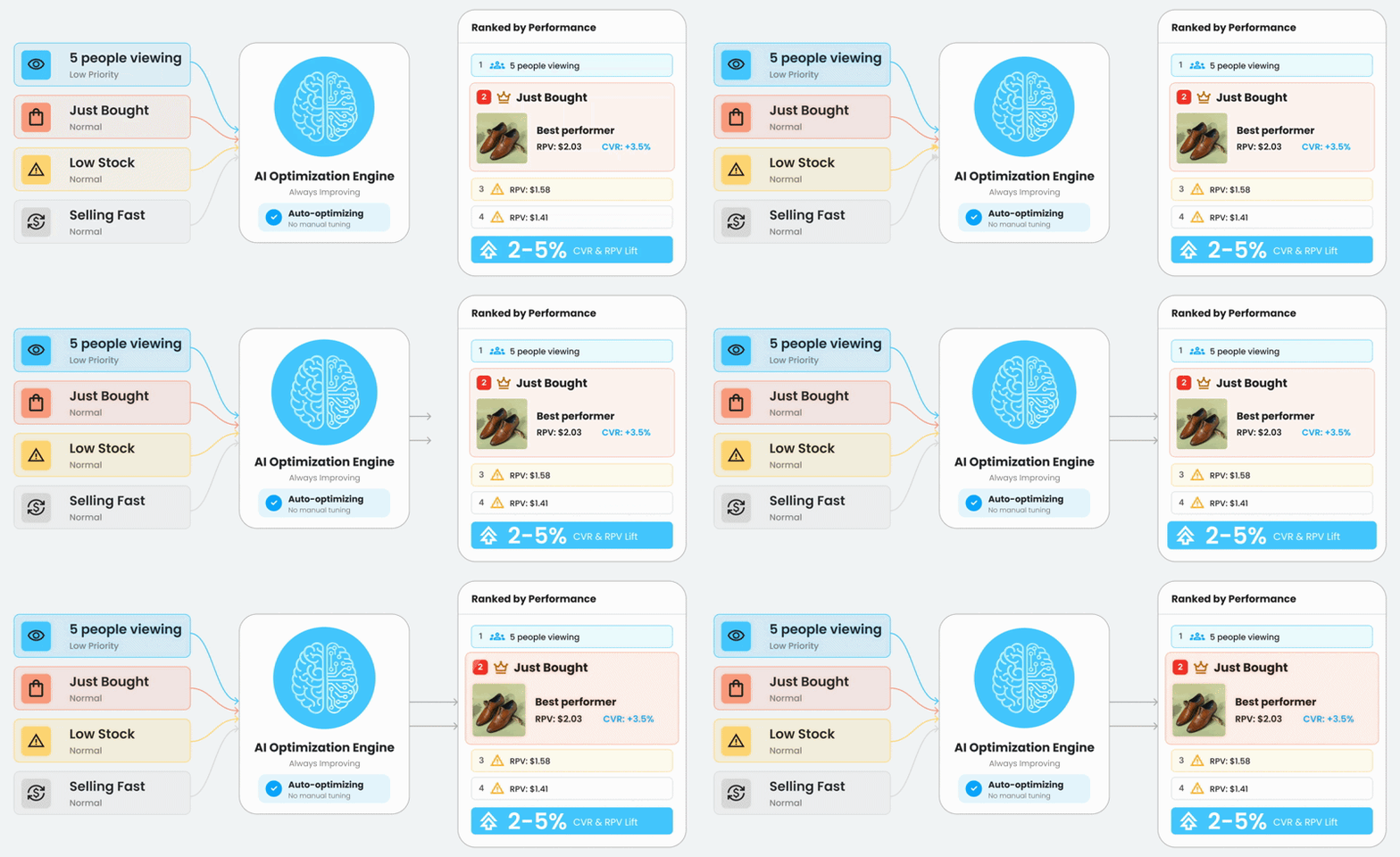
At the core of SPO is a smart AI technique known as a contextual bandit algorithm. It might sound complex, but it works like this: the system is constantly testing, learning, and improving. Instead of running slow, static A/B tests, SPO evaluates how messages perform in real time, across multiple types, timeframes (from 15 minutes to 4 weeks), and thresholds.

Think of it as your always-on optimization engine—making sure each message displayed is backed by the best available data at that moment.

Tailored Messaging that Moves the Needle

With SPO, retailers can create urgency, highlight product appeal, or build trust—all through dynamic messaging that aligns with specific KPIs. For example:

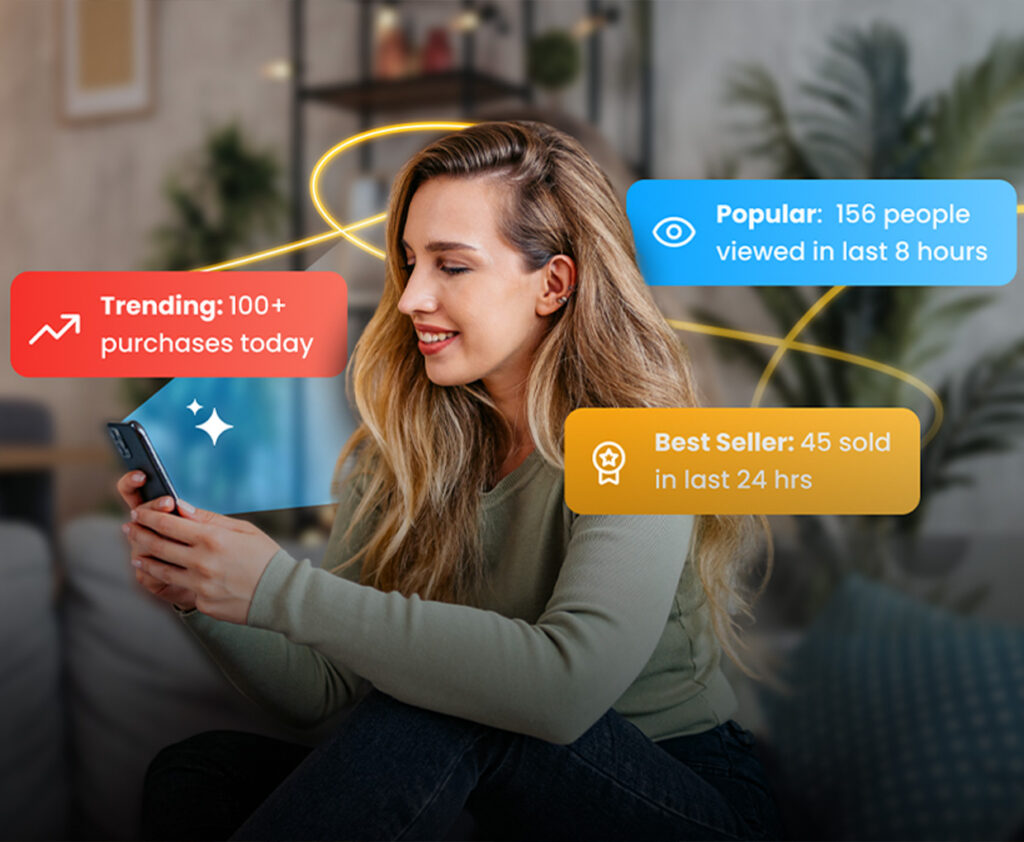
  • “Popular! 100+ purchases today”
  • “100 people viewed in the last hour!”
  • “Trending in your area”

These messages aren’t just catchy—they’re strategically selected by AI based on performance for goals like Add to Cart Rate, Conversion Rate, or Revenue Per Visit.

The intuitive interface makes campaign setup easy: marketers can input message variants, select their KPIs, choose how frequently the optimization runs, and preview how messages will appear—all without needing technical support.

Flexible, Full-Funnel Optimization

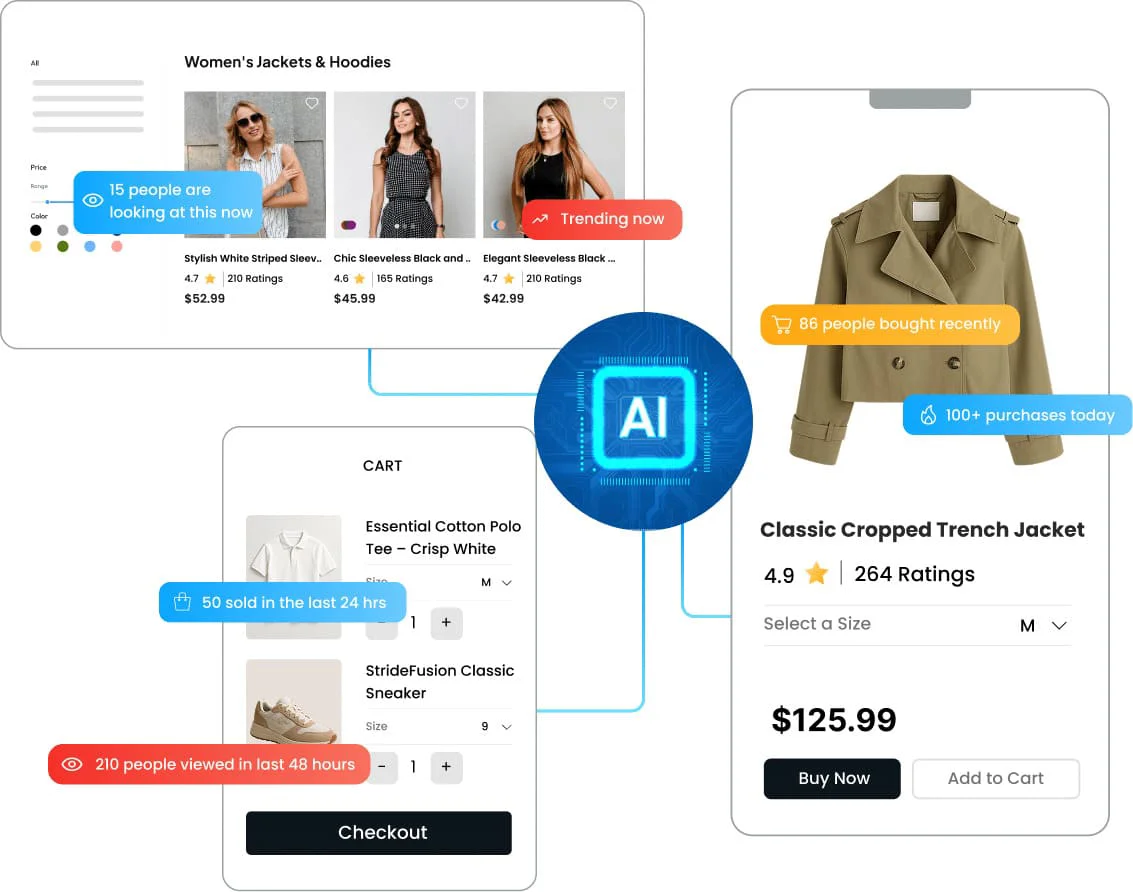
One size doesn’t fit all, and SPO understands that. It lets you tailor different social proof messaging strategies across your site—whether that means:

  • Category Pages: Prioritizing inspirational or trend-based messages to drive product discovery.
  • Product Detail Pages: Using urgency-based messages to encourage action.
  • Checkout Pages: Reinforcing trust with proof of popularity or secure payment.

Each page type can have its own set of messages, optimization intervals, and KPIs—all managed within the same interface.

Must explore social proof messaging use cases

Choose Your Optimization Metric with Precision

Social Proof Optimize gives retailers the flexibility to select the KPI that matters most for each experience—whether that’s Add to Cart Rate, Conversion Rate, or Revenue Per Visit. Once selected, the AI evaluates message performance specifically against that chosen metric.

Marketers can decide whether to display a single top-performing message or rotate between a few high performers—all prioritized by how well they drive the selected KPI. This approach ensures alignment with broader business goals, while keeping the message experience streamlined and focused.

Let the AI Do the Heavy Lifting

Once your parameters are set, the system takes over. SPO automatically tests new message variations while continuing to serve proven winners. It monitors behavioral changes and adjusts in real-time to stay aligned with customer intent.

This means your team can focus on strategy while the AI handles the execution—maximizing impact with minimal effort.

Why It Matters

Choosing the right message, for the right user, at the right time is harder than ever. SPO takes the guesswork out by using real-time performance data to make those decisions for you.

The result? More relevance, higher engagement, stronger loyalty—and measurable improvements across your KPIs.

SPO in Action: What It Looks Like

Here’s a quick look at how it works in practice:

  • Message Input: Add message variants like “Limited Stock!” or “Recently purchased by
50 customers!”
  • KPI Selection: Choose a goal such as Add to Cart Rate, Conversion Rate, or Revenue Per Visit.
  • AI Optimization: The system learns and adapts, testing and ranking each message by performance.
  • Dynamic Delivery: The best-performing message(s) appear across your selected experiences.
  • Continuous Improvement: The system keeps learning, so your messaging evolves with your audience.

1 Message Input

Marketers use the intuitive interface to input a list of messages with varied text and thresholds (e.g., “Limited stock!” or “Recently purchased by 50 customers!”).

2 KPI Selection

Select one of the KPIs to optimize for (Add to Cart Rate, Revenue Per Visit, or Conversion Rate).

3 AI Optimization

The contextual bandit algorithm evaluates message performance, balancing exploration of new variations with exploitation of top performers.

4 Dynamic Message Delivery

The system displays the top-performing message(s) across selected pages and experiences, tailored to the customer journey.

5 Continuous Learning & Adaptation

The AI monitors customer interactions, adapting to behavioral changes to ensure sustained relevance and results.

Transform the Way You Message

Ada Global’s Social Proof Optimize isn’t just another feature—it’s a smarter, faster, AI-powered way to connect with your customers. Whether you’re aiming to lift conversions, boost engagement, or fine-tune messaging across multiple funnels, SPO brings intelligence, automation, and results together.

Ready to see what dynamic, data-driven messaging can do?

Explore Social Proof Optimize and discover how it can supercharge your personalization strategy.

Know More
Table Of Contents
What Makes AI-Powered Optimization Different: Contextual Bandits, Simplified
Tailored Messaging that Moves the Needle
Flexible, Full-Funnel Optimization
Choose Your Optimization Metric with Precision
Let the AI Do the Heavy Lifting
Why It Matters
SPO in Action: What It Looks Like
Transform the Way You Message

Brand Culture: Why Is It Important and 10 Ways on How to Build It

Data & AI
Blogs

Brand Culture: Why Is It Important and 10 Ways on How to Build It

What is Brand Culture?

Do you ever wonder why some brands seem to have an almost magnetic pull, drawing customers in and fostering a sense of loyalty that goes beyond mere transactions? It’s not just luck or happenstance; it results from a carefully cultivated brand culture. In today’s fiercely competitive market, where consumers have countless options, building a strong brand culture isn’t just important—it’s essential for long-term success. Let’s delve into brand culture, exploring what it is, why it matters, and, most importantly, how to build it to propel your business forward.

Brand culture is a company’s essence—the intangible yet powerful force that shapes its identity, values, and actions. It’s the collective beliefs, attitudes, and behaviours employees share and reflect in every interaction with customers, partners, and the wider community.

Brand culture embodies the fundamental principles and ideals that guide a company’s decisions and operations. It’s not just about what a company does but why it does it and how it achieves its goals. Brand culture permeates every aspect of an organisation, from its mission statement and corporate values to its workplace culture and customer experience.

Why is Brand Culture Important for Business?

Brand culture is not just a buzzword or a fleeting trend; it’s a strategic imperative for businesses in today’s competitive landscape. Here’s why:

1. Differentiation

In a crowded marketplace where products and services can be easily replicated, brand culture is a powerful differentiator. It sets your business apart from competitors by communicating what makes you unique and why customers should choose you over alternatives.

2. Employee Engagement and Retention

A strong brand culture fosters a sense of belonging and purpose among employees. Employees who feel connected to the company’s mission and values are more engaged, motivated, and loyal. This leads to higher productivity, lower turnover rates, and a more positive work environment.

3. Customer Loyalty and Advocacy

Brands with a compelling culture build emotional connections with customers. When customers resonate with a brand’s values and beliefs, they are more likely to become loyal advocates who repeat purchases and promote the brand to others. This word-of-mouth marketing can be invaluable for business growth.

4. Attracting Top Talent

In today’s competitive job market, top talent seeks more than just a paycheck—they want to work for companies with a strong sense of purpose and values. A well-defined brand culture is a magnet for skilled professionals, helping businesses attract and retain the best talent in their industry.

5. Consistency and Trust

Brand culture ensures consistency across all touchpoints, from marketing messages to customer service interactions. This consistency builds trust and credibility with customers, who know what to expect from the brand and can rely on it to deliver on its promises.

6. Adaptability and Resilience

A resilient brand culture provides a solid foundation that helps businesses navigate challenges and adapt to change. In times of crisis or uncertainty, companies with a strong brand culture can rally employees around a shared purpose and weather the storm more effectively.

7. Long-Term Sustainability

Brands built on a strong culture are more likely to endure over time. By building a cohesive culture that aligns with the company’s values and goals, businesses can create a sustainable competitive advantage that withstands market fluctuations and economic downturns.

10 Ways on How to Build a Good Brand Culture

Building a strong brand culture requires deliberate effort and commitment from every level of the organisation. Here are ten strategies to help you cultivate a vibrant and cohesive brand culture:

1. Define Your Core Values

Start by identifying the core values that represent the essence of your brand. These values should reflect your company’s values and guide decision-making at all levels. Communicate these values clearly to employees and integrate them into every aspect of your business.

2. Lead by Example

Leadership sets the tone for company culture. Ensure leaders embody the values and behaviours you want to cultivate within the organisation. Employees who see leaders living the brand values are more likely to follow suit.

3. Foster Open Communication

Create channels for transparent communication and encourage feedback from employees at all levels. Open communication fosters trust, collaboration, and a sense of belonging, essential for building a strong brand culture.

4. Invest in Employee Development

Provide opportunities for learning, growth, and career advancement. When employees feel supported in their professional development, they are more engaged and motivated to contribute to the organisation’s success.

5. Celebrate Diversity and Inclusion

Embrace diversity in all forms and create an inclusive environment where every voice is heard and valued. Diversity fosters innovation, creativity, and empathy, leading to a richer and more dynamic brand culture.

6. Promote Work-Life Balance

Recognise the importance of work-life balance and offer flexible work arrangements and wellness initiatives to support employee well-being. A healthy work-life balance contributes to employee satisfaction and productivity.

7. Recognise and Reward Success

Acknowledge and reward employees who exemplify the company’s values and make meaningful contributions. Recognition reinforces desired behaviours and motivates others to strive for excellence.

8. Create Rituals and Traditions

Establish rituals and traditions reinforcing the brand’s identity and strengthening team cohesion. Whether it’s a weekly team meeting, an annual retreat, or a company-wide volunteer day, rituals create a sense of belonging and camaraderie.

9. Encourage Innovation and Creativity

Foster a culture of experimentation and creativity by encouraging employees to think outside the box and take calculated risks. Innovation drives growth and keeps the brand relevant in a rapidly changing marketplace.

10. Live Your Brand

Integrate your brand values into every aspect of your business, from customer interactions to product development. Consistency is key to building customer trust and credibility, so ensure that every touchpoint reflects the brand’s identity and values.

Brand culture is a vital pillar of success in the fast-paced and competitive business world. It’s not merely a set of values or a mission statement; it’s the heartbeat of your organisation, guiding every decision and interaction. A strong brand culture fosters employee engagement, drives customer loyalty, and sets your business apart from the competition.

By defining core values, fostering open communication, and investing in employee development, you lay the foundation for a vibrant brand culture. Celebrating diversity, promoting work-life balance, and encouraging innovation further enriches this culture, creating a dynamic and inclusive environment where employees thrive.

Rituals and traditions help reinforce your brand’s identity while living your brand ensures consistency and authenticity across all touchpoints. Following these principles and embracing a culture-first mindset can build a brand culture that inspires loyalty, attracts top talent, and drives long-term success.

Ready to take your brand culture to the next level and unlock new opportunities for growth? Look no further than ADA’s Marketing Services. With a proven track record of delivering impactful marketing solutions, ADA can help you craft a brand culture strategy that aligns with your business goals and resonates with your audience.

From brand positioning and storytelling to employee engagement and customer experience, ADA offers a comprehensive suite of services designed to elevate your brand culture and drive business results. Don’t settle for mediocrity—partner with ADA and unleash your brand’s full potential.

Contact us today to learn more about ADA’s Marketing Services and how we can help you create a strong and effective brand culture. Take the first step towards building a brand culture that sets you apart from the competition and propels your business to new heights.

Table Of Contents
What is Brand Culture?
Why is Brand Culture Important for Business?
10 Ways on How to Build a Good Brand Culture

15 WhatsApp Business Benefits for Your Marketing Efforts

Data & AI
Blogs

15 WhatsApp Business Benefits for Your Marketing Efforts

What Are WhatsApp Business Benefits for Your Marketing Effort?

In the rapidly evolving landscape of digital marketing, businesses are continually seeking innovative ways to connect with their audience and streamline communication. One such platform that has gained immense popularity in recent years is WhatsApp Business. With over 2 billion active users globally, WhatsApp offers a powerful avenue for businesses to enhance their marketing efforts.

In this article, we’ll explore 15 WhatsApp Business benefits that can revolutionise your marketing strategy. Let’s get started!

In the realm of digital marketing, WhatsApp Business stands out as a dynamic platform with numerous advantages. Let’s delve into 15 WhatsApp Business benefits that make it an indispensable tool for elevating your marketing strategy.

1. The Most Popular Messaging App

WhatsApp is not just a messaging app; it’s a global phenomenon. WhatsApp stands out as the most popular messaging app globally, boasting over 2 billion active users. Leveraging this vast user base provides businesses with an unparalleled reach to connect with their target audience, making it an indispensable platform for marketing endeavours.

2. Automate Responses to Customer Queries

Efficiency is a cornerstone of modern marketing, and WhatsApp Business excels by allowing businesses to automate responses to frequently asked questions. This not only saves time but ensures that customer queries are addressed promptly and consistently, enhancing overall customer satisfaction.

3. Multimedia Capabilities for Engaging Content

Beyond simple text, WhatsApp Business empowers businesses with multimedia capabilities. This includes the ability to share images, videos, and audio messages, providing a versatile platform to create visually appealing and interactive content that resonates more deeply with the audience.

4. Personalised Customer Interactions

Tailoring communication is crucial in effective marketing, and WhatsApp Business facilitates personalised interactions. Addressing customers by name, sending customised messages, and creating tailored content fosters a sense of individuality, strengthening the emotional connection between businesses and their audiences.

5. Real-Time Customer Support

Customer satisfaction hinges on prompt and effective support, and WhatsApp Business is designed to deliver real-time assistance. Businesses can address customer concerns directly through the platform, offering timely solutions and significantly enhancing the overall support experience for their customers.

6. Broadcast Lists for Targeted Messaging

Crafting targeted messages is crucial for successful marketing campaigns, and WhatsApp Business enables businesses to create broadcast lists. This feature ensures that messages reach specific segments of their audience, allowing for more tailored and effective communication that resonates with the intended recipients.

7. Dedicated Business Profile for Brand Visibility

The platform provides businesses with a dedicated business profile where they can showcase essential information. This serves as a digital storefront, enhancing brand visibility and making it easier for customers to discover and connect with your business, fostering a positive first impression.

8. Streamlined Product Catalogue for Easier Shopping

For businesses offering products or services, WhatsApp Business allows the creation of a comprehensive product catalogue. This feature streamlines the shopping process for customers, providing them with easy access to information and high-quality visuals, thereby boosting sales opportunities and creating a seamless shopping experience.

9. Appointment Scheduling for Service-Based Businesses

Service-oriented businesses can benefit from the appointment scheduling feature on WhatsApp Business. Customers can schedule appointments directly through the platform, simplifying the booking process, reducing friction, and improving overall customer satisfaction by providing a convenient and efficient service.

10. Group Chats for Community Building

Building a community around your brand is essential, and WhatsApp Business facilitates this through group chats. Businesses can create and manage groups, fostering a sense of community among customers. These groups encourage discussions, engagement, and the formation of a loyal customer community, contributing to brand advocacy.

11. Integration with CRM Systems for Efficient Management

Efficiency in managing customer interactions is critical, and WhatsApp Business allows integration with Customer Relationship Management (CRM) systems. This ensures that businesses can seamlessly manage customer relationships, track interactions, and provide personalised services, offering a more organised and effective marketing and customer management approach.

12. End-to-End Encryption for Secure Communication

Security is a top priority, especially in communication. WhatsApp Business ensures end-to-end encryption, guaranteeing secure communication between businesses and customers. This feature builds trust and safeguards sensitive information, assuring customers of the confidentiality and integrity of their interactions with the business.

13. Cost-Effective Marketing Strategies

WhatsApp Business provides a cost-effective solution for businesses to reach a large audience. Compared to traditional marketing channels, the platform offers a budget-friendly option for businesses of all sizes to connect with customers. This affordability allows businesses to implement creative and impactful marketing strategies without significant financial constraints.

14. Global Reach for Diverse Audiences

The platform’s extensive user base spans the globe, allowing businesses to reach diverse and international audiences. This global reach is particularly advantageous for businesses with aspirations of expansion and reaching a broader market. It will enable businesses to tap into varied cultural contexts and preferences, tailoring their marketing efforts to resonate with a more diverse customer base.

15. Analytics and Insights for Informed Decision-Making

WhatsApp Business equips businesses with analytics tools, providing valuable insights into customer behaviour and interaction patterns. These analytics empower businesses to make informed decisions, refine marketing strategies, and continually adapt to meet customer needs. By leveraging data-driven insights, businesses can optimise their approach, ensuring that marketing efforts are effective and adaptable to the evolving preferences of their audience.

How to Maximise Your Marketing Effort on WhatsApp Business?

As you delve into the world of WhatsApp Business, optimising your marketing efforts is crucial for achieving maximum impact. Here are five key strategies to ensure you harness the full WhatsApp Business benefits:

1. Craft Compelling and Relevant Content

To capture and maintain your audience’s attention, focus on creating compelling and relevant content. Utilise the multimedia capabilities of WhatsApp Business by incorporating visually appealing images, engaging videos, and audio messages. Tailor your content to resonate with your target audience, keeping it informative, entertaining, and aligned with your brand identity.

2. Utilise Broadcast Lists Strategically

Your business profile serves as a digital storefront on WhatsApp Business, making it crucial to optimise it for maximum impact. Provide accurate and comprehensive information, including your business address, operating hours, and website link. A well-crafted business profile enhances your credibility and makes it easier for potential customers to discover and connect with your business.

3. Optimise Your Business Profile for Maximum Impact

Your business profile serves as a digital storefront on WhatsApp Business, making it crucial to optimise it for maximum impact. Provide accurate and comprehensive information, including your business address, operating hours, and website link. A well-crafted business profile not only enhances your credibility but also makes it easier for potential customers to discover and connect with your business.

4. Engage in Regular Updates and Announcements

Keeping your audience informed and engaged is essential for building brand loyalty. Regularly share updates, announcements, and relevant information through your WhatsApp Business account.

Whether it’s new product launches, upcoming events, or exclusive offers, timely communication helps to keep your brand top-of-mind, fostering a strong and enduring connection with your audience.

5. Encourage Active Customer Interaction

Encouraging active interaction with your audience is key to a successful WhatsApp Business strategy. Promptly respond to customer queries, participate in polls, and seek feedback to create a two-way communication channel. By actively involving your audience, you strengthen the relationship and gain valuable insights into their preferences and expectations, enabling you to refine your marketing approach.

Take Advantage of the WhatsApp Business Benefits with ADA

In conclusion, as you leverage the myriad benefits of WhatsApp Business for your marketing endeavours, it’s essential to complement your strategy with cutting-edge solutions that amplify your reach and engagement.

ADA presents a revolutionary solution – the WhatsApp Business Solution. This powerful tool seamlessly integrates messaging and conversational AI, offering data-driven interactions on a global scale.

Elevate your customer engagement with features such as engaging worldwide with WhatsApp marketing, boosting support via business messaging, and ensuring enhanced security through seamless authentication.

The Conversational AI component adds another layer of sophistication, enabling tailored messaging campaigns and 24/7 customer interactions on platforms like LINE and WhatsApp.

Don’t just meet your marketing goals; surpass them with ADA’s WhatsApp Business Solution. Explore the future of customer engagement and revolutionise your approach to sales. Contact us today to learn more!

Table Of Contents
What Are WhatsApp Business Benefits for Your Marketing Effort?
How to Maximise Your Marketing Effort on WhatsApp Business?
Take Advantage of the WhatsApp Business Benefits with ADA

What’s Breaking Forecast Accuracy in Health, Beauty & Wellness Retail? And, How to Fix It?

Post
Blogs

What’s Breaking Forecast Accuracy in Health, Beauty & Wellness Retail? And, How to Fix It?

The darling of the consumer goods market, the $646.20 billion global beauty and personal care market is expanding its scope and definitions. Be it products or segments, the health, beauty, and retail ecosystem is bubbling with constant transformations – wellness and beauty merging to form highly nuanced products for Gen Alpha, while adaptogens and dermal skincare are a Gen Z favourite.

While this definitely ripens the hot opportunity, it also complicates the already challenging demand forecasting and replenishment optimization puzzle. Newly emerging segments, let alone products, leave retailers gasping for understanding demand, leading to manually-pivoted decisions based on negligible or no data-backing.

Result?

A chaotic inventory sob story, lost sales due to stockouts at some stores, and bloated inventory at others, choking the bottom line, inflating inventory costs, and stifling the operating capital like never before.

Here, we explore three core factors that cause inventory accuracy problems in health, beauty, and wellness retail and how retailers can fix them.

Nature of Inventory

Unlike the traditional retail segments, like food and grocery, health, beauty, and wellness inventory mix is changing rapidly in multiple ways – new products are constantly flying off the shelves, and rapid product discontinuations are the norm.

Volatile product mix leaves little data footprint, making it absolutely impossible for retailers to model and forecast demand patterns with accuracy. This is mainly because traditional demand planning and retail inventory management solutions come with standard, one-size-fits-all approach that falters in the wake of data challenges like noise, gaps, etc.

Further, the majority of inventory is vulnerable to seasonal and trend-driven disruptions. Sometimes, a single video from a beauty or wellness influencer can render an entire category obsolete, while lifting demand in a dormant category. So, the demand and sales influencers become chaotic and extend beyond the computational abilities of static demand modeling.

Overlooked Revenue-Driving Categories

Traditionally, retailers have been focusing on the top 20% products that drive around 80% of the sales revenue, and overlooking the long-tail inventory, that consists of slow-movers. But, in health, beauty and wellness retail, these slow movers are driving as much as 40% of sales revenue.

This means that retailers can no longer afford to overlook their long tail inventory and need equal forecasting rigor for such products. However, traditional forecast modeling tools and inventory demand prediction software don’t offer such granular modeling and planning capabilities.

So, retailers are unable to tap into the extra revenue that they can drive from long-tail inventory.

Diverse Set of Promotions Running in Parallel

Another critical factor that breaks forecast accuracy are the complex in-store promotions that are running across multiple brands, products, and categories in parallel. In-store promotions are a great way to boost sales. However, they also trigger demand lifts and demand shifts across categories and within them.

While traditional demand forecasting solutions focus on demand lifts in the promoted products, they don’t factor in the demand shifts caused by promoted products in the non-promoted category/products. This leads to overstocking of non-promoted products, while the promoted ones go out-of-stock.

Both situations reduce the promotional gains, leaving retailers grappling with panic ordering and overstocked inventory. Further, the sales in health, beauty, and wellness retail are complex – bundled offers, BOGOs, seasonal offs, etc.

Mapping these demand shifts and lifts to prevent cannibalization is beyond the computational abilities of traditional tools.

How to Break the Vicious Cycle of Stockouts and Overstocks?

Solving the inventory replenishment puzzle requires demand sensing and planning beyond the category level. Since, the demand patterns are always evolving and the health, beauty, and wellness retail segment comes with its unique set of challenges, the solution lies in achieving hyperlocal accuracy with SKU-location-level demand modeling.


Hierarchical ML Forecasting for Rapidly Changing Inventory Mix

Demand forecasting and automatic store replenishment frameworks built on hierarchical forecasting address the data challenges and learn from similar categories to model demand accurately. This empowers retailers to forecast demand accurately for each product location and ensure that optimal inventory levels are maintained at all times.

These solutions also come with the in-built functionalities that automatically tune replenishment recommendations as per the new product launches and discontinuations, making replenishment planning solutions an ongoing process without requiring manual intervention.

Hierarchical Forecasting for Uniform Forecasting Rigor Across All Types of SKUs

As retailers can no longer afford to overlook certain products and categories as they are driving a significant part of revenue, they need solutions that enable them to exercise uniform forecasting rigor for all kinds of products, including the long-tail.

Auto-replenishment solutions with hierarchical forecasting capabilities model demand for millions for the SKU-store location combinations for each SKU type, while factoring in complex and unlimited number of demand predictors. Thus, the retail replenishment software recommendations generated by the solutions are extremely reliable, accurate, and prevent revenue erosion.

Dynamic Demand Balancing During In-Store Promotions

Another powerful benefit of demand forecasting and automated replenishment solutions is promotion-specific forecast modeling. It treats each bulk-buy offer as a distinct feature, capturing its unique cannibalization or growth effects on category demand.

Thus, the replenishment recommendations are generated keeping all types of in-store promotions in mind, ensuring that the demand shifts and demand lifts across all promotions are factored in.

So, retailers can always order the high-demand items without risking out-of-stock as well as overstock of non-promoted items. This automatic inventory recalibration empowers retailers to keep their promotional revenue intact without risking stock imbalances.

Accurate store replenishment via cutting-edge AI capabilities is no longer a nice-to-have, especially in rapidly evolving retail segments like health, beauty and wellness. It paves the way for optimal replenishment, operational excellence, reduced wastage and minimizes the vulnerability to markdowns and capital lock-ins. With infallible accuracy and extremely exhaustive planning capabilities, it is definitely the way forward for the entire segment.

Table Of Content
Nature of Inventory
Overlooked Revenue-Driving Categories
Diverse Set of Promotions Running in Parallel
How to Break the Vicious Cycle of Stockouts and Overstocks?
Hierarchical ML Forecasting for Rapidly Changing Inventory Mix
Hierarchical Forecasting for Uniform Forecasting Rigor Across All Types of SKUs
Dynamic Demand Balancing During In-Store Promotions