
6 Triggered Campaigns That Outperform – And How to Elevate Them with Personalization

Omnichannel Marketing
Blogs

6 Triggered Campaigns That Outperform – And How to Elevate Them with Personalization

Why Triggered Campaigns Matter

In today’s highly competitive marketing landscape, where attention spans are shrinking and customer expectations are skyrocketing, mass promotional emails are no longer effective. Instead, triggered email campaigns automatically sent based on a customer’s behavior or life cycle event have emerged as a high-impact tool for engagement.
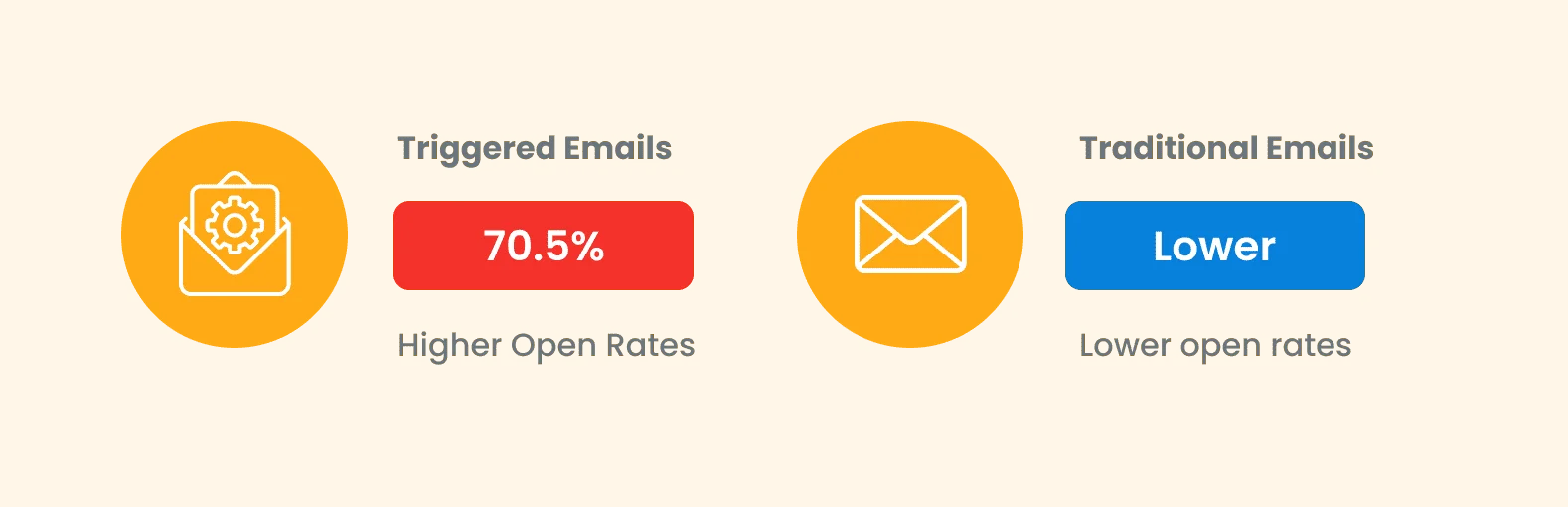
According to a 2023 report, triggered emails drive 70.5% higher open rates and 152% higher click-through rates than traditional marketing emails (Campaign Monitor, 2023). 82%[1] of marketers use automation to create triggered emails, which result in 8 times more opens and greater earnings than typical bulk emails.

Yet, many brands continue treating triggered emails as set-and-forget templates. To truly unlock the potential of personalized email marketing, we must rethink these campaigns with dynamic content, real-time personalization, and AI-driven segmentation.

Let’s explore six types of triggered email campaign examples and how you can elevate them using modern personalization techniques.

Types of Triggered Emails

1. Welcome Series: Setting the Stage for Customer Loyalty

Many brands treat welcome emails as a formality, a basic acknowledgment without a real strategy. However, this first impression shapes brand perception by setting the tone for the customer relationship. Research shows that welcome emails generate 320% more revenue per email than other promotional emails.

Welcome Emails vs. Bulk Marketing Emails
Welcome emails have 320% more revenue per email than other promotional emails, as well as:

0 %
lift in unique open rate
0 %
lift in unique click rate
0 %
lift in transaction rate

Entrepreneur[2]

Elevate Your Strategy:

  • Personalize hero banners based on geolocation or browsing data.
  • Deliver dynamic content showcasing bestsellers in the customer’s preferred category.
  • Embed personalized CTAs leading to curated onboarding journeys.

2. Cart Abandonment Campaigns: Turning Hesitation into Conversion

Cart abandonment costs e-commerce brands an estimated $18 billion[3] in lost revenue annually. While some instances are inevitable, such as distractions or casual browsing, many are opportunities waiting to be reclaimed. Well-crafted cart abandonment emails, boasting an average open rate of 41.18%, are crucial in recapturing these otherwise lost sales.

Left unaddressed, even minor lapses in the post-cart experience can compound over time, impacting revenue and customer loyalty. In an increasingly competitive landscape, brands can no longer afford to treat abandonment as an acceptable cost of doing business.

Elevate Your Strategy:

  • Display the abandoned product image dynamically.
  • Offer related product recommendations in emails to entice purchases.
  • Add social proof (“1200 people bought this last month!”) using real-time personalization.

ADA Global’s Recommend, combined with Ensemble AI, dynamically presents complementary or alternative products based on a shopper’s real-time behavior and preferences.

Rather than simply reminding customers of what they left behind, the system intelligently suggests relevant add-ons or an ensemble to complete their purchase, increasing the likelihood of re-engagement. This personalized product tie-in strategy revives abandoned purchases and boosts average order value, creating a win-win for both the brand and the customer.

Advanced cart abandonment personalization involves not just reminding but inspiring, making alternative offers irresistible, enhancing urgency with live inventory updates, and showing complementary products that fit their taste.

3. Post-Purchase Follow-Ups: Building Relationships Beyond Transactions

Neglecting this critical touchpoint risks losing engaged buyers, while thoughtful post-purchase communication can transform first-time purchasers into long-term brand advocates.Post-purchase is a golden moment to solidify loyalty and boost repeat purchases. Following a robust post-purchase email strategy helps improve customer lifetime value.

Elevate Your Strategy:

  • Recommend complementary products based on past purchases and affinity modeling.
  • Use replenishment signals from Audience Manager via dynamic content blocks to
set up reminders (e.g., for beauty or grocery categories).
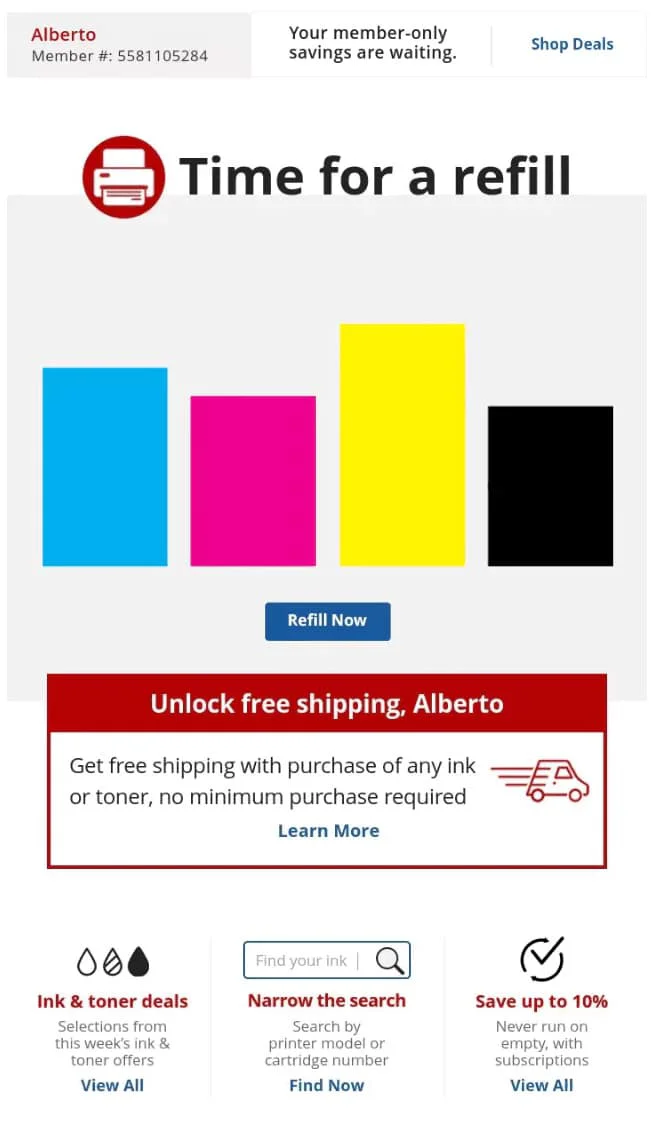
Personalized post-purchase journeys tap into emotional satisfaction. A simple “We thought you might also like” section fueled by AI-powered marketing personalization increases retention.

4. Re-Engagement Campaigns: Winning Back Dormant Customers

Relying solely on generic “We miss you” emails is no longer enough to revive customer relationships. Today’s consumers expect relevant, meaningful engagement that speaks directly to their interests and behaviors. Failing to re-engage dormant customers doesn’t just cost potential sales, it damages long-term brand loyalty.

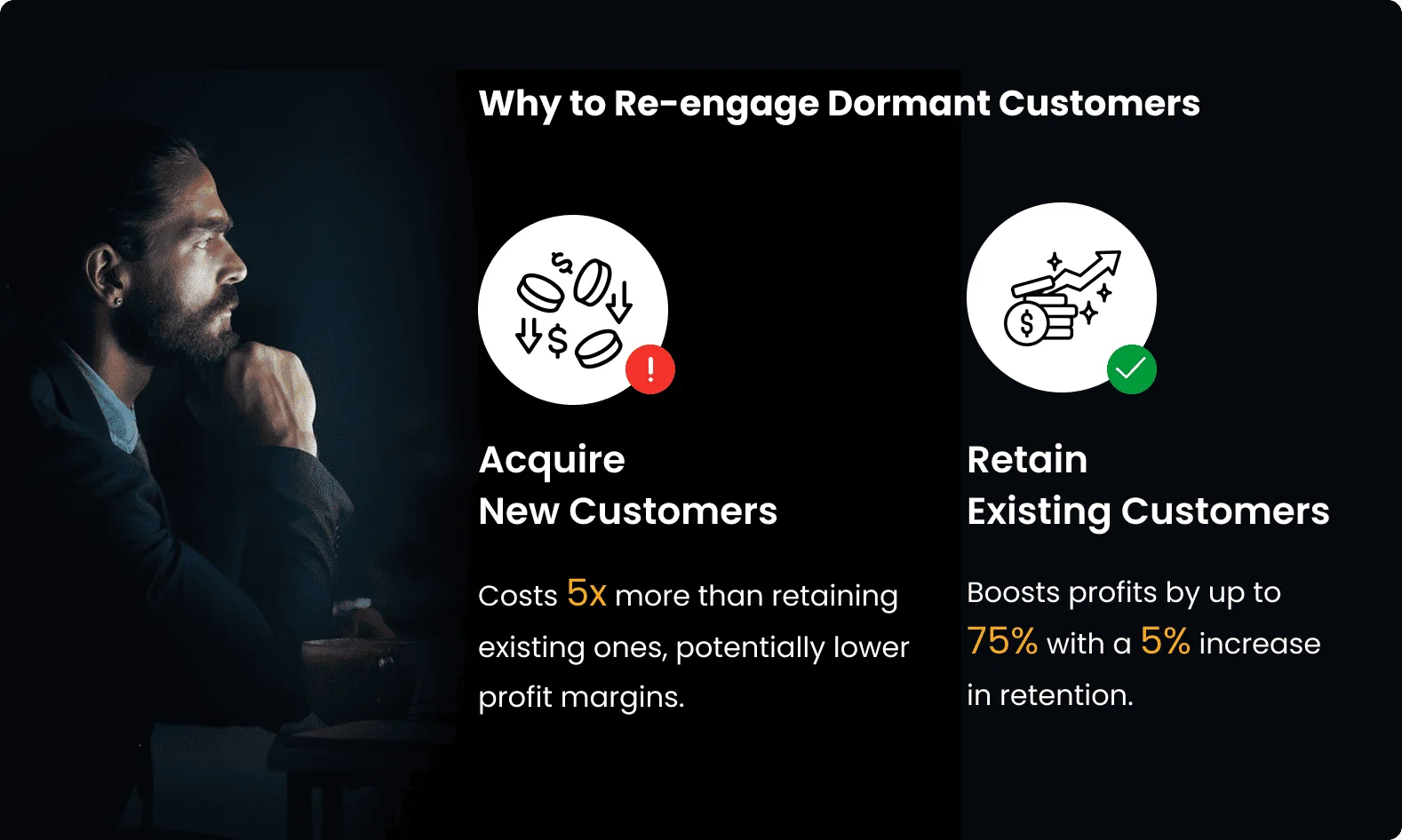
Recent industry research[4] shows that top-performing marketing teams are over twice as likely to invest in personalized marketing campaigns aimed at bringing back dormant users. Furthermore, the likelihood of selling to an existing customer can be as high as 70%[5], making re-engagement far more cost-effective than acquisition.
Elevate Your Strategy:

  • Use churn propensity scores to create high-risk segments.
  • Offer exclusive deals on previously browsed products.
  • Personalize messaging with emotional cues (“Still dreaming about that jacket)

For instance:
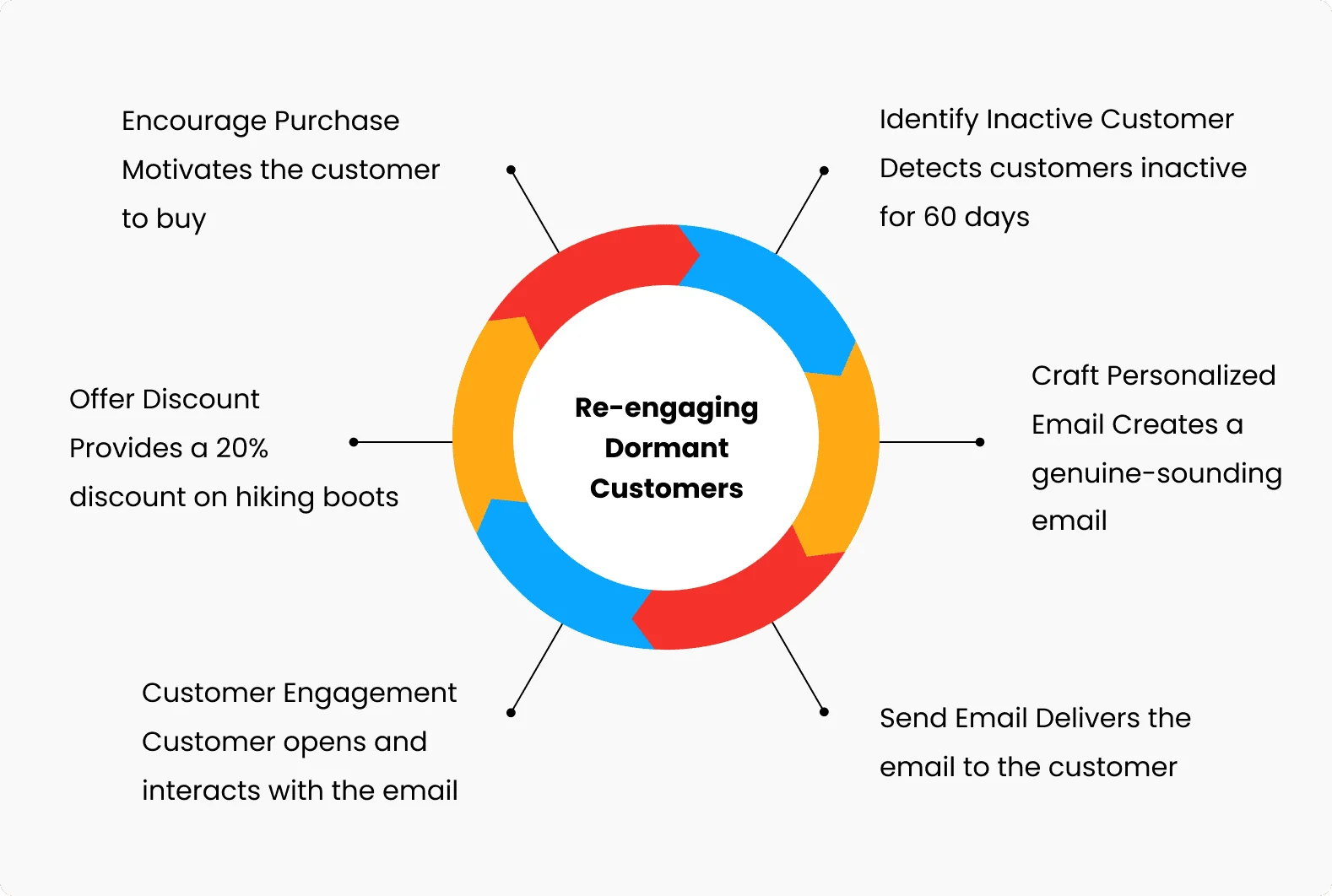
A customer who bought hiking gear but hasn’t engaged for 60 days gets an email:
“Your Adventure Awaits — Explore New Trails with 20% Off Hiking Boots.”
Using email campaign best practices, retail ensures the tone feels genuine, not robotic.
5. Back-in-Stock Alerts: Fueling FOMO with Timing

Nearly two out of every three shoppers will abandon an e-commerce site entirely if a product they intended to buy is unavailable.

2024 AlixPartners Consumer Sentiment Index


When inventory constraints ease, this creates a narrow but powerful window to recapture high-intent interest, a window that’s often missed due to manual workflows or delayed communication.

Well-timed back-in-stock alerts, powered by email personalization, ensure brands convert intent the moment it resurfaces. They signal attentiveness, build emotional connection, and foster a sense of exclusivity; hence, back-in-stock campaigns become not just a tactic but a critical part of the overall customer experience strategy.

Elevate Your Strategy:

  • Trigger real-time alerts as soon as products are replenished (using Active Content and Audience Manager integration)
  • Segment notifications based on likelihood to convert, prioritizing high-intent customers. (via Audience Manager’s predictive modeling).
  • Offer intelligent alternatives when original products are still low in stock.
  • Inject urgency indicators like low stock warnings, rising demand tags, or expiring deals.
  • Use dynamic countdown timers to create a subtle but effective pressure to act.

For e.g., A customer who wanted a blue denim jacket gets a real-time email:
“It’s Back — Your Favorite Jacket is Here! Sizes Are Selling Fast.”
This personalization approach often achieves 3–5x higher CTRs compared to generic alerts.

Leveraging real-time triggers through email personalization ensures you capitalize on intent the moment it reignites.

6. Price Drop Notifications: Make Savings Personal

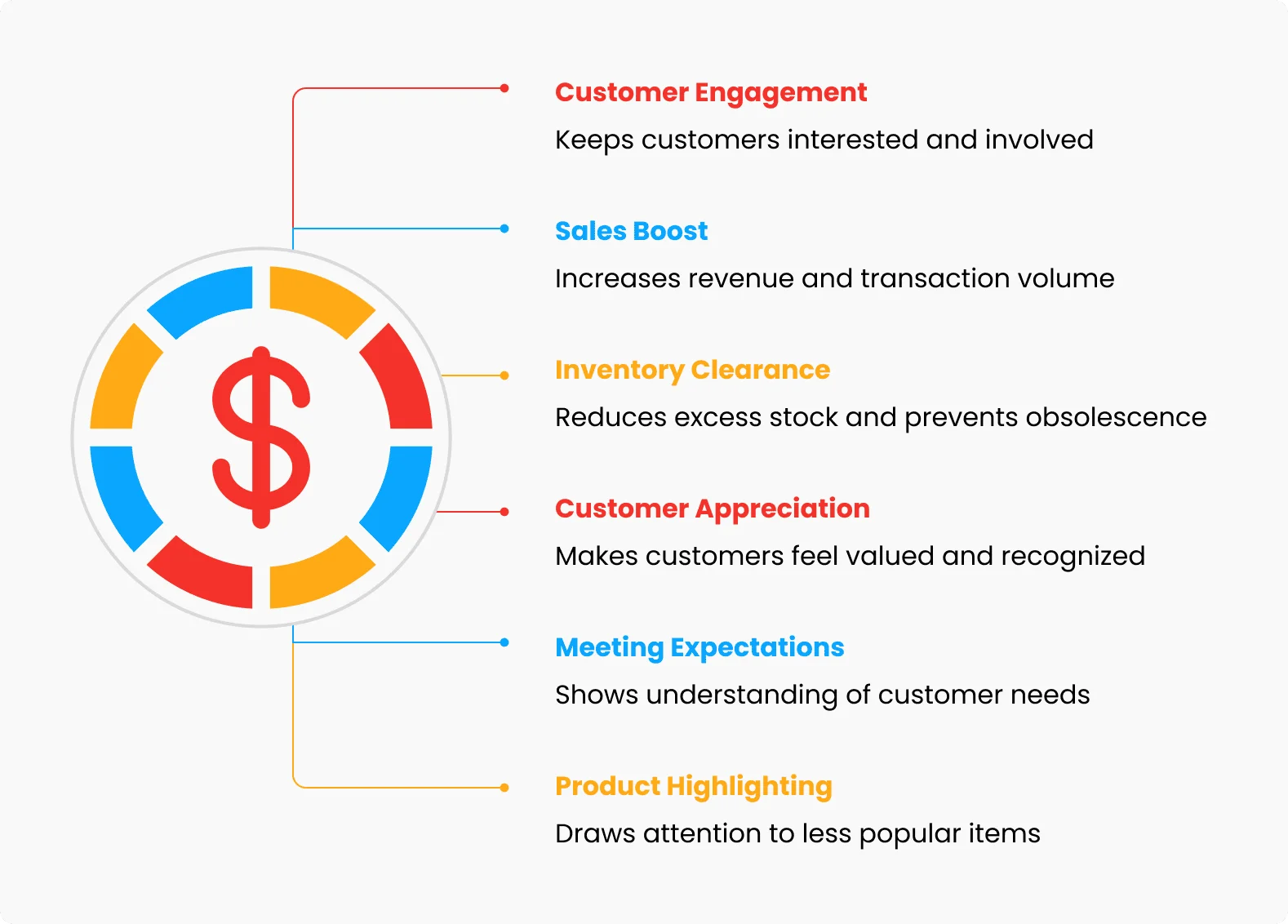
Price drop emails are a high-conversion opportunity that taps into existing customer intent, especially for products they’ve previously browsed, wishlisted, or abandoned. These alerts don’t just highlight savings; they create urgency, often prompting immediate action on long-considered purchases. By showcasing recent markdowns, whether as targeted one-offs or in curated batch discount alerts, brands can drive quick wins while reinforcing value. Beyond the sale, these emails make customers feel seen: they show you’re listening, that you understand what matters to them. They’re also highly effective at clearing inventory, surfacing slower-moving products, and reducing dead stock without slashing margins blindly. In today’s price-sensitive market, a well-timed price drop email can turn interest into conversion and consideration into trust.
Elevate Your Strategy:

  • Target customers based on browsing, abandonment, and wishlist history.
  • Segment audiences dynamically using Audience Manager’s product and behavior data.
  • Sync real-time inventory to avoid promoting unavailable items.
  • Recommend similar products with higher conversion likelihood if stock is limited.

Through dynamic content personalization, price sensitivity is addressed individually, increasing open rates and driving conversions.

Key Takeaways: Scaling Impact with Personalized Email Campaigns

To master modern email marketing and beat inbox fatigue:

  1. Prioritize dynamic content personalization in every triggered email.
  2. Use behavioral, demographic, and intent signals to segment audiences.
  3. Leverage AI-powered marketing personalization to predict next best actions.
  4. Follow email campaign best practices, retail, and hyper-personalized messaging wins.

The goal isn’t more email. It’s creating meaningful email that drives connection and revenue.

How ADA Global’s Active Content Helps

Marketers no longer need to choose between creativity and technology. With Active Content, dynamic storytelling can be enhanced by real-time, data-driven personalization. See it in action:

1 Define Segments Using Audience Manager

Marketers build high-resolution segments using behavioral insights from your recommendation engine, predictive traits (e.g., churn risk), and other attributes like category interest or loyalty status.

2 Sync Segments to Active Content & Marketing Automation Solutions

These audience segments are simultaneously pushed into marketing automation tools for orchestration and Active Content for personalization logic at open time.

3 Build Templates on Active Content’s Digital Canvas

Marketers create templates using Active Content’s Digital Canvas, placing dynamic blocks for product recommendations, offers, loyalty, and other personalized content.

4 Configure Real-time Data Layering

Each dynamic block is wired to multiple live data sources via APIs (e.g., product info, reviews, stock, or offers), enabling rich, layered personalization that marketing platforms can’t support.

5 Trigger Campaigns Via Audience Manager or MA

Journeys initiate when a user qualifies, e.g., cart abandonment, back-in-stock event, or loyalty point threshold, sending the right message to the right person.

6 Personalize Content at the Moment of Email Open

Unlike traditional send-time personalization, Active Content renders the latest data when the email is opened. The same email can look different based on stock, price, or behavior at that moment.

7 Leverage Generative AI for Creative Efficiency

Marketers can auto-generate dynamic headlines, CTAs, or image variations using AI prompts, reducing creative bottlenecks and increasing campaign agility.

8 Control the Final Rendering Experience

Marketers retain full design flexibility over how dynamic content looks, removing the design constraints typically imposed by marketing automation platforms.

Best Practices for Successful Triggered Email Campaigns

To maximize the impact of triggered emails in 2025, marketers must adopt the following best practices:

  1. Start with Segmentation
    Build dynamic segments based on behaviors, demographics, purchase history, and churn risk.

  2. Invest in Real-Time Personalization
    Update content at open time, not send time, using dynamic content personalization engines.

  3. Use AI for Predictive Personalization
    Predict next-best actions (buy, browse, churn) and trigger accordingly.

  4. Optimize Send Times
    
Test and deploy emails at personalized send times using AI recommendations.

  5. Monitor Customer Fatigue
    
Avoid over-messaging by setting smart frequency caps based on engagement levels.

  6. Test, Learn, Iterate
    
Run A/B tests on subject lines, dynamic elements, and CTA placements regularly.

Future of Triggered Emails — Where We Are Headed

As personalization technology evolves, triggered hyper-personalized email campaigns will no longer be static workflows but adaptive journeys, powered by real-time signals, predictive analytics, and AI-curated content. With the right triggered campaigns and the right personalization, you don’t just communicate—you convert.

By 2026, Gartner predicts that 70% of brands adopting AI-powered marketing personalization will report a 25% higher marketing ROI (Gartner, 2024[6]).

For marketers willing to invest in email campaign personalization and dynamic content strategies today, the payoff is immense: deeper customer relationships, sustained engagement, and significantly increased revenue.

Ready to transform your triggered campaigns with best-in-class personalization?

today and explore how ADA Global empowers leading brands to deliver unforgettable customer experiences!

Book a Demo

Resources

Table Of Contents
Why Triggered Campaigns Matter
1. Welcome Series: Setting the Stage for Customer Loyalty
2. Cart Abandonment Campaigns: Turning Hesitation into Conversion
3. Post-Purchase Follow-Ups: Building Relationships Beyond Transactions
4. Re-Engagement Campaigns: Winning Back Dormant Customers
5. Back-in-Stock Alerts: Fueling FOMO with Timing
6. Price Drop Notifications: Make Savings Personal
Key Takeaways: Scaling Impact with Personalized Email Campaigns
How ADA Global’s Active Content Helps
Best Practices for Successful Triggered Email Campaigns
Future of Triggered Emails — Where We Are Headed
Resources

8 Crucial Market Research Benefits Every Company Should Know

Data & AI
Blogs

8 Crucial Market Research Benefits Every Company Should Know

8 Market Research Benefits That Every Company Should Know

In the dynamic business landscape, staying ahead of the curve is not just a desire but a necessity. Companies need to make informed decisions to achieve sustainable growth and outperform competitors.

One invaluable tool that empowers businesses in this pursuit is market research. This article explores the depth and significance of market research benefits, shedding light on why it is a cornerstone for success.

Market research is the linchpin of strategic decision-making for businesses across industries. The following elucidation delves into eight crucial benefits that underscore the significance of market research in the corporate landscape.

1. Understanding Customer Needs and Preferences

Successful businesses’ core lies in understanding customer needs and preferences. Market research facilitates this understanding by employing surveys, interviews, and feedback analysis. By delving into the intricacies of consumer desires, companies can tailor their products and services to meet customer expectations, fostering loyalty and satisfaction.

2. Staying Ahead of Industry Trends

The business landscape is dynamic, marked by ever-evolving trends and technologies. Market research is a vigilant sentinel, keeping companies abreast of the latest industry trends. This knowledge empowers businesses to anticipate changes, innovate proactively, and maintain a competitive edge in the marketplace.

3. Identifying Growth Opportunities

Growth is the heartbeat of any thriving enterprise. Market research unveils untapped markets, unmet needs, and potential niches. By identifying growth opportunities, businesses can strategically position themselves, expand their market share, and ensure sustained success in the long run.

4. Mitigating Risks

Informed decision-making is a potent weapon against business risks. Market research comprehensively explains potential challenges, market fluctuations, and unforeseen hurdles. With this knowledge, businesses can implement risk mitigation strategies, ensuring a more resilient and adaptive approach to challenges.

5. Making Informed Business Decisions

The era of intuitive decision-making is giving wayto data-driven strategies. Market research provides businesses the necessary data and insights to make informed decisions. This reduces uncertainty and enhances the likelihood of successful outcomes, whether in product development, marketing, or strategic planning.

6. Connecting with the Target Audience

Effective communication is pivotal in today’s competitive landscape. Market research enables businesses to decipher the intricacies of their target audience – understanding preferences, behaviours, and communication channels. This knowledge empowers companies to craft more impactful and resonant messages, fostering a deeper connection with their audience.

7. Enhancing Customer Satisfaction and Loyalty

Satisfied customers are the bedrock of a successful business. Market research gauges customer satisfaction levels and identifies pain points. Businesses can cultivate loyalty and turn satisfied customers into brand advocates by addressing these pain points and continually striving to improve the customer experience.

8. Improving Marketing ROI

Marketing resources are finite, and their allocation requires precision. Market research ensures that marketing efforts are directed towards channels and strategies that yield the maximum return on investment (ROI). By understanding what resonates most with the target audience, businesses can optimise their marketing spend for enhanced effectiveness.

In conclusion, market research is not just a strategic choice but a transformative force that permeates every facet of a company’s operations.

As businesses evolve in the ever-changing landscape, those who embrace the insights derived from market research are better positioned to survive and thrive, pioneering innovation, and maintaining a resilient presence in the marketplace.

In the journey towards success, market research is not just a tool; it is the compass that guides companies towards their destination.

What are the Types of Market Research You Can Conduct?

Market research is a multifaceted discipline encompassing various methodologies tailored to unveil specific insights. This section elucidates different types of market research, each playing a distinctive role in understanding other aspects of business dynamics.

1. Brand Research

Brand research delves into the perceptions and associations consumers have with a brand. It involves studying brand awareness, brand image, and brand equity. Through surveys, focus groups, and other tools, businesses can gauge how their brand is perceived in the market and identify areas for improvement.

2. Marketing Campaign Evaluation

Assessing the effectiveness of marketing campaigns is vital for optimising future strategies. This type of research involves measuring the impact and reach of marketing initiatives. Businesses can refine their marketing approaches for better results through post-campaign surveys, social media analytics, and other evaluation methods.

3. Competitor Research

Understanding the competitive landscape is crucial for strategic positioning. Competitor research involves analysing competitors’ strengths, weaknesses, opportunities, and threats. By identifying competitor strategies, businesses can fine-tune their own approaches and find unique selling points.

4. Customer Segmentation Research

Not all customers are the same, and customer segmentation research aims to categorise them based on shared characteristics. This helps tailor marketing messages and strategies for specific customer groups, ensuring more targeted and effective campaigns.

5. Consumer Research

Consumer research is a broad category encompassing various methodologies to understand consumer behaviour. This includes studying purchasing patterns, preferences, and motivations. Surveys, interviews, and observations are common tools for gathering data that informs product development and marketing strategies.

6. Product Development

This research type focuses on creating products that align with consumer needs and preferences. It involves gathering insights on potential features, pricing strategies, and improvements to existing products. By applying customers in product development, businesses increase the likelihood of creating offerings that resonate with the target market.

7. Usability Testing

Usability testing is particularly relevant in the digital age. It involves evaluating how easily and efficiently users interact with a product or website. Businesses can enhance the user experience through user feedback and observation, ultimately improving customer satisfaction and loyalty.

Elevate Your Campaign Strategy and Development with ADA Asia

Businesses can effectively utilise market analysis with Campaign Strategy and Development Services from ADA Asia due to the company’s advanced capabilities and integrated approach to campaign and data analytics.

ADA Asia offers a comprehensive suite of services designed to help businesses harness the power of their data. Through advanced technology and expert analysis, ADA Asia transforms raw data into actionable insights that drive strategic decision-making and enhance overall performance.

By harnessing ADA Asia’s data analysis capabilities, businesses can gain deeper insights into the market, customer behaviour, and industry trends. This allows businesses to develop more targeted and effective campaign strategies and identify new opportunities for business growth.

Moreover, ADA Asia’s approach to marketing and data transformation is highly customised and flexible, ensuring that businesses receive insights tailored to their specific needs and objectives. Whether refining marketing strategies, optimising operations, or improving customer experiences, ADA Asia’s data analytics solutions empower businesses to make smarter, more informed decisions.

Contact us to find out how our service can help you expand the capabilities of your business.

Table Of Contents
8 Market Research Benefits That Every Company Should Know
What are the Types of Market Research You Can Conduct?
Elevate Your Campaign Strategy and Development with ADA Asia

15 Effective WhatsApp Marketing Strategies

Data & AI
Blogs

15 Effective WhatsApp Marketing Strategies

What is WhatsApp Marketing?

In the dynamic landscape of digital marketing, staying ahead of the curve is crucial for businesses seeking to connect with their audience. WhatsApp, once reserved solely for personal conversations, has evolved into a powerful tool for businesses to engage with their customers. Whether through marketing messages, managing a WhatsApp business account, or targeting specific demographics via this direct marketing channel, businesses can effectively deliver promotional messages and engage their target audience. In this comprehensive guide, we will delve into WhatsApp marketing and explore some strategies to elevate your marketing game.

WhatsApp marketing refers to using the popular messaging platform, WhatsApp, as a medium for businesses to connect, engage, and market to their target audience. It involves leveraging the features of WhatsApp to build relationships, provide valuable content, and drive customer interaction.

In an era dominated by digital communication, WhatsApp stands out as a ubiquitous platform with over 2 billion users globally. Its popularity and ease of use make it a potent tool for businesses looking to enhance their marketing efforts. WhatsApp marketing enables direct and personalised customer communication, fostering a sense of connection and trust.

15 WhatsApp Marketing Strategies

Here are the top ten WhatsApp marketing strategies that you can apply for your business to thrive more effectively, such as:

1. Creating a Business Profile on WhatsApp

To kickstart your WhatsApp marketing journey, create a dedicated business profile. Begin by downloading the WhatsApp Business app and follow the setup process. Input essential business information, such as your company name, logo, and contact details. This adds professionalism and allows customers to identify and connect with your brand easily.

Optimising your business profile involves providing concise yet compelling information about your products or services. Use a business-appropriate profile picture to ensure your contact details are accurate. Additionally, take advantage of the ‘About’ section to briefly overview your business.

2. Building a Subscriber List

Building a subscriber list is fundamental to successful WhatsApp marketing. Encourage customers to opt-in by promoting your WhatsApp number through various channels, such as social media and your website. Offer incentives like exclusive discounts or updates to entice users to subscribe.

Ensure that the process of subscribing is seamless and transparent. Communicate the type of content subscribers can expect and how frequently they’ll receive messages. Respect user privacy and always provide an option to opt out.

3. Using Automated Messages and Reminders

Automation streamlines communication and saves time. Set up automated welcome messages, order confirmations, and delivery updates to enhance the customer experience. Additionally, use reminders for appointments, promotions, or upcoming events.

Personalise automated messages to make them feel less robotic. Ensure that the timing of reminders is considerate and relevant. Strive for a balance between automation and genuine human interaction.

4. Personalising Messages

Personalisation is the key to capturing your audience’s attention. Address customers by name, tailor messages based on their preferences, and use language that resonates with your target demographic.

Segment your audience to deliver targeted content—leverage data about customer preferences and behaviours to craft personalised messages that resonate with each segment. A personal touch fosters a sense of connection and loyalty.

5. Creating Engaging Content

WhatsApp supports various content formats, including text, images, videos, and documents. Experiment with different types of content to keep your audience engaged. Share behind-the-scenes glimpses, product tutorials, or customer testimonials to add value.

Keep the content concise and visually appealing. Use a mix of informative and entertaining content to cater to different preferences. Encourage interaction by asking questions or running polls.

6. Introducing Loyalty Programs

Loyalty programs incentivise repeat business. Implement a loyalty program through WhatsApp by offering exclusive discounts, early access to sales, or loyalty points for every purchase.

Communicate the benefits of the loyalty program to your customers. Use WhatsApp to update them on their points balance, exclusive offers, and upcoming rewards. Foster a sense of exclusivity and appreciation for their loyalty.

7. Running Contests and Giveaways

Contests and giveaways create excitement and encourage participation. Design engaging games that require users to share, comment, or submit content to enter. Utilise WhatsApp to share contest details and collect entries.

Ensure that the contest rules are clear and straightforward. Use appealing visuals to grab attention. Leverage WhatsApp’s multimedia capabilities to showcase prizes and winners.

8. Using WhatsApp Status

WhatsApp Status allows you to share ephemeral content that disappears after 24 hours. Use this feature to showcase new products, promotions, or behind-the-scenes moments.

Keep status updates frequent but not overwhelming. Craft visually appealing content that aligns with your brand identity. Use features like polls or sliders to encourage user interaction.

9. Leveraging WhatsApp Groups

WhatsApp groups provide a space for community building. Create groups based on common interests or customer segments, and use them to share exclusive content, updates, and foster discussions.

Ensure that group content is valuable and relevant to members. Avoid spamming with excessive messages. Encourage members to share their thoughts and feedback.

10. Analysing Metrics

Metrics are essential for evaluating the success of your WhatsApp marketing strategies. Track metrics such as message open rates, click-through rates, and subscriber growth to gauge performance.

Regularly analyse metrics to identify what works and what needs improvement. Refine your strategies based on insights gained from metrics. Experiment with different approaches and adapt to the evolving preferences of your audience.

11. Use Third-Party Analytics

Just like any other marketing initiative, analytics play a crucial role in WhatsApp marketing. Utilising third-party analytics tools enables you to monitor and assess your traffic, providing insights to optimise and refine your WhatsApp marketing campaigns effectively.

12. Send WhatsApp Retargeting Campaigns

Enhance your engagement tactics using WhatsApp retargeting campaigns, designed to reconnect with users who have demonstrated interest in your offerings. Tailor messages thoughtfully to align with their preferences, strengthening brand visibility and guiding them along the customer journey. This approach forms a crucial element of an effective WhatsApp marketing strategy.

13. Automate Support & Sales with WhatsApp Chatbot

Boost customer satisfaction by integrating a WhatsApp chatbot into your marketing strategy. This automated tool can handle frequently asked questions, offer immediate support, and guide customers through the purchasing process. This reliable and swift interaction is a key element of an effective WhatsApp marketing plan.

14. Redirect Website Traffic with Whatsapp Button

Integrate your online interactions smoothly by incorporating a WhatsApp button on your website. This not only directs visitors straight to WhatsApp but also acts as an immediate point of contact for potential customers. Additionally, this streamlined method enhances user experience and strengthens the impact of your WhatsApp marketing efforts.

15. Organise Contacts and Chat with Labels

Refine your communication tactics in WhatsApp marketing by using labels to organise your contacts effectively. Segmenting leads, prospects, and customers allows for targeted and personalised outreach, ensuring your messages resonate effectively with each group. This structured approach forms a fundamental element of a successful WhatsApp marketing strategy.

Enhance Your WhatsApp Marketing Strategy Efforts with WhatsApp Business Solution from ADA Asia

Now that you’re equipped with these strategies, it’s time to implement them in your marketing efforts. To further enhance the effectiveness of your WhatsApp marketing, consider exploring the WhatsApp Business Solution from ADA Asia.

ADA Asia specialises in cutting-edge customer engagement solutions tailored for WhatsApp. Our comprehensive platform is designed to streamline your marketing efforts, providing tools and insights to maximise your impact on the platform.

By leveraging ADA Asia’s expertise, you can elevate your WhatsApp marketing to new heights, ensuring a seamless and impactful connection with your audience.

Don’t miss out on the opportunity to enhance your WhatsApp marketing strategy. Take the next step towards a more effective and efficient WhatsApp marketing journey with ADA Asia.

Visit this page to find out how our service can help you expand the capabilities of your business.

Table Of Contents
What is WhatsApp Marketing?
15 WhatsApp Marketing Strategies
Enhance Your WhatsApp Marketing Strategy Efforts with WhatsApp Business Solution from ADA Asia

Big Data Marketing: Definiton & Benefits

Data Analysis

Big Data Marketing: Definiton & Benefits

What is Big Data Marketing?

In today’s digital age, businesses constantly generate vast amounts of data through various online channels. This wealth of information holds immense potential for organisations seeking a competitive edge. Enter big data marketing – a powerful strategy that harnesses the power of data analytics to revolutionise business marketing.

In this article, we will explore big data marketing, how it can transform your business, the essential data your business needs to collect, and the challenges you may encounter. Let’s find out more below!

Big data marketing involves utilising high volume of data from diverse sources to inform marketing strategies and decision-making. It involves collecting, analysing, and interpreting massive datasets to gain insights into consumer behaviour, market trends, and other relevant factors. This approach enables businesses to make data-driven decisions and tailor their marketing efforts to reach the right audience at the right time.

At the core of big data marketing is the ability to gather and analyse structured and unstructured data, including customer demographics, purchase history, social media interactions, website analytics, and more. By examining this data, businesses can uncover patterns, correlations, and trends that may have gone unnoticed. This valuable information can inform marketing strategies, optimise campaigns, personalise messaging, and drive overall business growth.

How Can Big Data Transform Your Business Marketing?

Big data has the potential to transform your business marketing in several key ways:

1. Enhanced Targeting and Personalisation

One of the most significant advantages of big data marketing is the ability to target and personalise marketing efforts precisely. Your marketing team can gain insights into individual preferences, behaviours, and needs by analysing customer data. With this information, they can create highly targeted campaigns that resonate with their target audience, resulting in increased engagement, higher conversion rates, and improved customer satisfaction.

2. Improved Customer Segmentation

Big data analysis enables businesses to segment their customer base more effectively. By identifying distinct customer groups based on demographics, interests, and purchase history, companies can tailor their marketing strategies to appeal to each segment individually. This approach allows for more relevant and personalised messaging, driving customer loyalty and long-term value.

3. Data-Driven Decision Making

With big data marketing, businesses can move beyond guesswork and make informed decisions based on data-driven insights. By analysing large datasets, companies can identify market trends, predict consumer behaviour, and better understand their target audience. This knowledge empowers organisations to allocate resources effectively, optimise marketing campaigns, and implement strategies that yield the highest return on investment (ROI).

4. Real-Time Analytics

Big data marketing enables businesses to access real-time analytics, providing up-to-the-minute insights into consumer behaviour. This capability allows for immediate adjustments to marketing strategies and campaigns, ensuring businesses stay agile and responsive in a rapidly changing marketplace.

5. Identify New Market Opportunities

Big data analysis goes beyond individual customers, encompassing broader market trends. Businesses can analyse social media conversations, news articles, and even weather data to identify emerging trends and predict future needs. For example, a food delivery company analysing social media trends might discover a surge in interest for plant-based meals. This could lead them to partner with restaurants offering vegan options, expanding their customer base.

6. Competitive Advantage

Implementing big data marketing strategies can provide a significant competitive advantage. By leveraging data-driven insights, businesses can anticipate market shifts, identify untapped opportunities, and stay one step ahead of their competitors. This proactive approach enables organisations to make strategic moves that maximise their market share and drive growth.

Examples of Big Data Implementation in Business

To help you understand the power of big data analytics in marketing better, let’s take a look at the following brief illustration.

Imagine you’re a streaming service giant like Netflix. You have mountains of data: watch history, browsing behaviour, device usage, even social media sentiment. Big data implementation comes in when you analyse this treasure trove.

Let’s say you want to boost engagement. You use sentiment analysis to identify shows people love and discover hidden gems with similar themes. Next, you recommend these gems to viewers who enjoyed the popular shows, creating personalised suggestions.

This data-driven approach personalised the experience, keeps viewers engaged, and ultimately drives subscriptions. That’s the power of big data in marketing: turning vast information into smarter strategies and happier customers.

What Types of Data Are Required Before Implementing a Big Data Marketing Strategy?

To start implementing big data marketing, your business will need access to various types of data:

1. Customer Data

Collecting and analysing customer data is crucial for implementing big data marketing. This includes demographic information, purchase history, online interactions, and feedback. Businesses can effectively tailor their marketing efforts to meet their specific needs by understanding their customers’ preferences.

2. Website Analytics

Implementing tools like Google Analytics can provide valuable insights into website visitors’ behaviour, including traffic sources, pages visited, and conversion rates. This data helps businesses optimise their websites and landing pages for better user experience and conversion rates.

3. Social Media Data

Social media platforms generate vast amounts of data, including user demographics, engagement metrics, and sentiment analysis. By analysing this data, businesses can understand how their target audience interacts with their brand on social media and develop strategies to increase engagement and brand loyalty.

4. Third-Party Data

Supplementing internal data with external sources can enrich your understanding of the market and consumer behaviour. Third-party data providers offer information such as industry trends, market research, and competitor analysis, which can help you make more informed marketing decisions.

5. Sales and CRM Data

Leveraging sales and customer relationship management (CRM) data can provide valuable insights into customer behaviour, purchase patterns, and lifetime value. By integrating this data with other sources, businesses can comprehensively view their customers’ journeys and optimise their marketing strategies accordingly.

How to start Implementing Big Data Marketing?

Looking at the benefits and examples above, you might want to implement big data to help your marketing and business in general. But how can you do that? Here’s a roadmap that can guide you:

1. Start with your goals

Begin by stating your goals or objectives; is it to increase brand awareness? Achieve higher conversion rates, or improved customer engagement? Knowing your goals helps identify relevant data points and analysis methods.

2. Leverage existing data

Before venturing into new sources, explore your current treasure trove. Website analytics, CRM data, and social media insights can reveal valuable patterns. Utilise tools like Google Analytics or social media listening platforms to gather insights.

3. Start small, scale smart

Don’t overwhelm yourself with massive datasets. Begin with one or two manageable questions, like “What content types drive the most website traffic?” or “What demographics engage most on social media?”. Analyse, learn and then scale your data exploration gradually.

4. Partner with experts

Consider collaborating with data analysts or marketing agencies experienced in big data. They can guide your data collection, analysis, and interpretation, ensuring you extract the most valuable insights.

5. Focus on action

Don’t let insights gather dust. Use them to personalise content, target ads more effectively, and refine your marketing strategies. Remember, big data is worthless without actionable steps.

By following these steps, you can embark on your big data marketing journey without getting lost in the information overload. Remember, it’s about using data to make smarter marketing decisions, not just collecting vast amounts of it. So, start small, learn, and watch your marketing efforts reach new heights!

What Are the Potential Challenges When Implementing a Big Data Marketing Strategy?

While big data marketing offers significant benefits, there are several challenges that businesses need to pay attention to and address during implementation, such as:

1. Data Security and Privacy

With the increasing amount of data collected, businesses must prioritise data security and privacy. Protecting customer data from unauthorised access and complying with privacy regulations are essential to maintaining consumer trust and avoiding legal consequences.

2. Data Integration

Integrating data from multiple sources can be a complex task. Businesses must ensure the data is accurate, consistent, and compatible across different platforms and systems. Data integration challenges can arise due to different formats, data silos, and the need for advanced analytics tools.

3. Data Quality

Data quality is crucial for reliable insights. Only accurate or complete data can lead to accurate analysis and better decision-making. Implementing data quality processes, such as data cleansing and validation, is vital to ensure the integrity of the analysed data.

4. Talent and Skills Gap

Leveraging big data marketing requires skilled professionals to analyse and interpret data effectively. However, there is a need for more data scientists and analysts with the necessary expertise. Businesses must invest in training or hire skilled individuals to bridge this talent gap.

5. Scalability

As businesses generate more data, scalability becomes a challenge. Ensuring the infrastructure and systems can handle the increasing volume of data and perform complex analytics tasks in a timely manner is crucial for successful big data marketing implementation.

In today’s dynamic digital landscape, businesses encounter a multitude of challenges while navigating online sales and refining their marketing endeavours. ADA’s Data & AI Solutions offer a remedy to these challenges. By capitalising on ADA’s turnkey analytics solution, businesses can make well-informed choices and chart their marketing course using the digital footprints of over 360+ million online users. These footprints encompass attributes like affluent level, telco carrier, and interests.

Unleash the power of data to revolutionise strategic decision-making, as we unveil insights about the identity, preferences, and timing of target audience engagements with points of interest (POIs). Step into the realm of big data marketing – contact us today to redefine your marketing goals and drive your business forward!

Table Of Contents
What is Big Data Marketing?
How Can Big Data Transform Your Business Marketing?
Examples of Big Data Implementation in Business
What Types of Data Are Required Before Implementing a Big Data Marketing Strategy?
How to start Implementing Big Data Marketing?
What Are the Potential Challenges When Implementing a Big Data Marketing Strategy?

What is a CDP & How to Transform Your Business With It | ADA

Personalisation
Blogs

What is a CDP & How to Transform Your Business With It | ADA

In the digital age, understanding your audience isn’t just a competitive edge—it’s survival. Fragmented customer data is the silent killer of growth, turning what was once an advantage into an absolute necessity. The promise of personalised experiences, brand loyalty, and sustainable growth often crumbles under the weight of disconnected insights.

Enter the Customer Data Platform (CDP), a marketing tool like no other. It acts as the connective tissue for smarter, faster, customer-first decision-making. It’s how brands close the gap between data and action, and the key to unlocking the kind of marketing growth today’s world demands.

‍What is a CDP And How It Transforms Marketing

A Customer Data Platform (CDP) is a powerful solution designed to address one of the most urgent challenges in modern retail marketing: fragmented customer data. It collects, organises, and unifies data from various online and offline retail touchpoints into a single, centralised system that is easily accessible and usable.

This can include everything from in-store purchases and e-commerce behaviour to loyalty programme activity, mobile app usage, and social media engagement — all stitched together to create a single, complete view of each customer.

Unlike traditional systems such as Customer Relationship Management systems (CRMs) or Data Management Platforms (DMPs), a CDP is typically marketer-managed. That means it’s designed for retail marketing teams and not just data specialists. It can be used to activate insights in real time and deliver personalisation across every point of the customer journey.

Whether you’re a boutique retailer or a regional chain scaling across markets, a CDP helps unlock the power of your first-party data. It empowers retail marketers to understand buying patterns, segment audiences more effectively, and tailor promotions, offers, and messages to what customers actually want. From increasing loyalty to boosting store and online conversions, a CDP turns scattered data into cohesive, retail-ready intelligence.

So, how does CDP work?

A Customer Data Platform operates through several key components, each designed to help retailers better understand, segment, and engage their customers at scale.

1. Data Collection and Integration

At its core, a CDP gathers first-party data from a wide range of retail touchpoints — including in-store systems, e-commerce platforms, mobile apps, loyalty programmes, email campaigns, and customer service channels. This gives retailers a holistic view of how shoppers interact across both digital and physical environments.

  • Data Unification: Through identity resolution and data stitching, a CDP brings together disparate data points to create a persistent, unified profile for each customer. This means no more duplicate or conflicting records,  just a single source of truth.
  • Data Segmentation: With unified profiles in place, marketers can then build dynamic and highly targeted audience segments based on behavioural triggers, demographics, interests, or lifecycle stage. This level of detail allows businesses to deliver personalised experiences to large numbers of customers.
  • Analytics and Insights: CDPs come equipped with built-in analytics tools that include predictions, customer value forecasting, and engagement scoring. These insights are used to inform business and marketing strategies that are data-backed, offering peace of mind.
  • Activation: Arguably the most critical component, activation, refers to the CDP’s ability to push enriched customer data into marketing platforms such as ad networks and personalisation engines, to name a few. This enables timely and relevant messaging across channels.

Together, these components don’t just streamline retail operations, they unlock the ability to deliver highly targeted, meaningful, and measurable marketing experiences.

A CDP empowers retail brands to turn complex data into timely personalization, placing the customer at the heart of every promotion, campaign, and strategy.

What a 21% Conversion Lift Looks Like with a CDP

While the advantages of a Customer Data Platform (CDP) are often discussed in broad terms, real impact is best demonstrated through outcomes. Lotte Rental’s experience with ADA’s Customer 360 Solution shows how CDP-powered insights can drive measurable business performance.

The Challenge

Lotte Rental, a subsidiary of one of South Korea’s largest conglomerates, faced a familiar challenge in that its sales consultants had limited access to prospect information.

Staff had to engage with potential customers based on little more than names and phone numbers, making it difficult to deliver tailored proposals or manage leads effectively. This meant engagement was inconsistent and conversion rates suffered.

The Solution

By implementing a customised Customer 360 Solution powered by CDP technology, ADA helped unify customer data from multiple sources into a single, centralised platform. This included detailed insights into customer preferences, historical behaviours, and key purchasing considerations.

Unlike others who focus solely on data migration, ADA offers an end-to-end solution – setting up your CDP, uncovering powerful ways to activate your customer data, and then analysing it to drive meaningful business growth. This holistic approach ensures every data point works harder for your brand, delivering measurable and impactful results.

The Results

Sales consultants were now equipped with actionable insights, enabling them to design more relevant conversation scenarios and deliver informed, personalised interactions.

A comprehensive training and integration plan ensured that teams were ready to use the new system from day one.

The ROI

Within just three months, the impact was clear:

  • 21% increase in conversion rates
  • Improved quality of customer engagement at the contact centre
  • Higher sales efficiency through more strategic conversations and smarter targeting

These results were driven by the CDP’s ability to deliver real-time, unified customer profiles, allowing Lotte Rental to shift from reactive selling to proactive, data-driven engagement.

This case illustrates not just the strategic benefits of a CDP, but the tangible, trackable return on investment it can deliver when paired with the right implementation approach.

CDP and the Future of Marketing

A Customer Data Platform is no longer a “nice-to-have” but a strategic cornerstone in the evolving world of retail marketing. As retailers face growing pressure to deliver personalised, relevant and real-time experiences, a CDP serves as the critical enabler that transforms disconnected data into unified, customer-first strategies.

The role of the CDP is rapidly advancing beyond data unification. At ADA, we believe its true value lies in becoming the intelligent orchestration layer that drives the entire customer journey. This means shifting from simply understanding past behaviour to predicting future intent, anticipating needs and enabling more meaningful, timely engagement.

This evolution moves marketing from reactive personalization to proactive experience design — empowering retail brands to deliver seamless, intuitive and high-impact interactions at every touchpoint, whether online or in-store.

So, whether you’re just beginning your data transformation journey or looking to elevate your retail personalisation efforts, now is the time to act. ADA’s Customer 360 solution goes beyond a traditional CDP as a strategic system built to fuel long-term growth.

Contact us today to reimagine how your retail business connects, engages and grows with the power of unified customer intelligence.

Table Of Contents
‍What is a CDP And How It Transforms Marketing
Why Retailers Struggle Without a CDP And How to Fix It
What a 21% Conversion Lift Looks Like with a CDP
CDP and the Future of Marketing

10 Growth Marketing Strategies to Dominate Market

Data & AI
Blogs

10 Growth Marketing Strategies to Dominate Market

What is Growth Marketing?

In today’s competitive business landscape, growth marketing strategies are crucial in helping businesses thrive and dominate their markets. Companies can attract customers, boost sales, and achieve sustainable growth by implementing effective growth marketing tactics.

In this article, we will explore the concept of growth marketing, its value for businesses. We will provide ten powerful growth marketing strategies to help your business reach new heights. Let’s get started!

Growth marketing is a data-driven approach that implements strategies and tactics to accelerate business growth. Unlike traditional marketing methods solely focusing on customer acquisition, growth marketing strategies encompass a holistic approach involving various stages of the customer lifecycle, from acquisition to retention and advocacy.

Growth marketers leverage data, experimentation, and technology to identify opportunities and optimise marketing efforts. This approach allows them to uncover new channels, improve conversions, and drive long-term business growth. Growth marketers can adapt to the ever-changing market dynamics and customer needs by continually testing and iterating their marketing strategies.

Example of Growth Marketing

Imagine you have a subscription-based software company offering a project management tool. While you have many customers, many cancel their subscriptions after a few months. You decide to implement growth marketing strategies to address this issue and improve customer retention.

Firstly, customer data is analysed to identify patterns and why customers cancel their subscriptions. After the analysis, you discover that a common reason is that customers find the tool overwhelming and need help to utilise its features fully. You can devise a growth marketing strategy to address this pain point with this insight.

A series of onboarding emails for new customers provides step-by-step tutorials and tips on making the most of the project management tool. This growth marketing tactic focuses on improving customer onboarding and retention.

You can implement an in-app messaging system that delivers personalised messages based on user usage behaviour. Customers who have yet to explore a feature will receive a targeted message highlighting its benefits and offering guidance. By proactively engaging users and demonstrating the value of untapped features, you can increase their satisfaction and encourage them to continue using the software. This growth marketing strategy aims to enhance customer engagement and increase their likelihood of staying subscribed.

You can introduce a loyalty rewards programme to incentivise customer retention further and upsell opportunities. Customers can earn points for completing specific actions, such as referring new users or using advanced features within the tool. These points can be redeemed for exclusive perks, such as extended trial periods or access to premium features. By gamifying the customer experience and offering tangible benefits, you create a sense of loyalty and motivate customers to stay committed to your software. This growth marketing initiative focuses on increasing customer lifetime value and promoting word-of-mouth referrals.

What is the Value of Growth Marketing for Your Business?

Implementing growth marketing strategies can bring several benefits to your business. Let’s explore the five key advantages:

1. Brand Building

Growth marketing strategies play a crucial role in brand building. You can create brand awareness and establish your business as a reputable authority in your industry by implementing effective tactics, such as content marketing, social media engagement, and influencer partnerships. Consistently delivering valuable content and engaging with your audience helps build trust and loyalty, ultimately contributing to long-term brand growth.

2. Better Understanding of the Audience

Growth marketing involves extensive data analysis and customer research, which leads to a deeper understanding of your target audience. You can identify customer preferences, behaviours, and pain points. This understanding allows you to tailor your marketing efforts, messaging, and product offerings to meet their needs.

3. Generate Qualified Leads

One of the primary goals of growth marketing is to generate qualified leads. By utilising targeted marketing tactics, such as SEO, social media advertising, and content optimisation, you can attract potential customers more likely to be interested in your products or services. Focusing on data analysis and experimentation enables you to refine your lead generation strategies, ensuring you attract high-quality prospects more likely to convert.

4. Boost Campaigns

Growth marketing provides a framework for optimising your marketing campaigns. By continuously testing and measuring the effectiveness of different channels, messaging, and creative elements, you can identify what works best for your target audience. This iterative approach enables you to fine-tune your campaigns, improve conversions, and achieve a higher return on investment (ROI). You can optimise your budget allocation by leveraging data and insights, ensuring you invest in the most effective channels and tactics.

5. Attract New Customers

One of the primary objectives of growth marketing is to attract new customers to your business. You can expand your reach and attract new prospects by implementing strategies like referral programmes, viral marketing campaigns, and targeted advertising. Growth marketing focuses on leveraging the power of customer acquisition channels with a higher potential for conversion and customer retention. By effectively targeting and engaging with new customers, you can expand your customer base and drive sustainable business growth.

10 Growth Marketing Strategies to Help Businesses Grow Their Market

Now, after learning the benefits of growth marketing, let’s dive into ten growth marketing strategies that can help your business dominate the market:

1. Content Marketing

Creating high-quality, informative content is a powerful growth marketing strategy. By consistently producing valuable educational content, you establish yourself as an industry leader, attracting organic traffic to your website. Optimise your content with relevant keywords, share it on social media platforms, and leverage guest blogging opportunities to expand your reach.

Also Read: How to Win at Content Marketing?

2. Search Engine Optimisation (SEO)

SEO is crucial for improving your website’s visibility in search engine results. Conduct keyword research to identify relevant keywords related to your business and optimise your website’s on-page elements such as meta tags, headings, and content. Build high-quality backlinks from reputable websites to increase your website’s authority and improve its ranking on search engines.

3. Social Media Marketing

Social media platforms provide an excellent opportunity to engage with your audience, build brand awareness, and drive traffic to your website. Identify the social media channels that are most relevant to your target audience and create compelling content tailored to each platform. Use hashtags, participate in industry conversations, and leverage paid advertising options to expand your reach and attract new customers.

Also Read: Data Analytics for Social Media Marketing: Strategies & Tools

4. Influencer Marketing

Collaborating with influencers with a strong following and influence in your industry can significantly amplify your brand’s reach and credibility. Find influencers whose values align with your brand and work with them to create sponsored content, product reviews, or endorsements. Their endorsement can help you tap into their audience and drive traffic and conversions.

5. Email Marketing

Email marketing remains a highly effective growth marketing strategy. Build an email list by offering valuable content or exclusive promotions in exchange for visitors’ email addresses. Segment your email list based on customer preferences and behaviours to deliver personalised and targeted email campaigns. Use email automation to send timely messages, nurture leads, and drive conversions.

6. Conversion Rate Optimisation (CRO)

Optimising your website’s conversion rate is crucial for maximising the value of your traffic. Analyse user behaviour using tools like heatmaps and session recordings to identify areas for improvement. Test elements such as headlines, call-to-action buttons, and page layouts to optimise conversions. Continuously iterate and refine your website to enhance the user experience and increase conversions.

7. Referral Programmes

Implementing referral programmes can turn your existing customers into brand advocates and help you acquire new customers. Encourage satisfied customers to refer their friends and colleagues by offering incentives such as discounts, freebies, or exclusive access to new features. By leveraging the power of word-of-mouth marketing, you can attract high-quality leads and drive customer acquisition.

8. Data-Driven Decision-Making

Growth marketing heavily relies on data analysis and insights. Use web analytics tools to track and measure key performance indicators (KPIs) such as website traffic, conversion rates, and customer engagement. Analyse the data to gain valuable insights into customer behaviour and preferences. Make data-driven decisions to optimise your marketing strategies, channels, and campaigns for maximum impact.

9. Customer Retention Programmes

Implementing customer retention programmes is essential for fostering customer loyalty and increasing customer lifetime value. Offer personalised experiences, exclusive rewards, and proactive customer support to make your customers feel valued and appreciated. Leverage customer feedback to identify areas for improvement and enhance your product or service based on their needs and preferences.

10. Viral Marketing

Viral marketing campaigns can generate immense buzz and brand exposure. Create compelling and shareable content that resonates with your target audience and encourage them to share it with their networks. Utilise social media platforms, influencers, and user-generated content to amplify the reach of your campaign. Implement contests, challenges, or interactive experiences to increase engagement and virality.

In conclusion, growth marketing strategies provide businesses with a powerful toolkit to dominate the market and achieve sustainable growth. You can create a competitive edge and maximise your business’s potential by implementing data-driven tactics, optimising campaigns, and building strong connections with your audience.

In today’s fast-paced digital landscape, staying ahead of the competition requires leveraging the power of Full Funnel Digital Marketing. ADA offers audience-first marketing services and cutting-edge technology solutions to help businesses navigate the complex world of online sales. By integrating our robust suite of tools with your existing eCommerce services, you can streamline operations, optimise customer experience, and drive sustainable growth. Embrace the power of Marketing Technology with ADA and unlock your business’ true potential!

Table Of Contents
What is Growth Marketing?
What is the Value of Growth Marketing for Your Business?
10 Growth Marketing Strategies to Help Businesses Grow Their Market

Predictive Analysis 101: Smarter Forecasting, Faster Decisions

Identity
Blogs

Predictive Analysis 101: Smarter Forecasting, Faster Decisions

Ever feel like you are always on a reactive mode, never quite seizing ripe opportunities in your business? Perhaps you are drowning in unreliable data, operating blind and without any actionable insight.

But what if you could cut through all the fog, the noise and uncertainty? What if predictive data analytics could help you anticipate your customer needs, optimise your business operation, and actually outpace your competitors?

Well, the most powerful predictive analytics won’t just illuminate the path forward, they strategically constrain your future. Think beyond simple forecasting. Advanced predictive models don’t just tell you what might happen; they reveal the hidden boundaries of your possible futures based on current trajectories and constraints.

This guide serves as a practical resource to harness its capabilities. Be it a large corporation or small business start-up, predictive analytics help replace uncertainty with data-driven foresight. And, by effectively converting historical data into actionable insights, businesses can develop a powerful strategic asset for competitive advantage.

The promise of predictive analytics is clear, yet many businesses find the journey from raw data to actionable foresight challenging. True data transformation isn’t just about deploying a model; it requires a seamless, end-to-end data ecosystem that consistently delivers reliable, strategic insights, bridging the gap between possibility and tangible business value.

Let’s decode it together.

What is Predictive Analytics?

Predictive analytics is a branch of advanced analytics that uses historical data, statistical algorithms, and machine learning techniques to identify the likelihood of future outcomes. It moves beyond descriptive analytics (what happened) and diagnostic analytics (why it happened) to provide actionable forecasts about what will happen. However, effectively translating this capability into tangible business value requires more than just algorithms – it demands a deep understanding of data quality, model deployment, and strategic integration

For a business, this capability is transformative. It allows leaders to:

  • Anticipate Market Trends: Understand shifting customer demands and behaviors.
  • Mitigate Financial Risks: Identify the probability of events like loan defaults or fraudulent transactions.
  • Optimize Operations: Forecast inventory needs, plan for equipment maintenance, and allocate resources efficiently.

Here are some examples of Predictive Analytics Use Case and how leading sectors use it to their advantage:

  • HR Departments: Used to predict employee flight risks by analyzing employee sentiment and performance data. This allows targeted retention efforts.
  • ‍Healthcare: Used in hospitals to predict outcomes from different patients. This could include, patient history or risk or patient readmission.‍
  • Supply chain Leaders: Walmart for instance uses predictive analytics to forecast demand with uncanny accuracy. This helps them minimise stock outs and excess inventory.‍
  • Finance Institutions: They rely on predictive models for real time fraud detection and precise credit scoring. This helps safeguard assets and optimise lending.
  • ‍Energy: The firms avert costly downtime through predictive maintenance. For instance, they can analyse sensor data to fix equipment before it fails.

How Predictive Analytics Work

Predictive analytics helps transform raw data into foresight. Here are steps on how it works:

1. Define the goal

Helps answer questions such as, ‘what specific future outcome do you want to predict?’ This could be customer churn, equipment failure or even a sales forecast. Begin with a specific, measurable goal. For example, “Reduce customer churn by 15%” or “Improve inventory forecasting accuracy by 30%.”

2. Aggregate and Prepare the Data

This is often the most critical and complex phase. It involves collecting relevant historical data from diverse sources (CRM, ERP, IoT sensors, web logs), followed by rigorous cleansing, transformation, and structuring into a usable format. Without a solid, clean data foundation, even the most advanced models will falter, making this a non-negotiable step for reliable predictions.

3. Develop and Train the Model

Here, you select and build the most appropriate statistical or machine learning model based on your defined goal, the nature of your data, and the type of outcome you aim to predict. This crucial choice lays the groundwork for all subsequent insights; a mismatch here can lead to misleading predictions or missed opportunities. Choosing the right “engine” for your insights is paramount for accurate, meaningful predictions.

Common model types include:

  • Classification Models: For categorising outcomes into distinct groups (e.g., identifying high-risk loan applicants or predicting customer churn).
  • Regression Models: For forecasting continuous numerical values (e.g., predicting future sales revenue or customer lifetime value).
  • Time Series Models: For sequential data collected over time, ideal for spotting trends, seasonality, and making future projections (e.g., website traffic, demand changes).
  • Clustering Algorithms: To discover hidden patterns by grouping similar data points without predefined labels, invaluable for customer segmentation or anomaly detection.

Once selected, the chosen model is then “fed” your prepared historical data. This training process allows the model to learn patterns and relationships from past outcomes, preparing it to make predictions on new, unseen data.

4. Validate and Test

This step involves rigorously testing its predictive power using new datasets it hasn’t seen before. Refinements are made as needed to ensure its reliability and practical utility before deployment.

5. Deploy and Predict

Once validated, the model is integrated into your existing business workflows. This is when it begins generating real-time predictions that can directly inform daily decision-making, moving your operations from reactive guesswork to proactive strategy.

‍6. Monitor and Refine

Continuously retrain your models with new data to maintain their accuracy, as performance can degrade as market conditions change. That’s because market conditions and customer behaviors evolve rapidly, it may cause inaccuracy if the models are regularly retrained with new data.

What Is the Difference Between Predictive Analytics and Prescriptive Analytics?

These two terms are often used interchangeably, thus causing confusion. However, both have distinct purposes. Think of one as the engine and the other the driver.

So, what is predictive analytics? It’s the (engine) that focuses on forecasting future possibilities. It identifies a future risk or opportunity, thus answering questions such as ‘what is likely to happen if this current trend happens? For example, it can predict which customers are at the highest risk of churning in the next quarter.

Prescriptive analytics (driver) on the other hand, goes an extra mile into recommending the best actions to take based on those predictions. For instance, ‘what should we do about it?’ Using the previous example, it might recommend a specific retention offer for each high-risk customer to maximise the chance they will stay.

Predictive analytics provides the essential foresight that makes effective prescriptive actions possible. We recognize that true strategic advantage comes from seamlessly connecting these two – providing not just ‘what will happen,’ but also ‘what to do about it,’ ensuring predictions drive concrete, measurable outcomes.

The Pitfall of Choosing the Wrong Model: When Analytics Go Astray

Even with pristine data and clear objectives, the journey to impactful predictive analytics can falter at a critical juncture: choosing the wrong model. This isn’t merely a technical misstep; it’s a strategic pitfall that can lead to misleading predictions, wasted resources, and a corrosive loss of trust in your data initiatives.

The vast landscape of predictive models—from regression to classification, time series to clustering—each serves a unique purpose. Applying the right “engine” to the right business challenge is paramount. A mismatch, however subtle, can send your analytics efforts veering off course.

Consider these common scenarios where a seemingly minor model misstep can have significant real-world consequences for businesses:

  • The Seasonal Sales Blind Spot: An ecommerce business uses a simple linear regression model for seasonal sales peaks, ignoring crucial holiday trends. This leads to overstocking during slow periods and frustrating stock outs during peak demand, directly harming profitability.
  • Misinterpreting Customer Behavior: A bank uses a basic regression model to predict loan default (a “yes/no” outcome), rather than a classification model. This produces ambiguous scores, leading to inconsistent loan approvals and a rapid erosion of trust in the data, causing staff to abandon the analytics initiative.
  • Suboptimal Operations: A manufacturing plant relies on a simplistic model for predictive maintenance, ignoring real-time sensor data needed for advanced time series analysis. This results in unexpected, costly equipment failures, production halts, and missed deadlines.

These scenarios underscore a critical truth: predictive analytics thrives not just on data, but on applying the right analytical lens for valuable foresight. A one-size-fits-all approach to modeling often leads to frustratingly misleading predictions, rather than the competitive edge you seek.

So, how do businesses consistently overcome these complex challenges to build genuinely reliable and impactful predictive capabilities?

From Pitfalls to Proficiency: Embracing Seamless Predictive Solutions

As we’ve explored, the journey to impactful predictive analytics is fraught with common pitfalls, particularly when a mismatched model leads to misleading predictions and operational setbacks. These are not merely technical glitches; they are symptoms of fragmented data strategies and a lack of integrated foresight. The true challenge isn’t just building a model, but ensuring it consistently delivers accurate, actionable insights directly into the hands of decision-makers.

This is precisely where the concept of seamless integration emerges as the ultimate differentiator – it’s the bridge from potential pitfalls to sustained competitive advantage. Seamless integration means more than just connecting systems; it signifies a holistic approach where:

  • Your Data Flows Intelligently: From disparate sources, data is expertly engineered, cleansed, and prepared, ensuring it’s always ready to fuel the right models.
  • Models Are Not Isolated Assets: The chosen predictive models (perfectly aligned with your goals, preventing the “wrong model” pitfall) are designed to fit directly into your operational workflows, making predictions an organic part of daily business.
  • Foresight Becomes Action: Predictions are not just numbers; they are delivered in real-time, within the tools and dashboards your teams already use, driving proactive decisions without manual intervention.
  • Continuous Value is Guaranteed: The entire pipeline – from data ingestion to model output – is monitored and optimised, ensuring accuracy doesn’t degrade over time, and adjustments are made proactively to maintain relevance.

At ADA, our thought leadership is rooted in this end-to-end philosophy of seamless integration. We understand that preventing the “wrong model” pitfall, avoiding suboptimal operations, and fostering trust in analytics demands a partner who can connect every dot in the data value chain.

Key Takeaways

  • Predictive analytics forecasts future probabilities using historical data and sophisticated models.
  • It fundamentally differs from prescriptive analytics, which recommends actions.
  • Core techniques include regression, classification, clustering, and machine learning.
  • Benefits span revenue growth, risk reduction, operational efficiency, and superior customer experiences.
  • Success requires clear use cases, quality data, the right tools, and expertise. Tools like ADA’s solutions make implementation smoother and more scalable.
  • Real-world applications prove its transformative power across industries.

Predictive Analytics FAQs for Business

1. Do I need massive amounts of data for predictive analytics to work?

Not necessarily. Quality comes first, more than sheer volume. Thus, start with relevant, clean data for your specific use case. A focused dataset can still yield powerful insights when paired with the right models and infrastructure.

2. How accurate are predictive analytics models?

Accuracy varies based on model choice, complexity of the problem and your data quality. No model is 100% perfect, but even a 70-80% accuracy could drive significant value over guesswork. At ADA, we help clients to select and validate the right model for your business objective.

3. Is predictive analytics only useful for large corporations?‍

Absolutely not! Cloud platforms and user-friendly tools make predictive analytics readily accessible to mid-sized businesses.

4. How long does a predictive analytics implementation take?‍

A simple project can yield results in weeks. Complex enterprise deployments take months.

5. What internal skills are needed to run predictive analytics?‍

While data scientists are ideal, business analysts with training and the right tools can handle many tasks. Partnering with experts bridges the gap with ease.

Conclusion

The ability to accurately forecast future outcomes is no longer a luxury, it is a core component of modern business strategy. Businesses that effectively harness predictive analytics are better positioned to navigate uncertainty, optimise performance, and create sustainable growth.

The defining challenge for most leaders is not whether to adopt these capabilities, but how to do so efficiently without a protracted implementation timeline. At ADA, we address this challenge with a true end-to-end solution.

Our expertise spans the entire data value chain: from unifying data collection and structuring data organisation, to delivering advanced data analytics and deploying predictive AI. This comprehensive capability is the foundation of our turnkey solutions, which deploy rapidly to deliver actionable insights from day one.

Contact us now to begin transforming your data into a strategic asset!

Table Of Contents
What is Predictive Analytics?
How Predictive Analytics Work
What Is the Difference Between Predictive Analytics and Prescriptive Analytics?
The Pitfall of Choosing the Wrong Model: When Analytics Go Astray
From Pitfalls to Proficiency: Embracing Seamless Predictive Solutions
Key Takeaways
Predictive Analytics FAQs for Business
Conclusion

Retail at Culture Speed: 5 Big Ideas from NRF APAC 2025

Merchandising and Supply Chain
Blogs

Retail at Culture Speed: 5 Big Ideas from NRF APAC 2025

NRF APAC 2025, held June 3-5 in Singapore, didn’t just spotlight the latest in retail technology — it revealed a clear call to reset, reimagine, and realign. Across packed halls and intimate sessions, the takeaway was unmistakable: in a world that’s racing forward, relevance is no longer a nice-to-have. It’s oxygen.

What stood out wasn’t just what was being discussed, but how. Retail leaders, technologists, and brand stewards weren’t speaking in future-tense projections. They were unpacking real-time, lived challenges and articulating how strategy, data, and empathy must converge to build retail for the now.

Here are five signals that emerged with lasting implications for what comes next.

1. AI’s Maturity Moment Has Arrived

Retailers are past the hype curve. The question is no longer if AI should be used, but how deeply and to what end.

The conversations at NRF reflected a shift from experimentation to accountability. AI isn’t viewed as a monolithic solution anymore. It’s a modular co-pilot — one that augments human creativity, sharpens precision, and adapts to customers at speed.

Use cases are expanding: from weather-adjusted inventory planning and real-time demand forecasting, to AI-generated promotions, hyper-personalized search, and fraud detection.

However, a sobering theme surfaced: while many brands have the infrastructure, most still lack organizational clarity and cultural readiness to scale these tools with intention. Without a clearly defined “why,” AI risks becoming performative rather than transformative.

Retailers also face a build vs. buy dilemma. While enterprise brands may build proprietary AI stacks (as seen with Lenovo’s Computer Vision AI), SMBs and mid-sized players are seeking modular, plug-and-play solutions that let them experiment without heavy investments.

Our takeaway? Flexibility, scalability, and outcome orientation will define vendor partnerships in the next 24 months.

2. Quick Commerce Is Redefining the Experience Layer

Quick commerce has officially transcended grocery.

A/B tests at the event showcased how a delivery promise of 8 minutes (vs. 12) increased conversion rates by nearly 70%. That’s not just faster logistics; it’s a psychological unlock. Speed doesn’t just fulfill a need; it communicates respect, urgency, and recognition.

Grocers shared how they’re now linking demand forecasting with meteorological shifts (e.g., stocking firewood before a cold snap), regional events (like Pongal or Lunar New Year), and local festivities. The SKU strategy is becoming dynamic — less about static seasons and more about microbursts of real-time relevance.

Fashion isn’t far behind. In Tier 1 cities, consumers are already buying sneakers and accessories for same-day plans — and expecting 30-minute delivery as default.

According to a Bain study, 60% of APAC consumers are willing to pay a premium for faster delivery, especially in lifestyle and food categories — a crucial monetization lever for Q-commerce investments.1

This shift reframes quick commerce from a back-end function to a front-stage differentiator. The brands that win won’t just deliver quickly. They’ll deliver intuitively.

3. Gen Z Isn’t a Demographic — It’s a Design Philosophy

Retailers have long chased Gen Z. But NRF revealed something deeper: Gen Z is reshaping how retail thinks.

This generation scrolls fast, shops impulsively, and gravitates toward self-expression, not conformity. They discover via TikTok and creator drops, not category pages. And they’re allergic to friction, repetition, and brand posturing.

Retailers shared a powerful construct: the “Two Highway Model.” One lane serves brand-loyal millennials who seek product trust and predictability. The other caters to Gen Z’s hunger for trends, speed, and cultural cues. The key is not choosing one. It’s building both, with AI dynamically routing shoppers based on behavior, not age or assumptions.

Fast-fashion players like Myntra are already using AI to test, launch, and retire thousands of SKUs weekly, each tuned to microtrend signals from Gen Z feeds.2

For retailers, the opportunity is clear: don’t just localize the experience. Socialize it. Make discovery feel personal, participatory, and proud.

4. Relevance Is the New Loyalty

In an attention-fragmented, inflation-sensitive world, loyalty can’t be bought. It must be earned in the moment.

NRF conversations repeatedly emphasized the death of transactional loyalty. Points, push notifications, and basic personalization aren’t enough. Shoppers are gravitating toward brands that feel like them — that listen, adapt, and stay emotionally in tune.

What’s replacing loyalty is resonance.

This means AI needs to evolve from “If X, then Y” personalization to real-time emotional calibration. Algorithms should ask: Is this the right tone for this customer today? Is this offer empowering, not just tempting?

A McKinsey report finds that over 70% of Gen Z consumers say they’re more likely to engage with brands that reflect their values, even more than price or product range.3

5. The Middle of the Market Is the Next Frontier

Smaller towns are seeing an upswell in digital penetration, aspiration-driven spending, and Gen Z adoption. Retailers who succeed here aren’t the ones who scale down their metro playbooks — they’re the ones who rewire them.

Deloitte APAC forecasts that non-metro retail markets will drive 65% of digital commerce growth in Asia by 2027.

The Biggest Takeaway: Don’t Follow Trends. Catch Signals.

NRF APAC 2025 was a mirror of what the best in retail are doing right now to stay relevant.
The winners are not those who chase trends. They’re the ones who catch signals — from culture, customers, and commerce — and turn those into decisive action.

At ADA Global, we’re building for that kind of retail — where decisions are data-informed, but empathy-led. Where speed meets story. And where AI doesn’t replace humans, it empowers them to create relevance at scale.

References

Table Of Contents
1. AI’s Maturity Moment Has Arrived
2. Quick Commerce Is Redefining the Experience Layer
3. Gen Z Isn’t a Demographic — It’s a Design Philosophy
4. Relevance Is the New Loyalty
5. The Middle of the Market Is the Next Frontier
The Biggest Takeaway: Don’t Follow Trends. Catch Signals.
References

Is Your Replenishment Truly Strategic? Top Priorities for Health, Beauty, and Wellness Retailers

Merchandising and Supply Chain
Blogs

Is Your Replenishment Truly Strategic? Top Priorities for Health, Beauty, and Wellness Retailers

With 95% of consumers planning to increase their spending, the trillion-dollar shiny and glamorous retail segment of health, beauty, and wellness is a ripe opportunity up for grabs. However, new geographic hotspots, diminishing boundaries between wellness and beauty, and rapidly evolving trends are setting the stage for adaptive and agile retail planning.

Is your replenishment strategy still relevant, or are you constantly pivoting to new challenges like promotions planning, trend-chasing, and hunch-based inventory?

With customers forming multiple tight-knit cliques of diverse purchase preferences across different retail segments, traditional historical-data-based replenishment no longer serves the purpose.

For retailers, it’s a unique time to pivot themselves and leverage intelligent process automation to strengthen their foothold in the industry with optimized assortments across all locations. Here is a strategic framework to achieve this.

Decoding the Customer Demand at the Granular Level

29% of beauty purchase decisions are motivated by product availability, and 23% of them are driven by a good selection of products.

Further, the beauty shoppers in the ages of 18-24 and 30-40 have highly nuanced preferences encompassing adaptogen-infused products, dermatologist-backed ingredients, and more. Thus, the regional-level demand planning and replenishment strategy becomes ineffective in health, beauty, and wellness retail.

The inability to anticipate customer demand well in time leaves retailers gasping for more stock of quick-moving items while ending up with piles of slow-moving items. The high unit costs and vulnerability to markdowns and obsolescence make it important to have a smart and agile replenishment framework that drills down to the SKU level and then generates replenishment plans.

AI-driven demand forecasting solutions can factor in thousands of constraints – sales influencers, historical demand, regional parameters, category & channel-specific factors, and much more – to generate highly precise forecasts.

Data-Driven Replenishment Instead of Hunch-Based Adjustments

In 2024, skincare “efficacy” searches spiked by 700%, while 23% of shoppers were influenced by “product price comparison”.

While some customers are shopping across price points, some are enticed by the most-loved product in the influencer fraternity. Mere trend-chasing can easily spiral into overstock of slow-moving items and stockouts for quick movers. This means that demand planners need to mine and analyze a diverse and broader set of consumer, market, and purchase motivation data to optimize inventory.

AI-led replenishment planning solutions implement an analytics-driven approach for allocating inventory at all product locations. Retailers can choose from thousands of ensemble algorithms for each product-store combination and consider an unlimited number of customizable demand predictors.

This enables them to predict demand at a hyperlocal level and tune their replenishment plans based on a precise understanding of all constraints and demand influencers.

Bolster Brick & Mortar Value Props with Hyperlocal Demand Analysis

While online shopping has increased across health, beauty, and wellness retail segments, in-store buying and physical touchpoints still matter. As much as 40% of online retail includes a physical touchpoint.

According to the 2023 US Beauty Consumer Survey, as many as 54.2% of online beauty buyers say that trying on a new product during in-store shopping helps them discover new brands. Hence, having accurate inventory across all channels is critical for customer satisfaction, protecting revenue, and customer acquisition.

Inability to offer the right stock at the right location and right time can easily lead to customer churn, which is mostly irreversible, given the number of options available. This calls for replenishment planning with hyperlocal accuracy.

AI/ML-driven replenishment empowers retailers to offer highly tuned inventory as per granular demand patterns. Retailers can expand beyond core product categories and expand to adjacent categories or go deep in a specific category to gain spending share with customers.

Automating Promotions Management for “Every Offer”

Promotions have a substantial impact on retailer revenues. Studies show that 16% of beauty shoppers’ pre-shop motivation comes from “Deals.” Also, 23% of Gen Z and 28% of Millennials only buy products on discount.

However, the promotions in health, beauty, and wellness retail are particularly complex. A diverse set of promotions is running in parallel, making it hard for retailers to identify and capture the promotion-induced demand shifts and lifts, leading to cannibalization.

The cannibalization effect can eat away as much as 17% of the promotional gains, thereby causing retailers double harm. Intelligent replenishment solutions offer dynamic demand balancing for demand shifts and lifts during promotions. Thus, retailers end up ordering more promoted items and fewer unpromoted items, effectively cutting both overstock and stockouts.

Master the Three A’s – Agility, Adaptability, and Assortment

The beauty and wellness sectors are converging, with a combined value of $140.7 billion in the US alone. Wellness alone has a market share of 82% of consumers in the US, 73% in the EU, and 87% in China.

While consumer focus on wellness and efficacy-backed products is increasing, emerging disruptions will ultimately affect retailer revenues. Further, retailers need to invest in replenishment frameworks that are agile enough to recalibrate inventory while keeping pace with trends.

AI-led demand forecasting and replenishment solutions forecast demand at the product-location level and tune order plans for inter-SKU plays while adapting to supply-side deviations. They empower retailers with holistic inventory optimization across warehouses, stores, and distribution centers, thereby facilitating precise planning and replenishment.

While the market opportunity in health, beauty, and wellness retail is huge, rapidly evolving demand patterns and trend-induced purchases are ruling the scene. Sticking to the same old one-size-fits-all replenishment strategy can cause retailers to lose out on anticipated gains.

Retailers can no longer afford manually cranked inventory decisions based on static sales or demand data. AI-driven inventory allocation tuned to hyperlocal nuances to offer wider assortments, while adapting to real-time demand patterns and agile recalibrations to supply-side deviations, is the right way to go.

Table of Contents
Decoding the Customer Demand at the Granular Level
Data-Driven Replenishment Instead of Hunch-Based Adjustments
Bolster Brick & Mortar Value Props with Hyperlocal Demand Analysis
Automating Promotions Management for “Every Offer”
Master the Three A’s – Agility, Adaptability, and Assortment

FutureProofing Content Delivery for RealTime Engagement

Omnichannel Marketing
Blogs

FutureProofing Content Delivery for RealTime Engagement

When Campaign Volume Spikes, Will Your APIs Keep Up?

Customers today expect seamless, personalized content experiences as they navigate across email, mobile, web, and more. Marketing campaigns are no longer isolated events; they’re part of a consistent, context-aware experience. To meet this expectation, your tech stack — CRM, loyalty, CMS, personalization engines, etc. must communicate in real time. While these systems have traditionally been used to extract data like segments or content for campaign execution, they’re often underutilized—or not used at all—for accessing the real-time state of a customer and to serve real-time content. Marketing content within email is usually stale and does not keep up with changing customer intents and changing merchandise

There are several reasons marketing teams struggle to fully leverage their tech stack for personalized campaigns:

Marketing tools lack seamless API integration.

Most marketing platforms don’t offer intuitive ways to integrate APIs, forcing marketing teams to rely heavily on IT to build and maintain complex integrations. Even when APIs are available, tapping into them often requires custom scripting, making even small changes, like updating content, a technical task. As a result, campaign execution slows down dramatically, often taking weeks. New ideas are frequently abandoned to avoid delays and scope creep.

APIs often fail to scale with marketing bursts.
Even when APIs are integrated, they may not be built to handle the surge in traffic generated by large-scale campaigns. During peak send times, such as weekly newsletters or flash sales, overloaded APIs can fail, leading to broken content in emails or other touchpoints, impacting both customer experience and brand reputation. Most marketing platforms aren’t equipped to deal with such incidents and lack mechanisms to provide fallback content.

How Active Content Solves These Challenges

ADA Global’s Active Content is designed to solve these challenges, empowering marketing teams to harness real-time data from existing APIs and tech platforms to personalize content at the moment of engagement, like when an email is opened.

With an easy-to-use, no-code interface, Active Content enables marketers to integrate APIs or file feeds without waiting on IT. Active Content connects with all major marketing tools to deploy the content within existing emails. On email open, real-time calls are made to Active Content, which delivers the content within emails. This approach ensures real-time, context-aware content that reflects the customer’s current state and intent.

What Sets Active Content Apart

Why Marketing Teams Choose Active Content

Active Content’s architecture includes several key capabilities that make it the go-to solution for delivering real-time personalized content:

Multi-layered caching for both content and API responses significantly reduces latency and minimizes strain on backend systems.

Fallback orchestration is built in. Alternate APIs can be invoked automatically, or cached API responses can be used as backup content when real-time APIs are unavailable.

Local storage of API data allows the persistence of API responses locally within Active Content, which can be leveraged in scenarios when real-time APIs are unavailable.

Seamless failover management ensures that customers never see broken or missing content—only high-quality, personalized content experiences that drive engagement.

Conclusion

As marketing continues to evolve toward real-time, data-driven engagement, the ability to deliver consistently reliable, personalized content at scale will become a defining advantage. Brands can no longer afford to rely on static campaigns or infrastructure that falters under pressure. The path ahead demands solutions that are not only agile and resilient but also marketer-friendly, empowering teams to move quickly, innovate confidently, and stay ahead of customer expectations. Investing in capabilities that bridge these gaps isn’t just a technical upgrade—it’s a strategic imperative for sustained growth and meaningful customer relationships.

Table Of Contents
When Campaign Volume Spikes, Will Your APIs Keep Up?
How Active Content Solves These Challenges
Why Marketing Teams Choose Active Content
Conclusion