
From scarcity to abundance: creating content at scale

Data & AI
Blogs

From scarcity to abundance: creating content at scale

In the past, content creation was a scarce commodity. Only a selected few had access to the tools and platforms needed to create and distribute content on a large scale. Today, however, the game has changed. Thanks to the internet, social media, and advances in technology, anyone can create and distribute content at scale. In fact, content creation has become a powerful tool for businesses and individuals alike, enabling them to connect with audiences and build brand awareness like never before.

Creating Content at Scale

Content creation is no longer just about creating a single piece of content and hoping it goes viral. Rather, it’s about creating a continuous stream of content across multiple channels. This approach enables businesses and individuals to engage with their audience on a regular basis, build brand awareness, and establish themselves as thought leaders in their respective industries.

By creating and sharing valuable content, businesses can also drive traffic to their website and generate leads. In fact, according to HubSpot, businesses that publish 16 or more blog posts per month get almost 3.5 times more traffic and 4.5 times more leads than those that publish between 0 to 4 posts per month. Furthermore, companies that prioritise content marketing have been shown to have conversion rates 6 times higher than their competitors.

Case Studies

To illustrate the impact of content creation at scale, let’s take a look at a few recent case studies:

Glossier
Glossier is a beauty brand that has built its success on social media. Through its Instagram account, Glossier has amassed a following of over 2 million users. The company’s content strategy is simple but effective: create and share visually stunning images that showcase its products in real-life scenarios. By doing so, Glossier has been able to connect with its audience and build a loyal fan base.

HubSpot
HubSpot is a leading provider of inbound marketing software. The company’s content strategy revolves around creating and sharing valuable content that helps its audience solve common marketing problems. This approach has enabled HubSpot to establish itself as a thought leader in the marketing industry and drive significant traffic to its website.

Red Bull
Red Bull is a global energy drink brand that has built its reputation on extreme sports and adrenaline-fueled events. The company’s content strategy is focused on creating and sharing high-quality videos and images that showcase its brand in action. By doing so, Red Bull has been able to establish itself as a lifestyle brand and connect with its audience on a deeper level.

Airbnb
Airbnb has successfully leveraged content creation at scale to grow its business. Their content strategy includes blog posts, social media, and user-generated content (UGC), featuring stories and travel tips from hosts and travellers. By creating and sharing high-quality content that resonates with its target audience, Airbnb has built an engaged community, established itself as a thought leader, and driven significant traffic to its website.

In today’s digital age, content creation has become a powerful tool for businesses and individuals alike. By creating and sharing valuable content at scale, companies can engage with their audience, build brand awareness, and establish themselves as thought leaders in their respective industries. As demonstrated by the case studies above, creating content creation at scale can be truly transformative for businesses of all sizes.

Table Of Contents
Creating Content at Scale
Case Studies

10 Strategies to Generate New Leads for Business

Data & AI
Blogs

10 Strategies to Generate New Leads for Business

In today’s fast-paced digital world, generating new leads is a top priority for businesses looking to thrive and expand their customer base. Knowing how to generate leads is the lifeblood of any successful business, driving sales and revenue growth. Understanding the importance of generating new leads and having effective strategies is key to staying competitive in the market.

In this article, we’ll explore why businesses need new leads and provide strategies on how to generate leads to grow your business. Let’s get started!

What Is Lead Generation?

Lead generation is the process of identifying and attracting potential customers for a business’s products or services. It involves capturing interest and converting that interest into sales leads. This process is essential for businesses to grow their customer base and increase sales. Lead generation can be achieved through various marketing strategies, such as advertising, content marketing, and social media marketing. The goal of lead generation is to ultimately convert these leads into customers, thereby driving revenue and business growth.

Why Do Businesses Need New Leads?

Businesses need new leads for several important reasons. Here are five key reasons why generating new leads is crucial for business success:

1 Sustained Growth

Generating new leads is crucial for businesses to sustain their growth trajectory. With a continuous influx of new leads, a business may continue. New leads represent potential customers who are interested in the products or services offered by the business. By converting these leads into customers, businesses can increase their revenue and expand their market share. Sustained growth is essential for businesses to remain competitive and capitalise on new opportunities in the market.

2 Increased Sales Opportunities

New leads present businesses with fresh sales opportunities. Each new lead represents a potential customer who could make a purchase. By nurturing these leads through targeted marketing campaigns and personalised communications, businesses can increase their chances of converting them into paying customers. Increased sales opportunities lead to higher sales volumes and revenue, which are vital for a business’s financial health and success.

3 Competitive Advantage

In today’s competitive business environment, having a steady stream of new leads can provide businesses with a competitive advantage. A business that can consistently attract and convert new leads is more likely to succeed than its competitors. New leads help businesses expand their customer base, increase their market share, and strengthen their brand presence. By staying ahead of the competition in lead generation, businesses can position themselves as industry leaders and attract more customers.

4 Business Diversification

Generating new leads allows businesses to diversify their customer base. By attracting leads from different demographics, geographic locations, or industries, businesses can reduce their reliance on a single market segment. Diversification helps businesses manage risk and adapt to changing market conditions. It also opens up new growth opportunities and revenue streams. By diversifying their customer base, businesses can achieve long-term sustainability and resilience.

5 Customer Retention

While the primary focus of lead generation is on acquiring new customers, it can also help businesses retain existing customers. By engaging with leads through personalised communications, special offers, and loyalty programs, businesses can strengthen their relationships with both new and existing customers. Customer retention is essential for long-term profitability and success. By combining lead generation with customer retention strategies, businesses can create a loyal customer base that generates recurring revenue and referrals.

How to Generate Leads?

To effectively generate new leads, businesses must employ a diverse range of strategies that cater to different aspects of their target audience’s journey. Let’s explore several strategies on how to generate leads for your business.

1 Utilise SEO

Search Engine Optimisation (SEO) is essential for generating organic traffic to your website. By optimising your website and content for relevant keywords, you can improve your search engine rankings and attract more visitors. Create high-quality, valuable content that addresses your target audience’s needs and interests. Use keyword research tools to identify relevant keywords and incorporate them into your content.

2 Content Marketing

Content marketing is a powerful tool for generating new leads. Create engaging and informative content that resonates with your target audience. This could include blog posts, articles, videos, infographics, and more. Share your content on social media and other channels to reach a wider audience. Encourage sharing and engagement to increase visibility and attract new leads.

3 Social Media Marketing

Social media platforms offer a wealth of opportunities for generating new leads. Create a strong presence on popular platforms such as Facebook, X, LinkedIn, and Instagram. Share valuable content, engage with your audience, and participate in relevant conversations. Use targeted advertising to reach specific demographics and drive lead generation.

4 Email Marketing

Email marketing is a cost-effective way to generate new leads and nurture relationships with existing ones. Build an email list of prospects and customers and send them regular updates, offers, and valuable content. Personalise your emails to make them more engaging and relevant to each recipient. Use analytics to track the performance of your email campaigns and optimise them for better results.

5 Webinars and Events

Hosting webinars and events is a great way to showcase your expertise and attract new leads. Create informative and engaging presentations on topics relevant to your audience. Promote your webinars and events through email, social media, and other channels to attract attendees. Collect contact information from participants to follow up with them after the event and nurture them as leads.

6 Landing Pages

Create dedicated landing pages for specific campaigns or offers to capture leads. Design your landing pages with a clear call-to-action (CTA) that encourages visitors to take the desired action, such as signing up for a newsletter or requesting more information. Keep your landing pages simple, focused, and visually appealing to maximise conversions.

7 Lead Magnets

Offer valuable resources or incentives in exchange for contact information to generate leads. This could include e-books, whitepapers, case studies, or exclusive offers. Create compelling and relevant lead magnets that address your audience’s pain points and interests. Promote your lead magnets through your website, social media, and other channels to attract new leads.

8 Referral Programs

Encourage satisfied customers to refer others to your business by offering incentives or rewards. Referral programs are a powerful way to generate new leads through word-of-mouth marketing. Provide customers with easy ways to refer their friends and colleagues, such as through email, social media, or a referral form on your website.

9 Networking

Attend industry events, conferences, and networking functions to connect with potential customers and generate leads. Build relationships with other professionals in your industry and seek out opportunities to collaborate or partner on projects. Networking is a valuable way to expand your reach and attract new leads through personal connections.

10 Paid Advertising

Use online advertising platforms such as Google Ads, Facebook Ads, and LinkedIn Ads to target your ideal audience and drive lead generation. Create compelling ad copy and visuals that resonate with your target audience and entice them to click. Use targeting options such as demographics, interests, and behaviours to reach the right people with your ads.

In conclusion, knowing how to generate leads is essential for businesses to grow and thrive in today’s competitive market. By implementing the strategies mentioned above, you can attract and convert prospects into loyal customers, driving revenue and business success. However, navigating the complexities of lead generation can be challenging. That’s where Marketing Services by ADA can help.

With a focus on powering incredible customer experiences and driving ROI, ADA offers tech-driven, data-informed strategies for unparalleled digital performance. From performance marketing to brand, creative, and content solutions, ADA provides a comprehensive suite of services to help you achieve your lead generation goals.

Maximise your ROI through tech-led, data-anchored performance marketing with ADA’s digital media strategy, campaign implementation, optimisation, and management services. Benefit from data-informed, creatively inspired, tech-supported solutions for personalised brand and content at scale, including brand campaign strategy and development, creative automation, and content production.

Take your lead generation efforts to the next level with Marketing Services by ADA and unlock the full potential of your digital marketing strategy. Contact us today to learn more!

Table Of Contents
What Is Lead Generation?
Why Do Businesses Need New Leads?
How to Generate Leads?

17 Ways to Improve Your Website Conversion Rate

Data & AI
Blogs

17 Ways to Improve Your Website Conversion Rate

Are you struggling to convert website visitors into customers? You can implement effective strategies to enhance your website’s conversion rate and turn more visitors into valuable customers.

In this article, we will explore effective ways to improve your website’s conversion rate. Following these techniques can enhance your website’s performance, attract more customers, and ultimately boost your business. Let’s dive in and discover how to improve website conversion rates!

17 Proven Ways to Increase Your Website Conversions

When it comes to improving your website’s conversion rate, a variety of strategies can be employed. These are 15 techniques that you can experiment with:

1 Optimise Your Call-to-Action (CTA)

An enticing and visually appealing call-to-action in your landing page can significantly impact your conversion rate. Ensure that your CTAs are prominent, clear, and aligned with your website’s design. Use action-oriented language and create a sense of urgency to encourage visitors to take the desired action.

2 Simplify Your Website’s Navigation

A cluttered and confusing navigation can drive website visitors away. Streamline your navigation menu to simplify users’ quests for desired content. Clear navigation enhances the user experience, reduces bounce rates, and increases the potential conversions.

3 Improve Page Load Speed

Slow-loading pages can frustrate visitors and raise bounce rates. Optimise your website’s performance by minimising file sizes, leveraging caching techniques, and choosing a reliable hosting provider. A fast-loading website not only improves the user experience but also boosts conversion rates.

4 Enhance Your Website’s Design

First impressions matter, which is why you should invest in a visually appealing and user-friendly website design. Use consistent branding, choose an intuitive layout, and ensure your website is responsive to various devices. A well-designed website builds trust and credibility, thereby positively impacting conversion rates.

5 Utilise Social Proof

People tend to trust the opinions and experiences of others. Infuse social proof elements such as customer testimonials, reviews, and case studies into your website. Social proof can help validate and reassure, increasing the likelihood of conversions.

6 Implement Live Chat

Offering live chat support can be a game-changer for your conversion rate. It allows visitors to get immediate assistance and clarification, addressing any concerns or questions that may hinder their decision-making process.

7 Create Compelling Landing Pages

Landing pages play a crucial role in driving conversions. Craft compelling headlines, persuasive copy, and engaging visuals on your landing pages. Tailor the content to match the visitor’s intent and make the call-to-action prominent and irresistible.

8 Optimise Your Forms

Lengthy and complex forms can discourage visitors from completing them. Optimise your forms by reducing the number of fields and requesting only essential information. Utilise smart form design techniques such as autofill and progress indicators to make the form-filling process seamless.

9 Leverage A/B Testing

A/B testing allows you to experiment with different variations of your website elements to determine what resonates best with your audience. Test different headlines, CTAs, layouts, colours, and images to identify the most effective combinations that maximise conversions.

10 Offer Irresistible Incentives

Provide visitors with enticing incentives to encourage them to convert. This can include limited-time discounts, free trials, exclusive content, or special offers. Incentives create a sense of value and urgency and can ultimately motivate visitors to take action.

11 Optimise for Mobile Devices

Optimising your website for mobile devices has become crucial with the rise of mobile usage. Ensure that your website is mobile-friendly, has a responsive design, and has fast loading times. A seamless mobile experience improves user engagement and boosts conversion rates.

12 Implement Trust Signals

Instilling trust in your visitors is essential for conversions. Display trust signals such as security badges, SSL certificates, and reputable payment options to assure visitors that their information is safe. Trust signals build credibility and remove barriers to conversion.

13 Personalised User Experience

Leverage user data and segmentation to personalise the user experience. Tailor your content, recommendations, and offers based on visitor preferences and behaviours. Personalisation creates a sense of relevance and increases the likelihood of conversions.

14 Provide Clear Value Propositions

Communicate the unique value your products or services offer to visitors. Highlight the benefits, features, and advantages that set you apart from your competitors. A compelling value proposition captures visitors’ attention and persuades them to convert.

15 Optimise for Search Engines

Implementing Search Engine Optimisation (SEO) techniques can drive organic traffic to your website, thus increasing the chances of conversions. Conduct keyword research, optimise your meta tags, improve the website structure, and create high-quality, relevant content to improve your ranking on Search Engine Result Pages (SERP).

16 Localise Your Content

Localising your content is no longer just a nice-to-have, it’s a conversion rate game-changer. Think of it like building a bridge directly to your target audience’s hearts and minds.

For example, localising your content can build trust and familiarity. Using local slang, references, and humour taps into their cultural context, creating a sense of familiarity and trust. Your brand doesn’t feel distant or foreign, it feels like a friendly neighbour speaking their language. This emotional connection goes a long way in influencing purchase decisions.

Most importantly, localising content can build and foster customer loyalty. Because when customers see their language and culture reflected on your website, they feel valued and understood. This creates a sense of loyalty and encourages them to become brand advocates, recommending your products or services to their friends and family within their local community and bringing you more potential customers.

17 Implement CRO

Imagine your website as a path leading to a glittering pot of gold – conversions. But what if that path is riddled with potholes, dead ends, and confusing detours? That’s where Conversion Rate Optimization (CRO) comes in, your trusty map and compass to guide visitors smoothly to your conversion goal.

By analysing every step of your conversion funnel, from initial landing to final purchase, CRO identifies friction points that cause visitors to drop off. Is your headline unclear? Does your checkout process feel like a marathon? Are you losing leads to confusing forms? CRO shines a light on these roadblocks, allowing you to fix them with targeted strategies.

CRO replaces guesswork with data-driven insights. Through A/B testing different elements of your funnel, you can pinpoint what works, not just what you think might. Is a red CTA button converting better than a blue one? Does a shorter form lead to more signups? CRO gives you the answer, letting you optimise each stage of the funnel for maximum conversions.

But CRO isn’t just about technical tweaks. It’s also about understanding your audience. By analysing user behaviour and gathering feedback, you can tailor your funnel to their specific needs and expectations. This means crafting compelling copy, streamlining checkout, and offering personalised experiences that keep users engaged and moving towards conversion.

Ultimately, CRO is your secret weapon for turning website visitors into loyal customers. By removing friction, understanding your audience, and continuously optimising your funnel, you can transform that winding path into a smooth, efficient highway to conversion, leaving your competitors in the dust. So, grab your CRO map, analyse your funnel, and get ready to watch your conversion rates skyrocket!

Relevant Metrics for Conversion Rate Optimisation

When it comes to improving your website’s conversion rate, monitoring relevant metrics is essential. Here are seven key metrics to track:

1 Click-Through Rate (CTR)

Monitor your click-through rate to assess the effectiveness of your headlines, meta descriptions, and search engine snippets. A high CTR indicates that your website attracts the right audience and entices them to visit.

2 Cost per Conversion (CPC)

Keep an eye on your cost per conversion to ensure your advertising campaigns are cost-effective. Lowering your CPC allows you to maximise your return on investment (ROI) and allocate your marketing budget more efficiently.

3 Return on Investment (ROI)

Calculate the return on investment of your marketing efforts to determine how effectively you’re generating revenue from your investments. Analyse the performance of different channels and campaigns to optimise your marketing strategies.

4 New Visitor Conversion Rate

Track the conversion rate of new visitors to understand how effectively your website converts first-time visitors into customers. Identify potential friction points in the conversion process and implement strategies to improve this rate.

5 Returning Visitor Conversion Rate

Monitor the conversion rate of returning visitors to gauge how well your website retains and engages repeat customers. Implement strategies to enhance customer loyalty and increase conversions from this segment.

6 Average Time on Site

The average time spent by visitors on your website indicates engagement levels. A longer average time on site suggests visitors find your content valuable and are more likely to convert.

7 Bounce Rate

A high bounce rate indicates that visitors are leaving your website quickly without taking any action. Analyse the pages with high bounce rates and optimise them to improve conversion rates.

Optimising your website’s conversion rate is a multifaceted endeavour that requires careful attention to various aspects of your online presence. While implementing the strategies mentioned in this article can greatly enhance your conversion rate, leveraging the right Marketing Technology can further streamline and optimise your efforts.

ADA offers audience-first marketing services and technology to help you manage every facet of your online sales, from driving traffic to improving conversions. This solution can integrate seamlessly with your existing eCommerce services, providing a comprehensive and efficient solution to improve your website’s performance. Take the next step in enhancing your conversion rate by exploring ADA’s Full Funnel Management services today!

Frequently Asked Questions (FAQs) about How to Improve Website Conversion Rate

Why is my website conversion rate so low?

There are several reasons why a website has a low conversion rate. One of the prime factors is subpar or even poor UX. Users most likely will not be able to convert since they struggle to do that even if they want to. To worsen it, users most likely will not return to a website where they struggle to do or find what they want or need.


What causes conversion to drop?

There are several reasons why your website conversions dropping; changes in targeting, changes in website structure/design, and tracking issues.

Changing ad targets will most likely result in a change in conversion rate, whether it is positive or negative. However, if you find the results to be negative, then it is most likely that your ads are not as efficient as before.

Design and/or structure change can also cause a drop in conversion rate. For example, if your ‘contact us’ button was placed on the top right/left corner before and now is placed somewhere else, for example in the bottom corner, it is possible to cause a drop in conversion rate. Humans are habitual creatures and if you change the way they need to do things, it is possible to confuse them.

Tracking issues can also be a cause of the drop in conversion, especially if you see a steady number of sales despite the drop in conversion. Make sure to check your tracking code is implemented correctly if you use Google Analytics and make sure there is no overlapping code.

Table Of Contents
17 Proven Ways to Increase Your Website Conversions
Relevant Metrics for Conversion Rate Optimisation
Frequently Asked Questions (FAQs) about How to Improve Website Conversion Rate

7 Manfaat Media Promosi untuk Membantu Pemasaran Bisnis Anda

Data & AI
Blogs

7 Manfaat Media Promosi untuk Membantu Pemasaran Bisnis Anda

Media promosi tidak bisa dipisahkan dari upaya pemasaran bisnis Anda. Tanpa adanya media promosi, produk atau layanan Anda akan sulit untuk bisa dikenal secara luas dan menghasilkan angka penjualan yang kian meningkat karena tujuan media promosi sendiri adalah menyampaikan informasi mengenai produk atau layanan Anda kepada khalayak yang lebih luas.‍

Definisi Media Promosi

Media promosi adalah bentuk alat atau media promosi yang digunakan oleh bisnis untuk memperkenalkan, mempromosikan, dan mengomunikasikan produk, layanan, atau merek kepada khalayak luas. Media promosi mencakup berbagai saluran dan teknik, termasuk iklan di berbagai media, promosi penjualan, pemasaran langsung, kampanye iklan, pemasaran konten, dan aktivitas promosi lainnya.

Tujuan media promosi yang utama adalah menciptakan kesadaran merek (brand awareness), memengaruhi preferensi audiens, dan mendorong tindakan dari target audiens. Dalam konteks bisnis, media promosi digunakan untuk menghasilkan konversi, meningkatkan penjualan, membangun merek, dan menjalin hubungan dengan pelanggan.

Dengan kata lain, media promosi adalah cara yang digunakan bisnis untuk berinteraksi dengan audiens, menciptakan kesadaran tentang produk atau layanan, dan mendorong audiens untuk mengambil tindakan yang diinginkan, seperti membeli produk, berlangganan layanan, atau berpartisipasi dalam promosi tertentu. Media promosi adalah komponen penting dalam strategi pemasaran yang sukses dan berperan dalam membantu perusahaan mencapai tujuan bisnisnya.

Manfaat Media Promosi dalam Pemasaran Bisnis

Media promosi memiliki manfaat signifikan dalam pemasaran bisnis. Berikut beberapa manfaat yang bisa dicapai melalui media promosi:

1 Meningkatkan Brand Awareness

Perusahaan dapat memperkenalkan merek mereka kepada target audiens dengan cara yang menarik melalui media promosi. Alhasil, media promosi menciptakan kesan yang kuat dan melekat di benak pelanggan potensial. Kesadaran merek yang tinggi menjadikan produk atau jasa perusahaan lebih mudah dikenal dan diingat.

2 Menambah Nilai Jual Produk

Saat mengiklankan produk, perusahaan bisa menyoroti fitur, manfaat, dan keunggulan yang membuat produknya lebih baik daripada kompetitor. Dengan menjelaskan nilai ini, perusahaan dapat memengaruhi persepsi pelanggan tentang produk mereka.

Pelanggan pun melihat produk Anda sebagai solusi yang bernilai tinggi sehingga mereka bersedia membayar harga untuk mendapatkan produknya. Kualitas dan nilai produk adalah faktor kunci yang membantu perusahaan meningkatkan harga jual produk.

3 Menjaga Loyalitas Pelanggan

Media promosi yang efektif dapat digunakan untuk menjaga loyalitas pelanggan dengan memberikan informasi berkala tentang penawaran, diskon, atau program loyalitas. Saat pelanggan merasa dihargai, mereka cenderung menjadi pelanggan setia.

Loyalitas pelanggan adalah aset berharga yang mendukung pertumbuhan bisnis dalam jangka panjang. Inilah alasan mengapa perusahaan harus menjaga pelanggan yang sudah ada sebagai salah satu prioritas strategi media promosi mereka.

4 Meningkatkan Penjualan Produk

Tujuan utama dari media promosi adalah meningkatkan penjualan produk atau jasa. Dengan strategi yang tepat, media promosi memberikan dorongan signifikan dalam penjualan. Melalui iklan yang efektif, perusahaan dapat menarik perhatian target audiens, mengomunikasikan manfaat produk, dan mengajak mereka untuk melakukan pembelian. Semakin efektif media promosi, maka semakin besar peluang untuk meningkatkan penjualan.

5 Menarik Perhatian Masyarakat

Media promosi yang menarik mencakup kampanye iklan yang kreatif, konten yang menghibur, atau iklan yang memberikan pesan yang kuat. Perusahaan yang berhasil menarik perhatian masyarakat mampu menciptakan kehadiran yang signifikan dan membantu memperluas jangkauan mereknya. Perusahaan pun memiliki kesempatan untuk memperkenalkan diri kepada khalayak yang lebih luas dan memperluas basis pelanggan potensial.

6 Mengajak Target Audiens Melakukan Pembelian

Media promosi juga digunakan untuk mengajak target audiens untuk melakukan tindakan, seperti pembelian produk atau jasa perusahaan, berlangganan newsletter, mengunjungi toko, atau berpartisipasi dalam promosi tertentu. Strategi promosi harus dirancang sedemikian rupa sehingga mampu memengaruhi dan memberikan alasan yang kuat bagi target audiens untuk mengambil langkah pembelian.

7 Memberikan Informasi yang Dibutuhkan Calon Pelanggan

Ketika pelanggan mencari produk atau jasa yang sesuai dengan kebutuhan, media promosi dapat memberikan informasi yang dibutuhkan. Informasinya termasuk spesifikasi produk, manfaat, harga, dan cara mendapatkan produk tersebut. Informasi yang jelas dan relevan pada media promosi membantu calon pelanggan dalam membuat keputusan yang lebih baik.

Besar sekali tujuan dan manfaat media promosi dalam pemasaran bisnis, bukan? Untuk merasakan manfaat dari media promosi tersebut, Anda bisa menggunakan layanan outcome based campaign dari ADA Asia. Kami adalah partner Anda dalam menyajikan kampanye digital marketing dengan strategi konten dan media yang terintegrasi untuk customer acquisition yang lebih baik. Hubungi kami dan mulailah berpartner bersama ADA Asia untuk meningkatkan performa kampanye pemasaran Anda!

Table Of Contents
Definisi Media Promosi
Manfaat Media Promosi dalam Pemasaran Bisnis

4 Cara Mendapatkan Centang Hijau di WhatsApp

Data & AI
Blogs

4 Cara Mendapatkan Centang Hijau di WhatsApp

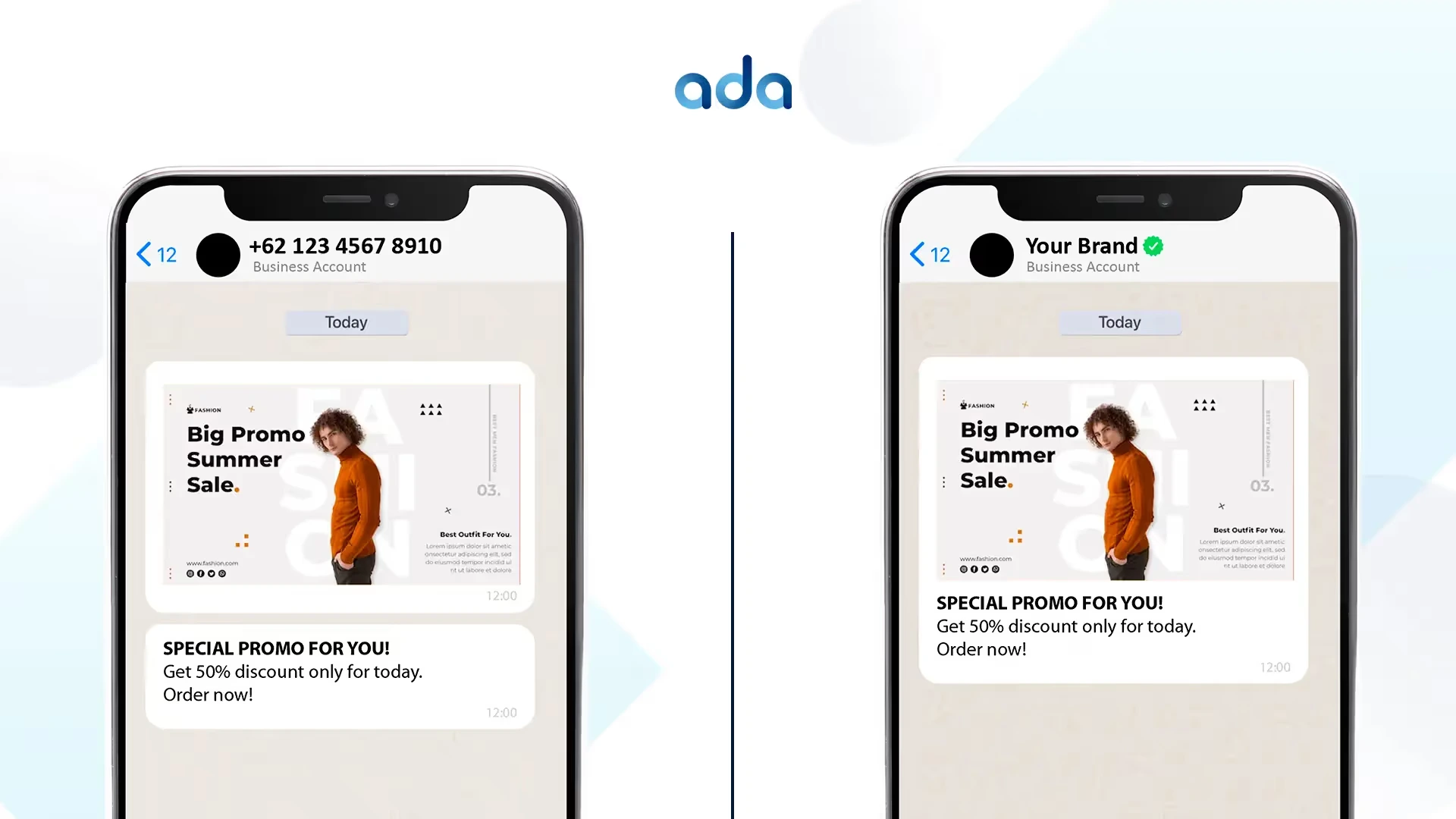
Bayangkan situasi berikut: Sebuah brand pakaian mengirimkan pesan kepada Anda melalui WhatsApp yang berisikan katalog pakaian terbaru mereka. Pesan mana yang Anda percayai?

contoh perbandingan pesan promosi whatsapp
Sudah tentu yang sebelah kanan, bukan?

Di dalam sebuah komunikasi antara brand dan konsumen, konsumen akan cenderung memperhatikan nama pengirim sebelum membalas pesan atau bertanya lebih lanjut; mereka ingin percaya bahwa mereka sedang berkomunikasi dengan pihak yang terpercaya. Centang hijau WhatsApp yang muncul di sebelah nama brand, seperti foto di kanan, merupakan salah satu cara efektif untuk membuat konsumen percaya dengan brand Anda.

Walau pun banyak bisnis sudah memiliki akun bisnis WhatsApp, tidak semua bisa mendapatkannya; tanda centang hijau merupakan simbol kredibilitas yang hanya bisa didapatkan melalui proses panjang nan kompleks yang meliputi background checking perusahaan Anda oleh WhatsApp. Intinya, memiliki akun bisnis tidak cukup untuk mendapatkan simbol kepercayaan dari WhatsApp.

Jadi, bagaimana bisnis Anda bisa mendapatkannya?

Simak penjelasan berikut ini dan mulai menangkan kepercayaan konsumen Anda di WhatsApp!

Apa itu Centang Hijau WhatsApp?

Mengutip dari halaman resmi WhatsApp, lencana atau centang hijau adalah sebuah penanda bagi bisnis bahwa akun mereka adalah akun autentik dan telah terverifikasi oleh pihak WhatsApp. Akun yang autentik dan diverifikasi oleh WhatsApp akan membantu baik bisnis dan pelanggan.

Bagi bisnis, memiliki akun centang hijau dapat meningkatkan kepercayaan pelanggan serta mendapatkan akses pada fitur-fitur marketing dari WhatsApp Business API. Bagi pelanggan, akun centang hijau dapat membuat pelanggan tidak perlu khawatir untuk berinteraksi dengan perusahaan pilihan mereka.

Syarat mendapatkan centang hijau WhatsApp

Untuk memperlancar proses mendapatkan centang hijau WA, Anda harus mempeersiapkan beberapa syarat seperti:

  1. Dokumen-dokumen terkait bisnis Anda;
  2. Akun Facebook Business Manager; dan
  3. Akun sosial media atau website (opsional)

Berikut adalah penjelasan masing-masing syarat:

1 Dokumen-dokumen terkait bisnis Anda

Untuk mendapatkan tanda centang hijau pada WhatsApp, Anda harus memiliki badan usaha yang resmi dan itu berarti Anda memiliki dokumen-dokumen untuk menunjukkannya. Dokumen-dokumen yang bisa Anda gunakan antara lain:

  • SIUP;
  • TDP;
  • NIB;
  • NPWP; dan lain-lain.

Selain kebutuhan dokumen, Anda juga memastikan bahwa layanan atau produk bisnis Anda tidak dilarang oleh WhatsApp. Berikut adalah beberapa layanan atau produk bisnis yang WhatsApp larang:

  • Narkotika dan obat-obatan terlarang;
  • Tembakau dan perlengkapan yang berkaitan seperti bong (namun jika pakaian atau aksesoris yang menampilkan logo atau gambar tembakau diperbolehkan);
  • Alkohol (namun peralatan pendukung seperti gelas dan pendingin masih diperbolehkan);
  • Suplemen yang tidak aman untuk dikonsumsi seperti steroid anabolik;
  • Senjata, amunisi, dan bahan peledak lainnya;
  • Hewan hidup dan ternak;
  • Produk atau layanan untuk orang dewasa;
  • Produk kesehatan dan medis (untuk layanan medis masih diperbolehkan);
  • Layanan kencan;
  • Layanan judi dengan uang nyata; dan lain-lain.

Untuk lebih lengkapnya, Anda dapat merujuk pada halaman resmi WhatsApp tentang produk atau layanan yang tidak bisa mendapatkan centang hijau.

2 Akun Facebook Business Manager

Syarat berikutnya untuk memiliki centang hijau adalah memiliki akun Facebook Business Manager. Untuk mendapatkannya, Anda bisa menggunakan akun Facebook pribadi milik Anda.

Masuk ke halaman https://business.facebook.com/overview untuk memulai proses pembuatan. Klik ‘create account’ di kiri bawah, masukkan nama bisnis, nama Anda, dan alamat email. Setelah itu masukkan detil bisnis Anda dan klik ‘Submit’.

Untuk lebih lengkapnya, Anda bisa langsung merujuk pada halaman resmi dari Meta untuk penjelasan cara membuat akun business manager.

3 Akun sosial media dan website (opsional)

Memiliki akun sosial media dan website merupakan syarat opsional untuk proses verifikasi akun WhatsApp bisnis Anda. Keduanya memiliki peran untuk membantu WhatsApp melihat bahwa bisnis Anda telah dikenal oleh banyak orang. Hal ini dapat membantu proses verifikasi akun bisnis Anda tentunya.

Jika Anda telah memiliki syarat-syarat di atas, sekarang saatnya Anda memahami proses pengajuan centang hijau di WhatsApp

Bagaimana Cara Mendapatkan Centang Hijau di Akun WhatsApp

Langkah-langkah untuk mengajukan centang hijau di WA adalah:

  1. Aktifkan WhatsApp Business Platform;
  2. Menentukan nomor dan nama display;
  3. Mendaftar ke Business Service Provider (BSP) WhatsApp;
  4. Tunggu Verifikasi Selesai.

Berikut adalah penjelasan masing-masing langkah:

1 Akfitfkan WhatsApp Business Platform

Hanya akun WhatsApp bisnis yang dapat mendapatkan tanda centang hijau. Untuk mendapatkan akun bisnis, Anda perlu melakukan verifikasi akun Facebook Business Manager. Proses ini bisa memakan waktu beberapa hari.

2 Menentukan Nomor dan Nama Display

Nomor dan nama display adalah nomor dan nama yang akan muncul pada akun WhatsApp bisnis Anda. Oleh karena itu pastikan Anda tidak salah mengisinya untuk menghindari kegagalan verifikasi dan pelanggan tidak dapat menghubungi Anda.

3 Mendaftar ke Business Service Provider (BSP) WhatsApp

BSP adalah pihak resmi yang ditunjuk oleh WhatsApp untuk membantu bisnis mendaftarkan akun WhatsApp mereka untuk mendapatkan centang hijau.

4 Tunggu Verifikasi Selesai

Proses verifikasi umumnya akan memakan waktu 7 hari kerja. Jika proses verifikasi berhasil, Anda akan mendapatkan centang hijau di sebelah nama akun WhatsApp bisnis Anda.

Apa yang Harus Saya Lakukan jika Pengajuan WhatsApp Centang Hijau Saya Ditolak?

Anda tidak perlu khawatir jika pengajuan centang hijau Anda ditolak. Mendapatkan centang hijau memang merupakan proses yang sulit; jika gampang maka centang hijau tidak akan berarti banyak bagi bisnis.

WhatsApp sendiri tidak pernah membagikan alasan mengapa mereka menolak pengajuan Anda. Yang bisa Anda lakukan adalah menunggu 30 hari untuk kemudian mengajukan pengajuan ulang.

Dalam rentang waktu tersebut, Anda bisa melakukan beberapa hal. Berikut adalah penjelasannya:

1 Lengkapi dan optimasi profil WhatsApp bisnis Anda

Periksa kembali informasi yang Anda masukkan untuk WhatsApp bisnis Anda. Masukkan data-data yang mungkin terlupakan. Jika Anda memiliki website, maka masukkan alamat website tersebut. Gunakan gambar profil yang jelas dan beresolusi tinggi. Jika Anda memiliki website atau sosmed, pastikan Anda menggunakan gambar profil yang sama untuk mencegah kebingungan dari WhatsApp.

2 Bangun Reputasi Online

Untuk mendapatkan verifikasi centang hijau, Anda akan membutuhkan reputasi online yang kuat. Anda dapat membangun reputasi online Anda dengan membuat website atau akun sosial media. Jika menggunakan sosial media, pastikan Anda aktif, seperti dengan rutin membuat post atau membalas komentar seseorang di post Anda.

Semakin kuat reputasi online Anda, akan semakin besar kemungkinan WhatsApp menerima pengajuan centang hijau Anda.

3 Hubungkan Website dan Sosial Media Anda

Jika Anda sudah memiliki website dan sosial media, pastikan Anda memasukkan informasi tersebut pada profil WhatsApp Anda. Dengan begitu, WhatsApp dapat memahami bahwa website dan sosial media tersebut adalah benar milik Anda.

Manfaat Centang Hijau pada Akun WhatsApp Business

Proses panjang dan sulit yang harus Anda lalui untuk mendapatkan verifikasi dari WhatsApp akan sebanding dengan manfaatnya. Apa saja manfaat yang akan Anda dapatkan? Berikut adalah penjelasannya:

1 Meningkatkan Kepercayaan Pelanggan

Centang hijau pada WhatsApp akan meningkatkan kepercayaan pelanggan kepada bisnis Anda. Centang hijau dapat membantu pelanggan untuk menemukan akun resmi dari bisnis ketika mereka ingin bertanya atau melakukan follow up terkait pesanan mereka. Centang hijau juga dapat meningkatkan kredibilitas bisnis Anda karena akun WhatsApp Anda akan berbeda dari penipu yang umumnya hanya menggunakan logo Anda sebagia gambar profil.

2 Masuk ke Direktori WhatsApp

Dengan memiliki centang hijau, akun bisnis Anda akan masuk ke dalam Direktori Bisnis WhatsApp. Direktori bisnis ini berfungsi untuk membantu pelanggan menemukan layanan bisnis yang mereka cari. Dengan masuk ke dalamnya, ada kemungkinan bisnis Anda ditemukan oleh calon pelanggan yang ingin melakukan bisnis dengan Anda.

3 Meningkatkan Tingkat Balasan

Pelanggan akan lebih percaya dan lebih nyaman ketika berkomunikasi dengan bisnis yang telah terverifikasi oleh WhatsApp. Rasa nyaman dan percaya ini dapat membantu Anda meningkatkan tingkat balasan bisnis Anda dan meningkatkan tingkat interaksi pelanggan bisnis Anda.

4 Akses pada WhatsApp Business API

Akses pada WhatsApp Business API dapat mentransformasi pemasaran bisnis Anda. Dengan akses ini, Anda bisa menerapkan layanan seperti chatbot, mengirimkan pesan secara masif, menjual dan melakukan transaksi di WhatsApp, menggunakan template pesan, dan fitur pesan interaktif.

Fitur-fitur tersebut dapat meningkatkan pengalaman pelanggan dalam berinteraksi dengan bisnis Anda yang bisa berujung pada meningkatnya tingkat konversi.

Itulah dia cara mendapatkan centang hijau di WhatsApp serta manfaat yang bisa Anda rasakan. Mendapatkan centang hijau merupakan proses yang panjang, mulai dari menyiapkan dokumen, mengisi informasi yang diperlukan, serta proses pengajuan yang tidak jarang harus Anda lakukan beberapa kali. Manfaat yang Anda dapatkan akan sebanding karena Anda dapat mengakses fitur-fitur pemasaran yang hanya tersedia untuk akun centang hijau.

Jika Anda membutuhkan bantuan untuk melakukan pemasaran WhatsApp, ADA Asia dapat membantu Anda. Sebagai penyedia layanan solusi WhatsApp bagi bisnis, ADA Asia dapat membantu Anda untuk meningkatkan tingkat interaksi pelanggan dan membantu Anda membuat pelanggan Anda lebih nyaman berbisnis dengan Anda. Segera hubungi kami untuk memulai pemasaran tingkat berikutnya!

Table Of Contents
Apa itu Centang Hijau WhatsApp?
Bagaimana Cara Mendapatkan Centang Hijau di Akun WhatsApp
Apa yang Harus Saya Lakukan jika Pengajuan WhatsApp Centang Hijau Saya Ditolak?
Manfaat Centang Hijau pada Akun WhatsApp Business

Increase Customer Engagement on Social Media in 9 Ways

Data & AI
Blogs

Increase Customer Engagement on Social Media in 9 Ways

In today’s digital age, where social media has become an integral part of our lives, businesses cannot overlook its potential for customer engagement. Increasing customer engagement on social media is not just a marketing buzzword; it’s a critical aspect of building a thriving online presence and fostering brand loyalty.

In this article, we will explore the importance of customer engagement on social media and provide seven effective strategies to boost it.

Understanding Customer Engagement on Social Media

Before delving into the strategies, let’s first define what customer engagement means in the context of social media. Customer engagement is a social media interaction between a brand and its audience.

It involves likes, comments, shares, direct messages, and any other communication that signifies a connection between your brand and your audience.


Why is Customer Engagement Important on Social Media?

Customer engagement is not just a vanity metric; it holds immense significance for your business’s success on social media. Here are a few compelling reasons why it should be a priority:

  • Builds trust and credibility: When customers engage with your brand positively, it enhances their trust in your business. Trust is a fundamental factor in driving conversions and brand loyalty.
  • Amplifies reach: Engaged customers are more likely to share your content, which, in turn, extends your reach to a wider audience. This can lead to increased brand awareness and potential customer acquisition.
  • Feedback and insights: Engaged customers provide valuable feedback that can help you improve your products, services, and overall customer experience.
  • Enhances brand loyalty: Active engagement with your audience fosters a sense of belonging and loyalty. Loyal customers are more likely to choose your brand over competitors.
  • Boosts conversions: Engaged customers are more likely to convert into paying customers. Social media engagement can be a crucial touchpoint in the customer journey.
  • Competitive advantage: Brands that actively engage with their audience have a competitive edge. It sets you apart in a crowded marketplace.

How Does Customer Engagement Impact Your Online Presence?

Your online presence is not just about having a website; it extends to your presence on social media platforms. Customer engagement on social media directly affects your online presence in several ways:

  • Improved visibility: Social media algorithms favour content with high engagement. Contents with likes, comments, and shares are more likely to appear in the feeds of your followers and potential customers.
  • Positive brand image: Active engagement portrays your brand as responsive, attentive, and customer-centric. This positive image can attract new followers and customers.
  • Content amplification: Engaged followers amplify your content by sharing it with their networks, increasing its reach, and potentially going viral.
  • Increased traffic: Engaging content often includes calls to action (CTAs) that lead users to your website or landing pages, driving organic traffic.
  • Higher search engine ranking: Social signals like likes and shares indirectly contribute to your website’s SEO ranking. A strong social media presence can improve your search engine visibility.

9 Strategies to Boost Social Media Engagement

Now that we understand the importance of customer engagement and its impact on your online presence, let’s explore seven effective strategies to increase it.

1 Creating an Authentic Persona on Social Media

Your brand’s voice and tone should resonate with your target audience. Are you casual and humorous, or professional and informative? Define your brand’s personality and ensure consistency across all social media platforms.

Plan your content in advance, considering the interests and preferences of your audience. Regular posting keeps your audience engaged and informed. Use a content calendar to maintain consistency.

People love stories. Share authentic, relatable stories that connect with your audience emotionally. Storytelling humanises your brand and fosters a deeper connection.

2 Crafting Effective Posts on Social Media

Diversify your content using various post types, such as text updates, images, videos, polls, and stories. Different formats cater to different audience preferences. Craft compelling captions that add value to your content. Use storytelling techniques, ask questions, and include CTAs to encourage interaction.

Visual content, such as images and videos, performs exceptionally well on social media. Invest in high-quality visuals that align with your brand identity.

3 Using Hashtags Strategically

Hashtags categorise your content and make it discoverable to a broader audience. They can increase the visibility of your posts. Choose relevant and trending hashtags within your niche. Tools like Hashtagify and Trendsmap can help you identify popular hashtags.

Avoid overloading your posts with hashtags, as it can appear spammy. Stick to a reasonable number of relevant hashtags.

4 Cross Promote Your Social Media Posts

Cross-promoting content across your social media platforms is like setting up a web of engagement threads, weaving your audience into a richer, more interactive experience. It’s not just about posting the same thing twice on your social media channels; it’s about strategically adapting your content for each platform’s strengths and your audience’s preferences.

For example, you can post a nice infographic on Instagram with a captivating snippet, and then guide your intrigued followers to the full picture on X (formerly Twitter). Or, spark a discussion on a blog post’s key point on Facebook and invite your most invested readers to delve deeper on YouTube.

This cross-promotion keeps your audience hooked, constantly finding new entry points to your content. Your X followers become curious about your Facebook debates, your Instagram viewers seek the context behind your blog’s headline, and your YouTube subscribers discover hidden gems in your previous posts. This cross-traffic boosts engagement metrics like likes, comments, and shares, sending powerful signals to social media algorithms that reward you with wider visibility.

5 Leveraging User-Generated Content

User-generated content (UGC) is content your customers or followers create. It can be reviews, testimonials, images, or videos related to your products or services. Encourage your customers to share their experiences with your products or services. Run UGC campaigns or contests to incentivise content creation.

Always seek permission to repost UGC. Credit the original creators and engage with the content by liking, commenting, and sharing.

6 Engaging with Your Audience on Social Media

Acknowledge and promptly respond to comments and messages. Show appreciation for positive feedback and address concerns or questions. Contests and giveaways can spark excitement and engagement. Ensure the rules are clear and the gifts are enticing to your target audience.

Partner with influencers or complementary brands to reach a wider audience. Influencers can introduce your brand to their followers, boosting engagement.

7 Measuring and Analysing Your Social Media Engagement

Track key metrics like likes, comments, shares, click-through rates (CTR), and conversion rates. These insights help you assess the effectiveness of your strategies. Use social media analytics tools like Google Analytics, Facebook Insights, and Instagram Insights to monitor your performance and gather actionable data.

Regularly review your analytics and adjust your strategy accordingly. Identify what’s working and what needs improvement to enhance engagement continually.

8 Create and Follow a Regular Post Schedule

Sticking to a regular posting schedule on social media acts like a warm invitation to your audience. Imagine you have a friend who regularly invites you to meet for coffee every Tuesday. You would look forward to that moment every day and be happy when it comes.

Social media works similarly. When you consistently share content, you stay fresh in your followers’ minds, reminding them of your brand and encouraging them to interact.

This consistent presence fosters a sense of trust and familiarity. Your audience gets used to seeing you around, developing a rhythm of anticipation for your next post. This anticipation fuels engagement, making them more likely to like, comment, and share your content.

Additionally, regular posting gives you more opportunities to experiment and refine your content strategy. You can track what resonates with your audience, learn their preferences, and tailor your posts to their interests, further boosting engagement.

9 Staying Up-to-Date with Social Media Trends and Best Practices

Social media platforms frequently update their algorithms. Stay informed about these changes and adapt your social media engagement strategy to align with the latest trends. Study successful campaigns within your industry to gain inspiration and insights. What worked for others may also work for your brand.

Experiment with new features and formats like live videos, stories, or interactive content. Staying innovative can capture your audience’s attention.

In conclusion, understanding how to increase customer engagement on social media is paramount for businesses looking to thrive in the digital landscape. It enhances your brand’s reputation and increases reach, customer loyalty, and business growth.

By implementing the seven effective strategies mentioned in this article, you can elevate your social media game and reap the rewards of a highly engaged online audience.

Enhance Your Customer Engagement Efforts with Social Media Marketing from ADA Asia

To enhance your social media marketing efforts further and increase customer engagement, consider leveraging the expertise of ADA Asia’s Social Media Strategy & Management. ADA Asia is a leading digital marketing agency with a proven track record of helping you boost your online presence and effectively connect with your target audience.

ADA Asia doesn’t offer one-size-fits-all solutions. Instead, we take the time to understand your business, industry, and target audience. This personalised approach enables them to develop tailored strategies that resonate with your specific audience, leading to higher customer engagement.

Contact us to find out how our service can help you expand the capabilities of your business.

Table Of Contents
Understanding Customer Engagement on Social Media
9 Strategies to Boost Social Media Engagement
Enhance Your Customer Engagement Efforts with Social Media Marketing from ADA Asia

Cara Membuat Sales Plan yang Efektif untuk Bisnis Anda

Data & AI
Blogs

Cara Membuat Sales Plan yang Efektif untuk Bisnis Anda

Bisnis apa pun, baik besar atau kecil tentunya membutuhkan rencana penjualan yang efektif. Tanpa rencana tersebut, usaha yang dijalankan dapat mengalami kesulitan untuk mencapai target penjualan dan pertumbuhan yang diinginkan. Untuk itu, Anda perlu mengetahui cara membuat sales plan yang efektif.

Dalam artikel ini, Anda akan menemukan panduan untuk membuat rencana penjualan, lengkap dengan contoh yang mudah untuk diikuti. Agar dapat menerapkannya dengan tepat, pastikan Anda membaca artikel ini sampai selesai!

Apa itu Sales Plan?

Sales plan adalah perincian tujuan penjualan bisnis dan langkah-langkah untuk mencapainya. Dokumen ini berfungsi sebagai peta yang memandu upaya penjualan, mulai dari identifikasi target pasar hingga implementasi strategi penjualan.

Dalam sales plan, terdapat analisis pasar yang menyeluruh, penetapan tujuan penjualan yang spesifik dan terukur, identifikasi target audiens, pemilihan strategi penjualan yang tepat, serta rencana tindakan detail yang diperlukan untuk mencapai tujuan penjualan tersebut. Sales plan juga sering kali mencakup estimasi anggaran yang diperlukan untuk melaksanakan strategi penjualan, serta langkah-langkah evaluasi dan pemantauan untuk mengukur keberhasilan dan membuat perubahan yang diperlukan.

Mengapa Sales Plan Penting untuk Bisnis?

Pentingnya sales plan dapat dilihat dari beberapa aspek yang berpengaruh langsung terhadap kinerja dan kesuksesan bisnis. Beberapa aspek tersebut meliputi:

1 Memberikan Arahan yang Jelas

Sales plan memberikan arahan yang jelas bagi tim sales tentang apa yang harus mereka capai dan bagaimana mereka akan mencapainya. Tanpa arahan yang jelas, tim sales dapat mengalami kebingungan mengenai langkah apa yang harus diambil untuk mencapai target penjualan.

2 Meningkatkan Peluang Keberhasilan

Sales plan yang dirancang dengan baik dapat membantu meningkatkan peluang bisnis untuk mencapai target penjualannya. Hal tersebut dapat tercapai karena di dalam sales plan perusahaan dapat menganalisis mengenai pasar, pesaing, serta merumuskan strategi penjualan yang tepat untuk dapat mengidentifikasi peluang-peluang baru dan memanfaatkannya secara efektif.

3 Membantu dalam Pengambilan Keputusan

Setiap keputusan dalam bisnis tentunya akan berpengaruh kepada hasil akhir. Maka dari itu, perusahaan perlu selektif dalam memutuskan sesuatu. Di sinilah sales plan berperan. Sales plan akan membantu perusahaan dalam membuat keputusan yang lebih baik tentang alokasi sumber daya, seperti personel, anggaran, dan waktu. Keputusan tersebut dibuat berdasarkan pemahaman yang mendalam tentang target pasar, tren penjualan, dan kinerja penjualan sebelumnya.

Cara Membuat Sales Plan

Dalam membuat sales plan, Anda memerlukan beberapa cara yang sistematis untuk memastikan bahwa rencana Anda efektif dan dapat diimplementasikan dengan baik. Berikut adalah beberapa cara dalam membuat sales plan yang dapat diterapkan untuk bisnis Anda.

1 Analisis Pasar

Analisis pasar merupakan fondasi dari rencana penjualan. Analisis ini melibatkan pengumpulan dan analisis data tentang pasar, termasuk tren industri, pesaing, dan perilaku konsumen. Pemahaman mendalam tentang analisis ini memungkinkan Anda menemukan peluang pertumbuhan dan menghindari potensi menurunnya penjualan atau inisiatif baru dari kompetitor. Selain itu, analisis pasar juga membantu dalam memahami kekuatan dan kelemahan bisnis secara lebih luas.

2 Tetapkan Tujuan

Tujuan penjualan yang jelas dan terukur merupakan langkah penting dalam membuat sales plan yang efektif. Tujuan tersebut haruslah spesifik, terukur, dapat dicapai, relevan, dan berbatas waktu. Menetapkan tujuan yang spesifik membuat Anda dapat memberikan arahan yang jelas bagi tim penjualan dan memberikan landasan untuk mengukur keberhasilan.

3 Identifikasi Target Audiens

Pemahaman yang mendalam tentang audiens target menjadi kunci kesuksesan dalam penjualan. Identifikasi siapa pelanggan ideal, apa kebutuhan, keinginan, dan masalah mereka, serta bagaimana mereka berinteraksi dengan produk atau layanan Anda. Dengan memahami audiens secara mendalam, Anda dapat merancang strategi penjualan yang lebih relevan dan efektif.

4 Tentukan Anggaran

Anggaran adalah faktor penting dalam perencanaan penjualan. Tentukan berapa banyak yang Anda siapkan untuk kegiatan penjualan, termasuk pemasaran, promosi, dan penjualan langsung. Pastikan anggaran yang ditetapkan sejalan dengan tujuan penjualan Anda dan strategi yang dipilih.

5 Pilih Strategi Penjualan

Setelah memiliki pemahaman yang mendalam tentang pasar dan audiens, saatnya untuk memilih strategi penjualan yang paling sesuai dengan bisnis. Pilihlah dari berbagai metode penjualan, termasuk penjualan offline, pemasaran online, pemasaran media sosial, promosi, dan lainnya.

6 Action Plan

Setelah menetapkan strategi penjualan, saatnya untuk merencanakan action yang diperlukan untuk mencapai tujuan penjualan. Buatlah rencana yang terperinci, termasuk langkah-langkah yang harus diambil, siapa yang bertanggung jawab atas setiap langkah, dan jadwal pelaksanaannya.

Action plan yang terperinci membantu memastikan bahwa setiap anggota tim memiliki pemahaman yang jelas tentang apa yang diharapkan dari mereka dan kapan mereka harus menyelesaikan tugas mereka.

7 Buat Evaluation Plan

Membuat evaluation plan menjadi langkah penting dalam memastikan keberhasilan sales plan. Untuk itu, rencanakan apakah Anda ingin melakukan evaluasi setiap minggu atau setiap bulan. Evaluasi yang dijadwalkan dengan baik dan teratur memungkinkan Anda untuk melacak kemajuan, mengidentifikasi area yang perlu diperbaiki, dan membuat penyesuaian yang diperlukan untuk mencapai tujuan penjualan.

Contoh Sales Plan

Agar dapat membuat sales plan yang baik sesuai cara di atas, berikut contoh yang dapat Anda ikuti. Contoh di bawah ini merupakan ilustrasi yang kita asumsikan dari penerapan sales plan untuk perusahaan kecantikan.

1 Analisis Pasar

Setelah melakukan analisis pasar yang menyeluruh, kami menemukan bahwa permintaan produk kecantikan organik sedang meningkat secara signifikan. Data pasar menunjukkan bahwa lebih dari 70% konsumen sekarang mencari produk yang terbuat dari bahan-bahan alami dan tidak mengandung bahan kimia berbahaya.

2 Tujuan Penjualan

Untuk tahun pertama peluncuran, kami menetapkan target penjualan ambisius sebesar Rp 500.000.000. Tujuan ini didasarkan pada analisis pasar yang optimis dan pertumbuhan yang stabil dalam industri kecantikan organik.

3 Identifikasi Target Audiens

Kami mengidentifikasi target audiens kami sebagai wanita berusia 25-45 tahun, dengan pendapatan menengah ke atas, yang peduli akan kesehatan dan lingkungan. Secara khusus, kami menargetkan 25.000 konsumen potensial dalam segmen ini di wilayah kota metropolitan.

4 Anggaran

Agar target penjualan tercapai, kami mengalokasikan anggaran sebesar Rp 75.000.000 untuk kegiatan pemasaran dan promosi. Ini termasuk biaya iklan online, promosi di media sosial, dan pengembangan materi iklan cetak.

5 Strategi Penjualan

Kami akan menerapkan strategi penjualan multichannel. Selain penjualan langsung melalui situs web, kami juga akan menjalin kemitraan dengan toko-toko kecantikan lokal untuk meningkatkan distribusi produk kami.

6 Action Plan

Pada bulan pertama, kami akan meluncurkan kampanye pemasaran online yang agresif untuk memperkenalkan produk kepada konsumen. Kami akan menggunakan iklan Facebook dan Instagram, serta kampanye email kepada pelanggan potensial.

Pada bulan kedua, kami akan menjalin kemitraan dengan 50 toko kecantikan lokal di area metropolitan kami. Kami akan menyediakan display dan promosi khusus untuk produk di toko-toko tersebut.

7 Rencana Evaluasi

Kami akan memantau kinerja penjualan kami secara berkala, setiap minggu, bulan, dan kuartal. Kami akan menggunakan metrik utama penjualan, seperti jumlah produk yang terjual, pendapatan, dan retensi pelanggan, untuk mengevaluasi efektivitas strategi. Kami juga akan meminta umpan balik dari pelanggan dan mitra untuk menilai keberhasilan kampanye dan membuat penyesuaian jika diperlukan.

Contoh di atas hanyalah sales plan sederhana yang dapat Anda kembangkan lebih lanjut sesuai dengan kebutuhan dan kondisi bisnis Anda.

Itulah cara membuat sales plan yang efektif dan mudah untuk Anda ikuti. Melalui langkah-langkah di atas, Anda dapat merumuskan rencana penjualan yang terperinci dan terukur untuk mencapai target bisnis.

Untuk memaksimalkan hasil dari sales plan Anda, jangan ragu untuk menggunakan jasa Marketing Services dari ADA. Sebagai partner pemasaran yang berpengalaman dan tepercaya, ADA menawarkan layanan yang komprehensif dan terintegrasi untuk membantu Anda mencapai tujuan pemasaran dengan lebih baik.

Dengan ADA, Anda akan mendapatkan konsultasi profesional, solusi yang disesuaikan sesuai tujuan, anggaran dan target pasar, serta analisis mendalam untuk memastikan keberhasilan strategi pemasaran yang dijalankan. Jadi, tunggu apa lagi, hubungi kami sekarang juga!

Table Of Contents
Apa itu Sales Plan?
Mengapa Sales Plan Penting untuk Bisnis?
Cara Membuat Sales Plan
Contoh Sales Plan

MultiAttribute Badging: The Untapped Power in Social Proof

Digital Experience Personalization
Blogs

MultiAttribute Badging: The Untapped Power in Social Proof

In the cacophony of online shopping, how do you make your products sing? How do you cut through the noise and build instant trust? The answer lies in strategically leveraging product attributes as part of your full-funnel social proof messaging strategy, and amplifying their impact through multiple badges and cross-page integration.

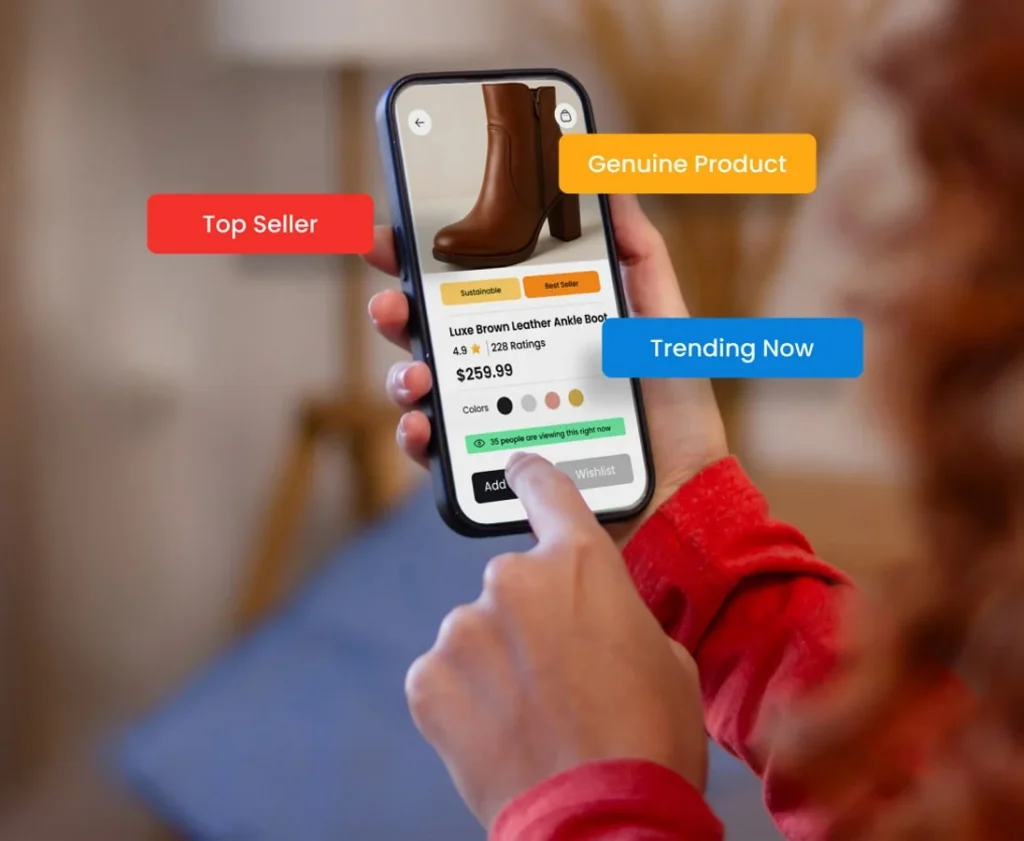
This goes far beyond generic “best-seller” labels. We’re talking about product badges highlighting specific, desirable features that are unique to your products and valuable to your customers, transforming your products into must-haves.

Why Product Attribute Badges Work

Attribute-based badges do more than catch the eye—they communicate specific product benefits in an instant. By highlighting what matters most to your customers, these badges build trust, reduce decision fatigue, and elevate perceived value right where it counts.

  • Specificity = Trust
    Vague badges are easily dismissed. Attribute-based badges provide concrete reasons to buy.
  • Targeted Appeal
    Consumers have unique needs. Badges highlighting relevant attributes connect with those specific desires.
  • Elevated Perceived Value
    Visually appealing badges act as endorsements, boosting the perceived quality and desirability of your products.
  • Simplified Decision-Making
    You streamline the purchase process by showcasing key features, reducing decision fatigue.

Multi-Badge Synergy: A Compelling Narrative

While a single badge can capture attention, combining multiple badges can paint a richer, more persuasive picture. Together, they tell a story—one that resonates with more customers and builds deeper confidence in your product.

Multi-badge synergy works best when you’re not just stacking the same type of badge, but combining different kinds to reflect various angles of product appeal. Here are five common types of badges and what they convey:

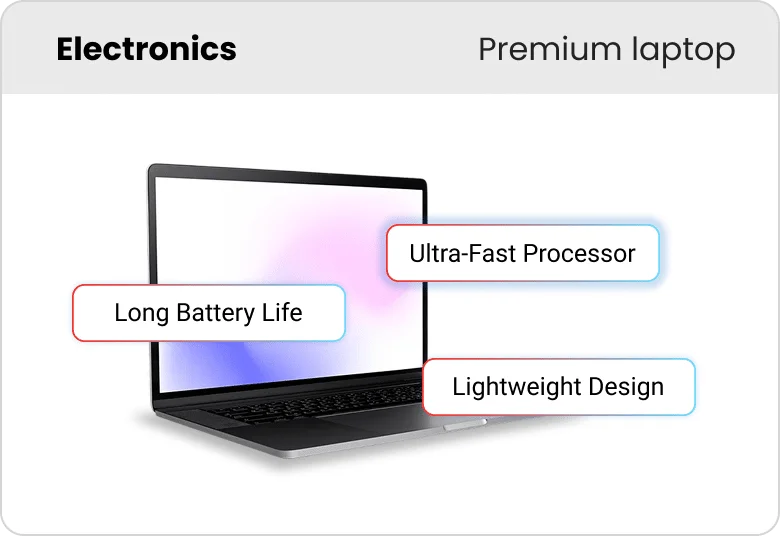
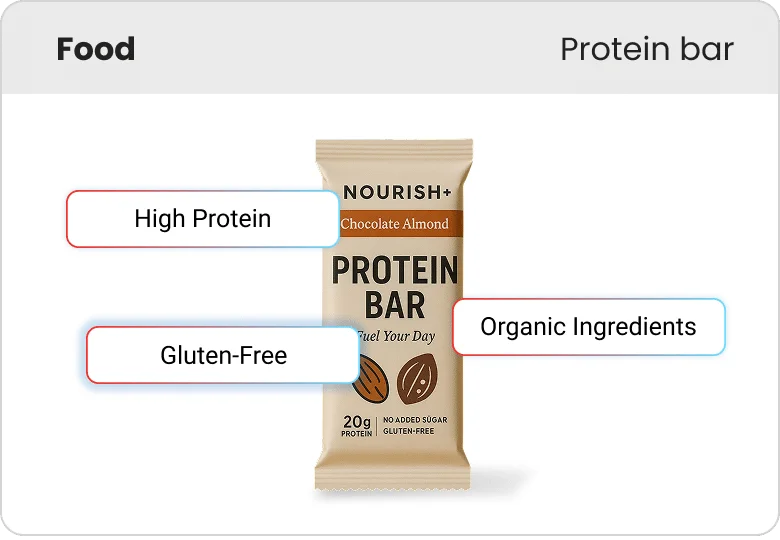
Informative Badges Highlight key specs like material, size, or portability. E.g., Ultra-Thin, Water-Resistant, Travel-Friendly
Feature Badges Showcase standout functionality or innovation. E.g., 5G, Noise Canceling, Wireless Charging
Promotional Badges Signal special offers or urgency. E.g., Clearance Sale, Deal of the Day, 20% Off
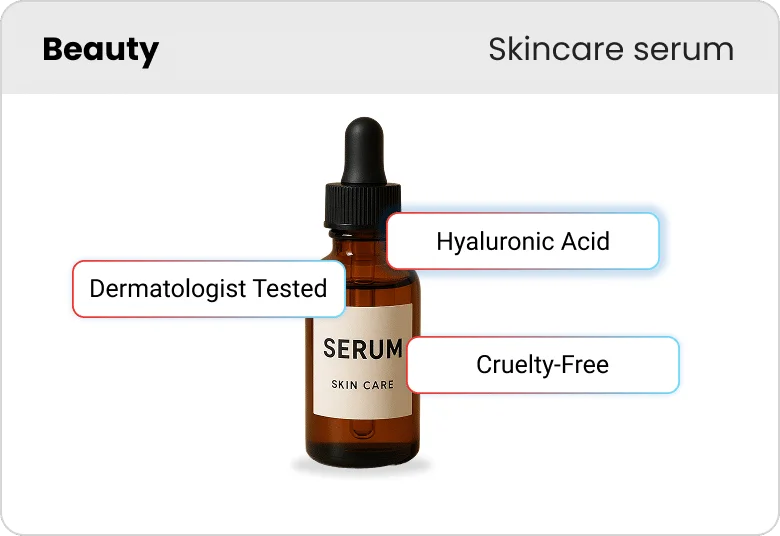
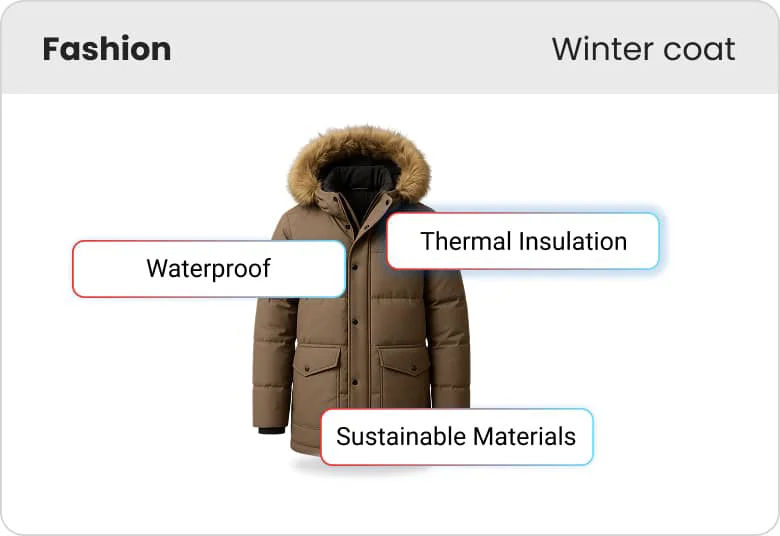
Value-Based Badges Emphasize ethical or environmental qualities. E.g., Sustainable, Cruelty-Free, Recyclable
Trust Badges Reinforce product authenticity or quality. E.g., Quality Assured, Award-Winning, Verified Purchase

The more thoughtfully you combine these, the more compelling—and personalized—your product narrative becomes. This multi-dimensional approach doesn’t just inform; it engages, reassures, and converts. Here’s how multi-badge combinations unlock even more strategic value:

Comprehensive Value Proposition

Multiple badges showcase a product’s diverse strengths, catering to a broader audience.

Reinforced Credibility

A product with multiple positive attributes appears more reliable and trustworthy.

Increased Engagement

Visually appealing badge combinations capture attention and encourage exploration.

Strategic Audience Segmentation

Tailor badge combinations to subtly segment your audience based on their priorities.

Real-World Examples: Multi-Badge Magic in Action

Attribute badging isn’t just theory—it’s already working across industries. From beauty and fashion to tech and software, brands are using badges to spotlight what makes their products unique. Here are some quick examples that illustrate this approach in action:

Cross-Page Integration: Amplifying Impact Across the Funnel

The true power of badging is unleashed when it’s not siloed to a single page. By integrating badges with social proof messaging across commerce touchpoints—from search results to checkout—you reinforce key messages and support decision-making throughout the customer journey.

Key Pages for Badge Integration:

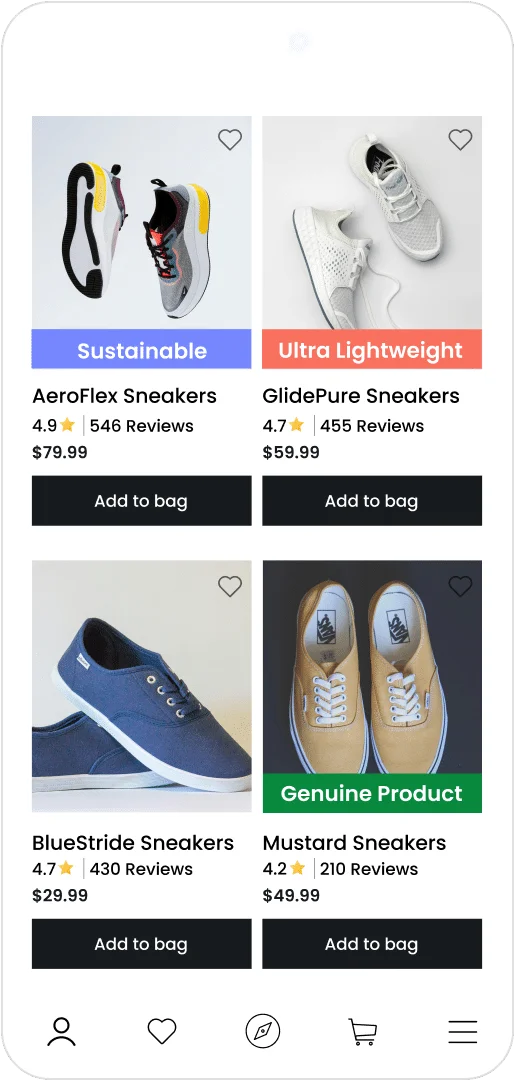
  • Product Listing Pages (PLPs)
    Display badges on product thumbnails for instant attribute recognition and increased click-through rates.
  • Product Detail Pages (PDPs)

    Reinforce key attributes and address potential concerns with prominent badge placement.
  • Search Results Pages (SERPs)
    Enable attribute-based filtering and streamline product discovery with badge integration.
  • Cart and Checkout Pages

    Reaffirm the value proposition with badges, reducing cart abandonment.
  • Homepage and Landing Pages
    Highlight featured products and key brand values with strategic badge placement.
  • Email Marketing
    Use badges to draw attention to product features and drive traffic to product pages.
  • Social Media
    Showcase product attributes with visually appealing badges on product images and videos.

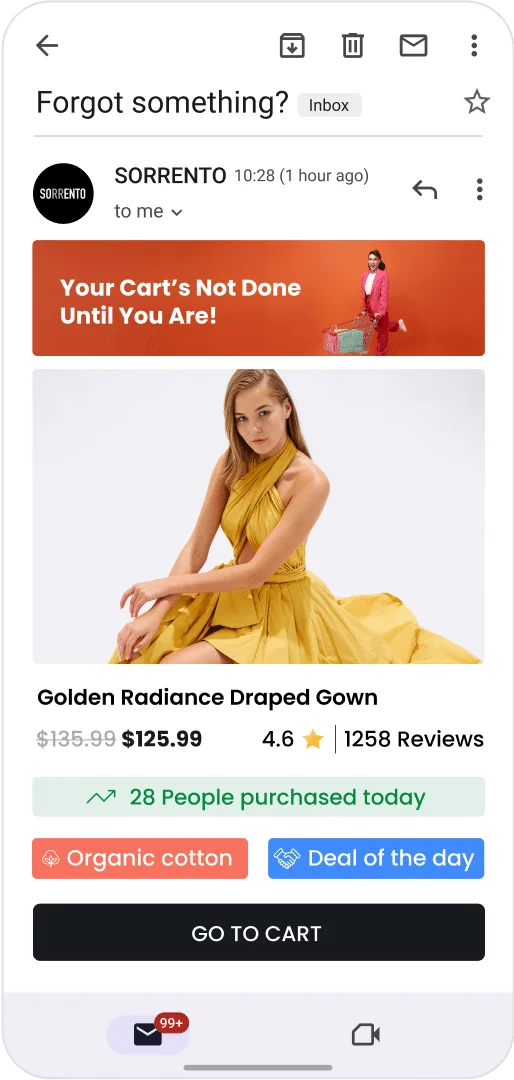
An example of what badging looks like on listing pages and email

Best Practices for Badge Placement

Strategic badge placement isn’t just about making your pages look good—it’s about reinforcing key product messages and aligning with how users actually browse. 
Here’s how to maximize the impact of your badges:

Attention-Grabbing
Shoppers scan—they don’t read every word. Placing badges in multiple, strategic spots increases the chances they’ll be noticed, no matter how the user engages with the page.Reinforce Key Messages
Repetition helps cement product value in the customer’s mind, especially for high-consideration or feature-rich items. The more often they see a key attribute, the more likely they are to trust it.
Point-of-Action Placement
Placing badges near calls-to-action (like “Add to Cart” or “Buy Now”) reinforces benefits at the most decisive moment. For example, a “Secure Checkout” badge near the payment button can reduce buyer hesitation.Match Message with Page Zones
Highlight specific features where they make the most sense—e.g., show “Sustainable Materials” near the description and “Fast Shipping” near delivery info.Guide the Eye with Visual Flow
Strategically placed badges can steer attention across a page, drawing users toward key details and influencing their journey toward conversion.
Scanners vs. Readers
Badges near images, titles, and section headers cater to quick-scanning users. For more deliberate readers, integrate badges into descriptions or technical specs.Mobile vs. Desktop
Use space wisely. On mobile, fewer but highly visible badges near the top or next to CTA buttons work best. On desktop, you have room to repeat or layer badges across different zones.

In essence, strategic placement of badges within a page is about maximizing visibility, reinforcing key messages, and catering to diverse user behaviors to drive conversions.

The Impact: A Conversion Powerhouse

By combining multiple badges and integrating them across your digital footprint, you can:

  • Deliver Consistent Messaging: Reinforce key product attributes across touchpoints to build trust and recognition.
  • Drive Higher Conversions: Help shoppers make faster, more confident decisions by highlighting what matters most.
  • Elevate the Customer Experience: Guide users through a clear, benefit-rich journey that feels informative—not overwhelming.
  • Build Brand Credibility: Show transparency and attention to detail, reinforcing your brand’s values and quality promise.
  • Boost SEO Performance: Badge text can contribute to keyword relevance and visibility in search.

In today’s competitive digital marketplace, social proof messaging and badging, when done right, are not just a trend—they’re a necessity. By embracing the synergy of multiple badges and cross-page integration, you can unlock the full potential of your products and create a truly exceptional customer experience.

Ready to turn your product pages into conversion powerhouses?

Explore how ADA Global’s Social Proof Messaging makes it easy to implement multi-attribute badging seamlessly.

Get Free Trial
Table of Contents
Why Product Attribute Badges Work
Multi-Badge Synergy: A Compelling Narrative
Real-World Examples: Multi-Badge Magic in Action
Cross-Page Integration: Amplifying Impact Across the Funnel
Best Practices for Badge Placement
The Impact: A Conversion Powerhouse

5 Ways Big Data Improves Customer Experience

Data & AI
Blogs

5 Ways Big Data Improves Customer Experience

In today’s rapidly evolving business landscape, customer experience plays a pivotal role in determining the success and sustainability of any enterprise. The digital era has ushered in an age of unprecedented data generation and accumulation, leading to the emergence of ‘Big Data’ as a critical business asset.

In this article, we will explore the multifaceted ways in which big data can be harnessed to enhance customer experience and ultimately boost business success. We will delve into the very essence of big data, understand its importance in business, and explore how it can revolutionise the way companies interact with and serve their customers.

What is Big Data?

Big Data is not just a buzzword; it represents a colossal volume of data that is too vast and complex for traditional data processing tools. This data comes from many sources, including customer interactions, social media, sensors, and other touchpoints. It encompasses structured and unstructured data, such as text, images, videos, and many others.

The three defining characteristics of big data, often called the “3 Vs,” are Volume, Variety, and Velocity. Volume indicates the massive amount of data generated daily. Variety refers to the different types of data, and Velocity implies the speed at which data is created and must be processed.

Importance of Big Data in Business

The significance of big data in the business world cannot be overstated. It has become a cornerstone of modern commerce for several reasons:

  • Data-driven decision-making: Big data empowers businesses to make informed decisions by providing insights into customer preferences, market trends, and operational efficiency. These insights are instrumental in developing effective strategies.
  • Competitive advantage: Companies that harness big data effectively gain a competitive edge by understanding their customers better, predicting market changes, and responding proactively to emerging trends.
  • Customer-centric approach: Big data enables businesses to be more customer-centric by tailoring their products and services to meet individual customer needs. This leads to improved customer satisfaction and loyalty.
  • Innovation: Big data fuels innovation by revealing new opportunities and areas for improvement. It allows businesses to develop products and services that align with customer expectations.
  • Cost savings: By optimising processes and identifying inefficiencies, big data can lead to cost savings in various operational aspects.

How Big Data Improves Customer Experience?

Not only beneficial for businesses in general, but big data can also enhance the customer experience for each of your consumers. How does it work?

1 Personalising Offerings with Big Data

Big data provides businesses with the means to collect, process, and analyse vast amounts of customer data. This data includes demographic information, purchase history, browsing behaviour, and social media interactions. By understanding their customers at a granular level, businesses can deliver tailor-made experiences.

One of the most visible applications of big data in personalising customer experience is through recommendation engines. These engines use sophisticated algorithms to suggest products or services that are highly relevant to individual customers based on their past behaviours and preferences. This personalisation not only makes shopping more convenient for customers but also increases the chances of making a sale.

2 Predicting Customer Behaviour

Big data analytics allows businesses to uncover hidden patterns and trends in customer behaviour. Companies can identify factors influencing customers’ decisions, such as the time of day, season, or external events. This insight helps in anticipating customer actions.

Armed with historical data and predictive analytics, businesses can forecast customer behaviour. For instance, retailers can predict when a customer is likely to purchase, or service providers can anticipate when a customer might need technical support.

3 Enhancing Customer Satisfaction

Big data is a powerful tool for identifying pain points and areas for improvement in customer experiences. By analysing customer feedback, businesses can uncover common complaints, issues, or inefficiencies in their operations.

Identifying customer concerns is only part of the equation. The real benefit comes from acting on this information to resolve issues promptly. This proactive approach not only resolves customer problems but also enhances their overall satisfaction.

4 Improving Business Operations

Big data can be harnessed to optimise internal processes. For instance, supply chain data can be analysed to identify areas for improvement, leading to cost savings and more efficient operations.

Cost efficiency is a critical aspect of business success. Big data can help businesses identify areas where cost savings can be achieved, whether through process streamlining, resource allocation, or inventory management.

5 Overcoming Customer Data’s Challenges

While the potential benefits of big data are enormous, there are challenges to overcome:

  • Data privacy: Safeguarding customer data and complying with data privacy regulations is a top priority.
  • Data security: Protecting data from cyber threats and breaches is crucial.
  • Data integration: Integrating data from various sources can be complex.
  • Skill gap: Finding and retaining talent with the required data analytics skills can be challenging.

To address these challenges, businesses must implement robust security measures, stay updated on the latest cybersecurity threats, and establish clear policies to ensure data privacy and compliance. Make some investment in training and upskilling employees to bridge the skill gap. Also, you can adopt advanced data integration solutions to streamline data management.

Revolutionise Your Customer Experiences with ADA Asia

The power of big data is within reach, and businesses that embrace it are poised for greater success. We encourage businesses to invest in big data strategies and leverage advanced analytics tools.

To seamlessly integrate all your customer data and harness the power of big data, consider ADA Asia. This Data & AI solution offers a comprehensive solution for managing and analysing customer data.

With its powerful data analytics and management tools, you can gain valuable insights, personalise your offerings, predict customer behaviour, enhance satisfaction, and optimise your operations. It’s the key to unlocking the full potential of big data for your business.

Don’t miss out on the opportunity to leverage data-driven strategies that can give you a competitive advantage and improve customer experiences. Take the first step towards success by exploring the possibilities offered by ADA Asia.

Contact us to find out how our service can help you expand the capabilities of your business.

Frequently Asked Questions (FAQs) about Big Data Improves Customer Experience

1. How Can Big Data be Utilised to Improve Customer Experience?

Big data can significantly enhance customer experience by giving businesses valuable insights into customer preferences and behaviours. By analysing vast amounts of data, companies can personalise their offerings, predict customer behaviour, identify pain points, and streamline operations.

For example, through personalisation, businesses can recommend products or services tailored to individual customers, increasing customer engagement and higher conversion rates. Predictive analytics allows companies to address customer needs, improving satisfaction and loyalty proactively.


2. What are the Common Challenges in Implementing Big Data Strategies?

While big data offers remarkable benefits, implementing effective strategies can pose challenges. Data privacy and security are paramount, as safeguarding customer data and complying with regulations are essential. Integrating data from various sources can be complex, requiring sophisticated data management solutions.

Another challenge is the skill gap; finding and retaining talent with the required data analytics skills can be a hurdle. However, these challenges can be overcome by investing in data security measures, data governance policies, employee training, and data integration solutions. Addressing these issues will provide access to valuable insights, enhanced data security, and a competitive advantage.


3. How Can Businesses Implement Big Data Strategies?

Getting started with big data strategies begins with a clear plan. First, assess your specific business needs and goals. Understand what data you currently possess and what additional data may be required. Next, invest in the necessary technology and analytics tools.

Consider working with a customer data platform, like ADA Asia, which seamlessly integrates and analyses customer data. Ensure your team is well-versed in data analytics, or invest in training to bridge the skill gap.

Finally, establish data governance policies to address data privacy and security concerns. By taking these steps, businesses can embark on a data-driven journey to enhance customer experiences and drive success.

In a digital age where customer experience is paramount, big data is the key to unlocking a world of possibilities. By personalising offerings, predicting customer behaviour, enhancing satisfaction, and improving business operations, companies can create memorable and engaging customer experiences. However, it’s crucial to address the challenges of data privacy, security, integration, and skill gaps to harness the potential of big data fully.

Table Of Contents
What is Big Data?
Importance of Big Data in Business
How Big Data Improves Customer Experience?
Revolutionise Your Customer Experiences with ADA Asia
Frequently Asked Questions (FAQs) about Big Data Improves Customer Experience

A Comprehensive Guide to Location-Based Marketing for Business

Data & AI
Blogs

A Comprehensive Guide to Location-Based Marketing for Business

In today’s digital age, where precision and personalisation are paramount in marketing, location-based marketing emerges as a beacon of opportunity for businesses. By harnessing the power of geographic data, location-based marketing enables companies to reach their target audience with unparalleled precision.

This comprehensive guide will unravel the intricacies of location-based marketing and elucidate its significance for businesses seeking to thrive in an ever-competitive marketplace. Let’s embark on a journey to unravel the captivating realm of location-based marketing and discover how it can revolutionise your business strategies!

What Is Location-Based Marketing?

Location-based marketing is a dynamic digital marketing strategy that leverages the power of geographic data to deliver precisely tailored content, offers, or advertisements to individuals based on their physical location. In essence, location-based marketing brings a profound level of personalisation to marketing efforts by capitalising on the ubiquity of mobile devices equipped with GPS capabilities.

These devices, including smartphones and tablets, enable businesses to pinpoint a user’s precise geographical coordinates. Consequently, this empowers companies to send pertinent and time-sensitive messages to potential customers who are not only within geographic proximity to their physical stores or service areas but also within specified geographic zones. This innovative approach represents a transformative shift in how businesses engage with their target audience. It offers a level of precision and relevance that was once considered unattainable.

How Location-Based Marketing Works?

Location-based marketing operates on the principle of geo-targeting. Here’s a simplified explanation of how it works:

  • Data Collection: Mobile apps and platforms collect location data from opt-in users. This data can include GPS coordinates, Wi-Fi signals, and cellular network information.
  • User Profiling: The collected data creates user profiles, including location history and preferences.
  • Trigger Points: Businesses set specific trigger points or geofences around their physical locations or target areas. When a user’s device enters or exits one of these geofences, it triggers an action.
  • Delivery of Content: Based on the user’s proximity to a trigger point, businesses send relevant content, such as promotional offers, event notifications, or product information, directly to the user’s device.
  • User Engagement: Users receive these notifications on their mobile devices and can engage with the content by visiting the store, redeeming offers, or taking other desired actions.

This seamless process allows businesses to connect with their audience in real time and offer highly personalised experiences based on their physical location.

Benefits of Location-Based Marketing

Location-based marketing offers many advantages for businesses seeking to connect with their audience in a highly targeted and relevant manner. Let’s delve deeper into each benefit:

1 Enhanced Personalisation

Location-based marketing allows businesses to deliver content and offers tailored to a user’s location. This level of personalisation increases the chances of users engaging with the content and taking desired actions. Customers appreciate messages relevant to their current situation, making them more likely to respond positively. The ability to provide such personalised experiences fosters a stronger connection between businesses and their audience.

2 Increased Foot Traffic

Brick-and-mortar businesses can significantly benefit from location-based marketing. By sending enticing offers and promotions to users in close proximity to their physical stores, they can attract more customers through their doors. This increases foot traffic and boosts the likelihood of making sales. The immediacy of location-based incentives often translates into a tangible impact on store visits and overall customer traffic.

3 Improved ROI

Location-based marketing can be a cost-effective strategy. Businesses reduce marketing spend wastage by targeting users who are more likely to convert because of their proximity. This precision leads to a better return on investment, making each marketing dollar more effective. The efficient allocation of resources ensures that marketing efforts generate meaningful returns, contributing to a healthier business bottom line.

4 Real-Time Insights

Businesses can gather valuable data on user behaviour and preferences in real-time. This data allows them to make informed decisions and adjust their marketing strategies as conditions change. Adapting quickly based on real-time insights is a powerful advantage in the fast-paced marketing world. This continuous feedback loop, facilitated by location-based data, empowers businesses to stay agile and responsive to their audience’s evolving needs and preferences.

5 Competitive Advantage

Implementing location-based marketing can set businesses apart from their competitors. It demonstrates a commitment to innovation and a deep understanding of customer needs. This competitive edge can be especially valuable in crowded markets where differentiation is crucial. By staying at the forefront of technological and marketing trends, businesses can position themselves as industry leaders, attracting a larger share of the market and fostering customer loyalty.

In conclusion, location-based marketing is a dynamic strategy that offers businesses unparalleled opportunities for personalisation and engagement with their audience. While it comes with challenges and risks, location-based marketing can be mitigated through transparent practices and technical expertise.

If you’re ready to harness the power of location-based marketing and unlock its full potential for your business, consider ADA’s Location-Based Marketing solutions. Our comprehensive approach allows you to uncover insights on your target audience’s Who, What, When, Where, and Why, enabling you to understand consumer behaviour better and strategise effectively. Contact ADA today and discover how location-based marketing can transform your business!

Table Of Contents
What Is Location-Based Marketing?
How Location-Based Marketing Works?
Benefits of Location-Based Marketing