What is eCommerce Customer Retention? Strategies, Metrics, and AI-Driven Optimization

Post
Blogs

What is eCommerce Customer Retention? Strategies, Metrics, and AI-Driven Optimization

What Is eCommerce Customer Retention, Metrics & Strategies

Ecommerce customer retention is a retailer’s ability to keep customers coming back to buy again over time. It is one of the clearest signals of sustainable growth because retaining existing customers is often more efficient than constantly replacing them.1

  • Customer retention measures how well a retailer keeps existing customers engaged and buying over time.
  • The most useful retention metrics include customer retention rate, churn rate, repeat purchase rate, customer lifetime value, average order value, and purchase frequency.
  • A good retention rate depends on category, purchase cycle, price point, and customer behavior.3
  • The strongest retention strategies usually combine personalization, loyalty and promotion strategy, post-purchase engagement, and cross-channel consistency.
  • AI and unified customer data help retailers improve retention by making journeys more relevant and better timed.2

Customer retention has become one of the clearest measures of healthy ecommerce growth. As acquisition costs rise and competition gets tougher, brands need more value from the customers they already have. That is one reason retention keeps moving up the priority list for ecommerce teams. Bain has long reported that raising retention by just 5% can increase profits by 25% to 95%, while McKinsey has found that effective personalization can reduce acquisition costs by as much as 50% and lift revenue by 5% to 15%.1 2

Ecommerce customer retention is the rate at which you retain your existing customers and how often they come back to shop over time. In ecommerce, how do you measure retention? Read on. You’ll learn what ecommerce customer retention is, how it is measured, which metrics matter most, what a great retention rate looks like, and the strategies that can increase repeat purchases, customer lifetime value, and long-term growth.

What Is eCommerce Customer Retention?

Definition of Customer Retention in eCommerce

Ecommerce customer retention is how well a retailer turns first-time buyers into returning customers and returning customers into loyal, high-value customers.

Customer retention in ecommerce is not only about whether someone buys again. It is about whether the experience gives that shopper enough reason to keep choosing the brand over time.

Online customer retention focuses on keeping digital shoppers engaged across touchpoints such as the website, app, email, SMS, paid media, and customer support. The goal is to make every return visit and follow-up interaction more relevant, useful, and easier to act on.

Why Retention Matters More Than Acquisition

Acquisition is how you fill the funnel with new shoppers. Retention is how much value those shoppers bring you in the long run.

Retention has become an all-time top priority for many retailers. Acquisition costs are harder to manage. Paid channels are competitive. Browsing privacy changes have impacted targeting. There are more options than ever for shoppers. Retention offers a solution to that pressure by bolstering the lifetime value of the customers a brand already has in its hands.

A strong retention program can drive repeat purchases, increase customer lifetime value, reduce reliance on new-customer acquisition, and heighten ROI on marketing spend.

Retention vs Churn Rate in eCommerce

Retention and churn are closely related, but they measure opposite sides of customer behavior.

Ecommerce customer retention is the % of customers that continue doing business with you during a particular period. Ecommerce churn rate is the % of customers that drop out of doing business with you during a particular period.

Why eCommerce Customer Retention Is Critical for Growth

Impact on Revenue, Profitability, and ROAS

Customer retention improves the quality of ecommerce revenue. Returning customers usually know the brand, need less persuasion, and are more likely to respond to relevant offers. That makes repeat revenue more efficient than growth that depends only on new-customer acquisition.

Retention also affects return on ad spend (ROAS). When brands bring customers back through smarter lifecycle marketing, personalized offers, and better post-purchase experiences, the value of the original acquisition improves. A first order may recover only part of the cost of acquisition. Repeat orders help improve the economics over time.

This is why ROAS and customer retention should be looked at together. A campaign that acquires customers at scale may look successful in the short term, but its true value depends on whether those customers come back.

Want to know where your site is losing revenue per visitor?

Retention improves when returning shoppers find more relevant products, offers, and journeys. An RPV teardown can help identify missed opportunities across product discovery, recommendations, content, and conversion paths.

Relationship Between Retention and Customer Lifetime Value (CLV)

Customer lifetime value (CLV) estimates how much revenue a customer is likely to generate over the full relationship with a brand. Retention is one of the biggest drivers of CLV because customers who return more often create more value over time.

A retailer can improve CLV by increasing:

  • Repeat purchase rate
  • Average order value
  • Purchase frequency
  • Customer lifespan
  • Cross-sell and upsell effectiveness

How Retention Reduces Customer Acquisition Cost (CAC)

Customer acquisition cost (CAC) measures how much a business spends to acquire a new customer. Retention does not change what was spent to acquire a customer in the first place, but it improves the return on that spend.

Retention also reduces pressure on acquisition teams. Brands with strong repeat purchase behavior do not need to replace as many lost customers just to maintain revenue.

Retention vs Growth: Why Top Brands Focus on Existing Customers

Healthy ecommerce growth needs both acquisition and retention. Acquisition fills the funnel. Retention compounds value from the customers already in it.

Top retailers focus on existing customers because repeat behavior reveals what the brand is doing well. When customers return, it usually means the experience, product relevance, pricing, service, and communication are working together. When customers do not return, it often points to gaps in the journey.

That is why retention should not sit only with CRM or loyalty teams. It spans across ecommerce, merchandising, marketing, customer experience, and data teams.

Key eCommerce Customer Retention Metrics You Must Track

The customer retention metrics ecommerce teams should track include customer retention rate, churn rate, repeat purchase rate, customer lifetime value, purchase frequency, and average order value.

Customer Retention Rate (CRR)

Customer retention rate (CRR) measures the percentage of customers a business keeps during a defined period.

For example, if you started the month with 1,000 customers, ended with 1,100 customers, and acquired 200 new customers during that month, your CRR would be:

CRR = ((1,100 – 200) / 1,000) × 100 = 90%

A rising CRR usually signals that more customers are staying active. A falling CRR may point to weaker customer experience, poor post-purchase engagement, pricing pressure, or stronger competition.

Churn Rate in eCommerce

Churn rate measures the percentage of customers who stop buying during a given period. In ecommerce, churn can be harder to define than in subscription businesses because customers do not always cancel. They simply stop shopping.

For this reason, retailers need to define churn based on category behavior. A grocery customer may be considered inactive after a few weeks. A furniture customer may not buy again for many months and still be a healthy customer.

Useful churn analysis should account for:

  • Average purchase cycle
  • Product category
  • Seasonality
  • Customer segment
  • Acquisition channel
  • First purchase type

Repeat Purchase Rate (Returning Customer Rate)

Repeat purchase rate, also called returning customer rate, measures the percentage of customers who make more than one purchase.

Formula:

Repeat purchase rate = (Customers with more than one purchase / Total customers) × 100

This is one of the most useful ecommerce retention metrics because it shows whether customers are coming back after their first order.

Customer Lifetime Value (CLV)

Customer lifetime value (CLV) estimates the total revenue a customer is expected to generate over the course of their relationship with a brand.

CLV helps teams understand which customers are most valuable and which retention investments make sense. For example, a retailer may choose to spend more on loyalty offers, personalized recommendations, or premium support for high-CLV segments.

CLV should not be read in isolation. It becomes more useful when viewed alongside repeat purchase rate, average order value, purchase frequency, and acquisition cost.

Net Promoter Score (NPS)

Net Promoter Score (NPS) is an indicator of a customer’s likelihood to recommend their brand to friends and family. This is typically captured through a survey that poses a question along the lines of “How likely are you to recommend this business to people you know?”

NPS can give you a directional indication of loyalty and satisfaction, but it should not take the place of behavioral retention metrics. A customer can say they like a brand but still shop elsewhere for a better price, convenience, assortment, or service level.

Purchase Frequency and Average Order Value (AOV)

Purchase frequency captures the frequency that a customer purchases within a defined period. Average order value (AOV) captures the amount that a customer purchases within a defined period.

Customer Retention Rate (CRR)

The percentage of existing customers who stayed active during a defined period.

FORMULA
CRR = ((E – N) / S) × 100
E = end customers   N = new   S = start
BEST USED FOR
Measuring how well the business holds on to its existing customer base over time.


Churn Rate

The percentage of customers who stopped buying or became inactive during a defined period.
FORMULA
Churn = (Lost / Start) × 100
Lost = customers lost   Start = period start
BEST USED FOR
Identifying customer loss, inactivity, or drop-off risk by category, cohort, or purchase cycle.


Repeat Purchase Rate

The percentage of customers who made more than one purchase.
FORMULA
RPR = (2+ Purchases / Total) × 100
Customers with 2+ orders / all customers
BEST USED FOR
Understanding how many first-time buyers become returning customers.


Customer Lifetime Value (CLV)

The total revenue a customer is expected to generate over their relationship with the brand.
CLV = AOV × Frequency × Lifespan
AOV = avg order value
BEST USED FOR
Prioritizing high-value segments, retention investment, loyalty strategy, and personalization.


Net Promoter Score (NPS)

How likely customers are to recommend the brand to others.
FORMULA
NPS = % Promoters – % Detractors
Score ranges from -100 to +100
BEST USED FOR
Gauging customer satisfaction and loyalty sentiment alongside behavioral retention metrics.


Purchase Frequency

How often customers buy within a defined period.
FORMULA
Frequency = Orders / Unique Customers
Total orders ÷ unique customer count
BEST USED FOR
Tracking repeat behavior, replenishment patterns, and the strength of customer engagement.


Average Order Value (AOV)

The average amount customers spend per order.
FORMULA
AOV = Total Revenue / Number of Orders
Sum of revenue ÷ total order count
BEST USED FOR
Measuring basket value and identifying opportunities for cross-sell, upsell, bundles, and recommendations.

What Is a Good Customer Retention Rate for eCommerce?

Average customer retention rate ecommerce benchmarks can be useful, but they should never be treated as universal targets because grocery, beauty, electronics, fashion, and furniture all have different buying cycles.

Industry Benchmarks: Fashion, Electronics, Grocery, and D2C

There is no universal retention rate that applies across ecommerce. A good retention rate depends on product type, purchase cycle, price point, and customer need.

Categories with frequent repeat needs, such as grocery, beauty, pet care, food and beverage, and supplements, usually have more natural retention opportunities. Categories with longer purchase cycles, such as furniture, electronics, appliances, and luxury goods, may have lower purchase frequency but higher order value.

Decile’s Q1 2025 ecommerce benchmarks show how much customer mix varies by category. The ratio of new to returning customers was 2.48 in home goods, 1.33 in fashion and apparel, and 1.21 in health and beauty. In supplements and food and beverage, returning customers outnumbered new customers, with ratios of 0.81 and 0.88 respectively. Purchase frequency also varied by category, from 1.1 in fashion and apparel to 1.3 in supplements.3

For retailers, the lesson is simple: benchmark against businesses with similar purchase behavior, not against a generic ecommerce average.

Average Churn Rate for eCommerce

Average churn rate in ecommerce is difficult to standardize because purchase frequency varies so widely. A customer who does not buy again for six months may be inactive in grocery, but still normal in electronics or furniture.

Instead of relying on one average churn number, retailers should define churn windows by category and cohort. For example:

  • Grocery: no purchase in 30 to 60 days
  • Beauty or Supplements: no purchase after expected replenishment period
  • Fashion: no purchase across a season or campaign cycle
  • Electronics: no engagement or accessory purchase after a major purchase
  • B2B eCommerce: no reorder within the normal procurement cycle

This makes churn measurement more practical and more accurate.

How to Benchmark Your Retention Performance

The best retention benchmarks combine external context with internal trend lines.

Retailers should compare retention by acquisition channel, product category, first purchase type, etc.

A good benchmark answers two questions:

  1. Are we improving against our own past performance?
  2. Are we performing well for our category and customer type?

How to Calculate eCommerce Customer Retention Rate (Step-by-Step)

Formula Explanation

Use this formula to calculate customer retention rate:

Customer retention rate = ((Customers at end of period – New customers acquired during period) / Customers at start of period) × 100

The formula removes new customers from the ending customer count so you can measure how many of your original customers stayed active.

Before calculating CRR, define:

  • The time period
  • What counts as an active customer
  • Whether you are measuring all customers or a specific cohort
  • Whether refunds, cancellations, or dormant accounts should be excluded

Real Example Calculation

Assume an ecommerce retailer has:

  • 10,000 customers at the start of Q1
  • 11,500 customers at the end of Q1
  • 3,000 new customers acquired during Q1

Customer retention rate = ((11,500 – 3,000) / 10,000) × 100

Customer retention rate = 85%

This means the retailer retained 85% of the customers it had at the start of the quarter.


Common Mistakes in Retention Calculation

Mistakes include:

  • Counting orders instead of customers
  • Using inconsistent time periods
  • Forgetting to remove new customers from the ending count
  • Comparing customers from very different acquisition channels
  • Ignoring refunds, cancellations, or inactive accounts

Top eCommerce Customer Retention Strategies

Customer retention optimization is the ongoing process of improving the experiences, campaigns, and journeys that encourage customers to return. For ecommerce retailers, this means testing what improves repeat purchase rate, customer lifetime value, purchase frequency, and reactivation over time.

Customer retention strategies for ecommerce should focus on repeat purchase behavior, better post-purchase journeys, relevant offers, and customer experiences that make people want to return.

The best ecommerce customer retention strategy is usually not one tactic, but a connected program that brings together personalization, loyalty, content, customer data, and service.

The ecommerce customer retention methods below give teams practical ways to improve repeat purchase behavior without relying only on discounts.

1 eCommerce Content Personalization at Scale with AI

Ecommerce content personalization plays an important role. The content a shopper sees on a homepage, product detail page, email, or app screen should reflect what the retailer knows about that customer’s needs and their journey stage.

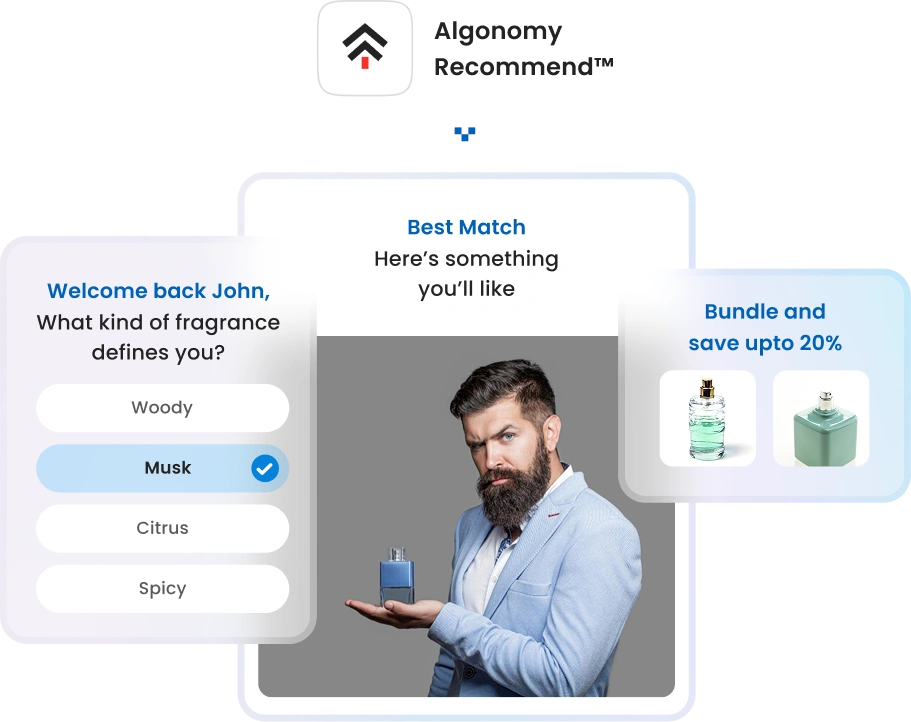
Recommend™ enables retailers to personalize product discovery and recommendations around shopper intent. Matas is an example of how personalized recommendations can support ecommerce growth by making the shopping journey more relevant.

2 Customer Loyalty and Retention Programs

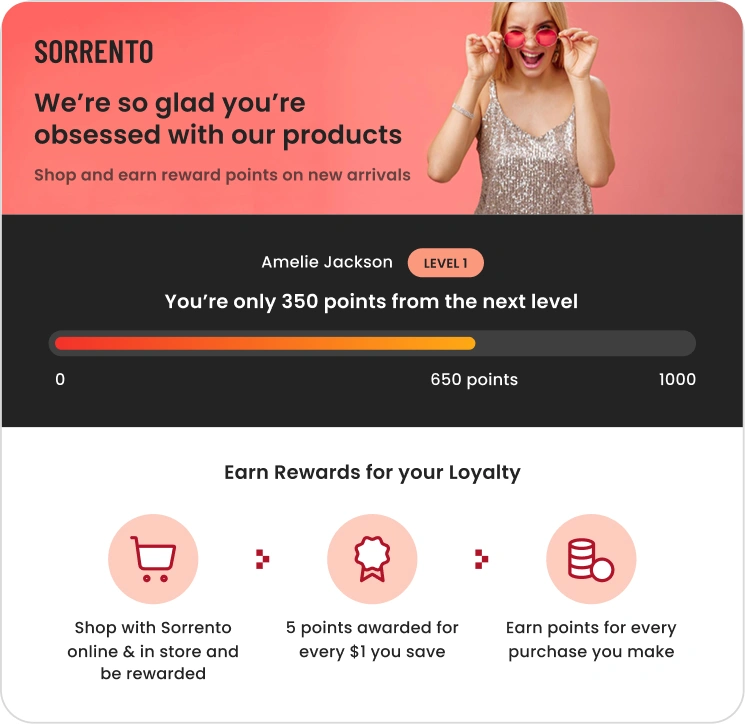
Loyalty programs help retailers encourage repeat behavior, but the strongest programs are built around more than points. Rewards, promotions, and benefits must feel relevant to their shopping habits.

Common loyalty program mechanics include points-based rewards, VIP tiers, member-only pricing, etc.

Audience Manager helps marketers build more precise loyalty, promotion, and reactivation audiences. This makes it easier to target customers based on behavior, value, lifecycle stage, or likelihood to respond.

3 Post-Transaction Engagement Strategies

Post-transaction engagement strategies for customer retention focus on what happens after a customer buys. This part of the journey is often underused, even though it shapes whether a customer feels confident enough to return.

These best practices for customizing post-checkout experiences support customer retention by making the period after purchase feel clearer, more useful, and more personal.

Useful post-transaction engagement can include order confirmations, shipping and delivery updates, review requests, replenishment reminders, etc.

Active Content supports post-purchase engagement with triggered, personalized lifecycle content. Consum shows how stronger lifecycle execution can also improve the operational side of retention marketing by reducing campaign effort and improving speed to market.

4 Omnichannel and Unified Commerce Experiences

Customers move across websites, apps, email, paid media, stores, and support channels. They expect the brand to recognize them across that journey.

Unified commerce helps make this possible by connecting data and experiences across channels. This can improve retention by:

  • Reducing repeated or irrelevant messages
  • Improving offer timing
  • Making loyalty programs more consistent
  • Helping service teams understand customer history
  • Supporting seamless journeys across web, app, email, and store

Real-time CDP plays a central role here by helping retailers unify customer data and activate it across channels.

5 Email and SMS Retention Marketing

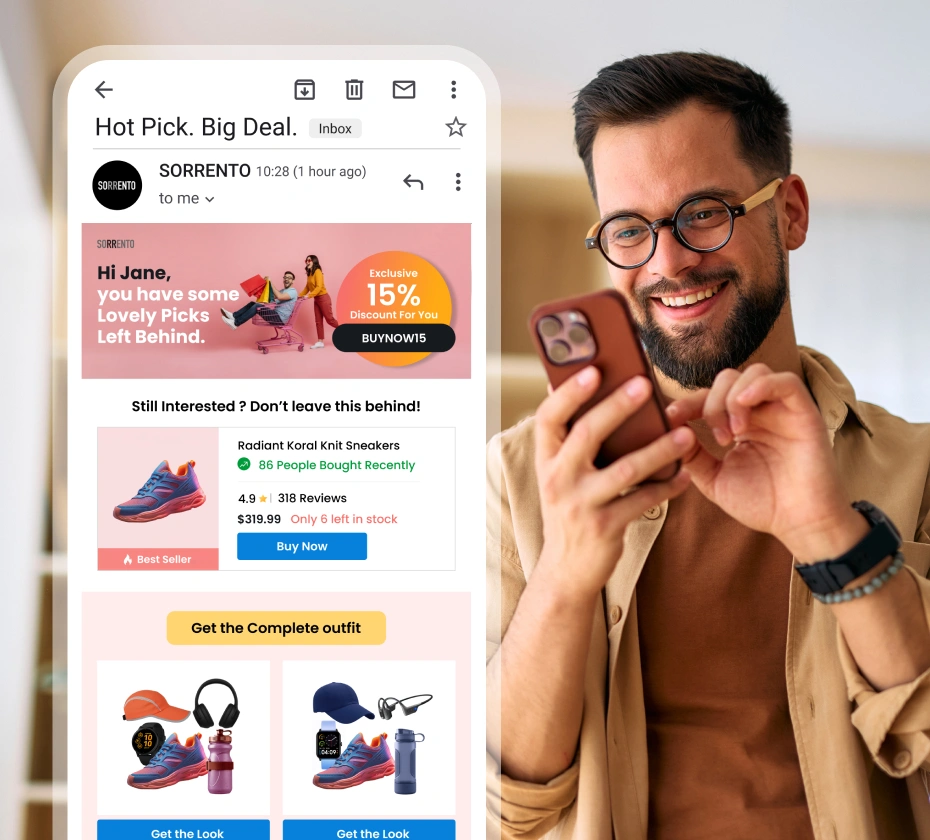
Email and SMS are important retention channels because they are direct and measurable across the customer lifecycle. High-impact lifecycle campaigns such as a welcome series, post-purchase follow-ups, or replenishment reminders match customer intent and timing.

A powerful digital marketing retention strategy ties email, SMS, WhatsApp, paid media, loyalty, and onsite personalization around the same customer signals. This allows retailers to move beyond one-off campaigns and create lifecycle journeys that mirror customer behavior, timing and purchase intent.

6 Subscription and Replenishment Models

Subscription and replenishment models can improve retention in categories where customers buy products repeatedly. This includes groceries, supplements, beauty, pet care, household essentials, and B2B supplies.

These models work because they reduce effort for the customer. Instead of remembering to reorder, the customer receives the right product at the right time.

The best replenishment programs give customers control. They allow shoppers to pause, skip, change frequency, swap products, or adjust quantities. Convenience drives retention only when it feels flexible.

7 Retargeting and Paid Media Optimization

Retargeting can help with retention when it is aimed at people who already know the brand. It does not have to be limited to abandoned carts or first-time purchases. For existing customers, paid media can be used to remind them about products they may need again, show them relevant categories, promote loyalty offers, or bring back shoppers who have gone quiet.

For example, a beauty brand may use retargeting to remind a customer to restock a product they bought a month ago. A fashion retailer may show previous buyers new arrivals in a category they often browse. A grocery or household goods brand may promote repeat-purchase offers to customers who buy on a predictable cycle.

This is where ROAS and retention need to be viewed together. A campaign may look successful because it brings in quick conversions, but its real value is higher when those customers keep coming back after the first click.

8 Customer Support as a Retention Tool

Customer support can decide whether a person buys again. A late package or product issue can be forgiven if the brand handles it properly. The biggest turn off for people is the feeling that no one is listening, or it takes too much effort to get a simple answer.

It also helps when support does not feel disconnected. If a customer has already explained a problem on chat, they should not have to start from the beginning on email or phone. That kind of repetition makes even a small issue feel bigger.

Creative ways to improve customer experience can be simple: faster support, clearer delivery updates, better product guidance, easier returns, or reminders that arrive at the right time.

9 Community Building and UGC

Community content keeps people engaged between purchases. But the customer may not be ready to buy again today but seeing useful posts, honest reviews or customer photos can keep the brand familiar. Familiarity over time can make the next purchase feel easier.

The trick is to use social proof where it helps the shopper make a decision. This should remove doubt, demonstrate real usage and reduce perceived risk in buying.

10 Gamification and Experiential Commerce

Customers should be able to see the point right away. What do I do? What do I get? Is it worth it? If those answers are clear, the experience can give them a small reason to come back.

For retailers, gamification should not be added just to make the site look more interactive. It should support something real, such as finding better products, earning useful rewards, joining a community, or feeling recognized as a returning customer.

Advanced Retention Strategies Using AI & Data

AI tools to boost ecommerce sales and customer retention are most useful when they help teams act on real customer signals, such as purchase history, browsing behavior, churn risk, replenishment timing, and product affinity. These capabilities are central to driving ecommerce customer retention because they help teams respond to customer behavior while the signal is still fresh.


Agentic AI for eCommerce Customer Retention

Agentic AI refers to AI systems that can help plan, decide, and act across parts of a workflow with limited manual intervention. In e-commerce retention, this can support faster decisions about which customers to target, what message to send, which offer to use, and when to act.

In retention, the most useful application is not automation for its own sake. It is better timing, better relevance, and faster response to customer signals.


Predictive Analytics for Churn Prevention

Predictive analytics helps retailers identify customers who may be at risk of disengaging before they fully churn.

Signals can include declining purchase frequency, lower email engagement, fewer site visits, etc.

Once risk is identified, retailers can take action through personalized offers, product recommendations, service outreach, replenishment reminders, or tailored win-back campaigns.

The goal is to act before the customer disappears.


Real-Time Personalization Engines

Real-time personalization engines help retailers respond to what a customer is doing now, not what they were doing weeks ago.

Why it matters: Customer intent can change rapidly. A shopper browsing baby products, winter apparel or high-end electronics is providing you useful context in the moment. A real-time system can then use this context to change recommendations, content, offers and next-best actions.

For retention, this creates a better experience for returning customers. They do not have to start from scratch every time they visit. The brand can respond with more relevant products, content, and reminders.


Leveraging First-Party Data & CDPs

First-party data is data a retailer collects directly from its customer interactions. This could be purchase history, browsing behavior, loyalty activity, email engagement, preferences, and service interactions.

A customer data platform (CDP) helps to unify this data into customer profiles that can then be used across channels. This is important for maintaining retention. If you don’t have a unified view, your teams risk sending irrelevant messages, missing churn signals or treating loyal customers as new visitors.

A Real-time CDP allows retailers to act on customer signals while they’re still relevant. It enables segmentation, personalization, lifecycle marketing and cross-channel orchestration. Here’s why it matters in practice, says McDonald’s India. With a unified view of the customer and centralized customer data, the brand was able to create granular customer segments and enable CRM goals.

Revise this image from the 2024 Guide to Ecomm. Personalization | “Personalization Using First-Party Data”


Automation of Customer Journeys

Retention journeys often involve many touchpoints. A customer may receive a welcome message, browse products, make a first purchase, receive delivery updates, join a loyalty program, get a replenishment reminder, and later receive a win-back offer.

Managing these journeys manually is difficult. Automation helps teams scale the right sequence of actions based on customer behavior.

Useful retention journey automations include:

  • Welcome journeys
  • Post-purchase journeys
  • Replenishment journeys
  • Loyalty activation journeys
  • VIP journeys
  • Churn prevention journeys
  • Win-back journeys

The best automated journeys still feel human because they are relevant, timely, and useful.

Impact of Unified Commerce on Customer Retention

What Is Unified Commerce?

Unified commerce is the consolidation of customer data, product data, inventory, promotions, orders and engagement channels, enabling retailers to offer a consistent experience across touchpoints.

At its core, unified commerce enables the retailer to view the customer as a single customer throughout the journey. The customer’s experience should be the same context whether they are shopping online, on an app, via email, in the store or with support.


Why Fragmented Data Kills Retention

Fragmented data weakens retention because it creates disconnected experiences.

Common problems include:

  • Customers receiving irrelevant offers
  • Loyalty status not being recognized across channels
  • Online and store behavior staying separate
  • Support teams lacking purchase context
  • Replenishment reminders missing the right timing
  • Repeated campaigns going to the wrong segments
  • High-value customers being treated like first-time shoppers

Each of these gaps can make the customer feel unknown. Over time, that weakens trust and reduces the likelihood of repeat purchase.


How Unified Commerce Improves Customer Experience

Unified commerce improves retention by making experiences more consistent and relevant.

It helps retailers:

  • Recognize customers across channels
  • Personalize recommendations with better context
  • Coordinate loyalty and promotions
  • Connect online and offline behavior
  • Support better service interactions
  • Improve timing of lifecycle messages
  • Reduce duplicate or conflicting campaigns

For customers, the result is simpler. The brand feels more consistent, more useful, and easier to shop from.


Real-World Use Cases

Unified commerce can improve retention in practical ways:

  • A grocery customer receives a replenishment reminder based on past purchase timing.
  • A fashion customer sees product recommendations based on browsing, purchase history, and preferred sizes.
  • A loyalty member receives a promotion that reflects both online and store behavior.
  • A customer support agent can see purchase history and loyalty status before resolving an issue.
  • A lapsed customer receives a win-back offer based on categories they used to buy.

These use cases depend on shared customer context. Without that context, personalization and retention campaigns remain limited.

Best Practices for Customizing Post-Checkout Experiences

Order Confirmation Optimization

An order confirmation should be more than a payment confirmation. It should reassure the customer, set expectations clearly and direct the next step.

A strong order confirmation can contain:

  • Summary of order
  • Delivery schedule
  • Support connections
  • Loyalty point accrual
  • Prompt for creating account
  • Care information
  • Appropriate next product recommendations

This is one of the first retention moments after the purchase. A helpful, clear confirmation builds confidence.


Cross-Sell and Upsell Opportunities

Post-checkout cross-sell and upsell opportunities should be relevant to the customer’s purchase. The goal is not to push more products immediately. The goal is to help the customer get more value from what they just bought.

Examples include:

  • Accessories for electronics
  • Styling suggestions for fashion
  • Refills for beauty products
  • Complementary grocery items
  • Protection plans for high-value products
  • Setup guides or add-ons for B2B ecommerce purchases

Personalized product recommendations can make these moments more useful and less intrusive.


Delivery Experience Personalization

Delivery is a high-attention moment in the customer journey. Customers want to know where their order is, when it will arrive, and what to do if something changes.

Retailers can personalize the delivery experience through:

  • Proactive shipping updates
  • Delivery preference reminders
  • Local store pickup options
  • Delay notifications
  • Product care tips before arrival
  • Category-specific follow-up content

A smoother delivery experience reduces anxiety and supports repeat purchase behavior.


Returns and Refund Experience

Returns and refunds have a strong effect on retention. A difficult return experience can stop a customer from buying again, even if the product was good.

A retention-friendly returns experience should be:

  • Easy to understand
  • Transparent about timelines
  • Simple to initiate
  • Consistent across channels
  • Supported by clear communication

Retailers should treat returns as part of the customer relationship, not only as a cost.

Common eCommerce Retention Mistakes to Avoid

Over-Reliance on Discounts

Discounts can drive short term sales but too much discounting can train customers to wait for sales. It can also eat into margins and dilute brand value.

A stronger strategy is to use discounts rarely and pair them with relevance, loyalty benefits and personalized timing.


Disregarding Customer Data

Retention is about understanding customer behaviour. “You miss the opportunity to personalize the experience by ignoring browsing history, purchase patterns, loyalty activity or lifecycle stage.

The fix: Use customer data across teams and channels.


Poor Onboarding

The first few interactions after a customer’s first purchase matter. If a retailer does not guide the customer, explain benefits, collect preferences, or encourage the next best action, the relationship may stall.

A good onboarding journey can improve repeat purchase behavior by helping customers see more value early.


Lack of Personalization

Generic experiences make retention harder. Returning customers expect the brand to remember something about them, whether that means preferred categories, sizes, replenishment timing, or loyalty status.

Personalization does not need to be complex at the start. Even basic segmentation and product relevance can improve the customer experience.


Inconsistent Omnichannel Experience

A customer should not feel like a stranger when switching from email to website, app, store, or support. Inconsistent experiences create friction and reduce trust.

Retailers need connected data, coordinated campaigns, and shared customer context to prevent these gaps.

eCommerce Customer Retention Examples

Personalized Recommendation Engines

Employing personalization in recommendation engines aids retention by making repeat visits more relevant. Returning customers should be able to search for products based on what they have done, what they are looking for and what they are likely to need.

Matas demonstrates how personalized recommendations can boost ecommerce growth through better product relevance. This kind of personalization enables retailers to go beyond static merchandising and enables more helpful discovery throughout the customer journey.


Loyalty Program Success Stories

A really good loyalty program gives customers a reason to come back, but it’s got to be relevant.

Points, tiers and rewards are more effective when they are based on customer behavior and preferences.

For example, a beauty retailer might reward replenishment behavior, whereas a fashion retailer might offer early access to new collections. A grocery retailer could offer tailored promotions based on household purchasing patterns. In both cases, audience segmentation and offer strategy are more effective when they are in alignment.

Audience Manager supports this kind of retention program by helping marketers build and activate more precise audiences for loyalty, promotions, and reactivation.


AI-Driven Retention Campaigns

AI-driven retention campaigns use customer behavior to decide who to target, when to reach them, and what message or offer is most relevant.

Examples include:

  • Predicting churn risk
  • Triggering replenishment reminders
  • Personalizing win-back campaigns
  • Recommending next-best products
  • Adapting lifecycle content based on engagement
  • Suppressing irrelevant messages

Consum highlights the operational side of this challenge. Personalized lifecycle marketing is not only about better messages. It also requires faster campaign execution, easier content management, and the ability to act at scale.

How Ada Global Helps Drive eCommerce Customer Retention

AI Personalization Engine

Retention improves when every customer interaction becomes more relevant. Recommend™ helps retailers personalize product discovery and recommendations based on shopper behavior, context, and intent.

This supports retention by helping returning customers find the next right product faster, discover complementary items, and continue the relationship beyond the first order.


Customer Data Platform (CDP) Capabilities

A customer data platform (CDP) helps retailers unify customer data and make it usable across channels. Ada Global’s Real-time CDP supports retention by helping teams build a more complete view of customer behavior and activate that context when it matters.

This is especially important for loyalty, lifecycle marketing, churn prevention, and omnichannel personalization.


Real-Time Decisioning

Timing often determines retention opportunities. A replenishment reminder, win-back message, loyalty offer, or product recommendation is more effective when it can respond to customer behavior in the moment. Real-time decisioning allows retailers to react to live signals instead of depending on static segments or campaign cycles that have long lead times.


Cross-Channel Orchestration

Customers are moving across channels and retention programs need to move with them. Ada Global provides cross-channel retention support through features in recommendations, lifecycle content, audience management and customer data.

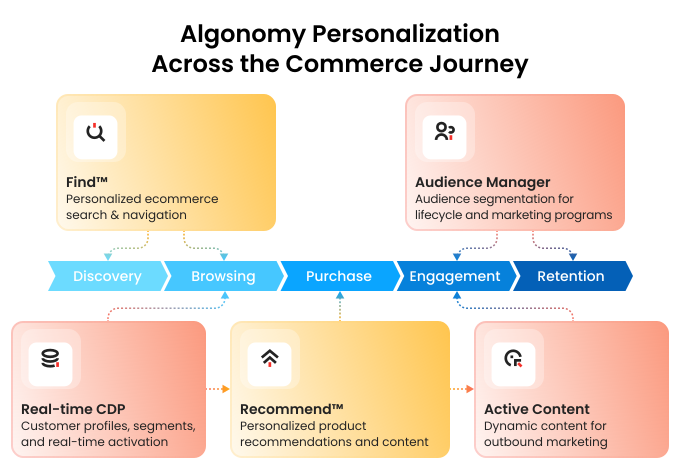
Recommend™, Active Content, Audience Manager, and Real-time CDP work together to help retailers build more consistent and relevant customer journeys across web, email, app, paid media, and other touchpoints.

Future Trends in eCommerce Customer Retention

Agentic AI

Agentic AI will make retention programs more adaptive. Instead of requiring teams to manually define every segment, message, and action, AI can help identify customer needs, recommend next steps, and automate parts of the journey.

The value will come from better decisions, faster execution, and stronger guardrails.


Predictive Commerce

Predictive commerce uses customer data to anticipate what shoppers are likely to need next. For retention, this can support replenishment, next-best-product recommendations, churn prevention, and personalized promotions.

Retailers that can anticipate intent will be better positioned to keep customers engaged.


Zero-Party Data

Zero-party data is information customers choose to share, such as preferences, interests, sizes, goals, or communication choices.

This data can improve retention because it makes personalization more transparent and more accurate. It also helps retailers reduce dependence on inferred signals alone.


Hyper-Personalization

Hyper-personalization uses real-time behavior, customer data, and AI to tailor experiences at a more individual level. In retention, this can improve recommendations, promotions, lifecycle messages, and post-purchase journeys.

The challenge is to keep personalization useful and respectful. Customers want relevance, not discomfort.


Privacy-First Marketing

Retention strategies need to respect customer privacy and consent. As privacy expectations rise, retailers will need stronger first-party data strategies, clearer preference management, and more transparent personalization practices.

Trust will become part of the retention equation.

Conclusion

Retaining ecommerce customers is one of the most powerful levers for sustainable growth. It helps retailers to drive repeat purchases, increase customer lifetime value and make acquisition spend work harder over time.

The most successful retention programs involve measurement, personalization, loyalty strategy, post-purchase engagement, unified customer data and cross-channel orchestration. And AI adds another layer, empowering retailers to respond more quickly and more relevantly to customer signals.

For ecommerce teams, retention is no longer a narrow CRM issue. It’s a larger growth capability that blends marketing, merchandising, data and customer experience. Retailers that are able to build this capability are in a stronger position to keep customers engaged, increase long-term value and compete in a crowded market.

Sources

  1. Bain & Company, “E-loyalty: Your Secret Weapon on the Web.” Source for the retention-profitability finding.
  2. McKinsey & Company, “What is personalization?” and “Marketing’s Holy Grail: Digital Personalization at Scale.” Sources for personalization impact on acquisition costs, revenue, and marketing spend efficiency.
  3. Decile, “Q1 2025 E-commerce Industry Benchmarks.” Source for new versus returning customer ratios and purchase frequency benchmarks by category.
Table Of Contents
What Is eCommerce Customer Retention, Metrics & Strategies
What Is eCommerce Customer Retention?
Why eCommerce Customer Retention Is Critical for Growth
Key eCommerce Customer Retention Metrics You Must Track
What Is a Good Customer Retention Rate for eCommerce?
How to Calculate eCommerce Customer Retention Rate (Step-by-Step)
Top eCommerce Customer Retention Strategies
Advanced Retention Strategies Using AI & Data
Impact of Unified Commerce on Customer Retention
Best Practices for Customizing Post-Checkout Experiences
Common eCommerce Retention Mistakes to Avoid
eCommerce Customer Retention Examples
How Ada Global Helps Drive eCommerce Customer Retention
Future Trends in eCommerce Customer Retention
Conclusion
Sources

FAQs

What is eCommerce customer retention?

Ecommerce customer retention is the ability of a retailer to keep customers engaged and buying over time. It is usually measured through repeat purchases, retention rate, churn rate, customer lifetime value, and purchase frequency.

How to calculate customer retention rate in eCommerce?

Use this formula: customer retention rate = ((customers at end of period – new customers acquired during period) / customers at start of period) × 100. This shows what percentage of existing customers stayed active during the period.

What is a good retention rate for eCommerce?

A good retention rate depends on category, purchase cycle, and customer behavior. Grocery, food and beverage, beauty, and supplements usually offer more natural repeat-purchase opportunities than categories such as furniture or electronics.3

What is churn rate in eCommerce?

Churn rate measures the percentage of customers who stop buying or become inactive during a defined period. In ecommerce, churn should be defined based on the expected purchase cycle for the category.

How can I increase eCommerce customer retention?

You can increase ecommerce customer retention through personalization, loyalty programs, post-purchase engagement, lifecycle email and SMS, customer support, replenishment reminders, retargeting, and unified customer data.

What are the best eCommerce retention strategies?

The best ecommerce retention strategies include AI-driven personalization, loyalty and promotion programs, post-transaction engagement, omnichannel consistency, lifecycle marketing, subscription or replenishment models, customer support, and churn prevention campaigns.

How does personalization impact retention?

Personalization helps retention by making shopping experiences more relevant. It helps customers to discover products, get useful recommendations, better offers and interact with content that reflects their behaviour and preferences.2

What is the difference between retention and loyalty?

Retention measures whether customers continue buying over time. Loyalty reflects a deeper preference for the brand. A retained customer may buy again because of convenience or price, while a loyal customer is more likely to choose the brand repeatedly and recommend it to others.

How does AI improve customer retention?

AI improves customer retention by identifying behavioral patterns, predicting churn risk, personalizing recommendations, automating lifecycle journeys, and enabling retailers to act on customer signals in real time.

What is returning customer rate in eCommerce?

Ecommerce returning customer rate, also called repeat purchase rate, measures the percentage of customers who make more than one purchase. It helps retailers understand how many first-time buyers become repeat customers.

How to increase customer retention rate?

To increase customer retention rate, retailers need to improve the reasons customers come back. The biggest levers are personalization, loyalty and promotion strategy, post-purchase engagement, replenishment reminders, better customer support, and connected customer data.

Product Discovery in Ecommerce: A Guide to Discovery Optimization for Fashion Retailers

Digital Experience Personalization
Blogs

Product Discovery in Ecommerce: A Guide to Discovery Optimization for Fashion Retailers

TL;DR: Optimizing Product Discovery in Fashion Ecommerce

How do you optimize product discovery in fashion ecommerce?

You can optimize product discovery in ecommerce by building one connected discovery experience across Find™, Recommend™, Social Proof Optimize, and Agentic Commerce. Each layer plays a distinct role, and together they reduce early drop-off before shoppers reach PDPs. That means:

  • high-intent search that recovers from messy queries (typos, synonyms, vague terms),
  • browse experiences that guide choices quickly (personalized product listing pages, i.e., PLPs),
  • confidence signals in the moments of hesitation (social proof messaging and badging),
and
  • guided assistance for uncertain shoppers that asks 1–2 clarifying questions, then returns a tight shortlist with “why this matches.”

Done right, discovery stops leaking intent before shoppers ever reach product detail pages (PDPs). This matters because ecommerce teams can spend heavily to acquire traffic, but still lose it early. And even after shoppers add items to their cart, industry benchmarks show ~70% cart abandonment, making every recovered “intent moment” upstream even more valuable.

Key Takeaways:

  • Shoppers who use search are typically higher intent and convert at meaningfully higher rates than browsers, so search should be viewed as a revenue lever.
  • “No results” pages are a major leak: Baymard’s research finds 68% of sites have “no results” experiences that are essentially dead ends.
  • Fashion discovery needs guidance, not just relevance (size/fit, style intent, occasion, budget), and that’s where recommendations, social proof, and conversational/agentic help compound.
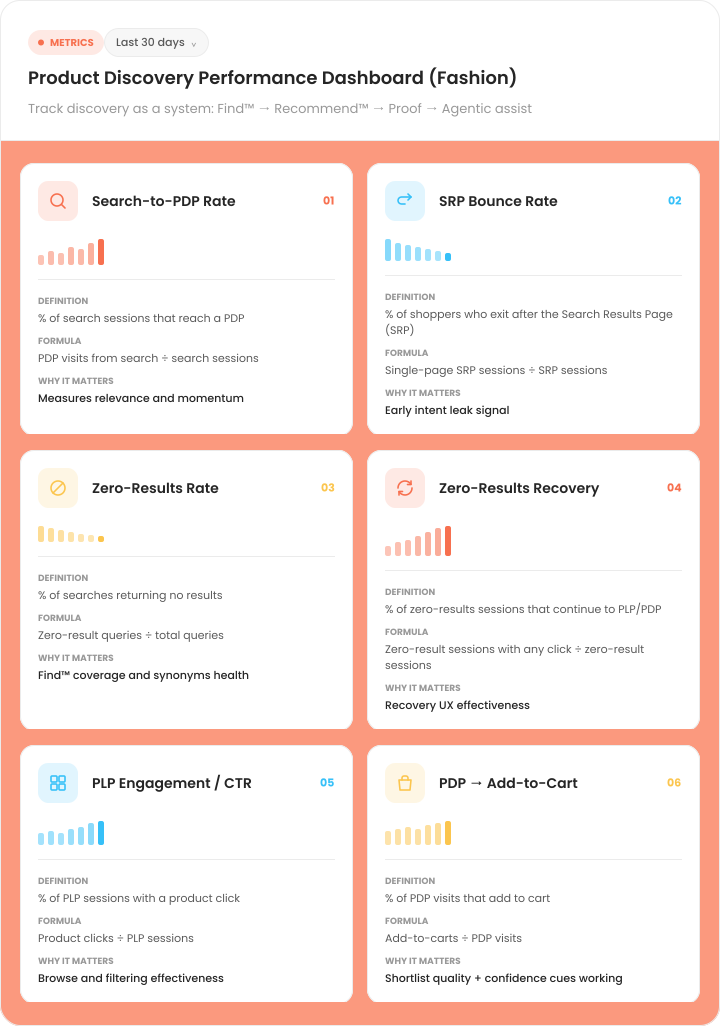
  • Optimize discovery with a tight measurement loop: Search-to-PDP rate, zero-results recovery, PLP CTR, and add-to-cart downstream impact.

Fashion ecommerce is won or lost in the first few minutes of a session. When shoppers cannot quickly find a relevant shortlist, they abandon their intent. This guide breaks down ecommerce discovery optimization for fashion retailers, with practical moves across search, category browsing, recommendations, proof cues, and guided assistance that improve conversion without leaning on blanket discounting.

If you’re curious where your site is currently losing revenue, start with a quick teardown to uncover hidden opportunities across discovery, recommendations, and checkout.

What is Product Discovery in Ecommerce?

Product discovery in ecommerce is how shoppers find and narrow down items through site search, category browsing (PLPs), navigation, and decision support such as recommendations and proof cues. The goal is simple: help shoppers reach a confident shortlist quickly, especially in fashion where intent is often broad, visual, and occasion-led.

“If shoppers cannot find what they want, they cannot buy it.”2

— Baymard Institute, E-Commerce Search UX Research

In this guide, “discovery optimization” refers to improving that entire system end-to-end: relevance, recovery, guidance, confidence, and assisted journeys.

Why Ecommerce Discovery Optimization Matters in 2026 (Especially in Fashion)
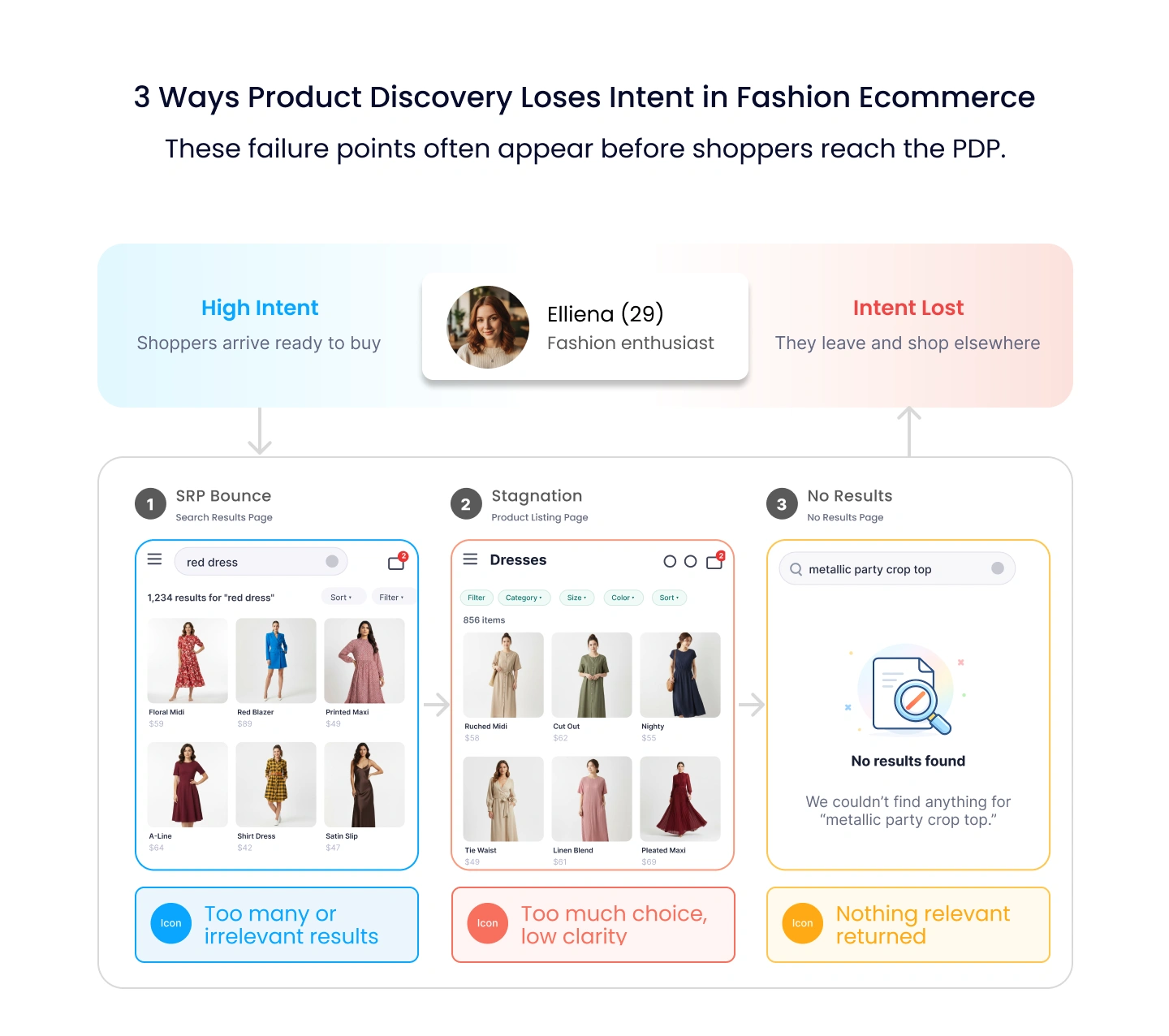
Fashion shoppers don’t browse like they used to. They mix vague inspiration with specific intent, and then expect the site to “get it.” When discovery fails, they simply leave.

Two macro shifts make discovery optimization more urgent now:

1. More intent is compressed into fewer interactions.

AI-driven shopping journeys are accelerating. Shopify describes “agentic shopping” as agents that can search, compare, and even complete checkout on a buyer’s behalf, inside a conversation.

What this means for fashion retailers: Your product data, search, and discovery relevance must work not just for humans but also for machine-assisted journeys.

2. The cost of wasting traffic is higher.

Benchmarks show cart abandonment remains around 70% on average, meaning the few shoppers who do express intent are disproportionately valuable, and losing them earlier in the discovery process is even more expensive.

What this means for fashion retailers: For fashion teams specifically, discovery is also where fit anxiety, style uncertainty, and too much choice first show up on SRPs and PLPs.

Discovery Optimization in Fashion: How It Works

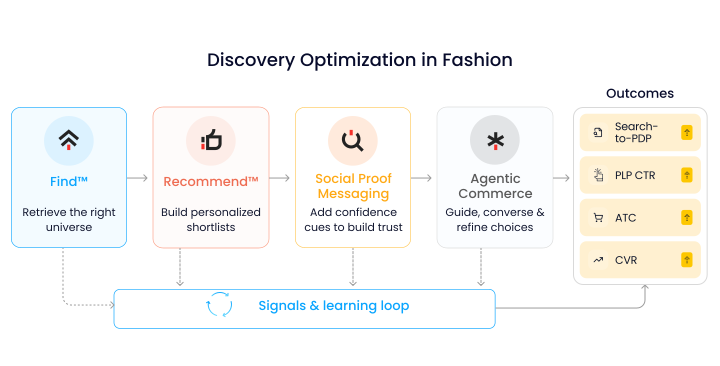
In fashion ecommerce, product discovery breaks down for predictable reasons: vague intent, too many similar options, fit and styling uncertainty, and low confidence in what is worth clicking. A modern personalization platform solves these issues by combining four capabilities: Find™ (a personalized search engine for retrieval), Recommend™ (a product recommendations engine that builds shortlists), Social Proof Optimize (confidence cues), and Agentic Commerce (guided, conversational refinement). Together, they form a practical set of ecommerce personalization solutions for enhanced product discovery.

1 Find™: Interpret shopper intent and return the right universe fast

Queries can be broad (“date night outfit”) or incomplete (“black linen oversized”), and shoppers expect the site to understand the intent. Find™ is the layer that turns messy intent into relevant retrieval across search and browse — handling variants, synonyms, misspellings, and category intent. This plays a critical role in product discovery in ecommerce by improving search relevance and reducing dead ends.

Fashion example:

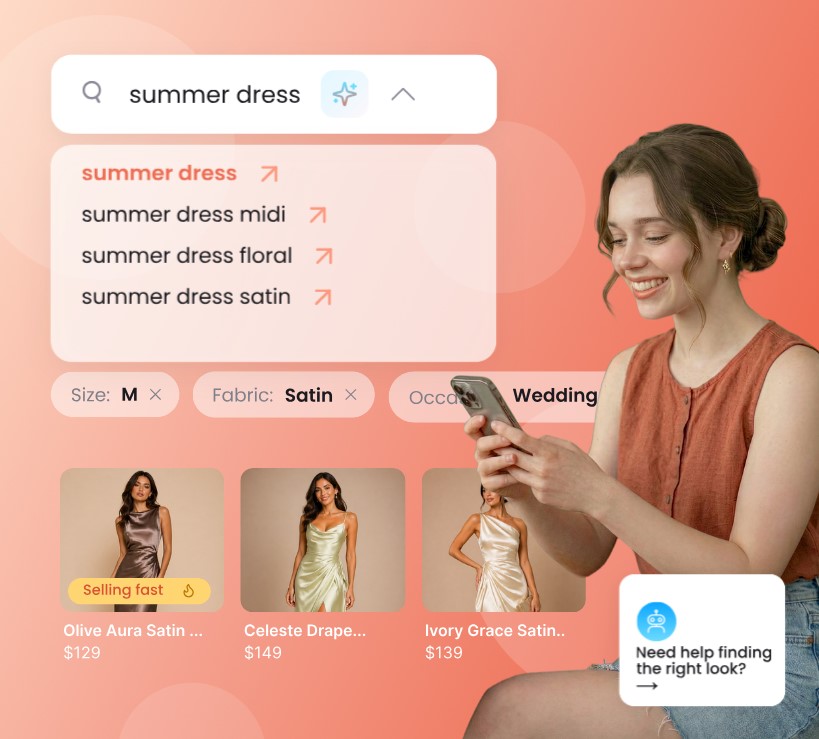
A shopper searches “wedding guest dress” → Find™ should surface the right occasionwear assortment, prioritize available sizes, and elevate relevant attributes (length, fabric, color) so the shopper can refine without friction.

What “good” looks like: fewer dead ends, better first-page relevance, higher Search-to-PDP and PLP CTR.
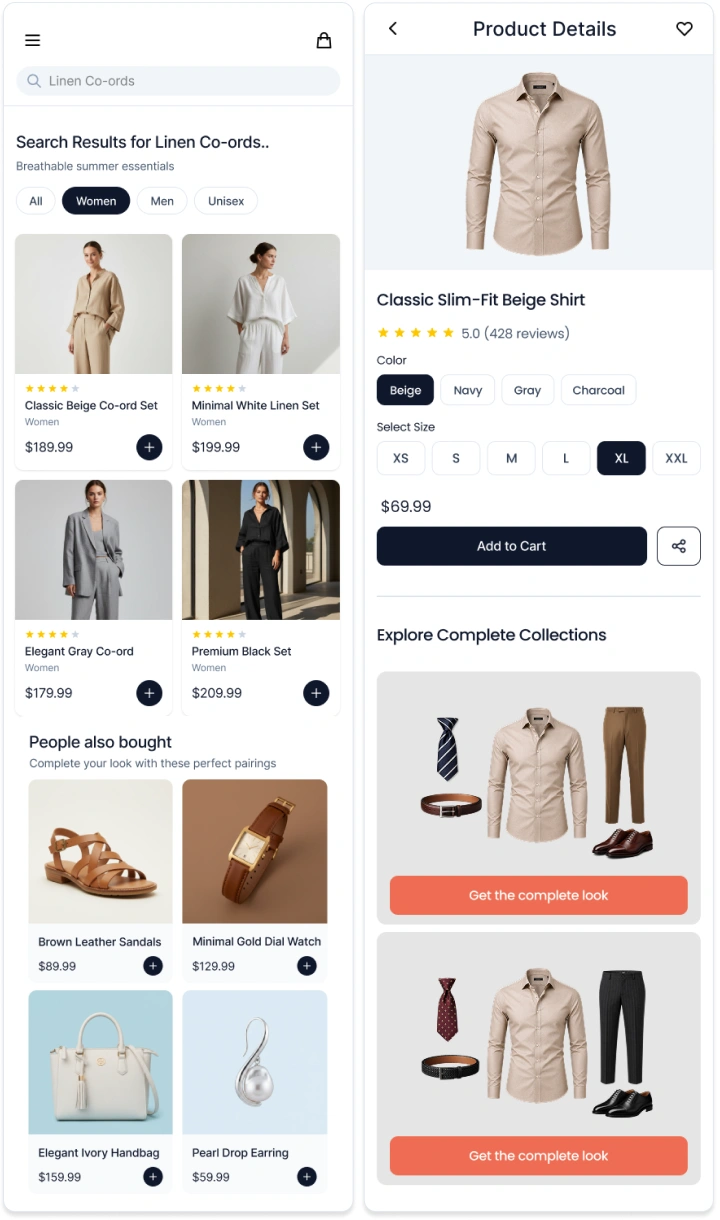
2 Recommend™: Convert relevance into a confident shortlist

Even when Find™ returns relevant results, shoppers stall because the set is too big. Recommend™ is how you move from “results” to “shortlist” by guiding the next click based on context: what the shopper is browsing, what typically goes together, and what reduces decision effort.

Fashion example:
  • On a PLP for “linen co-ords”, RecommendTM surfaces practical and stylish add-ons that other people  bought along with the clothing.
  • On a PDP for a shirt, Ensemble AI, powered by RecommendTM, can show “complete the look” combinations made up of complementary pieces (trousers, belts, etc.)

What “good” looks like: less pogo-sticking between PLP and PDP, more PDP depth, higher add-to-cart. AI-powered recommendations are a core part of ecommerce product discovery.
3 Social Proof Optimize: Add confidence cues during discovery

Discovery is where doubt begins: “Is this popular?” “Will this sell out?” “Is it worth clicking?” Social Proof Optimize helps reduce uncertainty by placing credible, contextual proof signals where they matter most: SRP, PLP, and PDP.

Fashion example:

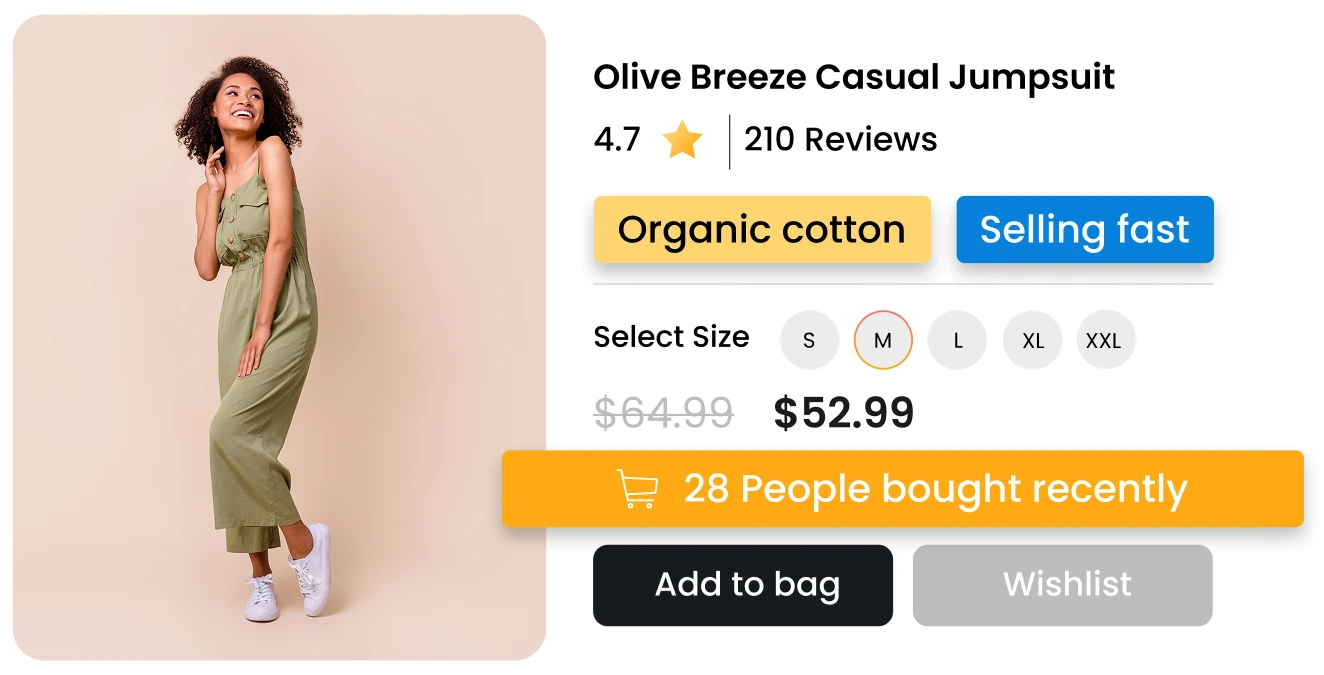
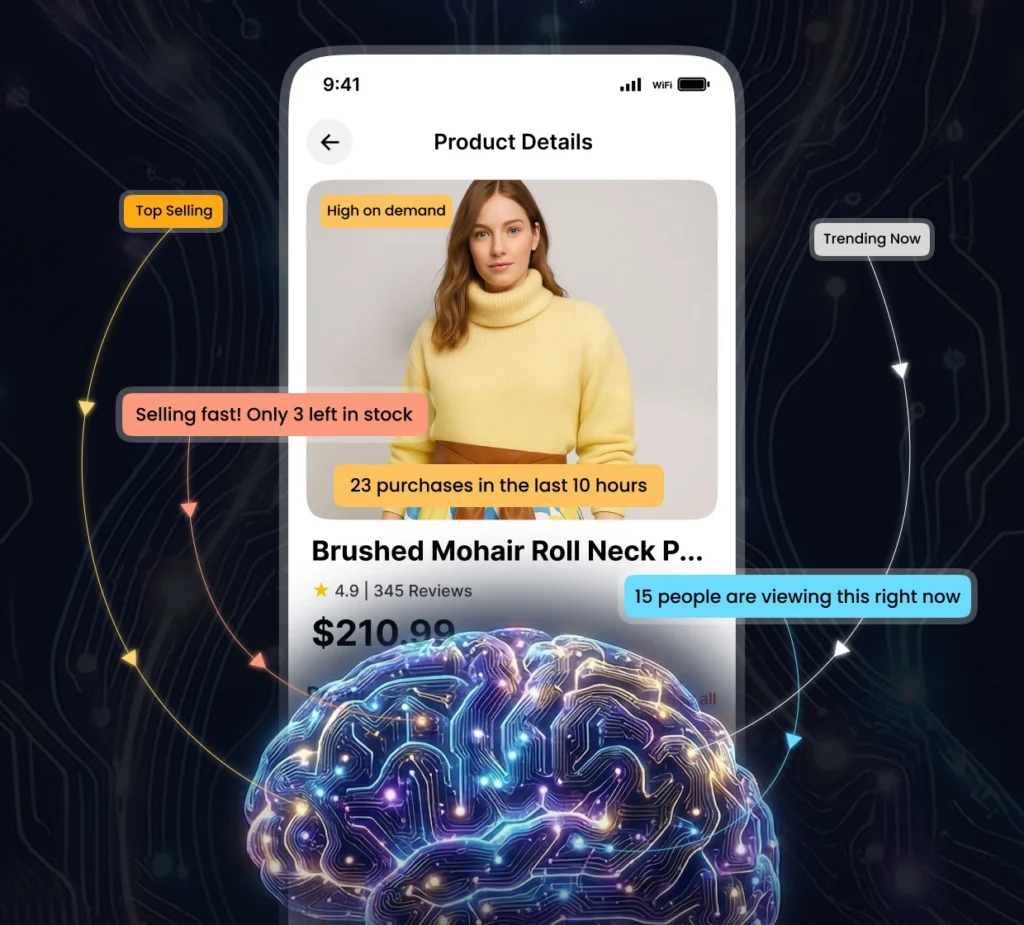
On SRP/PLP: “Bestseller,” “Trending in Dresses,” “Popular in your size.” On PDP: review volume + rating, “X bought today,” “Selling fast.” On PLP during seasonal edits: “Most saved this week” to validate trend intent.

What “good” looks like: improved click-through to PDP, faster decisions, better PDP-to-cart. Social proof improves ecommerce product discovery by increasing shopper confidence during browsing.

4 Agentic Commerce: Turn discovery into a conversation that refines intent

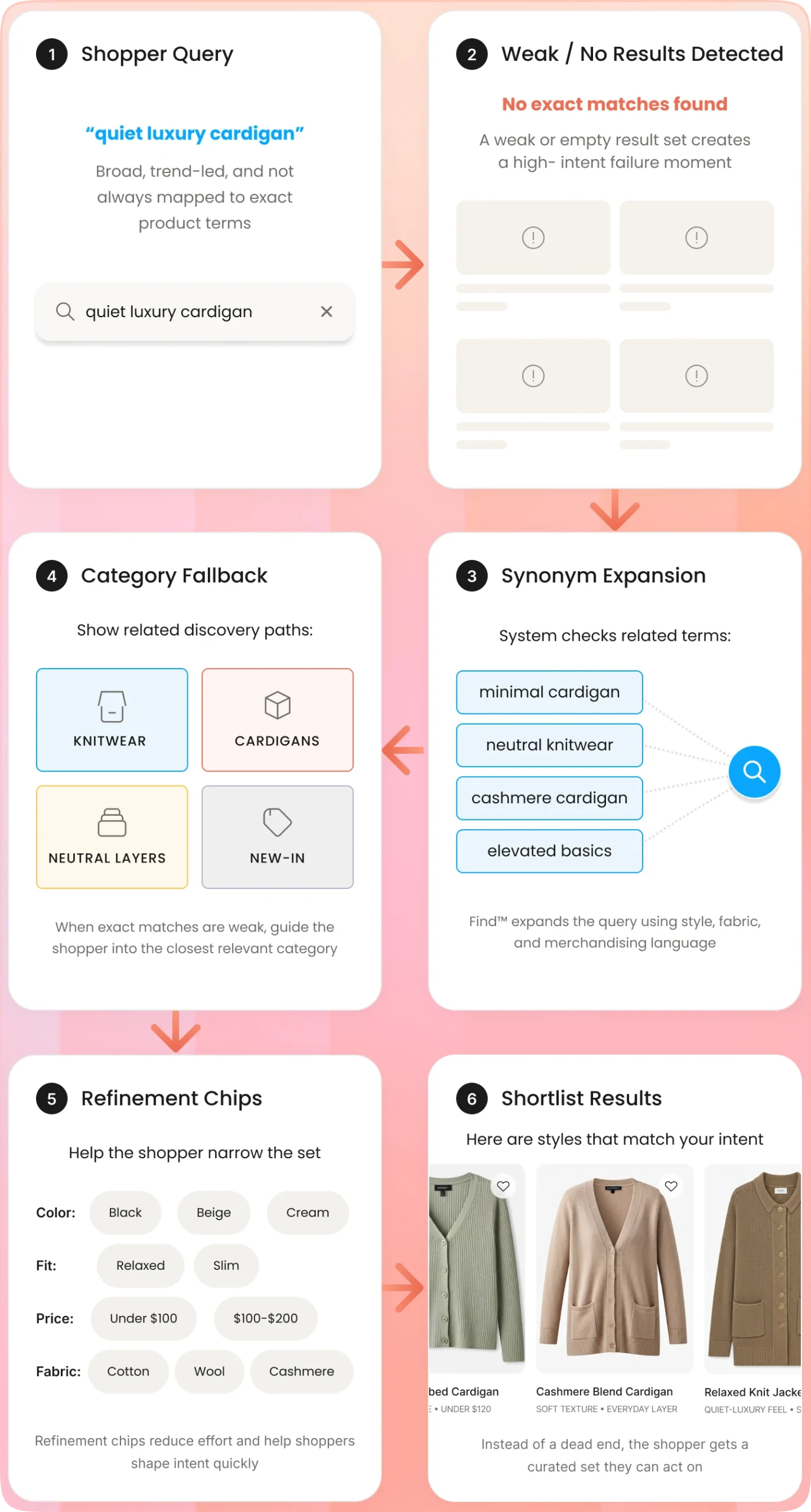
Fashion shoppers often know the goal but can’t express the query (“I need a beach wedding outfit” / “I want quiet luxury but affordable”). Agentic Commerce acts as the discovery guide: it asks clarifying questions, applies constraints, and produces a curated set — while staying inside the shopping journey.

Fashion example:

“Find me a black dress under $150 for a dinner date, shipping by Friday.” The agent clarifies silhouette, fit, and occasion preferences, then narrows to a handful of high-fit options and explains why each matches.

What “good” looks like: fewer refinements, higher conversion for first-time/uncertain shoppers, shorter time-to-shortlist. This represents the next evolution of ecommerce product discovery, where AI actively guides users.

5 Orchestration: Make the four layers work together

The conversion lift comes from orchestration: Find™ gets you into the right set, Recommend™ narrows the set, Social Proof Optimize boosts confidence to click/commit, and Agentic Commerce resolves ambiguity when shoppers can’t self-serve.

A practical orchestration loop (Fashion):

  • Broad query → Find™ returns a relevant assortment
  • SRP/PLP → Social Proof Optimize increases click confidence
  • PDP → Recommend™ builds an outfit context + alternatives
  • Stalled shoppers → Agent asks 1–2 questions to finalize a shortlist
  • Measure end-to-end: Search-to-PDP → PDP engagement → ATC → CVR (by segment)
Find Hidden Revenue Opportunities in Your Ecommerce Experience

Many ecommerce sites lose revenue daily due to generic experiences, ineffective product discovery, and missed cross-sell moments.

We are offering a free RPV Lift Teardown, in which we’ll analyze your site to identify exactly where revenue is leaking.

You’ll receive annotated screenshots of missed opportunities and a
90-day personalization uplift plan for FREE.

Request Your Free RPV Lift Teardown

Best Practices for Product Discovery in Ecommerce (Step-by-Step)

1. Build an intent map for fashion discovery (Find™)

Create a simple dictionary of how shoppers search and browse: occasion (wedding guest), silhouette (midi slip), fabric (linen), style vibe (quiet luxury), and fit terms. Use it to improve a personalized search engine that handles synonyms, typos, and attribute-led refinement.

2. Treat “no results” and “weak results” as high-intent moments (Find™ + Agentic Commerce)

Add recovery paths such as alternative categories, smart fallbacks, and refinement chips. When intent is still unclear, introduce a lightweight agent prompt that asks one clarifying question and then narrows the set.

3. Use a product recommendations engine to reduce choice fatigue (Recommend™)

Replace generic carousels with personalized product recommendations that match the decision stage: “complete the set” on PLPs, “style with” on PDPs, “similar fit” when shoppers bounce, and “frequently bought together” for practical add-ons. This is how an ecommerce product recommendation engine becomes a discovery accelerator.

4. Add confidence cues where discovery friction shows up (Social Proof Optimize)

Use proof signals on SRPs and PLPs to improve click confidence, then reinforce on PDPs to support add-to-cart. Keep signals selective and accurate so they feel believable in fashion, where brand trust matters.

5. Deploy Agentic Commerce for shoppers who cannot express the right query

When shoppers circle between PLP and PDP or keep refining searches, offer an agent flow that captures constraints such as occasion, budget, shipping timeline, and fit preference. Return a small shortlist and explain the match in one line.

6. Orchestrate the system and measure it end-to-end

Discovery improvements compound when Find™Recommend™Social Proof Optimize, and Agentic Commerce work together as AI-powered personalization. Track Search-to-PDP rate, PLP CTR, recovery rate from weak results, PDP engagement, add-to-cart, and conversion. Treat it like an operating loop, not isolated page metrics.

Measuring Ecommerce Product Discovery Performance

Once discovery is orchestrated across Find™, Recommend™, Social Proof Optimize, and Agentic Commerce, the next question is simple: is the experience helping shoppers move forward?

A discovery dashboard should track where intent is gained, slowed, or lost across the journey. For fashion retailers, that means looking beyond overall conversion rate and measuring the signals that show whether shoppers are finding relevant products, engaging with PLPs, recovering from weak results, and adding shortlisted items to cart.
Common Mistakes to Avoid for Optimized Ecommerce Product Discovery

Most fashion retailers run into the same pitfalls when improving product discovery in ecommerce. Here is what to watch for:

Treating Search as a feature instead of a journey

If search and category browsing are not tuned to fashion language and real shopping intent, shoppers hit dead ends early and never reach PDPs in a high-quality state.

Shipping recommendations that add noise

When personalized product recommendations repeat what a shopper has already seen or ignore context, they slow decision-making. A strong product recommendations engine narrows options, offers alternatives, and helps shoppers build an outfit or set.

Overusing badges and proof cues

If every item is labeled as trending or selling fast, the cues lose meaning and can reduce trust. Use fewer signals, validate them with real behavior, and place them where shoppers hesitate.

Personalization that breaks predictability

An AI-powered personalization approach still needs consistency. If PLPs reshuffle too aggressively or filters feel unstable, shoppers feel lost. Keep the experience explainable and stable.

Waiting too long to assist shoppers who are uncertain

Repeated refinements, PLP-to-PDP bouncing, and broad queries are signals to introduce guided help. Agentic flows work best when they shorten the path to a confident shortlist.

Measuring discovery in isolation

CTR alone can look healthy while add-to-cart stays flat. Track discovery as a system: Search-to-PDP, PLP CTR, PDP engagement, add-to-cart, and conversion by segment.

Expert Perspective on Optimizing Product Discovery in Fashion Ecommerce

Discovery is where fashion revenue is won, because the fastest path to conversion is helping shoppers find the right shortlist, not more products.

Arjun Kunnath
Principal Product Marketing Manager, Algonomy (now part of ADA)

What this means in practice: the highest ROI discovery work isn’t a flashy redesign. It’s fixing the invisible failure points — weak results, dead-end recovery, low-quality ranking, and generic PLPs — then layering guidance (recommendations) and confidence (social proof) in the moments of hesitation.

What Are the Best Tools for Ecommerce Product Discovery?

The best ecommerce product discovery tools help retailers improve search relevance, personalization, and guided shopping experiences.
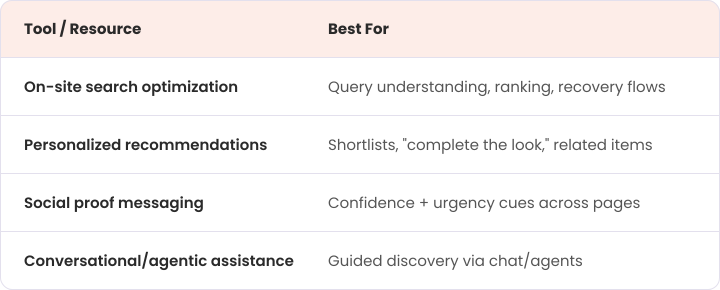
Note: Your stack choice should align with your operating model (merch control + AI optimization) and the speed at which you need to ship improvements. These tools are essential for executing ecommerce product discovery optimization strategies at scale.

Discovery Optimization in a Nutshell

Optimizing Discovery is the fastest way to improve ecommerce performance because it fixes intent leaks before shoppers ever reach the PDP. In fashion, the winning approach is a system: search that interprets intent, recovery that avoids dead ends, PLPs that guide decisions, and confidence cues that reduce doubt. Benchmarks like persistent cart abandonment around ~70% remind us how valuable every upstream “intent moment” is.

The bottom line

If shoppers can’t find the right product fast, nothing else in the funnel matters.

Ready to improve product discovery for your fashion shoppers?

See how Find™, Recommend™, Social Proof Optimize, and Agentic Commerce work together to lift discovery-to-cart performance.

Request Your Free RPV Lift Teardown

Frequently Asked Questions

1 What are the best tools for ecommerce product discovery?

The best tools for ecommerce product discovery combine a personalized search engine (Find™), a product recommendations engine (Recommend™), confidence cues such as Social Proof Optimize, and guided help like Agentic Commerce. Together, these act as ecommerce personalization solutions that improve search-to-PDP rate, PLP engagement, and add-to-cart.

2 What are ecommerce product discovery optimization strategies?

The highest-impact strategies include improving weak/no-results recovery, upgrading autocomplete and suggestions, optimizing PLP filtering and sorting for decision drivers, using personalized product recommendations to create shortlists and outfit context, adding credible proof cues on SRP/PLP/PDP, and using agentic prompts to refine intent when shoppers stall.

3 What is product discovery ecommerce and how does it work?

Product discovery in ecommerce refers to how shoppers find and narrow products through search, category browsing, and guided decision support. It works when relevance (Find™), guidance (Recommend™), confidence (Social Proof Optimize), and assisted refinement (Agentic Commerce) combine into one coherent discovery flow.

4 How do you improve product discovery in ecommerce for fashion?

Improve product discovery in ecommerce by combining Find™ (retrieval and relevance), Recommend™ (shortlists and outfit context), Social Proof Optimize (confidence cues), and Agentic Commerce (guided refinement). Measure impact through Search-to-PDP rate, PLP CTR, PDP engagement, add-to-cart, and conversion by segment.

5 What is the difference between ecommerce site search optimization and product discovery optimization?

Ecommerce site search optimization focuses on the search box, queries, ranking, and the search results page. Product discovery optimization includes site search, category browsing (PLPs), navigation, filtering, sorting, and on-page guidance that helps shoppers move from exploration to decision.

6 What is the difference between Find™ and Recommend™ in product discovery?

Find™ helps shoppers locate the right universe of products (retrieval + relevance) based on intent signals. Recommend™ helps shoppers choose within that universe by creating shortlists, alternatives, “complete the look,” and context-aware suggestions that reduce decision fatigue.

7 Where should social proof show up in the discovery journey — PLP, PDP, or checkout?

The best place for social proof depends on the decision stage. In discovery, social proof can lift clicks on SRPs and PLPs (e.g., bestsellers, trending, “most saved”), while PDP proof builds confidence to add to cart (ratings/reviews, contextual velocity cues). Checkout proof should be minimal and reassurance-led.

8 What is agentic commerce in ecommerce discovery?

Agentic commerce is when an AI assistant helps shoppers discover products by understanding intent, asking clarifying questions, applying constraints (budget, size, delivery date), and returning a curated shortlist — often with reasons why each option fits.

9 How long does it take to improve ecommerce discovery optimization performance?

Most teams can improve key discovery metrics in 2–6 weeks by fixing high-impact failure points (no/weak results recovery, better suggestions, clearer PLP filtering). Larger changes — like deeper ranking/personalization models and orchestrated experiences — often take 6–12 weeks, depending on data quality and release cycles.

10 Is product discovery optimization worth it for fashion brands?

Yes. Fashion discovery is especially prone to vague intent, choice overload, and fit/styling uncertainty. Improving search recovery, category navigation, shortlist recommendations, and confidence cues typically reduces bounce and increases Search-to-PDP and add-to-cart rates.

11 What are the most important metrics for ecommerce discovery optimization?

Track Search-to-PDP rate, SRP bounce, zero-results rate and recovery rate, PLP CTR / engagement depth, and downstream PDP engagement → add-to-cart. Measuring only CTR without downstream outcomes can hide whether the discovery system is actually helping shoppers choose.

12 What’s the biggest mistake teams make with ecommerce discovery optimization?

Treating discovery as a UI problem rather than a system problem. If Find™ retrieves relevant items but Recommend™ doesn’t guide selection, Social Proof Optimize doesn’t build confidence, and Agentic support doesn’t resolve ambiguity, shoppers still stall — even if the site “looks good.”

Sources

  1. Baymard Institute — Cart Abandonment Rate Statistics —
    https://baymard.com/lists/cart-abandonment-rate
  2. Baymard Institute — E-Commerce Search UX Research —
    https://baymard.com/research/eCommerce-search
  3. Baymard Institute — No Results Page Benchmarks/Examples —
    https://baymard.com/ecommerce-design-examples/35-no-search-results-page
  4. Shopify — Agentic Shopping (overview) —
    https://www.shopify.com/in/blog/agentic-shopping
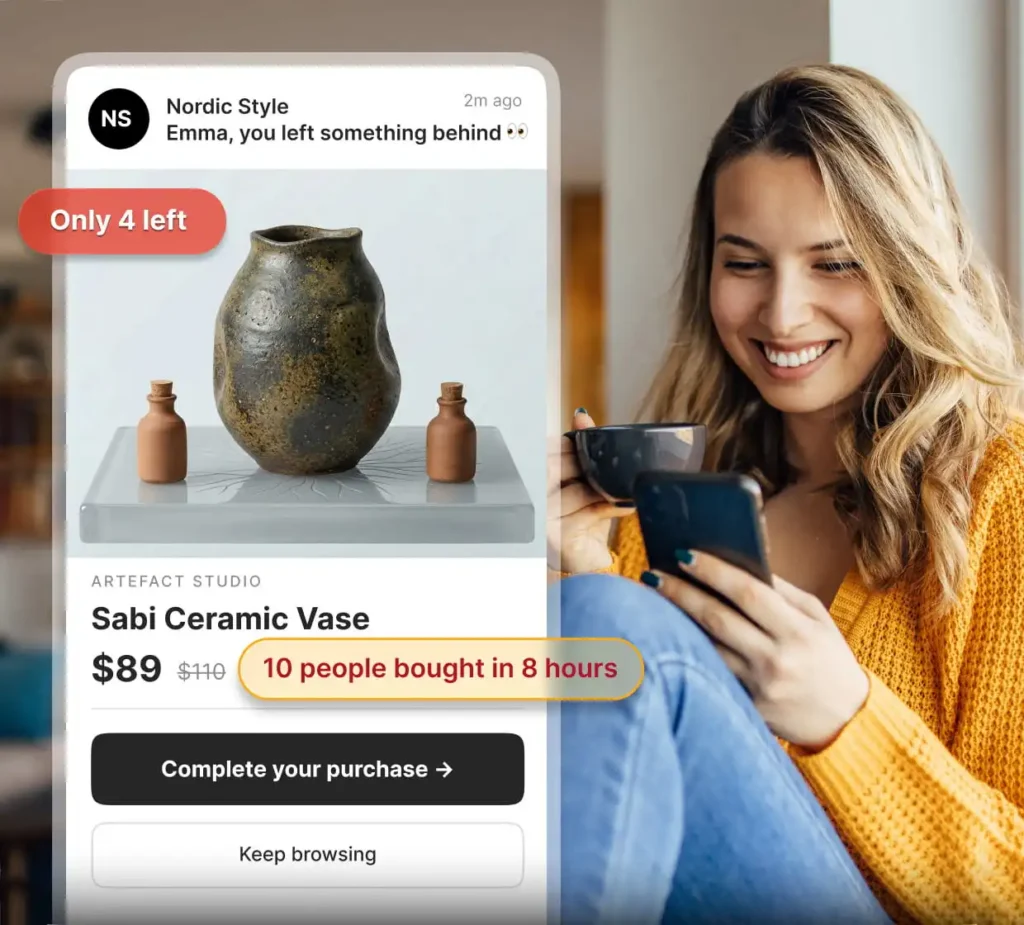
Table Of Contents
TL;DR: Optimizing Product Discovery in Fashion Ecommerce
What is Product Discovery in Ecommerce?
Why Ecommerce Discovery Optimization Matters in 2026 (Especially in Fashion)
Discovery Optimization in Fashion: How It Works
Best Practices for Product Discovery in Ecommerce (Step-by-Step)
Measuring Ecommerce Product Discovery Performance
Common Mistakes to Avoid for Optimized Ecommerce Product Discovery
Expert Perspective on Optimizing Product Discovery in Fashion Ecommerce
What Are the Best Tools for Ecommerce Product Discovery?
Discovery Optimization in a Nutshell
Frequently Asked Questions

Ecommerce Personalization: The Complete Guide for Enterprise Retailers

Digital Experience Personalization
Blogs

Ecommerce Personalization: The Complete Guide for Enterprise Retailers

TL; DR Ecommerce Personalization

  • Companies excelling in personalization generate a 5–15% revenue lift, with some generating up to 40% more revenue from personalization alone (McKinsey).
  • Personalization can reduce customer acquisition costs (CAC) by up to 50% by delivering more relevant experiences that convert faster.
  • 71% of consumers expect personalization; 76% get frustrated when it is absent; and 78% are more likely to repurchase after a personalized experience.
  • The highest-ROI ecommerce personalization strategies are AI-driven product recommendations, personalized search, and behavior-triggered email flows.
  • Enterprise-scale personalization requires an AI-powered ecommerce personalization engine — rule-based systems cannot personalize across thousands of SKUs in real time.

Today’s shoppers expect experiences built for them. They expect the homepage to reflect their interests, the search results to anticipate their intent, and the product recommendations to feel curated especially for them.

One-size-fits-all ecommerce experiences no longer cut it. Retailers who fail to personalize are losing revenue to competitors who do. That’s a costly gap to leave open.

Ecommerce personalization is one of the highest-ROI levers available to retail teams looking to increase conversion rates, average order value, and revenue per visitor.

In this guide, we’ll cover everything your ecommerce team needs to know about personalization, along with the ecommerce personalization examples that drive measurable results.

If you’re curious where your site is currently losing revenue, start with a quick teardown to uncover hidden opportunities across discovery, recommendations, and checkout.

Claim Your Free RPV Teardown

What is Ecommerce Personalization?

E-commerce personalization is the practice of tailoring the online shopping experience for individuals based on their browsing behavior, purchase history, location, and data. These include personalized products and content recommendations, search results, promotions, and marketing messages.
Rather than showing every visitor the same homepage, search results, or product grid, personalization engines use real-time data and AI to deliver experiences that feel relevant to each person.

From the moment a shopper lands on your site, personalization takes effect from product discovery and consideration through checkout and post-purchase. When done well, it helps shoppers find products they love faster, reducing friction and earning repeat purchases.

The Role of AI in Ecommerce Personalization

Modern ecommerce personalization is powered by AI and real-time decisioning, not just manual, rule-based logic.

AI-driven personalization engine analyzes signals across every touchpoint: browsing, search, clicks, add to cart, purchase, and returns.

These signals feed machine learning models that improve their ability to predict what each shopper is most likely to want next.

Unlike traditional ones, an AI ecommerce personalization platform has three

  • It personalizes for anonymous and new visitors using contextual signals and product attributes.key advantages:
  • It updates recommendations dynamically within a session. If a shopper shifts from running shoes to trail boots mid-visit, the recommendations will also change.
  • It optimizes for business outcomes rather than just product relevance. It focuses on what drives revenue, learning over time what leads to more conversions, higher order value, and better margins.

At the enterprise level, this is only possible with AI ecommerce personalization. No rule engine or merchandising team can manually personalize for every shopper across thousands of SKUs.

Manual vs AI Personalization:

Rule-Based Engine

  • Static rules, manually set
  • Cannot personalize anonymous visitors
  • Recommendations fixed mid-session
  • Optimizes for relevance only
  • Breaks at scale (1,000s of SKUs)

AI-Driven Personalization

  • Learns dynamically from behaviour
  • Personalizes from first click, no history needed
  • Updates in real-time as shopper intent shifts
  • Optimizes for revenue: AOV, conversion, margins
  • Built for enterprise scale — millions of shoppers

Benefits of Personalization in Ecommerce

When done right, ecommerce personalization delivers significant lift across key metrics, including conversion rate (CTR), average order value (AOV), revenue per visitor (RPV), and customer lifetime value (CLV).

According to McKinsey, companies that excel in personalization see a 5–15% revenue lift, with some generating up to 40% more revenue from personalization alone. These are gains worth optimizing for.

Personalization also improves efficiency across the funnel. It can reduce customer acquisition costs (CAC) by up to 50% by providing more relevant experiences that convert faster.

At the customer level, the impact is equally clear:

  • 71% of consumers expect personalization
  • 76% get frustrated without them
  • 78% are more likely to repurchase after a personalized experience
5- 0 %
Revenue lift from personalization
0 %
Consumers expect personalization
0 %
Get frustrated without it
0 %
CAC reduction possible

Personalization also helps prevent revenue leakage across the customer journey.

It improves product discovery, reducing bounce rates for new visitors who cannot find relevant products.

It also helps prevent cart abandonment by surfacing the right cross-sell and upsell opportunities at checkout.

After purchase, personalization strengthens retention through targeted follow-ups that bring customers back for products that complement what they already bought.

For Chief Digital Officers and VP-level ecommerce leaders, the takeaway is simple: personalization is a core revenue lever.

Find Hidden Revenue Opportunities in Your Ecommerce Experience

Many ecommerce sites lose revenue daily due to generic experiences, ineffective product discovery, and missed cross-sell moments.

We are offering a free RPV Lift Teardown, in which we’ll analyze your site to identify exactly where revenue is leaking.

You’ll receive annotated screenshots of missed opportunities and a 90-day personalization uplift plan for FREE.

Request Your Free RPV Lift Teardown

6 Ecommerce Personalization Strategies and Use Cases

What specific strategies should enterprise ecommerce teams prioritize?

Personalization spans every customer touchpoint, but not all tactics are equally impactful.

We’re shortlisting the six most practical and proven types of personalization in ecommerce we have seen that drives results.

1 Real-time Website Personalization across the Customer Journey

Every page of your ecommerce store can be personalized. Real-time website personalization dynamically adapts the product page, category page, checkout page, and thank-you page, including banners and promotional content, for each visitor.

Personalization for each visitor is based on their behavioral profile, lifecycle stage, and contextual signals such as location and device.

Below are some of the tactics you should launch on your store:

  • Personalized homepages that reflect each shopper’s category preferences and browsing history, instead of static merchandised content for everyone.
  • Dynamic banners and ecommerce content personalization that respond to shopper intent. For instance, surfacing a running shoe promotion to a visitor browsing athletic footwear, rather than a generic seasonal campaign.
  • Geo-targeted content that adapts to location. This is especially relevant for retailers with regional inventory or localized promotions.
  • Personalized category pages where product order, featured items, and filters are based on an individual’s preference rather than generic merchandising rules.
  • Personalized on-site search results ranked by relevance to each shopper’s history and intent.

The cumulative effect of personalization across these touchpoints is a site that feels purpose-built for each visitor.

2 AI-Driven Product Recommendations That Increase AOV and RPV

Product recommendations are the most widely recognized form of ecommerce personalization. When done well, AI-driven recommendations are among the highest-ROI personalization investments observed by ecommerce teams.

Some of these recommendation strategies include:

  • “Customers also bought” and “Frequently bought together” widgets that increase basket size.
  • “Recently viewed” carousels that help shoppers return to products they’ve shown interest in.
  • “Recommended for you” placements on the homepage, category pages, and PDPs that reflect individual taste and purchase history.
  • Product bundles based on affinity data, presenting complementary items together to increase AOV.

Modern AI recommendation engines like Recommend™ go beyond traditional collaborative filtering.

Personalization software uses attribute-based models, merchandising goals, product characteristics alongside shopper preference signals to give relevant recommendations to even anonymous visitors.

3 Improve Product Discovery with Behavior-Driven Search

Search is the highest-intent touchpoint in the ecommerce journey. A shopper who uses search knows what they want, and if they don’t find it quickly, they leave.

Behavior-driven ecommerce personalized search goes beyond keyword matching. It ranks results based on each shopper’s individual preference signals, such as their category affinities, brand preferences, price range behavior, and previous purchases. So the most relevant products surface at the top for each person.

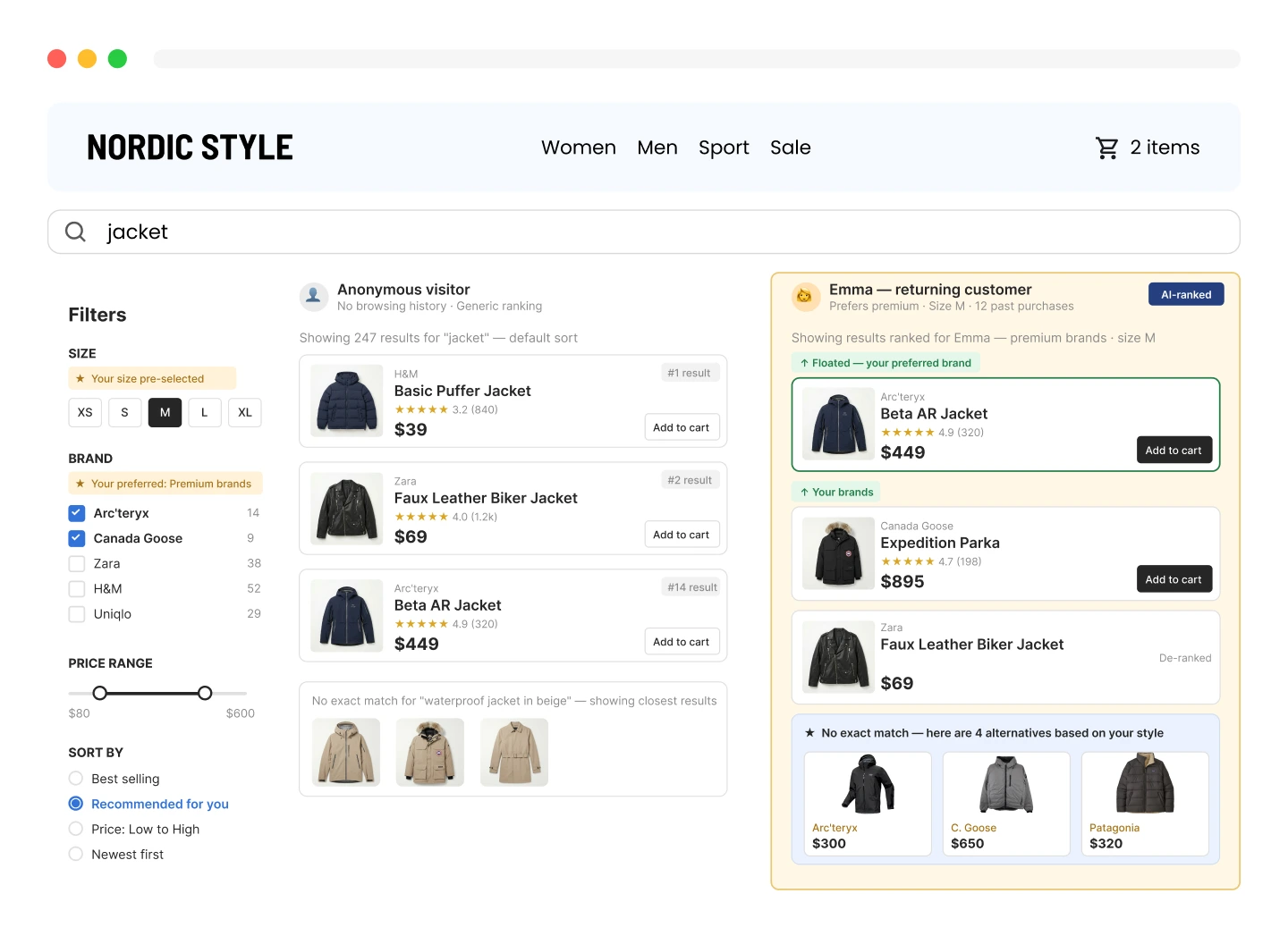
For instance, a shopper who consistently buys premium brands sees premium products ranked higher. A shopper who filters by a specific size or color every session sees results pre-filtered accordingly. A loyal customer searching for “jacket” sees outerwear from brands they’ve purchased from before.

This approach also helps recover zero-result searches by showing relevant alternatives rather than showing no matches to shoppers.

The result: faster product discovery, higher search-to-conversion rates, and fewer sessions that end in frustration. You can see how Discover™ helps deliver these outcomes in practice.

4 Recover Lost Revenue with Behavior-Triggered Ecommerce Emails

A significant share of ecommerce revenue is lost when a shopper leaves without purchasing.

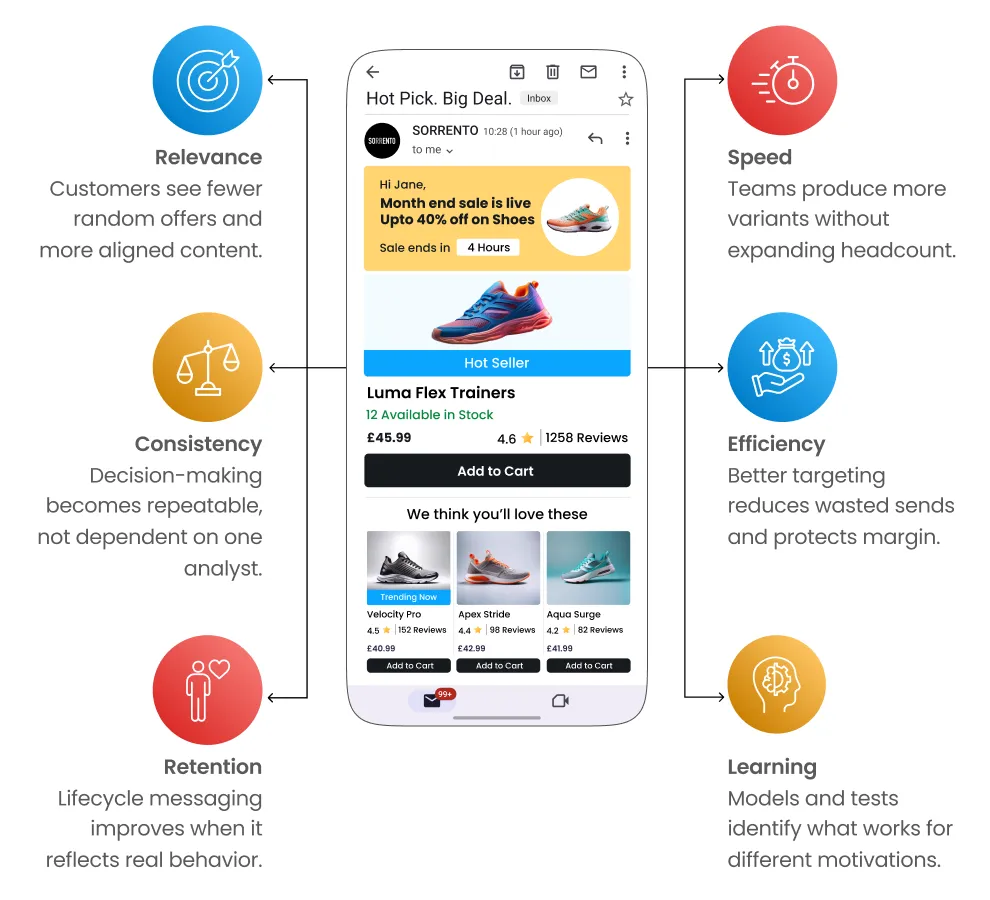
Behavior-triggered email personalization recovers that by reaching shoppers with timely, contextually relevant messages at high-intent moments.

Key triggered email flows include:

  • Cart abandonment emails: Sent to shoppers who added items to their cart but didn’t complete the purchase. Including the exact products they left behind, along with updated pricing, availability, and relevant recommendations, performs far better than generic reminders.
  • Browse abandonment emails: Sent when someone checks out a product or category but doesn’t add anything to their cart. It’s a way to nudge them early, while they’re still considering their options.
  • Post-purchase sequences: Follow-up emails after a purchase that suggest products that go well with what they just bought. It’s a natural way to cross-sell when the customer already trusts your brand.
  • Segmented campaigns: Emails tailored to different groups of customers based on what they’ve browsed or bought before. Instead of sending the same promotion to everyone, you’re sending offers that actually feel relevant.

The difference between generic email automation and personalized triggered flows is measurable: higher open rates, higher click rates, and higher revenue per email sent.

Solutions like Active Content enable this by powering real-time product recommendations, personalized messaging, and triggered campaigns across email and other channels.

5 Increase Checkout Conversions with Smart Upsell and Cross-Sell

The path from cart to completed purchase is where personalization can make a decisive difference.

Checkout-stage personalization presents the right upsell and cross-sell opportunities at the moment of highest purchase intent.

Effective checkout personalization includes:

  • Cart-page recommendations: Suggest products based on what’s already in the cart and what similar shoppers ended up buying.
  • Upsell prompts: Highlight better or upgraded options, with a clear reason why they’re worth it.
  • Saved preferences: Make checkout faster for returning customers by remembering their shipping, payment, and address details.
  • Threshold messaging: Show shoppers how close they are to free shipping or a discount, nudging them to add more items.

Checkout is not the place for irrelevant recommendations. AI ecommerce personalization software like Recommend™ keeps upsell and cross-sell recommendations relevant, increasing the likelihood shoppers view them as helpful additions rather than distractions.

6 Increase Conversions with Real-Time Social Proof

Shoppers are uncertain. They need signals that others have made this ‘right’ decision as well. Real-time social proof personalization solutions like Social Proof Messaging provides those signals dynamically, based on actual activity and inventory data.

Social proof signals that drive conversion include:

  • Recent purchase notifications: “12 people bought this today” or “Sarah from London just purchased this” — real-time signals that validate a shopper’s interest.
  • Trending product indicators: Surfaces where products are gaining momentum across the site, triggering FOMO for engaged shoppers.
  • Low-stock alerts: “Only 3 left in your size” is one of the highest-converting urgency signals in ecommerce, but only when it’s displayed to the right shopper at the right moment.
  • Rating and review highlights: Personalizing which reviews surface based on shopper profile — a first-time buyer sees trust-building reviews, a returning customer sees reviews relevant to their use case.

Checkout is not the place for irrelevant recommendations. AI ecommerce personalization software like Recommend™ keeps upsell and cross-sell recommendations relevant, increasing the likelihood shoppers view them as helpful additions rather than distractions.

Test social Proof Impact Free for 30 Days

We’re offering a free 30-day pilot to help you improve your conversion rate using social proof messaging.

We’ll audit your ecommerce website, identify where you’re losing revenue, and put high-impact urgency or trust widgets. No heavy IT effort required.

You get measurable results within weeks, with zero upfront commitment.

Start Your Free 30-Day Pilot

Real-World Ecommerce Personalization Examples

1 Matas Grew Attributable Sales by 36% with Personalized Recommendations

The Situation:
Matas, a leading Scandinavian health and beauty retailer, wanted to improve how shoppers engaged with its product catalog and increase the effectiveness of cross-sell and upsell opportunities.

What they did:
Matas implemented personalized product recommendations across key touchpoints, including product pages, category pages, cart, and checkout. These recommendations helped surface relevant products based on shopper behavior and context.

The Result:
Personalized recommendations drove 36% growth in attributable sales, along with increased engagement and order value from recommendation-driven interactions.

2 Stadium Drives +17% RPV with Social Proof Messaging

The Situation:
Stadium, a leading Nordic sports and outdoor retailer, was already using personalization and wanted to further improve conversion and customer experience by making its site more responsive to real-time shopper behavior.

What they did:
Stadium implemented social proof messaging across product pages, highlighting real-time signals like trending products, popular items, and recent purchases. These messages were triggered by shopper activity, such as views, add-to-carts, and purchases, and were continuously tested and optimized to improve performance.

The Result:
This led to a 17.3% increase in RPV, along with improvements in conversion rate and add-to-cart rate, driven by more relevant, behavior-based messaging.

Read the Full Stadium Case Study

3 Wine.com Increased Revenue per Click with Attribute-Based Product Recommendations

The Situation:
Wine.com, a leading online wine retailer, wanted to improve the relevance of its product recommendations, particularly for new products and shoppers with limited browsing or purchase history.

What they did:
Wine.com implemented attribute-based product recommendations that use product data, such as varietal, region, and price, to deliver more relevant recommendations across the site. This approach helped surface a broader range of products to more shoppers, including those without prior behavioral data.

The Result:
This led to improved recommendation performance and increased revenue per click (RPC) from recommendation placements, driving stronger engagement with recommended products.

Read the Full Wine.com Case Study

How to Choose the Right Ecommerce Personalization Strategy

Not all personalization strategies deliver equal value for every retailer. The right approach depends on your business objective, product assortment, customer behavior, and where your greatest revenue opportunities lie.

Here’s how to think through the decision:

Align with your revenue goals

Start with the metrics you want to improve. Different personalization strategies have different primary impacts.

For instance, if RPV is your focus, real-time on-site personalization and social proof are high-leverage starting points.

If AOV is the priority, recommendation-driven cross-sell and checkout upsell deserve early attention.

Prioritize high-impact journeys

Not every touchpoint has equal revenue potential. Product discovery, recommendations, and cart recovery bring the highest ROI in personalization. They sit closest to the purchase decision. Start there, prove ROI, then expand.

Consider your vertical

The right personalization strategy varies meaningfully by product category.

For instance, high-frequency, consumable categories (grocery, health, and beauty) benefit most from purchase-pattern personalization and replenishment triggers.

Whereas, high-consideration, low-frequency categories (furniture, consumer electronics) benefit more from browse-based recommendations and social proof that reduces purchase anxiety.

Fashion requires strong attribute-based modeling to handle seasonal catalog turnover and style affinity.

Plan and choose a platform built for scale

The personalization strategies that work for 10,000 monthly visitors need to be architected differently for 10 million.

Enterprise SaaS personalization platforms from Algonomy (now part of ADA) are purpose-built to ingest behavioral signals, run real-time ML inference, and serve individualized experiences at scale — with pre-built connectors to major ecommerce platforms, CDPs, and email providers that reduce integration risk and time-to-value.

This is not something rule-based tools, homegrown solutions, or stitched-together point solutions can reliably deliver.

Test, measure, and scale

The retailers that build lasting personalization advantages treat it as an ongoing experimentation program, not a one-time implementation.

Run tests on recommendation placements, messaging, and algorithms. Measure RPV, not just CTR. Scale what wins and deprioritize what doesn’t.

Start with a Free RPV Lift Teardown from Algonomy (now part of ADA)

Most ecommerce teams know personalization matters, but identifying where revenue is actually leaking and which strategies will close those gaps requires a level of diagnostic depth that most teams don’t have in-house.

Algonomy’s (now part of ADA) RPV Lift Teardown is designed to answer that question in concrete, actionable terms.

Algonomy’s (now part of ADA) team analyzes your ecommerce site to surface exactly where generic experiences are costing you revenue.

We’ll show you where you’re missing revenue, whether it’s underperforming recommendations, missed cross-sell opportunities, or gaps in product discovery.

You’ll get a clear breakdown of the highest-impact opportunities, along with a prioritized 90-day plan tailored to your business and shoppers.

Find and Fix Your Revenue Gaps

Get a data-backed 90-day roadmap to improve conversion, AOV, and revenue per visitor on your ecommerce site.

Get Your Free RPV Teardown
Table Of Contents
TL; DR Ecommerce Personalization
What is Ecommerce Personalization?
Manual vs AI Personalization
Benefits of Personalization in Ecommerce
6 Ecommerce Personalization Strategies and Use Cases
Real-World Ecommerce Personalization Examples
How to Choose the Right Ecommerce Personalization Strategy
Start with a Free RPV Lift Teardown from ADA

Ecommerce Personalization FAQs

1. What is ecommerce personalization?

Ecommerce personalization is the practice of dynamically adapting the online shopping experience, including product recommendations, content, search results, and messaging to each individual shopper based on their behavior, preferences, and context. The goal is to make every shopper’s experience feel relevant and tailored to them, rather than generic.
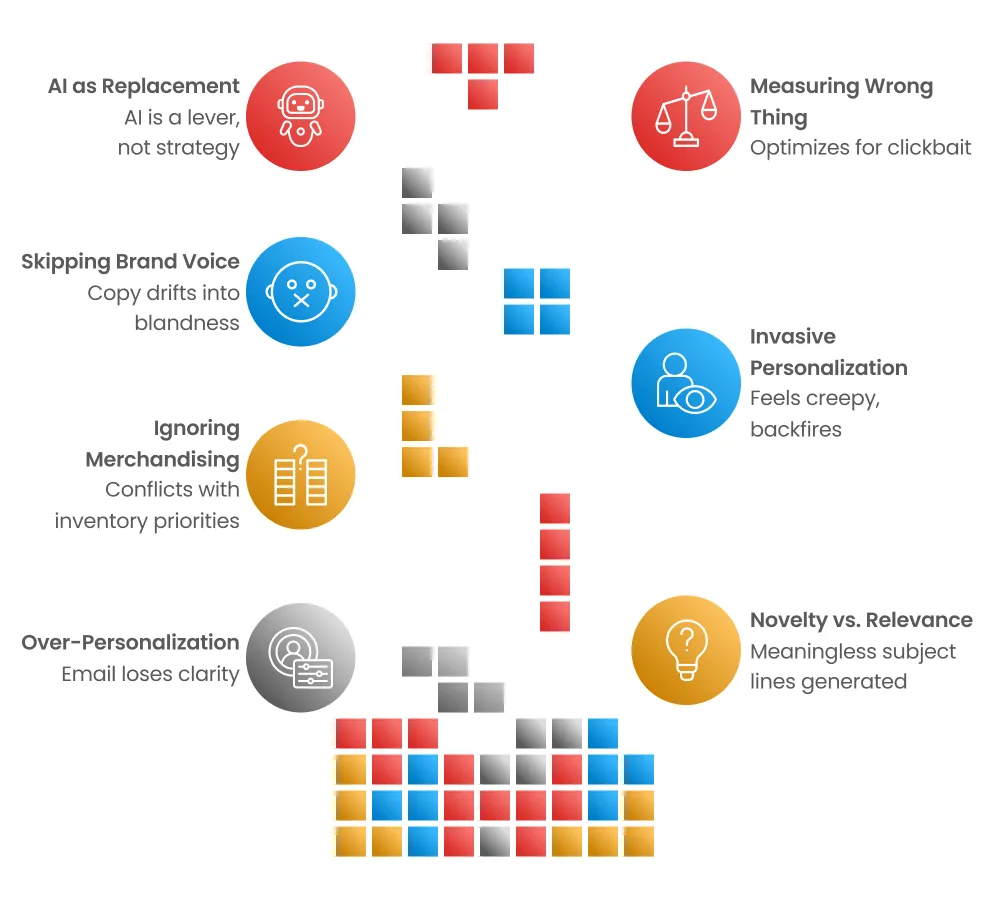
2. How does AI enable ecommerce personalization?

AI makes it possible to personalize experiences at a scale and speed that manual rules can’t match by analyzing how shoppers browse, search, and interact in real time, then predicting what each person is most likely to want next. As more data comes in, it continuously improves, and it can also deliver relevant experiences for new visitors and new products where there isn’t much historical data yet.

3. What are the most impactful ecommerce personalization strategies?

The highest-ROI personalization strategies for most retailers are AI-driven product recommendations, personalized search, and behavior-triggered email flows. Social proof and checkout personalization also deliver strong results with relatively fast implementation timelines.

4. How long does it take to see results from ecommerce personalization?

Results timelines vary by strategy and platform. With Algonomy (now part of ADA), social proof messaging and urgency widgets can be deployed and deliver measurable conversion lift within 30 days. More comprehensive recommendations and search personalization programs typically show significant results within 60–90 days of going live, as AI models build behavioral data on your shopper base.

5. How is ecommerce personalization different from segmentation?

Traditional segmentation groups shoppers into broad buckets (e.g., “women aged 25–34 who purchased in the last 90 days”) and delivers the same experience to everyone in that group. True personalization delivers a unique experience to each individual, adapting in real time based on what that shopper is doing right now, not just their demographic profile.

6. What data does ecommerce personalization use?

Personalization engines use a combination of behavioral, contextual, and product attribute data. First-party behavioral data collected on your own site is the most valuable input, making it critical to have robust data collection and a personalization platform that can act on it in real time.

7. Can personalization work for anonymous visitors?

Yes. Modern personalization platforms use in-session behavioral signals — what a visitor searches for, clicks, and browses during a single session — to serve relevant recommendations and content even before a historical profile has been built. Attribute-based recommendation models are particularly effective for anonymous visitors.

8. How do I measure the ROI of ecommerce personalization?

The most reliable measurement approach is to track include revenue per visitor (RPV), conversion rate, average order value (AOV), click-through rate on recommendations, and attributable revenue.

Composable CDP for Retail: Necessary, but Not Sufficient for Personalisation

Omnichannel Marketing
Blogs

Composable CDP for Retail: Necessary, but Not Sufficient for Personalisation

Why isn’t a composable CDP enough for retail personalisation?

A composable CDP unifies customer profiles in the enterprise lakehouse. That is the right architectural move. But in retail, personalisation decisions also depend on product availability, store context, promotion mechanics, margin constraints, and consent status. Without a Retail Semantic Data Model that connects these entities in a shared business language, even the best composable CDP cannot power profitable, locally relevant, governed personalisation at scale.

Key Takeaways

  • Composable CDP is necessary but not sufficient. It solves data unification, not decision quality.
  • The missing layer is a Retail Semantic Data Model that gives business meaning to customer, product, store, inventory, promotion, margin, and consent data together.
  • India/APAC’s omnichannel complexity (quick commerce, WhatsApp commerce, assisted selling, and DPDP compliance) makes this semantic gap especially costly.
  • The semantic layer is also the governance layer: consent and permitted use must travel with every activation decision, not sit in a separate system.

This summary was created with AI and reviewed by an editor.

A Saturday Morning in Bengaluru

Priya is a Gold-tier loyalty member. Saturday morning, she walks into her neighbourhood store (a compact urban format, not a hypermarket) and picks up organic oats, Greek yogurt, and a promotion-discounted muesli.

Simple transaction. Except it isn’t.

Her basket is shaped by a health-conscious replenishment pattern the retailer can see across six months of purchase history. The muesli carries a category-level promotion inherited from a brand-funded trade deal, not a store-level markdown. Greek yogurt is in stock at this location but out of stock at the larger format store three kilometres away. And Priya has opted into app notifications but explicitly declined WhatsApp marketing under the retailer’s DPDP consent framework.

Now consider what the retailer’s systems need to know to make a single good decision about what to recommend, offer, or message Priya next:

Who she is (loyalty tier, household, lifecycle stage). What she bought (SKU, brand, category, basket composition). Where she bought it (store format, catchment, local assortment). What was available (inventory position, substitution options). What promotions were active (offer type, funding source, redemption rules). What her consent permits (channel eligibility, data-use boundaries). What the commercial objective is (margin target, category growth, basket expansion).

No single customer profile holds all of that. This is not a data-quality problem or a pipeline problem. It is a meaning problem. The data exists, often in the same lakehouse. But the connections between those entities, the semantic links, are missing.

Personalisation without availability is hallucination.
Personalisation without margin is a subsidy.
Personalisation without consent is a liability.

Explore Retail Semantic Data Model in Practice

The interactive widget below maps Priya’s shopping trip onto the semantic model, layer by layer. Start with the raw entities, then explore the product taxonomy and cross-entity inference that tells a retailer what to do next.
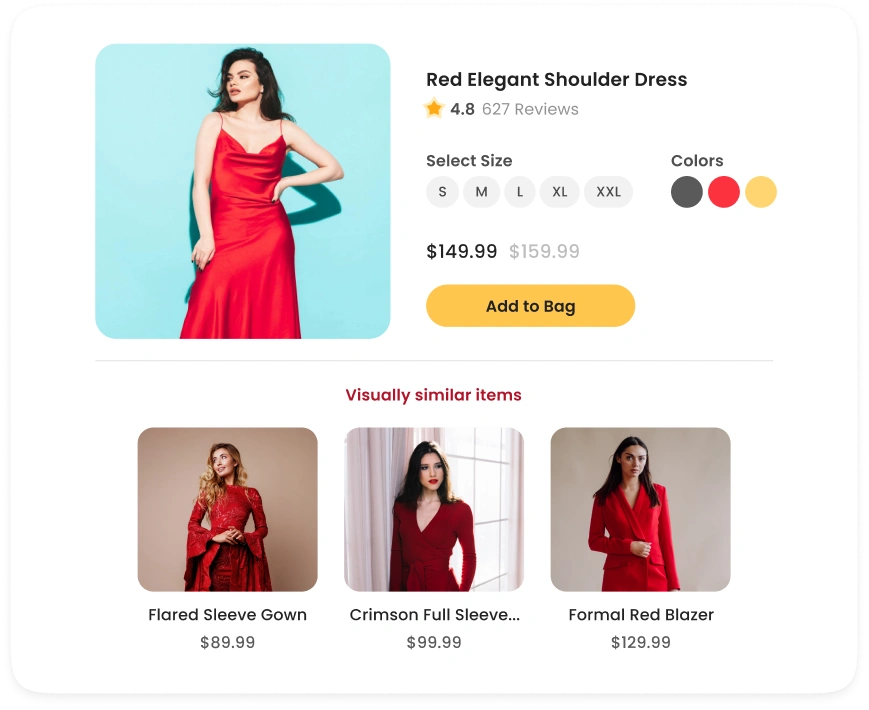
Semantic Data Model  ·  Grocery Retail
Tap any card to explore
P
Priya M. — a single shopping trip
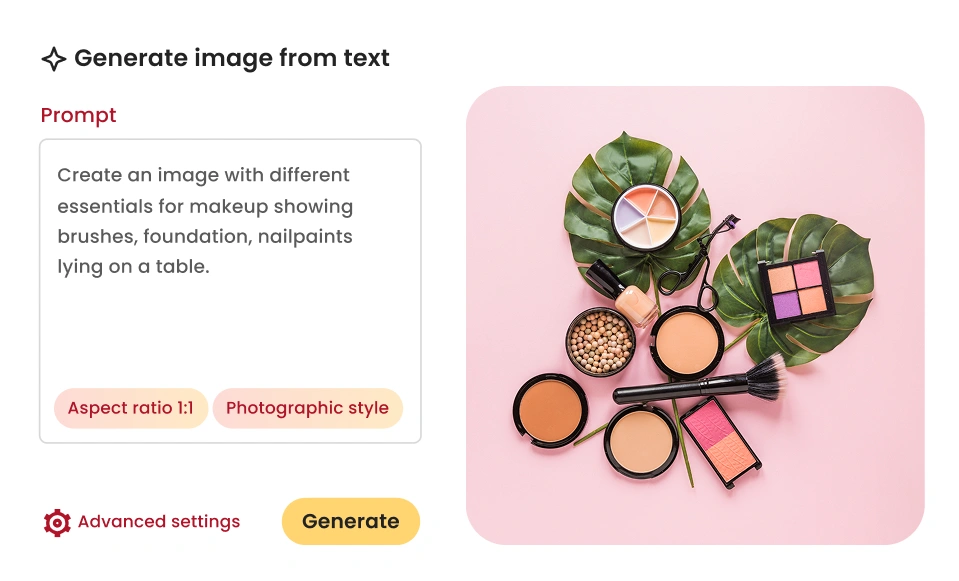
Shopper #40821  ·  HSR Layout, Bengaluru  ·  Saturday 18 Mar
Gold tier
1
Start with the entities. Priya’s trip produces three raw data records — a Shopper, a Basket, and a Store. Tap any card in Layer 1 to see the actual field values and what each one means beyond just a column in a table.
2
Explore the products. The Basket contains three SKUs. Tap each product card in Layer 2 to see its attributes — and tap any highlighted attribute pill to understand the semantic role that field plays in building Priya’s profile.
3
Follow the arrows to categories. Each product belongs to a category that carries inherited meaning — promotional rules, substitution logic, regional affinity signals. Tap the category cards in Layer 3 to see what rules cascade down to the SKUs above.
4
Read the inference. Tap the gold box at the bottom to see how fields from all three layers combine into a single retail inference — and the four recommended actions it produces. No single table contains this. It only exists when the layers are read together.
What this widget demonstrates
A flat database sees three purchases. A semantic model sees a Gold-tier family shopper who responds to health promotions, buys for a household of four, and visits every Saturday. That difference — between storing data and understanding it — is what a semantic data model makes possible. Explore the layers to see exactly how Priya’s raw fields become that inference.
Layer 1 — entities  ·  tap a card to explore its fields
Shopper shops via Basket · occurs at Store
Shopper
People entity
#40821  ·  Gold  ·  Family of 4
Explore fields
Basket
Transaction entity
BKT-2024-0318  ·  ₹820
Explore fields
Store
Place entity
HSR Layout  ·  Supermarket
Explore context
Shopper entity
Three tiers of data richness — raw fields, aggregated signals, and model-derived scores
Tier 1
Raw profile fields
shopper_id#40821
namePriya M.
loyalty_tierGold
household_size4
age_band30s
postcode560001
Tier 2
Aggregated signals
avg_order_value₹763 (L90D)
avg_basket_size8.4 items (L90D)
avg_purchase_freq6.1× / month
avg_category_spend₹218 / visit (Breakfast + Dairy)
Tier 3
Model-derived scores
brand_affinityEpigamia 0.87  ·  Yoga Bar 0.74
propensity_breakfast0.91 (high)
propensity_dairy0.88 (high)
churn_risk_score0.11 (low)
promo_sensitivityHealth promos > Price-off
Tap any attribute to understand its semantic role
loyalty_tier household_size avg_order_value avg_basket_size avg_purchase_freq brand_affinity propensity_breakfast promo_sensitivity
Why three tiers matter
Raw fields tell you who Priya is. Aggregated signals tell you how she shops. Model scores tell you what she will do next. A semantic model combines all three — making Priya not just a record, but a predictable, actionable profile the CDP can segment and activate against.
Basket entity
The atomic unit of shopper behaviour — one visit, fully captured
basket_idBKT-2024-0318
visit_dateSaturday, 18 Mar
channelIn-store
total_spend₹820
items_count3
promo_usedHEALTH20
Tap an attribute to understand its semantic role
channel promo_used visit_date total_spend
Why it matters semantically
Channel + timing + promo redemption signal the occasion type. The same HEALTH20 promo redeemed in-store on Saturday vs online on Sunday evening = two completely different next best actions. Same field, different context, different meaning.
Store entity
Physical context that transforms a transaction into a behavioural signal
store_idSTR-007
formatSupermarket
cityBengaluru
regionSouth India
catchment_typeResidential
Same yoghurt SKU — three store contexts — three different meanings
visitSaturday · 11am
basket typeFull weekly shop · ₹820
occasionWeekend family meal prep
shopper intentExploring, open to discovery
next best actionCross-sell Granola in-aisle
visitTuesday · 8am
basket typeTop-up shop · ₹210
occasionWeekday breakfast run
shopper intentHabitual, time-pressured
next best actionProtect shelf stock, same slot Tue
visitSunday · evening
basket typePlanned list · ₹1,450
occasionBulk planned replenishment
shopper intentDeliberate, list-driven
next best actionSubscription nudge + Oats bundle
The store context principle
Without store context: “Priya bought yoghurt three times.” With it: three distinct occasions, three different recommended actions. Store context is what makes a transaction log into a decision engine.
Basket contains
Layer 2 — products in basket  ·  tap each to see its taxonomy
Organic Oats
SKU · OAT-001
₹199
organic high-fibre
Explore taxonomy
Greek Yoghurt
SKU · YGT-042
₹149 · Epigamia
high-protein probiotic
Explore taxonomy
Muesli
SKU · MSL-017
₹590 ₹472
HEALTH20 high-fibre
Explore taxonomy
Organic Rolled Oats 1kg
SKU OAT-001 · Breakfast category · Grocery dept · Aisle 3
skuOAT-001
price₹199
is_organictrue
allergensgluten
cross_sellYoghurt · Honey · Berries
promo_inherited_fromL3 Cereals & Breakfast
Category hierarchy — attributes inherited at each level
L1 — Fresh Foods
Inherited: chilled logistics, short shelf-life
L2 — Grocery dept
Inherited: ambient, aisle 3
L3 — Cereals & Breakfast
HEALTH20 promo set here — cascades to all L4/L5 below
L4 — Rolled Oats
Sub-category
OAT-001 — Organic Rolled Oats 1kg
L5 SKU · this product
Semantic inheritance
This SKU inherits “health promo eligible” from L3 without a direct tag. Co-purchase with Greek Yoghurt in this basket confirms a breakfast occasion and triggers Granola as the post-visit cross-sell.
Greek Yoghurt 400g — Epigamia
SKU YGT-042 · Set & Strained Yoghurt · Dairy & Alternatives · Fresh
skuYGT-042
brandEpigamia
price₹149
protein_claimtrue
no_added_sugartrue
cross_sellGranola · Fruit · Honey
substitutesSkyr · Plain yoghurt
Tap an attribute to understand its semantic role
protein_claim cross_sell substitutes no_added_sugar
Category hierarchy
L1 — Fresh Foods
Inherited: is_chilled=true, temp_zone=3°C
L2 — Dairy & Alternatives
Inherited: aisle 1 · South India curd affinity signal
L3 — Yoghurt
Substitution logic lives here: OOS → suggest Skyr first
L4 — Set & Strained Yoghurt
Separates breakfast/snack shoppers from dessert buyers
YGT-042 — Greek Yoghurt 400g
L5 SKU · this product
Why the L4 split matters
“Set & Strained” separates Priya from a dessert yoghurt shopper — same L3 category, completely different cross-sell affinities. Granola and Fruit are triggered; sweetened toppings are not. One sub-category level, entirely different personalisation path.
Muesli 500g
SKU MSL-017 · Cereals & Breakfast · Promo HEALTH20 cascaded from L3
skuMSL-017
full_price₹590
promo_price₹472 (HEALTH20 −20%)
promo_set_atL3 — Cereals & Breakfast
high_fibretrue
Promo inheritance — the semantic model at work
HEALTH20 was configured once at the Cereals & Breakfast L3 node. It cascaded automatically to Muesli, Oats, and every other SKU below — no per-product promo setup required. This is the semantic inheritance principle. One rule, entire category covered.
Product belongs to
Layer 3 — product categories  ·  where inherited meaning is stored
Breakfast
Category · L3
Grocery dept · Aisle 3
Explore rules
Dairy
Department · L2
Fresh dept · Aisle 1
Explore rules
Breakfast
Category · L3
Grocery dept · Aisle 3
Explore rules
Cereals & Breakfast — L3 Category
Parent of Organic Oats · Semantic rules cascade to all products below
Rules stored at this category node
HEALTH20 promo — set once here, applied to every SKU below automatically.

Cross-category rule — Breakfast products automatically suggest Dairy products as cross-sells. South India shoppers who buy Breakfast items also buy Dairy 78% of the time. This affinity is stored at the category relationship level, not per product.

Replenishment signal — two Breakfast SKUs in the same basket triggers a ~3-week replenishment reminder for both.
Dairy & Alternatives — L2 Department
Parent of Greek Yoghurt · Covers all yoghurt, milk, cheese, plant-based alternatives
Dairy & Alternatives (L2)
All products inherit: is_chilled=true, temp_zone=3°C
Yoghurt (L3)
OOS rule: suggest Skyr → Plain yoghurt → Dairy alternative
Set & Strained (L4)
Occasions: breakfast, snack — not dessert
Greek Yoghurt 400g
L5 SKU
Regional semantic layer
In South India, this category node carries an additional weight: high curd affinity. Greek Yoghurt here is interpreted as a premium curd substitute. That regional signal sits on the L2 category node — not on the product — meaning every Dairy SKU in South India stores benefits from it automatically.
Cereals & Breakfast — L3 Category (Muesli)
Same node as Oats · Both products share category-level rules
Cross-basket insight from shared category
Both Oats and Muesli are under the same L3 node. Priya buying both signals she is stocking multiple breakfast options for a family with varied preferences. The model infers she will run out of both simultaneously — a replenishment reminder fires in ~3 weeks for both SKUs. No custom rule written for this scenario; the category relationship enables it.
Semantic inference — tap to see how this was derived
Priya is a health-conscious, Gold-tier family shopper who responds to health promotions and shops for variety
Cross-entity reasoning — field by field
Shopper → loyalty_tier
Gold = high-value, prioritise retention
Shopper → household_size
4 = family stock-up occasion
Basket → promo_used
HEALTH20 = promo-responsive shopper
Product → is_organic, protein
Health-conscious buyer profile
Store → region
South India = high curd affinity
Basket → visit_date + format
Saturday supermarket = planned weekly shop
CDP segments activated
Health-Promo Responders · Gold · South India
loyalty_tier = Gold promo_sensitivity = Health region = South India propensity_breakfast > 0.80
Activate via Email  Health bundle offer · personalised subject line
High-Frequency Weekend Shoppers · Family
avg_purchase_freq > 5× / month household_size > 2 visit_day = Saturday avg_basket_size > 6 items
Activate via Push  Friday evening reminder · next-day availability nudge
Breakfast + Dairy Cross-Category Buyers
propensity_breakfast > 0.80 propensity_dairy > 0.80 avg_category_spend > ₹150
Activate via In-app  Granola · Fruit · Honey cross-sell homepage tile
Dual-SKU Replenishment · Breakfast Category
2+ Breakfast SKUs in last basket days_since_last_visit > 18 brand_affinity_match = true
Activate via Email  Replenishment reminder · ~21 days post-purchase
No single table contains this insight. It emerges only when Shopper + Basket + Product + Store + Category are read together through the semantic model.
Powered by ADA Global rCDP  ·  Semantic Data Model  ·  Grocery Retail

If you explored the widget, you likely noticed something: no single entity tells the full story. The insight only emerges when shopper context, basket composition, product taxonomy, store format, inventory position, and consent state are read together. That convergence is the semantic layer at work. A Retail Semantic Data Model is the business-language layer that sits on top of the composable lakehouse and gives consistent, queryable meaning to the full set of entities that drive retail decisions.

A Retail Semantic Data Model is not a schema exercise. It is the operating contract between every team and every algorithm that touches the customer.

What This Proves

Context Changes Meaning

Take organic oats as an example. The exact same SKU carries a different next-best-action depending on whether Priya is shopping in a compact urban store or a hypermarket. Store format determines assortment depth, substitution options, cross-sell candidates, and even whether a recommendation can be fulfilled. Remove store context, and the recommendation engine is guessing.
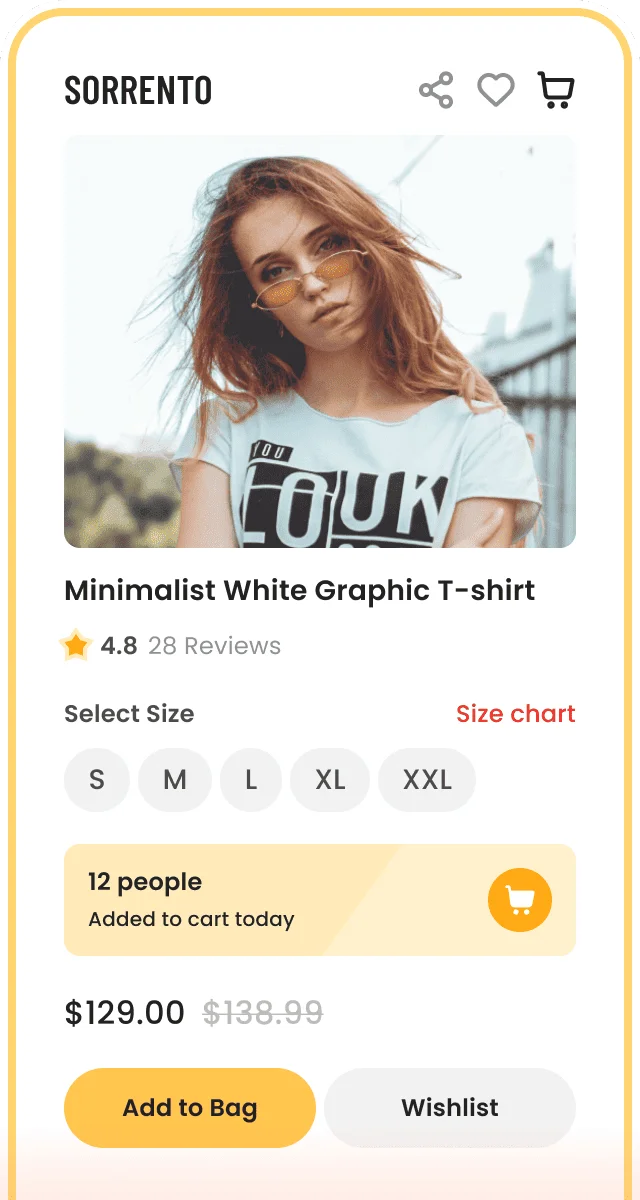
Meaning Can Be Inherited
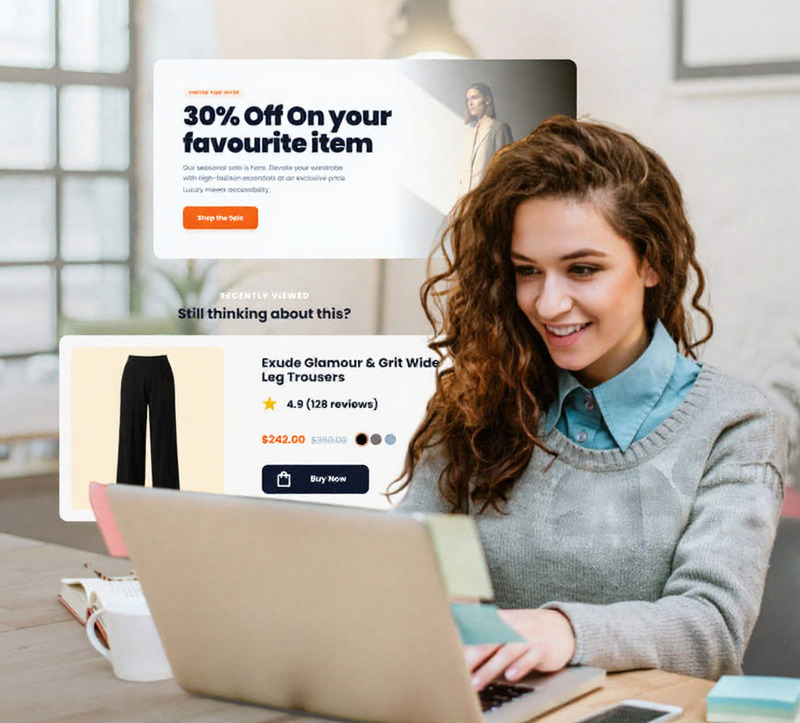
The muesli discount Priya received did not originate at the store. It was a category-level promotion, funded by the brand, with rules that cascade from category to subcategory to qualifying SKUs. If a personalisation system stores rules only at the SKU level, it cannot see the promotion’s structure, cannot calculate cannibalisation, and cannot measure whether the trade investment achieved its objective. Category-level inheritance is where commercial logic lives in retail.
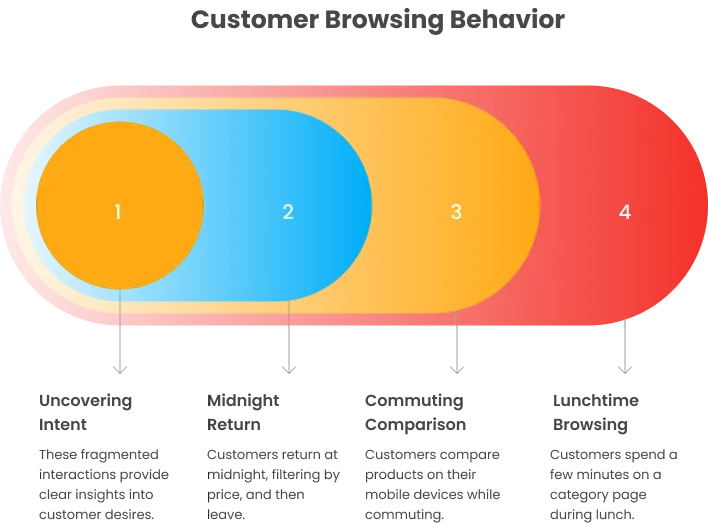
Insight Is Cross-Entity, Not Trapped in One Table

The inference that Priya is a high-value, health-conscious replenisher who could be nudged toward premium dairy (with a funded offer, fulfilled from current stock, sent via an app notification she has consented to) only emerges when you read across five entity types at once: shopper, basket, product, store, and consent. A customer profile, no matter how rich, is one table. The insight lives in the join.

What a Composable CDP Solves, and What It Does Not

A composable CDP builds unified customer profiles directly in the enterprise data warehouse, using modular, best-of-breed tools instead of copying data into a proprietary store. It preserves governance, avoids redundant data copies, and makes the lakehouse the system of data gravity. As architectural choices go, it is a sound one.
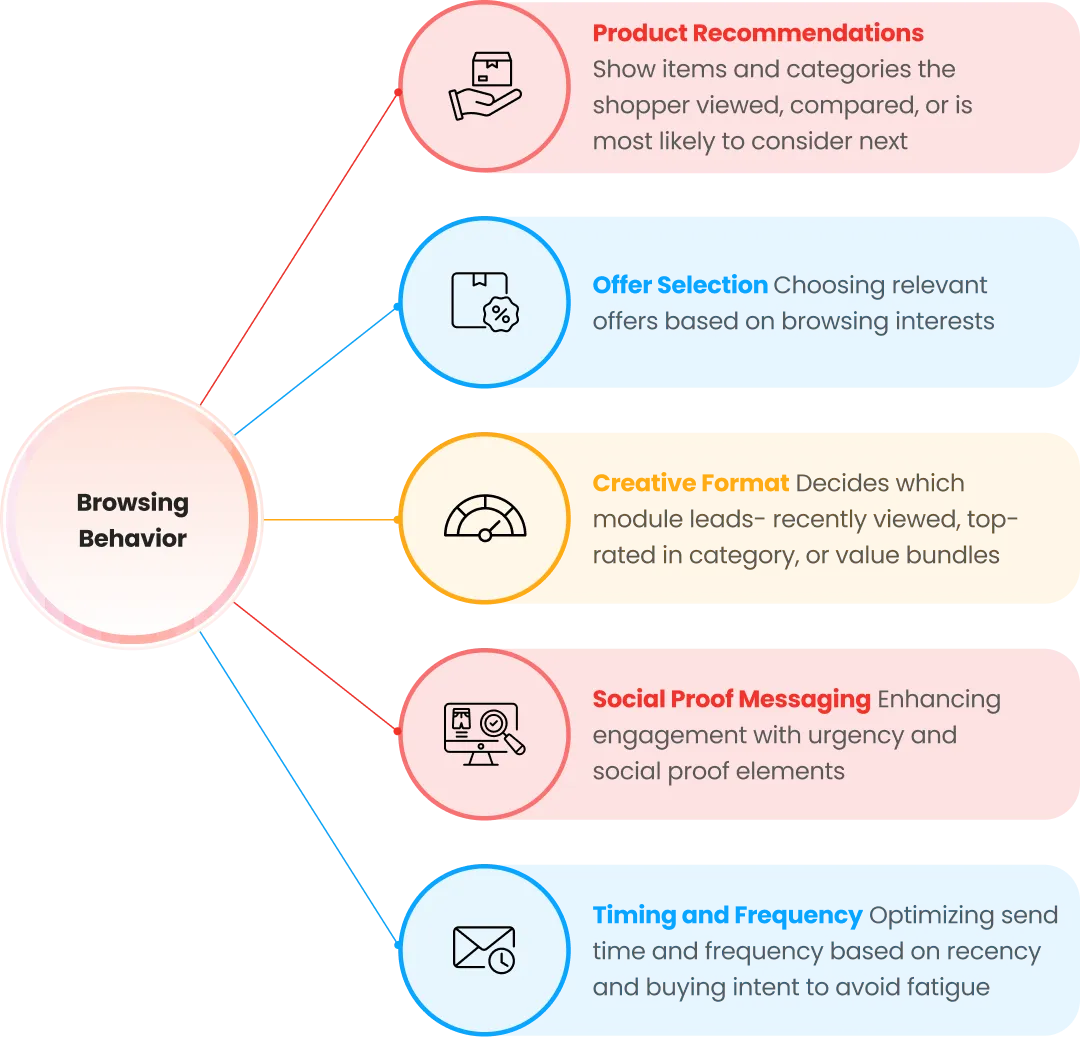
The composable foundation is no longer a debate. Most large enterprises have already integrated a data warehouse or lake with their martech stack, and the majority of those integrations are now bi-directional. It is becoming the default.

But composable architecture, by design, models the customer. It does not natively model what can actually be sold, fulfilled, substituted, promoted, or profitably recommended to that customer. The CDP Institute’s own definition (a system that creates a persistent, unified customer database) tells you where the boundary is.

Composable CDP

In retail, the customer profile is necessary. But it is not the whole decision. A grocery chain that knows Priya is a Gold-tier health-conscious shopper but does not know that organic oats are out of stock at her nearest store, that a funded muesli promotion expires tomorrow, or that she has opted out of WhatsApp. That chain cannot make a good next-best-action call. The data exists. The connections do not.

The composable CDP gives you the plumbing. The Retail Semantic Data Model gives you the meaning.

The Six Capabilities of a Semantically Complete Composable CDP

For retail enterprises, the composable CDP that delivers lasting advantage is not just architecturally open. It is semantically complete. That means six capabilities working together:

1 Governed Lakehouse Core

Data, lineage, access policy, and business definitions co-located in a single system of gravity. The composable architecture ensures nothing pulls the centre of gravity back out. Modern lakehouse platforms now support curated, trusted data-as-products with semantic consistency, operational synced tables for low-latency serving, and open sharing protocols for secure cross-platform data exchange.

2 Retail Semantic Data Model

Layered on top of the lakehouse, giving consistent meaning to the full range of retail entities. Not just customer attributes, but product hierarchies, store structures, inventory positions, promotion mechanics, loyalty logic, margin constraints, and consent states. This is the layer that makes the composable CDP retail-ready.

3 Real-Time Event and Identity Fabric

This goes beyond static profile resolution. It has to handle event fluency: replenishment signals, daypart shifts, search behaviour, geolocation triggers, and rapid intent decay in mobile and messaging channels. In grocery, replenishment windows are narrow. In QSR, daypart intent is fleeting. In WhatsApp commerce, wasted relevance is expensive.

4 Profit-Aware Decisioning

Actions ranked not just on customer propensity, but on stock, margin, offer cost, local conditions, and commercial objectives. The next-best action in retail must be customer-aware, stock-aware, store-aware, and margin-aware simultaneously. Research shows that even well-run grocers can expect 10 to 15 percent of promotions to dilute margins when these signals are disconnected.

5 Business-User Self-Service

Marketing, merchandising, and digital teams able to build audiences, define triggers, and launch journeys without engineering tickets. If composability only serves data engineers, the activation bottleneck simply moves downstream.

6 Omnichannel Activation with Content and Channel Intelligence

This is not just segment export. It is the ability to determine what to render, when to render it, and which channel to use, whether that is the app, web, email, store POS, or WhatsApp. The semantic layer makes this possible because it carries the context that channel selection depends on: consent state, store proximity, inventory position, and real-time intent.

DPDP and the Governance Equation

India’s Digital Personal Data Protection Rules, notified in November 2025, do not sit outside this argument. They are part of it.
The rules require itemised consent notices, purpose-based data retention, mechanisms for access, correction, and erasure, and breach notification within 72 hours. Penalties can reach ₹250 crore for failure to maintain reasonable security safeguards.

For retail enterprises, this means consent, access rights, and data-handling obligations must be embedded in the activation layer itself, not bolted on as a separate compliance system the marketing engine queries as an afterthought. When Priya opts out of WhatsApp marketing, that consent state must be visible to the decisioning engine at the moment it evaluates channel selection, not discovered after the message has already been queued.

The semantic layer is also the governance layer. Consent, eligibility, permitted use, and auditability must travel with every activation decision.

A retail semantic model that understands “active customer,” “eligible offer,” and “high-value segment” must also understand whether that customer has consented, what attributes are permitted to travel where, and what audit trail exists for any decision. In the composable architecture, this is not a limitation. That is a structural advantage: governance and intelligence in the same layer, enforced consistently.

For CPG brands, the same logic applies upstream. CPG-retailer collaboration increasingly depends on shared data, shared product language, and measurable demand-shaping across retailer, banner, region, store cluster, and promotion. The retail semantic layer becomes the language of collaboration: aligning offer history, funding logic, store-level activation, and outcome measurement across partners.

What This Means for the C-Suite

For the CIO

You have built the composable foundation. The next investment is not more infrastructure. It is the semantic layer that makes the infrastructure commercially intelligent. The question to ask your data platform and CDP partners: does the model natively understand retail entities beyond the customer profile? If not, every downstream activation is working with incomplete context.

For the CDO

Data quality and governance are your mandate. The semantic layer extends that mandate from data accuracy to data meaning. It is the layer where business definitions, consent states, and commercial logic converge, and where DPDP compliance becomes enforceable at the point of activation rather than in a separate audit trail.

For the CMO

Personalisation performance is your accountability. If campaigns cannot factor in store context, inventory, promotion economics, and consent, if every targeted offer still requires a two-week data-engineering ticket, then the composable architecture has not yet delivered its promise. The semantic layer is what closes that gap and turns the martech investment into measurable, margin-positive outcomes.

Where Retail CDP Strategies Usually Fail

The most common failure is not a technology failure. It is an assumption failure: believing that customer unification equals decision readiness.

Trap 1: Confusing Profile Completeness with Decision Readiness

A rich, unified customer profile is valuable. But if the activation engine cannot access inventory, margin, or promotion context at decision time, the profile alone produces recommendations that are irrelevant, unprofitable, or impossible to fulfil.

Trap 2: Separating Activation from Merchandising and Store Context

When marketing activation operates in a silo, disconnected from merchandising calendars, store-level assortment, and inventory positions, the result is offers that conflict with what is actually available and promotions that erode margin rather than build it..

Trap 3: Bolting Governance On Later

Treating consent and data-protection compliance as a downstream filter, rather than embedding it in the decisioning layer, creates both legal risk and operational fragility. Under DPDP, this is no longer optional.

Trap 4: Storing Semantic Meaning in the Wrong Layer

When business logic lives in individual activation tools, BI dashboards, or campaign platforms rather than in a shared semantic model, every team operates with a slightly different version of reality. Category definitions drift. Promotion rules conflict. Store segmentation diverges. The semantic layer’s purpose is to be the single source of business truth.

The Bottom Line

Composable CDP architecture is the right structural foundation for retail. That question is settled. But architecture alone does not win in retail. What wins is the ability to turn a governed, composable data foundation into profitable, locally relevant, channel-aware, consent-compliant decisions at speed.

That requires a Retail Semantic Data Model: a shared business language, embedded in the composable architecture, that gives consistent meaning to customer, product, inventory, promotion, store, margin, and consent across every team and every AI system in the enterprise.

Composable was step one. Retail semantics is step two.

The question worth asking in your next data-platform review, your next architecture board, your next CDP partner evaluation:

If the answer is not yet, the architecture is ready. The semantic layer is the next move.

Sources and Citations
Table Of Contents
Why isn’t a composable CDP enough for retail personalisation?
A Saturday Morning in Bengaluru
What This Proves
What a Composable CDP Solves, and What It Does Not
The Six Capabilities of a Semantically Complete Composable CDP
DPDP and the Governance Equation
What This Means for the C-Suite
Where Retail CDP Strategies Usually Fail
The Bottom Line

FAQs

What is a composable CDP in retail?

A composable CDP builds unified customer profiles directly in the enterprise data warehouse or lakehouse, using modular, best-of-breed tools. Unlike a traditional packaged CDP, it avoids copying data into a proprietary store, preserving governance and making the lakehouse the single system of data gravity. In retail, it is the preferred architectural foundation for customer data management.

Why is a composable CDP not enough for personalisation?

A composable CDP unifies customer data but does not natively model the other entities that retail decisions depend on: product availability, store context, promotion mechanics, margin constraints, and consent status. Without these connections, personalisation recommendations may be irrelevant (out of stock), unprofitable (margin-negative), or non-compliant (violating consent preferences).

What is a Retail Semantic Data Model?

A Retail Semantic Data Model is a business-language layer that sits on top of the composable lakehouse and gives consistent, queryable meaning to customer, product, store, inventory, promotion, loyalty, margin, and consent entities. It is the shared operating contract between analytics, marketing, merchandising, e-commerce, and AI systems.

How does store context change personalisation?

A Retail Semantic Data Model is a business-language layer that sits on top of the composable lakehouse and gives consistent, queryable meaning to customer, product, store, inventory, promotion, loyalty, margin, and consent entities. It is the shared operating contract between analytics, marketing, merchandising, e-commerce, and AI systems.

Why should promotion rules live at category level instead of SKU level?

Many retail promotions, especially brand-funded trade promotions, are structured at the category or subcategory level and cascade to qualifying SKUs. Storing rules only at the SKU level loses the promotion’s commercial structure, making it impossible to calculate cannibalisation, halo effects, or whether the trade investment achieved its objective.

How does a semantic layer improve next-best-action?

Next-best-action in retail requires reading across multiple entity types simultaneously: shopper context, basket composition, product taxonomy, store format, inventory, promotion eligibility, and consent. The semantic layer is what enables this cross-entity inference, turning fragmented data into a coherent, actionable signal.

What does DPDP change for Indian retailers?

India’s Digital Personal Data Protection Rules (notified November 2025) require itemised consent notices, purpose-based retention, access and erasure mechanisms, and 72-hour breach notification, with penalties up to ₹250 crore. For retailers, this means consent and governance must be embedded in the activation and decisioning layer, not managed in a separate compliance system.

Is this relevant outside India?

Yes. While India’s omnichannel complexity, WhatsApp commerce, and DPDP regulations make the semantic gap especially visible, the underlying argument applies globally. Any retail market with omnichannel activation, format diversity, promotion complexity, and data-protection requirements faces the same structural need for a semantic layer on top of the composable CDP.

Beyond Messaging: How Social Proof Is Becoming the Signal Layer of Commerce

Digital Experience Personalization
Blogs

Beyond Messaging: How Social Proof Is Becoming the Signal Layer of Commerce

Over the past decade, ecommerce has been optimized for one thing: human decision-making.

But that’s beginning to change.

AI shopping assistants and autonomous agents are increasingly playing a more active role in how products are discovered, evaluated, and even purchased.

As commerce evolves to serve both humans and machines, the question becomes: What signals drive those decisions?

The Layers of Modern Commerce

To understand where social proof messaging fits, it helps to look at commerce as a set of interconnected layers:

  • Data Layer: Raw behavioral signals like views, add-to-carts, and purchases
  • Shopper Insights & Analytics Layer: Interpreting that data into patterns like demand, popularity, and momentum
  • Personalization Layer: Using those insights to tailor experiences, recommendations, and journeys
  • Conversion Layer: Where insights are surfaced as actionable nudges — like social proof messaging

This is how social proof has traditionally been positioned: as a conversion-layer tactic that helps shoppers make decisions faster.

But as commerce evolves, its role is expanding beyond just the final layer.

What starts as a conversion-layer message is actually powered by deeper layers of data and insight, and that’s where its future 
potential lies.

Social Proof Messaging Has Always Been More Than Messaging

Every social proof message is powered by real-time shopper behavior:

  • Views
  • Add-to-carts
  • Purchases

When you display “24 people bought this in the last hour,” you’re not just showing a message — you’re exposing a data point about demand.

In other words:

Social proof messaging doesn’t just influence decisions — it reflects real-time behavioral signals.

And those signals are becoming increasingly important.

From Shopper Cues to Decision Signals

Today, these signals are primarily used to guide human shoppers.

But as commerce evolves, the same signals are beginning to serve another purpose: structured decision inputs.

Consider this:

  • Human-facing message: “Purchased 24 times in the last hour”
  • Underlying signal: High purchase velocity
  • Human-facing message: “Trending now”
  • Underlying signal: Rising product momentum

This dual nature is what makes social proof messaging solutions so powerful. They operate at both the experience and data layers.

Why Signals Are Becoming Critical in Modern Commerce

As product catalogs grow and shopper expectations rise, decision-making is becoming more complex.

Retailers need ways to:

  • Surface the most relevant products
  • Highlight what’s gaining traction
  • Reduce friction across the funnel

This is where behavioral signals play a crucial role.

Signals like:

  • Purchase velocity
  • Popularity trends
  • Engagement levels

help answer key questions:

  • Which products are gaining momentum right now?
  • Which items have strong shopper validation?
  • Which options are most likely to convert?

Social proof messaging surfaces these answers in an intuitive, credible, and scalable way.

The Next Layer: Commerce That Responds to Signals

We’re now entering a phase where commerce systems are becoming more dynamic and responsive.

Advances in:

  • AI-driven personalization
  • Real-time data pipelines
  • Automated decisioning

are enabling platforms to act on signals in addition to displaying them.

This means:

  • Recommendations can adapt instantly to demand shifts
  • Merchandising can respond to real-time trends
  • Experiences can evolve without manual intervention

In this environment, signals are no longer just informative. Rather, they become operational inputs.

Where Social Proof Messaging Fits In

Traditionally, social proof messaging has been seen as a conversion tactic i.e. a way to nudge shoppers toward action.

But in modern commerce, it becomes:

A real-time signal layer that captures and communicates product demand.

The same data that powers:

  • “X people bought this”

can also inform:

  • ranking decisions
  • recommendation strategies
  • automated merchandising logic

This makes social proof one of the cleanest and most scalable indicators of demand available to retailers today.

Must explore social proof messaging use cases

From Optimization to Calibration

As discussed in our previous blog on Coverage Analysis, the effectiveness of social proof messaging depends on choosing the right:

  • Metrics (views, add-to-carts, purchases)
  • Thresholds (minimum activity levels)
  • Intervals (time windows)

Because:

  • Too little signal → limited reach
  • Too much noise → reduced credibility

The goal is to find the balance where signals are both:

  • meaningful (high intent)
  • scalable (broad coverage)

This calibration ensures that your social proof messaging remains both trustworthy and effective.

Looking Ahead: A Unified Signal Layer for Commerce

As commerce continues to evolve, one thing is becoming clear:

  • The retailers that win won’t just have great products or great experiences.
  • They will have strong, real-time signals.

Products that demonstrate:

  • consistent demand
  • strong engagement
  • accelerating momentum

will naturally rise to the top, whether decisions are made by:

  • shoppers
  • algorithms
  • or increasingly intelligent systems

In many ways, we are moving toward a unified layer where behavioral signals power both experience and decisioning.

And social proof sits at the center of that shift.

Final Thoughts

Social proof messaging started as a way to influence shopper behavior.

Today, it does much more.

It captures real-time demand, reflects collective behavior, and helps scale trust across the customer journey.

And as commerce systems become more responsive and intelligent, these signals will only grow in importance.

Ready to turn shopper behavior into scalable, high-impact signals?

Explore how Algonomy’s (now part of ADA) social proof messaging solutions help you capture, calibrate, and activate real-time demand across your catalog.

Get a Free Trial
Table Of Contents
The Layers of Modern Commerce
Social Proof Messaging Has Always Been More Than Messaging
From Shopper Cues to Decision Signals
Why Signals Are Becoming Critical in Modern Commerce
The Next Layer: Commerce That Responds to Signals
Where Social Proof Messaging Fits In
From Optimization to Calibration
Looking Ahead: A Unified Signal Layer for Commerce
Final Thoughts

What is Open-Time Email Personalization and Why It’s a Game-Changer for Retailers

Digital Experience Personalization
Blogs

What is Open-Time Email Personalization and Why It’s a Game-Changer for Retailers

Retail marketers have come a long way from batch-and-blast. Today’s emails carry first names, purchase history, and even tailored recommendations. And yet, something still feels off.

Ever opened a promo email for a flash sale only to find the product is sold out? Or clicked into a discount campaign only to realize the pricing has changed? That’s not a creative problem, it’s a timing problem.

This is where open-time email personalization comes into play. It’s when the content isn’t finalized when it’s sent, but when it’s opened. It’s a shift that moves personalization from being reactive to being relevant. Active Content is making this possible at scale.

What is open-time email personalization?

Open-time email personalization means the email content is rendered dynamically when the recipient opens it, not static at send time.

This can include:

  • Showing the latest price (flash sale changes)
  • Filtering out out-of-stock items from a product module
  • Updating a loyalty balance visual
  • Swapping the hero banner based on affinity, location, or language
  • Adding social proof elements like ratings, reviews, or urgency cues based on live inputs

While traditional email is a printed flyer, open-time personalization turns the email into something closer to a web experience, with content created in real time.

Ada Global’s Active Content creates dynamic content blocks that pull from multiple sources and render at the moment of engagement, keeping the creative relevant as it’s viewed.

Why Traditional Personalization Fails

Most teams already do personalization. First-name fields, segments by gender or category, “recommended for you” modules, browse/cart triggers.

So why isn’t that enough?

Because most of it is still send-time personalization. You decide what each person sees based on what you knew at 10:00 a.m., then you hope it’s still true at 6:30 p.m.

In retail, that hope gets expensive fast.

Common Challenges Faced by CRM Teams

  • Stale pricing and promos
    The email shows $49.99, but the site shows $59.99, or the offer has shifted. That disconnect breaks trust.
  • Stock-outs inside hero modules
    You finally get someone to click, and the product is gone. Not only do you lose the sale, but you also waste a precious engagement moment.
  • Generic creative because dynamic logic is too hard
    Teams default to segment-level creative because making it truly 1:1 would require too much IT, too many templates, and too much QA.
  • Campaign build cycles that move more slowly than the business
    Retail is real-time. Your email production cycle often is not.

How Active Content Enables Open-time Personalization

Unlike most marketing automation solutions, Active Content is purpose-built to create and deliver open-time personalized content blocks across email, SMS (RCS), WhatsApp, and more.

Here’s How Active Content Works

Email Personalization Examples Retailers Can Implement

Below are email personalization examples that feel practical in a retail CRM calendar. The point is not to get fancy. The point is to stay accurate and contextually relevant.

Price-drop

You sent a ‘Price Drop Alert’ today. Some customers open in 15 minutes, some open tomorrow.

With open-time logic, the module can:

  • Show the latest price at open
  • Remove items that are no longer discounted
  • Replace with similar discounted items if the original is out of stock


Abandoned Cart
An abandoned cart email should not look like a receipt. It should look like a conversion-ready product page.

Active Content use case includes enriching cart flows with ratings/reviews, social proof messages, badges like “Limited stock,” and recommendation add-ons.


Loyalty Progress Bar
Loyalty emails often arrive at the wrong time. A customer earns points after the email is sent, then opens it and sees an outdated status. Active Content’s dynamic loyalty visualization shows live progress toward the next tier at open, which is more motivating than a static line of text.


One Campaign, Multiple Languages
Language personalization is a great quick win example because it’s instantly visible and operationally painful when done manually.

Active Content can pick the right language asset from a CMS based on language preference from your CDP, while keeping it as a single campaign.

Why Open-time Email Personalization is a Game Changer

Open-time personalization is not just better personalization. It’s a new way of thinking. It changes three core economics of retail CRM:

Reduce the cost of being wrong
When your email shows stale pricing or unavailable products, you pay twice:

  • You lose the conversion
  • You create a brand trust gap

Open-time rendering reduces those mismatch moments because content stays current at open-time.

Move faster without sacrificing creative quality
Retail teams are constantly balancing speed and polish. If you want a rich, creative that uses multiple data sources, you often need IT help and long lead times.

Active Content positions itself as marketer-friendly. It stitches together disparate data, reduces IT dependency, and supports sophisticated creative assembly through a no-code workflow.

Scale 1:1 experiences without cloning templates
Segment-level personalization usually means more templates. True 1:1 means more logic, fewer copies.

Active Content’s single master template with a dynamic variations approach is designed for that reality.

Open-time Email Personalization is How Email Catches up to Retail Reality

Retail moves in minutes. Inventory shifts, promos change, customer intent spikes and fades. But most email programs still operate like they’re publishing a flyer- locked content, fixed assumptions, and a hope that the customer opens at the right time.

Open time email personalization flips that dynamic. It lets email behave more like your storefront- current, contextual, and tuned to what’s true right now. That matters because relevancy is not just a creative metric in retail. It’s a revenue metric. When customers see accurate pricing, available products, and content that matches their intent, they click with confidence instead of hesitation.

The bigger win is operational. With Active Content, you’re not signing up to build 25 versions of the same campaign or drag IT into every new idea. You’re building smarter templates once, then letting dynamic blocks do the heavy lifting using the data you already have. That’s how teams scale personalization without slowing down.

If you’re looking for a practical next step, start by auditing your current lifecycle emails and asking one simple question: How often does this message go wrong between send and open? Wherever the answer is “often,” open-time personalization is usually the fastest path to better performance and a better customer.

Table Of Content
What is open-time email personalization?
Why Traditional Personalization Fails
How Active Content Enables Open-time Personalization
Email Personalization Examples Retailers Can Implement
Why Open-time Email Personalization is a Game Changer
Open-time Email Personalization is How Email Catches up to Retail Reality

How to Use AI for Email Personalization Without Sounding Robotic

Omnichannel Marketing
Blogs

How to Use AI for Email Personalization Without Sounding Robotic

In retail, effective personalization often determines whether a customer engages or ignores your message. The problem is that true personalization can be difficult to scale. Teams are juggling fragmented data, tight creative timelines, and constant merchandising shifts. Even when you have the right intent, it is easy to fall back on shallow tactics like “Hi {First Name}” and call it a day.

This challenge is driving rapid adoption of artificial intelligence (AI) in email campaigns. The State of Email 2025 reports that the most significant impact of AI in email marketing is generative AI for copy and image creation (25%), followed by personalizing content (18%), analyzing campaign performance (16%), and optimizing send times (14%). Brands are using AI primarily to streamline production, then extending it to personalization and optimization.

AI can transform email marketing when applied effectively. It enables faster understanding of customer intent, smarter segmentation, relevant content variations, and ongoing learning. Poor implementation, however, can result in emails that feel automated, generic, or intrusive.

This blog explains how to use AI for email personalization that sounds natural, builds trust, and drives better outcomes. You’ll see real campaign examples, best practices, and common mistakes. We’ll also close with how to scale creative personalization, without turning your team into a content factory.

What AI for Email Personalization Implies

AI for email personalization is the outcome of core AI layers working together to tailor email content, timing, and offers to each shopper’s behavior and context.

In most retail setups, personalization backed by AI is enabled by:

  • Recommendation engine that selects the most relevant products, categories, or content blocks for each customer (based on affinity, intent, and real-time signals).

  • AI/ML audience models that predict likelihood to buy, churn risk, next-best action, discount sensitivity, or category propensity, enabling more precise targeting and messaging than static rules.
  • A customer data layer (Audience Manager) that unifies identity and events across channels (web, app, POS, email), making personalization consistent and measurable.

With these enablers in place, AI for email personalization shows up in two ways:

Predictive decisioning (machine learning)

AI models analyze behavioral and transactional patterns to predict what a customer is most likely to do next, such as purchase, lapse, respond to an offer, or browse a specific category. These predictions guide who gets the email, what they see, and what the message should emphasize (newness vs savings vs convenience). This is commonly driven through Algonomy’s (now part of ADA) Audience Manager, combined with decisioning logic.

Content generation and variation (generative AI)

Generative AI supports the content side by creating and adapting email elements such as subject lines, headlines, product copy, and hero creatives. The goal is to increase relevance and speed without losing brand consistency. With Active Content, teams can use simple prompts to generate on-brand hero images and multiple headline/title variations for each email, enabling faster testing and personalization at scale.

Practical Examples of Using AI for Email Personalization

Below are practical ways retailers use AI to personalize emails without sounding robotic. Each example focuses on relevance, not gimmicks.

1 Personalized product picks that reflect intent,
not just history

Instead of a generic “recommended for you” block that defaults to broad bestsellers, Recommend helps retailers tailor product picks and content to what each shopper signals in the moment, across browsing, affinity, and engagement patterns. The goal is simple: make the email feel like it was built for their intent, not for your average customer.

For example, if a shopper has explored running shoes multiple times, compared styles, and spent time on reviews, Recommend can prioritize high-intent, best-fit options within their price range, rather than pushing whatever is trending sitewide. If someone is browsing gift sets in December, the email can shift to giftable bundles and pair that with supporting content that reduces friction, like delivery urgency, easy returns, or “best gifts under…” messaging.

Why it Feels Human:
It mirrors what they’re currently trying to do.

2 Category-level personalization when the SKU-level is
too noisy

Not every shopper is ready for a specific product recommendation. Early in the journey, people browse broadly, compare styles, and explore price ranges. In these moments, category or theme-based personalization often feels more natural and less over-targeted.

With Algonomy’s (now part of ADA) Recommend, this is powered by affinity signals. As shoppers browse and engage, Recommend can help you identify affinity-based audiences (for example, athleisure enthusiasts, home organization, budget kitchen upgrades, skincare routine builders) and then tailor email content around the category they are most likely to care about right now. Instead of guessing, you’re aligning the email’s theme with the shopper’s demonstrated interest.

Examples of category-level themes that work well in retail:

  • New arrivals in contemporary sportswear
  • Trending kitchen upgrades under $50

Why it Feels Human:
It avoids overfitting and reduces the “I feel watched” effect.

3 Lifecycle emails that adapt based on predicted next best action

AI can choose which lifecycle path to send based on what a customer is most likely to need next.

  • New customer: onboarding with “how to style” or “how to use” content
  • Second purchase predicted: cross-sell accessories
  • Churn risk rising: reactivation with a softer incentive or a value-based message (newness, convenience, offers)

Why it Feels Human:
It fits where they are, not where your calendar says they are.

4 Personalized incentives that protect margin

Discounting everyone is easy. Discounting intelligently is better. Using affinity-based intent, such as purchase frequency, basket size, visit cadence, and offer sensitivity, retailers can tailor incentives so they drive action without turning every email into a coupon blast. For example:

  • No discount vs light nudge: Identify customers likely to convert with relevance alone, versus those who need a small incentive to move.
  • Bulk and premium offers: Encourage customers who buy smaller packs frequently to trade up with bulk discounts or ‘buy more, save more’ mechanics.
  • BOGO and reactivation offers: Use BOGO or bundle-style offers for shoppers with lower visit frequency or lapse risk to increase units and bring them back sooner.

Why it Feels Human:
The offers are appropriate rather than desperate.

5 Content module personalization, not whole email reinvention

Instead of rebuilding entire emails for every segment, retailers can personalize specific modules based on customer affinity and engagement signals.

  1. Deciding what each shopper should see (audience/propensity/affinity-based decisioning)
  2. Selecting the right content for that module (for example, product and category recommendations, loyalty messaging, or store/service content).

This keeps the email consistent in design, while making the most valuable blocks feel tailored.

  • Top module (interest-led): Use Recommend to populate category picks or product sets based on current affinity (for example, sportswear, kitchen upgrades), not generic bestsellers.
  • Middle module (value-led): Use Engage to tailor messaging based on loyalty tier or engagement stage, like points reminders, tier progress, or perks that match the customer’s status.
  • Bottom module (context-led): Personalize store/service content using customer context (nearest store, pickup options, delivery/returns messaging) so the email removes friction for how they’re likely to shop.

Why it Feels Human:
The email is customized where it matters without making the email
look over-engineered.

Benefits of Using AI for Email Personalization

When done well, AI-led personalization improves:

  • Relevance: Customers see fewer random offers and more aligned content
  • Speed: Teams produce more variants without expanding headcount
  • Consistency: Decision-making becomes repeatable, not dependent on one analyst
  • Efficiency: Better targeting reduces wasted sends and protects margin
  • Retention: Lifecycle messaging improves when it reflects real behavior
  • Learning: Models and tests identify what works for different motivations

The goal is not to make every email different. The goal is to make emails consistently useful, so customers feel understood rather than processed.

Common Mistakes and How to Avoid Them

Personalizing everything and improving nothing

If every module is personalized, the email may lose clarity. Begin by personalizing one high-impact section, then expand as measurement stabilizes.

Confusing novelty with relevance

AI can generate numerous subject lines, but not all will be meaningful. Ensure copy variations align with genuine motivations such as savings, newness, convenience, or exclusivity.

Letting the model ignore merchandising realities

If recommendations conflict with inventory, margin, or category priorities, internal resistance may arise. Implement guardrails and business rules to prevent this.

Using personalization that feels invasive

Overly specific references, such as “We saw you looked at this exact item at 10:30 PM,” can be off-putting. Strive for helpful personalization without crossing privacy boundaries.

Skipping the brand voice layer

Without clear voice guidelines, generative copy may become bland or excessively enthusiastic. Offer examples of approved tone, preferred language, and terms to avoid.

Measuring the wrong thing

Focusing solely on clicks can lead to clickbait. Balance engagement metrics with conversion rates, revenue per send, retention, and unsubscribe rates.

Treating AI as a replacement for strategy

AI is a tool, not a strategy. Your strategy should remain focused on delivering customer value by making it easier for people to discover, decide, and purchase.

What’s Next: Scaling AI Email Personalization with Active Content

Once your personalization strategy is clear, the hard part is executing it consistently, week after week, without creating messy emails, off-brand content, or recommendations that clash with merchandising reality. Algonomy (now part of ADA) brings that together by connecting decisioning and activation through three purpose-built capabilities that teams can run with.

Recommend helps you avoid personalizing everything and improving nothing by focusing personalization where it matters most: selecting the most relevant products or categories for each shopper based on affinity and engagement signals, while still respecting retail guardrails. This directly addresses the pitfall of letting personalization ignore merchandising realities, because recommendations can be governed by practical constraints like availability, category priorities, and commercial rules, so the email looks smart in theory but wrong in practice.

Active Content solves the second big pitfall: confusing novelty with relevance, and skipping the brand voice layer. Instead of churning out endless copy that sounds generic, Active Content helps teams generate on-brand hero banners and multiple headline/title variations quickly, so creative stays fresh without drifting off tone. It also reduces the operational friction that causes teams to fall back on the same templates, enabling you to produce variation at speed while still keeping control over what goes live.

Social Proof Messaging helps prevent personalization from feeling invasive or too engineered. Rather than calling out overly specific user actions, it supports credible, conversion-friendly reassurance using social validation cues (for example, what’s trending, what others are buying, or confidence-building proof points) in a way that feels natural in retail messaging. This is especially useful when a customer is undecided, because the email can add trust and urgency without leaning on creepy specificity.

Together, these three products help you execute AI for email personalization- relevant recommendations, on-brand creative variation, and confidence-building proof, measured against outcomes that matter (conversion, revenue per send, retention), not just clicks.

kflows create bottlenecks in launching personalized campaigns, requiring extensive

FAQs

1 What is the best use case for AI email personalization?

Begin with a high-volume program with clear relevance, such as browse abandonment, cart abandonment, or category-based recommendations. This approach enables faster learning and clearer measurement.

2 How do I keep AI email personalization from sounding robotic?

Anchor personalization to customer intent, adjust messaging by segment, use clear language, and follow a brand voice guide. Avoid excessive personalization and always include fallback options.

3 Do I need first-party data to do AI email personalization well?

Yes, first-party signals such as browsing, purchase, engagement, and preferences provide the most reliable foundation. Catalog and contextual data can enhance personalization, but consented first-party data ensures accuracy and trust.

Table Of Contents
What AI for Email Personalization Implies
Practical Examples of Using AI for Email Personalization
Benefits of Using AI for Email Personalization
Common Mistakes and How to Avoid Them
What’s Next: Scaling AI Email Personalization with Active Content
FAQs

The Role of Browsing Behavior in Email Personalization

Omnichannel Marketing
Blogs

The Role of Browsing Behavior in Email Personalization

A decade ago, email personalization felt like progress if you could do two things well: address the customer by name and swap in a few product recommendations based on purchase history.

Customers browse in short, fragmented sessions, such as a few minutes on a category page during lunch, comparing products on mobile while commuting, or filtering by price late at night. These actions are not captured in purchase history, yet they often provide the clearest insight into future intent. As a result, leveraging browsing behavior has become essential for growth teams. Browsing behavior reflects intent, which can quickly expire.

If your email arrives after that intent has cooled, or if it reflects what the shopper cared about yesterday rather than what they care about at open time, you get what most retailers are seeing right now: decent deliverability, acceptable open rates, and a slow leak in click and conversion rates.

This is also the moment when marketers start searching for email personalization tools that can go beyond segmentation and send-time rules, and actually keep content relevant in motion.

A common misconception is that the challenge is creative. In reality, most email programs still function like print: content is finalized and static at send. However, browsing behavior changes frequently.

So the question arises
How do you build an email that behaves like a live digital touchpoint?

Why Browsing Behavior is the Highest Leverage Personalization Signal in Retail Email

Most retailers already personalize with name, location, or past purchases. Those are useful, but they have two limitations:

  • They change slowly
  • They do not always reflect the shopper’s current intent

Browsing behavior is different. It is fresh, contextual, and predictive.
A shopper who has viewed formal wear multiple times and compared brands within a week is often closer to purchasing than someone who bought formal wear months ago. Browsing behavior captures micro-intent, such as category interest, emerging brand preferences, price sensitivity, and decision friction.

Browse abandonment emails are effective because browsing activity signals intent, even at earlier stages than cart abandonment.

Framework for Turning Browsing Behavior into Email Personalization that Converts

The following framework helps retail teams shift from tracking behavior to monetizing it.

1 Define the browsing signals that matter

Not every click deserves an email. Start with signals that show intent or friction:

  • Product views: repeat views, high dwell time, comparison behavior
  • Category views: repeated exploration of a category without purchase
  • Search behavior: high-intent queries (brand + product type), ‘size’ searches, ‘near me.’
  • Browse abandonment: product or category viewed, then the session ends with no cart
  • Engagement recency: last browse within 24–72 hours (or category dependent)

Product views > Category views > Search behavior > Browse abandonment > Engagement recency

2 Map signals to the right email moments

A common mistake is treating browse and cart abandonment as the same. They are not. Browse abandonment needs lighter friction and more inspiration.

A simple mapping that works well:

Industry best practices for browse abandonment follow this cadence: begin with a gentle reminder, then provide stronger proof or incentives in subsequent messages.

3 Decide what content should be dynamic

Many programs plateau at this stage, personalizing only subject lines while keeping the email body static.

Instead, identify modules that should update at open time:

  • Recently browsed products (or category)
  • Price and discount status
  • Inventory level or availability
  • Ratings and reviews
  • Store proximity or fulfillment options
  • Personalized recommendations as per browsing behavior

4 Enrich browsing behavior with context

Browsing behavior indicates what action is needed, while context reveals the underlying objective.

Effective personalization combines browsing behavior with loyalty status, location or nearest store, price sensitivity, lifecycle stage, product attributes, and social proof.

Many email personalization tools struggle at this stage because relevant data is distributed across multiple systems, including CDP, product catalog, reviews, inventory, loyalty, promotions, and recommendations.

Where Most Email Personalization Tools Fall Short

Searching for “email personalization tools” yields many lists, but these often conflate two categories:

  • Tools that help write personalized copy (often for sales outreach)
  • Tools that personalize the customer experience in retail (data-driven content, recommendations, dynamic modules)

For retail growth, focus on the second category.

While many marketing automation platforms can segment and trigger emails, advanced dynamic content often requires additional development, complex integrations, or custom templates. This gap highlights the value of open-time and dynamic module approaches. When evaluating email personalization tools, prioritize operational capabilities over feature checklists.

How Algonomy’s (now part of ADA) Active Content Operationalizes Browsing Behavior at Scale

Algonomy’s (now part of ADA) Active Content delivers hyper-personalized marketing content across email, WhatsApp, and SMS by dynamically assembling content from multiple data sources and rendering the most relevant version when the customer interacts. This bridges the gap between browsing behavior and actionable creative.

Open-time personalization: Content updates when the email is opened, preventing stale pricing, sold-out items, or outdated recommendations.

Generative AI: Powered by Generative AI and Algonomy’s (now part of ADA) decisioning engine, Active Content precisely tailors each message for the individual and integrates seamlessly with existing MarTech stacks.

Multi-source data stitching: Combine browse events from your CDP, product data from your catalog, offers from your promotions engine, reviews from third-party APIs, and inventory from your OMS into a single, consistent, and current email module.

Reusable creative logic: Build a browse personalization module once and reuse it across segments, regions, and campaigns without recreating templates.

In Conclusion

Browsing is now the most time-sensitive signal in retail marketing, as customers explore in short bursts, switch devices, and change preferences quickly. Browsing behavior functions more as a live intent feed than traditional engagement data.

Successful brands treat browsing intent with discipline, interpret it thoughtfully, avoid over-personalization, and ensure content remains accurate when the customer opens the message. Relevance now depends on real-time accuracy, not just information available at send time.

This marks the shift from personalizing emails to personalizing the entire experience. When evaluating email personalization tools, prioritize platforms that convert behavioral signals into open-time, multi-source, no-code dynamic content that aligns with customer intent and powers hyper-personalized email campaigns.

FAQs

1 What is the role of browsing behavior in email personalization beyond browse abandonment?

Browsing behavior can power category-affinity campaigns, product-comparison messaging, price-drop alerts, back-in-stock journeys, and loyalty nudges. It is a real-time intent signal, not just a trigger.

2 How do email personalization tools use browsing behavior safely without feeling creepy?

Use restraint and relevance: limit frequency, avoid overly specific language (“we saw you do X”), and focus on practical utility like reviews, availability, and curated alternative guides. Recommend balancing personalization with customer comfort and privacy expectations.

3 What should I look for in email personalization tools if I want to use browsing behavior well?

Prioritize open-time personalization, the ability to stitch data from multiple systems (CDP, catalog, inventory, reviews, loyalty), and marketer-friendly workflows that reduce IT dependency.”

Table Of Contents
Why Browsing Behavior is the Highest Leverage Personalization Signal in Retail Email
Framework for Turning Browsing Behavior into Email Personalization that Converts
Where Most Email Personalization Tools Fall Short
How ADA’s Active Content Operationalizes Browsing Behavior at Scale
Conclusion
FAQs

The Email Personalization Upgrade Retail Marketers Need

Omnichannel Marketing
Blogs

The Email Personalization Upgrade Retail Marketers Need

If you’ve ever looked at a campaign report and thought, “The offer was good, the creative was solid, why didn’t this land?” you’re not alone.

The challenge in retail is usually not the message itself, but the timing. Customers open emails when it suits them, not when you send them. By then, key details such as availability, price, urgency, and pickup options may have changed.

Email personalization is about staying relevant when the customer opens the email. This is where Recommendation Engine-powered personalization with Active Content stands out. Recommendation Engine helps pick the best products or messages for each shopper, and Active Content updates the email at open, keeping it accurate and up to date.

In other words, you’re not trying to make emails smarter for the sake of it. You’re trying to make them dependable. When what the customer sees in the inbox matches what they see on the site, right now clicks turn into confident clicks, and confident clicks turn into revenue.

Why Generic Personalization Stops Working in Retail

Most retail teams already personalize emails by using customer names, broad segments, and automated journeys like welcome, browse abandonment, and cart abandonment. These methods still help, but they are just the starting point.

The real issue isn’t personalization itself. It’s about getting the timing and accuracy right.

Retail moves quickly. Products sell out, prices change, and promotions update. A shopper’s intent can shift after just one browsing session. If your email content is set when you send it, it can quickly become outdated. When that happens, even a personalized email can feel generic.

Today’s shoppers compare your emails to their experience on your website. Online, you show what’s in stock, current prices, and recommendations based on recent activity. Your emails need to meet that same standard.

Active Content is built for that reality. Instead of treating email as a fixed design, Active Content lets you use dynamic content blocks that can update at open. This is especially useful in retail, where ‘what is true right now’ drives conversion.

Rethinking Email Personalization in 2026

Every retail email has three decisions hiding inside it:

Most brands focus on the first two decisions and assume the third will work out on its own. But it doesn’t.

This is where Recommendation Engine-powered email personalization comes in. A Recommendation Engine can help with the first decision for each individual. Instead of picking one set of products for an entire segment, it can choose the right mix or message for each shopper, using signals such as browsing history, past purchases, price sensitivity, and channel engagement.

Active Content supports the third decision. It ensures the email matches what’s true when the shopper opens it. It can handle:

  • Open-time rendering of product content
  • Inventory and price-aware messaging
  • Store pickup and nearest store inventory
  • Deadline and countdown modules that remain accurate
  • Personalized content blocks driven by customer profile and behavior

Strategies that Make Email Personalization Feel Human

1 Make cart and browse emails accurate, not just automated

Cart and browse abandonment campaigns work well because they match real customer intent. But they can fail if the product sells out, the price changes, or the customer already bought the item.

With Active Content, recovery messages are more robust. The product block checks availability when opened, and if an item is out of stock, it can show a similar item or the store’s availability. With Active Content, abandoned cart emails are improved with inventory data, social proof, reviews, and recommendations.

2 Leverage urgency in a clean, honest way

Retailers use urgency to drive action, but customers dislike fake urgency.

A countdown timer works well when it’s tied to a real deadline, such as a sale ending, a shipping cutoff, a store event, or limited-time access. But it only helps if it’s accurate when the email is opened.

Active Content solves this by using a countdown block that updates when opened. This way, you avoid emails that say “3 hours left” when the customer opens them the next day.

A Recommendation Engine-powered email personalization can help here, too. Different customers respond to different motivators, some to early access, some to free shipping, and others to value. The Recommendation Engine can choose the best message to pair with urgency.

3 Make the Email do One Convenience Job

Most promotional emails try to cover everything. A simple way to improve results is to add a single convenience feature that makes things easier for customers.

In retail, the best convenience modules are often:

  • Store pickup availability
  • Nearest store address and hours
  • Delivery ETA messaging
  • Back in stock notifications
  • Loyalty points or member benefit reminder

Active Content lets you show these features based on customer profile and location. The email is easier to use because it answers the “Can I get it now?” question without making the customer click.

Why Open-time Email Personalization is a Game Changer

If you change how your content is shown, you need a clear way to measure the results. Keep your metrics simple.

  • Click rate and click-to-open rate
  • Conversion rate from email sessions
  • Revenue per email
  • Revenue per click
  • Downstream metrics in key journeys like cart recovery

Then add one operational metric that leadership will care about:

Time to launch: how quickly marketing can ship a campaign with
 personalization changes

If Active Content is doing its job, you should see two wins:

  • Better relevance results (more clicks and conversions)
  • Better operating results
 (fewer template versions, less rework, faster updates)

Our Customers Have Seen Significant Results

+ 0 %
Higher CTR
+ 0 %
Higher Conversions
0 %
Campaign Build Time

Personalizing Without Breaching Privacy

Retail marketers are right to be cautious about going too far with personalization. The aim isn’t to surprise customers with what you know, but to be helpful.

Checks to ensure email personalization stays customer-friendly:

  • Keep personalization focused on shopping intent and convenience.
  • Use clear fallbacks when data is missing.
  • Avoid overly specific statements about browsing that feel invasive.
  • Make sure offers, prices, and deadlines are accurate.
  • Keep frequency
in check so relevance does not turn into noise.

Active Content helps by allowing blocks to use fallback logic. If a customer has no history, show best sellers. If you don’t know their location, skip the store module.

Conclusion

The best retail emails don’t feel like mass messages. They feel like your brand is paying attention.

That’s the real promise of email personalization in 2026: not just adding data, but making sure emails stay relevant and accurate when customers open them.

Active Content lets you use dynamic blocks in your emails, so the experience stays up to date even if the email is opened hours or days later. When you do this well, your inbox feels more like your storefront, always updated, relevant, and ready to convert.

FAQs

1 What is email personalization in retail, beyond using a first name?

Email personalization is using customer context to change what the email shows, not just who receives it. In retail, that usually means tailoring product tiles, offers, category focus, store messaging, and timing based on signals like browsing, purchase history, loyalty status, and location. The goal is simple: make the email feel relevant when he customer opens it, not just when it was sent.

2 How does Active Content improve email personalization?

Active Content enhances email personalization by enabling dynamic content blocks within the email. Instead of locking everything at send time, key sections such as product modules, offer messaging, store pickup modules, and urgency timers can be updated at open time. That helps reduce “dead clicks” caused by out-of-stock products, price changes, or expired offers, and keeps the email aligned with what the customer will see after they click.

3 How do you know email personalization is working beyond clicks?

Look for fewer dead clicks and more revenue-quality engagement: higher conversion rate from email sessions, higher revenue per email, and stronger performance in key journeys like browse and cart recovery. Active Content also helps operations, as teams can reuse dynamic blocks instead of building multiple versions, improving campaign speed without sacrificing relevance.

Table Of Contents
Why Generic Personalization Stops Working in Retail
Rethinking Email Personalization in 2026
Strategies that Make Email Personalization Feel Human
Why Open-time Email Personalization is a Game Changer
Personalizing Without Breaching Privacy
Conclusion
FAQs

Top Ecommerce Personalization Software Compared: How to Choose the Right One

Digital Experience Personalization
Blogs

Top Ecommerce Personalization Software Compared: How to Choose the Right One

TL:DR for Ecommerce Personalization Software

  • Looking for the best ecommerce personalization software? Leading platforms in 2026 include Algonomy (now part of ADA), Dynamic Yield, Nosto, Bloomreach, Insider, and Salesforce Personalization.
  • The right solution should support personalized recommendations, search, content, customer journeys, and customer data activation.
  • Platform selection should be based on business objectives, data readiness, integration needs, merchandising requirements, and scalability.
  • Real-time decisioning, AI-driven personalization, and unified customer data are becoming essential capabilities for modern retailers.
  • Retailers that successfully implement personalization can improve conversion rates, average order value, repeat purchases, retention, and customer lifetime value.

What Is Ecommerce Personalization Software?

Ecommerce personalization software helps online retailers adapt the shopping experience to each customer or customer segment. It uses signals such as browsing behavior, search intent, purchase history, product affinity, location, lifecycle stage, and stated preferences to decide what a shopper should see next.

Ecommerce Personalization is most useful when it makes the shopping journey easier, whether that’s through better recommendations, more relevant search results, dynamic content, or lifecycle messages that reflect customer behavior. 

A personalized ecommerce experience should feel helpful to the shopper, not like a layer of technology added on top of the site.

That could mean showing a returning customer products they are likely to buy again, changing homepage content based on category interest, ranking search results by shopper intent, or sending an email with product recommendations that reflect recent browsing behavior.

At its best, ecommerce personalization software helps shoppers make decisions faster while helping retailers improve conversion, basket size, repeat purchases, and customer lifetime value.

The goal is to make every interaction feel more useful, whether the shopper is browsing for the first time, returning to compare products, or coming back to buy again.

Top Ecommerce Personalization Software in 2026

The best ecommerce personalization software is not always the platform with the longest feature list. It is the one that fits the retailer’s use cases, data maturity, catalog complexity, and team workflows.

The best personalization for ecommerce should connect product discovery, content, search, customer data, and lifecycle engagement without creating more operational work for the team.

Leading Platforms Overview

The right ecommerce personalization software depends on what the retailer needs to solve first. Some platforms are strongest in onsite product recommendations. Some focus on search and product discovery. Others are built around journey orchestration, experimentation, or customer data.

The comparison below gives a practical view of leading ecommerce personalization tools in 2026.

1 Algonomy (now part of ADA)

Algonomy (now part of ADA) is built for retailers that need personalization across the commerce lifecycle. Its Digital Experience Personalization products help teams personalize product discovery, recommendations, search, browse experiences, content, and shopper journeys.

Algonomy (now part of ADA) is a strong fit when personalization needs to reflect both customer intent and business priorities such as margin, inventory, brand rules, campaign goals, and product strategy.

Key strengths:

  • Product recommendations and content personalization through Recommend™
  • Personalized search through Find™
  • Dynamic browse and navigation
  • Customer data activation through Real-time CDP
  • Support for merchandising rules, transparency, and reporting
  • Cross-category use cases across fashion, beauty, grocery, electronics, B2B commerce, and marketplaces

Best for:

  • Brands with large catalogs
  • Retailers that need merchandising control
  • Teams that want AI personalization tied to business goals
  • Enterprise ecommerce retailers
  • Companies looking to connect product, content, and customer data

2 Dynamic Yield

Dynamic Yield by Mastercard offers personalization and experience optimization through Experience OS. Its ecommerce capabilities include product recommendations, personalized content, audience segmentation, A/B testing, and experimentation.

Key strengths:

  • AI personalization
  • A/B testing
  • Content and product personalization
  • Experience optimization
  • Enterprise integrations

Best for:

  • Enterprise teams with mature personalization programs
  • Retailers focused on experimentation and experience optimization
  • Brands that need multi-channel personalization and testing

Consideration:
Dynamic Yield is best suited for teams that can support a structured testing and optimization program.

3 Nosto

Nosto is an ecommerce personalization platform focused on product recommendations, search personalization, category merchandising, segmentation, and on-site commerce experiences.

Best for:

  • Ecommerce retailers looking to improve the onsite experience
  • Teams focused on product recommendations and merchandising
  • Shopify, Magento, and commerce-platform-led teams

Key strengths:

  • Predictive product recommendations
  • Search personalization
  • Category merchandising
  • Real-time behavioral data
  • Ready-to-use recommendation algorithms

Consideration:
Nosto is strong for ecommerce experience personalization. Retailers with complex omnichannel data and activation needs should evaluate how it fits with their broader marketing and data stack.

4 Bloomreach

Bloomreach offers commerce search, product discovery, recommendations, and personalization capabilities. Its product recommendation features use search history, customer insights, product data, and AI to personalize shopping experiences.

Best for:

  • Retailers with large catalogs
  • Teams prioritizing search and product discovery
  • Businesses looking to connect product data and customer behavior

Key strengths:

  • Search-led personalization
  • Customer and product data
  • AI-powered discovery
  • Merchandising use cases
  • Product recommendations

Consideration:
Bloomreach is especially useful when product discovery, search, and merchandising are central to a personalization strategy.

5 Insider One

Insider focuses on AI-powered customer journey orchestration and channel-wide personalization. Its platform supports customer data unification and journeys across web, app, email, SMS, WhatsApp, TikTok, and other channels.

Best for:

Brands focused on cross-channel customer engagement
Lifecycle and CRM teams
Marketers managing many digital channels

Key strengths:

  • Journey orchestration
  • Omnichannel messaging
  • Unified customer data
  • Merchandising use cases
  • Broad channel support

Consideration:
Insider is well-suited for journey orchestration. Retailers shouldc assess whether they also need deeper commerce-specific controls for search, recommendations, merchandising, and catalog-driven personalization.

6 Salesforce

Personalization, Formerly Interaction Studio
Insider focuses on AI-powered customer journey orchestration and channel-wide personalization. Its platform supports customer data unification and journeys across web, app, email, SMS, WhatsApp, TikTok, and other channels.

Best for:

  • Businesses already using Salesforce Data Cloud or Marketing Cloud
  • Teams that need real-time personalization across Salesforce-managed touchpoints
  • Enterprises looking for personalization within the Salesforce ecosystem

Key strengths:

  • Real-time 1:1 personalization
  • Data Cloud integration
  • Web, app, email, and channel personalization
  • Customer profile activation

Consideration:
Salesforce Personalization is strongest when Salesforce is already central to the customer data and marketing technology stack.

Why Algonomy (now part of ADA) Is a Leader in Ecommerce Personalization

1 AI-Powered Personalization Engine

Retail personalization needs more than static product carousels. Retailers need to understand shopper intent, product relationships, catalog context, inventory, pricing, margins, and merchandising goals simultaneously.

Recommend™ helps retailers personalize product recommendations and content based on shopper behavior, context, and business priorities. It supports use cases such as cross-sell, upsell, bundles, replenishment, personalized content, guided selling, and dynamic experiences.³

Matas shows this in practice. The health and beauty retailer used Algonomy (now part of ADA) Recommend™ across web, mobile, and email, achieving 36% year-over-year growth in attributable sales, a 49% increase in orders via recommendations, and a 38% increase in items sold via recommendations.

Must explore how eXtra achieved 52% higher AOV with Algonomy (now part of ADA)

2 Real-Time Decisioning

Personalization works best when decisions happen while shopper intent is still fresh.

A customer who searches for a product, views a category, adds an item to the cart, or returns after a previous session is giving useful signals. Real-time decisioning helps the retailer respond with the right product, content, offer, or message.

Algonomy’s (now part of ADA) personalization approach is built around this idea. Recommendations, content, search, and customer data can respond to live behavior while still respecting business rules and merchandising goals.

3 Composable CDP Advantage

Personalization becomes stronger when it is connected to a customer data foundation.

Real-time CDP helps retailers unify customer data, resolve identities, build customer profiles, create audiences, and activate insights across channels. It supports real-time and batch data ingestion, identity resolution, retail-focused analytical models, audience activation, and connectors across online and offline systems.

4 Proven Business Impact

Algonomy (now part of ADA) case studies show how this can work across retail categories. Matas grew attributable sales from recommendations by 36% year over year, while Algonomy (now part of ADA) Recommend™ supports use cases across fashion, beauty, grocery, electronics, and other retail categories.

Matas grew attributable sales
 with personalized recommendations

0 %
YoY growth in attributable sales
0 %
Increase in orders via recommendations
0 %
Increase in items sold via recommendations

Powered by Algonomy (now part of ADA) Recommend™

How to Choose the Right Ecommerce Personalization Software

1 Define Business Goals

Start with the outcome you want to improve.

Common goals include:

  • Increase Conversion Rate
  • Improve Average Order Value
  • Reduce Cart Abandonment
  • Increase Repeat Purchases
  • Improve Product Discovery
  • Personalize Email and Lifecycle Campaigns
  • Increase Loyalty Engagement
  • Improve Search Relevance
  • Support Omnichannel Journeys

2 Assess Data Readiness

Personalization depends on usable data.

Before choosing software, assess whether you have access to product catalog data, inventory data, pricing and promotion data, customer profiles, purchase history, etc. The platform should help you improve data quality, unify signals, and activate them in practical ways.

3 Evaluate Integrations

Ecommerce personalization software should fit into your existing technology stack.

Check integrations with:

  • Ecommerce Platform
  • Customer Data Platform
  • Product Information Management System
  • Enterprise Resource Planning System
  • Improve Product Discovery
  • Search
  • Email Service Provider
  • Improve Search Relevance
  • Support Omnichannel Journeys
  • Marketing Automation
  • Analytics
  • Loyalty Platform
  • Paid Media Platforms
  • Content Management System
  • Data Warehouse

The right platform should reduce operational friction, not create another isolated system.

4 Compare Features and Vendors

Compare vendors based on the capabilities that matter most to your use cases.

Important questions include:

  • Does the platform support real-time personalization?
  • Can it personalize recommendations, search, content, and email?
  • Does it support anonymous and known users?
  • Can merchandisers control business rules?
  • Does it explain why recommendations were shown?
  • Can teams test different strategies?
  • Does it support customer data activation?

5 Test Before Scaling

Good starting use cases for testing include:

  • Homepage Recommendations
  • PDP Cross-Sell
  • Cart Page Recommendations
  • Personalized Search Results
  • Browse Abandonment Email
  • Replenishment Reminders
  • Dynamic Email Content
  • Loyalty Audience Targeting
  • Personalized Category Pages

Challenges in Ecommerce Personalization and Solutions

Ecommerce personalization can create real value, but it also exposes gaps in data, process, and technology. Most challenges come from disconnected systems, unclear ownership, poor data quality, or tools that are too hard for business teams to use.

Data Silos

Data silos make personalization inconsistent. A retailer might have browsing data in one system, purchase history in another, loyalty data in another and email engagement on a separate platform.

This results in fragmented experiences. A customer might receive irrelevant recommendations, repeated offers or messages that don’t take into account recent behavior.

This is solved by a unified customer data foundation. A real-time CDP can unify customer signals, resolve identities, build customer profiles and activate segments across channels.

Privacy and Compliance

Customers desire relevant experiences, but they also want to know their data is being used responsibly. Personalization can be uncomfortable when a brand uses data without clear consent, transparency or customer value.

Solution: Start with consent-first personalization. Only collect the data you need. Respect customer preferences. Apply governance.Make the benefit clear to the customer.

Poor Data Quality

Bad data leads to bad personalization. Incomplete product attributes, duplicate customer profiles, inconsistent taxonomy, and stale inventory can all make recommendations and messages less useful.

Solution: Strengthen data governance and validation. Retailers need clean product data, reliable identity resolution, current inventory, and recommendation logic that reflects what is actually available to sell.

Lack of Real-Time Capabilities

Personalization suffers when data is delayed. If a platform can’t act fast on a shopper’s current session activity, the brand may miss the moment of peak intent.

Solution: Leverage real time decisioning. Personalization should be responsive to live signals such as searches, clicks, cart activity, product views and campaign engagement.

Cookieless Personalization

Some personalization programs fail because the tools are too difficult for business users to use. If development support is needed for every change, then marketers and merchandisers move slowly.

Solution: Choose a platform that supports business workflows. Teams need clear controls, reporting, rules and configuration options so they can move without waiting for long development cycles.

Emerging Trends in Ecommerce Personalization

Ecommerce personalization is headed toward predictive, privacy-centric and data-connected experiences. AI, first-party data, real-time decisioning and more transparent customer relationships will define the next wave.

AI & Predictive Personalization

AI is enabling retailers to move from reactive personalization to predictive personalization.

Rather than simply responding to what a shopper did in the past, systems can predict likely next products, churn risk, replenishment timing, intent and preferred channels.

What retailers value is timing. The recommendation, offer or message is more valuable when it is delivered when the shopper is most likely to take action.

Hyper-Personalization

Hyper-personalization leverages real-time behavior, customer, and product data, along with AI, to tailor experiences at a more individual level.

A few examples are unique product recommendations for each shopper, personalized search rankings, or dynamic content based on current intent.

Generative AI in Commerce

Generative AI is starting to change how retailers create content and guide shoppers. It works best when it is grounded in accurate product data, customer context, inventory, and business rules. Without that foundation, it may produce content that sounds helpful but does not support a reliable shopping decision.
It can support use cases such as conversational shopping assistants, guided selling journeys or AI-generated product bundles.

Zero-Party Data

Zero-party data is information that customers choose to share with a brand. This may include preferences, sizes, interests, needs, budget, communication choices, or shopping goals.

For example, a beauty shopper shares skin type, or a fashion shopper shares preferred sizes.

Zero-party data works best when customers see clear value in sharing it.

Cookieless Personalization

For years, many brands relied on third-party cookies to understand shoppers across the web. That approach is becoming less dependable.

Cookieless personalization works differently. It uses the data a retailer collects through its own customer relationships, such as website behavior, purchases, loyalty activity, email engagement, app activity, and stated preferences.

Conclusion: Personalize to Compete and Win

For retailers, an ecommerce personalization software can improve conversion, average order value, retention, and customer lifetime value when it is tied to clear goals and measured carefully. Algonomy’s (now part of ADA) capabilities help retailers create relevant, real-time, and business-aware experiences across the customer journey.

Build ecommerce personalization around the full customer journey

Algonomy (now part of ADA) helps retailers create relevant, real-time, and business-aware experiences across product discovery, search, content, customer data, and lifecycle engagement.

Talk to Us

FAQs

1 What is ecommerce personalization software?

Ecommerce personalization software helps retailers adapt shopping experiences using customer data, product data, behavioral signals, and AI. It can personalize recommendations, search results, website content, email content, offers, and omnichannel journeys.

2 How does personalization increase conversion rates?

Personalization can increase conversion rates by helping shoppers find relevant products and content faster. When recommendations, search results, offers, and messages match shopper intent, customers have fewer steps between interest and purchase.

3 What data is required for personalization?

Common data includes browsing behavior, search behavior, purchase history, cart activity, product catalog data, inventory, pricing, customer profiles, loyalty data, email engagement, and stated preferences.

4 Is personalization safe for user privacy?

Personalization can be privacy-safe when retailers use clear consent, responsible data collection, preference management, governance, and transparency. Customers should understand how their data improves the experience and should be able to manage their choices.

5 What is the best personalization software?

The best personalization software depends on business goals, use cases, data maturity, and technology stack. Leading ecommerce personalization platforms include Algonomy (now part of ADA), Dynamic Yield, Nosto, Bloomreach, Insider, and Salesforce Personalization.

6 How does AI improve personalization?

AI improves personalization by identifying customer intent, predicting likely needs, ranking products, selecting content, optimizing offers, and adapting experiences in real time. It helps retailers move beyond fixed rules while still supporting business controls.

7 What industries benefit most from personalization?

Retail and fashion, grocery, beauty, electronics, marketplaces, travel, hospitality, and B2B ecommerce can all benefit from personalization. It is especially useful for businesses with large catalogs, repeat customer interactions, or complex buying journeys.

Sources

  1. McKinsey & Company. 2023. “What Is Personalization?” McKinsey Explainers.
  2. McKinsey & Company. 2021. “The Value of Getting Personalization Right – or Wrong – Is Multiplying.”
  3. Dynamic Yield by Mastercard. “Market-Leading Personalization Software.” Mastercard.
  4. Nosto — AI-Powered Ecommerce Personalization.
  5. Bloomreach. “Product Recommendations.” Bloomreach Discovery.
  6. Insider. “AI-Powered Customer Journey Orchestration.” Insider One.
  7. Salesforce. “Real-Time Personalization Engine.” Salesforce Marketing.
Table Of Contents
TL:DR for Ecommerce Personalization Software
What Is Ecommerce Personalization Software?
Top Ecommerce Personalization Software in 2026
Why ADA Is a Leader in Ecommerce Personalization
How to Choose the Right Ecommerce Personalization Software
Challenges in Ecommerce Personalization and Solutions
Emerging Trends in Ecommerce Personalization
Conclusion: Personalize to Compete and Win
FAQs
Sources