
COVID-19: and the elevated challenges in supply chain

Merchandising and Supply Chain
Blogs

COVID-19: and the elevated challenges in supply chain

In March 2020, the Institute for Supply Management (ISM) conducted a survey that focused on the impact of coronavirus disease (COVID-19) on supply chains. Nearly 75% percent of companies reported supply chain disruptions.

The unprecedented outbreak has caused many businesses to experience multiple challenges including shifting customer demand, transport restrictions, shortages, and more.

According to Food Navigator, Nestlé CEO Mark Schneider warns that the business must ‘get ready for the storm’ as supply chain challenges are expected to intensify.

Let’s take a look at some of the new challenges that COVID-19 has placed on retail supply chains:

Digital Collaboration and Supplier Communication

Collaboration and communication can enable transparency and faster responses to operational decisions on both sides. But retailers have often lacked the data and supplier collaboration platform needed to centrally manage operations of both the supplier and the retailer.

The COVID-19 crisis has shoved into the spotlight the traditional paper-and-time intensive activities associated with Supply chain. Digital collaboration is the need of the hour as retailers explore the possibilities of collaboration across every aspect of the supply chain collaboration process.

Lack of Visibility in Supplier Operations

Sharing of information across the supply chain is key to avoiding potential demand-supply issues. Grocery retailers in particular, during the COVID-19 crisis need visibility across the supply chain to better address issues like OOS (Out Of Stock) and surplus stock of non-essentials.

Information needs to be shared with all supply chain stakeholders for logistic decisions to be made that help businesses to operate more efficiently. Yet, according to Supply Chain Digital visibility is a central challenge for supply chain managers today, with 94% of companies admitting that they don’t have full visibility into their supply chains.

To mitigate these issues in the short-term, supply chain leaders are working to create transparency and rapid response capabilities. One of the ways to do this is to use a technology platform that brings suppliers and manufacturers together for visible collaboration.

Volatile Inventory Demand

During this crisis situation (or any crisis situation for that matter) it is not unusual for consumers to panic hoard essential commodities. This results in a stress on retailers like grocers and pharmaceutical companies to manage an unexpected spike in product demand.

A Nielsen data report indicates that sales of oat milk, surgical masks, first-aid kits and other non-perishables spiked late in February 2020 in response to coronavirus fears.

On the flip side, non-essential items pile up, as there are no takers. Retailers today are struggling to know their current inventory optimization supply, and be able to replenish demand essentials without sustaining losses.

Many retailers are managing this by ramping up warehouse and distribution numbers, while others are using warehouse management technology to assess inventory, predict peaks and coordinate employee shifts to keep supply moving. Retailers are also being pushed into moving inventory and resources to new channels. Because of today’s social distancing norms, there’s been a growth in ecommerce orders, and retailers are moving inventory by making it available online for purchase and working with distribution channels for fulfilment.

RIS News reports that Amazon Fresh and Whole Foods Market have increased order capacity by more than 60% due to COVID-19. The number of Whole Foods Market grocery pickup sites has grown to over 150 in the past few weeks, up from around 80 stores. Additionally, Amazon’s store in Woodland Hills, is now serving as a temporary online-only store that’s focused exclusively on fulfilling grocery delivery orders.

Limited Supplier Dependency

Pharmaceutical companies in particular are currently facing a crisis in their supply chain, as a majority of active pharmaceutical ingredients are developed In India and China.

According to Thomas Derry, CEO of ISM, “Organizations who diversified their supplier base after experiencing tariff impacts, are potentially better equipped to address the effects of COVID-19 on their supply chains.”

While some pharmaceuticals often have a redundancy in drug supply of such drugs, companies which contract with multiple supplier collaboration system can prevent disruptions from causing shortages.

Lack of Data for Agility

Any technology platform that can help retailers stay on top of their supply chain activities, relies heavily on standardised data to collaborate and communicate effectively. However, for most retailers, data is still siloed and not standardised for sharing on collaborative platforms.

Yet the use of information technology to share data between supply chain partners is crucial for agility. For retailers to be able to survive amidst chaotic demands, information sharing between and within the supply chain players is a critical requirement towards replenishment optimization supplier-retail relationships.

Where Will Retailers Go From Here?

Shifting from a traditional supply chain to an end-to-end information management, can help retailers respond faster, reduce redundancy and maintain automatic store replenishment efficiency.

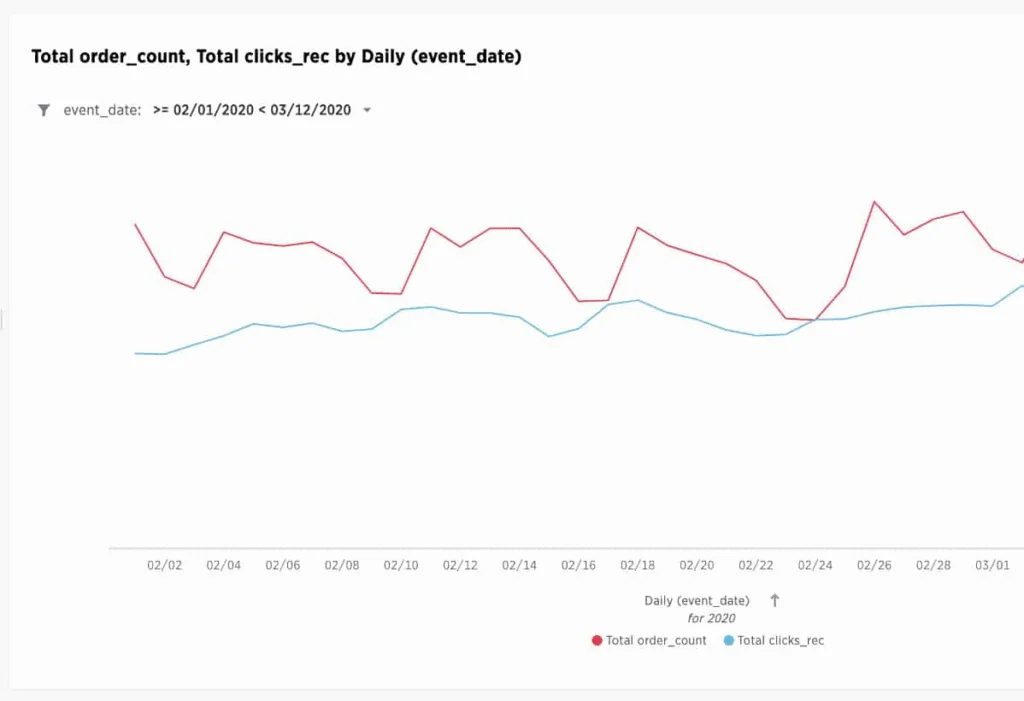
Table Of Contents
Digital Collaboration and Supplier Communication
Lack of Visibility in Supplier Operations
Volatile Inventory Demand
Limited Supplier Dependency
Lack of Data for Agility
Where Will Retailers Go From Here?

2020: The Year Online Shopping Became a Viral Hit

Digital Experience Personalization
Blogs

2020: The Year Online Shopping Became a Viral Hit

Given the limitations that Covid-19 is imposing on nearly everyone’s lives, who’d have imagined not being able to do our grocery, consumer goods, electronics, entertainment (including restaurant food) shopping from a retail location?

What’s more, there is evidence to suggest that buying habits, once changed, are likely to become permanent. It’s estimated 25% of that buying will now happen online for the foreseeable future.

For example, when was the last time you purchased printer ink at a physical store (versus having it auto-fulfilled by an ecommerce vendor). Or your household paper products, which are increasingly hard to find on shelves. Once buyers find a consumable can be found, purchased, delivered and (perhaps) returned reliably via digital, they are unlikely to ever revert to the prior analog behavior.

This shift is also cross-generational: How many of our parents (or grandparents) just used a local grocery automatic store replenishment on-line delivery service for ordering and pickup / delivery for the first time?

Make no mistake, it’s devastating for retailers in the short term. But unlike the last downturn which was driven by purely financial system weaknesses, this one promises to bounce right back. But will your business be ready and able to serve this new online savvy customer?

Richrelevance(now Algonomy) customers are responding rapidly. Some are diverting all store inventory to their warehouse and increasing online purchases. Others are anticipating alternative demand and have stepped up their ecommerce personalization efforts. Overall, our platform is seeing increased online activity since the end of Feb.

In short, online ecommerce is no longer a nice-to-have and will very quickly become more than half of our customers’ revenue. It is essential and increasingly, ubiquitous. Are you prepared?

We will continue to monitor and support our customers and theirs, and we will get through this together.

Stay safe.

HyperPersonalization: The Next Frontier – Raj & Mike Ni

Digital Experience Personalization
Blogs

HyperPersonalization: The Next Frontier – Raj & Mike Ni

Personalized experiences are always blissful. Be it a personalized workout routine at the gym or a spa treatment, it always feels like a luxury. Personalization today is not just in terms of including a prospect’s first name in an email directed to them. It is the next step in the era of Hyper-personalization.

In the third session of ‘Perspectives’, a Linkedin live series from Manthan, Raj Badrinath, Vice President, Marketing & Ecosystems and Michael Ni CMO Sales & Marketing of RichRelevance spoke about hyper-personalization as the next frontier, customer experience, and the whole science behind it. Read on to get expert perspectives on personalization, and what scenarios in which retailers and brands are deploying this technology.

Raj: Let me begin with this Michael, what is all the hype around ‘hyper-personalization’? Tell us a little bit about it.

Michael Ni (Mike): So the thing about Hyper-personalization is that we all inherently know about it. When you walk into your general store, for instance, imagine the shopkeeper has already laid aside special meat he just received and he tells you the story behind the meat while educating you about it. By doing so, the shopkeeper has not only made it easier for you but also given you a meaningful experience and helped you learn. This is the perfect example of hyper-personalization.

Raj: We know that the entirety of the Marketing approach has been around Segmentation for the longest time. Would you say it is the same as the personalization or hyper-personalization approach?

Mike: No, Segmentation is not Hyper-personalization. Today, Marketers are still stuck in the old ways of thinking, even though they have more technology to go beyond segmentation. Yes, Segmentation involves AI-driven approaches but is still not about the individual, what they want, what they care about or their intent at that point in time.

Raj: Now that we understand segmentation is definitely not the same as hyper-personalization. What nuances should a marketer look into to understand this difference?

Mike: Frankly, Marketers will have to be at a certain level of planning and abstraction since they need to be thinking about the persona, the content, the journey that the customer is on. Let me give you an example of this. Let’s say I have been investigating all over the internet and stores about quality shirts. So when I actually walk into the store, I am as a customer, far along enough on my journey and do not necessarily need to be educated about it. I just need to buy. A deeper understanding of this journey of a customer is what will help the marketer create a better experience.

Raj: That makes so much sense. So tell me about the consumer’s point of view here. As a consumer, is there any end-state that I can determine in any way?

Mike: Looking back at the example of the shopkeeper that we were discussing earlier in this conversation. The experience was well beyond just buying something from a store. As a customer, since the experience was memorable, the next time that I think of buying something, at the top of my mind will be that shopkeeper and the experience of buying that product.

To understand the kind of experience and relationship brands are vying to build with their customers, let me give you an example. Imagine you walk into a grocery store and you are given a cart with a screen that lists items for you. So as you move ahead, you pick what you want and tick things off your list. Based on what you pick, the system uses the information to build a profile and personalizes the experience for you. When you leave the store you get a reminder of the things you may have missed. This is the kind of customer interaction that brands are increasingly trying to develop with their customers.

Raj: All of this hinges on data. What happens in the case of customers who visit the website for the first time and we don’t know anything about them?

Mike: It’s a perfect question. When a person visits your website even if it is the first time there is a tremendous amount of information available already including where they came from and what device they are using. Take a restaurant for example that does not necessarily know all its customers. With the first couple of orders placed the restaurant tries to recognize who the individual is and builds a profile. Similarly, with every click or choice, a customer makes online helps build a profile right from the first visit to the website. That is how a customer moves from being someone who is completely anonymous to someone who is showing behavior hence giving you the opportunity to personalize.

Raj: Let’s talk about the AI now. Netflix, for example, is considered one of the masters of hyper-personalization. What aspects of it are common and deployable in other customer industries?

Mike: Let’s take Netflix first. I think it is important to talk about the marketing approach and also the technology you use with the algorithm. Netflix uses personalization extensively and uses every opportunity to present its customers with the right content. It lets customers consume content in the way they prefer instead of bombarding them with a hundred irrelevant options. Another example is Google which uses an Ensemble-based approach. This approach uses multiple learning algorithms to get better predictive performance. It is important for any business to understand which algorithm is working where in what part of its jo

Hyper-personalization is a technology that makes it easier to do things that are otherwise manually not even practical. This technique allows you to focus on the intricate details of your customers that are not available while us Experience. This solution combines a Customer Data Platform, Retail Marketing, and Merchandising solution, and Real-time Personalization powered by advanced data science and algorithms. And traditional personalization of their data. It really is the next big step in marketing!