
The More You Personalize, the Better the Experience?

Digital Experience Personalization
Blogs

The More You Personalize, the Better the Experience?

A leading fashion marketplace shares findings from its eCommerce personalization testing

I am obsessed with electronic gadgets. So when an eCommerce store recently announced a sale, I was excited to find the next shiny gadget to add to my collection. As I explored the electronics section of the online store, I noticed that the recommendations were just a reflection of the products I’d already purchased in the past. After a few searches, I did not see anything exciting, but as I started digging deeper, I did find interesting niche products that I haven’t purchased before. The personalization was therefore restrictive and needlessly narrow.

This made me wonder – What level of personalization is best for an eCommerce business? What weightage should you give to an individual’s preferences, past purchases, and current context? How much exploration is ideal? There are many opinions on this matter, but one thing is clear — over-personalization can have a detrimental impact on business.

In today’s digital-first world, algorithmic 1:1 personalization is, without a doubt, a non-negotiable business strategy. It has proved to be a powerful tool to improve conversions, build brand perception, and boost revenue.

  • 80% of shoppers are more likely to buy from a brand that provides personalized experiences. – Epsilon
  • 89% of digital businesses are investing in personalization. – Forrester
  • 80% of companies experienced a revenue uplift since implementing personalization. – Econsultancy

In a time when online shoppers are spoiled for choice, brands that are not tailoring experiences face the risk of losing their relevance. But there’s a catch. Too much personalization can come across as invasive to shoppers, create an echo chamber, and result in low conversion rates. So, how much is too much? The simple answer is — there is no silver bullet. You’d need to experiment and find what works for your business and markets. Let’s look at an example to understand this better.

Miinto, a leading European online fashion marketplace with 800,000 products, uses Algonomy’s all-in-one personalization software to deliver hyper-personalized experiences across the commerce lifecycle and across the touchpoints of recommendations, content, search, and browse.

In a recent conversation, they shared the results of their tests. The company carried out a series of A/B tests for one of their markets — gradually increasing the personalization level of the product assortment on category pages — and monitored the impact on:

  1. Revenue Per Visit (RPV)
  2. Conversion Rate (CR)
  3. Average Order Value (AOV)

In the first test, they increased the personalization from 25% to 50%. This led to a 5% uplift in RPV, which was quite significant. Since there was an improvement in all KPIs, they were curious to see how far they could go.

Subsequently, they increased the level to 60%, 65%, and finally 70%. They found that at 70%, there was a sudden decline in all KPIs. This is perhaps the point where personalization became more creepy than helpful to shoppers.

65% was the sweet spot, where they got the highest uplift in RPV at 11%. See the figure below. From these results, we can infer that while personalization is crucial, there is a fine line between being relevant and invasive.
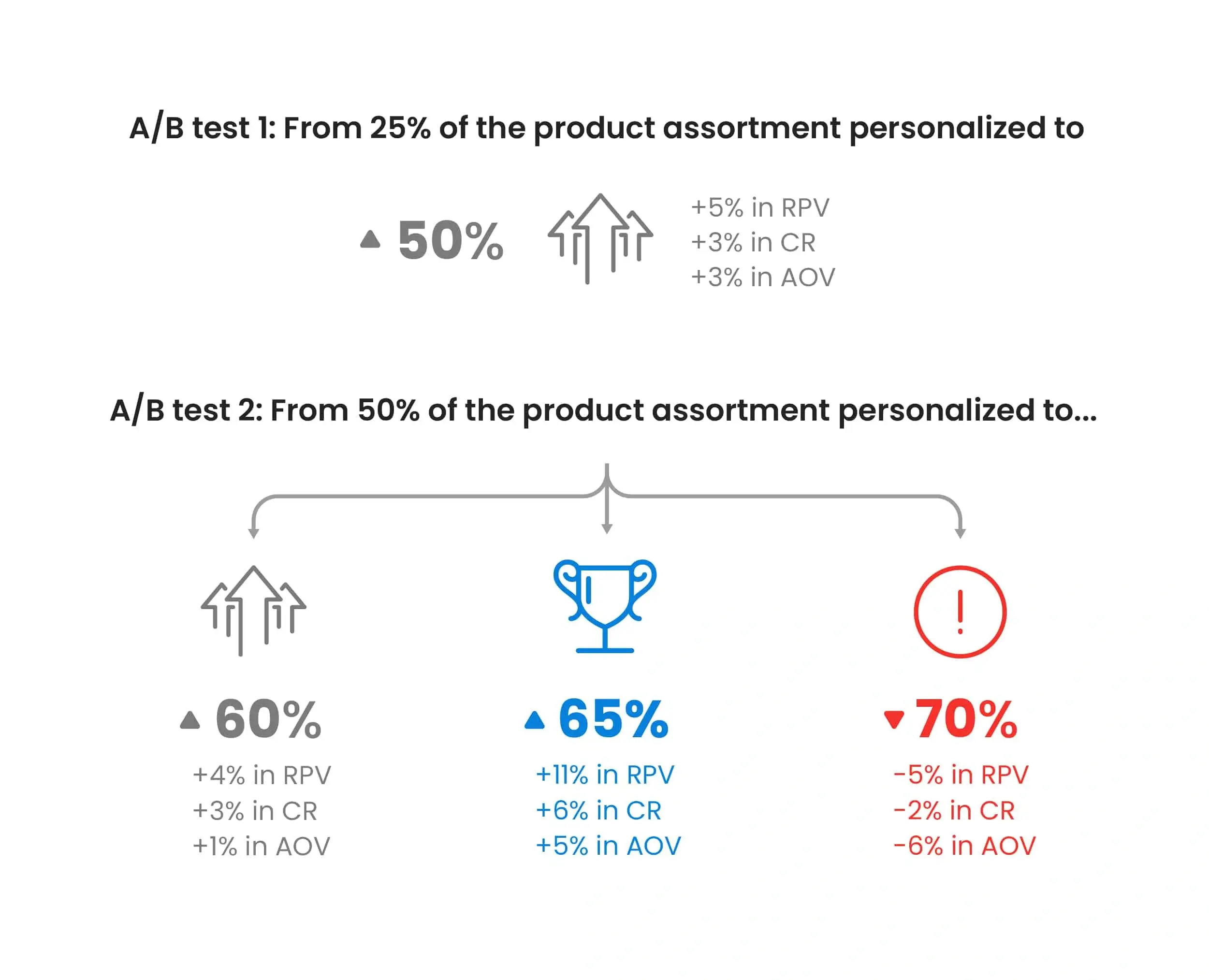
Results from Miinto’s eCommerce personalization tests
More businesses need to embrace an experimentation culture and find the personalization level that works best for their customers. After all, every vertical and market is different. Further, it is important to remember that for a shopper, relevance is certainly important, but so is the joy of discovering new products and categories. Therefore, businesses must ensure the right blend of enabling hyper-personalization and allowing for discovery and exploration.

In the digital-first era, it is imperative to possess the technological capability that allows for rapid personalization tests — an area where many retailers are still lagging. Brands also need to move beyond segmentation and treat each customer as an individual. The solution to this is to build real-time, individual shopper profiles and drive the optimum level of personalization for not only product recommendations, but also search, browse, content, and promotions. This is the key to growing and retaining your customer base, and accelerating growth in the intensely competitive eCommerce industry.

Curious to know more about Miinto’s customer experience journey and how their revenues dropped over 19% when they accidentally turned off Algonomy personalization? Watch the insightful session, from Algonomy Personalization Summit 2021, featuring Paloma Truong, Miinto’s Head of Customer Experience.

The article was first published in ET Brand Equity
Solving CrossSell Model Limits with Deep Learning and NLP

Digital Experience Personalization
Blogs

Solving CrossSell Model Limits with Deep Learning and NLP

A deep dive into how we leverage neural networks to create relevant cross-sell recommendations

Have you ever wondered how, as you are shopping online, adding items to your cart, the website seems to suggest products that perfectly complement what you have already bought or added to your cart? This is known as cross-sell: recommending additional items that complement the products you are currently considering.

Traditionally, cross-sell has been done using a method called collaborative filtering or statistical “wisdom of the crowd” models. These methods are great in that they are relatively simple and fast. Unfortunately, they do not work well for new products or categories of products that do not get much traffic, i.e. the long tail, because they cannot make recommendations for products without sufficient view or purchase data. Methods using more abundant data (like views or clicks) or content-based unsupervised methods can reliably provide similar product recommendations, but fail to capture the complex associations between products that make good cross-sell.

Natural Language Processing (NLP) for Cross-Sell

NLP is a branch of linguistics and artificial intelligence that uses machine learning to analyze and convert natural language into useful representations or insights.

At ADA Global, we use NLP in many ways. One of which is in extracting structured information from unstructured texts. For instance, gathering product features or metadata from its text description (Topic for another blog post). But here we will focus on our deep learning NLP cross-sell models, hereafter shortened to “DeepRecs NLP.”

What Data do NLP Models use?

Rather than using Product IDs as input, like a collaborative filtering or statistics based method would, DeepRecs NLP uses natural language and structured metadata, such as product descriptions, reviews, brand or categories. This allows the model to uncover patterns in the language used to describe a product and therefore inform cross-sell. More importantly, it allows the models to reach products that have rarely been viewed or bought, e.g. new or  long-tail products. These are products with relatively little purchase (or view) data.

We leverage shopper data to build neural networks (a specific type of machine learning model, broadly encompassed by the field of deep learning). These networks consider larger patterns of shopper behavior by learning from pairs of products that co-occur. For example, products that were purchased by the same user, within a given time window, are “connected.” Based on the number of times a product pair co-occurs across all users, each pair is assigned a score between 0 and 1, with a higher score denoting better cross-sell fit. Specifically,

where is the co-occurrence count of product p2 with product p1.

From these product pairs, a seed product and a recommendation (rec) product is defined. Each will have various information associated with it, such as name, brand, description(s) or reviews. We normalize the text data. From there, based on the input type, we might process input in different ways – more on that after we look at the results our clients are seeing.

Impact on eCommerce Metrics

DeepRecs NLP has consistently shown increases to key metrics our clients care about, such as click-through rate (CTR), average order value (AOV), and revenue per visit (RPV). Of the five clients for which we ran A/B tests comparing slates of recommendation strategies with and without DeepRecs NLP, the treatment side (with DeepRecs NLP) for all five showed a statistically significant increase in CTR. In most cases, DeepRecs NLP also showed an increase to AOV and RPV, with one site obtaining a 7.296% increase to RPV!

Many clients were so convinced with the initial results from DeepRecs NLP that they skipped the A/B test and immediately made it live to all traffic in key places like the Product Detail Page or Add-to-cart pages. In one month alone, DeepRecs NLP provided over 14.5 million viewed recommendations to 20 sites world-wide.

DeepRecs NLP Model Architecture

In our DeepRecs NLP system, we use two identical “stacks” of neural networks, one for seed products and another for rec products. In this section, we detail some of the specifics of our model architecture.

Each input feature gets encoded in different ways, based on its type. For instance, for discrete categorical data, e.g. brand, we learn a dense “embedding” vector representation for each unique value, or a “multi-hot” embedded vector representation if there are multiple categories(a vector is basically a series of numbers like [0.52, 0.02, 0.97, 0.08, 0.55]). For unstructured text input we might “embed” each word and run them through an Attention layer [1][2]–a mechanism for combining vectors, focusing on important values to get a feature-level representation. Alternatively, we might run the raw text through a pre-trained BERT model [3], followed by one or more fully-connected neural network layers to capture cross-sell specific relationships from the pre-trained model.

The result is that we have vectors of the same size for each input. A benefit of processing inputs in this way is that we can ingest an arbitrary number of inputs, determined by the client. We then combine them all (usually with a weighted sum or another Attention layer) and optionally add more fully-connected layers to get a final product vector.

To produce a score between seed and rec products, we take the cosine similarity of the normalized final product vectors. For training, this similarity score is compared to the score from Equation 1 using a hinge loss. At prediction time, the similarity score can be used to rank pairs of products for cross-sell.

Each of the “usual” model options mentioned above are automatically determined during hyper-parameter optimization based on the complexity of the site catalog and loss metrics on a validation dataset. This allows each of our clients to have a custom, personalized model that is best suited to their catalog.

Mitigating Inherent Model Bias

BERT has been a breakthrough in the world of NLP for many tasks, including our cross-sell recommendation systems. Because they were trained on a lot of data from the internet, pre-trained BERT models can process just about any text in over 100 languages into a meaningful, dense representation that can be used in downstream tasks without the costs of training from scratch.

Unfortunately, training on internet text also means that the models implicitly encode potentially harmful language bias. Research suggests that BERT introduces language bias into systems that use it [4][5][6]. For example, when used in a Natural Language Generation system, it might always associate “Doctor” with male pronouns and “Nurse” with female pronouns.

In the context of cross sell, consider childrenʼs clothing and toys. It is a highly gendered catalog space because that is what society and shoppers reinforce through norms and macro-patterns of purchases. If you add into those interactions the gender bias of BERT, it is not hard to imagine a scenario where NLP cross-sell disproportionately recommends a kitchen play-set or Barbie doll for a unicorn blouse seed, but swim trunks or a backyard science kit for a shark graphic tee seed. Although contrived, this example demonstrates how training data can inject unfair bias into recommendations, ultimately impacting the interests or opportunities of different groups of people. At ADA Global, we are actively researching how large of an issue this is in our models and ways such bias can be mitigated.

Conclusion

Cross sell models that understand industry context (in this case retail) and address domain-specific challenges like catalog long-tail can create high business value. At ADA Global, we leverage deep learning techniques as well as shopper history, patterns and insights that improve relevance of cross-sell, enhance the shopping experience and grow metrics such as AOV and RPS.

References

1. Minh-Thang LuongHieu Pham, and Christopher D. Manning. 2015. Effective Approaches to Attention-based Neural Machine Translation. In Empirical Methods in Natural Language Processing (EMNLP).

2. Nikolas Adaloglou. 2020. How Attention works in Deep Learning: understanding the attention mechanism in sequence models.

3. Devlin, Jacob, et al. “Bert: Pre-training of deep bidirectional transformers for language understanding.” arXiv preprint arXiv:1810.04805 (2018).

4. Tan, Y. and L. E. Celis. “Assessing Social and Intersectional Biases in Contextualized Word Representations.” NeurIPS (2019).

5. Kurita, Keita et al. “Measuring Bias in Contextualized Word Representations.” Proceedings of the First Workshop on Gender Bias in Natural Language Processing. Association for Computational Linguistics.

6. Bender, Emily M. et al. “On the Dangers of Stochastic Parrots: Can Language Models Be Too Big? .” Proceedings of the 2021 ACM Conference on Fairness, Accountability, and Transparency. Association for Computing Machinery.

Table Of Contents
A deep dive into how we leverage neural networks to create relevant cross-sell recommendations
Natural Language Processing (NLP) for Cross-Sell
What Data do NLP Models use?
Impact on eCommerce Metrics
DeepRecs NLP Model Architecture
Mitigating Inherent Model Bias
Conclusion

Three Cs to Finding Marketing’s Holy Grail

Omnichannel Marketing
Blogs

Three Cs to Finding Marketing’s Holy Grail

When it comes to acquiring and retaining customers, for the practicing marketer not much has fundamentally changed in the last several decades.

The Practitioner’s Paradox

When it comes to acquiring and retaining customers, for the practicing marketer not much has fundamentally changed in the last several decades.

Identify the right person. Deliver the right message. Execute at the right time. Marketing 101. Conceptually it is quite simple. Identify individuals or organizations that will benefit from our product’s value, determine the story that will motivate them toward desirable outcomes, and lock in moments when our storytelling needs to be present. Easy, right?

Obviously not.

Practically speaking, while the ‘right person-right message-right time’ framework is conceptually elementary, that Marketing 101 is simultaneously marketing’s Holy Grail. And for anyone who has brushed up against Sir Thomas Malory’s 15th century prose, Le Morte d’Arthur, or John Boorman’s 1981 epic fantasy film, Excalibur, we know that achieving the grail is anything but elementary. Even if our only exposure to the legend of the grail is Monty Python’s hilarious send-up, it’s pretty clear we’re confronting a puzzling paradox.

How can something so simple in concept be so frustratingly hard in practice?

The answer lies in the manners in which customers make decisions and the methods by which they consume information to support them. Those manners and methods are moving targets and hitting a moving target is rarely easy. So, while hewing toward the ‘right person-right message-right time’ north star is important, it is critical to support that with a paradigm I’ll refer to as the three Cs to finding marketing’s holy grail: customer, content, and contact. This article will provide a thin slice of each of the four and, hopefully, some food for thought and further discussion.

Before getting into the outline, it is also important to note that this paradigm is not a challenge to the seminal work of E. Jerome McCarthy when he defined the “4 Ps” (drafting off of Neil Borden’s ideas). They remain as relevant today as in the 1960s. In fact, the three Cs blend squarely into place and promotion.

The First C: Customer

Few will argue that having a deep understanding of our customer is important if we intend to effectively service their needs. Ideally, we are developing that understanding at a 1-to-1 personalization level and can translate it into a plan to uniquely satisfy each customer. More than likely, we are segmenting customers into groups of various definitions and building experiences and media plans around reaching those groups. This hints at the need for a broader strategic discussion on where segments originate and our capability to deliver unique experiences.

As it relates to our quest for the grail, the important point is that we have a firm grasp of which customer segments exist, what differentiates them, and how we will distinctly message them. Multiple segments are irrelevant for anything other than rear-view analysis if we aren’t investing in the build and delivery of corresponding experiences.

A quick note on customer segmentation. Peter Fader, in his book The Customer Centricity Playbook, posits that customer segments based on predetermined demographic personas are counterproductive to achieving true customer equity. Real time customer segmentation based on value, specifically customer lifetime value, are the key to effective acquisition and retention.

The Second C: Content

Since “the right message” is likely distinct depending on the audience segment to which it is delivered, having in place a content personalization platform capable of producing meaningfully distinct messaging by customer segment is crucial. While this C is arguably the easiest to understand it is often the most difficult to execute. It literally comes down to the words and images we use to convey meaning and express value. Now, if we’ve done no customer segmentation, we probably don’t struggle with this. One big, homogenous audience. One big, homogenous message. Also, if we don’t struggle with this, we are probably doing it wrong.

Assuming that we have some level of segment personalization and we’ve thought through the stories that convey our product’s value to each, we need to actually produce the assets to fuel our marketing campaigns. This means writing the copy. Filming the video. Designing the images. Building the pages. Assembling the finished product. Therein lies the sticking point for most organizations. And, the more granular our segmentation and storytelling, the more complicated this becomes.

The gating factor to delivering unique experiences is rarely an organization’s inability to define unique segments, regardless of whether segmentation is persona-based or value-based. Instead, production capacity is the issue. So, it is important to think through how many stories we can actually tell and how consistently we can tell them as customers move through the funnel. Again, if we define a segment, but don’t treat it any differently, it is a segment in name only.

The Third C: Contact

This article does not delve into the concept of customer journey orchestration, but understanding the evolving needs and perceptions of our customers, and how we intend to position our brand, is important in developing a contact strategy capable of defining sequence, frequency, timing, and method of communication at each stage of the demand funnel.

Sequence is the order in which touchpoints are delivered; frequency is the volume; timing is the lag between touches; and method is media we employ. In a perfect world, building a contact strategy is both channel (DTC, retail, wholesale) and tactic (social media, direct mail, linear TV) agnostic. The ultimate objective is to increase customer equity by driving higher purchase frequency, average order value, share of wallet, and referral while driving down acquisition cost. In many cases, our situations are not ideal. Even with the continued evolution of omnichannel thinking, ecommerce personalization solutions often sits separately from physical retail. Leaders and teams are incentivized according to channel production as opposed to overall customer value. Within marketing departments, teams are often built around tactics, especially in the digital space. Email seeks credit for the same customer as paid search despite the fact that both likely contributed to revenue production. These issues can often stymie a sophisticated contact strategy. “Wait, you mean there are times when I shouldn’t send my shiny new promotion to everyone on my email list?” An oversimplification, for sure, but we’ve likely all been in situations where channels or tactics have driven decisions not in the best interest of driving overall customer value.

Given the deep structural, financial, and cultural roots these challenges have in many organizations, overcoming them is no simple task. Part of the solution exists in aggressively analyzing our contact strategy as granularly as possible, both in terms of customers and media. Understand the parts and how they all work together toward a “sum is greater” result. This requires teams, technologies, and a willingness to escape narrow measurement methodologies. Heaven forbid we are still evaluating performance using last-touch attribution. But, even if we’ve elevated to a more sophisticated multi-touch approach (including those that can provide insight to offline interactions), recognize that understanding the true value of the overall contact strategy relative to overall customer equity will require complementary analytical methodologies like media mix modeling.

Okay, one more C: Conclusion

We’re all on a quest. And it’s an epic one. No, we’re not trying to save a dying king with the chalice from Christ’s Last Supper, but we are trying to build our brands by delivering meaningful experiences that acquire and retain profitable customers. Hopefully, we’re doing that with purpose. Putting as much good in the world through our profit as we can.

The three Cs can help frame that quest. Segment customers in a way that enables meaningfully distinct storytelling. Build dynamic content personalization capabilities that enable those stories to be told, creatively and consistently. Orchestrate contact strategies that meet customers where they are and adapt to evolving needs and behaviors as they move through the funnel.

As a bonus C, we should spend time thinking about technologies to coordinate our execution. Whether or not we have an army of operators and analysts, current tech can simplify, augment, and optimize the strategic work we are doing to acquire and retain customers. Don’t be embarrassed to admit that the machines are smarter than we are. They can’t always capture the nuance of our businesses or provide the strategic guidance necessary to drive growth (that’s where us savvy marketers come in), but they can make our lives easier.

Right person. Right message. Right time. Marketing 101, right?

Bryon Sheffield

Table Of Contents
The Practitioner’s Paradox
The First C: Customer
The Second C: Content
The Third C: Contact
Okay, one more C: Conclusion

ADA releases the newest edition of its Algorithmic Customer Engagement Platform for Digital-First Retail Excellence

Digital Experience Personalization
Blogs

ADA releases the newest edition of its Algorithmic Customer Engagement Platform for Digital-First Retail Excellence

New Features include OOTB Connectors to leading Commerce Platforms, No-code Data Science enhancements, new Deep Learning models, and Extends Omnichannel Personalization to Contact Centers

ADA Global, the leader in Algorithmic Customer Engagement (ACE) solutions, announced an array of new and enhanced capabilities in their latest Spring ‘21 Release. The new release is specifically designed for Retailers and Brands who are in a post-pandemic recovery cycle, with a unified platform for digital customer engagement that integrates data from supply to demand across the value chain with algorithmic decisioning and omnichannel orchestration.

The release features numerous powerful capabilities like composite AI frameworks, no-code ML frameworks, Visual AI algorithms, greater control and governance over customer data, and better customer journey orchestration abilities across marketing, commerce and merchandising.

“The digital-first era is all about staging relevant experiences across the entire customer journey, and extend personalized retail interactions to all customer touchpoints, both inbound and outbound”, says Sarath Jarugula, Chief Product Officer at ADA Global, “In this release, ADA Global customers can continue to better leverage their technology investments across the enterprise, to improve on their metrics for customer engagement, conversion, and loyalty.”

ADA Global Personalization Suite now features the following:

1 ADA Global Connect

We now provide out-of-the-box integration of the Personalization Suite with leading Commerce Platforms like Shopify personalisation Plus, VTEX, Adobe Magento, SAP Hybris, SFDC Demandware and more. The integration has helped merchants to accelerate their digital journey by using ADA Global’s best-in-class personalization. Merchants can keep product catalogs, inventory, and pricing always updated, with ADA Global’s unique real-time streaming catalog integration.

2 DeepRecs Visual AI

Announced in Sep 2020, this deep learning functionality is now leveraged by over 15 apparel clients, helping them replicate store-like personal experience on digital commerce properties. Shoppers can find visually similar products and get complete-the-look personalized product recommendations based on product images and without the need for any behavioral data. Designed to improve engagement and repeat visits, our clients have grown CTR, time on site and revenue per visitor with Visual AI based recommendations.


3 Configurable Strategies

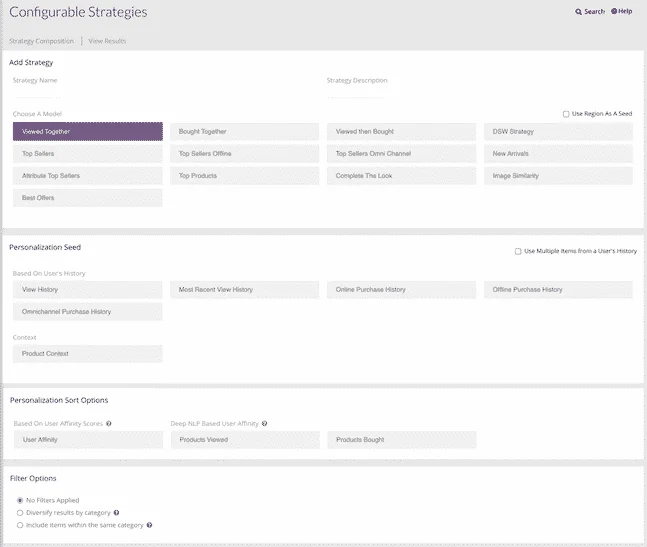
GA since May 2020, Configurable Strategies is a step towards self-serve machine learning, empowering non-tech users to quickly build, test and iterate new ecommerce personalization tools. Users can pick from a pre-built library of algorithms to create new strategies, test their hypotheses and serve their unique needs. This year, additional controls have been added to apply category diversity to strategies such as Top Sellers, New Arrivals, Attribute Top Sellers, Best Offers and Category and Brand Affinity. A shopper’s affinity to categories or brands can be used as the seed, so the resulting recommendations match their affinities. Additional user attributes for add, replace, remove values are now available, providing high flexibility to marketers and merchandisers.

“Our merchandisers and marketers always have new ideas. Configurable Strategies is a very handy tool to test these hypotheses – be it on the eCommerce site or for email promotions. The personalized campaign leveraging custom category and brand affinities achieved 356% more revenues compared to the fallback. Similarly, brand pages on our eCommerce site have seen +3% conversion rate for key categories”

Rob Hitchman, Digital Product Owner, John Lewis

Contact Center Personalization (EA Only)

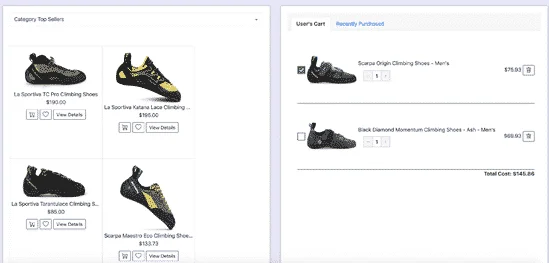
In line with our vision of personalization everywhere, the call center application extends personalization to sales associates and agents. A shopper’s online behavior, intent signals, search data, affinities, cart contents as well as past purchases are made available to call center associates in real-time, so they can make one-to-one personalization substitute or cross-sell recommendations. Agents can leverage various recommendation strategies to aid product discovery and decision making without fragmenting their experience, leading to higher average order value and sales.

Social Proofing (EA Only)

Designed to engage shoppers using real-time view and purchase data, social proof messages provides dynamic messaging overlays on digital commerce properties. A highly customizable set of metrics such as ‘xx people bought this in the last one hour’, ‘Viewed by xx people today’ can create urgency and provide social validation to shoppers considering the products. The strategy can be used on PDPs as well as category and search pages. Online retailers and brands can expect an immediate lift in conversion rates and reduce abandonments with urgency messaging.

Customer Analytics now features:

1 Data Studio

Our customer data platform provides highly differentiated capabilities to allow analysts to build dashboards, do interactive analysis such as drill downs, drill across, leaderboards, etc. without any SQL understanding. To further empower data scientists and analysts, we have introduced Data Studio which is an interactive SQL query pad with full SQL access to CDP data through an easy-to-use, browser-based query editor. Data Scientists get access to clean and structured customer behaviour data for many years providing them the flexibility to build advanced custom models without having to go through the hassle of bringing it together from multiple systems – CRM, Google Analytics, etc. They can extract data for model building and conduct all Exploratory Data Analysis (EDA) with the data management and visualization capabilities in the application without compromising on data security.

Customer Journey Orchestration (CJO) feature the following new capabilities:

2 Journey Analytics and Automation

While it is a great competitive advantage to be in the pole position with personalization, your ability to win the race is in the machine, finally. The last mile in a marketer’s effort to drive seamless CX that improves stickiness for the brand – Customer Journey Orchestration. The key metrics that marketers measure the performance on is return on their investment in campaigns and communication. ADA Global’s Customer Journey Orchestration tool enables omnichannel marketing campaigns with maximum precision and minimal effort. In addition to automating journeys, supporting many offline and online channels and extensive journey analytics, we’ve now added great capabilities.

3 Universal Control Group

UCG allows creation of a program level control group to measure effectiveness over long-term marketing objectives. Here, one group is a neutral universal control group that doesn’t receive any communication and the other group is a collection of all remaining customers. However, regular control groups (campaign control) provide only an incremental impact on the promotion, only measuring campaign level performance and not cumulative impact of all promotions over a long period. UCG fills this gap. Users can create UCG once and seamlessly execute journeys without having to manage UCG groups separately across different journeys. This helps marketers make informed decisions on campaigns, offers, products that work thereby saving cost, improving response rates and optimizing ROI.

4 Channel Enhancements

We continuously enhance our omnichannel capabilities and boost key capabilities of our existing channels to ensure marketers can connect with the customers in the channel of their choosing.

  • WhatsApp: Users can now send transactional messages on WhatsApp using whitelisted templates in real-time.
  • SMS Conversational Management: Users can now set up conversational workflows based on using expected customer-entered keywords and direct customers to appropriate journey paths.
  • Facebook Audience Management: We support Facebook audience as a channel enabling users run remarketing, persona-based, multi-channel and experimentation journeys.
  • Direct Mail: Users can define Direct Mail output template structure for flattened and multi-record formats. Users can drag-and-drop personalization tags to easily customize the output and auto-scale for accelerated file generation.
  • Mobile App SDK and Push Notification: We’ve introduced carousel push notifications with separate design pages for iOS and Android with landscape and portrait orientation options. With this, you can also control the display life.
  • Email Channel: Open time personalization has been enabled where users can dynamically personalize recommendations and content sections based on when the customer opens the email.

5 Criteo Integration

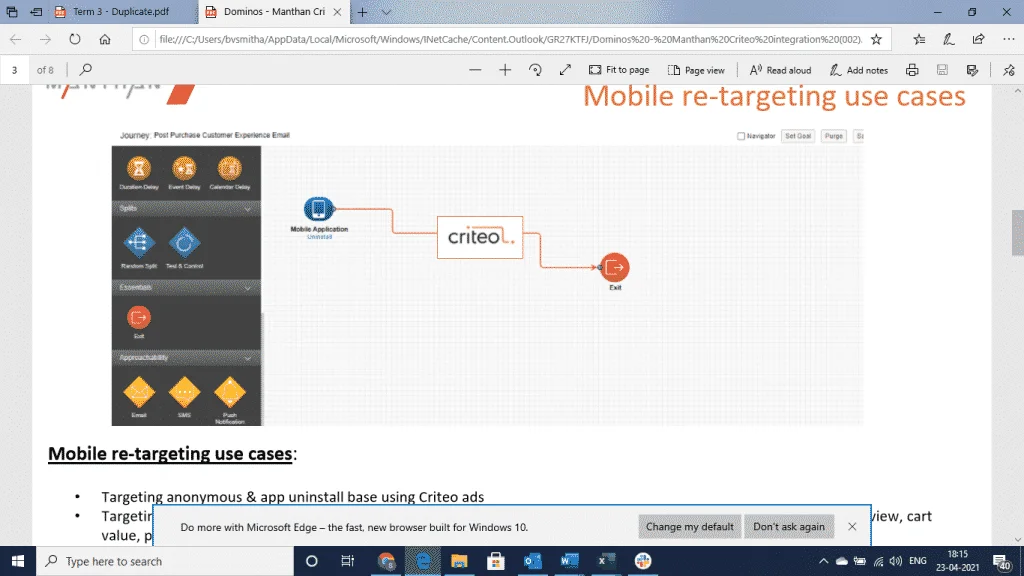
Our customer journey orchestration platform has automated custom audience integration with Criteo enabling marketers to push dynamic content personalization ads to known customers across channels. It enables mobile & website retargeting, omnichannel journey audience push and helps measure marketing ROI. It eliminates manual list management and campaign set up.

Merchandise Planning and Analytics features the following new functionality:

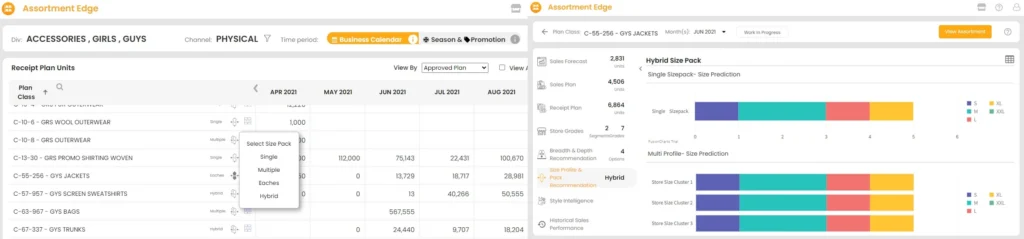
1 Size-pack Assortment Planning

A critical assortment planning need for fashion retailers to improve their full price sell through is allowing them to plan according to their key size strategies – single and multiple size packs, eaches, fill-in packs, and hybrid size planning. The Buy Plan is created at option, size, and store grade level, which helps in optimized and localized buying reconciled with the overall demand and receipt plan. The multiple size profile has been integrated with the store clustering model to help further tune the assortment recommendation.Users can also add a new size pack to the size recommendations. The addition of a new size pack modifies current predictions and total size packs. Users can modify any size profile and the system auto-scales the remaining to 100%, reducing manual readjustment efforts.

Store data mapping helps in planning for new stores and new plan classes that may not have sufficient history to predict sales, assortment, and size strategy.Assortment Edge facilitates creation of wedges for stores and plan classes that do not have sufficient historical data by modelling them using similar stores or plan classes. Users can set default model stores and departments at global level or map to specific values. The mapping does not impact the wedge definitions that have been already approved.

Store level size pack recommendations allow users to view details such as style options, store clusters, and size pack recommendations for each store along with wedge details. Users can also export this information to seamlessly integrate with the downstream application for initial allocation and store replenishment.

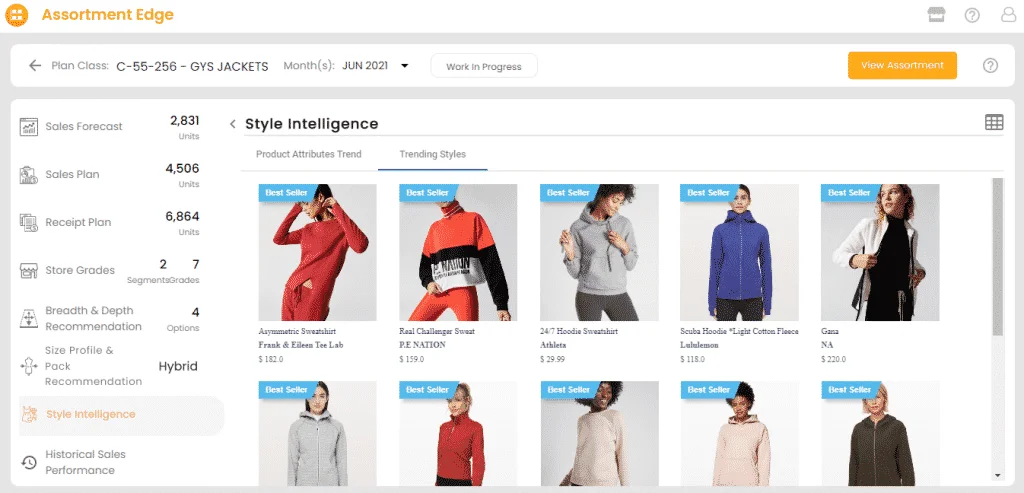
Style intelligence uses computer vision for ranking global trends to get contextual style recommendations and offers qualitative recommendations on the styles and attributes that can be included in the assortment plan. It helps fashion retailers gain insights on the top product attribute trends and the top styles trending in the market for a competitor and inspirational brands for the selected plan class and time period.

2 Product Lifecycle Pricing

Product lifecycle pricing allows retailers to address major discount price planning scenarios. The enhanced UI helps retailers easily configure the solution to plan for multiple discount planning strategies. Some of the preconfigured strategies are:

  • Promotion pricing or temporary discounts for discount or online retailers with high velocity of discount price changes.
  • Permanent markdown planning for shorter life cycle products like fashion.
  • New product markdown pricing that optimizes discounts across product’s life cycle.
  • Inventory optimization liquidation pricing to achieve the targeted Inventory units at the end of pricing time period.

Cross-price elasticity or halo-cannibalization impact on demand – the enhancements to the markdown algorithm now allows users to view the output/simulation grid. It shows the cross-elasticity impact on the forecasted sales against the markdown and helps improve the quality of the markdown output.

Offer recommendations – recommends the best offers for the selected products for the planned promotions/offers, based on historical elasticity for the products against different offer types like Buy1 get 1 or a flat % off. It considers the customers’ response or the product’s change in demand for the promotion or a perceived value to the product’s offer / promo rather than the end discount or markdown. The model uses hierarchy or category data for insufficient product level offer data.

3 Accelerate your Digital-first Customer Engagement

We hope you are inspired by our product investments and innovations related to customer journey orchestration. For more information on the Spring ‘21 Release, please connect with your ADA Global representative.

In summary, we recognize that delivering digital-first retailing needs a complete technology stack that unifies data, and drives decisioning and real time customer engagement algorithmic customer engagement. ADA Global is today the only industry cloud for Algorithmic Customer Engagement (ACE). We stay unwavering in our focus in offering the industry widest array of applications across marketing, digital commerce, analytics and merchandising for retail consumers and brands. For more information or to speak with a sales or customer service representative, please visit our Contact Us page.

Table Of Contents
ADA Global Personalization Suite now features the following:
Contact Center Personalization (EA Only)
Social Proofing (EA Only)
Customer Analytics now features:
Merchandise Planning and Analytics features the following new functionality:

Why the Online Grocery Experience Needs a Dramatic Revamp

Digital Experience Personalization
Blogs

Why the Online Grocery Experience Needs a Dramatic Revamp

This article originally featured in ET Retail on the 05/06/2021.

E-GROCERY NEEDS TO BREAK FREE FROM THE LEGACY BRICK AND MORTAR FORMAT

When do we go grocery shopping? Once a month, once a fortnight, once a week, or perhaps when we are throwing a party? We shop as per our convenience. Convenience is the key word. Online grocery stores are continuously trying to make shopping more efficient and hassle-free. However, as long as grocers are trying to replicate the physical store layout online, the experience will be sub-par as scrolling through the large product catalogue to find the items one needs is time-consuming and dull.

Categorization is essential in the store. Hypermarkets and supermarkets have several aisles (fresh produce, fish and meat, dairy, spices, cereals and so on), where shoppers cart around from entry to exit.

Online grocery shopping has gone a couple of steps ahead of stores with sub-categorization. Within dairy one can navigate to milk, yoghurt, cheese etc. and pick their favorites. However, a closer look at a typical grocery shopping event shows that this journey is less than ideal. Why? Because it fails to recognize that a customer or a household buys the same products over and over, month after month. Sure, there is exploration with new brands and different flavors, but unlike say, fashion shopping, where a shirt bought in the past is almost never bought again, re-buy is a key requirement in grocery.

The power of personalized grocery e-store

So how should the online grocery store be organized? The advantage of eCommerce is that algorithms can create a personalized retail layout for each customer, which is not possible in a brick and mortar store. An online customer can have his or her own aisle – imagine an aisle ‘For Jonathan’ or ‘For Martha’, where he or she has a pre-curated set of products for their household needs.

Personalization in grocery means dynamically creating these custom baskets, so the shopper does not have to go back and forth between different categories to add the one product to their cart. These pre-loaded baskets not only make the chore more efficient, but also ensure that customers do not forget any essentials they need. With the cart already in place, all a customer has to do is add any additional products (from a set of personalized recommendations or from category pages), and remove products they don’t need at the moment. Research shows that in the grocery vertical, time spent online in finding products and building the cart is inversely proportional to loyalty. Given this, this ‘personalized aisle’ is key to real time customer engagement and customer lifetime value.
Research shows that in the grocery vertical, time spent online in finding products and building the cart is inversely proportional to loyalty. Given this, this ‘personalized aisle’ is key to customer lifetime value.

Surge in online grocery and intense competition

Grocery shopping anytime and from anywhere has been growing in the past decade, but saw enormous acceleration during the pandemic. A survey by Clinch in the US found that 75.4% of consumers purchase groceries online, with 80% of those consumers citing that they shop for groceries online more than ever before, since the pandemic. This trend will continue, as 75.8% of consumers plan to continue to shop online for groceries post the pandemic.

With such phenomenal growth across the globe, the pie has expanded. At the same time, competition is heating up and supermarket margins are wafer thin. Marketers spend a lot of effort in getting the customer back to the ecommerce personalization platform site. Once the visit is secured, personalization should be used as a strategic lever to create a frictionless shopping experience, lock-in conversions and grow share of wallet.

Modelling the online grocery stores on brick and mortar stores, therefore, is a big compromise and is demanding a fresh perspective.

Bhavna Sachar, Director, Product Marketing, Algonomy

Table Of Contents
The power of personalized grocery e-store
Surge in online grocery and intense competition

5 Reasons Why a CDP Solution is Core to a Retailer’s CX Strategy in the New Normal

Omnichannel Marketing
Blogs

5 Reasons Why a CDP Solution is Core to a Retailer’s CX Strategy in the New Normal

This article originally featured in RIS magazine on the 05/06/2021.

Retail has seen dramatic shifts in customer needs, tastes, and behavior, and the pandemic has upended many tried and tested marketing tactics. Digital-first now is the new normal with in-person shopping forced to take a back seat, with much of this shift is likely to stick for a long time to come.

E-commerce share of the revenue pie in the retail industry has doubled and, in some segments, quadrupled as well. Albertsons, for example, reported digital sales growth of 243% for the second quarter 2020.

Consumers spent $861.12 billion online with U.S. merchants in 2020, up an incredible 44% year over year, according to DigitalCommerce360 estimates. That’s the highest annual U.S. ecommerce growth in at least two decades. It’s also nearly triple the 15.1% jump in 2019.

Insights of the 2008 financial crisis showed that companies that led with CX gained three times as much as the market average in terms of shareholder returns and rebounded more rapidly as well. The performance of these CX leaders during the financial crisis serves as a helpful guide for companies hustling to do business amidst the global pandemic today.

Some retailers are better equipped to handle the shift in consumer behavior, while others are struggling between physical and digital realms. For those retailers who are looking to up their customer engagement game in the channel of their choosing, here is how the right customer data platform, or CDP, can be utilized as a powerful agent of change.

1. Relearning Customer Needs, Tastes and Behavior

Creating a unified, 360-degree view of the customer that is also actionable is the most fundamental step in creating superior CX for customers. For example, sending two “personalized” emails to the same person is hardly that!

A CDP solution should be capable of ingesting heaps of data from a variety of sources — e-commerce, mobile app, stores, kiosks, CRM, ERP, DMP, etc., match, deduplicate, and fill in the gaps with any customer information that may be missing. While a lot of this is explicit data captured in other systems, advanced CDPs can also derive implicit insights, from search intent, affinities from prior purchases (such as brand and/or category affinity) and much more.

CDP can also analyze this unified customer data using advanced AI algorithms to create granular, look-alike micro segments of the “best customers” or households, and track and analyze real time customer segmentation and their migration as they happen, enabling retail marketers to drive personalized retail engagement throughout the customer lifecycle.

Zara, the Spanish apparel retailer that specializes in fast fashion, has invested over $1 billion to boost its online game. Zara has consolidated its business through the use of big data by gathering information from online social media and surveys to understand customer segments. The information is then used to make fast predictions of customer needs, helping them meet customer demands more quickly than their competitors.

2. Real-time Customer Engagement

In marketing, timing is everything. Brands are required to communicate more often and especially at crucial journey “moments” or they end up losing the opportunity to mesmerize and capture their audience. Real-time CDPs provide real-time audience activation, which helps orchestrate relevant campaigns and communication before they leave your properties. Engaging with customers in the moment is a key differentiator that very few retailers can boast of, and a real-time CDP solution enables this.

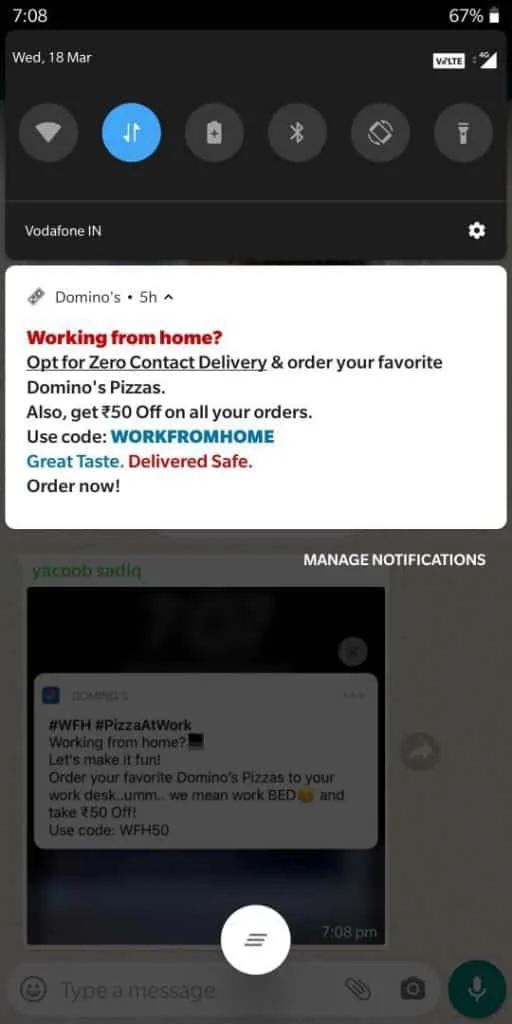
For example, quick service restaurants can send customized offers on their mobile based on customer location or day part. No more “10% off on Margherita pizza at Fremont” when the customer is miles away in San Jose!

3. Personalization at Scale

Retail customer data platforms have enabled ecommerce personalization solutions at scale, an area in marketing that is capable of adding $1.7 trillion to $3 trillion in new value according to McKinsey & Co. And brands are looking to unlock this potential.

With deep knowledge of customers and personas provided by CDP, retailers can now activate a one-to-one personalization customer experience. Modern CDPs bundle advanced personalization module, which needs to be contextually sensitive and a continuous algorithmic testing engine, which ensures that the right decisions are being made automatically with every interaction in real time. From landing pages to the entire commerce funnel, retailers can ensure a highly relevant and engaging experience, improving both customer satisfaction and conversion.

With machine learning-based algorithms for inventory demand prediction, assortment planning, store clustering, size pack optimization, product rationalization and discount pricing, retailers can ensure the right availability across all points of sale, including store and digital.

For example, QSRs could personalize the menu when the customer opens the app for placing an order. By using a CDP to analyze a customer’s purchase history, it will be easy to infer if they are a vegan. Based on this, the most relevant menu items are listed on top of their menu.

Latest innovations include deep learning-based recommendations, where retailers can replicate the rich in-store experience digitally with advanced Visual AI and text/NLP-based personalization in real time, mimicking human-like curation.

4. Data Security And Privacy Compliance

Building trust between the brand and the customer is a business priority. With GDPR and other regulatory requirements around customer data privacy and security becoming mandatory, CDP solution helps manage known and unknown PII data and consent to comply with these norms.

The laws and regulations surrounding data protection has made first-party, consent-driven data collection more important than ever for companies.

5. Align Demand with Supply

Perhaps the most important, but most retailers are unable to link their retail customer data platform to the core of their retail business. They continue to treat this investment as another silo, except for the marketing team. A retail-focused CDP brings together demand-focused data, and combines with customer-centric merchandising and buyer planning.

With machine learning-based algorithms for demand forecasting, assortment planning, store clustering, size pack optimization, product rationalization and discount pricing, retailers can ensure the right store replenishment availability across all points of sale, including store and digital.

Pandemic or not, the next normal is still taking shape, and like your grown kid who refuses to move out, digital is here to stay with us for the long term. Retailers who invest in CDP technologies will drive differentiated CX across channels, accomplish the delicate balancing act of optimizing for immediate conversions as well as long term customer value.

Raj Badrinath, CMO, ADA Global

Table Of Contents
1. Relearning Customer Needs, Tastes and Behavior
2. Real-time Customer Engagement
3. Personalization at Scale
4. Data Security And Privacy Compliance
5. Align Demand with Supply

Menu Engineering: Real-time insights enable menu optimization

Digital Experience Personalization
Blogs

Menu Engineering: Real-time insights enable menu optimization

An optimal menu not only drives financial success but also enhances guest experiences. This makes Menu Engineering a key aspect of QSR strategy. With real-time insights, Operations Leaders could engineer their QSR menu to keep costs under check while ensuring customers’ favorites are firmly placed in the menu.

Personalized menu with advanced customer insights

The sudden spike in online ordering through apps presents immense opportunity for QSRs to hyper-personalize customer experience. And menu personalization is a key element of the overall experience. Data on customers’ taste and preferences are collected and analyzed. Using machine learning and AI technology, the app shows users the most relevant menu items, promotions and content based on their individual preferences, past dining history, location, weather and restaurant specific menus and pricing.

With data and intelligence, menu engineering is more science than art, in today’s times. An advanced AI platform helps you engineer your menu across outlets, reduce cost and drive loyalty. The underlying need to design optimized menus is Data – menu items, number sold, food cost, menu price. Clean and structured data on your customers, likes, preferences, transactions, affordability, menu items and their costs are some of the key inputs to the menu formula.

Advanced algorithms analyze the demand and costs of menu items to help you identify your most and least profitable menu items. AI platforms integrate with back-of-house systems to draw this data and throw up in-depth intelligence to help make smart decisions on menu and other aspects of QSR business.

An advanced BI and Restaurant Analytics platform provides real-time insights to re-engineer your menu, forecast sales, reconcile 3rd party sales, optimize delivery time and more.

Let AI help you identify your Stars on the menu

Manual menu analysis is bereft of inaccuracies and never complete. This leads to loss of revenue opportunities and impacts profitability. As alluded to earlier, data and intelligence could help identify popular menu items across stores and locations in real-time. Advanced algorithms map trends, cull out underlying reasons and recommend next best actions for menu items. For e.g., Algorithms throw up the bestselling pizza by size, day, topping, location and recommend menu combos that would help you leverage its popularity.

By adding data on item cost and profitability to sales of menu items, you can be sure to accurately identify the best and worst performing items, from your long menu list.  Using this, QSRs could develop an action plan to optimize the menu by reducing low profitability items and increasing the popular ones.

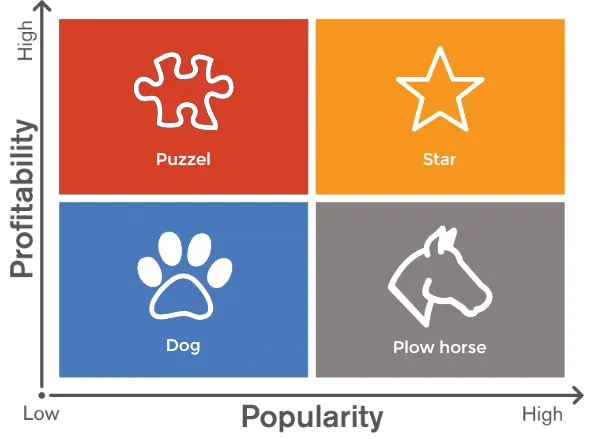
Menu engineering is about managing this mix of stars, plow horses, dogs and puzzles that leads to reduced costs, improved profitability without compromising on customers’ wants. Let’s see how algorithms could help in arriving at the right menu mix.

Make your STARS shine brighter

Algorithms identify Star menu items based on factors such as sales volume, costs, price, margins, promotions, etc. They help you analyze the underlying reason and recommend ways to make the most of these popular and profitable items on your menu. AI platforms recommend:

  • Other locations where these items can be introduced to enhance revenue opportunity
  • Price increase by calculating the likely impact on demand
  • Menu combos with other items that are lower in profitability, using association mining

Let your PLOW HORSES gallup

Algorithms are quick at identifying items that are growing in popularity. Juxtapose this data against its costs and you know whether you are heading towards the left of the balance sheet or the right. Trust the AI to do the magic – menu combos that offsets the low profitability of the item or more dishes with high priced ingredients for economies of scale. You may just end up with Star with AI-based recommendations.

AI solves the PUZZLE

With a 360-degree view of sales, marketing & operations data, AI platforms turn into Sherlock Holmes to find that missing piece of the puzzle. Run the analysis and in a matter of seconds you’ll know why they are not flying off the shelf. Turn the recommendation engine on to increase their demand. Reduce price, introduce an offer or run a campaign, these algorithms have a marketing trick up their sleeve.

Let the DOGS take a walk

While the algorithms are quick at identifying Dogs and recommending their expulsion, human intelligence needs to prevail here. For e.g., Kids’ menu is neither high volume nor highly profitable ut you may want it to stay on the menu.

Optimize QSR menu with Algorithms

Data and Intelligence are the key ingredients in dishing out a menu with the right mix of Stars, Plow horses, Puzzles and Dogs. Advanced AI tells you what’s popular and why. Likewise, it helps you understand the implications of cost and pricing. And this is a dynamic exercise as customer tastes and preferences, economic and social situation, change. With real-time access to data & insights, AI platforms help you balance high and low food costs to garner a reasonable amount of profit margin yet cater to customers’ preferences.

Table Of Contents
Personalized menu with advanced customer insights
Let AI help you identify your Stars on the menu
Make your STARS shine brighter
Let your PLOW HORSES gallup
AI solves the PUZZLE
Let the DOGS take a walk
Optimize QSR menu with Algorithms

Are you killing conversions with obsolete search | checklist

Digital Experience Personalization
Blogs

Are you killing conversions with obsolete search | checklist

Are you aligned with how shoppers search?

Your visitors search in different stages of the customer journey – when they know what they are looking for, when they are not sure and need guidance, or they want to solve a problem, but don’t know how.

1. Exact search terms, e.g. model # in electronics, or complex searches such as ‘red midi dress in size 12 sleeveless’.

2. Search with abbreviations e.g. 16”/ 16 in/ 16 inches OR oz/ ounce.

3. Search with spelling errors, or spelling variations? E.g. hair drier instead of hair dryer, or a typo such as Avacado.

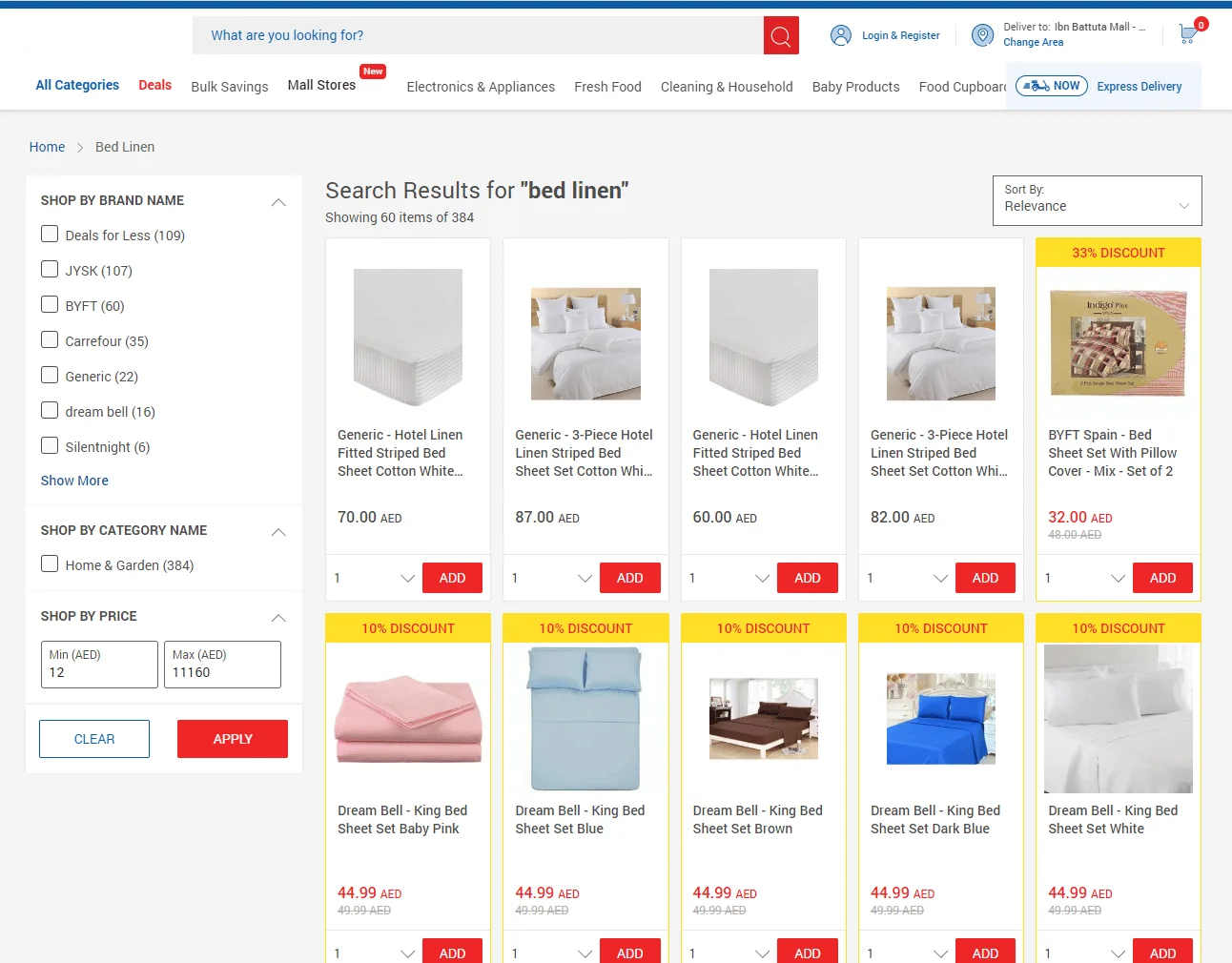
4. Alternative words, such as flip flops instead of house slippers or thongs (yes, you – from Australia), or dress shirt instead of a formal shirt, bed sheet or bed linen.

5. Use plural word forms (tomato/ tomatoes), or use slang, shades instead of sunglasses.

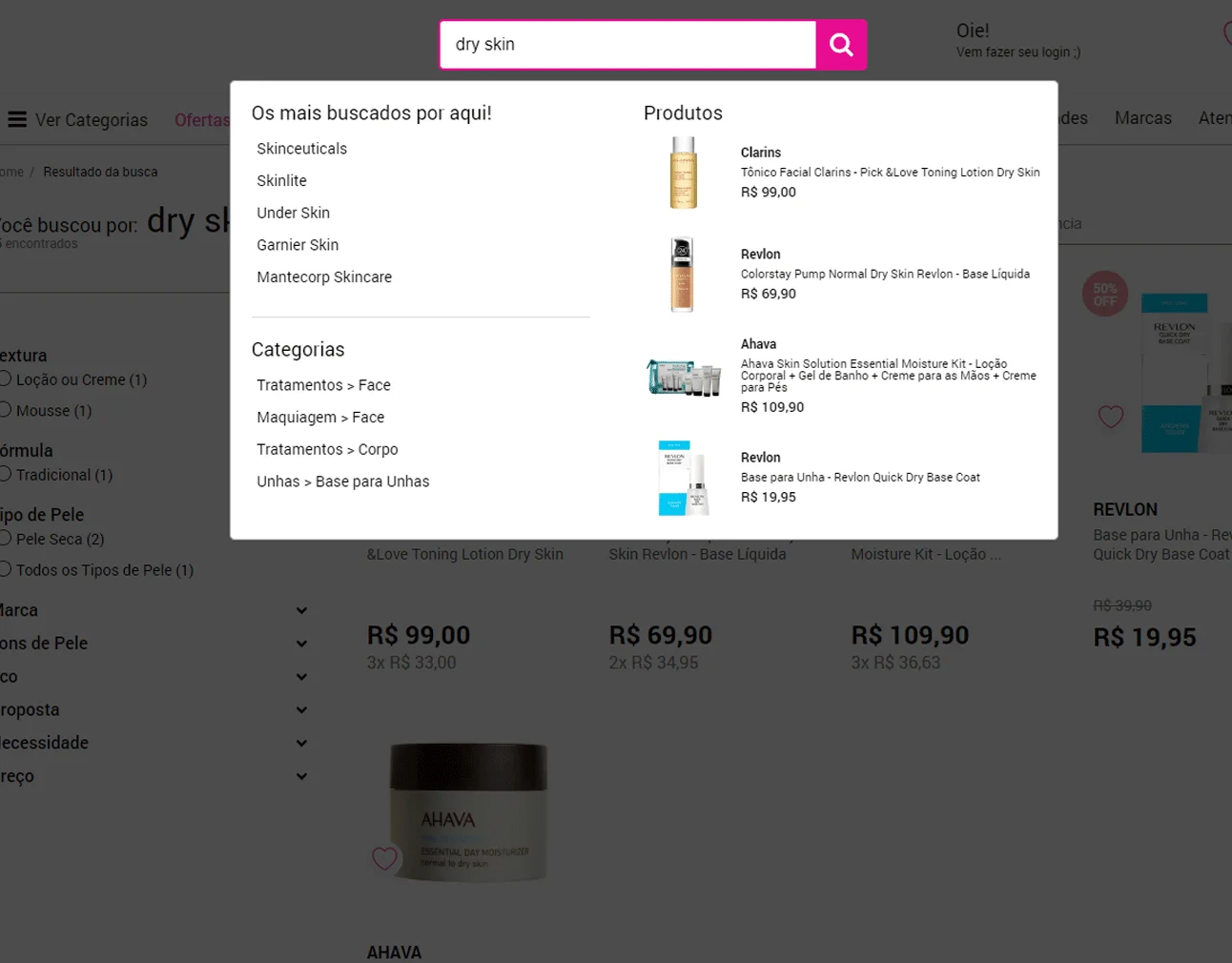
6. Problem based search terms, e.g. ‘dry skin’ instead of ‘moisturizer, or ‘turmeric marks’ instead of ‘stain remover’ or ‘headache’ instead of ‘pills’.

Can you catch important intent signals?

There is a wealth of insights in shopper searches, that can be used for showing relevant results for the individual, and for improving overall results, and reducing zero hits.

7. Some terms are more critical than others – can you recognize a 11” sleeve (11” is important), or organic kale (organic is key).

8. Your shoppers’ collective searches can help you form associations between search terms and products/ categories, without changing product data. Self-learning algorithms can improve results without having to create rules, or working on data attributes.

9. This drives your differentiation – A shopper’s affinity for brands, products, categories or custom attributes such as concern type, color, price become known from their current session as well as history. If you can personalize their search experience using their profile (even if they are anonymous), you will be rewarded with higher engagement, conversions and loyalty.

Are you helping them explore your catalog?

Shoppers are often multi-tasking – they could be distracted or just need assistance with creating a shortlist. This is where search nuances come in.

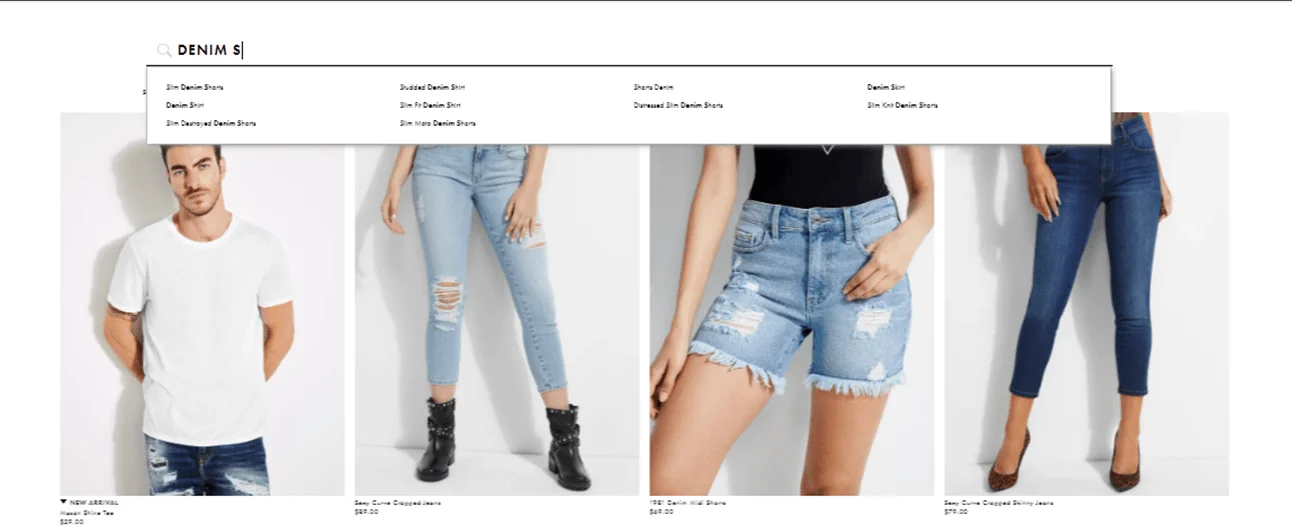
10. As shoppers type, they may need inspiration. With predictive auto-complete similar to  what Google has trained the world on, you can make sure they don’t feel lost.

11. When products need multiple dimensions for selection, contextual facets and filters can help them narrow down their choices.

12. More than 50% traffic is now from mobile, and the limited screen real estate necessitates personalization. Finding the right result on the first page, what RichRelevance calls Findability, is negatively affected, since the user has to scroll more, use filters, and their journey is longer.

The personalized search box promises simplicity to the user, but is a powerful and sophisticated tool that can help marketers and merchandisers boost conversions, while retaining business controls and commitments around private labels, over-stock situations and trade promotions.

Table of Contents
Are you aligned with how shoppers search?
Can you catch important intent signals?
Are you helping them explore your catalog?

Do people really brush their teeth with an Electric Whisk?

Digital Experience Personalization
Blogs

Do people really brush their teeth with an Electric Whisk?

A STRANGE TITLE YOU MIGHT THINK FOR AN ARTICLE, BUT IT’LL BECOME CLEAR LATER…

Many households during the last few months have seen an increase in the amount of home baking going on and ours has been no different. The shouts of “Can I do some baking?” have been coming regularly from my kids, and thankfully a local bakery has been able to keep us well supplied with flour, and a local pub has supplied us with yeast.
The fresh bread and cakes have been a welcome addition to the tea breaks, but a recent broken electric whisk has limited some of the recipes unfortunately, and my search for a new one has in in turn led me to write this piece….

So, in the quest for a new “Electric Whisk” as I call it, I searched online at a few well known department stores for an “electric whisk” and was surprised at the variety of results that came back. I was presented with electric toothbrushes, electric blankets, kettles, headphones and in some cases to much relief some electric whisks! Given that many of the retailers sell the same products, you might think that the results would be similar, definitely not the case.

By far the most bizarre result was when my search entry of “Electric Whisk” was automatically adjusted to “Electric White” and the results shown to me were a white strip light, a desk fan, headphones and an extension lead…..despite me finding a whisk on the site via the navigation menu. Somethings not right there surely!

Now whether you call it an electric whisk, an electric mixer, a hand mixer or a hand whisk shouldn’t really matter, since in nearly all cases I saw the “electric whisk” had some mention of “electric”, “whisk”, “hand“ or “mixer” somewhere in its title, description or attribute data. Nowhere did I see mention of “whisking teeth” or “mixing gums”, or vice versa.

Many retailers have the challenge of creating good product data to enable a good basis for search results, and it was at least good get some expected results from some retailers, or if the results were unexpected it seems some of the retailer recognize that their search might need some support from product recommendations by showing recommendations of “People who searched for “Electric Whisk” also viewed or bought…” and electric whisks were being shown. That is indeed helpful but better if those product were actually within the results.

The latter point highlights how valuable the behavioral data of customers can be in search results. I might be wrong in assuming that a search for “Electric Whisk” that shows “Electric Toothbrushes” in the first row of results is a poor ecommerce search experience, but if the search and personalization technology work together then retailers are able to use the data from what their customers subsequently view and buy after experiencing poor search results to influence the future search results for the better.

By far my favorite search results whilst going about my search for a new mixer was when I performed a search for an “electric mixer” and was shown two electric showers. A sigh of disbelief and some confusion for a second or two before I thought that’s actually ok….however given that I’d been looking in the kitchen handheld appliances category a few clicks before I’d have expected to see a few electric kitchen mixers in the results too since I’d indicated my intentions.

There is no doubt that onsite search is difficult, a lack of consistent data across brands and manufacturers’, and differing customers expectations from the same input, however one of the most powerful sources of data to improve this has to be the data that is generated by your customers….for free in many respects. When retailers can combine this behavioral data with the knowledge and skills of merchandisers then their product discovery optimization will be heading in the right direction to enhance their customers experience.

I’ve not yet purchased my electric mixer, I’m the type of shopper that likes to see, shake, squeeze, tap and inspect a product before purchasing so as long as my chosen retailer is connecting my online activity with my instore purchases then hopefully I will be giving them a little bit of useful data, as well as my cash.

So, although this is only a very small example of an onsite search experience, it’s an example of how the onsite search experience that many retailers are giving their customers is a long way from the actual experience that the customers and retailers desire.

David Lewis, Sales Director, RichRelevance UK

Winning retail with intelligent supplier collaboration

Merchandising and Supply Chain
Blogs

Winning retail with intelligent supplier collaboration

Across the world, we are seeing the issues in a fragile supply chain being exposed, specifically in Grocery & Pharmacy segments as they fall into the essential category and seek faster replenishments.

Today’s crisis scenario has resulted in 40% of retailer members of the National Retail Federation to say that they are experiencing supply chain disruptions due to the coronavirus, with an additional 26% expecting to experience disruptions.

The Lean Supply Chain is Now Anorexic

Grocery retailers have in the past few decades, made their supply chains lean, in a model similar to the automobile industry. As a result, grocery retailers have been minimizing inventory, and delivering “just-in-time” products to shelves, as soon as a product is purchased.

The advantages of adopting this were lower inventory carrying costs, minimal product handling and the need for less storage space. But the downside, being experienced by the world today is that unforeseen surges leave stores in a quandary as inventory is not readily available.

Is Technology the Cure?

Supply chain resilience requires retailers to invest in technologies that offer greater clarity into understanding what goes on within the supply chain. Additionally, retailers such as grocers or pharmacy need to have contingency plans to anticipate shortages created by demand surges or supply disruptions.

Today’s supply chain challenges are multiple according to a Digital Commerce 360 survey of over 300 retailers in mid-March. Supply chain communication topped the list (48%) of actions they’re taking as a result of the coronavirus. Others are contingency planning (34%), hoping to minimize disruptions (32%), monitoring the coronavirus situation in China (23%) and working with their partners to mitigate supply chain risks (22%).

More recently many of the larger retailers have been investing more in supply chain technology in order to reduce forecasting errors, track assets accurately and improve order accuracy.

A report by GEODIS found that only 6% of companies surveyed worldwide had achieved full visibility into the companies that make up the sub-tiers of their supply chain. The complexity we have today makes mapping simultaneously more costly and time-consuming, though it is increasing its importance and beneficial insights.

Let’s look at some of the ways, technology is helping retailers overcome the supply chain gaps during the COVID-19 crisis.

Advanced Collaboration Platforms

Better collaboration with vendors through connected systems can lead to an overall improvement in supply chain resilience. Supply chain collaboration platforms can make it easy to reduce the time spent shipping, receiving, tracking, and compiling order data. When combined with collaborative features and analytics, retailers will find it easier to optimize supply chain efficiencies while mitigating risks.

Integrated Portals for Real-time Information

Real-time data is helping retailers manage their supply chain decisions and be able to focus on the movement of essentials. A survey conducted by the Retail Systems Research in March 2020 amongst qualified retail respondents showcases that 76% of retail winners believe that real-time visibility remains an underlying driver of supply chain performance.

Real-time information can be shared by integrating suppliers on a web-based portal. By using a platform to offer end-to-end visibility, all the stakeholders in the supply chain can have the visibility of on-hand inventory and of changes in product demand.

Expand Supplier Networks Faster

To be able to handle the shortage situation, retailers today have been seeking out more suppliers. But traditionally on-boarding new suppliers and products is a time-consuming process.

Increased global disruption often demands faster decision making. To solve this issue, technology can help create centralized, web-enabled repositories of suppliers, which retailers can access. Suppliers who are up and running can list their catalogues, allowing retailers to locate and identify which suppliers they can work with faster.

The Retail Systems Research reports that the top opportunity for retail success is to improve their forecasting capabilities, along with improving compliance from suppliers. Intelligent search tools and regulatory compliance can be pre-checked when the supplier lists themselves, saving tremendous time and duplication of effort by every retailer the supplier connects with.

Replenishment Automation

A report by McKinsey predicts that automation could accelerate the productivity of the global economy by between 0.8% and 1.4% of global GDP annually. In other words, supply chain automation is both cost-effective and leads to higher profitability.

Enabling integrated systems can offer retailers the ability to assess and automate which key supply chain processes can be automated. With the right supply chain solution, retailers can enable a seamless operation, which then helps automate activities such as inventory replenishment.

Conclusion

The World Trade Organization expects that global trading will fall by between 13% and 32% during 2020, and almost all regions will experience double-digit declines in trade volumes this year due to the pandemic.

The ability to adapt responsively to this reverberating disruption in the supply chain operations will truly separate the winners from the losers during the COVID-19 crisis. Whether grocers and pharmacy companies use this crisis as a wake-up call, remains to be seen.

Table Of Contents
The Lean Supply Chain is Now Anorexic
Is Technology the Cure?
Advanced Collaboration Platforms
Integrated Portals for Real-time Information
Expand Supplier Networks Faster
Replenishment Automation
Conclusion