
Do people really brush their teeth with an Electric Whisk?

Digital Experience Personalization
Blogs

Do people really brush their teeth with an Electric Whisk?

A STRANGE TITLE YOU MIGHT THINK FOR AN ARTICLE, BUT IT’LL BECOME CLEAR LATER…

Many households during the last few months have seen an increase in the amount of home baking going on and ours has been no different. The shouts of “Can I do some baking?” have been coming regularly from my kids, and thankfully a local bakery has been able to keep us well supplied with flour, and a local pub has supplied us with yeast.
The fresh bread and cakes have been a welcome addition to the tea breaks, but a recent broken electric whisk has limited some of the recipes unfortunately, and my search for a new one has in in turn led me to write this piece….

So, in the quest for a new “Electric Whisk” as I call it, I searched online at a few well known department stores for an “electric whisk” and was surprised at the variety of results that came back. I was presented with electric toothbrushes, electric blankets, kettles, headphones and in some cases to much relief some electric whisks! Given that many of the retailers sell the same products, you might think that the results would be similar, definitely not the case.

By far the most bizarre result was when my search entry of “Electric Whisk” was automatically adjusted to “Electric White” and the results shown to me were a white strip light, a desk fan, headphones and an extension lead…..despite me finding a whisk on the site via the navigation menu. Somethings not right there surely!

Now whether you call it an electric whisk, an electric mixer, a hand mixer or a hand whisk shouldn’t really matter, since in nearly all cases I saw the “electric whisk” had some mention of “electric”, “whisk”, “hand“ or “mixer” somewhere in its title, description or attribute data. Nowhere did I see mention of “whisking teeth” or “mixing gums”, or vice versa.

Many retailers have the challenge of creating good product data to enable a good basis for search results, and it was at least good get some expected results from some retailers, or if the results were unexpected it seems some of the retailer recognize that their search might need some support from product recommendations by showing recommendations of “People who searched for “Electric Whisk” also viewed or bought…” and electric whisks were being shown. That is indeed helpful but better if those product were actually within the results.

The latter point highlights how valuable the behavioral data of customers can be in search results. I might be wrong in assuming that a search for “Electric Whisk” that shows “Electric Toothbrushes” in the first row of results is a poor ecommerce search experience, but if the search and personalization technology work together then retailers are able to use the data from what their customers subsequently view and buy after experiencing poor search results to influence the future search results for the better.

By far my favorite search results whilst going about my search for a new mixer was when I performed a search for an “electric mixer” and was shown two electric showers. A sigh of disbelief and some confusion for a second or two before I thought that’s actually ok….however given that I’d been looking in the kitchen handheld appliances category a few clicks before I’d have expected to see a few electric kitchen mixers in the results too since I’d indicated my intentions.

There is no doubt that onsite search is difficult, a lack of consistent data across brands and manufacturers’, and differing customers expectations from the same input, however one of the most powerful sources of data to improve this has to be the data that is generated by your customers….for free in many respects. When retailers can combine this behavioral data with the knowledge and skills of merchandisers then their product discovery optimization will be heading in the right direction to enhance their customers experience.

I’ve not yet purchased my electric mixer, I’m the type of shopper that likes to see, shake, squeeze, tap and inspect a product before purchasing so as long as my chosen retailer is connecting my online activity with my instore purchases then hopefully I will be giving them a little bit of useful data, as well as my cash.

So, although this is only a very small example of an onsite search experience, it’s an example of how the onsite search experience that many retailers are giving their customers is a long way from the actual experience that the customers and retailers desire.
David Lewis, Sales Director, RichRelevance UK

These Days, Every Day is a Black Friday

Digital Experience Personalization
Blogs

These Days, Every Day is a Black Friday

Doubling of online grocery sales. 33% increase in ecommerce. As much as quadrupling of online sales in home entertainment, from streaming services to wine, beer and liquor.

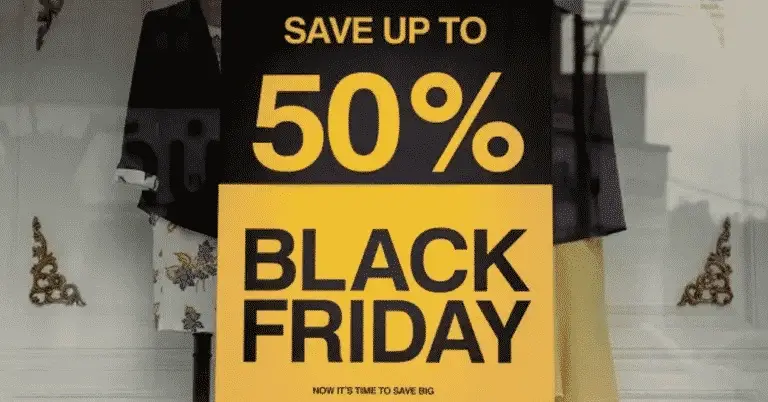
Over the past 8 weeks, RichRelevance(now Algonomy) has witnessed a spike in traffic that mirrors the holiday shopping week around Thanksgiving. Said another way, it seems that now every day is Black Friday.

But can your real-time personalization provider handle this?

In the past few years, we have seen a number of startups that claim to do personalization. They range from simple recommendation engines to AB testing tools to search engines that claim “wisdom of the crowd” functionality. Besides the fragmentation of customer context, the less-obvious “feature” is their dependency on infrastructure from 3rd party cloud service providers.

Unfortunately, in current circumstances, there’s a constant workload and demand for real-time personalization. Startups in this space do not have the ability to manage the exploding variable costs with their cloud providers. They sometimes resorting to underhanded techniques to limit their exposure.

An example of this: a leading competitor in our space was recently struggling so much with spiking costs from their cloud provider, they turned off ecommerce personalization for over 50% of their customers!

Imagine for a second that you are their client…all of a sudden your shoppers start to see generic recommendation strategies at exactly the time when you need personalized product recommendations the most! Adding insult to injury, they will charge you a premium to do what they were hired for in the first place.

Passing those costs onto clients is the only way those software companies have to reconcile their costs month-to-month. Don’t get caught in that trap, or you may find just as your nascent ecommerce business is set for takeoff…rapidly rising costs ground it.

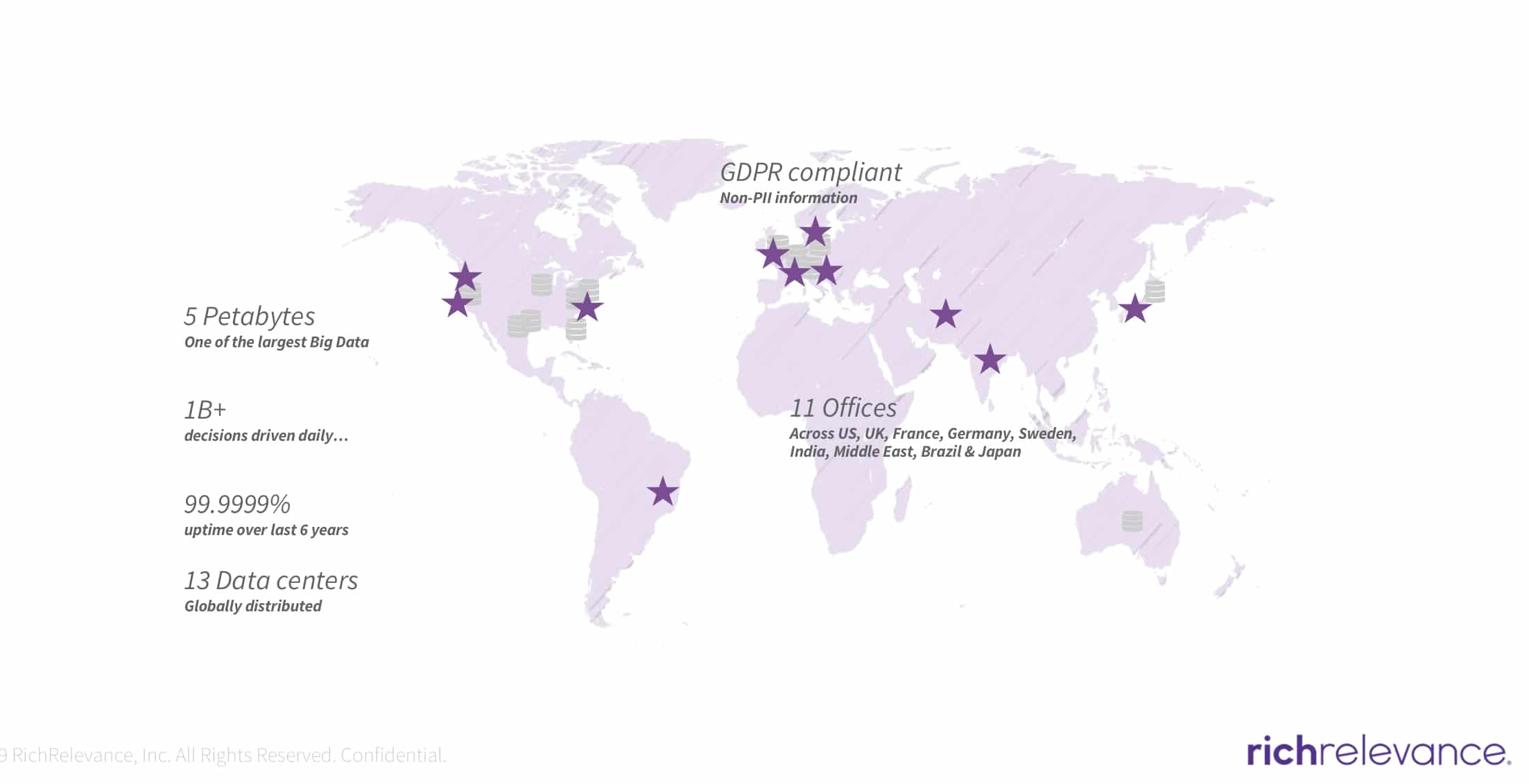
One of the most valuable facets of the RichRelevance platform is that it sits atop 13 geographically dispersed data centers, enabling server response times that are second-to-none in the industry. Further, it enables our IT and Ops teams to scale up and down as internet and shopping traffic ebb and flow. Over the past 12 years, we have responded to seasonal changes and provided 100% uptime during holiday and high traffic time periods.

Bottomline: Do your homework when negotiating or reviewing your software contracts, and be aware of variable costs that are subject to the new real time customer engagement and possibly accelerating–online buyer behaviors. When it comes to relying on your personalization provider during this unprecedented time, you can rest assured knowing that RichRelevance(now Algonomy) will always have your back.

2020: The Year Online Shopping Became a Viral Hit

Digital Experience Personalization
Blogs

2020: The Year Online Shopping Became a Viral Hit

Given the limitations that Covid-19 is imposing on nearly everyone’s lives, who’d have imagined not being able to do our grocery, consumer goods, electronics, entertainment (including restaurant food) shopping from a retail location?

What’s more, there is evidence to suggest that buying habits, once changed, are likely to become permanent. It’s estimated 25% of that buying will now happen online for the foreseeable future.

For example, when was the last time you purchased printer ink at a physical store (versus having it auto-fulfilled by an ecommerce vendor). Or your household paper products, which are increasingly hard to find on shelves. Once buyers find a consumable can be found, purchased, delivered and (perhaps) returned reliably via digital, they are unlikely to ever revert to the prior analog behavior.

This shift is also cross-generational: How many of our parents (or grandparents) just used a local grocery automatic store replenishment on-line delivery service for ordering and pickup / delivery for the first time?

Make no mistake, it’s devastating for retailers in the short term. But unlike the last downturn which was driven by purely financial system weaknesses, this one promises to bounce right back. But will your business be ready and able to serve this new online savvy customer?

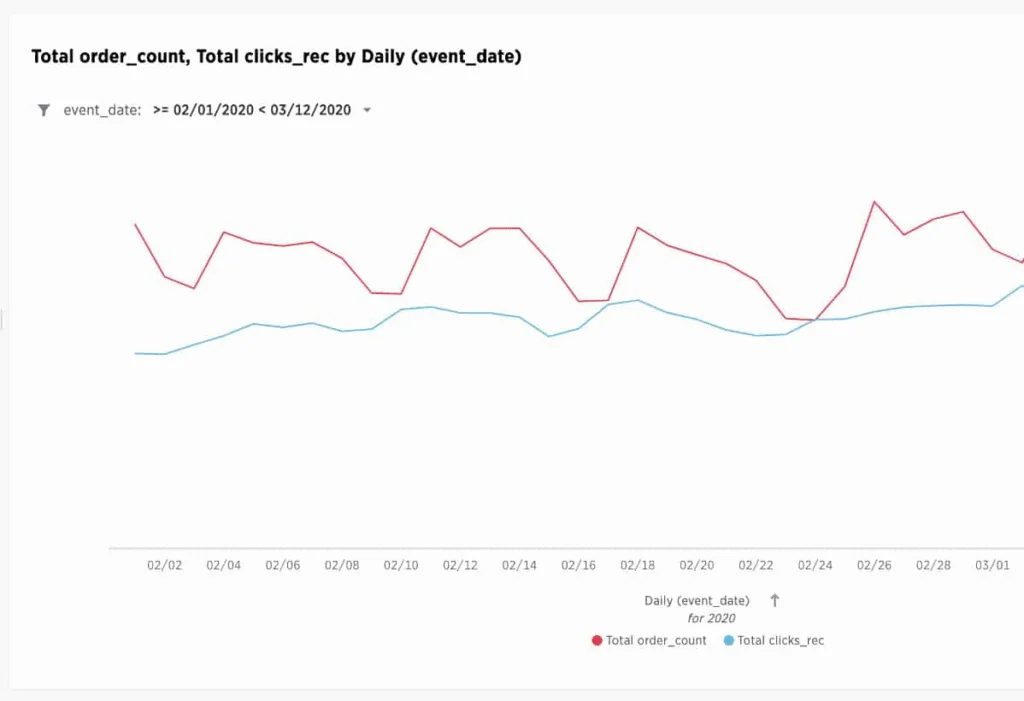
Richrelevance(now Algonomy) customers are responding rapidly. Some are diverting all store inventory to their warehouse and increasing online purchases. Others are anticipating alternative demand and have stepped up their ecommerce personalization efforts. Overall, our platform is seeing increased online activity since the end of Feb.

In short, online ecommerce is no longer a nice-to-have and will very quickly become more than half of our customers’ revenue. It is essential and increasingly, ubiquitous. Are you prepared?

We will continue to monitor and support our customers and theirs, and we will get through this together.

Stay safe.

HyperPersonalization: The Next Frontier – Raj & Mike Ni

Digital Experience Personalization
Blogs

HyperPersonalization: The Next Frontier – Raj & Mike Ni

Personalized experiences are always blissful. Be it a personalized workout routine at the gym or a spa treatment, it always feels like a luxury. Personalization today is not just in terms of including a prospect’s first name in an email directed to them. It is the next step in the era of Hyper-personalization.

In the third session of ‘Perspectives’, a Linkedin live series from Manthan, Raj Badrinath, Vice President, Marketing & Ecosystems and Michael Ni CMO Sales & Marketing of RichRelevance spoke about hyper-personalization as the next frontier, customer experience, and the whole science behind it. Read on to get expert perspectives on personalization, and what scenarios in which retailers and brands are deploying this technology.

Raj: Let me begin with this Michael, what is all the hype around ‘hyper-personalization’? Tell us a little bit about it.

Michael Ni (Mike): So the thing about Hyper-personalization is that we all inherently know about it. When you walk into your general store, for instance, imagine the shopkeeper has already laid aside special meat he just received and he tells you the story behind the meat while educating you about it. By doing so, the shopkeeper has not only made it easier for you but also given you a meaningful experience and helped you learn. This is the perfect example of hyper-personalization.

Raj: We know that the entirety of the Marketing approach has been around Segmentation for the longest time. Would you say it is the same as the personalization or hyper-personalization approach?

Mike: No, Segmentation is not Hyper-personalization. Today, Marketers are still stuck in the old ways of thinking, even though they have more technology to go beyond segmentation. Yes, Segmentation involves AI-driven approaches but is still not about the individual, what they want, what they care about or their intent at that point in time.

Raj: Now that we understand segmentation is definitely not the same as hyper-personalization. What nuances should a marketer look into to understand this difference?

Mike: Frankly, Marketers will have to be at a certain level of planning and abstraction since they need to be thinking about the persona, the content, the journey that the customer is on. Let me give you an example of this. Let’s say I have been investigating all over the internet and stores about quality shirts. So when I actually walk into the store, I am as a customer, far along enough on my journey and do not necessarily need to be educated about it. I just need to buy. A deeper understanding of this journey of a customer is what will help the marketer create a better experience.

Raj: That makes so much sense. So tell me about the consumer’s point of view here. As a consumer, is there any end-state that I can determine in any way?

Mike: Looking back at the example of the shopkeeper that we were discussing earlier in this conversation. The experience was well beyond just buying something from a store. As a customer, since the experience was memorable, the next time that I think of buying something, at the top of my mind will be that shopkeeper and the experience of buying that product.

To understand the kind of experience and relationship brands are vying to build with their customers, let me give you an example. Imagine you walk into a grocery store and you are given a cart with a screen that lists items for you. So as you move ahead, you pick what you want and tick things off your list. Based on what you pick, the system uses the information to build a profile and personalizes the experience for you. When you leave the store you get a reminder of the things you may have missed. This is the kind of customer interaction that brands are increasingly trying to develop with their customers.

Raj: All of this hinges on data. What happens in the case of customers who visit the website for the first time and we don’t know anything about them?

Mike: It’s a perfect question. When a person visits your website even if it is the first time there is a tremendous amount of information available already including where they came from and what device they are using. Take a restaurant for example that does not necessarily know all its customers. With the first couple of orders placed the restaurant tries to recognize who the individual is and builds a profile. Similarly, with every click or choice, a customer makes online helps build a profile right from the first visit to the website. That is how a customer moves from being someone who is completely anonymous to someone who is showing behavior hence giving you the opportunity to personalize.

Raj: Let’s talk about the AI now. Netflix, for example, is considered one of the masters of hyper-personalization. What aspects of it are common and deployable in other customer industries?

Mike: Let’s take Netflix first. I think it is important to talk about the marketing approach and also the technology you use with the algorithm. Netflix uses personalization extensively and uses every opportunity to present its customers with the right content. It lets customers consume content in the way they prefer instead of bombarding them with a hundred irrelevant options. Another example is Google which uses an Ensemble-based approach. This approach uses multiple learning algorithms to get better predictive performance. It is important for any business to understand which algorithm is working where in what part of its jo

Hyper-personalization is a technology that makes it easier to do things that are otherwise manually not even practical. This technique allows you to focus on the intricate details of your customers that are not available while us Experience. This solution combines a Customer Data Platform, Retail Marketing, and Merchandising solution, and Real-time Personalization powered by advanced data science and algorithms. And traditional personalization of their data. It really is the next big step in marketing!