
4 Open Time Personalization Strategies for Restaurant Engagement

Digital Experience Personalization
Blogs

4 Open Time Personalization Strategies for Restaurant Engagement

Is email marketing dead for restaurants? Hardly.

With open time personalization of email content, quick-service operators can delight their customers with contextually relevant, hyper-personalized engagement in real-time.

With social media on everyone’s radar, has email as a marketing channel become obsolete? The answer is an emphatic “no.” With hyper personalization, email is still one of the most effective marketing tools that quick-service restaurants can use to acquire and retain customers. Thanks to open time personalization, the quick-service sector has upped its game and the customers are loving it.

However, the mantra to hyper personalization is how you get your act of algorithms right—that is having the right content at the right time and in the right place. For that “right” everything, quick-serves need to know who their customers are, what they are looking for, when they want it, where they want it, and how they want it. Open time personalization is all about 4Ws and 1H.

Individual customer behavior data is critical to open time personalization. The base is a customer data platform (CDP) which has demographic, transactional behavior information of the customer, all sourced from different platforms (point of sale, third party data, CRM systems, website, mobile app, etc). Algorithms take over and curate information about customers to create one comprehensive profile of customers for further downstream analysis from where one can drive ai email personalization.

Open-time hyper-personalized email campaigns are highly dynamic, where the dynamic content personalization in the email is contextually personalized, not at the time it’s pushed to the receiver, but at the time he/she opens the email. Essentially, it means that if there has been any change between the time the email was sent and opened, that impacts what is published in the email, then the change is incorporated to make it relevant to the minute of email opening.

While it is personalized when it is sent to the customer, it gets updated with the latest information based on any transaction that has happened post sending email or there has been a change in the offers or availability of the product. When a recipient opens the email, the email client sends a request in real-time and the personalization platform, using its algorithmic intelligence, pushes the most recent and relevant content directly into the email template.

Real-time recommendation

To illustrate, a quick-service restaurant sends an email offer with a discount on Peri Peri Chicken at 7 a.m. to one of its regular customers, Lily, who during the day has browsed for Crispy Fried Chicken. She opens the email by 2 p.m. and sees an offer on Crispy Fried Chicken. Voila! That is what Lily was looking for and to boot there is a discount offer, exclusively for her. This real-time product recommendation may probably get the quick-serve a happy customer who, again, may look out for such deals going ahead.

Real-time inventory

Not just that, the real-time inventory updates feature makes changes or updates to the menu at the time the customer opens the email. For instance, the quick-service brand sends Robert an email at 9 a.m. on a combo offer (Veg Extravaganza and Wedges), but Robert only opens the email at 3 p.m. and the offer has changed from Veg Extravaganza to Veg Delight (also Robert’s favourite) and Wedges as the quick-serve ran out of the item. This real-time inventory update is win-win for the restaurant as well as the customer.

Real-time price and offer update

Not just that, the real-time inventory updates feature makes changes or updates to the menu at the time the customer opens the email. For instance, the quick-service brand sends Robert an email at 9 a.m. on a combo offer (Veg Extravaganza and Wedges), but Robert only opens the email at 3 p.m. and the offer has changed from Veg Extravaganza to Veg Delight (also Robert’s favourite) and Wedges as the quick-serve ran out of the item. This automatic store replenishment update is win-win for the restaurant as well as the customer.

Weather-based recommendations

At 7 a.m. the weather at San Jose was bright and sunny. Grill & Chill sent an email promotion for their coolers and salads to their regular customers. By 9 a.m. it began drizzling and the weather got a bit chill. With open time personalization technology, Grill & Chill could instantly change the offers to Soup & Bread to those who opened the mail at 10 AM.

With open time personalization of email content, quick-service operators can delight their customers with contextually relevant, hyper-personalized engagement in real-time. This enhances customer experience, offer take up, conversion and lifetime value. According to eConsultancy, 64 percent of consumers expect companies to respond and interact with them in real-time and it is happening. AI algorithms make this happen with real time customer data profiles that activates audience and segments and then pushes that to personalization engine for 1-to-1 personalization via omni channel orchestration tools.

The article first published in QSR Magazine

Real-time recommendation
Real-time inventory
Real-time price and offer update
Weather-based recommendations

Five Personalization #EpicFails That Kill Conversions

Digital Experience Personalization
Blogs

Five Personalization #EpicFails That Kill Conversions

Based on real eCommerce and marketing examples that tell us what not to do

I thought ‘Hi First_name’ was the worst nightmare for a marketer who’s trying to seem like they have really crafted a message exclusively for the recipient. I was wrong. I hadn’t come across these epic fails that not only cost a conversion or sale, but can negatively impact brand perception.

Superficial personalization is common, but most customers can see through it and find it annoying at best and offensive at worst. Real relevance, on the other hand, is constantly learning and truly individualized. It requires a nuanced understanding of customer preferences, and results in a frictionless, enchanting shopping experience that drives repeat purchases and customer lifetime value.

Get the commerce personalization idea library with 20+ unique examples to help you grow digital revenues and engagement.

Here’s a look at some personalization fiascos. Are you guilty of any of these?

1. Obviously irrelevant search results

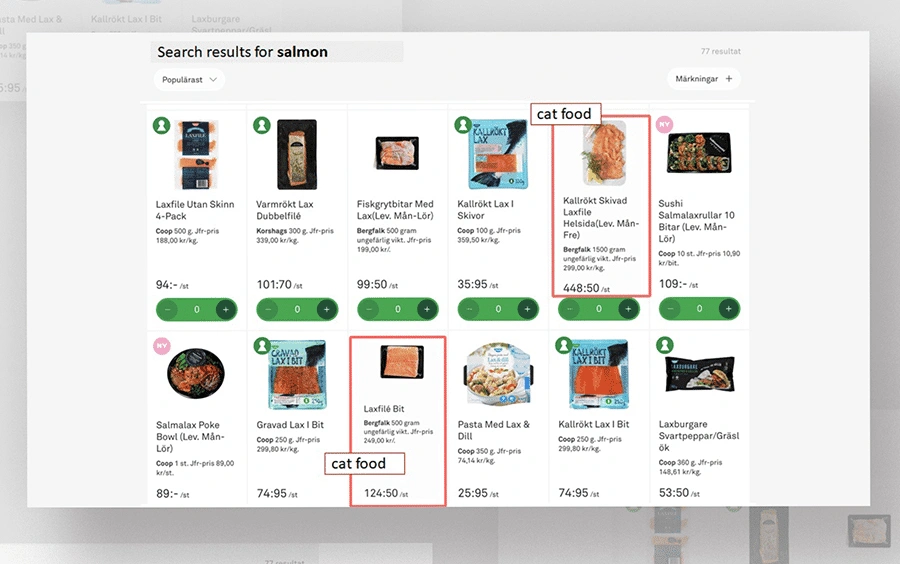
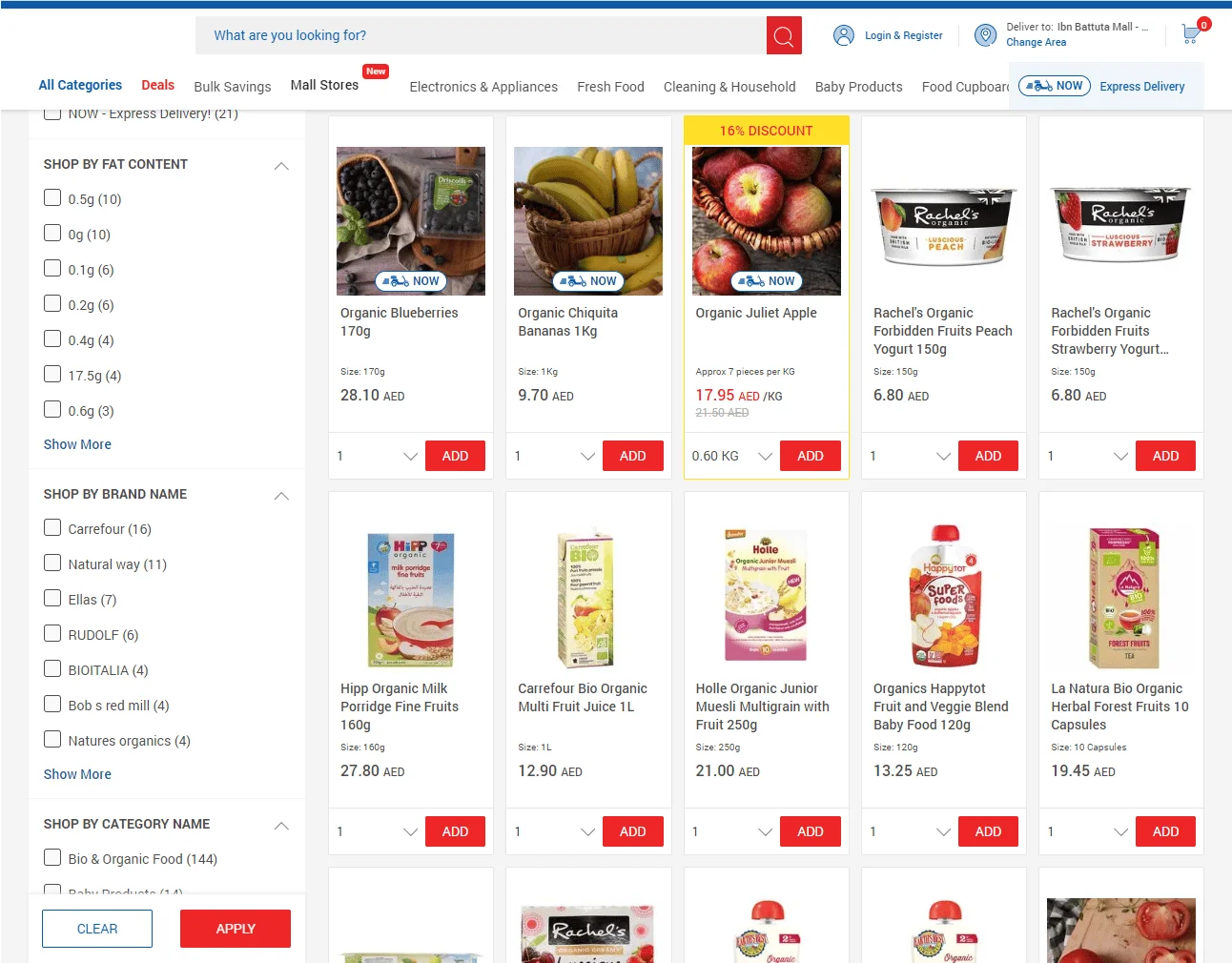
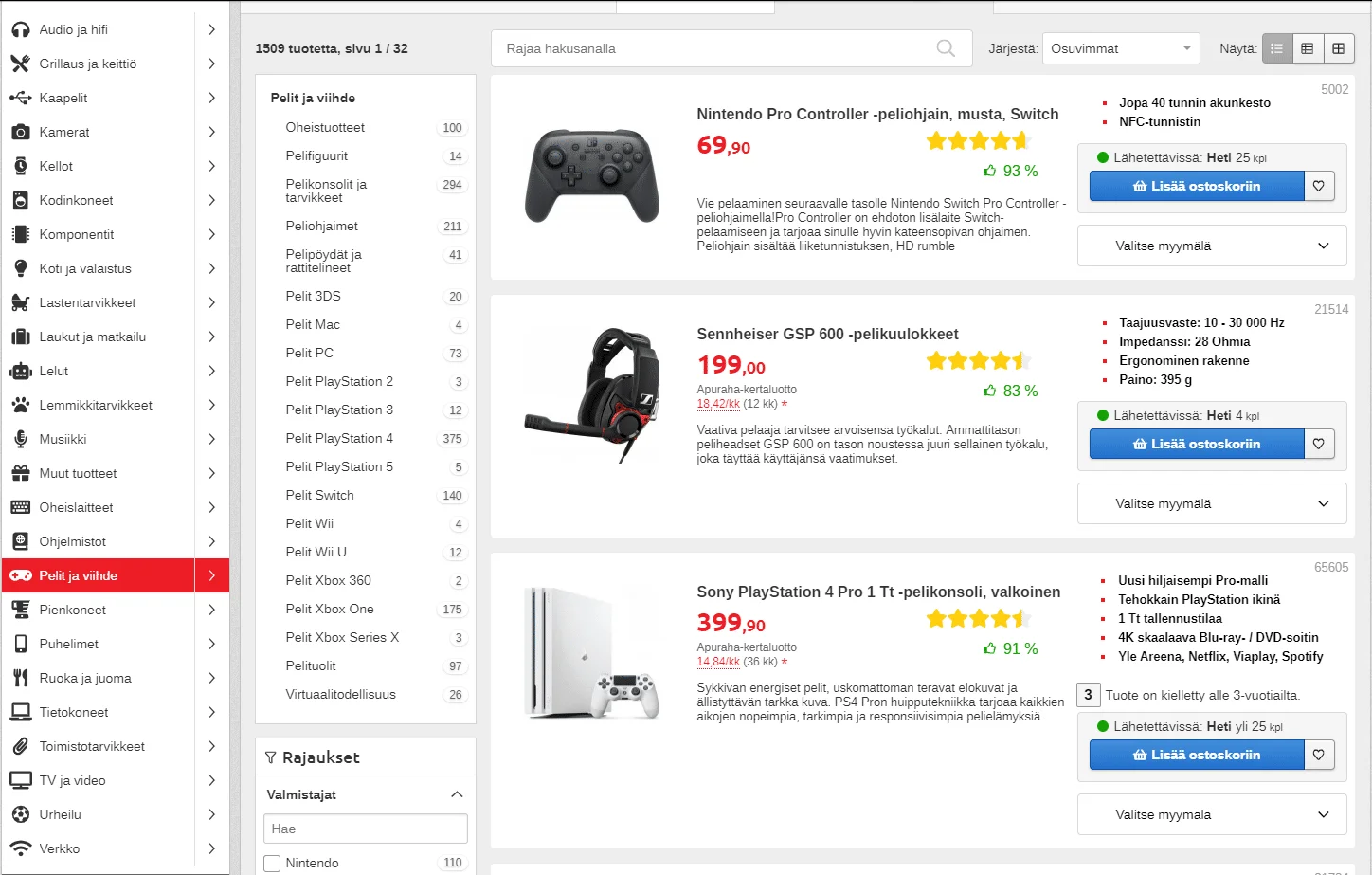
Cat food shows up in search results when I search for salmon.

The likely cause for this is product metadata that contains the word ‘salmon’, therefore being picked up by the search engine as a relevant item. It’s a mammoth task to ensure high quality product data, but there is a smarter way to solve this problem.
By using machine learning algorithms, search queries can be aggregated and associated with actual views and purchases, and those with higher confidence scores are indexed and shown to future shoppers using that search term. In this example, since visitors view and buy salmon (and not cat food), those products are boosted for future searches of salmon. We call this wisdom of crowd based learning, that does not require manual rules and synonym adding.
2. Bad product recommendations, unrelated to the seed product

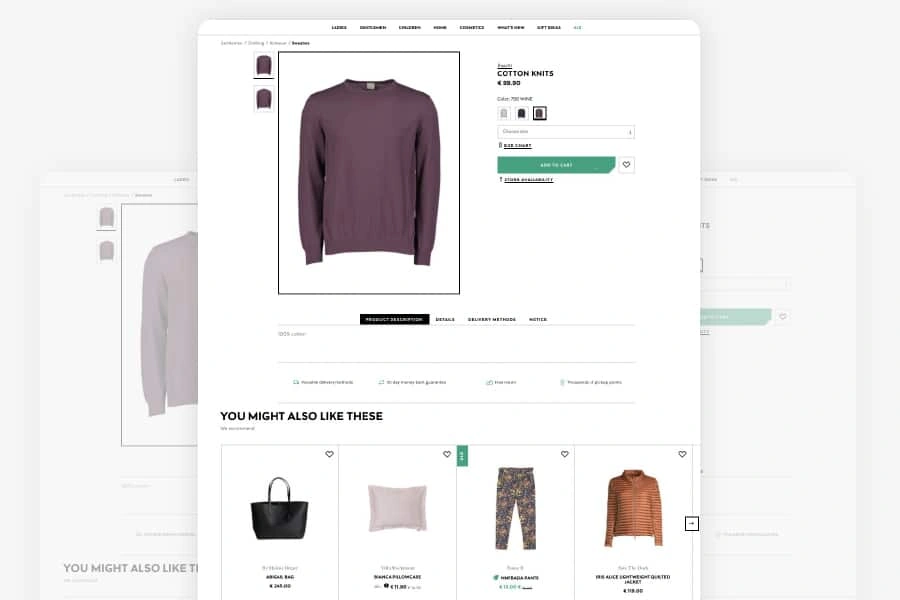
For a men’s sweatshirt, the recommendations on product page (PDP) include women’s handbag, women’s jacket, and kids pants.

The likely cause for this is using a traditional, common ‘people who bought this also bought’ strategy that clearly isn’t working, as purchases made over time are unlikely to be complementary. Instead ‘bought together in the same order’ is a strategy more suited for compatible cross-sell.

3. No results for a product available in the catalog

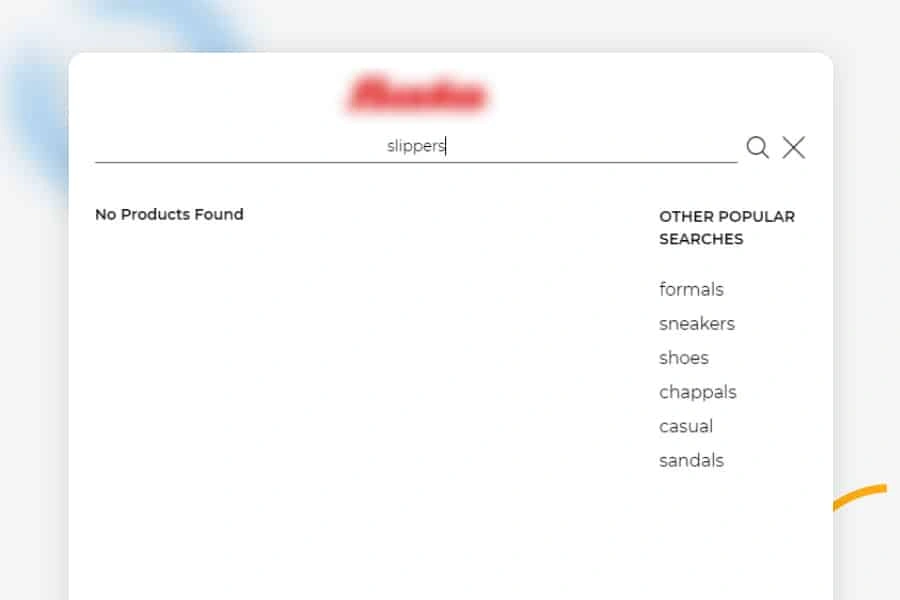
When I look for ‘cutlery’, the webstore returns a no-results page, even though they have cutlery in stock.

The problem is that dictionaries and synonyms aren’t set-up, and the search engine isn’t learning from actual shopper searches. The catalog uses the terms ‘silverware’, ‘forks and knives’ to refer to the same product.

This is a common problem across retail verticals.
In another instance, a search for ‘flip flops’ gets me relevant results, but it does not work when I search for ‘slippers’ or an Australian searches for ‘thongs’ (Yes, I spent some time in Australia, and that’s their term for flip flops!).

4. Spray and pray marketing, no personalization

I’m inundated with emails, messages, notifications that I never end up opening.

Many marketers are stuck in the 90s – they either lack the ability to target customers, or are constrained because their channels work in silos. Most have progressed to digital channels, but are blasting every communication to every customer on every channel – email, app push notifications, direct mail, SMS. Their inability to cap the total number of touches is of course overwhelming for the customer, and the result is them hitting unsubscribe, turning off notifications, and blocking.

5. Over-personalization – the belief that the more you personalize, the better the customer experience

We’re all for relevance and tailoring experiences for an individual’s specific needs. However, know that there is an optimum level beyond which personalization can become restrictive and prevent exploration, giving the impression that there isn’t anything new to consider.

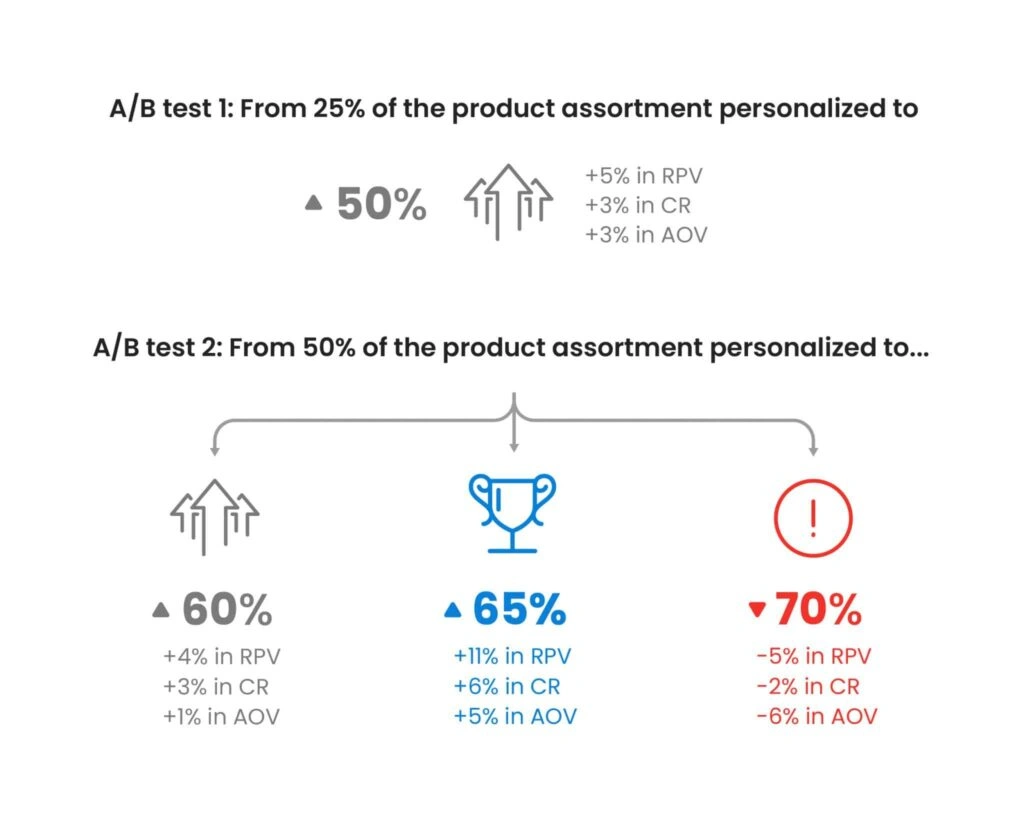
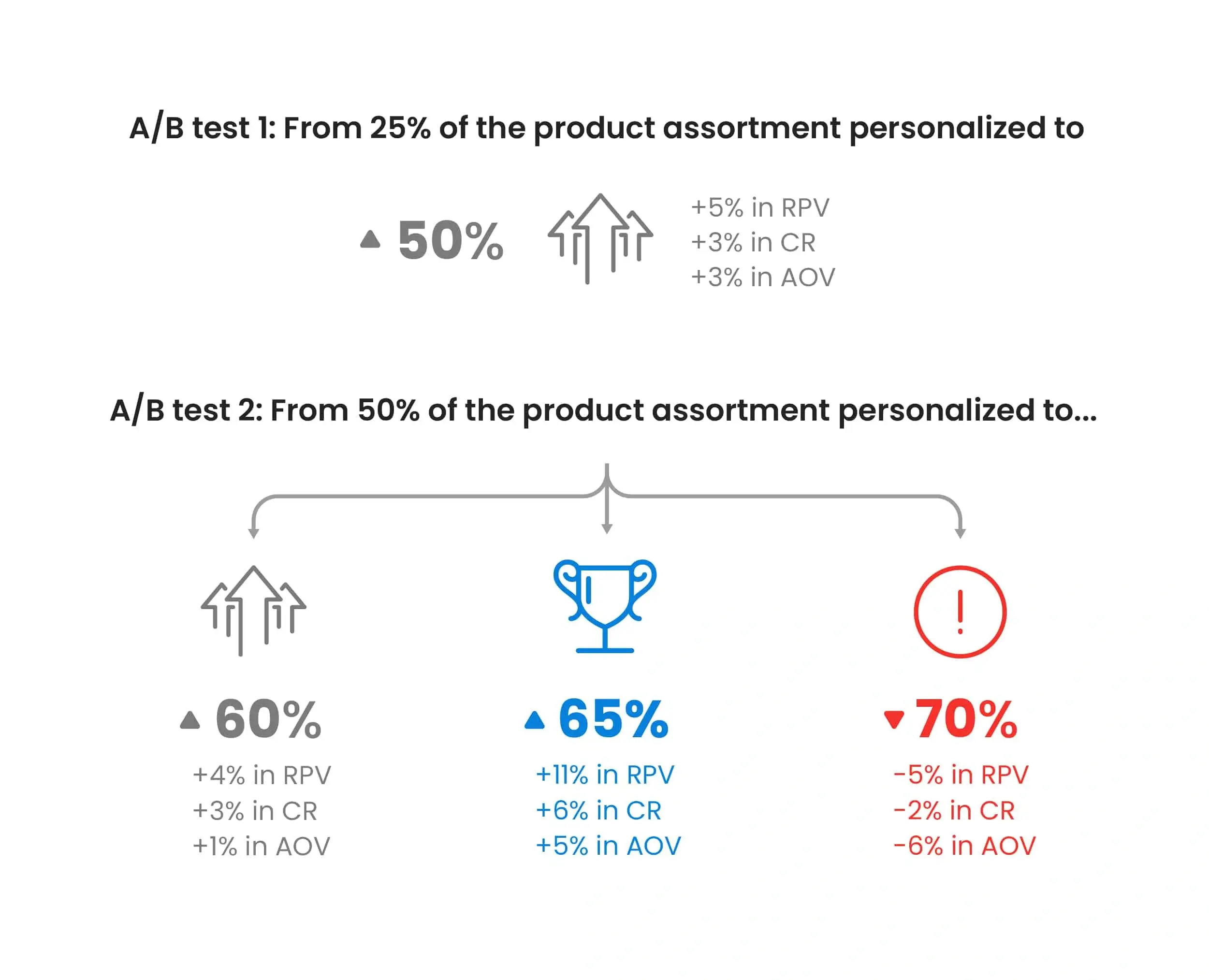
One of our clients found their sweet spot at 65%, and discovered that increasing personalization to 70% on their commerce store resulted in a 5% drop in revenue per visitor and 6% lower average order value.

Read more about over-personalization and findings from testing by a fashion marketplace

What to do next

Wondering if it’s possible to get customer experience right even as you deal with expanding catalogs, complex shopper journeys, demand and supply shocks, and shorter attention spans? We’re here to help.

Get this made-for-retail personalization idea library to learn about new use cases that are helping retailers and brands improve digital conversions, grow basket sizes, and boost engagement.

Table Of Contents
1. Obviously irrelevant search results
2. Bad product recommendations, unrelated to the seed product
3. No results for a product available in the catalog
4. Spray and pray marketing, no personalization
5. Over-personalization – the belief that the more you personalize, the better the customer experience
What to do next

Algorithmic Retail: A Formula for Marketers to Connect with Customers

Digital Experience Personalization
Blogs

Algorithmic Retail: A Formula for Marketers to Connect with Customers

The last year has witnessed transformative changes in the way retail works. The industry experienced a sudden exodus to digital—an increase in e-commerce, mobile apps, BOPIS (buy online, pick up in-store), social commerce. Loyalty went out of the window, with customers switching to brands and products based on availability and need. Customer preferences are evolving—brand loyalty is driven by shopping experience mainly online, high-value customers suddenly became value-conscious and offer-driven shoppers, healthy products are outdoing the traditionally popular brands and items, customers are reading beyond regular product description to understand how responsible the business is, and many such factors are influencing customer purchase decisions and behaviors.

Add to this intense competition not just from within the industry but also from outside forcing them to rethink their business models—from physical stores to e-commerce, DTC, BOPIS.

Lines of cars parked in front of stores, filled with customers waiting in their vehicles for items they have purchased online. Consumers taking their business from one store to another in search of a better, more personalized shopping experience, faster delivery, or the satisfaction of finding the items they want without driving from location to location. Retailers scratching their heads ever harder about how to stock their shelves, grappling with product shortages, and fighting competition from their market as well as from other market segments.

Insider Intelligence estimates that U.S. shoppers spent $72.5 billion via click-and-collect in 2020, accounting for 9.1 percent of all e-commerce sales. This year, those figures will increase to $83.5 billion and 9.9 percent.

Traditional retail sales have declined but e-commerce has seen a 129 percent year-over-year growth in the U.S.

Customers are becoming increasingly demanding. They are no more satisfied with fast service; they expect instant. Retailers sending personalized ecommerce experience offers via email the next day of purchase was considered fast. That’s not good enough—they want brands to provide contextually relevant experiences and to connect with them in the moment.

Customers are becoming increasingly demanding. They are no more satisfied with fast service; they expect instant. Retailers sending personalized offers via email the next day of purchase was considered fast. That’s not good enough—they want brands to provide contextually relevant experiences and to connect with them in the moment.

How then do marketers in the retail industry cope with this pace of change? It is no secret that the retail industry must extend its frontiers from analytics to artificial intelligence and algorithms. It is the cornerstone for marketers to create a differentiated brand experience and win the long-term race for customer loyalty. And it is the cornerstone to grabbing both customer mindshare and wallet share.

Algorithmic Intelligence Can Boost Personalization

Algorithms helps retailers better understand customers, individualize customer experiences, and effectively engage customers in an omnichannel manner. As mentioned earlier, customer tastes, preferences, and behaviors are evolving fast. AI can help marketers understand these changes as they happen and connect with customers in a relevant manner. For example, owing to the pandemic, the time-of-day preference to order a meal changed from lunch to dinner for a pizza chain. There was an increase in orders for evening snacks, and weekend lunch became more popular. Pizza chains that caught this change early on were able to make a quick change to personalize based on the menu, channel, and open time personalization preferences. Some of them enjoyed more than 30 percent increases in conversion rates and about 10 percent increases in average order value and purchase frequency with personalized interaction powered by algorithmic intelligence.

Another example is of a grocer who was able to identify certain high-value customers slipping to low-value owing to the impact of the pandemic, with basket value going down by more than 25 percent. Algorithms helped identify these granular segments, and by using an AI-powered recommendation engine, the grocery was able to push the right offers to the customers in this segment based on their purchase history (market basket and affinity analysis), reversing the trend and improving the lifetime value of the customers.

Real-Time Customer Engagement Driven by AI

With customer data platforms (CDPs) that have built-in algorithmic intelligence, retailers can engage with customers in a relevant manner in real time. CDPs enable streaming data ingestion and real time customer segmentation creation, which is then activated in real time for personalized interaction with the customer instantly.

Personalizing products in the catalog based on what the customer is searching for on the ecommerce search site to responding to a customer’s Instagram stories on the shoes she bought from a certain brand, AI enables real-time personalization for retailers.

Unifying customer’s behavioral and transactional data across touchpoints and tailoring journeys for every customer based on deep insights are must-have capabilities. Real-time decisioning intelligence helps predict customer needs and modify the journey to meet taste or behavioral changes. Algorithms and AI empower retailers with tools to drive real time customer engagement through the customer’s shopping journey in the channel of their choosing—mobile, web, email, or text—delivering up-to-the-minute personalized product recommendations based on customer behavior, location, etc.

Consistent Engagement Across Channels

Today, customers are spoiled with choices in the plethora of channels they have for shopping and learning about a brand. To be customer-centric is to connect with them where and when they would like to engage with you. AI-powered platforms for omnichannel orchestration do just that—help retailers know as soon as a customer arrives on one of their channels and engage with them right there.

If regular grocery store customers decide to download the grocer’s app and make a purchase, messages, offers, and social proof messages are customized based on their past purchases at the store, delighting customers and enticing them to come back.

If a customer forgets to complete a transaction, an SMS is sent to the customer reminding her to do so. A near sure-shot way to increase conversion rates.

By helping retailers understand their customers’ behavior, tastes, and preferences, algorithms deliver improved customer satisfaction, loyalty, and lifetime value—the right formula for sustainable business growth. AI algorithms enable accurate, triggered email marketing campaigns, thereby opening doors for new revenue-generating opportunities and minimizing spending on ineffective promotional vehicles while helping retailers scale as they grow.

The future looks even brighter with the infinite possibilities and seismic shifts that AI brings for retailers—virtual stores, live streaming, magic mirrors, and more. Challenges and roadblocks such as data fragmentation, changing customer expectations, heightened competition, and newer channels mushrooming will continue to appear. Algorithms will help retailers adapt and pivot, with customer at the center of it all.

The article first published in Destination CRM

Table of Contents
Algorithmic Intelligence Can Boost Personalization
Real-Time Customer Engagement Driven by AI
Consistent Engagement Across Channels

How eCommerce Search Personalization Improves Product Discovery

Digital Experience Personalization
Blogs

How eCommerce Search Personalization Improves Product Discovery

Lessons in eCommerce search from a major online retailer

If you’re as picky as I am, you probably spend a lot of time researching several products to ensure you make the best decision. But when was the last time an eCommerce store showed pertinent information that helped you make a purchase decision?

This happened to me some time ago when I was on an online store to find a pair of noise-canceling headphones. I used the search bar and was pleasantly surprised to see a headphones comparison article pop up, in addition to relevant headphones. Thanks to the timely and relevant article that showed up, I was able to speed up this process.

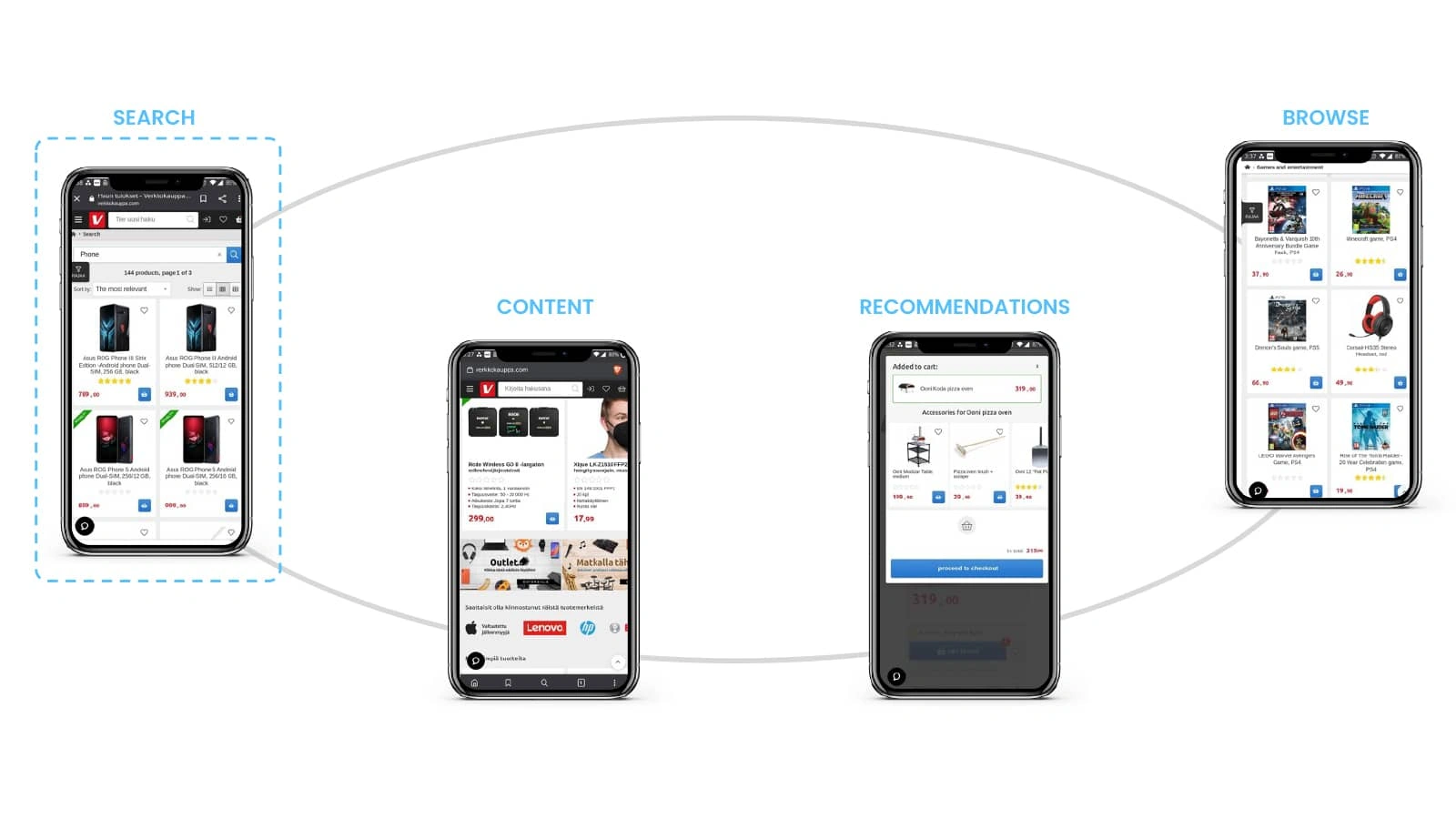
Most businesses think of eCommerce personalization only in terms of product recommendations. However, it’s equally important to personalize other key touchpoints in the online shopping journey — search, browse, and content. Doing so allows for a more holistic customer experience, which translates to increased conversions and revenue per visit. eCommerce search is increasingly becoming a key pillar of CX.

Fig 1. Touchpoints across the eCommerce shopping lifecycle

Why? For one, shoppers who search convert 3x more than those who don’t. This has to do with the fact that people who use search have an express intent of what they want to buy.

Personalization search ecommerce should kick in as a shopper types their search query — showing products that they are more likely to be interested in based on their individual behavior and known preferences. But before getting to personalized results, the basics need to be in place, and this requires effort and is not without its challenges.

Let’s look at some common challenges with traditional search engines through the eyes of one of our clients: Verkkokauppa.com. Verkkokauppa.com is Finland’s most-visited online retail store with 65,000 SKUs in 26 product categories.

Challenges with Traditional Search Engines

1 Inability to Handle Product Data Issues

Traditional search engines primarily rely on product metadata and descriptions to display results.

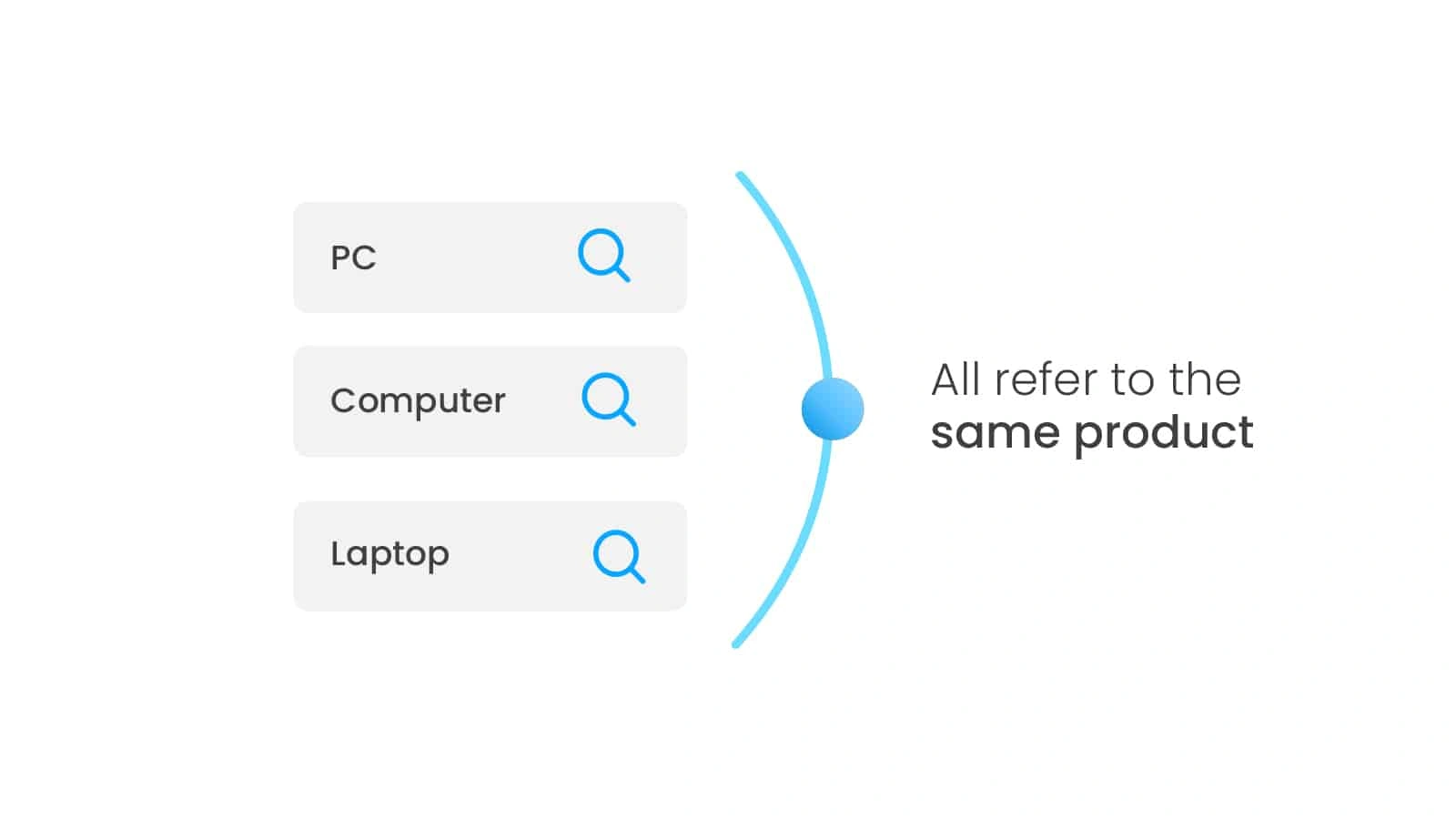
It is quite rare for a shopper to make precise, descriptive search queries. For example, a person might search for ‘computer’, which is an umbrella term that could refer to a PC or a laptop. Even ‘laptop’ is a rather broad search term, as there are various categories like Notebook, Ultrabook, Convertible, and Netbook. In such cases, the search engine needs to work with limited information and decide what to show the shopper.

Fig 2. An example of search queries that refer to the same product

To overcome this, developers need to create synonyms to match products to specific keywords. However, this is a very time-consuming approach, and sustaining it just isn’t practical.

2 Irrelevant Search Results

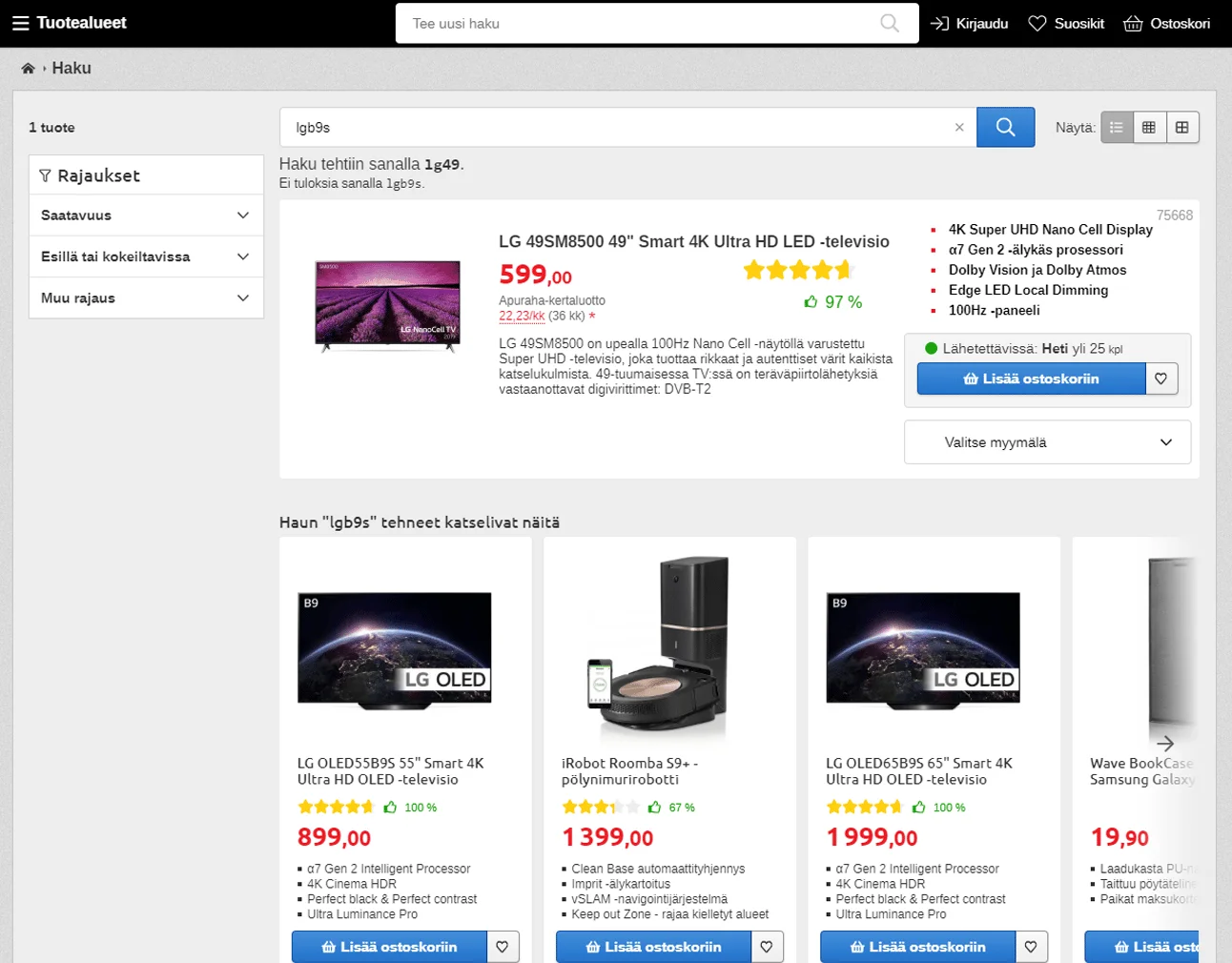
Our client also recalled an experience when he searched for ‘iPad’ because he was looking for, well, an iPad. But the initial results showed products like iPad sleeves and other accessories — items he didn’t need. He had to scroll further down to find the actual product. For a traditional best ecommerce search engine, these results are technically correct because their product metadata contains the word ‘iPad’, but the results are not relevant to the shopper’s current need.

Fig 3. Lack of relevance in search results

3 The No-results Page

Another common issue is shoppers mis-typing the product or model name, leading to bad search results. But what’s worse is the dreaded ‘No results’ page. When a shopper sees this page after a search query, they have basically hit a dead end. This is bad for business. It’s important to always show relevant alternatives even if the shopper’s desired product isn’t available.

Download Personalized Search Case Study

Época Cosmeticos Pivots to Individualized Shopper Experiences, Improves SEO with Personalized Search, Content and Recommendations.

Download Now

How Verkkokauppa.com Managed Product Data Issues and Improved Search Relevance

Let’s see how Verkkokauppa addressed the aforesaid data issues with self-learning, personalized search.

Anton Paasi, Head of eCommerce at Verkkokauppa.com, discusses the potential of eCommerce Search at ADA Global Personalization Summit 2021

Wisdom of the Crowd

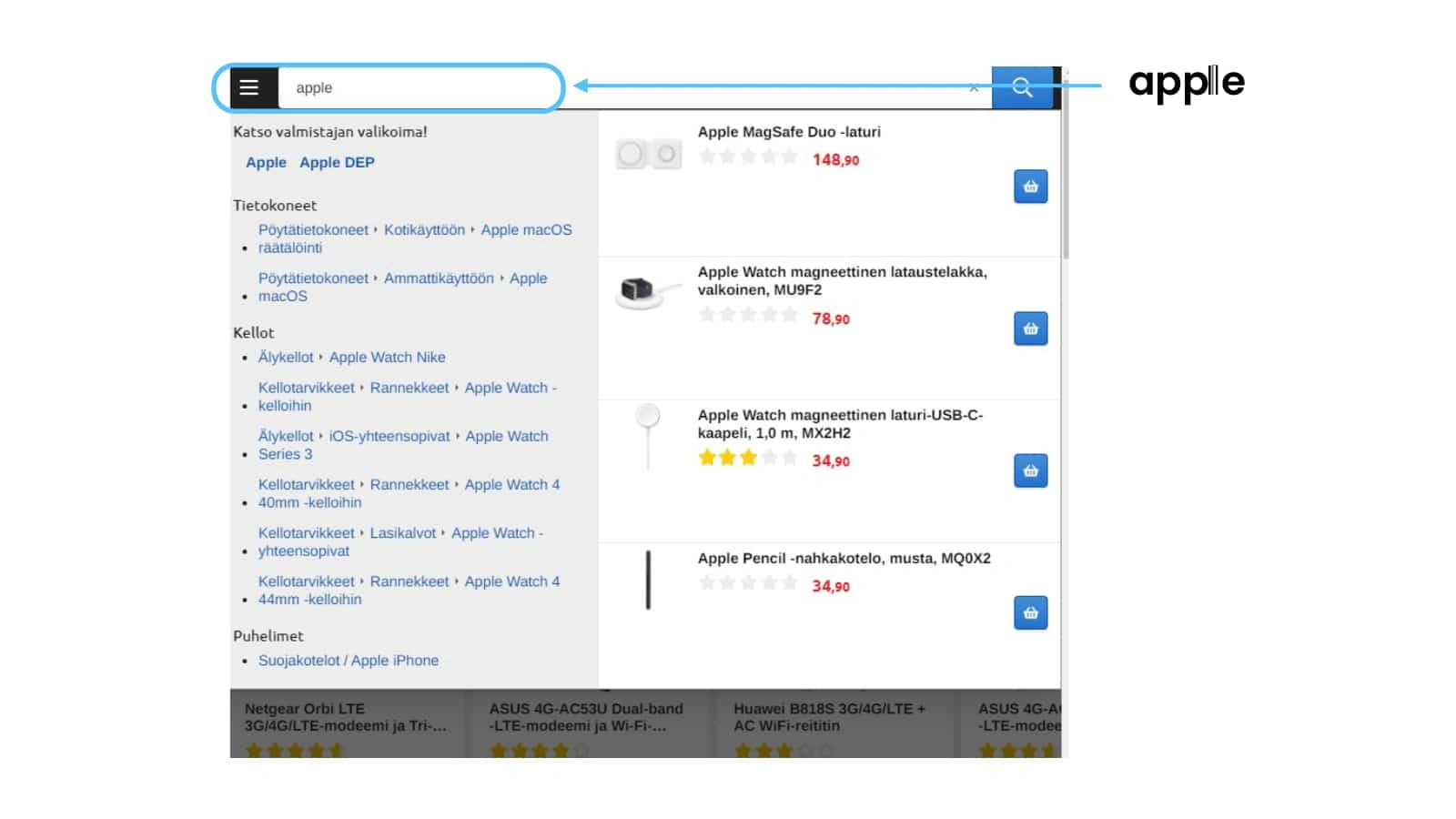
When a shopper searches for ‘Apple’, the results could display every Apple product available. But is that relevant to the shopper? Perhaps not. One way of addressing this is to look at the collective behavior of shoppers after they searched for ‘Apple’ and tune the results accordingly. This is the essence of what’s known as Wisdom of the Crowd (WoC).

WoC uses a Machine Learning algorithm to learn from the entire shopper population, their queries, and what they view or purchase subsequently. And the results are, more often than not, accurate.

In a recent conversation, Verkkokauppa.com shared how leveraging WoC helped them bring relevance to the results when the search queries were as short as one word.

Take the example of the word ‘lamppu’, which is Finnish for a light bulb. The issue with the word ‘lamppu’ is that it’s also used as a compound word for several categories of lamps — such as ‘taskulamppu’ which means a torch, and ‘älylamppu’ which refers to a smart lamp.

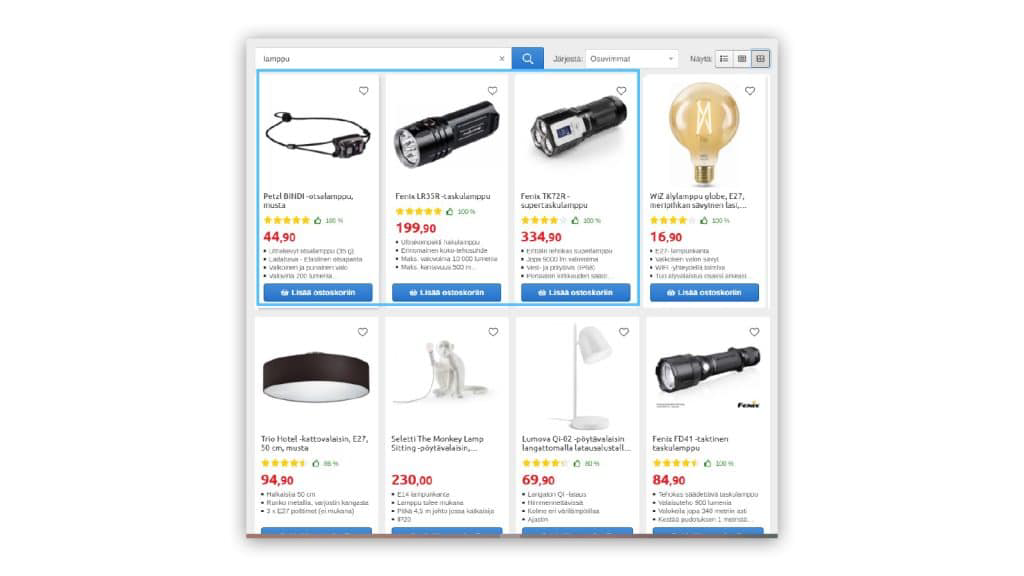
Figure 4 below shows the search results for ‘lamppu’ before the application of WoC. The results show various types or categories of lamps because the product titles contain the word ‘lamppu’. While the results are technically correct, they aren’t relevant.

Fig 4. Search results for ‘lamppu’ before implementing WoC


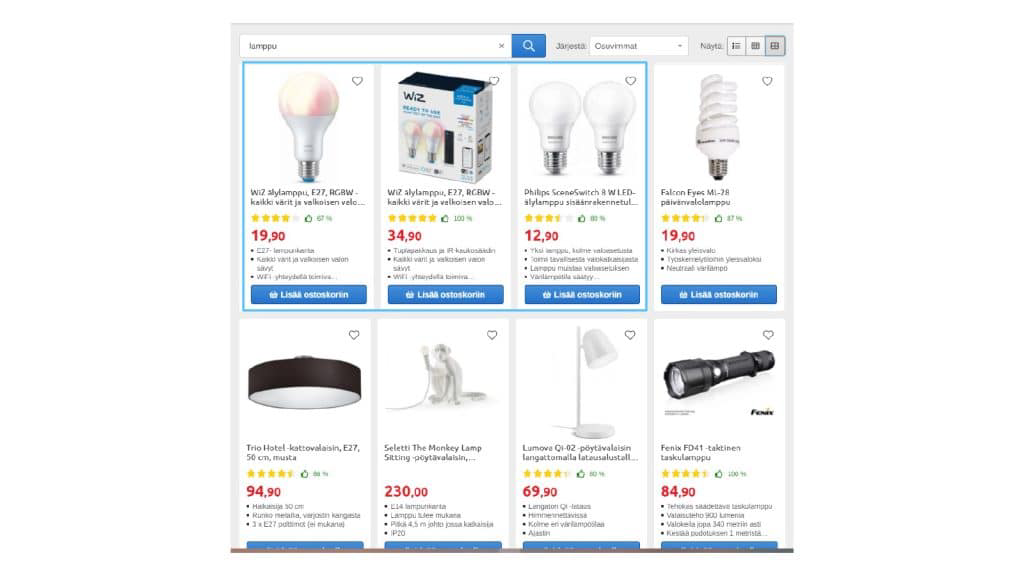
Figure 5 shows WoC in action. The search engine now knows that people using the search query ‘lamppu’ are in fact looking for a light bulb. So it displays several options for a light bulb at the top of the results and pushes the other categories of lamps below.

Fig 5. Search results for ‘lamppu’ after implementing WoC


The WoC functionality, therefore, helps understand shopper terminology like a human would, and boosts relevant items, while eliminating the dependency on developers to build various rules.

Personalizing Search Results with Behavioral Data

Leveraging behavioral data to drive 1-to-1 personalization is now table stakes. Search personalization helps convert shoppers with clear purchase intent quicker.

Verkkokauppa experienced a 10-15% increase in conversions when they made the switch from one-size-fits-all search to personalized search.

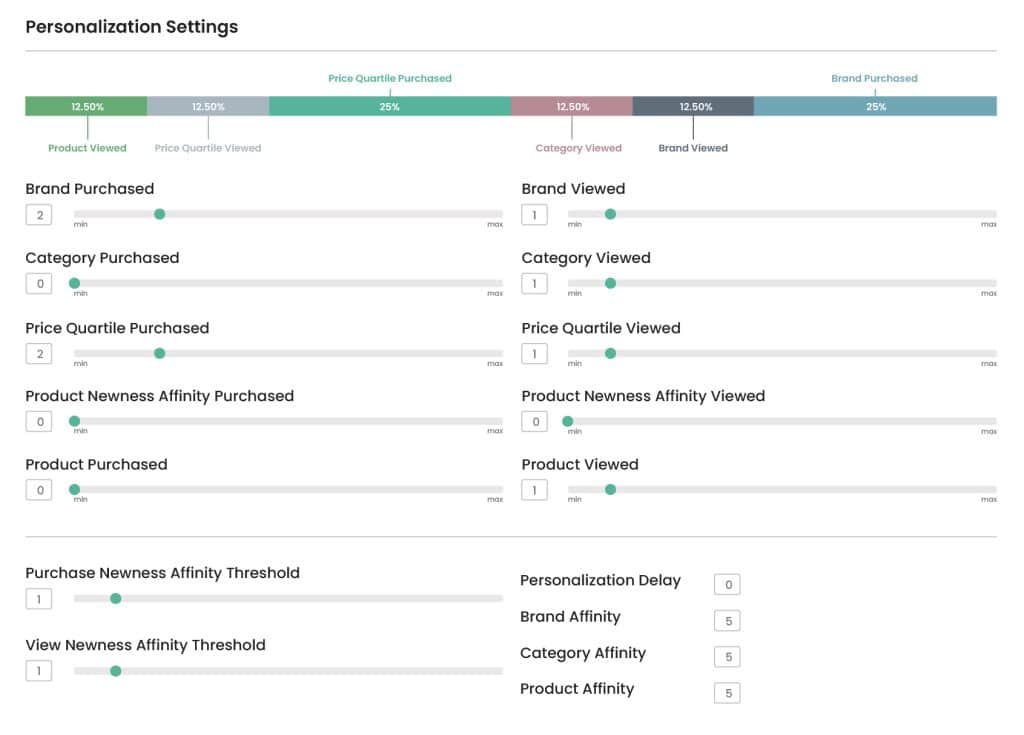
The retailer uses ADA Global Find™, an ecommerce personalization software that not only helps deliver richer personalization but also improves product discovery optimization, with the use of behavioral data. It leverages behavior attributes (see Fig. 6) to organize search results, as per the individual’s intent, in real time.

The personalization software allows for granular controls that help set weights and experiment with each of these attributes. This is as simple as moving sliders. The software, therefore, empowers business users to adjust personalization settings themselves as and when needed without any dependency on IT.

Fig 6. Personalization tool settings to adjust behavioral attributes

In a world where consumers interact with digital commerce even when the actual purchase is made in-store, it’s more important than ever for retailers and brands to invest in customer experience strategically, and across the entire shopper journey.

While devising an ecommerce search personalization strategy, retailers must think beyond product recommendations and recognize that search is no more just a developer tool, but a lever for business growth.

Table Of Contents
Lessons in eCommerce search from a major online retailer
Challenges with Traditional Search Engines
How Verkkokauppa.com Managed Product Data Issues and Improved Search Relevance
Wisdom of the Crowd
Personalizing Search Results with Behavioral Data
Verkkokauppa experienced a 10-15% increase in conversions when they made the switch from one-size-fits-all search to personalized search.

The More You Personalize, the Better the Experience?

Digital Experience Personalization
Blogs

The More You Personalize, the Better the Experience?

A leading fashion marketplace shares findings from its eCommerce personalization testing

I am obsessed with electronic gadgets. So when an eCommerce store recently announced a sale, I was excited to find the next shiny gadget to add to my collection. As I explored the electronics section of the online store, I noticed that the recommendations were just a reflection of the products I’d already purchased in the past. After a few searches, I did not see anything exciting, but as I started digging deeper, I did find interesting niche products that I haven’t purchased before. The personalization was therefore restrictive and needlessly narrow.

This made me wonder – What level of personalization is best for an eCommerce business? What weightage should you give to an individual’s preferences, past purchases, and current context? How much exploration is ideal? There are many opinions on this matter, but one thing is clear — over-personalization can have a detrimental impact on business.

In today’s digital-first world, algorithmic 1:1 personalization is, without a doubt, a non-negotiable business strategy. It has proved to be a powerful tool to improve conversions, build brand perception, and boost revenue.

  • 80% of shoppers are more likely to buy from a brand that provides personalized experiences. – Epsilon
  • 89% of digital businesses are investing in personalization. – Forrester
  • 80% of companies experienced a revenue uplift since implementing personalization. – Econsultancy

In a time when online shoppers are spoiled for choice, brands that are not tailoring experiences face the risk of losing their relevance. But there’s a catch. Too much personalization can come across as invasive to shoppers, create an echo chamber, and result in low conversion rates. So, how much is too much? The simple answer is — there is no silver bullet. You’d need to experiment and find what works for your business and markets. Let’s look at an example to understand this better.

Miinto, a leading European online fashion marketplace with 800,000 products, uses Algonomy’s all-in-one personalization software to deliver hyper-personalized experiences across the commerce lifecycle and across the touchpoints of recommendations, content, search, and browse.

In a recent conversation, they shared the results of their tests. The company carried out a series of A/B tests for one of their markets — gradually increasing the personalization level of the product assortment on category pages — and monitored the impact on:

  1. Revenue Per Visit (RPV)
  2. Conversion Rate (CR)
  3. Average Order Value (AOV)

In the first test, they increased the personalization from 25% to 50%. This led to a 5% uplift in RPV, which was quite significant. Since there was an improvement in all KPIs, they were curious to see how far they could go.

Subsequently, they increased the level to 60%, 65%, and finally 70%. They found that at 70%, there was a sudden decline in all KPIs. This is perhaps the point where personalization became more creepy than helpful to shoppers.

65% was the sweet spot, where they got the highest uplift in RPV at 11%. See the figure below. From these results, we can infer that while personalization is crucial, there is a fine line between being relevant and invasive.

Results from Miinto’s eCommerce personalization tests
More businesses need to embrace an experimentation culture and find the personalization level that works best for their customers. After all, every vertical and market is different. Further, it is important to remember that for a shopper, relevance is certainly important, but so is the joy of discovering new products and categories. Therefore, businesses must ensure the right blend of enabling hyper-personalization and allowing for discovery and exploration.

In the digital-first era, it is imperative to possess the technological capability that allows for rapid personalization tests — an area where many retailers are still lagging. Brands also need to move beyond segmentation and treat each customer as an individual. The solution to this is to build real-time, individual shopper profiles and drive the optimum level of personalization for not only product recommendations, but also search, browse, content, and promotions. This is the key to growing and retaining your customer base, and accelerating growth in the intensely competitive eCommerce industry.

Curious to know more about Miinto’s customer experience journey and how their revenues dropped over 19% when they accidentally turned off Algonomy personalization? Watch the insightful session, from Algonomy Personalization Summit 2021, featuring Paloma Truong, Miinto’s Head of Customer Experience.

The article was first published in ET Brand Equity

Solving CrossSell Model Limits with Deep Learning and NLP

Digital Experience Personalization
Blogs

Solving CrossSell Model Limits with Deep Learning and NLP

A deep dive into how we leverage neural networks to create relevant cross-sell recommendations

Have you ever wondered how, as you are shopping online, adding items to your cart, the website seems to suggest products that perfectly complement what you have already bought or added to your cart? This is known as cross-sell: recommending additional items that complement the products you are currently considering.

Traditionally, cross-sell has been done using a method called collaborative filtering or statistical “wisdom of the crowd” models. These methods are great in that they are relatively simple and fast. Unfortunately, they do not work well for new products or categories of products that do not get much traffic, i.e. the long tail, because they cannot make recommendations for products without sufficient view or purchase data. Methods using more abundant data (like views or clicks) or content-based unsupervised methods can reliably provide similar product recommendations, but fail to capture the complex associations between products that make good cross-sell.

Natural Language Processing (NLP) for Cross-Sell

NLP is a branch of linguistics and artificial intelligence that uses machine learning to analyze and convert natural language into useful representations or insights.

At ADA Global, we use NLP in many ways. One of which is in extracting structured information from unstructured texts. For instance, gathering product features or metadata from its text description (Topic for another blog post). But here we will focus on our deep learning NLP cross-sell models, hereafter shortened to “DeepRecs NLP.”

What Data do NLP Models use?

Rather than using Product IDs as input, like a collaborative filtering or statistics based method would, DeepRecs NLP uses natural language and structured metadata, such as product descriptions, reviews, brand or categories. This allows the model to uncover patterns in the language used to describe a product and therefore inform cross-sell. More importantly, it allows the models to reach products that have rarely been viewed or bought, e.g. new or  long-tail products. These are products with relatively little purchase (or view) data.

We leverage shopper data to build neural networks (a specific type of machine learning model, broadly encompassed by the field of deep learning). These networks consider larger patterns of shopper behavior by learning from pairs of products that co-occur. For example, products that were purchased by the same user, within a given time window, are “connected.” Based on the number of times a product pair co-occurs across all users, each pair is assigned a score between 0 and 1, with a higher score denoting better cross-sell fit. Specifically,

where is the co-occurrence count of product p2 with product p1.

From these product pairs, a seed product and a recommendation (rec) product is defined. Each will have various information associated with it, such as name, brand, description(s) or reviews. We normalize the text data. From there, based on the input type, we might process input in different ways – more on that after we look at the results our clients are seeing.

Impact on eCommerce Metrics

DeepRecs NLP has consistently shown increases to key metrics our clients care about, such as click-through rate (CTR), average order value (AOV), and revenue per visit (RPV). Of the five clients for which we ran A/B tests comparing slates of recommendation strategies with and without DeepRecs NLP, the treatment side (with DeepRecs NLP) for all five showed a statistically significant increase in CTR. In most cases, DeepRecs NLP also showed an increase to AOV and RPV, with one site obtaining a 7.296% increase to RPV!

Many clients were so convinced with the initial results from DeepRecs NLP that they skipped the A/B test and immediately made it live to all traffic in key places like the Product Detail Page or Add-to-cart pages. In one month alone, DeepRecs NLP provided over 14.5 million viewed recommendations to 20 sites world-wide.

DeepRecs NLP Model Architecture

In our DeepRecs NLP system, we use two identical “stacks” of neural networks, one for seed products and another for rec products. In this section, we detail some of the specifics of our model architecture.

Each input feature gets encoded in different ways, based on its type. For instance, for discrete categorical data, e.g. brand, we learn a dense “embedding” vector representation for each unique value, or a “multi-hot” embedded vector representation if there are multiple categories(a vector is basically a series of numbers like [0.52, 0.02, 0.97, 0.08, 0.55]). For unstructured text input we might “embed” each word and run them through an Attention layer [1][2]–a mechanism for combining vectors, focusing on important values to get a feature-level representation. Alternatively, we might run the raw text through a pre-trained BERT model [3], followed by one or more fully-connected neural network layers to capture cross-sell specific relationships from the pre-trained model.

The result is that we have vectors of the same size for each input. A benefit of processing inputs in this way is that we can ingest an arbitrary number of inputs, determined by the client. We then combine them all (usually with a weighted sum or another Attention layer) and optionally add more fully-connected layers to get a final product vector.

To produce a score between seed and rec products, we take the cosine similarity of the normalized final product vectors. For training, this similarity score is compared to the score from Equation 1 using a hinge loss. At prediction time, the similarity score can be used to rank pairs of products for cross-sell.

Each of the “usual” model options mentioned above are automatically determined during hyper-parameter optimization based on the complexity of the site catalog and loss metrics on a validation dataset. This allows each of our clients to have a custom, personalized model that is best suited to their catalog.

Mitigating Inherent Model Bias

BERT has been a breakthrough in the world of NLP for many tasks, including our cross-sell recommendation systems. Because they were trained on a lot of data from the internet, pre-trained BERT models can process just about any text in over 100 languages into a meaningful, dense representation that can be used in downstream tasks without the costs of training from scratch.

Unfortunately, training on internet text also means that the models implicitly encode potentially harmful language bias. Research suggests that BERT introduces language bias into systems that use it [4][5][6]. For example, when used in a Natural Language Generation system, it might always associate “Doctor” with male pronouns and “Nurse” with female pronouns.

In the context of cross sell, consider childrenʼs clothing and toys. It is a highly gendered catalog space because that is what society and shoppers reinforce through norms and macro-patterns of purchases. If you add into those interactions the gender bias of BERT, it is not hard to imagine a scenario where NLP cross-sell disproportionately recommends a kitchen play-set or Barbie doll for a unicorn blouse seed, but swim trunks or a backyard science kit for a shark graphic tee seed. Although contrived, this example demonstrates how training data can inject unfair bias into recommendations, ultimately impacting the interests or opportunities of different groups of people. At ADA Global, we are actively researching how large of an issue this is in our models and ways such bias can be mitigated.

Conclusion

Cross sell models that understand industry context (in this case retail) and address domain-specific challenges like catalog long-tail can create high business value. At ADA Global, we leverage deep learning techniques as well as shopper history, patterns and insights that improve relevance of cross-sell, enhance the shopping experience and grow metrics such as AOV and RPS.

References

1. Minh-Thang LuongHieu Pham, and Christopher D. Manning. 2015. Effective Approaches to Attention-based Neural Machine Translation. In Empirical Methods in Natural Language Processing (EMNLP).

2. Nikolas Adaloglou. 2020. How Attention works in Deep Learning: understanding the attention mechanism in sequence models.

3. Devlin, Jacob, et al. “Bert: Pre-training of deep bidirectional transformers for language understanding.” arXiv preprint arXiv:1810.04805 (2018).

4. Tan, Y. and L. E. Celis. “Assessing Social and Intersectional Biases in Contextualized Word Representations.” NeurIPS (2019).

5. Kurita, Keita et al. “Measuring Bias in Contextualized Word Representations.” Proceedings of the First Workshop on Gender Bias in Natural Language Processing. Association for Computational Linguistics.

6. Bender, Emily M. et al. “On the Dangers of Stochastic Parrots: Can Language Models Be Too Big? .” Proceedings of the 2021 ACM Conference on Fairness, Accountability, and Transparency. Association for Computing Machinery.

Table Of Contents
A deep dive into how we leverage neural networks to create relevant cross-sell recommendations
Natural Language Processing (NLP) for Cross-Sell
What Data do NLP Models use?
Impact on eCommerce Metrics
DeepRecs NLP Model Architecture
Mitigating Inherent Model Bias
Conclusion

ADA releases the newest edition of its Algorithmic Customer Engagement Platform for Digital-First Retail Excellence

Digital Experience Personalization
Blogs

ADA releases the newest edition of its Algorithmic Customer Engagement Platform for Digital-First Retail Excellence

New Features include OOTB Connectors to leading Commerce Platforms, No-code Data Science enhancements, new Deep Learning models, and Extends Omnichannel Personalization to Contact Centers

ADA Global, the leader in Algorithmic Customer Engagement (ACE) solutions, announced an array of new and enhanced capabilities in their latest Spring ‘21 Release. The new release is specifically designed for Retailers and Brands who are in a post-pandemic recovery cycle, with a unified platform for digital customer engagement that integrates data from supply to demand across the value chain with algorithmic decisioning and omnichannel orchestration.

The release features numerous powerful capabilities like composite AI frameworks, no-code ML frameworks, Visual AI algorithms, greater control and governance over customer data, and better customer journey orchestration abilities across marketing, commerce and merchandising.

“The digital-first era is all about staging relevant experiences across the entire customer journey, and extend personalized retail interactions to all customer touchpoints, both inbound and outbound”, says Sarath Jarugula, Chief Product Officer at ADA Global, “In this release, ADA Global customers can continue to better leverage their technology investments across the enterprise, to improve on their metrics for customer engagement, conversion, and loyalty.”

ADA Global Personalization Suite now features the following:

1 ADA Global Connect

We now provide out-of-the-box integration of the Personalization Suite with leading Commerce Platforms like Shopify personalisation Plus, VTEX, Adobe Magento, SAP Hybris, SFDC Demandware and more. The integration has helped merchants to accelerate their digital journey by using ADA Global’s best-in-class personalization. Merchants can keep product catalogs, inventory, and pricing always updated, with ADA Global’s unique real-time streaming catalog integration.

2 DeepRecs Visual AI

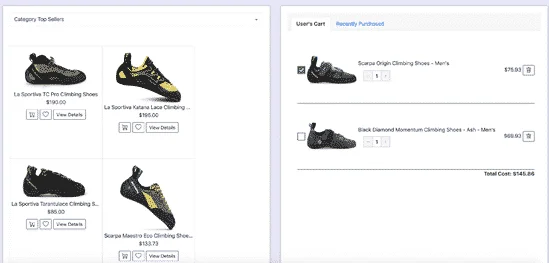
Announced in Sep 2020, this deep learning functionality is now leveraged by over 15 apparel clients, helping them replicate store-like personal experience on digital commerce properties. Shoppers can find visually similar products and get complete-the-look personalized product recommendations based on product images and without the need for any behavioral data. Designed to improve engagement and repeat visits, our clients have grown CTR, time on site and revenue per visitor with Visual AI based recommendations.


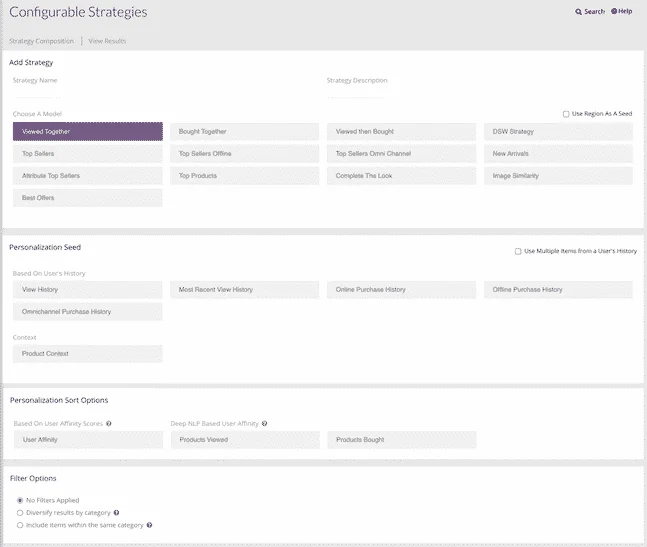
3 Configurable Strategies

GA since May 2020, Configurable Strategies is a step towards self-serve machine learning, empowering non-tech users to quickly build, test and iterate new ecommerce personalization tools. Users can pick from a pre-built library of algorithms to create new strategies, test their hypotheses and serve their unique needs. This year, additional controls have been added to apply category diversity to strategies such as Top Sellers, New Arrivals, Attribute Top Sellers, Best Offers and Category and Brand Affinity. A shopper’s affinity to categories or brands can be used as the seed, so the resulting recommendations match their affinities. Additional user attributes for add, replace, remove values are now available, providing high flexibility to marketers and merchandisers.

“Our merchandisers and marketers always have new ideas. Configurable Strategies is a very handy tool to test these hypotheses – be it on the eCommerce site or for email promotions. The personalized campaign leveraging custom category and brand affinities achieved 356% more revenues compared to the fallback. Similarly, brand pages on our eCommerce site have seen +3% conversion rate for key categories”

Rob Hitchman, Digital Product Owner, John Lewis

Contact Center Personalization (EA Only)

In line with our vision of personalization everywhere, the call center application extends personalization to sales associates and agents. A shopper’s online behavior, intent signals, search data, affinities, cart contents as well as past purchases are made available to call center associates in real-time, so they can make one-to-one personalization substitute or cross-sell recommendations. Agents can leverage various recommendation strategies to aid product discovery and decision making without fragmenting their experience, leading to higher average order value and sales.

Social Proofing (EA Only)

Designed to engage shoppers using real-time view and purchase data, social proof messages provides dynamic messaging overlays on digital commerce properties. A highly customizable set of metrics such as ‘xx people bought this in the last one hour’, ‘Viewed by xx people today’ can create urgency and provide social validation to shoppers considering the products. The strategy can be used on PDPs as well as category and search pages. Online retailers and brands can expect an immediate lift in conversion rates and reduce abandonments with urgency messaging.

Customer Analytics now features:

1 Data Studio

Our customer data platform provides highly differentiated capabilities to allow analysts to build dashboards, do interactive analysis such as drill downs, drill across, leaderboards, etc. without any SQL understanding. To further empower data scientists and analysts, we have introduced Data Studio which is an interactive SQL query pad with full SQL access to CDP data through an easy-to-use, browser-based query editor. Data Scientists get access to clean and structured customer behaviour data for many years providing them the flexibility to build advanced custom models without having to go through the hassle of bringing it together from multiple systems – CRM, Google Analytics, etc. They can extract data for model building and conduct all Exploratory Data Analysis (EDA) with the data management and visualization capabilities in the application without compromising on data security.

Customer Journey Orchestration (CJO) feature the following new capabilities:

2 Journey Analytics and Automation

While it is a great competitive advantage to be in the pole position with personalization, your ability to win the race is in the machine, finally. The last mile in a marketer’s effort to drive seamless CX that improves stickiness for the brand – Customer Journey Orchestration. The key metrics that marketers measure the performance on is return on their investment in campaigns and communication. ADA Global’s Customer Journey Orchestration tool enables omnichannel marketing campaigns with maximum precision and minimal effort. In addition to automating journeys, supporting many offline and online channels and extensive journey analytics, we’ve now added great capabilities.

3 Universal Control Group

UCG allows creation of a program level control group to measure effectiveness over long-term marketing objectives. Here, one group is a neutral universal control group that doesn’t receive any communication and the other group is a collection of all remaining customers. However, regular control groups (campaign control) provide only an incremental impact on the promotion, only measuring campaign level performance and not cumulative impact of all promotions over a long period. UCG fills this gap. Users can create UCG once and seamlessly execute journeys without having to manage UCG groups separately across different journeys. This helps marketers make informed decisions on campaigns, offers, products that work thereby saving cost, improving response rates and optimizing ROI.

4 Channel Enhancements

We continuously enhance our omnichannel capabilities and boost key capabilities of our existing channels to ensure marketers can connect with the customers in the channel of their choosing.

  • WhatsApp: Users can now send transactional messages on WhatsApp using whitelisted templates in real-time.
  • SMS Conversational Management: Users can now set up conversational workflows based on using expected customer-entered keywords and direct customers to appropriate journey paths.
  • Facebook Audience Management: We support Facebook audience as a channel enabling users run remarketing, persona-based, multi-channel and experimentation journeys.
  • Direct Mail: Users can define Direct Mail output template structure for flattened and multi-record formats. Users can drag-and-drop personalization tags to easily customize the output and auto-scale for accelerated file generation.
  • Mobile App SDK and Push Notification: We’ve introduced carousel push notifications with separate design pages for iOS and Android with landscape and portrait orientation options. With this, you can also control the display life.
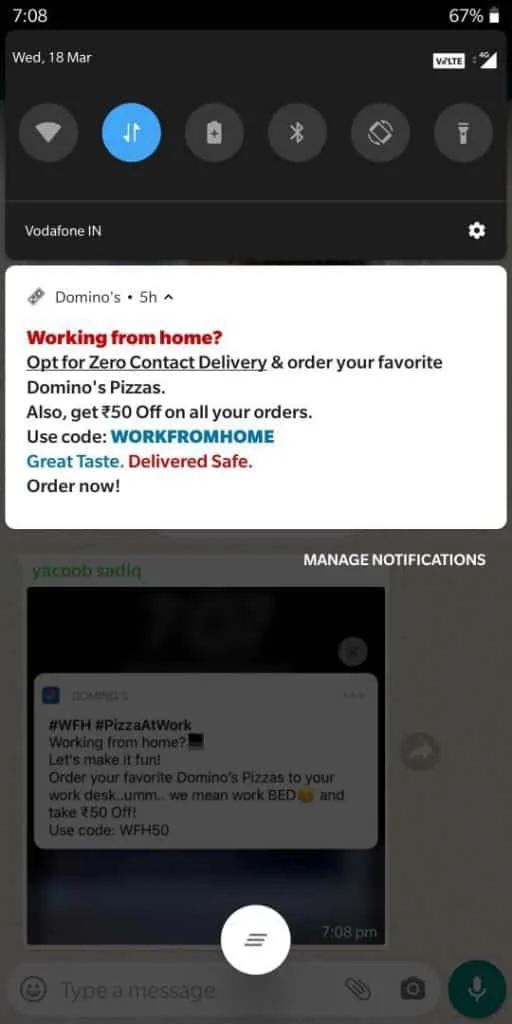
  • Email Channel: Open time personalization has been enabled where users can dynamically personalize recommendations and content sections based on when the customer opens the email.

5 Criteo Integration

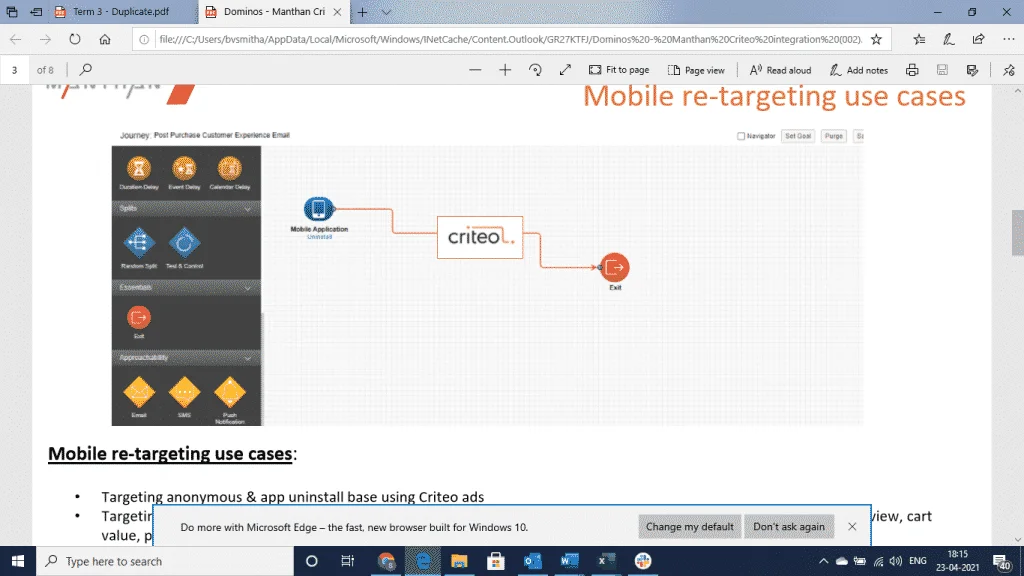
Our customer journey orchestration platform has automated custom audience integration with Criteo enabling marketers to push dynamic content personalization ads to known customers across channels. It enables mobile & website retargeting, omnichannel journey audience push and helps measure marketing ROI. It eliminates manual list management and campaign set up.

Merchandise Planning and Analytics features the following new functionality:

1 Size-pack Assortment Planning

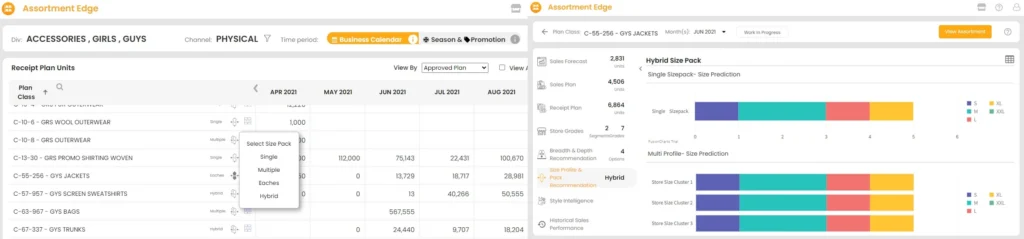
A critical assortment planning need for fashion retailers to improve their full price sell through is allowing them to plan according to their key size strategies – single and multiple size packs, eaches, fill-in packs, and hybrid size planning. The Buy Plan is created at option, size, and store grade level, which helps in optimized and localized buying reconciled with the overall demand and receipt plan. The multiple size profile has been integrated with the store clustering model to help further tune the assortment recommendation.Users can also add a new size pack to the size recommendations. The addition of a new size pack modifies current predictions and total size packs. Users can modify any size profile and the system auto-scales the remaining to 100%, reducing manual readjustment efforts.

Store data mapping helps in planning for new stores and new plan classes that may not have sufficient history to predict sales, assortment, and size strategy.Assortment Edge facilitates creation of wedges for stores and plan classes that do not have sufficient historical data by modelling them using similar stores or plan classes. Users can set default model stores and departments at global level or map to specific values. The mapping does not impact the wedge definitions that have been already approved.

Store level size pack recommendations allow users to view details such as style options, store clusters, and size pack recommendations for each store along with wedge details. Users can also export this information to seamlessly integrate with the downstream application for initial allocation and store replenishment.

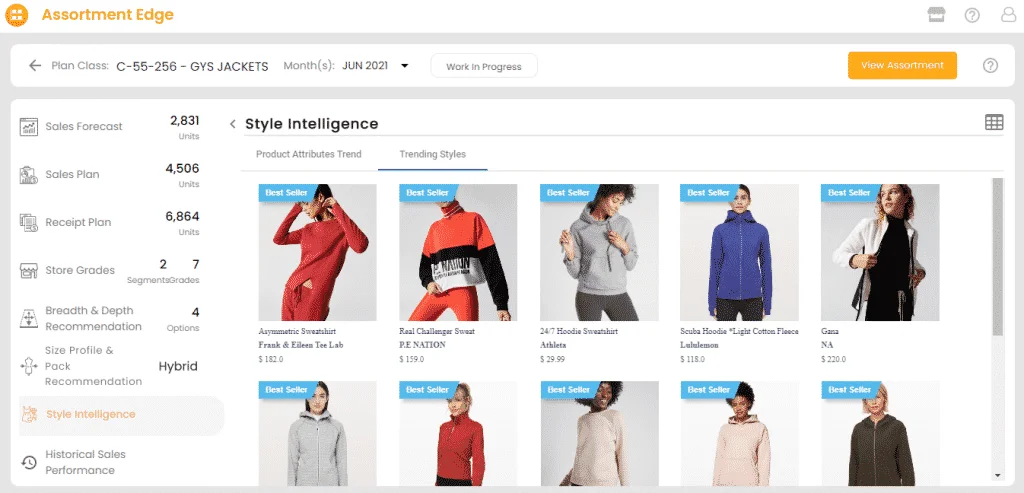
Style intelligence uses computer vision for ranking global trends to get contextual style recommendations and offers qualitative recommendations on the styles and attributes that can be included in the assortment plan. It helps fashion retailers gain insights on the top product attribute trends and the top styles trending in the market for a competitor and inspirational brands for the selected plan class and time period.

2 Product Lifecycle Pricing

Product lifecycle pricing allows retailers to address major discount price planning scenarios. The enhanced UI helps retailers easily configure the solution to plan for multiple discount planning strategies. Some of the preconfigured strategies are:

  • Promotion pricing or temporary discounts for discount or online retailers with high velocity of discount price changes.
  • Permanent markdown planning for shorter life cycle products like fashion.
  • New product markdown pricing that optimizes discounts across product’s life cycle.
  • Inventory optimization liquidation pricing to achieve the targeted Inventory units at the end of pricing time period.

Cross-price elasticity or halo-cannibalization impact on demand – the enhancements to the markdown algorithm now allows users to view the output/simulation grid. It shows the cross-elasticity impact on the forecasted sales against the markdown and helps improve the quality of the markdown output.

Offer recommendations – recommends the best offers for the selected products for the planned promotions/offers, based on historical elasticity for the products against different offer types like Buy1 get 1 or a flat % off. It considers the customers’ response or the product’s change in demand for the promotion or a perceived value to the product’s offer / promo rather than the end discount or markdown. The model uses hierarchy or category data for insufficient product level offer data.

3 Accelerate your Digital-first Customer Engagement

We hope you are inspired by our product investments and innovations related to customer journey orchestration. For more information on the Spring ‘21 Release, please connect with your ADA Global representative.

In summary, we recognize that delivering digital-first retailing needs a complete technology stack that unifies data, and drives decisioning and real time customer engagement algorithmic customer engagement. ADA Global is today the only industry cloud for Algorithmic Customer Engagement (ACE). We stay unwavering in our focus in offering the industry widest array of applications across marketing, digital commerce, analytics and merchandising for retail consumers and brands. For more information or to speak with a sales or customer service representative, please visit our Contact Us page.

Table Of Contents
ADA Global Personalization Suite now features the following:
Contact Center Personalization (EA Only)
Social Proofing (EA Only)
Customer Analytics now features:
Merchandise Planning and Analytics features the following new functionality:

Why the Online Grocery Experience Needs a Dramatic Revamp

Digital Experience Personalization
Blogs

Why the Online Grocery Experience Needs a Dramatic Revamp

This article originally featured in ET Retail on the 05/06/2021.

E-GROCERY NEEDS TO BREAK FREE FROM THE LEGACY BRICK AND MORTAR FORMAT

When do we go grocery shopping? Once a month, once a fortnight, once a week, or perhaps when we are throwing a party? We shop as per our convenience. Convenience is the key word. Online grocery stores are continuously trying to make shopping more efficient and hassle-free. However, as long as grocers are trying to replicate the physical store layout online, the experience will be sub-par as scrolling through the large product catalogue to find the items one needs is time-consuming and dull.

Categorization is essential in the store. Hypermarkets and supermarkets have several aisles (fresh produce, fish and meat, dairy, spices, cereals and so on), where shoppers cart around from entry to exit.

Online grocery shopping has gone a couple of steps ahead of stores with sub-categorization. Within dairy one can navigate to milk, yoghurt, cheese etc. and pick their favorites. However, a closer look at a typical grocery shopping event shows that this journey is less than ideal. Why? Because it fails to recognize that a customer or a household buys the same products over and over, month after month. Sure, there is exploration with new brands and different flavors, but unlike say, fashion shopping, where a shirt bought in the past is almost never bought again, re-buy is a key requirement in grocery.

The power of personalized grocery e-store

So how should the online grocery store be organized? The advantage of eCommerce is that algorithms can create a personalized retail layout for each customer, which is not possible in a brick and mortar store. An online customer can have his or her own aisle – imagine an aisle ‘For Jonathan’ or ‘For Martha’, where he or she has a pre-curated set of products for their household needs.

Personalization in grocery means dynamically creating these custom baskets, so the shopper does not have to go back and forth between different categories to add the one product to their cart. These pre-loaded baskets not only make the chore more efficient, but also ensure that customers do not forget any essentials they need. With the cart already in place, all a customer has to do is add any additional products (from a set of personalized recommendations or from category pages), and remove products they don’t need at the moment. Research shows that in the grocery vertical, time spent online in finding products and building the cart is inversely proportional to loyalty. Given this, this ‘personalized aisle’ is key to real time customer engagement and customer lifetime value.
Research shows that in the grocery vertical, time spent online in finding products and building the cart is inversely proportional to loyalty. Given this, this ‘personalized aisle’ is key to customer lifetime value.

Surge in online grocery and intense competition

Grocery shopping anytime and from anywhere has been growing in the past decade, but saw enormous acceleration during the pandemic. A survey by Clinch in the US found that 75.4% of consumers purchase groceries online, with 80% of those consumers citing that they shop for groceries online more than ever before, since the pandemic. This trend will continue, as 75.8% of consumers plan to continue to shop online for groceries post the pandemic.

With such phenomenal growth across the globe, the pie has expanded. At the same time, competition is heating up and supermarket margins are wafer thin. Marketers spend a lot of effort in getting the customer back to the ecommerce personalization platform site. Once the visit is secured, personalization should be used as a strategic lever to create a frictionless shopping experience, lock-in conversions and grow share of wallet.

Modelling the online grocery stores on brick and mortar stores, therefore, is a big compromise and is demanding a fresh perspective.

Bhavna Sachar, Director, Product Marketing, Algonomy

Table Of Contents
The power of personalized grocery e-store
Surge in online grocery and intense competition

Menu Engineering: Real-time insights enable menu optimization

Digital Experience Personalization
Blogs

Menu Engineering: Real-time insights enable menu optimization

An optimal menu not only drives financial success but also enhances guest experiences. This makes Menu Engineering a key aspect of QSR strategy. With real-time insights, Operations Leaders could engineer their QSR menu to keep costs under check while ensuring customers’ favorites are firmly placed in the menu.

Personalized menu with advanced customer insights

The sudden spike in online ordering through apps presents immense opportunity for QSRs to hyper-personalize customer experience. And menu personalization is a key element of the overall experience. Data on customers’ taste and preferences are collected and analyzed. Using machine learning and AI technology, the app shows users the most relevant menu items, promotions and content based on their individual preferences, past dining history, location, weather and restaurant specific menus and pricing.

With data and intelligence, menu engineering is more science than art, in today’s times. An advanced AI platform helps you engineer your menu across outlets, reduce cost and drive loyalty. The underlying need to design optimized menus is Data – menu items, number sold, food cost, menu price. Clean and structured data on your customers, likes, preferences, transactions, affordability, menu items and their costs are some of the key inputs to the menu formula.

Advanced algorithms analyze the demand and costs of menu items to help you identify your most and least profitable menu items. AI platforms integrate with back-of-house systems to draw this data and throw up in-depth intelligence to help make smart decisions on menu and other aspects of QSR business.

An advanced BI and Restaurant Analytics platform provides real-time insights to re-engineer your menu, forecast sales, reconcile 3rd party sales, optimize delivery time and more.

Let AI help you identify your Stars on the menu

Manual menu analysis is bereft of inaccuracies and never complete. This leads to loss of revenue opportunities and impacts profitability. As alluded to earlier, data and intelligence could help identify popular menu items across stores and locations in real-time. Advanced algorithms map trends, cull out underlying reasons and recommend next best actions for menu items. For e.g., Algorithms throw up the bestselling pizza by size, day, topping, location and recommend menu combos that would help you leverage its popularity.

By adding data on item cost and profitability to sales of menu items, you can be sure to accurately identify the best and worst performing items, from your long menu list.  Using this, QSRs could develop an action plan to optimize the menu by reducing low profitability items and increasing the popular ones.

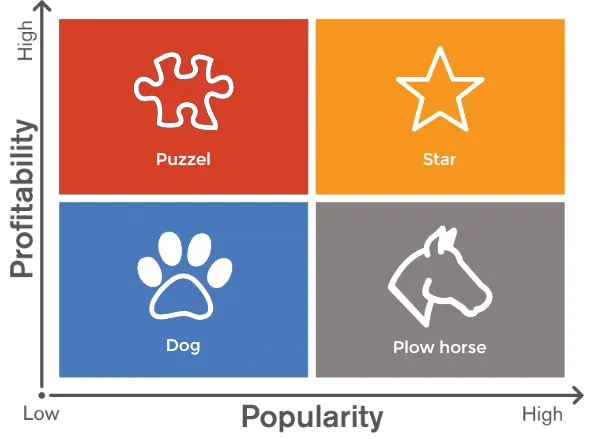
Menu engineering is about managing this mix of stars, plow horses, dogs and puzzles that leads to reduced costs, improved profitability without compromising on customers’ wants. Let’s see how algorithms could help in arriving at the right menu mix.

Make your STARS shine brighter

Algorithms identify Star menu items based on factors such as sales volume, costs, price, margins, promotions, etc. They help you analyze the underlying reason and recommend ways to make the most of these popular and profitable items on your menu. AI platforms recommend:

  • Other locations where these items can be introduced to enhance revenue opportunity
  • Price increase by calculating the likely impact on demand
  • Menu combos with other items that are lower in profitability, using association mining

Let your PLOW HORSES gallup

Algorithms are quick at identifying items that are growing in popularity. Juxtapose this data against its costs and you know whether you are heading towards the left of the balance sheet or the right. Trust the AI to do the magic – menu combos that offsets the low profitability of the item or more dishes with high priced ingredients for economies of scale. You may just end up with Star with AI-based recommendations.

AI solves the PUZZLE

With a 360-degree view of sales, marketing & operations data, AI platforms turn into Sherlock Holmes to find that missing piece of the puzzle. Run the analysis and in a matter of seconds you’ll know why they are not flying off the shelf. Turn the recommendation engine on to increase their demand. Reduce price, introduce an offer or run a campaign, these algorithms have a marketing trick up their sleeve.

Let the DOGS take a walk

While the algorithms are quick at identifying Dogs and recommending their expulsion, human intelligence needs to prevail here. For e.g., Kids’ menu is neither high volume nor highly profitable ut you may want it to stay on the menu.

Optimize QSR menu with Algorithms

Data and Intelligence are the key ingredients in dishing out a menu with the right mix of Stars, Plow horses, Puzzles and Dogs. Advanced AI tells you what’s popular and why. Likewise, it helps you understand the implications of cost and pricing. And this is a dynamic exercise as customer tastes and preferences, economic and social situation, change. With real-time access to data & insights, AI platforms help you balance high and low food costs to garner a reasonable amount of profit margin yet cater to customers’ preferences.

Table Of Contents
Personalized menu with advanced customer insights
Let AI help you identify your Stars on the menu
Make your STARS shine brighter
Let your PLOW HORSES gallup
AI solves the PUZZLE
Let the DOGS take a walk
Optimize QSR menu with Algorithms

Are you killing conversions with obsolete search | checklist

Digital Experience Personalization
Blogs

Are you killing conversions with obsolete search | checklist

Are you aligned with how shoppers search?

Your visitors search in different stages of the customer journey – when they know what they are looking for, when they are not sure and need guidance, or they want to solve a problem, but don’t know how.

1. Exact search terms, e.g. model # in electronics, or complex searches such as ‘red midi dress in size 12 sleeveless’.

2. Search with abbreviations e.g. 16”/ 16 in/ 16 inches OR oz/ ounce.

3. Search with spelling errors, or spelling variations? E.g. hair drier instead of hair dryer, or a typo such as Avacado.

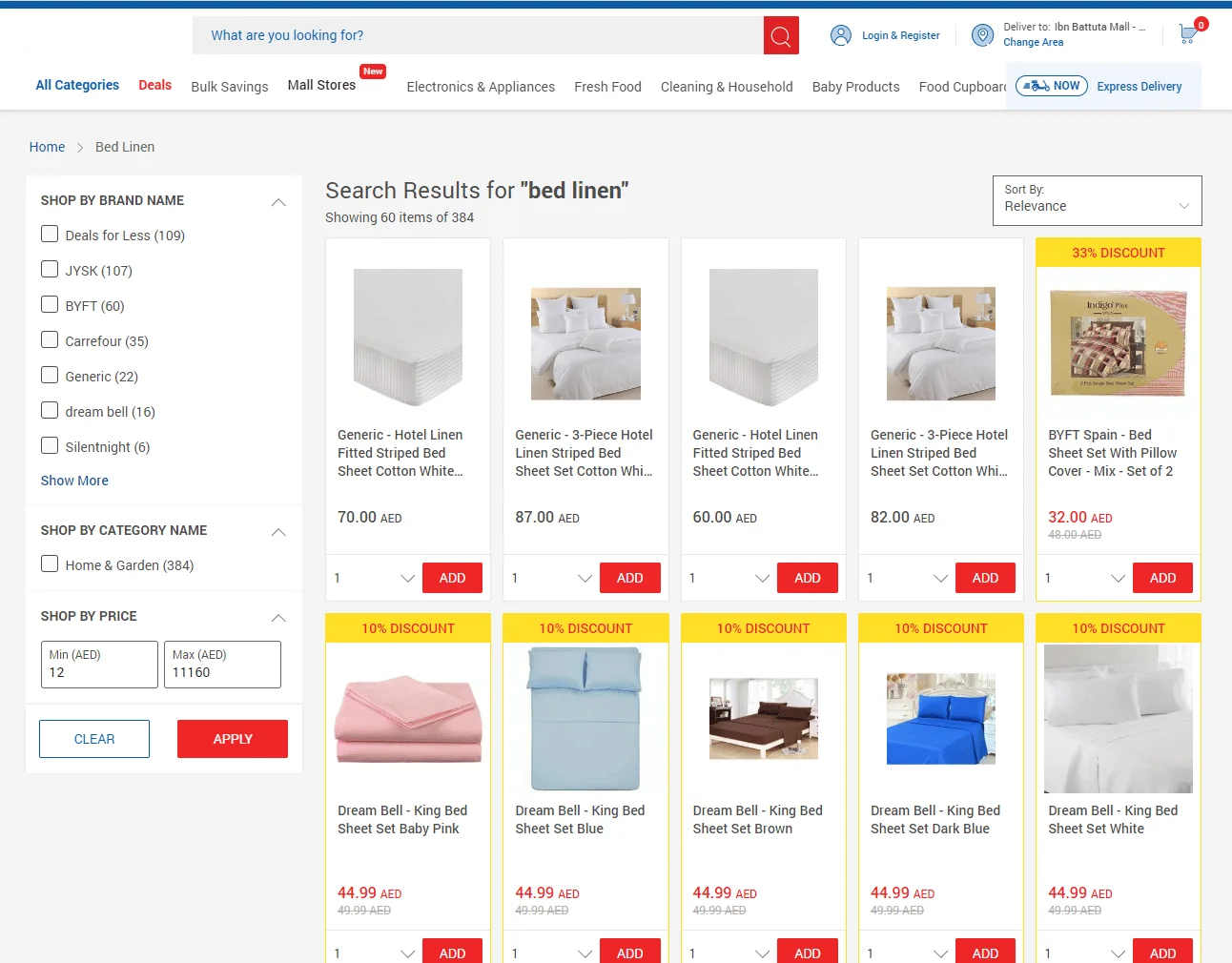
4. Alternative words, such as flip flops instead of house slippers or thongs (yes, you – from Australia), or dress shirt instead of a formal shirt, bed sheet or bed linen.

5. Use plural word forms (tomato/ tomatoes), or use slang, shades instead of sunglasses.

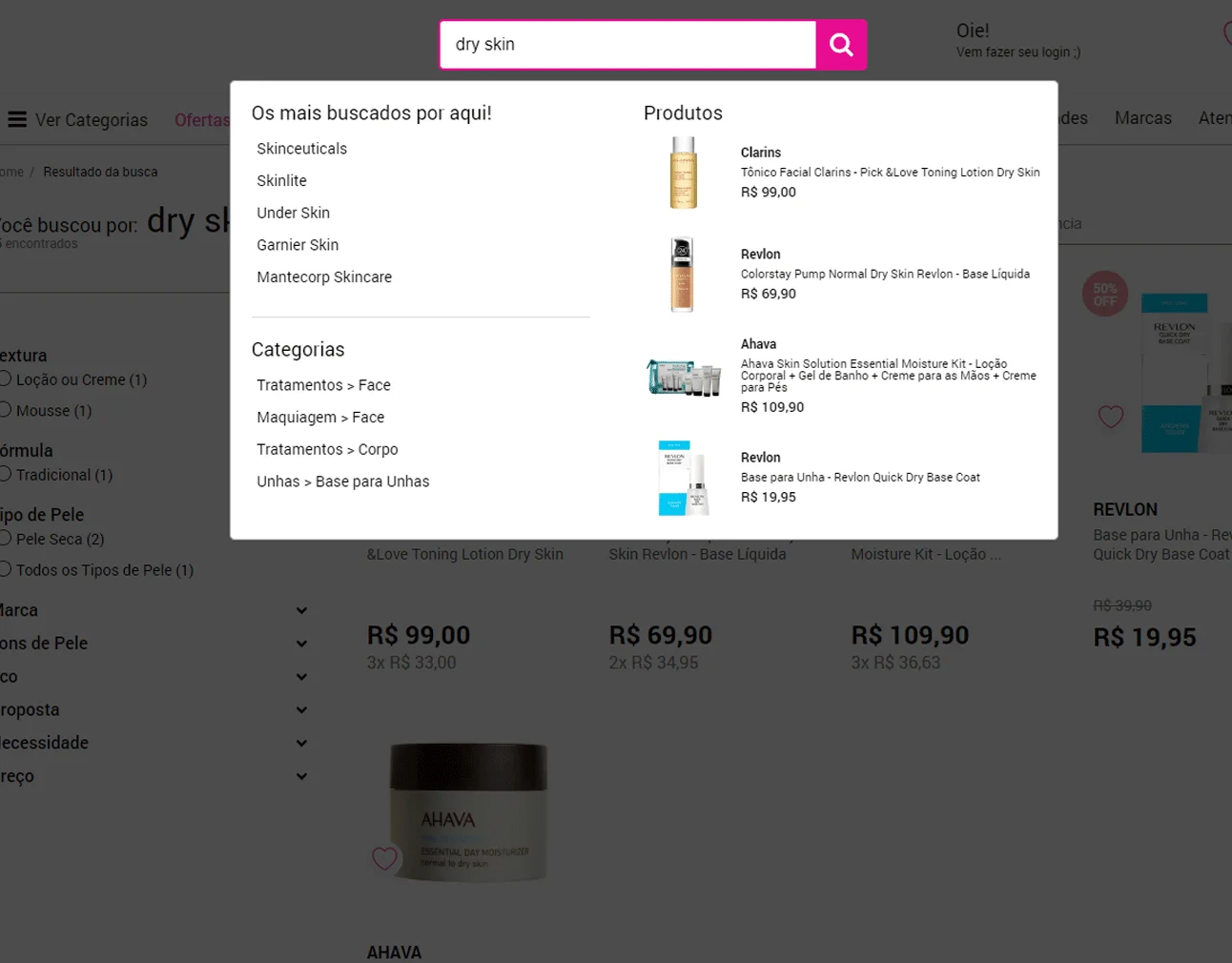
6. Problem based search terms, e.g. ‘dry skin’ instead of ‘moisturizer, or ‘turmeric marks’ instead of ‘stain remover’ or ‘headache’ instead of ‘pills’.

Can you catch important intent signals?

There is a wealth of insights in shopper searches, that can be used for showing relevant results for the individual, and for improving overall results, and reducing zero hits.

7. Some terms are more critical than others – can you recognize a 11” sleeve (11” is important), or organic kale (organic is key).

8. Your shoppers’ collective searches can help you form associations between search terms and products/ categories, without changing product data. Self-learning algorithms can improve results without having to create rules, or working on data attributes.

9. This drives your differentiation – A shopper’s affinity for brands, products, categories or custom attributes such as concern type, color, price become known from their current session as well as history. If you can personalize their search experience using their profile (even if they are anonymous), you will be rewarded with higher engagement, conversions and loyalty.

Are you helping them explore your catalog?

Shoppers are often multi-tasking – they could be distracted or just need assistance with creating a shortlist. This is where search nuances come in.

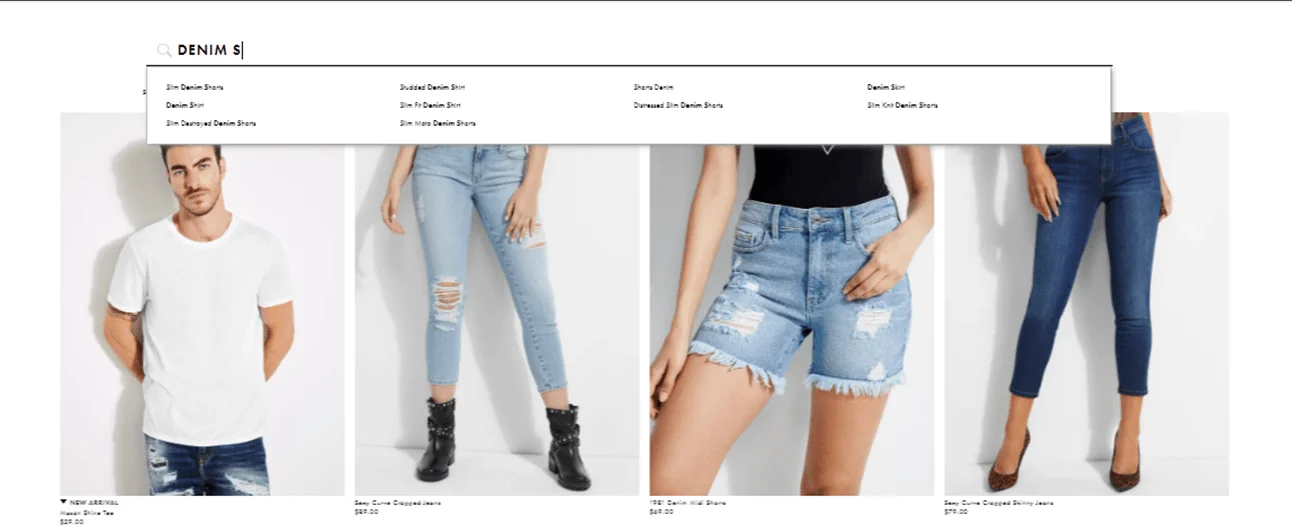
10. As shoppers type, they may need inspiration. With predictive auto-complete similar to  what Google has trained the world on, you can make sure they don’t feel lost.

11. When products need multiple dimensions for selection, contextual facets and filters can help them narrow down their choices.

12. More than 50% traffic is now from mobile, and the limited screen real estate necessitates personalization. Finding the right result on the first page, what RichRelevance calls Findability, is negatively affected, since the user has to scroll more, use filters, and their journey is longer.

The personalized search box promises simplicity to the user, but is a powerful and sophisticated tool that can help marketers and merchandisers boost conversions, while retaining business controls and commitments around private labels, over-stock situations and trade promotions.

Table of Contents
Are you aligned with how shoppers search?
Can you catch important intent signals?
Are you helping them explore your catalog?