
5 Factors Sabotaging Your Demand Forecasts (and How to Outsmart Them)

Merchandising and Supply Chain
Blogs

5 Factors Sabotaging Your Demand Forecasts (and How to Outsmart Them)

In an era where all the customers’ whims and nuances get delivered within minutes to the doorsteps, staying ahead of the customer sentiment while keeping the unit economics intact with optimal inventory in offline retail, is a Herculean task. Recent studies reveal the total cost for inventory distortion to be a staggering $1.77 trillion worldwide, and the lost sales owing to stock issues amounted to a whopping $349 billion for U.S. and Canadian retailers in 2022.

The retail industry is undergoing a huge paradigm shift and having the right inventory at the right place at the right time, data-driven decision-making, and understanding store and supply chain dynamics is vital for profitability. While all of these are crucial pillars, accurate forecasting or demand planning emerges as the most critical factor that is directly linked to profitability, inventory investments, customer satisfaction, wastage, and more. However, factors, such as manual adjustments to seasonal variations and static planning for inventory can affect the overall efficacy of demand forecasting solutions.

Below, we discuss some other factors that sabotage demand forecasting and ways to outsmart them for optimizing replenishment, minimizing inventory distortions, and unlocking greater cost savings without compromising customer satisfaction.

1. Manual Demand Forecasting Processes

Adjusting forecasts manually to crank the inventory up and down for seasonal variations or unexpected events is prone to errors and delays. A standard 5% or 10% increase in inventory might lead to missed demand mapping, overstocks, markdowns, and empty shelves. These errors can ripple through the supply chain, affecting customer satisfaction and operational costs.

On the other hand, AI-powered demand forecasting processes disparate and unstructured data sets such as historical data, market trends, and predictive analytics to automate inventory decision-making. Retailers can automate repetitive tasks like data collection and analysis and choose from a set of highly configurable machine learning algorithms to dynamically refine forecasts based on real-time data inputs, actual store and supply chain level indicators, and disruptions.

2. Static Planning & Outdated Data

Traditional forecasting relies on static tools like sheets and only uses the most recent data, some of which might be in silos, creating huge caveats for accurate demand planning. Ignoring the demand fluctuations, seasonality, and micro-trends, and adjusting inventory to outdated data can skyrocket inventory investments and stock issues.

Automation-powered forecasting solutions can capture real-time changes in demand, and anticipate fluctuations via predictive insights drawn from exhaustive data analytics. Retailers can leverage advanced analytics to identify seasonal patterns, trends, and promotional impacts on demand, which allows for continuous adjustment and optimization. They can dynamically adjust to SKU-store-level demand patterns and supply chain disruptions based on rich, data-driven, and reliable forecast insights, thereby unlocking precision at hyperlocal levels.

Now that you’re up to speed on the latest trends, it’s time to dive into effective strategies. Here are some winning tactics of successful brands to spark your 4th of July marketing efforts. This will help you harness the patriotic fervor to create impactful marketing campaigns that resonate with your customers and boost your sales.

3. Poor Data Quality

Data in retail is fragmented, noisy, and sparse. The inability to integrate data from disparate sources, and refine it for drawing out actionable insights undermines the reliability of demand forecasts, leading to inaccurate inventory management and operational inefficiencies. Intelligent forecasting solutions come with built-in AI and ML capabilities to overcome these data hurdles and can generate highly focused and reliable forecasts within minutes. Empowered with the ability to choose from ensemble retail-tuned algorithms, businesses can revolutionize demand forecasting. They can view single forecasts, compare and revisit them, and aggregate them at the product, and hierarchy level as well. With advanced scenario modeling, they can easily build and pick the best model out of hundreds of choices and unlock greater control and precision over replenishment.

4. Ignoring External and Internal Influences

Retail sales influencers can be external as well as internal and ignoring them during demand forecasting can skew the results. However, manual as well as traditional forecasting methods are not equipped to incorporate external as well as internal influencers, and they cannot identify the right influences for specific products, categories, locations, etc.

On the other hand, AI-powered demand forecasting solutions come with built-in lists of external and internal influences that can be configured to business-unique factors and allow retailers to create forecasts according to the chosen factors. They can adjust the forecasts at the product location level for multiple factors at once and create highly refined and accurate plans for minimizing stock issues while keeping customer satisfaction intact.

5. Product Cannibalization & New Product Introduction

Inter-SKU effects during sales and promotions can lead to double loss for retailers, if not managed well. Likewise, new product introductions can derail inventory planning if not considered during demand forecasting. Apart from leading to stock issues, they can spur secondary challenges like lost sales, and high operational costs, and dent customer loyalty.

AI/ML-powered demand forecasting manages cannibalization by dynamically balancing demand between products, considering promotions and availability. Retailers can launch new products without affecting revenue and sales across all product locations, or inducing inter-SKU effects, thereby unlocking intelligent replenishment, greater revenue, and efficient operations.

Accurate measurement of how much the customers will buy is ‘Step Zero’ for ensuring optimal demand fulfillment. It anticipates demand fluctuations, ensures the right amount of stocks at all times, and enables retailers to efficiently mitigate customer needs without ballooning the costs or inventory, and automation is the key enabler. By integrating disparate data sources, dynamic planning, incorporating all sales influencers in forecasting, and intelligent demand planning, retailers can improve shelf availability by 90%, and reduce OOS by 75%, inventory costs by 10%, and wastage by up to 30%, thereby unlocking greater savings, and unparalleled efficiencies.

Disclaimer: This blog does not indicate an ongoing business partnership with the brands, and all references are solely for illustrative purposes.

Also read: 9 Best Practices in Demand Forecasting for Grocery Retailers

Table Of Contents
1. Manual Demand Forecasting Processes
2. Static Planning & Outdated Data
3. Poor Data Quality
4. Ignoring External and Internal Influences
5. Product Cannibalization & New Product Introduction

The Next Era of Convenience Retail: GenAI-Led Replenishment at Scale 

Merchandising and Supply Chain
Blogs

The Next Era of Convenience Retail: GenAI-Led Replenishment at Scale 

The global c-store retail industry is headed for growth, inching closer to the trillion-dollar mark and recording a whopping 165 million daily transactions in the US alone. Yet, as the demand explodes and the c-stores’ footprint increases, the pressure on profitability matches the pace.

Retailers are grappling with unpredictable demand fluctuations, rising demand for newer categories and items, and high spoilage in consumables. The existing replenishment methods and legacy tools fail to deliver across the replenishment and forecasting requirements, causing stock imbalances, high inventory costs, and affecting the operational efficiency.

From replenishment roadblocks to revenue boosts – here’s how AI-led replenishment can flip the script to drive growth.

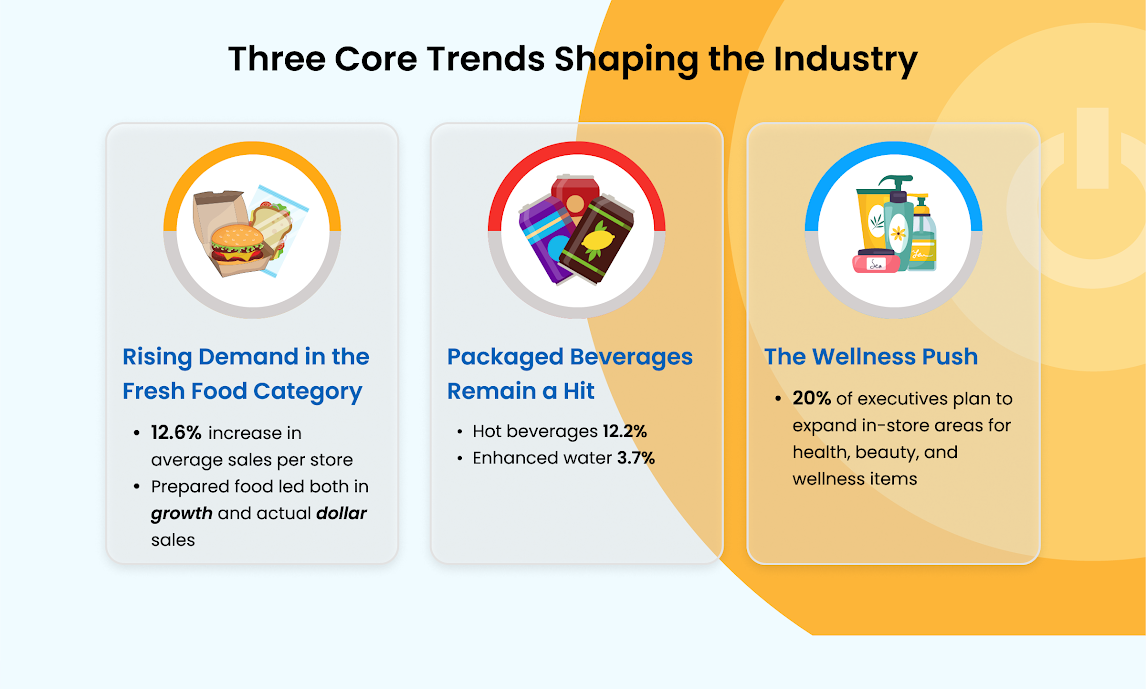
Three Core Trends Shaping the C-Store Retail Industry

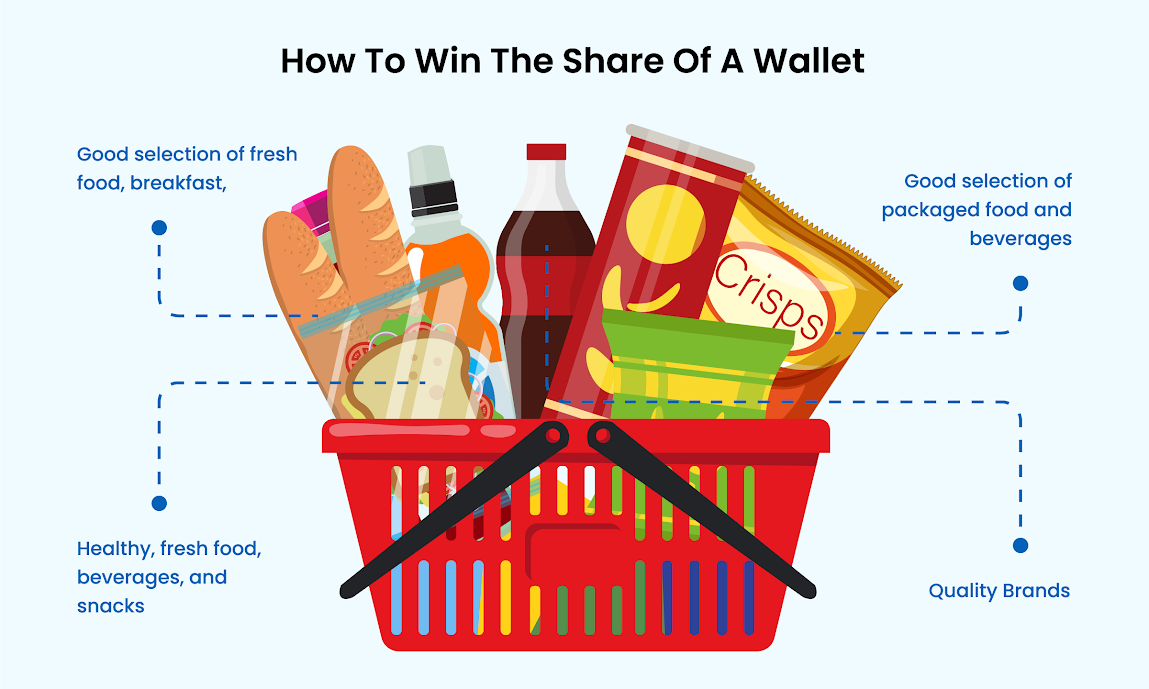
How to Win the Share of Wallet: Top Trends in Customer Purchases

The purchase patterns in c-store retail are becoming more and more nuanced, shifting away from ‘traditional convenience’ and aligning with the rapidly evolving purchase sentiments of modern consumers. The demand for international and imported snacks is rising, while the local brands remain a staple.

Further, the sales are being influenced by micro-trends – local events, holidays, seasonality, sudden changes in weather, and eating preferences. Among all the trends, the following four stand out:

  • Quality Brands
  • Good selection of packaged food and beverages
  • Good selection of fresh food, breakfast,
  • Healthy, fresh food, beverages, and snacks

Further, customers seek a rich variety and prefer the c-stores where the shelves are always stocked. Hence, the store replenishment strategies need a reset – moving away from a standard, one-size-fits-all approach to a more nuanced and sophisticated one.

How does AI-led Replenishment Help Retailers Rise Above Challenges and Unlock Optimal Replenishment?

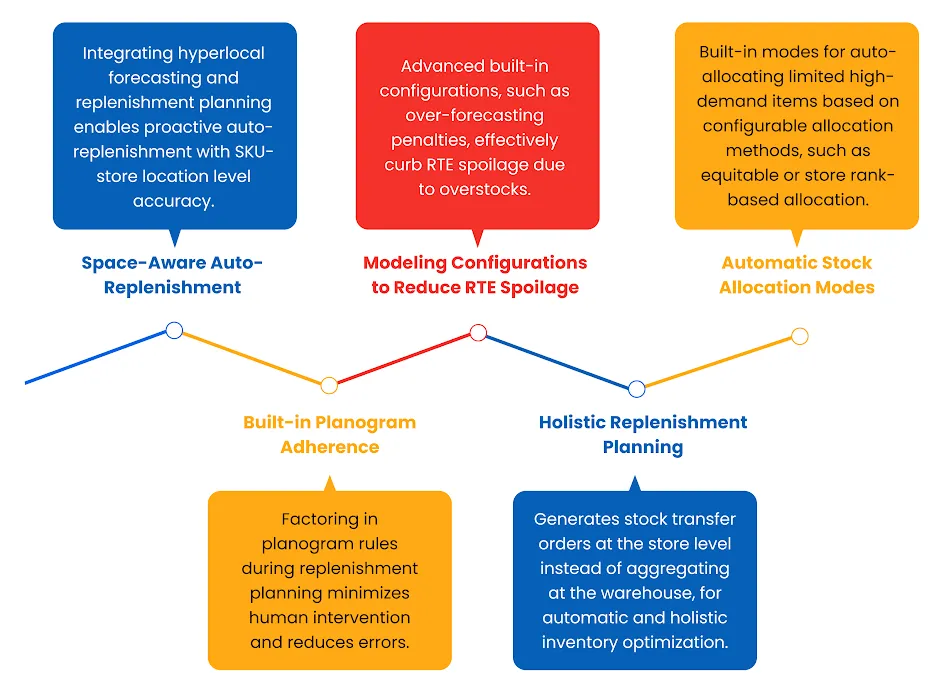
1 Space-Aware Auto-Replenishment

Tight shelf and storage space in convenience stores limit the type and amount of inventory. Further, this increases the reliance on the warehouse for inventory replenishment. Traditional tools lack the modeling sophistication for optimal replenishment with granular precision for each c-store. They forecast demand in the same manner for all store locations, leading to stock imbalances and bloated inventory costs.

AI/ML-led inventory demand prediction and auto-replenishment solutions integrate forecasting and replenishment planning, enabling proactive auto-replenishment with SKU-store location level accuracy. They offer a uniform forecasting rigor for all store locations, ensuring the forecast accuracy is high down to the SKU-location level. While the traditional forecasting happens at the category or sub-category level, the AI-based solutions forecast demand at the SKU level while factoring in location-specific and other influencing factors for unmatched accuracy.

2 Built-in Planogram Adherence

Planogram constraints are critical for c-store shelves, where the space is limited when compared to the inventory. As traditional replenishment tools offer no flexibility to add or consider the planogram constraints, the demand planners end up adjusting the order plans manually to align with the planogram rules. This not only makes replenishment more complex, but it also makes it error-prone and vulnerable to stock imbalances.

On the other hand, ai replenishment planning solutions can factor in planogram rules during replenishment planning, which minimizes human intervention and reduces errors. Another important benefit is the ability to tune replenishment for each c-store with respect to location-specific demand patterns and planograms from a single interface automatically.

3 Modeling Configurations to Reduce RTE Spoilage

Heavy spoilage in the ready-to-eat (RTE) category continues to be a major challenge for retailers, especially as the demand for consumables, fresh food, and snacks rises. Traditional tools lack the technological capabilities and modeling sophistication to prevent overforecasting in the RTE category, and forecast demand like any other category, such as packaged water. However, the demand and demand predictors and influencers for the RTE category vary hugely from the other packaged snacks category.

This is exactly where AI, ML, and deep learning based auto-replenishment and demand planning solutions emerge as the best choice. They allow the demand planners to add as many demand predictors as required and do feature-level configurations to choose or automatically opt for advanced features such as penalized overstocking functions. All these features prevent overstocking of RTE items and enable retailers to exercise granular control over retail inventory optimization solution, even in the most challenging categories.

4 Holistic Replenishment Planning

Traditionally, multiple c-stores are linked to a warehouse or distribution centre or dark store, depending on the location and footfall. As the c-stores are heavily reliant on these inventory locations for quick just-in-time replenishment, the inventory at all such facilities tends to be bloated at all times. Irrespective of the actual consumption, the retailers have to bear the high inventory costs and revenue loss from spoilage and expiry. The legacy systems don’t offer any functionality to optimize inventory as a whole across all locations, making it impossible for demand planners to optimize different kinds of orders from a single interface.

The AI/ML-led solutions can offer holistic inventory optimization views and optimize inventory at all locations from a single intuitive dashboard. Hence, retailers can generate stock transfer orders at the store level instead of aggregating at the warehouse, for automatic and holistic inventory optimization. This means the demand planners can optimize all kinds of orders – direct to store, warehouse, and distribution centre orders without having to switch interfaces, unlocking higher inventory efficiency and lower costs.

5 Automatic Stock Allocation Mode

Every c-store has some high-demand key value items. Poor allocation of such items causes frequent stockouts, eroding revenue, and customer loyalty. Traditional tools for replenishment planning solutions don’t offer feature-level configurations to optimize the allocation of such items. This leads to over-allocation at c-stores where the actual demand is low, while the c-stores with high demand are affected by stockouts.

The AI/ML-driven automatic store replenishment solutions generate auto-replenishment recommendations for such key value items and offer built-in modes for auto-allocating limited high-demand items. They also offer configurable allocation methods, such as equitable or store rank-based allocation based on store-level sales and demand metrics.

As the convenience retail industry grows and markets diversify, retailers need to move towards proactive, agile, and intelligent replenishment built on top of accurate forecasting with hyperlocal precision. Hence, strategic replenishment optimization becomes an imperative, and AI/ML-driven platforms pave the way.

Table Of Contents
Three Core Trends Shaping the C-Store Retail Industry
How to Win the Share of Wallet: Top Trends in Customer Purchases
How does AI-led Replenishment Help Retailers Rise Above Challenges and Unlock Optimal Replenishment?

In-Store Replenishment Optimization: Food and Grocery Retail

Merchandising and Supply Chain
Blogs

In-Store Replenishment Optimization: Food and Grocery Retail

The global food & grocery retail industry is a $12 trillion market, but continues to bleed value – $1.77 trillion (in 2023) due to inventory distortions. Despite demonstrating an impressive rate of technology adoption, stockouts and overstocks continue to be a thorn in the side. Stats reveal that in 2023, retailers incurred losses amounting to $1.2 trillion from stockouts alone.

Apart from affecting the potential revenue from sales, stockouts also degrade customer experience, affecting customer loyalty directly. Likewise, overstocks not only contribute to capital lock-in, but they also lead to wastage, markdowns, and expiry, and affect sustainability.

What makes optimizing replenishment such a challenge in food and grocery retail, and why do inventory distortions keep being a thorn in the paw for retailers worldwide? 

Here, we explore the answers and outline the solutions that actually work!

Optimization at Scale: The Million-SKU Problem

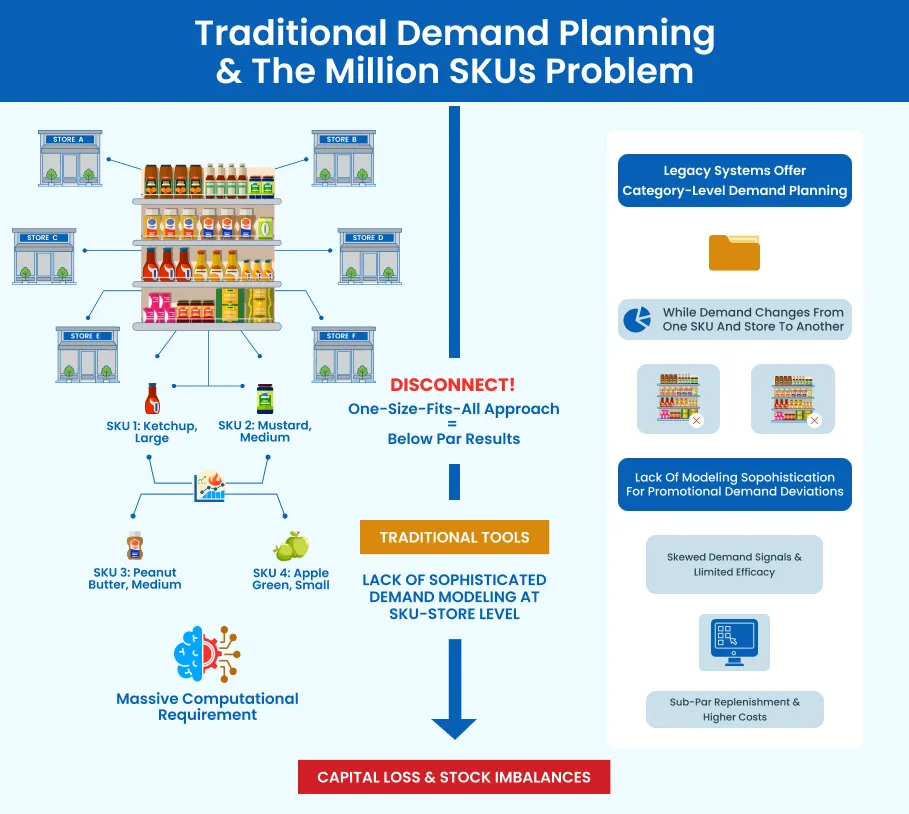
Food and grocery retail operations span millions of SKUs across hundreds of locations. Now, in an ideal scenario, the retailers need a solution that helps them understand and decode the demand patterns at each store location for each SKU so that replenishment plans can be optimized to prevent stock imbalances and capital loss.

This requires forecasting and replenishment at a granular level, think SKU, and store locations; meaning, the computational requirement is massive.

On the other hand, the legacy systems and inventory planning tools work at the Category or sub-category level for each location. So, they are essentially treating all the SKU types the same for all locations. Hence, the demand for chocolate cookies, large pack, sold at one location, is modeled similarly to the demand for coconut cookies, small pack, being sold at another store.

This disconnect creates a huge problem by skewing the demand signals and limiting the optimization efficacy to a standard, one-size-fits-all approach.

It stems from the fact that traditional tools work with only a set of demand modeling methods and lack the sophistication and granularity to achieve robust, agile, and scalable replenishment planning at scale with hyperlocal precision.

So, if retailers are working with an infrastructure that is not tuned or built for the complexity and scale of food and grocery retail, then the results would definitely be below par.

Decoding Demand, and Overcoming Uncertainty in Food & Grocery Retail: What WORKS?

Before we take a deeper dive, here is a fact worth mulling over:

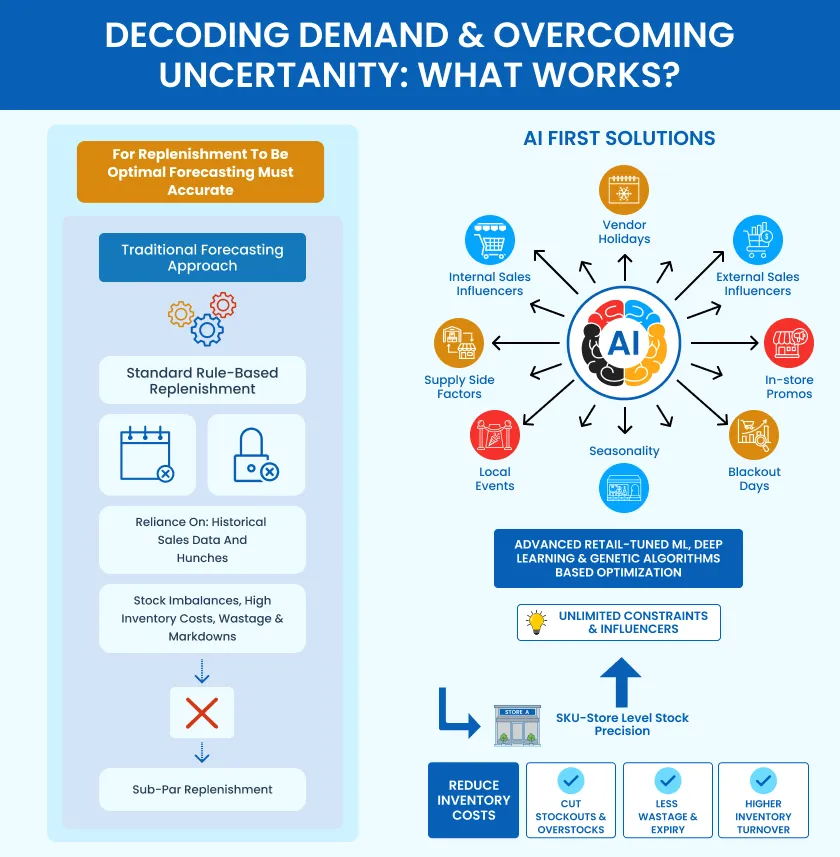
For replenishment to be optimal, forecasting must be accurate.

Traditionally, demand planning and replenishment are disparate processes, and lack the modeling sophistication to factor in the nuances that are unique to the food and grocery segment.

This is exactly where the strength of AI-first solutions lies.

AI-first solutions coupled with advanced retail-tuned ML, deep learning, and genetic optimization algorithms have this inherent capability to model not only the nuances of the food and grocery retail, but also to add an unlimited number of constraints or influencers.

Further, the AI/ML-led solutions have unmatched computational strength, enabling retailers to optimize the replenishment at the SKU-store level for hyperlocal precision. Hence, they can reduce inventory while cutting stockouts, wastage, and expiry.

This means retailers no longer have to stick to historical sales data, seasonal data, and manual adjustments based on hunches while planning for the upcoming holiday season or weekdays. They can factor in all kinds of external and internal sales and demand influencers, vendor holidays, and supply-side factors like minimum order quantities and more, and that too at scale.

Let’s take a look at how this happens.

Optimizing Food & Grocery Inventory With AI-led Auto-Replenishment Built for Hyperlocal Precision Delivered at Scale

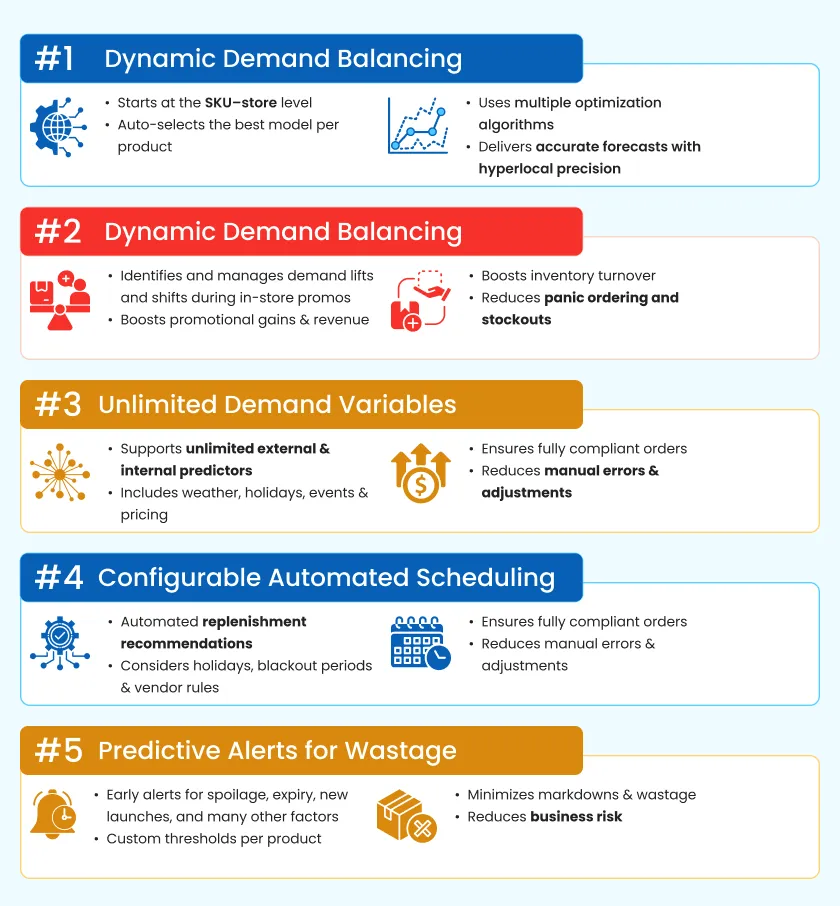
1 Modeling Sophistication

AI-first solutions start at the SKU level and come with multiple optimization algorithms. They automatically select the most optimal algorithm for each product-store combination, using automatic or user-defined model selection criteria. Plus, they incorporate unlimited demand predictors, delivering highly accurate, hyperlocal forecasts.

Ultimately, retailers can get accurate forecasts for millions of SKU-store combinations without compromising speed, accuracy, or coverage.

2 Dynamic Demand Balancing

One critical drawback of traditional demand planning and replenishment tools is their inability to identify and manage the demand fluctuations or cannibalization during in-store promotions. This costs retailers as much as 17% of their promotional revenue, causing either stockouts or overstock.

AI/ML-led solutions enable retailers with dynamic demand balancing by anticipating the promo-effects well ahead of time and optimizing the replenishment recommendations automatically. Hence, the order plans ensure that more amount of quick-selling items are ordered and products with declining demand due to promotions are ordered less.

This keeps the inventory distortions at bay while preventing the margin loss from demand fluctuations during promotions.

3 Unlimited Demand Variables

Another powerful feature of AI-led demand forecasting and auto-replenishment solutions is their ability to allow users to add an unlimited number of demand variables. These solutions treat every influencer as a predictor variable, and factor in everything, ranging from weather, holidays, seasons, local events, to promotions, discounts, and many more such factors to offer unparalleled accuracy in demand forecasting.

Further, the users can choose the set of variables for each SKU and store combination, thereby unlocking never-before-seen accuracy for each store location. The ability to do so without feature-level coding or engineering requirements is another fantastic advantage of AI-first auto-replenishment solutions.

4 Configurable Automated Scheduling

Food and grocery retail order scheduling is particularly complex owing to its scale and diversity of SKUs. While traditional tools offer limited or negligible scheduling features for optimal ordering, AI-first solutions save time and help avoid errors by automating complex order scheduling.

They offer configurable automated scheduling capabilities that seamlessly incorporate all order placement, acceptance, and delivery restrictions, ensuring replenishment plans always comply with holidays and blackout periods, eliminating manual adjustments.

5 Predictive Alerts for Proactive Wastage & Expiration Management

Food and grocery retail inventory is vulnerable to markdowns stemming from high vulnerability to wastage, spoilage, and expiry. The problem becomes even more challenging while dealing with millions of SKU-store combinations to work with.

AI-first solutions inherently curb this with predictive alerting capabilities that can be configured at the product level with user-defined thresholds. The predictive alerts accurately notify potential wastages and expirations, helping retailers to take proactive actions, with time to spare.

Hence, retailers can act early to reduce spoilage, protect profits, and maintain shelf freshness.

With planning and optimizing capabilities delivering hyperlocal precision at scale, AI-first solutions definitely emerge as the most reliable and the best way forward for food and grocery retailers.

Table Of Contents
Optimization at Scale: The Million-SKU Problem
Decoding Demand, and Overcoming Uncertainty in Food & Grocery Retail: What WORKS?
Optimizing Food & Grocery Inventory With AI-led Auto-Replenishment Built for Hyperlocal Precision Delivered at Scale

From Reactive to Predictive: The AI Leap in Grocery Retail Replenishment

Merchandising and Supply Chain
Blogs

From Reactive to Predictive: The AI Leap in Grocery Retail Replenishment

The gap between “digitized” and “intelligent” replenishment is where millions in revenue, customer loyalty, and operational efficiency are won or lost. Whether your grocery store replenishment is going to be a tale of success or a saga of misery from wastage or losses hinges on the accuracy of your forecasts and the adaptability of your order plans.

Many grocery retailers believe that replacing manual number-crunching with an inventory management system is the ultimate hack to cut stock issues, reduce waste, and unlock millions in savings. In reality, replenishment is far more intricate and influenced by complex variables, like volatile demand patterns, promotional demand fluctuations, supply chain disruptions, and ever-changing consumer preferences.

Moving from reactive number-crunching to predictive, AI-driven replenishment isn’t just an upgrade; it’s the new competitive baseline for grocery retailers.

Overlooking the Step Zero

Retailers may collect mountains of data, which is critical for demand and replenishment planning. But because the data is highly unstructured and riddled with gaps or noise, traditional modeling methods tend to over-engineer corrections, distorting the demand signals or discarding “problematic” inputs entirely, leaving critical demand insights on the table.

This snowballs into erroneous forecasts, faulty replenishment, and ultimately stock imbalances across all store locations, driving loss, wastage, and capital lock-ins.

This is exactly where AI-led demand modeling kicks off the transformative leap in forecasting accuracy and replenishment automation.

Instead of handling data noise and sparsity as exceptions, it automatically detects outliers and models demand at an ultragranular level, think SKUs and store location combinations, instead of category or sub-category level modeling.

Getting Equipped for Scale and Complexities

Thousands of SKUs across hundreds of store locations make the grocery store replenishment a massive puzzle of scale and complexity. Standard demand modeling approaches are static rule-based, meaning they can neither identify nor plan for demand dynamics for similar or different SKUs at different store locations.

Further, the actual grocery store sales are hugely influenced by external factors, such as holidays, festivals, seasons, weather, and promotions. AI-led demand forecasting and replenishment naturally incorporates all these influencers as variables and models demand for all SKUs and store location combinations, achieving hyperlocal stock precision, something that is beyond the scope of traditional tools.

Understanding Promotional Demand and Its Impact

One of the most critical aspects of in-store promotions is often overlooked and unaccounted for in traditional demand planning and replenishment scenarios. While they plan for demand “lifts” that are expected during promotions, they tend to overlook any kind of demand “shifts” that might happen due to promo-induced demand fluctuations.

Let’s zoom out on this.

A top-seller during promotions also draws demand away from the regular performer on the shelves (same or different category). Inability to account for such demand shifts can not only cause overstock of non-promoted items, but also make promoted items go out of stock.

Projecting the problem over hundreds of stores gives a reality check of how food and grocery retailers miss out on promotional gains despite planning for them in the first place.

AI-led promotional planning accounts for both demand shifts and lifts for each SKU-store combination, offering highly precise order plans that ensure stock balance, minimize wastage due to overstocking, and boost promotional revenue.

Interface Switching for Vendor and Supply Variations

Grocery retailers are working with multiple service providers and vendors at a time. This means they are switching among multiple management software or interfaces. Now, despite having the automation at their disposal, the inability to integrate supply and vendor-side factors with demand planning and replenishment systems renders it inefficient.

Standard, one-size-fits-all inventory planning systems plan for days of stock, safety stocks, etc. They don’t allow retailers to actually input supply and vendor-side variables, like supply calendars, blackout days, local holidays, fill rates, etc., for optimizing the order plans for each location.

On the other hand, AI-driven demand planning and replenishment inherently factor in all such variables, ensuring a highly robust, wholesome, and reliable replenishment planning that adapts to the supply chain realities.

Siloed Planning Across Warehouse, Distribution Centres, and Stores

Another bottleneck for grocery retailers is the inability to look beyond the store inventory during replenishment planning. This gives a siloed view of store-level inventory, while stock could be languishing across warehouses, distribution centres, or dark stores.

AI-led demand planning and replenishment automation consider inventory at all locations, and help optimize stock for direct-to-store orders, warehouse orders, DC orders, and so on. Hence, retailers can unlock holistic inventory optimization, which reduces stock imbalances, boosts inventory turnover, and minimizes wastage.

The Takeaway

The exhaustive planning and modeling superiority deliver both strategic resilience and near-term ROI, stemming from the unparalleled computation power of AI-led demand planning and auto-replenishment frameworks.

Be it the agility and demand modeling finesse required for an uncertain market, or sustainability goals, be it multi-format retailing or improvements in margins – AI-led solutions deliver across all business goals, setting them class apart from traditional systems and the game-changers in modern grocery retail.

Table Of Contents
Overlooking the Step Zero
Getting Equipped for Scale and Complexities
Understanding Promotional Demand and Its Impact
Interface Switching for Vendor and Supply Variations
Siloed Planning Across Warehouse, Distribution Centres, and Stores
The Takeaway

What’s Breaking Forecast Accuracy in Health, Beauty & Wellness Retail? And, How to Fix It?

Post
Blogs

What’s Breaking Forecast Accuracy in Health, Beauty & Wellness Retail? And, How to Fix It?

The darling of the consumer goods market, the $646.20 billion global beauty and personal care market is expanding its scope and definitions. Be it products or segments, the health, beauty, and retail ecosystem is bubbling with constant transformations – wellness and beauty merging to form highly nuanced products for Gen Alpha, while adaptogens and dermal skincare are a Gen Z favourite.

While this definitely ripens the hot opportunity, it also complicates the already challenging demand forecasting and replenishment optimization puzzle. Newly emerging segments, let alone products, leave retailers gasping for understanding demand, leading to manually-pivoted decisions based on negligible or no data-backing.

Result?

A chaotic inventory sob story, lost sales due to stockouts at some stores, and bloated inventory at others, choking the bottom line, inflating inventory costs, and stifling the operating capital like never before.

Here, we explore three core factors that cause inventory accuracy problems in health, beauty, and wellness retail and how retailers can fix them.

Nature of Inventory

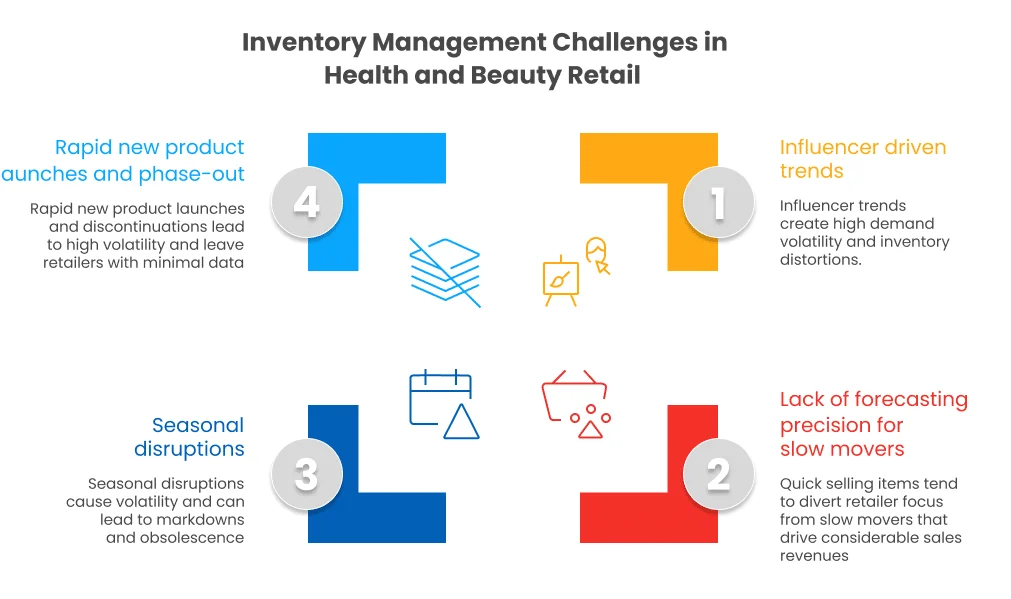
Unlike the traditional retail segments, like food and grocery, health, beauty, and wellness inventory mix is changing rapidly in multiple ways – new products are constantly flying off the shelves, and rapid product discontinuations are the norm.

Volatile product mix leaves little data footprint, making it absolutely impossible for retailers to model and forecast demand patterns with accuracy. This is mainly because traditional demand planning and retail inventory management solutions come with standard, one-size-fits-all approach that falters in the wake of data challenges like noise, gaps, etc.

Further, the majority of inventory is vulnerable to seasonal and trend-driven disruptions. Sometimes, a single video from a beauty or wellness influencer can render an entire category obsolete, while lifting demand in a dormant category. So, the demand and sales influencers become chaotic and extend beyond the computational abilities of static demand modeling.

Overlooked Revenue-Driving Categories

Traditionally, retailers have been focusing on the top 20% products that drive around 80% of the sales revenue, and overlooking the long-tail inventory, that consists of slow-movers. But, in health, beauty and wellness retail, these slow movers are driving as much as 40% of sales revenue.

This means that retailers can no longer afford to overlook their long tail inventory and need equal forecasting rigor for such products. However, traditional forecast modeling tools and inventory demand prediction software don’t offer such granular modeling and planning capabilities.

So, retailers are unable to tap into the extra revenue that they can drive from long-tail inventory.

Diverse Set of Promotions Running in Parallel

Another critical factor that breaks forecast accuracy are the complex in-store promotions that are running across multiple brands, products, and categories in parallel. In-store promotions are a great way to boost sales. However, they also trigger demand lifts and demand shifts across categories and within them.

While traditional demand forecasting solutions focus on demand lifts in the promoted products, they don’t factor in the demand shifts caused by promoted products in the non-promoted category/products. This leads to overstocking of non-promoted products, while the promoted ones go out-of-stock.

Both situations reduce the promotional gains, leaving retailers grappling with panic ordering and overstocked inventory. Further, the sales in health, beauty, and wellness retail are complex – bundled offers, BOGOs, seasonal offs, etc.

Mapping these demand shifts and lifts to prevent cannibalization is beyond the computational abilities of traditional tools.

How to Break the Vicious Cycle of Stockouts and Overstocks?

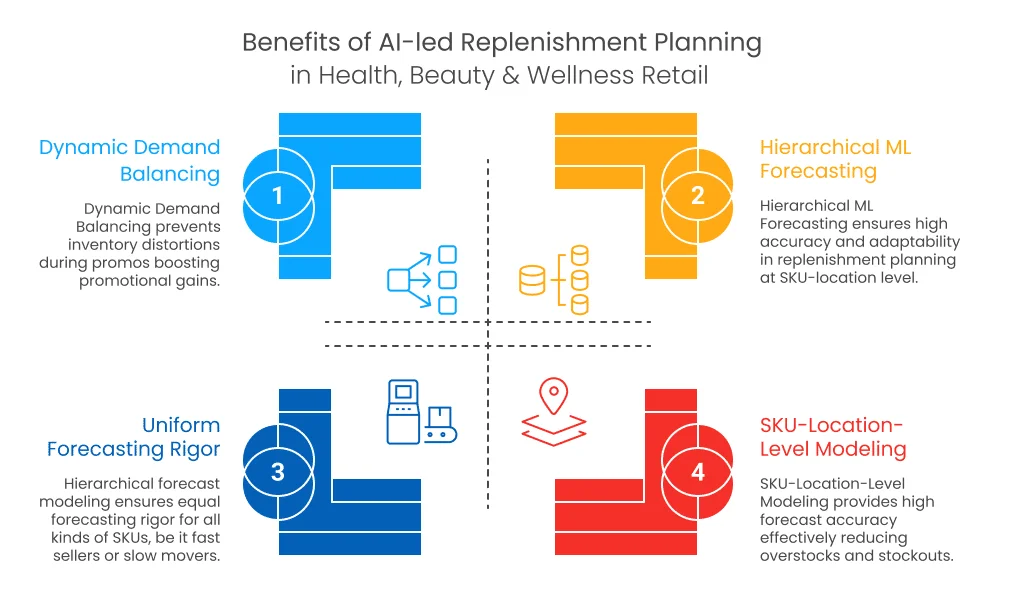
Solving the inventory replenishment puzzle requires demand sensing and planning beyond the category level. Since, the demand patterns are always evolving and the health, beauty, and wellness retail segment comes with its unique set of challenges, the solution lies in achieving hyperlocal accuracy with SKU-location-level demand modeling.


Hierarchical ML Forecasting for Rapidly Changing Inventory Mix

Demand forecasting and automatic store replenishment frameworks built on hierarchical forecasting address the data challenges and learn from similar categories to model demand accurately. This empowers retailers to forecast demand accurately for each product location and ensure that optimal inventory levels are maintained at all times.

These solutions also come with the in-built functionalities that automatically tune replenishment recommendations as per the new product launches and discontinuations, making replenishment planning solutions an ongoing process without requiring manual intervention.

Hierarchical Forecasting for Uniform Forecasting Rigor Across All Types of SKUs

As retailers can no longer afford to overlook certain products and categories as they are driving a significant part of revenue, they need solutions that enable them to exercise uniform forecasting rigor for all kinds of products, including the long-tail.

Auto-replenishment solutions with hierarchical forecasting capabilities model demand for millions for the SKU-store location combinations for each SKU type, while factoring in complex and unlimited number of demand predictors. Thus, the retail replenishment software recommendations generated by the solutions are extremely reliable, accurate, and prevent revenue erosion.

Dynamic Demand Balancing During In-Store Promotions

Another powerful benefit of demand forecasting and automated replenishment solutions is promotion-specific forecast modeling. It treats each bulk-buy offer as a distinct feature, capturing its unique cannibalization or growth effects on category demand.

Thus, the replenishment recommendations are generated keeping all types of in-store promotions in mind, ensuring that the demand shifts and demand lifts across all promotions are factored in.

So, retailers can always order the high-demand items without risking out-of-stock as well as overstock of non-promoted items. This automatic inventory recalibration empowers retailers to keep their promotional revenue intact without risking stock imbalances.

Accurate store replenishment via cutting-edge AI capabilities is no longer a nice-to-have, especially in rapidly evolving retail segments like health, beauty and wellness. It paves the way for optimal replenishment, operational excellence, reduced wastage and minimizes the vulnerability to markdowns and capital lock-ins. With infallible accuracy and extremely exhaustive planning capabilities, it is definitely the way forward for the entire segment.

Nature of Inventory
Overlooked Revenue-Driving Categories
Diverse Set of Promotions Running in Parallel
How to Break the Vicious Cycle of Stockouts and Overstocks?
Hierarchical ML Forecasting for Rapidly Changing Inventory Mix
Hierarchical Forecasting for Uniform Forecasting Rigor Across All Types of SKUs
Dynamic Demand Balancing During In-Store Promotions

Retail at Culture Speed: 5 Big Ideas from NRF APAC 2025

Merchandising and Supply Chain
Blogs

Retail at Culture Speed: 5 Big Ideas from NRF APAC 2025

NRF APAC 2025, held June 3-5 in Singapore, didn’t just spotlight the latest in retail technology — it revealed a clear call to reset, reimagine, and realign. Across packed halls and intimate sessions, the takeaway was unmistakable: in a world that’s racing forward, relevance is no longer a nice-to-have. It’s oxygen.

What stood out wasn’t just what was being discussed, but how. Retail leaders, technologists, and brand stewards weren’t speaking in future-tense projections. They were unpacking real-time, lived challenges and articulating how strategy, data, and empathy must converge to build retail for the now.

Here are five signals that emerged with lasting implications for what comes next.

1. AI’s Maturity Moment Has Arrived

Retailers are past the hype curve. The question is no longer if AI should be used, but how deeply and to what end.

The conversations at NRF reflected a shift from experimentation to accountability. AI isn’t viewed as a monolithic solution anymore. It’s a modular co-pilot — one that augments human creativity, sharpens precision, and adapts to customers at speed.

Use cases are expanding: from weather-adjusted inventory planning and real-time demand forecasting, to AI-generated promotions, hyper-personalized search, and fraud detection.

However, a sobering theme surfaced: while many brands have the infrastructure, most still lack organizational clarity and cultural readiness to scale these tools with intention. Without a clearly defined “why,” AI risks becoming performative rather than transformative.

Retailers also face a build vs. buy dilemma. While enterprise brands may build proprietary AI stacks (as seen with Lenovo’s Computer Vision AI), SMBs and mid-sized players are seeking modular, plug-and-play solutions that let them experiment without heavy investments.

Our takeaway? Flexibility, scalability, and outcome orientation will define vendor partnerships in the next 24 months.

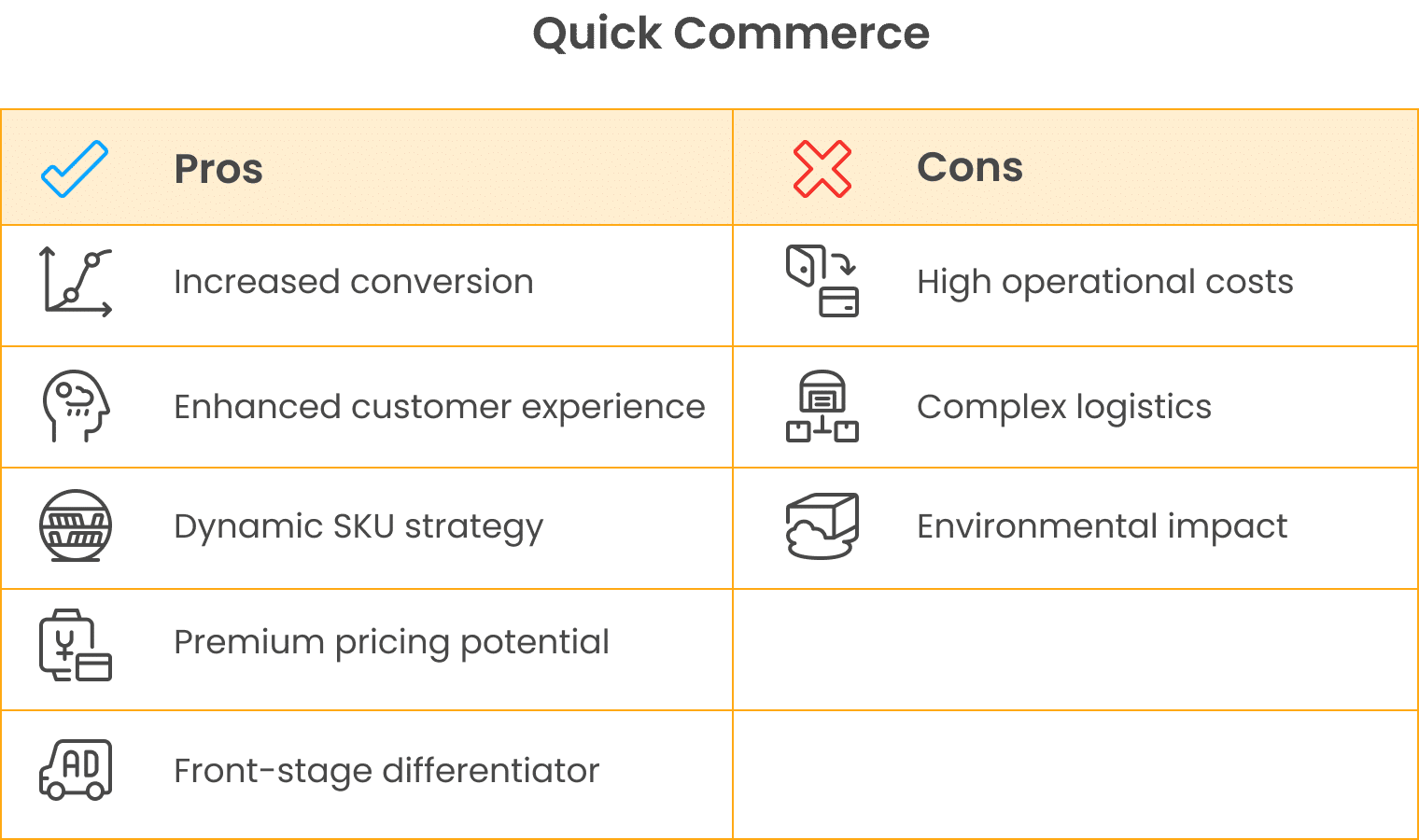
2. Quick Commerce Is Redefining the Experience Layer

Quick commerce has officially transcended grocery.

A/B tests at the event showcased how a delivery promise of 8 minutes (vs. 12) increased conversion rates by nearly 70%. That’s not just faster logistics; it’s a psychological unlock. Speed doesn’t just fulfill a need; it communicates respect, urgency, and recognition.

Grocers shared how they’re now linking demand forecasting with meteorological shifts (e.g., stocking firewood before a cold snap), regional events (like Pongal or Lunar New Year), and local festivities. The SKU strategy is becoming dynamic — less about static seasons and more about microbursts of real-time relevance.

Fashion isn’t far behind. In Tier 1 cities, consumers are already buying sneakers and accessories for same-day plans — and expecting 30-minute delivery as default.

According to a Bain study, 60% of APAC consumers are willing to pay a premium for faster delivery, especially in lifestyle and food categories — a crucial monetization lever for Q-commerce investments.

This shift reframes quick commerce from a back-end function to a front-stage differentiator. The brands that win won’t just deliver quickly. They’ll deliver intuitively.

3. Gen Z Isn’t a Demographic — It’s a Design Philosophy

Retailers have long chased Gen Z. But NRF revealed something deeper: Gen Z is reshaping how retail thinks.

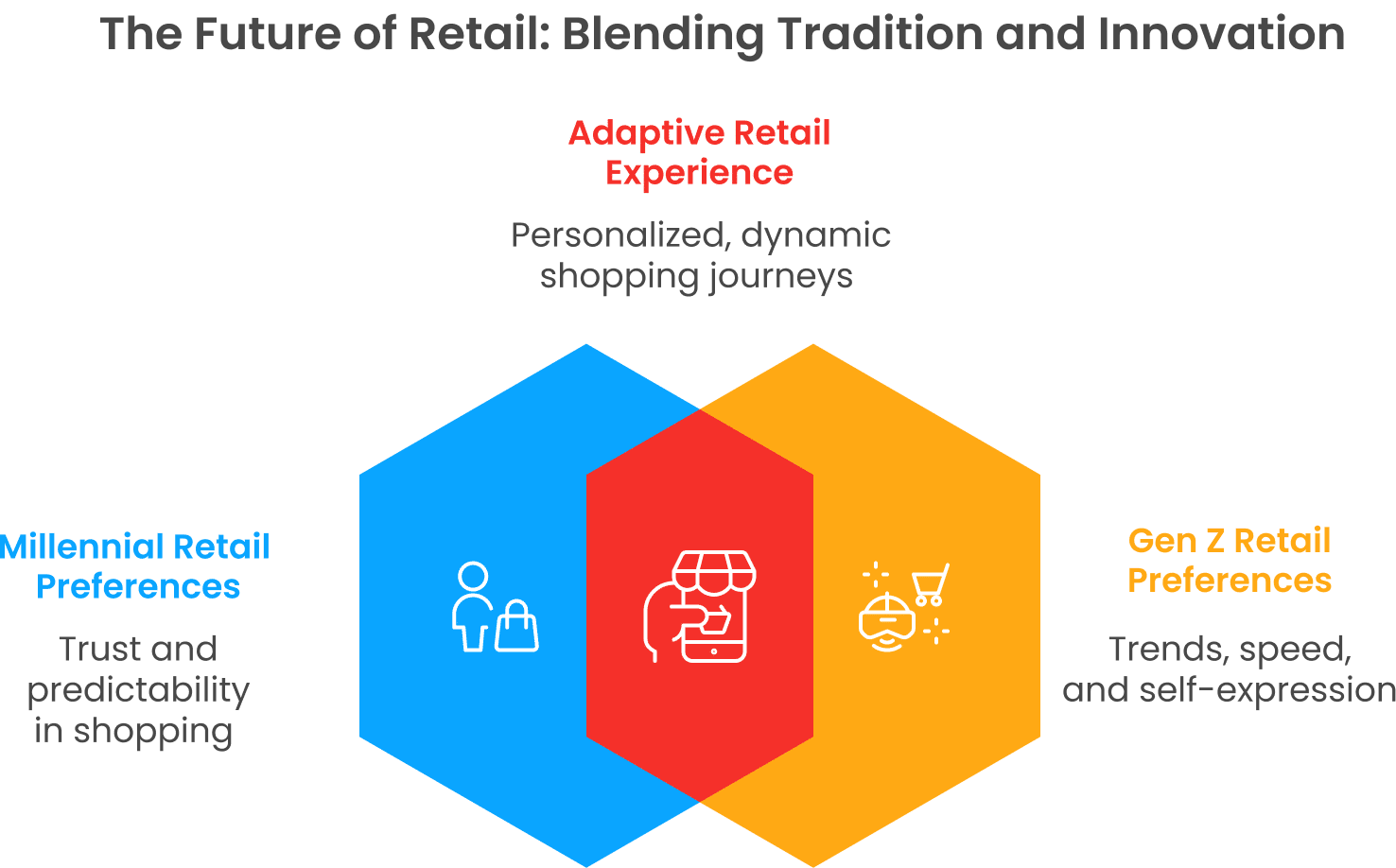
This generation scrolls fast, shops impulsively, and gravitates toward self-expression, not conformity. They discover via TikTok and creator drops, not category pages. And they’re allergic to friction, repetition, and brand posturing.

Retailers shared a powerful construct: the “Two Highway Model.” One lane serves brand-loyal millennials who seek product trust and predictability. The other caters to Gen Z’s hunger for trends, speed, and cultural cues. The key is not choosing one. It’s building both, with AI dynamically routing shoppers based on behavior, not age or assumptions.
Fast-fashion players like Myntra are already using AI to test, launch, and retire thousands of SKUs weekly, each tuned to microtrend signals from Gen Z feeds.2

For retailers, the opportunity is clear: don’t just localize the experience. Socialize it. Make discovery feel personal, participatory, and proud.

4. Relevance Is the New Loyalty

In an attention-fragmented, inflation-sensitive world, loyalty can’t be bought. It must be earned in the moment.

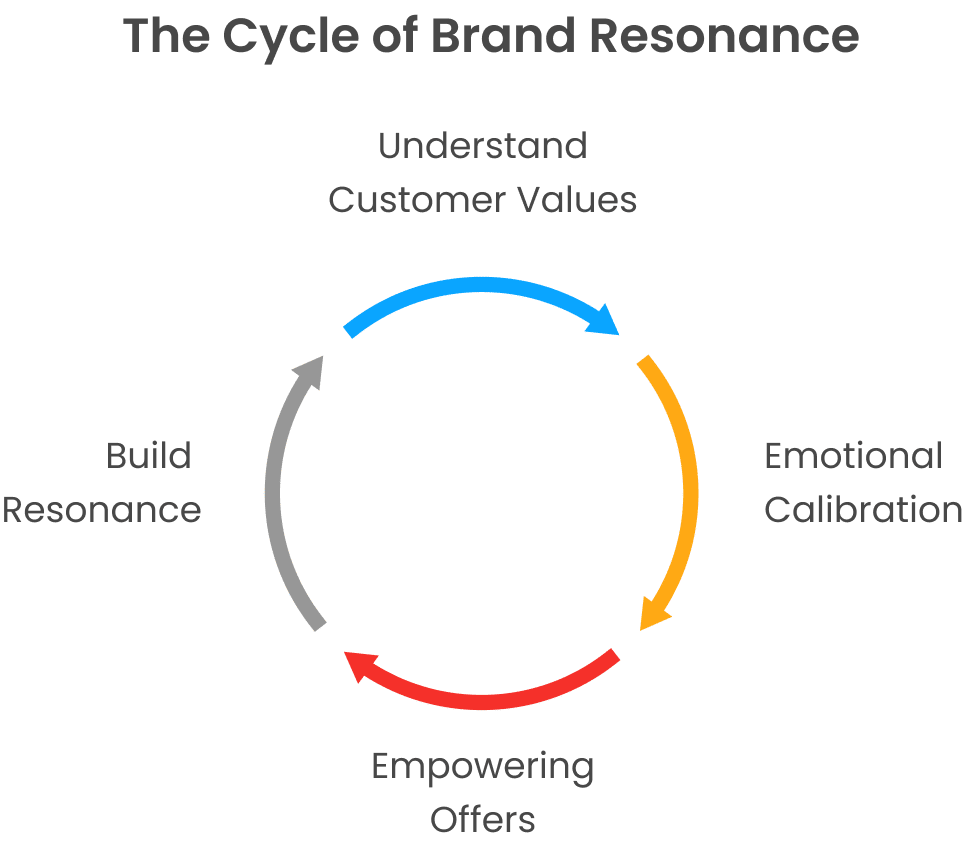
NRF conversations repeatedly emphasized the death of transactional loyalty. Points, push notifications, and basic personalization aren’t enough. Shoppers are gravitating toward brands that feel like them — that listen, adapt, and stay emotionally in tune.

What’s replacing loyalty is resonance.

This means AI needs to evolve from “If X, then Y” personalization to real-time emotional calibration. Algorithms should ask: Is this the right tone for this customer today? Is this offer empowering, not just tempting?

A McKinsey report finds that over 70% of Gen Z consumers say they’re more likely to engage with brands that reflect their values, even more than price or product range.

5. The Middle of the Market Is the Next Frontier

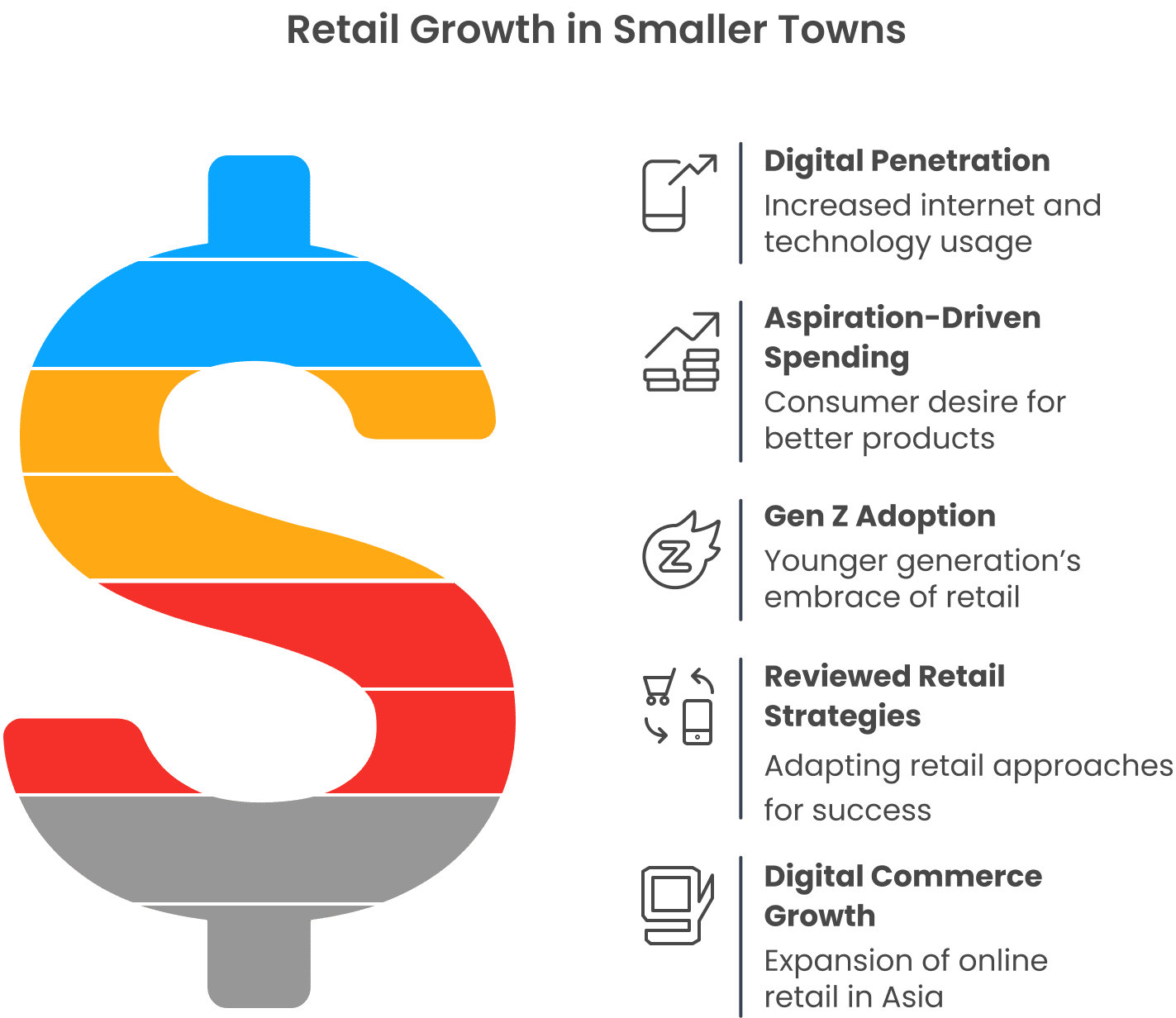
Smaller towns are seeing an upswell in digital penetration, aspiration-driven spending, and Gen Z adoption. Retailers who succeed here aren’t the ones who scale down their metro playbooks — they’re the ones who rewire them.
Deloitte APAC forecasts that non-metro retail markets will drive 65% of digital commerce growth in Asia by 2027.

The Biggest Takeaway: Don’t Follow Trends. Catch Signals.

NRF APAC 2025 was a mirror of what the best in retail are doing right now to stay relevant.
The winners are not those who chase trends. They’re the ones who catch signals — from culture, customers, and commerce — and turn those into decisive action.

At Algonomy, we’re building for that kind of retail — where decisions are data-informed, but empathy-led. Where speed meets story. And where AI doesn’t replace humans, it empowers them to create relevance at scale.

References

Table Of Contents
1. AI’s Maturity Moment Has Arrived
2. Quick Commerce Is Redefining the Experience Layer
3. Gen Z Isn’t a Demographic — It’s a Design Philosophy
4. Relevance Is the New Loyalty
5. The Middle of the Market Is the Next Frontier
The Biggest Takeaway: Don’t Follow Trends. Catch Signals.
References

Is Your Replenishment Truly Strategic? Top Priorities for Health, Beauty, and Wellness Retailers
Merchandising and Supply Chain
Blogs

Is Your Replenishment Truly Strategic? Top Priorities for Health, Beauty, and Wellness Retailers

With 95% of consumers planning to increase their spending, the trillion-dollar shiny and glamorous retail segment of health, beauty, and wellness is a ripe opportunity up for grabs. However, new geographic hotspots, diminishing boundaries between wellness and beauty, and rapidly evolving trends are setting the stage for adaptive and agile retail planning.

Is your replenishment strategy still relevant, or are you constantly pivoting to new challenges like promotions planning, trend-chasing, and hunch-based inventory?

With customers forming multiple tight-knit cliques of diverse purchase preferences across different retail segments, traditional historical-data-based replenishment no longer serves the purpose.

For retailers, it’s a unique time to pivot themselves and leverage intelligent process automation to strengthen their foothold in the industry with optimized assortments across all locations. Here is a strategic framework to achieve this.

Decoding the Customer Demand at the Granular Level

29% of beauty purchase decisions are motivated by product availability, and 23% of them are driven by a good selection of products.

Further, the beauty shoppers in the ages of 18-24 and 30-40 have highly nuanced preferences encompassing adaptogen-infused products, dermatologist-backed ingredients, and more. Thus, the regional-level demand planning and replenishment strategy becomes ineffective in health, beauty, and wellness retail.

The inability to anticipate customer demand well in time leaves retailers gasping for more stock of quick-moving items while ending up with piles of slow-moving items. The high unit costs and vulnerability to markdowns and obsolescence make it important to have a smart and agile replenishment framework that drills down to the SKU level and then generates replenishment plans.

AI-driven demand forecasting solutions can factor in thousands of constraints – sales influencers, historical demand, regional parameters, category & channel-specific factors, and much more – to generate highly precise forecasts.

Data-Driven Replenishment Instead of Hunch-Based Adjustments

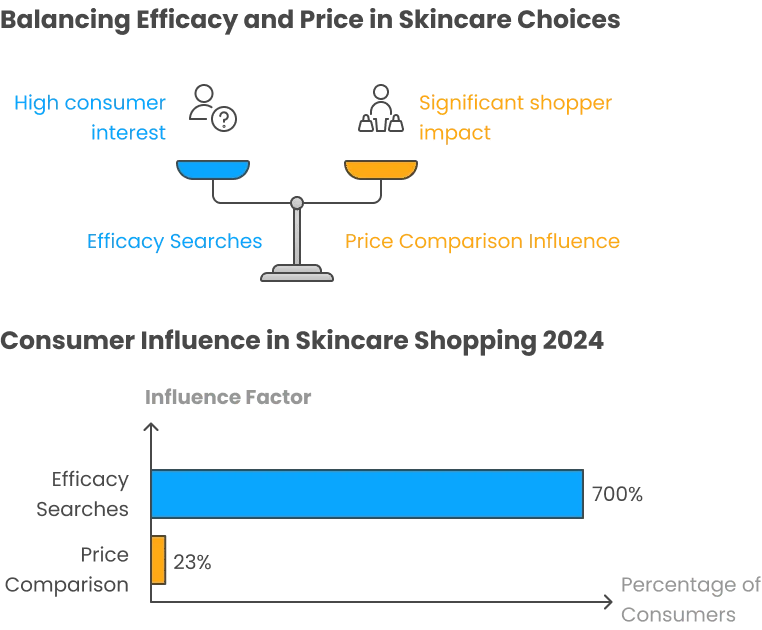
In 2024, skincare “efficacy” searches spiked by 700%, while 23% of shoppers were influenced by “product price comparison”.

While some customers are shopping across price points, some are enticed by the most-loved product in the influencer fraternity. Mere trend-chasing can easily spiral into overstock of slow-moving items and stockouts for quick movers. This means that demand planners need to mine and analyze a diverse and broader set of consumer, market, and purchase motivation data to optimize inventory.

AI-led replenishment planning solutions implement an analytics-driven approach for allocating inventory at all product locations. Retailers can choose from thousands of ensemble algorithms for each product-store combination and consider an unlimited number of customizable demand predictors.

This enables them to predict demand at a hyperlocal level and tune their replenishment plans based on a precise understanding of all constraints and demand influencers.

Bolster Brick & Mortar Value Props with Hyperlocal Demand Analysis

While online shopping has increased across health, beauty, and wellness retail segments, in-store buying and physical touchpoints still matter. As much as 40% of online retail includes a physical touchpoint.

According to the 2023 US Beauty Consumer Survey, as many as 54.2% of online beauty buyers say that trying on a new product during in-store shopping helps them discover new brands. Hence, having accurate inventory across all channels is critical for customer satisfaction, protecting revenue, and customer acquisition.

Inability to offer the right stock at the right location and right time can easily lead to customer churn, which is mostly irreversible, given the number of options available. This calls for replenishment planning with hyperlocal accuracy.

AI/ML-driven replenishment empowers retailers to offer highly tuned inventory as per granular demand patterns. Retailers can expand beyond core product categories and expand to adjacent categories or go deep in a specific category to gain spending share with customers.

Automating Promotions Management for “Every Offer”

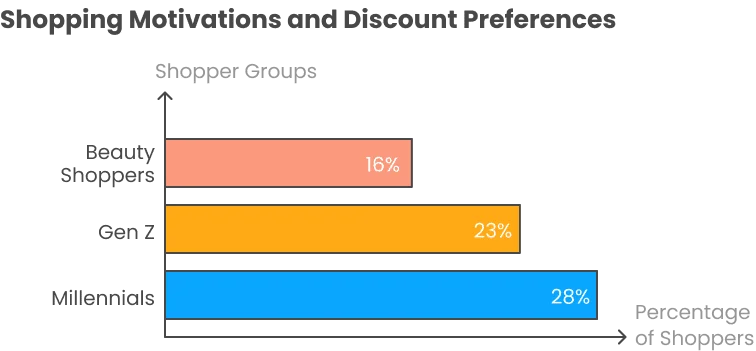
Promotions have a substantial impact on retailer revenues. Studies show that 16% of beauty shoppers’ pre-shop motivation comes from “Deals.” Also, 23% of Gen Z and 28% of Millennials only buy products on discount.

However, the promotions in health, beauty, and wellness retail are particularly complex. A diverse set of promotions is running in parallel, making it hard for retailers to identify and capture the promotion-induced demand shifts and lifts, leading to cannibalization.

The cannibalization effect can eat away as much as 17% of the promotional gains, thereby causing retailers double harm. Intelligent replenishment solutions offer dynamic demand balancing for demand shifts and lifts during promotions. Thus, retailers end up ordering more promoted items and fewer unpromoted items, effectively cutting both overstock and stockouts.

Master the Three A’s – Agility, Adaptability, and Assortment

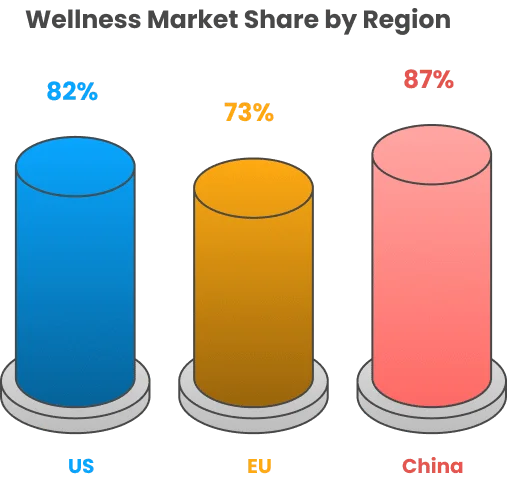
The beauty and wellness sectors are converging, with a combined value of $140.7 billion in the US alone. Wellness alone has a market share of 82% of consumers in the US, 73% in the EU, and 87% in China.

While consumer focus on wellness and efficacy-backed products is increasing, emerging disruptions will ultimately affect retailer revenues. Further, retailers need to invest in replenishment frameworks that are agile enough to recalibrate inventory while keeping pace with trends.

AI-led demand forecasting and replenishment solutions forecast demand at the product-location level and tune order plans for inter-SKU plays while adapting to supply-side deviations. They empower retailers with holistic inventory optimization across warehouses, stores, and distribution centers, thereby facilitating precise planning and replenishment.

While the market opportunity in health, beauty, and wellness retail is huge, rapidly evolving demand patterns and trend-induced purchases are ruling the scene. Sticking to the same old one-size-fits-all replenishment strategy can cause retailers to lose out on anticipated gains.

Retailers can no longer afford manually cranked inventory decisions based on static sales or demand data. AI-driven inventory allocation tuned to hyperlocal nuances to offer wider assortments, while adapting to real-time demand patterns and agile recalibrations to supply-side deviations, is the right way to go.

Table of Contents
Decoding the Customer Demand at the Granular Level
Data-Driven Replenishment Instead of Hunch-Based Adjustments
Bolster Brick & Mortar Value Props with Hyperlocal Demand Analysis
Automating Promotions Management for “Every Offer”
Master the Three A’s – Agility, Adaptability, and Assortment

Transforming Supplier Collaboration With Automation – Challenges and Road Ahead

Merchandising and Supply Chain
Blogs

Transforming Supplier Collaboration With Automation – Challenges and Road Ahead

As businesses embrace technology-driven capabilities globally, the word collaboration assumes a critical stance, especially in industries that thrive on seamless functioning across multiple disparate components. Retail is an epitome in this regard, with its success hinging on transparency, responsiveness, integrated management, and comprehensive visibility, among other factors.

This is exactly why supplier collaboration matters for every retailer aiming to achieve greater profitability, better control, and precise strategy stemming from streamlined operational management and data-driven insights.

While supplier collaboration is the essence of healthy and profitable retail supply chains, the space is riddled with multiple challenges, that spur inefficiencies, ultimately chipping away at the bottom lines.

In this blog, we discuss:

  • What does supplier collaboration mean for a retailer?
  • Why is supplier collaboration important?
  • What are some critical challenges faced by retailers while collaborating with suppliers?
  • How do we leverage automation for supplier management?
  • What are the various benefits of automation-driven supplier collaboration?
  • Some industry trends, success stories, and data-rich insights related to supplier collaboration in retail.

What Is Supplier Collaboration?

Supplier collaboration means retailers and suppliers working together in a streamlined and integrated manner to drive strategic decisions and get complete visibility over movements, processes, and operations, for truly seamless functioning.

Collaboration in supply chains is essential for reliable, transparent, and efficient operations as it enables both retailers and suppliers to have a unified view of all separately working entities in the supply chain ecosystem.

From invoices to shipment movements, product data to shipment data, supply-side deviations, and inventory to supplier performance, an intelligent supplier collaboration platform enables retailers and suppliers simultaneously.

Improved collaboration in the supplier network directly influences as much as 20% of total revenue apart from other key metrics such as customer experience and cost of operations.

How Is Supplier Collaboration Different From Supply Chain Collaboration?

While the overall essence remains the same, the terms supplier collaboration and supply chain collaboration vary in their meanings and processes from one industry to another.

Supply chain collaboration will encompass the 360-degree collaboration spanning suppliers, retailers, manufacturers, logistics providers, warehousing providers, technology providers, etc.

On the other hand, supplier collaboration focuses on the entire ecosystem of retail-supplier interactions and operations, such as product cataloging, electronic data interchange capabilities, inventory data, supply-related events, like lead times, supplier performance KPIs, payments, etc.

So, supplier collaboration platforms enable both retailers and suppliers to operate in an integrated manner through a unified interface in a truly seamless manner. Retailers are always on top of all supply-side events, can easily manage new product introductions, take care of rapid supplier onboarding and deboarding, and ensure a firm grip over all the supplier-related information.

Supplier relationship management, data analytics & reporting, contract management, and category management – are the four “directly related to supply chain” critical initiatives with low maturity (top business priorities on the procurement initiatives side.

Be it promotions, supplier rebates, billings, claims, settlements, or any other critical process, intelligent supplier collaboration systems can transform how retailers and suppliers work. They easily overcome the tedious manual individual interactions with centralized communication interfaces and help retailers bypass cultural, communication, and regional barriers like language, etc., to operate effortlessly.

Why Is Supplier Collaboration Important?

As per a recent 2024 survey report by The Hackett Group, operational agility improvement is a critical business objective for 17% of organizations and a high priority for 43% of them.

Retail vendor collaboration is the foundation of supply chain resilience, robustness, visibility, and transparency. All of these are the most important factors for supply chain success.

1 Improved Supply Chain and Inventory Planning

A lack of mutual trust and communication tops the list of challenges for 63% of retailers and 52% of suppliers.

With the right retailer collaboration platform, retailers and suppliers can easily overcome communication barriers and unlock greater transparency in terms of consignment, shipment lifecycle, inventory, supply side deviations, and finance operations. They can stay on top of any disruptions and fraudulent activities and work in a mutually trustworthy manner.

2 Reduced Operational Costs

Studies reveal that up to 25% of supply chain data is inaccurate due to siloed information. Further, poor data quality costs organizations an average of $12.9 million every year.

Further, inefficient or incorrect invoicing and claims settlements incur huge costs to businesses across different segments of the retail industry. With a proper supplier management interface, retailers can find all the required information in one place whenever required. They can instantly cross-check the claims, approve settlements, and calculate rebates automatically, reducing costs.

Another important aspect of reducing supplier-related costs in retail supply chains is sustainability. Manually managed inventory optimization is a sob story of overstocks, obsolescence, stockouts, and wastage, translating into lost sales, capital lock-ins, and high inventory holding costs.

ML-driven supplier management software inherently overcomes these challenges with built-in workflow automation that can be customized as per business requirements.

3 Supply Chain Efficiency

Right from man hours to the number of steps involved in completing a task, and real-time data insights – supplier collaboration platforms offer 360-degree streamlining of retailer-supplier operations.

Demand planners no longer have to grab hold of procurement staff or supply chain professionals to get real-time insights on inventory availability. Likewise, suppliers no longer have to wait for multi-party approval via multiple channels for operations.

As all the information for all the channels and functions is disseminated efficiently via a single unified interface, that is secure and transparent, retailers as well as suppliers can unlock more supply chain efficiency and greater savings.

4 Product Lifecycle Management

Managing new product introductions, products with shorter lifecycles, and challenging categories, such as imported eatables, or products with short shelf life such as ultra-fresh categories are some of the most critical and challenging entities to manage.

Manual and traditional systems don’t offer any special capabilities to retailers or suppliers to manage the nuances and rely heavily on human involvement. This affects operational efficiency and increases category management costs.

Improving supplier collaboration with automated supplier management software enables retailers to reduce the effort involved in managing the entire product lifecycle via digitized cataloging, supplier onboarding, electronic data interchange, and other such capabilities.

They can simplify new product introductions and challenging categories digitally, improving efficiency, profitability, and retail inventory optimization solution by strategic sourcing and inventory positioning.

Critical Challenges Faced by Retailers While Collaborating With Suppliers

1 Communication Challenges

Manually managed supply chains or supply chains with traditional management infrastructure lack transparency, and suffer from disparate functions. Most of the retailer-supplier collaboration relies on individual connections and is inefficient.

2 Multiple Interfaces

Working with multiple suppliers means toggling among multiple management interfaces, some of which might not be integrated with the existing tech infrastructure. This spurs inefficiencies, and redundancies, as retailers are unable to have a comprehensive understanding of supply-side processes.

3 Siloed Operations

Managing every supplier in a disparate manner also affects retailers’ understanding of key performance metrics. They cannot measure the efficiency and productivity of each supplier, let alone the overall supply chain efficiency.

Further, the inability to have a wholesome inventory picture at a particular time affects the planning, skewing the replenishment planning solutions and inventory processes as well.

4 Lack of Visibility and Transparency

Visibility and transparency degrade across the multiple tiers in a supply chain, which is detrimental to the overall efficiency and effectiveness of the retailer-supplier ecosystem, where multiple stakeholders are interconnected at multiple levels for multiple products and services.

While 45% of global supply chains are expected to be autonomous by 2035, 45% of businesses report limited supply chain visibility, and only 15% of CPOs report visibility beyond Tier 1 suppliers.

5 Mutual Trust and Reliability

Manually managed supplier ecosystem often spurs mistrust among the stakeholders, thereby degrading the overall reliability. As collaboration mainly relies on individual communication channels, the response times stretch and delays in responding to inquiries can lead to a 20-30% increase in lead times, impacting overall store replenishment efficiency.

Leveraging Automation for Supplier Collaboration in Retail

Automation transforms the entire supplier collaboration process by digitizing processes and optimizing workflows in an intelligent manner. Retailers can easily streamline supplier management via built-in workflows that can be customized to their business needs and nuances.

Automation supplier collaboration platforms empower retailers by unifying the entire supply-side ecosystem and integrated management capabilities delivered via an intuitive dashboard interface. Retailers can easily onboard new suppliers within minutes, automate finance operations, create digital product catalogs, and optimize management across the entire value chain.

They can track the shipments in real time, manage supply-side deviations with predictive alerts, and get actionable insights for strategic business decisions.

Another powerful benefit of automated supplier management is the ability to track and measure individual supplier performance in a centralized manner. Right from POs to invoices, and claims to order plans, retailers and suppliers can always stay on top of the right and relevant information in an accurate and timely manner.

Supplier Collaboration Automation – Benefits

1 Centralized Collaboration Interface

With a unified collaboration and management interface neither the retailers nor suppliers have the need for manual re-checking and confirmation. They can mutually benefit from transparent communication, reliable processes, and autonomous access to information at all times for all relevant stakeholders.

2 Automated Alerts and Notifications

Real-time alerts and notifications are another powerful benefit of supplier collaboration automation software. The solutions have built-in intelligent workflows that automate the entire query response and resolution process and can be customized as per the business requirements.

Automated responses, multi-device accessibility, ability to collaborate across multiple channels and with multiple people via a single interface ensure timely responses, efficient communication, and seamless supplier collaboration.

3 Improved Visibility and Transparency

A unified supplier management platform integrates supplier data from multiple sources and offers a wholesome view of all processes, product information, invoices, and much more, thereby unlocking greater efficiency and strategic decision-making.

Businesses can generate highly detailed reports to make decisions at store-level, product-level, region-level, etc., and manage everything from a real time customer data profiles real-time dashboard.

4 Automated Data Capture and Document Processing

Automation-powered supplier collaboration solutions digitize the data entry at all levels and allow relevant stakeholders to do/update/delete/manage all the entries in a secure manner.

They can digitize documents and store them in the cloud which facilitates effortless supply chain execution without leaving any room for fraud. This improves the invoicing and claims settlement processes as well, thereby reducing the wait times.

5 Supplier Performance Tracking and Analytics

Automating supplier management via intelligent algorithms offers real-time visibility into the shipment and order movements at a granular level.

Businesses can automate invoicing, and claims settlement, and leverage advanced third-party integrations for accurate, transparent, and reliable finance operations management. They can also get access to supplier performance data and analytics for performance assessment and visualization as well as rewards, etc.

Must explore GenAI services for retail

6 Seamless Integration With Existing Systems

Intelligent automation facilitates seamless integration across multiple third parties and existing technological infrastructure. Thus, businesses can operate without revamping the entire business model or making significant investments in replenishment optimization processes.

They can work with multiple suppliers, track shipments, settle invoices and claims, and manage product and supplier data from a single interface while allowing all the relevant stakeholders to view and manage the information on a need basis.

How Can ADA Global Help?

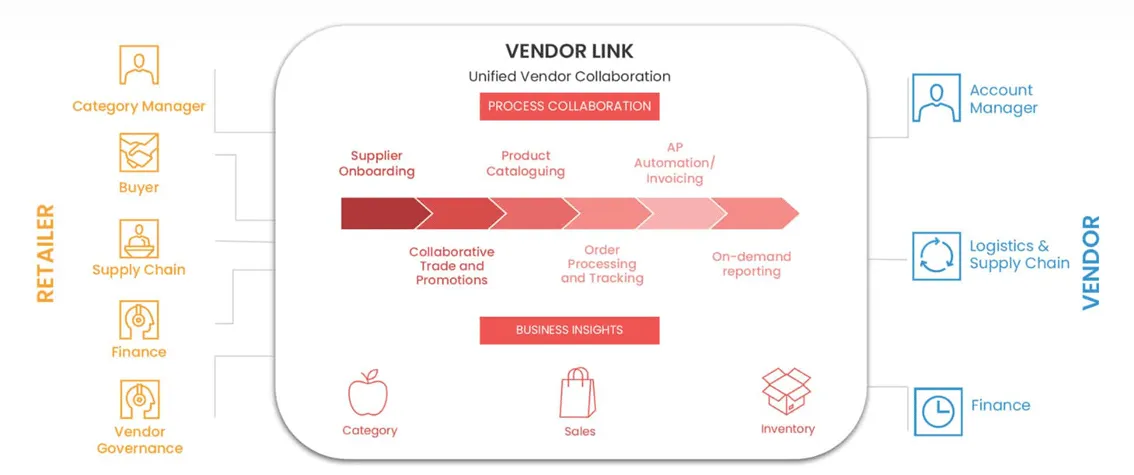
Vendor Link is ADA Global’s intelligent supplier collaboration solution that comes with in-built intelligence of ensemble AI and ML algorithms and fosters true collaboration across the entire supply chain with its exhaustive capabilities.

It helps retailers overcome the complexities of the supplier ecosystem and manage the operations as they evolve.

Here is a functionality snapshot of the Vendor Link:

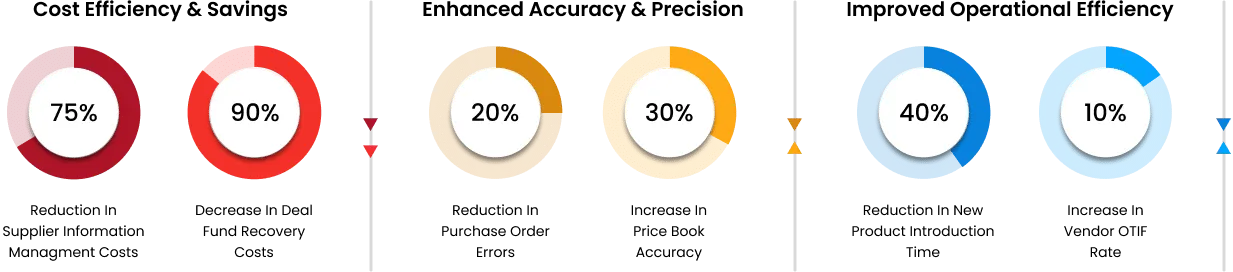
Retailers can utilize the built-in e-approval workflows and self-help portal for 70% faster vendor onboarding and reduce supplier information management costs. As supplier onboarding, product catalogs, and supply data are digitized, they can ensure 100% data accuracy, reducing errors and redundancies.

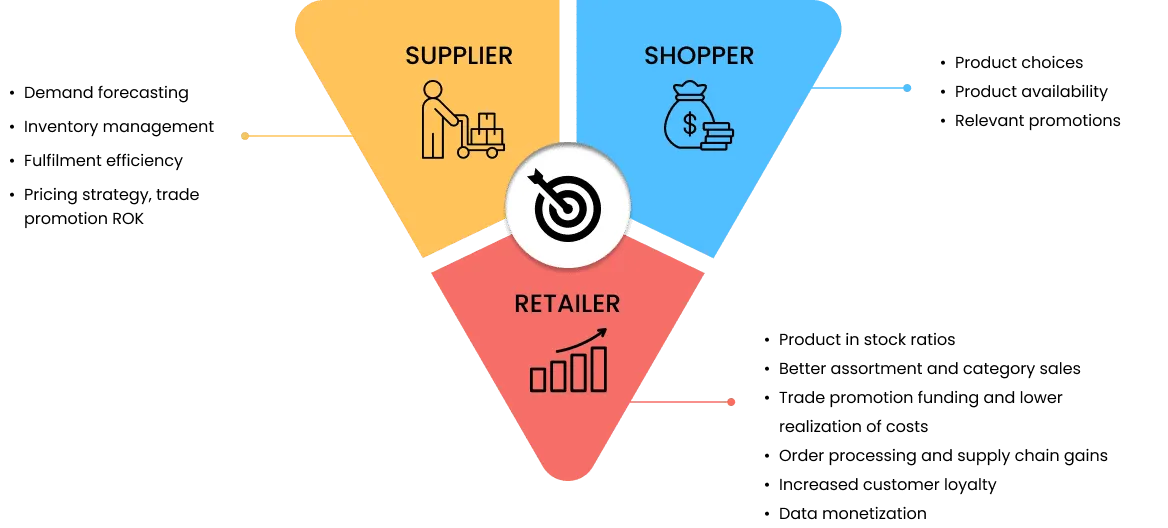
Other advanced capabilities include collaborative promotions and rebate planning, management and tracking of supplier funding, performance insights, EDI capabilities, and more, that help retailers unlock:

For more information, or to explore how Vendor Link can transform your supplier management, please get in touch with our experts today, and schedule a personalized free demo.

Frequently Asked Questions

1 What is supplier collaboration in retail?

Supplier collaboration encompasses streamlining communication and supplier-related processes via strategic partnership and cooperation and increased transparency for better decision-making and operational agility.

2 What are the benefits of automating supplier collaboration in retail?

Supplier collaboration automation helps streamline communication, enhance visibility, improve inventory management, and reduce operational costs. It helps retailers and suppliers collaborate in a more efficient and transparent manner, leading to better decision-making and operational agility.

3 How can automation help improve supplier performance tracking?

Automation platforms for supplier collaboration offer advanced functionalities for supplier performance tracking and metrics-based management of supplier processes. Retailers can automate claims and invoice management, thereby improving transparency and collaboration.

4 How does supplier collaboration differ from overall supply chain collaboration?

Supplier collaboration focuses specifically on interactions between retailers and their suppliers, such as product cataloging, inventory management optimization, and supplier performance measurement. On the other hand, supply chain collaboration involves optimizing communication and processes across the entire supply chain, and often includes logistics providers, manufacturers, and technology partners.

Table Of Contents
What Is Supplier Collaboration?
How Is Supplier Collaboration Different From Supply Chain Collaboration?
Why Is Supplier Collaboration Important?
Critical Challenges Faced by Retailers While Collaborating With Suppliers
Leveraging Automation for Supplier Collaboration in Retail
Supplier Collaboration Automation – Benefits
How Can ADA Global Help?
Frequently Asked Questions

Retail Planning Automation – Optimize for Holiday Sales

Merchandising and Supply Chain
Blogs

Retail Planning Automation – Optimize for Holiday Sales

The latest issue of Great Christmas Gazette is out and the gifts community is abuzz with the talks of holiday demand fluctuations, supply-side deviations, and snarling inefficiencies creeping from crevices of manual interventions.

The fulfillment teams are working overtime and gift shop shelves are teeming with new enticing and never-before-seen items. Suppliers are getting orders left, right, and center, and everything from warehouses to stores is in a festive frenzy.

However, Rudolph, the jolly retailer, found himself grappling with a mountain of inventory woes this year. With multiple stores and hundreds of suppliers, managing stock levels across different locations to cater to customer demand while ensuring optimal stocks is proving a difficult task. Without proper insight into the real-time inventory, demand patterns, market fluctuations, and supply-side operations, optimizing replenishment cycles became a nightmare.

While poring over dozens of sheets and purchase orders, Rudolph gets a visit from none other than Santa, who then describes how automation-driven retail and supply chain planning can rid Rudolph of all his woes.

Here are all the digs from the super engaging chat, straight from the North Pole!

1. AI-Based Demand Forecasting Solutions

The inability to anticipate demand accurately can significantly derail retail planning and supply-side operations and can result in multiple revenue-hurting scenarios. Common examples include overstocked shelves, stockouts, wastage, higher storage costs, capital lock-ins, mismatched assortment, and more.

Analyzing and predicting demand at granular levels, like stores, requires an in-depth understanding of the interplay of tens of different factors that vary from external to internal, customer preferences, seasonality, demand patterns, and so on. Traditional demand planning and forecasting systems crumble in such a scenario, leaving retailers with inaccurate forecasts, disgruntled customers, and thinning bottom lines.

AI-powered demand forecasting solutions, on the other hand, can analyze data from various sources, such as weather data, historical sales data, and social media trends, to provide retailers with accurate forecasts. This helps retailers order the right products in the right quantities and avoid stockouts or overstocking.

2. Optimizing Inventory Replenishment

Inventory replenishment is built on top of demand forecasting solutions and any errors in demand forecasting get snowballed in the replenishment phase. Further, optimal replenishment helps retailers reduce inventory costs, and wastage, cater to customer demand without overstocking, and improve shelf availability in a precise manner.

Achieving this manually or with the help of legacy inventory management systems doesn’t yield the required levels of accuracy across the entire value chain. Bias error, and no capability to measure and plan for demand shifts and lifts during promotions, the effect of seasonality, demand fluctuations, etc., are the major reasons for the same.

This is why retailers need to opt for inventory optimization instead of regular planning and management processes. AI/ML-driven inventory optimization enables retailers to allocate the right inventory with hyperlocal accuracy while incorporating multiple constraints and sales influencers. Retailers can adjust for any supply-side deviations such as lead time fluctuations, delays, fill rates, and more to ensure high shelf availability.

3. Integrating Retail Planning Functions

One of the most challenging aspects of retail planning is the siloed nature of tasks. Critical functions like demand forecasting, sales predictions, and inventory planning can steer the overall efficiency of retail operations wayward. The inability to analyze and model the effects of sales and demand patterns on inventory replenishment via an integrated interface makes it difficult to have a single source of truth.

The major reasons behind disparate functioning are legacy systems and lack of supporting technological infrastructure, which is often viewed as an additional business cost.

Investing in an integrated retail planning solution that offers a centralized operations management dashboard and combines both demand planning and inventory replenishment functions can do wonders in this regard. Retailers can model variations, get actionable insights related to all the functions in one place, and always have a single bird’s eye view of every function with the ability to go as granular as they want.

4. Merchandising Analytics

Another powerful tool that enables retailers to position inventory and plan assortments strategically is merchandising analytics. How the demand for specific items is looking like, are there any seasonal variations that are going to affect the demand in a particular category, and what items are vulnerable to wastage or overstocking – intelligent analytics capabilities have answers to all these and many such questions.

Now, investing in a standalone predictive analytics solution is only going to add another management interface with siloed data in the retail ecosystem.

So, we recommend opting for an integrated solution with comprehensive analytics capabilities. As the merchandise analytics capabilities are built-in and integrated with demand and inventory functions, retailers can take well-informed decisions and draw actionable insights from advanced data visualization.

5. Automating Supplier Collaboration

Efficient and mutually fulfilling retailer-supplier collaboration is the foundation of successful retail operations. Retailer and supplier interactions, documentation, onboarding, product information, and finance management are all critical for fostering true supplier collaboration.

However, the majority of suppliers use third-party operations management interfaces, which means additional work for retailers and more redundancies in terms of individual tracking, processing, and more.

This is where automation-driven supplier collaboration frameworks come into the picture. Armed with built-in and customizable automated workflows for supplier onboarding, new product introductions, product cataloging, documentation, supplier/retailer data interchange, invoice and PO management, etc., these frameworks can transform retail supply chain management via truly seamless and effortless collaboration.

Automating retail and supply chain planning comes with amazing benefits. However, having the right approach, figuring out the right use cases, and incorporating a scalable, robust, and flexible technology suite is a dire necessity for successful endeavors.

So, while Rudolph benefits from these secret tips from dear Santa, why not take action and get started for an amazing holiday retail adventure this year?

Table Of Contents
1. AI-Based Demand Forecasting Solutions
2. Optimizing Inventory Replenishment
3. Integrating Retail Planning Functions
4. Merchandising Analytics
5. Automating Supplier Collaboration

Inventory Forecasting – Trends, Techniques, and Best Practices

Merchandising and Supply Chain
Blogs

Inventory Forecasting – Trends, Techniques, and Best Practices

Accurate inventory forecasting is the heart of retail planning and inventory optimization. Capturing demand accurately and optimizing inventory accordingly can not only reduce inventory costs but can also help retailers boost customer satisfaction, improve shelf availability, and increase inventory ROI.

With fierce competition, rapidly evolving customer preferences, and quick new product and brand introductions, retailers can no longer afford to plan inventory manually.

Studies reveal that the annual costs of holding excess inventory can reach up to 32% and recent economic changes, evolving priorities, etc., are pushing as many as 75% of customers to change their shopping habits.

So, how can retailers forecast demand, capture demand patterns, and evaluate the effect of seasonal variations on the inventory? What is inventory forecasting and what are the different techniques for the same? How important is it to forecast inventory and what are some of the best practices that retailers can benefit from?

Below, we explore the answers to all these questions.

What Is Inventory Forecasting?

Inventory forecasting is predicting the required inventory levels for a future period based on historical sales data, customer purchase trends, upcoming events, etc. Forecasting involves drawing well-calculated projections based on data-driven insights from previous data and multiple constraints influencing customer purchase behavior and demand.

Often used interchangeably with demand forecasting inventory forecasting spans beyond setting reorder points and order plan adjustments based on seasonal sales influencers. It encompasses identifying patterns and trends to adapt to dynamically evolving customer demands and market conditions to curate the right inventory at the right time to meet customer demand optimally.

Inventory Forecasting vs Inventory Replenishment vs Demand Forecasting

While all three terms are interconnected and generally used interchangeably in the retail ecosystem, they are distinct processes

Inventory Forecasting

  • Predicting future inventory requirements based on historical sales data, seasonal variations, and market trends
  • The goal is to estimate optimal stock levels for meeting anticipated customer demand.
  • Effective strategies include tracking and monitoring inventory KPIs – reorder points, average inventory, etc.

Inventory Replenishment

  • Predicting future inventory requirements based on historical sales data, seasonal variations, and market trends
  • The goal is to estimate optimal stock levels for meeting anticipated customer demand.
  • Effective strategies include tracking and monitoring inventory KPIs – reorder points, average inventory, etc.

Demand Forecasting

  • Predicting future inventory requirements based on historical sales data, seasonal variations, and market trends
  • The goal is to estimate optimal stock levels for meeting anticipated customer demand.
  • Effective strategies include tracking and monitoring inventory KPIs – reorder points, average inventory, etc.

Why Is Inventory Forecasting Important?

1 Reduce Inventory Costs

Inventory forecasting helps retailers plan and optimize inventory and cater to customer demand such that overstocks, stockouts, and wastage are reduced, and shelf availability is increased.

Forecasting inventory prepares retailers with reliable insights to adapt their replenishment plans and inventory distribution according to near real-time factors and sales influencers. They can club the insights with demand forecasting insights and replenishment plans to minimize the impact of supply-side deviations on inventory and sales.

Traditionally demand planners and inventory managers use static planning methods which lead to overstocks or OOS events, both of which cost retailers their business. While overstocking eats away at the working capital, it also balloons up warehouse storage costs and leads to obsolescence and complete wastage in certain categories.

Likewise, OOS events affect customer experience and impact the revenue pipeline. Studies reveal that as many as 73% of customers will change retail brands after just one bad experience and a whopping 70-90% of stockouts are caused by poor shelf replenishment optimization practices.

With data-driven inventory demand prediction retailers can minimize stock issues, order and allocate optimal inventory levels across all geographies, and reduce inventory costs. AI-driven inventory replenishment solutions with built-in forecasting engines can take the inventory optimization process one step further by offering highly granular forecasts for specific product-location entities.

2 Overcome Data Inaccuracies

As many as 40% of retailers cancel at least one out of ten orders due to inaccurate inventory data. Overcoming retail data inaccuracies is particularly challenging owing to the highly disparate functioning of all system functions. Further, the retail data is infamous for being highly unstructured, noisy, and riddled with gaps.

Overcoming data inaccuracies is essential for accurate inventory forecasting because any errors in capturing inventory or demand data have a snowball effect on the final inventory values and metrics.

Intelligent retail demand planning and forecasting solutions inherently overcome such challenges by employing the intelligence of advanced data analytics techniques. They run on intelligent algorithms that are fine-tuned to the nuances of retail data and can generate inventory plans with high forecasting accuracy by eliminating noise and gaps.

3 Improve Inventory ROI

McKinsey reveals that AI-driven forecasting can reduce supply chain errors by 30 to 50%, shrinking lost sales by 65% and warehousing costs by 10 to 40%. All these are crucial factors affecting the overall inventory ROI and can lead to significant cost savings for retailers.

Further, PwC outlines that investing in solutions that help optimize data-driven use cases, such as customer data, can increase their contribution margins by 3% to 5% after deducting initial investments and acquisition costs.

What makes inventory forecasting so beneficial is the fact that it accounts for the interplay of multiple factors and constraints, ranging from sales patterns to customer purchase patterns, demand shifts, demand lifts, seasonality, external/internal factors, and more, to generate optimized inventory plans.

So, ultimately, the retailers are able to boost revenue, sales, customer satisfaction, and shelf availability, while reducing stock issues, wastage, and inventory.

Inventory Forecasting Techniques

There are multiple methods of inventory forecasting. Further, as retailers use different forecasting solutions with different capabilities, the boundaries among the techniques, algorithms, and processes are fleeting and evolving with every passing day.

Generally, inventory forecasting techniques can be categorized into the following four categories:

Trend Forecasting

  • Shows trend projections based on changes in product demand over time
  • Doesn’t always account for seasonality or sales data irregularities

Graphical Forecasting

  • Identifies patterns and sloped trend lines to find out insights that might have been possibly missed
  • Unable to handle complexities, heavily subjective, and reliant on historical data

Quantitative Forecasting

  • Uses statistical methods and historical sales data to generate future inventory projections
  • Demonstrates data dependency and inability to adapt to change

Qualitative Forecasting

  • Involves market research and focus groups to predict future inventory requirements
  • Doesn’t always account for seasonality or sales data irregularities

Different Techniques for Inventory Forecasting

1 Time-Series Forecasting

This inventory forecasting method involves predicting future demand patterns based on historical data, and past inventory levels. It works well for categories with consistent and measurable inventory patterns.

The process involves data collection, data processing, trend analysis, checking the effects of seasonality on data, and forecasting model selection. It is important to note that the model selection is going to have a significant impact on the overall accuracy and efficiency of forecasting and is done based on specific characteristics of inventory data.

Common techniques for time series inventory forecasting are moving averages, Seasonal Decomposition of Time Series (STL), exponential smoothing, deep learning approaches, etc.

2 Seasonal Forecasting

This is one of the most popular inventory forecasting techniques and it predicts future demand patterns in inventory data showing a recurring seasonal effect. For instance, trending categories or products during holiday seasons, seasonal cosmetic products, agricultural products, fashion apparel, etc.

Its ability to identify seasonal trends and variations in demand enables retailers to plan for seasonal fluctuations and adjust inventory levels accordingly. Coupled with accurate demand forecasting and replenishment techniques, it can help retailers reduce inventory holding costs, stockouts, and overstocks, and boost customer satisfaction with the right inventory at the right time.

Common techniques for seasonal inventory forecasting methods include Historical Averages, and Machine Learning and Deep Learning-based approaches.

3 Historical Data Analysis

A stepping stone for demand forecasting, the historical data analysis technique involves exhaustive analysis of historical data, be it sales, inventory, market, etc., and offers valuable insights into customer behavior, top-performing categories, sales patterns, and many more critical business metrics.

However, historical data analysis is a challenging process as the data sets tend to become highly unstructured and full of noise and gaps over time. Hence, the technique requires data cleaning, data organization, and standardization, etc., to improve the data quality.

Unless coupled with advanced data analysis and processing techniques, the technique can lead to erroneous projections due to the data cleansing and standardization steps.

Common techniques for historical data analysis include regression analysis, cyclical patterns, time series analysis, exponential smoothing, trend analysis, etc.

Inventory Forecasting Techniques Based on Statistical Models

Challenges in Choosing the Right Inventory Forecasting Techniques

1 Data Quality and Preprocessing

As mentioned above, the retail data is noisy, has gaps, and comes with multiple redundancies. This means, that pre-processing or standardizing data for quality purposes can affect the accuracy of results. This is mainly due to the fact that the models can reject the correct or relevant data or consider noise as the correct data.

As every next step in the forecasting process is built on top of the results drawn from data cleansing, the effects can easily snowball into massive errors, derailing the accuracy of inventory forecasts and ultimately business decisions.

2 Seasonality and Trends

Vetting the effect of seasonality or trends on specific data can be particularly challenging owing to subjective data handling and analysis. When done incorrectly, the model can over-fit or underfit data patterns affecting the overall forecast accuracy.

On the other hand, seasonality might be relevant for a specific geography or set of consumers as well. For instance, the seasonal variations in the demand for challenging products like skincare are extremely complex to monitor and predict.

3 Model Selection and Tuning

While statistical modeling is one of the best inventory forecasting methods, model selection and data tuning can become subjective, thereby causing distortion in actual results. Manual model selection and tuning to business-specific use cases is a tedious process, which can spur business risks affecting revenue and profitability.

4 Dynamic Demand Patterns

Demand Planning for the modern retail ecosystem requires an understanding of the complex interplay of multiple factors, such as historical sales, in-store promotions, economy, trends, micro-trends, and supply-side disruptions. Add to the mix, the location and category-specific sales influencers and constraints for optimization, and the retailers are left with nothing short of a Pandora’s Box.

Further, the demand patterns change dynamically due to multiple external and internal factors, such as the emergence of omnichannel platforms, quick delivery services, and hybrid operation categories, which, can steer the forecast accuracy in the wrong direction.

Other miscellaneous factors such as data scarcity, multi-seasonal patterns, short product lifecycles, tough categories like ultra-fresh, fast new product introduction, etc., make inventory forecasting particularly challenging and vulnerable to errors.

How to Approach Inventory Forecasting – Best Practices

As evident from the above discussion, there is no single best inventory forecasting technique, as demand patterns are highly dynamic in nature, keep on evolving, and are affected by multiple factors.

Further, traditional and manual forecasting suffers from inefficiencies, inaccuracies, and poor scalability. Coupled with additional factors, like lead times, fill rates, and demand deviations stemming from in-store promotional dynamics, retailers find it difficult to generate precise inventory plans.

This is where AI and ML-driven inventory management optimization comes into the picture.

The AI/ML-driven inventory optimization solutions come with built-in intelligence of thousands of algorithms that can control and optimize for multiple factors and constraints, enabling retailers to unlock unparalleled precision and control over inventory.

Why Choose Optimization Instead of Standalone Inventory Management or Demand Forecasting?

Inventory optimization involves optimizing inventory at granular levels, precisely at the product-location level for multiple categories, stores, SKUs, and so on. What makes inventory optimization superior to standalone inventory forecasting and demand forecasting techniques is the fact that retailers can unlock immaculate precision and control over inventory based on accurate predictive modeling and real-time adjustments via a single interface.

Algonomy’s Order Right is one such powerful inventory optimization platform that comes with a built-in demand forecasting engine and ensemble AI algorithms to predict demand based on hundreds of customizable parameters.

Order Right (OR) enables retailers to generate accurate SKU-level order plans with unique retail-tuned replenishment planning solutions algorithms for intelligent demand-based replenishment planning.

Powered by Forecast Right which uses proprietary ML-based multivariate and algorithmic techniques to accurately and adaptively forecast demand, Order Right generates accurate SKU-level order plans for even the most challenging categories – from fresh and seasonal to new and promoted products with ease to help businesses unlock:

  • 10% Reduction in Inventory Cost
  • 75% Reduction in Out-of-Stock Instances
  • 10-30% Reduction in Wastage
  • 99% Increase in Shelf Availability
Table Of Contents
What Is Inventory Forecasting?
Inventory Forecasting vs Inventory Replenishment vs Demand Forecasting
Why Is Inventory Forecasting Important?
Inventory Forecasting Techniques
Different Techniques for Inventory Forecasting
Inventory Forecasting Techniques Based on Statistical Models
Challenges in Choosing the Right Inventory Forecasting Techniques
How to Approach Inventory Forecasting – Best Practices
Why Choose Optimization Instead of Standalone Inventory Management or Demand Forecasting?

Frequently Asked Questions

What is inventory forecasting?

Inventory forecasting means predicting the required inventory levels for a future period based on historical sales data, customer purchase trends, upcoming events, etc.

Is inventory forecasting different from inventory planning?

Yes, inventory forecasting is different from inventory planning. While forecasting involves predicting demand, planning can encompass multiple activities ranging from generic inventory tasks to using forecasts for replenishment.

What are different inventory forecasting techniques?

There are different types of inventory forecasting techniques, trend forecasting, graphical forecasting, qualitative forecasting, time series modeling, etc.

How to choose the right inventory forecasting technique?

Choosing the right inventory forecasting technique depends on various factors, such as data availability and quality, demand patterns and trends, seasonality, forecast horizon etc.