Reducing Inventory the Smart Way with Retail Artificial Intelligence

Merchandising and Supply Chain
Blogs

Reducing Inventory the Smart Way with Retail Artificial Intelligence

The Inventory Dilemma We All Face

You know that feeling when you open your closet and find it crammed with clothes you never wear? Well, that’s a bit like how traditional inventory management works. Imagine you run a retail store, and you’re stocking up on products, hoping they’ll fly off the shelves. But often, they don’t. You’re left with piles of unsold merchandise, and guess what? That’s money tied up in items that are just taking up space.

Now, let’s get down to some facts. According to a study by The Retail Owner, excessive inventory can gobble up a whopping 25-32% of your operating expenses. That’s a pretty penny, right? So, what’s the solution? It’s all about reducing inventory intelligently.

The Trouble with Guesswork

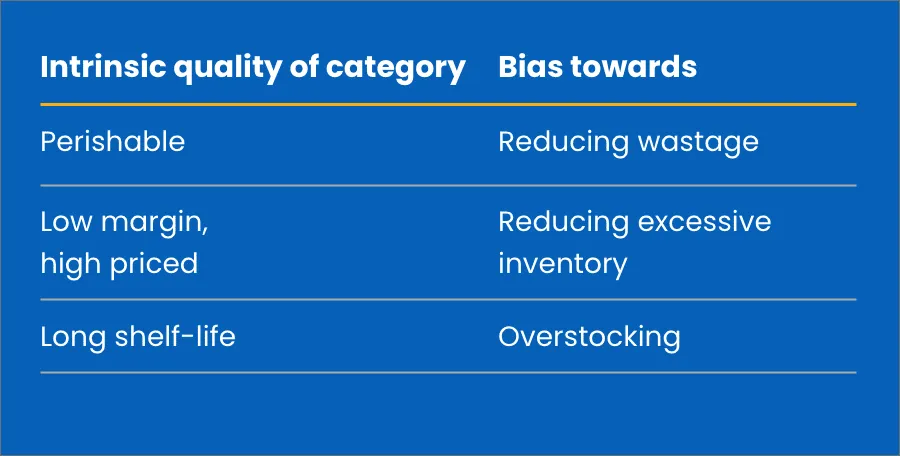
Traditional inventory management often relies on guesswork and gut feelings. You order products based on your instincts or past experiences, and sometimes, those instincts lead you astray. Imagine ordering a mountain of hot chocolate, soup, or baking ingredients products, only to have an unseasonably warm winter. Oops! Now you’re left with a load of unsold products gathering dust.

In fact, according to RTS food wastage across retail stores is as high as 30% contributing to inventory write-offs, due to the inability to sell items at full price. Yikes, right? That’s where reducing inventory with the help of AI-powered replenishment optimization comes into play.

Learn more about the problem with current forecasting frameworks.

The Perils of Out-of-Stock Woes

Picture this scenario: You’re a customer, excited to purchase a specific product online. You head to your favorite e-commerce site, only to find that it’s out of stock. Frustrating, isn’t it? Now, flip the script. You’re the business owner, and your customers are experiencing these out-of-stock woes. It’s not a good look.

Did you know that 42% of shoppers will head to a competitor if an item they want is out of stock? That’s nearly half of your potential sales walking out the door! This is where AI steps in to forecast inventory demand prediction accurately and replenish your stores, ensuring you don’t run out of popular items while reducing inventory of slow-moving ones.

The Space Conundrum

Imagine you run a small warehouse. It’s cozy, but not spacious. Traditional inventory management might fill it to the brim with goods, leaving little room to move. But then you receive a large order, and suddenly, you’re playing a game of warehouse Tetris, trying to fit everything in. It’s like trying to squeeze one more sweater into an overstuffed suitcase—it just won’t work.

In the world of warehousing, every square foot is valuable real estate. Did you know that optimizing your warehouse space can lead to a 20-50% reduction in carrying costs? That’s more room for your team to work efficiently and less clutter to navigate. Retail inventory optimization solution can help you achieve this while reducing inventory to just what you need.

Wrapping It Up

Traditional inventory management can be a real headache, causing financial losses, out-of-stock nightmares, and space constraints. It’s like trying to find a needle in a haystack without a magnet. But don’t worry! The solution to these challenges lies in embracing AI-powered replenishment optimization.

By reducing inventory intelligently, you can save money, meet customer demands, and make the most of your valuable space. So, say goodbye to the guessing game and hello to a smarter, more efficient way of managing your inventory.

Learn why your replenishment optimization framework might be ineffective.

Reducing Inventory with AI-Powered Replenishment Planning

If you’ve been in the game long enough, you know that juggling inventory can sometimes feel like trying to solve a Rubik’s Cube blindfolded. But what if I told you there’s a magical tool in town that’s transforming the supply chain landscape? Enter AI-powered replenishment – the real game-changer for supply chains!

The Old Inventory Conundrum

In the good ol’ days (well, not that good), managing inventory was like trying to predict the weather in a tropical rainforest. You could have too much, leading to wasted storage space and cash tied up in goods. Or you could have too little, risking lost sales and angry customers. It was a real Goldilocks situation – finding that “just right” level of inventory was a constant headache.

AI Steps In to Save the Day

But wait, cue the superhero music because here comes AI to the rescue! Artificial Intelligence, the tech marvel that’s shaking up industries left and right, has set its sights on the supply chain. It’s like having a super-smart sidekick who’s amazing at predicting what you need, when you need it.

Imagine a solution that powers your category planners to effortlessly generate thousands of precise replenishment planning solutions for each store, category, and channel with just a click of a button.

Demand forecasts that feed into your replenishment planning are based not just on historical sales data but also on other influencing parameters: internal factors such as advertising campaigns and promotions, and external factors such as local weather and public holidays.

And the calculations are done at a much more granular level than standard systems are able to do: retailers can determine the effect of each parameter on each SKU in each store (and in each distribution center, where relevant) on a daily basis.

Moreover, order proposals are generated every 24 hours by intelligently taking into account supply-chain constraints such as supplier delivery times, expiration dates and minimum or maximum order quantities.

This isn’t just a utopian idea, but rather a concrete reality that retailers are rising to. Solutions such as Order Right are revolutionizing the way retailers plan replenishment.

Say Goodbye to Overstock and Understock

You know that feeling when you walk into a store, and there’s an entire wall of unsold items that seem to have been gathering dust since the ’90s? That’s overstock, and it’s an inventory manager’s worst nightmare. AI helps you avoid this catastrophe by predicting exactly how many barbeque sauces you’ll need and when, reducing the chances of overstocking.

On the flip side, no one likes to tell a customer, “Sorry, we’re all out of that product.” That’s understock, and it’s equally cringe-worthy. AI’s got your back here too, ensuring you have just the right amount of inventory to meet customer demands and keep them smiling.

Time to Get Agile

Picture this: your supply chain is as agile as a gymnast doing cartwheels. That’s the power of AI-powered replenishment. It adapts on the fly, responding to sudden changes in demand or supply chain disruptions. No more sweating bullets when a supplier’s shipment gets delayed or when demand spikes unexpectedly. AI has your inventory’s back, always.

Learn about the 9 best practices in replenishment planning every retailer must know.

Implementing AI-Driven Inventory Reduction: A Simple Guide

So, you’ve heard all the buzz about AI-powered inventory reduction and how it can save you money while improving your supply chain’s efficiency. You’re excited to jump on the AI bandwagon, but you’re not quite sure where to start. Don’t worry; we’ve got your back! In this section, we’ll break down the steps to successfully implement AI-driven inventory reduction.

1 Get Your Team on Board

You might be the captain of this ship, but it’s essential to have your crew on board. You-sentences like, “You can’t do it alone,” hold true in this scenario. Convince your team that AI isn’t here to replace them but to make their lives easier. Share success stories from other companies that have embraced AI for inventory reduction. Make them excited about the possibilities. After all, teamwork makes the dream work.

2 Choose the Right AI Solution

AI isn’t a one-size-fits-all solution, so you need to find the right fit for your business. Start by evaluating your current inventory management processes and identifying pain points. Then, look for AI-driven tools such as Order Right to address those specific challenges. Consider factors like scalability, user-friendliness, and integration with your existing systems. Remember, it’s about reducing inventory without causing chaos.

3 Data, Data, Data!

AI thrives on data, so make sure you have a robust data strategy in place. Collect historical data on your inventory levels, demand patterns, and supplier performance. You-sentences like, “You need a treasure trove of data,” emphasize the importance of this step. Without quality data, AI won’t be able to make accurate predictions. It’s like trying to bake a cake without flour; it just won’t work.

4 Start Small, Scale Smart

Don’t try to overhaul your entire inventory management system overnight. Start with a small pilot project to test the waters. You-sentences like, “You’re not running a marathon; it’s more like a sprint,” remind you to take it slow. Monitor the results closely and make adjustments as needed. Once you see the benefits of AI-driven inventory reduction, you can gradually expand its scope. Think of it as growing your inventory reduction garden – one plant at a time.

5 Train Your Team

Introducing AI into your supply chain means your team needs to learn how to work with it. Provide training and support to ensure they understand the new tools and processes. You-sentences like, “You’re not alone in this; we’ve got your back,” create a sense of camaraderie. Encourage your team to ask questions and share their experiences. Learning together can be a fun and rewarding journey.

6 Celebrate Your Wins

Don’t forget to celebrate your successes along the way. When you see improvements in your inventory levels and cost savings, acknowledge them. You-sentences like, “You’ve earned it,” remind you to take a moment to pat yourself on the back. Share the good news with your team and let them know that their hard work is paying off. Celebrations, big or small, can boost morale and keep everyone motivated.

Discover how a Middle Eastern grocery retailer reduced inventory levels by 21% with Order Right.

Final Verdict

In conclusion, implementing AI-driven inventory reduction successfully doesn’t have to be a daunting task. It’s all about getting your team on board, choosing the right AI solution, harnessing the power of data, starting small, training your team, embracing continuous improvement, and celebrating your wins. You’ve got this! Remember, reducing inventory is about working smarter, not harder. So, go ahead and take that first step towards a more efficient and cost-effective supply chain.

Learn more: Grocery Replenishment Has Evolved: 9 Things Every Retailer Must Know
Table Of Contents
The Inventory Dilemma We All Face
The Trouble with Guesswork
The Perils of Out-of-Stock Woes
The Space Conundrum
Wrapping It Up
Reducing Inventory with AI-Powered Replenishment Planning
The Old Inventory Conundrum
AI Steps In to Save the Day
Say Goodbye to Overstock and Understock
Time to Get Agile
Implementing AI-Driven Inventory Reduction: A Simple Guide
Final Verdict

AI-Powered Replenishment Planning for Retail Inventory

Merchandising and Supply Chain
Blogs

AI-Powered Replenishment Planning for Retail Inventory

Replenishment planning is a crucial aspect of grocery retail. It involves ensuring that shelves are stocked with the right products in the right quantities at the right time.

In today’s dynamic market, demand planners and supply chain managers have to deal with a new set of challenges such as volatile demand, supplier unpredictability, missing historical data, and various supply chain disruptions.

Moreover, they still need to do their everyday job – planning and balancing inventory across stores for all SKUs, meeting their customers’ expectations, and outperforming competitors.

Before the pandemic, demand and supply planners were accustomed to using reliable historical sales data. It was the same data showing similar patterns and seasonal trends year after year. Further, consumer behavior and the supply chain itself was rather predictable. Suppliers’ lead time was more or less stable. All of this made demand and supply chain planning much easier than it is now.

Nearly 90% of North American grocery shoppers say they have changed their shopping behaviors in some way since the pandemic began. – Mckinsey Survey

The pressure to maintain availability across stores, categories, and channels despite these challenges forces managers to look for new solutions, such as AI-powered ones, to help them play by these changing rules and succeed in this new reality.

In fact, according to Gartner, 60% of Chief Supply Chain Officers are expected to make faster, more accurate, and consistent decisions often in real time.

The Role AI Can Play in Smart Replenishment Planning

The traditional approach to replenishment planning involves manual forecasting based on historical sales data, which can lead to inaccurate demand forecasts and overstocking or stockouts.

Further, replenishment plans are typically manually modified to accommodate supply chain factors such as lead time, minimum order quantity, etc.

However, with the current unpredictability of demand and supply chains, such an exercise can easily become error-prone leading to larger problems like unforeseen stock outs and increasing inventory costs.

This is where Artificial Intelligence comes in.

The use of automation technologies such as artificial intelligence (AI) is expected to increase significantly in the next few years, with the potential to improve efficiency and reduce costs – Mckinsey State of Grocery Report

With AI-powered replenishment planning solutions, grocery retailers can now optimize inventory levels and reduce waste, thereby improving profitability and enhancing customer experience.

One of the key benefits of AI-powered replenishment planning solutions is their ability to provide accurate demand forecasting.

By analyzing historical sales data, current trends, and other factors (even weather patterns), these solutions can predict customer demand with a high degree of accuracy. This enables businesses to order the right amount of inventory, reducing the risk of overstocking or stockouts.

Another advantage of AI-powered replenishment planning solutions is their ability to optimize inventory levels.

By analyzing demand forecasts and other data, these solutions can identify which products are selling well and which ones are not. This enables businesses to adjust their inventory levels accordingly, reducing waste and improving profitability.

AI-powered replenishment planning solutions can also help businesses manage their supply chain more efficiently.

By automating many of the processes involved in ordering and receiving inventory, these solutions can free up staff time and reduce the risk of errors. This can result in faster turnaround times, more accurate order fulfillment, and improved customer satisfaction.

In the grocery industry, replenishment planning is especially important due to the perishable nature of many products.

AI-powered solutions can help businesses manage their perishable inventory more effectively, ensuring that products are sold before they spoil. This can reduce waste and improve profitability, while also ensuring that customers have access to fresh, high-quality products.

Therefore, implementing a replenishment planning solution powered by AI is becoming increasingly essential for grocery retailers to streamline their operations and stay competitive.

ADA Global’s Order Right is one such solution that leverages AI to provide grocery retailers with accurate demand forecasting, inventory optimization, and automated replenishment.

The solution uses hand-crafted ML-based algorithms curated specifically for retail to accurately predict demand at store, channel, and category level, and optimize orders to achieve category objectives and reduce supply chain costs.

The outcome: accurate, adaptive, and effective order plans every time in just a few clicks.

Benefits of AI-powered Replenishment Planning

1 Accurate Demand Forecasting:

AI-powered solutions can analyze data from various sources, such as historical sales data, weather data, and social media trends, to provide retailers with accurate demand forecasting. This helps retailers order the right products in the right quantities and avoid stockouts or overstocking.

2 Inventory Optimization:

AI-powered solutions can help grocery retailers optimize their inventory levels by identifying slow-moving or non-performing products, reducing waste, and improving profitability.

3 Automated Replenishment:

With AI-powered solutions, retailers can automate the replenishment process, reducing the manual effort required for forecasting and ordering.

4 Enhanced Customer Experience:

By ensuring that shelves are always stocked with the right products, grocery retailers can provide customers with a better shopping experience, thereby improving customer loyalty and retention.

5 Improved Profitability:

AI-powered solutions can help grocery retailers reduce waste, optimize inventory levels, and improve customer experience, leading to improved profitability.

In conclusion, replenishment planning is a critical aspect of grocery retail, and AI-powered solutions like ADA Global’s Order Right can help retailers optimize their operations, improve profitability, and enhance customer experience.

By leveraging AI, grocery retailers can gain accurate demand forecasting, inventory optimization, and automated replenishment capabilities, enabling them to stay ahead of the competition and meet the evolving demands of customers.

Also read: Grocery Replenishment Has Evolved: 9 Things Every Retailer Must Know

Want to learn more? Request a demo.

Table Of Contents
The Role AI Can Play in Smart Replenishment Planning
Benefits of AI-powered Replenishment Planning

Expert Opinion: Is Supply Chain Collaboration The New Frontier Of Growth In Retail?

Merchandising and Supply Chain
Blogs

Expert Opinion: Is Supply Chain Collaboration The New Frontier Of Growth In Retail?

The pandemic might be close to the end thanks to public health programs, inflation may be easing and supply chain disruptions may be on the wane. But 2023 is nevertheless going to be defined by uncertainty, according to Michelle Evans, Euromonitor International global lead of retail and digital consumer insights.

One of the main reasons for this is ever-evolving, shifting consumer priorities. While most retailers know the significance of front end systems that help them acquire customers effectively, a majority of them also realize the importance of supplier networks in improving profitability and maintaining customer loyalty.

Nothing is more frustrating for customers than not finding a product on the shelf. In the best case scenario it is a lost sales, the worst is a lost customer.

According to our internal survey, over 42% of out of stocks could be avoided with collaborative decision-making involving suppliers and partners. Moreover, scaling up supplier networks today requires retailers to re-tool themselves to be more efficient and effective across the supplier lifecycle processes.

No wonder then that supply chain collaboration today has become a hot topic of conversation in retail. While the term itself isn’t new, its definition has certainly changed. Most people confuse it with operational collaboration (such as supplier checking with retailers on status of invoice).

However, supply chain collaboration envisions a highly aligned and deeper relationship beyond daily transactions. It focuses on collaborative goals, communication, and activities that foster virtuous cycles that deliver strategic value to both supplier and retailer.

We ask our expert Manish Das, who has been at the helm of supply chain and retailer collaboration platform initiatives for several noteworthy retail clients, some of the most pertinent questions on the topic.

What does supply chain collaboration mean to a typical retailer? What has changed? Why should they care?

Even as the effects of the pandemic have slowed down, we’ve seen that consumer expectations have shifted irreversibly. What a retailer sells to consumers is sourced from suppliers. Unless you have a robust, agile, and responsive supplier network, you cannot respond swiftly to ever-changing consumer needs. It is as simple as that.

As most people in this business know, the secret to building an effective retail vendor collaboration is mutual trust and collaborative decision-making. A retailer not caring about supplier collaboration is one of the most counterproductive attitudes in retail.

While a retailer’s objective is to increase sales in a cost-effective manner, suppliers also intend to do the same. This leads to a zero sum game instead of a healthy collaboration.

What are the challenges that retailers face in supplier management and supplier collaboration ?

On the face of it, retail looks simple. Retailers stock shelves and consumers buy, but it’s not that simple, is it? In a way, retail appears simple thanks to complex solutions doing their job in the background.

Just to give you an example, a decent sized grocery store has approximately 10-15k different SKUs sourced from 300-400 suppliers. Now, collaborating with these 300-400 suppliers for replenishments, promotions, new product launches, etc. in store can become a nightmare unless you solve it by bringing seamless collaboration.

One of the key challenges in supplier management is to bring everything to one place. Sales, order, inventory optimization, promotions, item info, invoice, payments, etc. are few of the key entities where supplier visibility is required. In the context of quick replenishment, real-time collaboration becomes challenging. In a nutshell, the challenge is to be transactional as well as analytical at the same time.

What do you think is the biggest gap that retailers are looking to fill to tackle these challenges?

Progressive retailers are working towards changing the paradigm of their relationship with suppliers. Instead of approaching this relationship as buyer and seller, they are approaching their suppliers as stakeholders in the business with a common goal to improve business performance.

A supplier’s business growth will result in category growth. Now, to enable suppliers with the kind of transparency and visibility required, is a huge challenge for retailers and they are looking at technologies which can help them.

Talking about technology, what do you think are some of the technologies that can help streamline vendor processes?

Before 2020 (pre-covid), no one ever imagined that the entire organization will work and collaborate remotely. As always, technology stepped up real fast to deliver what we never thought would be possible just a few years back.

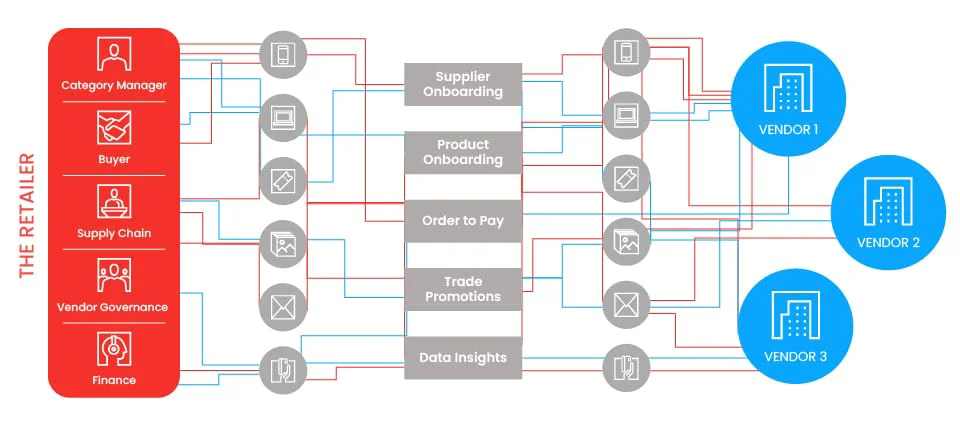
Supplier processes have always been fragmented across departments and stakeholders, almost operating in silos. There is a growing consensus amongst retail leaders that supplier collaboration solution will unlock the next wave of growth and profitability.

Given the scenario, top retailers realize that they need to re-tool themselves with a new age supplier collaboration platform that enables real-time and seamless exchange of information with thousands of suppliers. There is also a strong emphasis on the mobility aspect and overall cost structure of running procurement and supplier processes.

The end goal for most is to move to a much more consensus based decision-making for the benefit of both retailers and suppliers rather than relying on “each one on their own” approach.

Such a centralized and modern platform can help retailers realize great benefits. Some of the low-hanging fruits but highly impactful as well in my experience are getting new products faster on the shelves, optimizing store replenishment funded promotions, and streamlining accounts payables and receivables.

You talked about low-hanging fruits. Can you expand a bit more on the use cases you’ve come across that customers have shown great interest in?

Some use cases most of the customers are interested in are:

  • Getting product information directly from manufacturers.
  • Price book maintenance by suppliers.
  • Real-time visibility of purchase orders.
  • A central interface for supplier funded promotions, proof of performance, and most importantly sales, inventory, category, and competition insights at a granular level.

Providing insights to brands in itself opens up a Pandora’s box of possibilities. We are working with several retailers who have gone to the extent of monetizing it. This is completely unheard of in many retail circles, but we’ve actually been doing this for over 5 years now!

Also read: Why You Need to Rethink Supplier Collaboration

Why do you think a company like ADA Global is ideally suited to solve supply chain collaboration challenges?

We at ADA Global have been making an impact for retailers in this space for over a decade now. Our heritage in retail and deep domain expertise makes us not just a solution provider but also a partner in our client’s journey to go digital-first.

Across the globe, over 50,000 suppliers are using our platform for collaboration with retailers. Our supplier collaboration system Vendor Link has demonstrated success by impacting key KPIs for our customers, be it reducing cycle time of new product launch by 90% (from 12 weeks to 1 week), or reducing out-of-stock instances by 3%, or increasing rebate revenue by $2 million in a year or generating additional revenue of $1.8 million from data monetization.

Learn more about ADA Global’s Vendor Link.

Table Of Contents
What does supply chain collaboration mean to a typical retailer? What has changed? Why should they care?
What are the challenges that retailers face in supplier management and supplier collaboration ?
What do you think is the biggest gap that retailers are looking to fill to tackle these challenges?
Talking about technology, what do you think are some of the technologies that can help streamline vendor processes?
You talked about low-hanging fruits. Can you expand a bit more on the use cases you’ve come across that customers have shown great interest in?
Why do you think a company like ADA Global is ideally suited to solve supply chain collaboration challenges?

Why You Need to Rethink Supplier Collaboration

Merchandising and Supply Chain
Blogs

Why You Need to Rethink Supplier Collaboration

In 2023, retail firms understand the impetus of matching the elevated pace of business while also responding to supply chain collaboration challenges with agility. In this new normal, suppliers have emerged not just as providers of goods but as strategic partners.

According to The Future of Procurement, Making Collaboration Pay Off, by Oxford Economics, about 65% of practitioners say that procurement at their company is becoming more collaborative and strategic with suppliers.

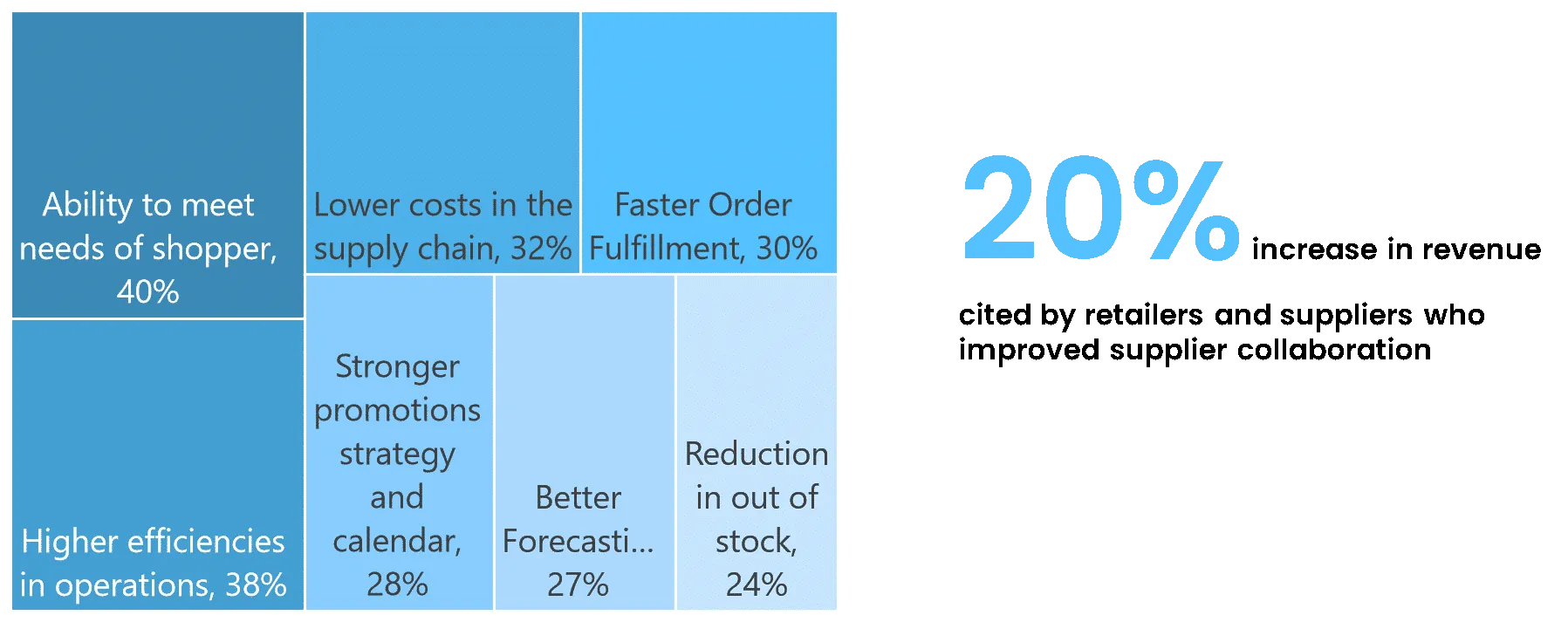
Moreover, retailers who invested in improving supplier collaboration have seen a 20% increase in revenue directly or indirectly, according to the Coresight Research survey of retailers, by Precima. Among some of the direct benefits received by these firms are lower costs in the supply chain (32%), faster order fulfillment (30%), and stronger promotions strategy and calendar (28%).

*source: Coresight Research survey of global grocery/CPG companies and retailers, by Precima, a Nielson company

Benefits of Investing in Better Supplier Collaboration

With retailer collaboration platform emerging as a primary key to unlock the next phase of growth in retail and drive synergies that are otherwise perceived as impossible within the confines of the traditional business, no retailer can ill afford to ignore it.

With that in perspective, here are the top challenges that retailers face today due to ineffective supplier collaboration.

Your Category Managers Are Burned Out Leading to Ineffective Planning

In most retailer setups, category managers are on their own to plan for demand, assortment, and inventory. Understanding all that is happening on the ground, translating it to requirements, and directing it to the right vendor completely takes up the bandwidth of category managers – denying them the opportunity to focus on more strategic affairs.

This is one of the leading causes why category managers have not been able to catch up with the fast-paced business retail has become today, leading to elevated levels of stock outs, wastage, margin erosion, and new product introduction failures.

According to our estimate, new product introduction failure rate due to supplier challenges for most retailers is as high as 25%.

Why? Because new product introduction is a very time-consuming process that involves several iterations of communications to onboard the product (and vendor in some cases). With category managers already struggling with adapting to fast-paced demand, they have little oversight on the various stages of new product introduction – often leading to delays and failures.

Most retailers have realized the value suppliers can bring and help ease this burden. When suppliers are part of your retail planning process, they are able to help category managers make the right decisions at the right time while also benefiting from them. It is in other words a Win-Win.

Not Achieving Optimum Pricing and Promotions Is Eating Away Your Margin

Managing a vast set of products across stores has its own challenges. One of the greatest challenges is setting the right price of the product. The cost price of a product changes with tax, geographical, and transportation factors.

In the absence of a track record of historical pricing, category managers do not have a reference they can use to make pricing decisions. Most category managers are forced into frantic communication with suppliers to determine the right price. Ultimately, this lack of transparency leads to suboptimal pricing, eating into your already thinning margins.

Another challenge is with regards to promotions and rebates. Retailers today face underutilization of retail vendor collaboration funded/co-funded promotions. The main culprit here is the siloed nature of communication that happens before a promotion is run and a lack of transparency on promotions performance.

As a result, suppliers don’t proactively initiate promotions. Even if they do run the promotions, they are unable to learn and adapt to run more effective campaigns.

Lack of a Single Source of Truth

Nothing is more detrimental to efficient operations than not having a reliable source of truth to measure and course correct. Unfortunately, retailers still rely on external teams to extract valuable business insights. By the time they get these reports and make sense of it, proverbially speaking the train has left the station.

Data collaboration and reporting form a key pillar to supplier performance. In the absence of quality data from retailers, suppliers are reluctant to collaborate and plan better. Their focus is solely on delivering orders, rather than larger objectives such as category growth. Retailers themselves don’t have reporting capabilities to track supplier performance and evaluate it from time to time.

There is therefore a strong merit in on-demand, persona-specific access to real-time insights and reports. The implications are far reaching, spanning across functions such as sales, category, inventory, assortment, demand planning, financial planning, and more.

Your Supplier Data and Process Is Fraught with Errors

In today’s fast-paced retail environment, building responsive and resilient supply chains depends on how tightly knit your supplier ecosystem is. Even though we live in the world of WhatsApp and Slack in our personal lives, collaboration with suppliers has yet to catch up.

Across a typical supplier lifecycle—onboarding suppliers, information management, onboarding product, creating order, generating invoice, running promotions, and more—there are multiple barriers to execution. The biggest of these barriers is a siloed chain of communication – not being able to take action at the right time.

As a result, most processes get delayed and require greater manual oversight. This not only leads to increased costs but also affects the morale of suppliers.

Traditional Supplier Collaboration Framework Is Highly Fragmented

Let us take an example of a simple Purchase Order (PO). PO raised by a buyer undergoes several changes in coordination with the supplier before it is converted to a Delivery Shipment Note (DSN).

These DSNs are then tallied with received goods by the warehouse manager. Invoices raised by suppliers are validated by the AP processor against POs and DSNs in coordination with the warehouse manager and the buyer.

Finally, the payment is processed to the supplier. As you can see, there are at least 5 participants in the entire process, but even today for most retailers the communication happens at best on one-on-one email, messages, and phone calls. This leads to delayed payments and excruciating audits which inadvertently affect business growth and profitability.

Also read: Expert Opinion: Is Supply Chain Collaboration The New Frontier Of Growth In Retail?

Achieve Cost Efficiency and Unlock Business Growth with Vendor Link – Retail’s Only End-to-end Supplier Collaboration Platform

Vendor Link helps retailers digitize and streamline end-to-end inventory optimization supplier collaboration processes, build seamless communication across supplier lifecycle, and elevate data insights and collaboration to a whole new level. It’s mobile first and data-science backed use cases help retailers save on operational costs and unlock top line improvements.

Learn more about Vendor Link here.

Table Of Contents
Your Category Managers Are Burned Out Leading to Ineffective Planning
Not Achieving Optimum Pricing and Promotions Is Eating Away Your Margin
Lack of a Single Source of Truth
Your Supplier Data and Process Is Fraught with Errors
Achieve Cost Efficiency and Unlock Business Growth with Vendor Link – Retail’s Only End-to-end Supplier Collaboration Platform

5 Reasons Why Your Store Replenishment Might Be Ineffective

Merchandising and Supply Chain
Blogs

5 Reasons Why Your Store Replenishment Might Be Ineffective

While marketing, merchandising, and buying take the center stage when one talks about retail planning and operations, what gets relatively less attention is the store replenishment optimization process.

How effectively you manage your store replenishment ultimately decides whether the product reaches the customer when she needs it. According to an estimate, it costs retailers over $1 trillion in lost sales due to stockouts. Between 70 and 90% of stockouts are caused by poor shelf replenishment planning solutions practices.

On the contrary, high inventory causes excessive inventory obsolescence, pilferage, and higher expenditure on maintenance, insurance, and taxes. The annual additional cost of holding excess inventory can be as high as 32%. In addition, excess inventory leads to margin erosion and increasing advertising costs.

As you might have guessed, no retailer can afford to ignore store replenishment processes as it has a major impact on profitability and sales. Building an effective and accurate replenishment optimization process improves sales and reduces store and supply chain costs.

Here are the top 5 reasons why your store replenishment planning might be ineffective.

You Rely on Static Long-term Demand Planning

For a large part of the retail era, demand planning based on historical data and human expertise has proven to be very effective. However, in today’s era, the demand complexities have increased manifold leading to elevated levels of forecasting errors. A major cause of this is the static one time forecasting framework that many retailers still use.

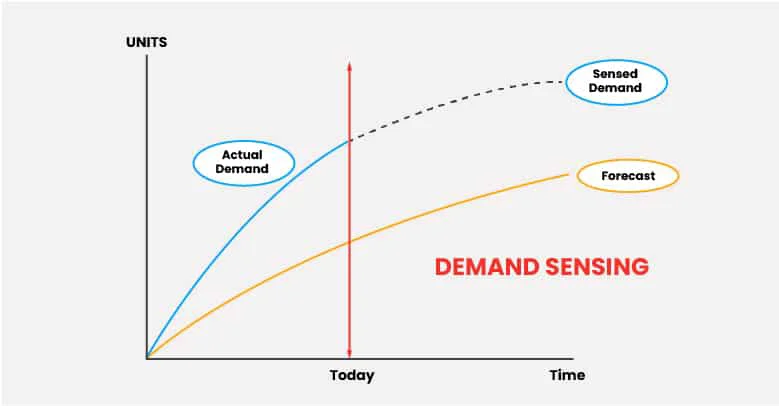
One of the best forecasting practices today is to build separate long-term demand planning and short-term demand sensing capabilities.

Demand sensing uses a range of dynamic demand predictors to forecast in the near term. It includes exogenous factors such as weather, temperature, holidays, etc. as well as internal factors such as promotions, pricing, inventory, etc. It usually uses ML-based algorithms to predict real-time demand. One such solution is ADA Global’s Order Right.

Although demand sensing and planning have different purposes, their relationship needs to be dynamic. For example, demand sensing capabilities can help you know well in advance when your long-term forecast is erroneous and accordingly offset it. Such an activity performed over time reduces the overall forecasting error and could potentially help you maintain high availability while reducing costs.

Demand forecasts can be course-corrected based on actual demand with demand sensing capabilities

You Treat Every Channel-Category-Store Combination the Same

Trends such as omnichannel, price, and convenience sensitive consumers and short product lifecycle have completely disrupted the retail scene. Today, every store, every channel, and every category behaves differently. One of the biggest mistakes that retailers make is treating them the same. This often leads to inconsistent experience for customers across channels and stores.

For example, even though your store might have enough supplies, an out-of-stock message on your site can put a serious damper on customer experience and may even result in lost sales.

In fact, there’s a 91% chance dissatisfied customers won’t do business with your brand again. Therefore, your retail replenishment software strategy should consider these nuances to be effective.

You Don’t Systemically Adapt to What Is Happening on the Shelf

Ask any store manager and they would tell you that what happens on the shelf ultimately decides store success. Nothing is more excruciating for a customer than to see empty shelves. One of the main reasons why it happens is because of the dynamic effects that play in your store.

For example, a promotion for one product can lead to decreased (Cannibalisation) or increased sales (Halo effect) for other products. Promotions is just one aspect. There are several more such as product placement, visual merchandising, pricing, new product launch, and more.

While your store managers are smart to figure out some of them, they might not have the bandwidth to keep a tab on these effects every time they happen. Hence, what is needed is a systemic approach to identifying these effects and course correcting in your ai replenishment plans.

Your Replenishment and Inventory Planning Is Not Optimized for Constraints (and Cost)

Planning is just half of the puzzle, the other half is the execution! As any learned and experienced supply chain expert would tell you, it’s all about the theory of constraints and most importantly economics.

Even if your replenishment planning is very accurately mapped to demand, it needs to be optimized for supply chain factors such as lead time, minimum order quantity, shelf life, expiration date, etc. This not only helps you meet store demand but also reduce costs such as shipping and handling costs, inventory optimization, ordering cost, shrinkage, etc.
Increasingly, retailers want to automate this process because of the complexities involved and the manual calculations required to get it right.

Your Supplier Collaboration Is Fragmented and Inefficient

According to research, about 10-30% of stock outs happen due to supplier shortages. One of the major reasons why it happens is because of lack of transparency and collaboration between retailer and vendor.

Most retail firms have realized this gap and are proactively working to create a unified supplier collaboration platform similar to Vendor Link that would integrate all vendor processes and enable seamless data sharing for better outcomes.

What this results in is a lack of collaborative planning and mutual trust leading to low fulfillment rate, longer lead times, and vendor dissatisfaction.

Most retail firms have realized this gap and are proactively working to create a unified platform similar to Vendor Link that would integrate all vendor processes and enable seamless data sharing for better outcomes.

Also read: AI-Driven Replenishment Planning: A Game-Changer for Retailers

In fact, retailers who improved their retail vendor collaboration cited a 20% increase in revenue.

Fragmented vendor collaboration and data sharing

1-click Intelligent Replenishment

Retail companies, especially with a large number of SKUs, need to relook at their replenishment strategy. One of the most effective ways of achieving accurate, efficient, and cost-effective automatic store replenishment is with the help of a demand-driven and business operations tailored system.

However, given the breadth and depth of categories that need to be managed, and supply chain complexities in today’s era, manual ordering has become very inefficient and expensive.

Therefore, there is a need for “a layer of super-human intelligence on top of existing ERP systems that optimizes store replenishment to account for complex demand patterns, while reducing supply chain costs and markdowns”. One such solution is ADA Global’s Order Right.

Order Right builds a layer of Artificial intelligence on top of your existing planning tool and optimizes your store replenishment by making smart ordering suggestions to reduce out of stock, improve margins, and cut down wastage.

It uses a library of ML-based algorithms curated specifically for retail scenarios to accurately predict inventory demand prediction at store, channel, and category level, and optimize orders to achieve category objectives and reduce supply chain costs.

Download Order Right Brochure here or schedule a demo.

Recommended Reading:

  1. Point Of View: Does AI Really Improve Retail Planning?
  2. Grocery Replenishment Has Evolved: 9 Things Every Retailer Must Know

  3. 9 Best Practices in Demand Forecasting for Grocery Retailers
Table Of Contents
You Rely on Static Long-term Demand Planning
You Treat Every Channel-Category-Store Combination the Same
You Don’t Systemically Adapt to What Is Happening on the Shelf
Your Replenishment and Inventory Planning Is Not Optimized for Constraints (and Cost)
Your Supplier Collaboration Is Fragmented and Inefficient
Recommended Reading:

Point Of View: Does AI Really Improve Retail Planning?

Merchandising and Supply Chain
Blogs

Point Of View: Does AI Really Improve Retail Planning?

Demand and supply planning are often seen as the core activities for a retail organization. Simply put – it is all about placing the right product at the right place at the right time.

The planning that goes behind ensuring it is very complex and mostly manual. Most organizations rely on their category management and demand planning teams to make the right decisions such as what to put, in what quantities, at what time and where – consistently over time.

According to Mckinsey, applying AI-driven forecasting for retail planning can reduce errors by between 20 and 50%. That translates to a reduction in lost sales and product unavailability by up to 65%.

That is a significant value that retailers stand to miss out if they don’t adopt AI-driven technology in retail planning. While several retail leaders have wholeheartedly accepted AI as a strategic enabler for retail planning, many still believe that they are not ready.

“Too many companies still rely on manual forecasting because they think AI requires better-quality data than they have available. Nowadays, that’s a costly mistake.” – McKinsey

In this piece, we ask our expert Sankha Muthu Poruthotage to cut the clutter and tell us how AI translates to value on ground and who stands to benefit from it.

Sankha has decades of extensive experience in data science and ML engineering. He has spent the last several years of his career creating intelligent retail products by embedding ML algorithms to retail functions. At Ada Global, he plays the dual role of a product management leader and a consultant to clients.

What are some of the challenges that modern retailers face today?

Well, if you look at it broadly, the challenges can be categorized into two. Retailers obviously want to have more customers buying from them, and they want them to spend more money. It is all about increasing the market share and wallet share. So the challenges most retailers face revolve around customer acquisition, customer retention, upselling, and cross selling.

On the other side of the spectrum, you have the merchandise and supply chain optimization challenges. While getting customers to the store is the first challenge that retailers face, being able to serve them is a much more complex problem to solve simply because there are too many moving parts not under complete control.

The recent pandemic has exacerbated the situation as consumer behavior and preferences have irrevocably changed. Retailers today face complexities in several dimensions such as omnichannel retailing, value-oriented and convenience obsessed customers, new and fresh product launches, and volatile demand patterns.

As a result, retailers today are struggling to achieve optimal assortment, floor plans, replenishment planning solutions, and inventory plans with the pre-pandemic methods.

What are the biggest pain points that the industry faces when it comes to retail planning?

It is estimated that globally around $500 billion is lost due to wastage in retail. Wastage happens due to excess stock. On the other end, you have Out of Stock (OOS) which results in revenue losses and customer dissatisfaction. This is estimated to be even higher than the wastage at around $1 trillion annually in direct loss of sales.

There is an immediate impact on the P&L if OOS and wastages can be minimized. It can be as high as 10% increment on the operational profit. What most retailers realize is that these two are the biggest challenges in retail planning, and whoever aces this juggling act between the two extremes will eventually win the race.

What are the areas where AI has proven effective in dealing with these challenges?

AI is usually associated with cognitive abilities such as vision and voice. However, the underlying algorithms such as artificial neural networks and machine learning models can be used for many other use cases such as time series forecasting. Infact AI/ML models are proven to be very effective in areas such as demand forecasting.

The other main advantage of AI/ML models is that they can bring complex associations into light. I’m talking about pricing, promotions, events, weather, and even macro factors such as unemployment or consumer spending.

Once you have a good grasp of demand and how it reacts to these factors, it can lead to better optimal discount, promotion, and store replenishment strategies. Of course it needs a layer of optimization on top of forecasting which is very important to make things operationalized.

I’ll provide a simple example. A retailer and a supplier typically have a contractual agreement on the minimum order quantity. Hence, to make things operationalized, this parameter needs to be considered in the optimization layer. It is important to bring in the business parameters to automate these critical business functions.

What retail industries can benefit from use of AI in demand planning and replenishment?

I think most retailers with medium to large operations stand to benefit. However, in general, retailers who deal with perishable items will see greater benefits due to obvious reasons – they need to be more agile and accurate than others.

How long does it take to realize ROI from such an investment?

In my experience with clients, the ROI for demand planning solutions is very tangible. Our customers have seen almost instant improvement in metrics such as availability and wastage by using the solution.

As I mentioned earlier, combined impact on the P&L can be as much as 10%. And the investments are typically a fraction of it. So the return starts within a matter of a few months.

Demand Forecasting And Replenishment That Is Accurate, Robust, And Adaptive

The last two years have exposed many gaps in businesses, and this was especially true of demand and supply chain planning. Many retailers remain unprepared to address challenges such as frequent out of stocks, increasing inventory optimization costs and wastage that come with fresher newer products, omnichannel retail, and shifting consumer behavior.

Ada Global’s Forecast Right and Order Right have helped major retailers leapfrog to an intelligent, adaptive, and agile demand forecasting and automatic store replenishment framework that simply works, every time.

Forecast Right is an easy-to-use intelligent demand forecasting solution created specifically for grocery retail demand and supply chain planners. Its robust and AI/ML powered framework helps planners go granular and capture channel-store-category nuances in their forecasts, avoiding the trap of “one-size-fits-all” associated with some of the existing solutions in the market.

Order Right is an intelligent replenishment optimization solution that helps category managers generate accurate SKU-level order plans every time. It consumes accurate demand forecasts from Forecast Right and, unlike many existing solutions in the market, optimizes order plans for supply chain constraints and parameters such as MOQ, lead time, replenishment frequency, etc. using advanced AI/ML techniques. It also powers users with advanced features such as future stock predictions, day zero predictive alerts, and retail replenishment software risk-based order planning.

Also read: Navigating the Beauty Maze: AI’s Role in Retail and Supply Chain Planning

Learn more about Algnonomy’s Forecast Right and Order Right.

Table of Contents
What are some of the challenges that modern retailers face today?
What are the biggest pain points that the industry faces when it comes to retail planning?
What are the areas where AI has proven effective in dealing with these challenges?
What retail industries can benefit from use of AI in demand planning and replenishment?
How long does it take to realize ROI from such an investment?
Demand Forecasting And Replenishment That Is Accurate, Robust, And Adaptive

How Machine Learning Improves Retail Demand Forecasting

Merchandising and Supply Chain
Blogs

How Machine Learning Improves Retail Demand Forecasting

Demand forecasting is the process of predicting how much demand your products will have over a specific period, based on historical and real-time data. It helps make the right procurement and supply decisions for the business and its customers.

As a retailer, demand forecasting must be routine for you, whether you sell 1,000 SKUs or 10 million. In fact, the higher the number of products you sell, online or offline, the more important it is that you forecast the demand for your products accurately for the upcoming months.

Why Is Demand Forecasting Essential in Retail?

Demand forecasting is essential for almost every activity from production or procurement planning to sales and marketing to assortment planning.

It is a critical BAU activity for several reasons, such as:

  • To balance product availability with minimal stock risk—cut down inventory optimization issues and wastage at the same time
  • To ensure you are able to procure the right amount of inventory required to meet customer requirements in the near future: both online and offline
  • For optimal retail inventory optimization solution and management and to avoid out-of-stock as well as excess or old stock scenarios
  • To understand which products are needed in approximately what quantity at each store
  • To know how much inventory your warehouses should store to meet consumer needs on your digital channels
  • For capacity management—ensuring that production/supply and in-store efficiency is aligned with the projected demand
  • To make supply chain management more efficient by helping you decide the inventory required for each product category and whether more or fewer suppliers would be needed at a time
  • To be able to create, produce, procure, or design new products to meet customer needs better
  • For planning production requirements and logistics, if you are a D2C brand that manufactures your own products
  • To be able to do assortment planning the right way so that products not being sold during a particular period do not take up key shelf spaces
  • To optimize cross-sell and upsell strategies around alternative and similar products
  • For optimization of product promotion campaigns and advertising spends, i.e. knowing which products to promote through discounts and offers and which not to
  • To reduce operational costs and increase profitability

What Are the Traditional Demand Forecasting Methods?

Once upon a time, demand forecasting was siloed to individual stores, and having one individual dedicated to tracking product movements and predicting requirements was enough.

But in the past decade, with different sales channels—multiple stores (many a times in different countries), websites, and apps—it is important to have an omnichannel outlook to forecasting.

The scale of omnichannel means that the amount of data—related to both product movement and customer behavior—is massive, which is beyond the scope of a few individuals and their spreadsheets.

Traditional demand forecasting solution methods consist of two key areas:

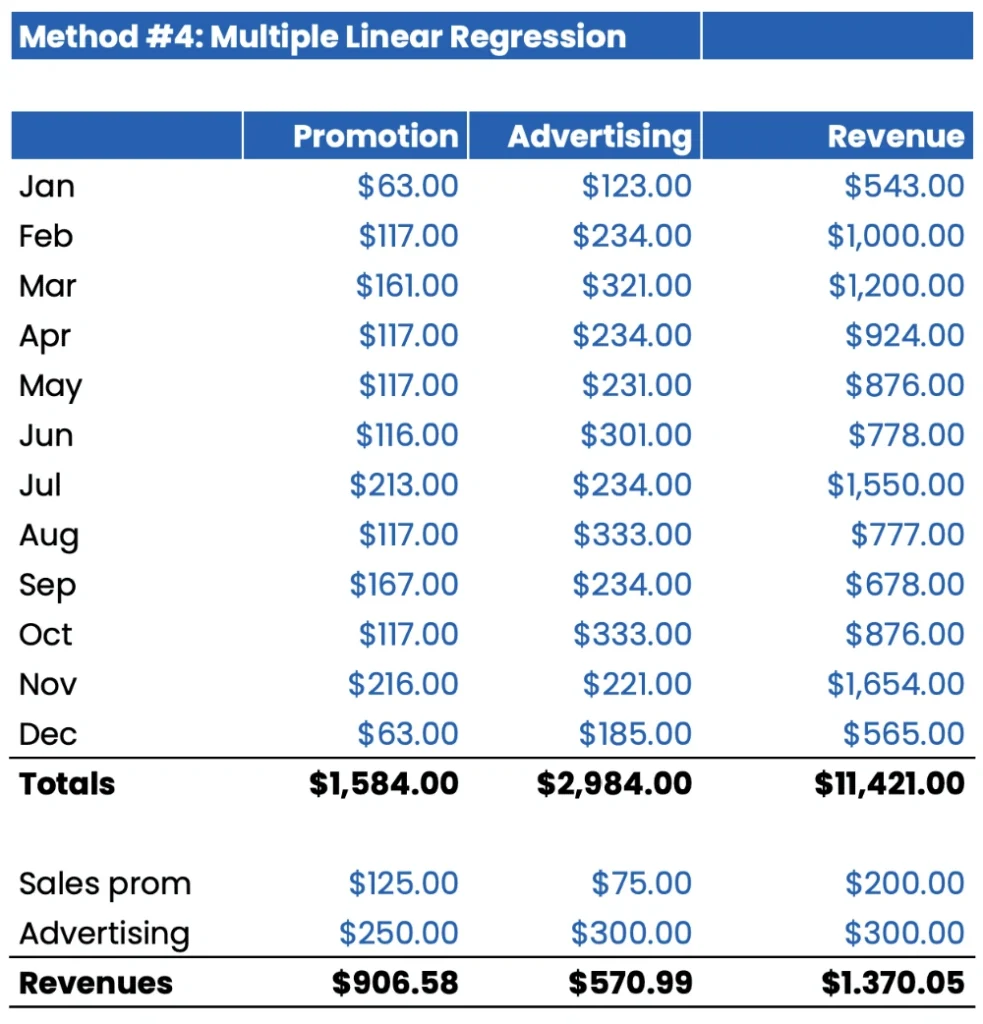
  1. Quantitative methods, which employ mathematical and statistical models to understand the trend and results. These include models such as Percentage Over Last Year, Moving Average, Linear Approximation, Exponential Smoothing, Lifecycle Modeling, Time-series Modeling, Regression Analysis, and Econometric Modeling.
  2. Qualitative methods, which are subjective and sociological methods of collecting information and applying ideas generated from them to the problem at hand. These include Market Research, Historical Analogy, Expert Opinions, Delphi Method, Panel Consensus, and Focus Groups.

Why Use Machine Learning for Demand Forecasting Instead of Traditional Methods

As is obvious, most traditional demand forecasting methods are manual in nature, relying on collecting information and analyzing them using spreadsheet formulae.

But when your retail data points run into millions and the variables that determine the demand for a product run into dozens, manual forecasting is simply time-consuming and prone to human error.

In addition, it is impossible to consolidate all data points and all kinds of different analytical models into a single spreadsheet or chart for a 360-degree view—inevitably, some factors get left out and siloed interpretations follow.

You might find one statistical model telling you that you need to stock up on baking essentials because it’s Thanksgiving. Another study tells you baking is falling out of fashion because people are working more and have less time for personal activities. And then, a third unknown factor of sudden bad weather drops out of nowhere. So, should you stock up on baking essentials or not, and how much?

9 Ways Retailers Can Benefit from Machine Learning in Demand Forecasting

Today’s retailers must have accurate demand forecasts in order to optimize every part of the chain of activities required to meet the day-to-day appetite for their products. The better forecasts you build, the more efficient each of your procurement, sales, and marketing processes will be.

And nothing can give you better data accuracy than machine learning-based software.

McKinsey notes that using ML and AI in demand forecasting and supply chain management can reduce errors by up to 50% and reduce lost sales and product unavailability situations by 65%. This can lower warehousing costs by up to 10% and administration costs by up to 40%.

These benefits are surely too good to pass up.

For starters, AI algorithms use a combination of the best of mathematical, statistical, and data science models. An ML-based forecasting software doesn’t simply apply past patterns within a business to predict future requirements; it evaluates each factor likely to impact demand in real time, and automatically gives you a constantly updated picture of sales, demand, and inventory.

Machine learning can process millions of data points in minutes, draw trends and insights across different dynamic conditions, and show you how each variable affects another and thereby the overall demand. It can find non-linear connections between variables, which are crucial for the best forecasting models.

Plus, these algorithms constantly learn from the data the software ingests. It is already trained on several forecasting models and historical data, and further training with real-time data strengthens its accuracy. This helps you automate the whole process and cut down on the human hours required for the task.

All this makes predicting demand through machine learning accurate, fast, and scalable, which, in turn, ensures efficiency in the entire supply-to-sales chain.

To summarize, using machine learning for demand forecasting can benefit you in the following nine ways:

  1. Process more data points than a human can
  2. Process data from more sources
  3. Process the data quickly
  4. Identify hidden trends and insights from the data
  5. Identify relationships between the variables that impact demand
  6. Generate accurate forecasts by factoring in several variables
  7. Automate and update the forecast in real time
  8. Make the forecasting system robust, scalable, and adaptable
  9. Save time, money, and resources by making every step of the supply-to-sales chain effective and efficient

Related Blogs

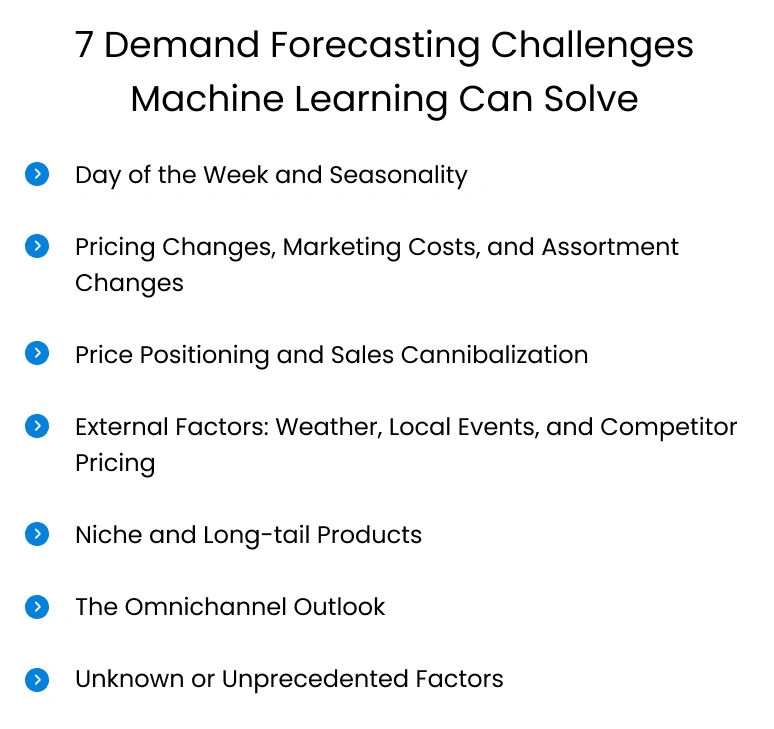
7 Demand Forecasting Challenges Machine Learning Can Solve

Let’s see how ML algorithms can help retailers deal with the many challenges that demand forecasting inherently presents.

1 Day of the Week and Seasonality

Weekday versus weekend sales and higher or lower sales of certain items in specific seasons are things every retailer contends with every day. A simple time-series modeling might help you determine these patterns easily.

However, machine learning’s accuracy comes from the fact that these clever algorithms find how these variables and demand are related. It also factors in other variables, such as offers, promotions, and weather, ensuring accuracy and giving you a 360-degree view of where your product’s demand would stand in the next few days or weeks or months.

2 Pricing Changes, Marketing Costs, and Assortment Changes

Offers, promotions, discounts, in-store display changes, and investment in online and offline marketing campaigns, can affect how the appetite for the product shapes up. It’s difficult to predict the impact each of these factors can have on demand, without some really complicated number crunching.

Machine learning can do the heavy lifting for you and accurately predict how a product’s price change can affect its demand. This helps not only in forecasting but also in understanding promotion forecasting, markdown optimization, assortment planning, and replenishment planning solutions management.

3 Price Positioning and Sales Cannibalization

The price difference of a product compared to other products in the same category also affects demand. For example, the highest priced product in the category may end up not getting sold at all.

Similarly, promotions and discounts of one product in a category could bring down the demand for other products in that category.

Keeping track of these phenomena for each category of products you sell can be back-breaking. However, ML algorithms learn from each piece of data, and therefore can give you a comprehensive view of factors impacting the demand of each product not only within itself, but also in relation to other products in the category.

4 External Factors: Weather, Local Events, and Competitor Pricing

Demand is sometimes heavily affected by external factors, such as weather, local crowd-pulling events, and pricing changes and promotions by competitors. Without machine learning-based automation, these things are almost impossible to be factored into inventory demand prediction.

ML algorithms can quickly and accurately map the relationships between weather and sales at a localized level, giving a granular outlook on the market for your products. They not only detect which product would be in demand during a weather pattern, but also tell you what product would not be needed.

The same goes for understanding how a big concert or game near the store or in a region can affect demand for certain products, or how promotions being run by competitors or new stores/online outlets can change footfall/traffic to your channels. You only need to feed the right data into the ML-based tool you use.

5 Niche and Long-tail Products

Many niche products have negligent sales data because barely a few units are sold each month. This leads to a scarcity of data on the item and unpredictable variations in demand patterns for the product.

Add external factors and cross-channel variables, and the output can actually become unreliable. However, robust and self-learning algorithms can cut out the noise, avoid overfitting, and arrive at close-to-accurate results for niche products as well.

6 The Omnichannel Outlook

Several forecasting challenges are often unique for in-store and online channels. Even within each channel and each store, there are variations depending on location, logistics, shelf space, personnel availability, etc.

Machine learning makes it possible for retailers to not only get an overview across stores and channels, but also look at the requirements of each individual store and channel.

Because of this, it can suggest internal stock movements easily. For example, say your Pittsford store has an excess stock of peanut butter and your Rochester store is running out of it. Your ML tool can make this information more visible. So, instead of urgently procuring fresh stock for Rochester, you can move some of the stock from Pittsford and meet the requirement quickly.

The same thing can be done cross-channel; the algorithms can suggest when excess store replenishment stock can be moved to the online inventory and vice versa.

7 Unknown or Unprecedented Factors

Machine learning algorithms also allow you to factor in unknown factors impacting demand. In 2020, for example, the pandemic was a sudden and unprecedented factor that changed consumer needs overnight. An E2open study found that amid the pandemic, real-time data and AI-powered analysis reduced forecast errors by over 33%.

ML software can add a tentative input in the forecasting model, making it ready to update the numbers within minutes of adding in a new datapoint. Retailers can also do what-if simulations to analyze how changes in variables can affect demand, so as to be prepared for unknown factors and reduce forecasting errors.

Unknown or unprecedented data can be best handled by a machine learning tool if it has real time customer data profiles processing capabilities. Inputs such as search trends, social media actions and hashtags, global and local news, and other non-linear and unstructured data help machine learning algorithms increase the accuracy and value of their output.

Time to Add Machine Learning to Your Demand Forecasting Process

Now that you know the immense benefits machine learning can bring to how you forecast demand, time to look at different ML-based software and get one for your business. ADA Global’s Forecast Right is one such AI-driven forecasting solution that is also easy to use.


Table Of Contents
Why Is Demand Forecasting Essential in Retail?
What Are the Traditional Demand Forecasting Methods?
Why Use Machine Learning for Demand Forecasting Instead of Traditional Methods
9 Ways Retailers Can Benefit from Machine Learning in Demand Forecasting
7 Demand Forecasting Challenges Machine Learning Can Solve
Time to Add Machine Learning to Your Demand Forecasting Process

Autonomous Supply Chain Intelligence in Retail Logistics

Merchandising and Supply Chain
Blogs

Autonomous Supply Chain Intelligence in Retail Logistics

Current business scenarios are proving that companies that plan for both best- and worst-case circumstances are the real winners.

In recent times, we’ve seen that well-prepared companies were the ones able to ride out the troughs and crests caused by the pandemic, an unprecedented geopolitical climate, and booms and busts of the stock market.

These companies were able to do so because they had a strong and efficient supply chain intelligence in place, one that could adapt to any kind of scenario and handle seemingly insurmountable challenges. They couldn’t have done it without careful planning and disaster preparedness in the supply chain and retail logistics.

What happened to those companies that weren’t well-prepared? Take the biggest disruption that happened in 2020 — that of the COVID-19 pandemic. The fallout was the huge impact on supply chain planning and scheduling, which up to then were well-oiled functions for companies.

In the aftermath of the pandemic, companies found themselves grappling with disruptions in the movement of goods and availability of raw materials, making it difficult to meet production demands. Most were compelled to move from the brick-and-mortar model to online platforms.

Suddenly, all companies, especially retailers, had to stop relying on historical data to engage in supply chain forecasting. Instead, they had to align themselves with changing customer demand. That’s when they realized that flexible supply chain planning was key to responding to business demands brought on by uncertain times.

This lesson has led businesses to focus on reviewing and revamping their supply chain planning capabilities to do contextual commerce. An example is autonomous supply chain planning enabled by artificial intelligence, which helps companies to correct situations on their own by managing fluctuating demand and realizing maximum value from the data provided by digital analytics tools.

Autonomous supply chain planning draws on advanced technologies such as machine learning and AI, wiring together huge amounts of data points to generate useful insights. It ties in historical data with current supply and demand to arrive at a better understanding of market needs. And it allows companies to fulfill dynamic customer requests resulting from fluctuating market conditions.

Apart from inventory forecasting, the system also enables companies to benefit from time and cost savings. Data-based reports and planning can help track supply chain performance over time, and find ways to enhance supply chain operations and keep associated costs as low as possible.

AI has several use cases and applications in the retail supply chain:

  • Recognize and understand all opportunities and threats across the supply chain. This can be done by having an end-to-end supply chain perspective that’s not just objective-oriented, but also gives an appropriate response to the situation.
  • Gather and interpret data in real time so that stock replenishments become timely.
  • Employ the data to mitigate service-level failures and tackle challenges before they snowball into big issues.
  • Efficiently use the autonomous supply chain, which offers a single and updated forecast. This eliminates inconsistencies between supply and demand, as well as the standard “out-of-stock” answer that eats into sales.
  • Apply AI and ML to the company’s most critical supply chain functions, such as forecasting and inventory management, to realize higher and faster return on investment.

Supply chain autonomy is a catalyst for the retail sector to achieve cost controls and realize higher profit margins. This involves a gradual adoption process and isn’t always an overnight transformation. What’s crucial here is partnering with a company that can provide the full range of supply chain automation services, and support retail companies in accessing the power of autonomy in today’s digital-first world, to achieve last-mile efficiencies and delight customers.

This article was first published on SupplyChainBrain.

Grocery Replenishment Has Evolved: 9 Things Every Retailer Must Know
Merchandising and Supply Chain
Blogs

Grocery Replenishment Has Evolved: 9 Things Every Retailer Must Know
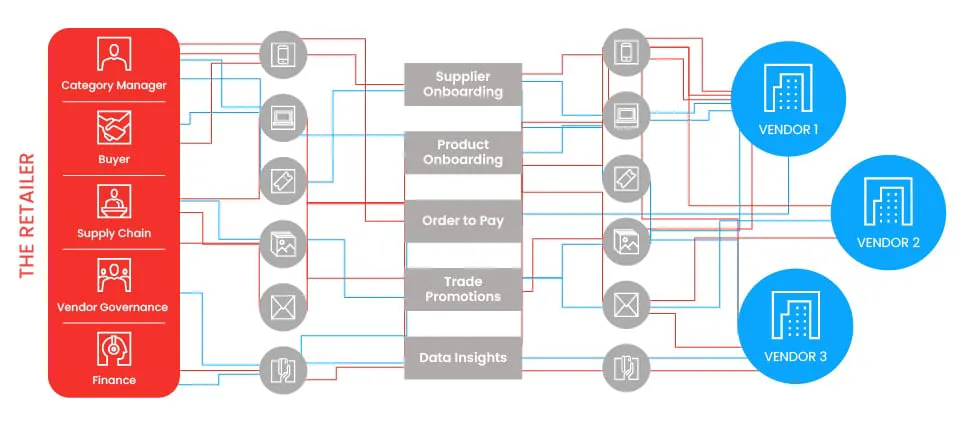
Grocery retail has irrevocably changed. The last two years in particular have exposed many gaps in business. Predictive replenishment emerged as one of the major fault lines in the changed grocery retail environment with many retailers unprepared to address challenges such as frequent out-of-stocks, increasing inventory costs, wastage that comes with fresher and newer products, omnichannel nature of business, and shift in customer behavior.

Here are nine best practices for grocery replenishment that are fast catching on and can help you build a robust replenishment framework:

  1. A Good Demand Forecast Is Essential, However It Is Not the Only Critical Input
    A good replenishment planning solutions system must also factor in existing inventory balance, expiration dates, open orders, average lead time, minimum order quantity, standard ordering frequency, and other data points that are key to effective planning.
  2. Simulations Will Help to Hone Your Replenishment Strategy
    Both demand and supply-side fluctuations characterize your supply chain. Monte Carlo simulations can create thousands of different ‘what-if’ decisions to develop supply chain scenarios. These scenarios can help you optimize your resources (cost), improve customer service, and strengthen your competitive approach with a robust replenishment strategy.
  3. Leverage Optimization Algorithms to Get the Right Outcome Every Time
    Artificial Intelligence in ai replenishment planning has proven effective in dealing with large-scale multifactorial optimization. AI can do the heavy lifting of identifying predictors and best-fit models for demand forecasts, and optimizing order plans for supply chain factors.
  4. Factor in Supply-side Variations
    In the past few years, grocers have realized that disruption in supply is an emerging threat and needs a mitigation strategy. Providing for probabilistic treatment of supply-side variations in your replenishment framework can go a long way in achieving that.
  5. Collaborate With Your Supplier Base
    Your replenishment framework is as strong as the weakest link of your supply chain. Even the best replenishment planning framework will fail if the supplier collaboration is poor and cumbersome. Think of supplier integration as part of replenishment planning.
  6. Safeguard Against Risks With More Effective Guardrails
    While accounting for expected risks such as delays in lead time during holidays, you must also be prepared for unexpected events such as inclement weather, war, and epidemic/pandemic. Setting up dynamic guard rails such as minimum inventory optimization turnover period as opposed to static ones like minimum safety stock levels can safeguard your operations.
  7. Your Shelves Might Not Be Functioning The Way You Assume
    First In, First Out is a fair assumption for ambient products. However, for fresh food categories, it is probably the opposite. Being astute, buyers select produce, meat, fish, poultry, and dairy that show no signs of spoil. They might anticipate that the grocer has placed the oldest inventory at the front and reach further back of the display.When this behavior becomes a common practice, only dead stock remains on the grocer’s shelves. Hence, incorporating batch-wise stock balances and expiration dates in your retail replenishment software will avoid wastage and keep your shelf looking fresh.
  8. Set Proactive Alerts To Act Preemptively
    To ensure you order the right quantities at the right time, simplistic alerts such as the ones based on fixed pre-expiration timeline might not be good enough to react to grocery scenarios. Instead, a proactive notification based on a combination of factors—such as inventory demand prediction, stock balance, and product expiration— will help you course-correct in a timely fashion.
  9. Let People and Technology Augment Each Other
    While advanced technologies, such as AI and ML, augment the replenishment planning processes, there are certain limitations that are addressable only by human intervention. Make sure there are humans in the loop who can intervene as needed. People and technology augment each other well!

AI-powered Replenishment Planning Solution Tells You What, When & How Much to Order

Advanced technologies, such as AI and ML, bring revolutionary capabilities to the table across demand forecasting and automatic store replenishment – helping planners make snap yet faultless decisions every time.

One such solution is ADA Global’s Order Right, which helps planners shift their focus from tedious, manual number-crunching to 1-click intelligent order planning.

Order Right generates accurate SKU level order plans with its proprietary optimization algorithms that account for key supply chain and category factors such as shelf-life, lead-time, MOQ, etc. while constantly monitoring stock balance, sales, and demand predictions

Table Of Contents

9 Best Practices in Demand Forecasting for Grocery Retailers

Merchandising and Supply Chain
Blogs

9 Best Practices in Demand Forecasting for Grocery Retailers

Download this article as a PDF

Grocery retail supply chains are getting more complex and unmanageable with traditional forecasting models. Matching supply with demand for a broad inventory that includes fresh and short shelf-life products on one end and ambient products on the other is not easy. Add to that the complexity that arises due to changing consumer behavior, who have started to incline towards convenience and price over brand loyalty. Yet traditional demand forecasting is still heavily reliant on constant monitoring and intervention from a supply chain expert.

Accurate and agile demand forecasting lies at the center of grocery retail’s customer-centric yet lean approach. Doing forecasting right has far-reaching benefits:

  • You reduce your wastage by better inventory demand prediction planning
  • Your displays look attractive and dynamic
  • Customers get fresher goods
  • You sell more by placing your product at the right place at the right time across channels

So, let’s look at nine secrets to improve your demand forecasting and take it to the next level.

Account for Dynamic Demand Forces With Multivariate Forecasting

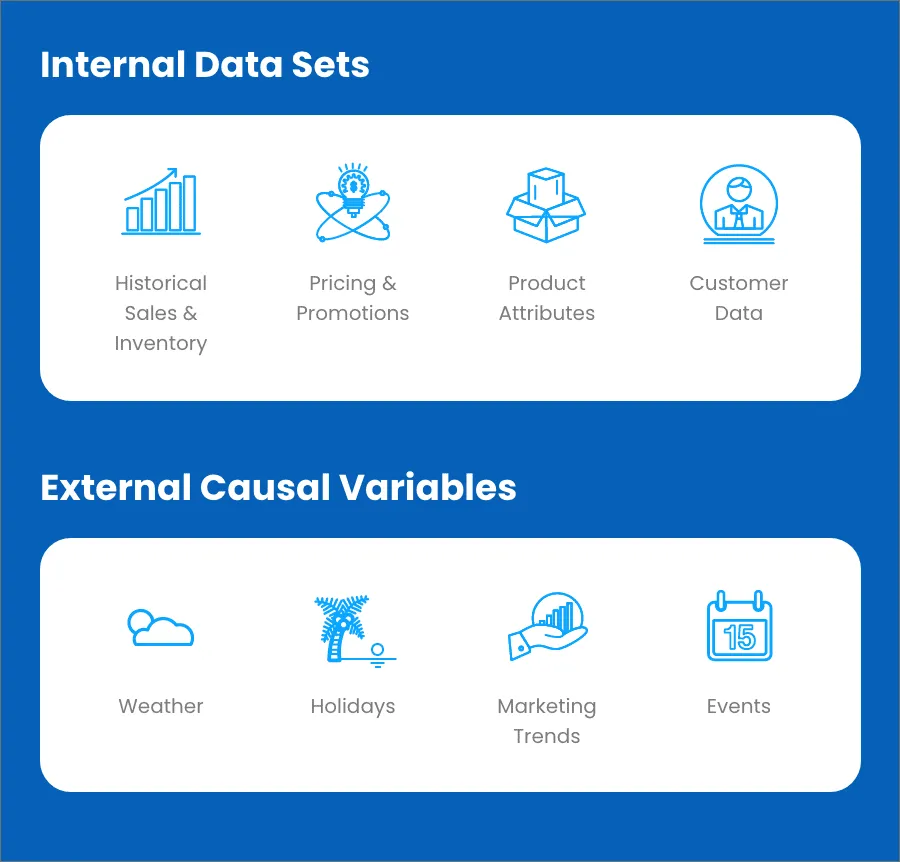
With price sensitivity and convenience changing the way consumers shop, the demand for products has become much more volatile and difficult to predict with simple models. It has therefore become imperative for grocers to enrich data and not simply rely on traditional data. For accurate forecasting, it’s crucial to account for external factors such as weather, holidays, events, social media, and news as well as internal factors such as promotions, advertising, visual merchandising, etc.

Let ML Do the Heavy-lifting and Help You Decide What Factors are the Most Important

With a huge range of internal and external causal variables affecting sales, every store, channel, and category combination behaves differently. One of the biggest mistakes that grocers make is to force-fit models without understanding the nuances that are at play.

In a multivariate framework, it is very difficult and cumbersome to determine the importance of each factor manually. ML algorithms, however, can help to sift through data and determine the effect of each factor. This can then feed in as an input for the planner to generate granular and accurate forecasts.

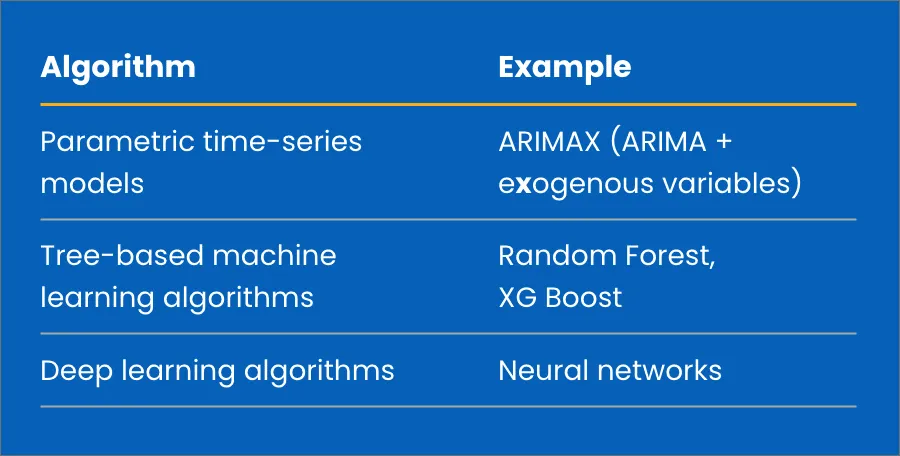
Go the Extra Mile on Forecast Accuracy With an Ensemble of Algorithms

While forecasting sales of products, there is a slim chance that you will find a silver bullet algorithm that works for all products, locations, and situations. Therefore, champion grocers go the extra mile with an ensemble of algorithms that is customized based on the data. This ensures that grocers avoid over-fitting of models across product lines and achieve greater overall accuracy.

Adopt a Dynamic Approach to Fresh and Ambient Products With Business Objectives as Priority

From fresh goods wholesalers to grocery retailers, from high-end to price-driven supermarkets, convenience stores to cash-and-carry chains, it is clear that replenishment optimization teams walk a tightrope between spoilage costs and shelf presentation. This makes it important to get the balance right every time.

Error functions such as RMSE and MAD are powerful tools that can be used to select the best model by analyzing the prediction error. Such methods are indifferent to over-forecasting and under-forecasting. However, depending on where the product lies in the fresh to ambient spectrum, these functions can be tuned to treat over-forecasting and under-forecasting differently based on the business requirement and impact.

Tie Your Forecasting to Outcomes

What should be your forecasting accuracy? Should it be above 95%? Or 99%? The correct answer to this question is not so simple.

Most forecasting techniques aim to achieve the highest accuracy levels, giving very low importance to business outcomes. Tying your forecasting to outcomes such as reducing wastage, overstocking, or increasing availability has helped several leading retailers achieve great success even with forecasting accuracy as low as 70%.

Pro-actively Adapt to In-store Scenarios

While managing stocks at grocery stores, it is critically important for store managers to respond to what is happening on the shelf. For instance, a new product launch could lead to secondary effects on the demand for other products, which could range from an overstock situation in case of cannibalization to understock in case of multi-buy discounts. For true agile operations, business users should be able to swiftly identify and plan for such situations on a daily basis without the need of technical support.

Events that cause a secondary effect on other products:

  • Multi-buy discounts
  • Price change
  • Promotions
  • Advertising
  • Change in in-store display
  • Product launches and discontinuation
  • Macro-level scenarios such as weather, local events

Don’t Discount the Cannibalization Effect

The effect of promotions of products via price discounts, advertisements, display changes, etc. on the supply chain is one of the least studied topics but has huge implications. For example, the promotion of one product may have significant effects on the sales of other products that are not in promotion. Not accounting for this effect leads to suboptimal retail inventory optimization solution and ill effects like increase in spoilage or overstock. Promotion forecasts can go a long way to satisfy the increase in demand while mitigating the ill effects.

Sparse and Noisy Data Is the Norm, Not an Exception

With increased new product launches, fresh products, and increasingly complex channels, sparse and noisy data is a recurring theme across grocers worldwide. If you regularly face the roadblock of not having enough quality data for your planning needs, then it is time to look for a solution. Invest in a forecasting framework that uses data science techniques to deal with sparse and noisy data with ease.

Scalability Is Not Optional Anymore

Irrespective of you taking a top-down or a bottom-up approach to your demand planning, you will eventually have millions of demand forecasts at the SKU-store level. This planning is getting even more unmanageable due to changing consumer behavior and channel factors. Therefore, top grocers realize the importance of making sure that the system is scale-ready, both from a technical and user experience point of view.

In the ever-evolving, dynamic, and volatile grocery retail, your demand sensing and forecasting framework needs to be intelligent, agile, and scalable to be able to deal with the above-mentioned challenges. One such solution is ADA Global’s Forecast Right.

Forecast Right uses proprietary ML-based multivariate and algorithmic techniques to accurately and adaptively forecast demand. It is 100X faster and scalable than traditional forecasting solutions – 5-clicks is all it takes to generate 1000s of granular forecasts. Its proprietary AI provides tailor made feature engineering and model selection for demand forecasting and has a track record of improving forecast accuracy for over 90% of SKUs.

The output of a solution like Forecast Right can be plugged into various use cases. One such use case is replenishment planning solutions. Powered by Forecast Right, ADA Global’s Order Right generates accurate SKU-level order plans for even the most challenging categories – from fresh and seasonal to new and promoted products with ease. It does so by leveraging proprietary optimization algorithms that constantly monitor stock balance, sales and demand predictions while accounting for constraints such as shelf-life, lead-time, expiration date, minimum order quantity, minimum display stock, and automatic store replenishment constraints.

Also read: How Machine Learning Improves Retail Demand

Learn more about ADA Global’s Forecast Right and Order Right.

Table Of Contents
Account for Dynamic Demand Forces With Multivariate Forecasting
Let ML Do the Heavy-lifting and Help You Decide What Factors are the Most Important
Go the Extra Mile on Forecast Accuracy With an Ensemble of Algorithms
Adopt a Dynamic Approach to Fresh and Ambient Products With Business Objectives as Priority
Tie Your Forecasting to Outcomes
Pro-actively Adapt to In-store Scenarios
Don’t Discount the Cannibalization Effect
Sparse and Noisy Data Is the Norm, Not an Exception
Scalability Is Not Optional Anymore