
5 Factors Sabotaging Your Demand Forecasts (and How to Outsmart Them)

Merchandising and Supply Chain
Blogs

5 Factors Sabotaging Your Demand Forecasts (and How to Outsmart Them)

In an era where all the customers’ whims and nuances get delivered within minutes to the doorsteps, staying ahead of the customer sentiment while keeping the unit economics intact with optimal inventory in offline retail, is a Herculean task. Recent studies reveal the total cost for inventory distortion to be a staggering $1.77 trillion worldwide, and the lost sales owing to stock issues amounted to a whopping $349 billion for U.S. and Canadian retailers in 2022.

The retail industry is undergoing a huge paradigm shift and having the right inventory at the right place at the right time, data-driven decision-making, and understanding store and supply chain dynamics is vital for profitability. While all of these are crucial pillars, accurate forecasting or demand planning emerges as the most critical factor that is directly linked to profitability, inventory investments, customer satisfaction, wastage, and more. However, factors, such as manual adjustments to seasonal variations and static planning for inventory can affect the overall efficacy of demand forecasting solutions.

Below, we discuss some other factors that sabotage demand forecasting and ways to outsmart them for optimizing replenishment, minimizing inventory distortions, and unlocking greater cost savings without compromising customer satisfaction.

1. Manual Demand Forecasting Processes

Adjusting forecasts manually to crank the inventory up and down for seasonal variations or unexpected events is prone to errors and delays. A standard 5% or 10% increase in inventory might lead to missed demand mapping, overstocks, markdowns, and empty shelves. These errors can ripple through the supply chain, affecting customer satisfaction and operational costs.

On the other hand, AI-powered demand forecasting processes disparate and unstructured data sets such as historical data, market trends, and predictive analytics to automate inventory decision-making. Retailers can automate repetitive tasks like data collection and analysis and choose from a set of highly configurable machine learning algorithms to dynamically refine forecasts based on real-time data inputs, actual store and supply chain level indicators, and disruptions.

2. Static Planning & Outdated Data

Traditional forecasting relies on static tools like sheets and only uses the most recent data, some of which might be in silos, creating huge caveats for accurate demand planning. Ignoring the demand fluctuations, seasonality, and micro-trends, and adjusting inventory to outdated data can skyrocket inventory investments and stock issues.

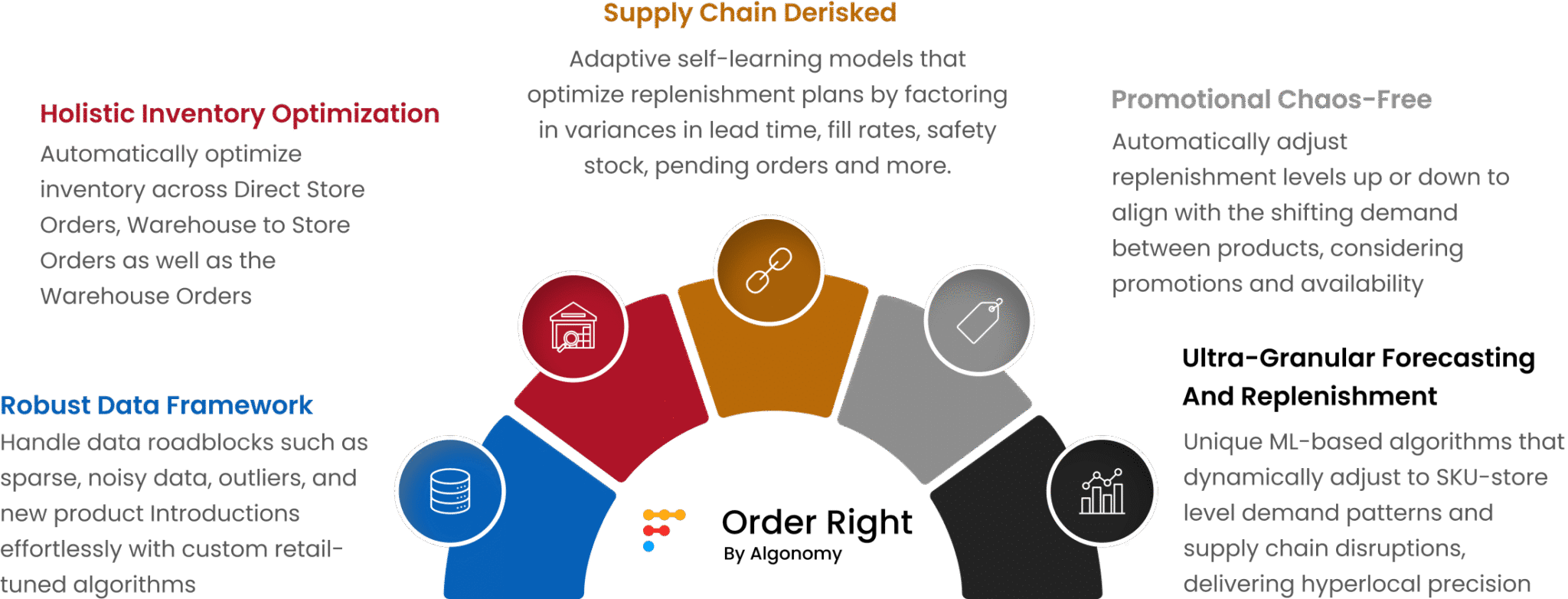
Automation-powered forecasting solutions can capture real-time changes in demand, and anticipate fluctuations via predictive insights drawn from exhaustive data analytics. Retailers can leverage advanced analytics to identify seasonal patterns, trends, and promotional impacts on demand, which allows for continuous adjustment and optimization. They can dynamically adjust to SKU-store-level demand patterns and supply chain disruptions based on rich, data-driven, and reliable forecast insights, thereby unlocking precision at hyperlocal levels.

Now that you’re up to speed on the latest trends, it’s time to dive into effective strategies. Here are some winning tactics of successful brands to spark your 4th of July marketing efforts. This will help you harness the patriotic fervor to create impactful marketing campaigns that resonate with your customers and boost your sales.

3. Poor Data Quality

Data in retail is fragmented, noisy, and sparse. The inability to integrate data from disparate sources, and refine it for drawing out actionable insights undermines the reliability of demand forecasts, leading to inaccurate inventory management and operational inefficiencies. Intelligent forecasting solutions come with built-in AI and ML capabilities to overcome these data hurdles and can generate highly focused and reliable forecasts within minutes. Empowered with the ability to choose from ensemble retail-tuned algorithms, businesses can revolutionize demand forecasting. They can view single forecasts, compare and revisit them, and aggregate them at the product, and hierarchy level as well. With advanced scenario modeling, they can easily build and pick the best model out of hundreds of choices and unlock greater control and precision over replenishment.

4. Ignoring External and Internal Influences

Retail sales influencers can be external as well as internal and ignoring them during demand forecasting can skew the results. However, manual as well as traditional forecasting methods are not equipped to incorporate external as well as internal influencers, and they cannot identify the right influences for specific products, categories, locations, etc.

On the other hand, AI-powered demand forecasting solutions come with built-in lists of external and internal influences that can be configured to business-unique factors and allow retailers to create forecasts according to the chosen factors. They can adjust the forecasts at the product location level for multiple factors at once and create highly refined and accurate plans for minimizing stock issues while keeping customer satisfaction intact.

5. Product Cannibalization & New Product Introduction

Inter-SKU effects during sales and promotions can lead to double loss for retailers, if not managed well. Likewise, new product introductions can derail inventory planning if not considered during demand forecasting. Apart from leading to stock issues, they can spur secondary challenges like lost sales, and high operational costs, and dent customer loyalty.

AI/ML-powered demand forecasting manages cannibalization by dynamically balancing demand between products, considering promotions and availability. Retailers can launch new products without affecting revenue and sales across all product locations, or inducing inter-SKU effects, thereby unlocking intelligent replenishment, greater revenue, and efficient operations.

Accurate measurement of how much the customers will buy is ‘Step Zero’ for ensuring optimal demand fulfillment. It anticipates demand fluctuations, ensures the right amount of stocks at all times, and enables retailers to efficiently mitigate customer needs without ballooning the costs or inventory, and automation is the key enabler. By integrating disparate data sources, dynamic planning, incorporating all sales influencers in forecasting, and intelligent demand planning, retailers can improve shelf availability by 90%, and reduce OOS by 75%, inventory costs by 10%, and wastage by up to 30%, thereby unlocking greater savings, and unparalleled efficiencies.

Disclaimer: This blog does not indicate an ongoing business partnership with the brands, and all references are solely for illustrative purposes.

Also read: 9 Best Practices in Demand Forecasting for Grocery Retailers

Table Of Contents
1. Manual Demand Forecasting Processes
2. Static Planning & Outdated Data
3. Poor Data Quality
4. Ignoring External and Internal Influences
5. Product Cannibalization & New Product Introduction

Is Your Replenishment Truly Strategic? Top Priorities for Health, Beauty, and Wellness Retailers

Merchandising and Supply Chain
Blogs

Is Your Replenishment Truly Strategic? Top Priorities for Health, Beauty, and Wellness Retailers

With 95% of consumers planning to increase their spending, the trillion-dollar shiny and glamorous retail segment of health, beauty, and wellness is a ripe opportunity up for grabs. However, new geographic hotspots, diminishing boundaries between wellness and beauty, and rapidly evolving trends are setting the stage for adaptive and agile retail planning.

Is your replenishment strategy still relevant, or are you constantly pivoting to new challenges like promotions planning, trend-chasing, and hunch-based inventory?

With customers forming multiple tight-knit cliques of diverse purchase preferences across different retail segments, traditional historical-data-based replenishment no longer serves the purpose.

For retailers, it’s a unique time to pivot themselves and leverage intelligent process automation to strengthen their foothold in the industry with optimized assortments across all locations. Here is a strategic framework to achieve this.

Decoding the Customer Demand at the Granular Level

29% of beauty purchase decisions are motivated by product availability, and 23% of them are driven by a good selection of products.

Further, the beauty shoppers in the ages of 18-24 and 30-40 have highly nuanced preferences encompassing adaptogen-infused products, dermatologist-backed ingredients, and more. Thus, the regional-level demand planning and replenishment strategy becomes ineffective in health, beauty, and wellness retail.

The inability to anticipate customer demand well in time leaves retailers gasping for more stock of quick-moving items while ending up with piles of slow-moving items. The high unit costs and vulnerability to markdowns and obsolescence make it important to have a smart and agile replenishment framework that drills down to the SKU level and then generates replenishment plans.

AI-driven demand forecasting solutions can factor in thousands of constraints – sales influencers, historical demand, regional parameters, category & channel-specific factors, and much more – to generate highly precise forecasts.

Data-Driven Replenishment Instead of Hunch-Based Adjustments

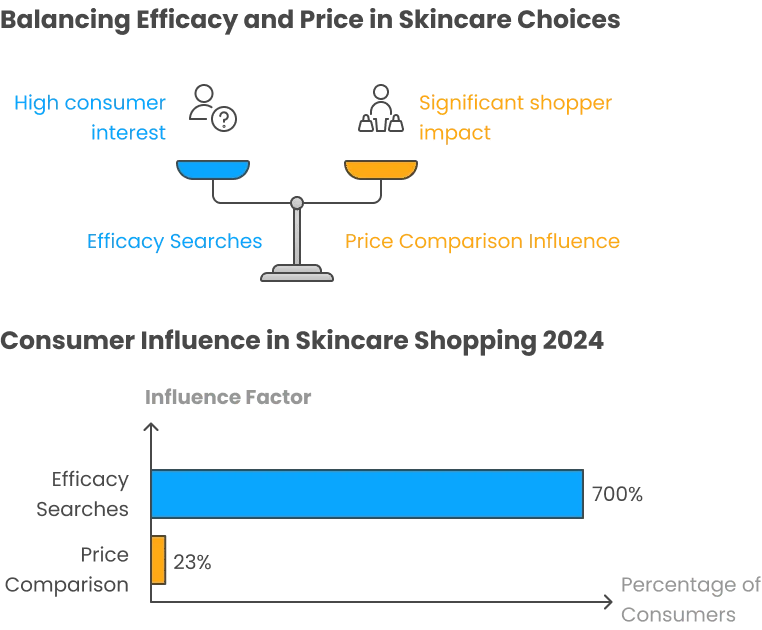
In 2024, skincare “efficacy” searches spiked by 700%, while 23% of shoppers were influenced by “product price comparison”.

While some customers are shopping across price points, some are enticed by the most-loved product in the influencer fraternity. Mere trend-chasing can easily spiral into overstock of slow-moving items and stockouts for quick movers. This means that demand planners need to mine and analyze a diverse and broader set of consumer, market, and purchase motivation data to optimize inventory.

AI-led replenishment planning solutions implement an analytics-driven approach for allocating inventory at all product locations. Retailers can choose from thousands of ensemble algorithms for each product-store combination and consider an unlimited number of customizable demand predictors.

This enables them to predict demand at a hyperlocal level and tune their replenishment plans based on a precise understanding of all constraints and demand influencers.

Bolster Brick & Mortar Value Props with Hyperlocal Demand Analysis

While online shopping has increased across health, beauty, and wellness retail segments, in-store buying and physical touchpoints still matter. As much as 40% of online retail includes a physical touchpoint.

According to the 2023 US Beauty Consumer Survey, as many as 54.2% of online beauty buyers say that trying on a new product during in-store shopping helps them discover new brands. Hence, having accurate inventory across all channels is critical for customer satisfaction, protecting revenue, and customer acquisition.

Inability to offer the right stock at the right location and right time can easily lead to customer churn, which is mostly irreversible, given the number of options available. This calls for replenishment planning with hyperlocal accuracy.

AI/ML-driven replenishment empowers retailers to offer highly tuned inventory as per granular demand patterns. Retailers can expand beyond core product categories and expand to adjacent categories or go deep in a specific category to gain spending share with customers.

Automating Promotions Management for “Every Offer”

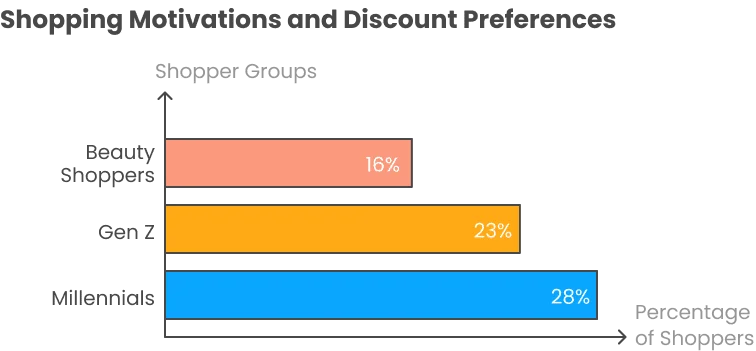
Promotions have a substantial impact on retailer revenues. Studies show that 16% of beauty shoppers’ pre-shop motivation comes from “Deals.” Also, 23% of Gen Z and 28% of Millennials only buy products on discount.

However, the promotions in health, beauty, and wellness retail are particularly complex. A diverse set of promotions is running in parallel, making it hard for retailers to identify and capture the promotion-induced demand shifts and lifts, leading to cannibalization.

The cannibalization effect can eat away as much as 17% of the promotional gains, thereby causing retailers double harm. Intelligent replenishment solutions offer dynamic demand balancing for demand shifts and lifts during promotions. Thus, retailers end up ordering more promoted items and fewer unpromoted items, effectively cutting both overstock and stockouts.

Master the Three A’s – Agility, Adaptability, and Assortment

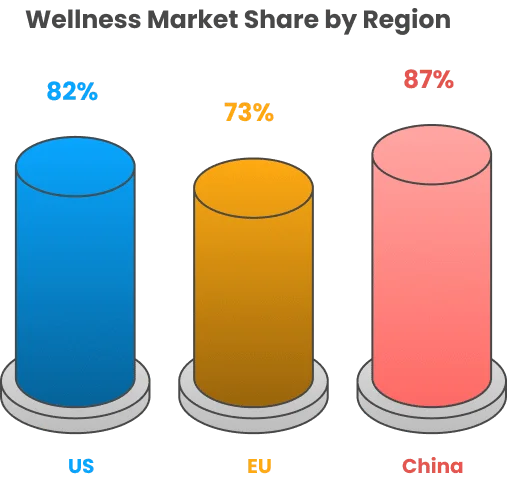
The beauty and wellness sectors are converging, with a combined value of $140.7 billion in the US alone. Wellness alone has a market share of 82% of consumers in the US, 73% in the EU, and 87% in China.

While consumer focus on wellness and efficacy-backed products is increasing, emerging disruptions will ultimately affect retailer revenues. Further, retailers need to invest in replenishment frameworks that are agile enough to recalibrate inventory while keeping pace with trends.

AI-led demand forecasting and replenishment solutions forecast demand at the product-location level and tune order plans for inter-SKU plays while adapting to supply-side deviations. They empower retailers with holistic inventory optimization across warehouses, stores, and distribution centers, thereby facilitating precise planning and replenishment.

While the market opportunity in health, beauty, and wellness retail is huge, rapidly evolving demand patterns and trend-induced purchases are ruling the scene. Sticking to the same old one-size-fits-all replenishment strategy can cause retailers to lose out on anticipated gains.

Retailers can no longer afford manually cranked inventory decisions based on static sales or demand data. AI-driven inventory allocation tuned to hyperlocal nuances to offer wider assortments, while adapting to real-time demand patterns and agile recalibrations to supply-side deviations, is the right way to go.

Table of Contents
Decoding the Customer Demand at the Granular Level
Data-Driven Replenishment Instead of Hunch-Based Adjustments
Bolster Brick & Mortar Value Props with Hyperlocal Demand Analysis
Automating Promotions Management for “Every Offer”
Master the Three A’s – Agility, Adaptability, and Assortment

Retail Planning Automation – Optimize for Holiday Sales

Merchandising and Supply Chain
Blogs

Retail Planning Automation – Optimize for Holiday Sales

The latest issue of Great Christmas Gazette is out and the gifts community is abuzz with the talks of holiday demand fluctuations, supply-side deviations, and snarling inefficiencies creeping from crevices of manual interventions.

The fulfillment teams are working overtime and gift shop shelves are teeming with new enticing and never-before-seen items. Suppliers are getting orders left, right, and center, and everything from warehouses to stores is in a festive frenzy.

However, Rudolph, the jolly retailer, found himself grappling with a mountain of inventory woes this year. With multiple stores and hundreds of suppliers, managing stock levels across different locations to cater to customer demand while ensuring optimal stocks is proving a difficult task. Without proper insight into the real-time inventory, demand patterns, market fluctuations, and supply-side operations, optimizing replenishment cycles became a nightmare.

While poring over dozens of sheets and purchase orders, Rudolph gets a visit from none other than Santa, who then describes how automation-driven retail and supply chain planning can rid Rudolph of all his woes.

Here are all the digs from the super engaging chat, straight from the North Pole!

1. AI-Based Demand Forecasting Solutions

The inability to anticipate demand accurately can significantly derail retail planning and supply-side operations and can result in multiple revenue-hurting scenarios. Common examples include overstocked shelves, stockouts, wastage, higher storage costs, capital lock-ins, mismatched assortment, and more.

Analyzing and predicting demand at granular levels, like stores, requires an in-depth understanding of the interplay of tens of different factors that vary from external to internal, customer preferences, seasonality, demand patterns, and so on. Traditional demand planning and forecasting systems crumble in such a scenario, leaving retailers with inaccurate forecasts, disgruntled customers, and thinning bottom lines.

AI-powered demand forecasting solutions, on the other hand, can analyze data from various sources, such as weather data, historical sales data, and social media trends, to provide retailers with accurate forecasts. This helps retailers order the right products in the right quantities and avoid stockouts or overstocking.

2. Optimizing Inventory Replenishment

Inventory replenishment is built on top of demand forecasting solutions and any errors in demand forecasting get snowballed in the replenishment phase. Further, optimal replenishment helps retailers reduce inventory costs, and wastage, cater to customer demand without overstocking, and improve shelf availability in a precise manner.

Achieving this manually or with the help of legacy inventory management systems doesn’t yield the required levels of accuracy across the entire value chain. Bias error, and no capability to measure and plan for demand shifts and lifts during promotions, the effect of seasonality, demand fluctuations, etc., are the major reasons for the same.

This is why retailers need to opt for inventory optimization instead of regular planning and management processes. AI/ML-driven inventory optimization enables retailers to allocate the right inventory with hyperlocal accuracy while incorporating multiple constraints and sales influencers. Retailers can adjust for any supply-side deviations such as lead time fluctuations, delays, fill rates, and more to ensure high shelf availability.

3. Integrating Retail Planning Functions

One of the most challenging aspects of retail planning is the siloed nature of tasks. Critical functions like demand forecasting, sales predictions, and inventory planning can steer the overall efficiency of retail operations wayward. The inability to analyze and model the effects of sales and demand patterns on inventory replenishment via an integrated interface makes it difficult to have a single source of truth.

The major reasons behind disparate functioning are legacy systems and lack of supporting technological infrastructure, which is often viewed as an additional business cost.

Investing in an integrated retail planning solution that offers a centralized operations management dashboard and combines both demand planning and inventory replenishment functions can do wonders in this regard. Retailers can model variations, get actionable insights related to all the functions in one place, and always have a single bird’s eye view of every function with the ability to go as granular as they want.

4. Merchandising Analytics

Another powerful tool that enables retailers to position inventory and plan assortments strategically is merchandising analytics. How the demand for specific items is looking like, are there any seasonal variations that are going to affect the demand in a particular category, and what items are vulnerable to wastage or overstocking – intelligent analytics capabilities have answers to all these and many such questions.

Now, investing in a standalone predictive analytics solution is only going to add another management interface with siloed data in the retail ecosystem.

So, we recommend opting for an integrated solution with comprehensive analytics capabilities. As the merchandise analytics capabilities are built-in and integrated with demand and inventory functions, retailers can take well-informed decisions and draw actionable insights from advanced data visualization.

5. Automating Supplier Collaboration

Efficient and mutually fulfilling retailer-supplier collaboration is the foundation of successful retail operations. Retailer and supplier interactions, documentation, onboarding, product information, and finance management are all critical for fostering true supplier collaboration.

However, the majority of suppliers use third-party operations management interfaces, which means additional work for retailers and more redundancies in terms of individual tracking, processing, and more.

This is where automation-driven supplier collaboration frameworks come into the picture. Armed with built-in and customizable automated workflows for supplier onboarding, new product introductions, product cataloging, documentation, supplier/retailer data interchange, invoice and PO management, etc., these frameworks can transform retail supply chain management via truly seamless and effortless collaboration.

Automating retail and supply chain planning comes with amazing benefits. However, having the right approach, figuring out the right use cases, and incorporating a scalable, robust, and flexible technology suite is a dire necessity for successful endeavors.

So, while Rudolph benefits from these secret tips from dear Santa, why not take action and get started for an amazing holiday retail adventure this year?

Table Of Contents
1. AI-Based Demand Forecasting Solutions
2. Optimizing Inventory Replenishment
3. Integrating Retail Planning Functions
4. Merchandising Analytics
5. Automating Supplier Collaboration

Inventory Forecasting – Trends, Techniques, and Best Practices

Merchandising and Supply Chain
Blogs

Inventory Forecasting – Trends, Techniques, and Best Practices

Accurate inventory forecasting is the heart of retail planning and inventory optimization. Capturing demand accurately and optimizing inventory accordingly can not only reduce inventory costs but can also help retailers boost customer satisfaction, improve shelf availability, and increase inventory ROI.

With fierce competition, rapidly evolving customer preferences, and quick new product and brand introductions, retailers can no longer afford to plan inventory manually.

Studies reveal that the annual costs of holding excess inventory can reach up to 32% and recent economic changes, evolving priorities, etc., are pushing as many as 75% of customers to change their shopping habits.

So, how can retailers forecast demand, capture demand patterns, and evaluate the effect of seasonal variations on the inventory? What is inventory forecasting and what are the different techniques for the same? How important is it to forecast inventory and what are some of the best practices that retailers can benefit from?

Below, we explore the answers to all these questions.

What Is Inventory Forecasting?

Inventory forecasting is predicting the required inventory levels for a future period based on historical sales data, customer purchase trends, upcoming events, etc. Forecasting involves drawing well-calculated projections based on data-driven insights from previous data and multiple constraints influencing customer purchase behavior and demand.

Often used interchangeably with demand forecasting inventory forecasting spans beyond setting reorder points and order plan adjustments based on seasonal sales influencers. It encompasses identifying patterns and trends to adapt to dynamically evolving customer demands and market conditions to curate the right inventory at the right time to meet customer demand optimally.

Inventory Forecasting vs Inventory Replenishment vs Demand Forecasting

While all three terms are interconnected and generally used interchangeably in the retail ecosystem, they are distinct processes

Inventory Forecasting

  • Predicting future inventory requirements based on historical sales data, seasonal variations, and market trends
  • The goal is to estimate optimal stock levels for meeting anticipated customer demand.
  • Effective strategies include tracking and monitoring inventory KPIs – reorder points, average inventory, etc.

Inventory Replenishment

  • Predicting future inventory requirements based on historical sales data, seasonal variations, and market trends
  • The goal is to estimate optimal stock levels for meeting anticipated customer demand.
  • Effective strategies include tracking and monitoring inventory KPIs – reorder points, average inventory, etc.

Demand Forecasting

  • Predicting future inventory requirements based on historical sales data, seasonal variations, and market trends
  • The goal is to estimate optimal stock levels for meeting anticipated customer demand.
  • Effective strategies include tracking and monitoring inventory KPIs – reorder points, average inventory, etc.

The Ultimate Guide to Demand Forecasting in Grocery Retail (2024)

Check out Our Demand Forecasting Guide for a Deeper Understanding.

Learn More

Why Is Inventory Forecasting Important?

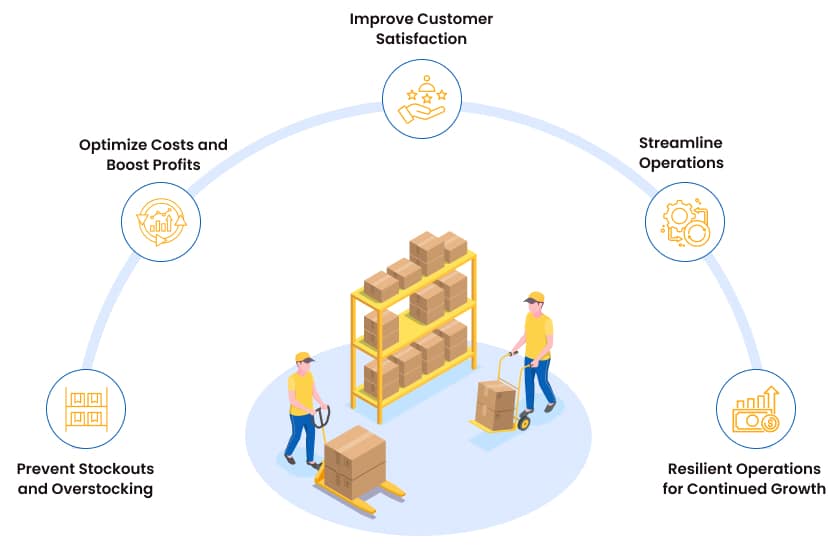
Inventory forecasting helps retailers plan and optimize inventory and cater to customer demand such that overstocks, stockouts, and wastage are reduced, and shelf availability is increased.

Forecasting inventory prepares retailers with reliable insights to adapt their replenishment plans and inventory distribution according to near real-time factors and sales influencers. They can club the insights with demand forecasting insights and replenishment plans to minimize the impact of supply-side deviations on inventory and sales.

1 Reduce Inventory Costs

Traditionally demand planners and inventory managers use static planning methods which lead to overstocks or OOS events, both of which cost retailers their business. While overstocking eats away at the working capital, it also balloons up warehouse storage costs and leads to obsolescence and complete wastage in certain categories.

Likewise, OOS events affect customer experience and impact the revenue pipeline. Studies reveal that as many as 73% of customers will change retail brands after just one bad experience and a whopping 70-90% of stockouts are caused by poor shelf replenishment optimization practices.

With data-driven inventory demand prediction retailers can minimize stock issues, order and allocate optimal inventory levels across all geographies, and reduce inventory costs. AI-driven inventory replenishment solutions with built-in forecasting engines can take the inventory optimization process one step further by offering highly granular forecasts for specific product-location entities.

2 Overcome Data Inaccuracies

As many as 40% of retailers cancel at least one out of ten orders due to inaccurate inventory data. Overcoming retail data inaccuracies is particularly challenging owing to the highly disparate functioning of all system functions. Further, the retail data is infamous for being highly unstructured, noisy, and riddled with gaps.

Overcoming data inaccuracies is essential for accurate inventory forecasting because any errors in capturing inventory or demand data have a snowball effect on the final inventory values and metrics.

Intelligent retail demand planning and forecasting solutions inherently overcome such challenges by employing the intelligence of advanced data analytics techniques. They run on intelligent algorithms that are fine-tuned to the nuances of retail data and can generate inventory plans with high forecasting accuracy by eliminating noise and gaps.

3 Improve Inventory ROI

McKinsey reveals that AI-driven forecasting can reduce supply chain errors by 30 to 50%, shrinking lost sales by 65% and warehousing costs by 10 to 40%. All these are crucial factors affecting the overall inventory ROI and can lead to significant cost savings for retailers.

Further, PwC outlines that investing in solutions that help optimize data-driven use cases, such as customer data, can increase their contribution margins by 3% to 5% after deducting initial investments and acquisition costs.

What makes inventory forecasting so beneficial is the fact that it accounts for the interplay of multiple factors and constraints, ranging from sales patterns to customer purchase patterns, demand shifts, demand lifts, seasonality, external/internal factors, and more, to generate optimized inventory plans.

So, ultimately, the retailers are able to boost revenue, sales, customer satisfaction, and shelf availability, while reducing stock issues, wastage, and inventory.

Inventory Forecasting Techniques

There are multiple methods of inventory forecasting. Further, as retailers use different forecasting solutions with different capabilities, the boundaries among the techniques, algorithms, and processes are fleeting and evolving with every passing day.

Generally, inventory forecasting techniques can be categorized into the following four categories:

Trend Forecasting

  • Shows trend projections based on changes in product demand over time
  • Doesn’t always account for seasonality or sales data irregularities

Graphical Forecasting

  • Identifies patterns and sloped trend lines to find out insights that might have been possibly missed
  • Unable to handle complexities, heavily subjective, and reliant on historical data

Quantitative Forecasting

  • Uses statistical methods and historical sales data to generate future inventory projections
  • Demonstrates data dependency and inability to adapt to change

Qualitative Forecasting

  • Involves market research and focus groups to predict future inventory requirements
  • Doesn’t always account for seasonality or sales data irregularities

Different Techniques for Inventory Forecasting

1 Time-Series Forecasting

This inventory forecasting method involves predicting future demand patterns based on historical data, and past inventory levels. It works well for categories with consistent and measurable inventory patterns.

The process involves data collection, data processing, trend analysis, checking the effects of seasonality on data, and forecasting model selection. It is important to note that the model selection is going to have a significant impact on the overall accuracy and efficiency of forecasting and is done based on specific characteristics of inventory data.

Common techniques for time series inventory forecasting are moving averages, Seasonal Decomposition of Time Series (STL), exponential smoothing, deep learning approaches, etc.

2 Seasonal Forecasting

This is one of the most popular inventory forecasting techniques and it predicts future demand patterns in inventory data showing a recurring seasonal effect. For instance, trending categories or products during holiday seasons, seasonal cosmetic products, agricultural products, fashion apparel, etc.

Its ability to identify seasonal trends and variations in demand enables retailers to plan for seasonal fluctuations and adjust inventory levels accordingly. Coupled with accurate demand forecasting and replenishment techniques, it can help retailers reduce inventory holding costs, stockouts, and overstocks, and boost customer satisfaction with the right inventory at the right time.

Common techniques for seasonal inventory forecasting methods include Historical Averages, and Machine Learning and Deep Learning-based approaches.

3 Historical Data Analysis

A stepping stone for demand forecasting, the historical data analysis technique involves exhaustive analysis of historical data, be it sales, inventory, market, etc., and offers valuable insights into customer behavior, top-performing categories, sales patterns, and many more critical business metrics.

However, historical data analysis is a challenging process as the data sets tend to become highly unstructured and full of noise and gaps over time. Hence, the technique requires data cleaning, data organization, and standardization, etc., to improve the data quality.

Unless coupled with advanced data analysis and processing techniques, the technique can lead to erroneous projections due to the data cleansing and standardization steps.

Common techniques for historical data analysis include regression analysis, cyclical patterns, time series analysis, exponential smoothing, trend analysis, etc.

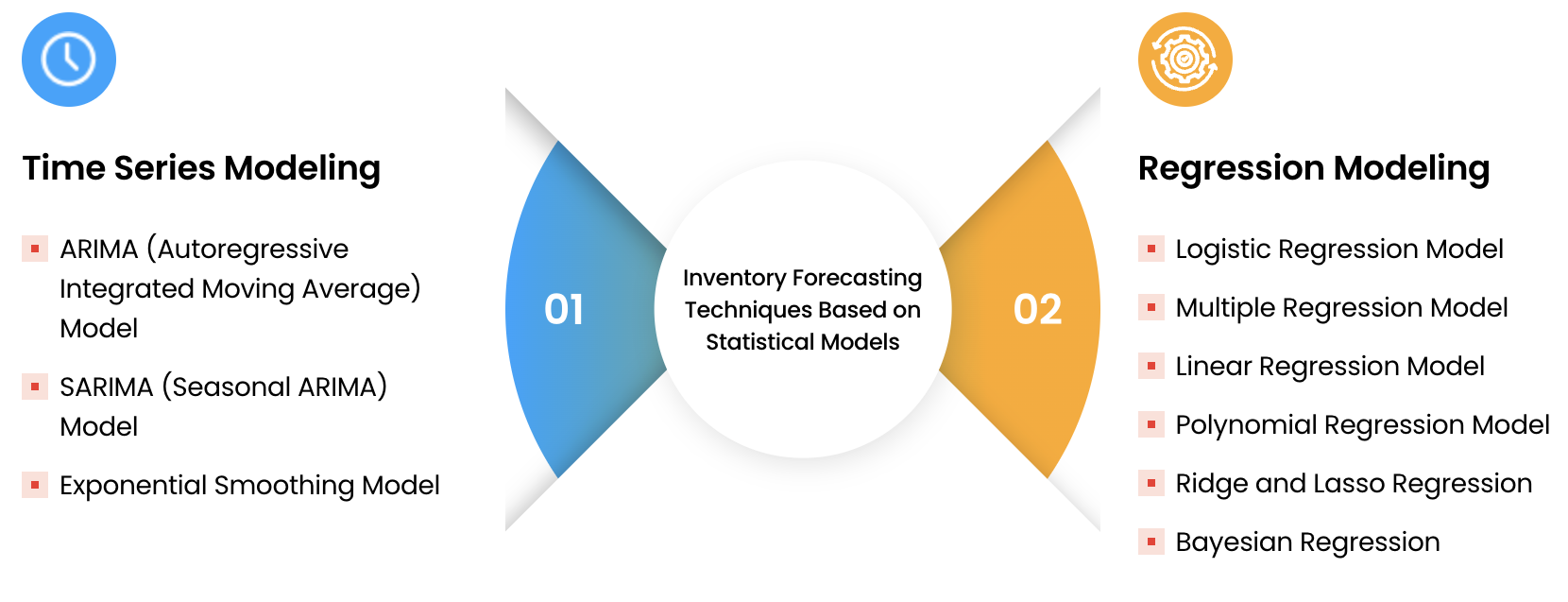
Inventory Forecasting Techniques Based on Statistical Models

Challenges in Choosing the Right Inventory Forecasting Techniques

Data Quality and Preprocessing

As mentioned above, the retail data is noisy, has gaps, and comes with multiple redundancies. This means, that pre-processing or standardizing data for quality purposes can affect the accuracy of results. This is mainly due to the fact that the models can reject the correct or relevant data or consider noise as the correct data.

As every next step in the forecasting process is built on top of the results drawn from data cleansing, the effects can easily snowball into massive errors, derailing the accuracy of inventory forecasts and ultimately business decisions.

How to Handle Sparse and Noisy Data in Retail Forecasting

Learn More

Seasonality and Trends

Vetting the effect of seasonality or trends on specific data can be particularly challenging owing to subjective data handling and analysis. When done incorrectly, the model can over-fit or underfit data patterns affecting the overall forecast accuracy.

On the other hand, seasonality might be relevant for a specific geography or set of consumers as well. For instance, the seasonal variations in the demand for challenging products like skincare are extremely complex to monitor and predict.

Model Selection and Tuning

While statistical modeling is one of the best inventory forecasting methods, model selection and data tuning can become subjective, thereby causing distortion in actual results. Manual model selection and tuning to business-specific use cases is a tedious process, which can spur business risks affecting revenue and profitability.

Dynamic Demand Patterns

Demand Planning for the modern retail ecosystem requires an understanding of the complex interplay of multiple factors, such as historical sales, in-store promotions, economy, trends, micro-trends, and supply-side disruptions. Add to the mix, the location and category-specific sales influencers and constraints for optimization, and the retailers are left with nothing short of a Pandora’s Box.

Further, the demand patterns change dynamically due to multiple external and internal factors, such as the emergence of omnichannel platforms, quick delivery services, and hybrid operation categories, which, can steer the forecast accuracy in the wrong direction.

Leverage AI-Driven Retail Planning to Manage Promotional Chaos

Learn More

Other miscellaneous factors such as data scarcity, multi-seasonal patterns, short product lifecycles, tough categories like ultra-fresh, fast new product introduction, etc., make inventory forecasting particularly challenging and vulnerable to errors.

How to Approach Inventory Forecasting – Best Practices

As evident from the above discussion, there is no single best inventory forecasting technique, as demand patterns are highly dynamic in nature, keep on evolving, and are affected by multiple factors.

Further, traditional and manual forecasting suffers from inefficiencies, inaccuracies, and poor scalability. Coupled with additional factors, like lead times, fill rates, and demand deviations stemming from in-store promotional dynamics, retailers find it difficult to generate precise inventory plans.

This is where AI and ML-driven inventory management optimization comes into the picture.

The AI/ML-driven inventory optimization solutions come with built-in intelligence of thousands of algorithms that can control and optimize for multiple factors and constraints, enabling retailers to unlock unparalleled precision and control over inventory.

Why Choose Optimization Instead of Standalone Inventory Management or Demand Forecasting?

Inventory optimization involves optimizing inventory at granular levels, precisely at the product-location level for multiple categories, stores, SKUs, and so on. What makes inventory optimization superior to standalone inventory forecasting and demand forecasting techniques is the fact that retailers can unlock immaculate precision and control over inventory based on accurate predictive modeling and real-time adjustments via a single interface.

ADA Global’s Order Right is one such powerful inventory optimization platform that comes with a built-in demand forecasting engine and ensemble AI algorithms to predict demand based on hundreds of customizable parameters.

Order Right (OR) enables retailers to generate accurate SKU-level order plans with unique retail-tuned replenishment planning solutions algorithms for intelligent demand-based replenishment planning.

Powered by Forecast Right which uses proprietary ML-based multivariate and algorithmic techniques to accurately and adaptively forecast demand, Order Right generates accurate SKU-level order plans for even the most challenging categories – from fresh and seasonal to new and promoted products with ease to help businesses unlock:

  • 10% Reduction in Inventory Cost
  • 75% Reduction in Out-of-Stock Instances
  • 10-30% Reduction in Wastage
  • 99% Increase in Shelf Availability

Frequently Asked Questions

1 What is inventory forecasting?

Inventory forecasting means predicting the required inventory levels for a future period based on historical sales data, customer purchase trends, upcoming events, etc.

2 Is inventory forecasting different from inventory planning?

Yes, inventory forecasting is different from inventory planning. While forecasting involves predicting demand, planning can encompass multiple activities ranging from generic inventory tasks to using forecasts for replenishment.

3 What are different inventory forecasting techniques?

There are different types of inventory forecasting techniques, trend forecasting, graphical forecasting, qualitative forecasting, time series modeling, etc.

4 How to choose the right inventory forecasting technique?

Choosing the right inventory forecasting technique depends on various factors, such as data availability and quality, demand patterns and trends, seasonality, forecast horizon etc.

Table Of Contents
What Is Inventory Forecasting?
Inventory Forecasting vs Inventory Replenishment vs Demand Forecasting
Why Is Inventory Forecasting Important?
Inventory Forecasting Techniques
Different Techniques for Inventory Forecasting
Inventory Forecasting Techniques Based on Statistical Models
Challenges in Choosing the Right Inventory Forecasting Techniques
How to Approach Inventory Forecasting – Best Practices
Why Choose Optimization Instead of Standalone Inventory Management or Demand Forecasting?
Frequently Asked Questions

Top 10 Inventory Management KPIs Every Retailer Must Track

Merchandising and Supply Chain
Blogs

Top 10 Inventory Management KPIs Every Retailer Must Track

As a leading technology provider for some of the largest retail brands globally, we have witnessed how inventory can be the Achilles Heel for businesses across multiple industries. From millions of dollars drained in lost sales owing to inaccurate demand planning to inefficient promotions degrading the profitability, and high holding costs chipping the bottom lines as a double-edged sword – inefficient inventory planning comes with multiple drawbacks.

Among multiple other causes, the lack of proper tracking and optimizing as per the tracking metrics is one of the most challenging aspects of inventory planning. How to track inventory, what are critical inventory KPIs, what do they mean, and how to optimize inventory as per these metrics?

Below, we explore all these answers and discuss the top ten inventory KPIs every retailer must track.

1. Inventory Turnover Ratio

The inventory turnover ratio is obtained by dividing the total cost of goods sold by the average inventory. The inventory turnover ratio indicates how often inventory is sold and replaced and shows the overall business performance. A high inventory turnover ratio or stock turnover ratio indicates that the inventory is efficient.

Tracking the inventory turnover ratio helps retailers understand what they can sell, and how efficient sales are for the stock. Based on this ratio, they can plan the order frequency and stock replenishment.

2. Average Inventory

Average inventory is another important inventory KPI that is used to determine the inventory turnover ratio and indicates the amount of inventory available at a time. Average inventory is calculated periodically based on the unique business requirements.

Average inventory formula:

Average Inventory = (Beginning inventory – Ending inventory) / 2

Ending inventory is yet another metric that is used to calculate average inventory, and is depends on all the purchases done around the year.

Ending Inventory = Beginning Inventory + Purchases – COGS

3. Stockouts

Stockouts are a direct indicator of inventory health and show how often customer demand can’t be met owing to the lack of the right products. Apart from degrading customer experience, stockouts can cause direct harm to the revenue as 30% of customers switch stores after a single stockout event. Further, stockouts are directly responsible for a 10% sales loss.

Another key metric related to stockouts is the stockout rate, which is the percentage of products not available when they are required for sale. Stock rate is calculated by dividing the out-of-stock items by the total items available in the inventory.

4. Sell-Through Rate

The sell-through rate or sell-through ratio refers to the percentage of stock that is sold. It is one of those inventory KPIs that requires periodic measurement and tracking and a high sell-through ratio indicates efficient inventory and good sales.

Sell-Through Ratio = Amount to Sold Items / Amount of Received Items

It is also called liquidity ratio as it indicates the amount of inventory that has been sold. As stated above, a higher sell-through ratio is good, however, figures close to 100% might also indicate that retailers are running out of inventory. Hence, it is also one of the most critical inventory KPIs that every retailer should closely monitor.

As a standard practice, the sell-through rates are calculated on a monthly basis and are used to decide the replenishment planning schedule.

5. Holding Costs

Holding costs, also known as stock holding costs or inventory holding costs, can directly impact a retail business’s revenue and sustainability. They refer to the cost of storing unsold inventory that has been stored for specific periods or has become obsolete.

The duration of holding, nature of items in the inventory, shelf life of the items, depreciation, opportunity costs, and reason/intent behind storing the inventory are the determining factors of the overall cost a retailer must bear towards inventory holding.

Inventory Holding Cost = (Total Inventory Costs / Total Inventory Value) ×100

Having high inventory holding costs directly indicates poor inventory and business health and indicates situations like reduced profit margins, cash flow constraints, increased risk of obsolescence, operational inefficiencies, missed opportunities, higher storage & maintenance costs, etc.

6. Days Sales of Inventory (DSI)

DSI indicates how long it will take a retailer to sell the entire inventory during a specific period. It is yet another must-track inventory KPI for retailers that helps them understand and assess their sales performance and inventory management efficiency.

In simpler words, DSI means how many days the retailer takes to convert the entire inventory into sales, and it is calculated using the following formula:

DSI = (Average Inventory / Cost of Goods Sold COGS) × 365

Days sales of inventory directly indicate inventory management efficiency and a low DSI indicates efficient turnover and effective sales strategies, while a high DSI may suggest overstocking or weak sales. DSI also offers insight into cash flow, sales performance, etc.

Ideally, DSI should lie between 30 to 60 days and values above 60 days might indicate declining customer demand, or poor demand anticipation.

7. Demand Forecast Accuracy

How well the demand predictions match the actual recorded sales and how well the inventory sells as per the planned projections is another critical inventory KPI that every retailer should track. Demand forecasting accuracy is directly proportional to sales, revenue, customer satisfaction, and inventory efficiency, and paves the way for strategic business growth.

The demand forecast accuracy is calculated by many methods, such as Mean Absolute Percentage Error (MAPE), Mean Absolute Deviation (MAD), and Root Mean Square Error (RMSE).

DFA = (1− (|Actual Demand−Forecasted Demand∣ / Actual Demand)) × 100

A high demand forecast accuracy indicates optimal inventory, efficient replenishment planning, supply chain efficiency, and informed decision-making. Having a consistent high-demand forecast accuracy also reduces inventory costs by 10 to 20%.

8. Inventory Accuracy

It is yet another inventory KPI that every retailer must track and measure consistently. Inventory accuracy indicates how accurate the recorded inventory is and how well it aligns with the physical inventory in the warehouse.

Inventory Accuracy = (Actual Inventory / Recorded Inventory) × 100

High inventory accuracy indicates better operational efficiency and inventory replenishment planning. Maintaining high inventory accuracy helps reduce costs, and improve business planning, and robust decision-making.

9. Service Level

When it comes to inventory KPIs, it is very easy to overlook customer-related KPIs that can hinder the understanding of customer expectations and experience. To ensure granular accuracy and an in-depth understanding of demand patterns, it is important to measure and track customer-related KPIs, such as service level.

Service level means the percentage of customers that didn’t experience any stockout during an inventory replenishment cycle. So, it is a direct indicator of a retailer’s ability to fulfill customer demand in the most optimal manner.

A high service level means the retailers are able to deliver across customer expectations and the number of customers leaving without making a purchase owing to the lack of stock or absence of the right stock is low. Service level is one of those metrics that can significantly alter the sales value, revenue, and customer satisfaction with a slight increase.

10. Gross Margin by Product

As the name suggests, the gross margin by product refers to the profit percentage earned for a single product sold. This metric calculates the profit generated by the sale of each product against its cost and offers granular visibility over the efficiency of inventory at the product level.

Hence, it is a direct indicator of overall profitability and helps retailers make better purchasing decisions and plan optimal inventory.

Gross Margin = ((Sales Revenue − COGS) / Sales Revenue) × 100

Understanding gross margins by product allows the retailers to identify the highest-performing products, and sales performance of different items and make informed decisions for product assortment, pricing strategy, inventory replenishment, and more.

While measuring and tracking inventory KPIs is one of the most reliable and data-driven approaches to inventory optimization and replenishment planning solutions, it is crucial to do so consistently and periodically for a uniform and reliable strategy. The next step in the process of building a data-driven and demand or profit-centric inventory is to leverage the insights at scale and take decisions at a product-location level for different stores, categories, etc.

Table Of Contents
1. Inventory Turnover Ratio
2. Average Inventory
3. Stockouts
4. Sell-Through Rate
5. Holding Costs
6. Days Sales of Inventory (DSI)
7. Demand Forecast Accuracy
8. Inventory Accuracy
9. Service Level
10. Gross Margin by Product

An Industry-Wise Approach to Exploring the Benefits of Inventory Optimization in Retail

Merchandising and Supply Chain
Blogs

An Industry-Wise Approach to Exploring the Benefits of Inventory Optimization in Retail

According to Statista, global inventory distortions cost retailers as much as USD 580 million. Also, the value of grocery retail items going out of stock exceeds USD 500 million. Add increasing fulfillment costs for merchants, longer lead times, demand for better assortment across multiple categories, and breakneck competition to the mix and the retailers end up with a Pandora’s Box in their hands.

While technology-driven inventory planning and management systems are replacing manual and traditional planning frameworks, the overall inventory costs are rising and stock optimization still remains a critical challenge for profitability in the retail sector. This is mainly due to the highly nuanced nature of the various segments such as microtrends and huge seasonality in the health, beauty, and wellness segment, rich assortment and variety constraints in the convenience sector, and demand-based planning in grocery.

However, the nuances are not limited to these factors only. The overlapping of multiple sales influencers, sales and promotional events, holidays, seasons, social media trends, weather, and the deep impact of macro and micro-geographic-level trends/activities make demand anticipation hard and inventory optimisation even harder.

How can retailers optimize inventory with granular precision at the SKU or store level, and what makes optimization of retail inventory so important? What are the various benefits of retail inventory optimization and how to optimize inventory for different retail segments? Finally, is inventory planning different from inventory optimization?

Below, we explore the answers to all these questions at length and discover the benefits of optimizing inventory in an industry-wise manner.

What Is Retail Inventory Optimization?

Optimising inventory means ensuring that the right stock is present in the right quantities at the right location and time, such that the wastage, spoilage, inventory holding costs, and stock issues are minimized without affecting the shelf availability. It also involves planning stock for promotional and sales events while considering the in-store cannibalization and inter-SKU demand shifts and lifts to keep the revenue intact.

Inventory cannot be optimized at such a granular level either manually or with traditional inventory management solutions. Optimized inventory is achieved with the help of intelligent inventory optimization software solutions that consider historical demand patterns, custom sales influencing parameters, and demand planning capabilities.

Why Is Inventory Optimization Important?

Inventory optimization empowers retailers to adapt to demand patterns and supply chain dynamics at an ultra-granular level effortlessly and quickly. They can anticipate the demand in real-time and get automatic updates for just-in-time inventory (JIT inventory), days of stock, out-of-stock, and other configurable inventory events.

Inventory stock optimization allows retailers to quickly adjust the stock replenishment or order plans based on automatically generated forecasts while incorporating the custom rules and settings for specific stores, zones, regions, and geographies. The retailers no longer need to manually adjust for increased demand in specific SKUs or categories and they can easily visualize the inter-category/SKU and intra-category/SKU interplay at a highly granular level.

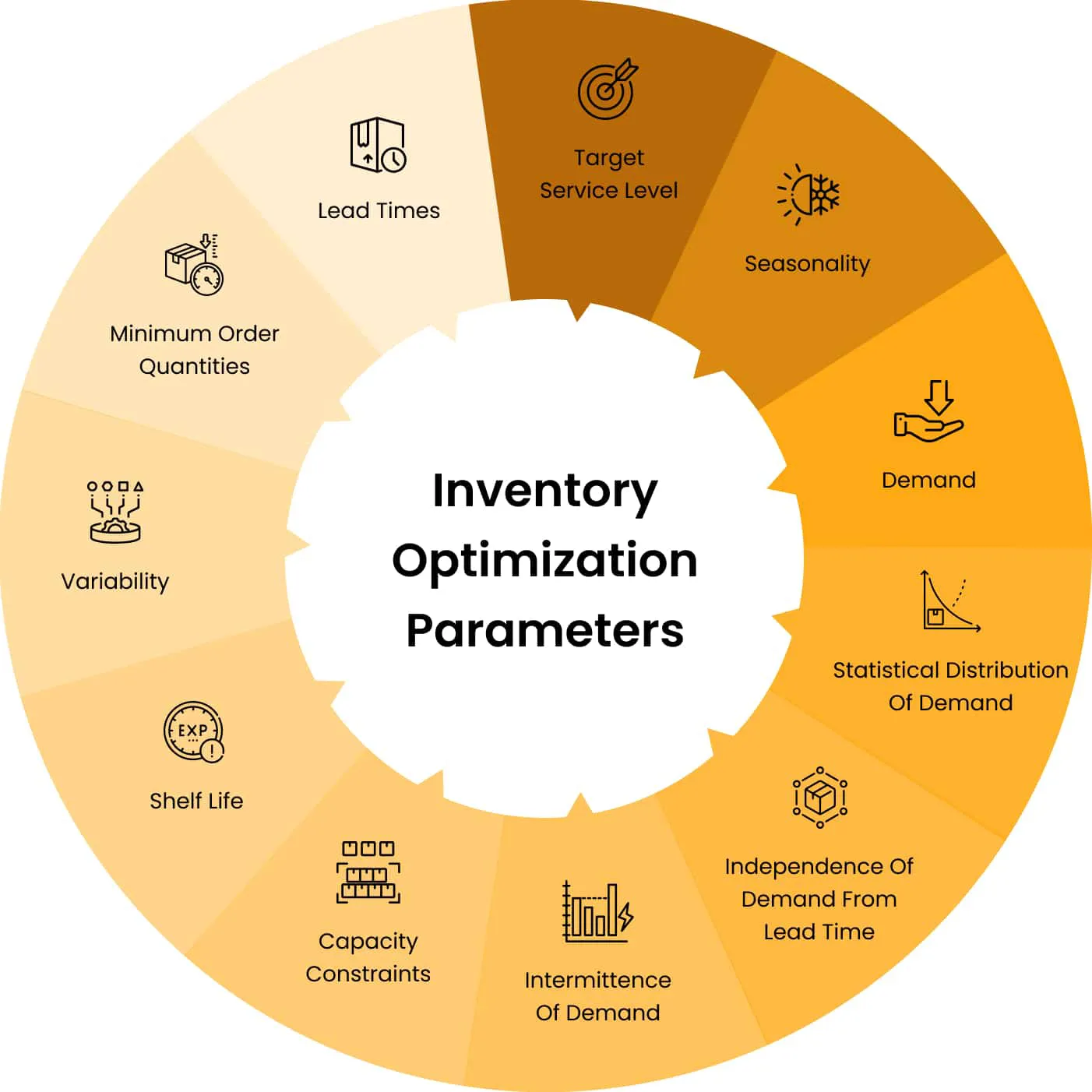
Another excellent advantage of inventory optimisation is the ability to adapt to the supply side disruptions in an agile and robust manner. AI and ML-driven inventory optimization solutions come with built-in self-learning capabilities to model variations in lead times, safety stock, fill rates, pending orders, and more to ensure optimal stock across the entire value chain.

Finally, the most critical benefit of stock optimization is the ability to outsmart the sales and profit-crushing factors stemming from incomplete or faulty data analytics (for the org-level data as well as competitor and market data).

How Is Inventory Optimization Different From Inventory Planning?

While the emergence of cloud-based and continuously-developed software solutions is constantly blurring the lines between capability-based software platforms, understanding the distinction between operational systems is critical for choosing the right platform, especially in retail.

While inventory planning and inventory optimization are related, they are conceptually distinct. Inventory planning focuses on ensuring that there is sufficient inventory to meet customer demand, keeping stockouts and overstocks at bay, and also involves stock management capabilities, which have been a major offering in ITSM software solutions for many years now.

On the other hand, the core focus of inventory optimization is to maximize inventory replenishment efficiency while reducing costs and wastage and increasing shelf availability. Inventory optimization solutions offer many advanced capabilities to users that allow for custom adjustments in inventory planning, demand forecasting, and supply-side disruption management.

In easier words, it can be considered inventory management optimization and is the next step that retailers should take for better stock efficiency, lower carrying or holding costs, and reduced risks of out-of-stock and overstock events. The retailers can effectively cut the wastage and manage in-store cannibalization to achieve higher profit margins.

Exploring the Benefits of Inventory Optimization – Industry-Wise Overview

1 Grocery Retail

Studies reveal that 40% of retailers cancel at least one in ten orders due to inaccurate inventory data. Further, as many as 60% of retailers have less than 80% inventory accuracy and face data challenges.

The grocery retail sector is prone to wastage, inefficient inventory planning, inaccurate forecasting, and strongly fluctuating customer demand. This calls for effective demand planning and optimizing inventory based on data-driven insights.

Benefits of Inventory Optimization in Grocery Retail

  • Data-Driven Decision Making
    Inventory optimization software solutions can effortlessly integrate data across all functions to draw actionable insights for inventory planning. This ensures accurate and responsive inventory management aligned with real-time customer demand.
  • Accurate Demand Planning

    Research reveals that AI-powered forecasting can reduce supply chain errors by 30 to 50%, shrinking lost sales by 65% and warehousing costs by 10 to 40%.

    Inventory optimizing software comes with a built-in AI-driven forecasting engine that generates highly accurate forecasts while accounting for highly granular demand patterns and other sales influencers down to the SKU and location level.

    They streamline supplier communication and collaboration, reduce lead times, and improve fulfillment, all the while reducing stock issues, and inventory holding costs and boosting shelf availability.

  • Effective Promotions

    Inter-SKU effects can wipe out as much as 17% of the extra sales volume that is supposed to be generated by promotions.

    This is mainly because manual or traditional inventory planning fails to identify the effect of sales on different products and product categories.

    On the other hand, ML-driven inventory optimization balances demand at the SKU level to ensure minimal competition via robust visualization of demand shifts and lifts across all categories and SKUs. This helps minimize inventory holding, stockouts, overstock, etc., and keeps the profits intact across all categories.

  • Minimized Wastage and Spoilage
    Optimizing inventory in grocery retail enables retailers to anticipate customer demand accurately for specific items in extremely challenging categories, such as fresh and ultra-fresh. They can get automated insights for any disruptions, demand shifts, etc., and reduce their sales and revenue loss due to spoilage and wastage.

    ML and AI inventory optimization can help retailers to:

    • Reduce Inventory Cost by 10%
    • Reduce Out-of-Stock Instances by 75%
    • Reduce Wastage by 10-30%
    • Increase Shelf Availability by 99%

Case Study

A Leading Grocery Retailer in South East Asia Slashes Stockouts by 63% and Inventory Costs by $ 1.5 Million

Download Case Study


2 Convenience Store Retail

The convenience store or C-store industry faces unique inventory optimization challenges, ranging from fluctuating customer demands to distinct buying preferences in specific segments. The factors influencing demand patterns vary from the time of day, local events, seasonality, and microtrends to geography or area-specific factors.

Further, the introduction of mobile apps and ultra-fresh categories, such as food service, has added to the supply chain challenges and retailers find it extremely hard to make adjustments on the go. This is where AI-based capabilities in demand planning and inventory replenishment come into play.

Benefits of Inventory Optimization in Convenience Store Retail

  • Multivariate Demand Planning

    Incorporating external sales influencers in inventory planning can boost forecast accuracy by 10 to 15% and can drive cost savings across transportation, obsolescence, and inventory.

    AI-driven inventory optimization software solutions come with advanced functionalities such as multivariate demand forecasting. Thus, retailers can generate highly accurate forecasts while factoring in seasonal changes, local events, weather patterns, lead times, storage space, and more at an ultra-granular level for each channel, store, and category.

  • Dynamic Product Mix

    When asked what makes their C-store shopping experience great, 42% of customers responded with “having the right stock” and 28% of them went with “variety”.

    While having a rich assortment is a critical must-have for C-store retailers, it can easily balloon the inventory costs and dent the revenue. Fast-moving products, short shelf life, constant demand for variety, and limited storage space make it hard for C-store retailers to offer a rich assortment.

    C-store inventory optimization software leverages the built-in intelligence of AI and ML algorithms to comprehend demand and supply fluctuations at the minutest product and location levels. Retailers can generate highly precise order plans every time for each location without compromising the shopping experience and bottom lines.

  • Managing Unpredictable Demand Patterns

    As many as 88% of customers consider the experience provided by a brand to be as valuable as its products or services.

    In C-store retail, the product lifecycle is short and inventory is quickly moving. Coupled with highly fluctuating demand patterns, it makes a complex puzzle beyond the reach of traditional inventory planning systems.

    Intelligent inventory optimization software can easily overcome these bottlenecks by factoring in diverse, complex, and granular sales influencers for C-store retail. With advanced retail data modeling and intelligent demand forecasting, they can optimize inventory for specific locations, stores, channels, products, etc. while reducing inventory costs and improving accurate shelf availability.

  • Competition from Quick Delivery Services

    Armed with the ability to get things delivered to their doorsteps in less than an hour has left a significant dent in the C-store market. Hence, anticipating demand intelligently and ensuring delightful customer experiences has become even more important for convenience retailers.

    AI and ML-driven inventory optimization software leverages different techniques for different business use cases and allows users to choose custom parameters for optimizing inventory at the product-location level. Offering the right products at the right time without leaving the shelves overflowing or empty helps boost revenue as well.

  • Chaos-Free Promotions

    Running effective promotions in convenience retail is challenging because of the large number of suppliers, short product lifecycles, quick new product introductions, etc. Further, the sales are affected by the local parameters and the inventory planning solutions lack the ability to analyze data from multiple sources keeping the core sales and demand patterns in mind.

    On the other hand, the software for inventory optimization in convenience store retail takes multiple datasets as input, such as historical sales and promotional data, seasonal trends, and external & internal sales data. The software shows effects on the demand for specific products due to promotions down to the SKU, across every different product location.

Case Study

A Major US-based Convenience Store Retailer Takes Its Supplier Collaboration to the Next Level

Download Case Study


3 Health, Beauty & Wellness

Health, beauty, and wellness is another challenging retail segment and is an umbrella term for different emerging aspects of pharmacy and personal care. The segment suffers from intense competition, significant obsolescence, seasonality, higher inventory holding costs, and sudden market shifts due to new products and social media trends.

More than 50% of consumers use multiple brands for products like hair, skincare, and fragrance, making accurate demand forecasting difficult.

  • High Inventory CostsThe health, beauty, and wellness retail has high-bulk, high-value product categories, making the inventory costs significantly higher than the other segments. Hence, any slips in demand forecasting and replenishment planning can erode the bottom lines and leave retailers with reduced finances for further sourcing.

    AI/ML-driven inventory optimization software solutions tackle the root cause of the problem with highly accurate forecasting and precise order planning across different product locations. They can analyze real-time data and demand patterns at an ultra-granular level, such as channel, store, category, SKU, and more.

  • Adaptive ReplenishmentThe health and beauty retail segment experiences rapid trend shifts and demand fluctuations, and unpredictable factors such as influencer-led marketing and product critique can render an entire category obsolete.

    This volatility makes inventory planning particularly challenging, taking down accuracy rates to anywhere between 30% and 50%, mainly because the planning systems are unable to anticipate and adapt to such disruptions.

    Optimizing inventory with adaptive self-learning models enables retailers to model variations in key supply-side metrics, such as lead times, pending orders, fill rates, safety stock, and more. Hence, retailers can effortlessly manage disruptions and ensure business continuity even during demand shifts or new product introductions.

  • Managing SeasonalityHealth, beauty, and wellness consumers across the globe are using different brands for different seasons and more than two or three products from different brands at a time. Thus, seasonality has a huge impact on the overall inventory planning.

    Smart inventory optimization software incorporates historical sales data, upcoming trends, available stock, and highly granular sales influencers (external as well as internal factors) for specific stores, channels, locations, categories, and more, to manage seasonal and hyperlocal variations in demand.

  • New Product Introductions

    Nearly 50% of US beauty shoppers buy new products based on online feedback from others but poor inventory management can lead to a 25% loss in potential sales due to out-of-stock events.

    Automated inventory optimization platforms utilize attribute-based and hierarchical forecasting for similar product attributes and higher-level category trend analysis. This ensures better stock availability, precise anticipation of customer needs, and quick adjustments to demand shifts at the hyperlocal level.

Case Study

A Leading Pan-Asian Health, Beauty, and Wellness Retailer Reduces OOS by 60% and Unlocks a 62% Increase in Inventory Turnover

Download Case Study


How Can ADA Help?

ADA Global offers a highly advanced Machine Learning-driven inventory optimization software solution – Order Right, with a built-in demand forecasting engine running on AI and advanced data analytics.

Thus, retailers from all segments of the retail industry can plan the inventory, and demand, and take care of supply-side disruptions, all from a single dashboard interface. Order Right comes with automatic outlier detection and ensemble algorithms, self-defines the best-fit criteria, and allows the users to configure them. It offers custom algorithm selection and allows retailers to add or drop demand predictors and set their priorities for extremely precise forecasting.

Order Right leverages hierarchical forecasting to overcome retail data noise and generate highly accurate forecasts. As the inventory replenishment is built on top of highly accurate demand forecasting, and the models are constantly trained on historical data, trends, and demand patterns, the retailers are able to optimize the inventory in a strategic and efficient manner, thereby unlocking multiple business benefits, including:

  • 10% Reduction in Inventory Costs
  • 75% Reduction in Out-of-Stocks
  • 10-30% Reduction in Wastage
  • 99% Shelf-Availability

For more information about how Order Right optimizes inventory while tackling core planning issues such as inter-SKU effects or in-store cannibalization, supply side disruptions, and more, please get in touch with our experts for a personalized free demo session today!

Table Of Contents
What Is Retail Inventory Optimization?
Why Is Inventory Optimization Important?
How Is Inventory Optimization Different From Inventory Planning?
Exploring the Benefits of Inventory Optimization – Industry-Wise Overview
How Can ADA Help?

Frequently Asked Questions

What is inventory optimization?

Inventory optimization means getting the right inventory to the right place and at the right time to meet customer demand while minimizing stockouts, overstocks, and inventory costs, and improving shelf availability.

What is the difference between inventory management and inventory optimization?

Inventory management involves everyday operations spanning the entire distribution network like stock management. On the other hand, inventory optimization involves strategic inventory placement based on demand patterns, customer trends, and historical sales data to boost profitability, reduce costs and wastage, etc.

Can we optimize inventory manually?

Inventory optimisation is done at a highly granular level and involves understanding and co-relating the product-location-demand dynamics. Manual inventory optimization is neither scalable nor efficient and suffers from subjective bias and computational limitations.

What are the benefits of inventory optimization software?

inventory optimization software solutions come with built-in intelligence of ensemble algorithms running on advanced technologies such as AI/ML. Apart from improving inventory ROI, the solutions automate replenishment at granular level, reduce inventory costs, boost sales via strategic inventory placement, and cut down obsolescence and wastage.

Hey There, Retailer! Let’s Make Your Inventories Holiday-Ready!

Merchandising and Supply Chain
Blogs

Hey There, Retailer! Let’s Make Your Inventories Holiday-Ready!

Early shopper waves, midnight snackers, holiday hoarders, and last-minute planners – the holiday frenzy has uncertain customer highs and lows. Tagging along the nuanced customer are the retailers – convenience and grocery alike – dealing with the holiday rush, promotions, inventory planning, and supplier-induced disruption. With trends in purchase and pricing fluctuating rapidly, retailers often find it hard to make the most of the holiday season with better profits, lesser wastage, and more efficient promotions.

Studies reveal that more than 76% of customers will make their Thanksgiving purchases at the stores. Also, a staggering 79% of shoppers are planning to keep their Thanksgiving purchases the same as every year despite the rise in prices. However, they are seeking better offers and bundled items to make up for them.

Outsmarting complex demand patterns and sales influencers is challenging with manual or traditional demand planning and replenishment planning solutions that plan only for set variables and have limited ability to adapt to real-time changes. On the other hand, AI and ML-driven inventory optimization solutions can not only adapt to real-time supply-side disruptions, but they can also plan for a diverse set of sales influencers at the product-location level while offering insights for promotions management as per demand lifts and shifts.

Here are five ways AI/ML-driven inventory optimization can help retailers unlock record holiday profits!

1. Accurate Demand Forecasting

Accurate demand forecasting is the heart of inventory optimization, and failing to capture accurate demand can derail replenishment planning significantly. Studies reveal that the cost of holding excess inventory in grocery retail has increased by as much as 30%, reducing the profit margins significantly.

Further, as many as 75% of customers have altered their purchase behavior owing to recent market changes, such as the economy, evolving priorities, etc.

AI-driven demand forecasting solutions is dynamic, is done via intelligent ensemble algorithms that are tuned to retail industry nuances, and offers the option to customize the forecasting process according to different business requirements. Retailers can identify hidden demand patterns, demand shifts, and lifts during specific times of the year, consider historical sales data, add multiple sales influencers in the form of forecasting constraints, and still generate highly accurate forecasts within minutes.

2. Product-Location Dynamics

Retailers often grapple with location-induced inefficiencies and pain points, that can bleed the revenue. They are unable to find which products and categories are performing the best at which locations during which times and how the interplay of seasonal, community, or promotional factors affects the overall sales performance.

Let’s explore how this becomes crucial.

Recent research outlines that shopping preferences change not only across categories or products but also from one geography (store) to another. For instance, 80% of the Northeast US customers were more likely to purchase canned Whipped Cream than the national average, while 90% of West US shoppers and 50% of Midwest customers favored Heavy Cream. The trends fluctuate in core holiday categories and products, such as frozen and fresh turkey, cranberries, nuts, baked mixes, blended juices, and so on. AI/ML-driven inventory optimization solutions plan for product-location-level dynamics with hyperlocal precision to ensure that each location has the right products in the right pack sizes and at the right times. This effectively cuts down inventory holding costs, out-of-stock and overstock events, and boosts shelf availability, thereby increasing customer satisfaction.

3. Adapting to Supply-Side Disruptions

Supplier-induced challenges, such as increased lead times, reduced safety stock levels, or delayed deliveries, can negatively impact replenishment and can land retailers in massive capital lock-ins. This, in turn, snowballs into issues like obsolescence, lost sales opportunities, and overstocks and affects supplier relations.

While there is no reliable way to manage these disruptions in manually managed supplier-retailer ecosystems, traditional supplier management practices also fail because of siloed supplier and inventory data across multiple locations.

AI-driven inventory optimization solutions effortlessly overcome these challenges by integrating supply-side data and offering predictive analytics-based actionable insights for any disruption. Retailers can leverage self-learning models to optimize replenishment plans by modeling variations in lead times, fill rates, safety stock, and pending orders. This helps in safeguarding stores and warehouses from supply chain disruptions in an adaptive, robust, and scalable manner.

4. Managing Promotional Chaos

Promotions and sales events during holidays change every few days and even hours, depending on categories, products, locations, and platforms. And, the consumers want to make the most of these deals. During the Thanksgiving week, the trends are particularly fluctuating, with Thanksgiving baskets becoming one of the top-selling items and bundled discounts running steeper.

This leads to a complex interplay among different products, product sizes, brands, categories, etc., across different stores and locations, and can actually eat away as much as 17% of the projected revenue to be made from sales. Also termed in-store cannibalization or inter-SKU effect, this shift or lift in the demand can be managed seamlessly with precision across all stores and locations from a single integrated dashboard. Inventory optimization solutions plan for cannibalization well in advance to generate highly accurate order plans, and can also adapt these order plans for any real-time demand fluctuations.

Thus, retailers can keep their revenue intact, prevent profit dilution, and run successful promotions, to make the most of the holiday season.

5. Multi-Echelon Inventory Optimization

What makes holiday inventory optimization particularly challenging, is the fact that retailers are unable to optimize the replenishment plans across the entire value chain in a holistic manner. The inability to capture and manage Direct Store Orders, Stock Transfer Orders, and Warehouse Orders from a single interface can lead to inefficiencies and an increase in inventory holding costs.

AI/ML-driven inventory optimization solutions can support such orders while offering additional advanced capabilities such as accurate forecasting, predictive alerts for days of stock situations, excess stock, and expiring products, and can also facilitate easy new product introductions.

Such solutions can help retailers optimize their inventory in a scalable and intelligent manner and can improve shelf availability by 90%, reduce OOS by 75%, cut inventory costs by 10%, and wastage by up to 30%, thereby unlocking greater savings, and unparalleled efficiencies.

Also read: Optimizing Your Retail Strategy for the Holiday Season

Table Of Contents
1. Accurate Demand Forecasting
2. Product-Location Dynamics
3. Adapting to Supply-Side Disruptions
4. Managing Promotional Chaos
5. Multi-Echelon Inventory Optimization

Navigating C-Store Retail Complexities: How Can Automation Help?

Merchandising and Supply Chain
Blogs

Navigating C-Store Retail Complexities: How Can Automation Help?

With a staggering 150 Million+ convenience stores and a record 160 million transactions per day in the US alone, convenience store retail emerges as a delectable opportunity. However, 42% of the customers shopping at C-stores consider “having the right stock” to be one of the most important factors for a delightful experience. Add the constantly fluctuating pool of suppliers, micro-trends affecting sales, and highly evolving demand patterns to the mix, and retailers are left with nothing short of a mind-bender.

The traditional replenishment planning approach crumbles in the face of the challenging C-store landscape due to the inability to predict demand across multiple locations, optimize inventory ROI, and plan promotions that don’t cannibalize sales. So, how can retailers break out of the vicious cycle of having too much stock or empty shelves, and how can they entice customers with loyalty programs without compromising margins? How can they simplify new product introductions and supplier collaboration at a scale?

Let’s dive into the answers!

#1 – Managing Unpredictable Demand Patterns

As many as 88% of customers consider the experience provided by a brand to be as valuable as its products or services. However, the short product lifecycle in quick-moving C-store retail and highly fluctuating demand patterns make it hard to decode customer delight. Traditional inventory management optimization lacks agility and fails to adapt to quick demand changes or anticipate key metrics such as “what” or “how”.

On the other hand, intelligent replenishment built on top of AI-driven demand planning overcomes these bottlenecks. Retailers can generate highly precise order plans with a few clicks while factoring in diverse, complex, and granular sales influencers for C-store retail. They can optimize inventory for specific locations, stores, channels, products, etc. while reducing inventory costs and improving accurate shelf availability.

#2 – Incorporating Micro-Granular Sales Influencers

C-store retail has extremely complex and elusive sales influencers or parameters, such as time of the day, season, holidays, local events nearby, new product launches, short-term trends, and many other locality-specific factors. So, mastering inventory planning requires a careful analysis of all these factors which might be highly subjective and far beyond the computational expertise of traditional replenishment solutions.

Replenishment planning solutions with the in-built intelligence of AI and ML algorithms can easily generate precise order plans for specific locations while adjusting to specific sales influencing parameters at scale. Thus retailers can optimize inventory across multiple locations without having to switch interfaces while adapting to customer preferences and historical sales data at an ultra-granular or hyperlocal level.

#3 – Managing Promotions Chaos-Free

Loyalty programs, bundled offerings, and promotions (discounts and sales) are some of the most challenging aspects of C-store strategizing. The inability to analyze and map the effects of such offerings in advance is one of the major driving forces behind this. As the local parameters influence the demand patterns and inventory, and products are replaced at a quick pace, promotions become trickier to manage.

AI and ML-driven solutions inherently incorporate data from multiple sources, such as promotions, historical sales, and more, and all the order plans are generated accordingly. Thus, the retailers can easily optimize the predictive replenishment for specific locations in a data-driven manner.

#4 – Competition From Quick Delivery Services

The emergence of quick delivery services that deliver food and other essentials in time-crunched delivery windows has given solid competition to the convenience store retail model. These quick delivery services offer a great assortment of goods and the convenience of getting everything delivered to your doorstep. Hence, offering variety is no longer a critical business differentiator. Retailers need to play smart when it comes to offering assortment as well as delightful personalized retail experience, such as offering bundled offerings, and loyalty programs, and aligning the promotions with the changing customer demand patterns.

Such careful planning of inventory operations while ensuring cost-effectiveness and streamlined management across the entire supply chain is a massive enigma. Integrating technology for multiple format retailing, optimizing replenishment specifically for high ROI products, at store, channel, category, or SKU level, and constantly adding/removing products for optimal profitability can emerge as a powerful solution.

#5 – Sustainable Operations

Global consumer preferences have changed after the pandemic, willing to pay a sustainability premium of 9.7%. Wastage, supply chains with high CO2 emissions, and cost-intensive sourcing are making consumers disgruntled, and organic, locally sourced fresh produce is seeing higher demand.

Ai replenishment optimizes inventory to reduce stockouts as well as out-of-stock events while increasing shelf availability and decreasing inventory spoilage by up to 30%. This is also a strong point in favor of C-store retail planning as compared to quick delivery services where the carbon cost of deliveries is very high.

#6 – Constantly Evolving Supplier Network

C-store retailers have a wide supplier network that is constantly changing with suppliers moving in or out of the network, based on the newly introduced or discounted products. Disparate supplier collaboration platform interfaces lead to errors, tedious finance management, and clunky supply chain operations. Thus, retailers can land in supply-side complexities that can disrupt functioning and also leave a dent in finances.

Automated supplier collaboration solution facilitate quick supplier onboarding and efficient management of suppliers via in-built workflows for cross-functional decision-making. Capabilities such as EDI, digital cataloging, automated invoice reconciliation, and more can reduce paperwork, minimize errors, and ensure transparent status tracking.

The landscape of convenience stores is rapidly changing, with new demands on product offerings, a shift towards sustainability, and the need for seamless integration between in-store and online experiences. To stay ahead, C-store leaders must rethink strategies for retail planning, inventory demand prediction, and collaboration.

Also read: 5 Reasons Why Your Store Replenishment Might Be Ineffective

Table Of Contents
#1 – Managing Unpredictable Demand Patterns
#2 – Incorporating Micro-Granular Sales Influencers
#3 – Managing Promotions Chaos-Free
#4 – Competition From Quick Delivery Services
#5 – Sustainable Operations
#6 – Constantly Evolving Supplier Network

AI Demand Forecasting for Convenience Store Inventory Planning

Merchandising and Supply Chain
Blogs

AI Demand Forecasting for Convenience Store Inventory Planning

Research shows that the global convenience store market size is USD 663.5 billion, and the revenue projections sit at the USD 3.12 trillion mark for 2028. While the numbers paint a decent picture, stock issues, shrinking profits, spoilage, and loss of sales due to manual promotional planning keep on speed-bumping. Further, 42% of customers point out having the right stock and variety (28%) as the two most important factors for a positive C-store shopping experience.

Ensuring high shelf availability, quick and efficient adaptation to evolving demand patterns, and real-time views over demand shifts and lifts during promotions and discounts can transform inventory planning and boost customer satisfaction. However, these capabilities stem from a robust, intelligent, and self-learning technological infrastructure. But then again, where does one start, and what are the top automation use cases for convenience store inventory planning?

Let’s take a quick look at the answers.

#1 – Start With Demand Forecasting Solution

A whopping $163 billion of inventory is tossed annually due to damage and oversupply. Overstock and out-of-stock are two major cost bleeds for retailers, especially in the convenience store segment, where fresh and ultra-fresh inventory is vulnerable to quick wastage and spoilage. Augmenting demand planning frameworks with advanced AI-driven capabilities can overcome stock issues and help retailers unlock significant inventory cost savings.

While inaccurate demand forecasting can inflate inventory holding costs by up to 30% and erode profit margins, AI-powered forecasting can reduce supply chain errors by up to 50%, reduce lost sales by 65%, and reduce warehousing costs by up to 40%. Another critical benefit of accurate demand forecasting is data-driven inventory planning that ensures optimal replenishment at all times while boosting shelf-availability and reducing stock issues.

#2 – Automate Replenishment

Traditionally, demand planners have been working with sheets-based planning systems with basic automation capabilities patched together that result in a fragmented functioning of disparate components. Further, studies reveal that 40% of retailers cancel at least one in ten orders due to inaccurate inventory data.

They are manually cranking the orders up or down on the basis of random adjustments to demand influencers like seasonality, obsolescence, previous quarters’ or previous holidays’ patterns. This can lead to markdowns and wastage while bloating the inventory costs owing to the lack of clarity and visibility over location/product/supply-specific nuances.

Machine Learning-based retail replenishment algorithms are self-learning, adaptive, and exhaustive and can dynamically adjust to changes in demand patterns, external and internal sales influencers, promotions, supply-side disruptions, and more. Intelligent replenishment optimization solutions integrate data across all functions to draw actionable insights for accurate and responsive inventory planning aligned with real-time customer demand. They automatically choose and prioritize the most crucial sales influencers while taking any specific events, such as promotions, in consideration to adjust inventory to demand shifts and lifts.

#3 – Take Data-Driven Inventory Decisions

Nearly 60% of retailers have less than 80% inventory accuracy and face data challenges.

Inaccurate inventory data or siloed data collected in disparately working components of the merchandising ecosystem prevent retailers from placing the right amount of inventory in the right place in a timely manner. This can prove fatal for profitability, especially in the C-Store segment, where managing sales events is already challenging owing to a poor understanding of SKU-level dynamics at specific store locations.

Intelligent inventory replenishment solutions optimize inventory at a product-store level for precision at the hyperlocal level based on granular visibility over demand patterns exhaustive understanding of sales influencers. Retailers can automatically generate highly optimal order plans for inventory at specific store locations, curbing in-store cannibalization, overcoming data challenges, and outsmarting supply chain disruptions.

#4 – Automate Supplier Management

While 45% of global supply chains are expected to be autonomous by 2035, 45% of businesses report limited supply chain visibility, and only 15% of CPOs report visibility beyond Tier 1 suppliers.

Businesses like convenience stores generally have a wide supplier network, especially for categories such as tobacco, beverages, fresh food, packed foods, drinks, groceries, etc. This often translates into switching among multiple supplier management interfaces and manual management of consignment, order, supplier, claims, and various other forms of data.

Communication gaps, loss of context owing to translation, lack of standardized communication formats and channels, and manual collaboration with individual supplier – all these become roadblocks to effective supplier collaboration. Automating supplier management can work wonders in this regard.

Often termed supply chain automation and supplier automation, AI-driven supplier collaboration solutions nip the root cause of inventory challenges stemming from supply-side issues. Automation-powered supplier management systems streamline the entire query response and resolution process via built-in intelligent workflows that can be customized to the business needs. Establishing electronic data exchange capabilities, digital cataloging, and seamless integration of Purchase Orders (POs) and Goods Received Notes (GRNs) across suppliers, manufacturers, and retailers all improve supply chain responsiveness and accuracy.

0 %
Inventory Cost
0 %
Out-of-Stock Instances
10-30 %
Wastage
0 %
Shelf Availability

A successful C-store inventory planning strategy is fundamentally built on robust and intelligent automation. Further, retailers need to take decisions based on a consolidated and integrated understanding of the interplay among different sales influencers at specific locations, SKU-level, etc. Hence, investing in standalone solutions for demand forecasting, replenishment processes, or supplier management will no longer make the cut.

Integrating core processes for exhaustive modeling and demand pattern analysis, making data-driven inventory decisions, and streamlining supplier management, convenience stores can effectively address the challenges of stock issues, spoilage, and inefficiencies. Such capabilities can effectively reduce inventory costs, and stock issues, improve shelf availability, and pave the way for profitability that doesn’t come at the cost of customer satisfaction.

Table Of Contents
#1 – Start With Demand Forecasting Solution
#2 – Automate Replenishment
#3 – Take Data-Driven Inventory Decisions
#4 – Automate Supplier Management

MLBased Replenishment Planning for Lower Inventory Costs

Merchandising and Supply Chain
Blogs

MLBased Replenishment Planning for Lower Inventory Costs

Poor cash flow, pressure from suppliers, locked-in capital, and high wastage – the list of disadvantages of poor replenishment can go on very long to become every retailer’s nightmare. Seasonality, multi-variate demand planning, multi-echelon inventories, inter-SKU effects, and lack of visibility over the supply side all can lead to an inventory fiasco that can erode capital at rocket speed. What makes the situation even scarier is the fact that carrying too much inventory spurs equally costly secondary challenges, like excessive obsolescence, pilferage, and ad-hoc expenses like maintenance, taxes, insurance, marketing, and more.

Stats reveal that the US retailers have $1.40 of inventory in stock for every dollar they make. Further, the annual additional cost of holding excess inventory ranges between 25% and 32%. Holding excess inventory directly leads to excessive debt servicing and lower gross margins, both of which inflate operational costs and degrade profitability. As tough as it might sound, taming the behemoth is just like dealing with a snowball – tackle it before it becomes too big!

Automation-powered accurate forecasting coupled with ML algorithms tuned to the retail nuances down to the product location level can reduce inventory distortions, stock issues, inventory investments, and wastage while improving inventory turnover, customer satisfaction, and shelf availability. Let’s examine how this happens, and how every retailer can make the most of it.

1. Automate Forecasting

Static demand planning and manual forecasting adjustments based on hunches or random variances can skew the inventory replenishment from the actual demand and fail to adapt to demand fluctuations. They have no room for anticipating, predicting, and aligning to supply chain disruptions, leading to bloated inventory, stock issues, and capital lock-ins.

On the other hand, intelligent demand forecasting solutions generate demand forecasts based on exhaustive data processing and analytics while factoring in significant & influential factors and the magnitude of their effects on AI.

They streamline supplier communication and collaboration, leading to smoother order fulfillment and reduced lead times. Studies reveal that AI-powered forecasting can reduce supply chain errors by 30 to 50%, shrinking lost sales by 65% and warehousing costs by 10 to 40%.

2. Inventory Replenishment Built on Top of Accurate Forecasting

It is important to understand inventory success as a cumulative result of multiple factors – replenishment built on top of accurate forecasting stemming from exhaustive, intelligent, and ML-powered data analytics and visualization. Achieving this is next to impossible with legacy models where retail data is siloed and every component works disparately.

AI/ML-based forecasting facilitates data-driven replenishment planning decisions in real-time by factoring in external as well as internal factors, which can directly slash stockouts, 70-90% of which are caused by poor stock replenishment. However, OOS management is not the only benefit.

Adaptive self-learning models can easily optimize replenishment plans by modeling variations in lead times, fill rates, and pending orders, which empowers retailers to adapt to supply chain disruptions. Further, they can plan for store-level as well as warehouse-level trends while incorporating a diverse set of constraints for each one of them, thereby unlocking accuracy at the hyperlocal level.

3. Incorporate Diverse Sales Influencers

Annually, $163 billion worth of inventory is discarded due to oversupply and damage. Further, retailers in the US alone lost a staggering USD 82 billion because of out-of-stock items. Failing to understand, identify, and adjust inventory plans to diverse sales influencers, such as weather, lead times, seasonality, storage capacity, microtrends, sales, etc., can directly impact sales contributing to markdowns, wastage, and customer loss.

ML-powered replenishment planning solution coupled with AI-driven forecasting leverages intelligent algorithms for diverse scenario modeling, allowing best-fit selection and tuning replenishment as per multiple sales influencers. Thus, retailers can optimize inventory from a single integrated interface and create dynamic order plans.

4. Capture Cannibalization

Events like sales, discounts, promotions, and new product introductions can cause sudden dips or spikes in certain product categories, or SKUs, causing adverse effects on sales and profits. Manual management in such cases comes with more ramifications as it is highly subjective and vulnerable to bias.

On the other hand, ML-driven replenishment solutions can effectively handle in-store product cannibalization. They can dynamically balance demand among products or competing SKUs, considering promotions and availability. Intelligent scenario modeling allows retailers to introduce new products with minimal distortions of effects on existing or incoming inventory.

Further, retailers can automatically adjust replenishment levels up or down to align with the shifting market, thereby keeping the profitability and sales intact. They can effectively optimize multi-echelon inventory across the entire supply chain and unlock greater savings, reduced inventory costs, and higher availability.

Investing in AI/ML-powered replenishment planning solutions comes with multiple benefits, including predictive alerts for days of stock, potential supply chain disruptions, and stock-related events. Such smart capabilities arm the retailers with the right arsenal to keep on catering to the volatile customer sentiments without ballooning inventory or having empty shelves, which paves the way for sustainable business growth and customer loyalty.

Table Of Contents
1. Automate Forecasting
2. Inventory Replenishment Built on Top of Accurate Forecasting
3. Incorporate Diverse Sales Influencers
4. Capture Cannibalization