Strategic Inventory Optimization in Health, Beauty, and Wellness Retail Through Algorithmic Replenishment

Merchandising and Supply Chain
Blogs

Strategic Inventory Optimization in Health, Beauty, and Wellness Retail Through Algorithmic Replenishment

Ryan, head of supply chain at a leading beauty retailer, thought he’d nailed the skincare order—all products were in high demand last summer, and he even adjusted the order for demand fluctuations in the last few months. However, even after two weeks, the products still lie on all major stores’ shelves. Overnight, the consumer buzz has shifted to another brand, driven by a viral trend and season-induced demand spikes.

Now, Ryan is in a fix! What should he do – push forward with the original plan, risking overstock and markdown, or does he pivot, recalibrating the inventory strategy to seize the moment?

Imagine being Ryan. Certainly, not a good place to be, right?

More often than not, retailers in extremely volatile retail segments, like health, beauty, and wellness end up in shambles owing to inaccurate inventory planning. Further, as per McKinsey’s global consumer survey in 2023, more than 50% of consumers use three or more brands for fragrance, hair, and skincare, and one-third use five or even more for cosmetics. This means inaccurate inventory planning can lead to critical fiascos, and yet, the inventory accuracy rate in beauty retail stays in the range of 30% to 50%, leading to markdowns, overstocks, expiry of products, obsolescence, and other such losses.

What if Ryan’s replenishment engine could sense these shifts as they happen and dynamically adjust the orders automatically—no last‑minute fixes, no manual inventory cranking, just precision stock levels that follow market movements. He would be registering record sales while slashing through stockouts and overstock.

Let’s explore how strategic inventory optimization helps retailers not only react to market changes but also anticipate them, leverage intelligent algorithms for demand forecasting, and craft dynamically adjusting replenishment strategies to stay ahead of the curve.

5 Ways Algorithmic Replenishment Planning Empowers Retailers via Strategic Inventory Optimization

1 – Granular Visibility and Planning

Having a strong omnichannel presence is crucial for retailers to position themselves in an extremely competitive health, beauty, and wellness ecosystem. However, having the right inventory in the right place is a challenge. It requires exhaustive data analysis across all the entities – customers, market, channel, geography, sales/purchase drives, emerging trends, and more. Gathering all this unstructured and unliked data and processing it to identify hidden trends and predictive insights can neither be done manually nor by traditional demand forecasting frameworks.

AI-powered inventory optimization solutions that are tuned for health and beauty retail nuances can easily process unstructured data from multiple resources to identify hidden patterns and offer predictive as well as prescriptive analytics for what-if scenarios and forward-looking trends. Retailers can generate highly accurate inventory plans as much as 90% of the time to ensure high availability without overstocking or cannibalization. They can create granular forecasts for different stores, channels, and locations to ensure the right products are always available at the right time for better customer experience and boosting brand loyalty.

2 – Dynamic Replenishment Planning Strategies

Replenishment is a critical part of inventory optimization as it involves restocking inventory based on demand data. Traditionally, retailers have created replenishment plans with static values for standard deviations. However, there are many other deviations, such as seasonality, new assortments, pricing and promotions, and weather

Stockouts are not only bad for customers but they hurt the retailers too. Stats reveal that every year retailers lose an estimated USD 350 billion to stockouts in the US and Canada alone. Also, as much as 70% to 90% of stockouts are caused by poor shelf replenishment practices. Investing in AI-powered solutions for auto-replenishment that leverage Machine Learning algorithms for modeling and demand sensing across all channels can change the entire scenario. Retailers can set custom criteria and constraints for demand planning to create dynamic replenishment planning strategies that help them avoid and manage business risks, like the one faced by Ryan, in the introduction.

3 – Reducing Overstock and Obsolescence

Overstocking in health, beauty, and wellness retail can kill revenue faster than ever because of intensely competitive price points, higher unit costs, and volatility induced by microtrends and influencers. A perfectly working assortment/bundle of a beauty range can become irrelevant overnight with a single influencer making a single reel/post about a single “could-be harmful” ingredient.

Hence, retailers no longer have the luxury of stocking the top-grossing product range as they can quickly go obsolete leading to markdowns or even worse, dropped sales. Managing these fluctuations alongside the supply chain planning for sourcing and supplier collaboration is impossible in a manual setting.

The situation, however, changes with intelligent inventory optimization. Getting highly granular forecasts and replenishment planning insights for timelines as small as a day or two or a week frees up the retailers from overstocking or obsolescence blues. They can get alerts for any long-term and short-term demand changes and adjust their inventories accordingly.

4 – Supply Chain Efficiency

Unpredictable lead times, in-transit delays, and supply chain constraints like minimum order quantities can easily derail both supply chain efficiency and inventory planning. Further, longer lead times can translate into excess inventory, stockouts, and wastage of resources, which ultimately amount to a loss of sales.

Algorithmic replenishment automates the critical processes of inventory management, like receiving and ordering the inventory as per the demand patterns and market fluctuations. This saves countless manhours and makes the overall supply chain planning efficient. The retailers are ordering items as per the current needs and upcoming market disruptions, which means they can plan better shipment loads and foster mutually fulfilling supplier collaboration.

Advanced capabilities like predictive and prescriptive analytics empower retailers to take appropriate action at the right time to minimize losses owing to supply chain constraints. They can also automate mundane processes to make more time for strategic inventory planning. Further, as the retailers have a granular view of their channel/store/location-specific stock requirements, they can easily overcome the existing supply chain bottlenecks and create more efficient consignment flows as per the immediate and long-term needs.

5 – Just-in-Time Inventory Management

With more and more influencers, brands, and researchers focusing on the freshness of ingredients and formulations, and people finding reviews citing results in 15 days, one month, etc., shelf life management has become a major factor in just-in-time (JIT) inventory planning. While the life of standard beauty and wellness products like creams and lotions is still more, when it comes to well-defined popular categories like actives, serums, and chemical agents, retailers need highly reliable JIT indicators for strategic inventory planning.

Processing such huge data sets with different variables, like SKU type, size, shelf life, location-based demand, and consumption trends, without advanced analytics and intelligent replenishment solutions is a lost cause. Algorithmic replenishment takes the guesswork out of the entire planning process and gives extremely accurate insights for JIT inventory management while adhering to granular constraints such as SKU size, location, type, and more.

Positioning a retail brand in competitive categories can become challenging without any reliable, scalable, and intelligent tech infrastructure powered by advanced technology. Strategic inventory optimization is crucial for rising above the competition while selling similar products across different locations and channels. They empower retailers with actionable insights and predictive as well as prescriptive analytics, ensuring high shelf availability, reduced stockouts or overstocks and cannibalization, and preventing them from becoming “the Ryan”.

Table Of Contents
5 Ways Algorithmic Replenishment Planning Empowers Retailers via Strategic Inventory Optimization
1 – Granular Visibility and Planning
2 – Dynamic Replenishment Planning Strategies
3 – Reducing Overstock and Obsolescence
4 – Supply Chain Efficiency
5 – Just-in-Time Inventory Management

Riding the Disruption Wave: Why Granular Forecasting Wins in Health, Beauty, and Wellness Retail

Merchandising and Supply Chain
Blogs

Riding the Disruption Wave: Why Granular Forecasting Wins in Health, Beauty, and Wellness Retail

Earlier categorized under the standard umbrella of cosmetics, the sector has now branched into health, beauty, personal care, skin care, wellness, and more. What makes it a definite opportunity for retailers is the fact that the industry is about to hit the USD $580 billion mark by 2027. However, the opportunity doesn’t come sans challenges.

As many as 42% of consumers across the major global economies enjoy trying new brands and are increasingly shopping across price points. The emergence of online webpages for skincare guidance and buying imported products, live streams, influencer-led brand hopping, and a dynamic shift in consumers’ purchasing habits, have put retailers under pressure. Taming the spikes and lows induced by seasonality, forecasting demands in a highly volatile landscape, and planning for stockouts and markdowns are becoming increasingly challenging. Enter the diminishing boundaries between two buckets, such as beauty and wellness, where the combined sector is accounting for as much as USD 2 trillion globally for brands, retailers, and investors, and the problem snowballs.

Rising above such disruptions requires a careful and strategic supply chain and retail planning, and hinges on granular analysis. Let’s find out how granular forecasting can be a game-changer for retailers in highly competitive health, beauty, and wellness segments.

Overcoming Disruptions in Health Beauty and Wellness Retail with Granular Forecasting

1 Demand Forecasting Solution at the SKU Level

One of the major drawbacks of traditional retail forecasting and replenishment strategies is the siloed approach. The sales data, customer data, and data from multiple stores, channels, and categories are processed individually, which leads to multiple blindspots, eventually leading to partially optimized forecasts.

On the other hand, retail-tuned AI and ML-powered solutions can easily process highly unstructured data sets to find hidden trends and patterns and generate actionable insights. So, retailers can move beyond category-level forecasting and get granular SKU-level forecasts. They can analyze data from multiple sources, like historical sales, market trends, consumer behavior, and more to arrive at highly accurate and consolidated forecasts that predict demand for specific products and categories at specific locations. This minimizes the risk of stockouts and overstocking.

2 Uncover Hidden Trends to Account for Seasonality

The health, beauty, and wellness retail market experiences rapid shifts in terms of consumer purchases, product categories, and micro-trends. As the unit costs are also high, stocking new items comes with double cost bleeds, and looming markdowns. All these disruptions are in addition to seasonal fluctuations, leaving retailers clueless about the “just-approaching” or “can-affect” scenarios such as weather changes, holidays, festivals and special days, sales events, and promotions. This renders the traditional one-size-fits-all forecast methods ineffective.

Smart solutions built on powerful AI algorithms and ML models trained for detecting and predicting analytical variations can easily identify emerging trends, and disruptions. Advanced analytical capabilities like anchor-level predictors and sub-category-level variables for factoring in seasonality-level variables and granular-level demand distribution (for SKUs) empower retailers to manage complex retail use cases.

3 Cross-Channel Dynamic Inventory Optimization

According to the 2023 US Beauty Consumer Survey, more than half, 54.2% of online beauty buyers say that trying on a new product during in-store shopping helps them discover new brands. Hence, having accurate retail inventory optimization solution across all channels is critical for customer satisfaction, sales revenue, and customer acquisition.

For this, retailers have to identify and create highly targeted constraints for optimizing their inventory to overcome the planning challenges for nuanced use cases. However, planning manually or with static retail planning software cannot help retailers optimize their inventory across categories, channels, and stores in one go. They cannot manage supply fluctuations such as lead time variations and fill rate variations as well, leading to forecast errors.

On the other hand, algorithmically-driven solutions crafted purely for retail can easily integrate and analyze data from multiple unrelated sources, like sales, competitors and external markets, weather, and macroeconomic variables to arrive at holistic and granular forecasts. These solutions are crafted to manage and map the supply fluctuations, volatility, and constraints. This helps optimize inventory planning and offer truly seamless shopping experiences to the customers irrespective of the channel, store, or category they are shopping for.

4 Forecast Model Customization

Every retailer has unique retail challenges when it comes to forecasting and replenishment, especially in highly competitive segments, such as health, beauty, and wellness. So, a standard set of constraints for forecasting is no longer relevant to all of them. Manual modeling considers a standard range of variation and fails to manage the promotion mechanics variables, leading to costly consequences, like markdowns, cannibalization, stockouts, etc., ultimately amounting to the loss of free cash flow.

ML algorithms powered by AI and advanced analysis enable retailers to factor in complex variables such as time as a function of demand across different stores, categories, and channels. Retailers can set highly specific and custom constraints based on their sales history, products, locations, etc. This ability to customize forecast models based on multi-variable factors, such as weather patterns, microtrends, and promotions, offers event-centric predictive insights. Businesses can understand the outliers, promo patterns, and price elasticity to evolve alongside cyclicality/seasonality/micro trends in health and beauty segments. Retailers can also create multiple scenarios to evaluate the sensitivities of different forecast models and unlock greater accuracy and granular planning.

5 Real-Time Demand Sensing and Sourcing

Real-time demand prediction modeling helps retailers factor in seasonality, promotions, and other external factors that impact demand. Coupling it with ML-powered intelligent algorithms facilitates accurate predictive replenishment and responsiveness to interstore transfers, promotions, and supply chain disruptions.

Further, supplier collaboration stakeholders are key in the health, beauty, and wellness retail industry, especially when it comes to international vendors. Without granular forecasting and strategic sourcing intelligence, retailers cannot understand the impact of sourcing disruptions, such as delays and lead times.

Forecasting and predictive demand planning solutions with tailored AI algorithms can overcome these challenges by solving inventory variability and velocity, supplier constraints, demand & supply volatility, etc. This can help retailers optimize their sourcing strategies, minimize lead times, and unlock greater cost savings.

As retail moves toward more integrated shopping experiences and the digital divide vanishes further, intelligent solutions with algorithmic superiority pave the way for strategic business planning. Such solutions can help retailers save costs via 90% accurate forecasts, tailored data engineering, and quick modeling for different scenarios, making them ideal for future-proofing the business.

Also read: Navigating the Beauty Maze: AI’s Role in Retail and Supply Chain Planning

Table Of Contents
Overcoming Disruptions in Health Beauty and Wellness Retail with Granular Forecasting
1. Demand Forecasting Solution at the SKU Level
2. Uncover Hidden Trends to Account for Seasonality
3. Cross-Channel Dynamic Inventory Optimization
4. Forecast Model Customization
5. Real-Time Demand Sensing and Sourcing

Navigating the Beauty Maze: AI’s Role in Retail and Supply Chain Planning

Merchandising and Supply Chain
Blogs

Navigating the Beauty Maze: AI’s Role in Retail and Supply Chain Planning

In the bustling world of health, beauty, and wellness retail, staying ahead of the curve is not just a strategy – it’s a necessity. With customers demanding more personalized experiences and seamless transactions, retailers are faced with a myriad of challenges. From managing promotions to balancing complex product assortments, the road to success can seem daunting. And it doesn’t help that previously successful merchandising and supply chain planning strategies are now glaringly failing.

In this blog, we’ll delve into the obstacles faced by health, beauty, and wellness retailers when it comes to retail planning and explore the transformative role AI plays in overcoming them.

Riding The Waves Of Ever-Volatile Demand

One of the biggest challenges for beauty retailers is predicting and managing demand fluctuations. Demand for beauty products can vary depending on factors such as seasons, holidays, promotions, fashion trends, customer preferences, and even social media.

Especially during seasonal shifts and holidays, sales can fluctuate significantly, requiring retailers to adapt their orders to accommodate heightened demand. Given the prevalence of imported goods, anticipating spikes in demand poses a unique challenge. Failure to order popular products in advance from overseas suppliers could result in missed sales opportunities, while excessive caution may lead to surplus inventory. Hence, precision in forecasting becomes imperative.

Social media is another culprit. A single post by a popular influencer can instantly convert inventory of your beauty product to deadstock. Retailers therefore need to be agile to respond to such demand changes to achieve profitability.

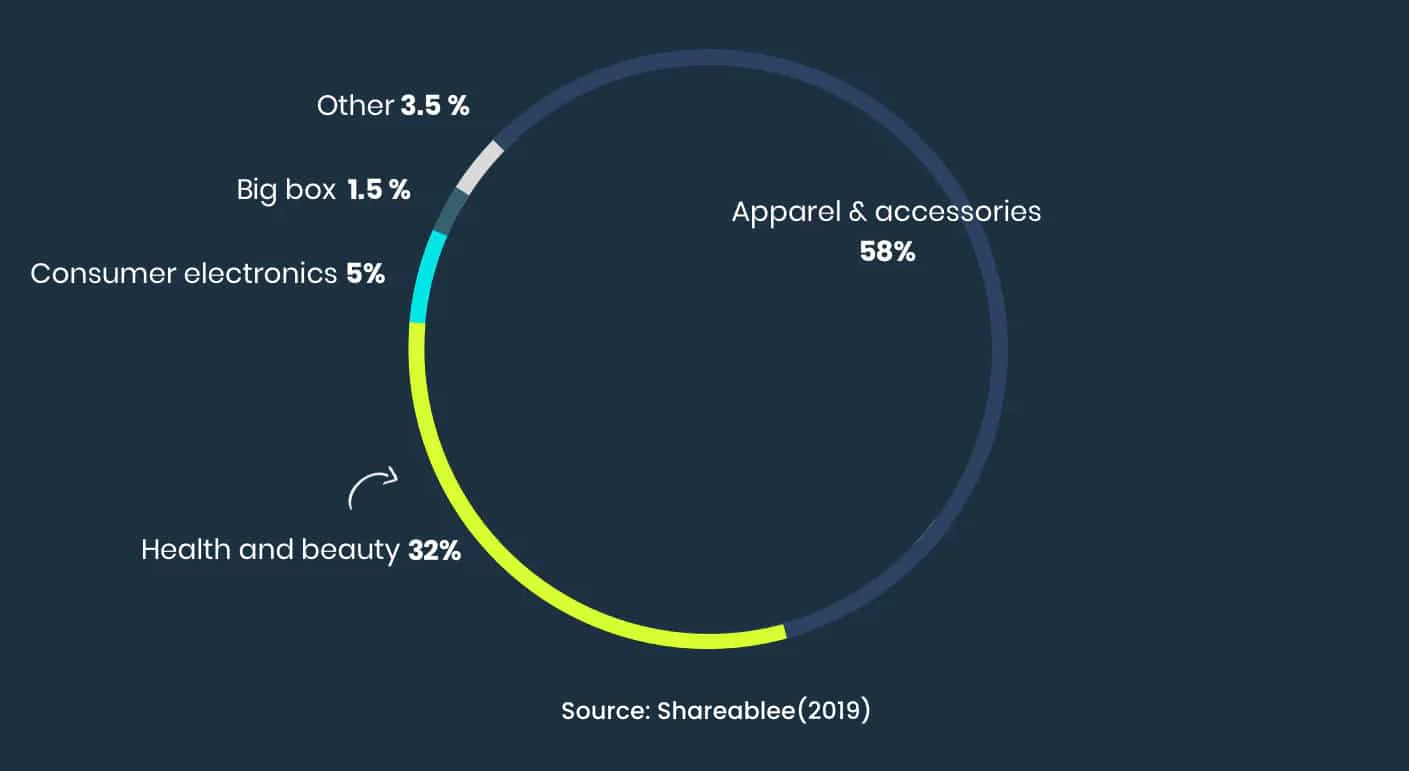
According to a research conducted by Shareablee, Health and Beauty is the most watched video category on Youtube and draws the 2nd highest amount of social media action only after Fashion and Apparel.

With the complexity of demand patterns for beauty products, it becomes challenging to forecast demand accurately and avoid overstocking or understocking. Overstocking can lead to high inventory holding costs, markdowns, and waste, while understocking can result in lost sales, stockouts, and customer dissatisfaction.

To cope with demand fluctuations, beauty retailers need to use data-driven AI/ML based forecasting methods that predict accurate demand at channel category and store nuances.

So it is not a surprise that McKinsey notes that using ML and AI in inventory demand prediction and supply chain management can reduce errors by up to 50% and reduce lost sales and product unavailability situations by 65%. This can lower warehousing costs by up to 10% and administration costs by up to 40%.

Learn how machine learning improves retail demand forecasting

Managing inventory across channels and stores is becoming increasingly inhumane

Inventory optimization presents a significant challenge for health, beauty, and wellness retailers in today’s landscape. Not only is accurately predicting demand notoriously difficult, but aligning supply chain planning decisions without jeopardizing retail success adds further complexity. Numerous factors contribute to this challenge, each requiring careful consideration and strategic handling. Let’s address these factors individually to better understand their impact.

1 Dealing with product diversity

Beauty and personal care items vary widely in size, color, shape, and formulation, necessitating diverse storage, handling, and display requirements. For instance, certain products may necessitate storage in cool, dry environments, while others benefit from attractive or interactive displays.

Additionally, beauty products exhibit distinct life cycles, margins, and turnover rates, influencing decisions regarding retail replenishment solutions and allocation. Supply chains need to adjust to this new reality.

2 As Omni-channel as it could get

Furthermore, in today’s dynamic environment where health, beauty, and wellness retail is evolving towards customer-centricity and omnichannel experiences, consumer expectations have soared.

Customers demand superior quality, abundant availability, and a diverse array of beauty products, alongside seamless, personalized retail shopping experiences characterized by convenience and speed. They anticipate multiple channels and options for browsing, purchasing, and receiving products, including online platforms, physical stores, and click-and-collect services.

The prevalence of online sales in health and beauty sectors often surpasses that of other industries, underscoring the necessity for real-time monitoring of product availability. A shortfall in any item can result in the loss of an entire customer order.

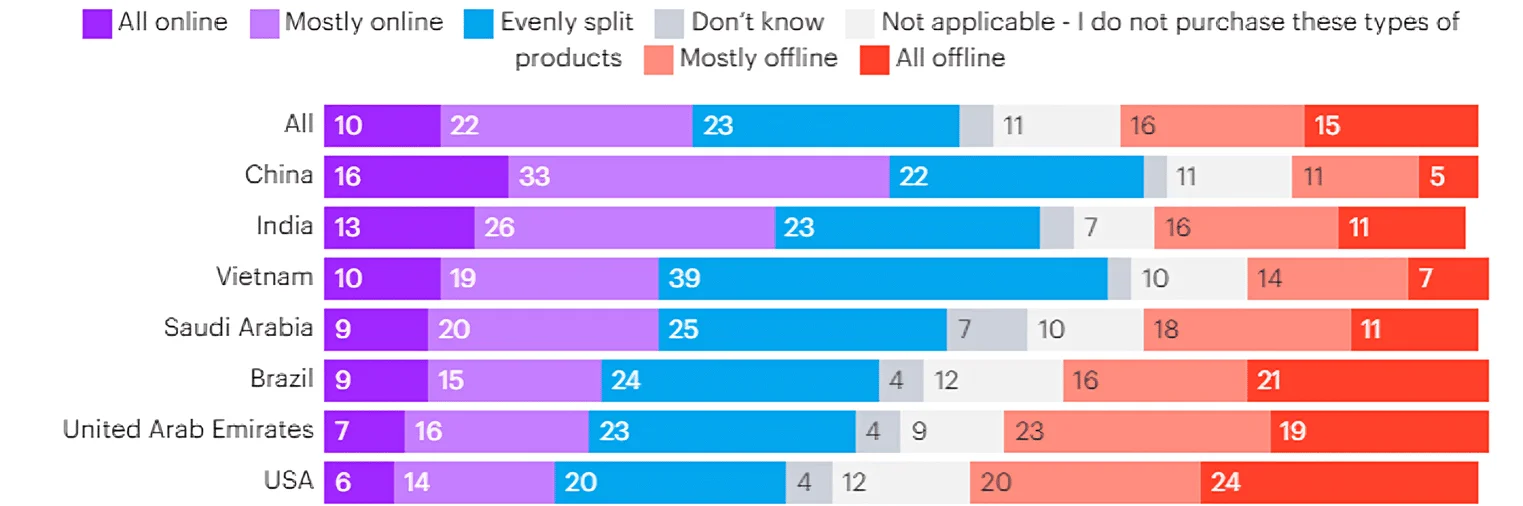
While most customers show Omnichannel buying behavior, visiting store is central to decision making

To meet these heightened expectations, beauty retailers must integrate their inventory seamlessly across various channels and locations, optimize allocation and distribution, and offer tailored services to enhance real time customer engagement and loyalty.

3 The rise and rise of complex promotion mechanics

Health and beauty retailers operate in a cutthroat market where promotions dominate, comprising a whopping 80% of goods.

Innovative sales tactics like “buy one, get one free” and “buy one, get two” are commonplace, demanding a unique approach to inventory management.

Navigating this terrain requires retailers to juggle demand projections and orders with finesse, ensuring they don’t drown in excess stock while keeping shelves well-stocked for eager customers.

The current replenishment techniques that rely on excel based calculations and past-data modeling are proving inadequate in this fast-paced retail environment where supply chain is fragile. Retailers need to realize the complexity has greatly increased and leaving key ordering decisions to manual interventions can prove costly.

This is where ai replenishment planning can help. By not just factoring for demand fluctuations through more accurate predictors of sales, but also accounting for supply chain factors such as lead time, minimum order quantity, shelf life and expiry date – AI powered replenishment is scarily accurate everytime. This can mean your team being more accurate in ordering for over 85% of SKUs.

Check out top 5 reasons why your store replenishment might be ineffective

Suppliers galore, but not enough collaboration

As a beauty retailer, maintaining seamless communication with suppliers is paramount to avoid delays and frustration. The cosmetics and personal care industry moves at lightning speed, demanding swift responses for thriving businesses. With innovation at its core, there’s little margin for error.

Introducing new products presents its own set of challenges. From supplier collaboration onboarding to approvals, updating information, placing orders, processing payments, and sharing vital demand signals, every step requires meticulous attention.

Unfortunately, traditional collaboration methods often rely on manual processes, prone to errors and missed opportunities. It’s no surprise that nearly 80% of retail product launches end in failure without effective supplier processes in place.

Moreover, the costs associated with managing supplier information and the order-to-payment cycle are significant. Many retailers still rely on labor-intensive methods, with an estimated cost of nearly $1 million for health and beauty retailers just to maintain these records.

Furthermore, effective coordination with retail vendor collaboration is critical for successful trade promotions. Failure to do so can result in significant financial losses, with retailers risking over $1.5 million in missed opportunities and operational costs. To mitigate these risks and maximize profitability, streamlined supplier processes and enhanced communication channels are essential.

Check out your potential savings with true supplier collaboration

Empowering Your Teams With The Power Of AI

In the ever-evolving world of health, beauty, and wellness retail, embracing AI-powered solutions can revolutionize your team’s approach. The true power of AI lies in its capacity to learn and adapt to the intricacies of your business, offering granular insights to optimize decision-making. Here are the key areas where AI can truly elevate your operations:

1 Demand Forecasting

AI-driven demand forecasting frameworks utilize advanced algorithms to analyze historical sales data, market trends, and external factors such as weather, promotions, social media influence. By accurately predicting future demand, retailers can optimize inventory levels, minimize stockouts, and reduce excess inventory holding costs. This not only ensures product availability but also enhances customer satisfaction and maximizes profitability.

2 Inventory Replenishment

AI-powered replenishment optimization enables retailers to transform from static and “one-size-fits-all” to hyper-local replenishment planning. Its ML-based demand forecasting accurately predicts real demand across store, channel and categories while intelligent algorithms optimize order plans for constraints such as shelf-life, lead-time, expiration date, minimum order quantity, minimum display stock, and standard ordering frequency constraints. Automated reorder triggers ensure timely replenishment of stock, reducing the risk of stockouts and eliminating manual intervention. By optimizing inventory levels across channels and locations, retailers can improve operational efficiency and capitalize on sales opportunities.

3 Supplier Collaboration

Smart and automated supplier platforms  facilitate seamless communication and collaboration with suppliers, streamlining processes from product onboarding to order management. By automating supplier-related tasks such as order placement, invoice processing, and payment reconciliation, retailers can minimize errors, reduce lead times, and improve supply chain efficiency. Enhanced visibility into supplier performance and inventory availability enables proactive decision-making and fosters stronger partnerships.

Conclusion

In the fast-paced realm of health, beauty, and wellness retail, challenges like fluctuating demand and complex supply chains are ever-present. Yet, AI-powered solutions offer a transformative path forward. With AI driving demand forecasting, store replenishment, and supplier collaboration, retailers can not only meet but surpass customer expectations, all while boosting profitability. In this ever-changing landscape, AI stands as the cornerstone of success.

Table Of Contents
Riding The Waves Of Ever-Volatile Demand
Managing inventory across channels and stores is becoming increasingly inhumane
Suppliers galore, but not enough collaboration
Empowering Your Teams With The Power Of AI
Conclusion

Mastering Success Amidst Product Cannibalization with AI-powered strategies

Merchandising and Supply Chain
Blogs

Mastering Success Amidst Product Cannibalization with AI-powered strategies

Ah, the joyous season is almost upon us, and retailers are donning their festive hats to prepare for the promotional whirlwind – scrambling to finalize the assortment and promotions for the season.

Yet, amidst the tinsel and cheer, there’s a not-so-merry disruptor lurking—In-store product cannibalization.

What exactly is this grinch-like phenomenon, how does it threaten the holiday merchandising feast, and how can AI save the day? Let’s unwrap the mystery.

Unmasking Product Cannibalization

Picture this: one product munching on the demand of another, akin to a festive feast gone awry. This, my friends, is the essence of in-store cannibalization. It’s like musical chairs, but instead of chairs, products are vying for the attention of eager shoppers.

But why does this happen? Blame it on the combination of rampant discounts and the waning loyalty towards brands, especially for everyday products.

The grocery aisle becomes a battleground, and every product hopes to be the shining star of the season. Steep discounts and promotions become the magic wand, but sometimes, the spell goes awry, leading to products devouring each other’s demand. It’s a retail jungle out there!

The Sales Tango – When Promotions Hit The Floor

In the delightful world of sales bumps, customers aren’t just making purchases; they’re doing the purchase acceleration mambo—maintaining their usual consumption but sneakily stockpiling for increased consumption later. Talk about a shopping spree with a twist!

Then there’s the increasing quantity cha-cha. Customers aren’t just sipping on a soft drink; they’re guzzling down bottles of joy because, hey, its holiday season! More sips, more smiles, and a whole lot of consumption celebration.

Now, let’s salsa into switching behavior. Picture this: a customer gracefully gliding from a cola to bottled water (that’s some fancy category switching), or doing the brand tango—swapping from Coke to Pepsi. Oh, and don’t forget the store shuffle—picking a different supermarket for a shopping spree. Lastly, there’s the SKU salsa—grabbing a different product of the same brand, right there, right then.

Repercussions Of Demand Shift

While we’re busy calculating the demand lift due to promotions, the silent shift in demand often goes unnoticed. Well, my fellow retailers, it’s not just a minor hiccup—it’s a disruptive force.

In the study by Van Heerde et al., it’s a tale of two stores: one offering a tantalizing price promotion, and the other, well, just doing its regular thing. Imagine the suspense!

For the peanut butter enthusiasts (yes, that’s a thing), the findings are like music notes in a symphony. There are cross-brand effects (43% shift in secondary demand), cross-period effects (24% shift due to primary demand borrowed from other time periods), and category expansion (33% shift due to market expansion and cross-store effects).

What does this mean for Retailers?

It means shelves groaning under the weight of aging stock, margins doing a disappearing act, and, in some cases, products reaching their expiration date in bulk. Talk about post-holiday blues lingering like an unwelcome guest into the next year.

It’s time to take off the rose-tinted glasses and acknowledge the ripple effect of in-store cannibalization.

AI’s Carol For Retail Success

Fear not, weary retailers, for there’s a solution to tame the cannibal Grinch! The key lies in a symphony of demand forecasting solutions and replenishment frameworks that not only capture the demand “LIFTS” but also dance to the tune of demand “SHIFTS” caused by promotions.

Picture this: a symphony of algorithms orchestrating a flawless forecasting and replenishment planning solutions framework that not only predicts the future but does so with a keen awareness of cannibalization effects.

AI, with its prowess in data analysis and pattern recognition, transforms the art of prediction into a science. By sifting through mountains of historical sales data, weather patterns, social trends, and even the subtle nuances of consumer behavior, AI paints a vivid picture of what lies ahead. But what sets it apart in the realm of cannibalization is its ability to dissect the intricate relationships between products.

Traditional forecasting models often struggle to capture these nuanced interactions. AI, however, navigates this labyrinth effortlessly. Through advanced machine learning techniques, it identifies not only the direct impact of one product on another but also the ripple effects that resonate through the entire inventory.

Moreover, its ability to optimize order schedule based on supply chain constraints such as lead time, minimum order quantity, order frequency etc. as well as category factors such as expiration dates, and shelf life at a granular level clearly sets it apart from the traditional approach.

Achieve lean retail inventory optimization solution, reduce out-of-stocks and food wastage by algorithmically optimizing your replenishment with automatic store replenishment.

Future-proofing Your Retail Game

What makes this framework future-proof is the adaptability of AI. It doesn’t just learn from historical data; it evolves with the changing landscape of consumer preferences and market dynamics.

Moreover, AI is rooted in its ability to handle complexity. Traditional methods might falter when faced with a myriad of variables, but AI thrives in complexity. The more data it has, the better it becomes at untangling the web of relationships within a product portfolio.

Imagine a world where your store replenishment processes are aligned not just for individual products but for the entire product class. It’s a harmonious dance where each product complements the other, ensuring that post-holiday blues are replaced with a festive glow of success.

So, as you gear up for the seasonal planning extravaganza, remember the AI carol that sings the tune of demand shifts and lifts. Let it be your guiding star through the retail holiday galaxy, ensuring that jingle bells are heard, not the knells of cannibalization.

Happy seasonal planning, and may your shelves be merry and bright!

Table of Contents
Unmasking Product Cannibalization
The Sales Tango – When Promotions Hit The Floor
Repercussions Of Demand Shift
AI’s Carol For Retail Success
Future-proofing Your Retail Game