
Cashing in on Bundles – How eCommerce Retailers Can Drive Revenue Growth with Strategic Product Bundles

Case Study

Cashing in on Bundles – How eCommerce Retailers Can Drive Revenue Growth with Strategic Product Bundles

Segment

Specialty – Health & Beauty
Specialty – Books & CDs
B2B – Office Supplies

Objective

Grow sales by increasing Items Per Order (IPO) and Average Order Value (AOV) with product bundles.

Product Used

Business Value Delivered

0 %
Click-Through Rate
0 %
Items per Thousand Views
0 %
Revenue per Thousand Views

The Overview

Product bundles may not be a novel concept, but they have evolved significantly over time and have proved to be versatile—finding applications across sectors such as fashion, bookstores, tech, beauty, travel, and many more. They present a strategic avenue to increase the number of items a customer adds to their cart, which translates to a higher order value.

When adopting product bundling on your product detail page (PDP), it’s imperative to carefully consider product selection for the bundle, the bundle’s composition, and the steps involved in the implementation process – each a vital contributor to the pursuit of elevated AOV.

  • Bundle Products: Essential questions include – Which products to bundle? Can the process be fully automated? Do they require compatibility checks? Does it require merchandising? What form of shopper affinity do you aim to drive?
  • Bundle Composition and Layout: How many products should the bundle include? Should the consumer have the option to customize the bundle? Should the bundle display separate groups with alternatives?
  • Implementation: Will your in-house developers or third-party integrators develop the bundles on the PDP? Either approach involves backend development to ensure product bundles can be added to the cart, along with front-end development for displaying the bundles in potentially editable, appealing formats.

With Algonomy (now part of ADA) Recommend™, it’s possible to create and manage comprehensive, effective, and personalized product bundles, simplifying the entire process and ensuring optimized results.

Advanced Algorithms for Product Bundling

Over the years, we have developed algorithms and functionalities that offer customers much more than the conventional ‘Frequently Bought Together’ bundling. Depending on specific business needs, there are several options to choose from for generating optimal product bundles.

Configurable Strategies

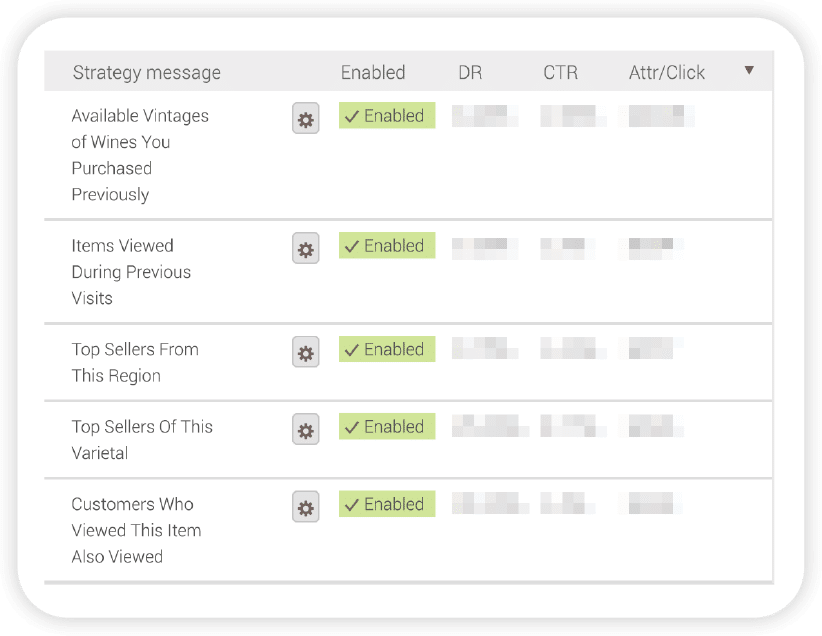
Algonomy’s (now part of ADA) Configurable Strategies allows non-technical users to design their algorithm or strategy by selecting from pre-built models and customization options. This flexibility ensures precise creation of product bundles. This functionality provides the ability to select the AI model to generate the bundle products, apply desired shopper affinity, and adhere to any additional merchandising requirements like restrictions, boosting, etc.

Advanced Merchandising

Algonomy’s (now part of ADA) Advanced Merchandising utilizes catalog product attributes, enabling merchants to design a personalized shopping experience with their desired level of control. It offers enhanced control over the bundling process for a more tailored outcome.

This includes determining the exact number of products from a certain category, 1WorldSync (formerly CNET) compatibility for the electronics vertical, custom compatibility mapping that enables clients to use their own compatibility mappings to pair compatible products, and creating bundle groups that allow the presentation of alternatives.

Data Science Workbench

Our platform also provides Data Science Workbench, a tool that allows for the creation of custom product recommendation strategies.

For instance, by using the tool, businesses can integrate any external data—such as proprietary complementary data e.g. “complete the look” information or data to rank recommendations on e.g. offline sales—with existing behavioral information and tailor their product bundles just the way they want, based on any shopper affinity.

Bundle Composition, Layout, and Implementation

Algonomy (now part of ADA)-powered bundles ensure the most relevant bundled products for the shopper by applying personalization. However, keeping the principle of ‘the client is king’ paramount, one can choose for the bundles to be “editable” by providing selected alternatives for groups of products.

Alternatively, consumers can be given the power to “build their own bundle” from the suggested products – the level of customization rests in your control.

Changes or additions to your PDP usually require significant development effort, resources, and time. With the addition of innovative functionalities like Algonomy’s (now part of ADA) Dynamic Experiences, this burden is lifted. Entire bundles can be designed, created, and added to your site directly from the Algonomy (now part of ADA) portal, reducing the operational demands on your team.

In summary, Algonomy’s (now part of ADA) multifaceted solution streamlines the process of creating and managing product bundles, ensuring relevant product recommendations, boosting customer engagement, and ultimately driving sales as the use cases below illustrate.

Use Cases

1 Use Case 1 – Small Change, BIG Impact

Our client, an established player in the bookstore vertical, had been utilizing a basic “Frequently Bought Together” bundle configuration based on a legacy “out of the box” algorithm. Looking to increase their Average Order Value (AOV), they turned their focus on enhancing their bundle setup.

Instead of immediately delving into the complexities of bundle composition and layout, which would necessitate changes in the implementation component, they decided to start out with refining the bundle algorithm.

A new configurable strategy was created focusing on an “Author” targeted algorithm, coupled with shopper affinity. The model chosen for this strategy was the Attribute Best Seller model, with the Author name selected as the attribute to seed off.

In addition, a dedicated affinity configuration was applied with weight given to the category and publisher attributes, ensuring that the bundle shows the most relevant books of the same author based on the shopper’s affinity with publishers and categories viewed and purchased in the past.

The impact of this minor tweak was instant and significant. As illustrated in the chart below, there was a noteworthy increase in their Key Performance Indicators (KPIs) for their bundle performance:

  1. Click-Through Rate (CTR) saw an impressive lift of 76%.
  2. Items per Thousand Views (IPVm) increased by 40%.
  3. Revenue per Thousand Views (RPVm) spiked by 16%.
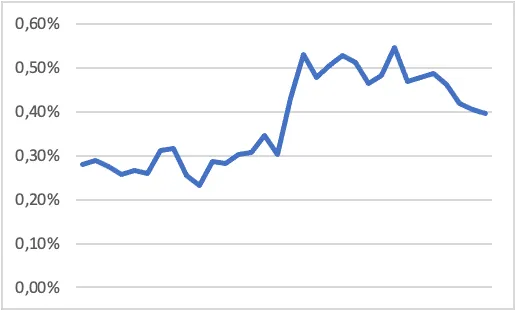
Sudden spike in CTR upon refining the bundle algorithm
This case demonstrates how adjusting one aspect of the bundling configuration, in this case refining the bundle algorithm, can significantly drive critical success metrics. Algonomy’s (now part of ADA) dynamic solutions provided the agility and responsiveness to achieve these outcomes.

2 Use Case 2 – The Power of Compatibility

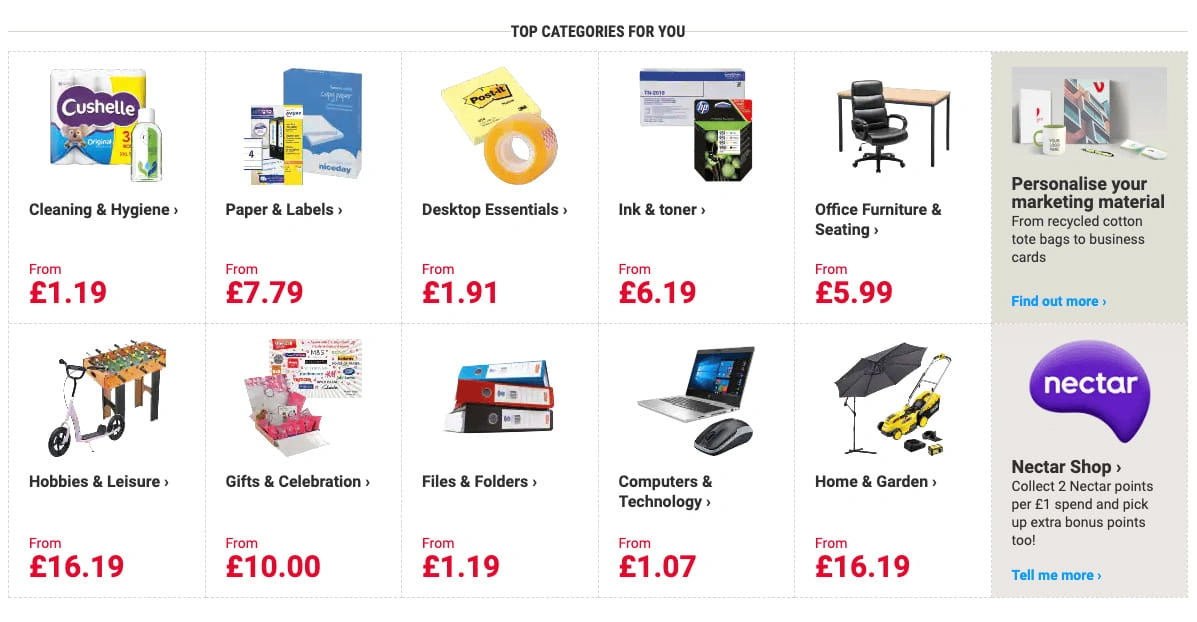
In tech-related verticals, compatibility between the main product and accessory items is crucial. Our client from the office supplies vertical recognized this and utilized their external data to guarantee compatibility between printers and their associated ink and toners.

With the primary goal of increasing sales, they successfully implemented ‘automatic’ bundles on most categories using Algonomy’s (now part of ADA) out-of-the-box cross-sell and upsell algorithms. This meant simply utilizing strategies already enabled for their PDP and having Algonomy (now part of ADA) determine automatically which strategy to play where and when to obtain the best products to recommend in the bundles.

However, when it came to the Printer category, custom solutions were required in order to ensure only compatible cartridges were presented in the bundles.

Using Algonomy’s (now part of ADA) Data Science Workbench, the client could construct custom algorithms based on their external data. The data uploaded to Algonomy (now part of ADA), consisting of lists of compatible product IDs, helped create cross-sell and upsell algorithms.
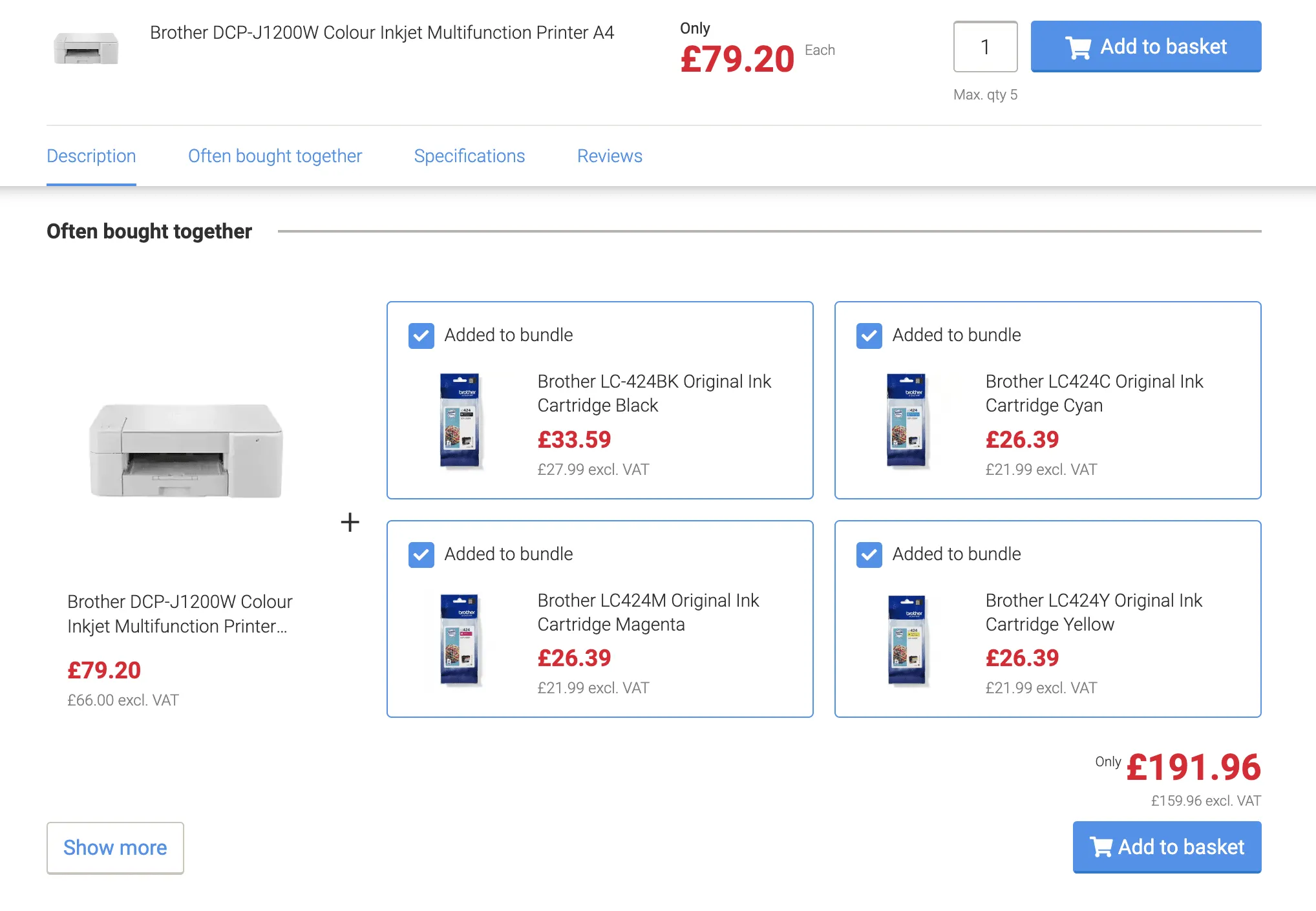
This approach guarantees that the suggested bundles for printers consist only of compatible ink and toner sets and, at the same time, allows presenting shoppers with bundles of ink cartridges of different colors or yield capacities.

Compared to the regular cross-sell recommendations on these Printer category pages, the results of the compatible bundles were astonishing:

  1. CTR is 200% higher on the bundles, more than doubling the regular cross-sell compatible recommendations.
  2. Items per Thousand Views (IPVm) from the bundles is 162% greater.
  3. Most impressively, Revenue per Thousand Views (RPVm) is 400% higher, quadrupling the revenue from bundles compared to the regular cross-sell compatible recommendations.

This case demonstrates the immense potential of Algonomy’s (now part of ADA) customizable solution when it comes to creating unique bundle strategies, by capitalizing on data and ensuring compatibility.

3 Use Case 3 – Effortless Bundle Implementation and Testing Through ADA Portal

Our customer in the health and beauty sector wished to implement product bundles but felt challenged due to resource constraints for backend and front-end development.

They required a solution that allowed them to:

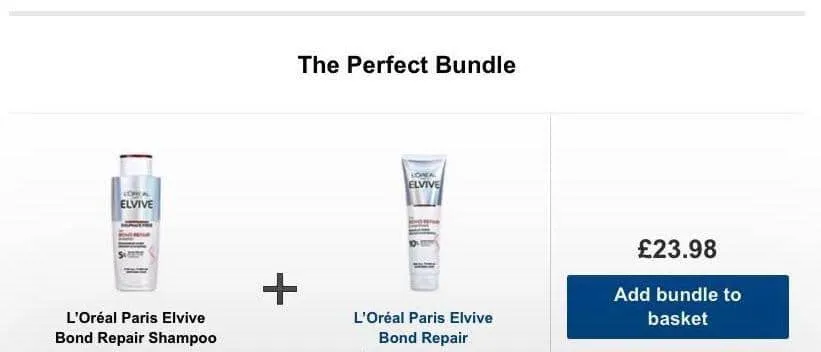
  • Create bundles with the look and feel of their Product Description Pages (PDPs)
  • Restrict the bundle offerings to certain categories
  • Test bundle performance against a non-bundle PDP variant

Algonomy’s (now part of ADA) Dynamic Experiences functionality proved to be a game-changer. It helped the client set up bundles independently, fitting their unique requirements and constraints. For any additional technical skills, our consultants provided the necessary support for fine-tuning layouts or incorporating custom JavaScript, all done seamlessly via the portal.
The Multivariate Test (MVT) capability, intrinsic to Algonomy’s (now part of ADA) Dynamic Experiences, simplified the process of setting up a control experiment. The client easily configured a 50/50 test to compare the performance of bundle placements versus pages without bundles.
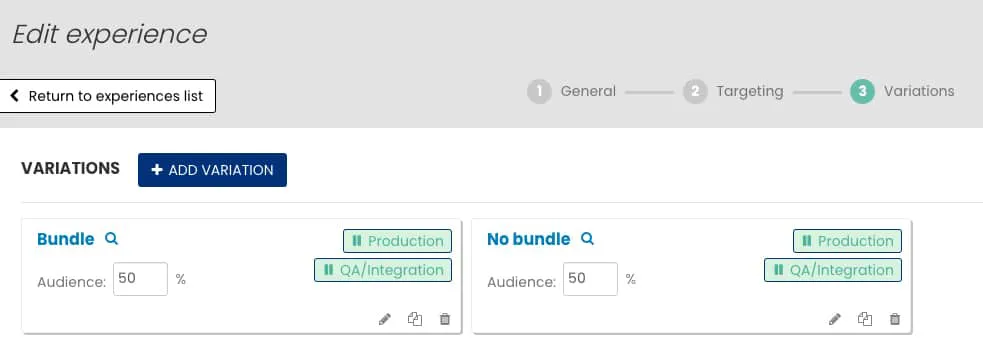
The metrics from their test surpassed expectations, with an impressive lift in Revenue per Visit (RPV) and Average Order Value (AOV) by 8.42% and 8.24% respectively, showcasing statistically significant results with 99% confidence levels.

The Conclusion

This use case underscores Algonomy’s (now part of ADA) ability to facilitate bundle implementations even when resource and development constraints exist. It stresses the flexibility and independence our portal provides, allowing clients to execute and test their unique merchandising strategies simply and confidently.

Lastly, it underscores the potential for impressive revenue growth and an increase in order averages with the implementation of thoughtful and well-executed bundling strategies, proving how Algonomy’s (now part of ADA) Recommend™ can enhance the client’s eCommerce ecosystem.

Table Of Contents
The Results
The Overview
Advanced Algorithms for Product Bundling
Bundle Composition, Layout, and Implementation
Use Cases
The Conclusion

“Our previous manual bundle solution was not scalable or sustainable long-term. Algonomy helped implement automated product bundles, leading to a jump from 4% to 80% product coverage, minimising internal maintenance effort and allowing a focus shift to optimisation. We’re really encouraged by the initial results and look forward to building on this together with Algonomy.”

Senior Manager of Conversion Rate Optimisation & Tooling

“The feature is easy to set up and it’s great that it can be tailored to what it is we require, especially when we only want it to show on specific categories!.”

Digital Merchandising Executive

Explore More Resources on Commerce Personalization

Wine.com Drives AttributeBased Recommendations for Personalization
Food & Beverage US

Wine.com Drives AttributeBased Recommendations for Personalization

See full story
0 %
Reduction in out-of-stock across stores
0 %
increase in revenue

400+ retailers & brands across the world trust ADA to consistently deliver on their commerce KPIs

Looking to drive revenue growth with bundles? Let’s talk.

Wine.com Drives AttributeBased Recommendations for Personalization

Case Study

Wine.com Drives AttributeBased Recommendations for Personalization

Segment

Food & Beverage

Objective

Quickly develop, test, and measure innovative new recommendation strategies

Product Used

The Results

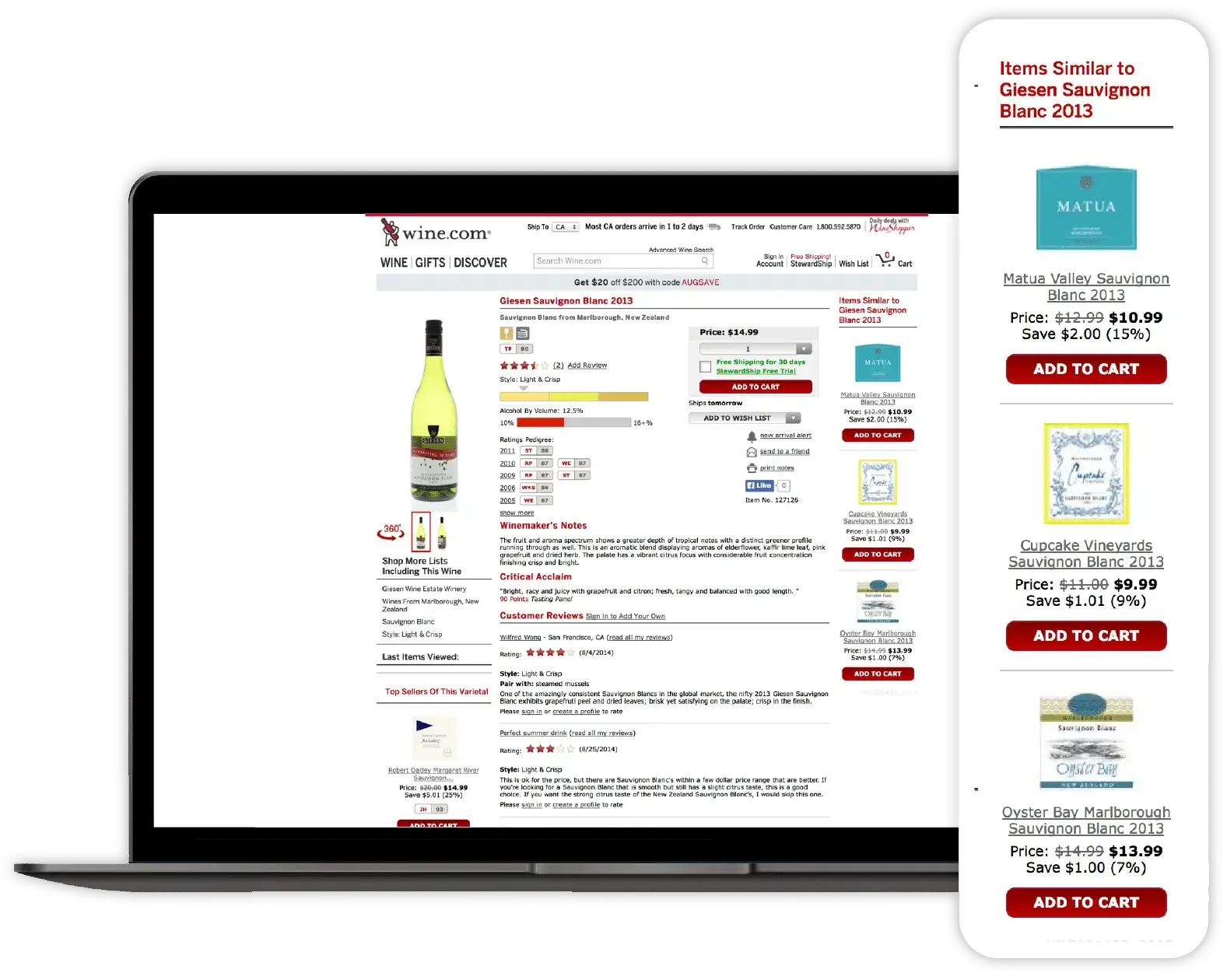
Using Algonomy (now part of ADA) Recommend™, Wine.com tested a “similar products” strategy that drove $5 per click, becoming one of their best strategies in terms of revenue per click.

The Overview

Headquartered in San Francisco, between California’s wine country and Silicon Valley, Wine.com’s mission is to promote the wine lifestyle through innovation—using technology to bring the world of wine to its shoppers’ fingertips.

As the Sr. Director of Product Development, Cam Fortin is tasked with transforming the shopping experience for a million-bottle online wine shop through the most relevant information, tools and expert advice that a wine connoisseur might seek.

Having partnered with Algonomy (now part of ADA) since 2010, Wine.com was well-versed with how behavioral recommendations could aid consumer research and inform purchases. Many of Wine.com’s behavioral recommendation strategies are product-focused, but a few are attribute-based—a critical differentiator when considering the complex product categories associated with wine.

The Multi-Attribute World of Wine

“Wine is different. People buy the same wine multiple times. Or, if they’re interested in one wine, they’re frequently interested in other wines that are similar, so attribute-based strategies work very well,” says Fortin.

Obvious attributes such as “French,” “red,” and “2010” are easy to deploy in a recommendation strategy such as “People who purchased a French Bordeaux also viewed. But Fortin knew there was a massive opportunity to be leveraged when considering the universe of attributes that applies to wine.

“We’ve always wanted to explore recommending similar products based on the number of attributes they have in common,” he says. Wines may share up to 30 different attributes (big red, smoky, tannic, etc.) in common. Exploring how this subset of common attributes could be exploited for personalization—and capitalized upon—was a compelling challenge. “Being able to run SQL queries and have a ridiculously huge machine to access information from our site directly was something we were very interested in.”

From Concept to Deployment to Production in Hours

Through Algonomy (now part of ADA) Recommend™, Wine.com was able to test its theory on a custom strategy that leveraged the intersection of multiple attributes. Specifically, Wine.com could access all elements of its customer “map” (browse and purchase history, loyalty, preferences, etc.) and build the algorithm it wished to test, utilizing Algonomy’s (now part of ADA) Hadoop instance.

Further, Wine.com could measure how its specific algorithm competed against the existing set of pre-built Algonomy (now part of ADA) algorithms.

The speed with which Fortin moved from concept to deployment to production was unprecedented. “Instead of requesting a change in placement or a tweak in a strategy, we now had the ability to come up with algorithms on our own, create new placements and implement strategies immediately,” says Fortin.

Recommendation strategies are easily managed in the Algonomy (now part of ADA) Dashboard, which also displays key performance metrics.

Similarity Spells Success

The new “similar products” recommendation strategy—which ranked product recommendations based on the number of attributes they have in common—became one of the best performing strategies in terms of revenue per click, generating about $5 per click.

“We were excited that it worked right off the bat, even though it was just a rough algorithm with little polish to it. Next, we want to weight attributes differently and continue refining this strategy,” says Fortin.

For Fortin, the larger success is related to the ease of use and the speed associated with developing and testing algorithms. The ability for any of his SQL programmers to develop and test several algorithms a month with minimal IT investment was a huge win made possible through Recommend™.

Table Of Contents
The Results
The Overview
The Multi-Attribute World of Wine
From Concept to Deployment to Production in Hours
Similarity Spells Success

“We now have the ability to come up with algorithms on our own, create new placements and implement strategies immediately.”

Cam Fortin
Sr. Director of Product Development, Wine.com

Explore More Resources on Commerce Personalization

Wine.com Drives AttributeBased Recommendations for Personalization
Food & Beverage US

Wine.com Drives AttributeBased Recommendations for Personalization

See full story
0 %
Reduction in out-of-stock across stores
0 %
increase in revenue

400+ retailers & brands across the world trust ADA to consistently deliver on their commerce KPIs

Looking to hyper-personalize all commerce touchpoints? Let’s talk.

Leading online thrift store connects with shoppers individually

Case Study

Leading online thrift store connects with shoppers individually

Product Used

The Results

  • + 7.3 % Conversions
  • Improved Brand Perception
  • Engaged Shoppers

The Client

The retailer is the largest online  consignment and thrift store in the US, with the vision to help customers shop sustainably while saving money  on their favorite brands.

The Challenge

With over 2 million unique  SKUs to manage and promote, The retailer needed  to move beyond basic site search to enable truly  personalized results, making the experience individualized and  accurate. The retailer found that sessions that  include search convert 50% better than those that don’t,  however, the search terms are terse and do not provide  much insight into shopper intent. How do they then tailor  results?

Move from Segmentation to 1:1 Personalization at Every Customer Touchpoint

1 Complete, unified commerce personalization

Connect all digital path-to-purchase touchpoints — search, navigation, recommendations, and content — to deliver one personal experience that supports the complete customer journey.

2 Most comprehensive library of 150+ personalization strategies

Accelerate time to market with our strategy library that ranges from wisdom of the crowd and collaborative filtering approaches to deep learning visual discovery and NLP approaches.

3 Advanced merchandising

Cross-sell and upsell seamlessly by leveraging product attributes and compatibility data. Create automated recommendations and bundles that take the load off your merchandisers.

4 Algorithmic decisioning for every user with real-time context

Leverage AI to detect each shopper’s stage in the buying process, and combine it with their affinities to pick the best strategy that delivers the most relevant 1:1 experience while meeting your revenue or engagement goals.

Want to learn more about Personalized Commerce Search or other Personalization Offerings?

Book a consultation
Table Of Contents
The Results
The Client
The Challenge
Move from Segmentation to 1:1 Personalization at Every Customer Touchpoint

Unlike Amazon, we carry an inventory of one. So traditional personalization strategies — customer segments, popular items, and past purchases — don’t work for our business. We needed true individualization, and Algonomy was the answer.

Chief Technology Officer

Explore More Resources on Personalized Marketing

Wine.com Drives AttributeBased Recommendations for Personalization
Food & Beverage US

Wine.com Drives AttributeBased Recommendations for Personalization

See full story
0 %
Reduction in out-of-stock across stores
0 %
increase in revenue

Top Brands Trust ADA

Looking to hyper-personalize your marketing? Let’s talk.

HP Personalizes the First Boot Experience and Beyond With ADA’s AI-powered Content Personalization Platform

Case Study

HP Personalizes the First Boot Experience and Beyond With ADA’s AI-powered Content Personalization Platform

Segment

Consumer Electronics

Challenge

To create a personalized relationship with each customer from the moment they first use their new HP device.

Product Used

The Outcomes

0 %
increase in engagement as compared to the generic template
0 X
increase in minutes of use when the welcome content was personalized

The Client

HP (#20 on the Fortune 500) is one of the world’s largest computing companies, creating technology to make life better for everyone, everywhere. The company’s mission is to engineer experiences that amaze, and HP produces more devices for more customer segments than anyone else in the industry.

The Challenge

HP’s massive innovation and scale bring about a massive challenge: how to establish meaningful customer relationships when faced with a large product portfolio and millions of users around the globe.

Since the majority of HP devices are sold through retail channel partners, HP doesn’t control the customer experience or have a direct customer connection at the point of sale. However, they do own the ‘first boot’ – that critical moment when a consumer first uses their new device – and the subsequent customer journey through usage and discovery.

Drilling into the first boot experience, HP’s research found that robust product knowledge and software are major contributors to satisfaction, but pre-installed software and wizards are too generic to meet consumer needs. The company also found that the more customers spend time and explore, the happier they are with the new device and more likely to recommend to others:

  • 90% of customers want to do more with their PC
  • 70-80% of user satisfaction is generated at first boot
  • 44-47% dissatisfied with pre-installed software experience
  • Software drives 50% of top 10 customer wants in next device

Armed with these findings, HP looked to reinvent its approach to the first boot experience and beyond. Instead of treating every customer in the same way, HP wanted to provide a personalized experience to inspire, engage and assist customers in getting the most possible from their new device.

HP set strong criteria: the personalization strategy would need to scale to millions of customers without losing relevance; it needed to seamlessly integrate with HP’s existing and future product marketing assets; and it should automatically optimize in real time as new data and content entered the system.

The Solution

HP turned to Algonomy (now part of ADA) Engage to create HP Jumpstart, a trusted personal companion app that delivers a fully personalized content experience. Using advanced AI, the app engages new and returning customers with dynamic content that shows exactly why their particular product is spectacular. HP Jumpstart points to the accessories, software and services needed to meet an individual’s goals and anticipates evolving demands over time.

How It Works

Beginning at first boot, HP Jumpstart takes users through a series of nine dynamic screens and up to 30 content tiles that connect them with the most relevant information based on what they want to achieve with their new device.

Using advanced AI, every screen and every flow is personalized in real time from thousands of potential messages and differs by customer, segment and geography – presenting the most relevant experience from millions of possibilities. When the customer returns to the app, additional screens and suggestions are available based on up-to-the-moment goals, preferences & behavior.

For example, a U.S. customer buying a premium laptop may be immediately enticed to “Watch Netflix anywhere with a 360-degree hinge” or “Charge your phone from your laptop even when it’s powered down” – essential features that HP had no way to communicate in the past. Alternatively, for a hardcore gamer with a new desktop, HP Jumpstart can take on a totally different complexion with the personality, look and feel of what the HP gaming brand is all about.

Behind the scenes, Engage leverages nearly 300 contextual data attributes received by the Jumpstart app to power a dynamic, personalized content experience based on what is most germane to each customer segment. Advanced machine learning and AI maps individual customer behavior against advanced targeting and audience segmentation tools to display the right content within each screen – as well as determine the correct screens and flow.

Each HP Jumpstart experience is continuously – and automatically – optimized with advanced machine learning that eliminates manual A/B tests. All content is served directly from HP’s Content Management System, allowing HP to use every asset while relying on Engage to scientifically optimize customer response.

Behind the scenes, Engage leverages nearly 300 contextual data attributes received by the Jumpstart app to power a dynamic, personalized content experience based on what is most germane to each customer segment. Advanced machine learning and AI maps individual customer behavior against advanced targeting and audience segmentation tools to display the right content within each screen – as well as determine the correct screens and flow.

Each HP Jumpstart experience is continuously – and automatically – optimized with advanced machine learning that eliminates manual A/B tests. All content is served directly from HP’s Content Management System, allowing HP to use every asset while relying on Engage to scientifically optimize customer response.

The Result

Within six months of launching the Jumpstart companion app, HP has rapidly expanded Jumpstart to millions customers worldwide, and expects this to be the company’s largest direct customer channel by the end of the year. The new companion app has yielded greater than 30% increase in engagement as compared to the generic template HP used in the past And HP continues to record measurable boots in customer volume and quality of engagement, including significant increases in minutes of use each month and average monthly CTR.

HP continues to take advantage of new opportunities to use Engage to accumulate customer insights while delivering a personalized relationship the across the customer lifecycle. Ultimately HP plans to use personalized content to improve all aspects of its business: from awareness of devices, accessories and services through contextual help and predictive support for established users.

Table Of Contents
The Outcomes
The Client
The Challenge
The Solution
How It Works
The Result

“We want to tell the customer why their HP product is awesome – and make sure they are getting everything they need out of their purchase. Engage takes on the heavy lifting of determining when, where and how to get these messages to the customer in way that is helpful, not obnoxious. We provide the content options, and Algonomy takes on the task of figuring out the right message and time to captivate the customer.”

Aron Tremble
Sr. Director of Software Experience & Products – Personal Systems
HP Inc.

Explore More Resources on Commerce Personalization

Wine.com Drives AttributeBased Recommendations for Personalization
Food & Beverage US

Wine.com Drives AttributeBased Recommendations for Personalization

See full story
0 %
Reduction in out-of-stock across stores
0 %
increase in revenue

400+ Retailers & Brands Across the World Trust ADA

Looking to hyper-personalize the content experience for your customers? Let’s talk.

North American Fashion Retailer: 4% Lift in Conversions

Case Study

North American Fashion Retailer: 4% Lift in Conversions

Segment

Fashion & Apparel

Challenge

Enhance visitor experience and accelerate conversions

Product Used

The Results

  • The ease and flexibility of Algonomy’s (now part of ADA) social proof helped them enhance the online experience for visitors by a few notches, and aided in helping build visitor confidence and trust.
  • Ultimately, the retailer realized an incremental 4% increase in conversion and a 6% increase in ‘Add to cart’ with minimal effort.
0 %
Increase in Add to Cart
0 %
Increase in conversions
0 %
Increase in Revenue Per Visitor

The Client

  • A leading fashion and apparel retailer with 900+ outlets and operating multiple retail concepts in North America.
  • The retailer offers a very wide range of trendy and affordable clothing items for men, women, and kids.

The Challenge

The retailer had deployed best-of-breed personalized recommendations and personalized commerce search, with both already delivering top notch customer experiences.

The retailer had a big sale coming up followed by the launch of a new collection for the season and wanted to ensure they achieve their sales objectives.

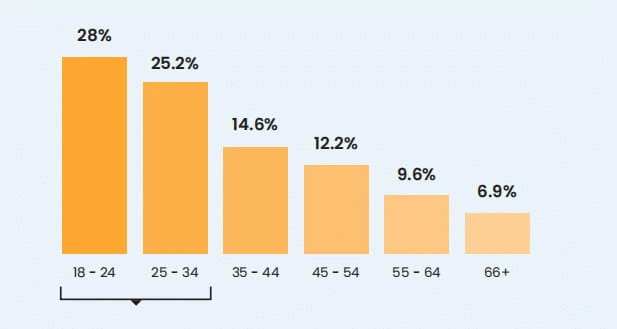
The retailer was experiencing a steady growth in online traffic and over 50% of their audience now constituted Millenials and GenZ. To better serve these customers, they wanted to closely align the online experience with the way young shoppers buy and increase conversions.

Age Demographic

The Solution

To enhance the online experience and accelerate purchase decisions, the retailer chose Algonomy’s (now part of ADA) Social Proof Messaging. The solution was deployed in just 3 days.

Converge shopper and product data

With Algonomy’s (now part of ADA) Social Proof Messaging, the retailer was able to easily combine real-time shopper behavior and product data and use it to effectively create a buzz for their products – online.

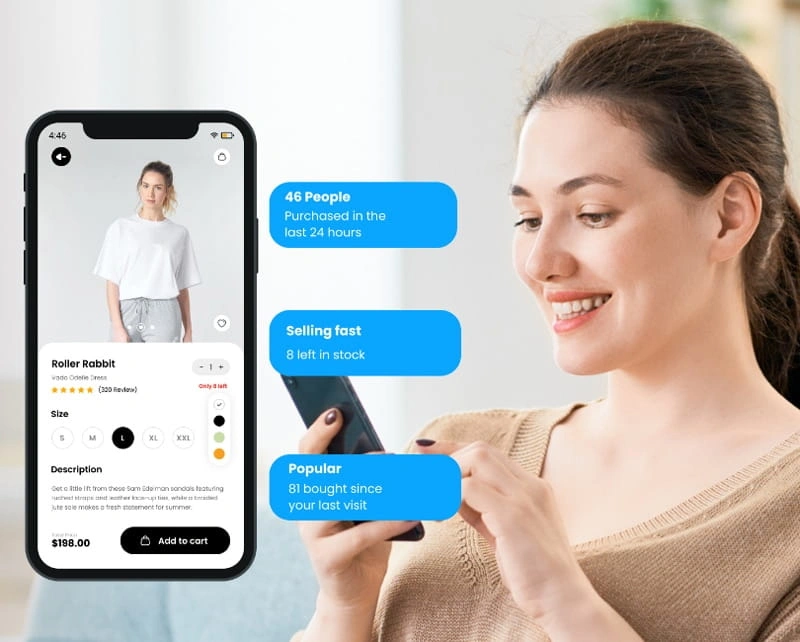
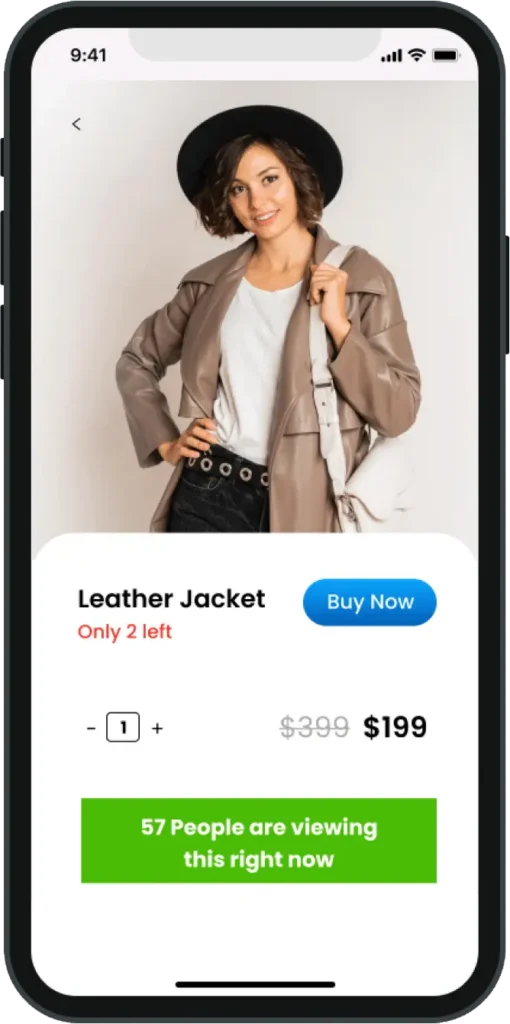
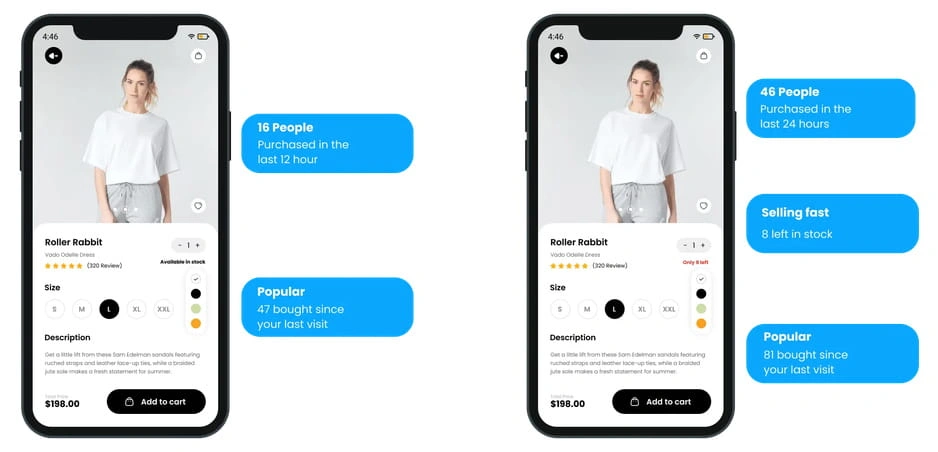
The retailer was able to display metrics like number of people viewing the product, number of people who purchased an item, current stock availability for popular products – in real-time and personalized to each visitor.

The retailer decided to combine these with reviews and ratings for products to encourage customers to ‘Add to cart’.

Targeted and personalized messaging

The solution provided the retailer the flexibility to define the context and audience that can view the social proof messages. The retailer chose to expose 70% of his traffic across 7 categories to social proof.

Plus, they were able to personalize the message to each visitor based on their previous visit and display real-time purchase data and stock availability to build confidence, create a sense of urgency, and persuade visitors to purchase.

Flexible, self-serve solution

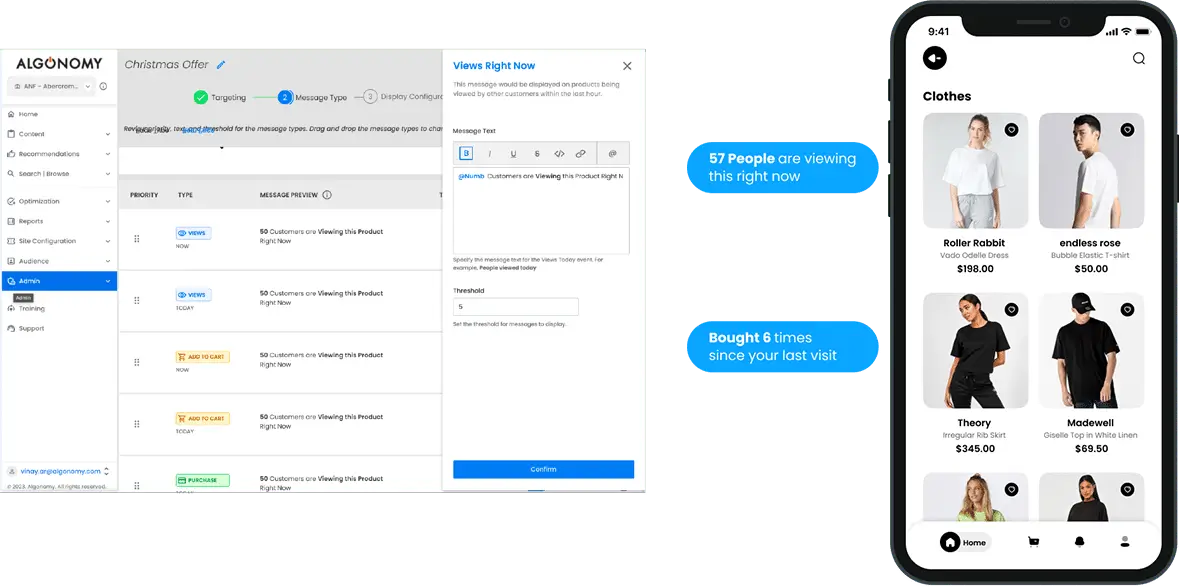
With Algonomy’s (now part of ADA) social proof, the retailer had the flexibility to display multiple messages, determine the hierarchy and prioritize messages.

The retailer was able to personalize the experience for shoppers with real-time social proof through different stages of the buyer journey whether it is on category page, product detail page or the cart page in just a few clicks without the need for IT intervention.

The retailer used pre-built templates to customize the messages, create variants to test outcomes, control their look and feel and decide where they would appear.

Test and Optimize
Table Of Contents
The Results
The Client
The Challenge
The Solution

400+ retailers & brands across the world trust ADA to consistently deliver on their commerce KPIs


Talk to our Social Proof expert today.

Aditya Birla Fashion and Retail Drives a 13% Lift in AOV Across 6 Brands by Personalizing Key Commerce Touchpoints

Case Study

Aditya Birla Fashion and Retail Drives a 13% Lift in AOV Across 6 Brands by Personalizing Key Commerce Touchpoints

Segment

Fashion & Lifestyle

Challenge

To personalize the key commerce touchpoints of product recommendations, search, category pages, and content.

The Results

0 %
lift in recommendations driven AOV on Pantaloons and The Collective
0 %
of attributable sales on Pantaloons
0 %
attributable sales on The Collective
0 %
lift in Revenue Per 1,000 views for AI-driven recommendations vs merchandised recommendations on Pantaloon

The Client

  • ABFRL’s vision is to satisfy Indian consumer needs in lifestyle and fashion with product offerings from premium brands.
  • The retailer has embarked on a digital transformation journey with a high focus on delivering personalized omnichannel customer experiences.
  • After a rigorous selection process, ABFRL chose Algonomy (now part of ADA) as their technology partner as the latter checked all the boxes for product depth and breadth, innovation, and customer success references.

The Solution

Personalizing All Path-to-Purchase Commerce Touchpoints

  • ABFRL has deployed Algonomy’s (now part of ADA) AI-powered personalization suite, which comprises:
  • These solutions are live across the ABFRL brands – Pantaloons, The Collective, and Super App.
  • Algonomy’s (now part of ADA) solutions combine real-time browsing behavior with enterprise-wide customer data to create real-time, unified customer profiles that guide contextual, individualized experiences across all customer channels—including website, app, email, and in-store.
  • The solutions offer the retail industry’s only no-code Data Science Workbench and Configurable Strategies, which help ABFRL’s marketing and merchandising teams build, test, and iterate personalization strategies on the fly.

Personalization Use Cases on the Pantaloons Online Store

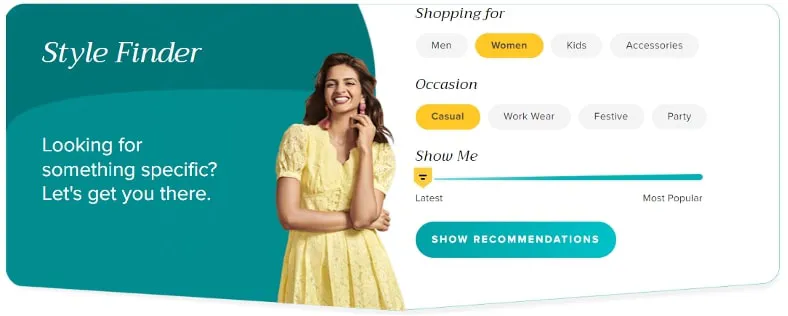
Pantaloons is one of India’s largest fashion store brands. The brand has launched ‘Style Finder’ that allows shoppers to specify their preferred categories and the occasion, and view personalized product recommendations.

This feature has significantly improved product discovery in a time when consumers expect brands to make every experience feel personal.

Other examples of personalized experiences on Pantaloons:

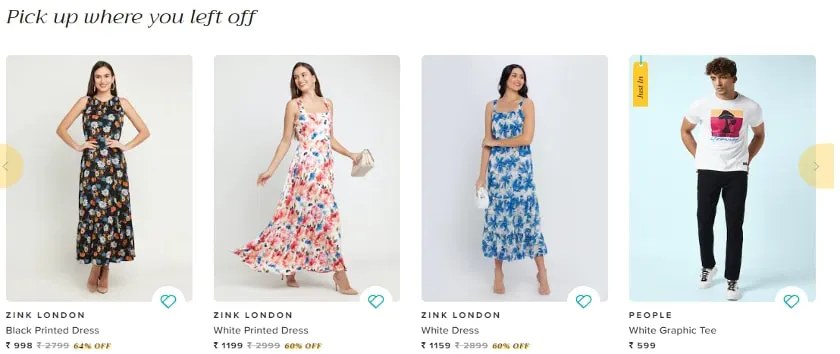
The ‘Pick up where you left off’ placement on the home page helps a returning shopper resume their journey instead of having to start over.

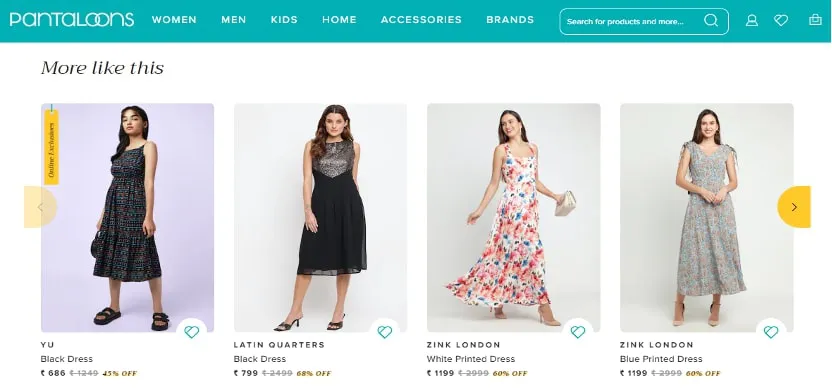
Recommendation placement for similar products on Product Detail Pages.

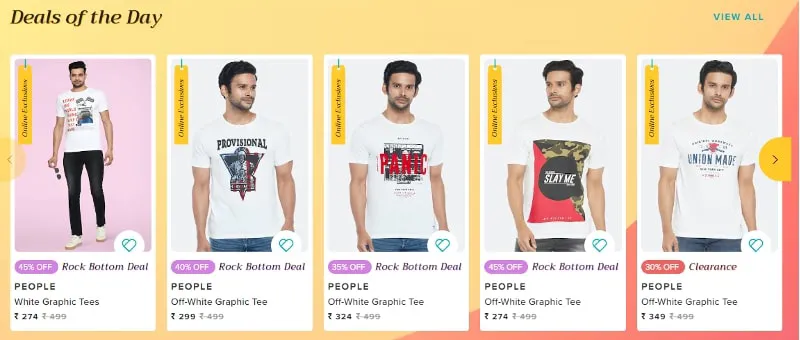
Placement for ‘Deals of the Day’ with offers on products a shopper will likely be interested in.

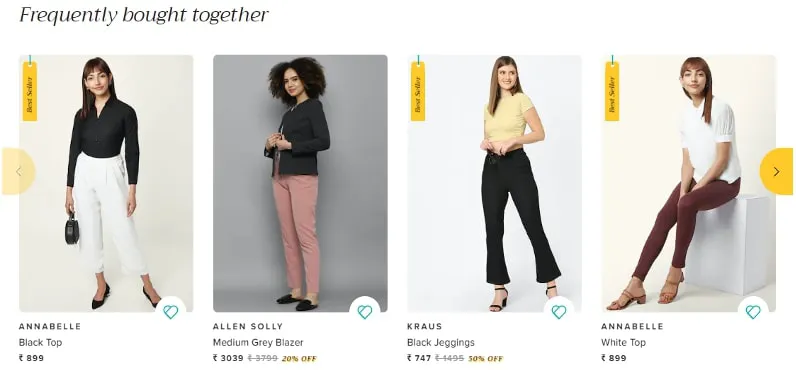
Complementary product recommendations on the PDP.


Personalized product sorting in search results.

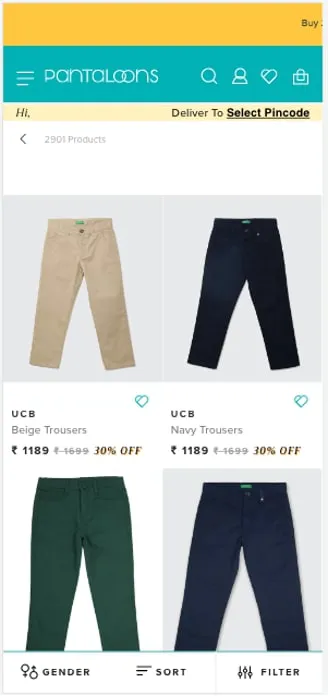
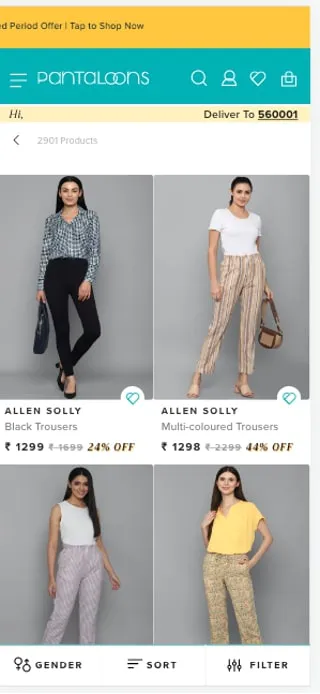
Search results for “trousers” without personalization

Search results for “trousers” with personalization

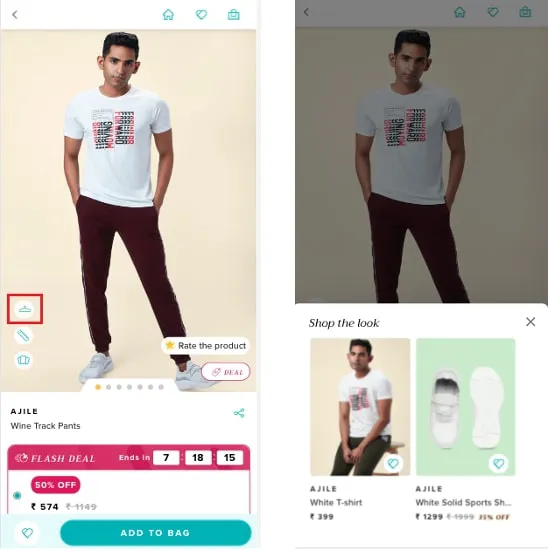
The ‘Shop the Look’ feature allows a shopper to view complementary products and complete the look.

Helping Shoppers Experience 4 Popular Brands in 1 Intuitive ‘Super App’

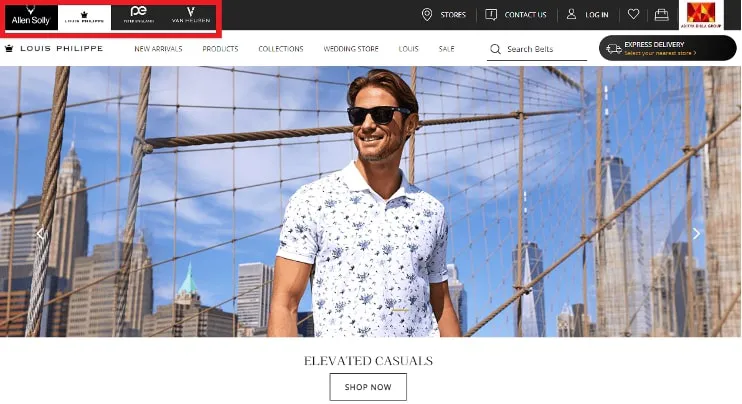
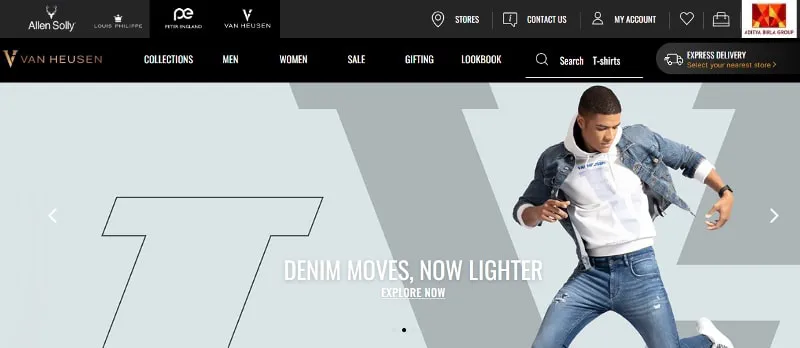
Super App allows shoppers to seamlessly switch between four popular and sought-after brands — Louis Philippe, Van Heusen, Allen Solly, and Peter England—on the same website or app.

Shoppers can view personalized products and add items across the four brands to a common cart and complete their purchase.

Some examples of personalization on Super App:

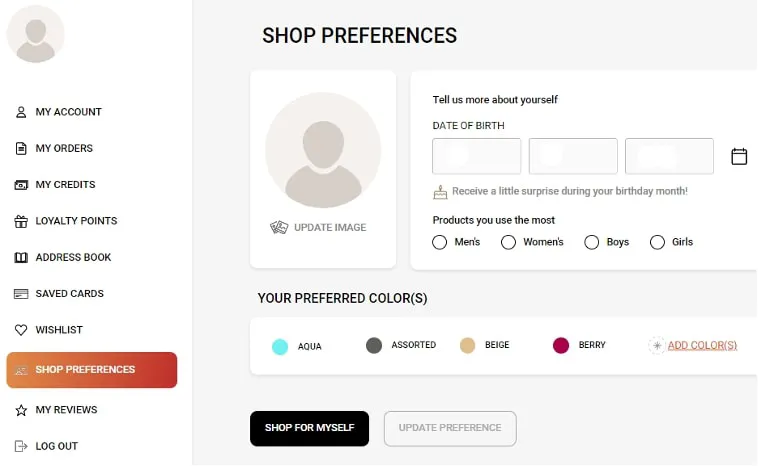
While setting up their account, shoppers can set their preferences for color, categories, size, etc. The personalization engine uses this information, along with the shopper’s browsing patterns and purchase history, to make the most relevant recommendations.

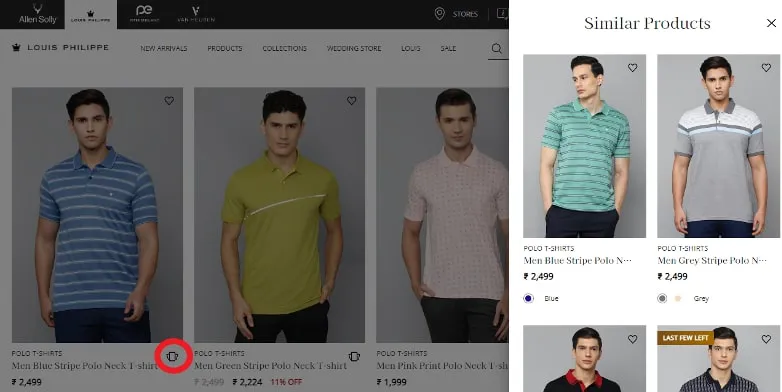
Typically, on most commerce websites/ apps, shoppers have to visit a PDP to find recommendations for similar products. On Super App, however, while viewing various products on a category page, shoppers can just click on the ‘View Similar’ option near a product card, which opens a pop-up containing recommendations for similar products.

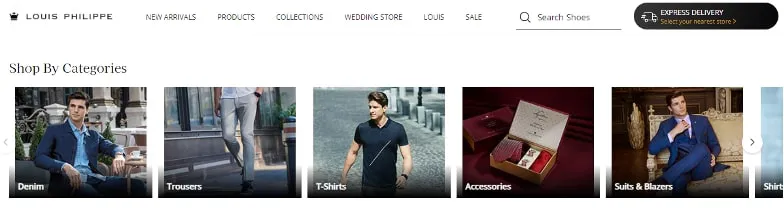
Category recommendations on the home page are displayed as per the individual shopper’s tastes. The order of categories changes dynamically with respect to changes in the shopper’s behavioral and purchase patterns.

Personalized content on the home page.

Unifying the Online & Offline Shopping Experience with The Collective & Super App

  • Most retailers tend to think of a customer channel in isolation. ABFRL, however, has seamlessly unified online and offline, delighting customers with unique and memorable experiences.
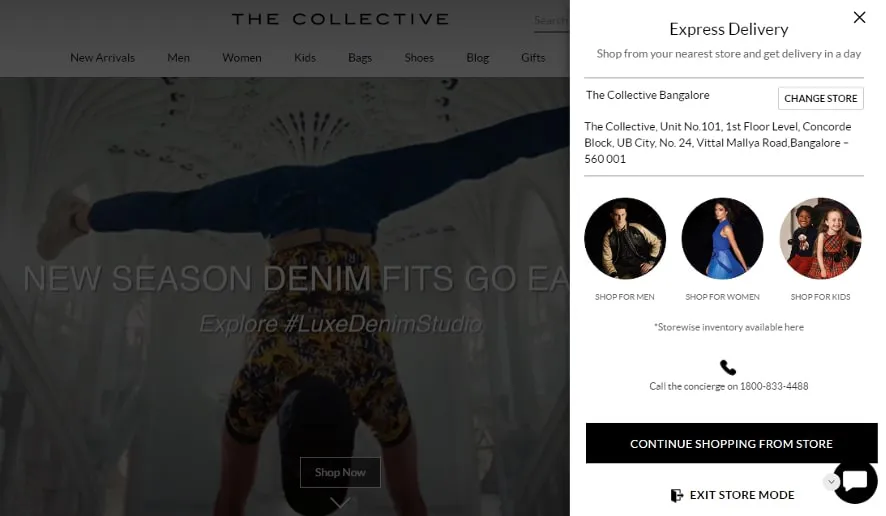
  • For instance, The Collective (India’s first, and now the largest, multi-brand luxury retail store) and Super App have a feature called ‘Store Mode’ on their websites. The feature allows online shoppers to view personalized products from a certain physical store, and have products delivered to their homes.

The Future

In the next phase, ABFRL plans to deploy Algonomy’s (now part of ADA) personalization solutions on four more properties – Van Heusen Intimates (a provider of innerwear and athleisure for men and women), Forever 21 (a global fast fashion brand), Jaypore, and Reebok.

Table Of Contents
The Results
The Client
The Solution
Personalization Use Cases on the Pantaloons Online Store
Helping Shoppers Experience 4 Popular Brands in 1 Intuitive ‘Super App’
Unifying the Online & Offline Shopping Experience with The Collective & Super App
The Future

“Algonomy’s AI-infused personalization tech has helped us individualize all path-to-purchase digital commerce touchpoints—search, recommendations, browse, and content—to deliver a more holistic and connected customer experience.”

Varun Rajwade
AVP
Product, Design & Digital CX at ABFRL

“Shoppers today expect their digital shopping experience to be quick, seamless, and personalized as per their individual tastes and intent. Algonomy’s end-to-end personalization solution was the perfect fit, given our massive scale and speed requirements.”

Praveen Shrikhande
Chief Digital & Information Officer
ABRFL

Explore More Resources on Personalized Marketing

Wine.com Drives AttributeBased Recommendations for Personalization
Food & Beverage US

Wine.com Drives AttributeBased Recommendations for Personalization

See full story
0 %
Reduction in out-of-stock across stores
0 %
increase in revenue

400+ Retailers & Brands Across the World Trust ADA

Looking to hyper-personalize all commerce touchpoints? Let’s talk.

eXtra Boosts AOV by 52% with Product Recommendations

Case Study

eXtra Boosts AOV by 52% with Product Recommendations

Segment

Consumer Electronics

Challenge

To increase Conversion Rate and AOV using the right product recommendation strategies

Product Used

The Outcome

0 %
higher Items Per Order (IPO) from recommendations
0 %
increase in Conversion Rate
0 %
higher AOV from recommendations

The eXtra Story

eXtra is one of the most popular consumer electronics and home appliances marketplace in the Gulf region, with both online and offline operations in Saudi Arabia, Bahrain, and Oman. It was started in 2003 by United Electronics Company (UEC).

eXtra now has over 45 stores in Saudi Arabia and 3 stores each in Bahrain and Oman, in addition to three websites serving customers in both English and Arabic. They offer over 12,000 different products, including leading international brands, and cater to over 12 million shoppers.

They also offer comprehensive after-sales service such as extended warranty, free home delivery, product installation, and 24×7 remote assistance through three dedicated service centers across Saudi Arabia.

The Challenge

eXtra has been working with Algonomy (now part of ADA) for close to seven years now. They realized the need to aid their customers in product discovery early on, and wanted to recommend the most relevant products to customers at every step of their journey. A search for the right platform to put this vision into action led them to Algonomy’s (now part of ADA) Recommend™.

The electronics retailer continues to place their trust in the platform because of its proven ability to significantly and consistently improve key metrics such as Conversion Rates, Revenue per Click, Average Order Values, and Attributable Sales.

Personalizing All Path-to-Purchase Commerce Touchpoints

Recommend™ makes it very easy for eXtra to deploy different strategies, assign weights to them as per business KPIs, and decide how and where to display product recommendations on a page.

They use product recommendation placements across different pages on their websites and apps. They optimize the impact of these recommendations by using a variety of recommendation strategies, including but not limited to:

  • Advanced Merchandising Strategy
  • Movers and Shakers
  • New Arrivals
  • Site-wide Top Products
  • Popular Products
  • Category Top Sellers
  • Brand Top Sellers
  • Top Offers
  • Frequently Bought Together
  • Related to Cart
  • Related to Cart Category
  • Recently Viewed

The top five strategies that have worked well for them are: recently viewed, others also viewed (category level), others also bought (category level), advanced merchandising strategy, and personalized as per users’ pageview history.
Here are some examples of these placements:

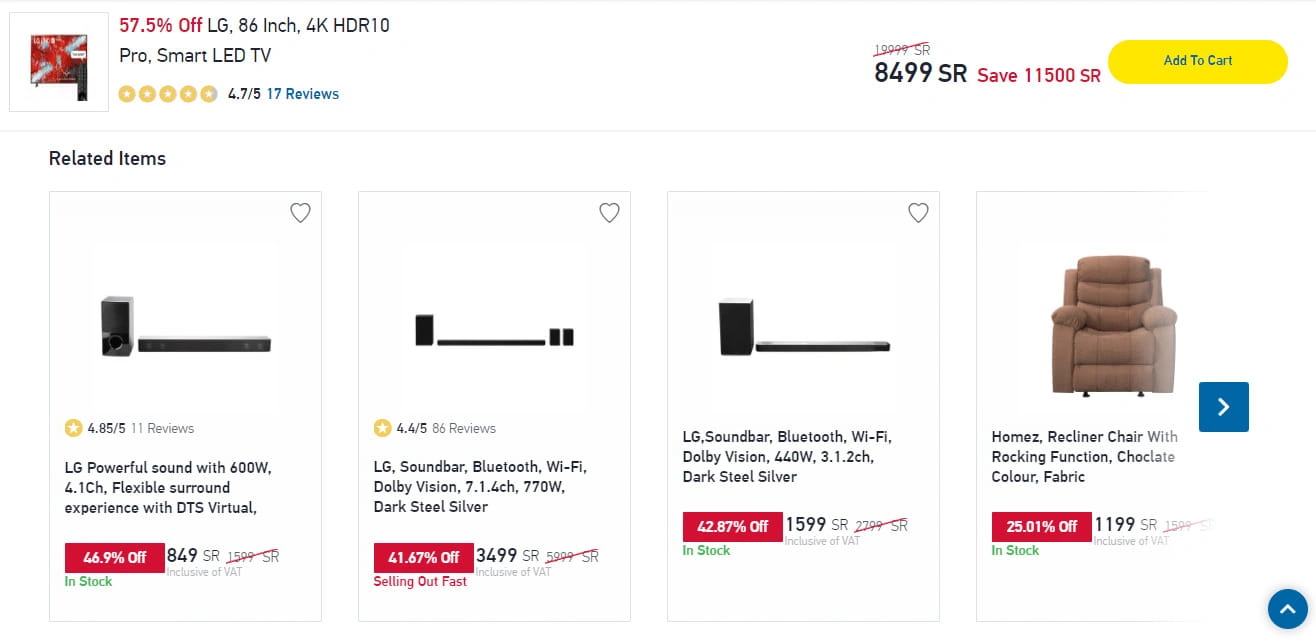
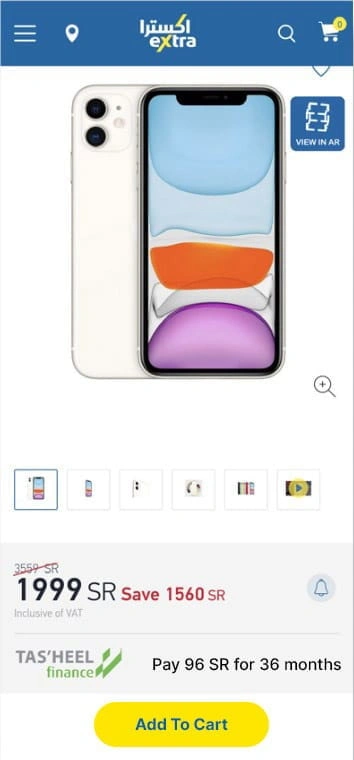
1 Related Items and Category Top Sellers on the Product Detail Page

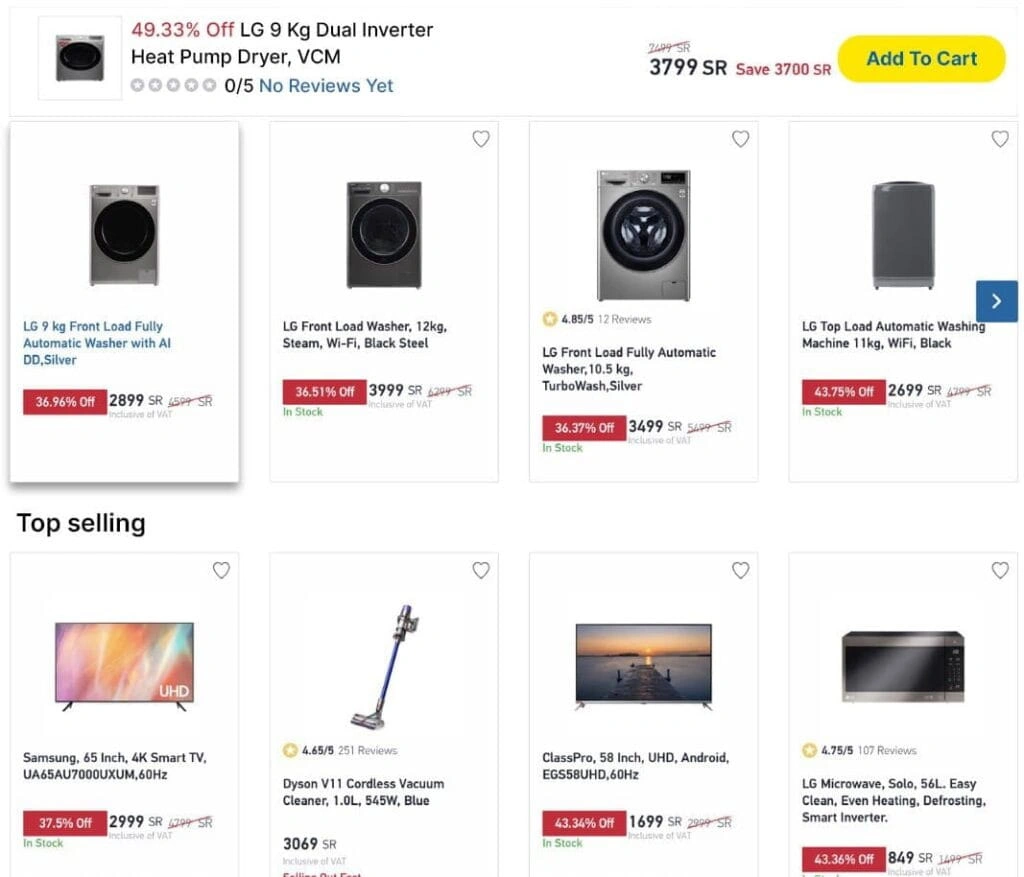
2 Popular Products and Top Products on the Category Page

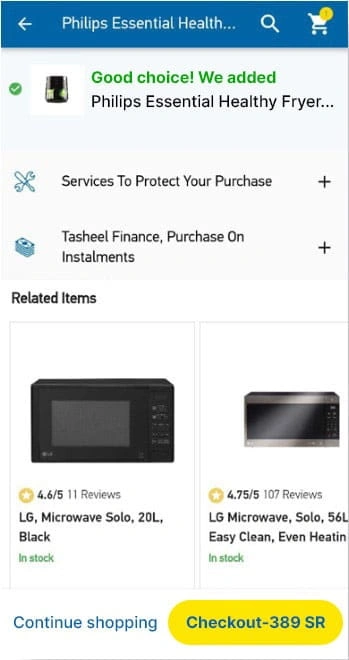
3 Advanced Merchandising Strategy on the Add to Cart Confirmation Page

4 Top Sellers on the Cart Page

The Results

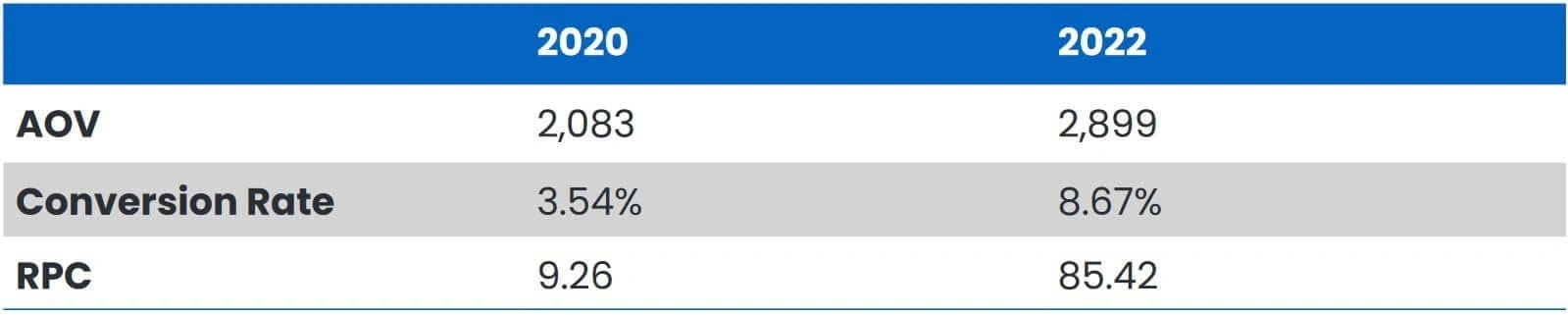
eXtra has seen the Average Order Value go up by 52% when product recommendations are present on a page, versus when there are no product recommendations on a page. Similarly, the number of Items per Order is 50.5% higher when there are product recommendations on a page than when there are none.

The electronics retailer’s Revenue per Click grew by 100%, and they have seen a year-on-year uplift of up to 73% in conversion rates (2020-2021) by leveraging the capabilities of Recommend™.

Here’s a quick summary of the growth:

Looking Ahead

eXtra is keen to leverage more of the capabilities of the Algonomy (now part of ADA) platform to implement more nuanced product recommendation strategies, such as Advanced Merchandising.

They also plan to explore the features of DeepRecs Natural Language Processing (NLP) and deploy it on their websites and mobile app. They believe NLP will not only give them competitive advantage, but also make it easier for their customers to discover more relevant products as well as niche products.

Table Of Contents
The Outcome
The eXtra Story
The Challenge
Personalizing All Path-to-Purchase Commerce Touchpoints
The Results
Looking Ahead

“As a customer-first business, we are always looking to improve digital experiences for our customers. Through Algonomy Recommend™, we are able to add value to our customers’ shopping journeys by showing products most relevant to them.”

Imran Khan
e-Commerce Director, eXtra

“Recommend™ has been consistently delivering 5% to 7% conversion rates for us, in addition to higher AOVs and IPOs. This has encouraged us to explore more nuanced product recommendation strategies within the platform. We’re also looking forward to exploring DeepRecs NLP, which will help us further individualize experiences for our customers.”

Shahin Riaz
Head of Product, eXtra

400+ Retailers & Brands Across the World Trust ADA

Looking for a Personalized Demo? Let’s talk.

US Global eCommerce Marketplace Drives Revenue with Recommendations

Case Study

US Global eCommerce Marketplace Drives Revenue with Recommendations

Segment

Marketplace

Objective

Recommend promotions and content relevant to geolocation and individual affinities

Product Used

The Results

$ 0 million
attribute sales
0 %
increase in RPM

The Client

The client is an American global eCommerce marketplace connecting subscribers with local merchants by offering activities, travel, goods, and services in 15 countries. They enable real-time commerce across a range of categories including local businesses, travel destinations, consumer products, and live events.

Their mainstay is promotional discounts and coupons across segments and products.

  • By nature of the business and growing competition, the company’s growth strategy is tightly coupled with providing recommendations that are relevant to the location as well as the individual affinities.
  • This meant that the retailer needed to provide its customers with highly relevant product or service recommendations that not only aligned with their needs but also proximity requirements.
  • For e.g., recommending the right spa because the customer regularly purchases spa treatments is not good enough. Proximity to the spa is equally important for the customer to show interest and redeem the offer.

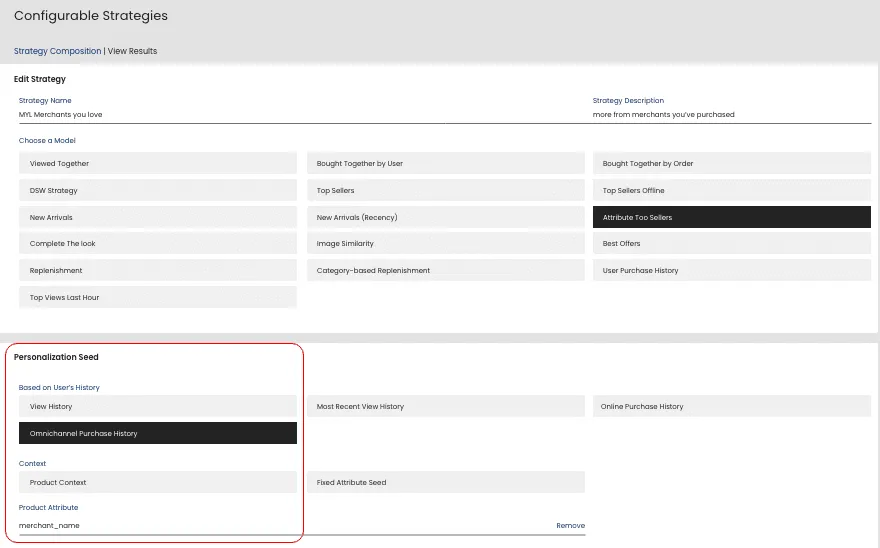

In order to drive personalized experiences across commerce site, web, and mobile app, the client deployed Recommend™ and Engage™—Algonomy’s (now part of ADA) personalized recommendations and content products—respectively. They leverage Algonomy’s (now part of ADA) profile service for segmentation and to understand user preferences & attributes in real-time. Merchandising rules are applied to support business needs while not compromising on the relevancy of recommendations.

With localization being a key requirement to drive individualized engagement, Algonomy (now part of ADA) provides a Geo-proximity feature for hyper localization of recommendation assets.

Geo-proximity Re-sorting

Shopper’s latitude-longitude information is juxtaposed with the latitude-longitude of the deals, which is determined using geo distribution of deals in a particular location.

This data is then leveraged to calculate the proximity of deals to the shopper in real-time and recommendations are re-sorted, so the most relevant deals closest to the shopper are presented on the top.

In other words, region-aware algorithms help in localization i.e., popular products in my region or area, and factors in proximity scoring to make relevant recommendations—products available near me. This is especially useful for deals from local service vendors.

Configurable Strategies

The client was looking to compare the outcome of Algonomy’s (now part of ADA) configurable strategies with that of their generic strategies. To this end, Algonomy (now part of ADA) provided over 30 configurable strategies by leveraging different category seeds and user affinities.

These configurable strategies provide an easy way to generate relevant recommendations as backfills for Personalized recommendations on the Home page.

Using Top Selling strategy as a basis, recommendations were filtered based on an individual’s purchase history and affinity towards a specific merchant.

This resulted in a 250% increase in revenue per thousand impressions (RPM) and over 50% of attributable revenue on mobile app, mainly from Home Page.

Also, use of targeted Configurable Strategies on Commerce site and Mobile Web’s Deal Page, along with ‘Similar Items’ strategies, has driven over 80% of attributable sales.

User Affinities for Segments

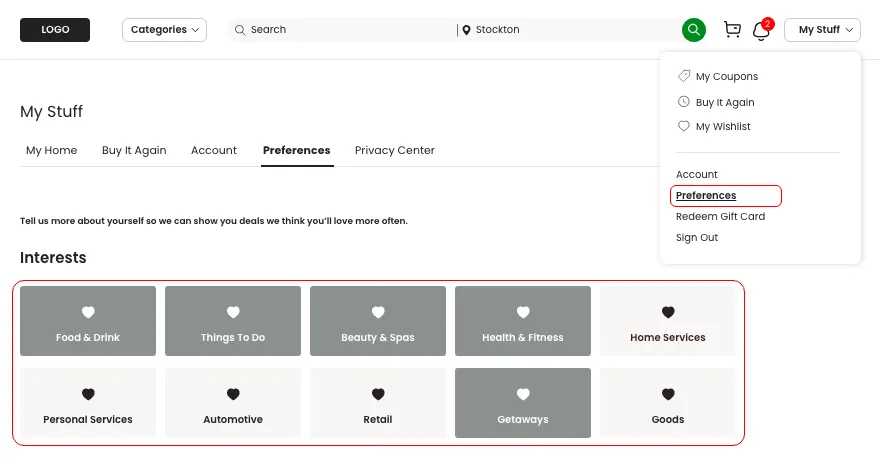
The retailer explicitly asked their shoppers what their preferences were after they created an account, and wanted to market to those preferences on the site. They placed Algonomy (now part of ADA) tags on the preference page to send shoppers’ selections, thereby capturing preferences as user attributes in the User Profile Service.

With this, the retailer was able to set up specific segments to target certain shoppers.

Algonomy (now part of ADA), a True Partner in Personalization

Algonomy (now part of ADA) drives strategic engagement through its Personalization consulting program and offers Personalization assessment, which covers audit and optimization recommendations.

Algonomy’s (now part of ADA) engagement with the client continues to expand with planned investments to improve user experience and engagement. This includes application of personalization across 12 international sites, additional placements on Browse, Search, and Cart pages, personalization based on IP location, and introducing replenishment algorithms.

Table Of Contents
The Results
The Client
Geo-proximity Re-sorting
Configurable Strategies
User Affinities for Segments
ADA, a True Partner in Personalization

Explore More Resources on Commerce Personalization

Wine.com Drives AttributeBased Recommendations for Personalization
Food & Beverage US

Wine.com Drives AttributeBased Recommendations for Personalization

See full story
0 %
Reduction in out-of-stock across stores
0 %
increase in revenue

400+ Retailers & Brands Across the World Trust ADA

Looking for a Personalized Demo? let’s talk

Leading UK Office Supplies Company Drives Hyperpersonalized Crosssells

Case Study

Leading UK Office Supplies Company Drives Hyperpersonalized Crosssells

Segment

B2B

Challenge

Reducing transaction friction to help customers find the products they want quickly and easily

Product Used

The Results

0 %
incremental revenue uplift
0 %
of Attributable Revenue
0 %
of Attributable Sales through cross-sell using Recommend™

The Overview

The client is an office supplies company that is owned by a European multi-specialist distributor of professional supplies and equipment. They started as a small store in Los Angeles in 1960 and now have operations in 11 countries. They are primarily focused on B2B sales, but also have a growing consumer clientele.

They have been partners with Algonomy (now part of ADA) since 2017. They chose Algonomy (now part of ADA) as their personalization engine for our expertise and specialization in the field.

The client’s key objectives are to drive customer engagement and incremental revenue by increasing repeat purchases and relevant cross-sells.

They have made a strategic investment in cross-sell recommendations because they drive up average order values and incremental revenue.
They activated Algonomy’s (now part of ADA) Recommend™ and Engage™ personalization engines to be able to deliver the right and most relevant product recommendations at various touchpoints of their customer’s journey with their website.

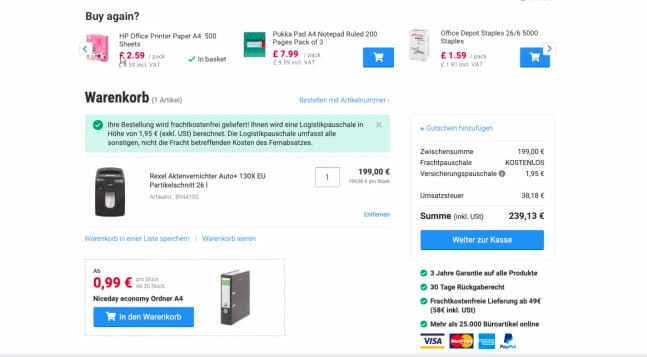
Using Recommend™, the client is able to deliver the right product recommendations on the add-to-cart page, product pages, and even on the homepage.

Transforming Product Recommendations

The platform leverages Algonomy’s (now part of ADA) Xen AI to provide context-aware recommendations based on both user behaviors and affinities and merchandising parameters. It is able to deliver recommendations based on factors more likely to increase relevance for the customer and revenue for the business.

With over 150 pre-built strategies such as visually similar products, compatible products, cross-sell, upsell, and top sellers, businesses can choose to deploy the strategy that is right for them. In addition, custom strategies can also be created for niche business requirements.

Deploying Cross-Sell Strategies Effectively

The client is keen on making cross-sell work, and for very good reason. The incremental revenue this strategy can drive is remarkable. Of the 10% attributable revenue achieved using the Recommend™ platform, 40% is because of cross-sell. Customers like seeing complementary products after adding a product to cart because it makes their purchase journey easier.

The client uses advanced merchandising to generate compatible cross-sell product lists. They collaborate with Algonomy (now part of ADA) to build custom strategies using the Data Science Workbench, using compatibility data to recommend complementary products in each product family.

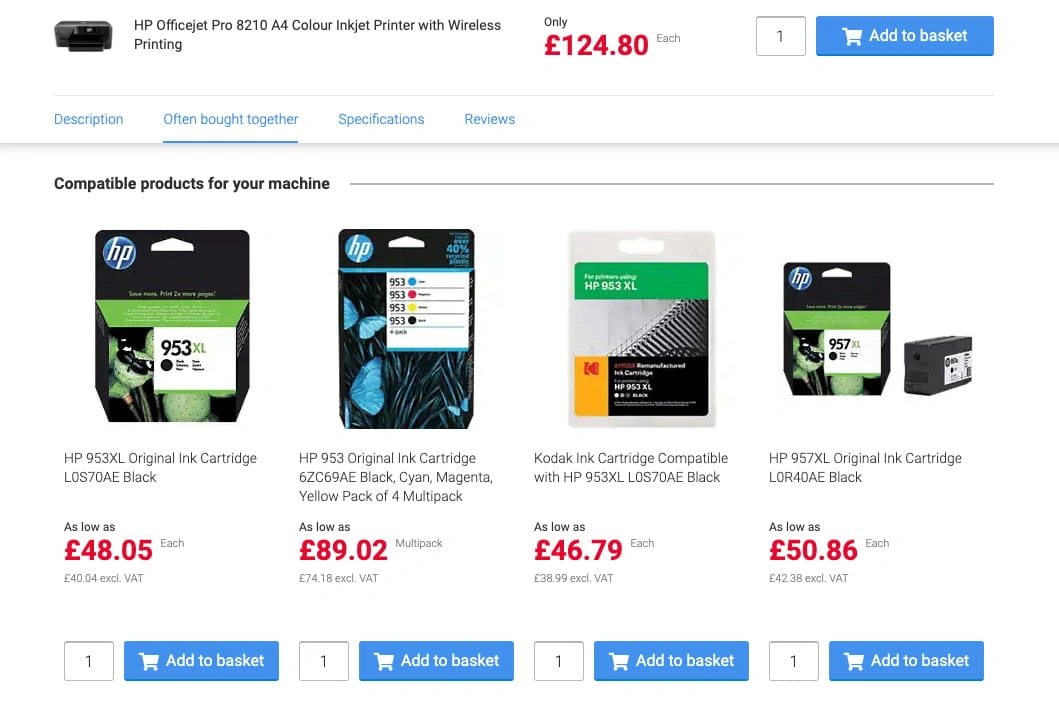
For example, if a customer adds a printer to cart, the recommendation engine dives into the merchandising data to bring up inks and toners that are compatible with the model added to cart.

In addition, they use the replenishment strategy to recommend products that the user has previously purchased and is likely to regularly re-purchase. Based on this algorithm, personalized models are built for customers and the strategy is deployed on the Cart page.

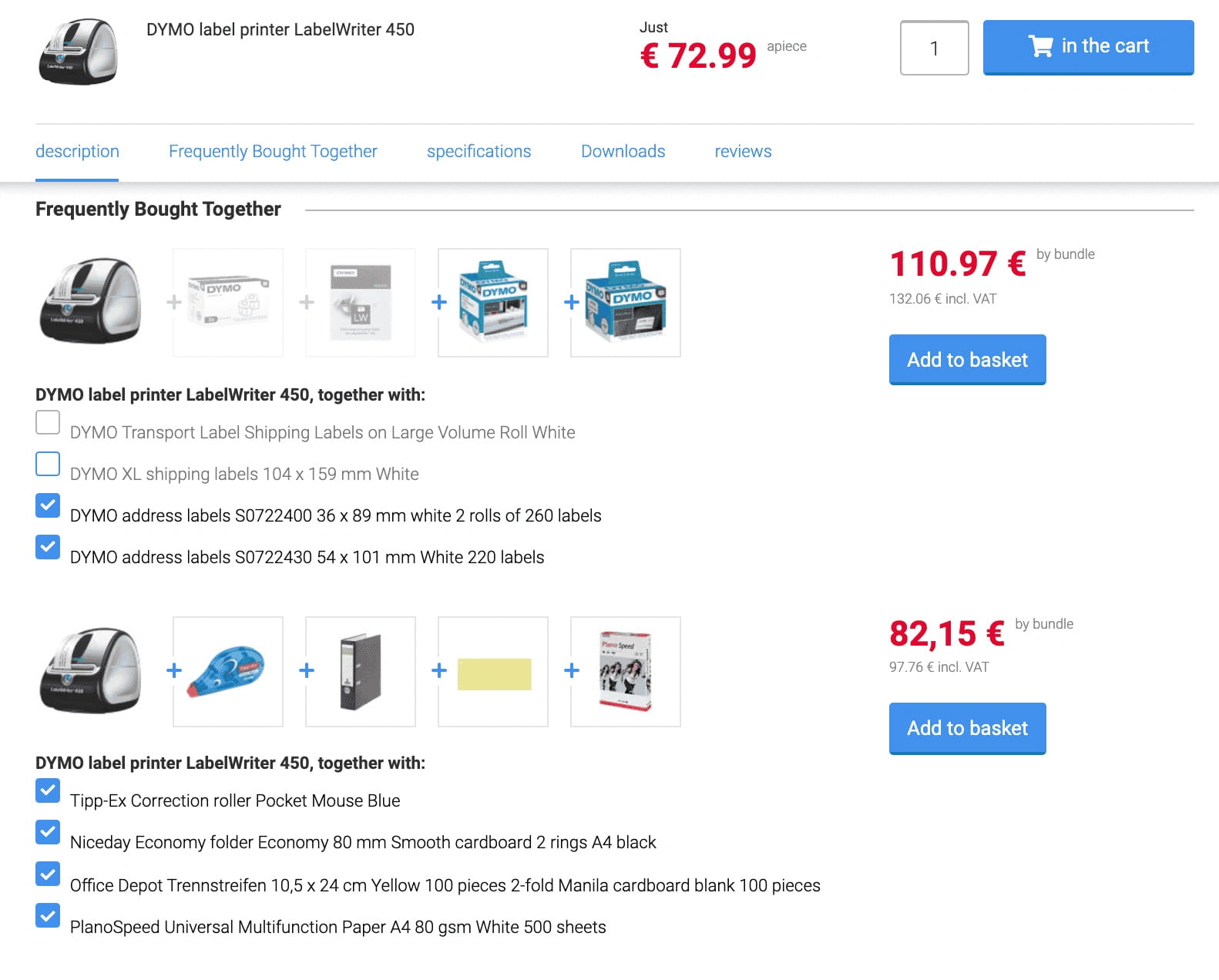
They also use advanced merchandising and purchase co-occurrence strategies to create automated product bundles on the product page. This means they are able to combine products that are complementary to each other (such as printers and inks or pencils and erasers) or frequently bought together, and show them as a bundle with a nominal price markdown to entice customers to buy the bundle and therefore increase AOVs.

The client also combines Engage™ with Recommend™ to show personalized category tiles on the homepage. These category tiles take into account customer affinities, and the images shown on the category tiles are based on the customer’s previous purchases.

Moreover, the client uses advanced merchandising rules in the Algonomy (now part of ADA) personalization engine to create compatible and alternative product recommendations that can be shared across their enterprise systems via custom data extracts. This helps them create product bundles and relevant recommendations on other channels such as in-store and catalogs.

Algonomy (now part of ADA) also creates several custom monthly reports for the client—at overall business level and at country-specific levels. These reports help them track and measure the value and benefits of personalization across the customer journey in each country.

The client uses Algonomy’s (now part of ADA) personalization products on their websites in eight countries because of the platform’s superior ability to recommend the right and most relevant products to customers. These smart recommendations also help the client considerably increase customer engagement and brand loyalty.

Algonomy (now part of ADA) continues to help the client drive personalization that caters to their business goals and drives conversions up. Currently, they are working with Algonomy (now part of ADA) to deploy more content personalization strategies via the Engage™ platform.

Table Of Contents
The Results
The Overview
Transforming Product Recommendations
Deploying Cross-Sell Strategies Effectively

400+ Retailers & Brands Across the World Trust ADA

Looking for a Personalized Demo? Let’s Talk.

Leading UK Department Store Increases Sales with 1:1 Personalization

Case Study

Leading UK Department Store Increases Sales with 1:1 Personalization

Segment

Department Store

Challenge

Delivering omnichannel 1:1 personalization to increase conversions and sales

Product Used

The Results

0 %
of attributable online sales
+ 0 %
attributable revenue from winter email campaigns
+ 0 %
clicks from personalized campaigns

The Client

The client is a high-end UK-based department store, with a focus on Fashion and Home categories. They have over 42 stores in the UK, Republic of Ireland, and Australia alongside a growing online business.

They have been trading in London since 1864 and went online in 2001, with their website now offering over 300,000 products and recording over 500 million annual visits. They aim to be trading 70% online by 2025. They are also the UK’s largest employee-owned business with 78,000 partners.

The client has been partners with Algonomy (now part of ADA) for over five years now.

  • The pandemic changed the focus from offline to online, leading the client to revisit their business goals. Their online business went up by 73% between 2020 and 2021. They realized the potential of digital channels and decided to up their game to adapt to evolving customer expectations and beat competition which was ahead in terms of digital maturity.
  • They aim to replicate their in-store service differentiators on their digital channels by recommending the right products and accessories based on affinities so that customers can make the right purchase decisions and complete their purchases.
  • The client wanted a strong product recommendation engine to support this goal and drive up their revenues and customer engagement by providing hyper-personalized cross-channel experiences across eCommerce, mobile app, email.

They deployed Algonomy’s (now part of ADA) Recommend™ engine to amplify their efforts to deliver hyper-personalized omnichannel product recommendations at various stages of customer journey.

Transforming Product Recommendations

Algonomy’s (now part of ADA) Recommend™ aligned perfectly with the client’s requirement—that of targeting customers with the right recommendations on multiple channels based on a combination of user purchase data and merchandising data. The client uses the recommendation engine on their website, mobile app, and in email campaigns.

With Recommend™, the client was able to replicate the in-store experience that service partners would provide customers—suggest suitable alternative products, recommend the right complementary products, and help customers make the right buying decisions.

The platform is able to respond to the behaviors and affinities of individual customers in real time in addition to using historical data, including in-store purchase data, which allows Recommend™ to get a 360 degree view of the customer across all channels.

This helps the engine build rich product recommendation models and show the right recommendations at different points of the customer journey, such as after a product is added to cart, upon cart or browse abandonment, and in personalizing emails.

Recommend™ leverages Algonomy’s (now part of ADA) Xen AI to provide context-aware recommendations and continuously optimize weights and parameters to increase relevance and revenue for each customer. Marketers can choose to deploy various configurable strategies such as visually similar products, compatible products, cross-sell, upsell, top sellers, and Wisdom of Crowd.

How Recommend™ Helped Them Achieve Their Goals

With Recommend’s out-of-the-box strategies such as Similar Items, Top Sellers, Frequently Bought Together, and Configurable Strategies, the client was able to create individualized product recommendations for their customers.

Some of the ways in which these functionalities were used are:

  • When a customer adds a product to cart, an add-to-cart confirmation pop-up appears, with a cross-sell strategy that displays complementary products based on the purchase co-occurrence data from the bespoke report.
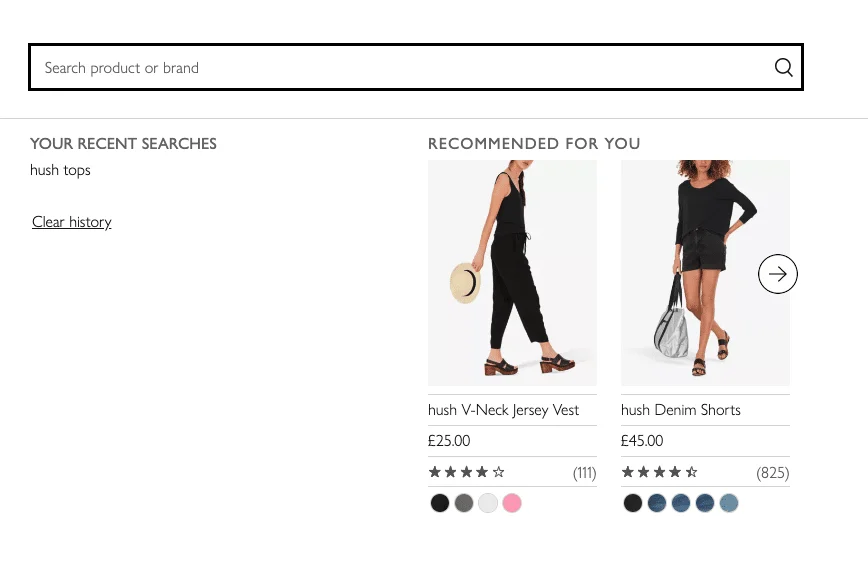
  • Product and category recommendations are placed in search boxes based on the user’s recent searches.
  • Emails in the client’s retargeting campaign contain product recommendations based on the individual customer’s affinities to a brand or style or product family.
  • Upon cart or browse abandonment, emails are sent to customers with recommendations of products alternative to or similar to the ones they viewed on the site.
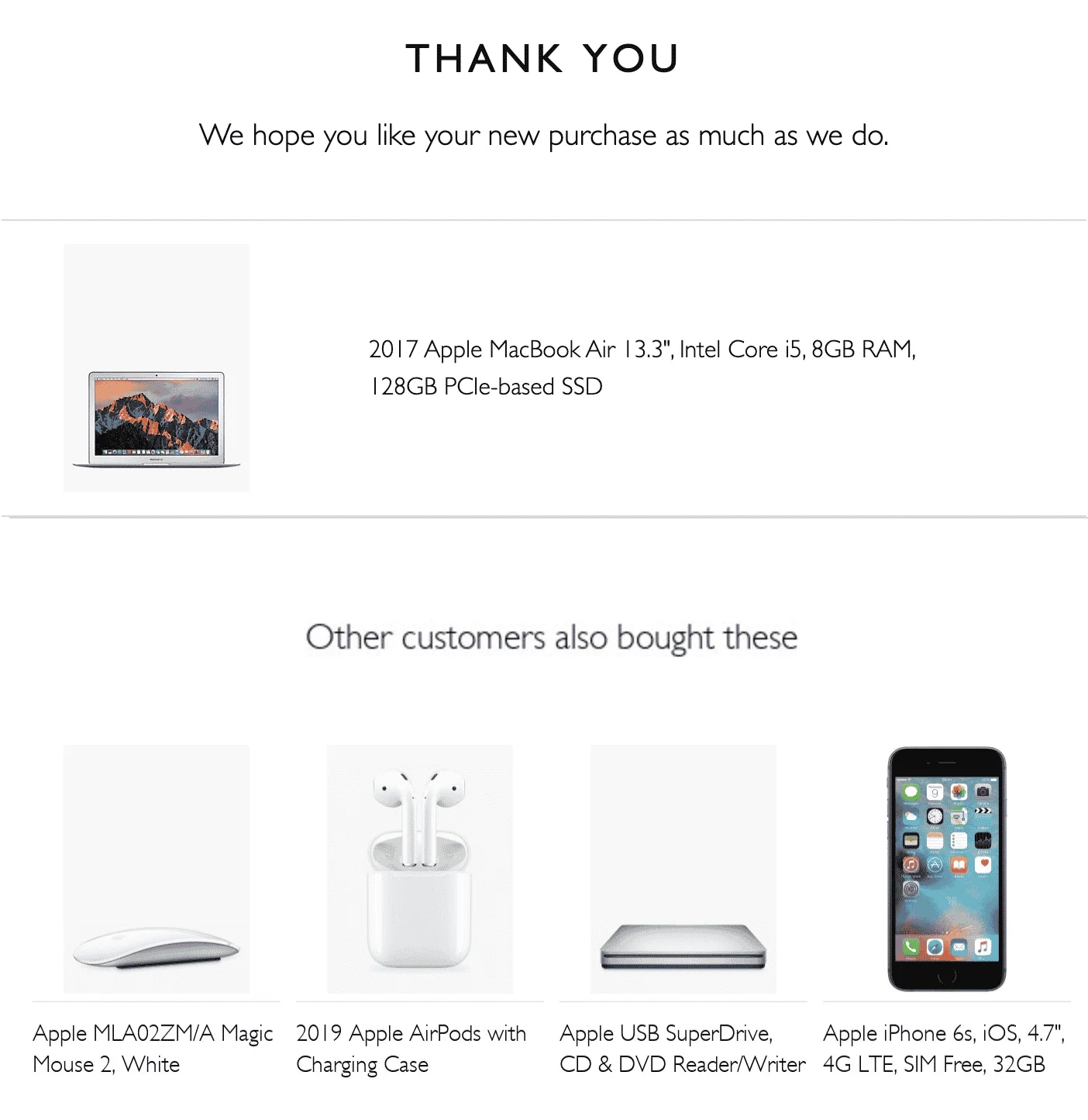
  • The client sends post-purchase emails to their customers, containing recommendations of products complementary to the ones the customer bought most recently.
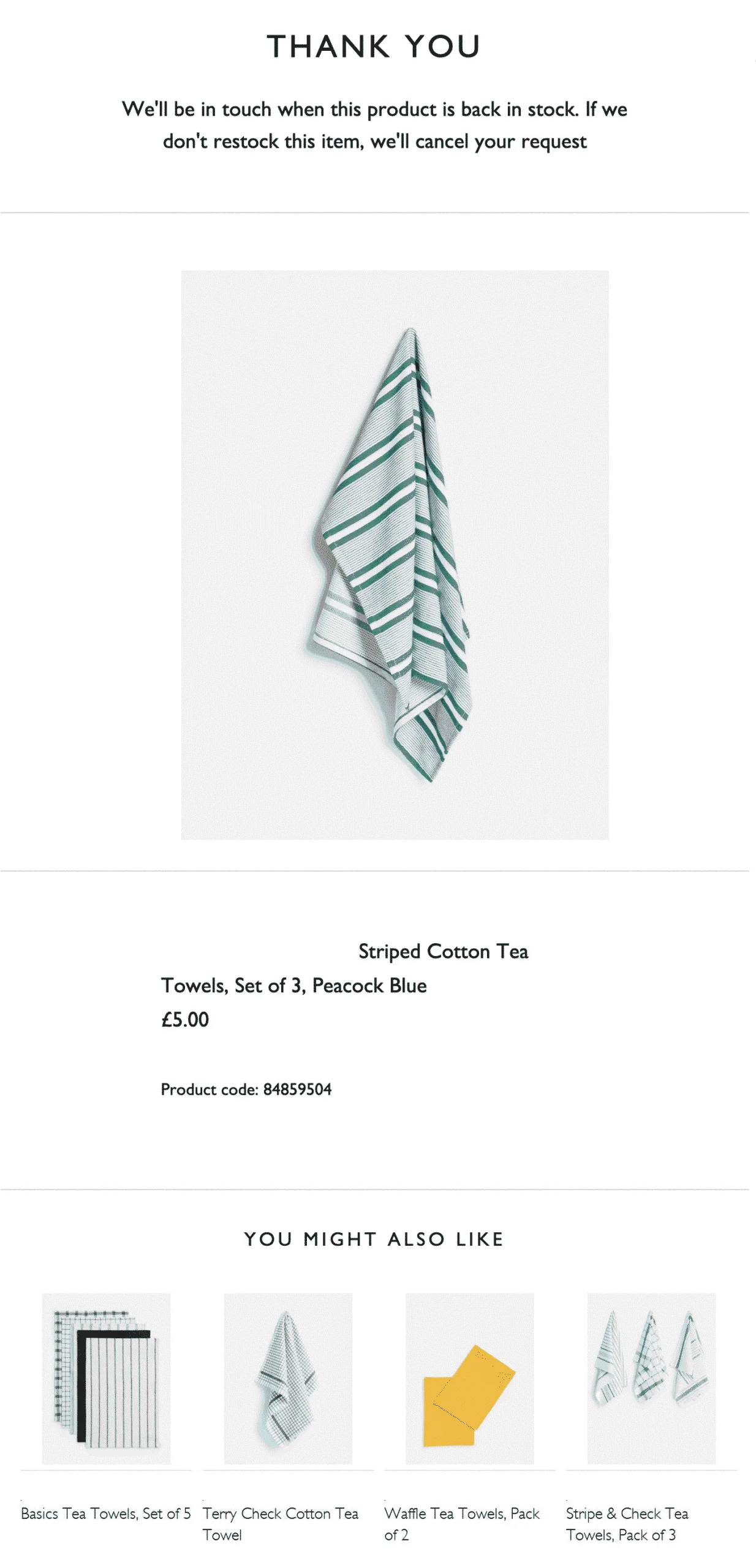
  • When a customer signs up for notifications for products that are out of stock on the website, the client runs an email campaign around it. These emails contain not just alerts about the product in question but also recommends alternatives and similar products they could consider instead. The same strategy is also used on the website, where alternatives to out-of-stock products are shown in a panel on the product page.

Being able to constantly recommend the right and most relevant products to customers—whether using similar products, compatible products, Wisdom of Crowd, or affinity-based products strategy—the client is able to increase revenues of personalized email campaigns by over 350% and increase the overall online revenue by over 2%.


Algonomy (now part of ADA) creates several bespoke reports for the client’s Analytics department; one of them is purchase analysis by Buying Group (main category) and Buying Office (sub-category within each main category). Using this data, they are able to gather more focused insights for each business unit.

Algonomy (now part of ADA) continues to help the client create strategies to suit their business goals and add value to their marketing and optimization campaigns.

Table Of Contents
The Results
The Client
Transforming Product Recommendations
How Recommend™ Helped Them Achieve Their Goals

Explore More Resources on Commerce Personalization

Wine.com Drives AttributeBased Recommendations for Personalization
Food & Beverage US

Wine.com Drives AttributeBased Recommendations for Personalization

See full story
0 %
Reduction in out-of-stock across stores
0 %
increase in revenue

400+ Retailers & Brands Across the World Trust ADA

Looking for a Personalized Demo? Let’s talk.