
AI-Powered Personalization Beyond GPTs – The Future of Hyper-Personalized Email Marketing

Digital Experience Personalization
Blogs

AI-Powered Personalization Beyond GPTs – The Future of Hyper-Personalized Email Marketing

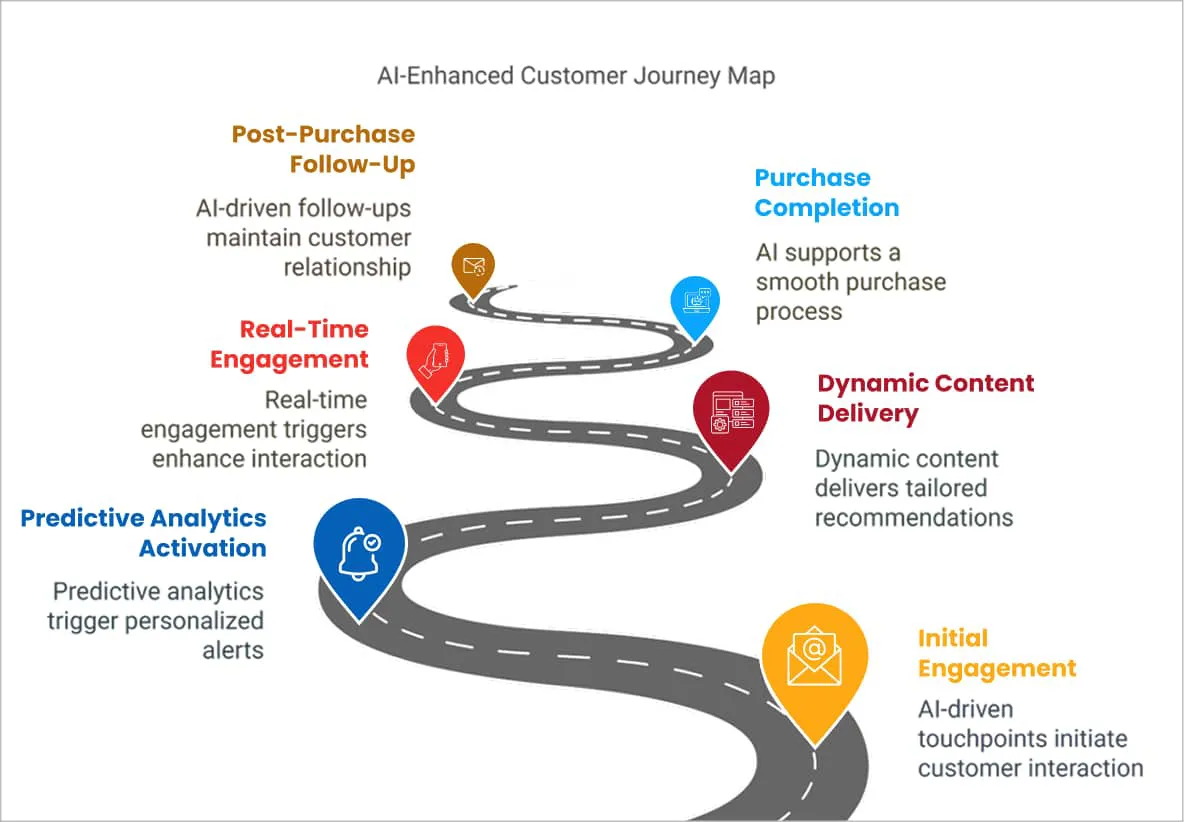
In today’s fast-paced digital landscape, consumers expect more than just generic interactions they demand real-time, context-aware experiences that feel tailor-made for them. While Generative AI, particularly Large Language Models (LLMs) like GPTs, has revolutionized content creation, it’s only one piece of the puzzle. True hyper-personalization requires a broader AI-driven strategy that integrates predictive analytics, real time customer segmentation, and behavioral modeling. In this blog, we’ll explore how AI is transforming marketing personalization beyond GPTs and how ADA Global’s solutions such as Active Content and others are leading the charge.

The Evolution of AI in Marketing Personalization

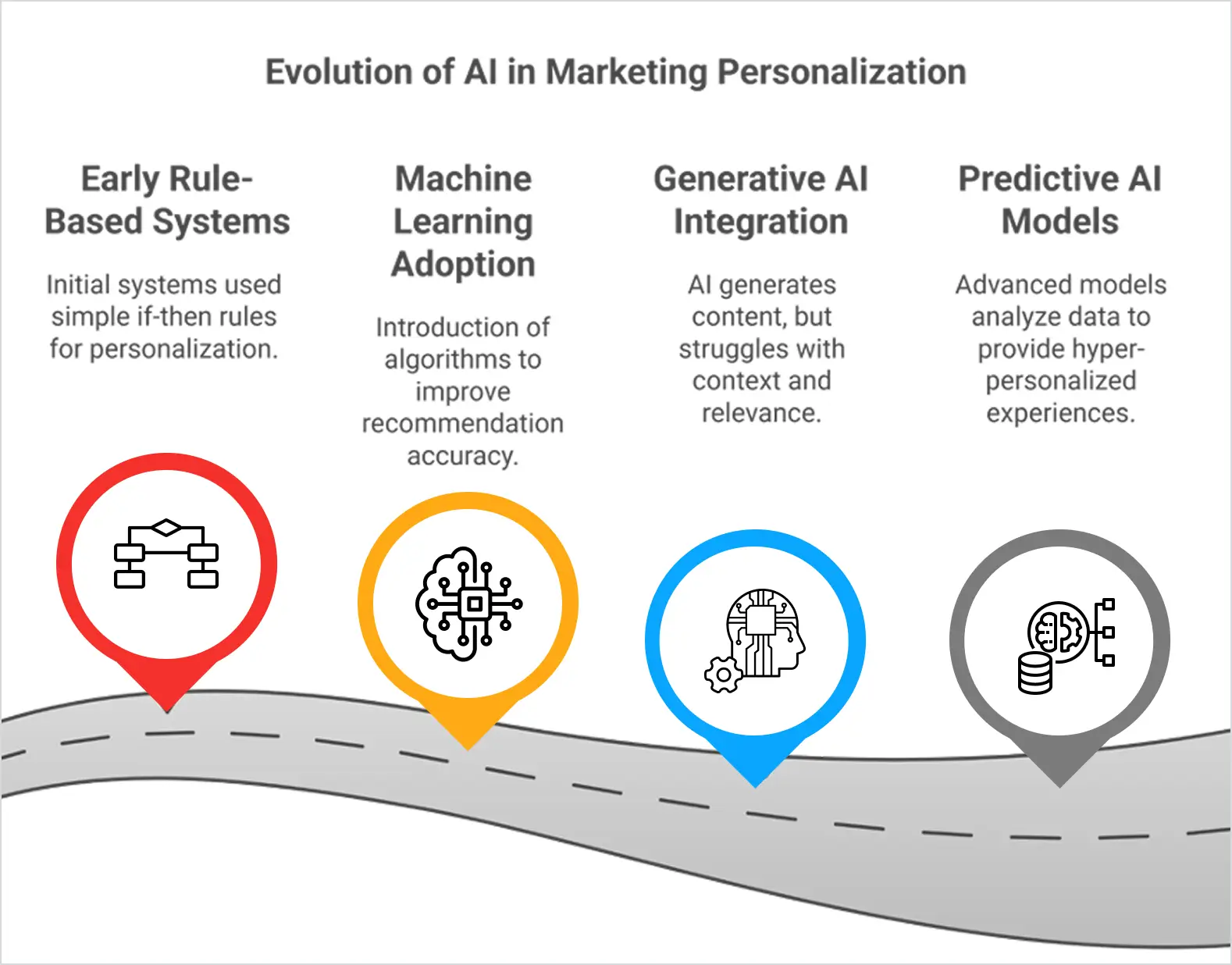
The journey of AI in marketing personalization has been nothing short of transformative. We’ve moved from rule-based personalization, where static rules dictated customer interactions, to AI-powered personalization that surfaces machine learning-driven recommendations in real time. Generative AI has further accelerated this evolution by enabling scalable content creation. However, while GPTs excel at generating text, they often fall short in delivering truly personalized experiences.

  • Lack of Contextual Relevance: GPTs generate content based on data patterns, but they often lack the ability to understand the specific context of a customer’s journey.
  • Generic Output: The content produced by GPTs can feel impersonal and fail to resonate with individual customers.
  • Inability to Adapt in Real-Time: GPTs are not designed to adjust content dynamically based on real-time customer behavior or preferences.

These limitations highlight the need for a more comprehensive approach to personalization solutions—one that goes beyond content generation and leverages predictive AI, real-time data, and multi-touchpoint engagement.
Why Generative AI Alone is Not Enough for
 Hyper-Personalization

While Generative AI has its place in the marketing toolkit, it’s not a silver bullet for hyper-personalization. Consumers today expect more than just automated content—they want interactions that are context-aware, predictive, and seamlessly integrated across channels.

Here are the key challenges with Generative AI:

  • Manual Intervention Required: Marketers often need to manually tweak GPT-generated content to ensure it aligns with brand voice and customer context.
  • Lack of Predictive Capabilities: Generative AI can’t anticipate customer needs—it can only react to them.
  • Limited Integration: GPTs operate in isolation, making it difficult to integrate with other data sources like CRM, customer data platform, or recommendation engines.

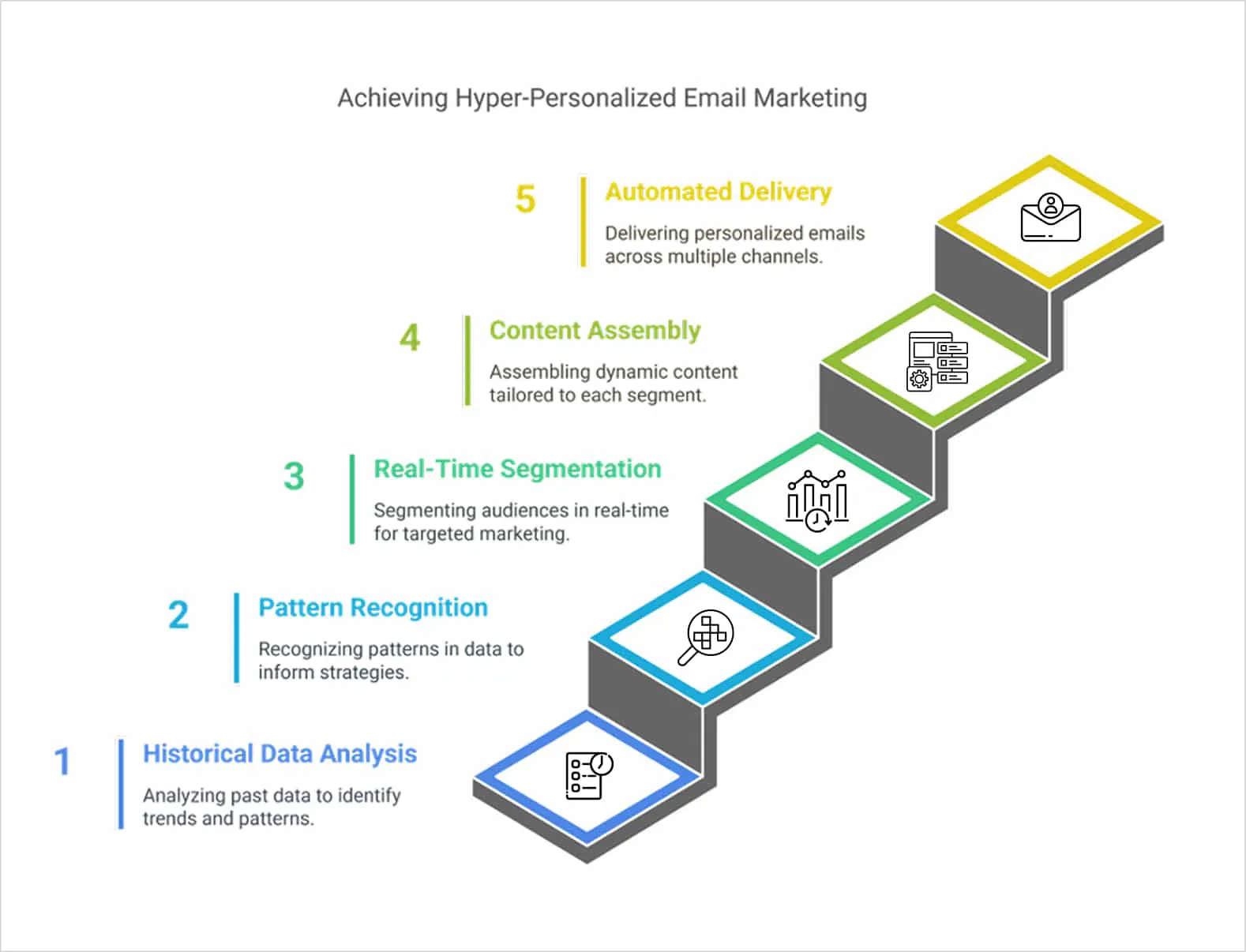
To truly deliver hyper-personalized experiences, marketers need to move beyond Generative AI and embrace predictive AI models that can analyze historical data, anticipate customer behavior, and deliver real-time, personalized content.

Predictive AI: The Future of Hyper-Personalized Email Marketing

Predictive AI is the next frontier in marketing personalization. By analyzing historical data and identifying patterns, predictive AI models can anticipate customer needs and deliver personalized experiences at scale. These include personalized product recommendations, ai email personalization, dynamic content personalization, and beyond. Only a few players in the market can operate at scale and have vast experience delivering AI-powered solutions. ADA Global’s products for retail enterprises have been pushing the envelope with AI-powered solutions even before “AI” was cool.

Product Recommendations: ADA Global’s RecommendTM solution uses advanced segmentation and machine learning to deliver personalized product recommendations that drive conversions. By analyzing customer behavior, purchase history, and preferences, Recommend ensures that every product suggestion feels tailor-made.

Dynamic Content Assembly: ADA Global’s Active Content enables real-time, data-driven content personalization across email, SMS, and digital channels. Active Content enables marketers to create dynamic, and visually stunning hyper-personalized content that resonates with individual customers by providing a platform to mash up data from CRM, CDP, and integrate it into a visual content block.

Real-Time Segmentation: ADA Global’s Audience Manager allows marketers to trigger triggered email marketing campaigns based on real-time behavioral data, ensuring that messages are always relevant.AI-driven segmentation ensures that brands can target users based on:

  • Abandoned cart behavior
  • Browsing activity without purchase
  • Affinity towards specific brands or price points
  • Likelihood to engage or churn

Real-World Examples of AI-Powered Personalization

Here are a few real-world use cases of predictive analytics in hyper-personalization:

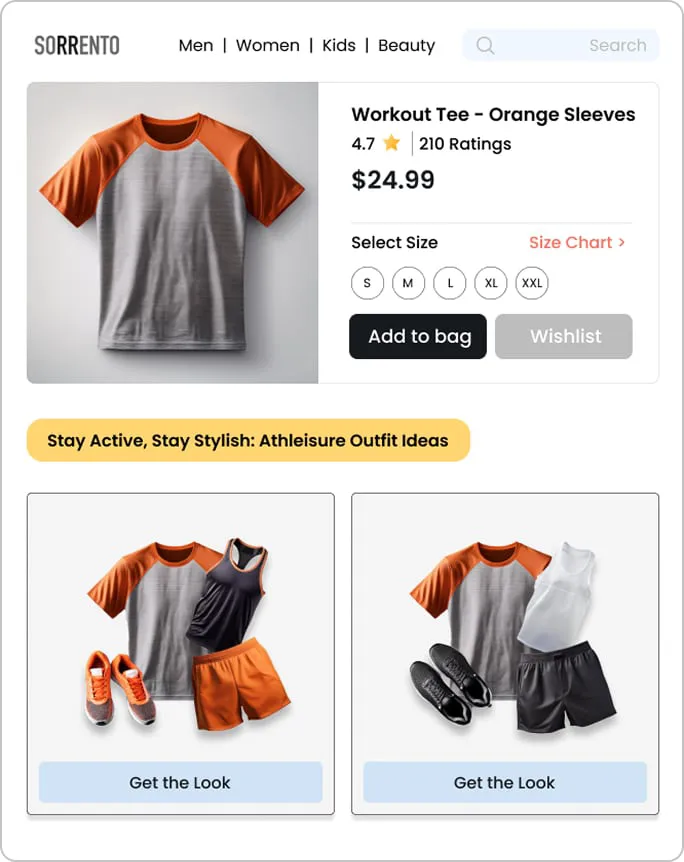
Fashion & Apparel: AI stylists, such as Ensemble AI, curate outfits and product bundles based on individual preferences, co-occurrence data, and complementary colors. These recommendations are powered by predictive AI models that analyze customer behavior and preferences in real time.
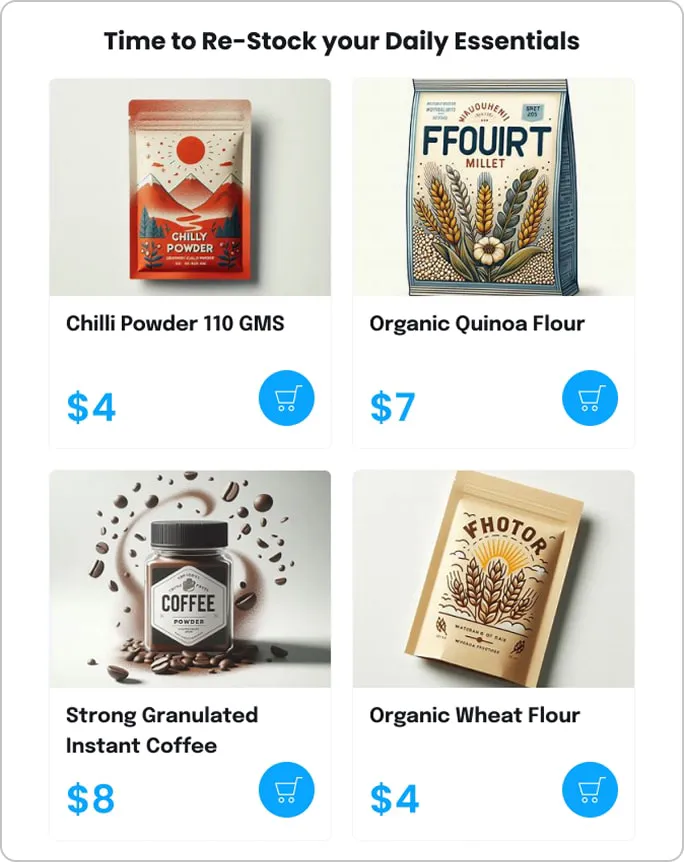
Grocery & CPG: Predictive replenishment models suggest restocking essentials before customers run out. By analyzing purchase history and consumption patterns, these models ensure that customers never have to worry about running out of their favorite products.
E-commerce & Retail: AI optimizes social proof messaging, affinity-based campaigns, and personalized hero banners to drive conversions. For example, AI dynamically optimizes key metrics such as conversion rate, add-to-cart rate, and revenue per visit by automatically selecting what social proof message to display to the shopper in real time. In this manner, brands can deliver highly targeted campaigns that resonate with individual customers by leveraging predictive analytics.

Addressing Challenges: AI-Driven Content Must Be On-Brand & Privacy-Compliant

While AI-powered personalization offers immense potential, it also comes with challenges. Marketers must ensure that AI-generated content aligns with their brand voice and complies with data privacy regulations.

  • Brand Consistency: AI-generated content can sometimes dilute brand voice. ADA Global’s Active Content ensures that all dynamic personalization messaging aligns with brand guidelines, maintaining consistency across channels such as website, mobile, and in-app.
  • Privacy Compliance: AI-powered Personalization at scale requires access to customer data, which must be handled responsibly. ADA Global’s solutions are designed with privacy in mind, ensuring compliance with global data protection regulations such as GDPR, CCPA, and COPA.
  • Ethical Personalization: AI should enhance customer experiences, not exploit them. ADA Global’s solutions prioritize consent-based marketing, ensuring that customers have control over how their data is used.

The Role of ADA Global’s Active Content in
 Hyper-Personalized Email Marketing

Active Content by ADA Global is designed to address the gaps in traditional email marketing by enabling marketers to effortlessly draw data from multiple sources to craft visually compelling creatives, delivered with open time personalization and send-time personalization.

  • Real-Time Data Integration: Pulls data from CDPs, CRMs, recommendation engines, loyalty programs, and third-party APIs and allows marketers to mash them up and add to dynamic creatives blocks to create visually stunning content.
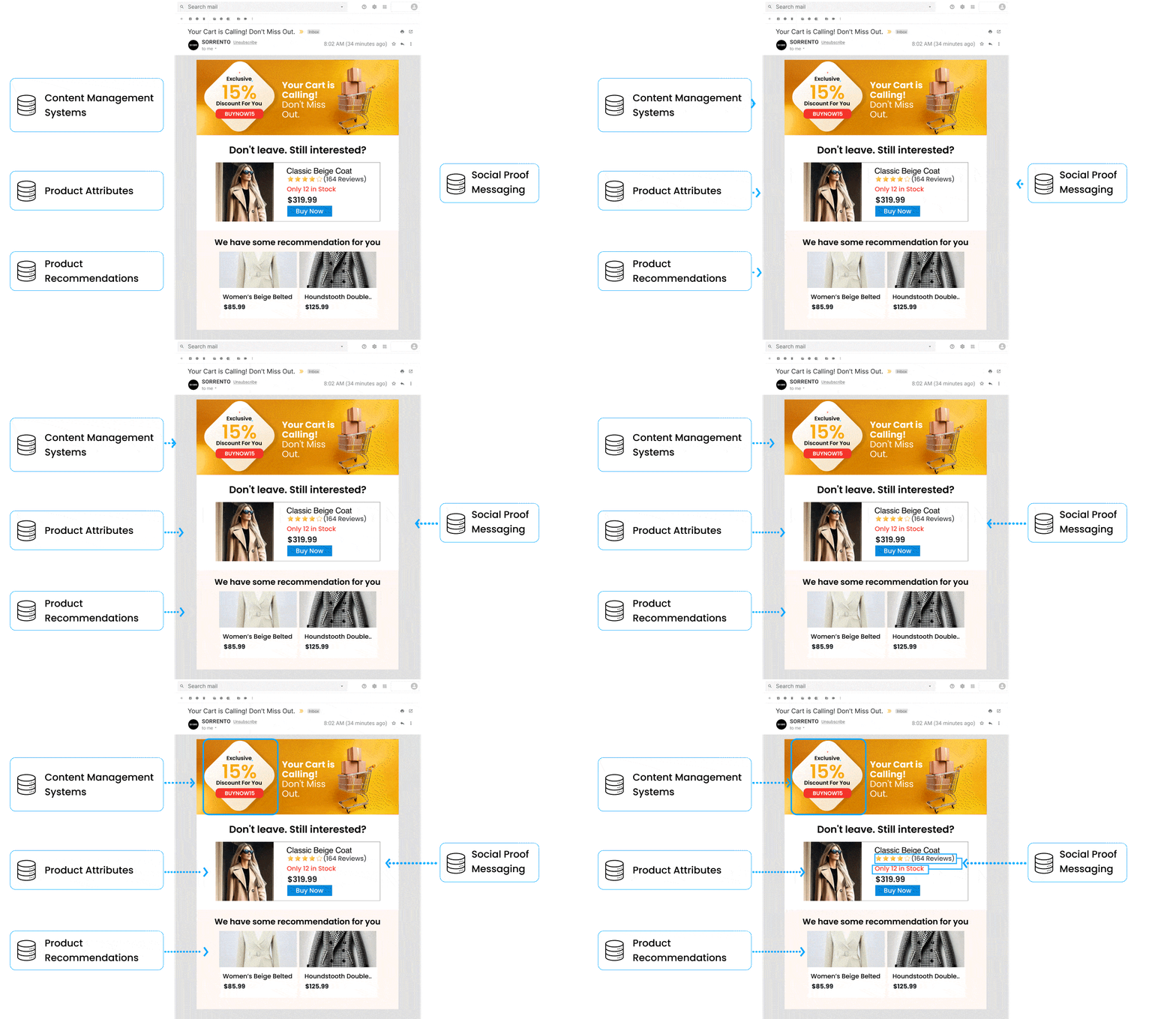
  • Dynamic Content Personalization: This feature creates personalized email campaigns that change email content dynamically based on user behavior and retail variables such as price and inventory at the moment of engagement.

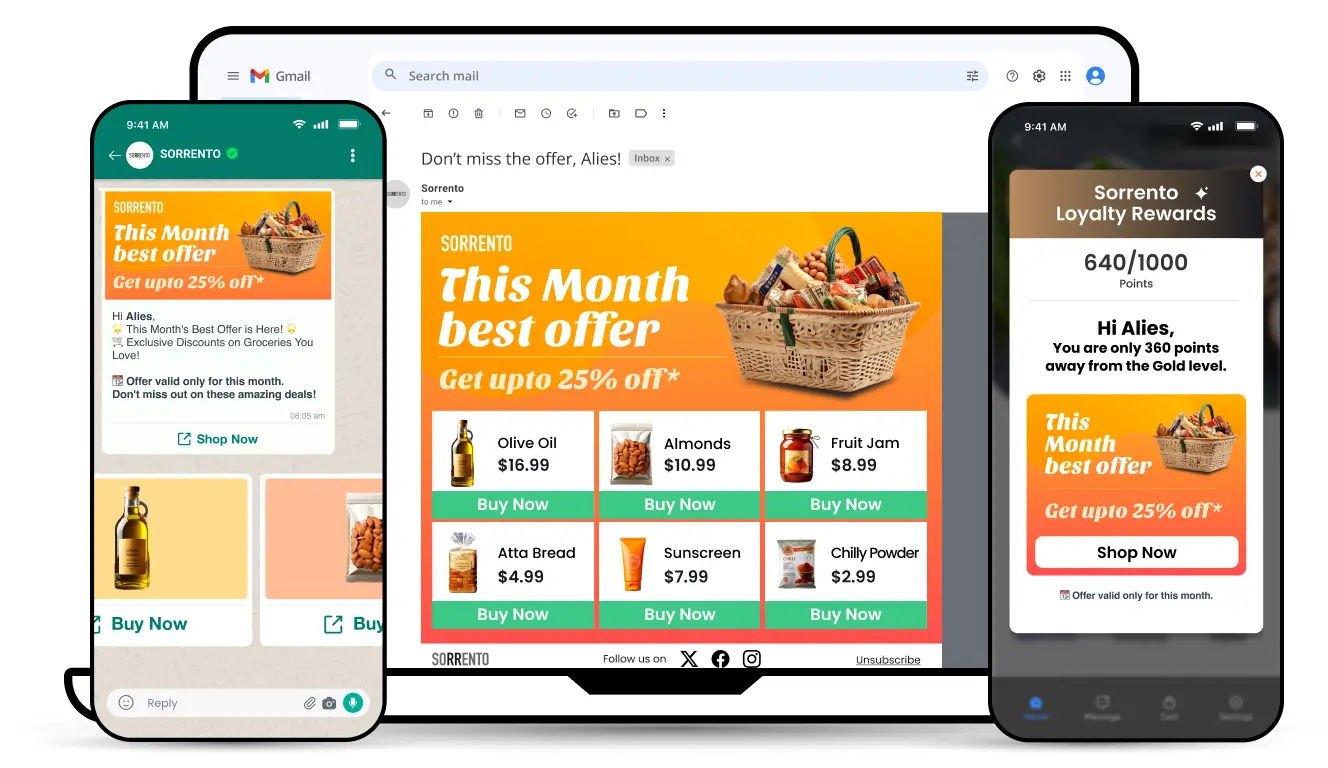
  • Automates Omnichannel Delivery: Automates content delivery across the customer’s preferred media for interaction with the brand, be it email, RCS, SMS, or WhatsApp, ensuring relevance at every interaction.
Unlock the Power of Hyper-Personalization with ADA Global

The future of marketing lies in hyper-personalization, and AI is the key to unlocking its full potential. While Generative AI has its place, true personalization requires a broader AI-driven strategy that integrates predictive analytics, real-time segmentation, and behavioral modeling.
Ready to take your personalization efforts to the next level? Explore how Ada Global’s Active Content can help you deliver hyper-personalized experiences at scale. Sign up for a demo today and see how Ada Global can transform your marketing strategy.
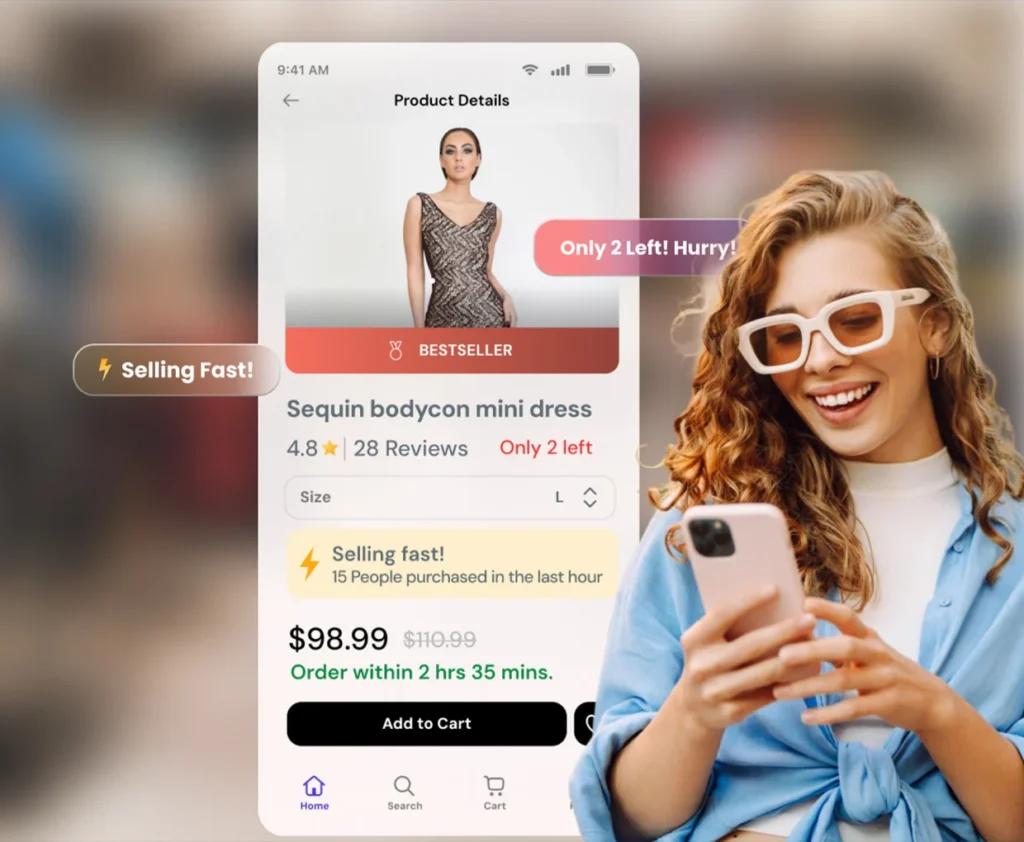
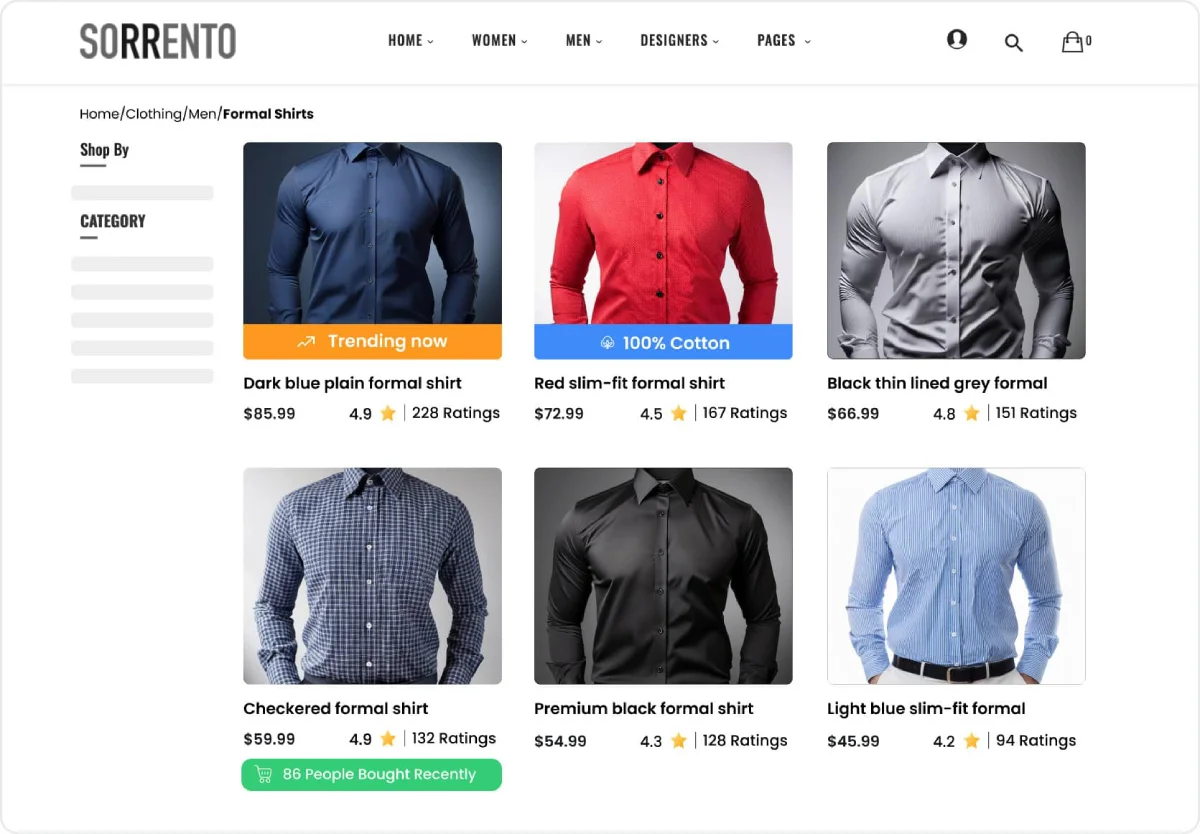
Table Of Contents
The Evolution of AI in Marketing Personalization
Why Generative AI Alone is Not Enough for
 Hyper-Personalization
Predictive AI: The Future of Hyper-Personalized Email Marketing
Real-World Examples of AI-Powered Personalization
Addressing Challenges: AI-Driven Content Must Be On-Brand & Privacy-Compliant
The Role of ADA Global’s Active Content in
 Hyper-Personalized Email Marketing
Unlock the Power of Hyper-Personalization with ADA Global

Drive Unbeatable Conversions with Full-Funnel 
Social Proof Messaging

Digital Experience Personalization
Blogs

Drive Unbeatable Conversions with Full-Funnel 
Social Proof Messaging

In today’s competitive ecommerce landscape, building trust and credibility is paramount. Shoppers are bombarded with choices, and they’re looking for reassurance that they’re making the right decision. That’s where the power of social proof messaging comes in. But simply sprinkling a few “X people are viewing this” notifications on your product pages isn’t enough. To truly maximize its impact, you need a full-funnel social proof strategy.

What exactly is full-funnel social proof messaging, and why is it so crucial? It’s a strategy that integrates social proof at every stage of the customer journey, from initial discovery to final purchase. This comprehensive approach builds confidence and reduces friction, leading to higher conversion rates and increased customer loyalty.

Why Full-Funnel Social Proof Messaging Matters for Shoppers (and Your Bottom Line)

Imagine a shopper landing on your site for the first time. They’re unfamiliar with your brand and products. Without social proof, they might hesitate to explore further. However, with strategically placed messages, you can guide them through the funnel with confidence.

Here’s how full-funnel social proof messaging benefits shoppers:

  • Builds Trust and Credibility: Seeing that other shoppers are interested in or have purchased a product instantly adds legitimacy. This is especially important for new or lesser-known brands.
  • Reduces Purchase Anxiety: Showcasing positive reviews or highlighting popular choices can alleviate concerns about product quality, fit, or value.
  • Streamlines the Decision-Making Process: Social proof can help shoppers quickly identify best-selling items, trending products, or items frequently bought together, simplifying their search.
  • Enhances the Shopping Experience: Subtle yet persuasive messages create a sense of community and encourage exploration, making shopping more engaging.
  • Boosts Confidence at Checkout: Seeing messages like “X people have this in their cart” or “Limited stock available” can create a sense of urgency and prevent cart abandonment.

Creating a Full-Funnel Social Proof Strategy

Here’s how you can implement social proof messaging at each stage of the customer journey:

1 1. Category Pages: Capturing Interest Early

Category pages are often the first stop for shoppers. Displaying social proof messages elements like “Best Sellers,” “Trending Now,” or “100+ shoppers are viewing this” can help users make quicker, more confident browsing decisions.

  • Highlight Trending Products: “Trending Now”
  • Show Popular Products within Categories: “Best Sellers in Men’s Shoes”
  • Real-time Activity: “X people are viewing this item,” or “Y units sold in the last hour” to create a sense of urgency.
  • Scarcity: “Only X left in stock” messages to encourage immediate purchase.
  • Product Badging: Differentiating aspects of the products that reflect the brand, based on product attributes like “Cruelty-Free” or “100% Cotton”

2 2. Product Pages: Reducing Decision Anxiety

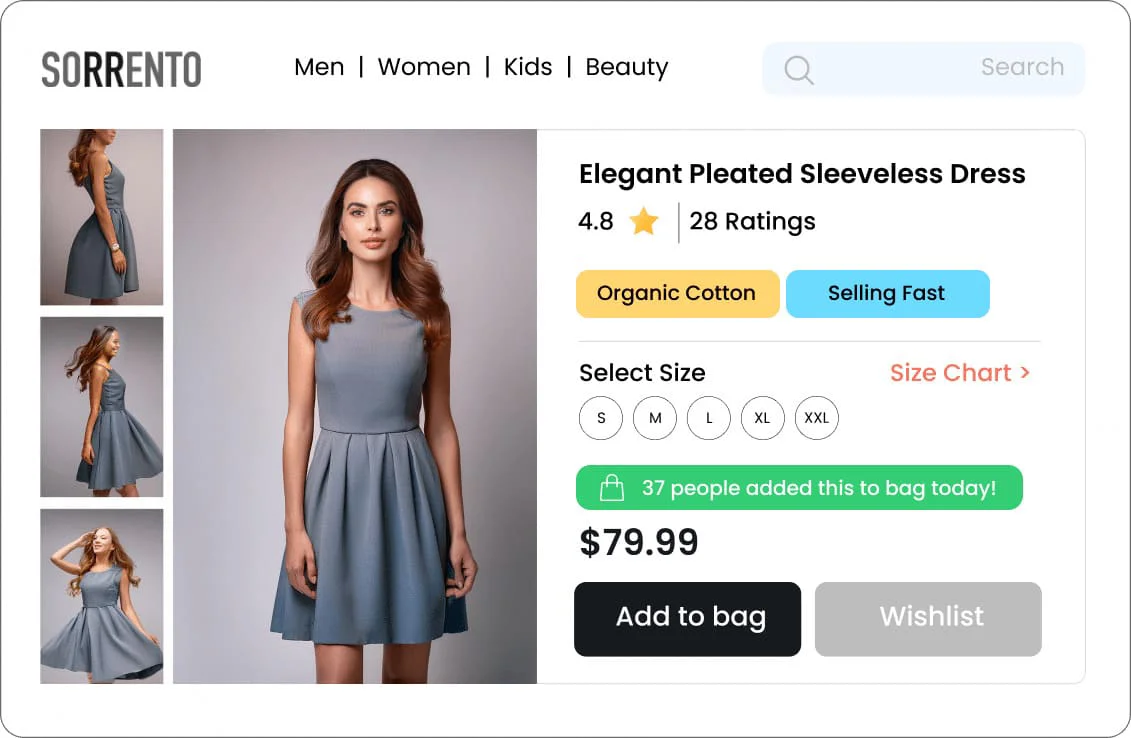
When shoppers land on a product page, they need reassurance. Incorporating social proof messages like “20 people purchased this today,” “Top sold item today,” or “100+ people added this to their cart” provides the nudge they need to proceed to checkout.

  • Display Real-Time Activity: “120 people are viewing this item right now”
  • Show Recent Purchases: “8 people purchased in last 1 hour”
  • Highlight Product Popularity: “Top seller today” or “Top sold item this week”
  • Product Badging: Attributes of the product such as“Organic” or “Eco-friendly”, “Waterproof” or promotions such as“Exclusive Offer” or “One-Time Deal”
  • Showcase Star Ratings and Reviews: “4.8 out of 5 stars based on 150 reviews”
  • Display Stock Availability: “Only 3 left in stock!”

3 3. Cart Pages: Preventing Abandonment

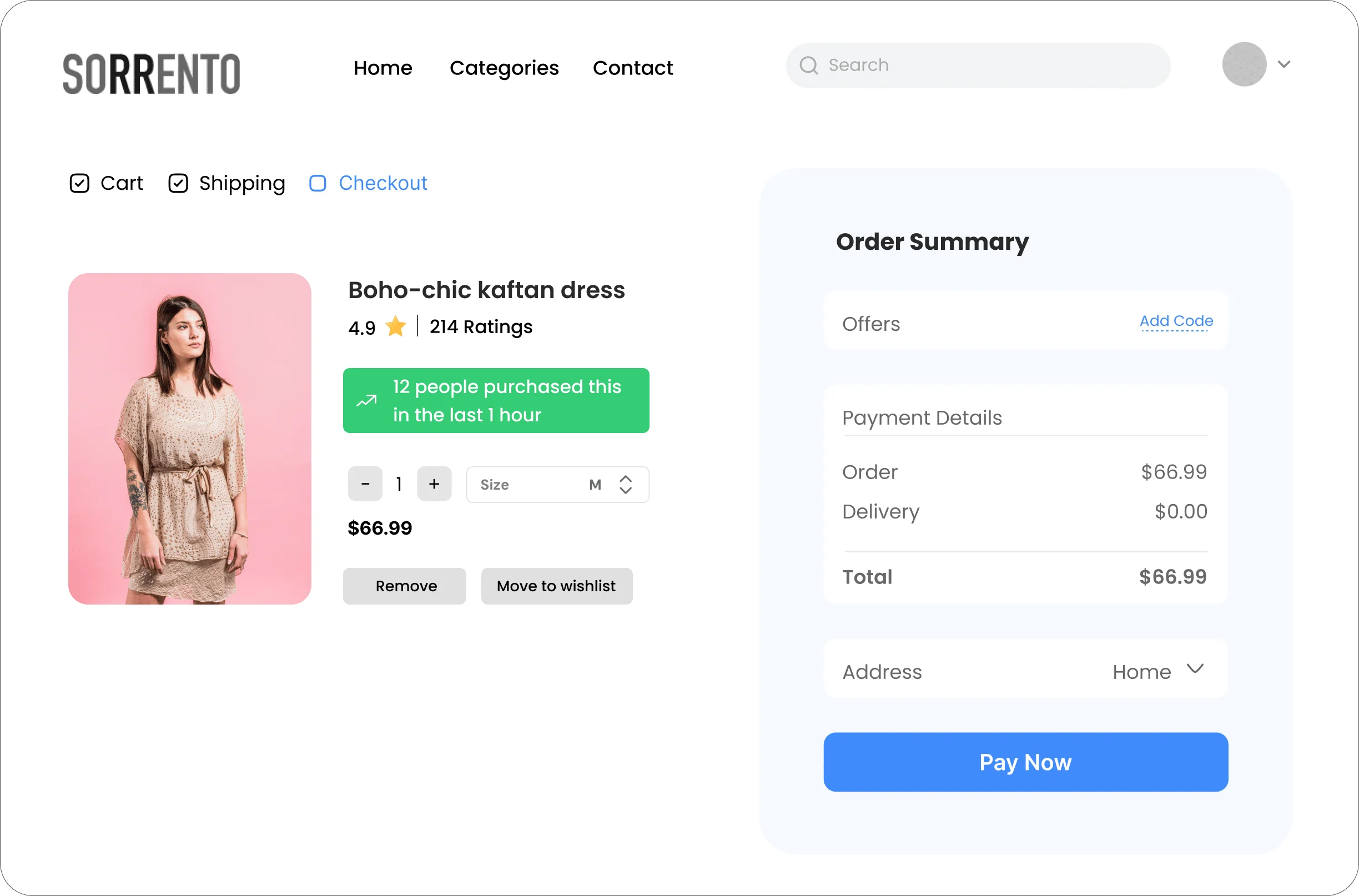
Cart abandonment is a major challenge in ecommerce. Social proof messaging software such as “Limited stock left,” “Selling fast,” or “12 people purchased in last 1 hour” help reinforce the decision to buy and reduce second-guessing.

  • Reinforce Purchase Decisions: “X people have this item in their cart” or “X people purchased in the last 1 hour”
  • Create Urgency: “Limited stock available – only X left!”
  • Badging Based on Attributes or Offers: “Limited Time Offer”

4 4. Recommendation Sections: Increasing AOV (Average Order Value)

When social proof is applied to personalized product recommendations and contextual recommendations, shoppers are more likely to engage with them and click through.

  • Number of Sales: “X people have bought this product in the last 24 hours.”
  • Trending Products: “This product is trending in your region.”
  • Community Proof: “Join our community of X satisfied customers.”
  • Limited-Time Offers: “Get it now while supplies last!”
  • Product Badging: Differentiating or promotional aspects of the products, such as “Top Seller”.

How to Implement Full-Funnel Social Proof Effectively

Social proof is powerful, but it’s not a one-size-fits-all strategy. You need to tailor your social proof messaging to each page type. Even if you’re highlighting the same metrics, adapt the wording to fit the specific context of the product listing page or product recommendations section. Avoid repeating the same social proof message across multiple locations. Even if you’re boasting about the same great stats, tweak the wording to make it relevant to where the customer is in their shopping experience.

  • Use Real-Time Data: Ensure that social proof messages are dynamically updated to reflect real shopper behavior.
  • A/B Test for Effectiveness: Continuously measure the impact of different social proof messages on conversion rates.
  • Ensure a Seamless Experience: Keep messaging consistent across all touchpoints to build trust and prevent confusion.

Conclusion

A full-funnel approach to social proof messaging can significantly enhance shopper confidence, reduce hesitation, and boost conversions. By implementing real-time social proof software across category pages, product pages, cart pages, and recommendations, brands can create a more compelling and persuasive shopping experience.

Ready to supercharge your ecommerce with a full-funnel social proof messaging strategy and skyrocket your sales?

Request a demo now!
Table of Contents
Why Full-Funnel Social Proof Messaging Matters for Shoppers (and Your Bottom Line)
Creating a Full-Funnel Social Proof Strategy
How to Implement Full-Funnel Social Proof Effectively
Conclusion

12 Strategi Terbaik Cara Mempertahankan Competitive Advantage

Data & AI
Blogs

12 Strategi Terbaik Cara Mempertahankan Competitive Advantage

Apa yang Dimaksud dengan Keunggulan Kompetitif dalam Konteks Bisnis?

Dalam dunia bisnis yang kompetitif, menjaga keunggulan menjadi kunci untuk bertahan dan berkembang. Tantangannya bukan hanya tentang mencapai keunggulan itu sendiri, tetapi juga bagaimana mempertahankannya dari serbuan pesaing yang terus-menerus. Dalam artikel ini, kita akan membahas secara komprehensif tentang cara mempertahankan keunggulan kompetitif dalam konteks bisnis. Mulai dari pemahaman tentang apa sebenarnya keunggulan kompetitif, mengapa hal itu penting untuk dipertahankan, hingga strategi konkret yang dapat Anda terapkan.

Keunggulan kompetitif dalam konteks bisnis mengacu pada kemampuan suatu perusahaan untuk menawarkan produk atau layanan yang lebih baik daripada pesaingnya di pasar yang sama. Ini mencakup berbagai faktor, seperti inovasi produk, kualitas, harga, pelayanan pelanggan, dan keahlian dalam industri tertentu. Dengan memiliki keunggulan ini, perusahaan dapat membedakan dirinya dari pesaing dan mendapatkan keuntungan yang lebih besar.

Mengapa Keunggulan Kompetitif Penting untuk Dipertahankan?

Mempertahankan keunggulan kompetitif dalam bisnis sangatlah penting, dan ada beberapa alasan mengapa hal ini menjadi prioritas utama:

  • Memastikan Kelangsungan Bisnis: Dengan mempertahankan keunggulan kompetitif, bisnis dapat memastikan kelangsungan dan keberlanjutan operasionalnya. Tanpa keunggulan kompetitif, bisnis berisiko kehilangan pangsa pasar dan mengalami penurunan pendapatan yang dapat mengancam kelangsungan bisnis.
  • Menarik Pelanggan Baru: Keunggulan kompetitif membantu bisnis menarik pelanggan baru. Dengan menawarkan produk atau layanan yang lebih baik dari pesaing, bisnis dapat memenangkan kepercayaan pelanggan baru dan memperluas basis pelanggannya.
  • Mempertahankan Pelanggan yang Ada: Selain menarik pelanggan baru, mempertahankan pelanggan yang ada juga sangat penting. Keunggulan kompetitif membantu memastikan bahwa pelanggan tetap puas dengan produk atau layanan yang Anda tawarkan, sehingga mereka tidak beralih ke pesaing.
  • Menghasilkan Pendapatan yang Lebih Tinggi: Dengan mempertahankan keunggulan kompetitif, bisnis dapat menetapkan harga yang lebih tinggi untuk produk atau layanannya. Pelanggan bersedia membayar lebih untuk kualitas atau fitur yang lebih baik, yang pada gilirannya meningkatkan pendapatan perusahaan.
  • Mendorong Inovasi: Persaingan yang sehat mendorong inovasi. Untuk tetap unggul di pasar, bisnis harus terus menciptakan produk atau layanan baru yang lebih baik daripada pesaingnya. Hal ini tidak hanya bermanfaat bagi bisnis itu sendiri, tetapi juga bagi konsumen yang akan mendapatkan produk atau layanan yang lebih baik.
  • Menjamin Keunggulan di Pasar Global: Dalam era globalisasi, bisnis harus bersaing di pasar yang makin terhubung secara global. Mempertahankan keunggulan kompetitif memungkinkan bisnis untuk bersaing secara efektif di pasar global dan memenangkan pangsa pasar di berbagai negara.
  • Tetap Unggul dalam Persaingan Bisnis: Untuk menjaga agar bisnis tetap relevan, penting untuk memiliki keunggulan dibanding pesaing. Tanpa keunggulan ini, bisnis mungkin kesulitan bersaing dengan kompetitor lainnya. Jadi, menjaga keunggulan kompetitif menjadi hal yang penting agar bisnis Anda tetap berada di puncak persaingan.

12 Strategi Terbaik Cara Mempertahankan Keunggulan Kompetitif

Mempertahankan keunggulan kompetitif membutuhkan pendekatan yang holistik dan strategis. Berikut adalah 12 strategi terbaik yang dapat Anda terapkan untuk mempertahankan posisi unggul Anda di pasar:

1. Inovasi Berkelanjutan

Teruslah menciptakan produk atau layanan baru yang memenuhi kebutuhan dan keinginan pelanggan. Dengan tetap berinovasi, Anda dapat mempertahankan daya tarik bisnis Anda di mata konsumen dan mengungguli pesaing.

2. Fokus pada Kualitas

Jangan pernah mengorbankan kualitas demi mengejar keuntungan. Kualitas yang baik akan meningkatkan kepuasan pelanggan dan memperkuat reputasi bisnis Anda sebagai penyedia solusi yang andal.

3. Efisiensi Operasional

Lakukan evaluasi secara berkala terhadap proses operasional Anda untuk mengidentifikasi area di mana Anda bisa lebih efisien dalam penggunaan sumber daya. Dengan meningkatkan efisiensi, Anda dapat mengurangi biaya produksi dan meningkatkan profitabilitas.

4. Pengembangan SDM

Investasikan dalam pengembangan karyawan Anda agar mereka memiliki keterampilan dan pengetahuan yang diperlukan untuk memberikan pelayanan terbaik kepada pelanggan. Karyawan yang terampil dan berpengetahuan dapat menjadi aset berharga dalam menjaga keunggulan kompetitif.

5. Pemahaman Pelanggan

Selalu upayakan untuk memahami kebutuhan dan preferensi pelanggan Anda agar dapat memberikan solusi yang tepat waktu dan relevan. Dengan memahami pelanggan dengan baik, Anda dapat mengembangkan produk dan layanan yang lebih sesuai dengan kebutuhan mereka.

6. Kemitraan Strategis

Bangun kemitraan dengan pihak-pihak yang memiliki keahlian atau sumber daya yang dapat melengkapi bisnis Anda. Kemitraan strategis dapat membantu memperluas jangkauan bisnis Anda dan memberikan akses ke pasar baru.

7. Penggunaan Teknologi

Manfaatkan teknologi terbaru untuk meningkatkan efisiensi dan efektivitas bisnis Anda. Dengan memanfaatkan teknologi, Anda dapat mengotomatisasi proses bisnis, meningkatkan komunikasi internal dan eksternal, serta menyediakan pengalaman pelanggan yang lebih baik.

8. Fleksibilitas dan Adaptasi

Siapkan diri untuk beradaptasi dengan perubahan pasar dan teknologi yang terjadi dengan cepat. Fleksibilitas dalam menghadapi perubahan akan memungkinkan Anda untuk tetap relevan dan kompetitif di pasar yang berubah-ubah.

9. Diferensiasi

Temukan cara untuk membedakan produk atau layanan Anda dari pesaing, baik melalui fitur tambahan, pengalaman pengguna yang unik, atau nilai tambah lainnya. Dengan diferensiasi, Anda dapat membuat produk atau layanan Anda lebih menarik bagi pelanggan dan sulit ditiru oleh pesaing.

10. Pemantauan dan Evaluasi

Selalu pantau kinerja bisnis Anda secara berkala dan identifikasi area di mana Anda perlu melakukan perbaikan. Dengan melakukan pemantauan dan evaluasi secara teratur, Anda dapat mengidentifikasi peluang untuk meningkatkan efisiensi dan efektivitas bisnis Anda.

11. Pengelolaan Risiko

Kenali risiko-risiko yang mungkin dihadapi bisnis Anda dan buatlah strategi untuk mengelolanya dengan baik. Dengan mengelola risiko dengan baik, Anda dapat mengurangi kemungkinan kerugian dan melindungi keunggulan kompetitif Anda.

12. Responsif terhadap Perubahan

Jadilah responsif terhadap umpan balik pelanggan dan perubahan pasar dengan cepat dan tepat. Dengan merespons perubahan dengan cepat, Anda dapat mempertahankan keunggulan kompetitif Anda dan memenangkan kepercayaan pelanggan.

Mempertahankan keunggulan kompetitif dalam dunia bisnis adalah suatu tantangan yang tak bisa dianggap enteng. Namun, dengan menerapkan strategi yang tepat dan memiliki kesadaran akan pentingnya menjaga keunggulan tersebut, Anda dapat memastikan bahwa bisnis Anda tetap relevan dan berhasil di pasar yang kompetitif.

Dengan menerapkan strategi-strategi ini secara konsisten dan adaptif, Anda dapat membangun fondasi yang kuat untuk mempertahankan keunggulan kompetitif Anda dalam jangka panjang. Dalam lingkungan bisnis yang terus berubah, menjaga keunggulan kompetitif bukanlah tujuan akhir, tetapi merupakan perjalanan yang berkelanjutan menuju kesuksesan bisnis Anda.

Maksimalkan Keungulan Kompetitif Bisnis Anda dengan Solusi Terbaik dari ADA Asia

Untuk lebih memaksimalkan usaha untuk mempertahankan keunggulan kompetitif bisnis Anda, Anda dapat memanfaatkan layanan dari ADA Asia. Berikut adalah beberapa alasan mengapa Anda harus mempertimbangkan untuk menggunakan layanan ADA Asia:

  • Pemahaman yang Mendalam tentang Pelanggan: Layanan dari ADA membantu Anda memahami pelanggan Anda dengan lebih baik. Dengan menganalisis data pelanggan, perilaku pembelian, dan preferensi, Anda dapat mengidentifikasi tren dan pola yang dapat digunakan untuk membuat keputusan yang lebih baik dalam strategi pemasaran dan penjualan.
  • Personalisasi Pengalaman Pelanggan: Dengan menggunakan data yang dianalisis oleh sistem AI, Anda dapat membuat pengalaman pelanggan yang lebih personal dan relevan. Ini dapat meningkatkan keterlibatan pelanggan, memperkuat hubungan, dan meningkatkan loyalitas mereka.
  • Optimasi Operasional: ADA Asia dapat membantu Anda mengoptimalkan operasional bisnis Anda. Dengan menganalisis data operasional, Anda dapat mengidentifikasi area-area di mana efisiensi dapat ditingkatkan, biaya dapat dikurangi, dan proses dapat dioptimalkan.
  • Pengambilan Keputusan yang Lebih Baik: Dengan menggabungkan data dan kecerdasan buatan, Anda dapat membuat keputusan yang lebih baik dan lebih tepat waktu. Ini dapat membantu Anda merespons perubahan pasar dengan lebih cepat, mengidentifikasi peluang baru, dan menghindari risiko yang tidak perlu.
  • Inovasi Produk dan Layanan: Data & AI dapat menjadi sumber inspirasi untuk inovasi produk dan layanan baru. Dengan menganalisis tren pasar dan kebutuhan pelanggan, Anda dapat mengembangkan produk dan layanan yang lebih sesuai dengan kebutuhan pasar dan lebih unggul dibandingkan dengan pesaing.

Dengan memanfaatkan layanan dari ADA, Anda dapat memperkuat posisi bisnis Anda di pasar, meningkatkan kinerja operasional, dan menciptakan pengalaman pelanggan yang lebih baik.

Kunjungi situs resmi kami hari ini untuk informasi lebih lanjut tentang bagaimana ADA dapat membantu bisnis Anda mempertahankan keunggulan kompetitif melalui solusi terbaik.

Table Of Contents
Apa yang Dimaksud dengan Keunggulan Kompetitif dalam Konteks Bisnis?
12 Strategi Terbaik Cara Mempertahankan Keunggulan Kompetitif
Maksimalkan Keungulan Kompetitif Bisnis Anda dengan Solusi Terbaik dari ADA Asia

How to Create a Successful TikTok Marketing Strategy

Data & AI
Blogs

How to Create a Successful TikTok Marketing Strategy

What is TikTok Marketing?

Unlock success with TikTok marketing: Proven strategies for your brand. Read now to drive more engagement, awareness, & sales for your business!

In today’s digital landscape, TikTok has emerged as a powerhouse platform for marketing. With its ever-growing user base and engaging features, TikTok offers a unique opportunity for businesses to connect with their target audience in creative and impactful ways.

In this article, we’ll explore creating a successful TikTok marketing strategy to help your business thrive. We’ll cover the key features of TikTok that support marketing efforts and provide practical tips on using TikTok marketing effectively.

TikTok marketing involves using TikTok and its content to promote your brand and its products or services. It’s all about creating engaging short videos to showcase what your business offers and to build your online presence.

While social media marketing covers various platforms, TikTok marketing focuses solely on TikTok. It’s essential to maintain consistency in your messaging across all platforms where your brand is present but keep in mind that TikTok content tends to be distinct from what you share on other channels.

How to Create a TikTok Business Account

TikTok business accounts may not offer access to the complete sound library, but the supplementary tools they provide are more valuable. Follow these simple steps to set up your TikTok business account:

  • Step 1. Download the TikTok app and create a new account
  • Step 2. Go to your TikTok profile and tap the menu icon located in the top right corner
  • Step 3. Tap Setting and Privacy
  • Step 4. Tap Manage Account
  • Step 5. Tap Switch to Business Account
  • Step 6. Choose the category that best corresponds with your business type

Tips for Building Your TikTok Marketing Strategy

While becoming ‘TikTok famous’ overnight is unlikely, these several tips will set you on the right track for success:

1. Create and Brand Your TikTok account

To brand your TikTok account, start by tapping “Edit Profile.” Then, fill out the following details:

  • Profile photo or video: Consider using a high-resolution version of your logo for the profile avatar. Alternatively, create an animated version of your logo if you opt for a video.
  • Name: Enter your business name.
  • Username: Use your business name, if possible, without spaces.
  • Pronouns: If you’re a sole proprietor, you may want to input your pronouns.
  • Bio: You have 80 characters to provide a brief summary of your business.
  • Email: Enter your company’s contact email.
  • Nonprofit: If your business supports or works with a nonprofit, you can tag them in your profile.
  • Category: Choose the category that best represents your industry.
  • Social: Connect your Instagram and/or YouTube accounts.

2. Define your TikTok Audience

To achieve success on TikTok, it’s essential to have a clear understanding of your target audience for your content. Otherwise, even if you gain significant reach and engagement, it may not lead to meaningful outcomes such as sales or subscriptions, which are vital for your business’s profitability.

TikTok primarily attracts a younger demographic, with approximately seven out of ten individuals aged 18-19 having an active presence on the platform, and around half of all individuals aged 20-39 using TikTok.

3. Create Quality TikTok Videos

To create engaging TikTok videos, immerse yourself in the platform by researching hands-on. Explore the “For You” page to understand popular video trends and visit the TikTok Discover page for trending hashtags and sounds. Analyse successful brands on TikTok to learn their strategies and adopt similar tactics. Experiment with different video types to gauge audience response and maintain profile diversity. Consistency is crucial, so aim to post regularly, ideally at least twice a week, or even more frequently as TikTok suggests posting 1-4 times per day for maximum impact.

4. Use Ads in Your TikTok Marketing Strategy

To expand your reach to a broader audience, consider investing a portion of your social media advertising budget into TikTok ads. These ads operate on a bidding system, similar to Facebook and Instagram ads. You’ll select your target audience, craft an engaging video ad, and then promote it with your chosen daily or lifetime budget.

5. Tap into TikTok Influencer Marketing

Another effective TikTok marketing strategy involves collaborating with influencers. On TikTok, numerous influencers and content creators collaborate with brands to produce entertaining and engaging video content. This not only helps promote new brands but also generates user-generated content that brands can share on their own social media platforms.

6. Monitor TikTok Analytics

Monitor your TikTok analytics closely. Access to this feature is available when you switch to a business account, and it can greatly assist you in identifying your top-performing videos and determining the optimal posting times each day.

7. Get Involved in Trending TikTok Challenges

To boost your potential for virality, stay updated on trending audio clips, challenges, and video formats. Whenever possible, leverage popular trends to craft content that aligns with your brand’s message and objectives.

8. Take Advantage of TikTok Editing Capabilities

Making videos on TikTok’s own app is usually the best choice. That’s because the app has lots of editing tools, so you can make great videos just using your phone and TikTok.

9. Make Sure Your Videos Are Brief and to the Point

It’s essential to ensure that your video content is concise and engaging. TikTok recommends that businesses aim for videos between 21 to 34 seconds long, based on recent data. As a general guideline, maintaining an average video duration of around 30 seconds can help maximise viewer engagement and retention.

10. Incorporate Live Video Into Your Strategy

TikTok provides a live-streaming function within its app. Brands can capitalise on this opportunity as live videos appear on viewers’ For You pages, attracting interested users. Additionally, TikTok enables viewers to send stickers and other rewards during live streams as a monetization incentive. This means your brand can potentially generate additional revenue through TikTok Live if your videos gain enough popularity.

5 TikTok Features That Can Help Marketing Efforts

TikTok offers several features tailored to enhance your marketing efforts. Understanding these features and how to leverage them can make a significant difference in your TikTok marketing strategy. Let’s dive into five TikTok features that can elevate your marketing game.

1. TopView

TopView is a premium TikTok advertising format that allows your video to take over the user’s screen when they open the app. This feature ensures maximum visibility and engagement, making it an excellent choice for brand introductions or product launches.

2. In-Feed Ads

In-feed ads are short video ads that appear in users’ feeds as they scroll through their TikTok content. These ads seamlessly blend with organic content, increasing the chances of capturing users’ attention. Crafting compelling In-Feed Ads can lead to higher conversion rates.

3. Brand Takeover

Brand Takeover allows your brand to dominate TikTok for a day. When users open the app, they see your full-screen ad or a link to your landing page. This feature provides instant exposure and is ideal for creating buzz around time-sensitive promotions.

4. Branded Hashtag Challenges

Branded Hashtag Challenges encourage user-generated content and engagement. You create a challenge with a unique hashtag related to your brand, and users participate by creating and sharing their content. This interactive approach boosts brand visibility and user involvement.

5. Branded Effect

Branded Effects are special effects, filters, and stickers branded with your logo or message. Users can apply these effects to their videos, spreading your brand’s influence while having fun. It’s a creative way to leave a lasting impression on your audience.

6 Ways TikTok Marketing Can Add Value to Your Business

TikTok has rapidly emerged as a formidable platform for businesses to market their products and services. It offers unique benefits that can significantly add value to your business.

Here, we’ll delve into six ways TikTok marketing can enhance your brand’s presence and impact:

1. Showcase Your Brand’s Personality

TikTok provides a dynamic space for brands to showcase their personalities and connect with their audience personally. This platform thrives on creativity, and businesses that embrace this element can effectively humanise their brand. You can break away from the traditional corporate image and create a more approachable and authentic persona through fun, relatable, and entertaining content.

You can forge a genuine connection with your followers by sharing behind-the-scenes glimpses of your business, introducing your team, or sharing user-generated content. This authenticity can foster trust and loyalty as your audience sees the human side of your brand.

2. Connect with a Younger Audience

TikTok’s user base predominantly consists of Gen Z and Millennials, making it a goldmine for businesses targeting these demographics. These younger generations are highly active on the platform, presenting an opportunity to engage with them on their preferred platform. This can be especially advantageous if your products or services cater to the preferences and trends popular among younger consumers.

Understanding your target demographic’s language, humour, and cultural references is key to connecting with them on TikTok. You can create content that resonates with their interests and values.

3. Increase Engagement

TikTok is designed for high engagement. Its short-form videos are addictive, and users frequently scroll through their feeds, engaging with content through likes, shares, comments, and duets. You can tap into this active user base by consistently posting engaging and relevant content.

Engaging content can prompt discussions, encourage users to participate in challenges or trends, and drive user-generated content. The more interactive your content, the more likely it is to capture users’ attention and inspire them to engage with your brand.

4. Boost Brand Awareness

TikTok’s viral potential is unparalleled. A single well-crafted video can quickly gain millions of views and shares, catapulting your brand into the spotlight. The platform’s algorithm rewards content that resonates with users, so creating content that is both entertaining and aligns with your brand’s values can lead to exponential growth in brand awareness.

Leveraging popular challenges, trends, and trending music can help your content reach a broader audience. Collaborating with influencers or leveraging TikTok’s advertising options can also help amplify your brand’s visibility.

5. Drive Traffic to Your Website

TikTok allows businesses to include clickable links in their profiles and video descriptions. By strategically placing links to your website or e-commerce store, you can direct interested users to learn more about your products or make purchases. This can be a valuable way to convert TikTok viewers into customers.

Encourage users to visit your website for exclusive content, promotions, or product information. Ensure the landing pages are mobile-friendly, as a significant portion of TikTok’s user base accesses the platform via mobile devices.

6. Stay Ahead of the Curve

Embracing TikTok early positions your business as an early adopter and innovator in your industry. It shows that you are aware of emerging trends and willing to engage with your audience on cutting-edge platforms. This can help you stay ahead of competitors who may be slower to adapt to new marketing channels.

Furthermore, by consistently monitoring and adapting your TikTok marketing strategy, you can stay agile in responding to changing trends and audience preferences, ensuring that your brand remains relevant and competitive in the long run.

How to Use TikTok Marketing Effectively

To make the most of TikTok marketing, you need a solid strategy. Here are ten steps to help you use TikTok effectively:

1. Learn How TikTok Works

Start by familiarising yourself with the TikTok platform. Understand its user interface, features, and the type of content that performs well. Explore trending videos, popular creators, and TikTok’s discovery page. This knowledge will serve as the foundation for your marketing strategy.

2. Align Goals with Business Objectives

Before diving into TikTok marketing, define clear and measurable goals that align with your business objectives. Are you looking to increase sales, drive website traffic, boost brand awareness, or engage with your audience? Setting specific goals will help you tailor your TikTok strategy accordingly.

3. Define Your Target Audience

Identify your ideal customers on TikTok. What are their demographics, interests, and preferences? Do some research to understand the type of content they engage with and the challenges they face. This information will guide your content creation and targeting efforts.

4. Create Engaging Content

TikTok is all about engaging and entertaining content. Create videos that captivate your audience through storytelling, humour, creativity, or informative content. Keep videos short and visually appealing, as TikTok’s format revolves around 15 to 60-second videos.

5. Harness the Power of Hashtags

Hashtags play a crucial role in making your content discoverable. Research trending and relevant hashtags within your niche and incorporate them into your video descriptions. However, avoid overloading your captions with hashtags; a few well-chosen ones are more effective.

6. Collaborate with Influencers

Influencer marketing on TikTok can be highly effective. Identify influencers in your industry or niche with a substantial following and reach out to collaborate. Influencers can help you tap into their established audience, increasing your brand’s visibility and credibility.

7. Consistent Posting

Maintain a regular posting schedule to keep your audience engaged and informed. Consistency is key to building a loyal following. Analyse your audience’s activity patterns to determine the best times to post for maximum reach.

8. Engage with Your Audience

Interact with your audience actively. Respond to comments, answer questions, and express appreciation for user-generated content related to your brand. Engaging with your audience fosters a sense of community and loyalty.

9. Monitor Performance

Track key performance indicators (KPIs) to assess the success of your TikTok marketing efforts. Metrics to monitor include video views, likes, shares, comments, and click-through rates to your website. Use TikTok’s analytics tools or third-party analytics platforms to gather insights.

10. Utilise TikTok Ads

TikTok offers a range of advertising options, including In-Feed Ads, Branded Hashtag Challenges, and TopView ads. Consider incorporating TikTok Ads into your strategy to reach a broader audience or achieve specific marketing goals. Utilise TikTok’s targeting options to reach users who match your target audience.

In conclusion, TikTok marketing is not just a passing trend; it’s a powerful tool that can drive real results for your business. By understanding the platform’s features and following best practices, you can create a TikTok marketing strategy that captivates your target audience, boosts brand awareness, and ultimately leads to business growth. Stay creative, stay engaged, and stay ahead of the competition with TikTok marketing.

Harness Your Marketing Strategy in Marketing and Creative Services with ADA Asia

To truly harness the potential of TikTok marketing and ensure that your brand reaches its zenith on TikTok and other eCommerce platforms, consider partnering with ADA Asia. ADA Asia offers Brand Campaign Strategy and Development solutions, encompassing marketing, content creation, and operational excellence.

With our expertise, you can build and grow brand awareness effectively. Learn more about ADA Asia’s services and embark on a journey to unlock your brand’s full potential in the digital world. Don’t miss out on the opportunity to stand out in the ever-evolving landscape of TikTok marketing.

Contact us to find out how our service can help you expand the capabilities of your business.

Table Of Contents
What is TikTok Marketing?
How to Create a TikTok Business Account
Tips for Building Your TikTok Marketing Strategy
5 TikTok Features That Can Help Marketing Efforts
6 Ways TikTok Marketing Can Add Value to Your Business
How to Use TikTok Marketing Effectively
Harness Your Marketing Strategy in Marketing and Creative Services with ADA Asia

From Ordinary to Exceptional: Ensemble AI’s 3 Tactics for Retail Success

Digital Experience Personalization
Blogs

From Ordinary to Exceptional: Ensemble AI’s 3 Tactics for Retail Success

Think of the timeless tale of Indiana Jones, where every clue and ancient relic brings him closer to the ultimate treasure. In retail, each innovation in customer experience acts as a clue leading businesses toward success. Much like Jones decoding ancient maps, retailers must navigate shifting consumer expectations and competitive landscapes. Advanced personalization through solutions like Ensemble AI is one of the most powerful tools in this quest, helping retailers uncover new opportunities for engagement and revenue growth.

Meet Ensemble AI

Ensemble AI is a groundbreaking merchandising solution that redefines product discovery optimization by acting as an AI-powered personal stylist. Going beyond traditional recommendations like “similar products” or “people also bought,” Ensemble AI curates complete, visually appealing ensembles tailored to each shopper’s preferences.

With just a few clicks at the backend to define styles, the AI seamlessly generates stunning combinations that can be showcased across key touchpoints like home pages, product detail pages, and emails. This innovative approach simplifies the shopping journey, drives higher conversions, boosts average order value, and delivers measurable business impact across verticals like fashion, beauty, home decor/furniture, and electronics.

Let’s delve into some transformative tactics powered by Ensemble AI that enrich customer experience and elevate your retail strategy. Each tactic is illustrated with a specific industry example, showcasing how retailers across verticals can leverage Ensemble AI to drive business growth.

Let’s delve into some transformative tactics powered by Ensemble AI that enrich customer experience and elevate your retail strategy. Each tactic is illustrated with a specific industry example, showcasing how retailers across verticals can leverage Ensemble AI to drive business growth.

Crafting Stunning Product Ensembles to Deepen Customer Engagement

Fashion

Consider Sara, a loyal customer who visits your online fashion and apparel store. She has a keen eye for trends and often explores new arrivals and seasonal collections. Over time, Sara’s browsing history and purchase patterns have revealed her preferences for specific sizes, colors, and categories, with a particular affinity for elegant and chic styles.

While shopping today, Sara found a beautiful pink dress that caught her eye. She spends a few minutes on the product page, viewing the dress from all angles and reading about it. She can envision herself wearing it to an upcoming special occasion. She scrolls down and sees similar dresses under ‘You Also Might Like,’ but her heart is set on this pink dress. What is she going to pair the dress with, she wonders. What about footwear, jewelry, and accessories? She hovers over the ‘Add to Cart’ button but feels unsure. With no inspiration in sight, she decides to leave without making a purchase.

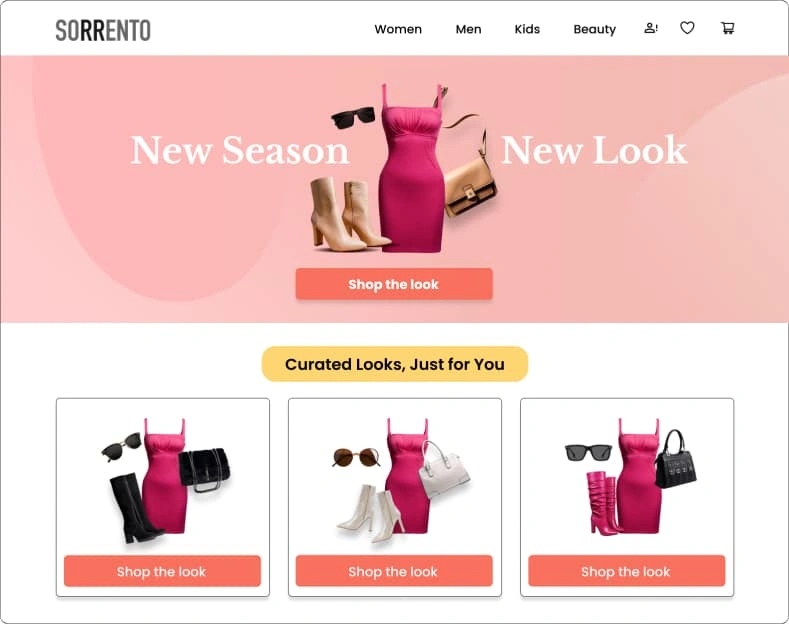
Upon her next visit, she notices that the home page recommends stunning ensembles, each featuring the pink dress she had previously considered! While all the outfits perfectly suit her style, one particular ensemble catches her eye. It combines the pink dress with tinted sunglasses, a white bag and high ankle boots. Enthralled by the thoughtful pairing, she quickly adds the entire ensemble to her cart and completes her purchase, excited for her new look.

This shift from indecision to excitement is made possible by Ensemble AI, which automatically curates ensembles using complementary color detection, natural language processing, co-occurrence and shopper affinity data, and purchase trends. Instead of merchandisers manually assembling outfits, AI does the heavy lifting, ensuring every recommendation is on-trend and visually appealing. This approach captivates Sara and makes her shopping experience more interactive and enjoyable, encouraging her to explore and engage further with the brand.

Increasing Average Order Value (AOV) with Smart Product Bundles

Beauty & Wellness

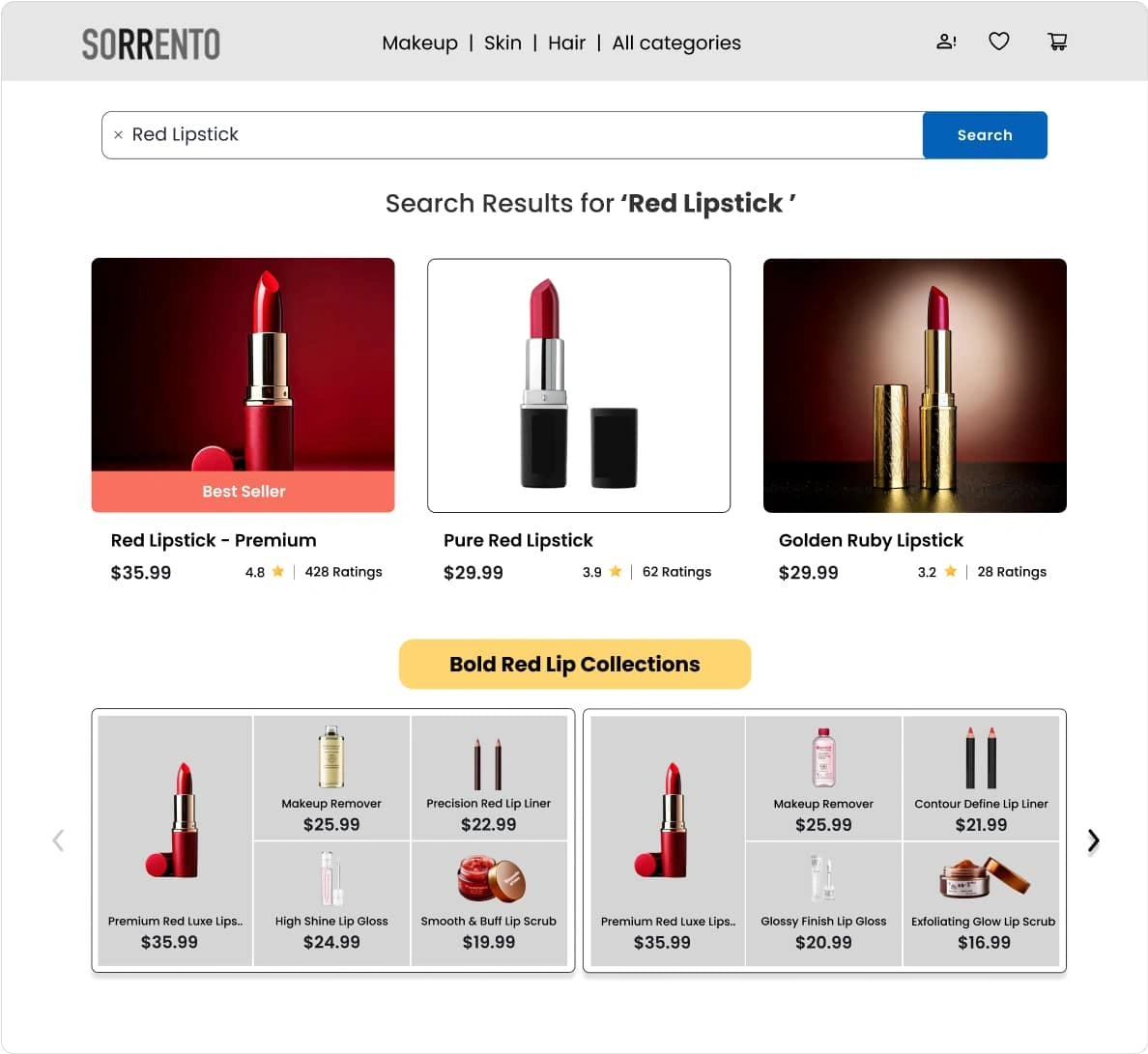
Picture Mia, a beauty enthusiast searching for the perfect red lipstick. In addition to suggestions for the best-suited lipstick, her search results feature expertly curated collections that complete her look: a matching lip liner for precision, a hydrating lip scrub for a smooth base, a nourishing lip gloss for added shine, and a gentle makeup remover for easy wear.

Personalized product recommendations by Ensemble AI go beyond simple bundling. Here, AI understands that lip care is an essential part of a flawless lipstick application, ensuring that Mia sees the perfect prep and finishing touches.

This approach ensures that:

  • Bundles are relevant and compelling, increasing cross-sell opportunities.
  • Merchandising teams can define, refine, and automate these bundles with ease.
  • Data-driven insights help retailers track engagement, orders, and add-on sales to optimize future recommendations.
  • Shoppers experience a frictionless journey where product discovery feels seamless and intuitive.

By integrating these one-to-one personalization recommendations into the shopping journey, retailers can significantly increase the likelihood of multiple-item purchases, boosting average order value (AOV) while enhancing the overall customer experience.

Maximizing Digital Shelf Space to Inspire Confident Purchases

Home Decor and Furnishings

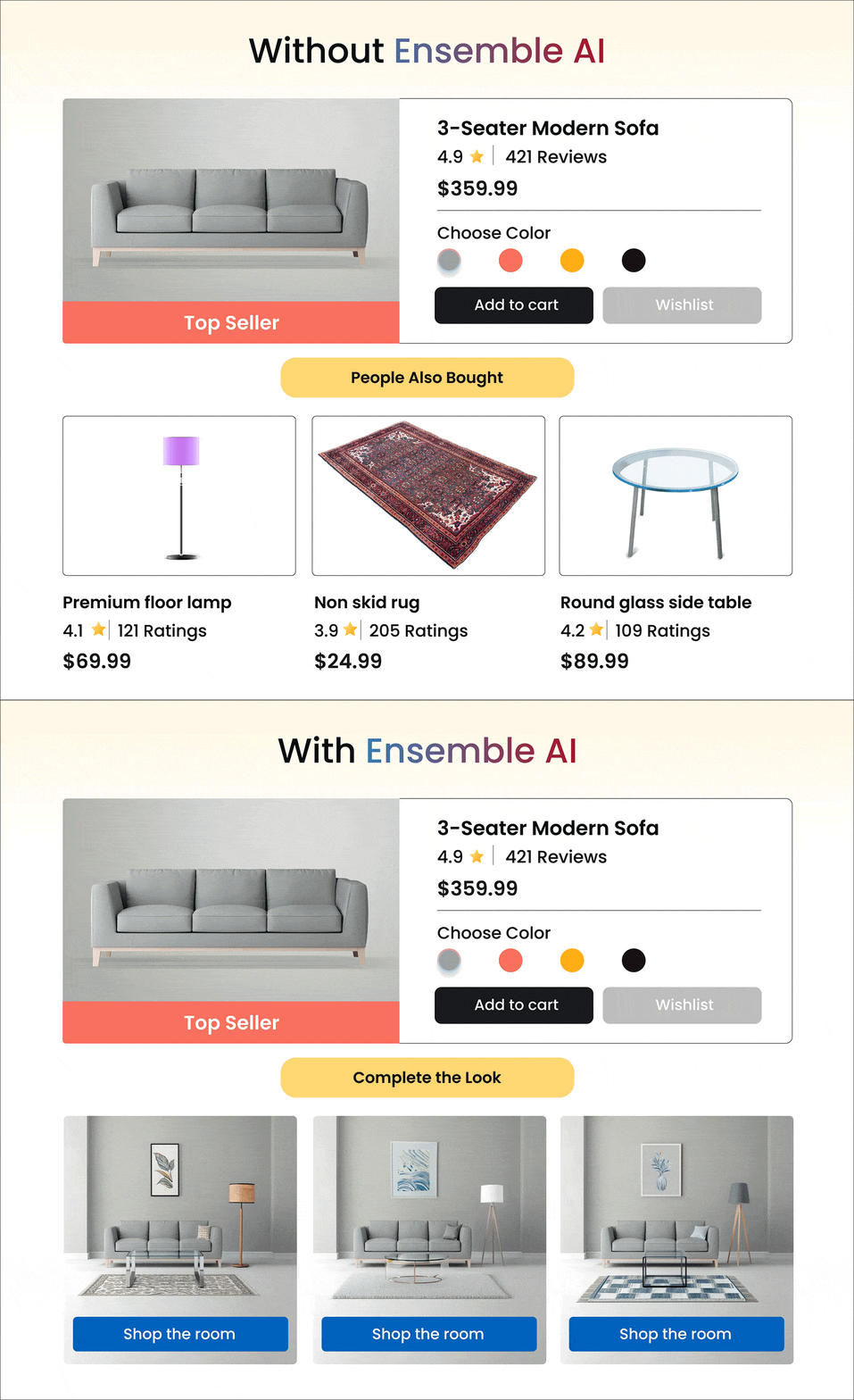
Imagine Emily, a shopper, redecorating her living room. As she browses your home décor e-store, a curated “Shop the Room” collection catches her eye—a complete living room ensemble featuring a plush gray sofa, a chic glass coffee table, a coordinating area rug, accent pillows, and elegant wall art. Each item is thoughtfully selected to harmonize in style and color, creating an inviting and cohesive space.

Now, compare this with traditional recommendations, where Emily might see individual items in a “People also bought” section under the gray sofa’s product overview. That approach uses the same digital shelf space yet delivers only 3–5 items in isolation. By contrast, “Shop the Room” ensembles showcase a cohesive collection of complementary products in one screen, maximizing Emily’s exposure to multiple items at once.

This visually stunning presentation makes it effortless for Emily to envision how the items would look together in her own home. She quickly adds the entire ensemble to her cart, confident in her decision to bring this aesthetic into her living space.

This strategic use of screen real estate not only simplifies Emily’s shopping journey but also delivers significant benefits for the retailer. By dynamically creating visually compelling collections, Ensemble AI maximizes ecommerce personalization exposure, drives higher conversion rates, and improves inventory turnover—all while creating a more engaging and personalized shopping experience.

The Power of Ensemble AI

By incorporating Ensemble AI into your digital commerce strategy, you can unlock many benefits:

Real-Time Adaptation: The ensembles are continuously updated to reflect the latest trends and shopper behaviors, ensuring relevance and freshness. By tailoring recommendations based on individual real-time customer profile data, retailers can deliver personalized experiences at scale.

Smart Merchandising: The system enhances product presentation through visually appealing and contextually relevant ensembles. Showcasing complete, cohesive outfits elevates the shopping experience and encourages customers to add more items to their carts—increasing cross-sell and upsell opportunities.

Increased Efficiency: Automating product ensemble creation saves merchandisers time and resources. Retailers can reduce their reliance on expensive stylists, particularly in industries like fashion, streamlining the curation process while maintaining high-quality styling standards.



With these capabilities, Ensemble AI empowers retailers to create seamless, personalized ecommerce experience and engaging shopping experiences that drive significant business growth.

Conclusion

Advanced AI functionalities offer the tools and insights needed to transform the shopping experience from mundane to magical. By leveraging advanced AI models and real-time data, Ensemble AI creates perfectly curated product ensembles that captivate shoppers and drive significant business growth. This means increased engagement, higher AOV, and enhanced customer loyalty. With ADA Global’s Ensemble AI, the future of shopping is not just personalized—it’s perfectly tailored for success.

Ready to harness the power of Ensemble AI to boost AOV and transform customer experience?

Request a demo today
Table Of Contents
Crafting Stunning Product Ensembles to Deepen Customer Engagement
Increasing Average Order Value (AOV) with Smart Product Bundles
Maximizing Digital Shelf Space to Inspire Confident Purchases
The Power of Ensemble AI
Conclusion

15 proven strategies to increase customer engagement in 2025

Data & AI
Blogs

15 proven strategies to increase customer engagement in 2025

15 Proven Strategies to Increase Customer Engagement

In today’s rapidly evolving business landscape, where consumer choices abound and attention spans are fleeting, fostering meaningful and lasting connections with customers has become more crucial than ever. As a dedicated content writer, your role in crafting engaging narratives and strategies plays a pivotal role in helping your clients stand out and thrive.

In this article, we delve into proven and actionable strategies to elevate customer engagement to new heights, ensuring that your clients can cultivate loyalty, drive conversions, and make a lasting impact. Let’s get started!

15 Proven Strategies to Increase Customer Engagement

To help you enhance your customer engagement strategies, we’ve compiled a list of 15 proven tactics that can significantly impact your business’ success.

1. Leverage Personalised Content and Recommendations

In an era of information overload, delivering personalised content and recommendations to your customers can significantly enhance engagement. Utilise data analytics to understand customer preferences and behaviours, then tailor your marketing messages, product suggestions, and email campaigns accordingly. This approach makes customers feel understood and valued, increasing their likelihood of engaging with your brand.

2. Foster an Active Social Media Presence

Social media platforms provide an excellent opportunity to connect with your audience personally. Regularly post engaging and relevant content, respond promptly to comments and messages, and use interactive features like polls and Q&A sessions to encourage participation. Creating a vibrant online community can strengthen customer relationships and keep them engaged with your brand.

3. Implement a User-Friendly Loyalty Programme

A well-designed loyalty programme can incentivise repeat purchases and foster a sense of belonging among your customers. Offer rewards, exclusive discounts, and early access to new products or services. Ensure the programme is easy to understand and navigate, providing a seamless experience that encourages customers to actively participate and engage with your brand.

4. Optimise Website for a Seamless User Experience

A user-friendly website is essential for keeping visitors engaged. Ensure your website is visually appealing, easy to navigate, and mobile-responsive. Fast loading times and intuitive design contribute to a positive user experience, encouraging visitors to explore your content, products, and services more extensively.

5. Develop Interactive and Informative Content

Create interactive content, such as quizzes, surveys, webinars, and videos, to capture your audience’s attention. Educational and informative content showcases your expertise and provides value to your customers. Encourage comments and discussions to create a community around your brand, driving engagement and interaction.

6. Encourage User-Generated Content

Harness the power of User-Generated Content (UGC) by encouraging customers to share their experiences with your products or services. Run contests, hashtags, or challenges that motivate customers to create and share their content on social media. UGC strengthens the bond between your brand and customers and serves as authentic social proof, driving engagement and trust.

7. Offer Exceptional Customer Support

Prompt and empathetic customer support is a cornerstone of strong customer engagement. Provide multiple channels for customers to reach out, such as live chat, email, and phone support. Address inquiries and issues promptly, showing customers that their concerns are valued and taken seriously.

8. Embrace Chatbots and AI Technology

Integrate chatbots and AI-driven solutions to provide instant assistance and personalised customer recommendations. Chatbots can engage with customers 24/7, answering common queries and guiding them through buying. This technology enhances the customer experience and ensures consistent engagement outside regular business hours.

9. Host Virtual Events and Workshops

Virtual events and workshops allow you to connect with a broader audience and provide valuable insights or entertainment. Webinars, online classes, and virtual product launches enable customers to engage with your brand in real time. Interactive features like live Q&A sessions foster direct interactions and build community among participants.

10. Collaborate with Influencers and Partners

Partnering with influencers and like-minded brands can expose your business to new audiences and inject fresh energy into your engagement strategies. Influencers can create authentic and relatable content that resonates with their followers, driving interest in and interaction with your brand.

11. Implement Gamification Elements

Gamification adds an element of fun and competition to customer engagement. Add gamified features like quizzes, challenges, or reward-based activities to your website or app. You can boost engagement and encourage repeat visits by tapping into customers’ natural desire for achievement and entertainment.

12. Prioritise Email Marketing

Email marketing remains a powerful tool for engaging customers. Craft compelling and personalised email campaigns that provide value through informative content, exclusive offers, or recommendations. Segment your email list to ensure each message is relevant to the recipient, driving higher open rates and engagement.

13. Listen and Respond to Feedback

Actively seek feedback from your customers and demonstrate that you value their opinions. Make improvements based on their suggestions, and communicate these changes transparently. Customers who see that their input leads to tangible results are likelier to stay engaged and loyal to your brand.

14. Leverage Emerging Technologies

Stay at the forefront of technological advancements to stand out in a crowded market. Experiment with augmented reality (AR), virtual reality (VR), or immersive experiences to offer unique and engaging interactions with your products or services. These innovative approaches can captivate your audience and create memorable engagement opportunities.

15. Measure and Analyse Engagement Metrics

Regularly monitor and analyse key engagement metrics to gain insights into the effectiveness of your strategies. Track metrics such as click-through rates, social media interactions, and customer feedback to identify what’s working and what needs adjustment. Data-driven decision-making ensures that you continuously optimise your engagement efforts for maximum impact.

In conclusion, by implementing these 15 proven strategies, you can set your business on a trajectory of increased customer engagement, brand loyalty, and overall success in the dynamic landscape of 2024. The power of personalised content, social media interactions, loyalty programmes, and immersive experiences cannot be underestimated. As you embark on this journey to elevate your customer engagement game, consider leveraging ADA’s Customer Engagement Solution.

ADA’s suite of cutting-edge tools harnesses the potential of popular channels such as SMS, WhatsApp, Viber, LINE, email, and more using telco data, AI, and NLP. With ADA, you can seamlessly transform the customer experience, delivering exceptional engagement and designing interactions that resonate with your audience.

Elevate your SMS marketing efforts to new heights, as our suite of ADA products and partnerships allows you to craft hyperlocal campaigns, reaching customers worldwide and rewarding them for their engagement, ultimately boosting customer retention. Don’t miss the opportunity to revolutionise your customer engagement strategy – take action today and partner with ADA for a brighter and more engaging future!

Table Of Contents
15 Proven Strategies to Increase Customer Engagement

Segmentation, targeting, and positioning marketing in 2025

Data & AI
Blogs

Segmentation, targeting, and positioning marketing in 2025

What is STP Marketing?

In the ever-evolving marketing landscape, finding effective ways to reach your target audience and deliver personalised messages is crucial. One strategy that has proven its worth time and again is Segmentation, Targeting, and Positioning (STP) marketing. Businesses can achieve remarkable success by dissecting the market into distinct segments, pinpointing the most valuable targets, and strategically positioning their product or service. Let’s dive into the intricacies of STP marketing, its benefits, and how to get started.

At its core, STP marketing is a strategic approach that involves breaking down a broad market into smaller, homogeneous segments based on shared characteristics, behaviours, and needs. Once these segments are identified, businesses can choose the most promising segments to target and tailor their marketing efforts to address each segment’s unique preferences and desires.

Finally, positioning comes into play, where businesses craft a distinct image and value proposition for their product or service in the minds of the chosen target audience.

Benefits of Implementing STP Model of Marketing

Embracing the STP model can bring many benefits to your business, creating a competitive edge and fostering strong customer relationships. Here’s a rundown of why you should consider implementing STP marketing:

1. Enhanced Personalisation

By understanding your various customer segments, you can create tailored marketing messages that resonate deeply with each group, resulting in higher engagement and conversion rates.

2. Efficient Resource Allocation

STP marketing enables you to allocate your marketing resources more efficiently. Rather than taking a one-size-fits-all approach, you can focus your efforts and investments on the most potential segments.

3. Improved Customer Retention

When you cater to your customer’s specific needs and preferences, you enhance their overall experience, fostering loyalty and reducing churn rates.

4. Higher ROI

Targeted marketing campaigns are more likely to yield better returns on investment. By directing your efforts toward segments with a higher propensity to convert, you maximise your ROI.

5. Competitive Advantage

Understanding your market segments better than your competitors allows you to craft unique value propositions and position your offerings in a way that stands out in the minds of consumers.

How Can You Start Implementing STP Marketing?

Embarking on an STP marketing journey requires a systematic approach. Here’s a step-by-step guide to help you get started:

1. Market Research

Conduct thorough market research to identify distinct segments within your target market. Look for common characteristics, behaviours, and preferences.

2. Segmentation

Categorise your market into meaningful segments based on the insights gained from your research. These segments could be based on demographics, psychographics, behaviours, or a combination of factors.

3. Targeting

Evaluate the potential of each segment in terms of size, growth, and profitability. Select one or more segments that align with your business objectives and have the most promising potential.

4. Positioning

Develop a compelling value proposition for each chosen segment. Craft messages and branding that resonate with each group’s unique needs and desires.

5. Tailored Marketing

Create targeted marketing campaigns for each segment. This could involve customising content, imagery, channels, and promotions to appeal to the chosen audience.

6. Feedback and Adaptation

Monitor the performance of your campaigns and gather feedback from each segment. Use this information to refine your strategies and adapt your approach as needed.

7. Continuous Refinement

STP marketing is an ongoing process. Regularly analyse your segments, their needs, and the competitive landscape to ensure your strategies remain effective and relevant.

By mastering the art of STP marketing, you position your business for success in a world where personalisation and targeted messaging are the keys to capturing the hearts and minds of consumers. So, embark on this journey, and witness your marketing efforts yield remarkable results.

In the dynamic world of modern marketing, the STP strategy has emerged as a powerful tool to unlock the full potential of your business. By understanding your market segments, aligning your efforts with their specific needs, and effectively positioning your offerings, you can drive engagement, loyalty, and growth like never before.

As you embark on this journey, remember that success lies in implementing STP principles and embracing the right resources and technologies to amplify your efforts. Here’s where ADA Asia, a leader in Marketing Technology, comes into play.

Ready to take your marketing strategy to the next level? ADA Asia is here to partner with you on this transformative journey. With a comprehensive suite of Full Funnel Campaign Management solutions, ADA Asia empowers businesses to seamlessly implement the STP model, enhance customer experiences, and achieve unparalleled results. ADA Asia’s expertise and tools can supercharge your STP marketing efforts from advanced data analytics to personalised automation. Explore here to see how ADA Asia’s services can revolutionise your approach to STP marketing and drive your business toward greater success. Your tailored marketing revolution starts here.

Table Of Contents
What is STP Marketing?
Benefits of Implementing STP Model of Marketing
How Can You Start Implementing STP Marketing?

Transforming Supplier Collaboration With Automation – Challenges and Road Ahead

Merchandising and Supply Chain
Blogs

Transforming Supplier Collaboration With Automation – Challenges and Road Ahead

As businesses embrace technology-driven capabilities globally, the word collaboration assumes a critical stance, especially in industries that thrive on seamless functioning across multiple disparate components.

As businesses embrace technology-driven capabilities globally, the word collaboration assumes a critical stance, especially in industries that thrive on seamless functioning across multiple disparate components. Retail is an epitome in this regard, with its success hinging on transparency, responsiveness, integrated management, and comprehensive visibility, among other factors.

This is exactly why supplier collaboration matters for every retailer aiming to achieve greater profitability, better control, and precise strategy stemming from streamlined operational management and data-driven insights.

While supplier collaboration is the essence of healthy and profitable retail supply chains, the space is riddled with multiple challenges, that spur inefficiencies, ultimately chipping away at the bottom lines.

In this blog, we discuss:

  • What does supplier collaboration mean for a retailer?
  • Why is supplier collaboration important?
  • What are some critical challenges faced by retailers while collaborating with suppliers?
  • How do we leverage automation for supplier management?
  • What are the various benefits of automation-driven supplier collaboration?
  • Some industry trends, success stories, and data-rich insights related to supplier collaboration in retail.

What Is Supplier Collaboration?

Supplier collaboration means retailers and suppliers working together in a streamlined and integrated manner to drive strategic decisions and get complete visibility over movements, processes, and operations, for truly seamless functioning.

Collaboration in supply chains is essential for reliable, transparent, and efficient operations as it enables both retailers and suppliers to have a unified view of all separately working entities in the supply chain ecosystem.

From invoices to shipment movements, product data to shipment data, supply-side deviations, and inventory to supplier performance, an intelligent supplier collaboration platform enables retailers and suppliers simultaneously.

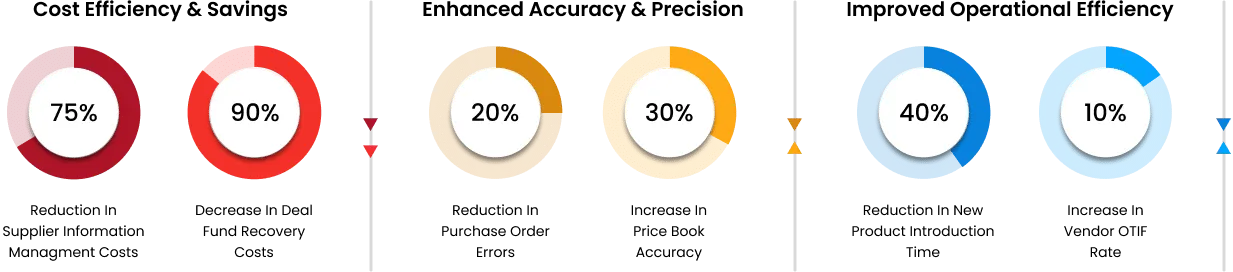
Improved collaboration in the supplier network directly influences as much as 20% of total revenue apart from other key metrics such as customer experience and cost of operations.

How Is Supplier Collaboration Different From Supply Chain Collaboration?

While the overall essence remains the same, the terms supplier collaboration and supply chain collaboration vary in their meanings and processes from one industry to another.

Supply chain collaboration will encompass the 360-degree collaboration spanning suppliers, retailers, manufacturers, logistics providers, warehousing providers, technology providers, etc.

On the other hand, supplier collaboration focuses on the entire ecosystem of retail-supplier interactions and operations, such as product cataloging, electronic data interchange capabilities, inventory data, supply-related events, like lead times, supplier performance KPIs, payments, etc.

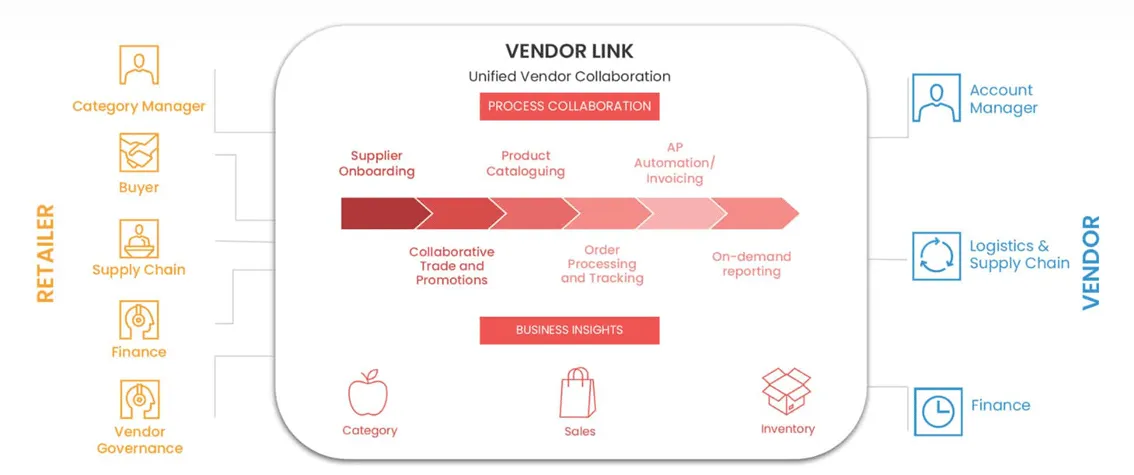
So, supplier collaboration platforms enable both retailers and suppliers to operate in an integrated manner through a unified interface in a truly seamless manner. Retailers are always on top of all supply-side events, can easily manage new product introductions, take care of rapid supplier onboarding and deboarding, and ensure a firm grip over all the supplier-related information.

Supplier relationship management, data analytics & reporting, contract management, and category management – are the four “directly related to supply chain” critical initiatives with low maturity (top business priorities on the procurement initiatives side.

Be it promotions, supplier rebates, billings, claims, settlements, or any other critical process, intelligent supplier collaboration systems can transform how retailers and suppliers work. They easily overcome the tedious manual individual interactions with centralized communication interfaces and help retailers bypass cultural, communication, and regional barriers like language, etc., to operate effortlessly.

Why Is Supplier Collaboration Important?

As per a recent 2024 survey report by The Hackett Group, operational agility improvement is a critical business objective for 17% of organizations and a high priority for 43% of them.

Retail vendor collaboration is the foundation of supply chain resilience, robustness, visibility, and transparency. All of these are the most important factors for supply chain success.

1 Improved Supply Chain and Inventory Planning

A lack of mutual trust and communication tops the list of challenges for 63% of retailers and 52% of suppliers.

With the right retailer collaboration platform, retailers and suppliers can easily overcome communication barriers and unlock greater transparency in terms of consignment, shipment lifecycle, inventory, supply side deviations, and finance operations. They can stay on top of any disruptions and fraudulent activities and work in a mutually trustworthy manner.

2 Reduced Operational Costs

Studies reveal that up to 25% of supply chain data is inaccurate due to siloed information. Further, poor data quality costs organizations an average of $12.9 million every year.

Further, inefficient or incorrect invoicing and claims settlements incur huge costs to businesses across different segments of the retail industry. With a proper supplier management interface, retailers can find all the required information in one place whenever required. They can instantly cross-check the claims, approve settlements, and calculate rebates automatically, reducing costs.

Another important aspect of reducing supplier-related costs in retail supply chains is sustainability. Manually managed inventory optimization is a sob story of overstocks, obsolescence, stockouts, and wastage, translating into lost sales, capital lock-ins, and high inventory holding costs.

ML-driven supplier management software inherently overcomes these challenges with built-in workflow automation that can be customized as per business requirements.

3 Supply Chain Efficiency

Right from man hours to the number of steps involved in completing a task, and real-time data insights – supplier collaboration platforms offer 360-degree streamlining of retailer-supplier operations.

Demand planners no longer have to grab hold of procurement staff or supply chain professionals to get real-time insights on inventory availability. Likewise, suppliers no longer have to wait for multi-party approval via multiple channels for operations.

As all the information for all the channels and functions is disseminated efficiently via a single unified interface, that is secure and transparent, retailers as well as suppliers can unlock more supply chain efficiency and greater savings.

4 Product Lifecycle Management

Managing new product introductions, products with shorter lifecycles, and challenging categories, such as imported eatables, or products with short shelf life such as ultra-fresh categories are some of the most critical and challenging entities to manage.

Manual and traditional systems don’t offer any special capabilities to retailers or suppliers to manage the nuances and rely heavily on human involvement. This affects operational efficiency and increases category management costs.

Improving supplier collaboration with automated supplier management software enables retailers to reduce the effort involved in managing the entire product lifecycle via digitized cataloging, supplier onboarding, electronic data interchange, and other such capabilities.

They can simplify new product introductions and challenging categories digitally, improving efficiency, profitability, and retail inventory optimization solution by strategic sourcing and inventory positioning.

Critical Challenges Faced by Retailers While Collaborating With Suppliers

1 Communication Challenges

Manually managed supply chains or supply chains with traditional management infrastructure lack transparency, and suffer from disparate functions. Most of the retailer-supplier collaboration relies on individual connections and is inefficient.

2 Multiple Interfaces

Working with multiple suppliers means toggling among multiple management interfaces, some of which might not be integrated with the existing tech infrastructure. This spurs inefficiencies, and redundancies, as retailers are unable to have a comprehensive understanding of supply-side processes.

3 Siloed Operations

Managing every supplier in a disparate manner also affects retailers’ understanding of key performance metrics. They cannot measure the efficiency and productivity of each supplier, let alone the overall supply chain efficiency.

Further, the inability to have a wholesome inventory picture at a particular time affects the planning, skewing the replenishment planning solutions and inventory processes as well.

4 Lack of Visibility and Transparency

Visibility and transparency degrade across the multiple tiers in a supply chain, which is detrimental to the overall efficiency and effectiveness of the retailer-supplier ecosystem, where multiple stakeholders are interconnected at multiple levels for multiple products and services.

While 45% of global supply chains are expected to be autonomous by 2035, 45% of businesses report limited supply chain visibility, and only 15% of CPOs report visibility beyond Tier 1 suppliers.

5 Mutual Trust and Reliability

Manually managed supplier ecosystem often spurs mistrust among the stakeholders, thereby degrading the overall reliability. As collaboration mainly relies on individual communication channels, the response times stretch and delays in responding to inquiries can lead to a 20-30% increase in lead times, impacting overall store replenishment efficiency.

Leveraging Automation for Supplier Collaboration in Retail

Automation transforms the entire supplier collaboration process by digitizing processes and optimizing workflows in an intelligent manner. Retailers can easily streamline supplier management via built-in workflows that can be customized to their business needs and nuances.

Automation supplier collaboration platforms empower retailers by unifying the entire supply-side ecosystem and integrated management capabilities delivered via an intuitive dashboard interface. Retailers can easily onboard new suppliers within minutes, automate finance operations, create digital product catalogs, and optimize management across the entire value chain.

They can track the shipments in real time, manage supply-side deviations with predictive alerts, and get actionable insights for strategic business decisions.

Another powerful benefit of automated supplier management is the ability to track and measure individual supplier performance in a centralized manner. Right from POs to invoices, and claims to order plans, retailers and suppliers can always stay on top of the right and relevant information in an accurate and timely manner.

Supplier Collaboration Automation – Benefits

1 Centralized Collaboration Interface

With a unified collaboration and management interface neither the retailers nor suppliers have the need for manual re-checking and confirmation. They can mutually benefit from transparent communication, reliable processes, and autonomous access to information at all times for all relevant stakeholders.

2 Automated Alerts and Notifications

Real-time alerts and notifications are another powerful benefit of supplier collaboration automation software. The solutions have built-in intelligent workflows that automate the entire query response and resolution process and can be customized as per the business requirements.

Automated responses, multi-device accessibility, ability to collaborate across multiple channels and with multiple people via a single interface ensure timely responses, efficient communication, and seamless supplier collaboration.

3 Improved Visibility and Transparency

A unified supplier management platform integrates supplier data from multiple sources and offers a wholesome view of all processes, product information, invoices, and much more, thereby unlocking greater efficiency and strategic decision-making.

Businesses can generate highly detailed reports to make decisions at store-level, product-level, region-level, etc., and manage everything from a real time customer data profiles real-time dashboard.

4 Automated Data Capture and Document Processing

Automation-powered supplier collaboration solutions digitize the data entry at all levels and allow relevant stakeholders to do/update/delete/manage all the entries in a secure manner.

They can digitize documents and store them in the cloud which facilitates effortless supply chain execution without leaving any room for fraud. This improves the invoicing and claims settlement processes as well, thereby reducing the wait times.

5 Supplier Performance Tracking and Analytics

Automating supplier management via intelligent algorithms offers real-time visibility into the shipment and order movements at a granular level.

Businesses can automate invoicing, and claims settlement, and leverage advanced third-party integrations for accurate, transparent, and reliable finance operations management. They can also get access to supplier performance data and analytics for performance assessment and visualization as well as rewards, etc.

Must explore GenAI services for retail

6 Seamless Integration With Existing Systems

Intelligent automation facilitates seamless integration across multiple third parties and existing technological infrastructure. Thus, businesses can operate without revamping the entire business model or making significant investments in replenishment optimization processes.

They can work with multiple suppliers, track shipments, settle invoices and claims, and manage product and supplier data from a single interface while allowing all the relevant stakeholders to view and manage the information on a need basis.

How Can ADA Global Help?

Vendor Link is ADA Global’s intelligent supplier collaboration solution that comes with in-built intelligence of ensemble AI and ML algorithms and fosters true collaboration across the entire supply chain with its exhaustive capabilities.

It helps retailers overcome the complexities of the supplier ecosystem and manage the operations as they evolve.

Here is a functionality snapshot of the Vendor Link:

Retailers can utilize the built-in e-approval workflows and self-help portal for 70% faster vendor onboarding and reduce supplier information management costs. As supplier onboarding, product catalogs, and supply data are digitized, they can ensure 100% data accuracy, reducing errors and redundancies.

Other advanced capabilities include collaborative promotions and rebate planning, management and tracking of supplier funding, performance insights, EDI capabilities, and more, that help retailers unlock:

For more information, or to explore how Vendor Link can transform your supplier management, please get in touch with our experts today, and schedule a personalized free demo.

Frequently Asked Questions

1 What is supplier collaboration in retail?

Supplier collaboration encompasses streamlining communication and supplier-related processes via strategic partnership and cooperation and increased transparency for better decision-making and operational agility.

2 What are the benefits of automating supplier collaboration in retail?

Supplier collaboration automation helps streamline communication, enhance visibility, improve inventory management, and reduce operational costs. It helps retailers and suppliers collaborate in a more efficient and transparent manner, leading to better decision-making and operational agility.

3 How can automation help improve supplier performance tracking?

Automation platforms for supplier collaboration offer advanced functionalities for supplier performance tracking and metrics-based management of supplier processes. Retailers can automate claims and invoice management, thereby improving transparency and collaboration.

4 How does supplier collaboration differ from overall supply chain collaboration?

Supplier collaboration focuses specifically on interactions between retailers and their suppliers, such as product cataloging, inventory management optimization, and supplier performance measurement. On the other hand, supply chain collaboration involves optimizing communication and processes across the entire supply chain, and often includes logistics providers, manufacturers, and technology partners.

Table Of Contents
What Is Supplier Collaboration?
How Is Supplier Collaboration Different From Supply Chain Collaboration?
Why Is Supplier Collaboration Important?
Critical Challenges Faced by Retailers While Collaborating With Suppliers
Leveraging Automation for Supplier Collaboration in Retail
Supplier Collaboration Automation – Benefits
How Can ADA Global Help?
Frequently Asked Questions

Retail Planning Automation – Optimize for Holiday Sales

Merchandising and Supply Chain
Blogs

Retail Planning Automation – Optimize for Holiday Sales

The latest issue of Great Christmas Gazette is out and the gifts community is abuzz with the talks of holiday demand fluctuations, supply-side deviations, and snarling inefficiencies creeping from crevices of manual interventions.

The fulfillment teams are working overtime and gift shop shelves are teeming with new enticing and never-before-seen items. Suppliers are getting orders left, right, and center, and everything from warehouses to stores is in a festive frenzy.

However, Rudolph, the jolly retailer, found himself grappling with a mountain of inventory woes this year. With multiple stores and hundreds of suppliers, managing stock levels across different locations to cater to customer demand while ensuring optimal stocks is proving a difficult task. Without proper insight into the real-time inventory, demand patterns, market fluctuations, and supply-side operations, optimizing replenishment cycles became a nightmare.

While poring over dozens of sheets and purchase orders, Rudolph gets a visit from none other than Santa, who then describes how automation-driven retail and supply chain planning can rid Rudolph of all his woes.

Here are all the digs from the super engaging chat, straight from the North Pole!

1. AI-Based Demand Forecasting Solutions

The inability to anticipate demand accurately can significantly derail retail planning and supply-side operations and can result in multiple revenue-hurting scenarios. Common examples include overstocked shelves, stockouts, wastage, higher storage costs, capital lock-ins, mismatched assortment, and more.

Analyzing and predicting demand at granular levels, like stores, requires an in-depth understanding of the interplay of tens of different factors that vary from external to internal, customer preferences, seasonality, demand patterns, and so on. Traditional demand planning and forecasting systems crumble in such a scenario, leaving retailers with inaccurate forecasts, disgruntled customers, and thinning bottom lines.

AI-powered demand forecasting solutions, on the other hand, can analyze data from various sources, such as weather data, historical sales data, and social media trends, to provide retailers with accurate forecasts. This helps retailers order the right products in the right quantities and avoid stockouts or overstocking.

2. Optimizing Inventory Replenishment

Inventory replenishment is built on top of demand forecasting solutions and any errors in demand forecasting get snowballed in the replenishment phase. Further, optimal replenishment helps retailers reduce inventory costs, and wastage, cater to customer demand without overstocking, and improve shelf availability in a precise manner.

Achieving this manually or with the help of legacy inventory management systems doesn’t yield the required levels of accuracy across the entire value chain. Bias error, and no capability to measure and plan for demand shifts and lifts during promotions, the effect of seasonality, demand fluctuations, etc., are the major reasons for the same.

This is why retailers need to opt for inventory optimization instead of regular planning and management processes. AI/ML-driven inventory optimization enables retailers to allocate the right inventory with hyperlocal accuracy while incorporating multiple constraints and sales influencers. Retailers can adjust for any supply-side deviations such as lead time fluctuations, delays, fill rates, and more to ensure high shelf availability.

3. Integrating Retail Planning Functions

One of the most challenging aspects of retail planning is the siloed nature of tasks. Critical functions like demand forecasting, sales predictions, and inventory planning can steer the overall efficiency of retail operations wayward. The inability to analyze and model the effects of sales and demand patterns on inventory replenishment via an integrated interface makes it difficult to have a single source of truth.

The major reasons behind disparate functioning are legacy systems and lack of supporting technological infrastructure, which is often viewed as an additional business cost.

Investing in an integrated retail planning solution that offers a centralized operations management dashboard and combines both demand planning and inventory replenishment functions can do wonders in this regard. Retailers can model variations, get actionable insights related to all the functions in one place, and always have a single bird’s eye view of every function with the ability to go as granular as they want.

4. Merchandising Analytics

Another powerful tool that enables retailers to position inventory and plan assortments strategically is merchandising analytics. How the demand for specific items is looking like, are there any seasonal variations that are going to affect the demand in a particular category, and what items are vulnerable to wastage or overstocking – intelligent analytics capabilities have answers to all these and many such questions.

Now, investing in a standalone predictive analytics solution is only going to add another management interface with siloed data in the retail ecosystem.

So, we recommend opting for an integrated solution with comprehensive analytics capabilities. As the merchandise analytics capabilities are built-in and integrated with demand and inventory functions, retailers can take well-informed decisions and draw actionable insights from advanced data visualization.

5. Automating Supplier Collaboration

Efficient and mutually fulfilling retailer-supplier collaboration is the foundation of successful retail operations. Retailer and supplier interactions, documentation, onboarding, product information, and finance management are all critical for fostering true supplier collaboration.

However, the majority of suppliers use third-party operations management interfaces, which means additional work for retailers and more redundancies in terms of individual tracking, processing, and more.

This is where automation-driven supplier collaboration frameworks come into the picture. Armed with built-in and customizable automated workflows for supplier onboarding, new product introductions, product cataloging, documentation, supplier/retailer data interchange, invoice and PO management, etc., these frameworks can transform retail supply chain management via truly seamless and effortless collaboration.

Automating retail and supply chain planning comes with amazing benefits. However, having the right approach, figuring out the right use cases, and incorporating a scalable, robust, and flexible technology suite is a dire necessity for successful endeavors.

So, while Rudolph benefits from these secret tips from dear Santa, why not take action and get started for an amazing holiday retail adventure this year?

Table Of Contents
1. AI-Based Demand Forecasting Solutions
2. Optimizing Inventory Replenishment
3. Integrating Retail Planning Functions
4. Merchandising Analytics
5. Automating Supplier Collaboration

Inventory Forecasting – Trends, Techniques, and Best Practices

Merchandising and Supply Chain
Blogs

Inventory Forecasting – Trends, Techniques, and Best Practices

Accurate inventory forecasting is the heart of retail planning and inventory optimization. Capturing demand accurately and optimizing inventory accordingly can not only reduce inventory costs but can also help retailers boost customer satisfaction, improve shelf availability, and increase inventory ROI.

With fierce competition, rapidly evolving customer preferences, and quick new product and brand introductions, retailers can no longer afford to plan inventory manually.

Studies reveal that the annual costs of holding excess inventory can reach up to 32% and recent economic changes, evolving priorities, etc., are pushing as many as 75% of customers to change their shopping habits.

So, how can retailers forecast demand, capture demand patterns, and evaluate the effect of seasonal variations on the inventory? What is inventory forecasting and what are the different techniques for the same? How important is it to forecast inventory and what are some of the best practices that retailers can benefit from?

Below, we explore the answers to all these questions.

What Is Inventory Forecasting?

Inventory forecasting is predicting the required inventory levels for a future period based on historical sales data, customer purchase trends, upcoming events, etc. Forecasting involves drawing well-calculated projections based on data-driven insights from previous data and multiple constraints influencing customer purchase behavior and demand.

Often used interchangeably with demand forecasting inventory forecasting spans beyond setting reorder points and order plan adjustments based on seasonal sales influencers. It encompasses identifying patterns and trends to adapt to dynamically evolving customer demands and market conditions to curate the right inventory at the right time to meet customer demand optimally.

Inventory Forecasting vs Inventory Replenishment vs Demand Forecasting

While all three terms are interconnected and generally used interchangeably in the retail ecosystem, they are distinct processes

Inventory Forecasting

  • Predicting future inventory requirements based on historical sales data, seasonal variations, and market trends
  • The goal is to estimate optimal stock levels for meeting anticipated customer demand.
  • Effective strategies include tracking and monitoring inventory KPIs – reorder points, average inventory, etc.

Inventory Replenishment

  • Predicting future inventory requirements based on historical sales data, seasonal variations, and market trends
  • The goal is to estimate optimal stock levels for meeting anticipated customer demand.
  • Effective strategies include tracking and monitoring inventory KPIs – reorder points, average inventory, etc.

Demand Forecasting

  • Predicting future inventory requirements based on historical sales data, seasonal variations, and market trends
  • The goal is to estimate optimal stock levels for meeting anticipated customer demand.
  • Effective strategies include tracking and monitoring inventory KPIs – reorder points, average inventory, etc.

The Ultimate Guide to Demand Forecasting in Grocery Retail (2024)

Check out Our Demand Forecasting Guide for a Deeper Understanding.

Learn More

Why Is Inventory Forecasting Important?

Inventory forecasting helps retailers plan and optimize inventory and cater to customer demand such that overstocks, stockouts, and wastage are reduced, and shelf availability is increased.

Forecasting inventory prepares retailers with reliable insights to adapt their replenishment plans and inventory distribution according to near real-time factors and sales influencers. They can club the insights with demand forecasting insights and replenishment plans to minimize the impact of supply-side deviations on inventory and sales.

1 Reduce Inventory Costs

Traditionally demand planners and inventory managers use static planning methods which lead to overstocks or OOS events, both of which cost retailers their business. While overstocking eats away at the working capital, it also balloons up warehouse storage costs and leads to obsolescence and complete wastage in certain categories.

Likewise, OOS events affect customer experience and impact the revenue pipeline. Studies reveal that as many as 73% of customers will change retail brands after just one bad experience and a whopping 70-90% of stockouts are caused by poor shelf replenishment optimization practices.

With data-driven inventory demand prediction retailers can minimize stock issues, order and allocate optimal inventory levels across all geographies, and reduce inventory costs. AI-driven inventory replenishment solutions with built-in forecasting engines can take the inventory optimization process one step further by offering highly granular forecasts for specific product-location entities.

2 Overcome Data Inaccuracies

As many as 40% of retailers cancel at least one out of ten orders due to inaccurate inventory data. Overcoming retail data inaccuracies is particularly challenging owing to the highly disparate functioning of all system functions. Further, the retail data is infamous for being highly unstructured, noisy, and riddled with gaps.

Overcoming data inaccuracies is essential for accurate inventory forecasting because any errors in capturing inventory or demand data have a snowball effect on the final inventory values and metrics.

Intelligent retail demand planning and forecasting solutions inherently overcome such challenges by employing the intelligence of advanced data analytics techniques. They run on intelligent algorithms that are fine-tuned to the nuances of retail data and can generate inventory plans with high forecasting accuracy by eliminating noise and gaps.

3 Improve Inventory ROI

McKinsey reveals that AI-driven forecasting can reduce supply chain errors by 30 to 50%, shrinking lost sales by 65% and warehousing costs by 10 to 40%. All these are crucial factors affecting the overall inventory ROI and can lead to significant cost savings for retailers.

Further, PwC outlines that investing in solutions that help optimize data-driven use cases, such as customer data, can increase their contribution margins by 3% to 5% after deducting initial investments and acquisition costs.

What makes inventory forecasting so beneficial is the fact that it accounts for the interplay of multiple factors and constraints, ranging from sales patterns to customer purchase patterns, demand shifts, demand lifts, seasonality, external/internal factors, and more, to generate optimized inventory plans.

So, ultimately, the retailers are able to boost revenue, sales, customer satisfaction, and shelf availability, while reducing stock issues, wastage, and inventory.

Inventory Forecasting Techniques

There are multiple methods of inventory forecasting. Further, as retailers use different forecasting solutions with different capabilities, the boundaries among the techniques, algorithms, and processes are fleeting and evolving with every passing day.

Generally, inventory forecasting techniques can be categorized into the following four categories:

Trend Forecasting

  • Shows trend projections based on changes in product demand over time
  • Doesn’t always account for seasonality or sales data irregularities

Graphical Forecasting

  • Identifies patterns and sloped trend lines to find out insights that might have been possibly missed
  • Unable to handle complexities, heavily subjective, and reliant on historical data

Quantitative Forecasting

  • Uses statistical methods and historical sales data to generate future inventory projections
  • Demonstrates data dependency and inability to adapt to change

Qualitative Forecasting

  • Involves market research and focus groups to predict future inventory requirements
  • Doesn’t always account for seasonality or sales data irregularities

Different Techniques for Inventory Forecasting

1 Time-Series Forecasting

This inventory forecasting method involves predicting future demand patterns based on historical data, and past inventory levels. It works well for categories with consistent and measurable inventory patterns.

The process involves data collection, data processing, trend analysis, checking the effects of seasonality on data, and forecasting model selection. It is important to note that the model selection is going to have a significant impact on the overall accuracy and efficiency of forecasting and is done based on specific characteristics of inventory data.

Common techniques for time series inventory forecasting are moving averages, Seasonal Decomposition of Time Series (STL), exponential smoothing, deep learning approaches, etc.

2 Seasonal Forecasting

This is one of the most popular inventory forecasting techniques and it predicts future demand patterns in inventory data showing a recurring seasonal effect. For instance, trending categories or products during holiday seasons, seasonal cosmetic products, agricultural products, fashion apparel, etc.

Its ability to identify seasonal trends and variations in demand enables retailers to plan for seasonal fluctuations and adjust inventory levels accordingly. Coupled with accurate demand forecasting and replenishment techniques, it can help retailers reduce inventory holding costs, stockouts, and overstocks, and boost customer satisfaction with the right inventory at the right time.

Common techniques for seasonal inventory forecasting methods include Historical Averages, and Machine Learning and Deep Learning-based approaches.

3 Historical Data Analysis

A stepping stone for demand forecasting, the historical data analysis technique involves exhaustive analysis of historical data, be it sales, inventory, market, etc., and offers valuable insights into customer behavior, top-performing categories, sales patterns, and many more critical business metrics.

However, historical data analysis is a challenging process as the data sets tend to become highly unstructured and full of noise and gaps over time. Hence, the technique requires data cleaning, data organization, and standardization, etc., to improve the data quality.

Unless coupled with advanced data analysis and processing techniques, the technique can lead to erroneous projections due to the data cleansing and standardization steps.

Common techniques for historical data analysis include regression analysis, cyclical patterns, time series analysis, exponential smoothing, trend analysis, etc.

Inventory Forecasting Techniques Based on Statistical Models

Challenges in Choosing the Right Inventory Forecasting Techniques

Data Quality and Preprocessing

As mentioned above, the retail data is noisy, has gaps, and comes with multiple redundancies. This means, that pre-processing or standardizing data for quality purposes can affect the accuracy of results. This is mainly due to the fact that the models can reject the correct or relevant data or consider noise as the correct data.

As every next step in the forecasting process is built on top of the results drawn from data cleansing, the effects can easily snowball into massive errors, derailing the accuracy of inventory forecasts and ultimately business decisions.

How to Handle Sparse and Noisy Data in Retail Forecasting

Learn More

Seasonality and Trends

Vetting the effect of seasonality or trends on specific data can be particularly challenging owing to subjective data handling and analysis. When done incorrectly, the model can over-fit or underfit data patterns affecting the overall forecast accuracy.

On the other hand, seasonality might be relevant for a specific geography or set of consumers as well. For instance, the seasonal variations in the demand for challenging products like skincare are extremely complex to monitor and predict.

Model Selection and Tuning

While statistical modeling is one of the best inventory forecasting methods, model selection and data tuning can become subjective, thereby causing distortion in actual results. Manual model selection and tuning to business-specific use cases is a tedious process, which can spur business risks affecting revenue and profitability.

Dynamic Demand Patterns

Demand Planning for the modern retail ecosystem requires an understanding of the complex interplay of multiple factors, such as historical sales, in-store promotions, economy, trends, micro-trends, and supply-side disruptions. Add to the mix, the location and category-specific sales influencers and constraints for optimization, and the retailers are left with nothing short of a Pandora’s Box.

Further, the demand patterns change dynamically due to multiple external and internal factors, such as the emergence of omnichannel platforms, quick delivery services, and hybrid operation categories, which, can steer the forecast accuracy in the wrong direction.

Leverage AI-Driven Retail Planning to Manage Promotional Chaos

Learn More

Other miscellaneous factors such as data scarcity, multi-seasonal patterns, short product lifecycles, tough categories like ultra-fresh, fast new product introduction, etc., make inventory forecasting particularly challenging and vulnerable to errors.

How to Approach Inventory Forecasting – Best Practices

As evident from the above discussion, there is no single best inventory forecasting technique, as demand patterns are highly dynamic in nature, keep on evolving, and are affected by multiple factors.

Further, traditional and manual forecasting suffers from inefficiencies, inaccuracies, and poor scalability. Coupled with additional factors, like lead times, fill rates, and demand deviations stemming from in-store promotional dynamics, retailers find it difficult to generate precise inventory plans.

This is where AI and ML-driven inventory management optimization comes into the picture.

The AI/ML-driven inventory optimization solutions come with built-in intelligence of thousands of algorithms that can control and optimize for multiple factors and constraints, enabling retailers to unlock unparalleled precision and control over inventory.

Why Choose Optimization Instead of Standalone Inventory Management or Demand Forecasting?

Inventory optimization involves optimizing inventory at granular levels, precisely at the product-location level for multiple categories, stores, SKUs, and so on. What makes inventory optimization superior to standalone inventory forecasting and demand forecasting techniques is the fact that retailers can unlock immaculate precision and control over inventory based on accurate predictive modeling and real-time adjustments via a single interface.

ADA Global’s Order Right is one such powerful inventory optimization platform that comes with a built-in demand forecasting engine and ensemble AI algorithms to predict demand based on hundreds of customizable parameters.

Order Right (OR) enables retailers to generate accurate SKU-level order plans with unique retail-tuned replenishment planning solutions algorithms for intelligent demand-based replenishment planning.

Powered by Forecast Right which uses proprietary ML-based multivariate and algorithmic techniques to accurately and adaptively forecast demand, Order Right generates accurate SKU-level order plans for even the most challenging categories – from fresh and seasonal to new and promoted products with ease to help businesses unlock:

  • 10% Reduction in Inventory Cost
  • 75% Reduction in Out-of-Stock Instances
  • 10-30% Reduction in Wastage
  • 99% Increase in Shelf Availability

Frequently Asked Questions

1 What is inventory forecasting?

Inventory forecasting means predicting the required inventory levels for a future period based on historical sales data, customer purchase trends, upcoming events, etc.

2 Is inventory forecasting different from inventory planning?

Yes, inventory forecasting is different from inventory planning. While forecasting involves predicting demand, planning can encompass multiple activities ranging from generic inventory tasks to using forecasts for replenishment.

3 What are different inventory forecasting techniques?

There are different types of inventory forecasting techniques, trend forecasting, graphical forecasting, qualitative forecasting, time series modeling, etc.

4 How to choose the right inventory forecasting technique?

Choosing the right inventory forecasting technique depends on various factors, such as data availability and quality, demand patterns and trends, seasonality, forecast horizon etc.

Table Of Contents
What Is Inventory Forecasting?
Inventory Forecasting vs Inventory Replenishment vs Demand Forecasting
Why Is Inventory Forecasting Important?
Inventory Forecasting Techniques
Different Techniques for Inventory Forecasting
Inventory Forecasting Techniques Based on Statistical Models
Challenges in Choosing the Right Inventory Forecasting Techniques
How to Approach Inventory Forecasting – Best Practices
Why Choose Optimization Instead of Standalone Inventory Management or Demand Forecasting?
Frequently Asked Questions