What is eCommerce Customer Retention? Strategies, Metrics, and AI-Driven Optimization

Post
Blogs

What is eCommerce Customer Retention? Strategies, Metrics, and AI-Driven Optimization

What Is eCommerce Customer Retention, Metrics & Strategies

Ecommerce customer retention is a retailer’s ability to keep customers coming back to buy again over time. It is one of the clearest signals of sustainable growth because retaining existing customers is often more efficient than constantly replacing them.1

  • Customer retention measures how well a retailer keeps existing customers engaged and buying over time.
  • The most useful retention metrics include customer retention rate, churn rate, repeat purchase rate, customer lifetime value, average order value, and purchase frequency.
  • A good retention rate depends on category, purchase cycle, price point, and customer behavior.3
  • The strongest retention strategies usually combine personalization, loyalty and promotion strategy, post-purchase engagement, and cross-channel consistency.
  • AI and unified customer data help retailers improve retention by making journeys more relevant and better timed.2

Customer retention has become one of the clearest measures of healthy ecommerce growth. As acquisition costs rise and competition gets tougher, brands need more value from the customers they already have. That is one reason retention keeps moving up the priority list for ecommerce teams. Bain has long reported that raising retention by just 5% can increase profits by 25% to 95%, while McKinsey has found that effective personalization can reduce acquisition costs by as much as 50% and lift revenue by 5% to 15%.1 2

Ecommerce customer retention is the rate at which you retain your existing customers and how often they come back to shop over time. In ecommerce, how do you measure retention? Read on. You’ll learn what ecommerce customer retention is, how it is measured, which metrics matter most, what a great retention rate looks like, and the strategies that can increase repeat purchases, customer lifetime value, and long-term growth.

What Is eCommerce Customer Retention?

Definition of Customer Retention in eCommerce

Ecommerce customer retention is how well a retailer turns first-time buyers into returning customers and returning customers into loyal, high-value customers.

Customer retention in ecommerce is not only about whether someone buys again. It is about whether the experience gives that shopper enough reason to keep choosing the brand over time.

Online customer retention focuses on keeping digital shoppers engaged across touchpoints such as the website, app, email, SMS, paid media, and customer support. The goal is to make every return visit and follow-up interaction more relevant, useful, and easier to act on.

Why Retention Matters More Than Acquisition

Acquisition is how you fill the funnel with new shoppers. Retention is how much value those shoppers bring you in the long run.

Retention has become an all-time top priority for many retailers. Acquisition costs are harder to manage. Paid channels are competitive. Browsing privacy changes have impacted targeting. There are more options than ever for shoppers. Retention offers a solution to that pressure by bolstering the lifetime value of the customers a brand already has in its hands.

A strong retention program can drive repeat purchases, increase customer lifetime value, reduce reliance on new-customer acquisition, and heighten ROI on marketing spend.

Retention vs Churn Rate in eCommerce

Retention and churn are closely related, but they measure opposite sides of customer behavior.

Ecommerce customer retention is the % of customers that continue doing business with you during a particular period. Ecommerce churn rate is the % of customers that drop out of doing business with you during a particular period.

Why eCommerce Customer Retention Is Critical for Growth
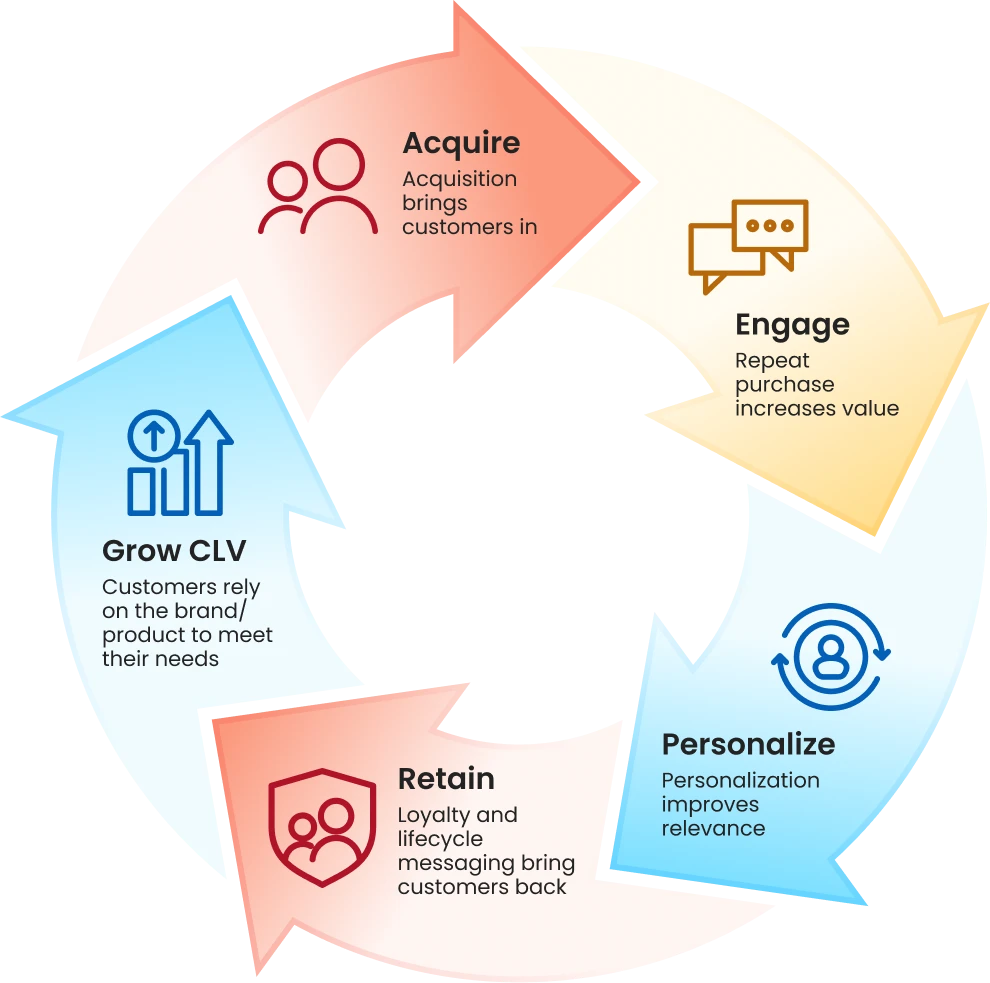
Impact on Revenue, Profitability, and ROAS

Customer retention improves the quality of ecommerce revenue. Returning customers usually know the brand, need less persuasion, and are more likely to respond to relevant offers. That makes repeat revenue more efficient than growth that depends only on new-customer acquisition.

Retention also affects return on ad spend (ROAS). When brands bring customers back through smarter lifecycle marketing, personalized offers, and better post-purchase experiences, the value of the original acquisition improves. A first order may recover only part of the cost of acquisition. Repeat orders help improve the economics over time.

This is why ROAS and customer retention should be looked at together. A campaign that acquires customers at scale may look successful in the short term, but its true value depends on whether those customers come back.

Want to know where your site is losing revenue per visitor?

Retention improves when returning shoppers find more relevant products, offers, and journeys. An RPV teardown can help identify missed opportunities across product discovery, recommendations, content, and conversion paths.

Relationship Between Retention and Customer Lifetime Value (CLV)

Customer lifetime value (CLV) estimates how much revenue a customer is likely to generate over the full relationship with a brand. Retention is one of the biggest drivers of CLV because customers who return more often create more value over time.

A retailer can improve CLV by increasing:

  • Repeat purchase rate
  • Average order value
  • Purchase frequency
  • Customer lifespan
  • Cross-sell and upsell effectiveness

How Retention Reduces Customer Acquisition Cost (CAC)

Customer acquisition cost (CAC) measures how much a business spends to acquire a new customer. Retention does not change what was spent to acquire a customer in the first place, but it improves the return on that spend.

Retention also reduces pressure on acquisition teams. Brands with strong repeat purchase behavior do not need to replace as many lost customers just to maintain revenue.

Retention vs Growth: Why Top Brands Focus on Existing Customers

Healthy ecommerce growth needs both acquisition and retention. Acquisition fills the funnel. Retention compounds value from the customers already in it.

Top retailers focus on existing customers because repeat behavior reveals what the brand is doing well. When customers return, it usually means the experience, product relevance, pricing, service, and communication are working together. When customers do not return, it often points to gaps in the journey.

That is why retention should not sit only with CRM or loyalty teams. It spans across ecommerce, merchandising, marketing, customer experience, and data teams.

Key eCommerce Customer Retention Metrics You Must Track

The customer retention metrics ecommerce teams should track include customer retention rate, churn rate, repeat purchase rate, customer lifetime value, purchase frequency, and average order value.

Customer Retention Rate (CRR)

Customer retention rate (CRR) measures the percentage of customers a business keeps during a defined period.
For example, if you started the month with 1,000 customers, ended with 1,100 customers, and acquired 200 new customers during that month, your CRR would be:

CRR = ((1,100 – 200) / 1,000) × 100 = 90%

A rising CRR usually signals that more customers are staying active. A falling CRR may point to weaker customer experience, poor post-purchase engagement, pricing pressure, or stronger competition.

Churn Rate in eCommerce

Churn rate measures the percentage of customers who stop buying during a given period. In ecommerce, churn can be harder to define than in subscription businesses because customers do not always cancel. They simply stop shopping.

For this reason, retailers need to define churn based on category behavior. A grocery customer may be considered inactive after a few weeks. A furniture customer may not buy again for many months and still be a healthy customer.

Useful churn analysis should account for:

  • Average purchase cycle
  • Product category
  • Seasonality
  • Customer segment
  • Acquisition channel
  • First purchase type

Repeat Purchase Rate (Returning Customer Rate)

Repeat purchase rate, also called returning customer rate, measures the percentage of customers who make more than one purchase.

Formula:

Repeat purchase rate = (Customers with more than one purchase / Total customers) × 100

This is one of the most useful ecommerce retention metrics because it shows whether customers are coming back after their first order.

Customer Lifetime Value (CLV)

Customer lifetime value (CLV) estimates the total revenue a customer is expected to generate over the course of their relationship with a brand.

CLV helps teams understand which customers are most valuable and which retention investments make sense. For example, a retailer may choose to spend more on loyalty offers, personalized recommendations, or premium support for high-CLV segments.

CLV should not be read in isolation. It becomes more useful when viewed alongside repeat purchase rate, average order value, purchase frequency, and acquisition cost.

Net Promoter Score (NPS)

Net Promoter Score (NPS) is an indicator of a customer’s likelihood to recommend their brand to friends and family. This is typically captured through a survey that poses a question along the lines of “How likely are you to recommend this business to people you know?”

NPS can give you a directional indication of loyalty and satisfaction, but it should not take the place of behavioral retention metrics. A customer can say they like a brand but still shop elsewhere for a better price, convenience, assortment, or service level.

Purchase Frequency and Average Order Value (AOV)

Purchase frequency captures the frequency that a customer purchases within a defined period. Average order value (AOV) captures the amount that a customer purchases within a defined period.

Customer Retention Rate (CRR)

The percentage of existing customers who stayed active during a defined period.

FORMULA
CRR = ((E – N) / S) × 100
E = end customers   N = new   S = start
BEST USED FOR
Measuring how well the business holds on to its existing customer base over time.


Churn Rate

The percentage of customers who stopped buying or became inactive during a defined period.
FORMULA
Churn = (Lost / Start) × 100
Lost = customers lost   Start = period start
BEST USED FOR
Identifying customer loss, inactivity, or drop-off risk by category, cohort, or purchase cycle.


Repeat Purchase Rate

The percentage of customers who made more than one purchase.
FORMULA
RPR = (2+ Purchases / Total) × 100
Customers with 2+ orders / all customers
BEST USED FOR
Understanding how many first-time buyers become returning customers.


Customer Lifetime Value (CLV)

The total revenue a customer is expected to generate over their relationship with the brand.
CLV = AOV × Frequency × Lifespan
AOV = avg order value
BEST USED FOR
Prioritizing high-value segments, retention investment, loyalty strategy, and personalization.


Net Promoter Score (NPS)

How likely customers are to recommend the brand to others.
FORMULA
NPS = % Promoters – % Detractors
Score ranges from -100 to +100
BEST USED FOR
Gauging customer satisfaction and loyalty sentiment alongside behavioral retention metrics.


Purchase Frequency

How often customers buy within a defined period.
FORMULA
Frequency = Orders / Unique Customers
Total orders ÷ unique customer count
BEST USED FOR
Tracking repeat behavior, replenishment patterns, and the strength of customer engagement.


Average Order Value (AOV)

The average amount customers spend per order.
FORMULA
AOV = Total Revenue / Number of Orders
Sum of revenue ÷ total order count
BEST USED FOR
Measuring basket value and identifying opportunities for cross-sell, upsell, bundles, and recommendations.

What Is a Good Customer Retention Rate for eCommerce?

Average customer retention rate ecommerce benchmarks can be useful, but they should never be treated as universal targets because grocery, beauty, electronics, fashion, and furniture all have different buying cycles.

Industry Benchmarks: Fashion, Electronics, Grocery, and D2C

There is no universal retention rate that applies across ecommerce. A good retention rate depends on product type, purchase cycle, price point, and customer need.

Categories with frequent repeat needs, such as grocery, beauty, pet care, food and beverage, and supplements, usually have more natural retention opportunities. Categories with longer purchase cycles, such as furniture, electronics, appliances, and luxury goods, may have lower purchase frequency but higher order value.

Decile’s Q1 2025 ecommerce benchmarks show how much customer mix varies by category. The ratio of new to returning customers was 2.48 in home goods, 1.33 in fashion and apparel, and 1.21 in health and beauty. In supplements and food and beverage, returning customers outnumbered new customers, with ratios of 0.81 and 0.88 respectively. Purchase frequency also varied by category, from 1.1 in fashion and apparel to 1.3 in supplements.3

For retailers, the lesson is simple: benchmark against businesses with similar purchase behavior, not against a generic ecommerce average.

Average Churn Rate for eCommerce

Average churn rate in ecommerce is difficult to standardize because purchase frequency varies so widely. A customer who does not buy again for six months may be inactive in grocery, but still normal in electronics or furniture.

Instead of relying on one average churn number, retailers should define churn windows by category and cohort. For example:

  • Grocery: no purchase in 30 to 60 days
  • Beauty or Supplements: no purchase after expected replenishment period
  • Fashion: no purchase across a season or campaign cycle
  • Electronics: no engagement or accessory purchase after a major purchase
  • B2B eCommerce: no reorder within the normal procurement cycle

This makes churn measurement more practical and more accurate.

How to Benchmark Your Retention Performance

The best retention benchmarks combine external context with internal trend lines.

Retailers should compare retention by acquisition channel, product category, first purchase type, etc.

A good benchmark answers two questions:

  1. Are we improving against our own past performance?
  2. Are we performing well for our category and customer type?

How to Calculate eCommerce Customer Retention Rate (Step-by-Step)
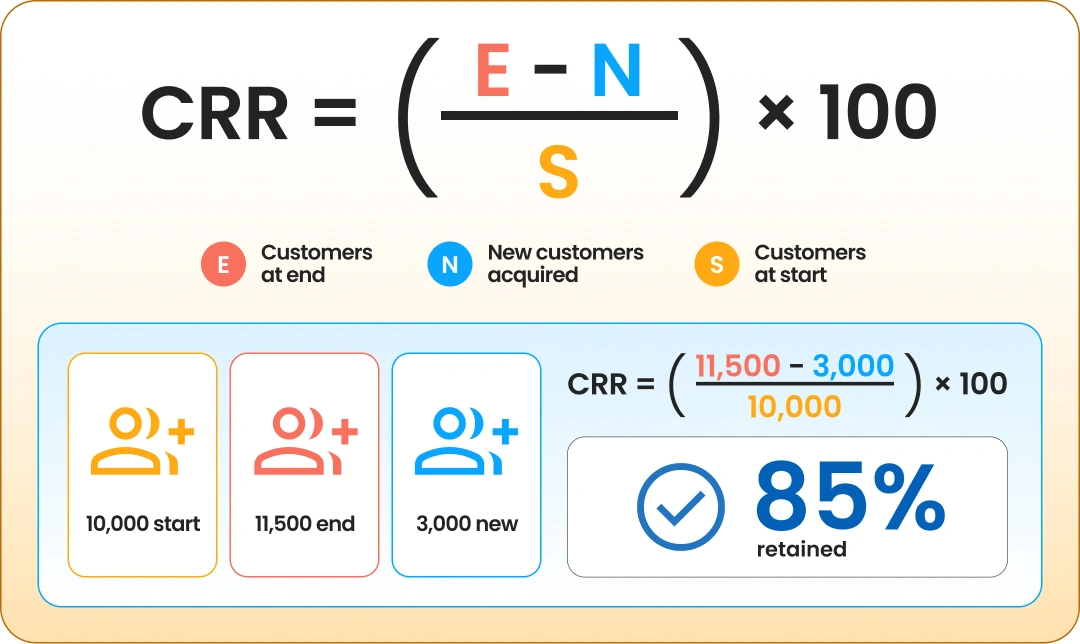
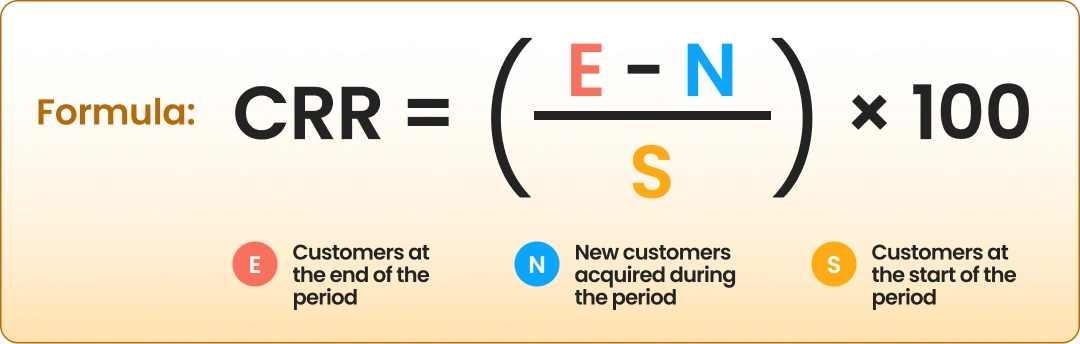
Formula Explanation

Use this formula to calculate customer retention rate:

Customer retention rate = ((Customers at end of period – New customers acquired during period) / Customers at start of period) × 100

The formula removes new customers from the ending customer count so you can measure how many of your original customers stayed active.

Before calculating CRR, define:

  • The time period
  • What counts as an active customer
  • Whether you are measuring all customers or a specific cohort
  • Whether refunds, cancellations, or dormant accounts should be excluded

Real Example Calculation

Assume an ecommerce retailer has:

  • 10,000 customers at the start of Q1
  • 11,500 customers at the end of Q1
  • 3,000 new customers acquired during Q1

Customer retention rate = ((11,500 – 3,000) / 10,000) × 100

Customer retention rate = 85%

This means the retailer retained 85% of the customers it had at the start of the quarter.


Common Mistakes in Retention Calculation

Mistakes include:

  • Counting orders instead of customers
  • Using inconsistent time periods
  • Forgetting to remove new customers from the ending count
  • Comparing customers from very different acquisition channels
  • Ignoring refunds, cancellations, or inactive accounts

Top eCommerce Customer Retention Strategies

Customer retention optimization is the ongoing process of improving the experiences, campaigns, and journeys that encourage customers to return. For ecommerce retailers, this means testing what improves repeat purchase rate, customer lifetime value, purchase frequency, and reactivation over time.

Customer retention strategies for ecommerce should focus on repeat purchase behavior, better post-purchase journeys, relevant offers, and customer experiences that make people want to return.

The best ecommerce customer retention strategy is usually not one tactic, but a connected program that brings together personalization, loyalty, content, customer data, and service.

The ecommerce customer retention methods below give teams practical ways to improve repeat purchase behavior without relying only on discounts.

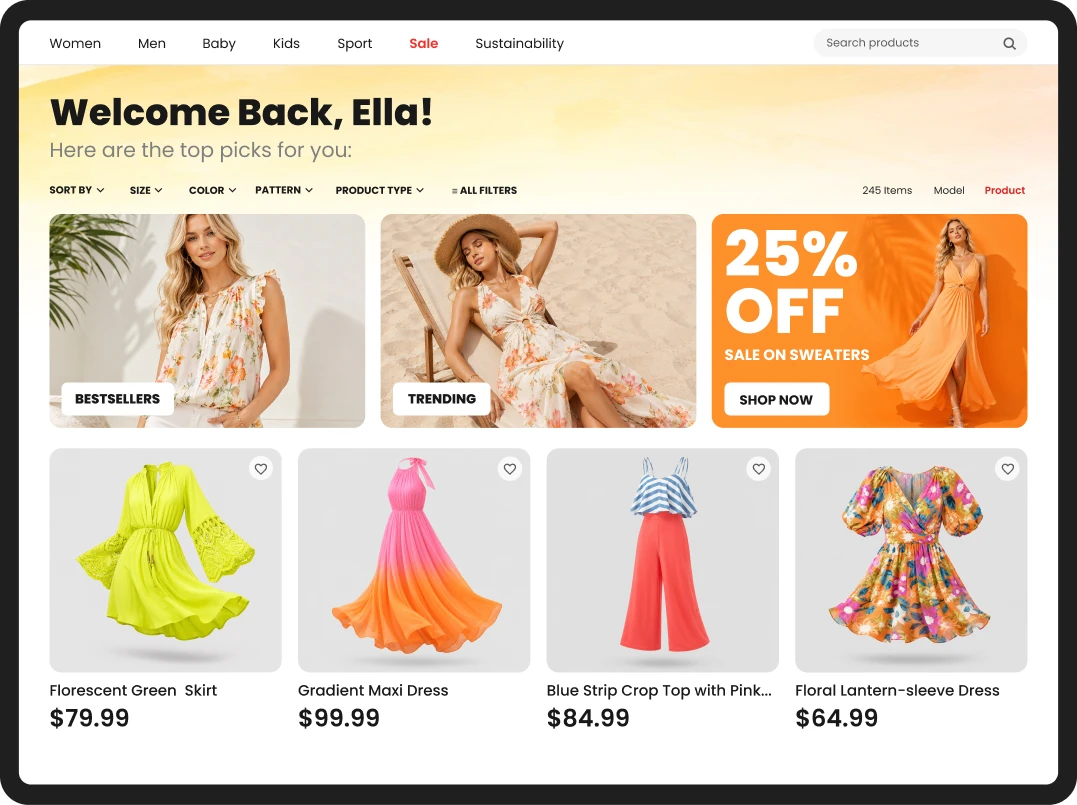
1 eCommerce Content Personalization at Scale with AI

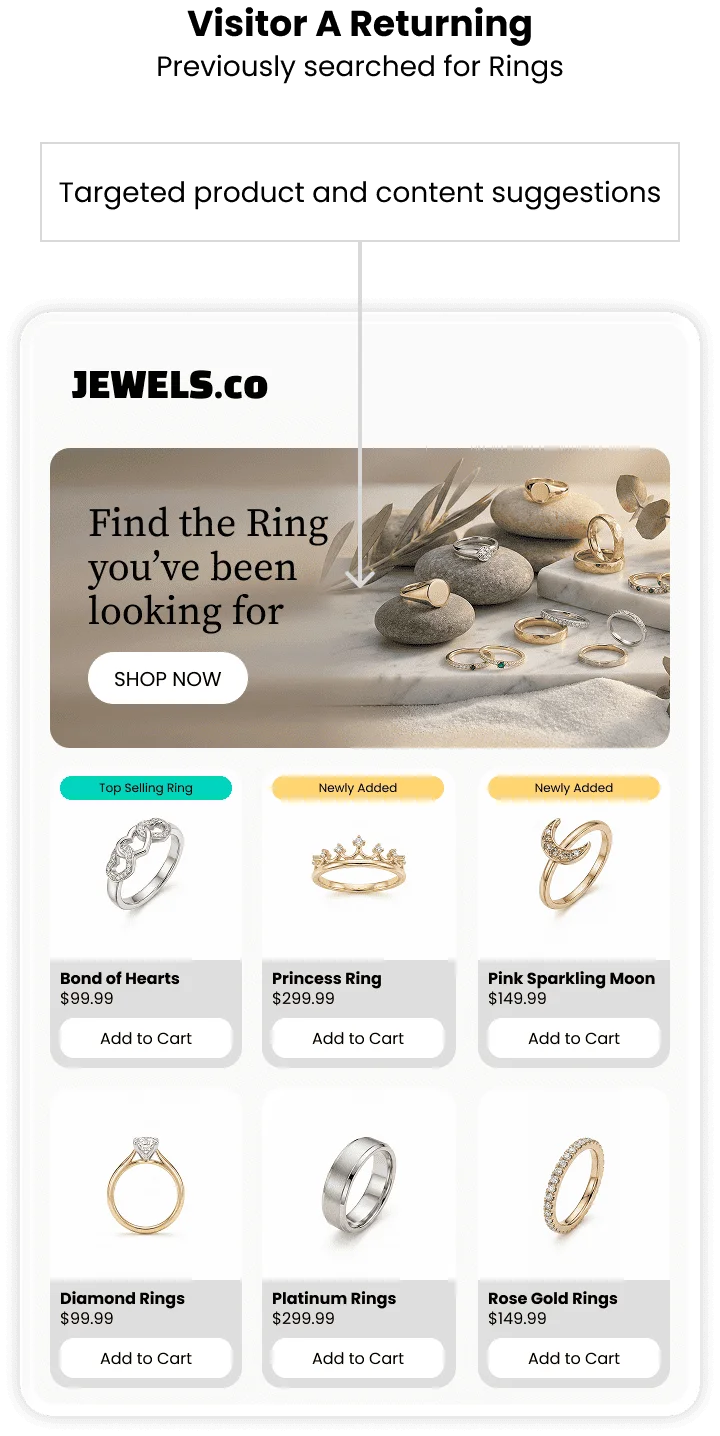
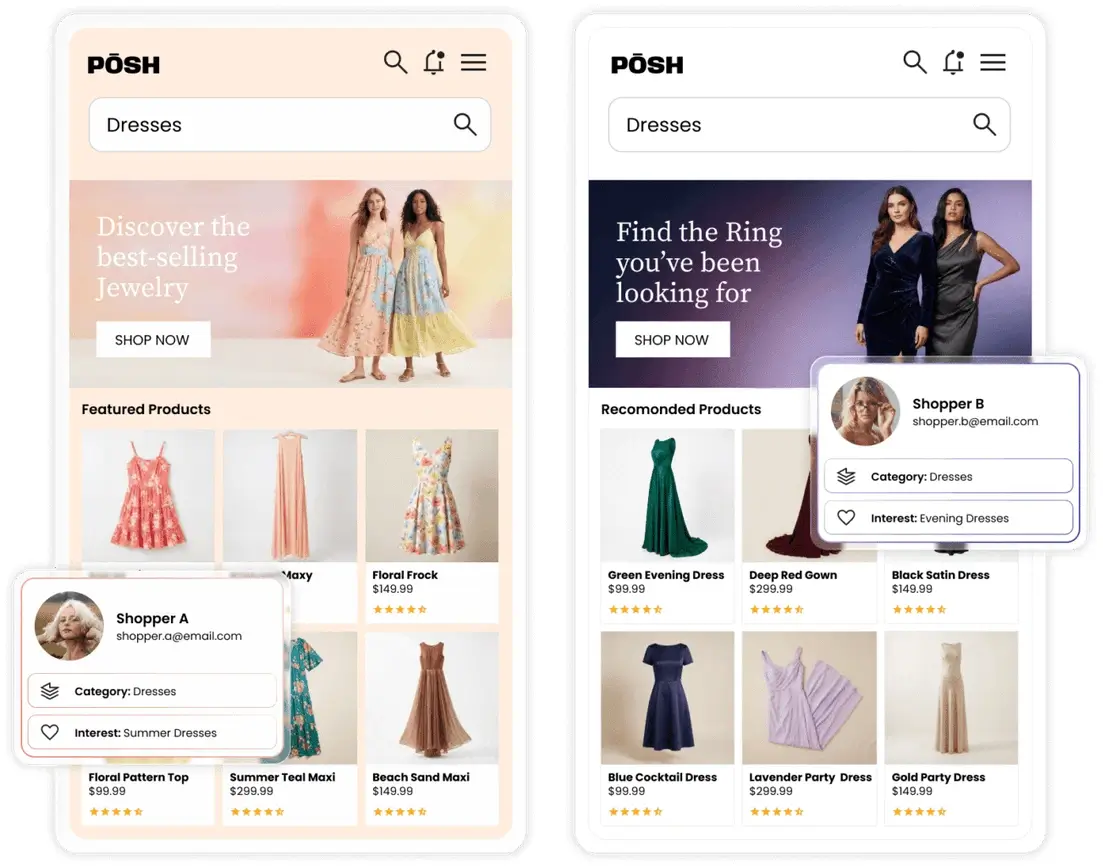
Ecommerce content personalization plays an important role. The content a shopper sees on a homepage, product detail page, email, or app screen should reflect what the retailer knows about that customer’s needs and their journey stage.

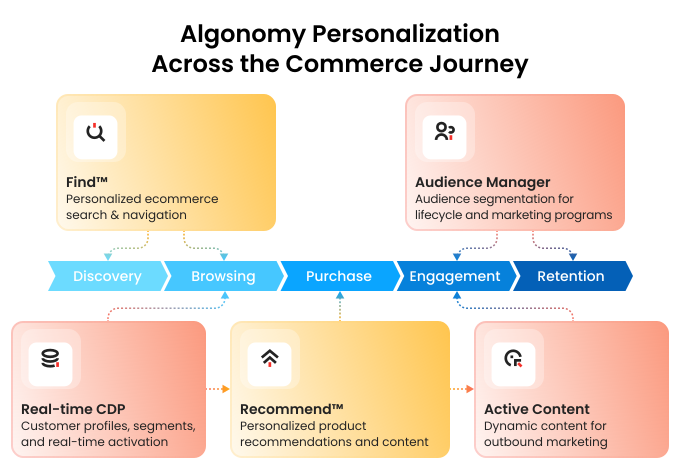
Recommend™ enables retailers to personalize product discovery and recommendations around shopper intent. Matas is an example of how personalized recommendations can support ecommerce growth by making the shopping journey more relevant.
2 Customer Loyalty and Retention Programs

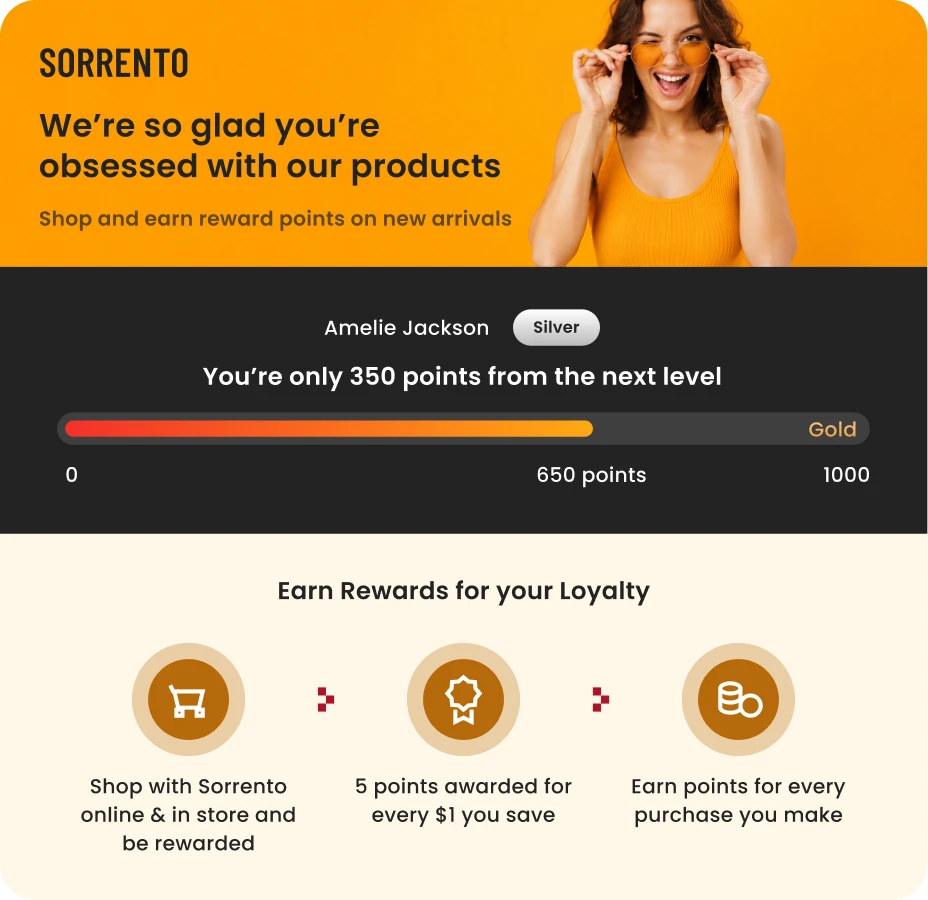
Loyalty programs help retailers encourage repeat behavior, but the strongest programs are built around more than points. Rewards, promotions, and benefits must feel relevant to their shopping habits.

Common loyalty program mechanics include points-based rewards, VIP tiers, member-only pricing, etc.

Audience Manager helps marketers build more precise loyalty, promotion, and reactivation audiences. This makes it easier to target customers based on behavior, value, lifecycle stage, or likelihood to respond.
3 Post-Transaction Engagement Strategies

Post-transaction engagement strategies for customer retention focus on what happens after a customer buys. This part of the journey is often underused, even though it shapes whether a customer feels confident enough to return.

These best practices for customizing post-checkout experiences support customer retention by making the period after purchase feel clearer, more useful, and more personal.

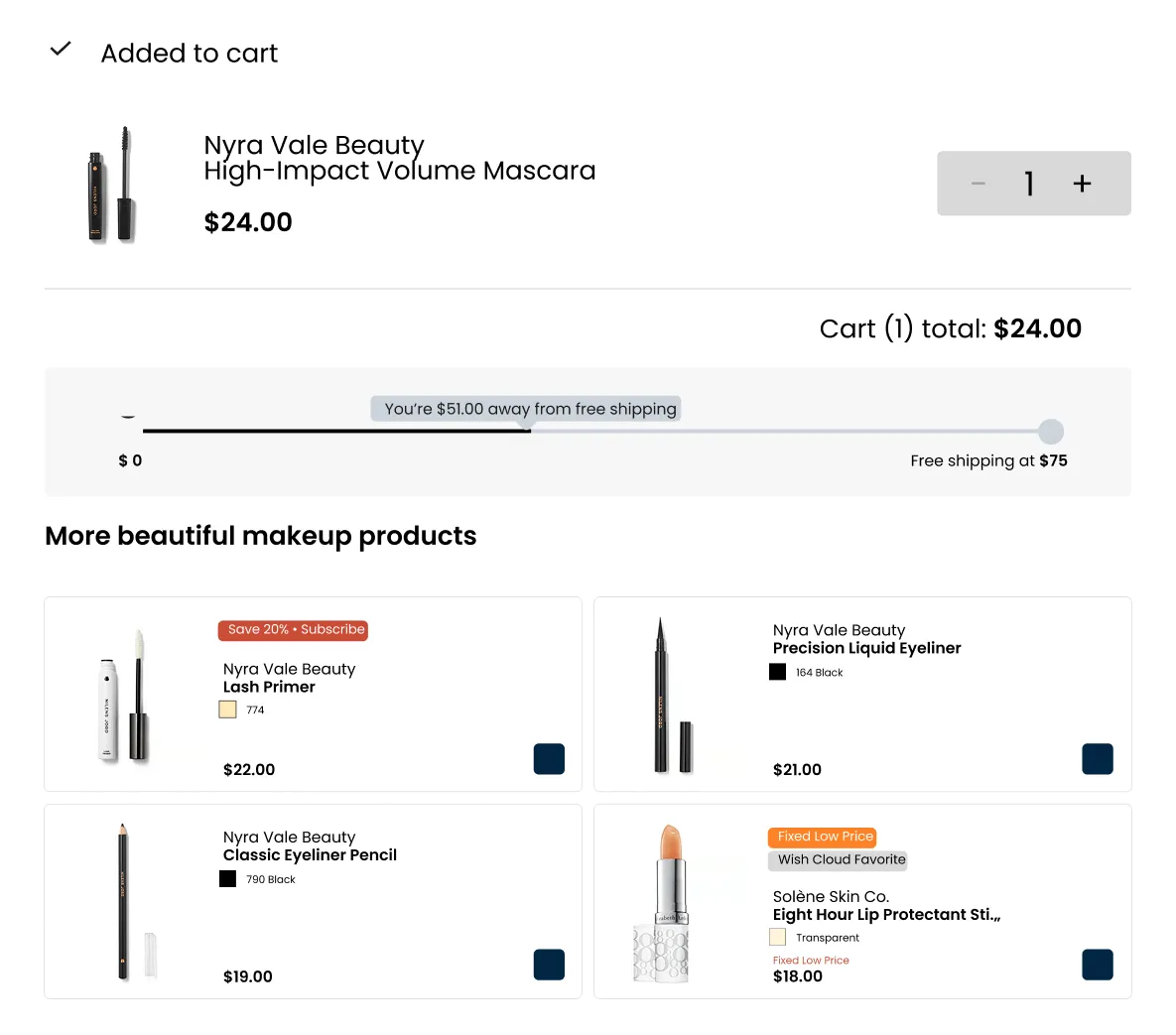
Useful post-transaction engagement can include order confirmations, shipping and delivery updates, review requests, replenishment reminders, etc.
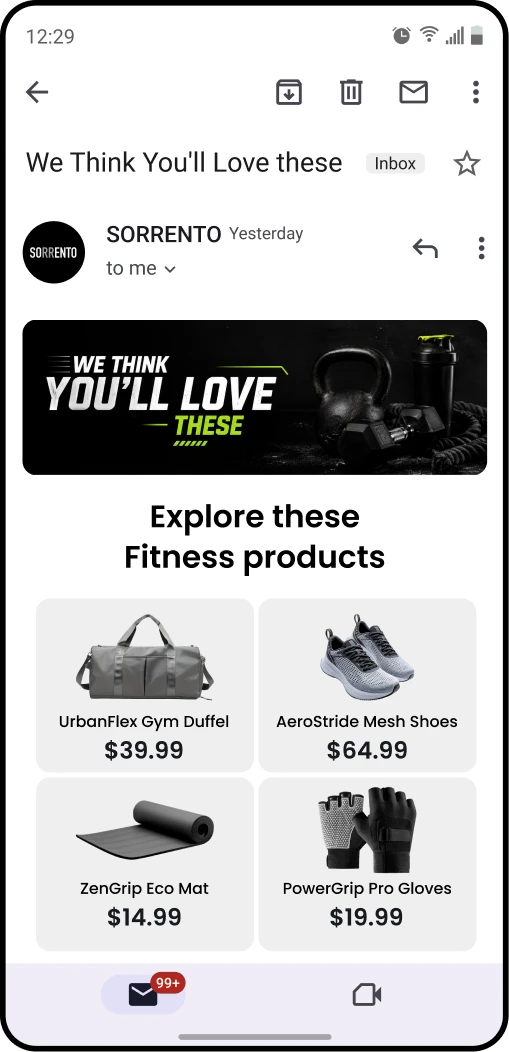
Active Content supports post-purchase engagement with triggered, personalized lifecycle content. Consum shows how stronger lifecycle execution can also improve the operational side of retention marketing by reducing campaign effort and improving speed to market.

4 Omnichannel and Unified Commerce Experiences

Customers move across websites, apps, email, paid media, stores, and support channels. They expect the brand to recognize them across that journey.

Unified commerce helps make this possible by connecting data and experiences across channels. This can improve retention by:

  • Reducing repeated or irrelevant messages
  • Improving offer timing
  • Making loyalty programs more consistent
  • Helping service teams understand customer history
  • Supporting seamless journeys across web, app, email, and store

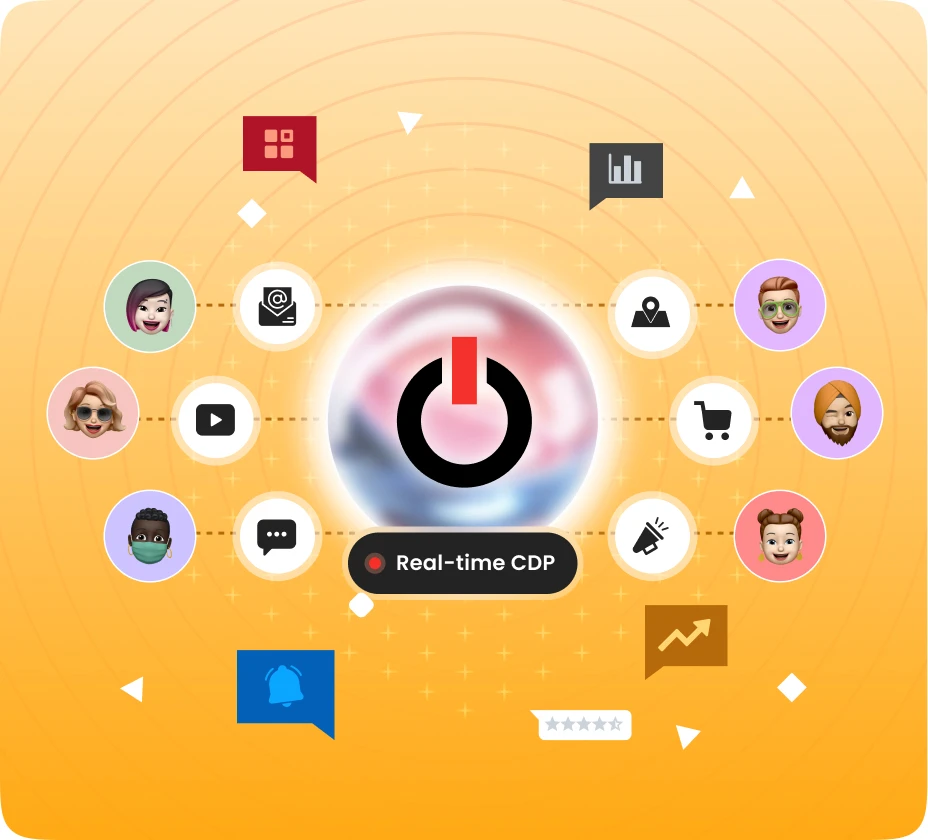
Real-time CDP plays a central role here by helping retailers unify customer data and activate it across channels.
5 Email and SMS Retention Marketing

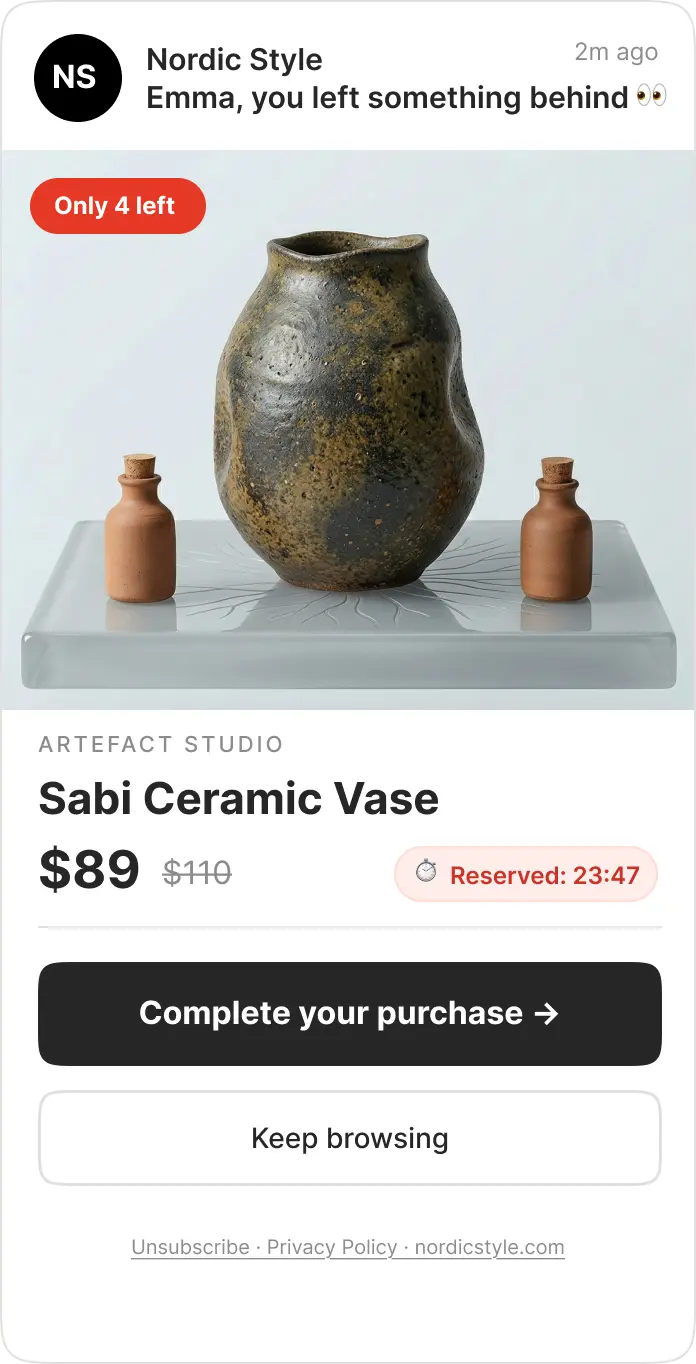
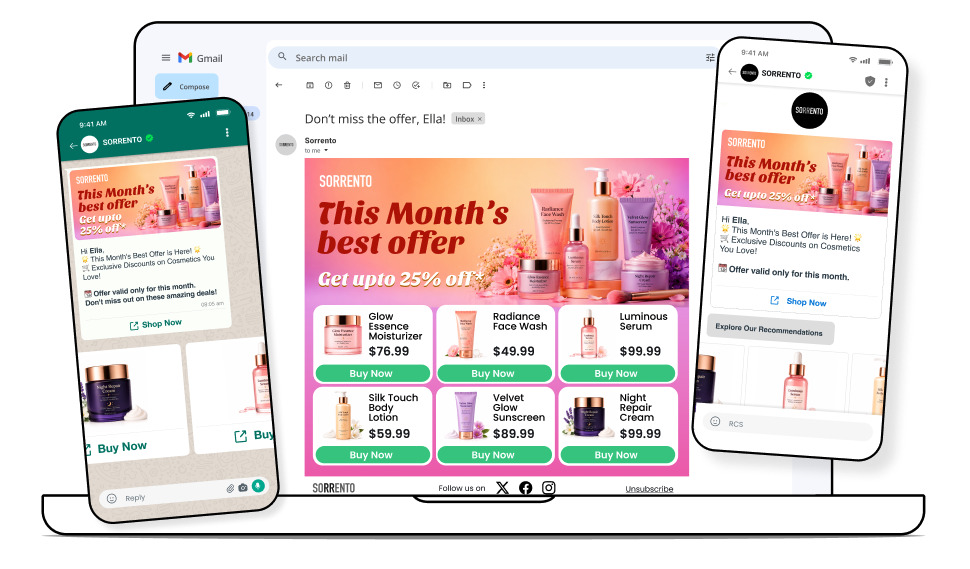
Email and SMS are important retention channels because they are direct and measurable across the customer lifecycle. High-impact lifecycle campaigns such as a welcome series, post-purchase follow-ups, or replenishment reminders match customer intent and timing.

A powerful digital marketing retention strategy ties email, SMS, WhatsApp, paid media, loyalty, and onsite personalization around the same customer signals. This allows retailers to move beyond one-off campaigns and create lifecycle journeys that mirror customer behavior, timing and purchase intent.
6 Subscription and Replenishment Models

Subscription and replenishment models can improve retention in categories where customers buy products repeatedly. This includes groceries, supplements, beauty, pet care, household essentials, and B2B supplies.

These models work because they reduce effort for the customer. Instead of remembering to reorder, the customer receives the right product at the right time.

The best replenishment programs give customers control. They allow shoppers to pause, skip, change frequency, swap products, or adjust quantities. Convenience drives retention only when it feels flexible.
7 Retargeting and Paid Media Optimization

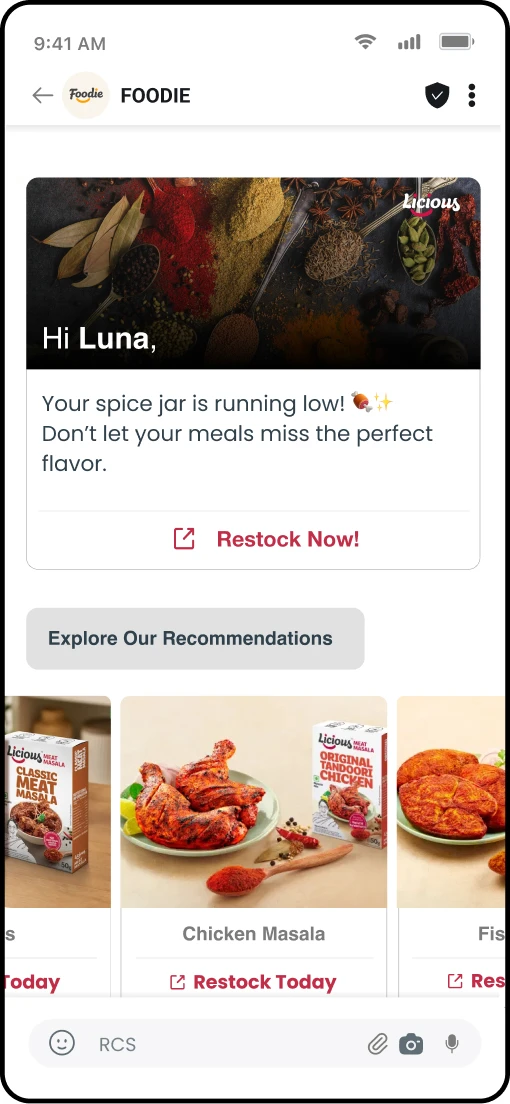
Retargeting can help with retention when it is aimed at people who already know the brand. It does not have to be limited to abandoned carts or first-time purchases. For existing customers, paid media can be used to remind them about products they may need again, show them relevant categories, promote loyalty offers, or bring back shoppers who have gone quiet.

For example, a beauty brand may use retargeting to remind a customer to restock a product they bought a month ago. A fashion retailer may show previous buyers new arrivals in a category they often browse. A grocery or household goods brand may promote repeat-purchase offers to customers who buy on a predictable cycle.

This is where ROAS and retention need to be viewed together. A campaign may look successful because it brings in quick conversions, but its real value is higher when those customers keep coming back after the first click.

8 Customer Support as a Retention Tool

Customer support can decide whether a person buys again. A late package or product issue can be forgiven if the brand handles it properly. The biggest turn off for people is the feeling that no one is listening, or it takes too much effort to get a simple answer.

It also helps when support does not feel disconnected. If a customer has already explained a problem on chat, they should not have to start from the beginning on email or phone. That kind of repetition makes even a small issue feel bigger.

Creative ways to improve customer experience can be simple: faster support, clearer delivery updates, better product guidance, easier returns, or reminders that arrive at the right time.

9 Community Building and UGC

Community content keeps people engaged between purchases. But the customer may not be ready to buy again today but seeing useful posts, honest reviews or customer photos can keep the brand familiar. Familiarity over time can make the next purchase feel easier.

The trick is to use social proof where it helps the shopper make a decision. This should remove doubt, demonstrate real usage and reduce perceived risk in buying.

10 Gamification and Experiential Commerce

Customers should be able to see the point right away. What do I do? What do I get? Is it worth it? If those answers are clear, the experience can give them a small reason to come back.

For retailers, gamification should not be added just to make the site look more interactive. It should support something real, such as finding better products, earning useful rewards, joining a community, or feeling recognized as a returning customer.

Advanced Retention Strategies Using AI & Data

AI tools to boost ecommerce sales and customer retention are most useful when they help teams act on real customer signals, such as purchase history, browsing behavior, churn risk, replenishment timing, and product affinity. These capabilities are central to driving ecommerce customer retention because they help teams respond to customer behavior while the signal is still fresh.


Agentic AI for eCommerce Customer Retention

Agentic AI refers to AI systems that can help plan, decide, and act across parts of a workflow with limited manual intervention. In e-commerce retention, this can support faster decisions about which customers to target, what message to send, which offer to use, and when to act.

In retention, the most useful application is not automation for its own sake. It is better timing, better relevance, and faster response to customer signals.


Predictive Analytics for Churn Prevention

Predictive analytics helps retailers identify customers who may be at risk of disengaging before they fully churn.

Signals can include declining purchase frequency, lower email engagement, fewer site visits, etc.

Once risk is identified, retailers can take action through personalized offers, product recommendations, service outreach, replenishment reminders, or tailored win-back campaigns.

The goal is to act before the customer disappears.


Real-Time Personalization Engines

Real-time personalization engines help retailers respond to what a customer is doing now, not what they were doing weeks ago.

Why it matters: Customer intent can change rapidly. A shopper browsing baby products, winter apparel or high-end electronics is providing you useful context in the moment. A real-time system can then use this context to change recommendations, content, offers and next-best actions.

For retention, this creates a better experience for returning customers. They do not have to start from scratch every time they visit. The brand can respond with more relevant products, content, and reminders.


Leveraging First-Party Data & CDPs

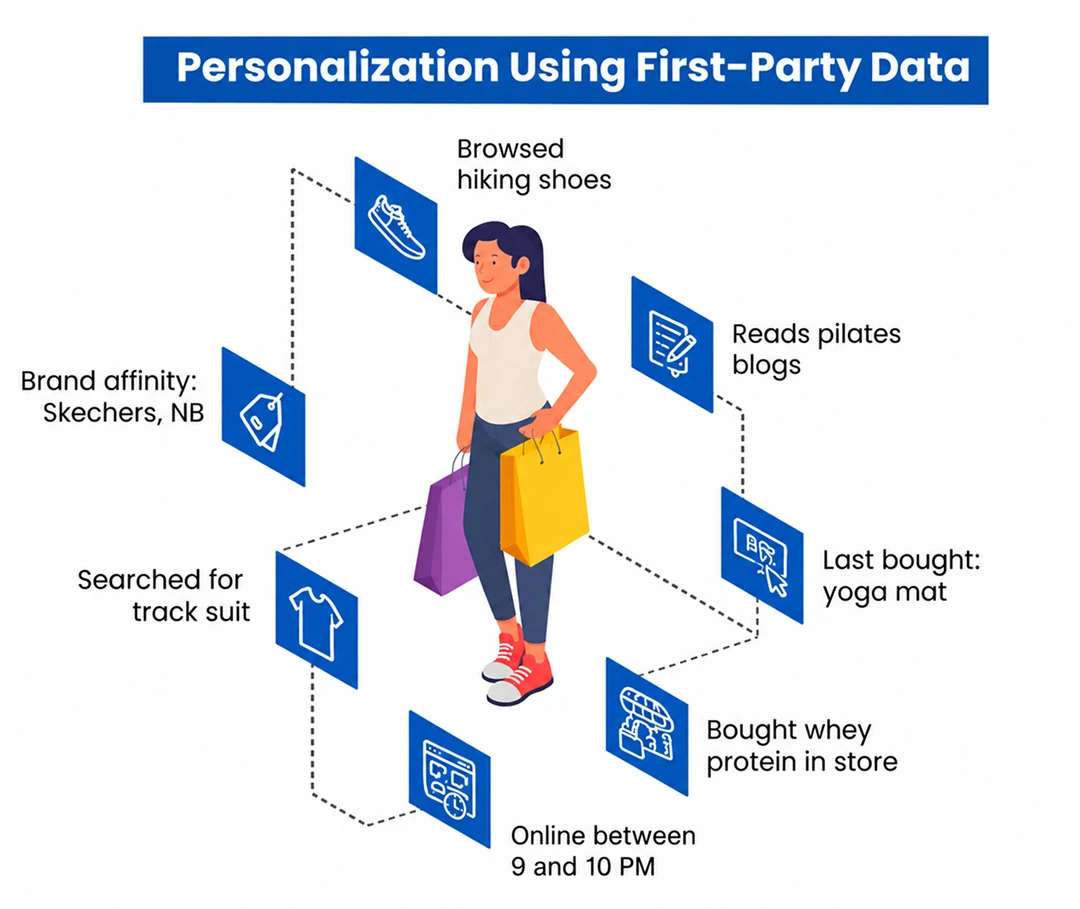
First-party data is data a retailer collects directly from its customer interactions. This could be purchase history, browsing behavior, loyalty activity, email engagement, preferences, and service interactions.

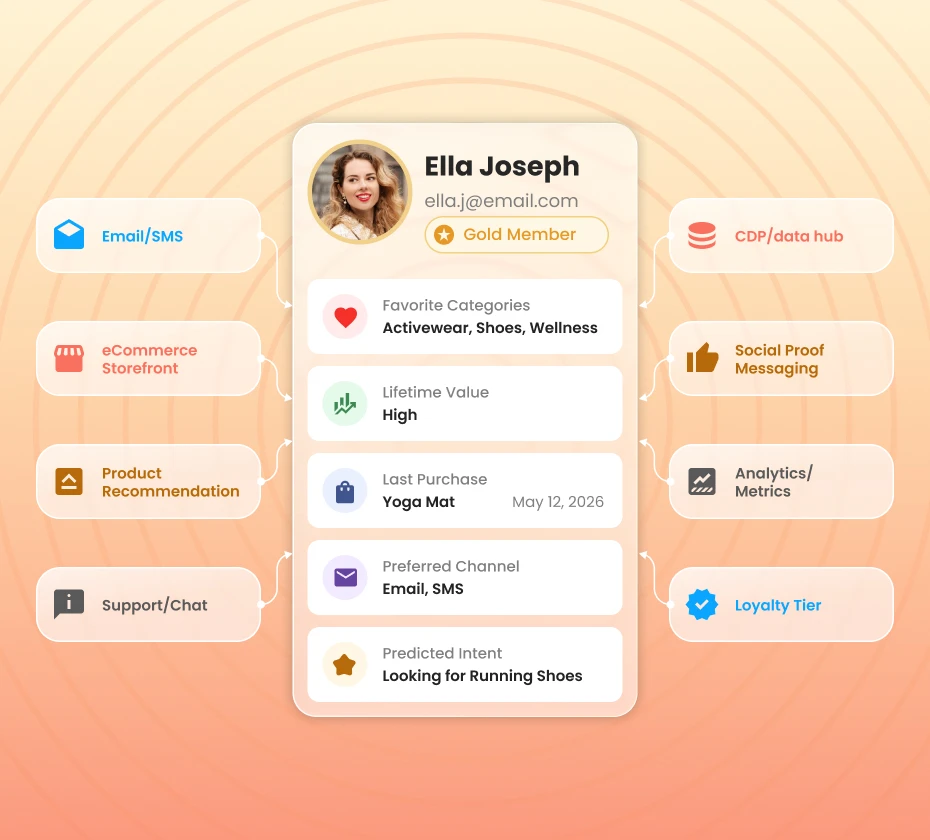
A customer data platform (CDP) helps to unify this data into customer profiles that can then be used across channels. This is important for maintaining retention. If you don’t have a unified view, your teams risk sending irrelevant messages, missing churn signals or treating loyal customers as new visitors.

A Real-time CDP allows retailers to act on customer signals while they’re still relevant. It enables segmentation, personalization, lifecycle marketing and cross-channel orchestration. Here’s why it matters in practice, says McDonald’s India. With a unified view of the customer and centralized customer data, the brand was able to create granular customer segments and enable CRM goals.

Revise this image from the 2024 Guide to Ecomm. Personalization | “Personalization Using First-Party Data”

Automation of Customer Journeys

Retention journeys often involve many touchpoints. A customer may receive a welcome message, browse products, make a first purchase, receive delivery updates, join a loyalty program, get a replenishment reminder, and later receive a win-back offer.

Managing these journeys manually is difficult. Automation helps teams scale the right sequence of actions based on customer behavior.

Useful retention journey automations include:

  • Welcome journeys
  • Post-purchase journeys
  • Replenishment journeys
  • Loyalty activation journeys
  • VIP journeys
  • Churn prevention journeys
  • Win-back journeys

The best automated journeys still feel human because they are relevant, timely, and useful.

Impact of Unified Commerce on Customer Retention

What Is Unified Commerce?

Unified commerce is the consolidation of customer data, product data, inventory, promotions, orders and engagement channels, enabling retailers to offer a consistent experience across touchpoints.

At its core, unified commerce enables the retailer to view the customer as a single customer throughout the journey. The customer’s experience should be the same context whether they are shopping online, on an app, via email, in the store or with support.


Why Fragmented Data Kills Retention

Fragmented data weakens retention because it creates disconnected experiences.

Common problems include:

  • Customers receiving irrelevant offers
  • Loyalty status not being recognized across channels
  • Online and store behavior staying separate
  • Support teams lacking purchase context
  • Replenishment reminders missing the right timing
  • Repeated campaigns going to the wrong segments
  • High-value customers being treated like first-time shoppers

Each of these gaps can make the customer feel unknown. Over time, that weakens trust and reduces the likelihood of repeat purchase.


How Unified Commerce Improves Customer Experience

Unified commerce improves retention by making experiences more consistent and relevant.

It helps retailers:

  • Recognize customers across channels
  • Personalize recommendations with better context
  • Coordinate loyalty and promotions
  • Connect online and offline behavior
  • Support better service interactions
  • Improve timing of lifecycle messages
  • Reduce duplicate or conflicting campaigns

For customers, the result is simpler. The brand feels more consistent, more useful, and easier to shop from.


Real-World Use Cases

Unified commerce can improve retention in practical ways:

  • A grocery customer receives a replenishment reminder based on past purchase timing.
  • A fashion customer sees product recommendations based on browsing, purchase history, and preferred sizes.
  • A loyalty member receives a promotion that reflects both online and store behavior.
  • A customer support agent can see purchase history and loyalty status before resolving an issue.
  • A lapsed customer receives a win-back offer based on categories they used to buy.

These use cases depend on shared customer context. Without that context, personalization and retention campaigns remain limited.

Best Practices for Customizing Post-Checkout Experiences

Order Confirmation Optimization

An order confirmation should be more than a payment confirmation. It should reassure the customer, set expectations clearly and direct the next step.

A strong order confirmation can contain:

  • Summary of order
  • Delivery schedule
  • Support connections
  • Loyalty point accrual
  • Prompt for creating account
  • Care information
  • Appropriate next product recommendations

This is one of the first retention moments after the purchase. A helpful, clear confirmation builds confidence.


Cross-Sell and Upsell Opportunities

Post-checkout cross-sell and upsell opportunities should be relevant to the customer’s purchase. The goal is not to push more products immediately. The goal is to help the customer get more value from what they just bought.

Examples include:

  • Accessories for electronics
  • Styling suggestions for fashion
  • Refills for beauty products
  • Complementary grocery items
  • Protection plans for high-value products
  • Setup guides or add-ons for B2B ecommerce purchases

Personalized product recommendations can make these moments more useful and less intrusive.


Delivery Experience Personalization

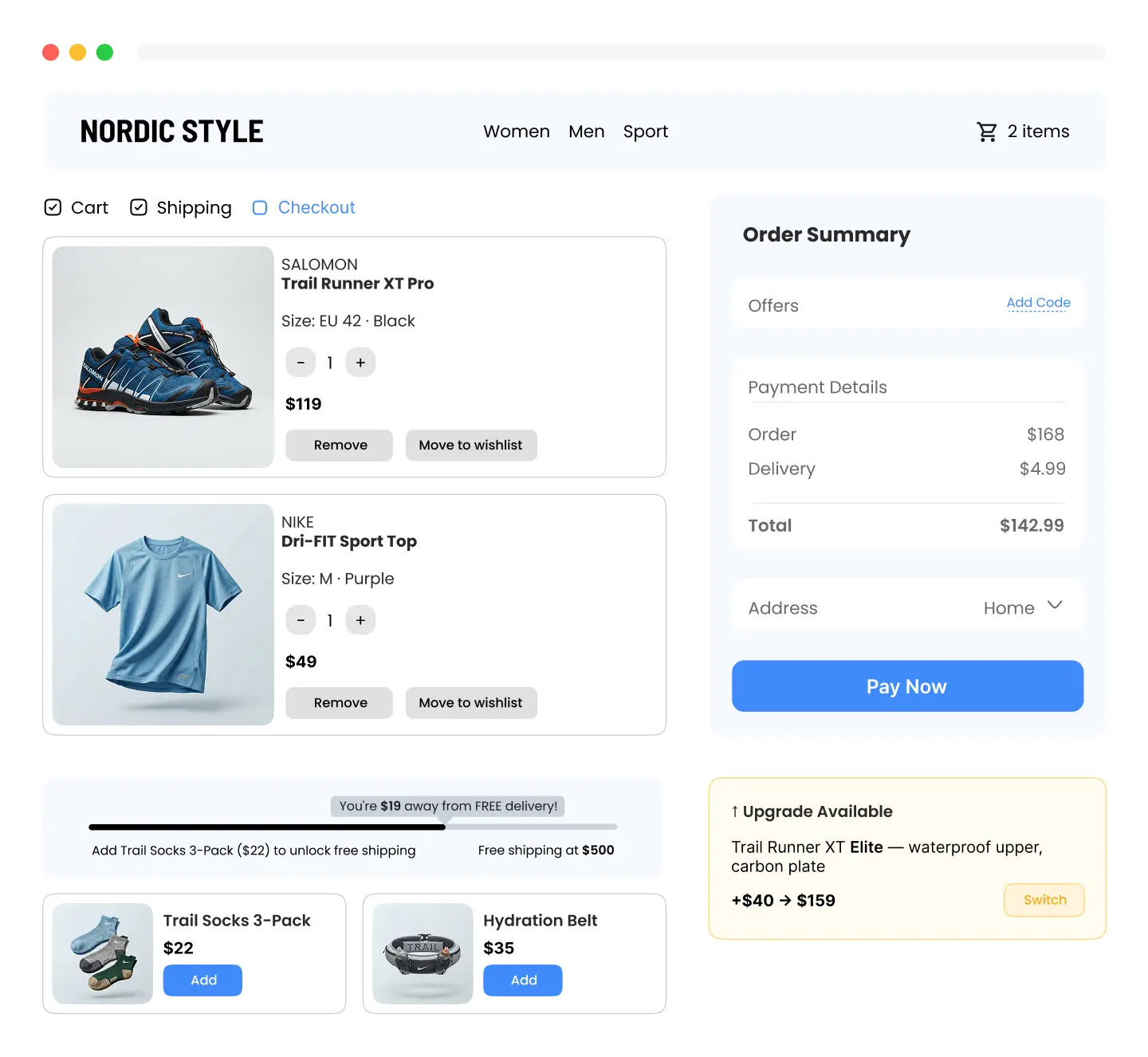
Delivery is a high-attention moment in the customer journey. Customers want to know where their order is, when it will arrive, and what to do if something changes.

Retailers can personalize the delivery experience through:

  • Proactive shipping updates
  • Delivery preference reminders
  • Local store pickup options
  • Delay notifications
  • Product care tips before arrival
  • Category-specific follow-up content

A smoother delivery experience reduces anxiety and supports repeat purchase behavior.


Returns and Refund Experience

Returns and refunds have a strong effect on retention. A difficult return experience can stop a customer from buying again, even if the product was good.

A retention-friendly returns experience should be:

  • Easy to understand
  • Transparent about timelines
  • Simple to initiate
  • Consistent across channels
  • Supported by clear communication

Retailers should treat returns as part of the customer relationship, not only as a cost.

Common eCommerce Retention Mistakes to Avoid

Over-Reliance on Discounts

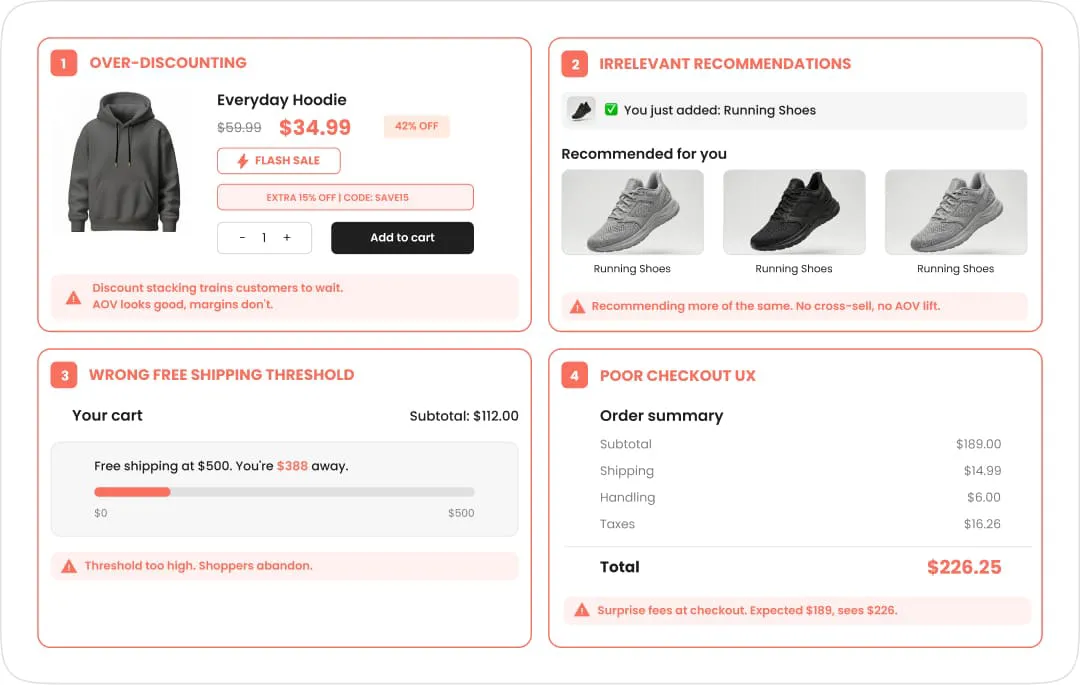
Discounts can drive short term sales but too much discounting can train customers to wait for sales. It can also eat into margins and dilute brand value.

A stronger strategy is to use discounts rarely and pair them with relevance, loyalty benefits and personalized timing.


Disregarding Customer Data

Retention is about understanding customer behaviour. “You miss the opportunity to personalize the experience by ignoring browsing history, purchase patterns, loyalty activity or lifecycle stage.

The fix: Use customer data across teams and channels.


Poor Onboarding

The first few interactions after a customer’s first purchase matter. If a retailer does not guide the customer, explain benefits, collect preferences, or encourage the next best action, the relationship may stall.

A good onboarding journey can improve repeat purchase behavior by helping customers see more value early.


Lack of Personalization

Generic experiences make retention harder. Returning customers expect the brand to remember something about them, whether that means preferred categories, sizes, replenishment timing, or loyalty status.

Personalization does not need to be complex at the start. Even basic segmentation and product relevance can improve the customer experience.


Inconsistent Omnichannel Experience

A customer should not feel like a stranger when switching from email to website, app, store, or support. Inconsistent experiences create friction and reduce trust.

Retailers need connected data, coordinated campaigns, and shared customer context to prevent these gaps.

eCommerce Customer Retention Examples

Personalized Recommendation Engines

Employing personalization in recommendation engines aids retention by making repeat visits more relevant. Returning customers should be able to search for products based on what they have done, what they are looking for and what they are likely to need.

Matas demonstrates how personalized recommendations can boost ecommerce growth through better product relevance. This kind of personalization enables retailers to go beyond static merchandising and enables more helpful discovery throughout the customer journey.


Loyalty Program Success Stories

A really good loyalty program gives customers a reason to come back, but it’s got to be relevant.

Points, tiers and rewards are more effective when they are based on customer behavior and preferences.

For example, a beauty retailer might reward replenishment behavior, whereas a fashion retailer might offer early access to new collections. A grocery retailer could offer tailored promotions based on household purchasing patterns. In both cases, audience segmentation and offer strategy are more effective when they are in alignment.

Audience Manager supports this kind of retention program by helping marketers build and activate more precise audiences for loyalty, promotions, and reactivation.


AI-Driven Retention Campaigns

AI-driven retention campaigns use customer behavior to decide who to target, when to reach them, and what message or offer is most relevant.

Examples include:

  • Predicting churn risk
  • Triggering replenishment reminders
  • Personalizing win-back campaigns
  • Recommending next-best products
  • Adapting lifecycle content based on engagement
  • Suppressing irrelevant messages

Consum highlights the operational side of this challenge. Personalized lifecycle marketing is not only about better messages. It also requires faster campaign execution, easier content management, and the ability to act at scale.

How Ada Global Helps Drive eCommerce Customer Retention

AI Personalization Engine

Retention improves when every customer interaction becomes more relevant. Recommend™ helps retailers personalize product discovery and recommendations based on shopper behavior, context, and intent.

This supports retention by helping returning customers find the next right product faster, discover complementary items, and continue the relationship beyond the first order.


Customer Data Platform (CDP) Capabilities

A customer data platform (CDP) helps retailers unify customer data and make it usable across channels. Ada Global’s Real-time CDP supports retention by helping teams build a more complete view of customer behavior and activate that context when it matters.

This is especially important for loyalty, lifecycle marketing, churn prevention, and omnichannel personalization.


Real-Time Decisioning

Timing often determines retention opportunities. A replenishment reminder, win-back message, loyalty offer, or product recommendation is more effective when it can respond to customer behavior in the moment. Real-time decisioning allows retailers to react to live signals instead of depending on static segments or campaign cycles that have long lead times.


Cross-Channel Orchestration

Customers are moving across channels and retention programs need to move with them. Ada Global provides cross-channel retention support through features in recommendations, lifecycle content, audience management and customer data.

Recommend™, Active Content, Audience Manager, and Real-time CDP work together to help retailers build more consistent and relevant customer journeys across web, email, app, paid media, and other touchpoints.

Future Trends in eCommerce Customer Retention

Agentic AI

Agentic AI will make retention programs more adaptive. Instead of requiring teams to manually define every segment, message, and action, AI can help identify customer needs, recommend next steps, and automate parts of the journey.

The value will come from better decisions, faster execution, and stronger guardrails.


Predictive Commerce

Predictive commerce uses customer data to anticipate what shoppers are likely to need next. For retention, this can support replenishment, next-best-product recommendations, churn prevention, and personalized promotions.

Retailers that can anticipate intent will be better positioned to keep customers engaged.


Zero-Party Data

Zero-party data is information customers choose to share, such as preferences, interests, sizes, goals, or communication choices.

This data can improve retention because it makes personalization more transparent and more accurate. It also helps retailers reduce dependence on inferred signals alone.


Hyper-Personalization

Hyper-personalization uses real-time behavior, customer data, and AI to tailor experiences at a more individual level. In retention, this can improve recommendations, promotions, lifecycle messages, and post-purchase journeys.

The challenge is to keep personalization useful and respectful. Customers want relevance, not discomfort.


Privacy-First Marketing

Retention strategies need to respect customer privacy and consent. As privacy expectations rise, retailers will need stronger first-party data strategies, clearer preference management, and more transparent personalization practices.

Trust will become part of the retention equation.

Conclusion

Retaining ecommerce customers is one of the most powerful levers for sustainable growth. It helps retailers to drive repeat purchases, increase customer lifetime value and make acquisition spend work harder over time.

The most successful retention programs involve measurement, personalization, loyalty strategy, post-purchase engagement, unified customer data and cross-channel orchestration. And AI adds another layer, empowering retailers to respond more quickly and more relevantly to customer signals.

For ecommerce teams, retention is no longer a narrow CRM issue. It’s a larger growth capability that blends marketing, merchandising, data and customer experience. Retailers that are able to build this capability are in a stronger position to keep customers engaged, increase long-term value and compete in a crowded market.

Sources

  1. Bain & Company, “E-loyalty: Your Secret Weapon on the Web.” Source for the retention-profitability finding.
  2. McKinsey & Company, “What is personalization?” and “Marketing’s Holy Grail: Digital Personalization at Scale.” Sources for personalization impact on acquisition costs, revenue, and marketing spend efficiency.
  3. Decile, “Q1 2025 E-commerce Industry Benchmarks.” Source for new versus returning customer ratios and purchase frequency benchmarks by category.
Table Of Contents
What Is eCommerce Customer Retention, Metrics & Strategies
What Is eCommerce Customer Retention?
Why eCommerce Customer Retention Is Critical for Growth
Key eCommerce Customer Retention Metrics You Must Track
What Is a Good Customer Retention Rate for eCommerce?
How to Calculate eCommerce Customer Retention Rate (Step-by-Step)
Top eCommerce Customer Retention Strategies
Advanced Retention Strategies Using AI & Data
Impact of Unified Commerce on Customer Retention
Best Practices for Customizing Post-Checkout Experiences
Common eCommerce Retention Mistakes to Avoid
eCommerce Customer Retention Examples
How Ada Global Helps Drive eCommerce Customer Retention
Future Trends in eCommerce Customer Retention
Conclusion
Sources

FAQs

What is eCommerce customer retention?

Ecommerce customer retention is the ability of a retailer to keep customers engaged and buying over time. It is usually measured through repeat purchases, retention rate, churn rate, customer lifetime value, and purchase frequency.

How to calculate customer retention rate in eCommerce?

Use this formula: customer retention rate = ((customers at end of period – new customers acquired during period) / customers at start of period) × 100. This shows what percentage of existing customers stayed active during the period.

What is a good retention rate for eCommerce?

A good retention rate depends on category, purchase cycle, and customer behavior. Grocery, food and beverage, beauty, and supplements usually offer more natural repeat-purchase opportunities than categories such as furniture or electronics.3

What is churn rate in eCommerce?

Churn rate measures the percentage of customers who stop buying or become inactive during a defined period. In ecommerce, churn should be defined based on the expected purchase cycle for the category.

How can I increase eCommerce customer retention?

You can increase ecommerce customer retention through personalization, loyalty programs, post-purchase engagement, lifecycle email and SMS, customer support, replenishment reminders, retargeting, and unified customer data.

What are the best eCommerce retention strategies?

The best ecommerce retention strategies include AI-driven personalization, loyalty and promotion programs, post-transaction engagement, omnichannel consistency, lifecycle marketing, subscription or replenishment models, customer support, and churn prevention campaigns.

How does personalization impact retention?

Personalization helps retention by making shopping experiences more relevant. It helps customers to discover products, get useful recommendations, better offers and interact with content that reflects their behaviour and preferences.2

What is the difference between retention and loyalty?

Retention measures whether customers continue buying over time. Loyalty reflects a deeper preference for the brand. A retained customer may buy again because of convenience or price, while a loyal customer is more likely to choose the brand repeatedly and recommend it to others.

How does AI improve customer retention?

AI improves customer retention by identifying behavioral patterns, predicting churn risk, personalizing recommendations, automating lifecycle journeys, and enabling retailers to act on customer signals in real time.

What is returning customer rate in eCommerce?

Ecommerce returning customer rate, also called repeat purchase rate, measures the percentage of customers who make more than one purchase. It helps retailers understand how many first-time buyers become repeat customers.

How to increase customer retention rate?

To increase customer retention rate, retailers need to improve the reasons customers come back. The biggest levers are personalization, loyalty and promotion strategy, post-purchase engagement, replenishment reminders, better customer support, and connected customer data.
Product Discovery in Ecommerce: A Guide to Discovery Optimization for Fashion Retailers

Digital Experience Personalization
Blogs

Product Discovery in Ecommerce: A Guide to Discovery Optimization for Fashion Retailers

TL;DR: Optimizing Product Discovery in Fashion Ecommerce

How do you optimize product discovery in fashion ecommerce?

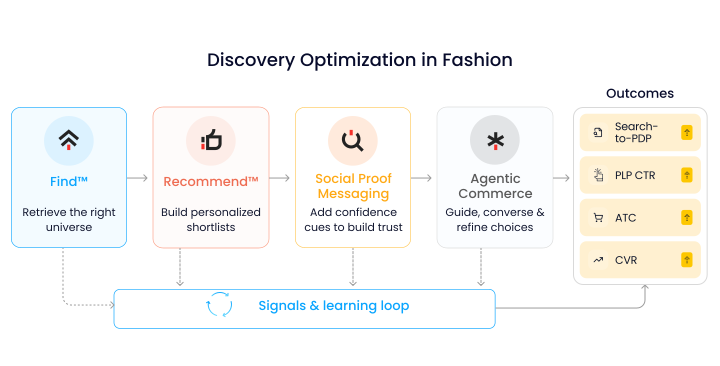
You can optimize product discovery in ecommerce by building one connected discovery experience across Find™, Recommend™, Social Proof Optimize, and Agentic Commerce. Each layer plays a distinct role, and together they reduce early drop-off before shoppers reach PDPs. That means:

  • high-intent search that recovers from messy queries (typos, synonyms, vague terms),
  • browse experiences that guide choices quickly (personalized product listing pages, i.e., PLPs),
  • confidence signals in the moments of hesitation (social proof messaging and badging),
and
  • guided assistance for uncertain shoppers that asks 1–2 clarifying questions, then returns a tight shortlist with “why this matches.”

Done right, discovery stops leaking intent before shoppers ever reach product detail pages (PDPs). This matters because ecommerce teams can spend heavily to acquire traffic, but still lose it early. And even after shoppers add items to their cart, industry benchmarks show ~70% cart abandonment, making every recovered “intent moment” upstream even more valuable.

Key Takeaways:

  • Shoppers who use search are typically higher intent and convert at meaningfully higher rates than browsers, so search should be viewed as a revenue lever.
  • “No results” pages are a major leak: Baymard’s research finds 68% of sites have “no results” experiences that are essentially dead ends.
  • Fashion discovery needs guidance, not just relevance (size/fit, style intent, occasion, budget), and that’s where recommendations, social proof, and conversational/agentic help compound.
  • Optimize discovery with a tight measurement loop: Search-to-PDP rate, zero-results recovery, PLP CTR, and add-to-cart downstream impact.

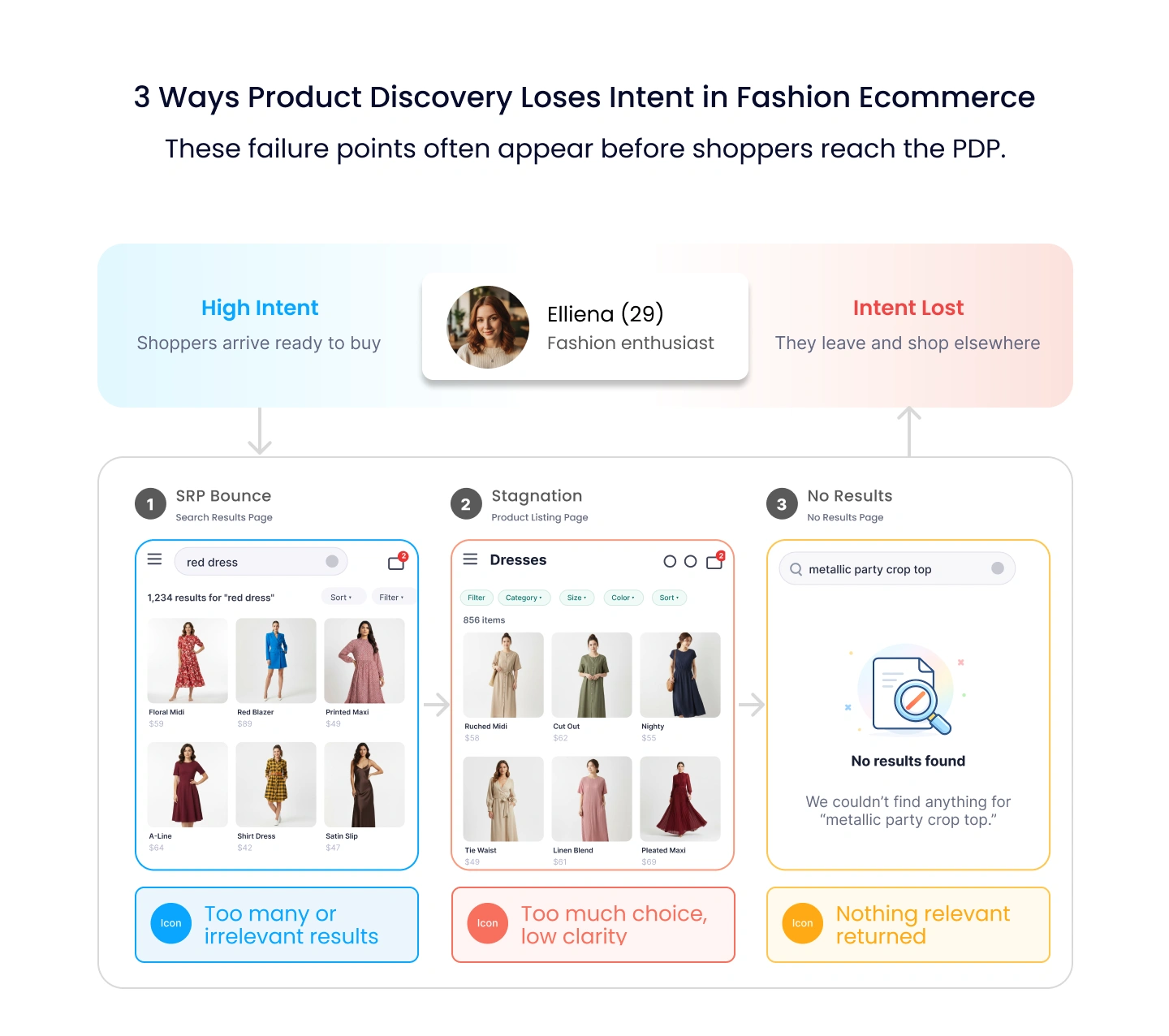
Fashion ecommerce is won or lost in the first few minutes of a session. When shoppers cannot quickly find a relevant shortlist, they abandon their intent. This guide breaks down ecommerce discovery optimization for fashion retailers, with practical moves across search, category browsing, recommendations, proof cues, and guided assistance that improve conversion without leaning on blanket discounting.

If you’re curious where your site is currently losing revenue, start with a quick teardown to uncover hidden opportunities across discovery, recommendations, and checkout.

What is Product Discovery in Ecommerce?

Product discovery in ecommerce is how shoppers find and narrow down items through site search, category browsing (PLPs), navigation, and decision support such as recommendations and proof cues. The goal is simple: help shoppers reach a confident shortlist quickly, especially in fashion where intent is often broad, visual, and occasion-led.

“If shoppers cannot find what they want, they cannot buy it.”2

— Baymard Institute, E-Commerce Search UX Research

In this guide, “discovery optimization” refers to improving that entire system end-to-end: relevance, recovery, guidance, confidence, and assisted journeys.

Why Ecommerce Discovery Optimization Matters in 2026 (Especially in Fashion)

Fashion shoppers don’t browse like they used to. They mix vague inspiration with specific intent, and then expect the site to “get it.” When discovery fails, they simply leave.

Two macro shifts make discovery optimization more urgent now:

1. More intent is compressed into fewer interactions.

AI-driven shopping journeys are accelerating. Shopify describes “agentic shopping” as agents that can search, compare, and even complete checkout on a buyer’s behalf, inside a conversation.

What this means for fashion retailers: Your product data, search, and discovery relevance must work not just for humans but also for machine-assisted journeys.

2. The cost of wasting traffic is higher.

Benchmarks show cart abandonment remains around 70% on average, meaning the few shoppers who do express intent are disproportionately valuable, and losing them earlier in the discovery process is even more expensive.

What this means for fashion retailers: For fashion teams specifically, discovery is also where fit anxiety, style uncertainty, and too much choice first show up on SRPs and PLPs.

Discovery Optimization in Fashion: How It Works

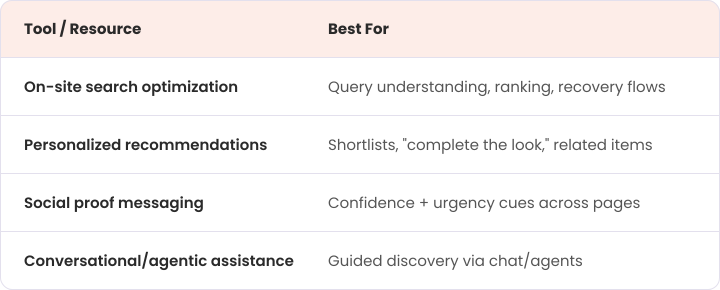
In fashion ecommerce, product discovery breaks down for predictable reasons: vague intent, too many similar options, fit and styling uncertainty, and low confidence in what is worth clicking. A modern personalization platform solves these issues by combining four capabilities: Find™ (a personalized search engine for retrieval), Recommend™ (a product recommendations engine that builds shortlists), Social Proof Optimize (confidence cues), and Agentic Commerce (guided, conversational refinement). Together, they form a practical set of ecommerce personalization solutions for enhanced product discovery.

1 Find™: Interpret shopper intent and return the right universe fast

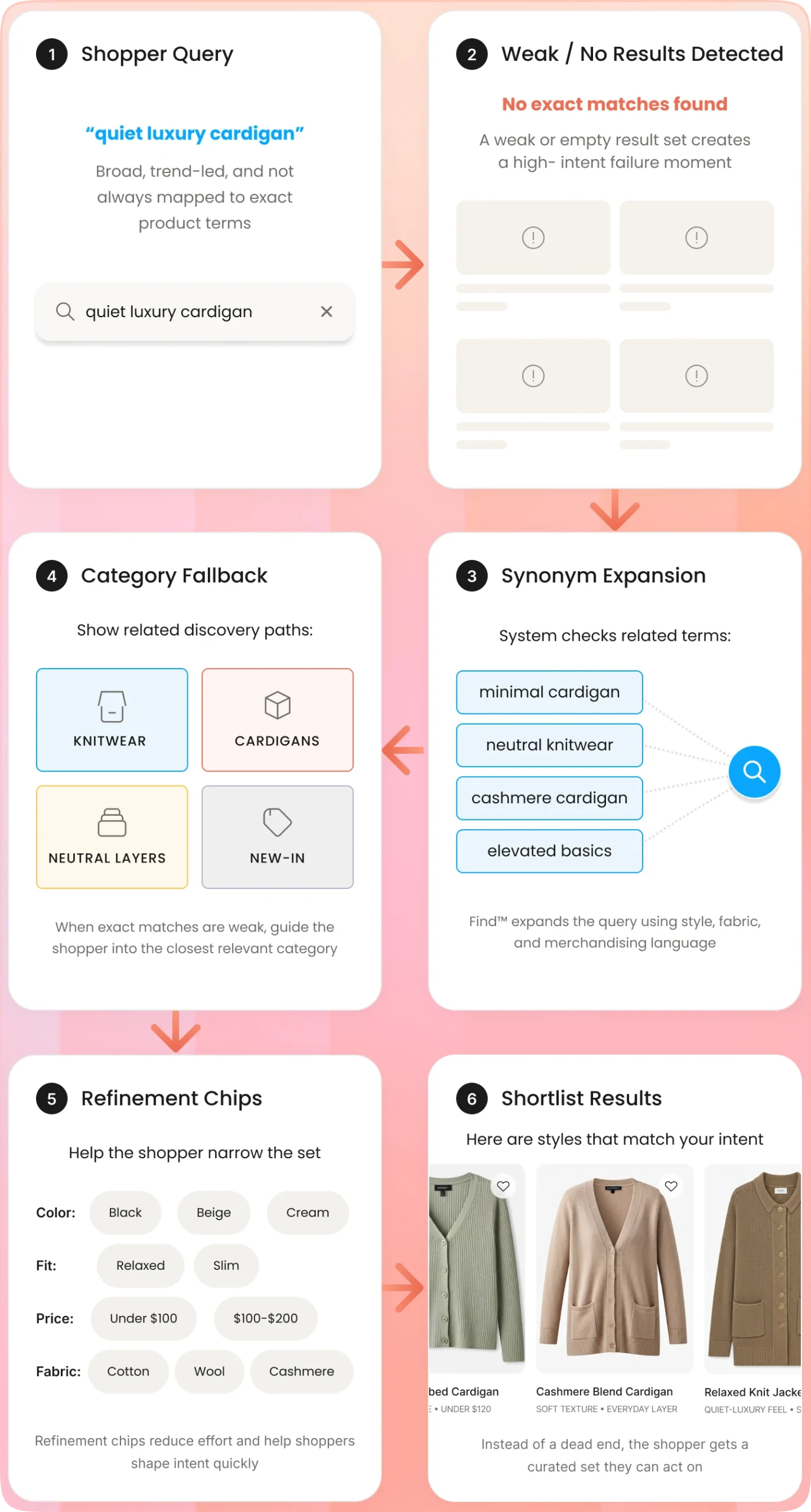
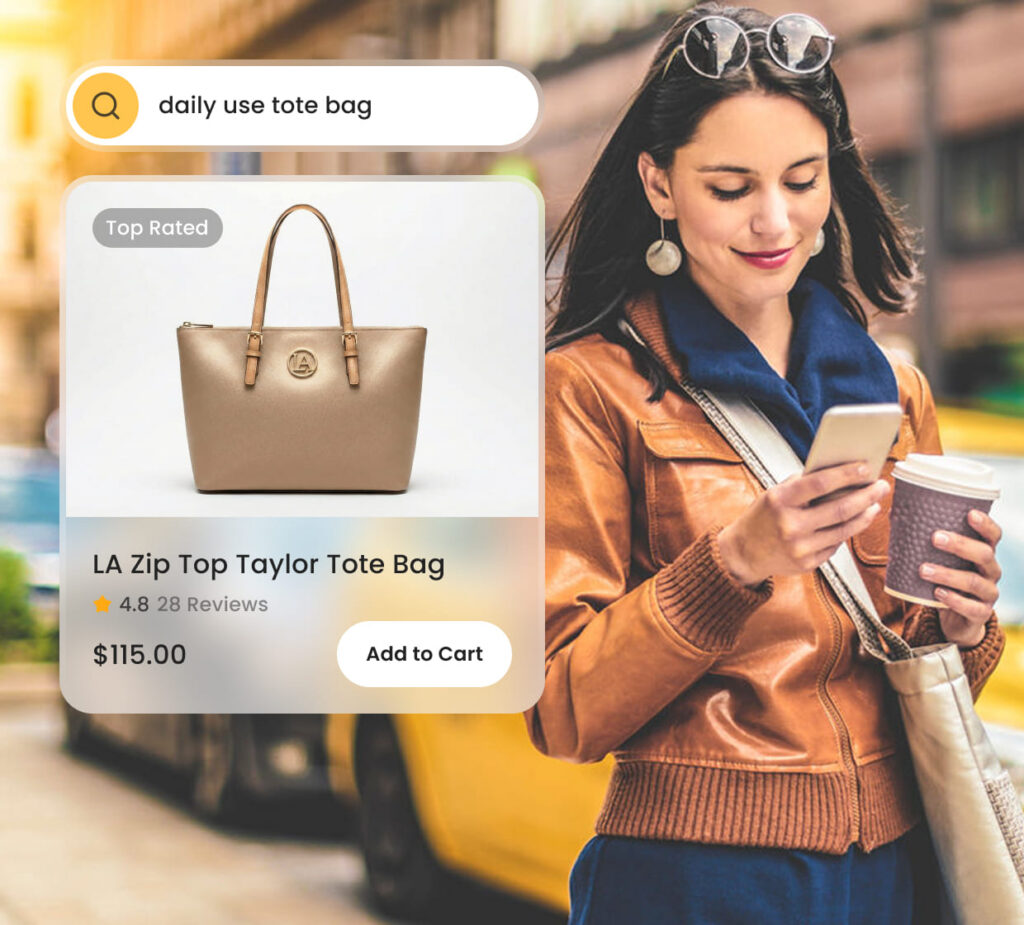
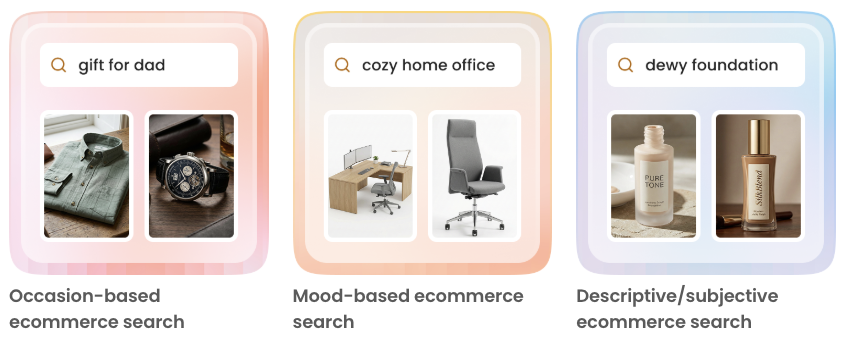
Queries can be broad (“date night outfit”) or incomplete (“black linen oversized”), and shoppers expect the site to understand the intent. Find™ is the layer that turns messy intent into relevant retrieval across search and browse — handling variants, synonyms, misspellings, and category intent. This plays a critical role in product discovery in ecommerce by improving search relevance and reducing dead ends.

Fashion example:

A shopper searches “wedding guest dress” → Find™ should surface the right occasionwear assortment, prioritize available sizes, and elevate relevant attributes (length, fabric, color) so the shopper can refine without friction.

What “good” looks like: fewer dead ends, better first-page relevance, higher Search-to-PDP and PLP CTR.

2 Recommend™: Convert relevance into a confident shortlist

Even when Find™ returns relevant results, shoppers stall because the set is too big. Recommend™ is how you move from “results” to “shortlist” by guiding the next click based on context: what the shopper is browsing, what typically goes together, and what reduces decision effort.

Fashion example:

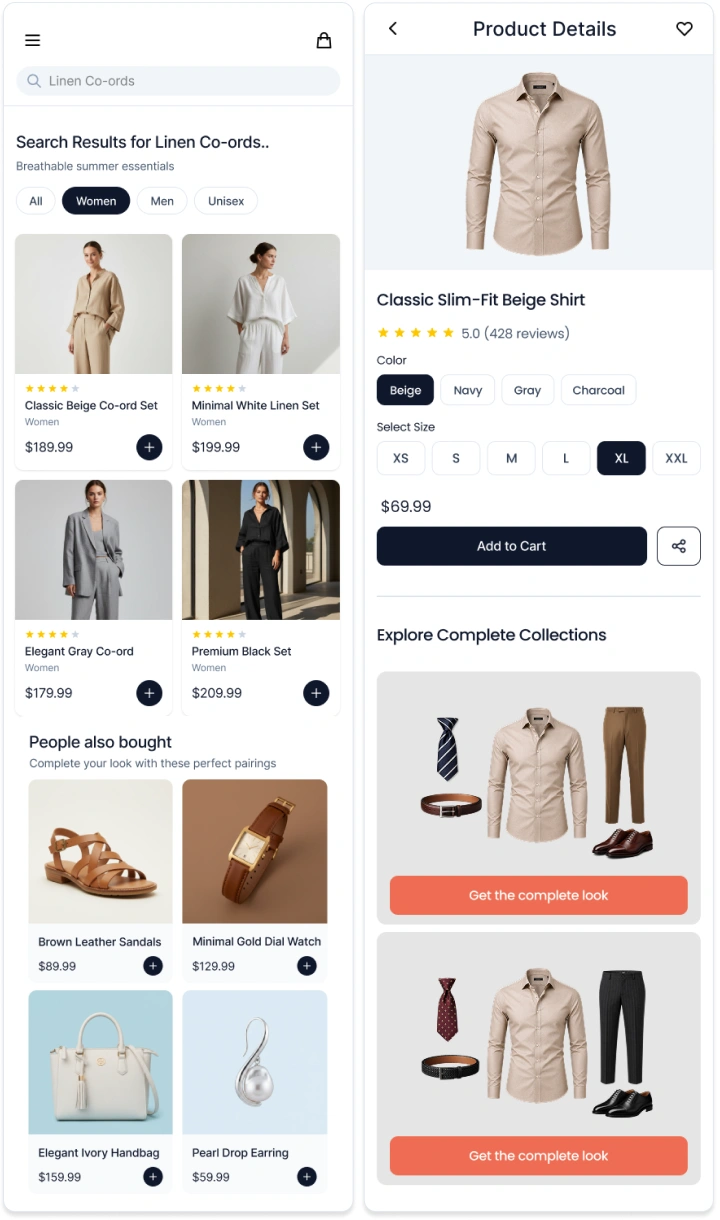
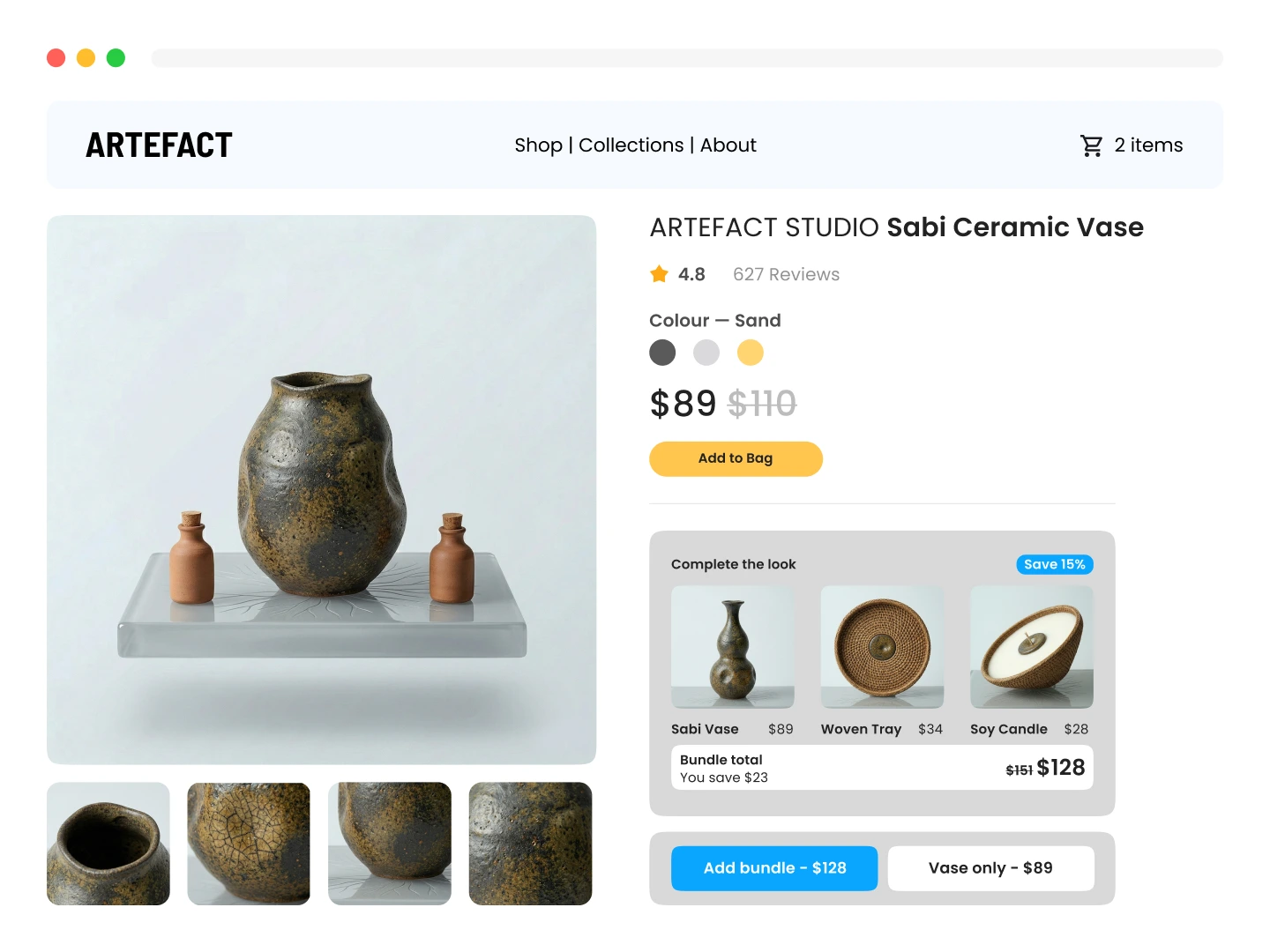
  • On a PLP for “linen co-ords”, RecommendTM surfaces practical and stylish add-ons that other people  bought along with the clothing.
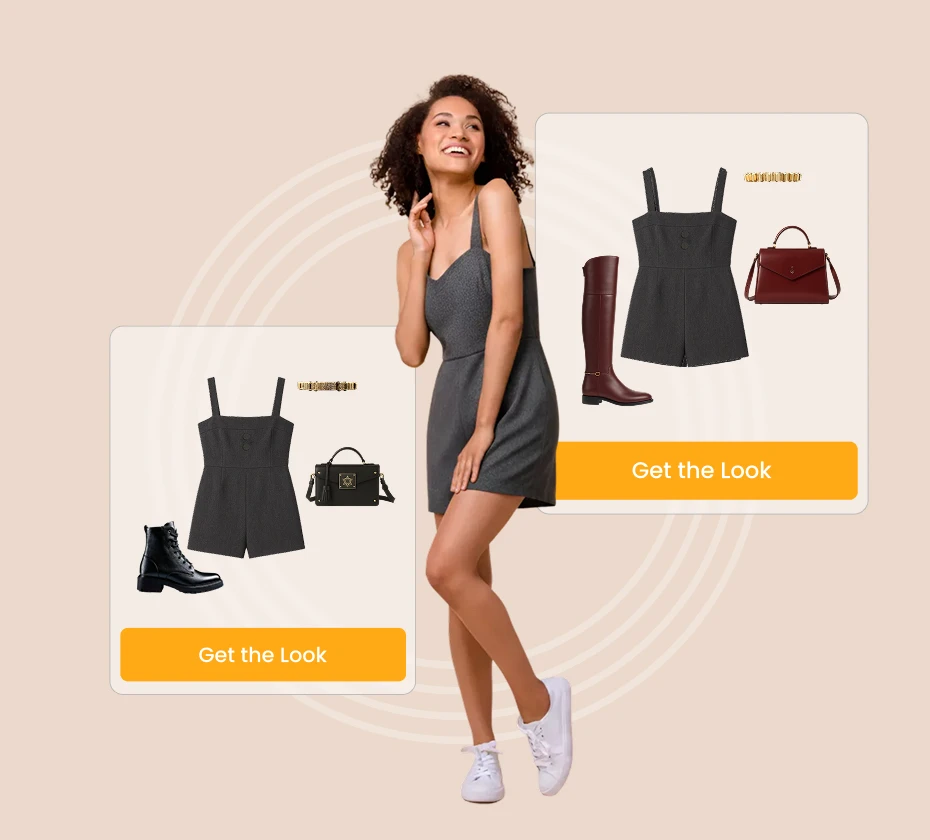
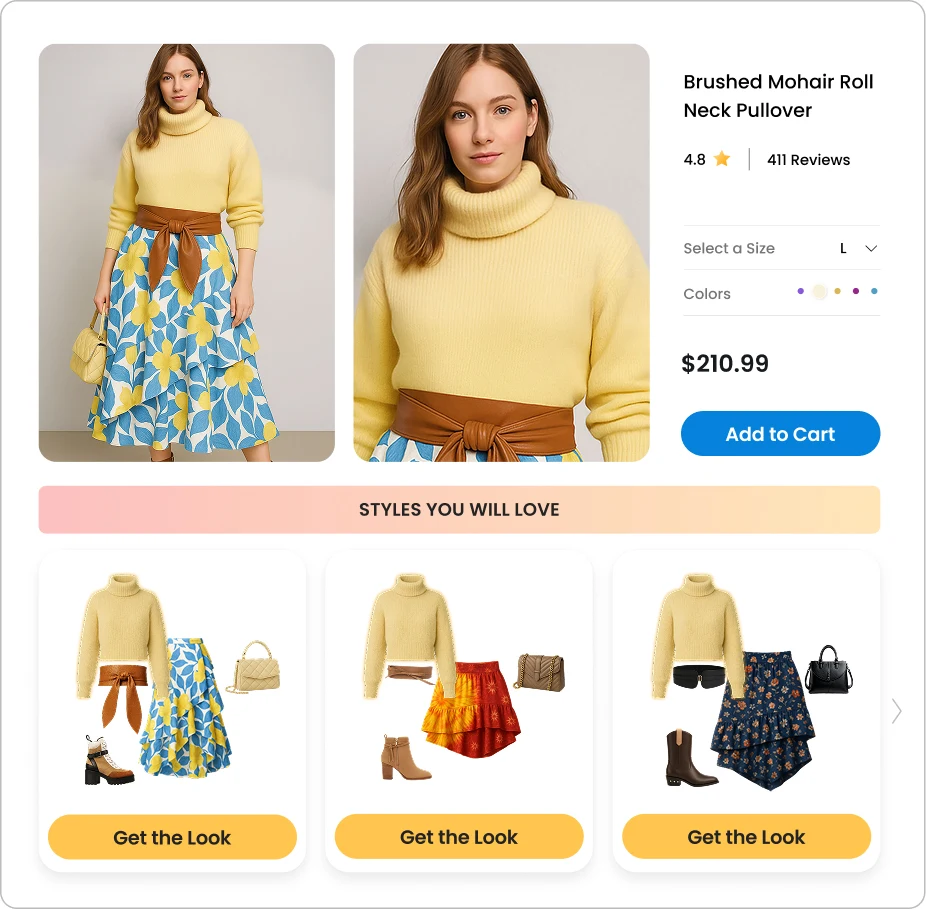
  • On a PDP for a shirt, Ensemble AI, powered by RecommendTM, can show “complete the look” combinations made up of complementary pieces (trousers, belts, etc.)

What “good” looks like: less pogo-sticking between PLP and PDP, more PDP depth, higher add-to-cart. AI-powered recommendations are a core part of ecommerce product discovery.

3 Social Proof Optimize: Add confidence cues during discovery

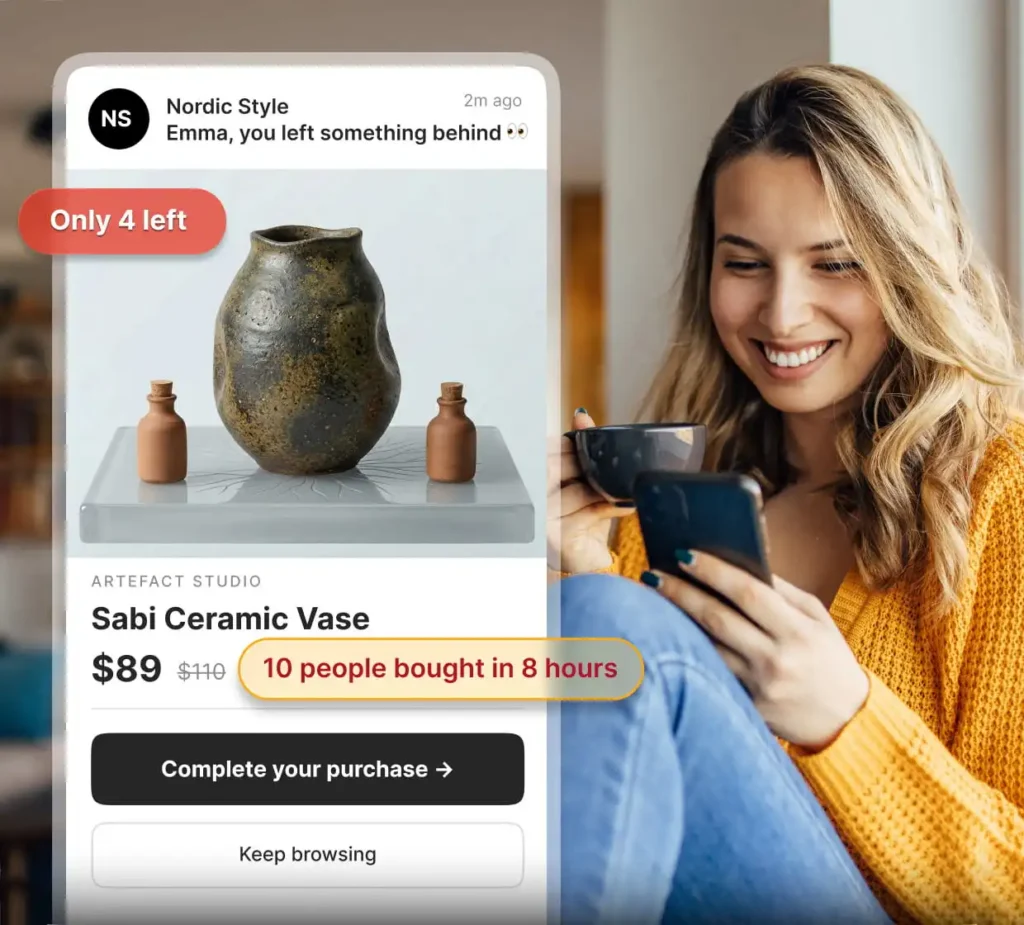
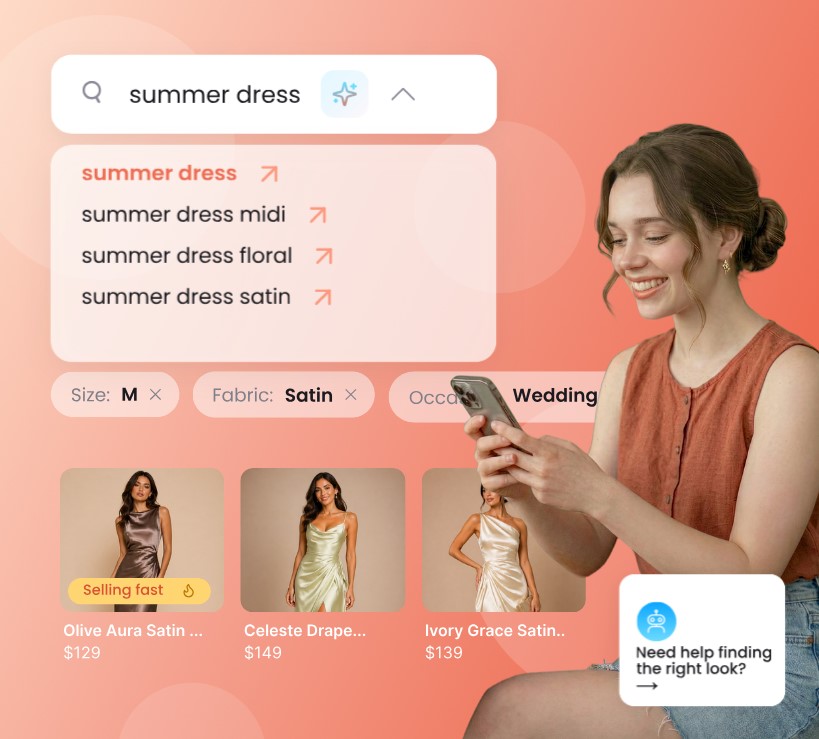
Discovery is where doubt begins: “Is this popular?” “Will this sell out?” “Is it worth clicking?” Social Proof Optimize helps reduce uncertainty by placing credible, contextual proof signals where they matter most: SRP, PLP, and PDP.

Fashion example:

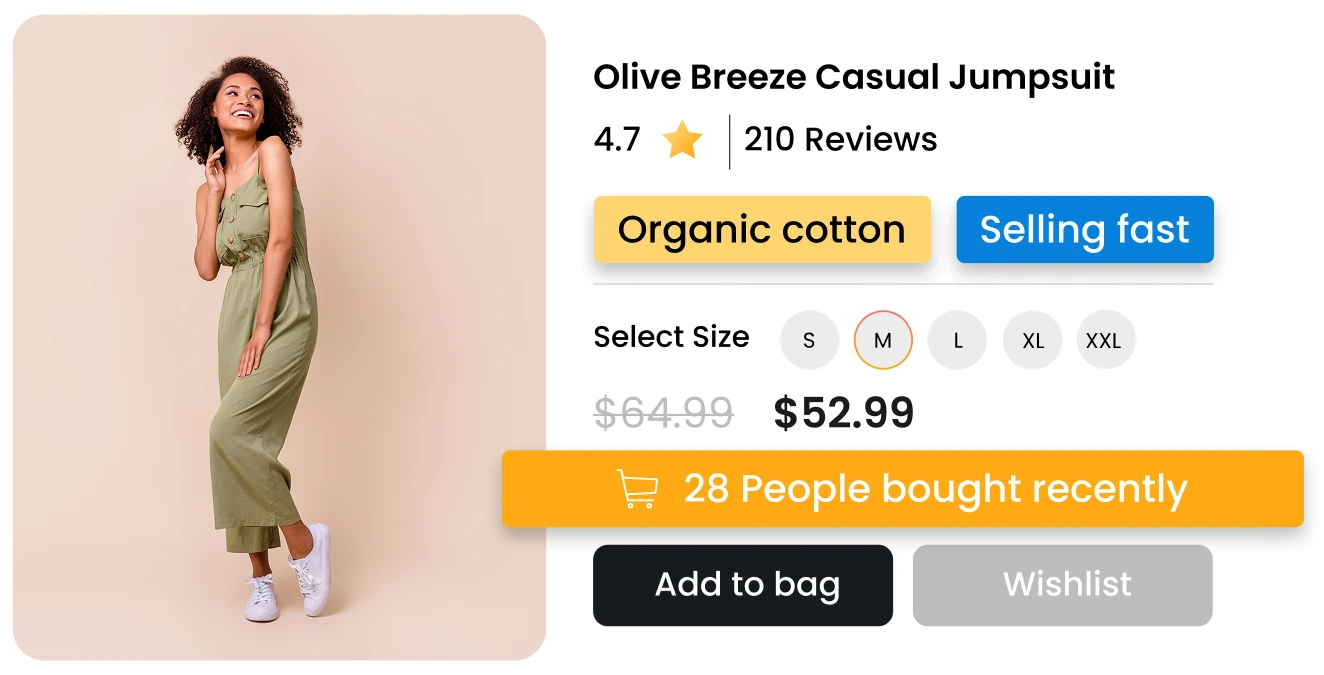
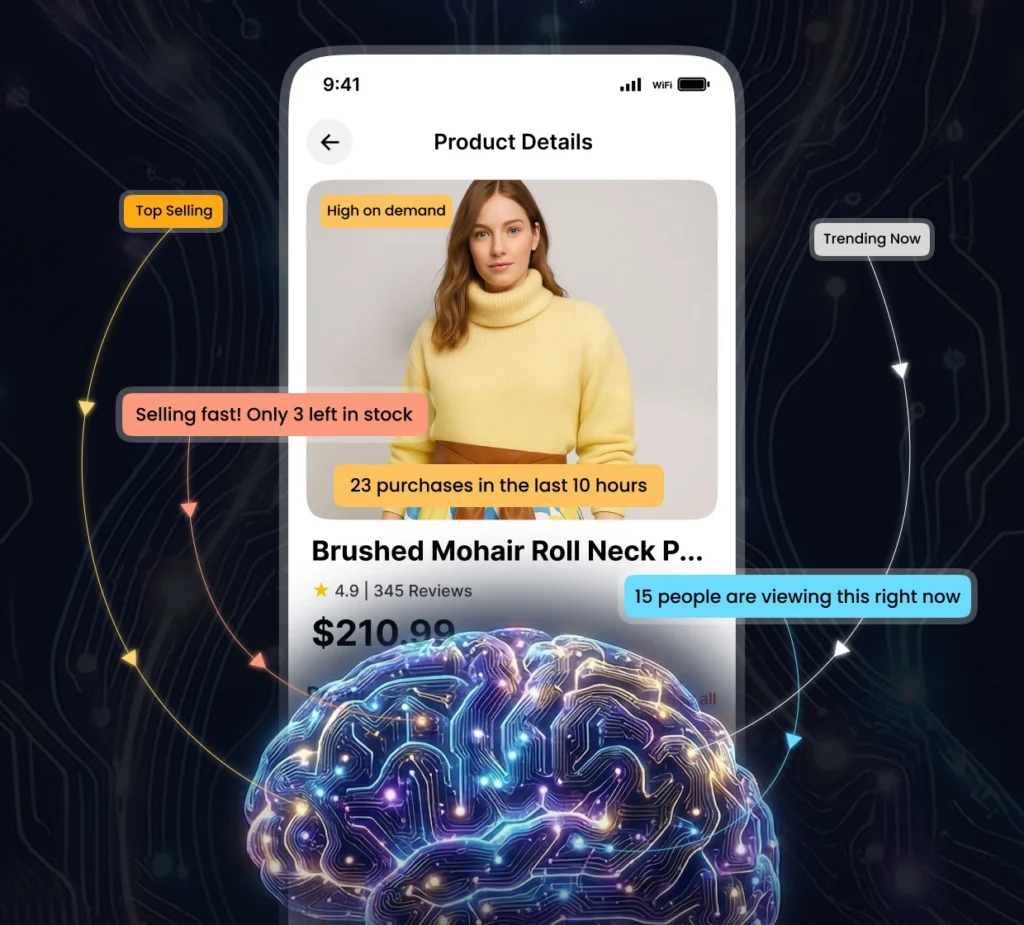
On SRP/PLP: “Bestseller,” “Trending in Dresses,” “Popular in your size.” On PDP: review volume + rating, “X bought today,” “Selling fast.” On PLP during seasonal edits: “Most saved this week” to validate trend intent.

What “good” looks like: improved click-through to PDP, faster decisions, better PDP-to-cart. Social proof improves ecommerce product discovery by increasing shopper confidence during browsing.

4 Agentic Commerce: Turn discovery into a conversation that refines intent

Fashion shoppers often know the goal but can’t express the query (“I need a beach wedding outfit” / “I want quiet luxury but affordable”). Agentic Commerce acts as the discovery guide: it asks clarifying questions, applies constraints, and produces a curated set — while staying inside the shopping journey.

Fashion example:

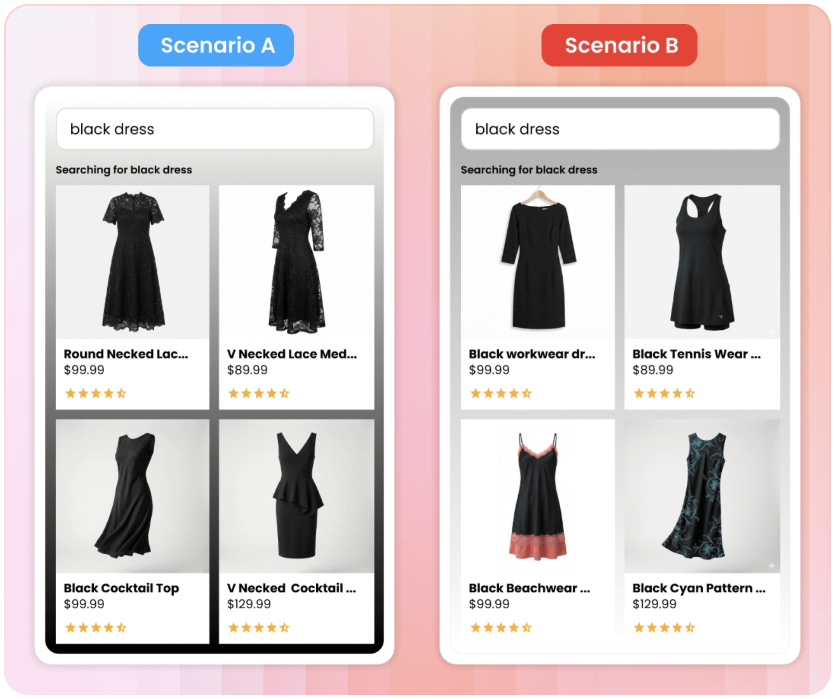
“Find me a black dress under $150 for a dinner date, shipping by Friday.” The agent clarifies silhouette, fit, and occasion preferences, then narrows to a handful of high-fit options and explains why each matches.

What “good” looks like: fewer refinements, higher conversion for first-time/uncertain shoppers, shorter time-to-shortlist. This represents the next evolution of ecommerce product discovery, where AI actively guides users.

5 Orchestration: Make the four layers work together

The conversion lift comes from orchestration: Find™ gets you into the right set, Recommend™ narrows the set, Social Proof Optimize boosts confidence to click/commit, and Agentic Commerce resolves ambiguity when shoppers can’t self-serve.

A practical orchestration loop (Fashion):

  • Broad query → Find™ returns a relevant assortment
  • SRP/PLP → Social Proof Optimize increases click confidence
  • PDP → Recommend™ builds an outfit context + alternatives
  • Stalled shoppers → Agent asks 1–2 questions to finalize a shortlist
  • Measure end-to-end: Search-to-PDP → PDP engagement → ATC → CVR (by segment)

Find Hidden Revenue Opportunities in Your Ecommerce Experience

Many ecommerce sites lose revenue daily due to generic experiences, ineffective product discovery, and missed cross-sell moments.

We are offering a free RPV Lift Teardown, in which we’ll analyze your site to identify exactly where revenue is leaking.

You’ll receive annotated screenshots of missed opportunities and a
90-day personalization uplift plan for FREE.

Request Your Free RPV Lift Teardown

Best Practices for Product Discovery in Ecommerce (Step-by-Step)

1. Build an intent map for fashion discovery (Find™)

Create a simple dictionary of how shoppers search and browse: occasion (wedding guest), silhouette (midi slip), fabric (linen), style vibe (quiet luxury), and fit terms. Use it to improve a personalized search engine that handles synonyms, typos, and attribute-led refinement.

2. Treat “no results” and “weak results” as high-intent moments (Find™ + Agentic Commerce)

Add recovery paths such as alternative categories, smart fallbacks, and refinement chips. When intent is still unclear, introduce a lightweight agent prompt that asks one clarifying question and then narrows the set.

3. Use a product recommendations engine to reduce choice fatigue (Recommend™)

Replace generic carousels with personalized product recommendations that match the decision stage: “complete the set” on PLPs, “style with” on PDPs, “similar fit” when shoppers bounce, and “frequently bought together” for practical add-ons. This is how an ecommerce product recommendation engine becomes a discovery accelerator.

4. Add confidence cues where discovery friction shows up (Social Proof Optimize)

Use proof signals on SRPs and PLPs to improve click confidence, then reinforce on PDPs to support add-to-cart. Keep signals selective and accurate so they feel believable in fashion, where brand trust matters.

5. Deploy Agentic Commerce for shoppers who cannot express the right query

When shoppers circle between PLP and PDP or keep refining searches, offer an agent flow that captures constraints such as occasion, budget, shipping timeline, and fit preference. Return a small shortlist and explain the match in one line.

6. Orchestrate the system and measure it end-to-end

Discovery improvements compound when Find™Recommend™Social Proof Optimize, and Agentic Commerce work together as AI-powered personalization. Track Search-to-PDP rate, PLP CTR, recovery rate from weak results, PDP engagement, add-to-cart, and conversion. Treat it like an operating loop, not isolated page metrics.

Measuring Ecommerce Product Discovery Performance

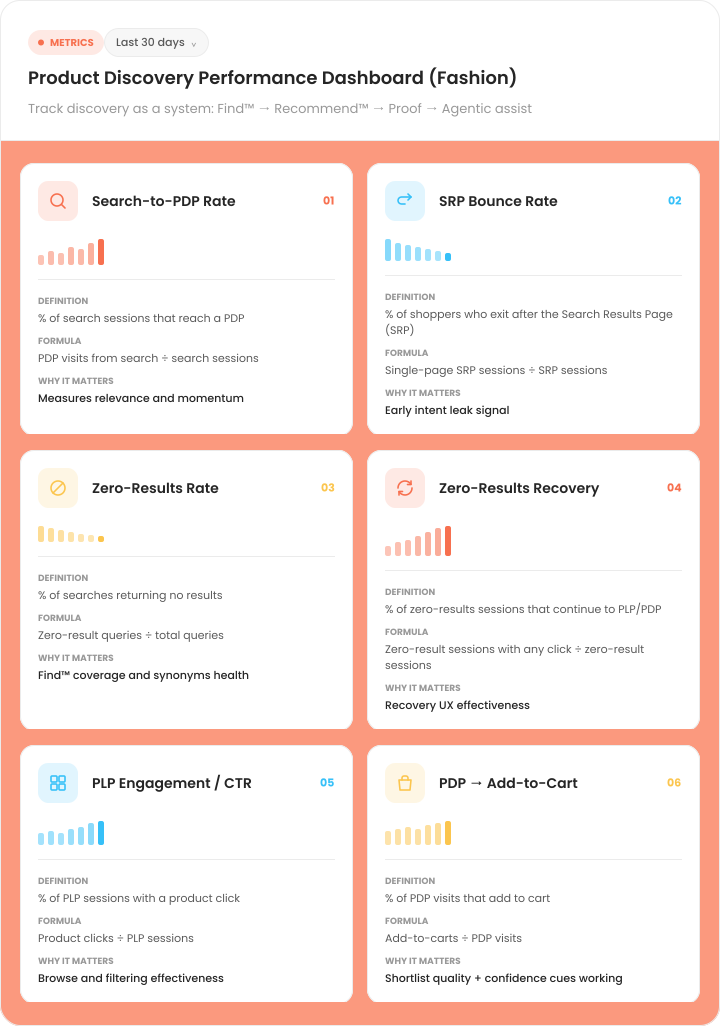
Once discovery is orchestrated across Find™, Recommend™, Social Proof Optimize, and Agentic Commerce, the next question is simple: is the experience helping shoppers move forward?

A discovery dashboard should track where intent is gained, slowed, or lost across the journey. For fashion retailers, that means looking beyond overall conversion rate and measuring the signals that show whether shoppers are finding relevant products, engaging with PLPs, recovering from weak results, and adding shortlisted items to cart.

Common Mistakes to Avoid for Optimized Ecommerce Product Discovery

Most fashion retailers run into the same pitfalls when improving product discovery in ecommerce. Here is what to watch for:

Treating Search as a feature instead of a journey

If search and category browsing are not tuned to fashion language and real shopping intent, shoppers hit dead ends early and never reach PDPs in a high-quality state.

Shipping recommendations that add noise

When personalized product recommendations repeat what a shopper has already seen or ignore context, they slow decision-making. A strong product recommendations engine narrows options, offers alternatives, and helps shoppers build an outfit or set.

Overusing badges and proof cues

If every item is labeled as trending or selling fast, the cues lose meaning and can reduce trust. Use fewer signals, validate them with real behavior, and place them where shoppers hesitate.

Personalization that breaks predictability

An AI-powered personalization approach still needs consistency. If PLPs reshuffle too aggressively or filters feel unstable, shoppers feel lost. Keep the experience explainable and stable.

Waiting too long to assist shoppers who are uncertain

Repeated refinements, PLP-to-PDP bouncing, and broad queries are signals to introduce guided help. Agentic flows work best when they shorten the path to a confident shortlist.

Measuring discovery in isolation

CTR alone can look healthy while add-to-cart stays flat. Track discovery as a system: Search-to-PDP, PLP CTR, PDP engagement, add-to-cart, and conversion by segment.

Expert Perspective on Optimizing Product Discovery in Fashion Ecommerce

Discovery is where fashion revenue is won, because the fastest path to conversion is helping shoppers find the right shortlist, not more products.

Arjun Kunnath
Principal Product Marketing Manager, Algonomy

What this means in practice: the highest ROI discovery work isn’t a flashy redesign. It’s fixing the invisible failure points — weak results, dead-end recovery, low-quality ranking, and generic PLPs — then layering guidance (recommendations) and confidence (social proof) in the moments of hesitation.

What Are the Best Tools for Ecommerce Product Discovery?

The best ecommerce product discovery tools help retailers improve search relevance, personalization, and guided shopping experiences.

Note: Your stack choice should align with your operating model (merch control + AI optimization) and the speed at which you need to ship improvements. These tools are essential for executing ecommerce product discovery optimization strategies at scale.

Discovery Optimization in a Nutshell

Optimizing Discovery is the fastest way to improve ecommerce performance because it fixes intent leaks before shoppers ever reach the PDP. In fashion, the winning approach is a system: search that interprets intent, recovery that avoids dead ends, PLPs that guide decisions, and confidence cues that reduce doubt. Benchmarks like persistent cart abandonment around ~70% remind us how valuable every upstream “intent moment” is.

The bottom line

If shoppers can’t find the right product fast, nothing else in the funnel matters.

Ready to improve product discovery for your fashion shoppers?

See how Find™, Recommend™, Social Proof Optimize, and Agentic Commerce work together to lift discovery-to-cart performance.

Request Your Free RPV Lift Teardown

Frequently Asked Questions

1 What are the best tools for ecommerce product discovery?

The best tools for ecommerce product discovery combine a personalized search engine (Find™), a product recommendations engine (Recommend™), confidence cues such as Social Proof Optimize, and guided help like Agentic Commerce. Together, these act as ecommerce personalization solutions that improve search-to-PDP rate, PLP engagement, and add-to-cart.

2 What are ecommerce product discovery optimization strategies?

The highest-impact strategies include improving weak/no-results recovery, upgrading autocomplete and suggestions, optimizing PLP filtering and sorting for decision drivers, using personalized product recommendations to create shortlists and outfit context, adding credible proof cues on SRP/PLP/PDP, and using agentic prompts to refine intent when shoppers stall.

3 What is product discovery ecommerce and how does it work?

Product discovery in ecommerce refers to how shoppers find and narrow products through search, category browsing, and guided decision support. It works when relevance (Find™), guidance (Recommend™), confidence (Social Proof Optimize), and assisted refinement (Agentic Commerce) combine into one coherent discovery flow.

4 How do you improve product discovery in ecommerce for fashion?

Improve product discovery in ecommerce by combining Find™ (retrieval and relevance), Recommend™ (shortlists and outfit context), Social Proof Optimize (confidence cues), and Agentic Commerce (guided refinement). Measure impact through Search-to-PDP rate, PLP CTR, PDP engagement, add-to-cart, and conversion by segment.

5 What is the difference between ecommerce site search optimization and product discovery optimization?

Ecommerce site search optimization focuses on the search box, queries, ranking, and the search results page. Product discovery optimization includes site search, category browsing (PLPs), navigation, filtering, sorting, and on-page guidance that helps shoppers move from exploration to decision.

6 What is the difference between Find™ and Recommend™ in product discovery?

Find™ helps shoppers locate the right universe of products (retrieval + relevance) based on intent signals. Recommend™ helps shoppers choose within that universe by creating shortlists, alternatives, “complete the look,” and context-aware suggestions that reduce decision fatigue.

7 Where should social proof show up in the discovery journey — PLP, PDP, or checkout?

The best place for social proof depends on the decision stage. In discovery, social proof can lift clicks on SRPs and PLPs (e.g., bestsellers, trending, “most saved”), while PDP proof builds confidence to add to cart (ratings/reviews, contextual velocity cues). Checkout proof should be minimal and reassurance-led.

8 What is agentic commerce in ecommerce discovery?

Agentic commerce is when an AI assistant helps shoppers discover products by understanding intent, asking clarifying questions, applying constraints (budget, size, delivery date), and returning a curated shortlist — often with reasons why each option fits.

9 How long does it take to improve ecommerce discovery optimization performance?

Most teams can improve key discovery metrics in 2–6 weeks by fixing high-impact failure points (no/weak results recovery, better suggestions, clearer PLP filtering). Larger changes — like deeper ranking/personalization models and orchestrated experiences — often take 6–12 weeks, depending on data quality and release cycles.

10 Is product discovery optimization worth it for fashion brands?

Yes. Fashion discovery is especially prone to vague intent, choice overload, and fit/styling uncertainty. Improving search recovery, category navigation, shortlist recommendations, and confidence cues typically reduces bounce and increases Search-to-PDP and add-to-cart rates.

11 What are the most important metrics for ecommerce discovery optimization?

Track Search-to-PDP rate, SRP bounce, zero-results rate and recovery rate, PLP CTR / engagement depth, and downstream PDP engagement → add-to-cart. Measuring only CTR without downstream outcomes can hide whether the discovery system is actually helping shoppers choose.

12 What’s the biggest mistake teams make with ecommerce discovery optimization?

Treating discovery as a UI problem rather than a system problem. If Find™ retrieves relevant items but Recommend™ doesn’t guide selection, Social Proof Optimize doesn’t build confidence, and Agentic support doesn’t resolve ambiguity, shoppers still stall — even if the site “looks good.”

Sources

  1. Baymard Institute — Cart Abandonment Rate Statistics —
    https://baymard.com/lists/cart-abandonment-rate
  2. Baymard Institute — E-Commerce Search UX Research —
    https://baymard.com/research/eCommerce-search
  3. Baymard Institute — No Results Page Benchmarks/Examples —
    https://baymard.com/ecommerce-design-examples/35-no-search-results-page
  4. Shopify — Agentic Shopping (overview) —
    https://www.shopify.com/in/blog/agentic-shopping
Table Of Contents
TL;DR: Optimizing Product Discovery in Fashion Ecommerce
What is Product Discovery in Ecommerce?
Why Ecommerce Discovery Optimization Matters in 2026 (Especially in Fashion)
Discovery Optimization in Fashion: How It Works
Best Practices for Product Discovery in Ecommerce (Step-by-Step)
Measuring Ecommerce Product Discovery Performance
Common Mistakes to Avoid for Optimized Ecommerce Product Discovery
Expert Perspective on Optimizing Product Discovery in Fashion Ecommerce
What Are the Best Tools for Ecommerce Product Discovery?
Discovery Optimization in a Nutshell
Frequently Asked Questions

Ecommerce Personalization: The Complete Guide for Enterprise Retailers

Digital Experience Personalization
Blogs

Ecommerce Personalization: The Complete Guide for Enterprise Retailers

TL; DR Ecommerce Personalization

  • Companies excelling in personalization generate a 5–15% revenue lift, with some generating up to 40% more revenue from personalization alone (McKinsey).
  • Personalization can reduce customer acquisition costs (CAC) by up to 50% by delivering more relevant experiences that convert faster.
  • 71% of consumers expect personalization; 76% get frustrated when it is absent; and 78% are more likely to repurchase after a personalized experience.
  • The highest-ROI ecommerce personalization strategies are AI-driven product recommendations, personalized search, and behavior-triggered email flows.
  • Enterprise-scale personalization requires an AI-powered ecommerce personalization engine — rule-based systems cannot personalize across thousands of SKUs in real time.

Today’s shoppers expect experiences built for them. They expect the homepage to reflect their interests, the search results to anticipate their intent, and the product recommendations to feel curated especially for them.

One-size-fits-all ecommerce experiences no longer cut it. Retailers who fail to personalize are losing revenue to competitors who do. That’s a costly gap to leave open.

Ecommerce personalization is one of the highest-ROI levers available to retail teams looking to increase conversion rates, average order value, and revenue per visitor.

In this guide, we’ll cover everything your ecommerce team needs to know about personalization, along with the ecommerce personalization examples that drive measurable results.

If you’re curious where your site is currently losing revenue, start with a quick teardown to uncover hidden opportunities across discovery, recommendations, and checkout.

Claim Your Free RPV Teardown

What is Ecommerce Personalization?

E-commerce personalization is the practice of tailoring the online shopping experience for individuals based on their browsing behavior, purchase history, location, and data. These include personalized products and content recommendations, search results, promotions, and marketing messages.

Rather than showing every visitor the same homepage, search results, or product grid, personalization engines use real-time data and AI to deliver experiences that feel relevant to each person.

From the moment a shopper lands on your site, personalization takes effect from product discovery and consideration through checkout and post-purchase. When done well, it helps shoppers find products they love faster, reducing friction and earning repeat purchases.

The Role of AI in Ecommerce Personalization

Modern ecommerce personalization is powered by AI and real-time decisioning, not just manual, rule-based logic.

AI-driven personalization engine analyzes signals across every touchpoint: browsing, search, clicks, add to cart, purchase, and returns.

These signals feed machine learning models that improve their ability to predict what each shopper is most likely to want next.

Unlike traditional ones, an AI ecommerce personalization platform has three

  • It personalizes for anonymous and new visitors using contextual signals and product attributes.key advantages:
  • It updates recommendations dynamically within a session. If a shopper shifts from running shoes to trail boots mid-visit, the recommendations will also change.
  • It optimizes for business outcomes rather than just product relevance. It focuses on what drives revenue, learning over time what leads to more conversions, higher order value, and better margins.

At the enterprise level, this is only possible with AI ecommerce personalization. No rule engine or merchandising team can manually personalize for every shopper across thousands of SKUs.

Manual vs AI Personalization:

Rule-Based Engine

  • Static rules, manually set
  • Cannot personalize anonymous visitors
  • Recommendations fixed mid-session
  • Optimizes for relevance only
  • Breaks at scale (1,000s of SKUs)

AI-Driven Personalization

  • Learns dynamically from behaviour
  • Personalizes from first click, no history needed
  • Updates in real-time as shopper intent shifts
  • Optimizes for revenue: AOV, conversion, margins
  • Built for enterprise scale — millions of shoppers

Benefits of Personalization in Ecommerce

When done right, ecommerce personalization delivers significant lift across key metrics, including conversion rate (CTR), average order value (AOV), revenue per visitor (RPV), and customer lifetime value (CLV).

According to McKinsey, companies that excel in personalization see a 5–15% revenue lift, with some generating up to 40% more revenue from personalization alone. These are gains worth optimizing for.

Personalization also improves efficiency across the funnel. It can reduce customer acquisition costs (CAC) by up to 50% by providing more relevant experiences that convert faster.

At the customer level, the impact is equally clear:

  • 71% of consumers expect personalization
  • 76% get frustrated without them
  • 78% are more likely to repurchase after a personalized experience
5- 0 %
Revenue lift from personalization
0 %
Consumers expect personalization
0 %
Get frustrated without it
0 %
CAC reduction possible

Personalization also helps prevent revenue leakage across the customer journey.

It improves product discovery, reducing bounce rates for new visitors who cannot find relevant products.

It also helps prevent cart abandonment by surfacing the right cross-sell and upsell opportunities at checkout.

After purchase, personalization strengthens retention through targeted follow-ups that bring customers back for products that complement what they already bought.

For Chief Digital Officers and VP-level ecommerce leaders, the takeaway is simple: personalization is a core revenue lever.

Find Hidden Revenue Opportunities in Your Ecommerce Experience

Many ecommerce sites lose revenue daily due to generic experiences, ineffective product discovery, and missed cross-sell moments.

We are offering a free RPV Lift Teardown, in which we’ll analyze your site to identify exactly where revenue is leaking.

You’ll receive annotated screenshots of missed opportunities and a 90-day personalization uplift plan for FREE.

Request Your Free RPV Lift Teardown

6 Ecommerce Personalization Strategies and Use Cases

What specific strategies should enterprise ecommerce teams prioritize?

Personalization spans every customer touchpoint, but not all tactics are equally impactful.

We’re shortlisting the six most practical and proven types of personalization in ecommerce we have seen that drives results.

1 Real-time Website Personalization across the Customer Journey

Every page of your ecommerce store can be personalized. Real-time website personalization dynamically adapts the product page, category page, checkout page, and thank-you page, including banners and promotional content, for each visitor.

Personalization for each visitor is based on their behavioral profile, lifecycle stage, and contextual signals such as location and device.

Below are some of the tactics you should launch on your store:

  • Personalized homepages that reflect each shopper’s category preferences and browsing history, instead of static merchandised content for everyone.
  • Dynamic banners and ecommerce content personalization that respond to shopper intent. For instance, surfacing a running shoe promotion to a visitor browsing athletic footwear, rather than a generic seasonal campaign.
  • Geo-targeted content that adapts to location. This is especially relevant for retailers with regional inventory or localized promotions.
  • Personalized category pages where product order, featured items, and filters are based on an individual’s preference rather than generic merchandising rules.
  • Personalized on-site search results ranked by relevance to each shopper’s history and intent.

The cumulative effect of personalization across these touchpoints is a site that feels purpose-built for each visitor.

2 AI-Driven Product Recommendations That Increase AOV and RPV

Product recommendations are the most widely recognized form of ecommerce personalization. When done well, AI-driven recommendations are among the highest-ROI personalization investments observed by ecommerce teams.

Some of these recommendation strategies include:

  • “Customers also bought” and “Frequently bought together” widgets that increase basket size.
  • “Recently viewed” carousels that help shoppers return to products they’ve shown interest in.
  • “Recommended for you” placements on the homepage, category pages, and PDPs that reflect individual taste and purchase history.
  • Product bundles based on affinity data, presenting complementary items together to increase AOV.

Modern AI recommendation engines like Recommend™ go beyond traditional collaborative filtering.

Personalization software uses attribute-based models, merchandising goals, product characteristics alongside shopper preference signals to give relevant recommendations to even anonymous visitors.

3 Improve Product Discovery with Behavior-Driven Search

Search is the highest-intent touchpoint in the ecommerce journey. A shopper who uses search knows what they want, and if they don’t find it quickly, they leave.

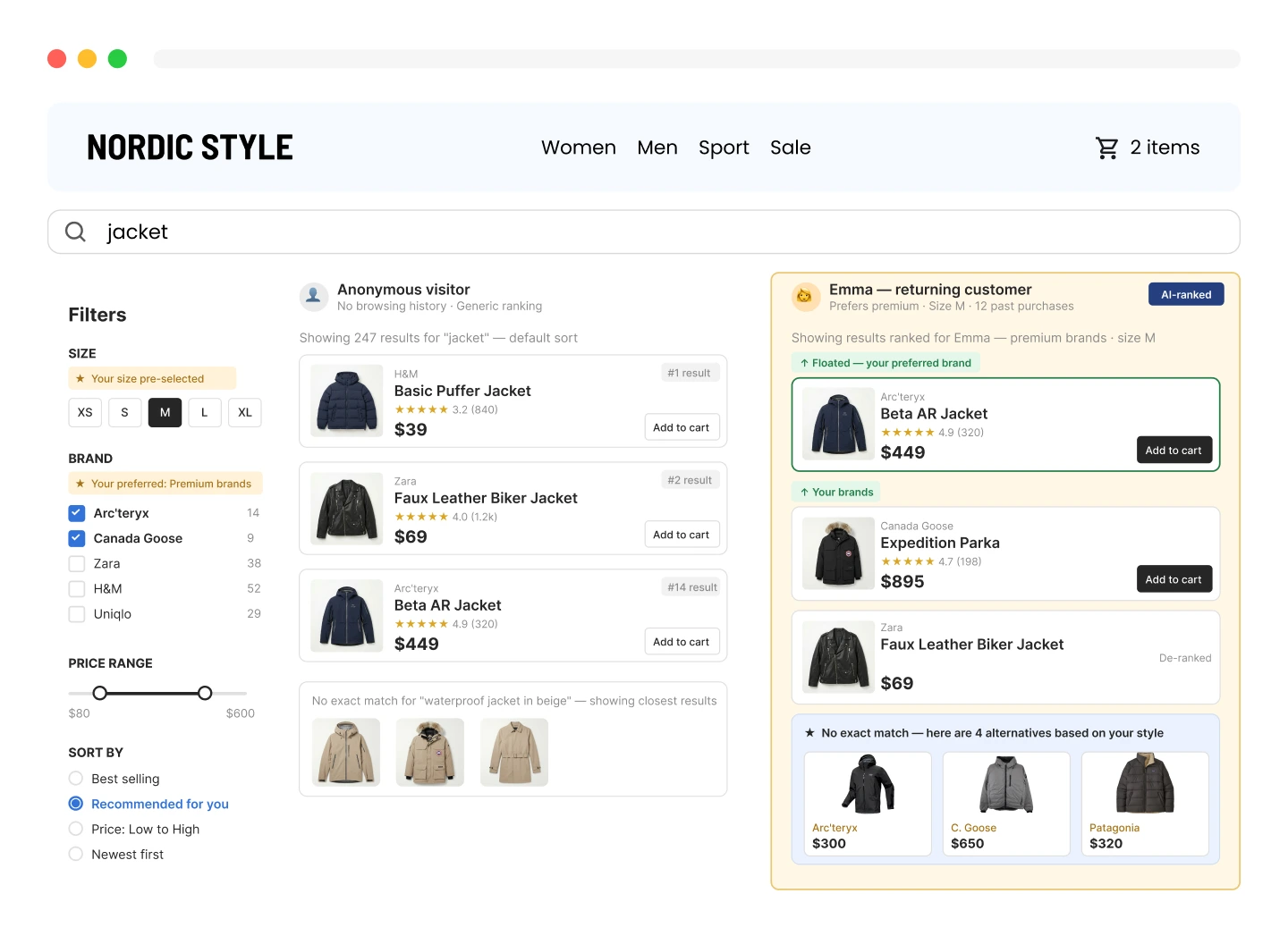
Behavior-driven ecommerce personalized search goes beyond keyword matching. It ranks results based on each shopper’s individual preference signals, such as their category affinities, brand preferences, price range behavior, and previous purchases. So the most relevant products surface at the top for each person.

For instance, a shopper who consistently buys premium brands sees premium products ranked higher. A shopper who filters by a specific size or color every session sees results pre-filtered accordingly. A loyal customer searching for “jacket” sees outerwear from brands they’ve purchased from before.

This approach also helps recover zero-result searches by showing relevant alternatives rather than showing no matches to shoppers.

The result: faster product discovery, higher search-to-conversion rates, and fewer sessions that end in frustration. You can see how Discover™ helps deliver these outcomes in practice.

4 Recover Lost Revenue with Behavior-Triggered Ecommerce Emails

A significant share of ecommerce revenue is lost when a shopper leaves without purchasing.

Behavior-triggered email personalization recovers that by reaching shoppers with timely, contextually relevant messages at high-intent moments.

Key triggered email flows include:

  • Cart abandonment emails: Sent to shoppers who added items to their cart but didn’t complete the purchase. Including the exact products they left behind, along with updated pricing, availability, and relevant recommendations, performs far better than generic reminders.
  • Browse abandonment emails: Sent when someone checks out a product or category but doesn’t add anything to their cart. It’s a way to nudge them early, while they’re still considering their options.
  • Post-purchase sequences: Follow-up emails after a purchase that suggest products that go well with what they just bought. It’s a natural way to cross-sell when the customer already trusts your brand.
  • Segmented campaigns: Emails tailored to different groups of customers based on what they’ve browsed or bought before. Instead of sending the same promotion to everyone, you’re sending offers that actually feel relevant.

The difference between generic email automation and personalized triggered flows is measurable: higher open rates, higher click rates, and higher revenue per email sent.

Solutions like Active Content enable this by powering real-time product recommendations, personalized messaging, and triggered campaigns across email and other channels.

5 Increase Checkout Conversions with Smart Upsell and Cross-Sell

The path from cart to completed purchase is where personalization can make a decisive difference.

Checkout-stage personalization presents the right upsell and cross-sell opportunities at the moment of highest purchase intent.

Effective checkout personalization includes:

  • Cart-page recommendations: Suggest products based on what’s already in the cart and what similar shoppers ended up buying.
  • Upsell prompts: Highlight better or upgraded options, with a clear reason why they’re worth it.
  • Saved preferences: Make checkout faster for returning customers by remembering their shipping, payment, and address details.
  • Threshold messaging: Show shoppers how close they are to free shipping or a discount, nudging them to add more items.

Checkout is not the place for irrelevant recommendations. AI ecommerce personalization software like Recommend™ keeps upsell and cross-sell recommendations relevant, increasing the likelihood shoppers view them as helpful additions rather than distractions.

6 Increase Conversions with Real-Time Social Proof

Shoppers are uncertain. They need signals that others have made this ‘right’ decision as well. Real-time social proof personalization solutions like Social Proof Messaging provides those signals dynamically, based on actual activity and inventory data.

Social proof signals that drive conversion include:

  • Recent purchase notifications: “12 people bought this today” or “Sarah from London just purchased this” — real-time signals that validate a shopper’s interest.
  • Trending product indicators: Surfaces where products are gaining momentum across the site, triggering FOMO for engaged shoppers.
  • Low-stock alerts: “Only 3 left in your size” is one of the highest-converting urgency signals in ecommerce, but only when it’s displayed to the right shopper at the right moment.
  • Rating and review highlights: Personalizing which reviews surface based on shopper profile — a first-time buyer sees trust-building reviews, a returning customer sees reviews relevant to their use case.

Checkout is not the place for irrelevant recommendations. AI ecommerce personalization software like Recommend™ keeps upsell and cross-sell recommendations relevant, increasing the likelihood shoppers view them as helpful additions rather than distractions.

Test social Proof Impact Free for 30 Days

We’re offering a free 30-day pilot to help you improve your conversion rate using social proof messaging.

We’ll audit your ecommerce website, identify where you’re losing revenue, and put high-impact urgency or trust widgets. No heavy IT effort required.

You get measurable results within weeks, with zero upfront commitment.

Start Your Free 30-Day Pilot

Real-World Ecommerce Personalization Examples

1 Matas Grew Attributable Sales by 36% with Personalized Recommendations

The Situation:
Matas, a leading Scandinavian health and beauty retailer, wanted to improve how shoppers engaged with its product catalog and increase the effectiveness of cross-sell and upsell opportunities.

What they did:
Matas implemented personalized product recommendations across key touchpoints, including product pages, category pages, cart, and checkout. These recommendations helped surface relevant products based on shopper behavior and context.

The Result:
Personalized recommendations drove 36% growth in attributable sales, along with increased engagement and order value from recommendation-driven interactions.

2 Stadium Drives +17% RPV with Social Proof Messaging

The Situation:
Stadium, a leading Nordic sports and outdoor retailer, was already using personalization and wanted to further improve conversion and customer experience by making its site more responsive to real-time shopper behavior.

What they did:
Stadium implemented social proof messaging across product pages, highlighting real-time signals like trending products, popular items, and recent purchases. These messages were triggered by shopper activity, such as views, add-to-carts, and purchases, and were continuously tested and optimized to improve performance.

The Result:
This led to a 17.3% increase in RPV, along with improvements in conversion rate and add-to-cart rate, driven by more relevant, behavior-based messaging.

Read the Full Stadium Case Study

3 Wine.com Increased Revenue per Click with Attribute-Based Product Recommendations

The Situation:
Wine.com, a leading online wine retailer, wanted to improve the relevance of its product recommendations, particularly for new products and shoppers with limited browsing or purchase history.

What they did:
Wine.com implemented attribute-based product recommendations that use product data, such as varietal, region, and price, to deliver more relevant recommendations across the site. This approach helped surface a broader range of products to more shoppers, including those without prior behavioral data.

The Result:
This led to improved recommendation performance and increased revenue per click (RPC) from recommendation placements, driving stronger engagement with recommended products.

Read the Full Wine.com Case Study

How to Choose the Right Ecommerce Personalization Strategy

Not all personalization strategies deliver equal value for every retailer. The right approach depends on your business objective, product assortment, customer behavior, and where your greatest revenue opportunities lie.

Here’s how to think through the decision:

Align with your revenue goals

Start with the metrics you want to improve. Different personalization strategies have different primary impacts.

For instance, if RPV is your focus, real-time on-site personalization and social proof are high-leverage starting points.

If AOV is the priority, recommendation-driven cross-sell and checkout upsell deserve early attention.

Prioritize high-impact journeys

Not every touchpoint has equal revenue potential. Product discovery, recommendations, and cart recovery bring the highest ROI in personalization. They sit closest to the purchase decision. Start there, prove ROI, then expand.

Consider your vertical

The right personalization strategy varies meaningfully by product category.

For instance, high-frequency, consumable categories (grocery, health, and beauty) benefit most from purchase-pattern personalization and replenishment triggers.

Whereas, high-consideration, low-frequency categories (furniture, consumer electronics) benefit more from browse-based recommendations and social proof that reduces purchase anxiety.

Fashion requires strong attribute-based modeling to handle seasonal catalog turnover and style affinity.

Plan and choose a platform built for scale

The personalization strategies that work for 10,000 monthly visitors need to be architected differently for 10 million.

Enterprise SaaS personalization platforms from ADA Global are purpose-built to ingest behavioral signals, run real-time ML inference, and serve individualized experiences at scale — with pre-built connectors to major ecommerce platforms, CDPs, and email providers that reduce integration risk and time-to-value.

This is not something rule-based tools, homegrown solutions, or stitched-together point solutions can reliably deliver.

Test, measure, and scale

The retailers that build lasting personalization advantages treat it as an ongoing experimentation program, not a one-time implementation.

Run tests on recommendation placements, messaging, and algorithms. Measure RPV, not just CTR. Scale what wins and deprioritize what doesn’t.

Start with a Free RPV Lift Teardown from ADA Global

Most ecommerce teams know personalization matters, but identifying where revenue is actually leaking and which strategies will close those gaps requires a level of diagnostic depth that most teams don’t have in-house.

ADA’s RPV Lift Teardown is designed to answer that question in concrete, actionable terms.

ADA’s team analyzes your ecommerce site to surface exactly where generic experiences are costing you revenue.

We’ll show you where you’re missing revenue, whether it’s underperforming recommendations, missed cross-sell opportunities, or gaps in product discovery.

You’ll get a clear breakdown of the highest-impact opportunities, along with a prioritized 90-day plan tailored to your business and shoppers.

Find and Fix Your Revenue Gaps

Get a data-backed 90-day roadmap to improve conversion, AOV, and revenue per visitor on your ecommerce site.

Get Your Free RPV Teardown
Table Of Contents
TL; DR Ecommerce Personalization
What is Ecommerce Personalization?
Manual vs AI Personalization
Benefits of Personalization in Ecommerce
6 Ecommerce Personalization Strategies and Use Cases
Real-World Ecommerce Personalization Examples
How to Choose the Right Ecommerce Personalization Strategy
Start with a Free RPV Lift Teardown from ADA Global

Ecommerce Personalization FAQs

1. What is ecommerce personalization?

Ecommerce personalization is the practice of dynamically adapting the online shopping experience, including product recommendations, content, search results, and messaging to each individual shopper based on their behavior, preferences, and context. The goal is to make every shopper’s experience feel relevant and tailored to them, rather than generic.

2. How does AI enable ecommerce personalization?

AI makes it possible to personalize experiences at a scale and speed that manual rules can’t match by analyzing how shoppers browse, search, and interact in real time, then predicting what each person is most likely to want next. As more data comes in, it continuously improves, and it can also deliver relevant experiences for new visitors and new products where there isn’t much historical data yet.

3. What are the most impactful ecommerce personalization strategies?

The highest-ROI personalization strategies for most retailers are AI-driven product recommendations, personalized search, and behavior-triggered email flows. Social proof and checkout personalization also deliver strong results with relatively fast implementation timelines.

4. How long does it take to see results from ecommerce personalization?

Results timelines vary by strategy and platform. With ADA, social proof messaging and urgency widgets can be deployed and deliver measurable conversion lift within 30 days. More comprehensive recommendations and search personalization programs typically show significant results within 60–90 days of going live, as AI models build behavioral data on your shopper base.

5. How is ecommerce personalization different from segmentation?

Traditional segmentation groups shoppers into broad buckets (e.g., “women aged 25–34 who purchased in the last 90 days”) and delivers the same experience to everyone in that group. True personalization delivers a unique experience to each individual, adapting in real time based on what that shopper is doing right now, not just their demographic profile.

6. What data does ecommerce personalization use?

Personalization engines use a combination of behavioral, contextual, and product attribute data. First-party behavioral data collected on your own site is the most valuable input, making it critical to have robust data collection and a personalization platform that can act on it in real time.

7. Can personalization work for anonymous visitors?

Yes. Modern personalization platforms use in-session behavioral signals — what a visitor searches for, clicks, and browses during a single session — to serve relevant recommendations and content even before a historical profile has been built. Attribute-based recommendation models are particularly effective for anonymous visitors.

8. How do I measure the ROI of ecommerce personalization?

The most reliable measurement approach is to track include revenue per visitor (RPV), conversion rate, average order value (AOV), click-through rate on recommendations, and attributable revenue.

Beyond Messaging: How Social Proof Is Becoming the Signal Layer of Commerce

Digital Experience Personalization
Blogs

Beyond Messaging: How Social Proof Is Becoming the Signal Layer of Commerce

Over the past decade, ecommerce has been optimized for one thing: human decision-making.

But that’s beginning to change.

AI shopping assistants and autonomous agents are increasingly playing a more active role in how products are discovered, evaluated, and even purchased.

As commerce evolves to serve both humans and machines, the question becomes: What signals drive those decisions?

The Layers of Modern Commerce

To understand where social proof messaging fits, it helps to look at commerce as a set of interconnected layers:

  • Data Layer: Raw behavioral signals like views, add-to-carts, and purchases
  • Shopper Insights & Analytics Layer: Interpreting that data into patterns like demand, popularity, and momentum
  • Personalization Layer: Using those insights to tailor experiences, recommendations, and journeys
  • Conversion Layer: Where insights are surfaced as actionable nudges — like social proof messaging

This is how social proof has traditionally been positioned: as a conversion-layer tactic that helps shoppers make decisions faster.

But as commerce evolves, its role is expanding beyond just the final layer.

What starts as a conversion-layer message is actually powered by deeper layers of data and insight, and that’s where its future 
potential lies.

Social Proof Messaging Has Always Been More Than Messaging

Every social proof message is powered by real-time shopper behavior:

  • Views
  • Add-to-carts
  • Purchases

When you display “24 people bought this in the last hour,” you’re not just showing a message — you’re exposing a data point about demand.

In other words:

Social proof messaging doesn’t just influence decisions — it reflects real-time behavioral signals.

And those signals are becoming increasingly important.

From Shopper Cues to Decision Signals

Today, these signals are primarily used to guide human shoppers.

But as commerce evolves, the same signals are beginning to serve another purpose: structured decision inputs.

Consider this:

  • Human-facing message: “Purchased 24 times in the last hour”
  • Underlying signal: High purchase velocity
  • Human-facing message: “Trending now”
  • Underlying signal: Rising product momentum

This dual nature is what makes social proof messaging solutions so powerful. They operate at both the experience and data layers.

Why Signals Are Becoming Critical in Modern Commerce

As product catalogs grow and shopper expectations rise, decision-making is becoming more complex.

Retailers need ways to:

  • Surface the most relevant products
  • Highlight what’s gaining traction
  • Reduce friction across the funnel

This is where behavioral signals play a crucial role.

Signals like:

  • Purchase velocity
  • Popularity trends
  • Engagement levels

help answer key questions:

  • Which products are gaining momentum right now?
  • Which items have strong shopper validation?
  • Which options are most likely to convert?

Social proof messaging surfaces these answers in an intuitive, credible, and scalable way.

The Next Layer: Commerce That Responds to Signals

We’re now entering a phase where commerce systems are becoming more dynamic and responsive.

Advances in:

  • AI-driven personalization
  • Real-time data pipelines
  • Automated decisioning

are enabling platforms to act on signals in addition to displaying them.

This means:

  • Recommendations can adapt instantly to demand shifts
  • Merchandising can respond to real-time trends
  • Experiences can evolve without manual intervention

In this environment, signals are no longer just informative. Rather, they become operational inputs.

Where Social Proof Messaging Fits In

Traditionally, social proof messaging has been seen as a conversion tactic i.e. a way to nudge shoppers toward action.

But in modern commerce, it becomes:

A real-time signal layer that captures and communicates product demand.

The same data that powers:

  • “X people bought this”

can also inform:

  • ranking decisions
  • recommendation strategies
  • automated merchandising logic

This makes social proof one of the cleanest and most scalable indicators of demand available to retailers today.

Must explore social proof messaging use cases

From Optimization to Calibration

As discussed in our previous blog on Coverage Analysis, the effectiveness of social proof messaging depends on choosing the right:

  • Metrics (views, add-to-carts, purchases)
  • Thresholds (minimum activity levels)
  • Intervals (time windows)

Because:

  • Too little signal → limited reach
  • Too much noise → reduced credibility

The goal is to find the balance where signals are both:

  • meaningful (high intent)
  • scalable (broad coverage)

This calibration ensures that your social proof messaging remains both trustworthy and effective.

Looking Ahead: A Unified Signal Layer for Commerce

As commerce continues to evolve, one thing is becoming clear:

  • The retailers that win won’t just have great products or great experiences.
  • They will have strong, real-time signals.

Products that demonstrate:

  • consistent demand
  • strong engagement
  • accelerating momentum

will naturally rise to the top, whether decisions are made by:

  • shoppers
  • algorithms
  • or increasingly intelligent systems

In many ways, we are moving toward a unified layer where behavioral signals power both experience and decisioning.

And social proof sits at the center of that shift.

Final Thoughts

Social proof messaging started as a way to influence shopper behavior.

Today, it does much more.

It captures real-time demand, reflects collective behavior, and helps scale trust across the customer journey.

And as commerce systems become more responsive and intelligent, these signals will only grow in importance.

Ready to turn shopper behavior into scalable, high-impact signals?

Explore how ADA’s social proof messaging solutions help you capture, calibrate, and activate real-time demand across your catalog.

Get a Free Trial
Table Of Contents
The Layers of Modern Commerce
Social Proof Messaging Has Always Been More Than Messaging
From Shopper Cues to Decision Signals
Why Signals Are Becoming Critical in Modern Commerce
The Next Layer: Commerce That Responds to Signals
Where Social Proof Messaging Fits In
From Optimization to Calibration
Looking Ahead: A Unified Signal Layer for Commerce
Final Thoughts

What is Open-Time Email Personalization and Why It’s a Game-Changer for Retailers

Digital Experience Personalization
Blogs

What is Open-Time Email Personalization and Why It’s a Game-Changer for Retailers

Retail marketers have come a long way from batch-and-blast. Today’s emails carry first names, purchase history, and even tailored recommendations. And yet, something still feels off.

Ever opened a promo email for a flash sale only to find the product is sold out? Or clicked into a discount campaign only to realize the pricing has changed? That’s not a creative problem, it’s a timing problem.

This is where open-time email personalization comes into play. It’s when the content isn’t finalized when it’s sent, but when it’s opened. It’s a shift that moves personalization from being reactive to being relevant. Active Content is making this possible at scale.

What is open-time email personalization?

Open-time email personalization means the email content is rendered dynamically when the recipient opens it, not static at send time.

This can include:

  • Showing the latest price (flash sale changes)
  • Filtering out out-of-stock items from a product module
  • Updating a loyalty balance visual
  • Swapping the hero banner based on affinity, location, or language
  • Adding social proof elements like ratings, reviews, or urgency cues based on live inputs

While traditional email is a printed flyer, open-time personalization turns the email into something closer to a web experience, with content created in real time.

Ada Global’s Active Content creates dynamic content blocks that pull from multiple sources and render at the moment of engagement, keeping the creative relevant as it’s viewed.

Why Traditional Personalization Fails

Most teams already do personalization. First-name fields, segments by gender or category, “recommended for you” modules, browse/cart triggers.

So why isn’t that enough?

Because most of it is still send-time personalization. You decide what each person sees based on what you knew at 10:00 a.m., then you hope it’s still true at 6:30 p.m.

In retail, that hope gets expensive fast.

Common Challenges Faced by CRM Teams

  • Stale pricing and promos
    The email shows $49.99, but the site shows $59.99, or the offer has shifted. That disconnect breaks trust.
  • Stock-outs inside hero modules
    You finally get someone to click, and the product is gone. Not only do you lose the sale, but you also waste a precious engagement moment.
  • Generic creative because dynamic logic is too hard
    Teams default to segment-level creative because making it truly 1:1 would require too much IT, too many templates, and too much QA.
  • Campaign build cycles that move more slowly than the business
    Retail is real-time. Your email production cycle often is not.

How Active Content Enables Open-time Personalization

Unlike most marketing automation solutions, Active Content is purpose-built to create and deliver open-time personalized content blocks across email, SMS (RCS), WhatsApp, and more.

Here’s How Active Content Works

Email Personalization Examples Retailers Can Implement

Below are email personalization examples that feel practical in a retail CRM calendar. The point is not to get fancy. The point is to stay accurate and contextually relevant.

Price-drop

You sent a ‘Price Drop Alert’ today. Some customers open in 15 minutes, some open tomorrow.

With open-time logic, the module can:

  • Show the latest price at open
  • Remove items that are no longer discounted
  • Replace with similar discounted items if the original is out of stock


Abandoned Cart
An abandoned cart email should not look like a receipt. It should look like a conversion-ready product page.

Active Content use case includes enriching cart flows with ratings/reviews, social proof messages, badges like “Limited stock,” and recommendation add-ons.


Loyalty Progress Bar
Loyalty emails often arrive at the wrong time. A customer earns points after the email is sent, then opens it and sees an outdated status. Active Content’s dynamic loyalty visualization shows live progress toward the next tier at open, which is more motivating than a static line of text.


One Campaign, Multiple Languages
Language personalization is a great quick win example because it’s instantly visible and operationally painful when done manually.

Active Content can pick the right language asset from a CMS based on language preference from your CDP, while keeping it as a single campaign.

Why Open-time Email Personalization is a Game Changer

Open-time personalization is not just better personalization. It’s a new way of thinking. It changes three core economics of retail CRM:

Reduce the cost of being wrong
When your email shows stale pricing or unavailable products, you pay twice:

  • You lose the conversion
  • You create a brand trust gap

Open-time rendering reduces those mismatch moments because content stays current at open-time.

Move faster without sacrificing creative quality
Retail teams are constantly balancing speed and polish. If you want a rich, creative that uses multiple data sources, you often need IT help and long lead times.

Active Content positions itself as marketer-friendly. It stitches together disparate data, reduces IT dependency, and supports sophisticated creative assembly through a no-code workflow.

Scale 1:1 experiences without cloning templates
Segment-level personalization usually means more templates. True 1:1 means more logic, fewer copies.

Active Content’s single master template with a dynamic variations approach is designed for that reality.

Open-time Email Personalization is How Email Catches up to Retail Reality

Retail moves in minutes. Inventory shifts, promos change, customer intent spikes and fades. But most email programs still operate like they’re publishing a flyer- locked content, fixed assumptions, and a hope that the customer opens at the right time.

Open time email personalization flips that dynamic. It lets email behave more like your storefront- current, contextual, and tuned to what’s true right now. That matters because relevancy is not just a creative metric in retail. It’s a revenue metric. When customers see accurate pricing, available products, and content that matches their intent, they click with confidence instead of hesitation.

The bigger win is operational. With Active Content, you’re not signing up to build 25 versions of the same campaign or drag IT into every new idea. You’re building smarter templates once, then letting dynamic blocks do the heavy lifting using the data you already have. That’s how teams scale personalization without slowing down.

If you’re looking for a practical next step, start by auditing your current lifecycle emails and asking one simple question: How often does this message go wrong between send and open? Wherever the answer is “often,” open-time personalization is usually the fastest path to better performance and a better customer.

Table Of Content
What is open-time email personalization?
Why Traditional Personalization Fails
How Active Content Enables Open-time Personalization
Email Personalization Examples Retailers Can Implement
Why Open-time Email Personalization is a Game Changer
Open-time Email Personalization is How Email Catches up to Retail Reality

Top Ecommerce Personalization Software Compared: How to Choose the Right One

Digital Experience Personalization
Blogs

Top Ecommerce Personalization Software Compared: How to Choose the Right One

TL:DR for Ecommerce Personalization Software

  • Looking for the best ecommerce personalization software? Leading platforms in 2026 include Ada Global, Dynamic Yield, Nosto, Bloomreach, Insider, and Salesforce Personalization.
  • The right solution should support personalized recommendations, search, content, customer journeys, and customer data activation.
  • Platform selection should be based on business objectives, data readiness, integration needs, merchandising requirements, and scalability.
  • Real-time decisioning, AI-driven personalization, and unified customer data are becoming essential capabilities for modern retailers.
  • Retailers that successfully implement personalization can improve conversion rates, average order value, repeat purchases, retention, and customer lifetime value.

What Is Ecommerce Personalization Software?

Ecommerce personalization software helps online retailers adapt the shopping experience to each customer or customer segment. It uses signals such as browsing behavior, search intent, purchase history, product affinity, location, lifecycle stage, and stated preferences to decide what a shopper should see next.

Ecommerce Personalization is most useful when it makes the shopping journey easier, whether that’s through better recommendations, more relevant search results, dynamic content, or lifecycle messages that reflect customer behavior. 

A personalized ecommerce experience should feel helpful to the shopper, not like a layer of technology added on top of the site.

That could mean showing a returning customer products they are likely to buy again, changing homepage content based on category interest, ranking search results by shopper intent, or sending an email with product recommendations that reflect recent browsing behavior.

At its best, ecommerce personalization software helps shoppers make decisions faster while helping retailers improve conversion, basket size, repeat purchases, and customer lifetime value.

The goal is to make every interaction feel more useful, whether the shopper is browsing for the first time, returning to compare products, or coming back to buy again.

Top Ecommerce Personalization Software in 2026

The best ecommerce personalization software is not always the platform with the longest feature list. It is the one that fits the retailer’s use cases, data maturity, catalog complexity, and team workflows.

The best personalization for ecommerce should connect product discovery, content, search, customer data, and lifecycle engagement without creating more operational work for the team.

Leading Platforms Overview

The right ecommerce personalization software depends on what the retailer needs to solve first. Some platforms are strongest in onsite product recommendations. Some focus on search and product discovery. Others are built around journey orchestration, experimentation, or customer data.
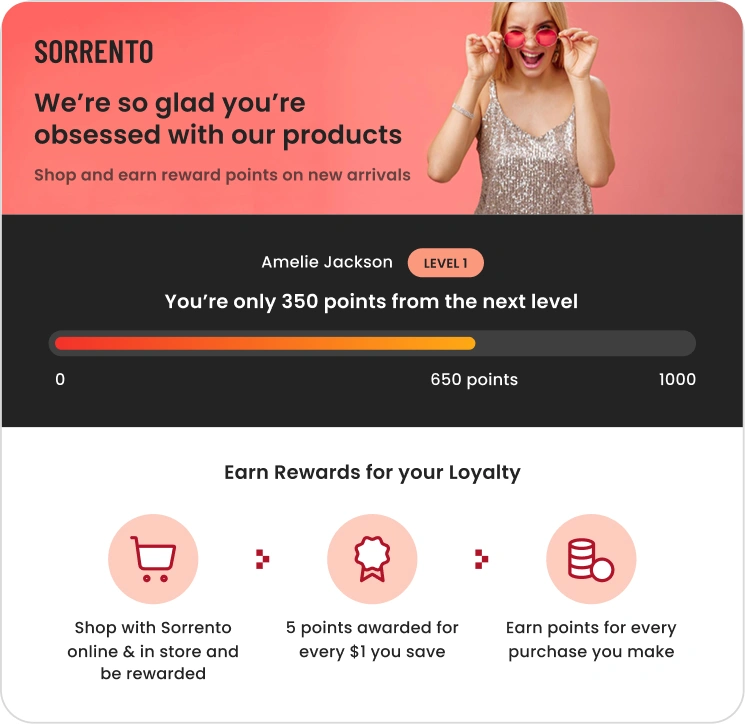
The comparison below gives a practical view of leading ecommerce personalization tools in 2026.

1 Ada Global

Ada Global is built for retailers that need personalization across the commerce lifecycle. Its Digital Experience Personalization products help teams personalize product discovery, recommendations, search, browse experiences, content, and shopper journeys.

Ada Global is a strong fit when personalization needs to reflect both customer intent and business priorities such as margin, inventory, brand rules, campaign goals, and product strategy.

Key strengths:

  • Product recommendations and content personalization through Recommend™
  • Personalized search through Find™
  • Dynamic browse and navigation
  • Customer data activation through Real-time CDP
  • Support for merchandising rules, transparency, and reporting
  • Cross-category use cases across fashion, beauty, grocery, electronics, B2B commerce, and marketplaces

Best for:

  • Brands with large catalogs
  • Retailers that need merchandising control
  • Teams that want AI personalization tied to business goals
  • Enterprise ecommerce retailers
  • Companies looking to connect product, content, and customer data

2 Dynamic Yield

Dynamic Yield by Mastercard offers personalization and experience optimization through Experience OS. Its ecommerce capabilities include product recommendations, personalized content, audience segmentation, A/B testing, and experimentation.

Key strengths:

  • AI personalization
  • A/B testing
  • Content and product personalization
  • Experience optimization
  • Enterprise integrations

Best for:

  • Enterprise teams with mature personalization programs
  • Retailers focused on experimentation and experience optimization
  • Brands that need multi-channel personalization and testing

Consideration:
Dynamic Yield is best suited for teams that can support a structured testing and optimization program.

3 Nosto

Nosto is an ecommerce personalization platform focused on product recommendations, search personalization, category merchandising, segmentation, and on-site commerce experiences.

Best for:

  • Ecommerce retailers looking to improve the onsite experience
  • Teams focused on product recommendations and merchandising
  • Shopify, Magento, and commerce-platform-led teams

Key strengths:

  • Predictive product recommendations
  • Search personalization
  • Category merchandising
  • Real-time behavioral data
  • Ready-to-use recommendation algorithms

Consideration:
Nosto is strong for ecommerce experience personalization. Retailers with complex omnichannel data and activation needs should evaluate how it fits with their broader marketing and data stack.

4 Bloomreach

Bloomreach offers commerce search, product discovery, recommendations, and personalization capabilities. Its product recommendation features use search history, customer insights, product data, and AI to personalize shopping experiences.

Best for:

  • Retailers with large catalogs
  • Teams prioritizing search and product discovery
  • Businesses looking to connect product data and customer behavior

Key strengths:

  • Search-led personalization
  • Customer and product data
  • AI-powered discovery
  • Merchandising use cases
  • Product recommendations

Consideration:
Bloomreach is especially useful when product discovery, search, and merchandising are central to a personalization strategy.

5 Insider One

Insider focuses on AI-powered customer journey orchestration and channel-wide personalization. Its platform supports customer data unification and journeys across web, app, email, SMS, WhatsApp, TikTok, and other channels.

Best for:

Brands focused on cross-channel customer engagement
Lifecycle and CRM teams
Marketers managing many digital channels

Key strengths:

  • Journey orchestration
  • Omnichannel messaging
  • Unified customer data
  • Merchandising use cases
  • Broad channel support

Consideration:
Insider is well-suited for journey orchestration. Retailers shouldc assess whether they also need deeper commerce-specific controls for search, recommendations, merchandising, and catalog-driven personalization.

6 Salesforce

Personalization, Formerly Interaction Studio
Insider focuses on AI-powered customer journey orchestration and channel-wide personalization. Its platform supports customer data unification and journeys across web, app, email, SMS, WhatsApp, TikTok, and other channels.

Best for:

  • Businesses already using Salesforce Data Cloud or Marketing Cloud
  • Teams that need real-time personalization across Salesforce-managed touchpoints
  • Enterprises looking for personalization within the Salesforce ecosystem

Key strengths:

  • Real-time 1:1 personalization
  • Data Cloud integration
  • Web, app, email, and channel personalization
  • Customer profile activation

Consideration:
Salesforce Personalization is strongest when Salesforce is already central to the customer data and marketing technology stack.

Why Ada Global Is a Leader in Ecommerce Personalization

1 AI-Powered Personalization Engine

Retail personalization needs more than static product carousels. Retailers need to understand shopper intent, product relationships, catalog context, inventory, pricing, margins, and merchandising goals simultaneously.

Recommend™ helps retailers personalize product recommendations and content based on shopper behavior, context, and business priorities. It supports use cases such as cross-sell, upsell, bundles, replenishment, personalized content, guided selling, and dynamic experiences.³

Matas shows this in practice. The health and beauty retailer used Ada Global Recommend™ across web, mobile, and email, achieving 36% year-over-year growth in attributable sales, a 49% increase in orders via recommendations, and a 38% increase in items sold via recommendations.

Must explore how eXtra achieved 52% higher AOV with Ada Global

2 Real-Time Decisioning

Personalization works best when decisions happen while shopper intent is still fresh.

A customer who searches for a product, views a category, adds an item to the cart, or returns after a previous session is giving useful signals. Real-time decisioning helps the retailer respond with the right product, content, offer, or message.

Ada Global’s personalization approach is built around this idea. Recommendations, content, search, and customer data can respond to live behavior while still respecting business rules and merchandising goals.

3 Composable CDP Advantage

Personalization becomes stronger when it is connected to a customer data foundation.

Real-time CDP helps retailers unify customer data, resolve identities, build customer profiles, create audiences, and activate insights across channels. It supports real-time and batch data ingestion, identity resolution, retail-focused analytical models, audience activation, and connectors across online and offline systems.

4 Proven Business Impact

Ada Global case studies show how this can work across retail categories. Matas grew attributable sales from recommendations by 36% year over year, while Ada Global Recommend™ supports use cases across fashion, beauty, grocery, electronics, and other retail categories.

Matas grew attributable sales
 with personalized recommendations

0 %
YoY growth in attributable sales
0 %
Increase in orders via recommendations
0 %
Increase in items sold via recommendations

Powered by ADA Global Recommend™

How to Choose the Right Ecommerce Personalization Software

1 Define Business Goals

Start with the outcome you want to improve.

Common goals include:

  • Increase Conversion Rate
  • Improve Average Order Value
  • Reduce Cart Abandonment
  • Increase Repeat Purchases
  • Improve Product Discovery
  • Personalize Email and Lifecycle Campaigns
  • Increase Loyalty Engagement
  • Improve Search Relevance
  • Support Omnichannel Journeys

2 Assess Data Readiness

Personalization depends on usable data.
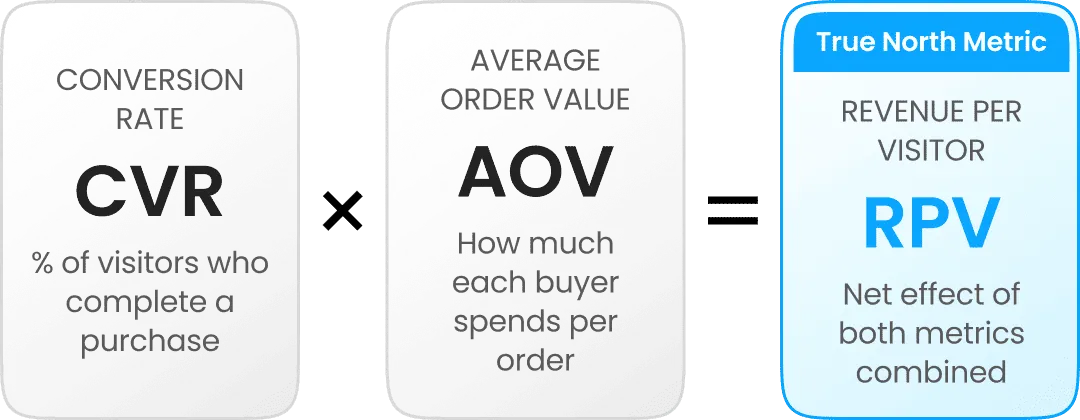
Before choosing software, assess whether you have access to product catalog data, inventory data, pricing and promotion data, customer profiles, purchase history, etc. The platform should help you improve data quality, unify signals, and activate them in practical ways.

3 Evaluate Integrations

Ecommerce personalization software should fit into your existing technology stack.

Check integrations with:

  • Ecommerce Platform
  • Customer Data Platform
  • Product Information Management System
  • Enterprise Resource Planning System
  • Improve Product Discovery
  • Search
  • Email Service Provider
  • Improve Search Relevance
  • Support Omnichannel Journeys
  • Marketing Automation
  • Analytics
  • Loyalty Platform
  • Paid Media Platforms
  • Content Management System
  • Data Warehouse

The right platform should reduce operational friction, not create another isolated system.

4 Compare Features and Vendors

Compare vendors based on the capabilities that matter most to your use cases.

Important questions include:

  • Does the platform support real-time personalization?
  • Can it personalize recommendations, search, content, and email?
  • Does it support anonymous and known users?
  • Can merchandisers control business rules?
  • Does it explain why recommendations were shown?
  • Can teams test different strategies?
  • Does it support customer data activation?

5 Test Before Scaling

Good starting use cases for testing include:

  • Homepage Recommendations
  • PDP Cross-Sell
  • Cart Page Recommendations
  • Personalized Search Results
  • Browse Abandonment Email
  • Replenishment Reminders
  • Dynamic Email Content
  • Loyalty Audience Targeting
  • Personalized Category Pages

Challenges in Ecommerce Personalization and Solutions

Ecommerce personalization can create real value, but it also exposes gaps in data, process, and technology. Most challenges come from disconnected systems, unclear ownership, poor data quality, or tools that are too hard for business teams to use.

Data Silos

Data silos make personalization inconsistent. A retailer might have browsing data in one system, purchase history in another, loyalty data in another and email engagement on a separate platform.

This results in fragmented experiences. A customer might receive irrelevant recommendations, repeated offers or messages that don’t take into account recent behavior.

This is solved by a unified customer data foundation. A real-time CDP can unify customer signals, resolve identities, build customer profiles and activate segments across channels.

Privacy and Compliance

Customers desire relevant experiences, but they also want to know their data is being used responsibly. Personalization can be uncomfortable when a brand uses data without clear consent, transparency or customer value.

Solution: Start with consent-first personalization. Only collect the data you need. Respect customer preferences. Apply governance.Make the benefit clear to the customer.

Poor Data Quality

Bad data leads to bad personalization. Incomplete product attributes, duplicate customer profiles, inconsistent taxonomy, and stale inventory can all make recommendations and messages less useful.

Solution: Strengthen data governance and validation. Retailers need clean product data, reliable identity resolution, current inventory, and recommendation logic that reflects what is actually available to sell.

Lack of Real-Time Capabilities

Personalization suffers when data is delayed. If a platform can’t act fast on a shopper’s current session activity, the brand may miss the moment of peak intent.

Solution: Leverage real time decisioning. Personalization should be responsive to live signals such as searches, clicks, cart activity, product views and campaign engagement.

Cookieless Personalization

Some personalization programs fail because the tools are too difficult for business users to use. If development support is needed for every change, then marketers and merchandisers move slowly.

Solution: Choose a platform that supports business workflows. Teams need clear controls, reporting, rules and configuration options so they can move without waiting for long development cycles.

Emerging Trends in Ecommerce Personalization

Ecommerce personalization is headed toward predictive, privacy-centric and data-connected experiences. AI, first-party data, real-time decisioning and more transparent customer relationships will define the next wave.

AI & Predictive Personalization

AI is enabling retailers to move from reactive personalization to predictive personalization.

Rather than simply responding to what a shopper did in the past, systems can predict likely next products, churn risk, replenishment timing, intent and preferred channels.

What retailers value is timing. The recommendation, offer or message is more valuable when it is delivered when the shopper is most likely to take action.

Hyper-Personalization

Hyper-personalization leverages real-time behavior, customer, and product data, along with AI, to tailor experiences at a more individual level.

A few examples are unique product recommendations for each shopper, personalized search rankings, or dynamic content based on current intent.

Generative AI in Commerce

Generative AI is starting to change how retailers create content and guide shoppers. It works best when it is grounded in accurate product data, customer context, inventory, and business rules. Without that foundation, it may produce content that sounds helpful but does not support a reliable shopping decision.
It can support use cases such as conversational shopping assistants, guided selling journeys or AI-generated product bundles.

Zero-Party Data

Zero-party data is information that customers choose to share with a brand. This may include preferences, sizes, interests, needs, budget, communication choices, or shopping goals.

For example, a beauty shopper shares skin type, or a fashion shopper shares preferred sizes.

Zero-party data works best when customers see clear value in sharing it.

Cookieless Personalization

For years, many brands relied on third-party cookies to understand shoppers across the web. That approach is becoming less dependable.

Cookieless personalization works differently. It uses the data a retailer collects through its own customer relationships, such as website behavior, purchases, loyalty activity, email engagement, app activity, and stated preferences.

Conclusion: Personalize to Compete and Win

For retailers, an ecommerce personalization software can improve conversion, average order value, retention, and customer lifetime value when it is tied to clear goals and measured carefully. Ada Global’s capabilities help retailers create relevant, real-time, and business-aware experiences across the customer journey.

Build ecommerce personalization around the full customer journey

ADA Global helps retailers create relevant, real-time, and business-aware experiences across product discovery, search, content, customer data, and lifecycle engagement.

Talk to Us

FAQs

1 What is ecommerce personalization software?

Ecommerce personalization software helps retailers adapt shopping experiences using customer data, product data, behavioral signals, and AI. It can personalize recommendations, search results, website content, email content, offers, and omnichannel journeys.

2 How does personalization increase conversion rates?

Personalization can increase conversion rates by helping shoppers find relevant products and content faster. When recommendations, search results, offers, and messages match shopper intent, customers have fewer steps between interest and purchase.

3 What data is required for personalization?

Common data includes browsing behavior, search behavior, purchase history, cart activity, product catalog data, inventory, pricing, customer profiles, loyalty data, email engagement, and stated preferences.

4 Is personalization safe for user privacy?

Personalization can be privacy-safe when retailers use clear consent, responsible data collection, preference management, governance, and transparency. Customers should understand how their data improves the experience and should be able to manage their choices.

5 What is the best personalization software?

The best personalization software depends on business goals, use cases, data maturity, and technology stack. Leading ecommerce personalization platforms include ADA Global, Dynamic Yield, Nosto, Bloomreach, Insider, and Salesforce Personalization.

6 How does AI improve personalization?

AI improves personalization by identifying customer intent, predicting likely needs, ranking products, selecting content, optimizing offers, and adapting experiences in real time. It helps retailers move beyond fixed rules while still supporting business controls.

7 What industries benefit most from personalization?

Retail and fashion, grocery, beauty, electronics, marketplaces, travel, hospitality, and B2B ecommerce can all benefit from personalization. It is especially useful for businesses with large catalogs, repeat customer interactions, or complex buying journeys.

Sources

  1. McKinsey & Company. 2023. “What Is Personalization?” McKinsey Explainers.
  2. McKinsey & Company. 2021. “The Value of Getting Personalization Right – or Wrong – Is Multiplying.”
  3. Dynamic Yield by Mastercard. “Market-Leading Personalization Software.” Mastercard.
  4. Nosto — AI-Powered Ecommerce Personalization.
  5. Bloomreach. “Product Recommendations.” Bloomreach Discovery.
  6. Insider. “AI-Powered Customer Journey Orchestration.” Insider One.
  7. Salesforce. “Real-Time Personalization Engine.” Salesforce Marketing.
Table Of Contents
TL:DR for Ecommerce Personalization Software
What Is Ecommerce Personalization Software?
Top Ecommerce Personalization Software in 2026
Why Ada Global Is a Leader in Ecommerce Personalization
How to Choose the Right Ecommerce Personalization Software
Challenges in Ecommerce Personalization and Solutions
Emerging Trends in Ecommerce Personalization
Conclusion: Personalize to Compete and Win
FAQs
Sources

Outfit Energy on Every Page: Your AI Styling Playbook for Fashion Ecommerce

Digital Experience Personalization
Blogs

Outfit Energy, Everywhere: Launching the AI-Powered Styling Playbook for Fashion Ecommerce Teams

Let’s be honest: most ecommerce sites still feel like digital warehouses. Endless grids. Product after product. No context. No spark.

But the shoppers you’re trying to convert? They’re scrolling through Instagram reels filled with styled looks and discovering outfits through TikTok. They’ve been conditioned to expect inspiration, and most websites just aren’t delivering.

That’s why we built Ensemble AI, and now, why we’ve packaged it all into something fashion ecommerce teams can use right away.

🎉 Introducing The AI-Powered Styling Playbook for Fashion — your practical guide to bringing styling intelligence and outfit energy to every page on your site.

Whether you’re leading merchandising, ecommerce, or digital CX, this playbook shows you how to create visual, personalized ecommerce experience shopping journeys that feel good and convert.

Download the Playbook

Why Now? Because Shoppers Don’t Browse Like They Used To

According to McKinsey, 75% of Gen Z prefer discovering fashion on social media instead of through traditional site navigation. And bounce rates on ecommerce category pages now average around 47% (Contentsquare, 2023).

Why? Because shoppers expect the work to be done for them. They want to be inspired, guided, styled, not left alone with 1,300 blouses and a filter bar.

The bottom line: you don’t win shoppers over by throwing more SKUs at them. You win by showing them how to wear what you sell.

That’s what the AI-powered stylist behind Ensemble AI was built to do.

So What’s in the Playbook?

The AI-Powered Styling Playbook walks you through how fashion retailers can activate outfit-led discovery across every major touchpoint in the shopper journey — with examples, tactics, and the business impact behind it all.

You’ll learn how to:

  • Transform homepages from static banners into curated inspiration
  • Turn category pages into visual narratives with ready-to-shop looks
  • Use PDPs to cross-sell without being pushy
  • Boost cart value with outfit-level add-on nudges
  • Add styling intelligence to triggered email marketing campaigns without developer dependency
  • Bring “shop the look” to social commerce without manual effort

It’s all about using Ensemble AI’s styling engine to build journeys that feel like they were designed by a human stylist but delivered at machine scale.

The Power of a True AI-Powered Stylist

While most recommendation engines focus on product relevance, Ensemble AI focuses on outfit logic — how products actually work together.

Here’s what makes it different:

  • A Composite AI Engine combining visual recognition, NLP, and co-occurrence data
  • Full styling rule configuration — so merchandisers control the logic, not just the algorithm
  • Dynamic personalization by shopper affinity, behavior, brand sensitivity, and more
  • Interactive experiences: outfit swaps, “more like this,” like/dislike feedback
  • No IT involvement needed to deploy curated looks in campaigns or site modules

In short? It’s not just another personalization tool. It’s an AI-powered stylist that works across your entire catalog — 24/7, across devices and channels.

Real Benefits for Real Teams

This isn’t just about tech. It’s about measurable results. When shoppers feel seen, the business grows.

Here’s what fashion retailers unlock with Ensemble AI:

Who Should Download This?

This playbook is built for fashion ecommerce teams who want to bring clarity to the chaos. If you’re:

  • A merchandiser who wants to style faster, not harder
  • A CX or ecommerce lead focused on conversion, AOV, or RPV
  • A campaign marketer looking to make your emails visually convert
  • A digital leader who’s tired of static product listings…

…this playbook is for you.

Outfit Energy, at Every Touchpoint

In fashion, inspiration converts.

The AI-Powered Styling Playbook gives you the blueprint to bring outfit-level styling to every key moment of the shopper journey. No more guesswork. No more over-reliance on isolated personalized product recommendations. Just guided discovery, personalization, and styling that performs.

So whether you’re planning a seasonal refresh or rethinking your PDPs, this is your starting point.

Get the Playbook

Table Of Contents
Why Now? Because Shoppers Don’t Browse Like They Used To
So What’s in the Playbook?
The Power of a True AI-Powered Stylist
Real Benefits for Real Teams
Who Should Download This?
Outfit Energy, at Every Touchpoint

How to Increase Average Order Value (AOV): 25+ Proven Ways

Digital Experience Personalization
Blogs

How to Increase Average Order Value (AOV): 25+ Proven Ways

Key Takeaways on Increasing AOV

  • AOV is the fastest revenue lever most ecommerce teams underuse — it requires no extra traffic, just smarter use of existing customers.
  • AI-powered recommendations are the highest-impact tactic, with typical AOV lifts of 15 to 30% — eXtra saw 52% using ADA Global Recommend™.
  • Product bundling drives 20 to 30% AOV uplift; customers who buy bundles have significantly higher lifetime value.
  • Free shipping thresholds set 15 to 25% above current AOV consistently push customers to add one more item.
  • Social proof and urgency signals reduce hesitation on higher-priced items — but only when they reflect real data.
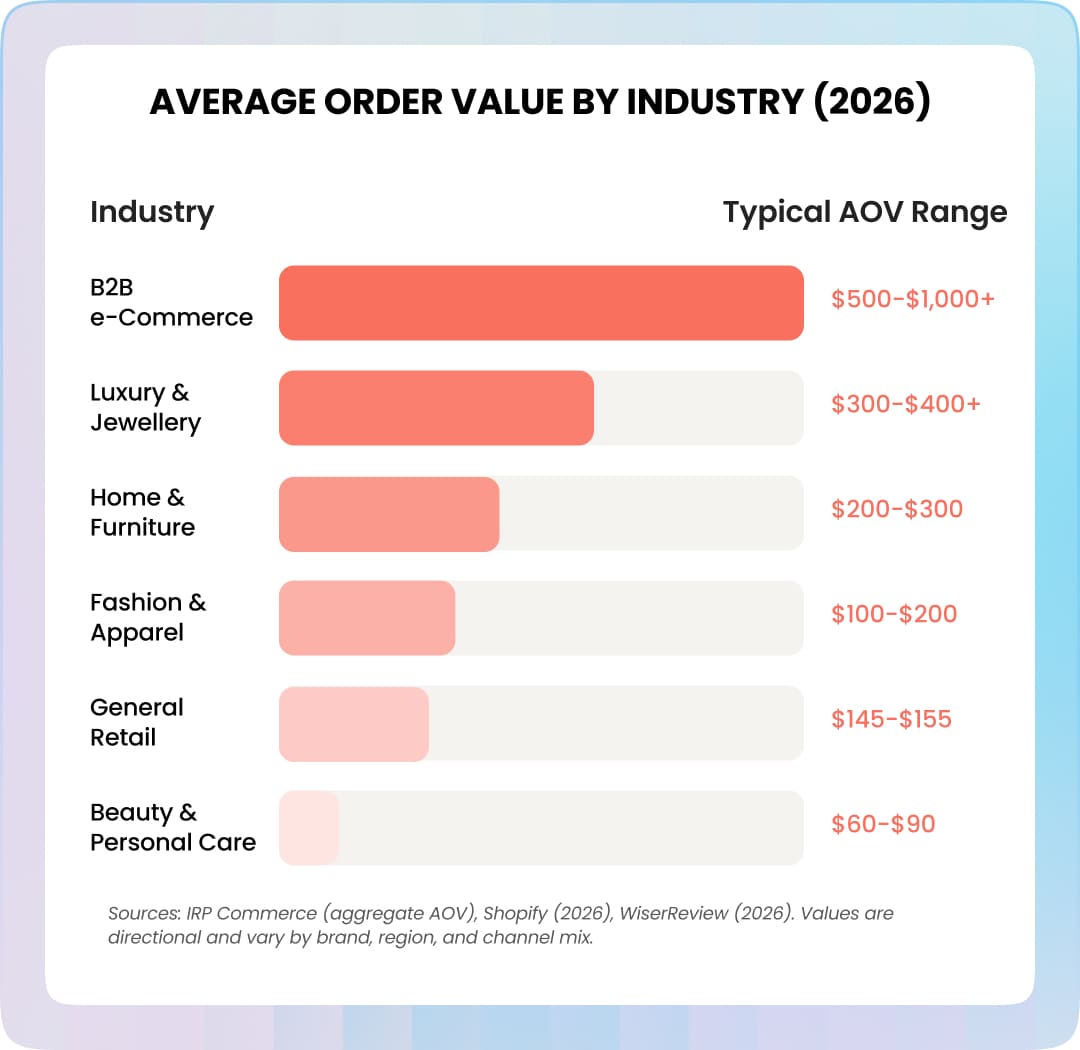
  • RPV (Revenue Per Visitor) is the metric that tells you whether AOV gains are actually working.

Most ecommerce teams aren’t fully leveraging the biggest growth lever they actually own.

They’re running A/B tests on button colours. Reworking PDP layouts. Rebuilding checkout flows for the third time in two years.

All of that has value, but none of it directly answers a more important question: how to improve Average Order Value (AOV).

Even a 10% lift in AOV can drive significant incremental revenue without any additional traffic. It simply means the customers already on your site spend more per transaction.

The idea is straightforward. The mechanics aren’t complicated. What’s hard is prioritization.

In this blog, we discuss how to systematically improve average order value through merchandising, pricing, bundling, and on-site experience.

Want to know where your AOV and RPV are underperforming? Our RPV Teardown maps the gaps across your funnel and gives you a 90-day plan to fix them.

What is Average Order Value (AOV)?

AOV Definition

Average Order Value (AOV) is the average amount a customer spends per transaction on your site over a given time period. The reason it matters so much is that it sits at the intersection of two things every ecommerce business cares about: revenue and profitability.

Raising your conversion rate gets more people buying. Raising your AOV gets the people who are already buying to spend more. The second option is almost always cheaper and faster.


AOV Formula

The calculation is straightforward:

AOV = Total Revenue ÷ Number of Orders

Say your store did $500,000 in revenue last month from 5,000 orders. Your AOV is $100. If you increase that to $110 without changing your order volume or ad spend, you’ll be getting an extra $50,000.

But please make sure you’re excluding returns and refunds from your revenue. What matters is the AOV customers actually keep, not what they initially bought.

Gross AOV can look strong on paper, while returns quietly eat into your margins.


Where AOV is Used

AOV is most commonly talked about in ecommerce, but the concept applies across business models.

In ecommerce, it’s the metric with which bundling, cross-sell, and checkout  strategies are measured.

In SaaS, the equivalent  would be average revenue per user (ARPU). Whereas in marketplaces, AOV helps sellers assess whether their catalogue and pricing are working and gauge platform health.


AOV vs Conversion Rate vs Revenue Per Visitor

These three metrics are related but distinct. Let’s understand the difference.

Conversion rate (CVR) measures the percentage of visitors who complete a purchase. AOV measures how much those buyers spend. And Revenue per visitor (RPV) is the product of both: CVR × AOV, giving you a clear view of your store’s overall performance.

That distinction matters in practice.

For instance, you can increase conversion by lowering prices or simplifying checkout, but that might lower AOV. You can boost AOV by encouraging larger baskets, but that can hurt conversion rates.

So, it’s the RPV that tells you whether those trade-offs are actually working.

Instead of optimizing these metrics in isolation, consider them together. That’s how you know if you’re truly improving performance.

Why Average Order Value is a Critical Ecommerce Metric

AOV as a Revenue Growth Lever

Most growth conversations in ecommerce start with traffic. How do we get more visitors? How do we lower CPC? How do we improve paid ROAS? Those are real questions. But they’re also expensive questions to answer.

AOV is different. You’re working with buyers who’ve already pulled out their payment details. Getting them to spend 15% more is fundamentally different from convincing a cold audience to buy at all.

For a retailer with $50M in annual revenue, a 10% increase in AOV adds $5M to the top line. No new campaigns. No landing page rebuilds. No SEO overhaul.


Impact on Profitability

Revenue is one thing. Profitability is another. The reason AOV improvements are so profitable is that most of your order-level costs are fixed.

Fulfilment, packaging, customer service, and payment processing costs don’t double just because a customer adds a second item to their cart. So when AOV increases, the incremental revenue from that additional spend largely falls through to margin.

It’s not unusual to see gross margin per order improve by 5–8% just from an AOV initiative that didn’t involve discounting.

CAC payback improves as well. If your CAC is $40 and your average order is $100 with a 40% margin, you make $40 per order. That just covers your acquisition cost, so you break even.

Increase AOV to $120, and you now make $48 per order. After covering CAC, you’re left with $8 profit on the first purchase. That means every repeat purchase is profit from the start.


AOV and Customer Lifetime Value

High AOV and high LTV often go hand in hand, but not just by chance.

Customers who spend more on a single order are more invested. They are exploring more of your catalog, trusting your brand and buying with intent. That kind of behavior usually doesn’t end with one purchase.

In other words, higher AOV is often a signal, not just a result.

It tells you that these customers are more engaged, more likely to come back, and more valuable over time.

So AOV is not only about what we spend today. It’s a good indication of what they might be worth tomorrow.


Why Increasing AOV is More Efficient Than Traffic Growth

A 20% boost in organic traffic may take months of consistent content and SEO investment.

On the other hand, a 20% lift in AOV through a well-calibrated free shipping threshold or a strong cross-sell program can go live in as few as weeks.

That makes a difference.

Acquisition can often be a treadmill. You pay more to get new visitors, and CAC rises as competition increases.

AOV optimization is another story.

It taps into the demand you already have. And as you learn what your customers respond to, it’s easier and more efficient to maintain over time.

What is a Good Average Order Value?

According to Shopify, the global average for all industries is $145 in 2026.

But benchmarking against the global average is meaningless. Here’s the AOV you should be aiming for in your industry:

AOV Benchmarks by Industry

Factors That Influence AOV

There are several factors that determine where your AOV lies, and understanding them will tell you which levers are worth pulling.

  • Product pricing: A store selling $20 accessories will have a structurally lower AOV than a store selling $200 footwear, no matter how strong its cross-sell strategy is.
  • Customer segment: Returning customers tend to spend more than first-time buyers. High-intent shoppers (such as branded search) also tend to have a higher AOV than broad awareness channels.
  • Geography: Purchasing power, shipping expectations, and spending behaviour vary widely by market, which determines how much customers are willing to spend per order.
  • Brand positioning: A brand positioning that suggests quality and premium value tends to attract customers who are willing to spend more per transaction.

How to Calculate Your Ideal AOV

Working backwards from your unit economics gives you a more realistic AOV target.

Begin with your CAC. If you acquire a customer for $60 and have a 45% gross margin, you need $133 in revenue just to break even on the first order. So the AOV has to be higher than $133 before you’re even profitable on acquisition, and that’s before fixed costs.

Run this calculation with your own numbers, and you will know where you are at very quickly. It shows whether your current AOV is healthy, marginal, or fundamentally misaligned with your business model.

How to Calculate and Track Average Order Value

Manual Calculation

Pull your total revenue for any period, divide by total completed orders in that same period, and you get AOV. The period matters as AOV changes with the seasons, so compare apples to apples (this November vs last November, not this November vs August).

Please note that you should always exclude cancelled and refunded orders from both numbers.


Tracking AOV in GA4

In GA4, you can measure the AOV in the Monetisation → Ecommerce Purchases report. The metric is called “Average Purchase Revenue.”

It’s really useful when you can segment it by traffic source, device type, geographic region and user type. For example, a 15% difference in AOV between mobile and desktop tells you there’s a checkout or product display problem.


Tracking in Shopify

Shopify’s Analytics dashboard places AOV front and centre in the Overview section.

A more useful view lies in “Sales by product” and “Sales by discount,” where you can cross-reference AOV with which products or promotions are in the mix.

So, you can see if a campaign that “improved” AOV actually did so because of higher-value items or just heavier discounting.


Using CDPs and Analytics Tools

Segment-level AOV tracking is where the real insights live. A customer data platform (CDP) lets you analyse AOV by cohort: loyalty members vs non-members, first-order vs fifth-order shoppers, and shoppers who engaged with recommendations vs those who didn’t. Without this segmentation, AOV is an average that masks the interesting details.

The 3 Core Levers to Increase Average Order Value

Before diving into tactics, let’s understand the three fundamental ways AOV moves.

  • Increase Items Per Order
    Encourage shoppers to add more items to their cart.
  • Increase Price Per Item
    Drive value perception and upsell higher-priced options.
  • Reduce Friction to Spend More
    Remove barriers and make it easy to spend more.

Increase Items Per Order

Get customers to add more to their cart. Cross-sells, bundles, and “frequently bought together” recommendations all help.

Reducing friction also plays a big role through one-click add-ons, visible related products, and simple bundle builders.

The key metric here is items per order (IPO), not just AOV.

If the IPO is rising but AOV isn’t, it usually means customers are adding more low-value items. That’s a sign to improve what you’re recommending.


Increase Price per Item

Get customers to buy a more expensive version of what they’re already thinking about. Upsell with premium variants or improved versions with better features or materials.

Here, showing higher-priced options first, clearly communicating the value of premium tiers, and using guided selling tools all help.


Reduce Friction to Spend More

Sometimes the issue isn’t a lack of willingness to spend. It’s friction.

A complicated checkout. An unclear free shipping threshold. A payment method that feels risky for larger purchases.

Frictions like these can suppress AOV even when intent is high. Remove such frictions and watch AOV increase.

How to Increase Average Order Value: Proven Strategies

1 Personalization and AI-Driven Strategies

AI-Powered Product Recommendations

At a basic level, recommendations work by showing customers what they’re likely to buy next. But the real impact comes from relevance and timing.

AI recommenders such as Recommend™ use browsing behavior, past purchases, and real-time signals to recommend the right product at the right moment.

Manual rules don’t scale. You can’t hand-pick cross-sells for thousands of products. AI systems can. They learn continuously from what customers actually click and buy and improve over time without manual effort. And that’s how AI-driven recommendations increase average order value  in the long term.

Placement matters just as much as the algorithm. Recommendations shown in the cart or at checkout tend to drive more AOV than those on product pages, simply because intent is higher at that stage.

For example, retailers using Recommend™ have seen measurable increases in items per order shortly after implementation. eXtra, Saudi Arabia’s largest electronics retailer, achieved a 52% higher AOV from AI-powered recommendations.

In some cases, AI-driven recommendations have driven significant AOV gains alongside improvements in engagement and conversion. A Brazilian beauty retailer that deployed Recommend™ alongside Find™ saw a 55% increase in AOV, a 4% conversion lift, and 3x session engagement.

See how Recommend™ can drive AOV growth for your ecommerce funnel, from PDP to checkout.

Request a Demo

Personalized Search

Search is where high-intent shoppers show up.

If someone is typing in your search bar, they already know what they want. Search’s role is not just to match keywords but to find the best product for that particular shopper.

Personalised search re-orders results based on behaviour. The customer who likes premium brands sees premium products first. Find™ does exactly this. It interprets intent, not just keywords, and personalises results from the very first interaction.

Better outcomes lead to more confident decisions and often higher-value purchases.

Search features that personalise results also create natural cross-sell and upsell opportunities.

When a shopper searching for a camera sees compatible accessories ranked alongside it, or a premium model surfaced above the standard version, the search experience itself becomes an AOV driver.

Explore how personalized search powered by Find™ can improve your search experience and drive higher-value purchases.

Request a Demo

Real-Time Personalization

Static experiences treat every visitor the same.

Real-time ecommerce personalization adjusts what each shopper sees, based on what they’re doing right now. That could be product recommendations, banners, or category rankings.

The more relevant the experience, the easier it is for customers to find what they want, and the more likely they are to spend more in a single session.

Behavioral sTargeting

Your customers tell you what they want with their actions.

Multiple product views, category exploration, and previous purchases are very good indicators. Behavioral targeting then leverages these signals to send timely nudges, reminders, relevant offers or possible follow-up recommendations.

You no longer hope that customers stumble across products; you meet them when they are expressing intent.

That’s what drives higher AOV.

See exactly where your AOV is leaving money on the table

If you raise AOV but fewer people convert, your revenue stays flat. RPV catches that. An RPV Lift Teardown with ADA Global pinpoints which pages, segments, and touchpoints are dragging down the RPV Lift. The best part? The analysis is absolutely free.

You’ll get:

  • Where AOV and RPV are leaking, by page and segment
  • Gaps in recommendations, search, and personalization
  • A focused 90-day plan to lift AOV, CVR, and RPV

Get Your RPV Lift Teardown

2 Cross-Selling and Upselling Strategies

Cross-selling and upselling are two of the most effective ways to increase AOV.

According to McKinsey, Amazon had even reported that up to 35% of its revenue was driven by cross-sell and recommendation systems.

Upselling moves customers to a higher-value version of what they’re already considering. Cross-selling adds complementary items to the basket.

Both depend on relevance. If the suggestions don’t fit, they get ignored, or worse, reduce trust.

Product Page Cross-Selling

“Frequently bought together” is one of the most familiar cross-sell formats and still one of the most effective when it’s based on real purchase data rather than manual curation.

On high-consideration product pages, it removes the need for customers to figure out what else they might need, and makes it easier to buy the complete set.

But remember: the key is specificity.

“Customers who bought this camera also bought this memory card and case” works. But “You might also like these cameras” is just confusing.

Cart-Level Cross-Selling

The cart is a high-intent moment for shoppers. They have already decided to buy, but they just haven’t checked out yet.

When you show one or two relevant, low-priced add-ons that are easy to add, customers are more likely to include them without feeling forced.

Less matters here. Too many suggestions create friction, as we’ve already seen above.

The suggestion that closes the threshold gap

Matas, Denmark’s largest health and beauty retailer, used Recommend™ to personalise cart-level cross-sells, resulting in a 38% increase in items sold via recommendations. We can do the same for your store.

Get a Demo

Post-Purchase Upselling

Post-purchase upselling is probably one of the most underestimated AOV tools available to retailers.

As soon as customers complete their purchase, once they reach the confirmation screen or receive their order confirmation email, the payment method is known, and they will be less resistant to further offers.
This stage is especially beneficial for subscriptions.

AI-driven post-purchase solutions take this further. Instead of showing a generic upsell on the confirmation page, platforms like Recommend™ use purchase signals and behavioural data to surface the most relevant add-on for that specific customer at that specific moment.

That relevance is what makes post-purchase one of the highest-converting placements for AOV growth.

3 Product Bundling Strategies

Bundles are one of the most effective ways to increase AOV. They typically drive a 20–30% lift, and customers who buy bundles tend to have much higher lifetime value than those who buy single items.

The reason is both practical and psychological. Bundles remove the need to make multiple small decisions and make it easier for customers to commit to a higher total spend.

Fixed Bundles

Pre-made bundles work best when the “right combination” is already obvious.

Imagine a skincare starter pack, a basic camera with a lens, or a coffee maker packaged with filters and coffee beans. It’s obvious that you get all you need without extra effort.

You’ll be surprised, but naming plays a crucial role here. As you can tell, “Complete skincare starter kit” obviously sounds much better than “3-item bundle”.

Mix-and-Match Bundles

Mix-and-match bundles offer customers some structure yet still allow them choices.

This approach works very effectively for products/services where customer preference is high; for instance, “Select any 3 flavours to enjoy a 20% discount” or “Create your own skin care regime”.

Herein lies the paradox.

Choice adds more friction to the process, resulting in lower conversion rates than with fixed bundles. However, once converted, the customer spends even more because they have crafted their own bundle.

AI-Based Bundles

This is where scale becomes a real advantage.

AI-driven bundles use actual purchase data to generate combinations that are more likely to convert. Instead of relying on manual curation, the system continuously learns which products work well together and updates in real time.

That’s why these bundles tend to outperform manually created ones. They’re always based on what customers are actually doing, not what we think they might do.

Platforms like Recommend™ go a step further by factoring in margin, so you’re not just increasing AOV but doing it profitably.

For retailers looking for dynamic bundling tools to increase average order value, Recommend™ is built specifically for this. It generates bundles from real co-purchase data, applies compatibility and margin rules, and updates automatically as buying behaviour changes without any manual curation.

Pricing Psychology in Bundle Presentation

How you present a bundle can make a big difference.

“Save $18” works better than “Bundle price $82” because the benefit is immediate. Customers shouldn’t have to do the math.

Customers find it much easier to see the value when the original prices are shown next to the bundle. It gives them something concrete to compare against and makes the savings feel more real.

Even small nudges can make a difference. A simple prompt like “Buy one more to unlock bundle pricing” is often enough to push them to complete the bundle.

Lift AOV with bundles that actually convert

Recommend™ combines shopper signals, compatibility rules, and margin logic to build winning bundles for your catalog.

Book a 30-minute demo

4 Pricing and Discount Strategies

Pricing and discounts can boost AOV quickly, but only if they’re structured correctly.

Volume Discounts

“Buy more, save more” works because it gives customers a clear reason to add one more item.

Tiered offers like “10% off 3 items, 15% off 5” create a simple progression. Once a customer is close to the next tier, they’re likely to push a bit further to unlock it.

That said, it’s easy to get this wrong. If your thresholds are too low or your discounts too aggressive, you’re just giving away margin on purchases that would have happened anyway. The goal is to ensure that the extra items more than offset the discount.

Tiered Pricing

While volume discounts push shoppers to buy more, tiered pricing encourages them to spend more on a single item.

A “good, better, best” setup makes comparison easy. When the price increase is small relative to the added value, the customer will naturally move up a tier.

This is where anchoring comes in. Showing a higher-priced option first makes the next option feel more reasonable, even if that’s where you wanted customers to land all along.

Limited-Time Offers

Another driver that works well is urgency.

When customers see a deadline, like “Only available until Sunday”, they’re more likely to act now instead of putting the decision off. And when they do act, they often complete a larger basket in the same session.

But this will only work if it’s genuine. If every offer is for “limited time,” customers stop believing it.

Coupon-Based Incentives on Spend Thresholds

Spend-based offers like “Spend $150 and get $20 off” combine urgency with a clear target.

It works best when the required spend is just a little higher than what the customer was already going to spend. It should feel easy to reach, but still require the customer to add something extra.

This is where segmentation helps. Loyal customers can stretch further, while new customers may need a lower threshold to engage. A single blanket offer rarely works as well as a tailored one.

5 Cart and Checkout Optimization

The cart and checkout are high-intent moments. A small change here can really help increase order value.

Free Shipping Threshold

Research indicates that free shipping increases average order value in any business. In some cases, more than 50% of consumers have admitted to adding items to their shopping cart to take advantage of free shipping. In fact, free shipping can increase AOV by 15-30%.

Free shipping is one of the most reliable ways to increase AOV, because it directly changes how customers behave. In fact, 58% of shoppers add items to their cart specifically to qualify for free shipping (Deloitte), while 39% abandon checkout due to unexpected shipping costs (Statista).

That’s the balance you need to get right.

Some customers add more items to reach it. Others leave when they see shipping costs. So the goal is to set the right minimum spend.

That minimum should be slightly higher than what customers usually spend, just enough to nudge them to add one more item.

If it’s too low, you lose margin. If it’s too high, customers won’t try to reach it.  And the threshold should be updated over time as prices and behaviours change.

Cart Progress Indicators

A simple message like “You’re $12 away from free shipping” is more effective than just stating the threshold. It turns a passive condition into an actionable state.

Progress bars go one better, showing the shopper how close they are, especially on mobile.

But the real kicker is combining that with suggestions.

Just showing the gap isn’t nearly as effective as saying “Add this screen protector ($8) to unlock free shipping”.

Set your free shipping threshold and let Recommend™ surface the right product to close the gap.

See it in action

Cart Progress Indicators

What stops the customer from making additional purchases is friction.

A one-click add-on solves this problem by allowing users to add something valuable yet affordable to their cart with a single click.

This works best for things like accessories, warranties, consumables, or gift options, especially when they’re simple and don’t require extra decisions.

Reduce Checkout Friction

Sometimes, it isn’t weak cross-sell hindering AOV; it’s the checkout process itself.

Forms that seem too lengthy, surprise fees, or even vague policies may make consumers pause, especially when making large purchases.

A streamlined and straightforward checkout process that signals returns, security, and product reviews removes such hesitation.

6 Payment and Financing Strategies

Making higher-priced items feel easier to buy is one of the most effective ways to increase AOV. Let’s see a few strategies.

Buy Now, Pay Later (BNPL)

BNPL can increase AOV by making higher-priced items feel more affordable, especially across categories like beauty and fashion.

For example, instead of looking at an expensive item, a $480 sofa, the customer could look at a more palatable version, “of four payments of $120.”

That’s how BNPL consistently lifts AOV across categories.

Show Installments Early

Many retailers only show BNPL at checkout. This is too late.

To influence AOV, installment pricing needs to appear on the product page, before the add-to-cart decision, when customers are still deciding what they can afford.

Reduce Price Sensitivity

BNPL is one way to do this, but more importantly, it comes down to how you present the price.

Instead of focusing only on the total cost, break it down. Show cost per use, highlight long-term value, or make it clear what customers might spend over time if they choose a lower-quality option. These small shifts make higher-priced items easier to justify.

Social proof, such as demand signals, helps too. When customers see that others have bought and liked a higher-priced item, they’re more comfortable choosing it themselves.

The goal isn’t to make things cheaper. It’s to make the value clearer, so customers feel confident spending more.

Stop losing AOV at the decision moment

When shoppers hesitate on a higher-priced item, the right social proof signal closes the gap. Start with 1 to 2 trust and urgency widgets on your highest-value PDPs and see the difference in 30 days for free.

Start with SPM Quickstart

7 Loyalty and Retention Strategies

The customers you already have are often your biggest AOV opportunity. Let’s see how to capitalize them.

Loyalty Programs

Loyalty programs don’t just bring customers back; they also increase how much they spend.

Loyalty program members tend to spend more because rewards are tied to their purchases. It turns every buy into a quick decision, so adding one more item feels like the obvious choice.

That thinking consistently pushes order values higher.

Tiered Rewards

How you structure your loyalty program matters.

Tiered systems, like bronze, silver, and gold, give customers something to work toward. As they get closer to the next tier, they’re more likely to increase their spend to unlock it.

In practice, this works a lot like a personalized free shipping threshold. The closer customers are to the next level, the more likely they are to stretch their basket.

Subscription Models

Subscriptions build on an existing relationship.

Once a customer commits to a recurring purchase, the decision is already made. That makes it easier for them to add more items over time, especially complementary products.

You’re not just increasing repeat purchases, you’re increasing the value of each one.

VIP Customers

Your highest-spending customers should feel it.

The top 5–10% of your customer base often drives a disproportionate share of revenue. Giving them early access, better recommendations, or a more personalized experience signals that they’re valued.

And when customers feel valued, they tend to spend more.

8 Merchandising and UX Optimisation

AOV isn’t just about pricing; it’s about what you show and how you present it.

Product Placement

What you promote is what gets bought.

If your homepage, category pages, add-to-cart pages and emails mostly feature mid-range or lower-margin products, that’s what customers will gravitate toward.

On the other hand, consistently showcasing higher-value items helps customers get familiar with them and makes those price points feel normal.

For fashion ecommerce specifically, AOV lift often comes from outfit-based recommendations rather than individual product cross-sells.

Showing a complete look alongside a single item is consistently more effective than recommending another jacket. Recommend™ builds “complete the look” bundles using merchandising rules, making it one of the most direct tools for increasing AOV on fashion ecommerce websites.

High-Margin Products

Not all AOV gains are equal.

A $50 increase driven by a high-margin product is far more valuable than the same increase coming from a heavily discounted item. That’s why it’s important to be intentional about what you push.

Focus on products that have the right mix of margin, conversion potential, and cross-sell value, and make sure they show up in recommendations, bundles, and key placements across the site.

Anchor Pricing

The first price the customer sees influences all subsequent decisions.

When presenting the customer with a $500 item, anything priced at $200 will seem quite reasonable. On the other hand, when presenting the customer with a $200 item, anything above will seem quite costly.

That is precisely why starting with the high-end items works well; it creates a reference point, making everything else seem affordable.

Visual Merchandising

How a product looks affects how much customers are willing to pay for it.

Good images, descriptions, and context all create confidence, even more so when dealing with high-end products. Premium-looking products are more expensive for a reason.

The best recommendations will not work if the page on which they appear is not done well enough. It is as important as placement.

9 Psychological Triggers

Scarcity

Or saying something like “Only 3 left in stock” works because it gives the customer a reason to act now.

People don’t want to miss out when something seems limited. This is especially true for higher-value items that people tend to buy more tentatively.

But it only works if it’s genuine. Trust disappears quickly if customers think it is manufactured.

Tools like Social Proof Optimize help here because they only show scarcity signals when the data actually supports them, keeping the message credible.

Social Proof

Social proof reduces the hesitation.

Reviews, ratings, or cues like “X people bought this today” make more expensive products feel safer to buy. It seems less risky if other people have bought it and been satisfied. This is especially important for products above a customer’s normal spend, where doubt is at its highest.

The problem is that most retailers send the same message to all shoppers. High-intent returning customers and first-time visitors need different things to feel confident.

Social Proof Optimize knows who’s looking, what they need to see at that moment, and selects the most likely-to-convert message for that visitor.

Urgency

Urgency moves people from thinking to doing.

Deadlines, countdowns or limited-time offers reduce the likelihood that a customer leaves and never comes back. And when they do decide to buy, they’re more likely to buy a larger basket at that moment. It works even better when combined with bundles or tiered offers.

Social Proof Optimize tracks purchase velocity in real time, so signals like “selling fast” or “trending now” are representative of what’s actually going on on your site, not a label someone set last quarter. It’s actually happening on your site, not a static label someone set last quarter.

Perceived Value

Sometimes the issue isn’t price, it’s clarity.

Customers don’t always see why a premium option is worth more. Clear product descriptions, comparisons, and strong visuals help bridge that gap. When a product looks and feels premium, it becomes much easier to justify the price.

Stop losing AOV at the decision moment

When shoppers hesitate on a higher-priced item, the right social proof signal closes the gap. Try SPM Quickstart free — 1 to 2 trust and urgency widgets on your highest-value PDPs, results in 30 days.

Get started free

A/B Testing Strategies to Improve AOV

What to Test

  • Pricing thresholds: Free shipping cutoffs, discount tiers, and bundle pricing. These have some of the largest AOV effects and are fast to test.
  • Bundle configurations: Fixed vs mix-and-match, bundle names, discount display format (“save $X” vs. “% off”), number of items per bundle.
  • Recommendation placements and formats: PDP widget vs below-the-fold; carousel vs grid; number of products shown; heading copy.
  • Checkout add-ons: Which products to surface, at what price points, with what copy.

Experiment Ideas

Run a threshold test: split your audience into three groups — the current free shipping threshold, a threshold set 15% above AOV, and a threshold set 25% above AOV. Monitor AOV, conversion rate, and RPV across all three for four weeks. The RPV winner, not the AOV winner alone, is the threshold to roll out.

Test upsell message framing: “Get the full-size version” vs. “Most shoppers who bought this went for the full-size” vs. “The full-size is $20 more and lasts twice as long”. These differences in framing often lead to 15-30% differences in conversion rates on the same underlying upsell.


Measuring Impact

As we’ve discussed before, AOV alone is a misleading success metric for most AOV experiments. The correct framework is:

  • AOV
  • Conversion rate
  • Revenue
per visitor
  • Gross margin
per order

Measure all four of them. A 12% lift in AOV but an 8% drop in conversion and a 5% drop in margin are not a win.


Scaling Winning Experiments

When an experiment wins clearly on RPV and margin, roll it out in stages rather than all at once — segment by segment (loyalty members first, then returning customers, then new visitors), or channel by channel. This gives you a safety net if there’s an interaction effect you didn’t catch in the test, and it gives you additional data on whether the lift holds across different customer types.

Common Mistakes That Hurt Average Order Value

Over-Discounting

Discounts may temporarily increase AOV, but they are highly susceptible to overuse.

If consumers begin to expect a 20% discount, they will wait for it, or they may start perceiving the new reduced price as a price increase. This will eventually reduce your AOV and increase your growth costs.

Please be smart about how you implement discounts, and make sure they have an expiration date.


Irrelevant Recommendations

A “you might also like” widget showing completely unrelated products doesn’t just fail to convert, it actively undermines trust in your product curation.

Shoppers who see irrelevant suggestions conclude that your brand doesn’t understand their needs, and that contaminates the whole shopping experience.

Relevance quality matters more than volume. One precisely relevant suggestion outperforms five generic ones in every test.


Poor Checkout UX

A lengthy, confusing, or surprise-fee-laden checkout process suppresses completion on the high-AOV orders you most want to keep.

In the event of delays, complications, or unexpected costs during the process, customers tend to abandon their baskets, particularly when the cart value is high.

The process should be as straightforward as possible to facilitate the completion of expensive orders.


Wrong Free Shipping Threshold

Set it too low, and you’re giving away shipping on orders that would have happened anyway. Set it too high, and you’re creating a psychological barrier that triggers abandonment on otherwise convertible baskets.

It’s not something you set and forget. As your AOV changes, your threshold should adjust with it.

Measuring AOV Optimisation: Key Metrics to Track

Core Metrics

  • AOV trend (7-day, 28-day, quarter-over-quarter) tells you direction and velocity. A single week’s dip is noise; three consecutive weeks are a signal worth investigating.
  • Revenue per visitor is the holistic health check — it captures the interaction between AOV and conversion rate, so neither improves at the other’s expense.
  • Items per order is the most direct output of bundling and cross-sell programmes. Track this alongside AOV: if items per order rise but AOV doesn’t, recommendations are surfacing low-value items.

Leading Indicators

AOV is a trailing indicator. By the time AOV changes, the actions that led to the change have already occurred.

To do something sooner, you need to track the cues that precede it.

  • When customers don’t click on recommended items, it means there is an issue with relevance or placement, not AOV.
  • When cross-selling fails, the deal becomes less attractive.
  • When bundle pages are viewed but not bought, prices or messaging are wrong.
  • When people repeatedly fall short of the free shipping threshold, you know there is potential to tap into.

These are the cues that explain why AOV is what it is.


Margin Tracking

One thing matters more than AOV alone: profitability.

An increase in AOV doesn’t mean much if it’s driven by heavy discounts, stacked promotions, or a shift toward low-margin products.

Always track gross margin per order alongside AOV. Otherwise, you risk optimizing for a number that looks good but isn’t.

How AI and Personalization Are Transforming AOV

The gap between what personalization leaders achieve and what laggards achieve is wide and widening. BCG’s 2025 Personalization Index found leaders running at a CAGR 10 percentage points higher than laggards.

Real-time personalization — adjusting every surface of the experience based on live session behaviour, not just historical data — is where the biggest incremental lifts now live.

ADA Global’s platform connects search (Find™), product and content recommendations (Recommend™), social proof messaging (Social Proof Optimize) and omnichannel marketing (Active Content) to provide end-to-end AI personalization.

Global brands, including Abercrombie & Fitch and Tiffany & Co., use this infrastructure to personalize every touchpoint in real time.

Conclusion: Turning AOV into a Scalable Growth Engine

AOV growth doesn’t require more traffic. It requires doing more with the customers already buying from you.

The retailers achieving 52%+ AOV lifts haven’t found a single tactic. They’ve built a system where every touchpoint works together: AI recommendations surface the right product, personalised search gets shoppers to higher-value items faster, social proof closes the hesitation gap, and content personalisation makes the whole experience feel relevant from first click to checkout.

That’s what ADA Global is built for. Recommend™Find™Social Proof Optimize, and Active Content work as one connected layer, so each signal makes the others smarter. The result is AOV growth that compounds rather than plateaus.

ADA Global customers like eXtra have seen 52% higher AOV. See exactly where your revenue is slipping and get a 90-day plan to fix it.

See exactly where your AOV is 
leaving money on the table

Get Free RPV Teardown

Frequently Asked Questions

1 What is average order value?

Average order value is the mean amount customers spend per transaction: total revenue divided by the number of orders in a given period. It’s one of the three core ecommerce health metrics alongside conversion rate and revenue per visitor (RPV). Unlike conversion rate, which measures how many people buy, AOV measures how much those buyers spend — making it the primary lever for revenue growth without additional acquisition spend.

2 What is a good average order value?

There’s no single answer,as it depends on your vertical. Fashion averages $100 to $200, luxury $300+, beauty $60 to $90, and B2B can reach $500 to $1,000+. Global general retail sits around $145 (Shopify, 2026). The most useful benchmark is your own category measured against your own trend, not a global average.

3 How do you increase average order value?

The most effective strategies are AI-based product recommendations, product bundling, BNPL services, and proper optimization of the minimum purchase amount required for free shipping. Tiered loyalty programs with spending structures will always be effective ways to increase average revenue per user.

4 Does free shipping increase AOV?

Yes, when the threshold is set correctly. 58% of consumers actively add items to their cart to qualify for free shipping, and well-calibrated thresholds drive AOV improvements of 15–30%. The threshold should sit 15–25% above your current AOV. Too low and you’re giving away shipping on orders that would have happened anyway; too high and you push customers into abandonment.

5 Is AOV more important than conversion rate?

Neither is more important — they move together. Revenue per visitor (RPV = AOV × conversion rate) is the number that tells you whether you’re making net progress. An AOV improvement that comes at the cost of a steeper conversion drop is not an improvement. The goal is to raise both, or at minimum raise one without significantly hurting the other.

6 What tools help increase AOV?

ADA Global Recommend™, Find™, Social Proof Optimize, and Active Content are among the most powerful AI personalization platforms for increasing AOV. BNPL solutions like Klarna and Affirm allow customers to make bigger-ticket purchases. With GA4 and a CDP solution, you’ll know which segments are performing well at a glance.

7 What is AOV vs RPV?

Average Order Value (AOV) is simply revenue divided by the number of orders. Revenue Per Visitor (RPV), on the other hand, is calculated by dividing revenue by the number of visitors, regardless of whether those visitors made a purchase. RPV is a more robust metric because it combines purchase frequency and the number of purchases into a single metric. An increase in AOV of 15% paired with lower conversion rates from lower-quality traffic could lead to a reduction in RPV.

Table Of Contents
Key Takeaways on Increasing AOV
What is Average Order Value (AOV)?
Why Average Order Value is a Critical Ecommerce Metric
What is a Good Average Order Value?
How to Calculate and Track Average Order Value
The 3 Core Levers to Increase Average Order Value
How to Increase Average Order Value: Proven Strategies
A/B Testing Strategies to Improve AOV
Common Mistakes That Hurt Average Order Value
Measuring AOV Optimisation: Key Metrics to Track
How AI and Personalization Are Transforming AOV
Conclusion: Turning AOV into a Scalable Growth Engine
Frequently Asked Questions

Searching vs Finding: How to Fix the Findability Gap

Digital Experience Personalization
Blogs

Searching vs Finding: How to Fix the Findability Gap

Pulling customers to an ecommerce product site is a struggle, but converting those visitors into buyers is a battlefield. While dashboard metrics often paint a promising picture, the reality on the ground is defined by the cognitive load placed on the shopper. There is a critical threshold at which active discovery, the joy of finding, becomes manual labor, leading to ‘search fatigue’ and an immediate bounce.

Search is the first true 1:1 touchpoint between your brand and the consumer. It is the moment shoppers articulate demand in their own words. Yet, an experience that feels helpful in one moment can become disappointing the next. This happens because most ecommerce search engines still deliver static responses to shopper intent that is highly variable and context-driven. When platforms fail to adapt to this variability, a Findability Gap emerges.

The Findability Gap is the disconnect that occurs when a search engine fails to surface the right product, even when it exists in the catalog. Products remain hidden in plain sight, acquisition spend goes to waste, and trust erodes. Left unaddressed, this gap quietly increases discovery friction and inflates customer acquisition costs.

The modern B2C search journey is messy, not linear

Shoppers today do not search the way ecommerce search engines expect them to. Real-world ecommerce search behavior is rarely clean, precise, or sequential.

Instead, shoppers search in ways that reflect human thought:

These queries are often long-tail and context-heavy, stretching the limits of traditional engines built for structured input. Most search engines remain tuned for exact keyword matches and static relevance rules. They excel at matching data but fail when intent is emotional or unclear. The result is an experience that is technically relevant yet experientially unsatisfying.

Traditional search thinking assumes intent is fixed when a search engine receives a query. In reality, intent unfolds as shoppers interact with results—clicking, refining, scrolling, and comparing. When search fails to adapt to this messy human behavior, discovery becomes effortful instead of intuitive.

Why traditional search metrics miss the point

Most B2C marketers evaluate performance using a familiar set of KPIs:

  • Search Usage: The volume of visitors interacting with the search bar.
  • Search-Assisted Revenue: Total revenue from sessions where search was used.
  • Zero-Result Rate: How often a query returns nothing.
  • Top Queries: The most frequent search terms.

While these KPIs confirm outcomes, they are blind to discovery quality.

Consider a shopper looking for a “black dress” on a fashion retailer’s site:

Scenario A: The search engine recognizes her past affinity for luxury brands and evening wear. She sees a relevant ‘lace midi dress’ as the first result, clicks on it, and adds it to the cart within seconds.

Scenario B: Shopper struggles with a context-blind search engine. Because the system cannot detect in-session affinity, it fails to prioritize her specific need for formal wear, resulting in suggestions from a wide range of categories, making this a high-effort journey marked by manual filtering and ‘search fatigue’.

The ecommerce dashboard reality is misleading. On paper, these sessions look identical as both recorded a “Conversion” and “Search-Assisted Revenue.” But in reality, the dashboard is blind to the logic behind the scrolls.

In our example, scenario A gives the shopper a gratifying experience. In Scenario B, the shopper – if they convert – will do so despite the search engine. Traditional metrics reward the conversion but ignore the nudge, the hidden effort that erodes long-term loyalty.

This is where Findability failures hide.

Defining Findability in plain language

Findability puts shopper intent in focus. It is defined by how quickly and confidently a shopper moves from intent to the right product. We measure this through three core parameters:

Relevance
Do results align with intent, context, and real-time behavioral signals?

Effort
How much labor did the shopper exert? (Measured by clicks, refinements, and backtracking).

Outcome
Did the shopper engage meaningfully with a relevant Product Detail Page (PDP)?

Together, these form the Findability Score. Unlike traditional KPIs, this score makes discovery friction visible. It enables merchandising and CX teams to align around a single number that reveals exactly where the catalog is “leaking” revenue due to poor discovery.

A practical Findability scorecard for B2C teams

Findability does not require rebuilding your ecommerce search engine from scratch or running a complex data science project. It can be operationalized using ecommerce site search metrics that most teams already track or view on their sites, but through a different lens.

A practical findability scorecard might include (and not be limited to) the following:

  • CTR on search results
    (the percentage of searches where a shopper clicks on at least one search result)
  • Average click distance
    (how far down the list a shopper typically has to go before they click a product from the results)
  • Zero- and thin-result rates
    (how often your search engine fails to show enough reasonable options)
  • Query reformulation rate
    (the percentage of search sessions where shoppers quickly change or retype their query after seeing the results)
  • Search exit rate
    (the percentage of search sessions that basically end on the Search Results Page (SRP) without meaningful engagement)

Sample Findability Scorecard – “Women’s Dresses”

*This numeric scorecard is a conceptual example.

Individually, ecommerce site search metrics signal friction. Together, these metrics paint a clear picture of whether the ecommerce site search is helping or hindering discovery. When tracked consistently, these signals often reveal opportunities for improvement that deliver measurable impact within weeks, not quarters.

Teams can roll these signals into a simple Findability Score by category, brand, or key query group, creating one number to rally around. The goal is not perfection; instead, clarity: knowing exactly where shoppers struggle and where improvements matter most. In a nutshell, how shoppers search on an ecommerce site.

Closing the Gap with Find™

Overcoming the Findability Gap is less about adding features and more about aligning search with real shopper behavior. Find™ addresses this by transforming search from a static utility into a dynamic personalization surface through four key levers:

Natural Language Understanding
It bridges the gap between internal catalog jargon and shopper language by auto-learning synonyms and intent (e.g., recognizing that “best shoes for standing all day” requires comfort-rated attributes).

Behavioral Ranking
Instead of static rules, Find™ uses self-learning AI to rank results based on real-time affinities and in-session behavior, significantly reducing “click distance.”

Findability Analytics
It provides a dedicated lens into the Findability™ Score, allowing teams to move beyond “search volume” and pinpoint precisely where shoppers are struggling.

Real-Time Catalog Freshness
Ensures that pricing and availability stay in sync, so shoppers never find a product only to realize it is out of stock.

Conclusion: From search activity to shopper success

B2C brands have historically optimized for how often shoppers search; the next competitive advantage lies in how easily shoppers can find them.

Traditional metrics tell you what happened, but Findability tells you how it felt. By shifting focus to a shopper-centric metric that reflects effort and confidence, brands can stop forcing customers to work for their purchases.

Find™ brings these elements together—combining self-learning AI with behavioral intelligence to ensure that every search is a direct path to discovery, not a battlefield of frustration.

Ready to move beyond vanity search metrics? See how Findability changes the conversation.

Talk to Us About Find™
Table Of Contents
The modern B2C search journey is messy, not linear
Why traditional search metrics miss the point
Defining Findability in plain language
A practical Findability scorecard for B2C teams
Closing the Gap with Find™
Conclusion: From search activity to shopper success

Shopify Personalization: The Complete Guide for Stores in 2026

Digital Experience Personalization
Blogs

Shopify Personalization: The Complete Guide for Stores

You’ve polished your product pages, experimented with themes, and fine-tuned your ad campaigns to perfection.

Yet there’s one thing that Shopify store owners miss: every visitor, whether a curious shopper or a loyal customer, walks into the same one-size-fits-all experience.

That’s the personalization gap, and it’s costing you revenue.

Brands that use strategic personalization are seeing revenue growth of up to 40%. And with 90% of shoppers expecting personalized experiences, it’s no longer optional.

This guide shows you exactly how to implement Shopify personalization in your store in 2026.

You’ll learn what works, where to focus your efforts, and how to measure real results without needing a massive budget or technical team.

What is Shopify Personalization?

At its core, personalization on Shopify is about tailoring each customer’s shopping experience to their unique behavior, preferences, and purchase history.

Instead of showing everyone the same product, categories, offers, and even banners, you dynamically adjust what they see based on their preferences or your retail goals.

Think of it like this: If you walked into a physical store multiple times, a good salesperson would remember you, know what you’re interested in, and make relevant suggestions.

Personalization brings that same thoughtful customer experience to your Shopify stores.

Solution: Harnessing Behavioral Data for Smarter Email Campaigns

Before we delve any further, let’s address a common misconception. ‘Personalization’ and ‘customization’ are often used interchangeably, but they’re not the same thing.

  • Personalization happens when your store automatically adapts to each shopper using data and algorithms. The shoppers don’t configure their experiences.
  • Customization is when customers manually adjust their experience. They choose their preferences, build their own product, or tweak settings to suit their needs.

For example:
A shopper on Nike.com sees running shoes based on their past purchases. This is personalization. They then select the preferred color and add initials to the pair. This is customization.

Now, let’s explore why personalization is the game-changer that can set your Shopify store apart.

Why Invest in Personalization for Your Shopify Store?

We know the drill: running a Shopify store means there’s always another lever to pull—a theme to tweak, an app to try, an ad to adjust, a product page to polish.

So, why should you consider adopting a sophisticated personalization approach over the default, basic one?

Because most of your competitors are still serving generic experiences.

Despite all the buzz, most Shopify stores are still stuck on the basics when it comes to personalization.

That’s your opportunity.

Let’s break down the specific benefits.

1 Improve Shopify Conversion Rate

This is where personalization delivers instant wins.

Show shoppers recommendations that align with their interests and intent, and your Shopify conversion rate can rise significantly.

When you add personalization to Shopify and display relevant product bundles, smart cross-sells, and featured items that customers actually want, they’ll end up purchasing more, increasing Average Order Value (AOV).

Forget the generic “customers also bought” widget. Now you’re harnessing real shopper behavior to recommend items that actually complement each other for each individual.

And the results speak for themselves. Matas, a leading Danish retailer, increased its attributable sales by 36% by personalizing every user touchpoint on its website. Read their story here.

2 Improve Shopify Customer Experience

And here’s something analytics won’t always capture: personalization simply makes shopping more enjoyable.

When you add personalization to Shopify store effectively, shoppers no longer have to wade through hundreds of products that don’t interest them. Irrelevant pop-ups and banners don’t distract them.

They find what they want in a flash, and their journey feels seamless.

They’re more likely to come back, recommend you to friends, and leave positive reviews. You’re building brand affinity, not just processing transactions.

3 Improve Shopify Customer Lifetime Value

This is where personalization shows a long-term effect. When your Shopify store consistently provides a personalized ecommerce experience to your shoppers, they are more likely to return.

Your store stays relevant, not just for the first purchase, but for every visit after.

Let’s say a customer bought running shoes from you three months ago. With personalization, you can show them running accessories on their next visit, highlight new arrivals in running gear, and remind them it might be time for new insoles.

Without personalization, they see the same generic homepage as everyone else and are likely to leave.

This compounding impact drives up Customer Lifetime Value (CLV), a core metric that reflects both customer loyalty and the long-term profitability of your Shopify store.

Where to Implement Shopify Personalization?

Now that you know the powerful benefits of personalization, the real question is: where should you put it to work?

The short answer: everywhere possible. But let’s zero in on the spots that deliver the biggest impact.

Product Detail Page Personalization

Your product pages (PDPs) are where purchase decisions happen, making them prime real estate for personalization.

The strategies that work:

  • Related products: Show items that complement what they’re viewing based on purchase patterns, not just products from the same category.
  • Product bundles: Suggest complete solutions by bundling the current product with commonly purchased companion products.
  • Cross-selling: Highlight accessories or add-ons that enhance the main product.
  • Complete the look: Suggest ensembles that encourage shoppers to purchase complementary products.

Example:

A customer is looking at a coffee product in your store, priced at $24.99.

In the suggestions, you also show tea, biscuits, milk, and sugar—items that customers who buy this coffee often purchase together. These products are grouped into a bundle costing  $73.45 that can be added with one click.

That’s the difference between a $24.99 single-item purchase and a $73.45 bundled order, driven by relevant, data-backed personalized product recommendations.

Ready to implement AI-powered product recommendations on your PDPs? Ada Global AI Recommendations automatically delivers related products, bundles, and cross-sells that drive conversions without any manual configuration.


Homepage Personalization

Your homepage is the first impression for many visitors. But showing the exact same homepage to a first-time visitor and a loyal customer is a missed opportunity.

Personalizing your homepage content can make all the difference.

For returning customers, you can highlight new arrivals in categories they’ve shown interest in. Feature products similar to their past purchases, or create personalized hero banners based on their preferences.

Example:

A first-time visitor to your jewelry store sees the standard homepage with best-sellers and current promotions.

However, when a shopper, who has been searching for rings, returns to the homepage, the main banner changes to feature your top ring styles tailored to their browsing history. This is content personalization in action.

Your shopper feels seen and is effortlessly guided back to the pieces that truly catch their eye.


Category Page Personalization

Category pages are where browsing typically occurs, and personalization enhances the browsing experience for shoppers.

You can create real time customer segmentation based on browsing patterns and past purchases of your shoppers, then reorder products on category pages to showcase the most relevant items first.

Example:

Two shoppers open your “Dresses” category. One has been browsing casual summer styles, while the other has been looking at formal evening wear.

With personalization, the first shopper sees breezy day dresses featured at the top, while the second sees elegant evening gowns first.

Same category page, but two different relevant experiences.


Cart & Checkout

Cart and checkout are your final chance to boost order value, yet most stores treat them like afterthoughts. That’s a costly oversight.

There are hidden opportunities for upselling, bundling, and cross-selling that you can tap into with personalization.

Suggest complementary items based on what’s actually in the cart or offer bundles that make sense with the current selection.

Example:

A customer has a High-Impact Volume Mascara in their cart, priced at $24.00. At checkout, personalization recognizes that shoppers who buy mascara often complete their look with eye and lip essentials.

The cart suggests:

  • Lash Primer ($22.00)
  • Precision Liquid Eyeliner ($21.00)
  • Classic Eyeliner Pencil ($19.00)
  • Eight-Hour Lip Repair Stick ($18.00)

How to Add Personalization on Shopify?

To add personalization to Shopify, start by personalizing product recommendations on product detail pages, then expand to your homepage, category pages, and cart using either Shopify’s Search & Discovery app or ecommerce personalization software that adapt experiences in real-time.

Let’s look at how these two approaches work.

Use Native Features

Let’s start with the free option: Shopify’s Search & Discovery app. It enables you to create product recommendations and customize search results without requiring third-party tools or coding.

You can manually configure related products, popular items, or specific collections on PDPs, homepage, and cart.

The major downside is that it’s manual and basic.

You’ll need to manually create and maintain recommendation rules for different products and pages. This may not seem like a significant challenge at first. For small catalogs, this might be fine. But for mid-market stores with hundreds or thousands of SKUs, it quickly becomes unmanageable.

The recommendations also aren’t dynamically personalized to individual shoppers. You’ll just be implementing the same rule-based suggestions for everyone.

It’s better than nothing, but it’s not real personalization.

Install AI personalization platforms that integrate with Shopify

This is where personalization gets powerful. The Shopify app store has dedicated personalization apps that bring sophisticated capabilities without requiring you to build everything from scratch.

These apps use algorithms and AI to automatically personalize product recommendations, content, and experiences based on real time customer data profiles.

Take ADA Global AI Recommendations as an example. It’s built specifically for Shopify merchants who want enterprise-level personalization without enterprise-level complexity. Here’s what you get:

  • AI-powered product recommendations
  • AI and rule-based merchandising capabilities
  • Margin-aware models
  • Real-time personalization
  • Easy implementation
  • White-glove onboarding

Battle-tested with 400+ enterprise retailers, the personalization engine is now built for Shopify. The same technology trusted by Tiffany & Co. and Abercrombie & Fitch can help Shopify stores unlock a 10–15% lift in attributable sales.

Shopify Personalization Trends to Follow in 2026

The landscape of personalization is evolving rapidly. Here’s what you need to watch as we move deeper into 2026 and beyond:

AI-Driven Personalization Becomes the Default
Real-time AI replaces manual rules across the store.

Content Personalization Differentiates Brands
Hero banners and messaging adapt to each shopper.

Sentiment-Aware Experiences
UX responds to shopper intent and behavioral patterns.

Privacy-First Personalization
First-party data and transparency become critical.

Agentic Commerce Goes Mainstream
AI agents guide discovery and purchasing.


AI-Driven Personalization Becomes Default

  • We’re moving past rule-based personalization into the era of true AI-driven experiences. AI-powered algorithms can now analyze thousands of data points in real-time to predict what each customer wants.
  • This isn’t a talk of the future; it’s happening now.
  • The sophistication that once required a team of data scientists is now being packaged into accessible apps that any Shopify merchant can utilize.
  • If you’re still relying on manual product recommendations or basic rules-based personalization, you’re falling behind. The good news? Catching up is easier than ever with apps like ADA Global AI Recommendations.

Content Personalization Will Be the Differentiator

Everyone offers product recommendations now. The real competitive edge is dynamic content personalization.

Consider creating tailored hero banners for new and returning visitors. Messaging that shifts based on traffic source. Sustainability callouts for eco-conscious shoppers and performance messaging for athletes.

It creates experiences that feel truly custom. It’s harder to pull off, which is exactly why it will separate the winners from everyone else.

Stricter Pushback on First-Party Data

Privacy regulations continue to tighten globally. GDPR was just the beginning.

More regions are implementing stricter privacy laws, and customers are becoming increasingly concerned about how their data is used.

The trend? You’ll need to be more transparent about data collection and more thoughtful about what you collect in the first place.

Stores that get ahead of this trend will build trust that translates into customer loyalty.

Agentic Commerce Becomes Mainstream

AI shopping assistants are in. These ‘agents’ can understand natural language, make recommendations, answer questions, and even complete purchases on behalf of customers.

Instead of browsing through filters and categories, customers might simply tell an AI agent, “I need a wedding gift for my outdoorsy friend, budget $100,” and receive curated suggestions.

For Shopify merchants, this means that your product descriptions must be AI-ready. It should be well-structured, richly described, and properly tagged.

How to Measure the Success of Personalization on Shopify?

Track the following metrics when implementing personalization:

  • Conversion Rate: Compare conversion rates for visitors who experience personalized elements versus control groups.
  • AOV: Personalized product recommendations and bundles should increase AOV. Measure AOV for customers who interact with personalized recommendations.
  • Engagement Time: Personalization makes browsing more enjoyable and relevant, typically increasing time on site.
  • Click-Through Rate: Track the percentage of customers who click on your personalized product suggestions. Low CTRs suggest that your recommendations may not be relevant.

Set up proper tracking before launching personalization, so you can measure its true impact.

Most personalization apps include built-in analytics, but you can also monitor changes in your core Shopify analytics and Google Analytics.

Ready to Start Personalizing Your Shopify Store?

Personalization is no longer an option, but a necessity for retailers today.

Customers expect stores to understand their preferences and show them relevant products.

The best part? The same personalization tech used by retail giants is now within reach for any Shopify store. No huge budget or data science team required.

So, today, the question isn’t whether to personalize, but how quickly you can roll out sophisticated Shopify personalization before your competitors do. To achieve this, you need personalization tools that are built to scale with your growth.

Want to implement powerful personalization without the complexity? Check out ADA Global AI Recommendations on the Shopify App Store and start your free trial today.

Ready to Personalize Your Shopify Store?

Get 10-15% sales lift with enterprise-level AI personalization on your Shopify store.

Start Your Free Trial

FAQs

1 ​​Do I need a large budget to implement personalization on Shopify?

No. You can start with Shopify’s free Search & Discovery app for basic personalization, or use affordable third-party apps like ADA Global AI Recommendations, which bring AI-powered personalization without the enterprise-level costs.

2 Where should I implement personalization first?

Start with your product detail pages (PDPs) since that’s where purchase decisions happen. Then expand to your homepage, category pages, and cart/checkout pages for maximum impact.

3 How long does it take to see results from personalization?

Conversion rate improvements from personalization often show up immediately, while benefits like increased customer lifetime value build over time as you gather more behavioral data.
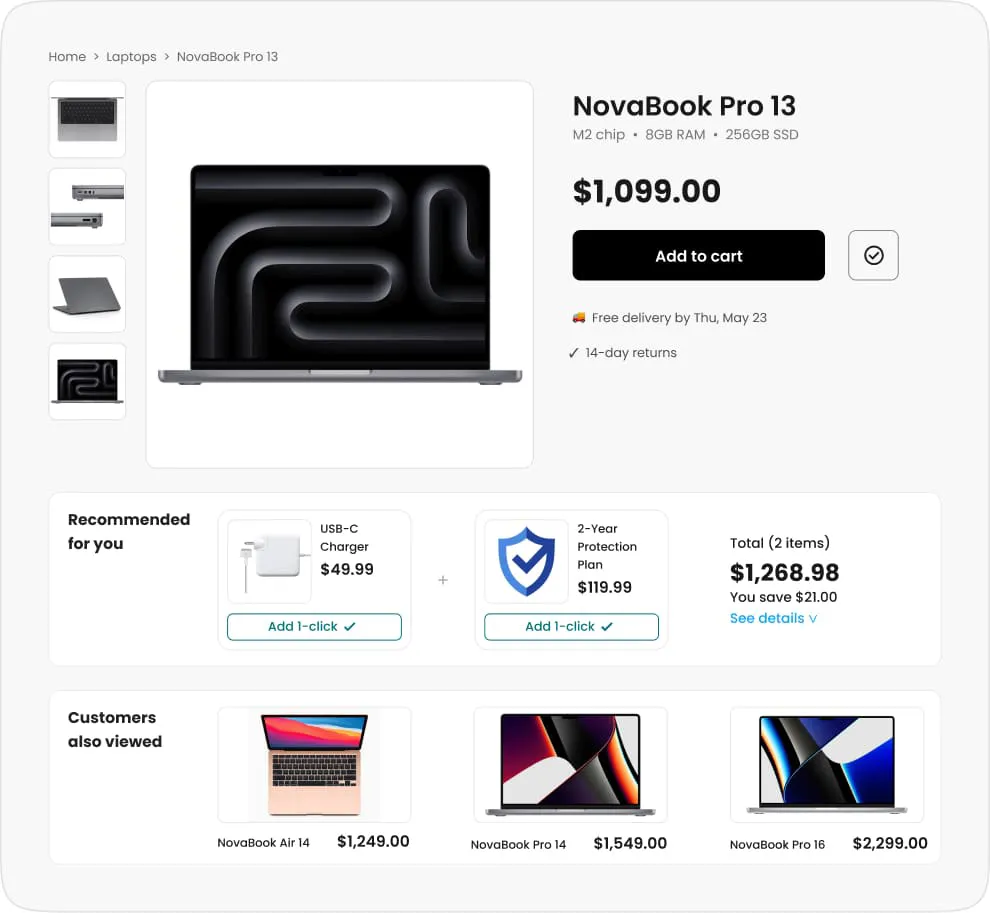
4 Will personalization work for stores with small catalogs?

Yes, though the impact is typically greater for stores with larger product catalogs. Even smaller stores benefit from showing the right products to the right customers at the right time.
5 What metrics should I track to measure personalization success?

Focus on conversion rate, average order value (AOV), engagement time, and click-through rates on personalized recommendations compared to control groups.

6 Is Shopify’s native personalization enough?

For basic needs and small catalogs, it might work. However, it requires manual configuration and doesn’t offer true dynamic personalization based on individual shopper behavior like AI-powered apps do.

Table Of Contents
What is Shopify Personalization?
Why Invest in Personalization for Your Shopify Store?
Where to Implement Shopify Personalization?
How to Add Personalization on Shopify?
Shopify Personalization Trends to Follow in 2026
How to Measure the Success of Personalization on Shopify?
Ready to Start Personalizing Your Shopify Store?
FAQs