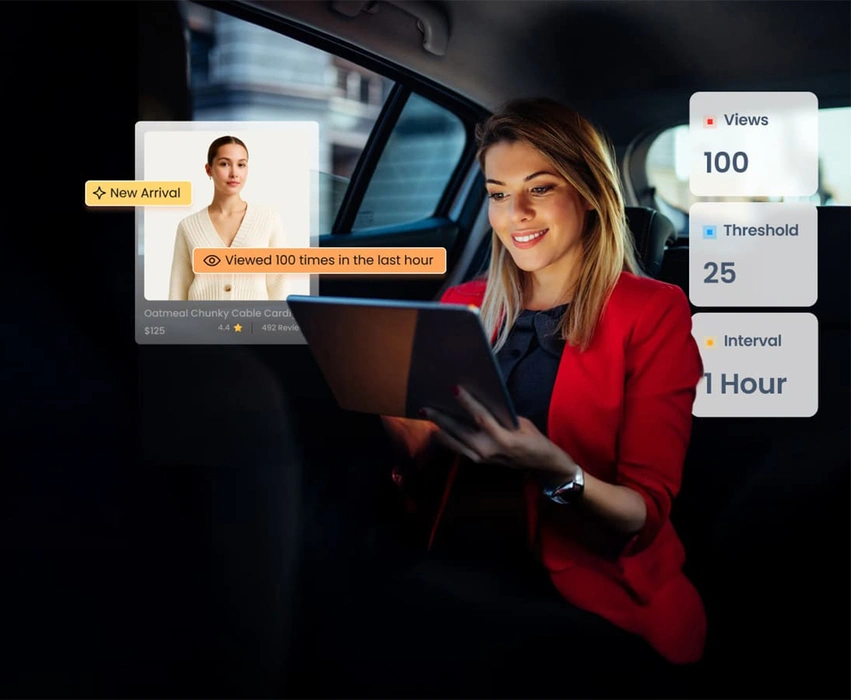
Finding the Sweet Spot: How Coverage Analysis Powers Scalable Social Proof Messaging

Digital Experience Personalization
Blogs

Finding the Sweet Spot: How Coverage Analysis Powers Scalable Social Proof Messaging

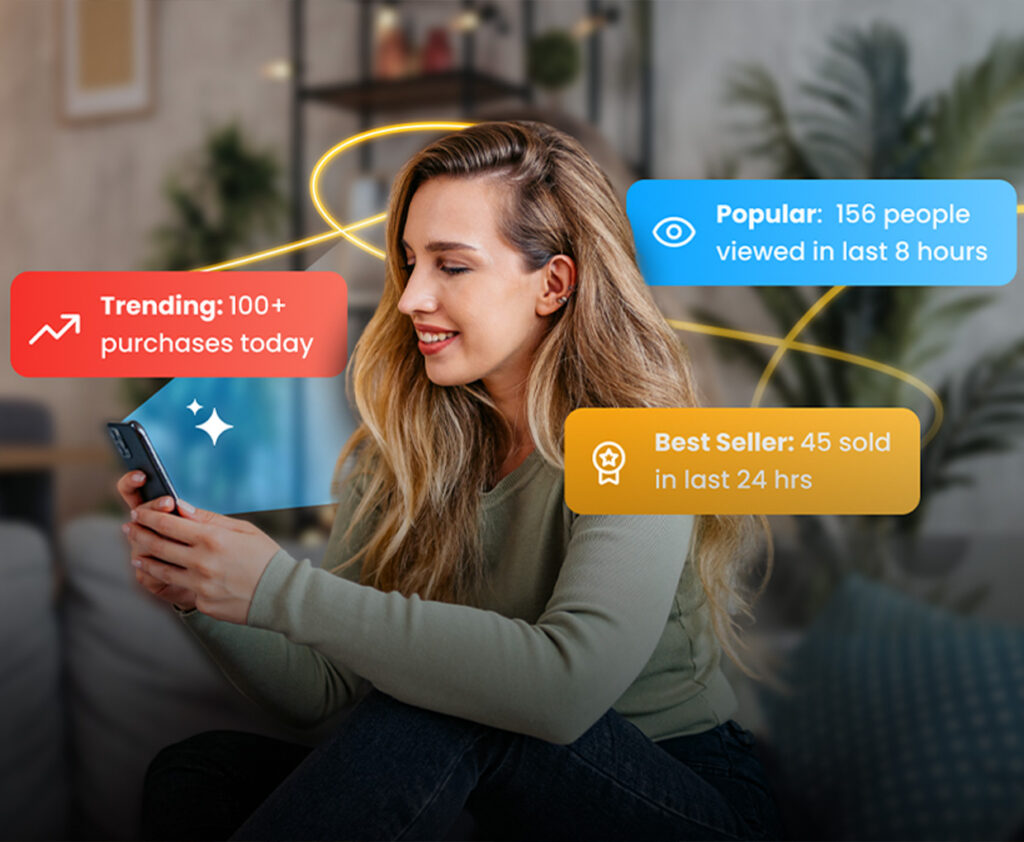
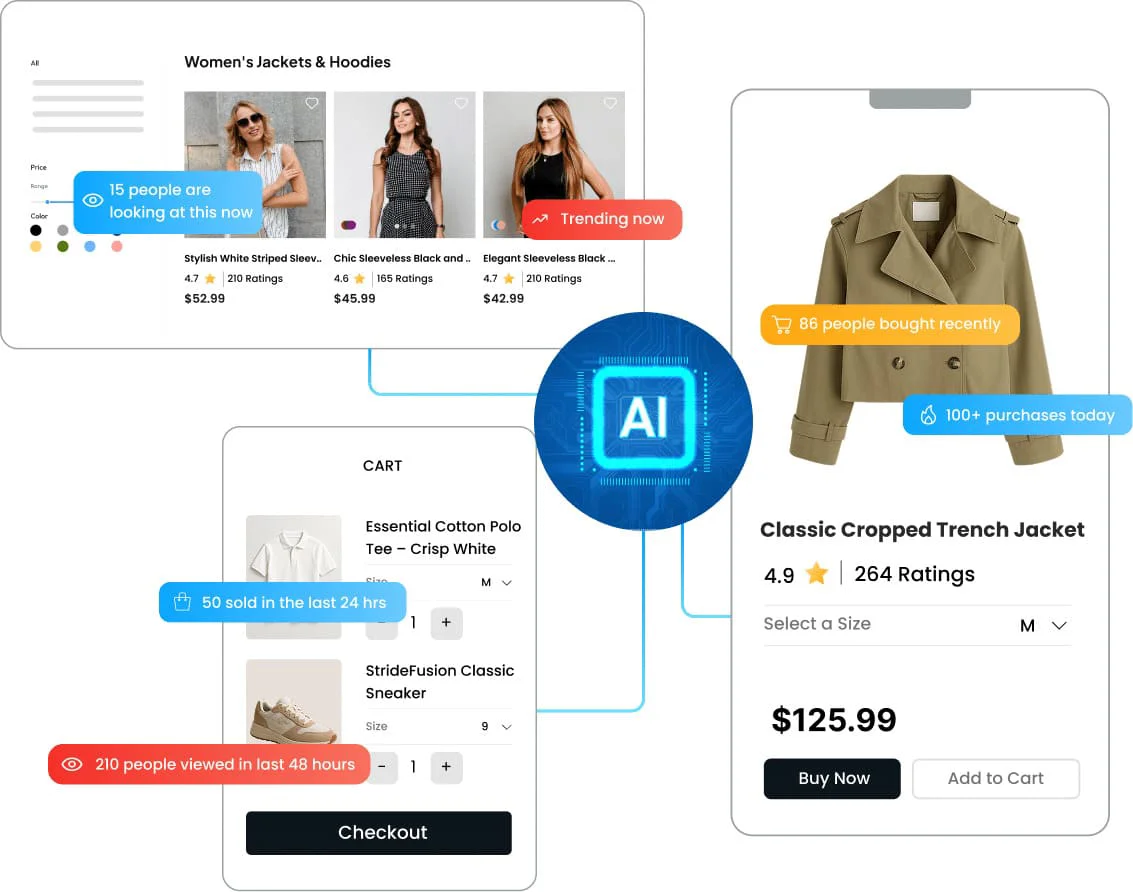
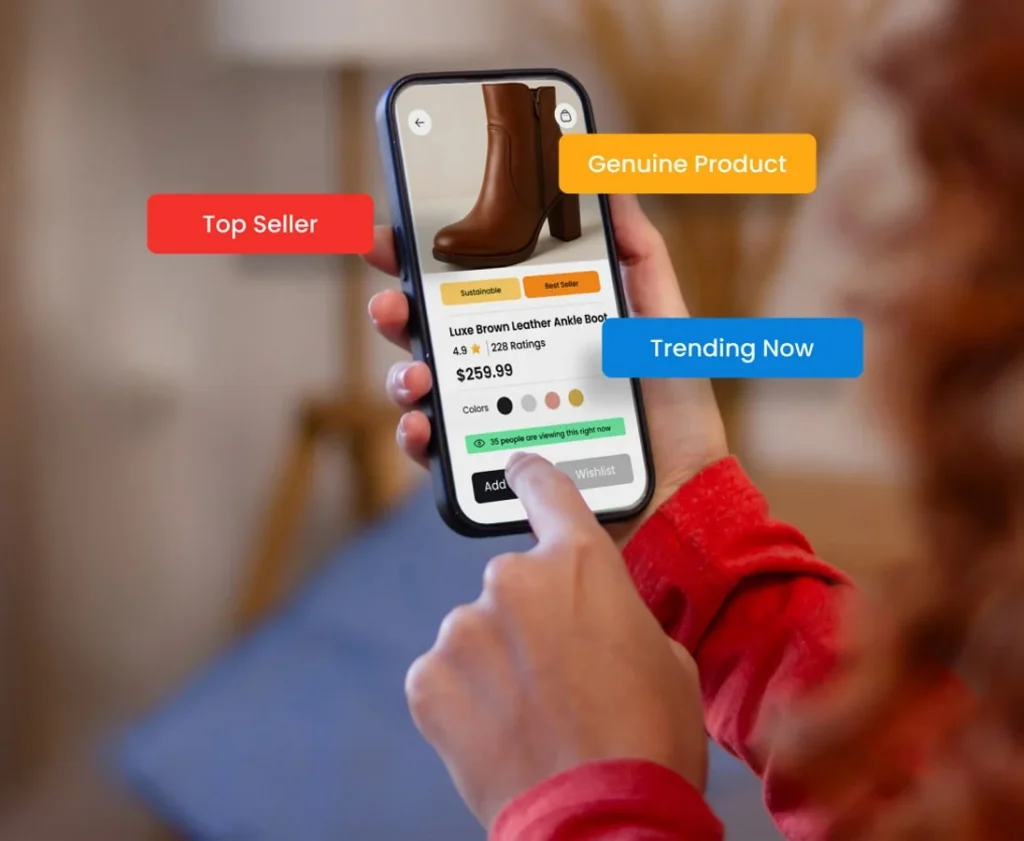
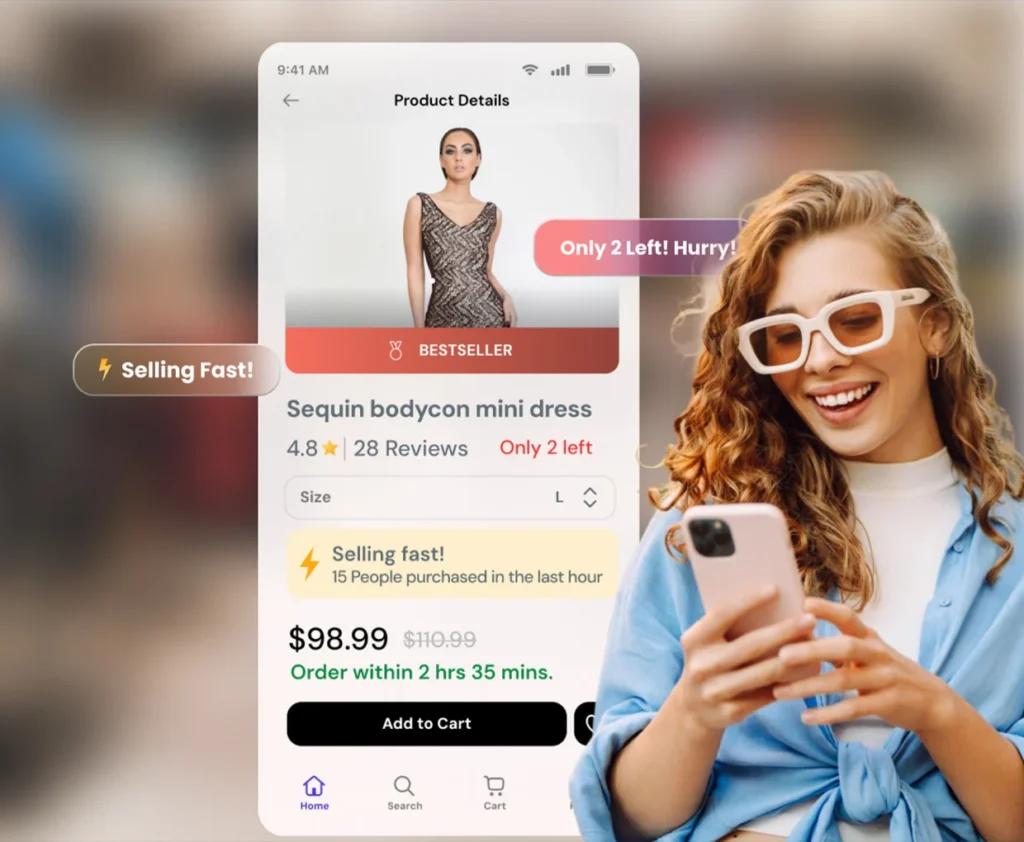
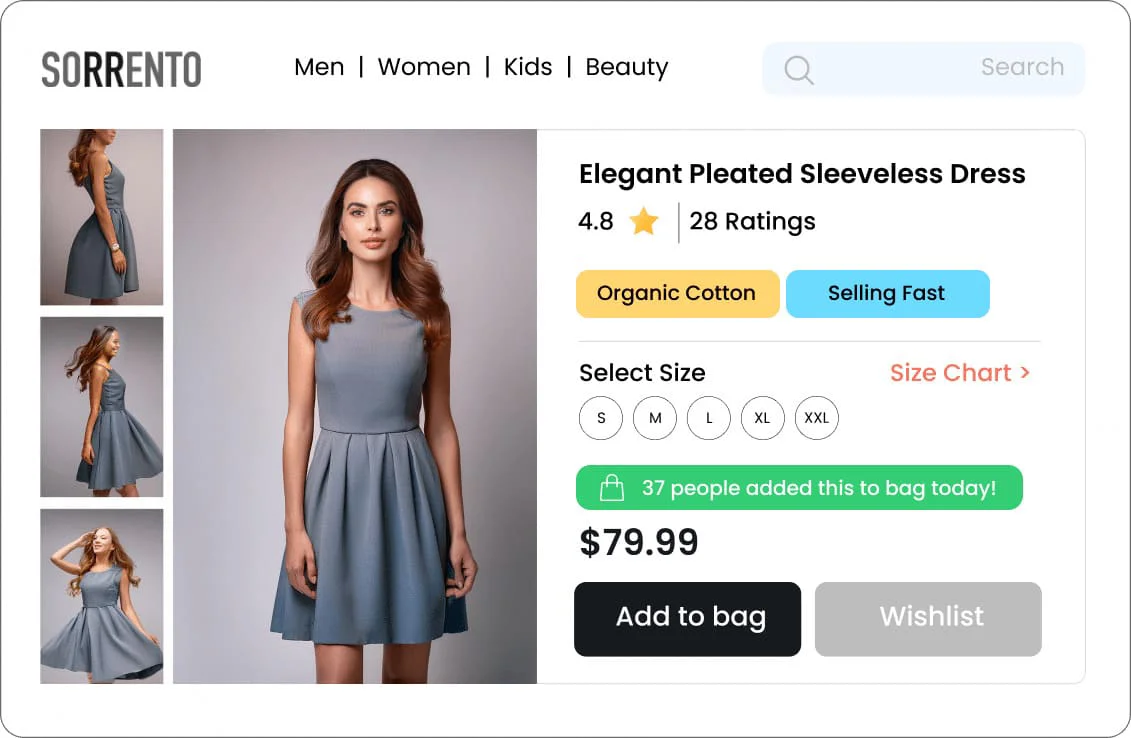
Personalization is all about showing the right message to the right shopper at the right time. When it comes to social proof messages — like “120 people viewed this product today” or “15 people added this to their cart in the last hour” — criteria and timing make all the difference between authentic persuasion and empty noise.

That’s where Coverage Analysis comes in — the behind-the-scenes science that ensures your social proof messages reach the widest audience possible.

What Is Coverage Analysis?

Coverage Analysis is the process of identifying what percentage of your product catalog qualifies for a social proof message at a given time. It’s based on three key inputs:

  • Metric
    Views, Add-to-Carts, or Purchases
  • Threshold
    Minimum number of actions that trigger a message
  • Interval
    The time window in which those actions occur (e.g.,
1 hour, 24 hours, or 7 days)

Think of it as a smart diagnostic tool that answers:

“If I show a message only when 10 people view a product in 24 hours,
 how many products will qualify?”

That percentage — your coverage rate — becomes your blueprint for scaling social proof messaging software without compromising authenticity.

Why Coverage Analysis Matters

Every marketer faces the same dilemma: reach vs. credibility.
Set your threshold too high, and only a handful of products show activity. Too low, and the message feels unconvincing.

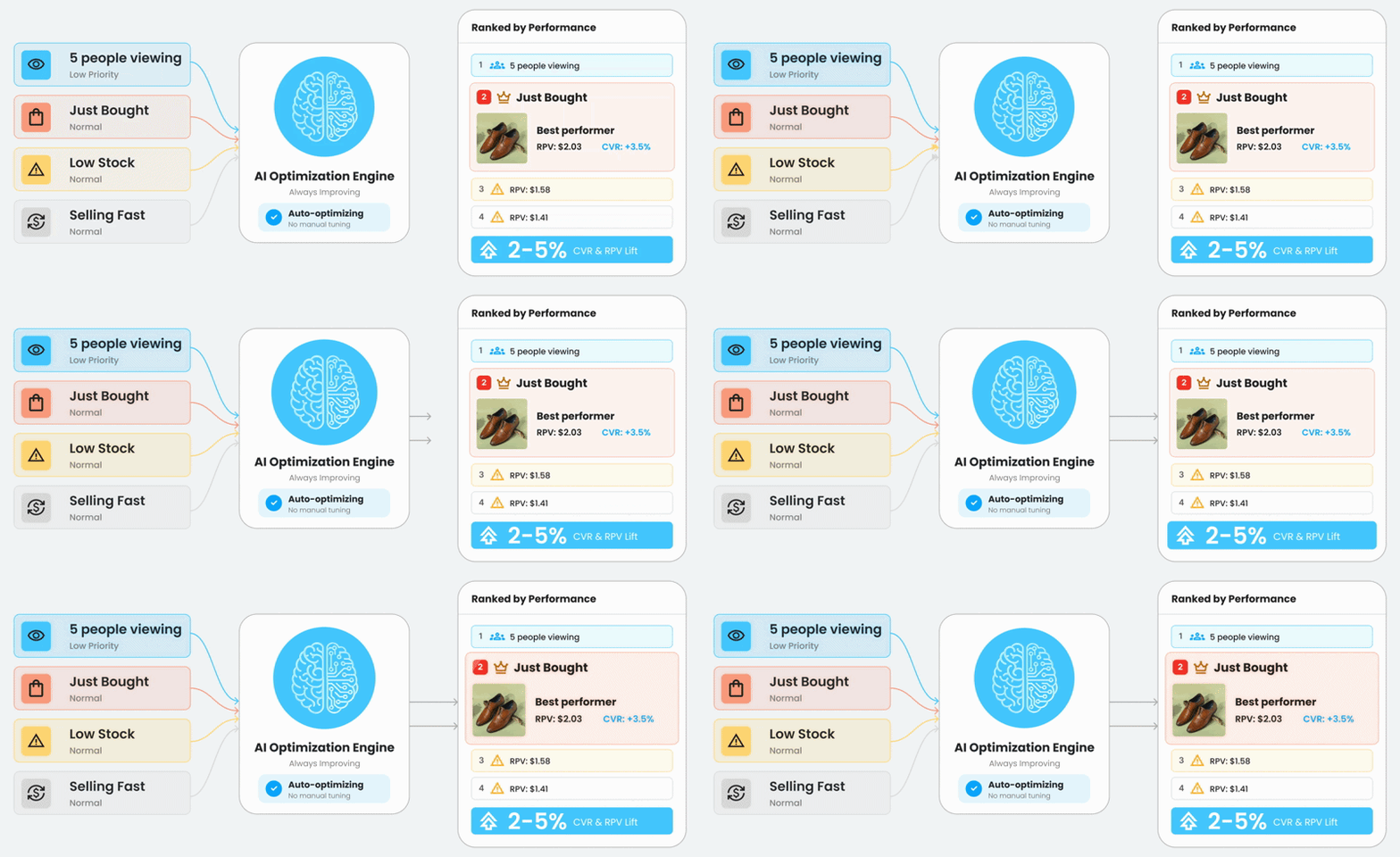
Coverage Analysis helps you strike that perfect balance by quantifying reach, adapting to traffic patterns, and powering A/B testing — all of which reveal how social proof messaging drives higher engagement and conversions.

Coverage Analysis helps you strike that perfect balance by:

  • Quantifying reach: Identify the portion of your catalog that qualifies at each threshold.
  • Adapting to traffic patterns: A high-traffic brand might thrive on 1-hour intervals, while smaller catalogs need longer (7-day) windows.
  • Powering A/B testing: Experiment with different metrics, thresholds, and intervals to optimize your conversion rate.

As Robert Cialdini famously said in Influence: The Psychology of Persuasion, “People don’t always make decisions in a vacuum; they look to the behavior of others to guide their own.”

Coverage Analysis helps you quantify that behavior, and use it meaningfully.

How Coverage Analysis Works

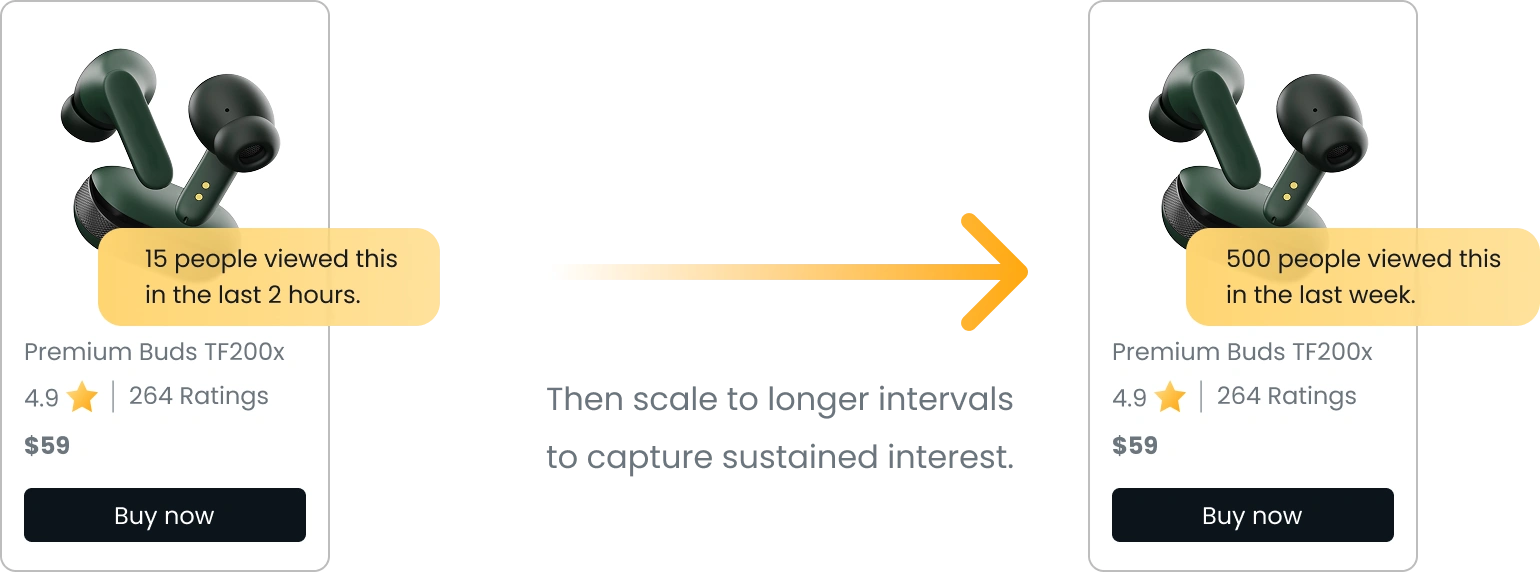
1 Choose Your Intervals

Start small (shorter intervals of 1 to 24 hours) to measure immediate engagement —
the “buzz” moments.

Example:
2 Compare Coverage Across Metrics
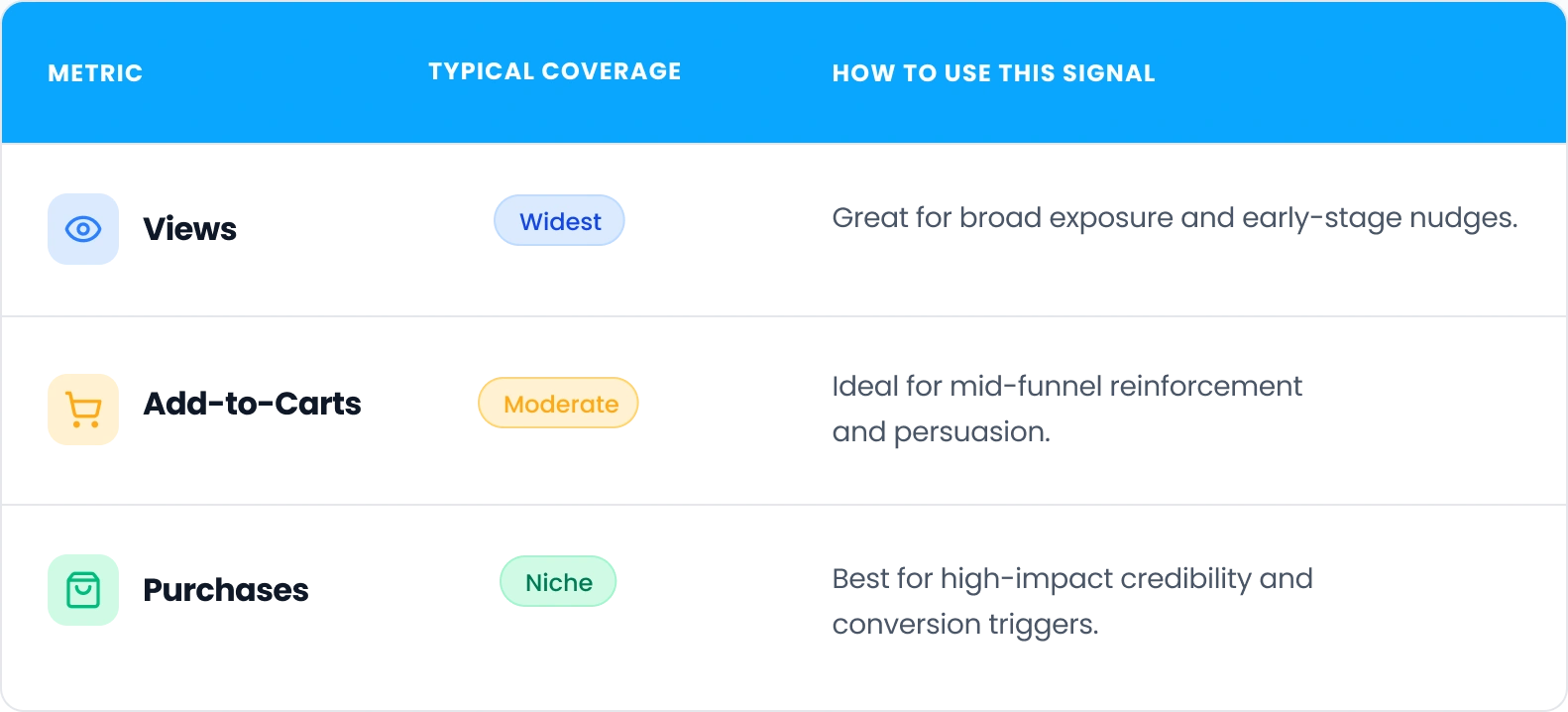
Each metric highlights a different level of shopper intent, and layering the right credibility cues on top makes your social proof strategy both persuasive and balanced.

3 Pick Data-Backed Thresholds

The system evaluates several thresholds (ranging from 1 to 500+), illustrating how coverage expands or narrows at each level.
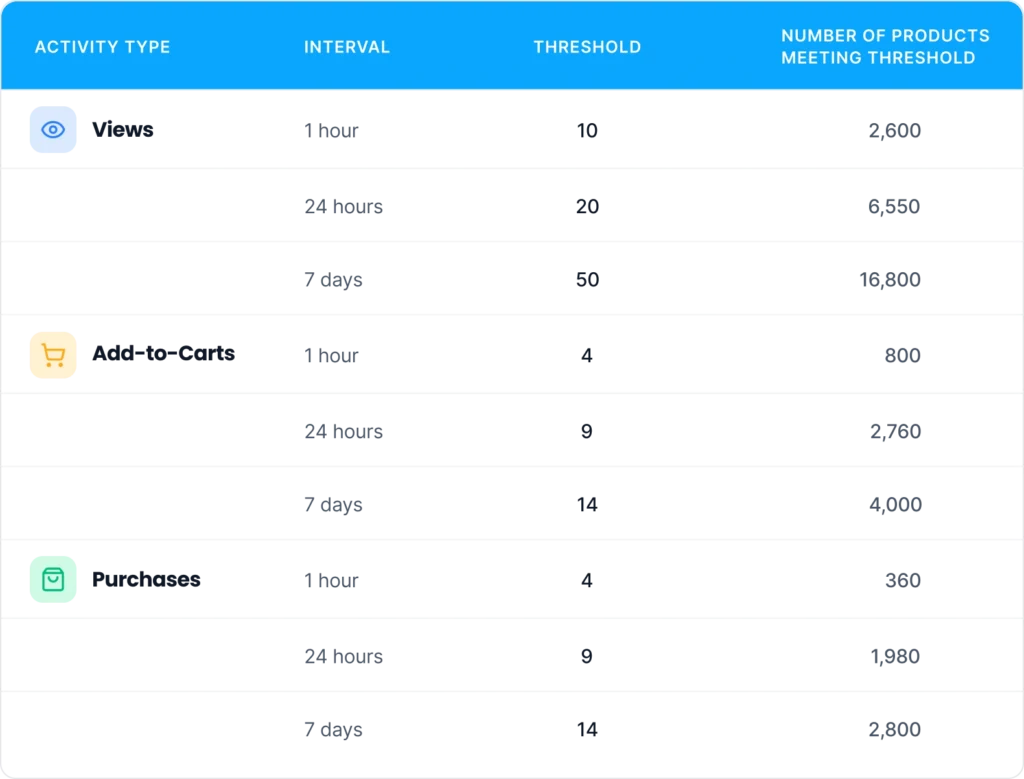
Notice how coverage grows with longer intervals and lower thresholds. This flexibility helps tailor dynamic content personalization solutions to different business realities — from the urgency of flash sales to sustained interest in core categories.

Continuous Calibration for Continuous Trust

Coverage Analysis isn’t a one-and-done exercise. It’s a calibration tool that evolves with your traffic, seasons, and campaigns.

It answers three critical questions:

Which activity metric deserves focus right now — views, carts, or purchases?

Are your current thresholds too lenient or too strict?

How do you maintain scale without losing credibility?

Because trust isn’t built by showing every shopper the same message — it’s built by showing the right message, backed by credible activity data.

As your traffic patterns evolve, Coverage Analysis ensures your social proof thresholds adapt and keep performance steady without constant manual tuning.

In Conclusion

Coverage Analysis gives you the confidence that your social proof messaging is both authentic and optimized — not guesswork, but data-driven persuasion.

By understanding how many products qualify at different engagement thresholds, you can:

  • Scale your messaging without spamming users,
  • Highlight real behavioral trends, and
  • Turn collective activity into credible proof that nudges more shoppers toward conversion.

In short, it’s the analytics engine behind every truly intelligent social proof messaging software solution.

Ready to find your sweet spot between scale and credibility?

Run your own Coverage Analysis and see how the right metrics, thresholds, and intervals can transform your social proof messaging strategy.

Book a Free Trial
Table of Contents
What Is Coverage Analysis?
Why Coverage Analysis Matters
How Coverage Analysis Works
Continuous Calibration for Continuous Trust
In Conclusion

The hidden cost of building product recommendations in-house

Digital Experience Personalization
Blogs

The hidden cost of building product recommendations in-house

The part retailers only discover after two or three cycles of “We can build this ourselves.”

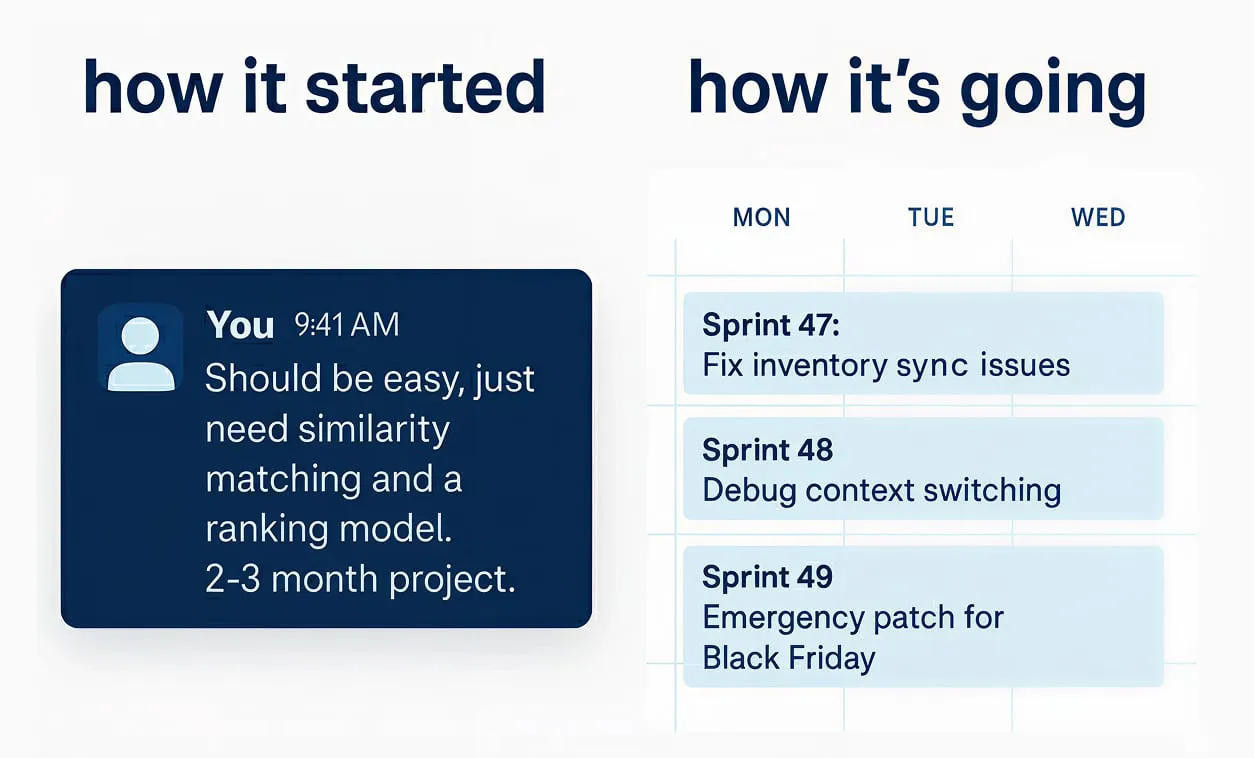
Every few months, we meet a retail team that proudly announces it is building its own personalization engine.

We never try to talk them out of it.

Because honestly? In 2025(or 2026, now that we’re inching closer to that), it feels like something you should be able to build.

  • You have embeddings.
  • You have vector databases.
  • You have open-source models that can map product similarities with ridiculous ease.
  • You have the talent.

So someone on the engineering team says the magic sentence: “Let’s build our own recommender.”

Everyone nods. Makes sense. Because on the surface, personalization looks straightforward: take products, find patterns, rank them, serve them up.

Then six months later (maybe after a Black Friday meltdown), it hits you.

You didn’t build a product recommendation feature. You accidentally took on responsibility for an entire real-time decisioning ecosystem.

And ecosystems don’t behave like features. They’re more like living things. They grow. They mutate. They break at 3am. And they demand constant attention.

This is the part no one sees coming.

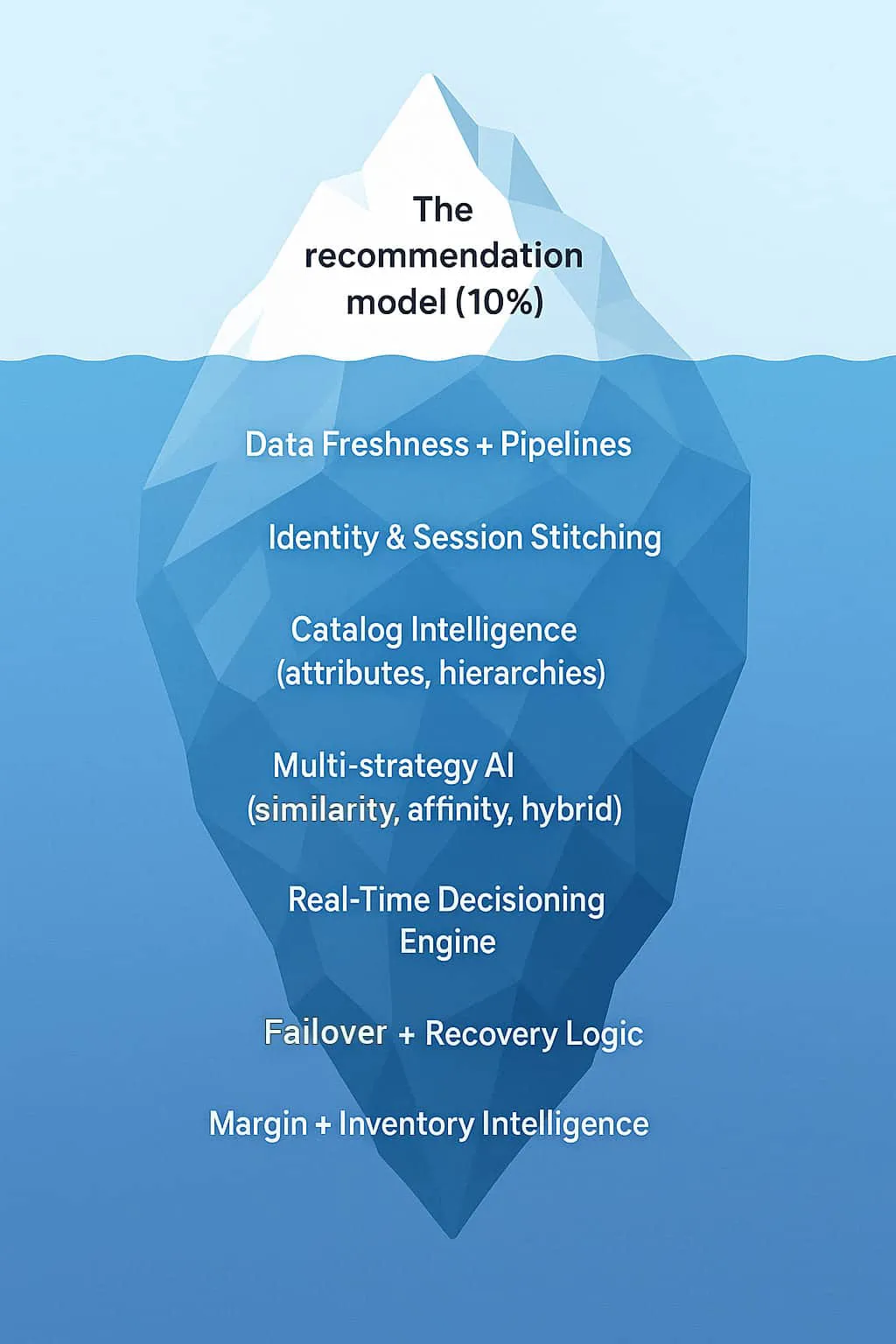
Personalization isn’t a model. It’s fifteen interconnected systems pretending to be one.

The biggest misunderstanding in retail tech? Thinking that personalization = “the model.”
But the real work is everything underneath it. And you don’t see that until it becomes your full-time job.

Let me paint the picture.

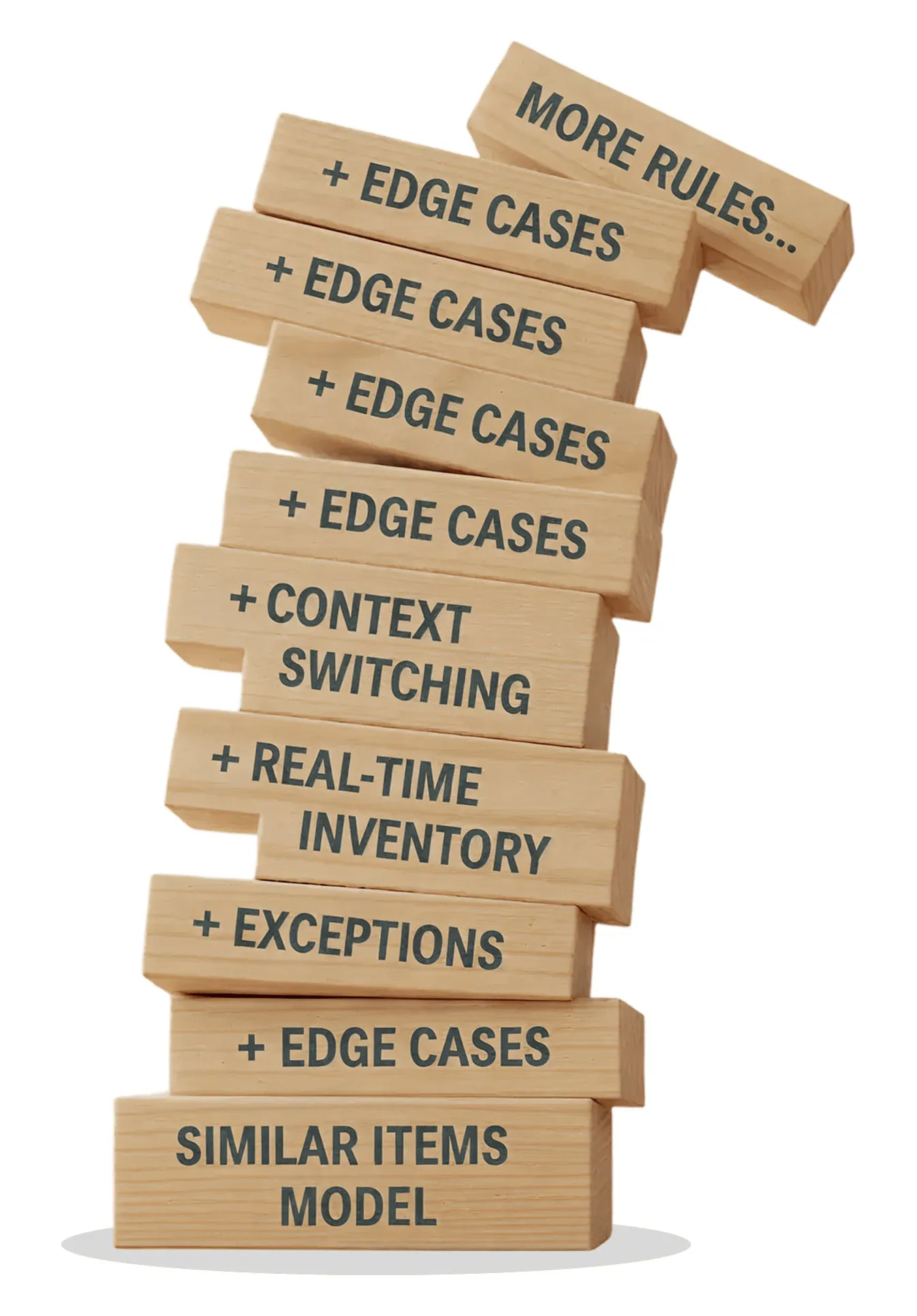
A European fashion retailer built their first internal model – simple “similar items” stuff. It worked beautifully on the product page. Sales went up. Click-through rates improved. The UX was clean. The data science team got high-fives.

Then merchandising asked: “Can we dial down discounted products when we’re launching new collections?”

Now you need business rules.

Marketing chimed in: “Can we show brand-focused looks to new visitors, but personalized picks to returning customers?”

Now you need context switching.

Operations joined the party: “We need to avoid recommending out-of-stock items during peak season…” Now you need real-time inventory feeds

None of this sounds crazy. This is just retail. But each request chips away at your simple system–until that original “similar items” model is doing maybe 5% of the actual work.

That’s when it hits you: the hard part isn’t the model. It’s everything around it.

Where most internal systems break: decision debt

You know technical debt. We all do.

But personalization has a nastier cousin: decision debt.

Decision debt is what happens when you take shortcuts early on because you’re trying to ship fast.

  • You don’t add real-time inference at first – it’s too slow to implement.
  • You hardcode boosts instead of building a rules engine.
  • You reuse one strategy across all categories because it’s “good enough for now.”
  • You ignore long-tail items because the uplift seems marginal.
  • You skip building a proper evaluation framework because A/B testing can come later.

Each of these feels harmless in the moment.

But here’s the problem: decision debt compounds. Fast.

Every time the business changes– new categories, new collections, new seasonal patterns, new user behavior, and new merchandising tactics– that debt gets worse.

We worked with a North American electronics retailer who built a solid internal product recommender. First 90 days? Looked great. Simple. Fast. Effective.

Then they launched a new product line of “PC Gaming Accessories,” and everything fell apart.

Strategies that worked for TVs didn’t work for keyboards. Bundling logic for phones didn’t translate to gaming components. Their internal system had no concept of category-level strategy orchestration, and their team spent the next four months adding exceptions on top of existing exceptions.

Decision debt sneaks up on you.

Then one day, it buries your roadmap.

The Plateau no one predicts

Let’s say you avoid all the traps. You don’t take shortcuts. You build clean. Your team ships a solid ecommerce personalization platform with no decision debt.

You should be good, right?

Here’s the thing: even well-built internal systems hit a ceiling. Not because of messy code or technical debt, but because of algorithmic limitations.

The models that give you early wins? They max out. Fast.

Similarity models work great at first. Someone’s looking at black dresses, you show more black dresses –boom, conversion. But similarity can’t tell you when someone’s ready to explore a new style, or when they’re gift shopping for someone else, or when they’ve already bought three black dresses and need something different.

Popularity models perform well initially. Top sellers are top sellers for a reason. But popularity can’t adapt to individual taste, can’t predict what someone might love before they know they love it, and definitely can’t help with discovery beyond what’s already trending.

Cross-sell works for obvious pairings. Chargers with phones. But it struggles with nuanced bundles, can’t optimize for margin, and misses opportunities for introducing customers to new categories.

These aren’t bad strategies. They’re just limited. And once you’ve captured all the obvious behavior, the gains start flattening out.

Here’s what the performance curve actually looks like:

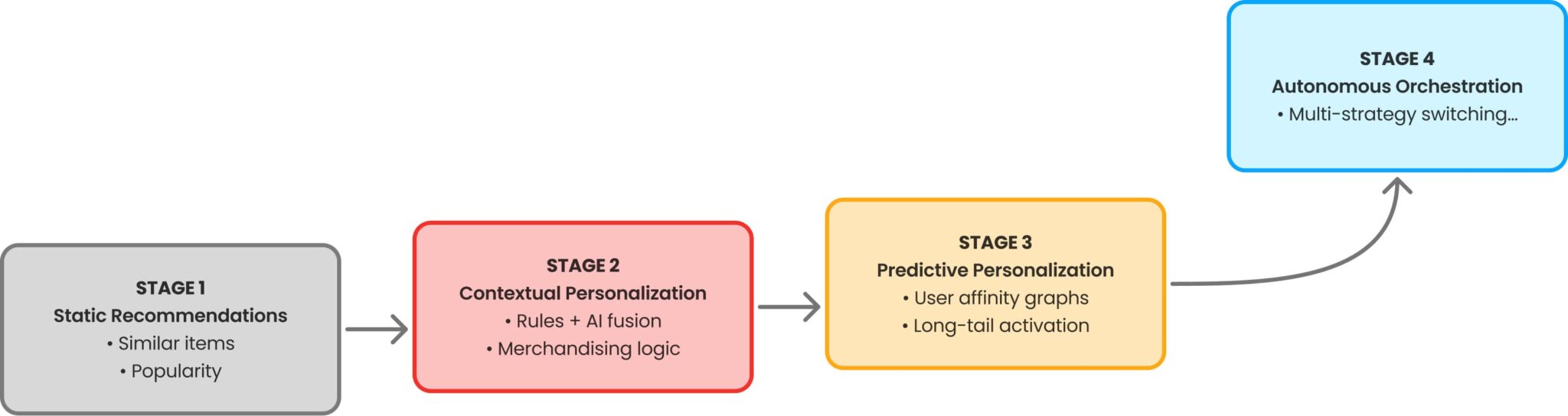
Stage 1 strategies (similarity, popularity, basic cross-sell) can be incredibly effective early on. They capture high-intent, obvious behavior really well. But they tap out around 60-120 days because they’re reactive, not predictive. They show what people already want, not what they might want.

Moving to Stage 2 (contextual) or Stage 3 (predictive) personalization requires fundamentally different approaches. You need models that understand:

  • Session intent vs long-term affinity
  • Category exploration patterns
  • Seasonal timing and freshness
  • Margin optimization alongside relevance
  • Individual discovery thresholds

And that’s not just “adding more data to your existing model.” It’s building entirely new strategies.

The plateau shows up quietly. Your metrics don’t crash. They just stop improving. AOV stalls. Category penetration flatlines. New product discovery doesn’t move.

Not a sharp drop. A soft ceiling.

So what does it take to break through that ceiling?

The Personalization Ecosystem (what you accidentally signed up for)

Here’s what you’re really on the hook for when you build in-house:

You don’t see this stuff when you’re building that first model. You only see it when the business starts asking for things your system was never designed to handle.

And if any of these layers are missing? Personalization breaks. Not in obvious ways– subtly. Performance slowly erodes. AOV stalls. Long-tail products don’t move. Seasonal launches underperform. Customers stop discovering new stuff.

The teams that win don’t choose “Build” or “Buy.” They blend.

The retailers crushing it right now aren’t building everything themselves. And they’re not outsourcing everything either.

They’re doing something smarter:

They build what makes them unique. They buy what makes them fast.

They build: brand experience, UI, customer journeys, bundling logic, promotions, storytelling.

They buy: the machinery underneath–orchestration, data freshness, affinity modeling, margin awareness, strategy switching, failure recovery, all the messy infrastructure that never ends.

This approach gives them speed and differentiation.

More importantly? It keeps their engineering and data teams focused on work that actually moves revenue–not maintaining pipes.

The real question retailers should ask

It’s not: “Can we build a product recommendation system?”

You can. Every retailer can. That’s not the debate anymore.

The real question is:

“Can we build and sustain a full personalization ecosystem faster and better than a platform that has already solved this across hundreds of retailers?”

That’s the inflection point.

It’s why retailers like Matas, Blue Tomato, and even large global multi-category brands eventually turned to ADA Global Recommend™ .

Not because they couldn’t build it. They absolutely could.

But because they realized Recommend™ isn’t just “a model.”

It’s a retail-native decisioning system that already knows how to blend user affinity, business rules, inventory reality, margin constraints, and real-time context into every single product recommendation.

That’s what drives the lift. Not the algorithm. The ecosystem around it.

Look, the smartest retailers aren’t choosing between build or buy.

  • They’re choosing speed.
  • They’re choosing focus.
  • They’re choosing to build what makes them different– and plug into what makes them faster.

That’s the quiet truth behind personalization success.

And it’s exactly what ADA Global Recommend™ was built to deliver.

Table Of Contents
Personalization isn’t a model. It’s fifteen interconnected systems pretending to be one.
Where most internal systems break: decision debt
The Plateau no one predicts
The Personalization Ecosystem (what you accidentally signed up for)
The teams that win don’t choose “Build” or “Buy.” They blend.

AI Stylists vs. Traditional Fashion Recommendations

Digital Experience Personalization
Blogs

AI Stylists vs. Traditional Fashion Recommendations

As a CXO, CMO, or SVP of Digital in fashion retail, you face constant pressure: elevate the customer experience, reduce costly return rates, and boost conversions. Yet, despite heavy investment in personalization platforms, the numbers still tell a worrying story. In 2023, return rates across fashion hovered around 24.4%.

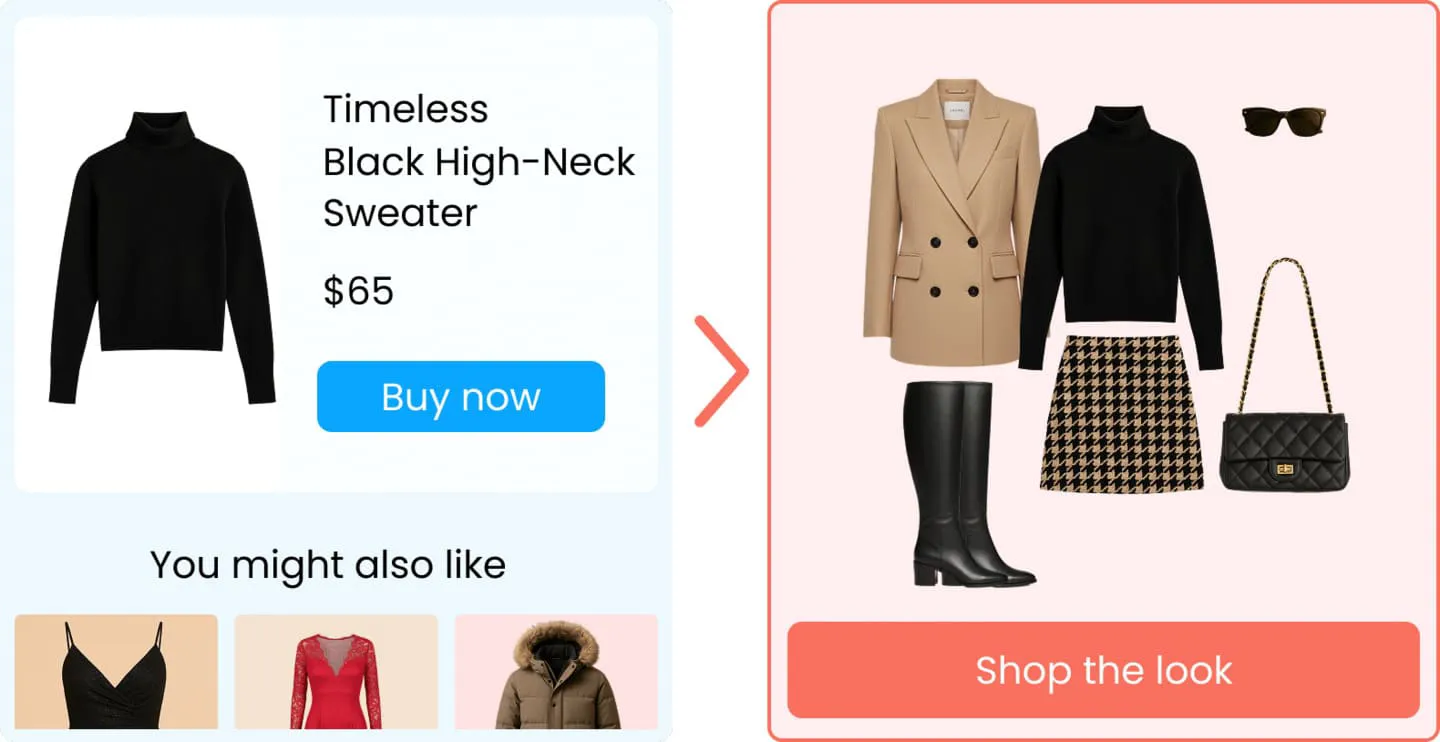
The truth is, product recommendations alone aren’t enough. Fashion shopping is rarely about “finding another similar item.” Shoppers are inspired by context and guided by style. They want to see how a look comes together before clicking ‘add to cart’.

This is where an AI stylist changes the equation. By adding a styling layer on top of traditional recommendations, AI-powered solutions transform static suggestions into curated, confidence-boosting outfits that actually convert.

How Standard Recommendation Engines Work

Most recommendation tools rely on one of three models:

Collaborative Filtering

Suggests items based on other shoppers’ behaviors.

Content-Based Filtering

Surfaces products with similar attributes (e.g., more red dresses if you viewed one).

Hybrid Approaches

Blend the two for broader coverage.

These approaches have their place. They work beautifully in categories where shoppers look for alternatives or replenishments. But in fashion, buying is less about “similarity” and more about style, context, and inspiration.

When “More Like This” Isn’t Enough

Fashion requires more than relevant alternatives. Shoppers are chasing:

  • A complete look, not a single product. A red dress recommendation helps, but without shoes, jewelry, and a jacket to match, the journey feels unfinished.
  • Visual harmony. Fashion is inherently visual. Suggesting sneakers with a cocktail dress may be “similarity-driven,” but it misses the mark on styling.
  • Freshness and trend awareness. Algorithms trained heavily on past behaviors often serve up stale recommendations in a fast-moving category.

Without styling context, even the most “relevant” suggestions fall flat. They present pieces but not ensembles—and in fashion, that’s the difference between browsing and buying.

Enter the AI Stylist: Turning Products Into Styled Experiences

An AI-powered stylist is not just another recommendation tool. It’s a digital styling partner that curates complete, on-brand outfits based on shopper intent, style rules, and occasion context.

Take Ensemble AI, our own solution. Instead of just showing another product tile, it builds shoppable looks that shoppers can instantly picture themselves wearing.

Here’s what makes an AI stylist like Ensemble AI different:

Complete-the-Look Curation

Outfits come styled with tops, bottoms, shoes, and accessories—designed to inspire and simplify decision-making.

Visual & Brand Coherence

Ensemble AI respects your brand’s styling guidelines—color harmony, proportions, and category rules—so every look feels intentional.

Styling Across Every Touchpoint

From homepage hero banners to PDP suggestions and cart reminders, styling moments appear consistently throughout the journey.

Automated Merchandising at Scale

Merchandisers set rules, themes, and seasonal priorities. The AI generates fresh, ranked ensembles—removing hours of manual work.

Why Fashion Retail Needs AI Stylists Now

Fashion thrives on inspiration, confidence, and context. Shoppers don’t just want more choices—they want guidance, ideas, and complete looks that match their lifestyle.

  • AOV
  • Returns
  • Engagement
  • Manual Merchandising

That’s why adding an AI stylist on top of your existing recommendation stack isn’t optional anymore. It’s how you:

  • Drive higher average order value (AOV) with styled multi-item baskets.
  • Reduce returns by giving shoppers confidence in how pieces fit together.
  • Scale personalized merchandising without increasing workload.

With an AI Stylist, you’re not replacing your current tech—you’re elevating it with styling intelligence that meets shoppers where they are.

Final Word: From Product Discovery to Outfit Inspiration

Today’s shoppers expect more than “you might also like.” They want looks they can imagine themselves in, confidence that styles will work together, and the joy of discovering new outfit possibilities.

That’s what an AI stylist delivers. And with an AI-powered stylist like Ensemble AI, you can turn browsing into buying—and product discovery into a styled journey your customers won’t forget.

Are you ready to bring styling intelligence to your ecommerce experience?

Know More
Table Of Contents
How Standard Recommendation Engines Work
When “More Like This” Isn’t Enough
Enter the AI Stylist: Turning Products Into Styled Experiences
Why Fashion Retail Needs AI Stylists Now
Final Word: From Product Discovery to Outfit Inspiration

Smarter Social Proof: How AI-Powered Optimization is Changing Retail Messaging

Digital Experience Personalization
Blogs

Smarter Social Proof: How AI-Powered Optimization is Changing Retail Messaging

In today’s competitive digital retail landscape, getting your message right—and delivering it at just the right moment—is no longer optional. Enter Ada Global’s Social Proof Optimize (SPO), a game-changing AI capability that helps retailers dynamically select and deliver the best-performing messages across the customer journey. Whether your goal is boosting views, add-to-carts, or purchases, SPO continuously learns and adapts to optimize for what matters most to your business.

What Makes AI-Powered Optimization Different: Contextual Bandits, Simplified

At the core of SPO is a smart AI technique known as a contextual bandit algorithm. It might sound complex, but it works like this: the system is constantly testing, learning, and improving. Instead of running slow, static A/B tests, SPO evaluates how messages perform in real time, across multiple types, timeframes (from 15 minutes to 4 weeks), and thresholds.

Think of it as your always-on optimization engine—making sure each message displayed is backed by the best available data at that moment.

Tailored Messaging that Moves the Needle

With SPO, retailers can create urgency, highlight product appeal, or build trust—all through dynamic messaging that aligns with specific KPIs. For example:

  • “Popular! 100+ purchases today”
  • “100 people viewed in the last hour!”
  • “Trending in your area”

These messages aren’t just catchy—they’re strategically selected by AI based on performance for goals like Add to Cart Rate, Conversion Rate, or Revenue Per Visit.

The intuitive interface makes campaign setup easy: marketers can input message variants, select their KPIs, choose how frequently the optimization runs, and preview how messages will appear—all without needing technical support.

Flexible, Full-Funnel Optimization

One size doesn’t fit all, and SPO understands that. It lets you tailor different social proof messaging strategies across your site—whether that means:

  • Category Pages: Prioritizing inspirational or trend-based messages to drive product discovery.
  • Product Detail Pages: Using urgency-based messages to encourage action.
  • Checkout Pages: Reinforcing trust with proof of popularity or secure payment.

Each page type can have its own set of messages, optimization intervals, and KPIs—all managed within the same interface.

Must explore social proof messaging use cases

Choose Your Optimization Metric with Precision

Social Proof Optimize gives retailers the flexibility to select the KPI that matters most for each experience—whether that’s Add to Cart Rate, Conversion Rate, or Revenue Per Visit. Once selected, the AI evaluates message performance specifically against that chosen metric.

Marketers can decide whether to display a single top-performing message or rotate between a few high performers—all prioritized by how well they drive the selected KPI. This approach ensures alignment with broader business goals, while keeping the message experience streamlined and focused.

Let the AI Do the Heavy Lifting

Once your parameters are set, the system takes over. SPO automatically tests new message variations while continuing to serve proven winners. It monitors behavioral changes and adjusts in real-time to stay aligned with customer intent.

This means your team can focus on strategy while the AI handles the execution—maximizing impact with minimal effort.

Why It Matters

Choosing the right message, for the right user, at the right time is harder than ever. SPO takes the guesswork out by using real-time performance data to make those decisions for you.

The result? More relevance, higher engagement, stronger loyalty—and measurable improvements across your KPIs.

SPO in Action: What It Looks Like

Here’s a quick look at how it works in practice:

  • Message Input: Add message variants like “Limited Stock!” or “Recently purchased by
50 customers!”
  • KPI Selection: Choose a goal such as Add to Cart Rate, Conversion Rate, or Revenue Per Visit.
  • AI Optimization: The system learns and adapts, testing and ranking each message by performance.
  • Dynamic Delivery: The best-performing message(s) appear across your selected experiences.
  • Continuous Improvement: The system keeps learning, so your messaging evolves with your audience.

1 Message Input

Marketers use the intuitive interface to input a list of messages with varied text and thresholds (e.g., “Limited stock!” or “Recently purchased by 50 customers!”).

2 KPI Selection

Select one of the KPIs to optimize for (Add to Cart Rate, Revenue Per Visit, or Conversion Rate).

3 AI Optimization

The contextual bandit algorithm evaluates message performance, balancing exploration of new variations with exploitation of top performers.

4 Dynamic Message Delivery

The system displays the top-performing message(s) across selected pages and experiences, tailored to the customer journey.

5 Continuous Learning & Adaptation

The AI monitors customer interactions, adapting to behavioral changes to ensure sustained relevance and results.

Transform the Way You Message

Ada Global’s Social Proof Optimize isn’t just another feature—it’s a smarter, faster, AI-powered way to connect with your customers. Whether you’re aiming to lift conversions, boost engagement, or fine-tune messaging across multiple funnels, SPO brings intelligence, automation, and results together.

Ready to see what dynamic, data-driven messaging can do?

Explore Social Proof Optimize and discover how it can supercharge your personalization strategy.

Know More
Table Of Contents
What Makes AI-Powered Optimization Different: Contextual Bandits, Simplified
Tailored Messaging that Moves the Needle
Flexible, Full-Funnel Optimization
Choose Your Optimization Metric with Precision
Let the AI Do the Heavy Lifting
Why It Matters
SPO in Action: What It Looks Like
Transform the Way You Message

MultiAttribute Badging: The Untapped Power in Social Proof

Digital Experience Personalization
Blogs

MultiAttribute Badging: The Untapped Power in Social Proof

In the cacophony of online shopping, how do you make your products sing? How do you cut through the noise and build instant trust? The answer lies in strategically leveraging product attributes as part of your full-funnel social proof messaging strategy, and amplifying their impact through multiple badges and cross-page integration.

This goes far beyond generic “best-seller” labels. We’re talking about product badges highlighting specific, desirable features that are unique to your products and valuable to your customers, transforming your products into must-haves.

Why Product Attribute Badges Work

Attribute-based badges do more than catch the eye—they communicate specific product benefits in an instant. By highlighting what matters most to your customers, these badges build trust, reduce decision fatigue, and elevate perceived value right where it counts.

  • Specificity = Trust
    Vague badges are easily dismissed. Attribute-based badges provide concrete reasons to buy.
  • Targeted Appeal
    Consumers have unique needs. Badges highlighting relevant attributes connect with those specific desires.
  • Elevated Perceived Value
    Visually appealing badges act as endorsements, boosting the perceived quality and desirability of your products.
  • Simplified Decision-Making
    You streamline the purchase process by showcasing key features, reducing decision fatigue.

Multi-Badge Synergy: A Compelling Narrative

While a single badge can capture attention, combining multiple badges can paint a richer, more persuasive picture. Together, they tell a story—one that resonates with more customers and builds deeper confidence in your product.

Multi-badge synergy works best when you’re not just stacking the same type of badge, but combining different kinds to reflect various angles of product appeal. Here are five common types of badges and what they convey:

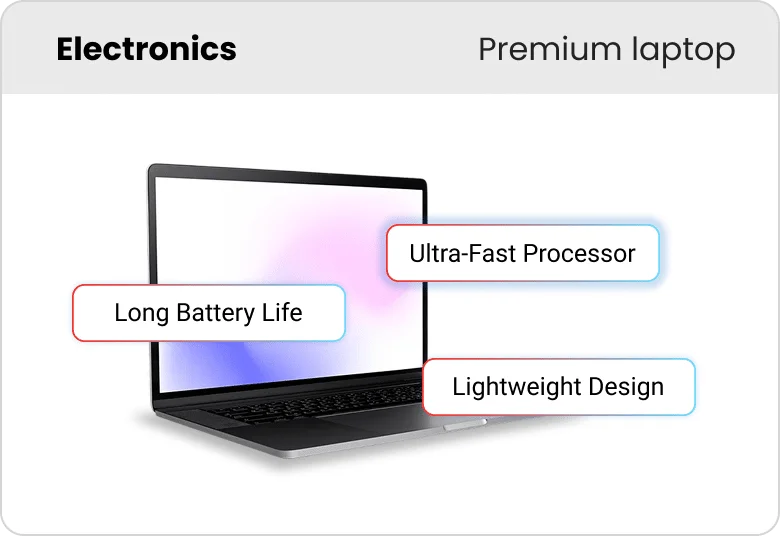
Informative Badges Highlight key specs like material, size, or portability. E.g., Ultra-Thin, Water-Resistant, Travel-Friendly
Feature Badges Showcase standout functionality or innovation. E.g., 5G, Noise Canceling, Wireless Charging
Promotional Badges Signal special offers or urgency. E.g., Clearance Sale, Deal of the Day, 20% Off
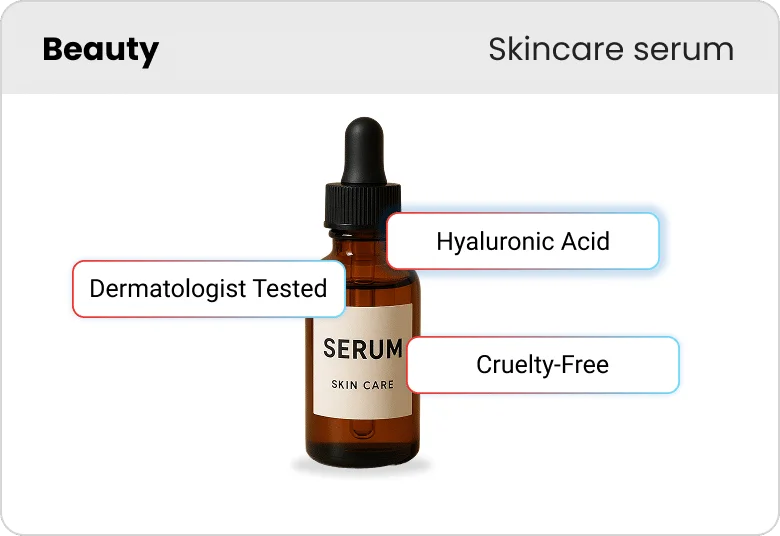
Value-Based Badges Emphasize ethical or environmental qualities. E.g., Sustainable, Cruelty-Free, Recyclable
Trust Badges Reinforce product authenticity or quality. E.g., Quality Assured, Award-Winning, Verified Purchase

The more thoughtfully you combine these, the more compelling—and personalized—your product narrative becomes. This multi-dimensional approach doesn’t just inform; it engages, reassures, and converts. Here’s how multi-badge combinations unlock even more strategic value:

Comprehensive Value Proposition

Multiple badges showcase a product’s diverse strengths, catering to a broader audience.

Reinforced Credibility

A product with multiple positive attributes appears more reliable and trustworthy.

Increased Engagement

Visually appealing badge combinations capture attention and encourage exploration.

Strategic Audience Segmentation

Tailor badge combinations to subtly segment your audience based on their priorities.

Real-World Examples: Multi-Badge Magic in Action

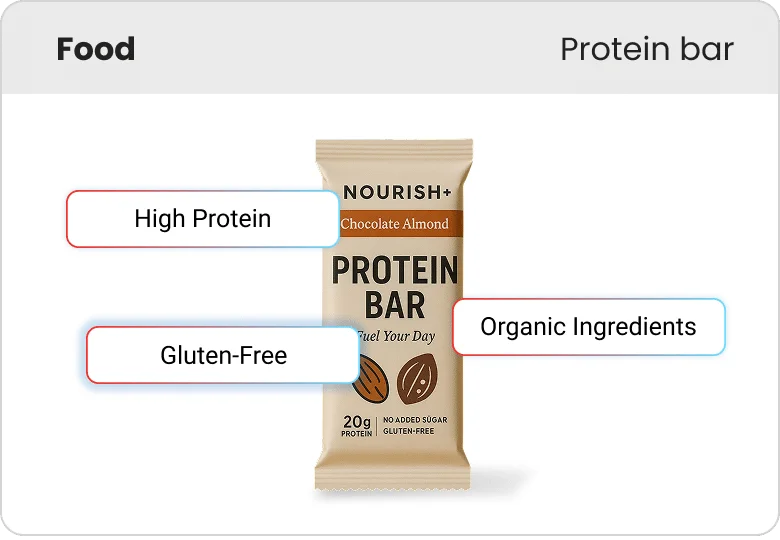
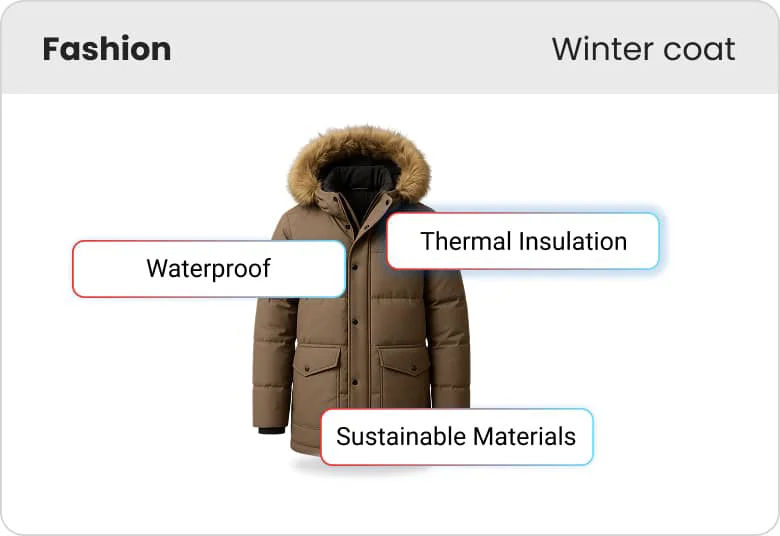
Attribute badging isn’t just theory—it’s already working across industries. From beauty and fashion to tech and software, brands are using badges to spotlight what makes their products unique. Here are some quick examples that illustrate this approach in action:

Cross-Page Integration: Amplifying Impact Across the Funnel

The true power of badging is unleashed when it’s not siloed to a single page. By integrating badges with social proof messaging across commerce touchpoints—from search results to checkout—you reinforce key messages and support decision-making throughout the customer journey.

Key Pages for Badge Integration:

  • Product Listing Pages (PLPs)
    Display badges on product thumbnails for instant attribute recognition and increased click-through rates.
  • Product Detail Pages (PDPs)

    Reinforce key attributes and address potential concerns with prominent badge placement.
  • Search Results Pages (SERPs)
    Enable attribute-based filtering and streamline product discovery with badge integration.
  • Cart and Checkout Pages

    Reaffirm the value proposition with badges, reducing cart abandonment.
  • Homepage and Landing Pages
    Highlight featured products and key brand values with strategic badge placement.
  • Email Marketing
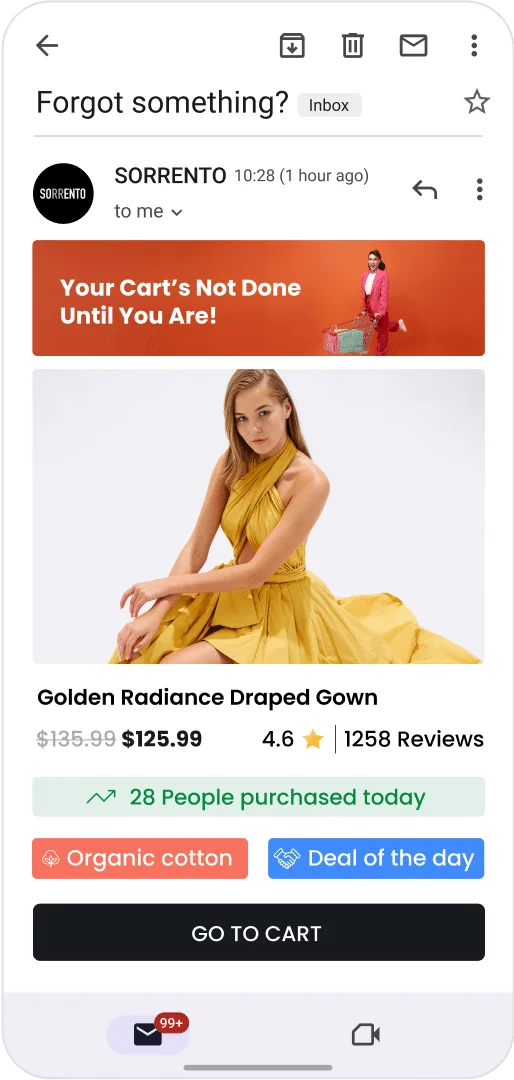
    Use badges to draw attention to product features and drive traffic to product pages.
  • Social Media
    Showcase product attributes with visually appealing badges on product images and videos.

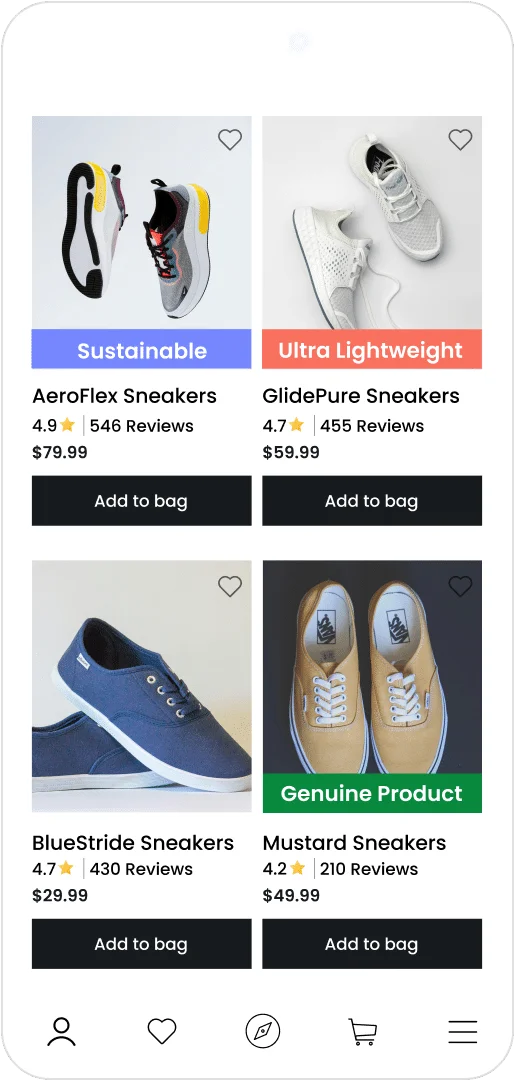
An example of what badging looks like on listing pages and email

Best Practices for Badge Placement

Strategic badge placement isn’t just about making your pages look good—it’s about reinforcing key product messages and aligning with how users actually browse. 
Here’s how to maximize the impact of your badges:

Attention-Grabbing
Shoppers scan—they don’t read every word. Placing badges in multiple, strategic spots increases the chances they’ll be noticed, no matter how the user engages with the page.

Reinforce Key Messages
Repetition helps cement product value in the customer’s mind, especially for high-consideration or feature-rich items. The more often they see a key attribute, the more likely they are to trust it.

Point-of-Action Placement
Placing badges near calls-to-action (like “Add to Cart” or “Buy Now”) reinforces benefits at the most decisive moment. For example, a “Secure Checkout” badge near the payment button can reduce buyer hesitation.

Match Message with Page Zones
Highlight specific features where they make the most sense—e.g., show “Sustainable Materials” near the description and “Fast Shipping” near delivery info.Guide the Eye with Visual Flow
Strategically placed badges can steer attention across a page, drawing users toward key details and influencing their journey toward conversion.

Scanners vs. Readers
Badges near images, titles, and section headers cater to quick-scanning users. For more deliberate readers, integrate badges into descriptions or technical specs.

Mobile vs. Desktop
Use space wisely. On mobile, fewer but highly visible badges near the top or next to CTA buttons work best. On desktop, you have room to repeat or layer badges across different zones.

In essence, strategic placement of badges within a page is about maximizing visibility, reinforcing key messages, and catering to diverse user behaviors to drive conversions.

The Impact: A Conversion Powerhouse

By combining multiple badges and integrating them across your digital footprint, you can:

  • Deliver Consistent Messaging: Reinforce key product attributes across touchpoints to build trust and recognition.
  • Drive Higher Conversions: Help shoppers make faster, more confident decisions by highlighting what matters most.
  • Elevate the Customer Experience: Guide users through a clear, benefit-rich journey that feels informative—not overwhelming.
  • Build Brand Credibility: Show transparency and attention to detail, reinforcing your brand’s values and quality promise.
  • Boost SEO Performance: Badge text can contribute to keyword relevance and visibility in search.

In today’s competitive digital marketplace, social proof messaging and badging, when done right, are not just a trend—they’re a necessity. By embracing the synergy of multiple badges and cross-page integration, you can unlock the full potential of your products and create a truly exceptional customer experience.

Ready to turn your product pages into conversion powerhouses?

Explore how ADA Global’s Social Proof Messaging makes it easy to implement multi-attribute badging seamlessly.

Get Free Trial
Table of Contents
Why Product Attribute Badges Work
Multi-Badge Synergy: A Compelling Narrative
Real-World Examples: Multi-Badge Magic in Action
Cross-Page Integration: Amplifying Impact Across the Funnel
Best Practices for Badge Placement
The Impact: A Conversion Powerhouse

AI-Powered Personalization Beyond GPTs – The Future of Hyper-Personalized Email Marketing

Digital Experience Personalization
Blogs

AI-Powered Personalization Beyond GPTs – The Future of Hyper-Personalized Email Marketing

In today’s fast-paced digital landscape, consumers expect more than just generic interactions they demand real-time, context-aware experiences that feel tailor-made for them. While Generative AI, particularly Large Language Models (LLMs) like GPTs, has revolutionized content creation, it’s only one piece of the puzzle. True hyper-personalization requires a broader AI-driven strategy that integrates predictive analytics, real time customer segmentation, and behavioral modeling. In this blog, we’ll explore how AI is transforming marketing personalization beyond GPTs and how ADA Global’s solutions such as Active Content and others are leading the charge.

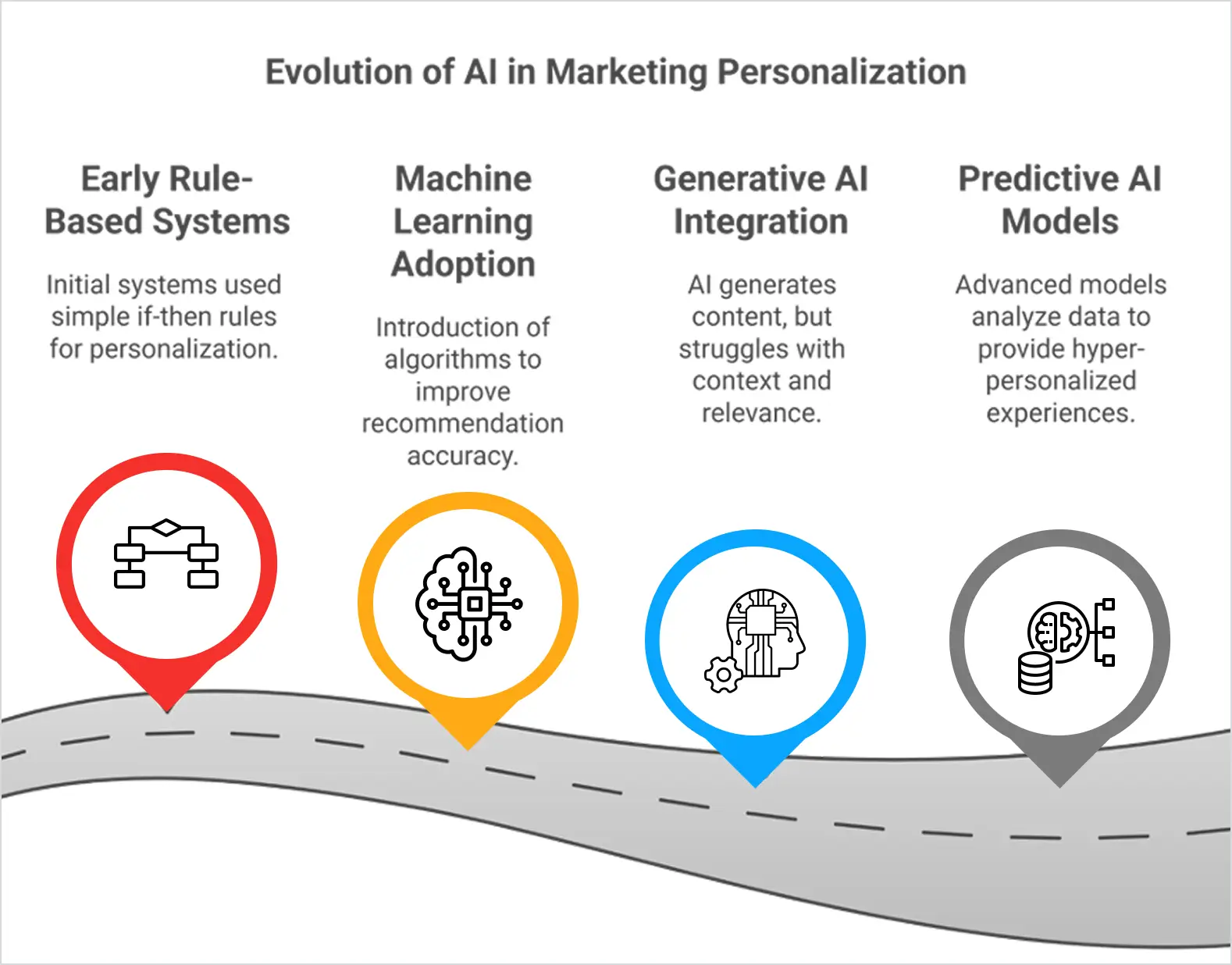
The Evolution of AI in Marketing Personalization

The journey of AI in marketing personalization has been nothing short of transformative. We’ve moved from rule-based personalization, where static rules dictated customer interactions, to AI-powered personalization that surfaces machine learning-driven recommendations in real time. Generative AI has further accelerated this evolution by enabling scalable content creation. However, while GPTs excel at generating text, they often fall short in delivering truly personalized experiences.

  • Lack of Contextual Relevance: GPTs generate content based on data patterns, but they often lack the ability to understand the specific context of a customer’s journey.
  • Generic Output: The content produced by GPTs can feel impersonal and fail to resonate with individual customers.
  • Inability to Adapt in Real-Time: GPTs are not designed to adjust content dynamically based on real-time customer behavior or preferences.

These limitations highlight the need for a more comprehensive approach to personalization solutions—one that goes beyond content generation and leverages predictive AI, real-time data, and multi-touchpoint engagement.

Why Generative AI Alone is Not Enough for
 Hyper-Personalization

While Generative AI has its place in the marketing toolkit, it’s not a silver bullet for hyper-personalization. Consumers today expect more than just automated content—they want interactions that are context-aware, predictive, and seamlessly integrated across channels.

Here are the key challenges with Generative AI:

  • Manual Intervention Required: Marketers often need to manually tweak GPT-generated content to ensure it aligns with brand voice and customer context.
  • Lack of Predictive Capabilities: Generative AI can’t anticipate customer needs—it can only react to them.
  • Limited Integration: GPTs operate in isolation, making it difficult to integrate with other data sources like CRM, customer data platform, or recommendation engines.

To truly deliver hyper-personalized experiences, marketers need to move beyond Generative AI and embrace predictive AI models that can analyze historical data, anticipate customer behavior, and deliver real-time, personalized content.

Predictive AI: The Future of Hyper-Personalized Email Marketing

Predictive AI is the next frontier in marketing personalization. By analyzing historical data and identifying patterns, predictive AI models can anticipate customer needs and deliver personalized experiences at scale. These include personalized product recommendations, ai email personalization, dynamic content personalization, and beyond. Only a few players in the market can operate at scale and have vast experience delivering AI-powered solutions. ADA Global’s products for retail enterprises have been pushing the envelope with AI-powered solutions even before “AI” was cool.

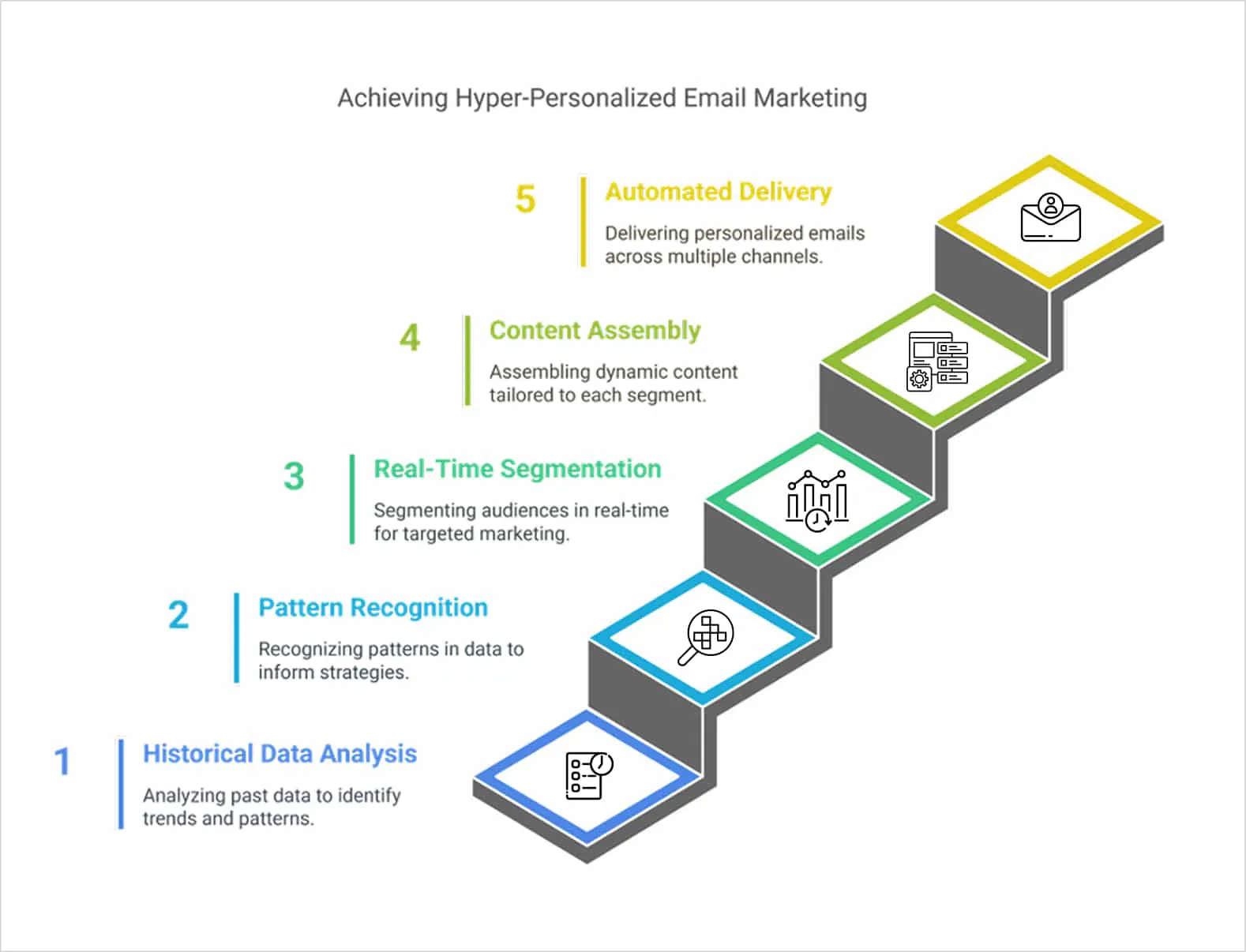
Product Recommendations: ADA Global’s RecommendTM solution uses advanced segmentation and machine learning to deliver personalized product recommendations that drive conversions. By analyzing customer behavior, purchase history, and preferences, Recommend ensures that every product suggestion feels tailor-made.

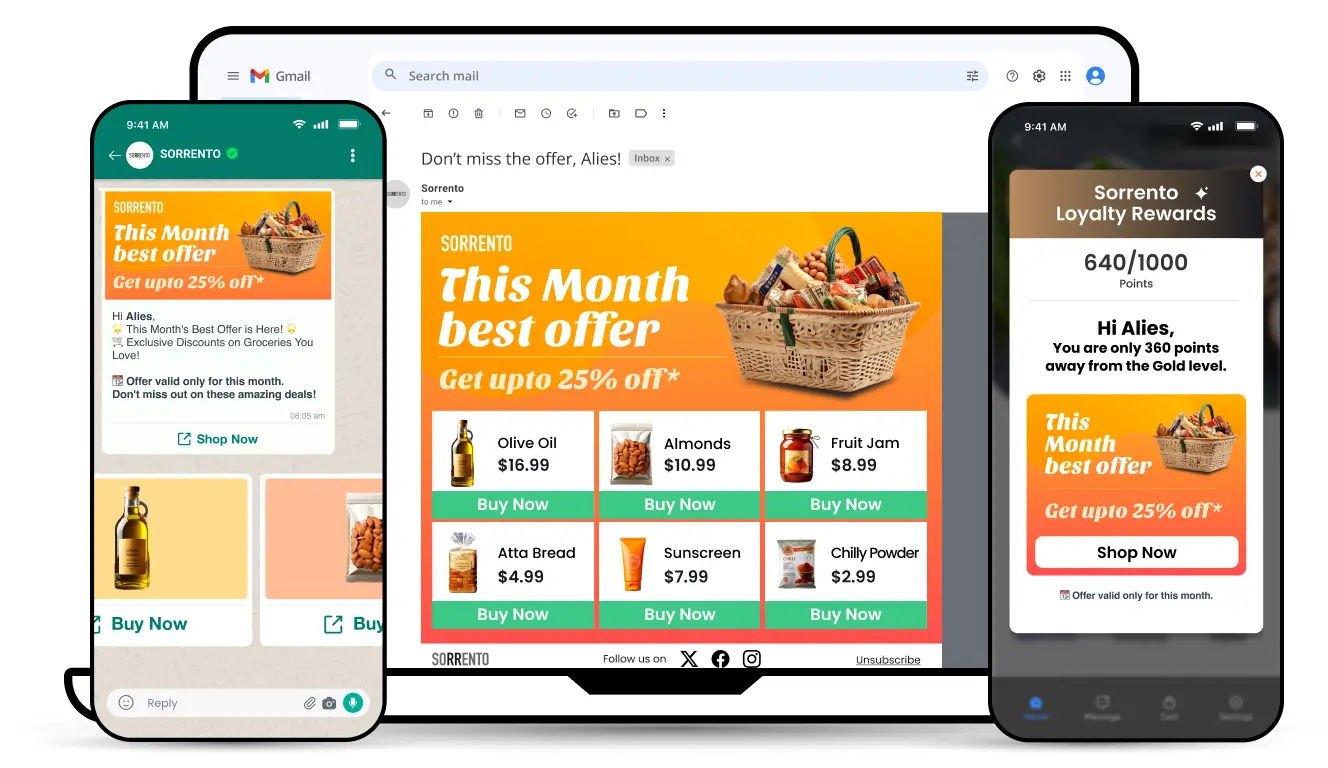
Dynamic Content Assembly: ADA Global’s Active Content enables real-time, data-driven content personalization across email, SMS, and digital channels. Active Content enables marketers to create dynamic, and visually stunning hyper-personalized content that resonates with individual customers by providing a platform to mash up data from CRM, CDP, and integrate it into a visual content block.

Real-Time Segmentation: ADA Global’s Audience Manager allows marketers to trigger triggered email marketing campaigns based on real-time behavioral data, ensuring that messages are always relevant.AI-driven segmentation ensures that brands can target users based on:

  • Abandoned cart behavior
  • Browsing activity without purchase
  • Affinity towards specific brands or price points
  • Likelihood to engage or churn

Real-World Examples of AI-Powered Personalization

Here are a few real-world use cases of predictive analytics in hyper-personalization:

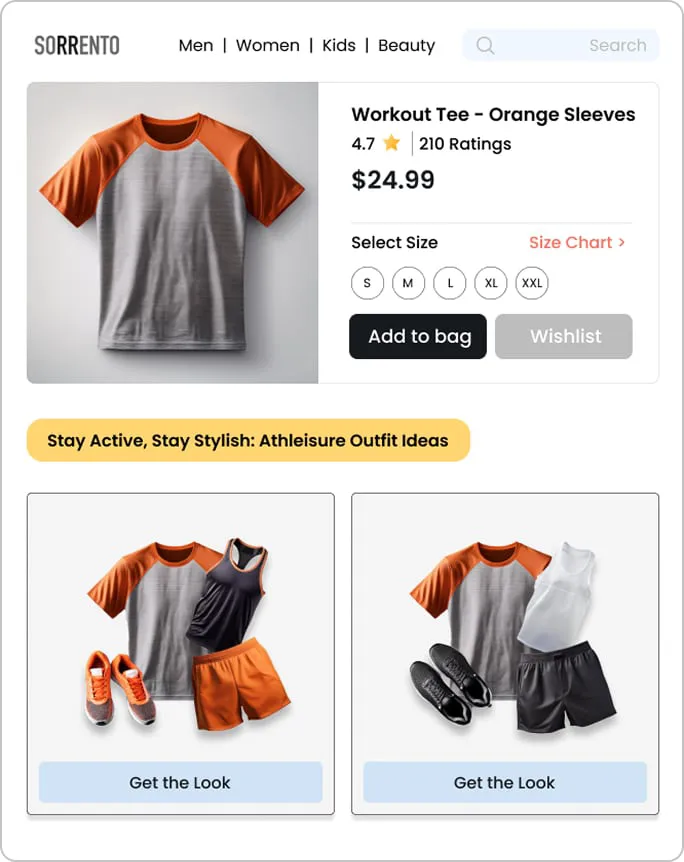
Fashion & Apparel: AI stylists, such as Ensemble AI, curate outfits and product bundles based on individual preferences, co-occurrence data, and complementary colors. These recommendations are powered by predictive AI models that analyze customer behavior and preferences in real time.

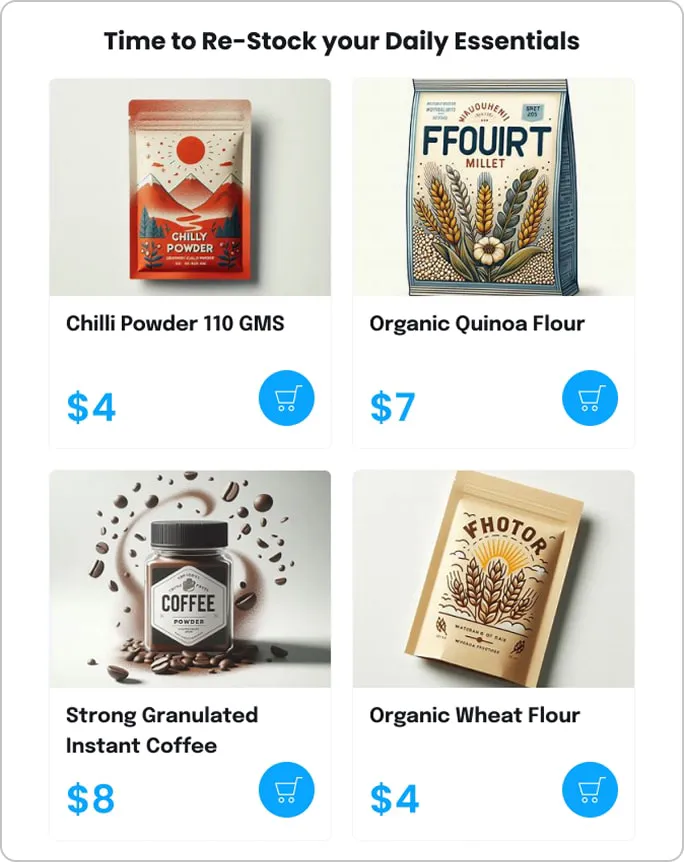
Grocery & CPG: Predictive replenishment models suggest restocking essentials before customers run out. By analyzing purchase history and consumption patterns, these models ensure that customers never have to worry about running out of their favorite products.

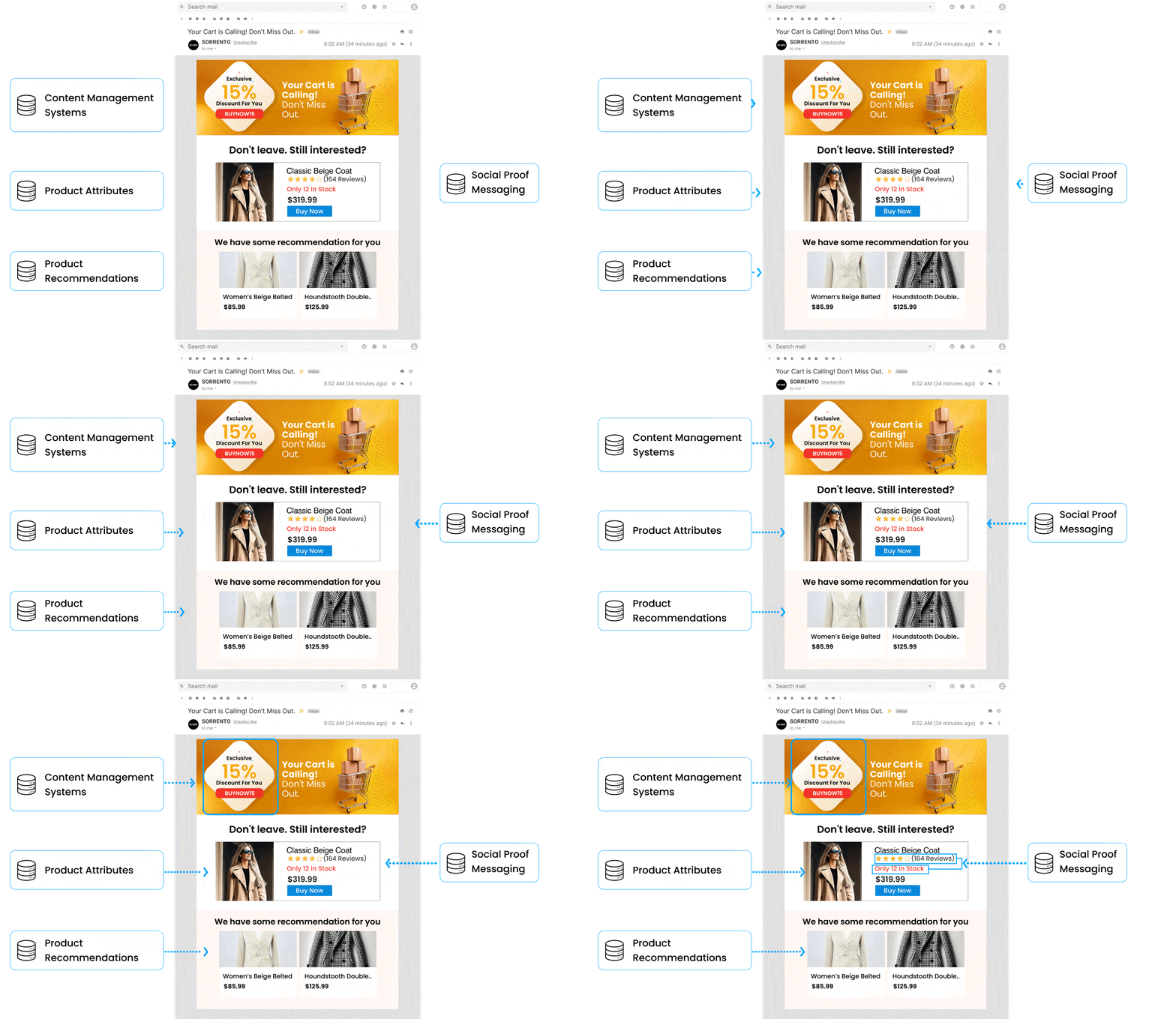
E-commerce & Retail: AI optimizes social proof messaging, affinity-based campaigns, and personalized hero banners to drive conversions. For example, AI dynamically optimizes key metrics such as conversion rate, add-to-cart rate, and revenue per visit by automatically selecting what social proof message to display to the shopper in real time. In this manner, brands can deliver highly targeted campaigns that resonate with individual customers by leveraging predictive analytics.

Addressing Challenges: AI-Driven Content Must Be On-Brand & Privacy-Compliant

While AI-powered personalization offers immense potential, it also comes with challenges. Marketers must ensure that AI-generated content aligns with their brand voice and complies with data privacy regulations.

  • Brand Consistency: AI-generated content can sometimes dilute brand voice. ADA Global’s Active Content ensures that all dynamic personalization messaging aligns with brand guidelines, maintaining consistency across channels such as website, mobile, and in-app.
  • Privacy Compliance: AI-powered Personalization at scale requires access to customer data, which must be handled responsibly. ADA Global’s solutions are designed with privacy in mind, ensuring compliance with global data protection regulations such as GDPR, CCPA, and COPA.
  • Ethical Personalization: AI should enhance customer experiences, not exploit them. ADA Global’s solutions prioritize consent-based marketing, ensuring that customers have control over how their data is used.

The Role of ADA Global’s Active Content in
 Hyper-Personalized Email Marketing

Active Content by ADA Global is designed to address the gaps in traditional email marketing by enabling marketers to effortlessly draw data from multiple sources to craft visually compelling creatives, delivered with open time personalization and send-time personalization.

  • Real-Time Data Integration: Pulls data from CDPs, CRMs, recommendation engines, loyalty programs, and third-party APIs and allows marketers to mash them up and add to dynamic creatives blocks to create visually stunning content.
  • Dynamic Content Personalization: This feature creates personalized email campaigns that change email content dynamically based on user behavior and retail variables such as price and inventory at the moment of engagement.
  • Automates Omnichannel Delivery: Automates content delivery across the customer’s preferred media for interaction with the brand, be it email, RCS, SMS, or WhatsApp, ensuring relevance at every interaction.

Unlock the Power of Hyper-Personalization with ADA Global

The future of marketing lies in hyper-personalization, and AI is the key to unlocking its full potential. While Generative AI has its place, true personalization requires a broader AI-driven strategy that integrates predictive analytics, real-time segmentation, and behavioral modeling.

Ready to take your personalization efforts to the next level? Explore how Ada Global’s Active Content can help you deliver hyper-personalized experiences at scale. Sign up for a demo today and see how Ada Global can transform your marketing strategy.

Table Of Contents
The Evolution of AI in Marketing Personalization
Why Generative AI Alone is Not Enough for
 Hyper-Personalization
Predictive AI: The Future of Hyper-Personalized Email Marketing
Real-World Examples of AI-Powered Personalization
Addressing Challenges: AI-Driven Content Must Be On-Brand & Privacy-Compliant
The Role of ADA Global’s Active Content in
 Hyper-Personalized Email Marketing
Unlock the Power of Hyper-Personalization with ADA Global

Drive Unbeatable Conversions with Full-Funnel 
Social Proof Messaging

Digital Experience Personalization
Blogs

Drive Unbeatable Conversions with Full-Funnel 
Social Proof Messaging

In today’s competitive ecommerce landscape, building trust and credibility is paramount. Shoppers are bombarded with choices, and they’re looking for reassurance that they’re making the right decision. That’s where the power of social proof messaging comes in. But simply sprinkling a few “X people are viewing this” notifications on your product pages isn’t enough. To truly maximize its impact, you need a full-funnel social proof strategy.

What exactly is full-funnel social proof messaging, and why is it so crucial? It’s a strategy that integrates social proof at every stage of the customer journey, from initial discovery to final purchase. This comprehensive approach builds confidence and reduces friction, leading to higher conversion rates and increased customer loyalty.

Why Full-Funnel Social Proof Messaging Matters for Shoppers (and Your Bottom Line)

Imagine a shopper landing on your site for the first time. They’re unfamiliar with your brand and products. Without social proof, they might hesitate to explore further. However, with strategically placed messages, you can guide them through the funnel with confidence.

Here’s how full-funnel social proof messaging benefits shoppers:

  • Builds Trust and Credibility: Seeing that other shoppers are interested in or have purchased a product instantly adds legitimacy. This is especially important for new or lesser-known brands.
  • Reduces Purchase Anxiety: Showcasing positive reviews or highlighting popular choices can alleviate concerns about product quality, fit, or value.
  • Streamlines the Decision-Making Process: Social proof can help shoppers quickly identify best-selling items, trending products, or items frequently bought together, simplifying their search.
  • Enhances the Shopping Experience: Subtle yet persuasive messages create a sense of community and encourage exploration, making shopping more engaging.
  • Boosts Confidence at Checkout: Seeing messages like “X people have this in their cart” or “Limited stock available” can create a sense of urgency and prevent cart abandonment.

Creating a Full-Funnel Social Proof Strategy

Here’s how you can implement social proof messaging at each stage of the customer journey:

1 1. Category Pages: Capturing Interest Early

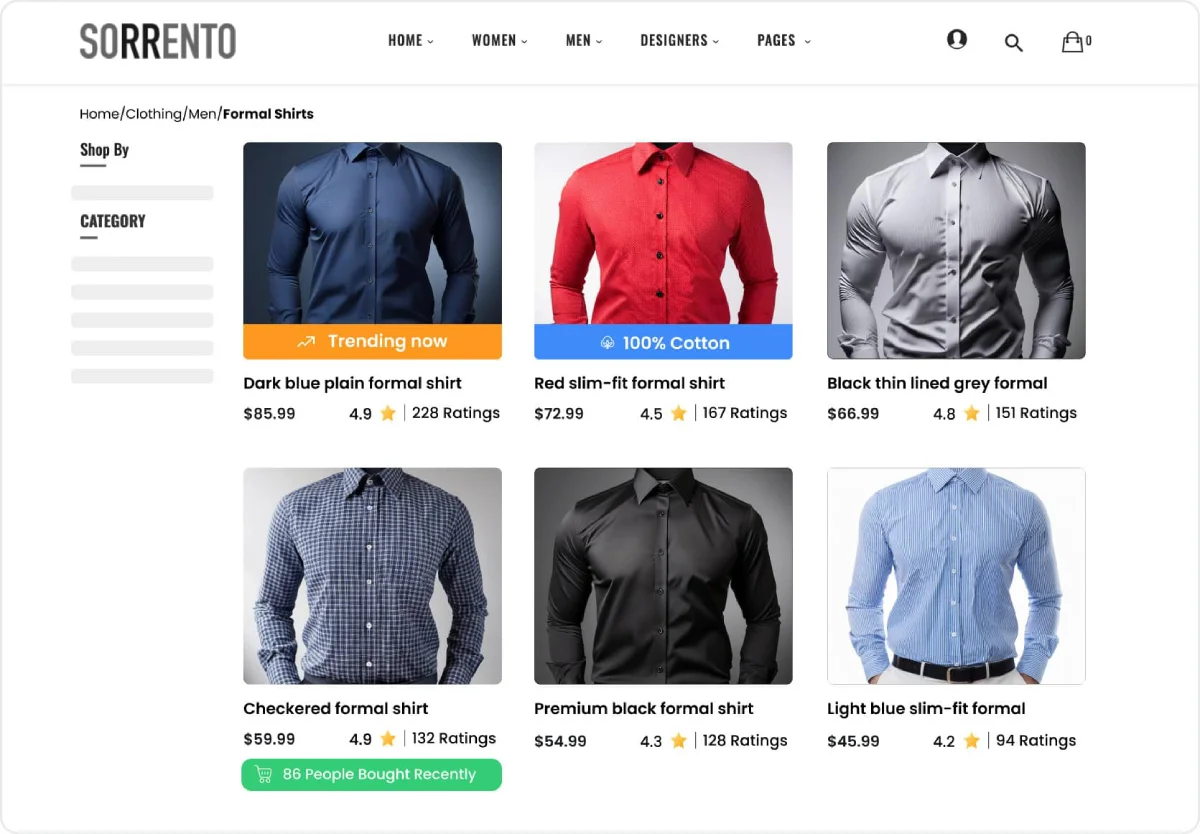
Category pages are often the first stop for shoppers. Displaying social proof messages elements like “Best Sellers,” “Trending Now,” or “100+ shoppers are viewing this” can help users make quicker, more confident browsing decisions.

  • Highlight Trending Products: “Trending Now”
  • Show Popular Products within Categories: “Best Sellers in Men’s Shoes”
  • Real-time Activity: “X people are viewing this item,” or “Y units sold in the last hour” to create a sense of urgency.
  • Scarcity: “Only X left in stock” messages to encourage immediate purchase.
  • Product Badging: Differentiating aspects of the products that reflect the brand, based on product attributes like “Cruelty-Free” or “100% Cotton”

2 2. Product Pages: Reducing Decision Anxiety

When shoppers land on a product page, they need reassurance. Incorporating social proof messages like “20 people purchased this today,” “Top sold item today,” or “100+ people added this to their cart” provides the nudge they need to proceed to checkout.

  • Display Real-Time Activity: “120 people are viewing this item right now”
  • Show Recent Purchases: “8 people purchased in last 1 hour”
  • Highlight Product Popularity: “Top seller today” or “Top sold item this week”
  • Product Badging: Attributes of the product such as“Organic” or “Eco-friendly”, “Waterproof” or promotions such as“Exclusive Offer” or “One-Time Deal”
  • Showcase Star Ratings and Reviews: “4.8 out of 5 stars based on 150 reviews”
  • Display Stock Availability: “Only 3 left in stock!”

3 3. Cart Pages: Preventing Abandonment

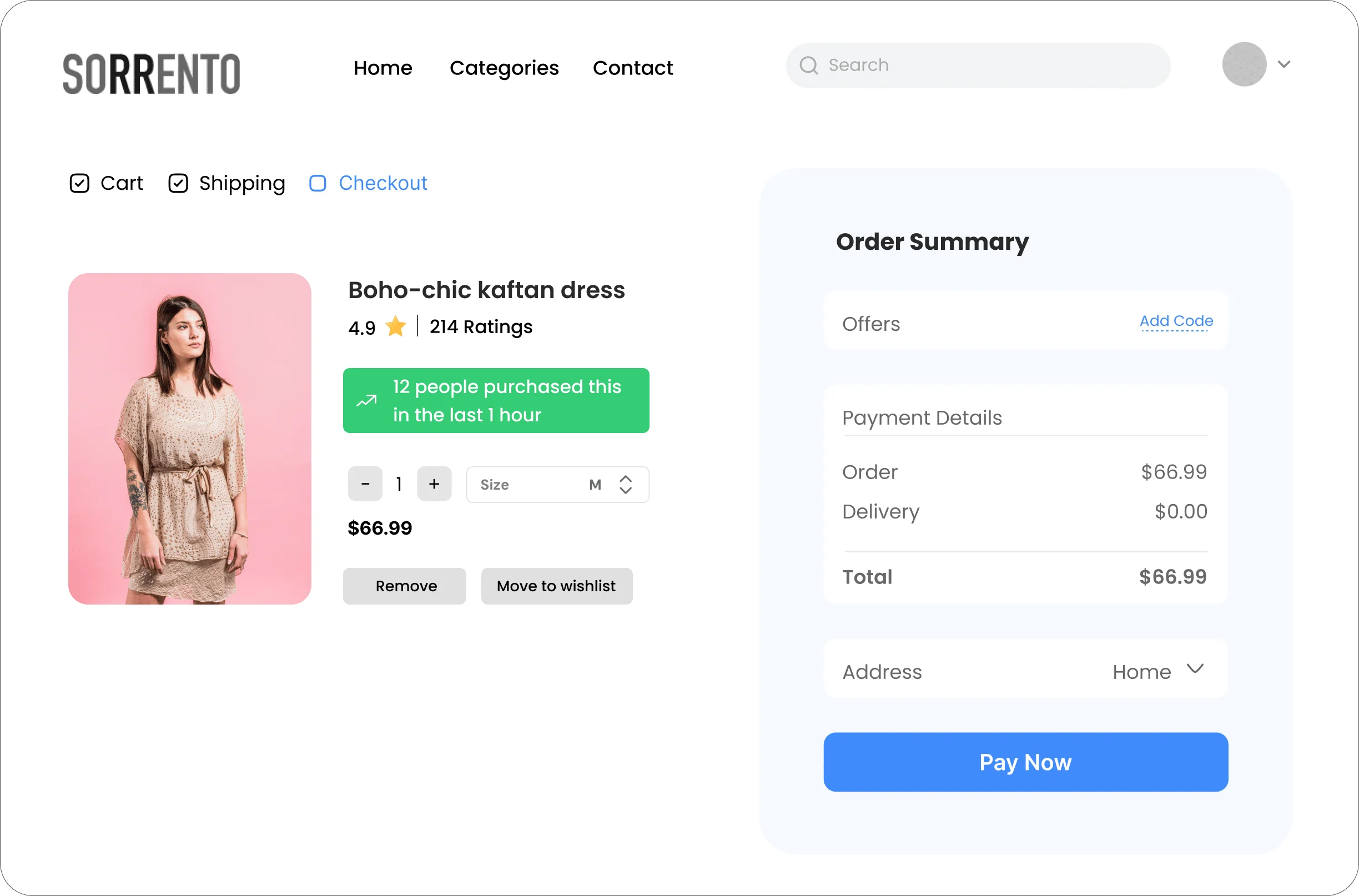
Cart abandonment is a major challenge in ecommerce. Social proof messaging software such as “Limited stock left,” “Selling fast,” or “12 people purchased in last 1 hour” help reinforce the decision to buy and reduce second-guessing.

  • Reinforce Purchase Decisions: “X people have this item in their cart” or “X people purchased in the last 1 hour”
  • Create Urgency: “Limited stock available – only X left!”
  • Badging Based on Attributes or Offers: “Limited Time Offer”

4 4. Recommendation Sections: Increasing AOV (Average Order Value)

When social proof is applied to personalized product recommendations and contextual recommendations, shoppers are more likely to engage with them and click through.

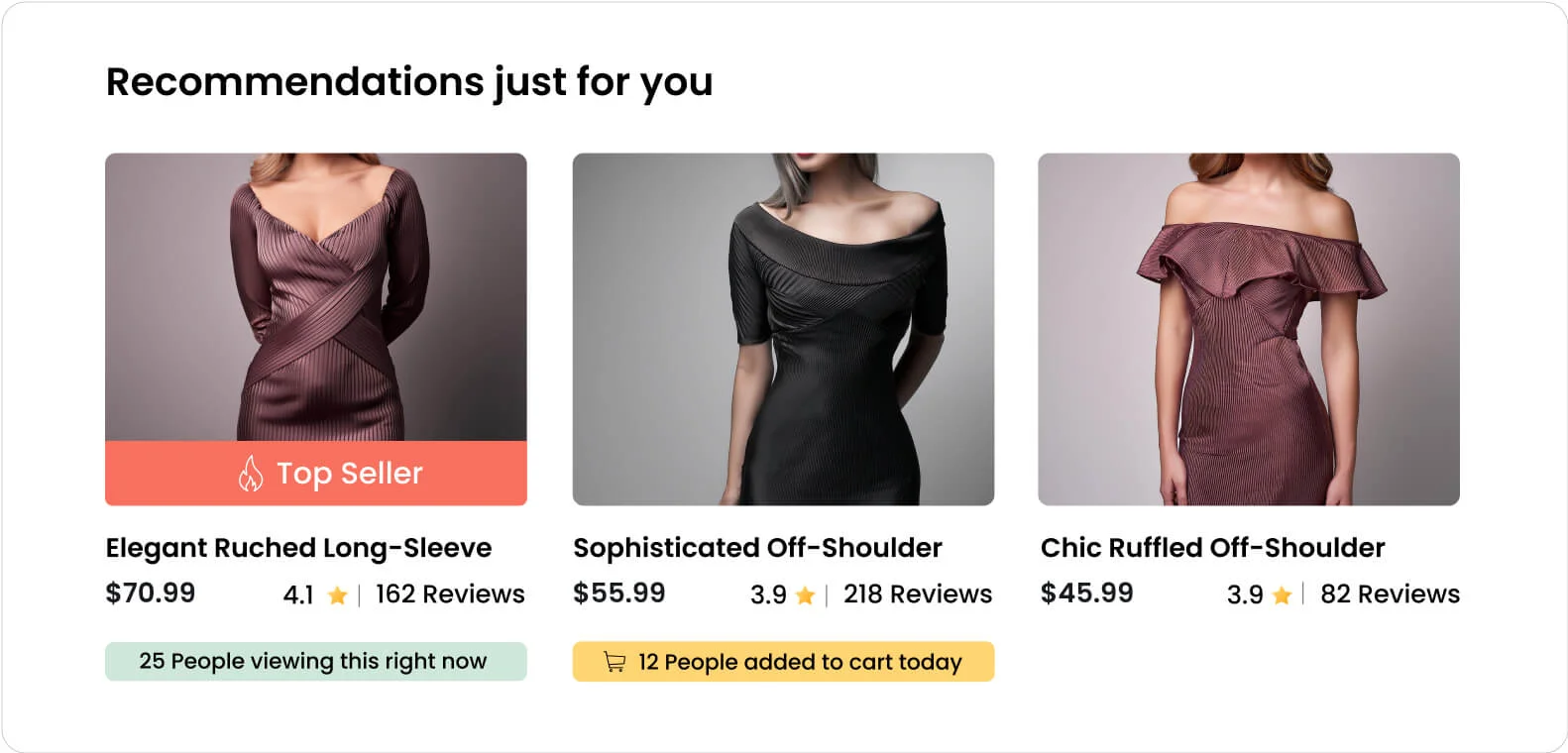
  • Number of Sales: “X people have bought this product in the last 24 hours.”
  • Trending Products: “This product is trending in your region.”
  • Community Proof: “Join our community of X satisfied customers.”
  • Limited-Time Offers: “Get it now while supplies last!”
  • Product Badging: Differentiating or promotional aspects of the products, such as “Top Seller”.

How to Implement Full-Funnel Social Proof Effectively

Social proof is powerful, but it’s not a one-size-fits-all strategy. You need to tailor your social proof messaging to each page type. Even if you’re highlighting the same metrics, adapt the wording to fit the specific context of the product listing page or product recommendations section. Avoid repeating the same social proof message across multiple locations. Even if you’re boasting about the same great stats, tweak the wording to make it relevant to where the customer is in their shopping experience.

  • Use Real-Time Data: Ensure that social proof messages are dynamically updated to reflect real shopper behavior.
  • A/B Test for Effectiveness: Continuously measure the impact of different social proof messages on conversion rates.
  • Ensure a Seamless Experience: Keep messaging consistent across all touchpoints to build trust and prevent confusion.

Conclusion

A full-funnel approach to social proof messaging can significantly enhance shopper confidence, reduce hesitation, and boost conversions. By implementing real-time social proof software across category pages, product pages, cart pages, and recommendations, brands can create a more compelling and persuasive shopping experience.

Ready to supercharge your ecommerce with a full-funnel social proof messaging strategy and skyrocket your sales?

Request a demo now!
Table of Contents
Why Full-Funnel Social Proof Messaging Matters for Shoppers (and Your Bottom Line)
Creating a Full-Funnel Social Proof Strategy
How to Implement Full-Funnel Social Proof Effectively
Conclusion

From Ordinary to Exceptional: Ensemble AI’s 3 Tactics for Retail Success

Digital Experience Personalization
Blogs

From Ordinary to Exceptional: Ensemble AI’s 3 Tactics for Retail Success

Think of the timeless tale of Indiana Jones, where every clue and ancient relic brings him closer to the ultimate treasure. In retail, each innovation in customer experience acts as a clue leading businesses toward success. Much like Jones decoding ancient maps, retailers must navigate shifting consumer expectations and competitive landscapes. Advanced personalization through solutions like Ensemble AI is one of the most powerful tools in this quest, helping retailers uncover new opportunities for engagement and revenue growth.

Meet Ensemble AI

Ensemble AI is a groundbreaking merchandising solution that redefines product discovery optimization by acting as an AI-powered personal stylist. Going beyond traditional recommendations like “similar products” or “people also bought,” Ensemble AI curates complete, visually appealing ensembles tailored to each shopper’s preferences.

With just a few clicks at the backend to define styles, the AI seamlessly generates stunning combinations that can be showcased across key touchpoints like home pages, product detail pages, and emails. This innovative approach simplifies the shopping journey, drives higher conversions, boosts average order value, and delivers measurable business impact across verticals like fashion, beauty, home decor/furniture, and electronics.

Let’s delve into some transformative tactics powered by Ensemble AI that enrich customer experience and elevate your retail strategy. Each tactic is illustrated with a specific industry example, showcasing how retailers across verticals can leverage Ensemble AI to drive business growth.

Let’s delve into some transformative tactics powered by Ensemble AI that enrich customer experience and elevate your retail strategy. Each tactic is illustrated with a specific industry example, showcasing how retailers across verticals can leverage Ensemble AI to drive business growth.

Crafting Stunning Product Ensembles to Deepen Customer Engagement

Fashion

Consider Sara, a loyal customer who visits your online fashion and apparel store. She has a keen eye for trends and often explores new arrivals and seasonal collections. Over time, Sara’s browsing history and purchase patterns have revealed her preferences for specific sizes, colors, and categories, with a particular affinity for elegant and chic styles.

While shopping today, Sara found a beautiful pink dress that caught her eye. She spends a few minutes on the product page, viewing the dress from all angles and reading about it. She can envision herself wearing it to an upcoming special occasion. She scrolls down and sees similar dresses under ‘You Also Might Like,’ but her heart is set on this pink dress. What is she going to pair the dress with, she wonders. What about footwear, jewelry, and accessories? She hovers over the ‘Add to Cart’ button but feels unsure. With no inspiration in sight, she decides to leave without making a purchase.

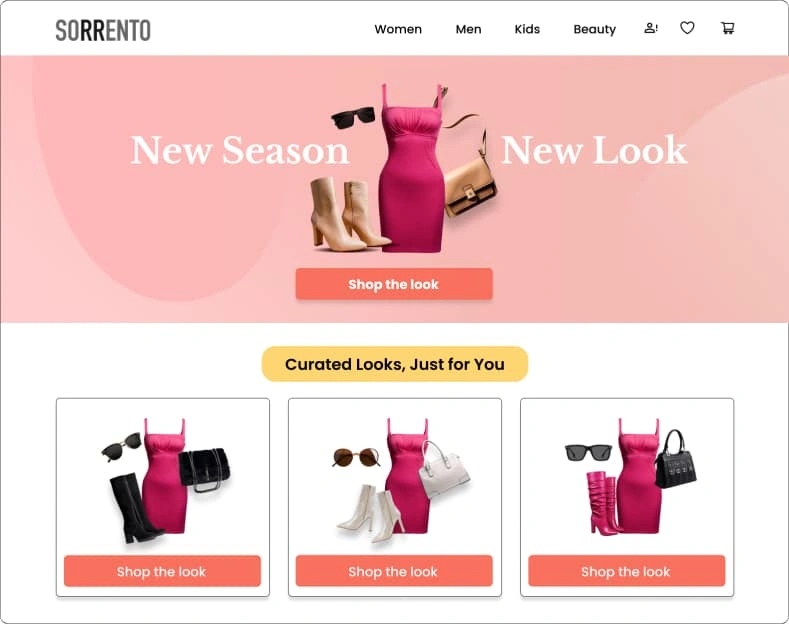
Upon her next visit, she notices that the home page recommends stunning ensembles, each featuring the pink dress she had previously considered! While all the outfits perfectly suit her style, one particular ensemble catches her eye. It combines the pink dress with tinted sunglasses, a white bag and high ankle boots. Enthralled by the thoughtful pairing, she quickly adds the entire ensemble to her cart and completes her purchase, excited for her new look.

This shift from indecision to excitement is made possible by Ensemble AI, which automatically curates ensembles using complementary color detection, natural language processing, co-occurrence and shopper affinity data, and purchase trends. Instead of merchandisers manually assembling outfits, AI does the heavy lifting, ensuring every recommendation is on-trend and visually appealing. This approach captivates Sara and makes her shopping experience more interactive and enjoyable, encouraging her to explore and engage further with the brand.

Increasing Average Order Value (AOV) with Smart Product Bundles

Beauty & Wellness

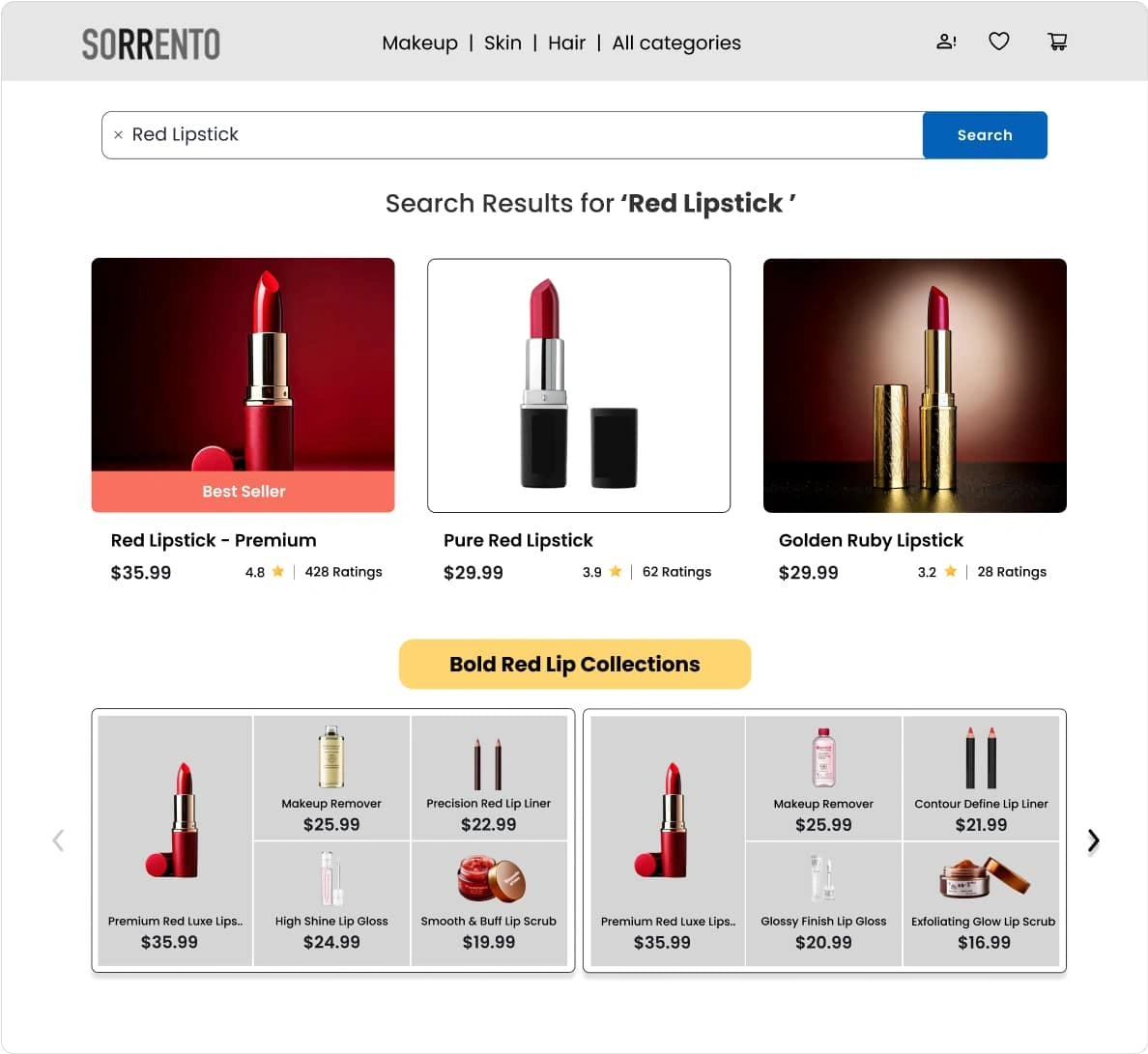
Picture Mia, a beauty enthusiast searching for the perfect red lipstick. In addition to suggestions for the best-suited lipstick, her search results feature expertly curated collections that complete her look: a matching lip liner for precision, a hydrating lip scrub for a smooth base, a nourishing lip gloss for added shine, and a gentle makeup remover for easy wear.

Personalized product recommendations by Ensemble AI go beyond simple bundling. Here, AI understands that lip care is an essential part of a flawless lipstick application, ensuring that Mia sees the perfect prep and finishing touches.

This approach ensures that:

  • Bundles are relevant and compelling, increasing cross-sell opportunities.
  • Merchandising teams can define, refine, and automate these bundles with ease.
  • Data-driven insights help retailers track engagement, orders, and add-on sales to optimize future recommendations.
  • Shoppers experience a frictionless journey where product discovery feels seamless and intuitive.

By integrating these one-to-one personalization recommendations into the shopping journey, retailers can significantly increase the likelihood of multiple-item purchases, boosting average order value (AOV) while enhancing the overall customer experience.

Maximizing Digital Shelf Space to Inspire Confident Purchases

Home Decor and Furnishings

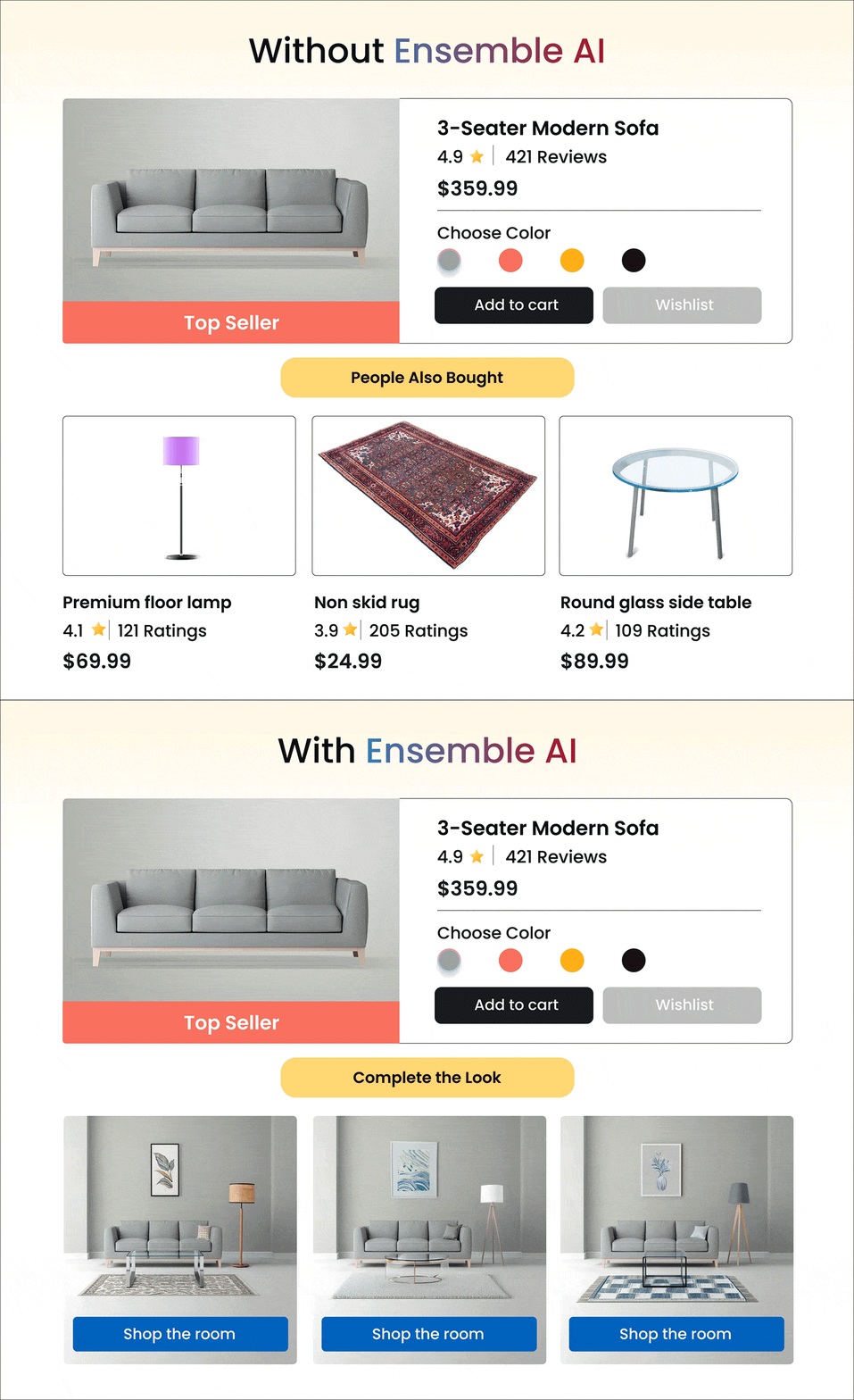
Imagine Emily, a shopper, redecorating her living room. As she browses your home décor e-store, a curated “Shop the Room” collection catches her eye—a complete living room ensemble featuring a plush gray sofa, a chic glass coffee table, a coordinating area rug, accent pillows, and elegant wall art. Each item is thoughtfully selected to harmonize in style and color, creating an inviting and cohesive space.

Now, compare this with traditional recommendations, where Emily might see individual items in a “People also bought” section under the gray sofa’s product overview. That approach uses the same digital shelf space yet delivers only 3–5 items in isolation. By contrast, “Shop the Room” ensembles showcase a cohesive collection of complementary products in one screen, maximizing Emily’s exposure to multiple items at once.

This visually stunning presentation makes it effortless for Emily to envision how the items would look together in her own home. She quickly adds the entire ensemble to her cart, confident in her decision to bring this aesthetic into her living space.

This strategic use of screen real estate not only simplifies Emily’s shopping journey but also delivers significant benefits for the retailer. By dynamically creating visually compelling collections, Ensemble AI maximizes ecommerce personalization exposure, drives higher conversion rates, and improves inventory turnover—all while creating a more engaging and personalized shopping experience.

The Power of Ensemble AI

By incorporating Ensemble AI into your digital commerce strategy, you can unlock many benefits:

Real-Time Adaptation: The ensembles are continuously updated to reflect the latest trends and shopper behaviors, ensuring relevance and freshness. By tailoring recommendations based on individual real-time customer profile data, retailers can deliver personalized experiences at scale.

Smart Merchandising: The system enhances product presentation through visually appealing and contextually relevant ensembles. Showcasing complete, cohesive outfits elevates the shopping experience and encourages customers to add more items to their carts—increasing cross-sell and upsell opportunities.

Increased Efficiency: Automating product ensemble creation saves merchandisers time and resources. Retailers can reduce their reliance on expensive stylists, particularly in industries like fashion, streamlining the curation process while maintaining high-quality styling standards.
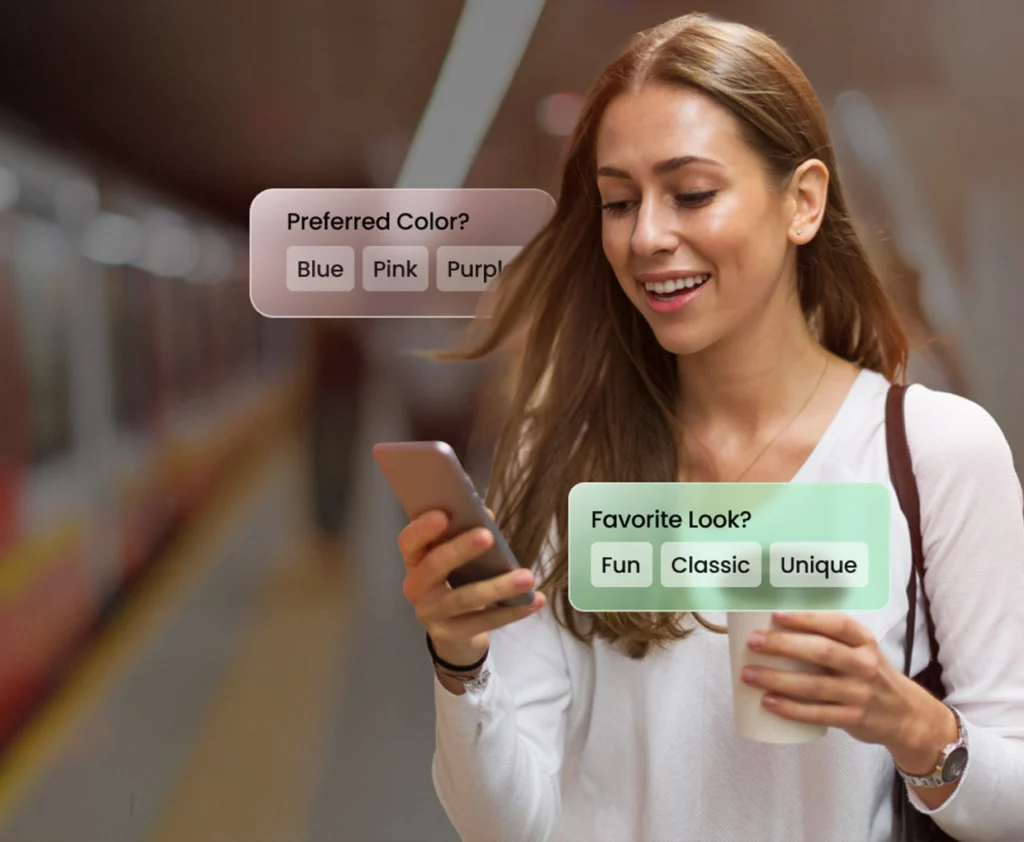

With these capabilities, Ensemble AI empowers retailers to create seamless, personalized ecommerce experience and engaging shopping experiences that drive significant business growth.

Conclusion

Advanced AI functionalities offer the tools and insights needed to transform the shopping experience from mundane to magical. By leveraging advanced AI models and real-time data, Ensemble AI creates perfectly curated product ensembles that captivate shoppers and drive significant business growth. This means increased engagement, higher AOV, and enhanced customer loyalty. With ADA Global’s Ensemble AI, the future of shopping is not just personalized—it’s perfectly tailored for success.

Ready to harness the power of Ensemble AI to boost AOV and transform customer experience?

Request a demo today
Table Of Contents
Crafting Stunning Product Ensembles to Deepen Customer Engagement
Increasing Average Order Value (AOV) with Smart Product Bundles
Maximizing Digital Shelf Space to Inspire Confident Purchases
The Power of Ensemble AI
Conclusion

Guided Selling Meets Personalization: The Future of Digital Commerce

Digital Experience Personalization
Blogs

Guided Selling Meets Personalization: The Future of Digital Commerce

As per Gartner® in the Hype Cycle™ for Retail Technologies, 2024 Research, “to navigate a disruptive and unpredictable digital business environment, retailers need to invest in innovative technology that improves insight and supports unified commerce operations.”

As per the Gartner® report, “Algorithmic retailing connects big data to results, helping retailers navigate from descriptive to prescriptive analytics. It includes identifying data sources, data fabric and advanced analytics, and applying mathematical algorithms that will lead to highly repeatable business processes. It requires AI to drive effective decision making and robotic and hyperautomation to drive execution.” According to Gartner’s estimation of Market Penetration, “More than 50% of target audience have adopted some form of algorithmic optimization applications.” 1

Two technologies in particular are game-changing according to us – Guided Selling Assistants and Personalization Engines. While guided selling assistants are transforming the way customers navigate product choices, personalization engines use data to make every customer interaction feel uniquely relevant.

Leading Innovation in Digital Commerce

  • ADA Global is listed as a Sample Vendor for Algorithmic Retailing category in the Gartner® Hype Cycle™ for Retail Technologies, 2024 report.
  • ADA Global is listed as a Sample Vendor for Guided Selling Assistant category and Personalization Engines category in the Gartner® Hype Cycle™ for Digital Commerce, 2024 report.

In this blog post, we’ll explore these technologies in depth: how they work, what makes them important, and the benefits businesses can hope to drive out of them.

Revolutionizing Product Discovery with Guided Selling Assistants

Guided Selling Assistants are interactive tools for self-service product discovery. They use conversational interfaces, such as quizzes, to understand the needs of potential buyers, and guide them towards the most suitable products or solutions.

According to Gartner® in the Hype Cycle™ for Digital Commerce, 2024 – Gartner Research, “Guided selling assistants help buyers reduce research efforts and quickly identify suitable ranges of solutions”. Gartner® also states that, “Guided selling assistants improve conversion and AOV for digital commerce by making personalized recommendations based on buyer intent and preferences and providing rich content including text, images and video.”

In our experience, guided selling solution is quite compelling for a few different reasons:

Zero-Party Data
Guided selling assistants capture zero-party data through consumers’ responses, enriching user profiles. This enriched data is foundational for creating personalized experiences, improving recommendations, content, search, and other key touchpoints.

Enhanced Clienteling
Guided selling assistants act as virtual sales assistants, supporting in-store associates in recommending the perfect product to visitors. This is particularly valuable in categories with a vast range of products, where it can be challenging for sales associates to master every detail.

Gift Finder Applications
A common use case for guided selling assistants are gift finders, allowing people to shop for others by feeding in explicit data about the intended recipient’s preferences and the buyer’s budget, amongst other things.

For guided selling assistants to truly shine, they need to be supported by robust personalization capabilities. This is where personalization engines come into play. They provide the data-driven insights that enhance the guidance provided by these assistants, ensuring that the recommendations are not only accurate but also highly relevant to each individual user.

Integrating Personalization with Guided Selling solution for a Seamless Experience

Personalization Engines are sophisticated tools designed to enhance digital interactions by tailoring content, offers, search results, and recommendations to individual users based on their data and context. They use a blend of user behavior, contextual information, and advanced algorithms to create personalized experiences across various digital channels.

This directly complements the capabilities of Guided Selling Assistants, and helps maximize their customer value with two key ingredients – first-party user data and product data.

Is Nailing Personalization Getting Tougher?

Gartner stated that, “The 2024 Gartner®CMO Spend Survey reveals that personalization is currently the largest-reported capability gap, despite a 30% year-on-year increase in budget allocated to personalization efforts.” 2

Gartner notes, “As per the 2024 Gartner®CMO Spend Survey, organizations now allocate 26.8% of the entire marketing budget to personalization efforts, with technology accounting for the largest share of that budget (almost 20%).” 2

Gartner states, “According to the 2023 Gartner®Marketing Technology Survey, only 14% of marketing technology leaders say that they are utilizing their personalization platform’s capabilities.” 2


robust personalization platform relies on first-party customer data integrated from diverse sources to maintain relevance. The same data profile can be utilized by guided selling assistants and combined with explicit responses from the shopper to serve the most-suited recommendations. This enhances user experience and willingness to purchase.

For guided selling solution to be effective, organizations need accurate and enriched product data. Incomplete or outdated information can lead to suboptimal recommendations and user experiences. To address this problem, personalization engines leverage Generative AI to enrich product catalogs with attributes and descriptions.

Imagine a customer visiting an online store looking for a gift. The personalization engine uses data from previous interactions, browsing history, and contextual information (like recent searches or location) to tailor the options presented. When this customer engages with a guided selling assistant, the assistant leverages the data from the personalization engine to provide specific gift recommendations, ask targeted questions to narrow down choices, and suggest complementary items based on the customer’s preferences.

Conclusion

By combining the data-driven insights of personalization engines with the interactive, real-time support of guided selling assistants, businesses can create a seamless and engaging buyer journey that enhances conversion rates, boosts average order values, and elevates overall customer satisfaction.

ADA Global’s solutions excel in this integrated approach. Discover how we can help you achieve a more personalized, efficient, and impactful digital commerce experience.

Sources (Reports accessible to Gartner® subscribers only):

  1. Gartner, Hype Cycle™ for Retail Technologies, 2024, Sandeep Unni, 29 July 2024
  2. Gartner, Hype Cycle™ for Digital Commerce, 2024, Sandy Shen, 8 July 2024

GARTNER is a registered trademark and service mark of Gartner, Inc. and/or its affiliates in the U.S. and internationally, and HYPE CYCLE is a registered trademark of Gartner, Inc. and/or its affiliates and are used herein with permission. All rights reserved.

Gartner does not endorse any vendor, product or service depicted in its research publications, and does not advise technology users to select only those vendors with the highest ratings or other designation. Gartner research publications consist of the opinions of Gartner’s research organization and should not be construed as statements of fact. Gartner disclaims all warranties, expressed or implied, with respect to this research, including any warranties of merchantability or fitness for a particular purpose.

Table Of Contents
Revolutionizing Product Discovery with Guided Selling Assistants
Integrating Personalization with Guided Selling solution for a Seamless Experience
Conclusion

The Social Proof Advantage: Elevate Your Ecommerce Game

Digital Experience Personalization
Blogs

The Social Proof Advantage: Elevate Your Ecommerce Game

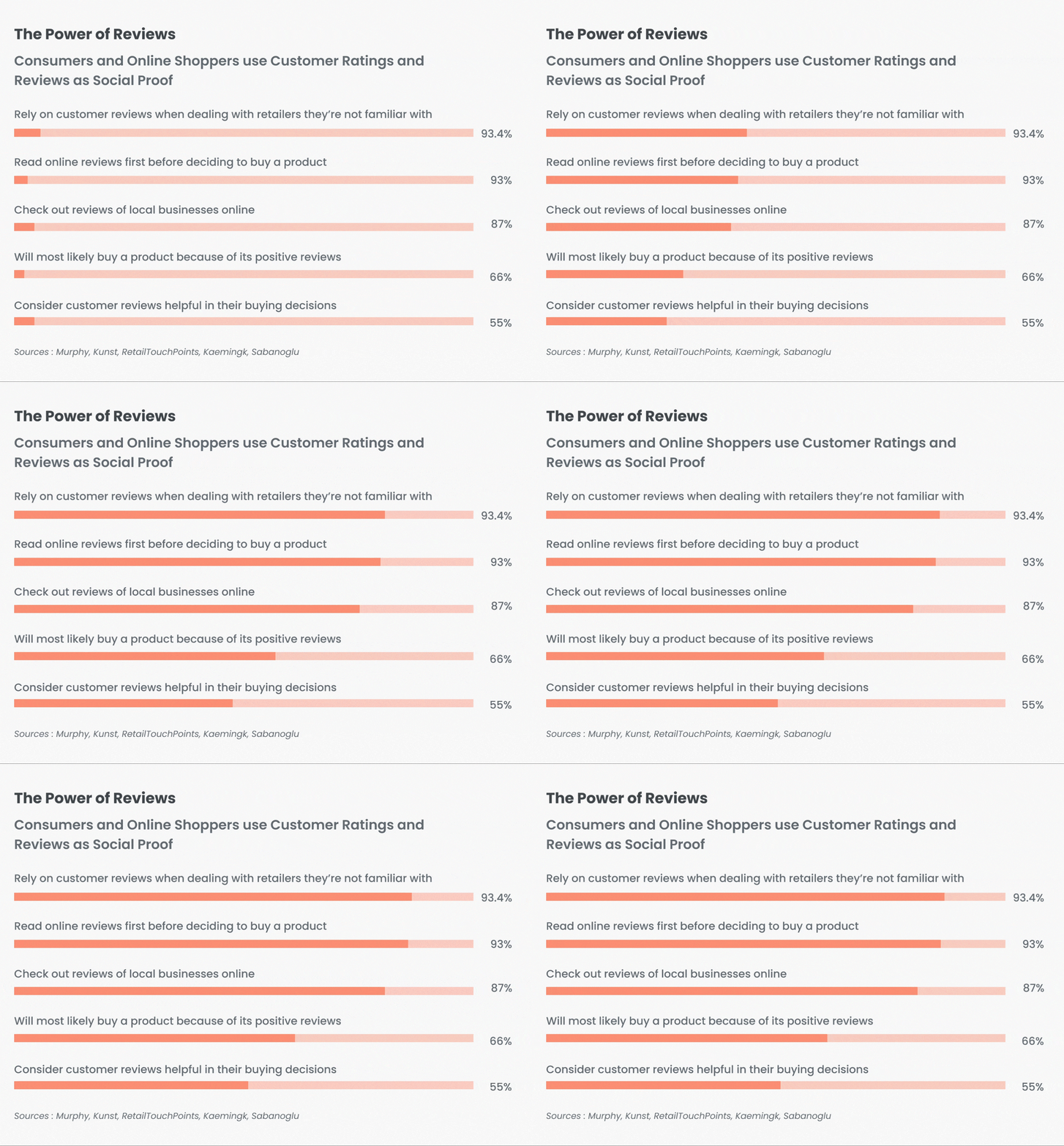
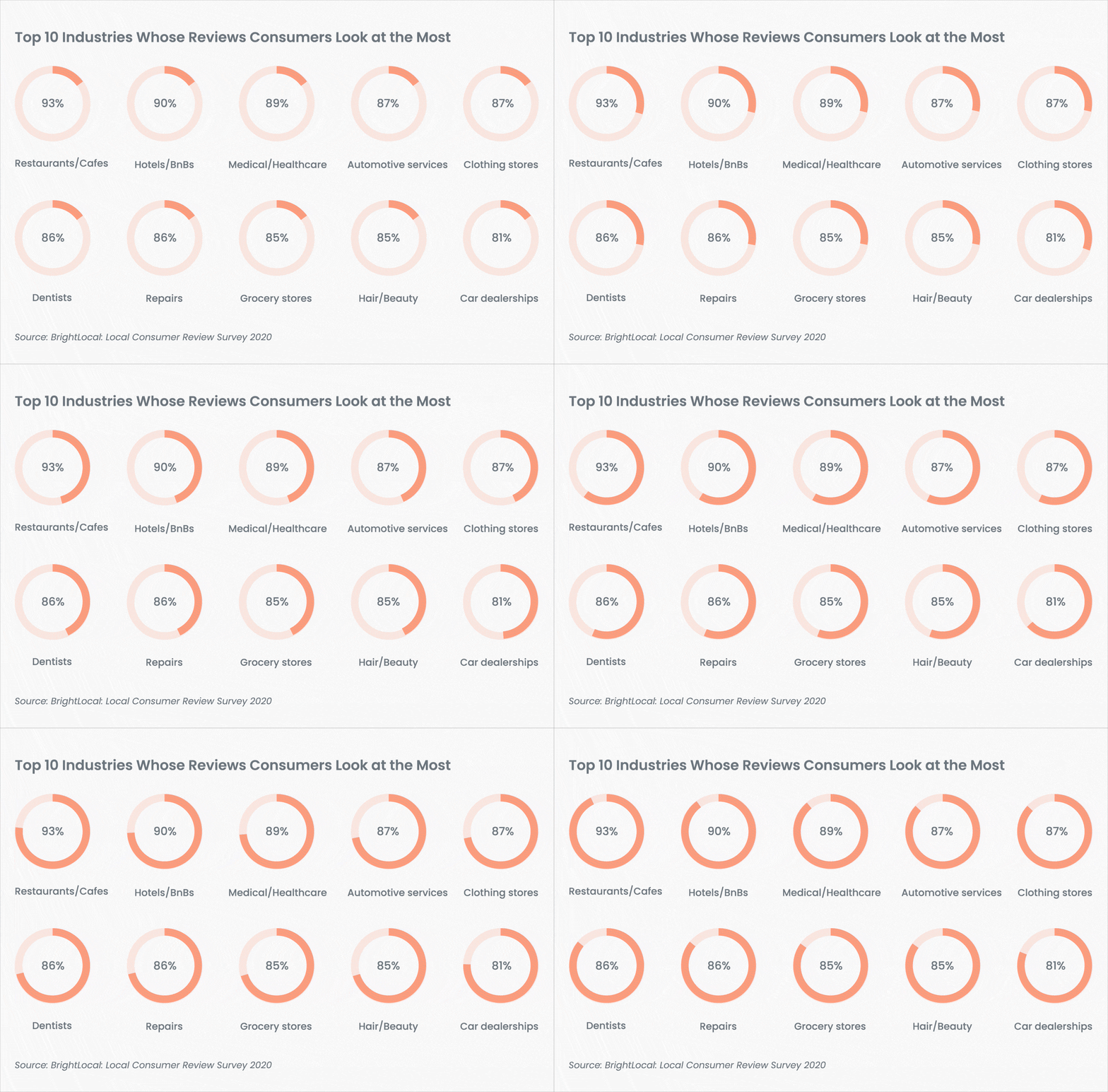
Did you know that 95% of online shoppers rely on reviews before making a purchase?1

As in offline shopping, the power of ‘me too’ and ‘pull of the crowd’ in ecommerce is tremendous. Marketers have long capitalized on this persuasion tactic, even before Robert Cialdini introduced the concept in 1984 in his book Influence: Science and Practice.

In his research, Robert found that when we are indecisive about expected behavior in a certain situation, we look to other people to guide us towards action. He called this psychological and social phenomenon ‘Social Proof’.

Today, when shoppers are overwhelmed with a number of choices, social proof in the form of reviews, ratings, trends, community etc. instills confidence in them and nudges them to make a purchase.


Think about…

major purchases you’ve made over the past year. You’ll see that making a purchase is a journey, not a spur-of-the-moment event. Each step brought you closer to that “no-brainer” decision that just felt right, and social proof played a crucial role in guiding you there.

Is Social Proof Effective?

In the bustling world of ecommerce, where competition is fierce and customer attention spans are short, leveraging social proof can be a game-changer. But does it really work? The benefits of social proof are well-documented.

Builds Trust & Authenticity
User-generated content like reviews and testimonials add credibility, as they come from real customers. This is especially important for millennials who value authenticity.

Reduces Perceived Risk
Social proof lowers perceived risk by demonstrating positive experiences from others. For instance, a testimonial from a traveler can reassure potential visitors and increase their confidence in booking a trip.

Boosts Conversions
Research shows testimonials can increase conversions by 34%, while reviews can lift them by 270%.2 Social proof can also create a sense of urgency and push people to buy.

Unsurprisingly, reviews are among the most popular forms of social proof.


Four out of five consumers have changed their minds about a recommended purchase after reading negative online reviews.
Source: Cone Survey

Online product reviews can result in an uplift of an impressive 270% in purchase likelihood.
Source: Spiegel Research Center

Common Types of Social Proof Messaging

By creatively and soundly displaying social proof, ecommerce managers can stack the deck in their favor and gain more sales.

Testimonials
Featuring testimonials from satisfied customers can provide authentic voices that potential buyers relate to.

Popular Products
Showcasing best-selling items or trending products highlights what’s in demand and taps into the consumer’s desire to be part of a current trend.

Social Media Engagement
Displaying metrics such as follower counts, likes, and shares can showcase active engagement and a loyal customer base.

Star Ratings
Star ratings offer potential buyers a simple way to gauge a product’s quality and performance. They are widely used due to the ease of providing and interpreting them.

Customer Reviews
Positive reviews can reassure, while negative feedback can help manage expectations.

User-Generated Content
Showcasing photos, videos, or social media posts from customers who have purchased the product can provide real-life context and authenticity.

Trust Signals
Including security badges, verified payment methods, and privacy assurances can build trust and make customers feel secure about their transaction.

Social Proof for the Modern Customer

As the digital landscape evolves, so do the strategies to capture and retain customer attention. The types of social proof mentioned above are no longer differentiators when it comes to individualized experiences.

Did you know that 65% of consumers say their customer experience is ‘just okay’?3
Every experience feels the same, coming across as insipid and uninspired. Forrester calls this ‘Digital Sameness’.

By adding data-driven personalization to the mix, social proof can create highly personalized and impactful customer experiences.


Behavior-Driven Messaging

Implementing dynamic messages, such as “X people bought this item in the last hour,” can create a sense of urgency and encourage immediate action. This tactic leverages real-time data such as views, purchases, and adds to cart to enhance the relevance and impact of the message.

Scarcity and Popularity

Displaying messages like “Frequently bought together” or “Limited stock available” can prompt additional purchases or expedite decision-making. These elements can highlight the popularity and scarcity of items, encouraging customers to complete their purchase.

Product Badges

Help distinguish relevant products on item pages by creating visual emphasis with badges such as “Clearance Sale,” “Sustainable Material,” or “Locally Made”. These badges quickly convey important product attributes that can sway customers’ buying decisions.

Must explore social proof messaging use cases

Conclusion

Social proof is an invaluable tool in an ecommerce merchandising manager’s arsenal, capable of transforming visitor hesitation into confident buying decisions. By leveraging real-time metrics and product badges, ecommerce businesses can significantly boost their customer engagement and conversion rates. As competition in the digital marketplace intensifies, utilizing social proof effectively will be the key differentiator that drives sustained success for your brand.

Ready to embrace the power of social proof and watch your ecommerce venture thrive?
Request a demo today.


References:

  1. Brand Rated. 2022. “Nine Out of Ten Customers Read Reviews Before Buying a Product.” GlobeNewswire.
  2. Medill Spiegel Research Center. “How Online Reviews Influence Sales: Evidence of the Power of Online Reviews to Shape Customer Behavior.” Northwestern University.
  3. Forrester Research. 2011. “Forrester’s Customer Experience Index 2011.”
Table Of Contents
Is Social Proof Effective?
Common Types of Social Proof Messaging
Social Proof for the Modern Customer
Conclusion