
The Social Proof Advantage: Elevate Your Ecommerce Game

Digital Experience Personalization
Blogs

The Social Proof Advantage: Elevate Your Ecommerce Game

Did you know that 95% of online shoppers rely on reviews before making a purchase?1

As in offline shopping, the power of ‘me too’ and ‘pull of the crowd’ in ecommerce is tremendous. Marketers have long capitalized on this persuasion tactic, even before Robert Cialdini introduced the concept in 1984 in his book Influence: Science and Practice.

In his research, Robert found that when we are indecisive about expected behavior in a certain situation, we look to other people to guide us towards action. He called this psychological and social phenomenon ‘Social Proof’.

Today, when shoppers are overwhelmed with a number of choices, social proof in the form of reviews, ratings, trends, community etc. instills confidence in them and nudges them to make a purchase.


Think about…

major purchases you’ve made over the past year. You’ll see that making a purchase is a journey, not a spur-of-the-moment event. Each step brought you closer to that “no-brainer” decision that just felt right, and social proof played a crucial role in guiding you there.

Is Social Proof Effective?

In the bustling world of ecommerce, where competition is fierce and customer attention spans are short, leveraging social proof can be a game-changer. But does it really work? The benefits of social proof are well-documented.

Builds Trust & Authenticity
User-generated content like reviews and testimonials add credibility, as they come from real customers. This is especially important for millennials who value authenticity.

Reduces Perceived Risk
Social proof lowers perceived risk by demonstrating positive experiences from others. For instance, a testimonial from a traveler can reassure potential visitors and increase their confidence in booking a trip.

Boosts Conversions
Research shows testimonials can increase conversions by 34%, while reviews can lift them by 270%.2 Social proof can also create a sense of urgency and push people to buy.

Unsurprisingly, reviews are among the most popular forms of social proof.
 

Four out of five consumers have changed their minds about a recommended purchase after reading negative online reviews.
Source: Cone Survey

Online product reviews can result in an uplift of an impressive 270% in purchase likelihood.
Source: Spiegel Research Center

Common Types of Social Proof Messaging

By creatively and soundly displaying social proof, ecommerce managers can stack the deck in their favor and gain more sales.

Testimonials
Featuring testimonials from satisfied customers can provide authentic voices that potential buyers relate to.

Popular Products
Showcasing best-selling items or trending products highlights what’s in demand and taps into the consumer’s desire to be part of a current trend.

Social Media Engagement
Displaying metrics such as follower counts, likes, and shares can showcase active engagement and a loyal customer base.

Star Ratings
Star ratings offer potential buyers a simple way to gauge a product’s quality and performance. They are widely used due to the ease of providing and interpreting them.

Customer Reviews
Positive reviews can reassure, while negative feedback can help manage expectations.

User-Generated Content
Showcasing photos, videos, or social media posts from customers who have purchased the product can provide real-life context and authenticity.

Trust Signals
Including security badges, verified payment methods, and privacy assurances can build trust and make customers feel secure about their transaction.

Social Proof for the Modern Customer

As the digital landscape evolves, so do the strategies to capture and retain customer attention. The types of social proof mentioned above are no longer differentiators when it comes to individualized experiences.

Did you know that 65% of consumers say their customer experience is ‘just okay’?3
Every experience feels the same, coming across as insipid and uninspired. Forrester calls this ‘Digital Sameness’.

By adding data-driven personalization to the mix, social proof can create highly personalized and impactful customer experiences.


Behavior-Driven Messaging

Implementing dynamic messages, such as “X people bought this item in the last hour,” can create a sense of urgency and encourage immediate action. This tactic leverages real-time data such as views, purchases, and adds to cart to enhance the relevance and impact of the message.

Scarcity and Popularity

Displaying messages like “Frequently bought together” or “Limited stock available” can prompt additional purchases or expedite decision-making. These elements can highlight the popularity and scarcity of items, encouraging customers to complete their purchase.

Product Badges

Help distinguish relevant products on item pages by creating visual emphasis with badges such as “Clearance Sale,” “Sustainable Material,” or “Locally Made”. These badges quickly convey important product attributes that can sway customers’ buying decisions.

Must explore social proof messaging use cases

Conclusion

Social proof is an invaluable tool in an ecommerce merchandising manager’s arsenal, capable of transforming visitor hesitation into confident buying decisions. By leveraging real-time metrics and product badges, ecommerce businesses can significantly boost their customer engagement and conversion rates. As competition in the digital marketplace intensifies, utilizing social proof effectively will be the key differentiator that drives sustained success for your brand.

Ready to embrace the power of social proof and watch your ecommerce venture thrive?
Request a demo today.


References:

  1. Brand Rated. 2022. “Nine Out of Ten Customers Read Reviews Before Buying a Product.” GlobeNewswire.
  2. Medill Spiegel Research Center. “How Online Reviews Influence Sales: Evidence of the Power of Online Reviews to Shape Customer Behavior.” Northwestern University.
  3. Forrester Research. 2011. “Forrester’s Customer Experience Index 2011.”

Table Of Contents
Is Social Proof Effective?
Common Types of Social Proof Messaging
Social Proof for the Modern Customer
Conclusion

MLBased Replenishment Planning for Lower Inventory Costs

Merchandising and Supply Chain
Blogs

MLBased Replenishment Planning for Lower Inventory Costs

Poor cash flow, pressure from suppliers, locked-in capital, and high wastage – the list of disadvantages of poor replenishment can go on very long to become every retailer’s nightmare. Seasonality, multi-variate demand planning, multi-echelon inventories, inter-SKU effects, and lack of visibility over the supply side all can lead to an inventory fiasco that can erode capital at rocket speed. What makes the situation even scarier is the fact that carrying too much inventory spurs equally costly secondary challenges, like excessive obsolescence, pilferage, and ad-hoc expenses like maintenance, taxes, insurance, marketing, and more.

Stats reveal that the US retailers have $1.40 of inventory in stock for every dollar they make. Further, the annual additional cost of holding excess inventory ranges between 25% and 32%. Holding excess inventory directly leads to excessive debt servicing and lower gross margins, both of which inflate operational costs and degrade profitability. As tough as it might sound, taming the behemoth is just like dealing with a snowball – tackle it before it becomes too big!

Automation-powered accurate forecasting coupled with ML algorithms tuned to the retail nuances down to the product location level can reduce inventory distortions, stock issues, inventory investments, and wastage while improving inventory turnover, customer satisfaction, and shelf availability. Let’s examine how this happens, and how every retailer can make the most of it.

1. Automate Forecasting

Static demand planning and manual forecasting adjustments based on hunches or random variances can skew the inventory replenishment from the actual demand and fail to adapt to demand fluctuations. They have no room for anticipating, predicting, and aligning to supply chain disruptions, leading to bloated inventory, stock issues, and capital lock-ins.

On the other hand, intelligent demand forecasting solutions generate demand forecasts based on exhaustive data processing and analytics while factoring in significant & influential factors and the magnitude of their effects on AI.

They streamline supplier communication and collaboration, leading to smoother order fulfillment and reduced lead times. Studies reveal that AI-powered forecasting can reduce supply chain errors by 30 to 50%, shrinking lost sales by 65% and warehousing costs by 10 to 40%.

2. Inventory Replenishment Built on Top of Accurate Forecasting

It is important to understand inventory success as a cumulative result of multiple factors – replenishment built on top of accurate forecasting stemming from exhaustive, intelligent, and ML-powered data analytics and visualization. Achieving this is next to impossible with legacy models where retail data is siloed and every component works disparately.

AI/ML-based forecasting facilitates data-driven replenishment planning decisions in real-time by factoring in external as well as internal factors, which can directly slash stockouts, 70-90% of which are caused by poor stock replenishment. However, OOS management is not the only benefit.

Adaptive self-learning models can easily optimize replenishment plans by modeling variations in lead times, fill rates, and pending orders, which empowers retailers to adapt to supply chain disruptions. Further, they can plan for store-level as well as warehouse-level trends while incorporating a diverse set of constraints for each one of them, thereby unlocking accuracy at the hyperlocal level.

3. Incorporate Diverse Sales Influencers

Annually, $163 billion worth of inventory is discarded due to oversupply and damage. Further, retailers in the US alone lost a staggering USD 82 billion because of out-of-stock items. Failing to understand, identify, and adjust inventory plans to diverse sales influencers, such as weather, lead times, seasonality, storage capacity, microtrends, sales, etc., can directly impact sales contributing to markdowns, wastage, and customer loss.

ML-powered replenishment planning solution coupled with AI-driven forecasting leverages intelligent algorithms for diverse scenario modeling, allowing best-fit selection and tuning replenishment as per multiple sales influencers. Thus, retailers can optimize inventory from a single integrated interface and create dynamic order plans.

4. Capture Cannibalization

Events like sales, discounts, promotions, and new product introductions can cause sudden dips or spikes in certain product categories, or SKUs, causing adverse effects on sales and profits. Manual management in such cases comes with more ramifications as it is highly subjective and vulnerable to bias.

On the other hand, ML-driven replenishment solutions can effectively handle in-store product cannibalization. They can dynamically balance demand among products or competing SKUs, considering promotions and availability. Intelligent scenario modeling allows retailers to introduce new products with minimal distortions of effects on existing or incoming inventory.

Further, retailers can automatically adjust replenishment levels up or down to align with the shifting market, thereby keeping the profitability and sales intact. They can effectively optimize multi-echelon inventory across the entire supply chain and unlock greater savings, reduced inventory costs, and higher availability.

Investing in AI/ML-powered replenishment planning solutions comes with multiple benefits, including predictive alerts for days of stock, potential supply chain disruptions, and stock-related events. Such smart capabilities arm the retailers with the right arsenal to keep on catering to the volatile customer sentiments without ballooning inventory or having empty shelves, which paves the way for sustainable business growth and customer loyalty.

Table Of Contents
1. Automate Forecasting
2. Inventory Replenishment Built on Top of Accurate Forecasting
3. Incorporate Diverse Sales Influencers
4. Capture Cannibalization

Marketing Fireworks: Ignite Your 4th of July Campaigns

Digital Experience Personalization
Blogs

Marketing Fireworks: Ignite Your 4th of July Campaigns

Cue the fireworks and get ready to celebrate America’s birthday with a bang! The 4th of July is the ultimate summer extravaganza, where patriotism meets family fun, and barbecues light up backyards nationwide. It’s also a prime time for brands to tap into the festive spirit with sizzling sales, major clearance events, and the latest summer collections.

Independence Day isn’t just about fireworks and barbecues; it’s a prime shopping event. In 2023, consumers spent a whopping $9.5 billion on the 4th of July, up from $7.7 billion in 2022, and the trend shows no signs of slowing. From food and beverages to electronics, clothing, and home goods, spending spans various categories, making it a golden opportunity for marketers.

Before crafting your holiday marketing strategy, it’s essential to understand your shoppers—their buying habits, preferences, and behaviors. Personalize your approach to resonate with them on a personal level. To get you started, here are some key consumer trends for 2024 that you should consider when planning your Independence Day campaign.

It’s All About the Timing

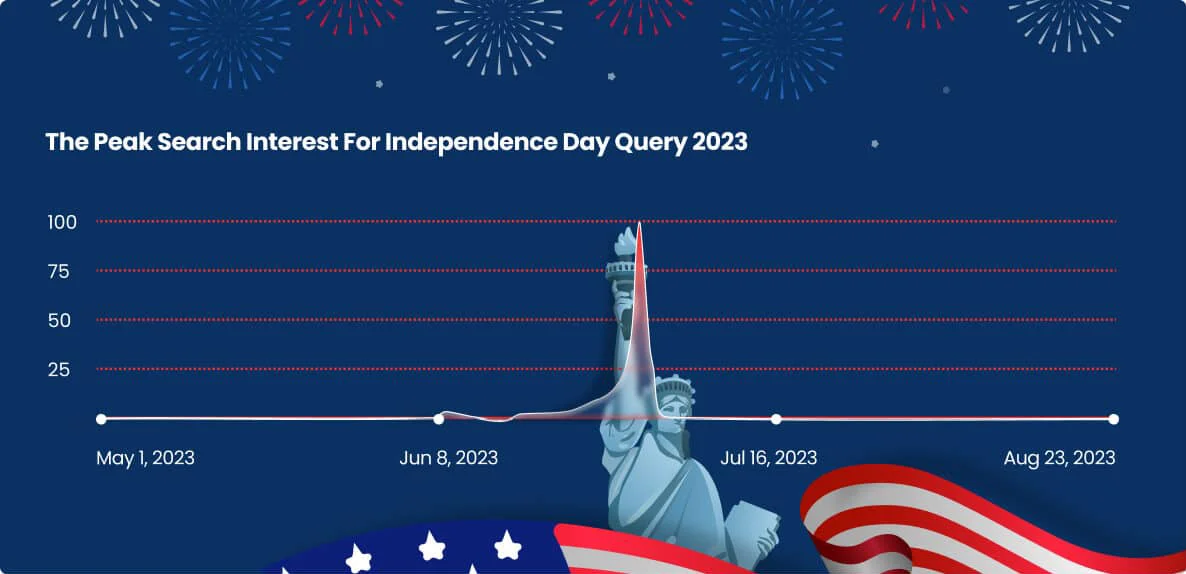
Timing is crucial for maximizing the impact of your 4th of July campaigns. Consumers begin their holiday research around mid-June, with interest peaking from July 1st to July 8th. To capture this audience, start building your campaign hype by mid-June.

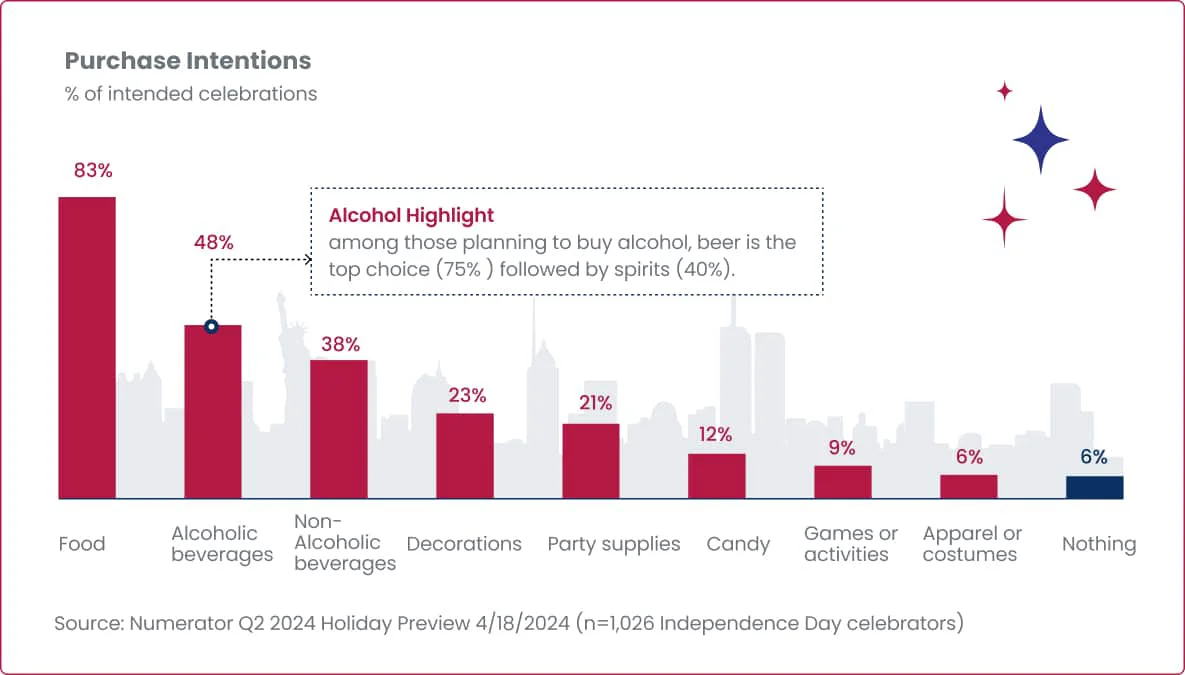
Top Spending Categories Include

  • Food: Essential for cookouts, barbecues, and picnics.
  • Alcoholic and Non-Alcoholic Drinks: Popular choices for celebrations.
  • Decorations and Party Supplies: Flags, Star-Spangled gear, and more.

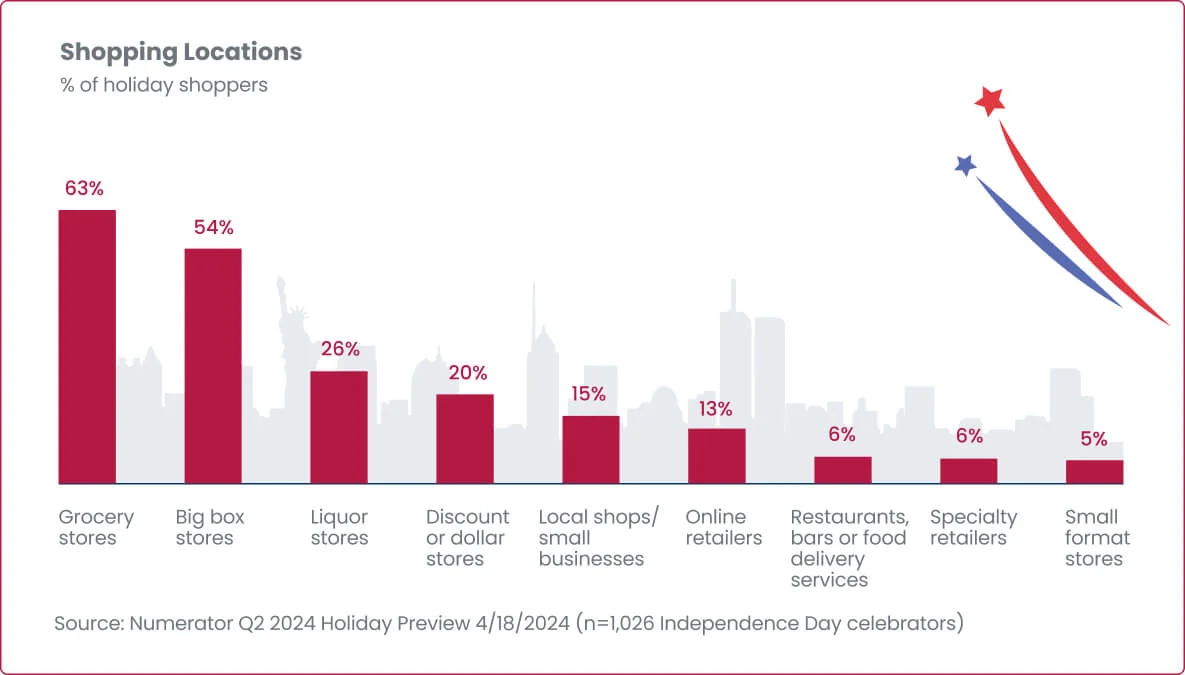
Additionally, grocery stores and big box retailers are poised to lead Independence Day sales. Over half of holiday shoppers expect to purchase their Independence Day supplies from one of these two channels.

Ada Global Tip:

A great customer engagement solution such as Audience Manager helps you segment audiences based on who purchased products from particular categories on the 4th of July last year so that you can retarget them for your 2024 Independence Day campaigns.

Now that you’re up to speed on the latest trends, it’s time to dive into effective strategies. Here are some winning tactics of successful brands to spark your 4th of July marketing efforts. This will help you harness the patriotic fervor to create impactful marketing campaigns that resonate with your customers and boost your sales.

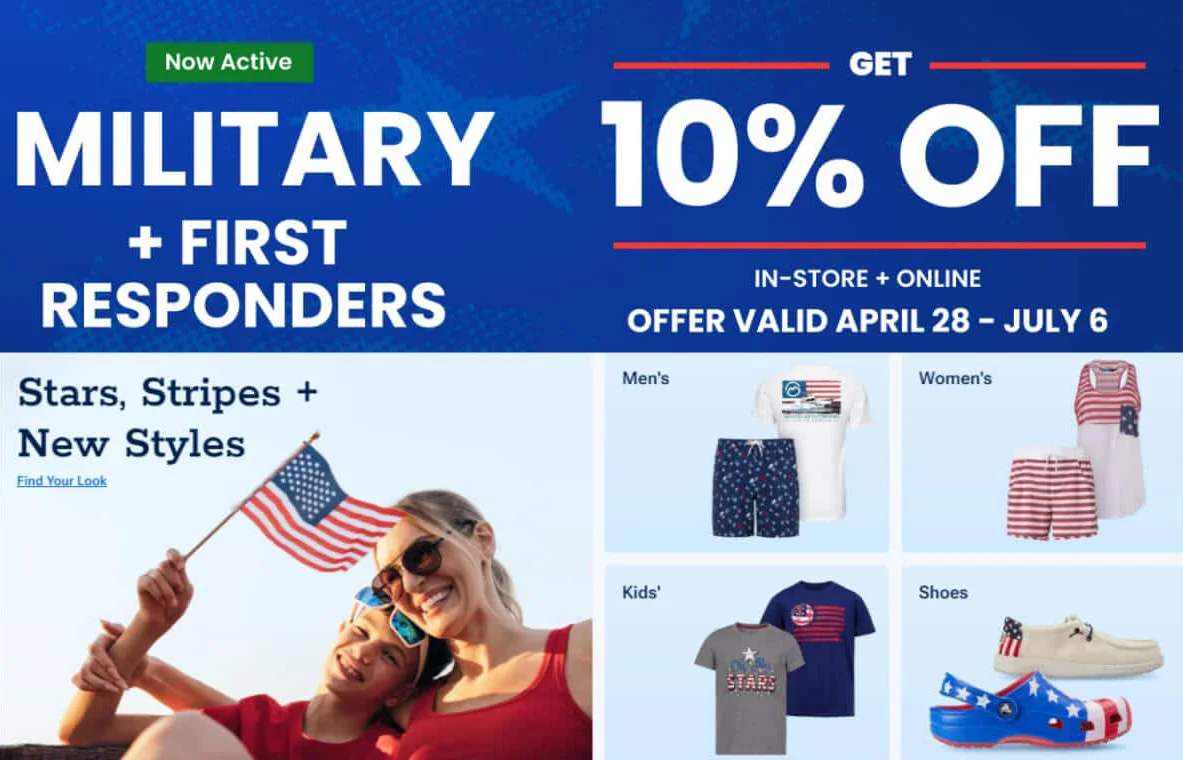
1. Academy Sports + Outdoors

Celebrate Independence Day by honoring the brave heroes who fought for our freedom. Your 4th of July campaigns can shine a spotlight on the armed forces in meaningful ways. Show your gratitude with exclusive deals. If you’re running an Independence Day sale, add an extra discount for current soldiers and veterans. It’s a small way to say a big thank you. You can also consider donating a portion of your sales to veteran organizations. Highlight this in your emails to connect with a broader audience and add a noble touch to your campaign, making it more than another sale.

Academy Sports + Outdoors embraces this heartfelt approach with their “You Serve, You Save” campaign. This initiative offers seasonal military discounts as a token of gratitude to active service members, veterans, and first responders. From April 28, 2024, to July 6, 2024, Academy provides a 10% discount on online and in-store purchases. This gesture reflects their commitment to honoring those who protect our nation and serve our communities. Various savings opportunities can also be explored on their main discounts page.

The company proudly acknowledges all active duty members and veterans from the Air Force, Army, Coast Guard, Marine Corps, Navy, and the Reserves and National Guard. Through this, Academy Sports + Outdoors not only boosts sales but also strengthens its connection with a crucial segment of the community.

Ada Global Tip:

Instead of showing the banner to each visitor, Academy Sports + Outdoors can segment the veterans and respondents and show them relevant offers. For others (civilians), you can personalize banners based on their known behavior and preferences with Engage™.

2. Kroger

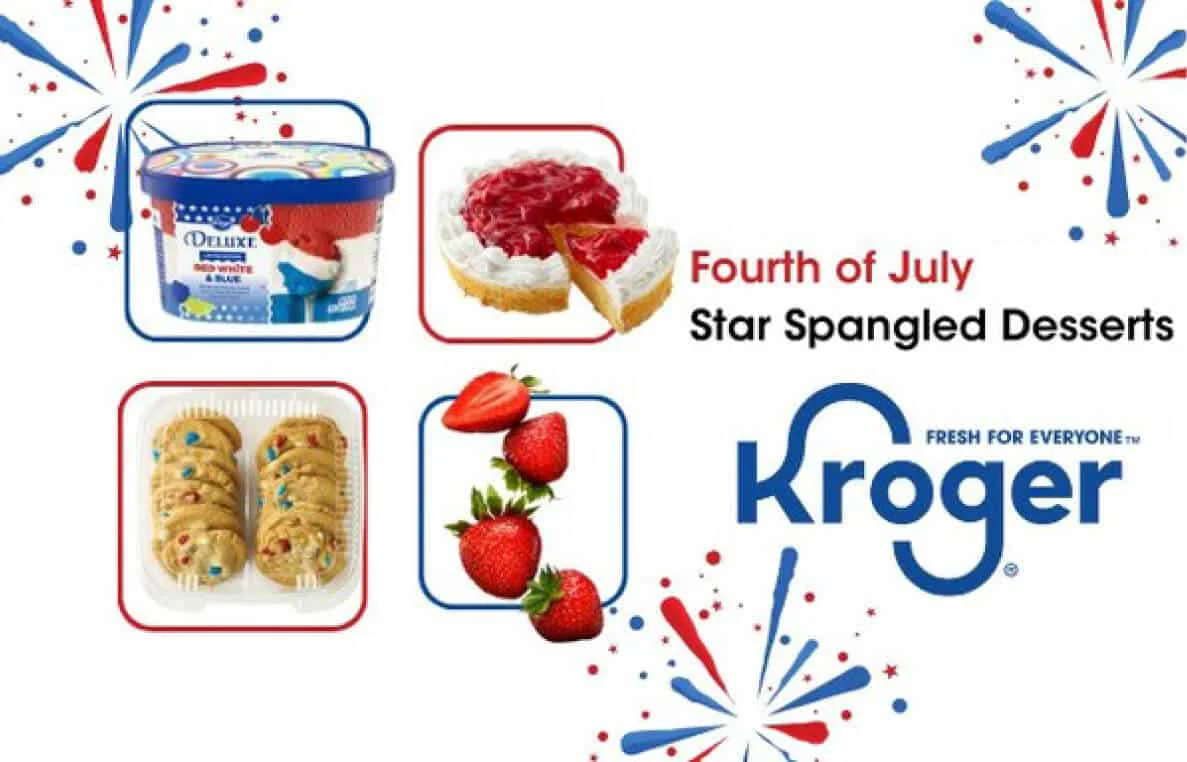
Kroger uses launching limited edition collections as a powerful strategy to create a sense of urgency and entice shoppers to buy, ultimately boosting sales. These exclusive products attract attention and encourage customers to make quick purchases to avoid missing out.

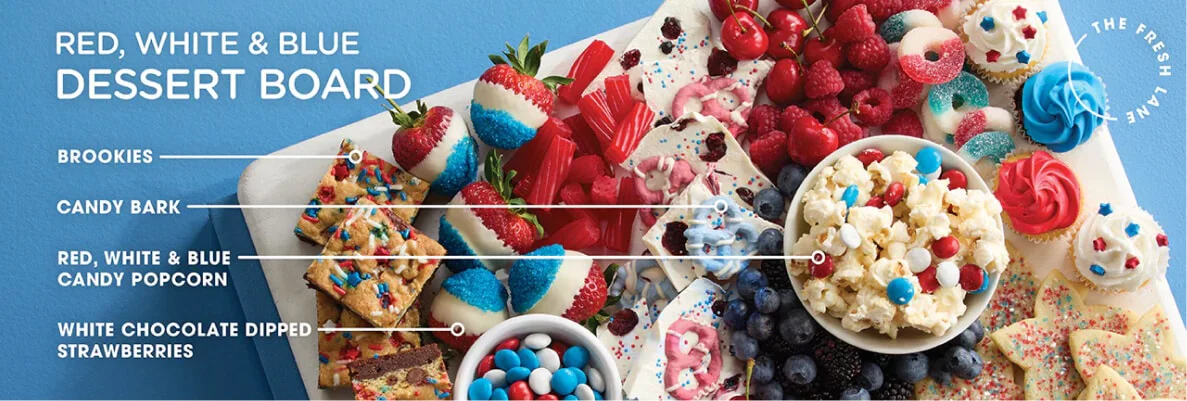
Kroger has effectively implemented this approach for Independence Day by launching limited edition collections that make holiday celebrations even more special. Kroger’s seasonal items, from star-spangled bakery treats to patriotic desserts, help customers celebrate in style. These limited-edition products create excitement and encourage festive gatherings.

To complete the Fourth of July experience, Kroger offers cooling treats like ice cream and popsicles, adding a refreshing touch to summer festivities. Additionally, DIY dessert ideas with seasonal fruits turn treat-making into a fun family activity, creating memorable moments.

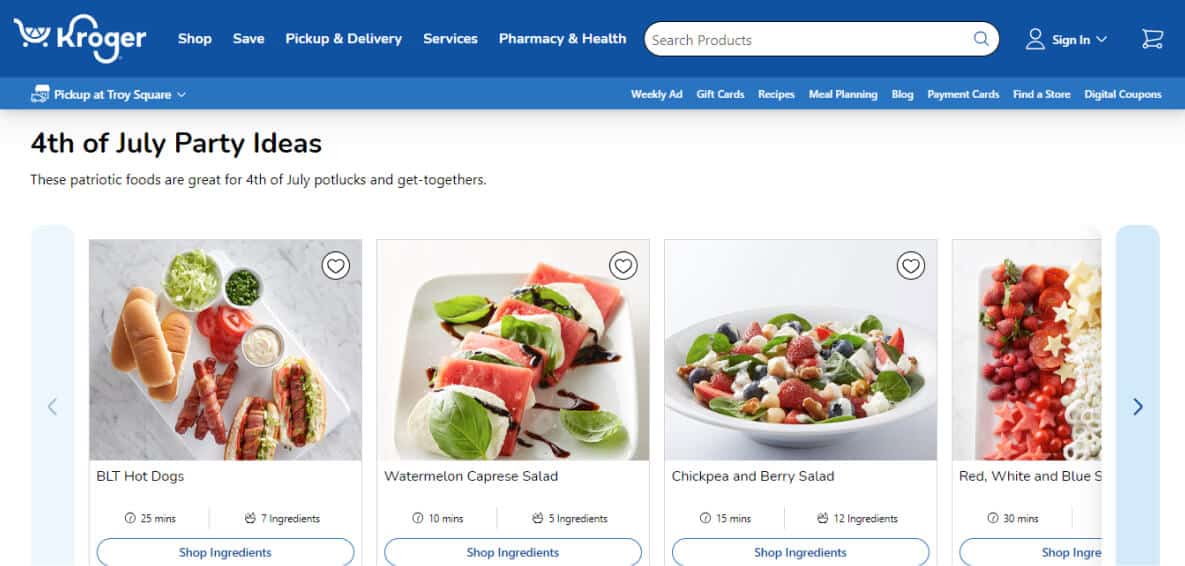
Customers can discover all their favorite sweet treats and summer essentials by shopping in-store, using Kroger Pickup, or opting for delivery with Boost by Kroger Plus.

Ada Global Tip:

Kroger can employ Social Proof Messaging to instill shopper confidence and trust with real-time visibility into trends, popularity, and purchase metrics, thus driving urgency and accelerating purchase decisions, thus improving conversion.

3. World Market

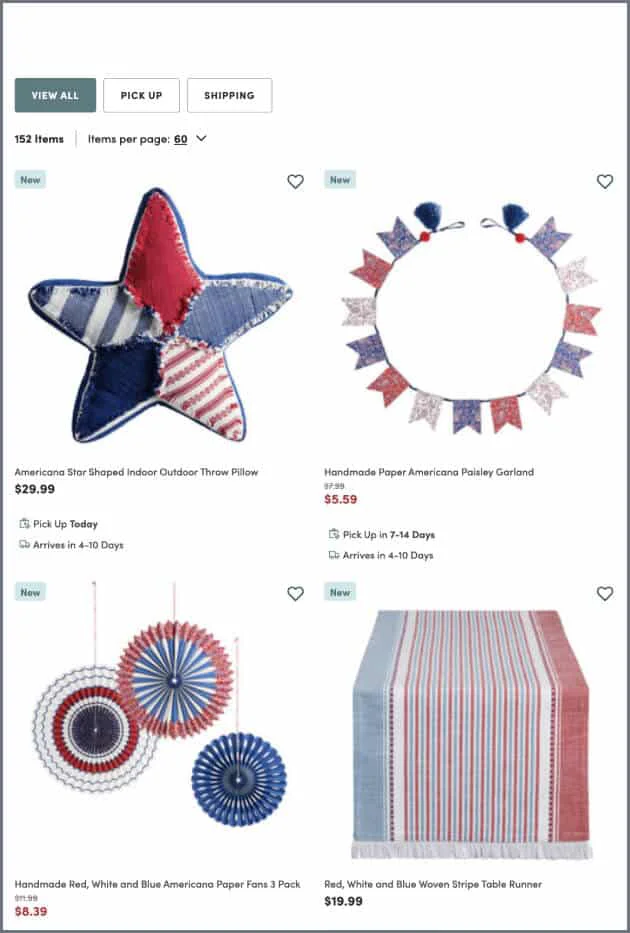
An impactful 4th of July marketing strategy is to launch a themed collection featuring the holiday’s iconic red, white, and blue colors. World Market has implemented this strategy by adding a prominent CTA banner on their homepage that reads, “Hurry, Your 4th of July Finds Are Here!” This eye-catching banner directs visitors to a dedicated section for Fourth of July and Top 4th of July Picks, instantly grabbing shoppers’ attention and driving sales.

World Market didn’t stop there. By creating a specific landing page featuring all holiday items, they’ve simplified the shopping experience, encouraging more purchases.

If you plan to launch a themed collection, follow World Market’s lead and create a dedicated landing page that curates all the products. This makes it easy for customers to find and buy everything they need for their Independence Day celebrations.

Ada Global Tip:

World Market can use Discover to personalize product listing pages based on behavior, past purchases, and occasions and even boost products that shoppers are likely to buy. The customer engagement solution will enable World Market to increase engagement and bypass decision fatigue by surfacing the most relevant products on its web or mobile store category pages.

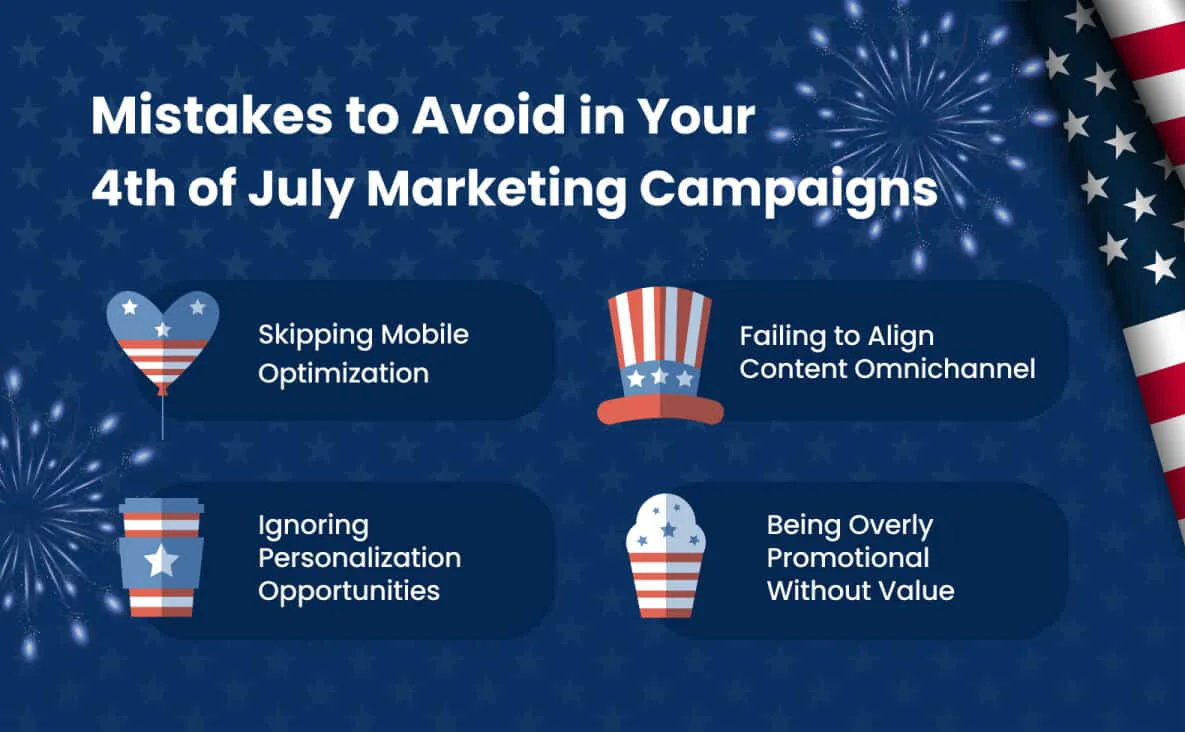
With these proven strategies, you’re well on your way to a standout 4th of July campaign. By tapping into the patriotic spirit and offering exclusive, targeted promotions, you can create memorable experiences that resonate with your customers and boost your sales. However, before you launch, you must avoid common pitfalls that could derail your efforts. Let’s dive into the key mistakes to avoid in your 4th of July marketing campaigns.

You’ve got some fantastic 4th of July campaign ideas ready to go? Great! But before launching, ensure you’re not tripping over these common pitfalls. Let’s dive in!

1. Skipping Mobile Optimization
Are your campaigns mobile-friendly? If not, you’re ignoring a massive audience. Whether email, SMS, or in-app notifications, make sure your content looks great on mobile. Imagine your meticulously crafted 4th of July message not displaying correctly on smartphones—yikes! Customers will stop engaging, or worse, mark you as spam. Test and optimize for mobile to keep those fireworks going.

2. Failing to Align Content Across Channels
Do you have a catchy headline or push notification? That’s awesome, but make sure the content delivers what it promises. If your 4th of July sale says “70% off everything,” your landing page should match that deal. Misleading subject lines or pop-ups might get clicks, but they’ll also get a lot of unsubscribes and lost trust. Be honest and clear to keep your audience loyal.

3. Ignoring Personalization Opportunities
Whether it’s email, SMS, or website pop-ups, tailor your messages to your audience. A personalized greeting or recommendation can make your 4th of July campaign feel like a private party just for them. Skip the generic messages—show your customers you know them, and they’ll keep returning.

4. Being Overly Promotional Without Value
Instead of blasting out generic deals, offer something that resonates with your customers’ needs. Whether through emails, app notifications, or website banners, ensure your 4th of July offers provide real value. A well-targeted offer will always outperform a generic one.

Conclusion

Remember to personalize, segment, and optimize across all channels. As you gear up for the 4th of July, remember that a well-executed marketing strategy can significantly boost your brand’s visibility and sales. By honoring the armed forces, creating themed collections, and launching limited edition products, you can tap into the patriotic spirit and create memorable customer experiences. Keep these strategies in mind to ensure your Independence Day campaign is a resounding success, and watch your sales soar like fireworks in the night sky.

How Ada Global Can Help in Your 4th of July Campaigns

Disclaimer: This blog does not indicate an ongoing business partnership with the brands, and all references are solely for illustrative purposes.

Table of Contents
It’s All About the Timing
Top Spending Categories Include
1. Academy Sports + Outdoors
2. Kroger
3. World Market
Conclusion
How Ada Global Can Help in Your 4th of July Campaigns

10 Cara Membangun Loyalitas Pelanggan di Era Digital

Data & AI
Blogs

10 Cara Membangun Loyalitas Pelanggan di Era Digital

Apa yang Dimaksud dengan Loyalitas Pelanggan?

Di tengah persaingan bisnis yang makin ketat di era digital, membangun loyalitas pelanggan menjadi kunci utama kesuksesan sebuah perusahaan. Tingkat loyalitas pelanggan dapat menjadi parameter keberhasilan suatu perusahaan. Lebih dari itu, loyalitas pelanggan juga dapat menjadi fondasi yang kuat untuk pertumbuhan bisnis.

Melalui artikel ini, Anda akan mempelajari secara mendalam mengenai cara membangun loyalitas pelanggan yang efektif di era digital yang penuh tantangan. Mari simak penjelasan lengkapnya di bawah ini!

Loyalitas pelanggan adalah konsep yang mencakup komitmen jangka panjang dari pelanggan terhadap suatu merek, produk, atau layanan yang ditawarkan oleh suatu perusahaan. Dalam konteks bisnis, loyalitas pelanggan bukan hanya sebatas transaksi pembelian, tetapi juga mencakup ikatan emosional dan afiliasi yang kuat antara pelanggan dan merek tertentu.

Bagaimana Cara Membangun Loyalitas Pelanggan?

Dalam dunia bisnis yang penuh dengan variasi produk dan layanan, membangun loyalitas pelanggan merupakan suatu tantangan yang memerlukan strategi yang matang dan kreatif. Berikut ini adalah beberapa cara membangun loyalitas pelanggan yang efektif di era digital.

1. Pelayanan Pelanggan yang Unggul

Pelayanan pelanggan yang ramah, responsif, dan efisien dapat meningkatkan pengalaman pelanggan secara signifikan. Pastikan bahwa tim pelanggan tidak hanya memberikan solusi cepat tetapi juga menciptakan hubungan emosional dengan pelanggan, menjadikan setiap interaksi lebih dari sekadar transaksi bisnis.

2. Personalisasi Pengalaman Pelanggan

Menyesuaikan pengalaman pelanggan berdasarkan preferensi individu dapat menciptakan ikatan emosional yang kuat. Manfaatkan data pelanggan untuk tidak hanya memberikan rekomendasi produk yang relevan, tetapi juga menyajikan penawaran khusus yang sesuai dengan kebutuhan dan selera masing-masing pelanggan.

3. Program Loyalty yang Menarik

Apabila dirancang dengan baik dan menarik, program loyalitas dapat menjadi alat yang efektif untuk meningkatkan loyalitas pelanggan. Berikan insentif yang menarik seperti diskon eksklusif, hadiah yang dapat dipersonalisasi berdasarkan riwayat pembelian, atau akses prioritas ke acara dan penawaran terbatas.

4. Kualitas Produk atau Layanan yang Konsisten

Kualitas yang konsisten adalah kunci untuk mempertahankan loyalitas pelanggan. Pastikan bahwa produk atau layanan yang ditawarkan tidak hanya memenuhi atau bahkan melebihi harapan pelanggan, tetapi juga berkomitmen untuk terus meningkatkan kualitas secara berkelanjutan.

5. Komunikasi Efektif

Jalin komunikasi yang efektif melalui berbagai saluran, seperti email, chat, dan media sosial. Berikan informasi yang relevan, termasuk pembaruan produk, tip penggunaan, atau promo khusus. Selain itu, buka ruang untuk umpan balik aktif dari pelanggan untuk memahami secara lebih baik kebutuhan mereka.

6. Mengutamakan Umpan Balik Pelanggan

Umpan balik pelanggan adalah sumber wawasan berharga. Aktif meminta dan menanggapi umpan balik pelanggan dapat memperbaiki layanan dan memperkuat hubungan dengan pelanggan. Selain itu, terbuka terhadap kritik konstruktif dan menunjukkan perubahan berdasarkan umpan balik tersebut dapat meningkatkan kepercayaan pelanggan.

7. Keterlibatan Melalui Konten Berkualitas

Berkontribusi melalui konten yang bermanfaat dan relevan dapat meningkatkan keterlibatan pelanggan. Bagikan informasi yang menarik, panduan, atau cerita yang terkait dengan merek Anda. Memastikan bahwa konten tersebut tidak hanya informatif tetapi juga menghibur dapat memperkuat ikatan emosional dengan pelanggan.

8. Penawaran Khusus untuk Pelanggan Setia

Berikan penghargaan kepada pelanggan setia dengan penawaran eksklusif, diskon khusus, atau akses awal ke produk baru. Hal ini tidak hanya meningkatkan nilai pelanggan tetapi juga memperkuat rasa diterima. Pastikan bahwa penawaran tersebut memberikan nilai tambah yang nyata bagi pelanggan setia Anda.

9. Kemudahan Pembayaran dan Transaksi

Pastikan bahwa proses pembayaran dan transaksi berjalan lancar. Kemudahan ini tidak hanya meningkatkan pengalaman pelanggan tetapi juga menciptakan kesan positif terkait dengan efisiensi operasional perusahaan. Memperkenalkan opsi pembayaran yang fleksibel juga dapat meningkatkan kenyamanan pelanggan.

10. Kontinuitas Inovasi

Tetap berinovasi dan beradaptasi dengan perkembangan tren adalah kunci untuk mempertahankan ketertarikan pelanggan. Pastikan untuk terus menyajikan produk atau layanan yang relevan dengan kebutuhan dan harapan pelanggan. Selain itu, melibatkan pelanggan dalam proses inovasi dapat menciptakan rasa kepemilikan dan keterlibatan yang lebih besar.

Tingkatkan Loyalitas Pelanggan dengan Customer Engagement Solution dari ADA

Dalam era digital yang terus berkembang, menghadirkan pengalaman pelanggan yang tak terlupakan menjadi kunci utama untuk membangun dan mempertahankan loyalitas mereka. Salah satu solusi yang dapat memberikan keunggulan dalam hal ini adalah Customer Engagement Solution dari ADA.

Melalui fitur-fitur unggulannya, solusi ini mencakup Messaging dan Conversational AI untuk memberikan pengalaman pelanggan yang unik dan memuaskan. ADA memberikan dukungan penuh melalui SMS marketing, penguatan layanan melalui business messaging, dan peningkatan keamanan melalui otentikasi yang mulus. Selain itu, ADA juga mampu meningkatkan keterlibatan pelanggan melalui LINE & WhatsApp, kampanye pesan yang disesuaikan, dan interaksi pelanggan 24/7.

Memanfaatkan Customer Engagement Solution dari ADA bukan hanya sekadar kebutuhan, tetapi investasi strategis untuk masa depan bisnis Anda. Dengan gabungan keahlian dalam Messaging dan Conversational AI, ADA memastikan bahwa setiap interaksi dengan pelanggan menjadi pengalaman yang positif dan memuaskan. Jangan lewatkan kesempatan untuk meningkatkan loyalitas pelanggan dan meningkatkan kinerja bisnis Anda. Hubungi ADA sekarang untuk berkonsultasi lebih lanjut!

Pertanyaan Tentang Cara Membangun Loyalitas Pelanggan

Apa Saja Program Loyalitas Pelanggan?

Dalam upaya membangun loyalitas pelanggan, program-program loyalitas dapat menjadi kunci untuk mempertahankan hubungan yang kuat antara perusahaan dan konsumen. Berikut ini adalah beberapa program loyalitas yang dapat diterapkan untuk meningkatkan kesetiaan pelanggan.

1. Program Poin dan Reward

Program ini memberikan pelanggan poin setiap kali mereka melakukan pembelian atau berinteraksi dengan merek. Poin tersebut dapat dikumpulkan dan ditukarkan dengan berbagai hadiah, diskon, atau produk eksklusif, memberikan insentif yang menarik untuk terus berbelanja.

2. Keanggotaan VIP

Melalui program keanggotaan VIP, pelanggan yang setia dapat menikmati berbagai keuntungan eksklusif, seperti diskon tambahan, akses awal ke produk baru, atau layanan pelanggan prioritas. Keanggotaan ini menciptakan rasa eksklusivitas yang dapat meningkatkan nilai dan loyalitas pelanggan.

3. Program Referral

Program referral mendorong pelanggan untuk mereferensikan produk atau layanan kepada teman-teman mereka. Dengan memberikan insentif, seperti diskon tambahan atau hadiah khusus untuk setiap referensi yang sukses, program ini tidak hanya membangun loyalitas pelanggan tetapi juga memperluas jangkauan merek melalui word-of-mouth positif.

Apa Saja yang Menjadi Keuntungan Loyalitas Pelanggan?

Loyalitas pelanggan membawa sejumlah keuntungan yang signifikan bagi perusahaan, tidak hanya dalam hal pendapatan tetapi juga dalam memperkuat posisi merek di pasar. Berikut ini adalah beberapa keuntungan yang dapat diperoleh dari loyalitas pelanggan.

1. Pendapatan yang Konsisten

Pelanggan yang setia cenderung melakukan pembelian secara teratur, memberikan pendapatan yang stabil bagi perusahaan. Dengan memiliki basis pelanggan yang setia, perusahaan dapat memproyeksikan pendapatan dan mengurangi fluktuasi yang mungkin terjadi.

2. Word-of-Mouth Positif

Pelanggan yang puas cenderung menjadi advokat merek, memberikan rekomendasi positif kepada teman, keluarga, dan rekan bisnis. Word-of-mouth positif ini dapat menciptakan efek domino yang meningkatkan visibilitas merek dan menarik pelanggan baru.

3. Biaya Akuisisi Pelanggan yang Lebih Rendah

Mempertahankan pelanggan yang sudah ada lebih ekonomis dibandingkan dengan mencari pelanggan baru. Biaya akuisisi pelanggan yang lebih rendah membantu perusahaan mengalokasikan sumber daya dengan lebih efisien, meningkatkan profitabilitas, dan memberikan keunggulan kompetitif.

Table Of Contents
Apa yang Dimaksud dengan Loyalitas Pelanggan?
Bagaimana Cara Membangun Loyalitas Pelanggan?
Tingkatkan Loyalitas Pelanggan dengan Customer Engagement Solution dari ADA
Pertanyaan Tentang Cara Membangun Loyalitas Pelanggan

Strategic Inventory Optimization in Health, Beauty, and Wellness Retail Through Algorithmic Replenishment

Merchandising and Supply Chain
Blogs

Strategic Inventory Optimization in Health, Beauty, and Wellness Retail Through Algorithmic Replenishment

Ryan, head of supply chain at a leading beauty retailer, thought he’d nailed the skincare order—all products were in high demand last summer, and he even adjusted the order for demand fluctuations in the last few months. However, even after two weeks, the products still lie on all major stores’ shelves. Overnight, the consumer buzz has shifted to another brand, driven by a viral trend and season-induced demand spikes.

Now, Ryan is in a fix! What should he do – push forward with the original plan, risking overstock and markdown, or does he pivot, recalibrating the inventory strategy to seize the moment?

Imagine being Ryan. Certainly, not a good place to be, right?

More often than not, retailers in extremely volatile retail segments, like health, beauty, and wellness end up in shambles owing to inaccurate inventory planning. Further, as per McKinsey’s global consumer survey in 2023, more than 50% of consumers use three or more brands for fragrance, hair, and skincare, and one-third use five or even more for cosmetics. This means inaccurate inventory planning can lead to critical fiascos, and yet, the inventory accuracy rate in beauty retail stays in the range of 30% to 50%, leading to markdowns, overstocks, expiry of products, obsolescence, and other such losses.

What if Ryan’s replenishment engine could sense these shifts as they happen and dynamically adjust the orders automatically—no last‑minute fixes, no manual inventory cranking, just precision stock levels that follow market movements. He would be registering record sales while slashing through stockouts and overstock.

Let’s explore how strategic inventory optimization helps retailers not only react to market changes but also anticipate them, leverage intelligent algorithms for demand forecasting, and craft dynamically adjusting replenishment strategies to stay ahead of the curve.

5 Ways Algorithmic Replenishment Planning Empowers Retailers via Strategic Inventory Optimization

1 – Granular Visibility and Planning

Having a strong omnichannel presence is crucial for retailers to position themselves in an extremely competitive health, beauty, and wellness ecosystem. However, having the right inventory in the right place is a challenge. It requires exhaustive data analysis across all the entities – customers, market, channel, geography, sales/purchase drives, emerging trends, and more. Gathering all this unstructured and unliked data and processing it to identify hidden trends and predictive insights can neither be done manually nor by traditional demand forecasting frameworks.

AI-powered inventory optimization solutions that are tuned for health and beauty retail nuances can easily process unstructured data from multiple resources to identify hidden patterns and offer predictive as well as prescriptive analytics for what-if scenarios and forward-looking trends. Retailers can generate highly accurate inventory plans as much as 90% of the time to ensure high availability without overstocking or cannibalization. They can create granular forecasts for different stores, channels, and locations to ensure the right products are always available at the right time for better customer experience and boosting brand loyalty.

2 – Dynamic Replenishment Planning Strategies

Replenishment is a critical part of inventory optimization as it involves restocking inventory based on demand data. Traditionally, retailers have created replenishment plans with static values for standard deviations. However, there are many other deviations, such as seasonality, new assortments, pricing and promotions, and weather

Stockouts are not only bad for customers but they hurt the retailers too. Stats reveal that every year retailers lose an estimated USD 350 billion to stockouts in the US and Canada alone. Also, as much as 70% to 90% of stockouts are caused by poor shelf replenishment practices. Investing in AI-powered solutions for auto-replenishment that leverage Machine Learning algorithms for modeling and demand sensing across all channels can change the entire scenario. Retailers can set custom criteria and constraints for demand planning to create dynamic replenishment planning strategies that help them avoid and manage business risks, like the one faced by Ryan, in the introduction.

3 – Reducing Overstock and Obsolescence

Overstocking in health, beauty, and wellness retail can kill revenue faster than ever because of intensely competitive price points, higher unit costs, and volatility induced by microtrends and influencers. A perfectly working assortment/bundle of a beauty range can become irrelevant overnight with a single influencer making a single reel/post about a single “could-be harmful” ingredient.

Hence, retailers no longer have the luxury of stocking the top-grossing product range as they can quickly go obsolete leading to markdowns or even worse, dropped sales. Managing these fluctuations alongside the supply chain planning for sourcing and supplier collaboration is impossible in a manual setting.

The situation, however, changes with intelligent inventory optimization. Getting highly granular forecasts and replenishment planning insights for timelines as small as a day or two or a week frees up the retailers from overstocking or obsolescence blues. They can get alerts for any long-term and short-term demand changes and adjust their inventories accordingly.

4 – Supply Chain Efficiency

Unpredictable lead times, in-transit delays, and supply chain constraints like minimum order quantities can easily derail both supply chain efficiency and inventory planning. Further, longer lead times can translate into excess inventory, stockouts, and wastage of resources, which ultimately amount to a loss of sales.

Algorithmic replenishment automates the critical processes of inventory management, like receiving and ordering the inventory as per the demand patterns and market fluctuations. This saves countless manhours and makes the overall supply chain planning efficient. The retailers are ordering items as per the current needs and upcoming market disruptions, which means they can plan better shipment loads and foster mutually fulfilling supplier collaboration.

Advanced capabilities like predictive and prescriptive analytics empower retailers to take appropriate action at the right time to minimize losses owing to supply chain constraints. They can also automate mundane processes to make more time for strategic inventory planning. Further, as the retailers have a granular view of their channel/store/location-specific stock requirements, they can easily overcome the existing supply chain bottlenecks and create more efficient consignment flows as per the immediate and long-term needs.

5 – Just-in-Time Inventory Management

With more and more influencers, brands, and researchers focusing on the freshness of ingredients and formulations, and people finding reviews citing results in 15 days, one month, etc., shelf life management has become a major factor in just-in-time (JIT) inventory planning. While the life of standard beauty and wellness products like creams and lotions is still more, when it comes to well-defined popular categories like actives, serums, and chemical agents, retailers need highly reliable JIT indicators for strategic inventory planning.

Processing such huge data sets with different variables, like SKU type, size, shelf life, location-based demand, and consumption trends, without advanced analytics and intelligent replenishment solutions is a lost cause. Algorithmic replenishment takes the guesswork out of the entire planning process and gives extremely accurate insights for JIT inventory management while adhering to granular constraints such as SKU size, location, type, and more.

Positioning a retail brand in competitive categories can become challenging without any reliable, scalable, and intelligent tech infrastructure powered by advanced technology. Strategic inventory optimization is crucial for rising above the competition while selling similar products across different locations and channels. They empower retailers with actionable insights and predictive as well as prescriptive analytics, ensuring high shelf availability, reduced stockouts or overstocks and cannibalization, and preventing them from becoming “the Ryan”.

Table Of Contents
5 Ways Algorithmic Replenishment Planning Empowers Retailers via Strategic Inventory Optimization
1 – Granular Visibility and Planning
2 – Dynamic Replenishment Planning Strategies
3 – Reducing Overstock and Obsolescence
4 – Supply Chain Efficiency
5 – Just-in-Time Inventory Management

Riding the Disruption Wave: Why Granular Forecasting Wins in Health, Beauty, and Wellness Retail

Merchandising and Supply Chain
Blogs

Riding the Disruption Wave: Why Granular Forecasting Wins in Health, Beauty, and Wellness Retail

Earlier categorized under the standard umbrella of cosmetics, the sector has now branched into health, beauty, personal care, skin care, wellness, and more. What makes it a definite opportunity for retailers is the fact that the industry is about to hit the USD $580 billion mark by 2027. However, the opportunity doesn’t come sans challenges.

As many as 42% of consumers across the major global economies enjoy trying new brands and are increasingly shopping across price points. The emergence of online webpages for skincare guidance and buying imported products, live streams, influencer-led brand hopping, and a dynamic shift in consumers’ purchasing habits, have put retailers under pressure. Taming the spikes and lows induced by seasonality, forecasting demands in a highly volatile landscape, and planning for stockouts and markdowns are becoming increasingly challenging. Enter the diminishing boundaries between two buckets, such as beauty and wellness, where the combined sector is accounting for as much as USD 2 trillion globally for brands, retailers, and investors, and the problem snowballs.

Rising above such disruptions requires a careful and strategic supply chain and retail planning, and hinges on granular analysis. Let’s find out how granular forecasting can be a game-changer for retailers in highly competitive health, beauty, and wellness segments.

Overcoming Disruptions in Health Beauty and Wellness Retail with Granular Forecasting

1 Demand Forecasting Solution at the SKU Level

One of the major drawbacks of traditional retail forecasting and replenishment strategies is the siloed approach. The sales data, customer data, and data from multiple stores, channels, and categories are processed individually, which leads to multiple blindspots, eventually leading to partially optimized forecasts.

On the other hand, retail-tuned AI and ML-powered solutions can easily process highly unstructured data sets to find hidden trends and patterns and generate actionable insights. So, retailers can move beyond category-level forecasting and get granular SKU-level forecasts. They can analyze data from multiple sources, like historical sales, market trends, consumer behavior, and more to arrive at highly accurate and consolidated forecasts that predict demand for specific products and categories at specific locations. This minimizes the risk of stockouts and overstocking.

2 Uncover Hidden Trends to Account for Seasonality

The health, beauty, and wellness retail market experiences rapid shifts in terms of consumer purchases, product categories, and micro-trends. As the unit costs are also high, stocking new items comes with double cost bleeds, and looming markdowns. All these disruptions are in addition to seasonal fluctuations, leaving retailers clueless about the “just-approaching” or “can-affect” scenarios such as weather changes, holidays, festivals and special days, sales events, and promotions. This renders the traditional one-size-fits-all forecast methods ineffective.

Smart solutions built on powerful AI algorithms and ML models trained for detecting and predicting analytical variations can easily identify emerging trends, and disruptions. Advanced analytical capabilities like anchor-level predictors and sub-category-level variables for factoring in seasonality-level variables and granular-level demand distribution (for SKUs) empower retailers to manage complex retail use cases.

3 Cross-Channel Dynamic Inventory Optimization

According to the 2023 US Beauty Consumer Survey, more than half, 54.2% of online beauty buyers say that trying on a new product during in-store shopping helps them discover new brands. Hence, having accurate retail inventory optimization solution across all channels is critical for customer satisfaction, sales revenue, and customer acquisition.

For this, retailers have to identify and create highly targeted constraints for optimizing their inventory to overcome the planning challenges for nuanced use cases. However, planning manually or with static retail planning software cannot help retailers optimize their inventory across categories, channels, and stores in one go. They cannot manage supply fluctuations such as lead time variations and fill rate variations as well, leading to forecast errors.

On the other hand, algorithmically-driven solutions crafted purely for retail can easily integrate and analyze data from multiple unrelated sources, like sales, competitors and external markets, weather, and macroeconomic variables to arrive at holistic and granular forecasts. These solutions are crafted to manage and map the supply fluctuations, volatility, and constraints. This helps optimize inventory planning and offer truly seamless shopping experiences to the customers irrespective of the channel, store, or category they are shopping for.

4 Forecast Model Customization

Every retailer has unique retail challenges when it comes to forecasting and replenishment, especially in highly competitive segments, such as health, beauty, and wellness. So, a standard set of constraints for forecasting is no longer relevant to all of them. Manual modeling considers a standard range of variation and fails to manage the promotion mechanics variables, leading to costly consequences, like markdowns, cannibalization, stockouts, etc., ultimately amounting to the loss of free cash flow.

ML algorithms powered by AI and advanced analysis enable retailers to factor in complex variables such as time as a function of demand across different stores, categories, and channels. Retailers can set highly specific and custom constraints based on their sales history, products, locations, etc. This ability to customize forecast models based on multi-variable factors, such as weather patterns, microtrends, and promotions, offers event-centric predictive insights. Businesses can understand the outliers, promo patterns, and price elasticity to evolve alongside cyclicality/seasonality/micro trends in health and beauty segments. Retailers can also create multiple scenarios to evaluate the sensitivities of different forecast models and unlock greater accuracy and granular planning.

5 Real-Time Demand Sensing and Sourcing

Real-time demand prediction modeling helps retailers factor in seasonality, promotions, and other external factors that impact demand. Coupling it with ML-powered intelligent algorithms facilitates accurate predictive replenishment and responsiveness to interstore transfers, promotions, and supply chain disruptions.

Further, supplier collaboration stakeholders are key in the health, beauty, and wellness retail industry, especially when it comes to international vendors. Without granular forecasting and strategic sourcing intelligence, retailers cannot understand the impact of sourcing disruptions, such as delays and lead times.

Forecasting and predictive demand planning solutions with tailored AI algorithms can overcome these challenges by solving inventory variability and velocity, supplier constraints, demand & supply volatility, etc. This can help retailers optimize their sourcing strategies, minimize lead times, and unlock greater cost savings.

As retail moves toward more integrated shopping experiences and the digital divide vanishes further, intelligent solutions with algorithmic superiority pave the way for strategic business planning. Such solutions can help retailers save costs via 90% accurate forecasts, tailored data engineering, and quick modeling for different scenarios, making them ideal for future-proofing the business.

Also read: Navigating the Beauty Maze: AI’s Role in Retail and Supply Chain Planning

Table Of Contents
Overcoming Disruptions in Health Beauty and Wellness Retail with Granular Forecasting
1. Demand Forecasting Solution at the SKU Level
2. Uncover Hidden Trends to Account for Seasonality
3. Cross-Channel Dynamic Inventory Optimization
4. Forecast Model Customization
5. Real-Time Demand Sensing and Sourcing

15 Reasons Why Customer Service is Important for Business Success

Digital Commerce
Blogs

15 Reasons Why Customer Service is Important for Business Success

What Is Customer Service?

In the dynamic landscape of business, where consumer preferences and market trends continually evolve, one constant remains at the heart of success: customer service. As businesses strive to carve their niche and thrive in competitive environments, understanding the pivotal role that customer service plays is non-negotiable.

At its core, customer service is more than a department; it’s a philosophy that permeates every facet of a business. It encompasses the interactions and assistance provided to customers before, during, and after a purchase, shaping their overall experience.

Good customer service ensures that customers feel valued and supported throughout their journey, while poor customer service can lead to dissatisfaction and loss of trust. The customer service team plays a pivotal role in providing excellent customer service experiences by being responsive, knowledgeable, and empathetic to customer needs. Their efforts contribute to fostering positive customer service experiences that leave a lasting impression and encourage repeat business.

In essence, customer service is the heartbeat of a business, influencing customer perception and loyalty in profound ways. To truly appreciate the significance of customer service, one must delve into its multifaceted nature, recognising it as a cornerstone rather than a mere support function.

Reasons Why Customer Service is Important for Business Success

Customer service isn’t just a supplementary element; it’s a critical driver of business success. Delving into the specifics, let’s unravel some of compelling reasons why customer service is important for the success of a business.

1. Enhances Customer Satisfaction

The fundamental purpose of customer service is to ensure customer satisfaction. By promptly addressing inquiries, resolving issues, and providing reliable support, businesses create an environment where customers feel valued. Satisfied customers are more likely to make repeat purchases and become vocal advocates for the brand.

2. Builds Customer Loyalty

Loyalty is the bedrock of a successful business, and customer service is pivotal in cultivating it. Customers who experience consistent, positive interactions develop a sense of trust and loyalty towards the brand. Loyal customers contribute significantly to the bottom line, becoming long-term patrons and brand ambassadors.

3. Differentiates Your Brand

In a crowded marketplace, where products and services can appear indistinguishable, exceptional customer service serves as a powerful differentiator. Businesses that go above and beyond to provide outstanding service stand out from their competitors, creating a unique selling proposition that goes beyond product features or pricing.

4. Boosts Revenue and Profits

The financial implications of superior customer service are profound. Satisfied customers are not only more likely to make repeat purchases, but they also tend to spend more per transaction. Additionally, positive word-of-mouth generated by exceptional service can attract new customers, increasing revenue and higher profit margins.

5. Reduces Customer Churn

Customer churn, or the rate at which customers stop doing business with a company, is a constant concern. Effective customer service plays a crucial role in reducing churn by addressing issues promptly and resolving conflicts. By retaining existing customers, businesses can avoid the costs of acquiring new ones.

6. Enhances Brand Reputation

A positive brand reputation is closely tied to the quality of customer service. Every interaction with a customer is an opportunity to strengthen or weaken the brand image. Consistently delivering exceptional service contributes to a positive reputation, which, in turn, attracts new customers and solidifies the trust of existing ones.

7. Gathers Valuable Feedback

Customer service interactions provide an invaluable source of feedback. By actively listening to customer concerns and suggestions, businesses gain insights into areas for improvement. This feedback loop allows companies to adapt, innovate, and continually enhance their products and services to meet evolving customer expectations.

8. Increases Customer Lifetime Value

Customer Lifetime Value (CLV) is a key metric representing the total revenue a business can expect from a customer over their entire relationship. Exceptional customer service contributes to higher CLV by fostering long-term relationships, encouraging repeat business, and creating opportunities for upselling or cross-selling.

9. Facilitates Customer Retention

Acquiring new customers can be costly, making customer retention a strategic imperative. Effective customer service builds a solid foundation for customer retention by creating positive experiences and addressing issues promptly. Businesses that prioritise customer retention are better positioned for sustained growth.

10. Creates Positive Word-of-Mouth

Satisfied customers become advocates, sharing their positive experiences with friends, family, and online communities. Word-of-mouth marketing is a potent force, and businesses with good customer service can benefit from the organic spread of positive sentiments, attracting new customers through referrals.

poor customer service, customer service team, providing excellent customer service experience, positive customer service experience

11. Reduce Employee Turnover Rate

Employee engagement is crucial for reducing turnover. Treat your employees as you would your customers, because they notice how you interact with them. Avoid using cheap sales tactics and refrain from pressuring staff to undercut competitors. By focusing on genuine customer value, employees feel pride in their work and are more likely to stay. Happy employees often translate to satisfied customers, as they are often the first to experience your products or services.

12. Reduce Customer Acquisition Costs (CAC)

Expanding your business often hinges on acquiring new customers, but the challenge lies in the Cost of Customer Acquisition (CAC). According to Neil Patel, acquiring a new customer can cost seven times more than retaining an existing one, which poses a significant hurdle for businesses, especially those with limited budgets. However, great customer service offers a solution by transforming existing customers into brand advocates. By delivering exceptional support, you cultivate loyalty, prompting satisfied customers to recommend your business to their network. This organic word-of-mouth promotion can attract a multitude of potential customers without the hefty investment typically associated with acquisition efforts.

13. Satisfied Customers Can Reveal Customer True Desire

Use satisfied customers as examples for your team to understand what customers really like. Do they prefer knowledgeable support agents or do they like having a live chat option on the website? You can find out by asking them with follow-up surveys that have open-ended questions like, “Thanks for your feedback! Can you tell us what made your experience great?” Remember, each customer has valuable insights, so ask them the right questions at the right time.

14. Proactive Communication Saves Business from Embarrassment

Proactive customer service means providing solutions to customer problems before they complain. This could include sending emails to notify customers of outages, creating knowledge base articles, or having a proactive news section on your website. When your business faces problems, communicating with your audience proactively can prevent embarrassment and negative social media feedback.

15. Increase Agent Accountability

While customer service is often associated with qualitative elements like emotional connections and meaningful conversations, there are also quantitative aspects that warrant measurement.

Another significant aspect of customer service is its role in monitoring agent performance and fostering accountability. Utilising customer service reports enables the measurement of individual performance, thereby enhancing agent accountability. Transparent monitoring of their efforts encourages agents to excel and serve as positive examples for their peers. Additionally, recognising top-performing agents with appropriate rewards and incentives further reinforces accountability.

Partner with ADA to Take Your Customer Service to the Next Level

As we unravel why customer service is important for business success, it becomes clear that investing in this aspect is not just a choice but a strategic imperative. From fostering customer satisfaction to bolstering brand reputation and driving revenue, the impact of exceptional customer service resonates across the entire business ecosystem.

To take your customer service capabilities to new heights and align with the evolving landscape of consumer interactions, consider leveraging innovative solutions like the Customer Engagement Solutions by ADA. This tool revolutionises support, marketing, and customer interactions by seamlessly integrating messaging and AI. With features like SMS marketing and 24/7 customer support, it’s designed to boost sales and create meaningful connections.

Don’t just meet expectations; exceed them with ADA’s innovative solution. Connect with ADA today and witness firsthand how the fusion of technology and customer-centricity can redefine how you interact with your customers, propelling your business towards unparalleled success. Get in touch now!

Table Of Contents
What Is Customer Service?
Reasons Why Customer Service is Important for Business Success
Partner with ADA to Take Your Customer Service to the Next Level

10 Types of Advertising Media for Your Marketing

Personalisation
Blogs

10 Types of Advertising Media for Your Marketing

What Is Advertising Media?

In the dynamic marketing realm, navigating the vast landscape of advertising media is crucial for businesses striving to leave a lasting impact on their target audience. Advertising through media involves strategically deploying various channels to convey messages effectively. Understanding the diverse types of advertising media and employing methods to measure their effectiveness are essential components of any successful marketing campaign.

Advertising media refers to the deployment of various channels and platforms to communicate messages and promote products or services. It serves as a bridge between businesses and their audience, leveraging different mediums to capture attention and drive engagement. The diversity in advertising media allows companies to tailor their strategies based on the nature of their products, target demographics, and overall marketing goals.

What is the Role of Advertising Media?

By using different advertising platforms, marketers can connect with different types of people in different ways. For example, social media lets customers start conversations, while TV just sends messages one way. So, planners need to think hard about which channels give the most benefits for the least money. They should pick each advertising platform based on what they want the campaign to achieve and how well the platform can reach the right audience.

Types of Advertising Media Channels

Navigating the expansive realm of advertising media requires a nuanced understanding of the diverse channels that businesses can leverage to communicate their messages effectively. Let’s delve into ten prominent types of advertising media examples:

1. Television Advertising

Television advertising remains a powerhouse in the marketing landscape. The combination of visual and auditory elements allows businesses to craft compelling narratives. From traditional commercials during breaks to subtle product placements within TV shows, television advertising offers a broad and captive audience, making it a cornerstone for many marketing campaigns. Additionally, broadcast media, including video ads, further amplifies the reach and impact of television advertising, extending its influence across various platforms and screens.

2. Radio Advertising

Despite the proliferation of visual platforms, radio advertising continues to be a potent force. The power lies in its ability to reach a diverse audience through various stations. The use of catchy jingles and memorable scripts enhances brand recall. Radio advertising is particularly effective in targeting specific demographics based on station formats and listener preferences.

3. Print Advertising

Print media, comprising newspapers and magazines, remains an enduring choice for advertisers. The tactile experience of flipping through pages engages readers and allows for the detailed presentation of information. Advertisements in print media convey a sense of credibility and permanence, making them a trusted source of information for consumers.

4. Outdoor Advertising

Billboards, posters, and transit ads fall under the umbrella of outdoor advertising. This type of media capitalises on high visibility, ensuring that the message reaches a wide audience. The strategic placement of outdoor advertisements in high-traffic areas enhances their effectiveness, making them an impactful tool for brand promotion.

5. Digital Advertising

In the digital age, online platforms have become a ubiquitous space for advertising. Digital advertising encompasses a broad spectrum, including display ads, social media promotions, and search engine marketing. The versatility of digital advertising allows businesses to target specific demographics, measure real-time engagement, and make prompt adjustments to campaigns.

6. Social Media Advertising

As a subset of digital advertising, social media platforms offer a unique space for interaction between brands and consumers. With billions of users across platforms like Facebook, Instagram, and Twitter, businesses can create targeted campaigns, engage with their audience, and build a loyal customer base. Social media advertising thrives on the principles of connectivity and shared experiences.

7. Direct Mail Advertising

Despite the digital shift, direct mail advertising maintains its relevance. Sending physical promotional material directly to consumers provides a tangible connection. Well-crafted direct mail campaigns stand out in a crowded digital landscape, offering a personalised touch that can resonate with recipients on a deeper level.

8. Cinema Advertising

Cinema advertising leverages the immersive experience of the big screen to captivate audiences. It provides an opportunity for businesses to reach a captive audience, particularly before highly anticipated films. The visual impact and high-quality sound enhance the overall effectiveness of this medium, creating a memorable and engaging experience for viewers.

9. Product Placement

Integrating products into movies, TV shows, or other forms of media is a subtle yet powerful advertising strategy. When executed seamlessly, product placement can enhance brand visibility and resonate with audiences in a non-intrusive manner. This form of advertising leverages the popularity of entertainment content to create an organic connection with consumers.

10. Influencer Marketing

In the era of social media influencers, brands collaborate with individuals who have a substantial following to promote their products. Influencer marketing capitalises on the influencer’s credibility and the trust they have built with their audience. This form of advertising relies on authentic endorsements, creating a genuine connection between the brand and the influencer’s followers.

How to Measure Advertising’s Effectiveness?

Effectively measuring the impact of advertising campaigns across diverse media channels is integral to optimising marketing strategies. Here are five key metrics that illuminate the effectiveness of advertising through media:

1. Audience Reach

Understanding the scope of audience reach is fundamental to evaluating the initial impact of an advertising campaign. Each advertising medium has its unique metrics for calculating reach. Television relies on ratings, radio on listenership, and digital advertising on impressions. Measuring the audience reached provides valuable insights into the campaign’s potential influence.

2. Engagement Metrics

Beyond reach, engagement metrics are crucial indicators of how actively the audience interacts with the advertising content. For digital advertising, this includes likes, shares, comments, and click-through rates. High engagement signifies that the message has resonated with the audience, fostering a deeper connection and potential brand loyalty.

3. Conversion Rates

The ultimate goal of advertising is to drive specific actions from the audience. Whether purchasing, signing up for a newsletter, or visiting a website, conversion rates measure the campaign’s success. By tracking conversions, businesses can establish a direct link between the advertisement and consumer behaviour, providing tangible evidence of the campaign’s impact.

4. Return on Investment (ROI)

ROI is a pivotal metric for assessing the overall effectiveness of an advertising campaign. It involves calculating the revenue generated against the investment made in the campaign. Different advertising media may contribute differently to the overall ROI, making it essential to evaluate each medium’s performance individually. A positive ROI indicates that the campaign is reaching the audience and driving profitable actions.

5. Brand Awareness

Building and measuring brand awareness is an ongoing process that involves assessing how well the target audience recognises and recalls the brand after exposure to the advertisement. Surveys, social media mentions, and brand recall studies commonly gauge brand awareness. A strong advertising campaign should enhance the brand’s visibility and create a lasting impression in the minds of consumers.

Harness the Power of Advertising Through Media with ADA

In the ever-evolving landscape of advertising, the ability to adapt, measure, and optimise is paramount. As you embark on your journey to harness the power of advertising through diverse media channels, consider the expertise and innovation offered by ADA’s Full Funnel Management.

As a Data-Driven Digital Marketing Growth Partner, ADA specialises in powering incredible customer experiences and driving ROI through tech-driven, data-informed strategies. Our commitment to unparalleled digital performance positions us as a trusted ally in your quest for business growth.

Elevate your advertising effectiveness, embrace data-driven decision-making, and partner with ADA to propel your brand to new heights. Experience the transformative impact of strategic marketing services tailored to suit the dynamic needs of your business. Contact us today to learn more!

Table Of Contents
What Is Advertising Media?
What is the Role of Advertising Media?
Types of Advertising Media Channels
How to Measure Advertising’s Effectiveness?
Harness the Power of Advertising Through Media with ADA

5 Signs You Need B2B Search and What to Do Next

Digital Experience Personalization
Blogs

5 Signs You Need B2B Search and What to Do Next

Research suggests that 80% of customers on B2B commerce platforms expect to receive a buying experience that’s on par with that offered to their B2C counterparts1 – placing a great deal of pressure on businesses to up their game.

However, 75% of B2B customers feel that their expectations for personalized shopping experiences are not being met.2 The reason? Conventional personalization platforms can’t adapt to the unique nature of B2B commerce.

B2B ecommerce personalization comes down to helping buyers get what they need faster. That starts in the search box, typically the primary point of interaction for online shoppers with a company’s website. This is especially true for B2B customers who are driven by intent and know just what they need. Unsurprisingly, 92% of B2B purchases begin with search.3

Here are five signs it may be high time for you to switch up the B2B search experience for your buyers and tips on how to proceed.

1. You risk disengagement by offering shoppers an access-unaware discovery experience

Within a business ecosystem, your client may have multiple shopper groups, each with a designated buyer who purchases for the group. These groups may have specific viewing permissions for categories and products, sometimes with overlaps.

Take, for instance, a purchasing manager knee-deep in orders and invoices – they’d naturally require full access permissions to get the job done. Conversely, an associate might only need a peek at the price list to do their thing.

Pro Tip: Your site’s search and discovery solution will be the first to reflect fidelity. Implement a best ecommerce search engine that interprets and applies contract terms in real time, ensuring users see accurate pricing based on their specific agreements. Doing this will enhance trust and satisfaction among users and improve efficiency in contract management.

2. Contracted buyers cannot access negotiated prices for products on your marketplace

B2B sellers often have different prices they’ve negotiated with other buyers. For example, if a buyer purchases large quantities, you want to give them bulk-ordering discounts. This record is typically managed by product permissions and entitlements in ERP and CRM systems — that house data outside the B2B ecommerce platform.

That’s tough for search engines to handle — so buyers often only see pricing on a product detail page or, worse, that confounded “Call for Pricing”. When buyers see regular pricing or contract terms that do not apply to their organization, it’s a very jarring experience. You can expect escalation emails to fly!

Pro Tip: Your site’s search and discovery solution will be the first to reflect fidelity. Implement a search solution that interprets and applies contract terms in real time, ensuring users see accurate pricing based on their specific agreements. Doing this will enhance trust and satisfaction among users and improve efficiency in contract management.

3. Shoppers bounce off after using your site search, unable to find what they were looking for

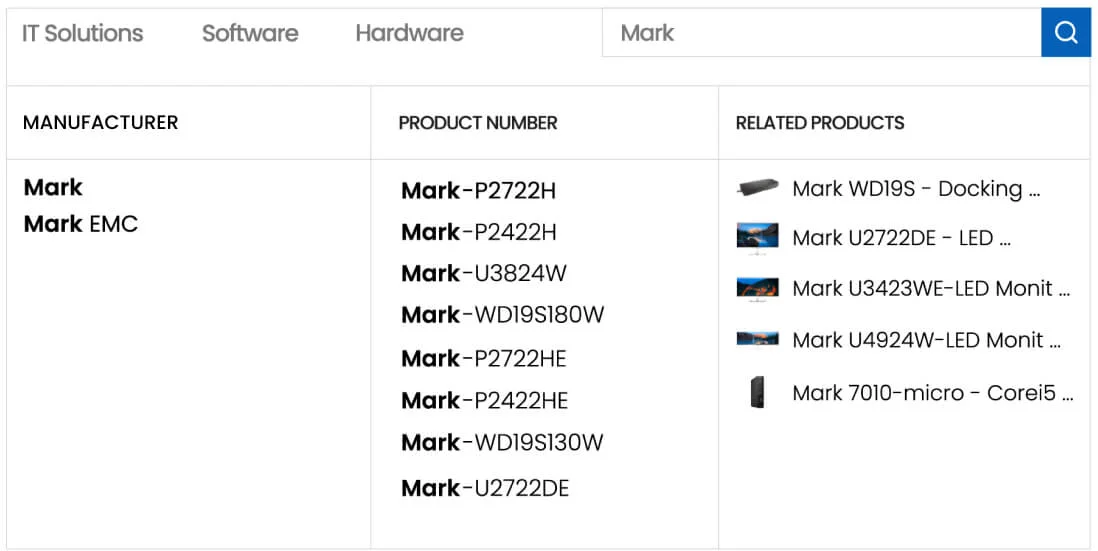
High exit rates from your search results page are an alarming sign, and you’d be shocked at how many B2B ecommerce platforms face this daily. Legacy search experiences are limited to keyword matching between user input and product catalog. It is based on the wildly incorrect assumption that users are typing precisely what you have named your products – right down to their model number!

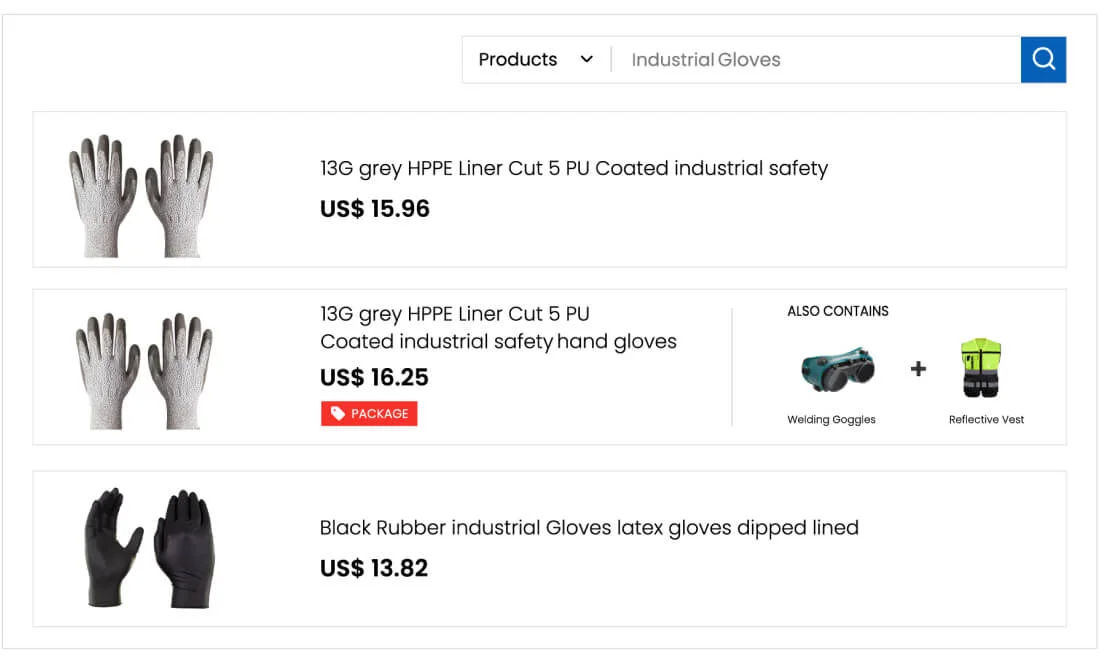
Pro Tip: You require an advanced search technology that empowers business shoppers to explore items not solely by name but also by parameters such as SKU, category, partial name, etc. A robust search engine transcends mere keyword matching; it facilitates B2B shoppers in locating desired items with an intuitive and efficient browsing functionality, such as filtering, sorting, and faceted navigation.

4. Your merchandising rules are manual and do not balance user preferences with business objectives

B2B companies require control over catalog presentation to users, choosing quickly which offerings to promote and which products to highlight. However, with vast catalogs and multiple sub-divisions typical of B2B commerce, this can soon become a mammoth task blighted by a unidirectional approach that doesn’t optimize user behavior. Additionally, large B2B organizations with multiple sub-divisions must be able to roll out merchandising guidelines at the sub-level.

Pro Tip: Get a search solution that balances auto-optimization driven by machine learning and business/brand objectives by setting the desired weights and rules. While offering users ML-generated personalized product recommendations, dynamically re-ranking search results to ensure the most popular products appear at the top, or suggesting AI-generated synonyms based on user searches, an intelligent search solution will also contextualize recommendations to fit your brand and unique business goals. This includes features such as ‘best paired with’ or ‘frequently bought together‘ to drive cross-selling, increase order value, and ‘related products’ to maximize conversions and catalog exposure.

5. Your product pages don’t show the most recent stock information

Picture this. A shopper wants to order a batch of 50 laptops for their office, and after searching, comparing, selecting, and ordering – they get to know the required numbers aren’t available. This happens when variable attributes such as stock levels, like custom pricing, live in an external location that does not communicate with your ecommerce front-end experience directly. It must be out of sight if it’s ‘out of stock’, right?! Inadequate real-time pricing and availability data integration into your catalog leads to discrepancies between displayed information and actual inventory optimization levels and frustrates customers.

Pro Tip: Get something that can store and fetch real time customer data profiles (& shopper tier pricing or any attribute that may not be indexed in the catalog) from an external system and surface that as part of the search request. That will ensure shopper satisfaction and reduce load on your support team.

Conclusion

The B2C market often dominates CX discussions, but today’s businesses demand an experience to match the elevated levels afforded to consumers. Expectations are evolving, and you’d be wise to meet them. Why not start with personalization search ecommerce – the most effective personalization method for B2B commerce worldwide?

If you recognize any of these issues (even a single one), you must consider upgrading from your current site search solution to a modern-day integrated, ecommerce personalization platform solution.

Check out B2B Find, ADA Global’s versatile search solution that combines sought-after B2C features with the chops to handle the complexity of B2B commerce platforms, and curates experiences based on the shopper’s contracted products, pricing, and individual preferences.

References:

Table Of Contents
1. You risk disengagement by offering shoppers an access-unaware discovery experience
2. Contracted buyers cannot access negotiated prices for products on your marketplace
3. Shoppers bounce off after using your site search, unable to find what they were looking for
4. Your merchandising rules are manual and do not balance user preferences with business objectives
5. Your product pages don’t show the most recent stock information
Conclusion

Best marketing strategies for Easter | Retailers

Omnichannel Marketing
Blogs

Best marketing strategies for Easter | Retailers

Easter is a time when homes resonate with laughter, adorned with bright decorations symbolizing renewal and hope. Easter signifies more than a holiday—it’s a cherished opportunity to come together, share meals, and create lasting memories. From egg hunts that spark excitement in children’s eyes to the joy of exchanging gifts and indulging in delectable treats, Easter embodies the essence of togetherness and celebration.

Yet, amidst the festivities, there’s an underlying buzz in the air—a sense of anticipation for the Spring sale season that accompanies Easter. For consumers, it’s not just about the joy of the holiday; it’s also about seizing the opportunity to refresh their wardrobes, spruce up their homes, and treat their loved ones to thoughtful gifts. Retailers keenly understand this dynamic, recognizing Easter as a prime moment to connect with consumers on a deeper level and offer them products and experiences that enhance their celebrations. As families prepare to embrace the spirit of Easter, retailers are ready to cater to their needs, providing an array of enticing offerings that seamlessly blend the joy of the season with the excitement of the Spring sale.

Easter Spending in 2024: Consumer Insights

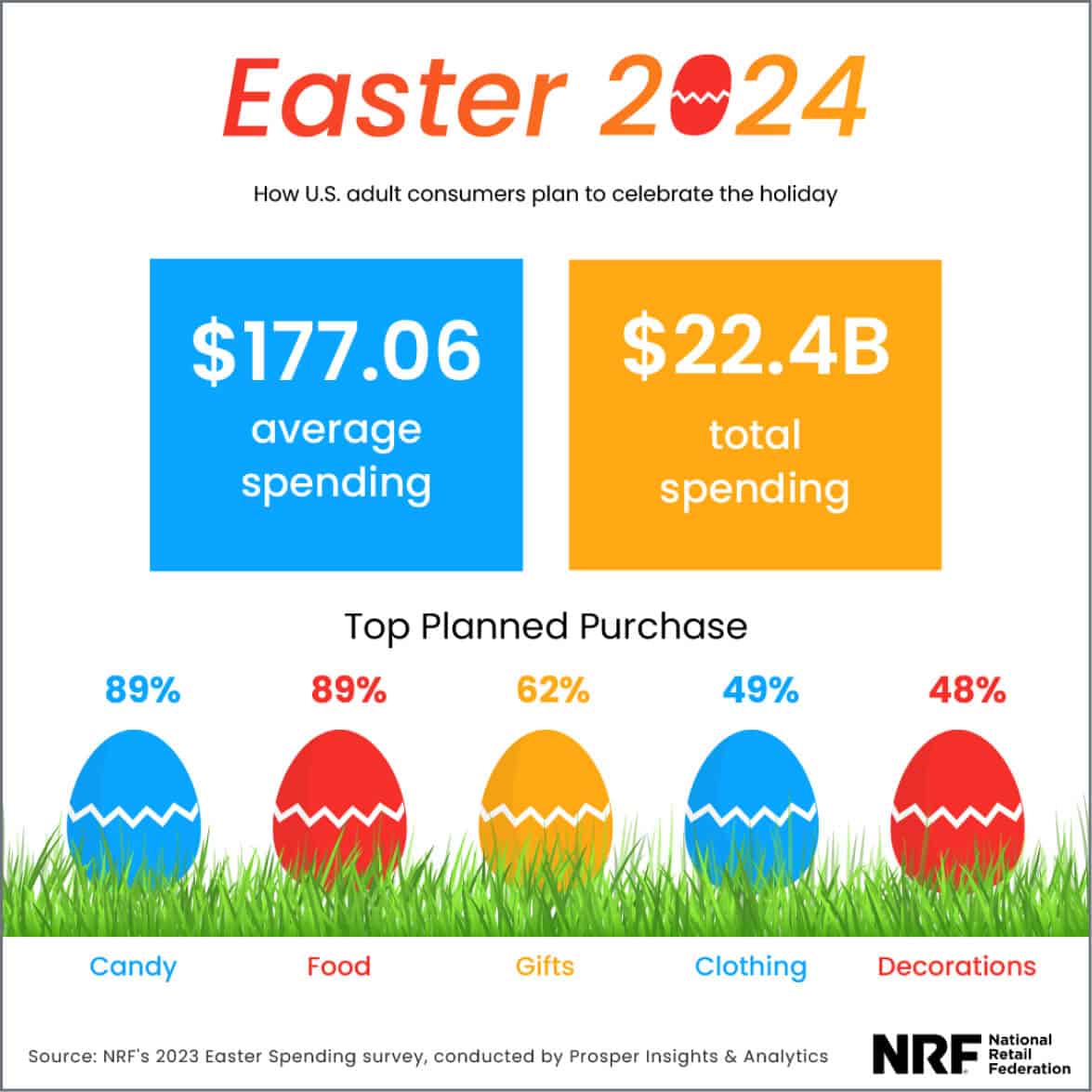
As we gear up for Easter 2024, the retail landscape is poised for a whirlwind of spending, with American consumers projected to splurge a staggering $22.4 billion, according to the latest insights from the National Retail Federation and Prosper Insights & Analytics. Consumers are gearing up to invest heavily in a variety of categories diving headfirst into the delicious realm of food and candy, gifts, clothing, and decorations. It’s clear that Easter is a retail extravaganza.

Consumer Buying Patterns in the U.S. in 2024

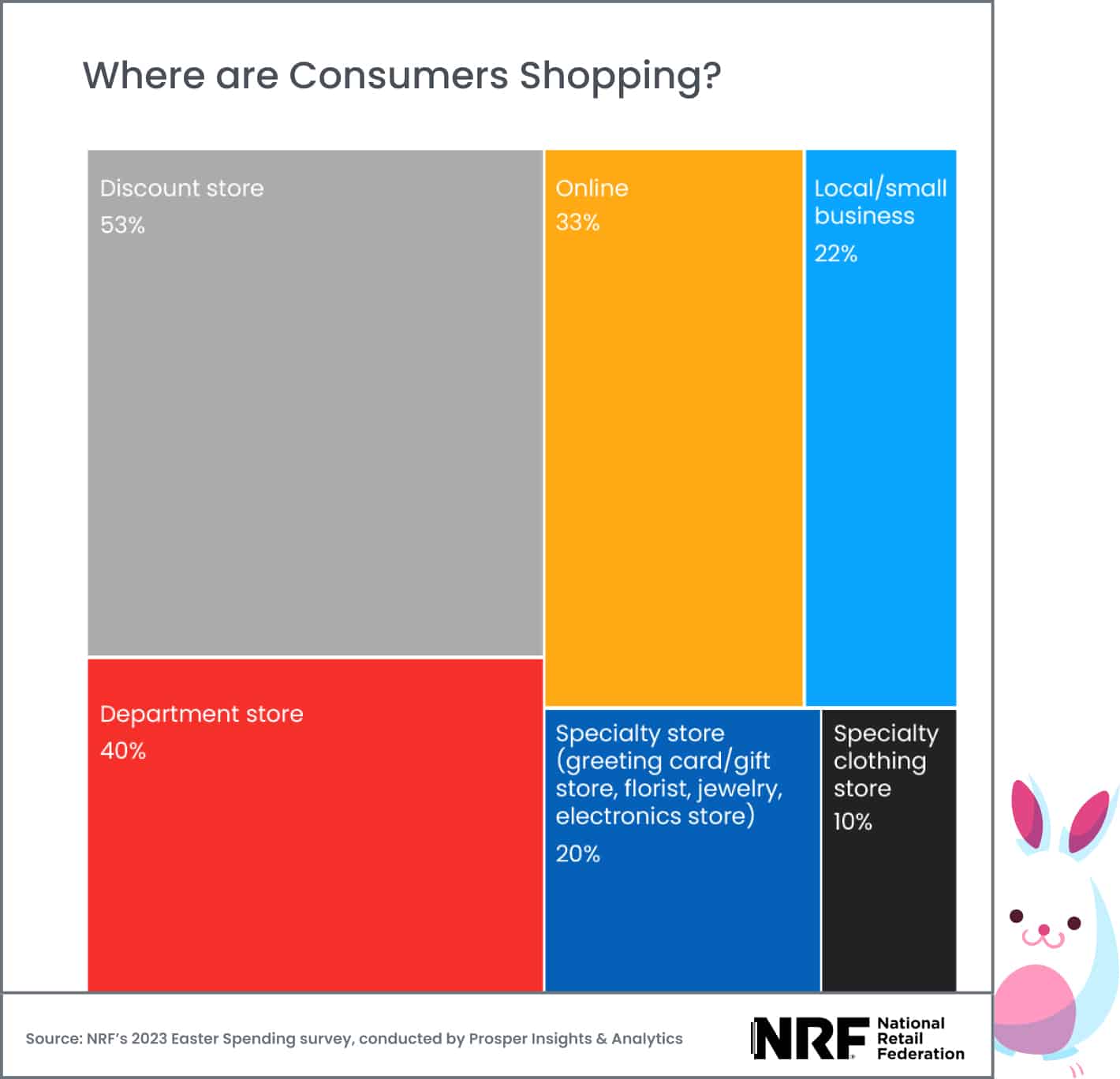
As retailers prepare for the Easter rush, delving into where and why consumers shop becomes a crucial piece of the puzzle. It’s no surprise that discount stores steal the spotlight as the go-to destination for 53% of American shoppers in 2024. Amidst the hunt for bargains, it’s the promise of sales promotions that seals the deal for 29% of shoppers, adding an extra layer of excitement to the holiday spree.

Consumer Buying Patterns in the U.K. in 2024

By continuing to prioritize value-driven behaviors, there’s a chance for retailers in the U.K., especially grocery stores, to shift demand from out-of-home to at-home settings during Easter 2024, opening up new opportunities. In Easter 2023, 43% of consumers enjoyed a special meal at home. With consumer confidence on the rise in 2024, there’s a greater chance for retailers to support home dining. This presents a golden opportunity for premium home dining options to stand out and recreate the out-of-home experience.

With these insights in hand, retailers have a chance to craft campaigns that not only offer great discounts but also tap into the deeper essence of Easter, fostering connections and community spirit along the way. As the scent of spring fills the air, it’s time to hop into action and fine-tune your Easter strategy. With competition fiercer than ever, brands are gearing up to join the hunt for customers, each vying to emerge as the fastest and most creative bunny in the race.

Don’t Know Where to Begin?

Don’t fret, for we’ve curated an exclusive selection of the best 2024 Easter campaigns, guaranteed to keep you ahead of the curve and buzzing with inspiration.

Each handpicked example is tailored to spark your creativity and drive results, whether increasing your customer base, creating brand awareness, boosting engagement, or maximizing your Easter ROI.  The campaigns have been divided into four sections- strategy, medium, channel, and ADA Global tips to help you craft your holiday engagement strategy.

Ready to hatch some egg-cellent promotion ideas? Let’s dive in!

1. ALDI

Strategy: Aldi’s Strategy: Aldi’s magnitude of prepping for Easter is reflected in its omnichannel campaign strategy, leaving no stone unturned to meet the holiday demand. A few weeks leading up to Easter, Aldi refreshed its localized pages for most of the EU regions with customized Easter offerings to gear up for its ‘biggest and best Easter yet’ anticipating sales of approximately £8 million on hot cross buns and Easter eggs, £4 million on fresh meat, fish, and meat-free alternatives, and £34 million on fruit and vegetables. Other Easter campaigns involve giving 1,000 lucky shoppers to win their  BBC Good Food Easter Taste Awards 2024 hot cross bun.

While lamb sales are expected to rise by 900%, sales of Veuve Monsigny champagne are projected to rise by 40%, and Prosecco DOC sales are expected to soar by 150%.

Aldi keeps its customers engaged with regular newsletters and weakly leaflets, keeping them excited about the latest sales and offers.

2. Mars

Strategy: Mars unveiled its 2024 Easter campaign with the launch of M&M’S Easter Sundae candies. Alongside this release, M&M’S also introduced its 2024 Easter Gift Guide. Shoppers can explore a variety of personalized gifts, ranging from iconic candy options to merchandise featuring beloved M&M’S characters. With over 20 M&M’S colors to choose from and the option to add customized messages and images, the possibilities are endless.

3. Asda

Strategy: Asda has launched its 2024 Easter advertisement where it imagines a farm where chickens lay chocolate eggs. As part of its Easter campaign, Asda is hosting an “open farm” family fun day, accompanied by a competition for a chance to win an overnight stay in a luxury farmhouse. Embracing the farm theme, Asda is engaging its audience on social media with the hashtag #ThatsEasterSorted and partnering with brands, encouraging participation through interactive polls. To cater to families during the holiday, Asda is offering customers to book Easter delivery slots.

As we reflect on the dynamic Easter campaigns of Mars, Asda, and Aldi, one thing becomes abundantly clear: the power of creativity and innovation in capturing the spirit of the season. By drawing inspiration from these campaigns and leveraging personalized marketing, audience segmentation, and omnichannel customer journey orchestration, retailers can unlock new opportunities to engage customers, drive sales, and make this Easter their most successful. Let’s harness the creativity, innovation, and insights showcased by these brands to craft Easter campaigns that resonate deeply with consumers and leave a lasting impression.

Well, it doesn’t end here.
We also have a list of things that you can tick mark before planning your Easter campaign.

Here you go!

How can ADA Global Help in Planning your Easter Campaigns?

Resources:

Disclaimer: This blog does not indicate an ongoing business partnership with the brands, and all references are solely for illustrative purposes.

Table Of Contents
Easter Spending in 2024: Consumer Insights
Consumer Buying Patterns in the U.S. in 2024
Consumer Buying Patterns in the U.K. in 2024
Don’t Know Where to Begin?
1. ALDI
2. Mars
3. Asda
How can ADA Global Help in Planning your Easter Campaigns?