
How to Leverage Behavioral Data for Advanced Content Personalization Across Channels

Omnichannel Marketing
Blogs

How to Leverage Behavioral Data for Advanced Content Personalization Across Channels

Today’s digital-first consumers expect brands to anticipate their needs, offer relevant experiences instantly, and personalize interactions across channels in real-time. They want their loyalty rewarded, their behavior understood, and their preferences anticipated—all without the guesswork.

Disconnected data silos, legacy systems, and manual campaign processes prevent businesses from delivering the level of dynamic content personalization customers expect, leading to missed engagement and lost revenue.

These challenges can make even the most well-planned strategies fall short, resulting in missed engagement opportunities and lost revenue.

Despite possessing vast amounts of customer data, most brands struggle to leverage it for real-time personalization. Traditional marketing workflows rely on outdated segmentation and static campaigns, making it challenging to tailor content based on real-time customer behavior. The result? Lack of engagement, disjointed customer experiences, and slow marketing execution, leading to missed opportunities to scale business.

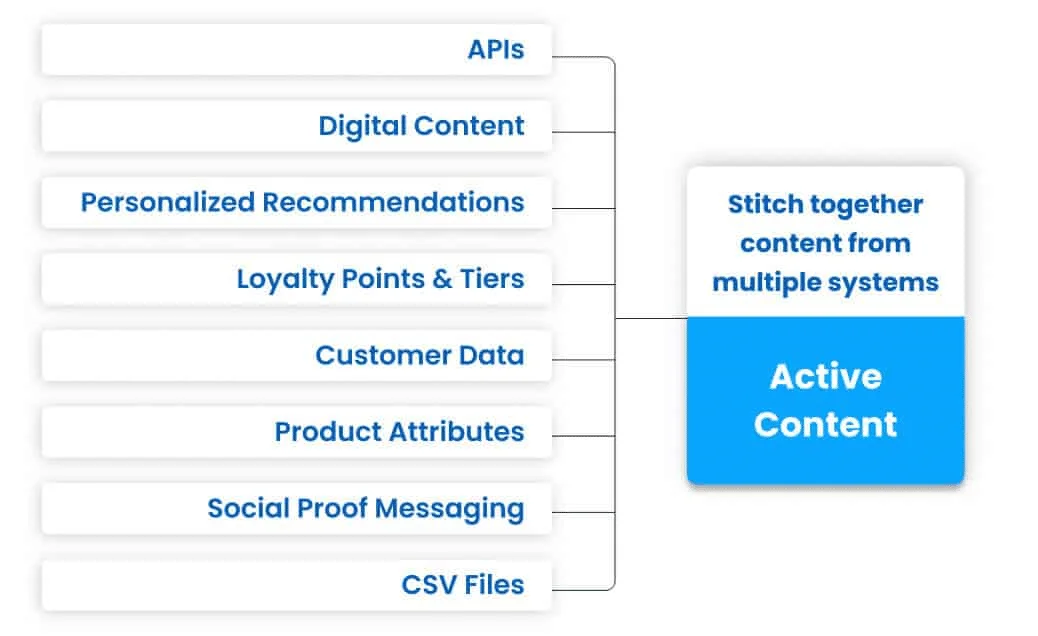
This is where Active Content transforms marketing. It enables real-time, open time personalization content personalization by dynamically assembling content blocks based on live customer behavior. By integrating with CDPs, CRMs, loyalty systems, and product catalogs, Active Content ensures that every touchpoint—emails, websites, mobile apps, WhatsApp, and SMS—delivers a personalized experience at the moment of engagement, not hours or days later. All of this happens without IT dependency, thanks to its no-code content automation capabilities. Every customer interaction is relevant, timely, and designed for enhanced engagement, loyalty, and conversions.

However, achieving advanced content personalization platform comes with its complexities. Integrating and interpreting vast behavioral datasets from multiple channels without the right solution can feel overwhelming. Active Content transforms these challenges into opportunities, enabling businesses to craft personalized content recommendations that are not only relevant but also scalable. Let’s explore the key challenges in delivering effective personalization and how Active Content offers actionable solutions to keep your customer experiences engaging, consistent, and impactful.

Advanced Content Personalization: Challenges and Solutions
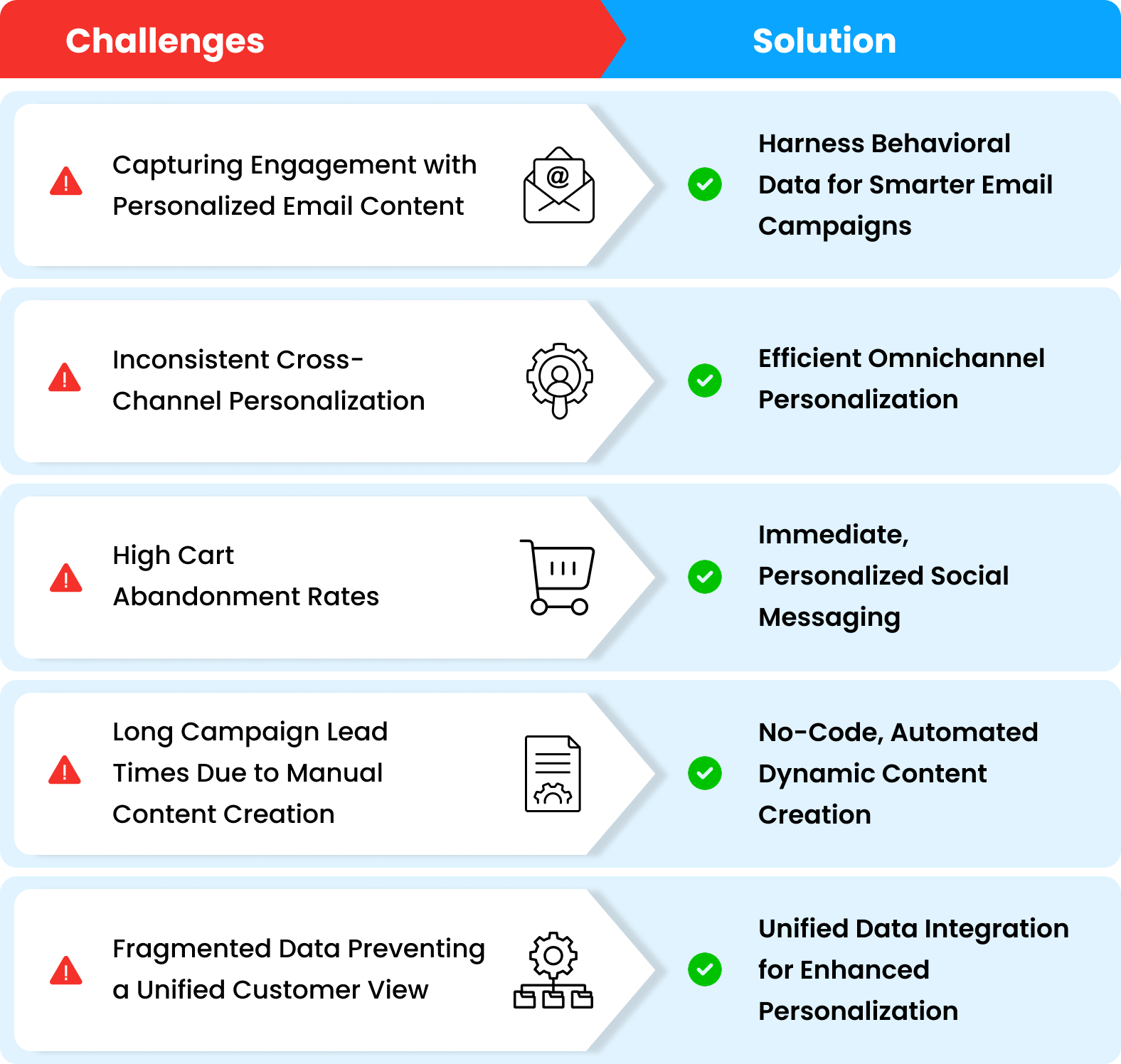
Challenge 1: Capturing Engagement with Personalized Email Content

Standing out in crowded email inboxes requires more than generic campaigns. Customers now expect tailored content that aligns with their interests, making advanced dynamic personalization a critical strategy for modern marketers.

Email personalization today must go beyond inserting first names. Customers expect real-time relevance based on live data like inventory changes, price drops, and behavior. Most marketers lack the tools to adapt email content in real-time based on inventory changes, price drops, or behavioral triggers.

Marketers often rely on pre-built email campaigns that fail to reflect up-to-the-minute customer behavior, leading to missed opportunities for engagement. Without an automated, real-time solution, ai email personalization remains stagnant, unable to meet user expectations.

Solution: Harnessing Behavioral Data for Smarter Email Campaigns

Active Content’s open-time personalization dynamically updates email content when the recipient opens the email, showing the latest offers, personalized product recommendations, social proof, and urgency triggers. This ensures that content remains relevant and actionable, leading to better engagement, and increased conversions.

Active Content enables businesses to deliver personalized content recommendations in every campaign by analyzing real-time behavioral data. This ensures each message contains dynamic content personalization tailored to the individual recipient’s interests.

For example, if a customer browses high-end fashion products but doesn’t purchase, they could receive a limited-time personalized content recommendation in their next email.

By understanding past purchases, businesses can deliver highly relevant offers—whether it’s home décor or electronics—making every campaign feel personal and boosting engagement and sales. Building on this behavioral intelligence, dynamic content personalization enables emails to be tailored in real-time, displaying trending recommendations on first open and dynamically updating with fresh offers upon subsequent views—maximizing engagement.

Challenge 2: Inconsistent Cross-Channel Personalization

Customers expect a seamless experience across websites, emails, apps, and social media. However, many brands struggle to maintain content consistency, leading to irrelevant recommendations across touchpoints. For example, a customer may receive an exclusive offer via email, yet see outdated promotions on the website—causing confusion and reducing engagement.

Solution: Efficient Omnichannel Personalization

Active Content ensures integrated online and offline data to offer true omnichannel personalization by dynamically assembling content blocks across emails, SMS, in-app notifications, and social media ads.
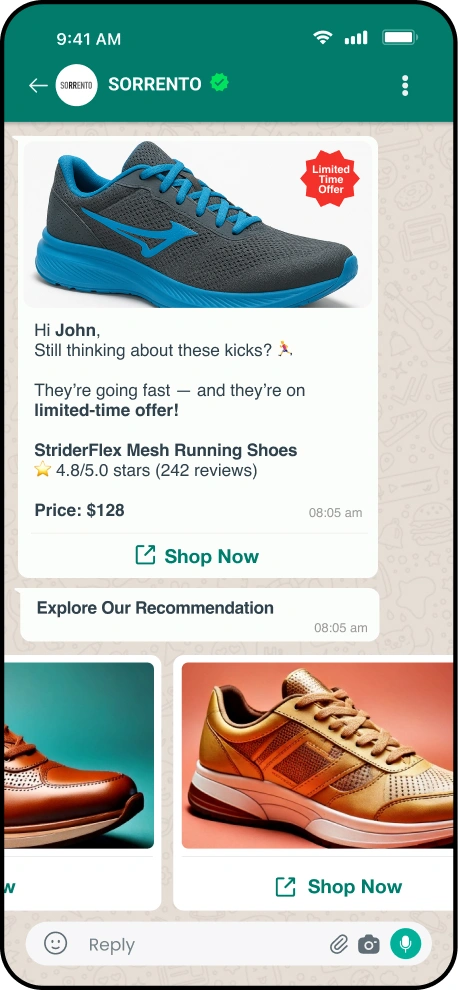
For example, a customer browsing discounted running shoes might receive a WhatsApp alert with a limited-time deal, see a personalized carousal promoting similar styles, and get a follow-up email reflecting updated stock—all in real-time and driven by their behavior.

Behind the scenes, Active Content links CMS assets with real time customer engagement preference data from rCDP and Recommend. This makes it possible to deliver dynamic content personalization and personalized content recommendations through banners, emails, and notifications—maximizing relevance and driving action.

Challenge 3: High Cart Abandonment Rates

Crafting personalized campaigns that resonate during critical moments, such as product launches and promotions, can be complex for marketers. Leveraging API-based integrations and dynamic offer blocks allows businesses to deliver precisely targeted content recommendations, maximizing engagement and driving higher conversions during these pivotal opportunities. This applies especially when the product is in high demand by customers. Businesses lose out on their revenue, especially due to cart abandonment, as most reminders are generic and fail to create urgency or relevance for the customer.

Solution: Immediate, Personalized Social Messaging with Urgency

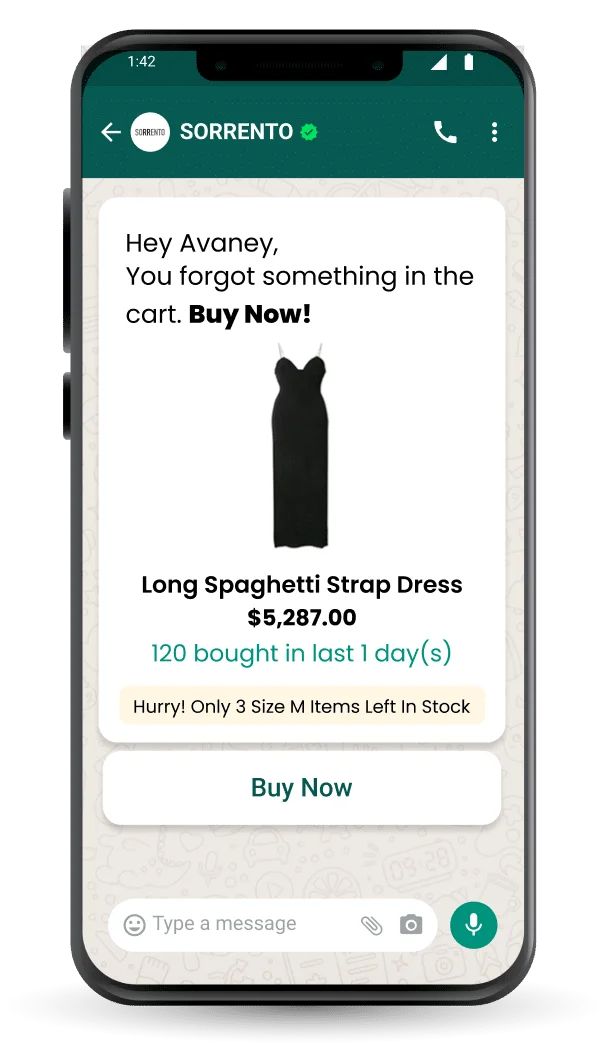
ADA Global’s Active Content applies behavioral data to fight cart abandonment and introduce personalized content recommendations through well-known messaging platforms. These platforms offer a more immediate connection with the customer, and when you add behavioral data, the messages are very targeted.
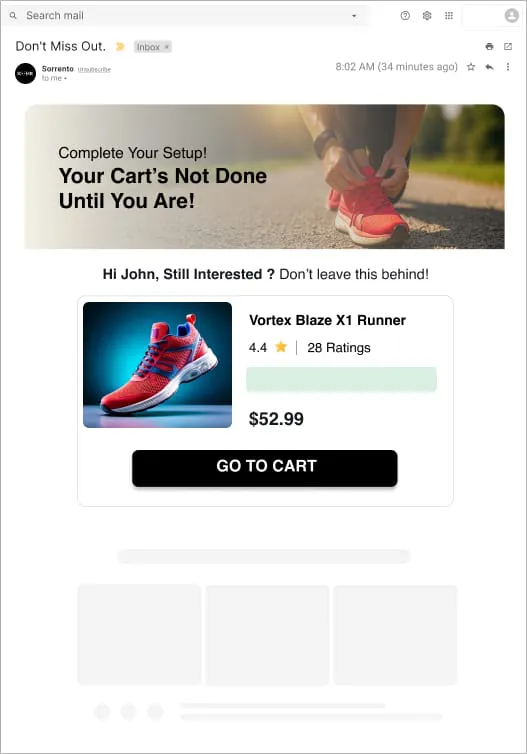
For instance, if a customer abandons a cart containing a limited-stock item, they will receive a WhatsApp notification stating ‘Only 2 left in stock!’, an email with social proof messages (’20 others bought this today’), and an SMS with a personalized discount valid for the next 2 hours. By leveraging real-time behavioral insights, Active Content ensures that abandoned cart messages drive action, not just awareness.

Challenge 4: Long Campaign Lead Times Due to Manual Content Creation

Manual workflows create bottlenecks in launching personalized campaigns, requiring extensive coordination between marketing and IT teams. The reliance on traditional content creation processes results in slow execution, making it difficult for brands to respond quickly to trends, promotions, and customer behavior changes. Without an agile solution, marketers struggle to deliver dynamic, data-driven content at scale, leading to missed engagement opportunities and delayed conversions.

Solution: No-Code, Automated Dynamic Content Creation

With ADA Global’s Active Content, marketers can significantly reduce time-to-market for personalized campaigns using its intuitive, no-code dynamic content platform. This feature allows marketing teams to easily create and customize dynamic content blocks, streamlining the process and eliminating the need for IT teams or developers. As a result, personalized recommendations can be delivered faster and more efficiently.

By leveraging real-time behavioral data, businesses can build a centralized repository of dynamic content blocks, such as “People Also Viewed” or “Popular Items in Stock.” These reusable blocks can be easily tailored for various campaigns, ensuring customers receive highly relevant offers, products, or promotions based on their activity.

This approach allows brands to launch customized campaigns and seize opportunities to engage customers with targeted messages optimally, ensuring maximum impact and efficiency.

Challenge 5: Fragmented Data Preventing a Unified Customer View

A huge drawback of advanced content personalization is integrating data collected from several sources. Customer data may be distributed across various platforms, such as loyalty programs, inventory systems, browsing history, and social media. If there is no single customer vision, ensuring that the content personalization is done correctly is challenging.

Solution: Unified Data Integration for Enhanced Content Personalization

ADA Global’s Active Content uses behavioral data, loyalty systems, and third-party systems to provide a complete view of the customer. Such a dynamic personalization approach is beneficial as it lets businesses deliver personalized content oriented throughout the buyer journey across multiple touchpoints.
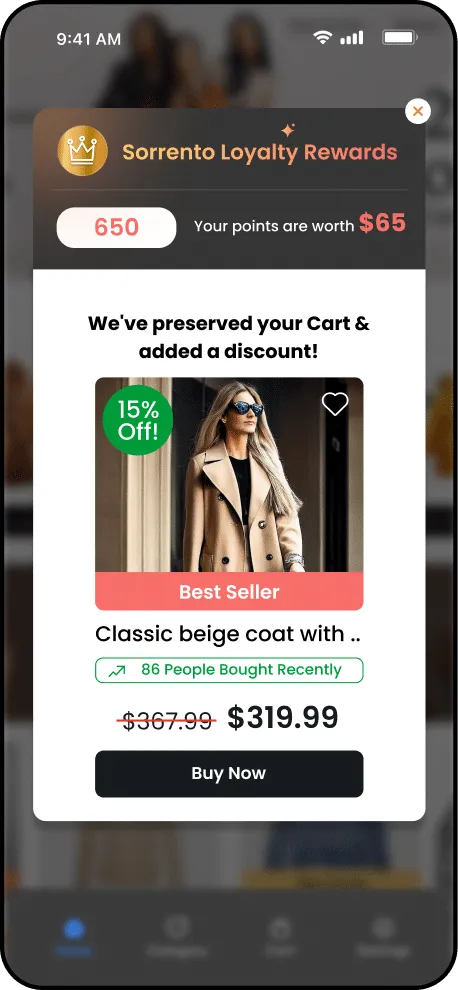
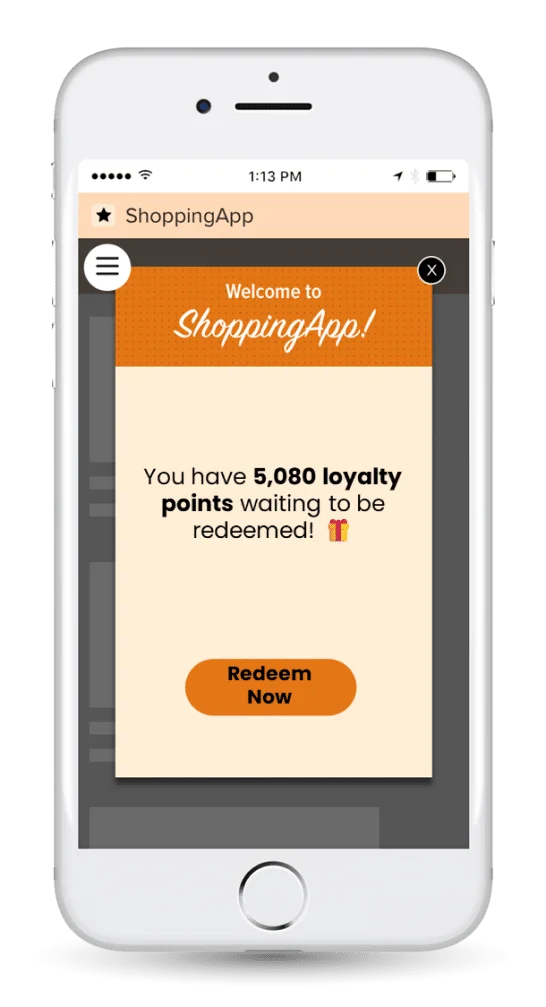
For instance, if a customer has accumulated loyalty points, they will receive the following email or in-app message pointing out that they have points that can be redeemed for products the customer has recently viewed. Likewise, a customer browses through the website often. In that case, it can be used for product recommendations or promotions based on customer reviews, driving meaningful engagement.

Active content delivers detailed insights by integrating each brand’s data sources into a unified concept. It demonstrates how personalization simultaneously enhances customer engagement and satisfaction across multiple channels. This unified view supports smarter, scalable content personalization—enabling marketers to deliver timely, personalized content recommendations based on behavior, preferences, and loyalty data.

The Power of Personalized Content at Scale

With ADA Global’s Active Content, marketers can scale dynamic content solution across channels—emails, apps, websites, and social messaging. Whether it’s personalized content recommendations based on real-time behavior, or open-time content personalization that adapts dynamically, brands can deliver personalized, relevant experiences that engage, convert, and retain. This approach to content personalization is essential for businesses looking to stay competitive and customer-centric in today’s digital-first world.

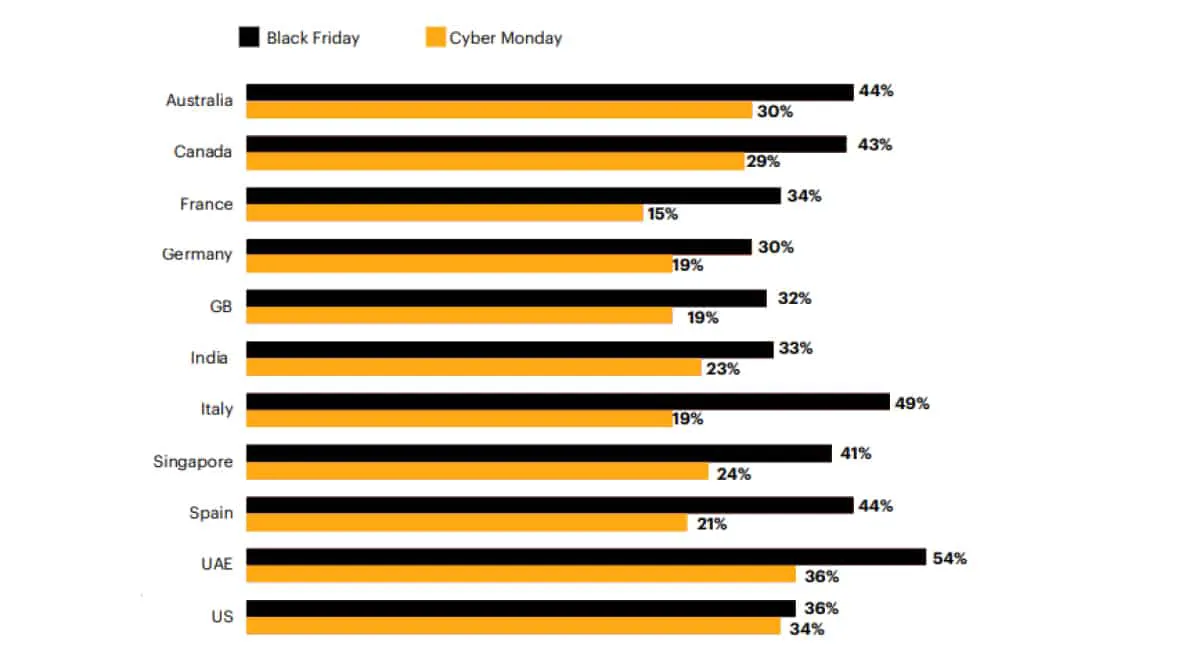
Table Of Contents
Advanced Content Personalization: Challenges and Solutions
Challenge 1: Capturing Engagement with Personalized Email Content
Challenge 2: Inconsistent Cross-Channel Personalization
Challenge 3: High Cart Abandonment Rates
Challenge 4: Long Campaign Lead Times Due to Manual Content Creation
Challenge 5: Fragmented Data Preventing a Unified Customer View
The Power of Personalized Content at Scale

Winning Black Friday: Insights and Strategies for 2024

Omnichannel Marketing
Blogs

Winning Black Friday: Insights and Strategies for 2024

Black Friday has become more than just a shopping event; cultural milestones encapsulate the global shift in consumer behavior. For brands, this period represents both immense opportunity and fierce competition. As spending during Black Friday is projected to exceed $75 billion globally, this is a chance to capture, engage, and retain customers. Regions like Europe and Australia are seeing significant growth as brands localize their campaigns.

Shoppers Very Likely and Somewhat Likely to Purchase During Black Friday and Cyber Monday in 2024 Globally

Source: US Black Friday Cyber Monday Report 2024

Consumers are highly motivated by discounts, with 73% citing them as their primary driver, and 41% leveraging the sales to jumpstart holiday shopping. Categories like clothing, technology, and gifts dominate purchases. Understanding what shoppers prefer—from category-specific shopping behavior to the channels driving awareness— Black Friday becomes a time to innovate for marketers.

But, how do you stand out with a deluge of discounts and campaigns flooding every channel? How do you convert shoppers’ momentary attention into loyalty? This blog will explore powerful marketing strategies tailored for brands across industries, helping them maximize ROI during this crucial shopping season.

Brands in Action on Black Friday

From digital campaigns to immersive experiences, successful brands use innovative tactics to stand out and drive conversions. In the following section, we will find how brands can elevate their strategies to attract new customers and solidify loyalty among existing ones.

1 Samsung

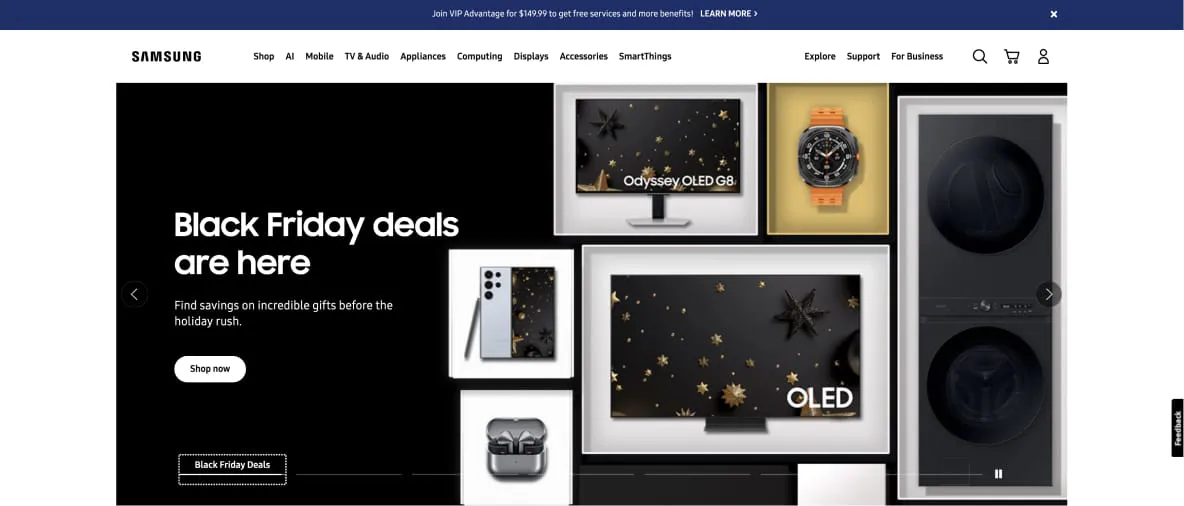
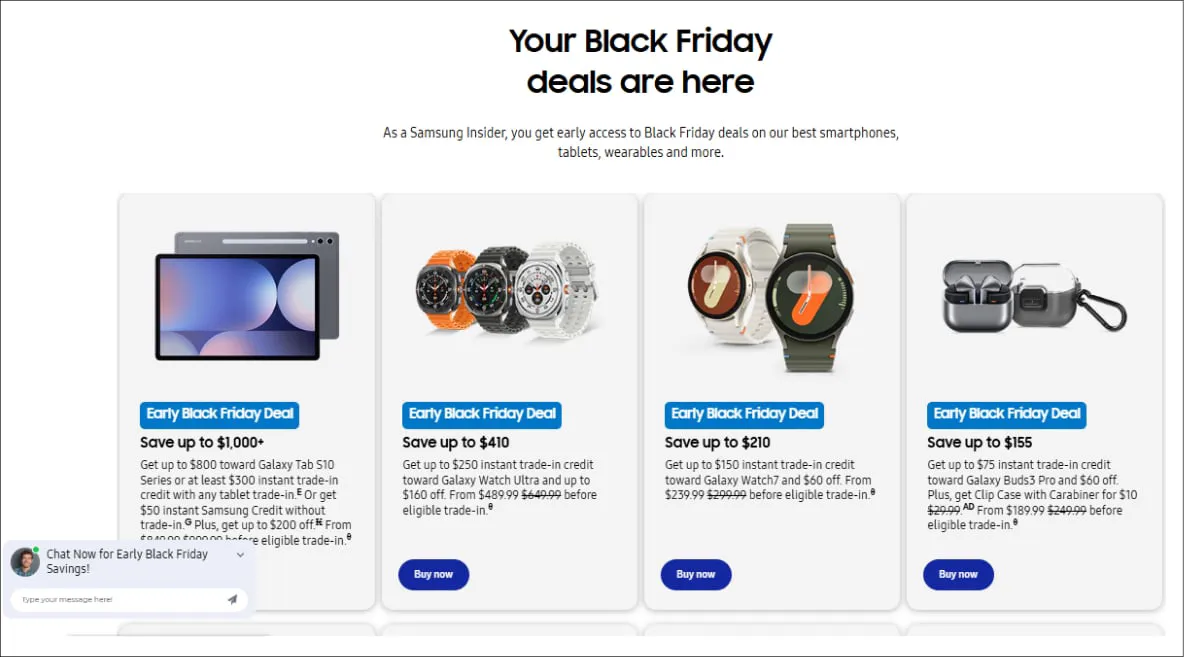
Samsung capitalizes on Black Friday by promoting exclusive bundles like their Galaxy Z phone series, LEDs, home appliances, accessories, and more. Additionally, Samsung has a chatbot on its website to help visitors with Early Black Friday Deals. The brand integrates trade-in deals, allowing customers to exchange older devices for discounts on the latest gadgets.

ADA Global Tip

Audience Manager can segment shoppers based on device usage or purchase history. For example, users owning older Samsung models can be targeted with tailored trade-in offers, while frequent shoppers can receive early access to premium deals. Furthermore, Samsung can use Social Proof Messaging to showcase real-time buyer activity.

2 Victoria’s Secret

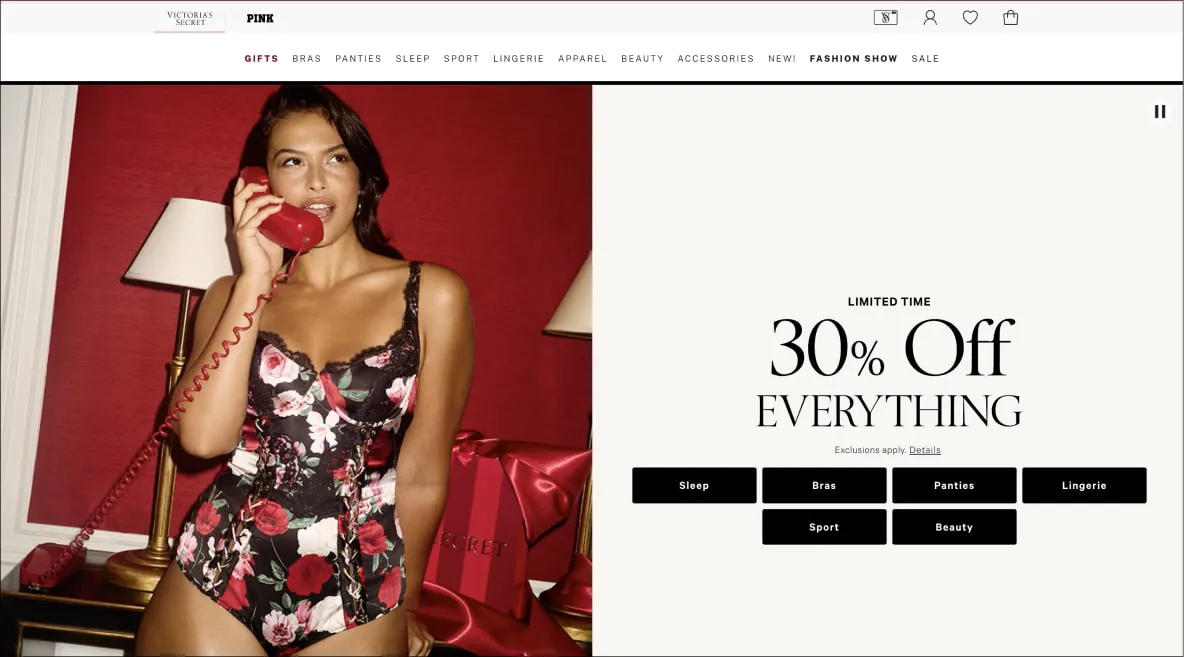
Victoria’s Secret leverages Black Friday to captivate customers with limited-time deals on bestsellers and curated bundles, such as lingerie sets paired with fragrance collections, designed to enhance customer value. Victoria’s Secret also drives traffic through its loyalty program, offering members early access to exclusive discounts.

ADA Global Tip

With Active Content, Victoria’s Secret can dynamically update promotional banners and emails to reflect real-time stock levels and personalized offers via email, push notifications, and more. Meanwhile, Engage offers on-site content, such as Victoria’s Secret banner.

3 Pottery Barn

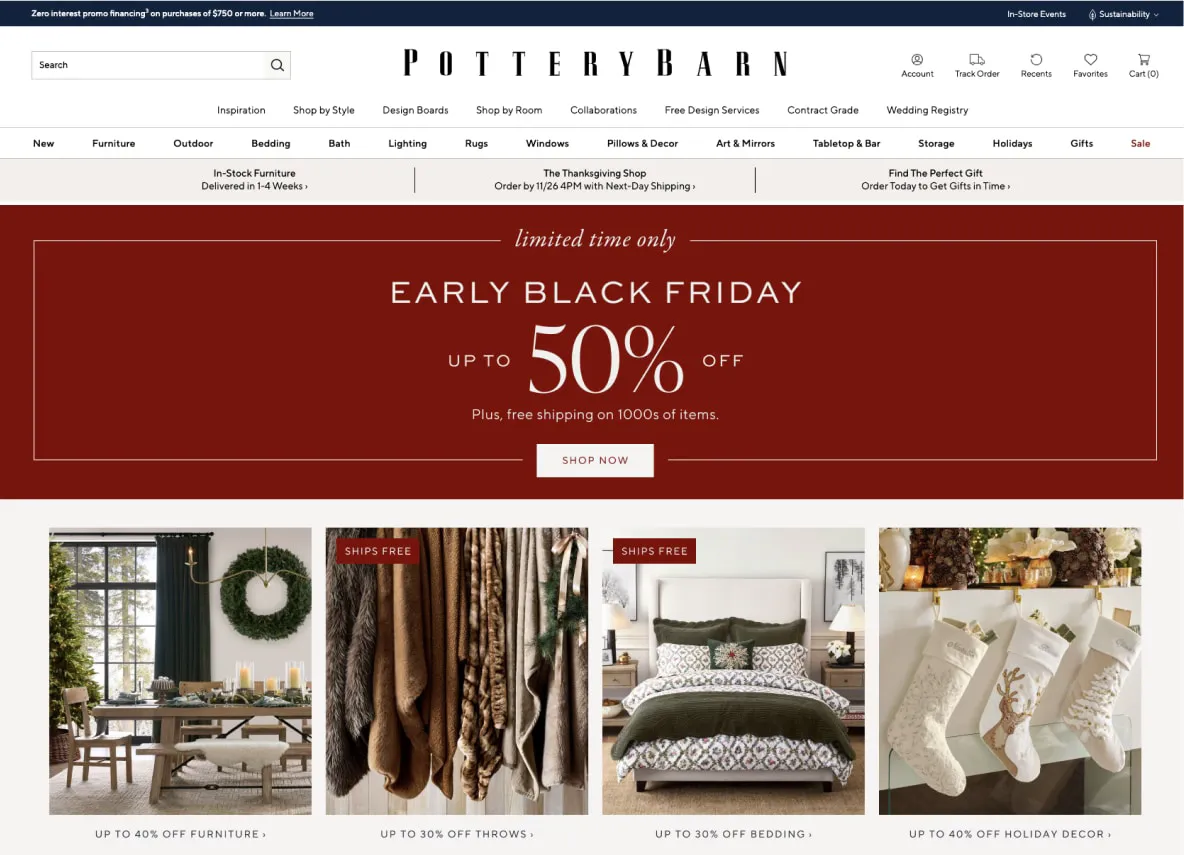
Pottery Barn integrates online and in-store Black Friday experiences. Their campaigns often feature live design consultations via Instagram Live, where customers can ask questions about their festive décor collections. In addition, Pottery Barn provides exclusive discounts to loyalty program members and showcases curated bundles, such as “Holiday Dinner Table Essentials,” to simplify purchase decisions for busy shoppers. They use social media to help shoppers with “How to Layer a Festive Bed,” “Festive Table” and more.

ADA Global Tip

Ensemble AI can suggest complete collections of furniture and home decor items that inspire shoppers. Using Find, shoppers can virtually enter a physical store and explore items that are available in that particular store. Find would also show accurate stock availability information across search results and product listing pages, thus providing an omnichannel customer experience while driving conversions on high-value items.

4 Tiffany & Co.

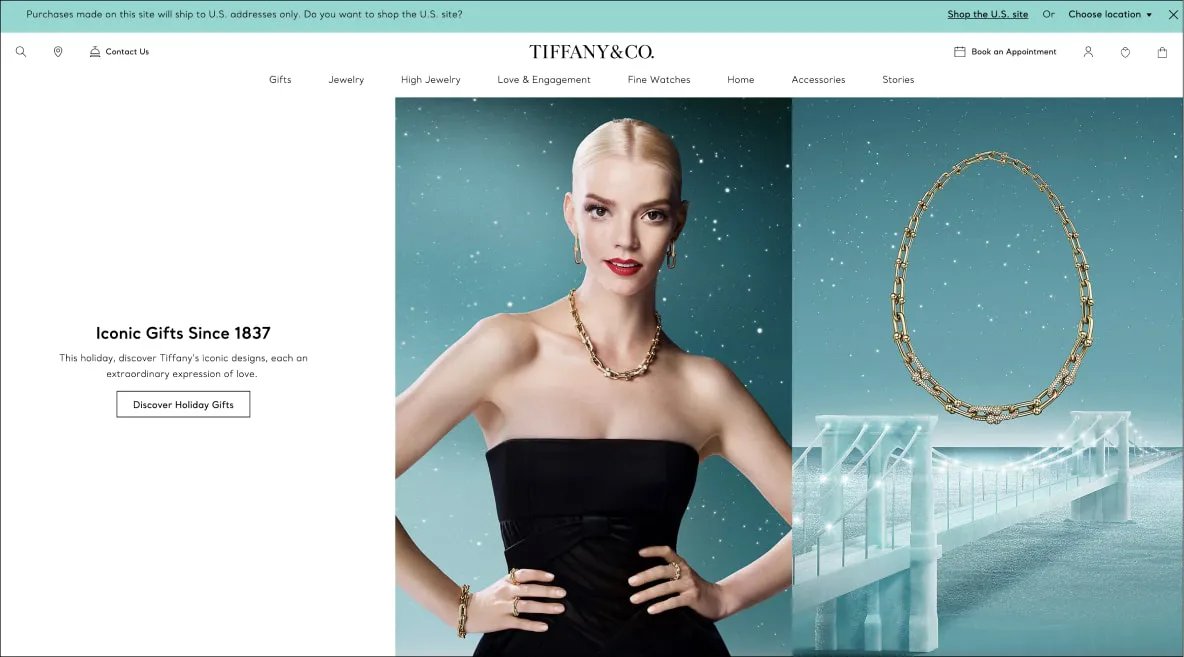
Tiffany & Co. elevates Black Friday and the holiday season, emphasizing gifting options with detailed product guides, personalized recommendations, and exclusive holiday gift collection featuring augmented reality tools for virtual try-ons. The campaign depicts the timeless appeal of its jewelry through rich storytelling, which showcases products through immersive online experiences. Tiffany also integrates virtual consultations with diamond experts to explore gifting options, adding an intimate touch to the holiday shopping experience.

ADA Global Tip

Recommend can ensure that customers exploring high-value jewelry are shown complementary items, such as matching bracelets or earrings; Engage’s Guided Selling feature can be implemented as a “Gift Finder.” At the same time, the Audience Manager can help segment shoppers based on purchase history, enabling customized campaigns to enhance customer satisfaction and encourage repeat visits.

5 Dyson

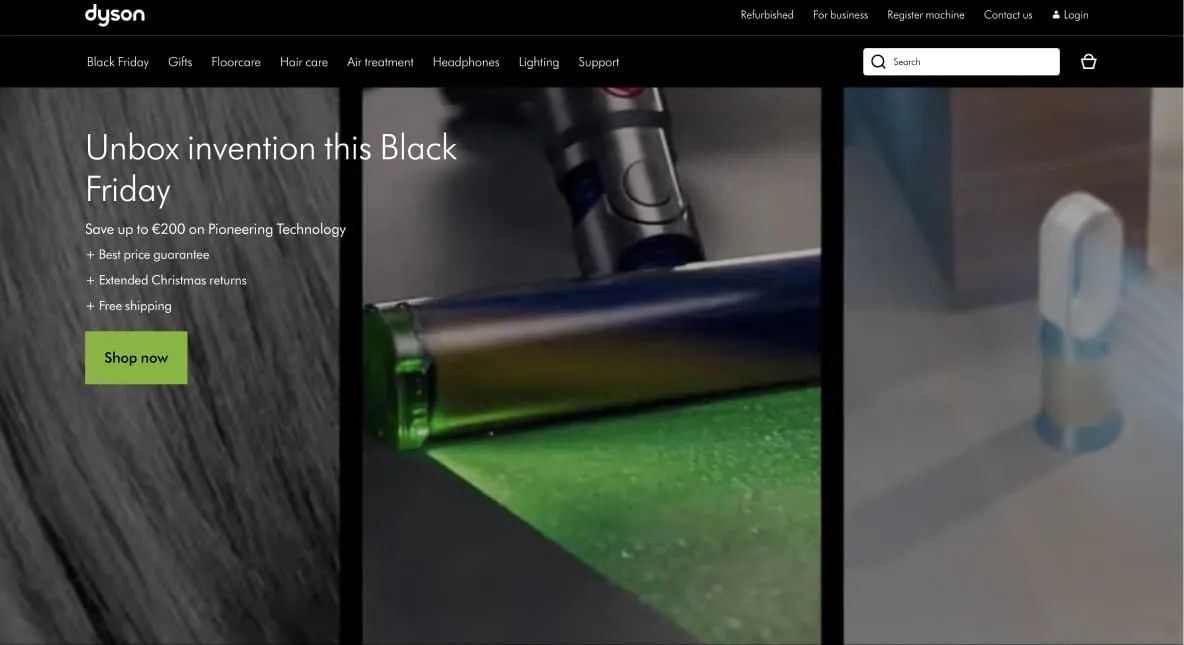
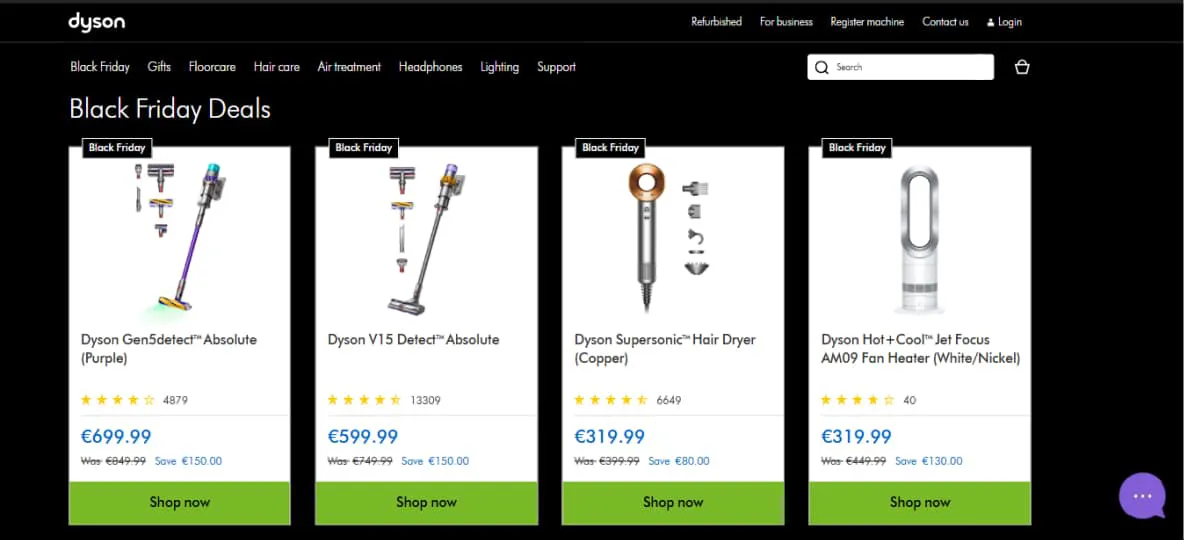
Dyson focuses on creating an immersive shopping experience during Black Friday with interactive landing pages and in-depth product showcases. These include detailed features, customer reviews, and video demonstrations highlighting the efficiency and innovation of their flagship products, such as vacuum cleaners and air purifiers. Dyson also offers exclusive member-only deals, creating an added layer of exclusivity.

ADA Global Tip

Dyson can leverage a Customer Data Platform, to create unified customer profiles for precise targeting and offer trade-in deals or product upgrades. Active Content can dynamically update banners and emails with real-time inventory changes, flash sales, and personalized product recommendations. Additionally, Recommend can help Dyson cross-sell accessories like filter replacements or cleaning kits, increasing cart value and customer satisfaction.

6 PlayStation

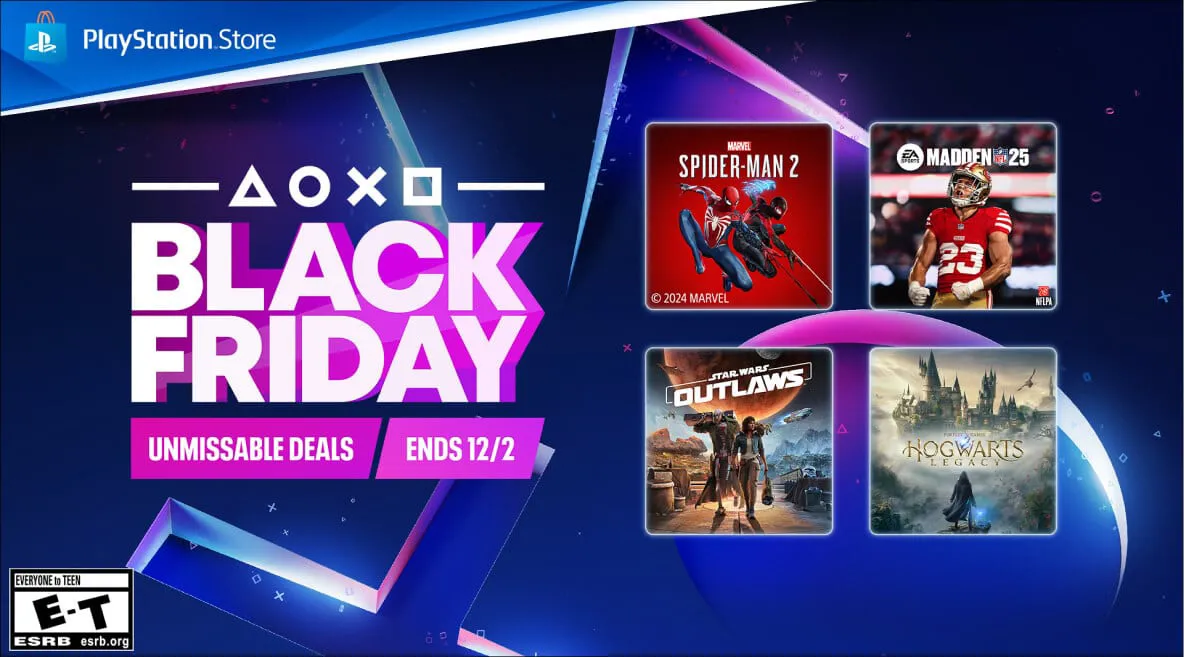
PlayStation capitalizes on Black Friday by offering discounts on hardware, games, and accessories across multiple channels, including their store, participating retailers, and website. Highlights of their campaign include the launch of the PS5 console Fortnite Cobalt Star Bundle, exclusive promotions on PlayStation Plus memberships, and steep discounts on fan-favorite games. PlayStation also emphasizes the value of membership upgrades, providing up to 30% savings on premium plans.

ADA Global Tip

Using a CDP, PlayStation can consolidate player data, enabling segmentation based on gaming preferences, purchase behavior, and membership status. This helps target customers who are likely to upgrade their PlayStation Plus subscriptions or explore new game bundles. Find can enhance the gamer experience by enabling intuitive search filters on the PlayStation Store, helping gamers quickly locate deals on their favorite genres, titles, or accessories. Additionally, Social Proof Messaging can help build urgency and trust by displaying real-time trends, such as “50 players purchased this bundle today” or “Top-selling game of the week.”

Black Friday success isn’t just about acquiring new customers; it’s also about building lasting connections with those who’ve already engaged with your brand. By personalizing campaigns to shopper preferences and leveraging the right solutions, brands can turn holiday shoppers into loyal advocates. However, the real challenge lies in sustaining this momentum beyond Black Friday. Retention strategies are the backbone of sustained success during and after Black Friday. Effective retention involves nurturing these relationships through personalized communication, exclusive benefits, and thoughtful follow-ups. Now, we’ll dive into actionable retention strategies that can transform one-time buyers into lifelong brand ambassadors.

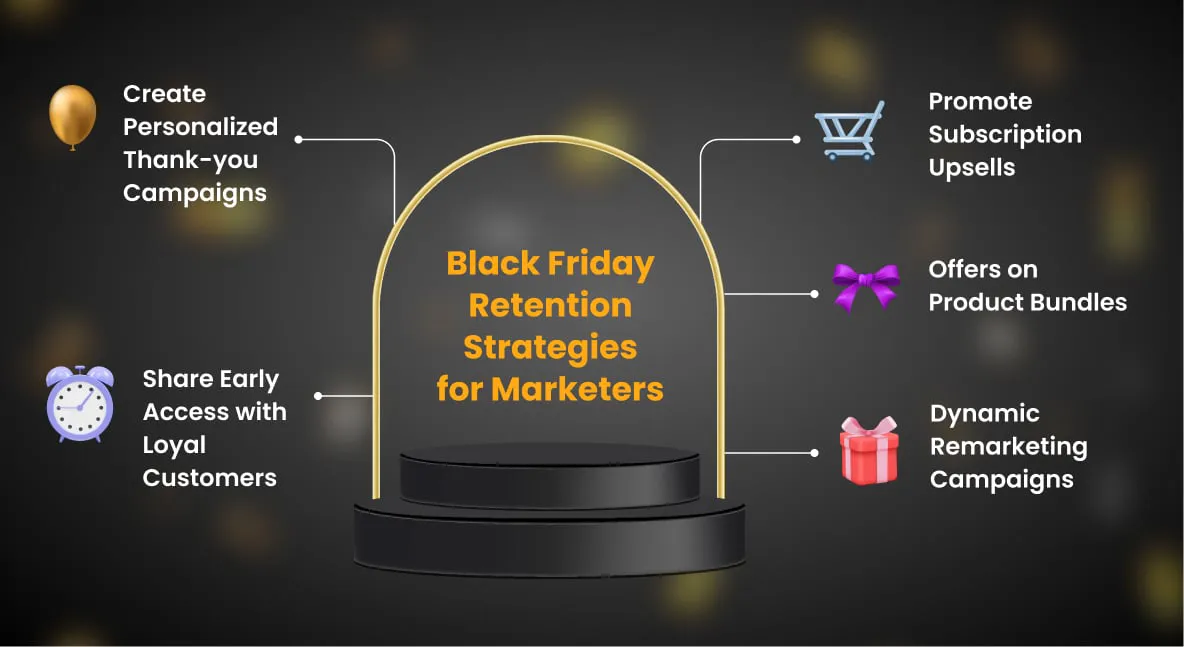
Create Personalized Thank-you Campaigns
A heartfelt thank-you message post-purchase fosters goodwill and keeps your brand in shoppers’ minds. These emails can include personalized recommendations. For example, a customer purchasing a Dyson vacuum might receive a thank-you email suggesting compatible filters with a time-sensitive discount to encourage a repeat purchase. Use dynamic email content to highlight loyalty points earned or upcoming member-only benefits, enhancing brand goodwill and driving repeat purchases.
Share Early Access with Loyal Customers
Giving loyal customers early access to Black Friday or Cyber Monday sales makes them feel valued and increases their likelihood of shopping. For instance, Zara, Rossman and other brands offer loyalty members exclusive previews of flash sales, driving engagement before the general public even sees the deals. Marketers can create VIP experiences by leveraging Audience Manager to identify top-tier customers and send targeted email or in-app notifications.
Promote Subscription Upsells
Encourage repeat business by promoting subscription services for consumables. For instance, Samsung could offer discounted protection plans or subscription-based accessories for its gadgets. Highlight the convenience and savings of subscriptions through targeted emails or app notifications.
Offers on Product Bundles
Dynamic product bundling increases the average order value and appeals to customer convenience. For example, Dunkin Donuts can create a “Holiday Morning Bundle” featuring festive mugs, seasonal coffee blends, and biscotti at a discounted rate. With Ensemble AI, brands can dynamically curate and personalize product collections based on customer preferences or purchase patterns. This ensures relevance and drives conversions by making the shopping experience seamless and highly targeted.
Dynamic Remarketing Campaigns
Retarget abandoned carts with personalized ads on social media and email. Using Social Proof Messaging, these campaigns can also showcase how many people purchased the same item, creating urgency and encouraging conversions. Recommend can also help marketers dynamically adjust cart recovery messages to showcase alternative products, ensuring a higher conversion rate.

What Lies Ahead

Black Friday is a battlefield, but the winners innovate and connect meaningfully with their customers. From leveraging omnichannel engagement to deploying AI-powered personalization, the strategies outlined here are designed to help brands survive and thrive during the holiday rush.

ADA Global’s suite empowers marketers to craft memorable experiences across every touchpoint. Brands can deliver real-time, personalized experiences that resonate with shoppers and drive long-term loyalty. Don’t just participate in Black Friday—dominate it.

Are you ready to transform your marketing game this Black Friday? Let ADA Global help you lead the race.

Disclaimer: This blog does not indicate an ongoing business partnership with the brands, and all references are solely for illustrative purposes.

Table Of Contents
Brands in Action on Black Friday
What Lies Ahead

How Real-Time Personalization is Shaping the Future of Customer Loyalty Programs

Omnichannel Marketing
Blogs

How Real-Time Personalization is Shaping the Future of Customer Loyalty Programs

In a world where customers are bombarded with options at every swipe, loyalty is no longer built on points alone—it’s about experiences. Today’s consumers expect brands to know them, understand their preferences, and reward them with more than just discounts. With the power to deliver timely, relevant rewards, brands can turn one-time shoppers into lifelong advocates.

With the right tools, brands can create unique experiences for each customer. Imagine a loyalty program that adapts in real-time—rewarding customers based on their most recent interactions, purchase history, and behavior. This isn’t just the future of loyalty; it’s the present and driving deeper customer connections than ever before.

Personalized Offers Based on Loyalty Tiers

Customers expect recognition, especially when they’ve invested in your brand. With Active Content, businesses can tailor one-to-one personalization offers based on loyalty tiers—Gold, Silver, Platinum, etc.—ensuring customers feel valued. For instance, Gold Members might receive early access to a new product launch, while Platinum Members are rewarded with exclusive discounts or double loyalty points on their purchases.

Imagine receiving a banner on your favorite fashion app highlighting a “member-exclusive sale” tailored to your recent browsing history and loyalty tier. This personalized reward builds a strong emotional connection, making customers more likely to stick with your brand.

Real-time Rewards Notifications

Active Content enables real-time updates on loyalty points and reward statuses. Customers no longer have to manually search for their points balance or check for eligible rewards. With a simple email, brands can inform customers when they’ve reached a new milestone or just one purchase away from unlocking the next reward level.

A customer named Jenna regularly shops for cosmetics. She receives a push notification that says, “Congrats, you’ve just earned 500 loyalty points! Redeem them on your next purchase for a special discount.” This small yet meaningful interaction can encourage her to return to the app and make another purchase.

Tailored Product Recommendations Based on Purchase History

One of the most effective ways to foster loyalty is by recommending products that match a customer’s past buying behavior. Active Content allows brands to draw product recommendations from your existing recommendation engine, thus bringing them to relevant marketing channels.

For instance, a customer who frequently buys skincare products might receive an ai email personalization with personalized recommendations for a new line of serums or moisturizers. By aligning these offers with customer preferences, businesses can deepen loyalty and encourage repeat purchases.

Building Emotional Loyalty Through Omnichannel Experiences

Emotional loyalty keeps customers returning beyond functional rewards like points and discounts. Active Content helps businesses deliver consistent, dynamic content personalization across multiple channels—email, mobile apps, and social media. Seamless omnichannel engagement keeps customers emotionally invested in the brand, whether it’s a congratulatory message for reaching a new loyalty tier or a reminder to use points before they expire.

Final Thoughts

Customer loyalty isn’t just about rewards—it’s about creating emotional connections that keep customers coming back. Real time customer engagement content personalization brings loyalty programs to life by turning data into meaningful interactions. By understanding each customer’s journey and responding with personalized offers at the perfect moment, brands can forge relationships beyond the transactional.

In today’s competitive landscape, where consumers have endless choices, the brands that thrive will truly understand their customers. Active Content empowers businesses to make every touchpoint count, transforming loyalty programs into ecommerce personalization solutions dynamic, real-time experiences. The result? Happier customers, stronger loyalty, and a brand that stands out in a crowded marketplace.

Also read: The More You Personalize, the Better the Customer Experience

Table Of Contents
Personalized Offers Based on Loyalty Tiers
Real-time Rewards Notifications
Tailored Product Recommendations Based on Purchase History
Building Emotional Loyalty Through Omnichannel Experiences
Final Thoughts

Active Content Personalisation for Dynamic Email Marketing Strategies

Omnichannel Marketing
Blogs

Active Content Personalisation for Dynamic Email Marketing Strategies

With inboxes overflowing daily, getting your email marketing noticed has become challenging. Customers don’t have time for generic, irrelevant emails that don’t cater to their preferences.

The solution?

Active Content transforms how brands engage with their audience by creating personalized, real-time content that aligns with individual interests and behaviors. Say goodbye to static emails and hello to dynamic, interactive campaigns. Let’s explore five pivotal ways Active Content revolutionizes email marketing.

1. Recover Abandoned Carts with Smart Follow-Ups

Shoppers often leave items in their carts for various reasons—distractions, indecision, or comparing prices elsewhere. With Active Content, you can turn these abandoned carts into completed sales through personalized, data-driven follow-up emails.

Rather than a simple reminder, Active Content generates an email tailored to that customer. It can include real-time product updates, personalized discounts, or incentives like free shipping. This personalized nudge ensures you recover lost sales more efficiently and effectively.

2. Offer Real-Time Product Recommendations

Imagine your customer browsing through products on your site. The next day, they receive an email with products they’re most likely to buy—updated in real-time, reflecting their browsing history and preferences.

Active Content integrates with your existing recommendation engine and lets you showcase product recommendations on your email and other marketing channels. It also allows you to create stunning visual content through a drag-and-drop visual editor. The best part? All of this happens in real-time, ensuring the content remains relevant.

3. Engage Customers with Dynamic Loyalty Campaigns

Loyalty programs are great but often need more visual appeal to keep customers engaged. Active Content changes that by integrating real-time data into loyalty emails. You can visually showcase how close a customer is to their next reward or loyalty tier.

By seeing their progress in a visually appealing, easy-to-understand format, customers are encouraged to take action, whether making another purchase or referring a friend. This adds a level of excitement to loyalty programs that standard emails just can’t deliver.

4. Send Personalized Emails Based on Brand Affinity

Not all customers are interested in the same products or brands. Some are die-hard fans of particular labels, while others like to explore new arrivals across categories. With Active Content, you can send highly targeted emails that cater to each customer’s preferences.

By segmenting customers based on their brand affinity or shopping habits, Active Content ensures that every email they receive feels personal and relevant. This level of customization enhances customer engagement and builds trust, increasing the likelihood of conversion.

5. Make Real-Time Edits to Emails After Sending

One of the most frustrating aspects of email marketing is dealing with mistakes or last-minute changes after sending an email. Traditional campaigns don’t give you the flexibility to fix these issues. But with Active Content, you can make changes to your email content even after they’ve hit your customers’ inboxes.

Need to update a price, or change a promotion? With Active Content, you can make real-time edits without having to retract the campaign. This flexibility ensures your emails are always relevant and accurate, even after they’ve been sent.

Conclusion

In a world where personalization is everything, relying on static, generic emails puts your brand at risk of getting lost in the noise. Active Content empowers marketers to create dynamic, personalized email experiences that adapt in real-time to customer behavior. From recovering lost sales to building brand loyalty, Active Content personalization ensures your emails are relevant, timely, and highly engaging. If you want to stay competitive in the fast-paced world of hyper-personalized email campaigns, it’s time to tap into the power of Active Content.

Also read: 3 Powerful Charms to Mesmerize Your Customers with Active Content

Table Of Contents
1. Recover Abandoned Carts with Smart Follow-Ups
2. Offer Real-Time Product Recommendations
3. Engage Customers with Dynamic Loyalty Campaigns
4. Send Personalized Emails Based on Brand Affinity
5. Make Real-Time Edits to Emails After Sending
Conclusion

3 Powerful Charms to Mesmerize Your Customers with Active Content

Omnichannel Marketing
Blogs

3 Powerful Charms to Mesmerize Your Customers with Active Content

Imagine walking into a store where the salesperson greets you by name, knows your preferences, and presents a selection of products tailored just for you. It feels like magic, doesn’t it? This personalized shopping experience isn’t just a dream—it’s a reality made possible by customer engagement strategies. Remember the excitement when Netflix recommends a show up your alley, or when Spotify curates a playlist that matches your mood perfectly? Let’s explore how businesses can wield this personalized magic wand to cast powerful charms that create unforgettable customer experiences.

Chief Marketing Officers (CMOs) face numerous challenges in today’s competitive landscape. To illustrate how these challenges can be addressed, we will follow the journey of Alex, the CMO of a leading fashion retailer for a fictitious brand – Sorrento. This article leverages ADA Global’s deep expertise in retail and industry insights to provide practical and actionable solutions for marketers. Each challenge Alex faces will be addressed with specific features and solutions that enhance customer engagement, improve conversion rates, and build customer loyalty, demonstrating how ADA Global’s Active Content contributes to achieving these goals.

Charm 1: Enchanting Personalized Engagement with Dynamic Email Content

Email marketing remains a cornerstone of a customer engagement strategy. However, generic email blasts no longer suffice. Consumers expect personalized, relevant content that speaks directly to their needs and interests.

The value of getting personalization right or wrong is multiplying – 71% of consumers now consider personalization a basic requirement.

– Next in Personalization 2021 Report, McKinsey

1 First Challenge

During a new product launch, Alex faced the daunting task of capturing customer interest and standing out in a crowded inbox. The standard promotional emails were not yielding the desired engagement rates. Alex needed a strategy that would not only capture attention but also drive conversions by delivering content that resonated with each recipient on a personal level.

2 Solution

  • Real-Time Product Recommendations: By leveraging the data on each customer’s browsing history and previous purchases, the retailer dynamically displayed the most relevant products in the email. For example, if a customer frequently views high-end fashion items, the email would highlight the latest premium collections.
  • Personalized Offers: Offers and discounts were tailored based on the customer’s past purchase behavior. For instance, a customer who often buys dresses might receive a special discount on the latest dress collection, while another who frequently purchases accessories might get a bundle offer on accessories.
  • Open-Time Personalization: The content of the email changes based on when the customer opens it. If they open the email immediately, they see a set of recommendations, but if they open it a day later, the recommendations are updated to reflect the latest trends

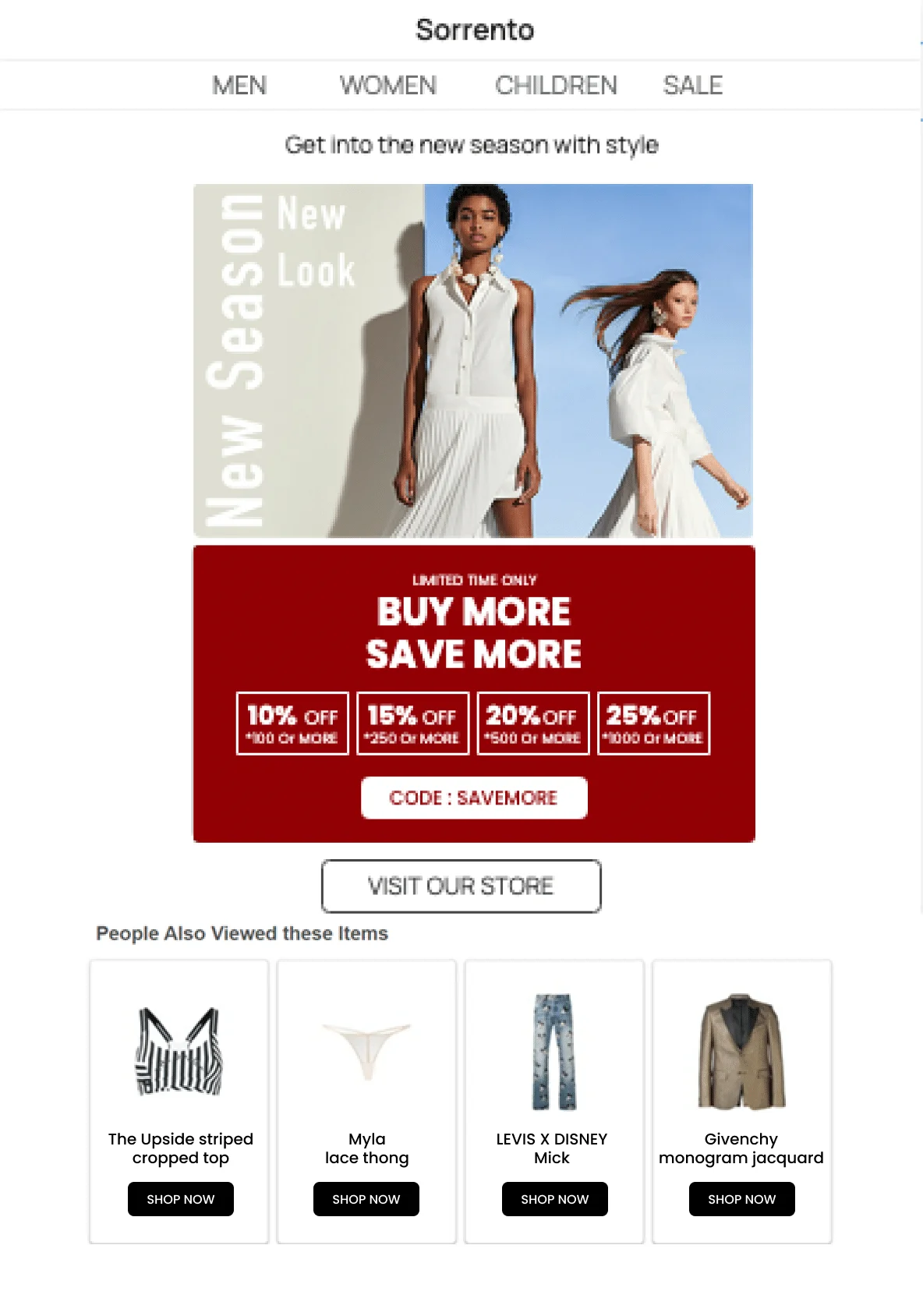
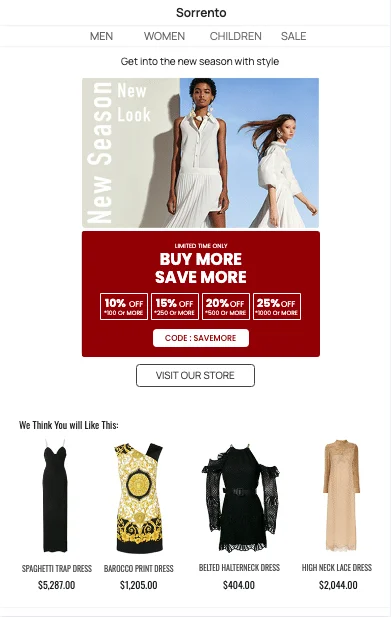
Avaney receives a seasonal promotional email and opens it on Monday, June 4th. The offers and recommendations are dynamically rendered at open time, taking into account her recent customer snapshot—history, browsing, and recent past behaviors.

Avaney opens this email again in the evening after purchasing the Levi’s X Disney Mick Jeans, inspired by the product recommendation from the email. She finds that the product recommendations have been refreshed, and the product she bought is no longer recommended under “People Also Viewed This Item.” Instead, this widget now showcases new products driven by her recent buying behaviors.


Charm 2: Crafting Timely and Relevant Interactions with Personalized Social Messaging

With the rise of messaging apps like WhatsApp, WeChat, Facebook Messenger, Telegram, and Viber, businesses have a new avenue to connect with customers. These platforms offer a more immediate and personal way to reach consumers, making them ideal for delivering timely and relevant messages.

72% of consumers say they now only engage with marketing messages tailored to their interests.
– McKinsey

1 Second Challenge

To combat cart abandonment, Alex’s team struggled with finding effective ways to re-engage customers who left items in their carts. Traditional email reminders were not enough to prompt customers to complete their purchases. Alex needed a more immediate and personalized approach to address this issue and drive conversions.

2 Solution

  • Dynamic Offers: The discount codes and offers in the messages are personalized based on the customer’s shopping behavior. A customer who often purchases during sales might receive a limited-time discount to create urgency.
  • Urgency Messages with Social Proof: These messages include social proof elements, such as stock availability and social KPIs. For example, a message might highlight that “Only 3 items left in stock!” or “20 people have purchased this item today,” creating a sense of urgency and encouraging immediate action.


Alex’s team incorporated these features using ADA Global’s Active Content. When customers left items in their carts, they received a personalized WhatsApp message highlighting that their desired product was running low in stock and that many others were purchasing it. This message not only included a limited-time discount but also social proof elements to create urgency, such as “Hurry! Only 3 items left in stock and 20 people have purchased this today.”

Charm 3: Keeping Engagement Spellbinding with Real-time In-app Notifications and Personalized Email Campaigns

Mobile apps and email marketing are integral to the customer experience, offering direct lines of communication and engagement. In-app notifications can enhance this experience by delivering personalized, timely messages that keep users engaged and informed. Similarly, hyper-personalized email campaigns ensure that consumers receive relevant content that speaks directly to their needs and interests. Integrating multiple data points from various platforms, such as loyalty programs, inventory levels, and pricing, into these strategies creates a holistic view of the customer, significantly boosting retention and satisfaction.

76% of consumers get frustrated when they don’t find their experience personalized.
– McKinsey

1 Third Challenge

Alex’s team struggled with creating a cohesive and personalized customer experience across multiple touchpoints – especially mobile and email. Customers received inconsistent messages and offers, which did not align with their preferences or behavior. Alex needed a strategy to keep the app relevant and engaging for users, encouraging them to return frequently and make purchases, while also integrating various data sources for a unified experience.

2 Solution

  • Dynamic Banners and Promotions: Special offers and promotions are displayed based on the user’s interests and browsing history. A user who often views sale items might see a banner promoting a flash sale.
  • Integration of Loyalty Programs: Exclusive offers and personalized recommendations are provided based on the customer’s loyalty status. For example, ‘Gold Members’ might receive early access to new products and special discounts.
  • Product Ratings and Badges: Top-rated products and special badges (e.g., Best Seller, Limited Stock) are prominently displayed to build trust and encourage purchases.
  • Multilingual Support: Personalizing content in multiple languages to cater to diverse customer bases, ensuring that users receive recommendations and promotions in their preferred language.

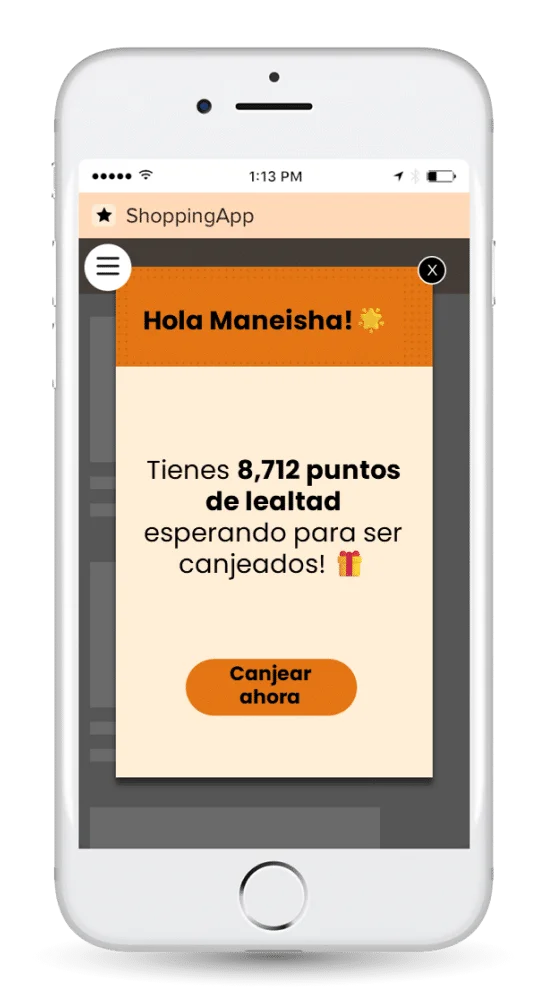
Maniesa, another customer, has a strong affinity towards dresses but prefers being communicated with in her native language, Spanish. When she receives notifications, they are personalized and delivered in Spanish, reminding her about her loyalty points redemption. This approach ensures a more comfortable and engaging experience, keeping both Avaney and Maniesa engaged, and encouraging them to explore more products and make purchases.
Moreover, Alex’s team used personalized email campaigns to complement the in-app strategy. Avaney, who is a Gold Member, receives a seasonal promotional email. The email layout includes a banner specific for Gold Members, featuring early access to new products and special discounts. The email also highlights her available loyalty points and includes a “Complete the Look” section for the recently wishlisted item, offering coordinated
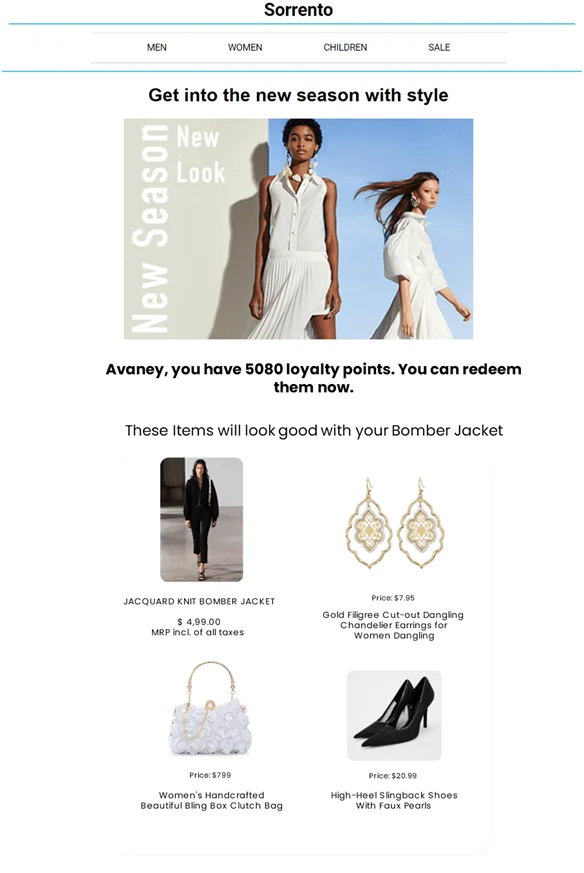
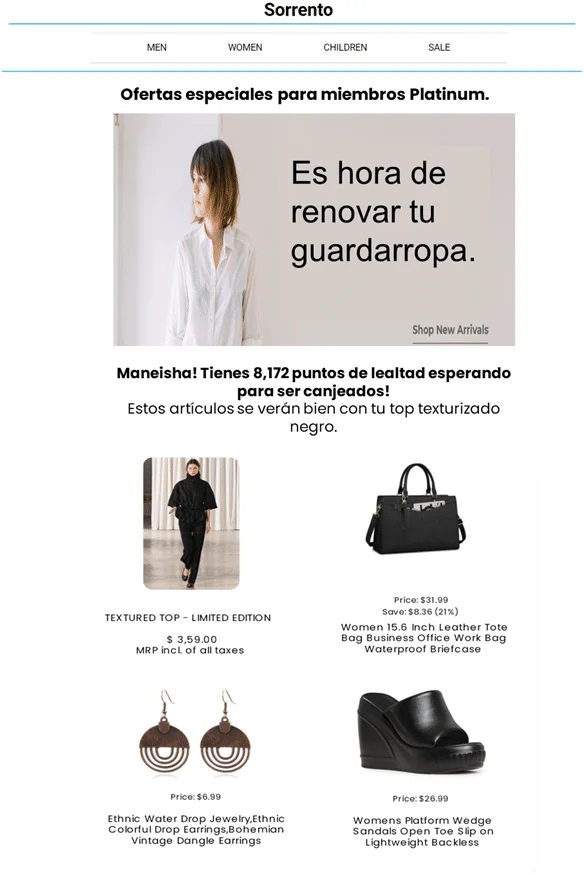
Maniesa, being a Platinum Member, receives a different version of the same email. Her email includes exclusive Platinum Member offers, higher loyalty points redemption options, and a personalized banner highlighting the premium benefits of her tier. The “Complete the Look” section for Maniesa features items based on her recent browsing history and wishlisted products, tailored to her preferences.

How to Leverage ADA Global’s Active Content for Brewing These Charms to Mesmerize Customers

ADA Global’s Active Content can assist marketers like Alex in achieving these personalized experiences across multiple touchpoints. Active content helps to Automate the creation of personalized and optimized content, constantly updated in real-time based on individual customers’ on-site behavior and preferences and bring  data to life by transforming diverse datasets into visually captivating content. ADA Global’s Active content empowers marketers to create meaningful connections with their customers.

1 Active Content Functionalities

Minimizing the Time to Market for Creative Campaigns

  • Creating dynamic content blocks, such as “People also viewed” and “1000 people bought in the last 2 hours” by pulling real-time data from various APIs and models. This allows for personalized recommendations based on user behavior and preferences.
  • Let your IT team focus on other things, leverage our user-friendly no-code-workflow
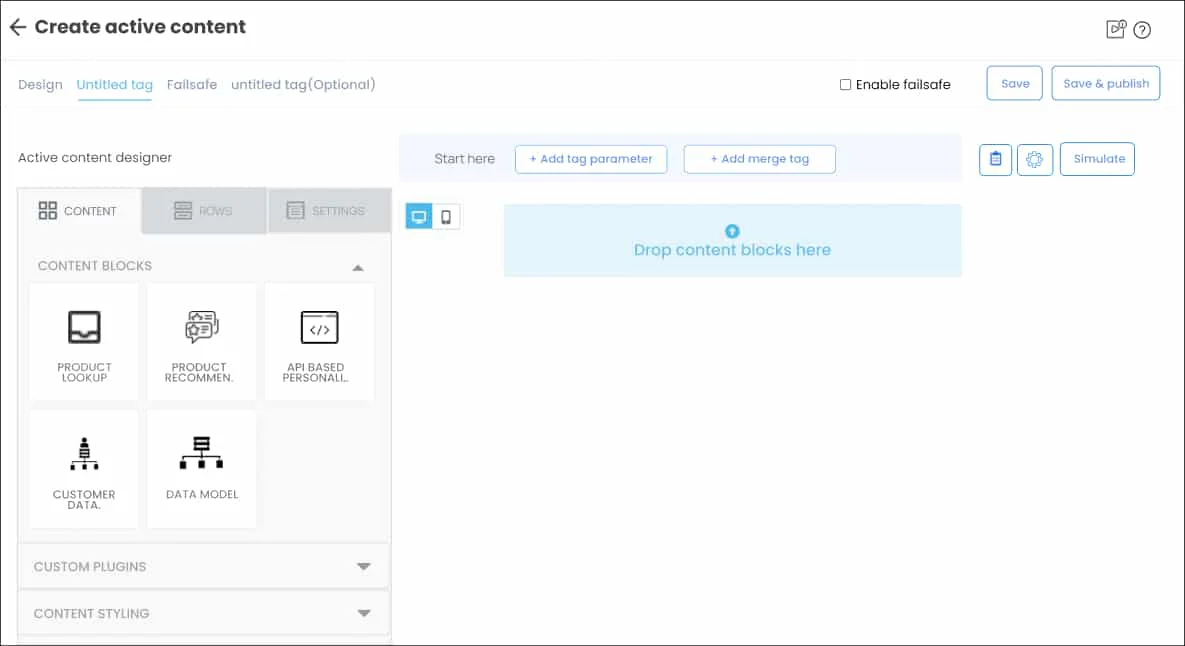
  • Let your creative ideas flow, a simple drag-and-drop dynamic content editor ensures zero dependency on IT teams. Creating a centralized repository of reusable  dynamic content blocks.
  • Ensure campaigns are launched swiftly, and no marketing opportunities are missed by minimizing the time to market for creative campaigns.

Stitch Together Content from Multiple Sources

Seamlessly integrate behavioral data, personalized recommendations, loyalty points, social proof messages, product reviews, and more into stunning visual experiences.

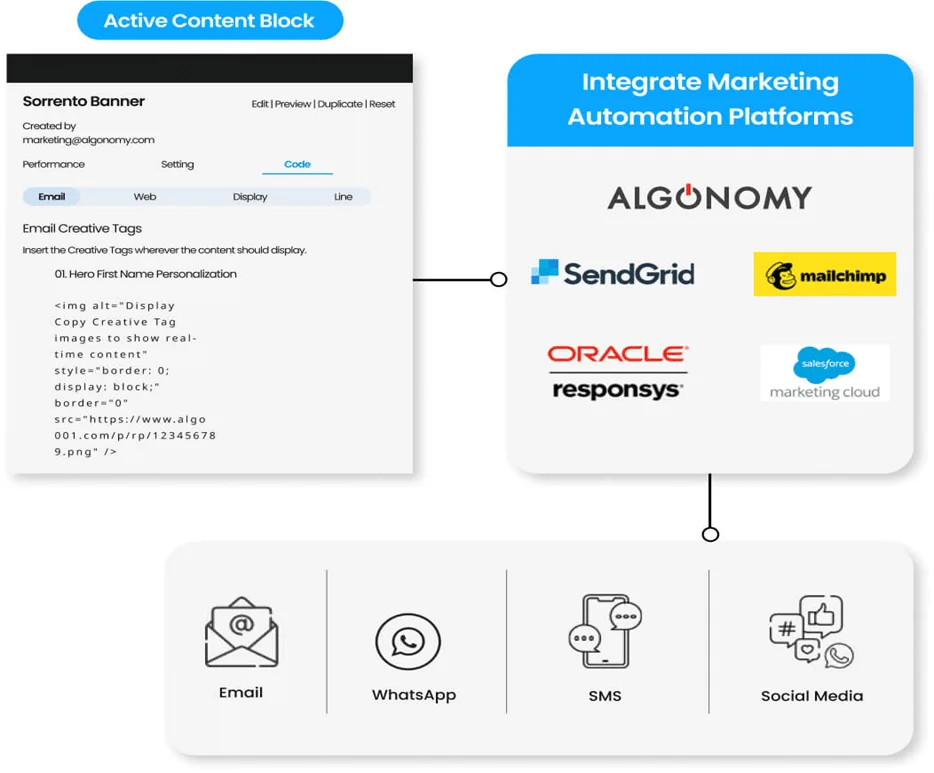
Deliver Seamless Omnichannel Content

  • Publish content with a simple URL, across marketing channels like email, mobile app, mobile ads, push notifications, WhatsApp and other social media.
  • Active Content integrates with your existing Martech stack and delivers value instantly. It can integrate with over 200+ marketing automation platforms.

Conclusion

The magic wand of content personalization, powered by Active Content, allows businesses to craft tailored customer experiences that resonate on a personal level across omnichannel. For marketers like Alex, this approach not only enhances customer engagement but also drives significant revenue growth. By leveraging the capabilities of Active Content, businesses can create meaningful connections with their customers, ensuring long-term loyalty and success.

Embrace these strategies to wield the magic wand of personalization and transform your customer experiences today!

If you want to learn more about how ADA Global’s Active Content can help you achieve these personalized experiences, contact us to explore the possibilities.

Also read: Transform Your Email Marketing: 5 Breakthroughs with Active Content

Table Of Contents
Charm 1: Enchanting Personalized Engagement with Dynamic Email Content
Charm 2: Crafting Timely and Relevant Interactions with Personalized Social Messaging
Charm 3: Keeping Engagement Spellbinding with Real-time In-app Notifications and Personalized Email Campaigns
How to Leverage ADA Global’s Active Content for Brewing These Charms to Mesmerize Customers
Conclusion

Marketing Fireworks: Ignite Your 4th of July Campaigns

Digital Experience Personalization
Blogs

Marketing Fireworks: Ignite Your 4th of July Campaigns

Cue the fireworks and get ready to celebrate America’s birthday with a bang! The 4th of July is the ultimate summer extravaganza, where patriotism meets family fun, and barbecues light up backyards nationwide. It’s also a prime time for brands to tap into the festive spirit with sizzling sales, major clearance events, and the latest summer collections.

Independence Day isn’t just about fireworks and barbecues; it’s a prime shopping event. In 2023, consumers spent a whopping $9.5 billion on the 4th of July, up from $7.7 billion in 2022, and the trend shows no signs of slowing. From food and beverages to electronics, clothing, and home goods, spending spans various categories, making it a golden opportunity for marketers.

Before crafting your holiday marketing strategy, it’s essential to understand your shoppers—their buying habits, preferences, and behaviors. Personalize your approach to resonate with them on a personal level. To get you started, here are some key consumer trends for 2024 that you should consider when planning your Independence Day campaign.

It’s All About the Timing

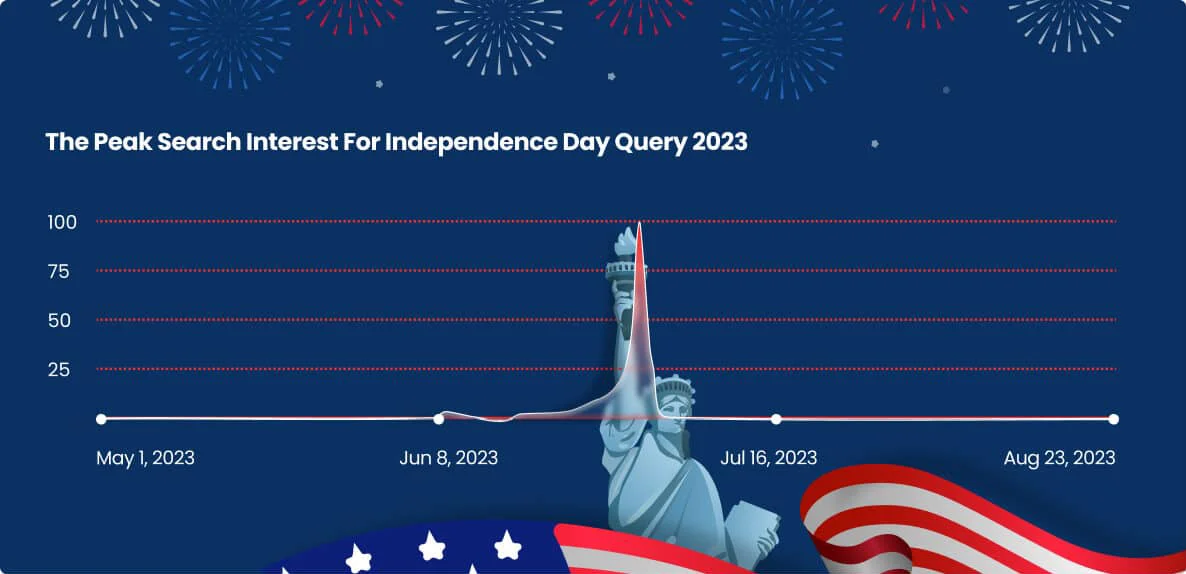
Timing is crucial for maximizing the impact of your 4th of July campaigns. Consumers begin their holiday research around mid-June, with interest peaking from July 1st to July 8th. To capture this audience, start building your campaign hype by mid-June.

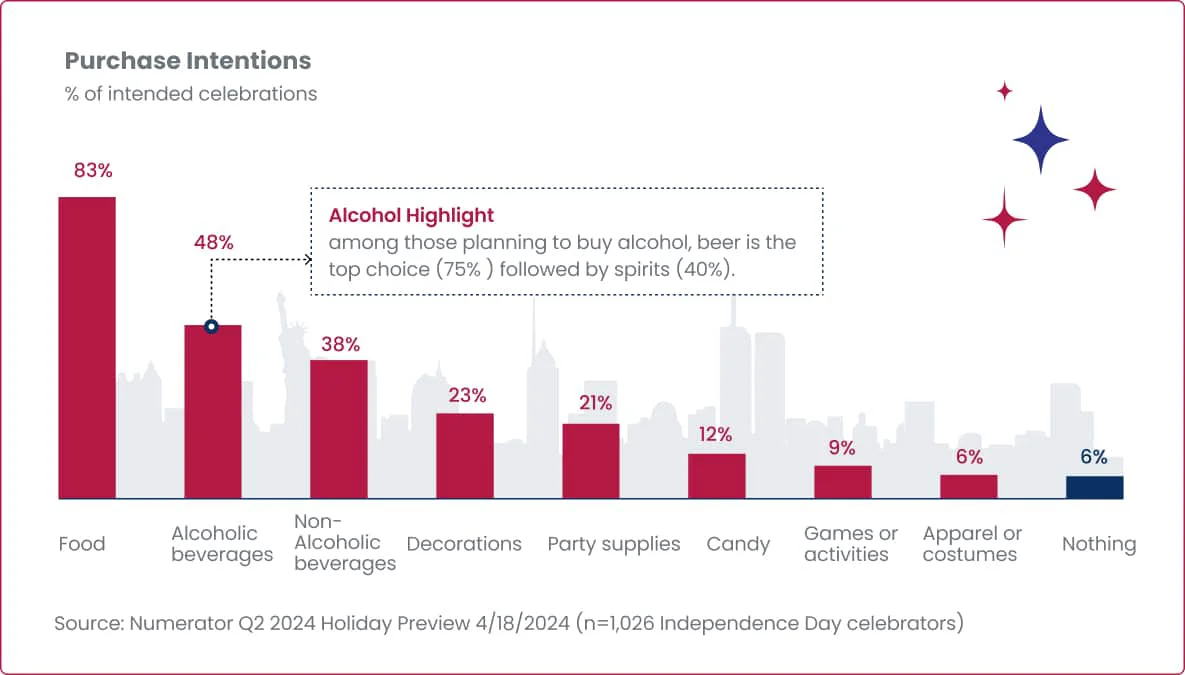
Top Spending Categories Include

  • Food: Essential for cookouts, barbecues, and picnics.
  • Alcoholic and Non-Alcoholic Drinks: Popular choices for celebrations.
  • Decorations and Party Supplies: Flags, Star-Spangled gear, and more.

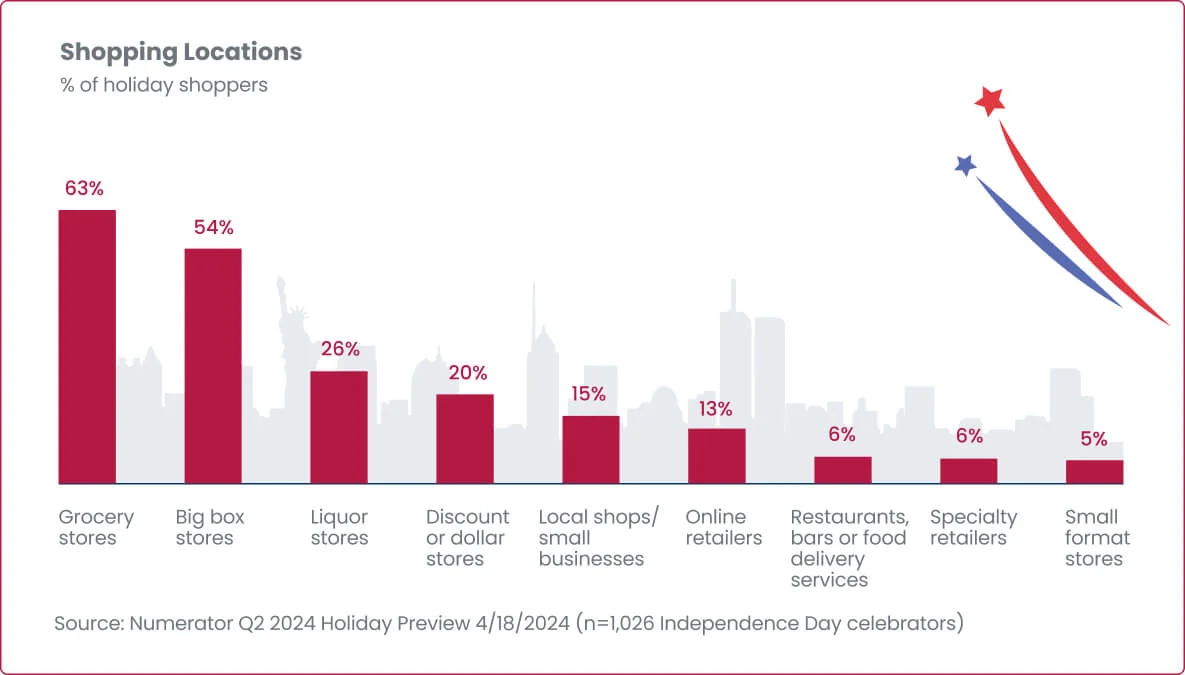
Additionally, grocery stores and big box retailers are poised to lead Independence Day sales. Over half of holiday shoppers expect to purchase their Independence Day supplies from one of these two channels.

Ada Global Tip:

A great customer engagement solution such as Audience Manager helps you segment audiences based on who purchased products from particular categories on the 4th of July last year so that you can retarget them for your 2024 Independence Day campaigns.

Now that you’re up to speed on the latest trends, it’s time to dive into effective strategies. Here are some winning tactics of successful brands to spark your 4th of July marketing efforts. This will help you harness the patriotic fervor to create impactful marketing campaigns that resonate with your customers and boost your sales.

1. Academy Sports + Outdoors

Celebrate Independence Day by honoring the brave heroes who fought for our freedom. Your 4th of July campaigns can shine a spotlight on the armed forces in meaningful ways. Show your gratitude with exclusive deals. If you’re running an Independence Day sale, add an extra discount for current soldiers and veterans. It’s a small way to say a big thank you. You can also consider donating a portion of your sales to veteran organizations. Highlight this in your emails to connect with a broader audience and add a noble touch to your campaign, making it more than another sale.

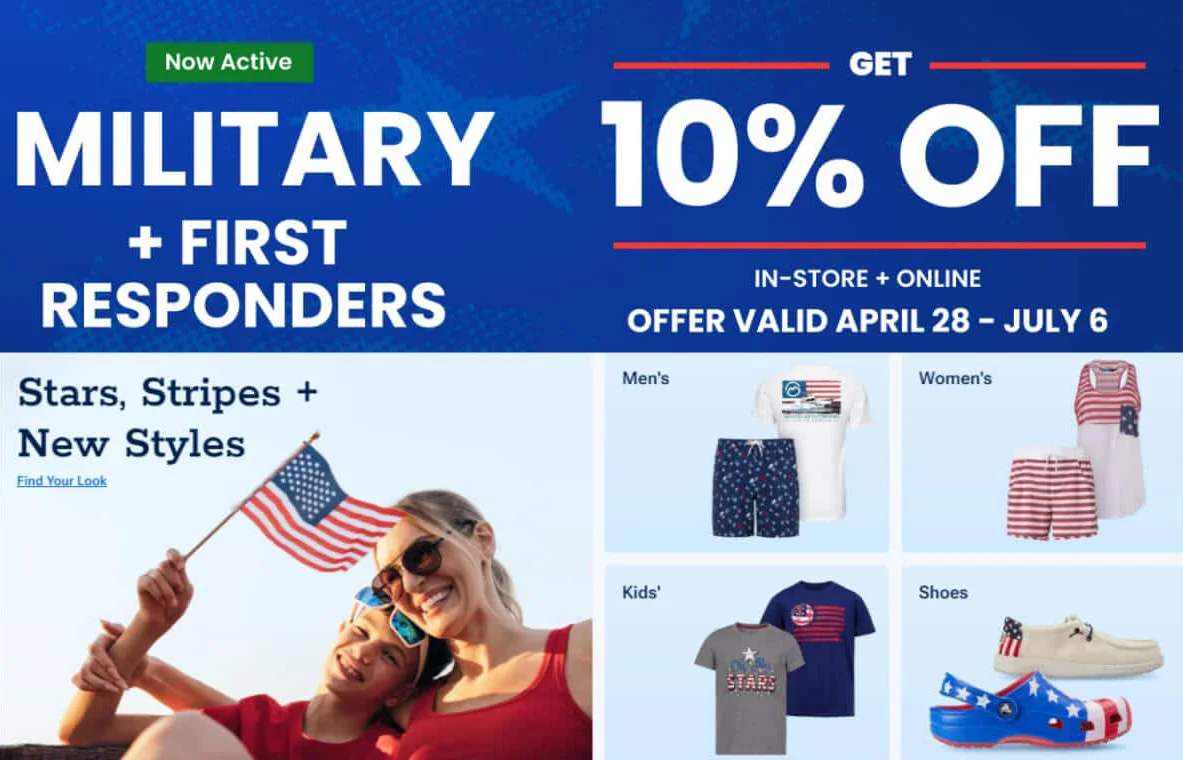
Academy Sports + Outdoors embraces this heartfelt approach with their “You Serve, You Save” campaign. This initiative offers seasonal military discounts as a token of gratitude to active service members, veterans, and first responders. From April 28, 2024, to July 6, 2024, Academy provides a 10% discount on online and in-store purchases. This gesture reflects their commitment to honoring those who protect our nation and serve our communities. Various savings opportunities can also be explored on their main discounts page.

The company proudly acknowledges all active duty members and veterans from the Air Force, Army, Coast Guard, Marine Corps, Navy, and the Reserves and National Guard. Through this, Academy Sports + Outdoors not only boosts sales but also strengthens its connection with a crucial segment of the community.

Ada Global Tip:

Instead of showing the banner to each visitor, Academy Sports + Outdoors can segment the veterans and respondents and show them relevant offers. For others (civilians), you can personalize banners based on their known behavior and preferences with Engage™.

2. Kroger

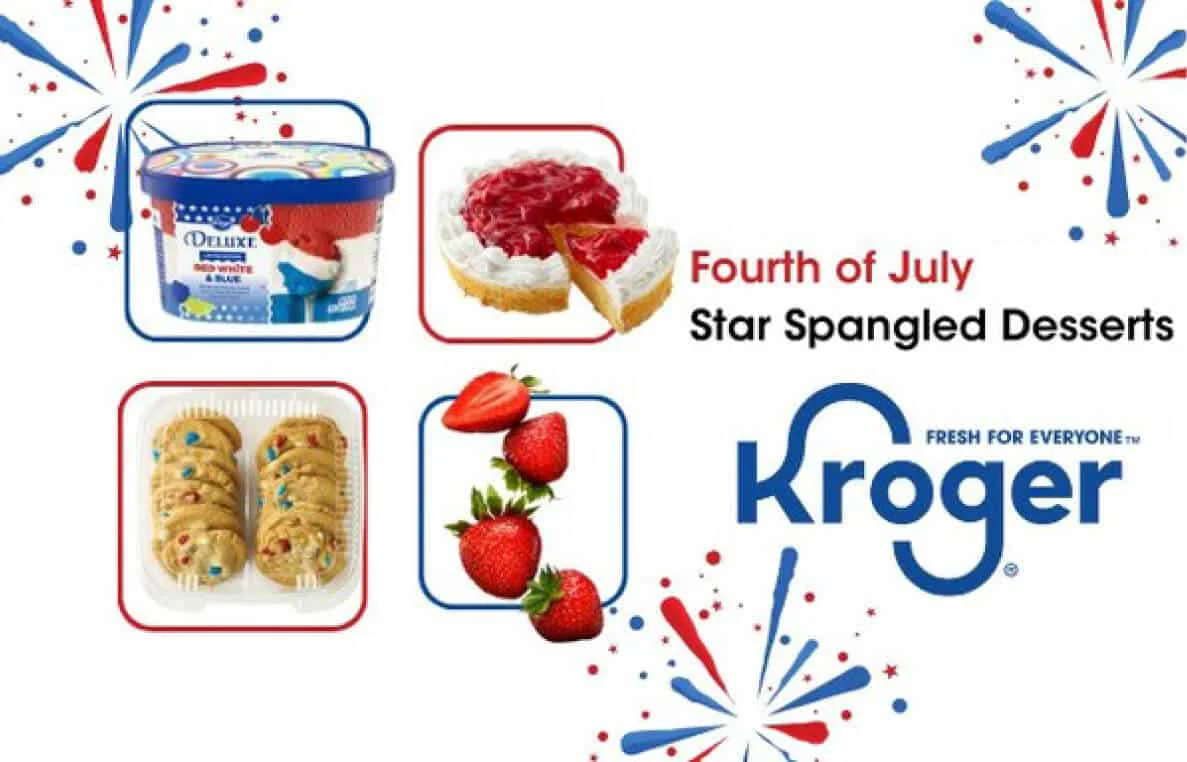
Kroger uses launching limited edition collections as a powerful strategy to create a sense of urgency and entice shoppers to buy, ultimately boosting sales. These exclusive products attract attention and encourage customers to make quick purchases to avoid missing out.

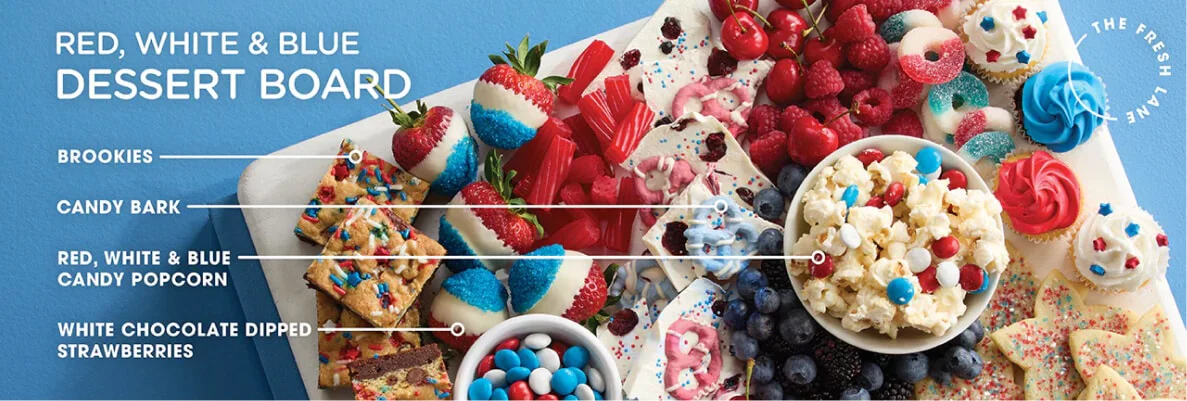
Kroger has effectively implemented this approach for Independence Day by launching limited edition collections that make holiday celebrations even more special. Kroger’s seasonal items, from star-spangled bakery treats to patriotic desserts, help customers celebrate in style. These limited-edition products create excitement and encourage festive gatherings.

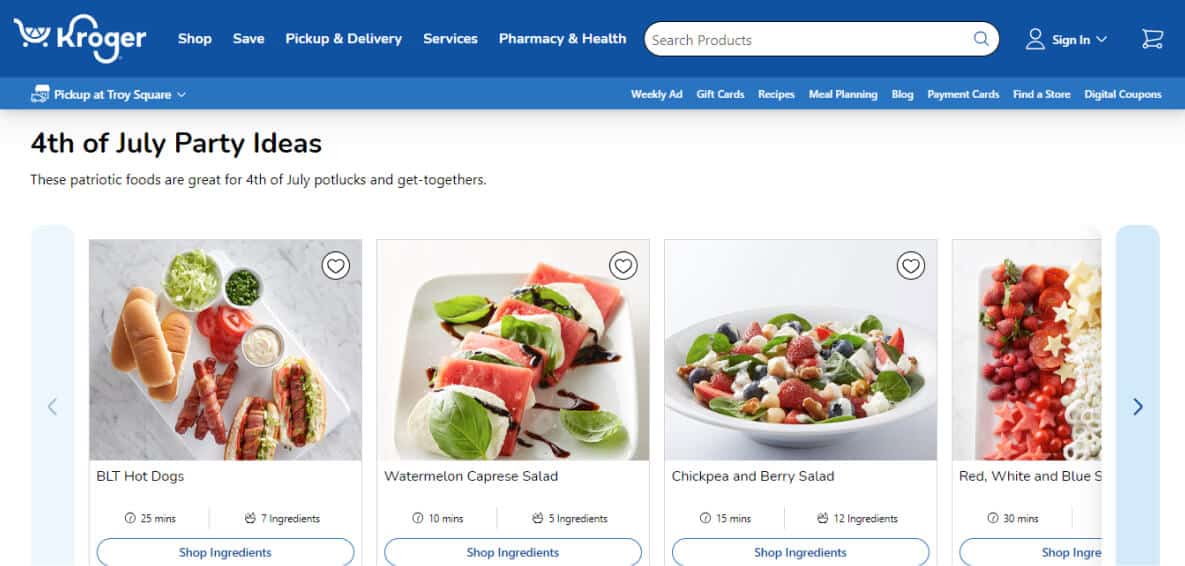
To complete the Fourth of July experience, Kroger offers cooling treats like ice cream and popsicles, adding a refreshing touch to summer festivities. Additionally, DIY dessert ideas with seasonal fruits turn treat-making into a fun family activity, creating memorable moments.

Customers can discover all their favorite sweet treats and summer essentials by shopping in-store, using Kroger Pickup, or opting for delivery with Boost by Kroger Plus.

Ada Global Tip:

Kroger can employ Social Proof Messaging to instill shopper confidence and trust with real-time visibility into trends, popularity, and purchase metrics, thus driving urgency and accelerating purchase decisions, thus improving conversion.

3. World Market

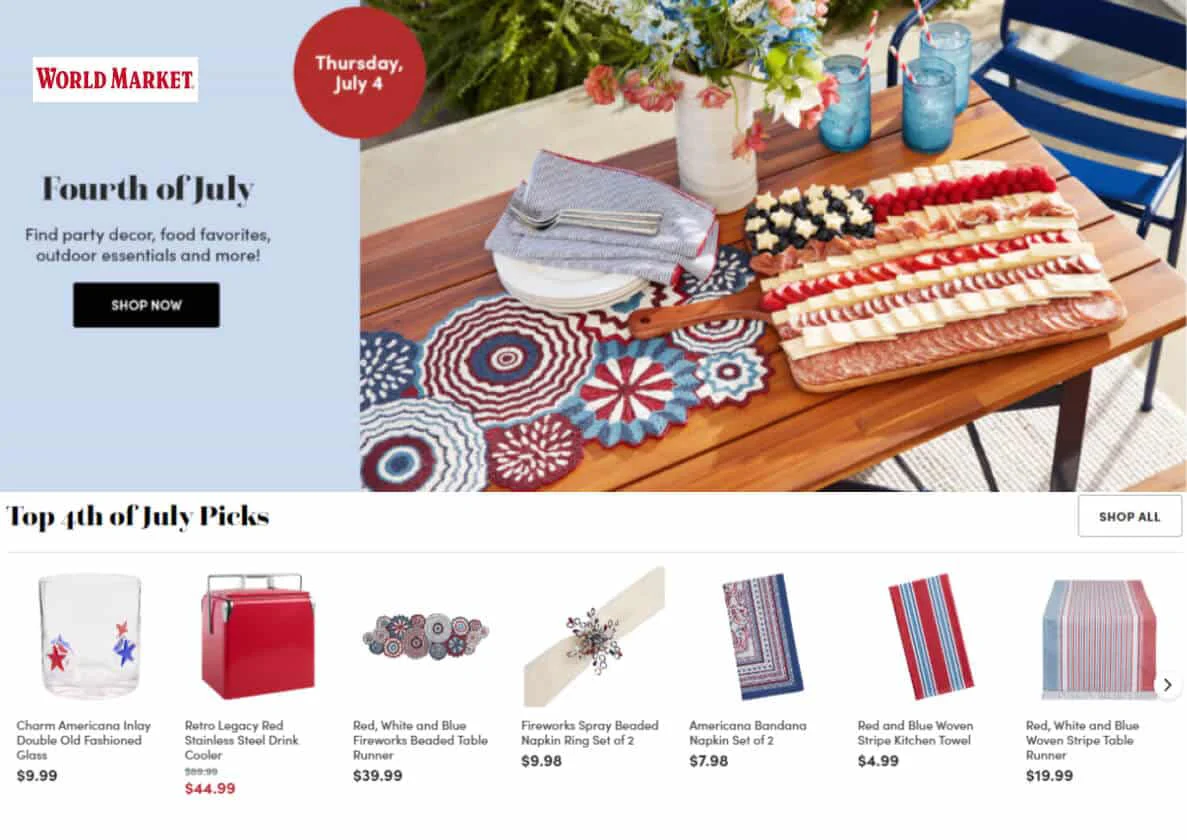
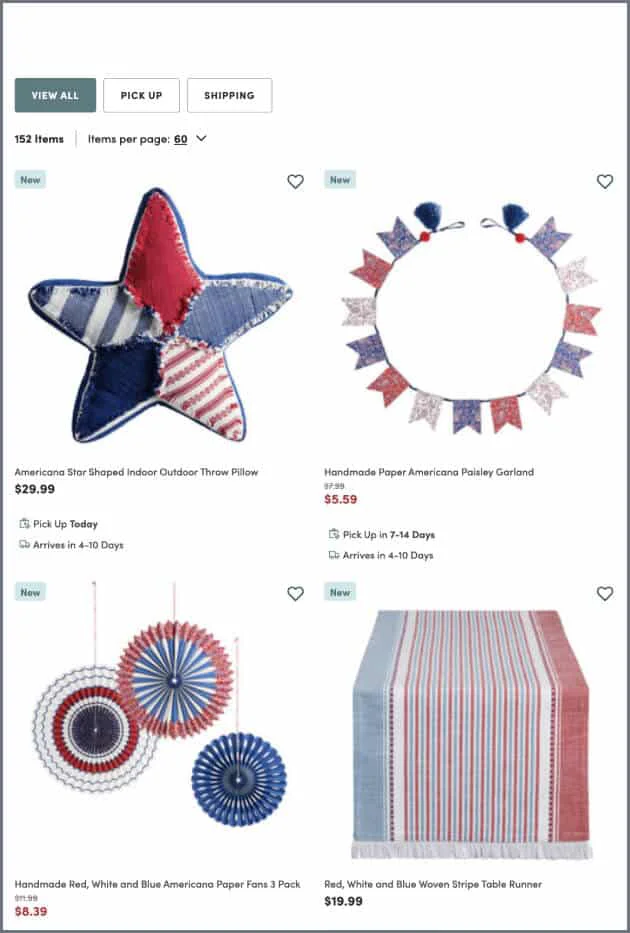
An impactful 4th of July marketing strategy is to launch a themed collection featuring the holiday’s iconic red, white, and blue colors. World Market has implemented this strategy by adding a prominent CTA banner on their homepage that reads, “Hurry, Your 4th of July Finds Are Here!” This eye-catching banner directs visitors to a dedicated section for Fourth of July and Top 4th of July Picks, instantly grabbing shoppers’ attention and driving sales.

World Market didn’t stop there. By creating a specific landing page featuring all holiday items, they’ve simplified the shopping experience, encouraging more purchases.

If you plan to launch a themed collection, follow World Market’s lead and create a dedicated landing page that curates all the products. This makes it easy for customers to find and buy everything they need for their Independence Day celebrations.

Ada Global Tip:

World Market can use Discover to personalize product listing pages based on behavior, past purchases, and occasions and even boost products that shoppers are likely to buy. The customer engagement solution will enable World Market to increase engagement and bypass decision fatigue by surfacing the most relevant products on its web or mobile store category pages.

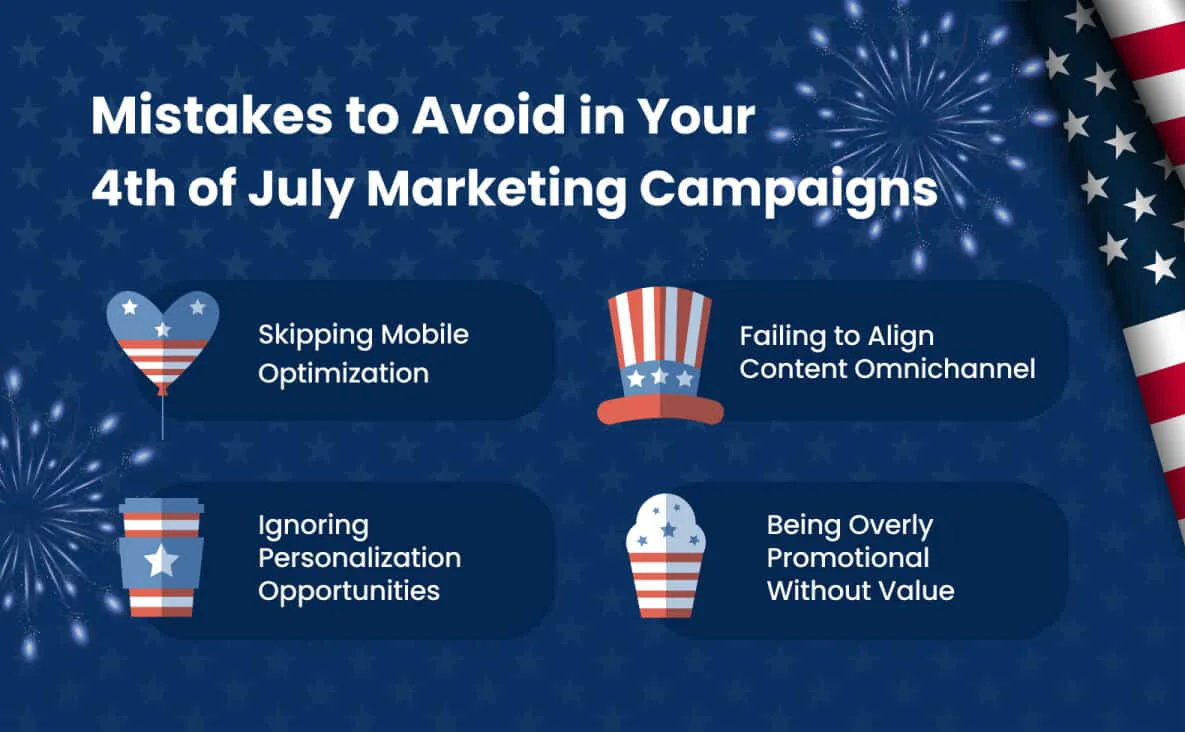
With these proven strategies, you’re well on your way to a standout 4th of July campaign. By tapping into the patriotic spirit and offering exclusive, targeted promotions, you can create memorable experiences that resonate with your customers and boost your sales. However, before you launch, you must avoid common pitfalls that could derail your efforts. Let’s dive into the key mistakes to avoid in your 4th of July marketing campaigns.

You’ve got some fantastic 4th of July campaign ideas ready to go? Great! But before launching, ensure you’re not tripping over these common pitfalls. Let’s dive in!

1. Skipping Mobile Optimization
Are your campaigns mobile-friendly? If not, you’re ignoring a massive audience. Whether email, SMS, or in-app notifications, make sure your content looks great on mobile. Imagine your meticulously crafted 4th of July message not displaying correctly on smartphones—yikes! Customers will stop engaging, or worse, mark you as spam. Test and optimize for mobile to keep those fireworks going.

2. Failing to Align Content Across Channels
Do you have a catchy headline or push notification? That’s awesome, but make sure the content delivers what it promises. If your 4th of July sale says “70% off everything,” your landing page should match that deal. Misleading subject lines or pop-ups might get clicks, but they’ll also get a lot of unsubscribes and lost trust. Be honest and clear to keep your audience loyal.

3. Ignoring Personalization Opportunities
Whether it’s email, SMS, or website pop-ups, tailor your messages to your audience. A personalized greeting or recommendation can make your 4th of July campaign feel like a private party just for them. Skip the generic messages—show your customers you know them, and they’ll keep returning.

4. Being Overly Promotional Without Value
Instead of blasting out generic deals, offer something that resonates with your customers’ needs. Whether through emails, app notifications, or website banners, ensure your 4th of July offers provide real value. A well-targeted offer will always outperform a generic one.

Conclusion

Remember to personalize, segment, and optimize across all channels. As you gear up for the 4th of July, remember that a well-executed marketing strategy can significantly boost your brand’s visibility and sales. By honoring the armed forces, creating themed collections, and launching limited edition products, you can tap into the patriotic spirit and create memorable customer experiences. Keep these strategies in mind to ensure your Independence Day campaign is a resounding success, and watch your sales soar like fireworks in the night sky.

How Ada Global Can Help in Your 4th of July Campaigns

Disclaimer: This blog does not indicate an ongoing business partnership with the brands, and all references are solely for illustrative purposes.

Table of Contents
It’s All About the Timing
Top Spending Categories Include
1. Academy Sports + Outdoors
2. Kroger
3. World Market
Conclusion
How Ada Global Can Help in Your 4th of July Campaigns

Best marketing strategies for Easter | Retailers

Omnichannel Marketing
Blogs

Best marketing strategies for Easter | Retailers

Easter is a time when homes resonate with laughter, adorned with bright decorations symbolizing renewal and hope. Easter signifies more than a holiday—it’s a cherished opportunity to come together, share meals, and create lasting memories. From egg hunts that spark excitement in children’s eyes to the joy of exchanging gifts and indulging in delectable treats, Easter embodies the essence of togetherness and celebration.

Yet, amidst the festivities, there’s an underlying buzz in the air—a sense of anticipation for the Spring sale season that accompanies Easter. For consumers, it’s not just about the joy of the holiday; it’s also about seizing the opportunity to refresh their wardrobes, spruce up their homes, and treat their loved ones to thoughtful gifts. Retailers keenly understand this dynamic, recognizing Easter as a prime moment to connect with consumers on a deeper level and offer them products and experiences that enhance their celebrations. As families prepare to embrace the spirit of Easter, retailers are ready to cater to their needs, providing an array of enticing offerings that seamlessly blend the joy of the season with the excitement of the Spring sale.

Easter Spending in 2024: Consumer Insights

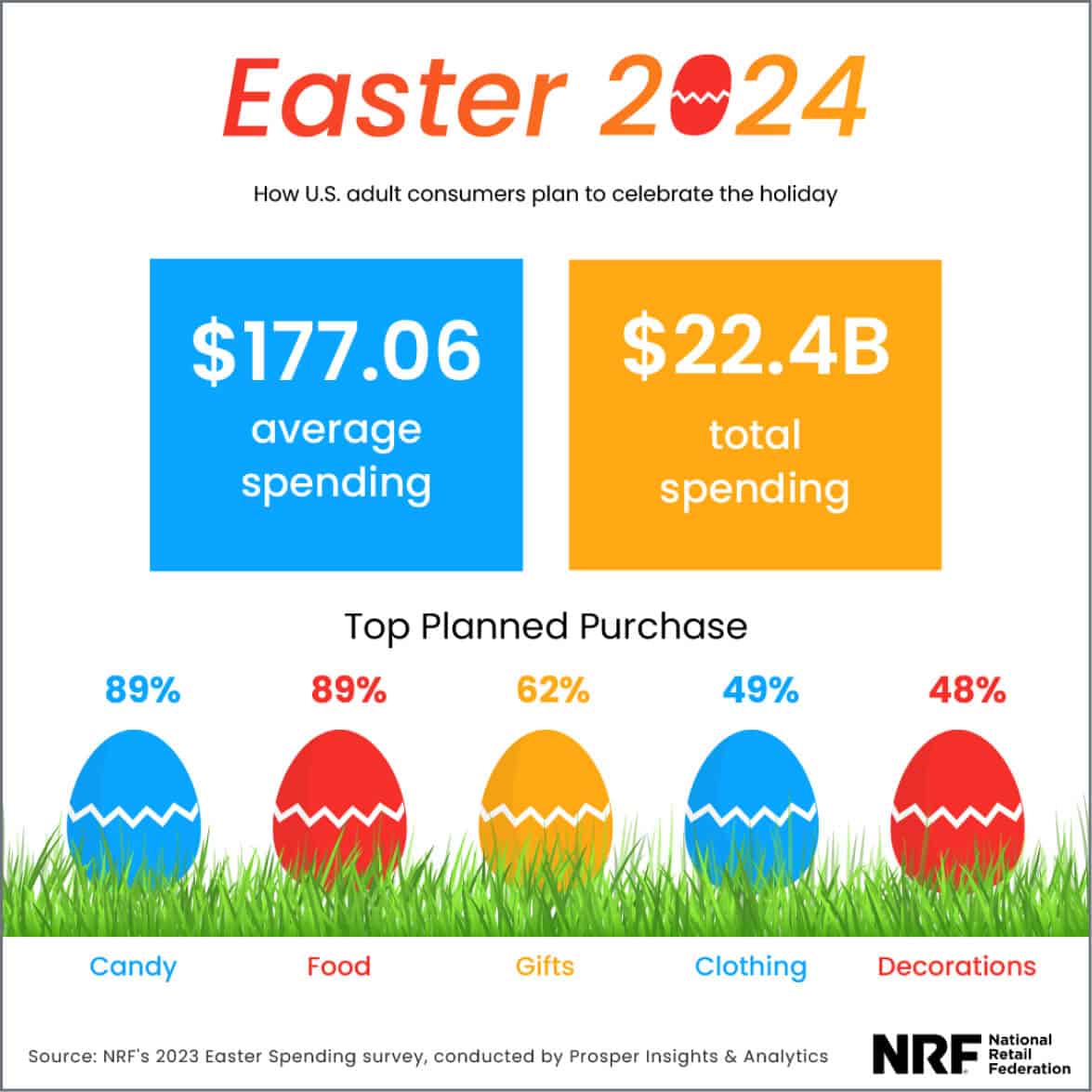
As we gear up for Easter 2024, the retail landscape is poised for a whirlwind of spending, with American consumers projected to splurge a staggering $22.4 billion, according to the latest insights from the National Retail Federation and Prosper Insights & Analytics. Consumers are gearing up to invest heavily in a variety of categories diving headfirst into the delicious realm of food and candy, gifts, clothing, and decorations. It’s clear that Easter is a retail extravaganza.

Consumer Buying Patterns in the U.S. in 2024

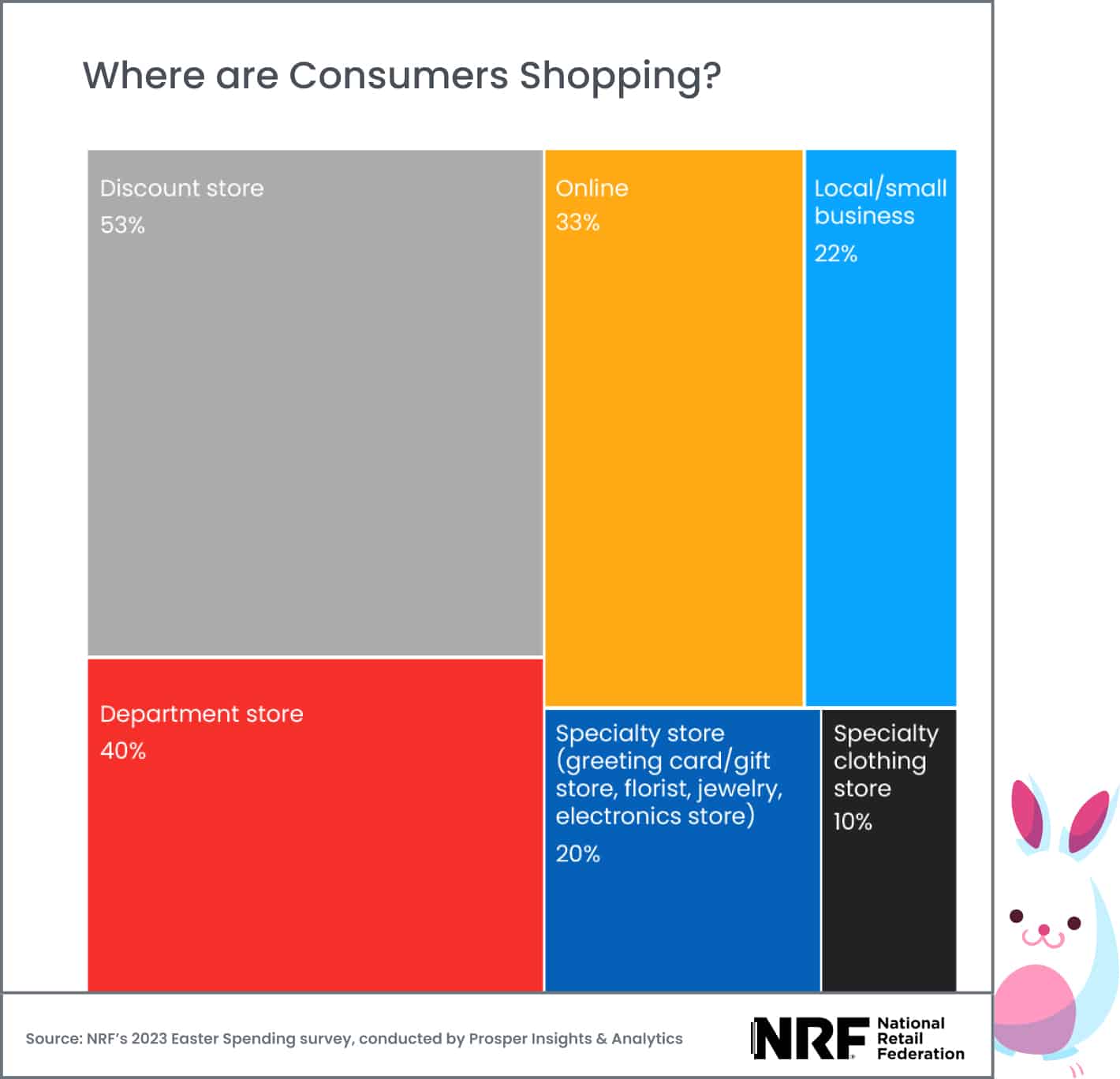
As retailers prepare for the Easter rush, delving into where and why consumers shop becomes a crucial piece of the puzzle. It’s no surprise that discount stores steal the spotlight as the go-to destination for 53% of American shoppers in 2024. Amidst the hunt for bargains, it’s the promise of sales promotions that seals the deal for 29% of shoppers, adding an extra layer of excitement to the holiday spree.

Consumer Buying Patterns in the U.K. in 2024

By continuing to prioritize value-driven behaviors, there’s a chance for retailers in the U.K., especially grocery stores, to shift demand from out-of-home to at-home settings during Easter 2024, opening up new opportunities. In Easter 2023, 43% of consumers enjoyed a special meal at home. With consumer confidence on the rise in 2024, there’s a greater chance for retailers to support home dining. This presents a golden opportunity for premium home dining options to stand out and recreate the out-of-home experience.

With these insights in hand, retailers have a chance to craft campaigns that not only offer great discounts but also tap into the deeper essence of Easter, fostering connections and community spirit along the way. As the scent of spring fills the air, it’s time to hop into action and fine-tune your Easter strategy. With competition fiercer than ever, brands are gearing up to join the hunt for customers, each vying to emerge as the fastest and most creative bunny in the race.

Don’t Know Where to Begin?

Don’t fret, for we’ve curated an exclusive selection of the best 2024 Easter campaigns, guaranteed to keep you ahead of the curve and buzzing with inspiration.

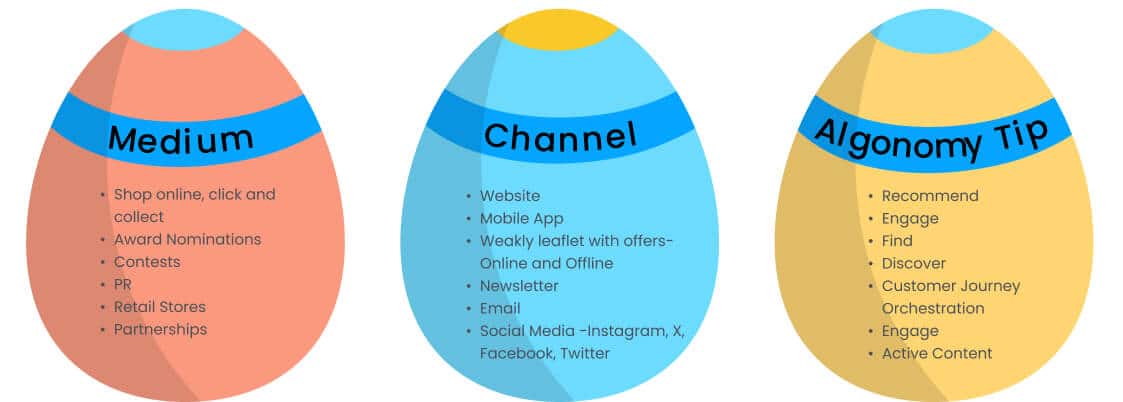
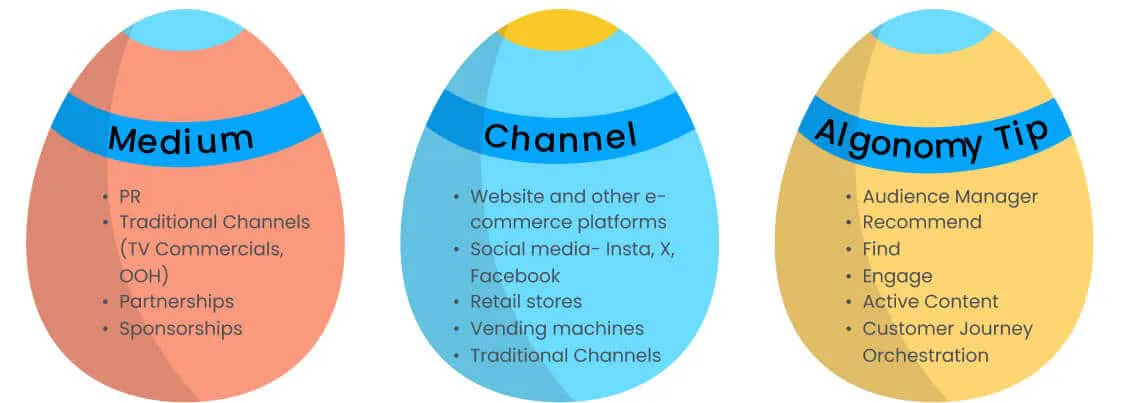
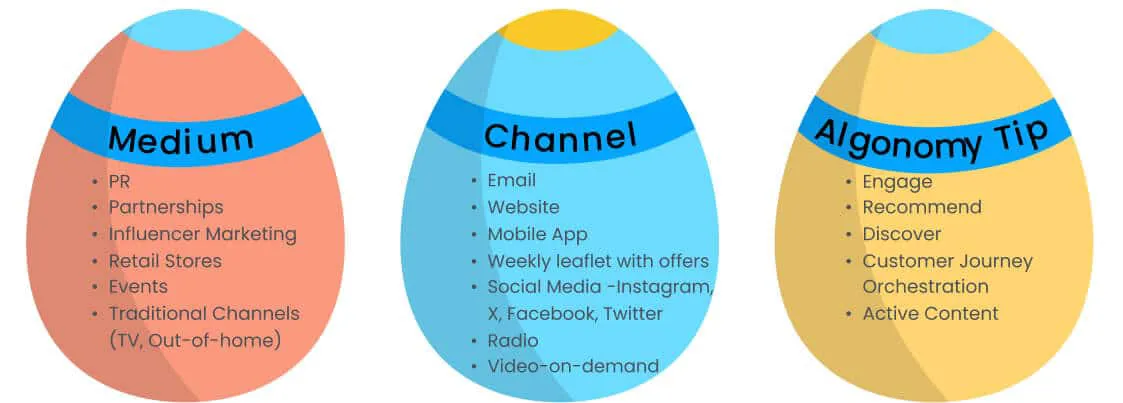
Each handpicked example is tailored to spark your creativity and drive results, whether increasing your customer base, creating brand awareness, boosting engagement, or maximizing your Easter ROI.  The campaigns have been divided into four sections- strategy, medium, channel, and ADA Global tips to help you craft your holiday engagement strategy.

Ready to hatch some egg-cellent promotion ideas? Let’s dive in!

1. ALDI

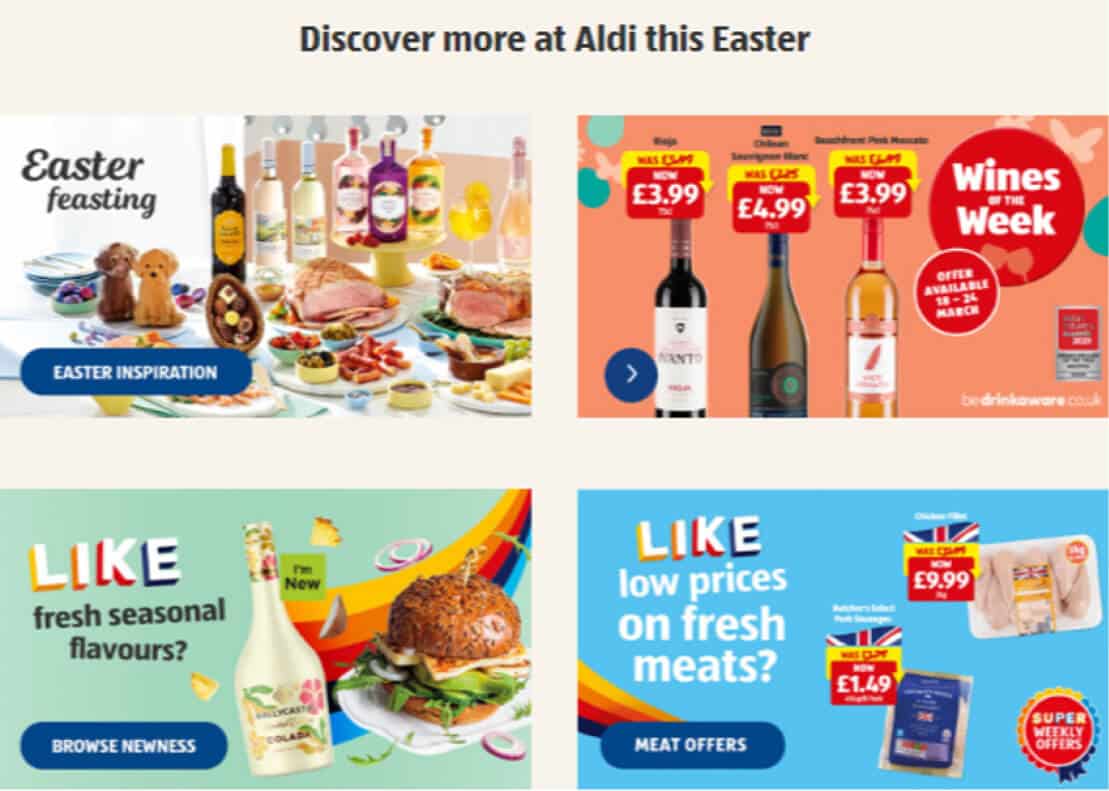
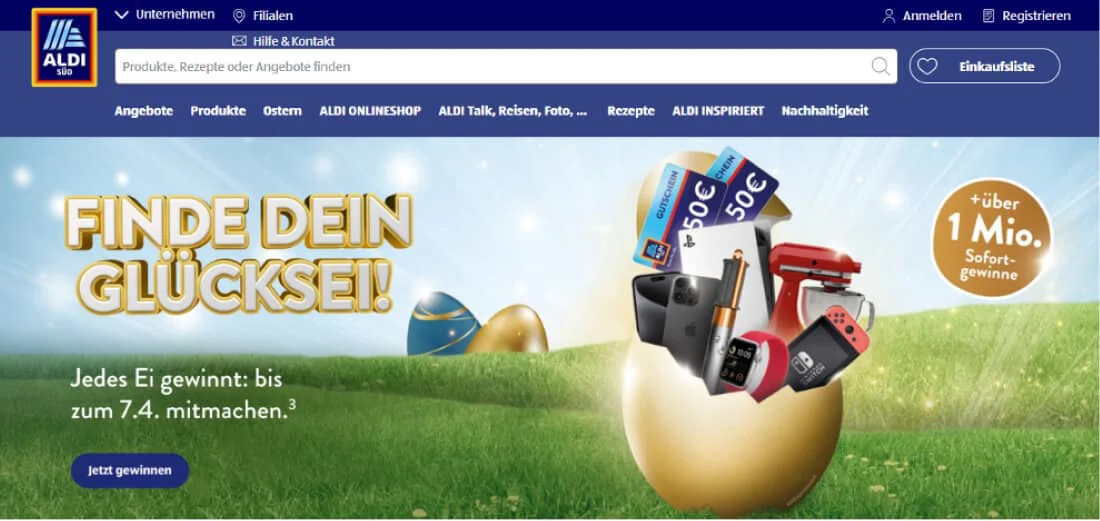
Strategy: Aldi’s Strategy: Aldi’s magnitude of prepping for Easter is reflected in its omnichannel campaign strategy, leaving no stone unturned to meet the holiday demand. A few weeks leading up to Easter, Aldi refreshed its localized pages for most of the EU regions with customized Easter offerings to gear up for its ‘biggest and best Easter yet’ anticipating sales of approximately £8 million on hot cross buns and Easter eggs, £4 million on fresh meat, fish, and meat-free alternatives, and £34 million on fruit and vegetables. Other Easter campaigns involve giving 1,000 lucky shoppers to win their  BBC Good Food Easter Taste Awards 2024 hot cross bun.

While lamb sales are expected to rise by 900%, sales of Veuve Monsigny champagne are projected to rise by 40%, and Prosecco DOC sales are expected to soar by 150%.

Aldi keeps its customers engaged with regular newsletters and weakly leaflets, keeping them excited about the latest sales and offers.

2. Mars

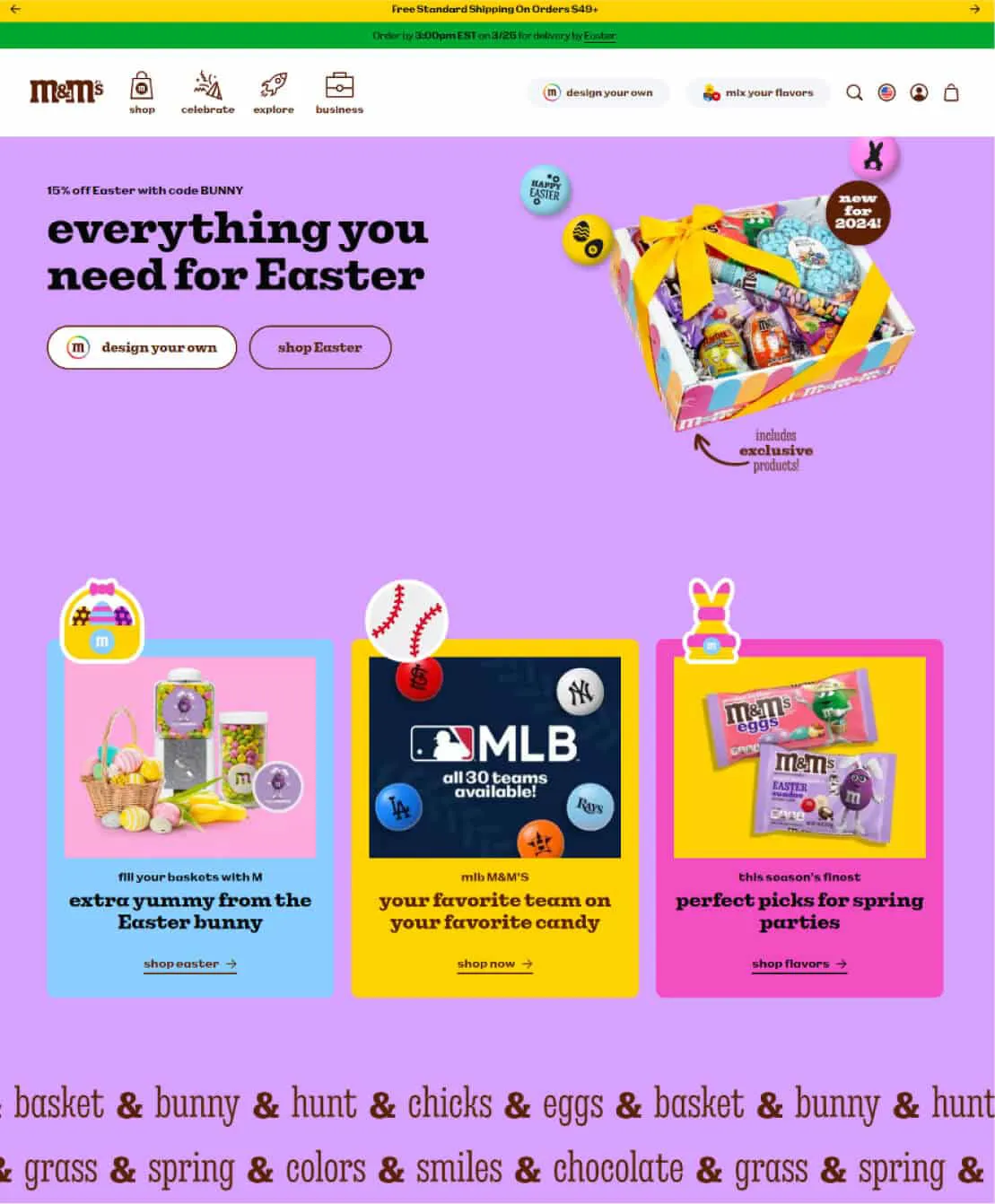
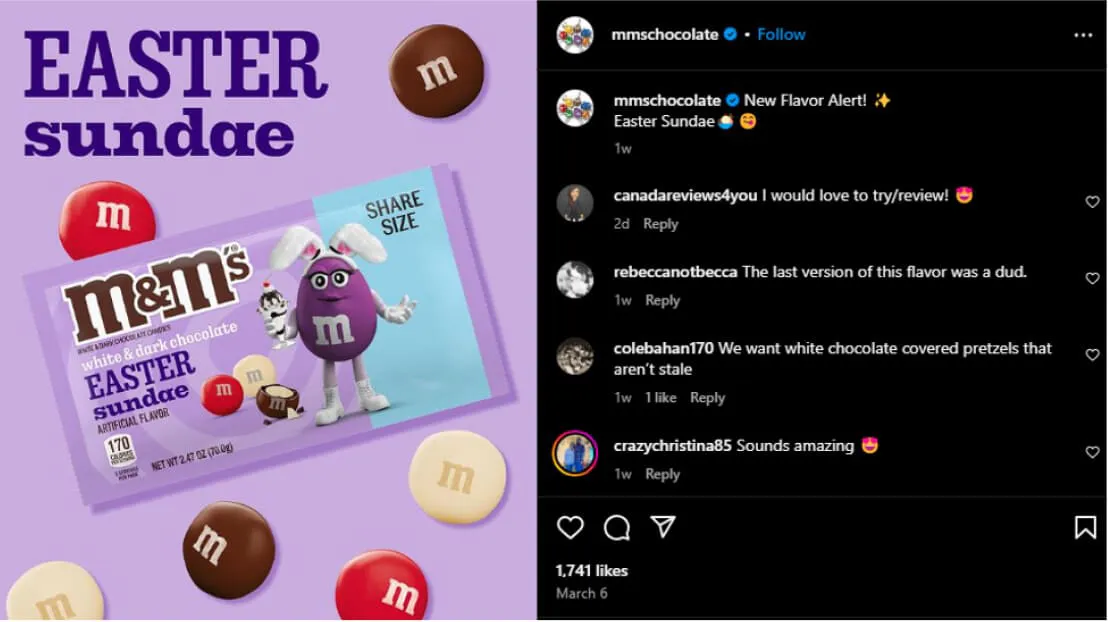
Strategy: Mars unveiled its 2024 Easter campaign with the launch of M&M’S Easter Sundae candies. Alongside this release, M&M’S also introduced its 2024 Easter Gift Guide. Shoppers can explore a variety of personalized gifts, ranging from iconic candy options to merchandise featuring beloved M&M’S characters. With over 20 M&M’S colors to choose from and the option to add customized messages and images, the possibilities are endless.

3. Asda

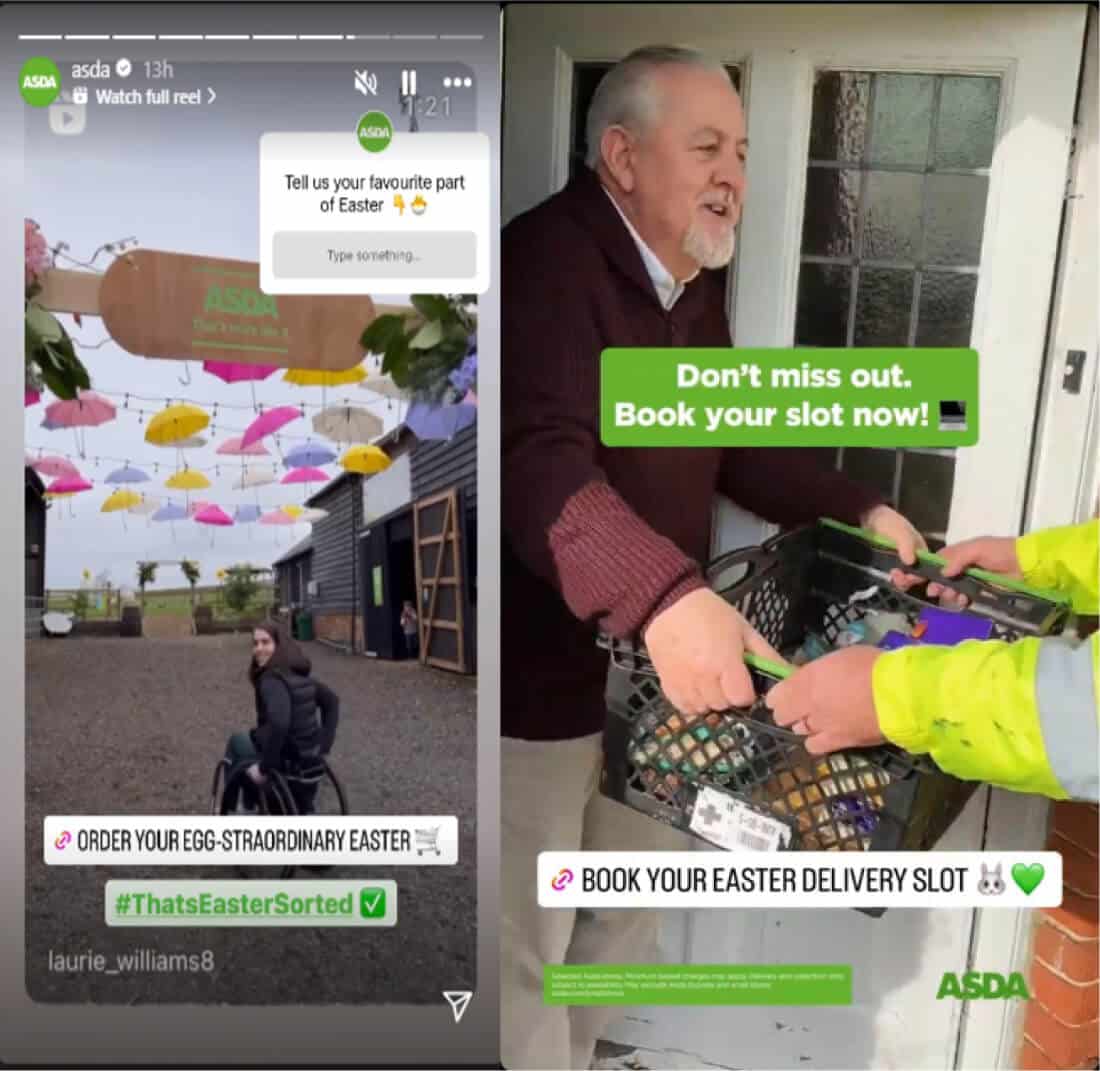
Strategy: Asda has launched its 2024 Easter advertisement where it imagines a farm where chickens lay chocolate eggs. As part of its Easter campaign, Asda is hosting an “open farm” family fun day, accompanied by a competition for a chance to win an overnight stay in a luxury farmhouse. Embracing the farm theme, Asda is engaging its audience on social media with the hashtag #ThatsEasterSorted and partnering with brands, encouraging participation through interactive polls. To cater to families during the holiday, Asda is offering customers to book Easter delivery slots.

As we reflect on the dynamic Easter campaigns of Mars, Asda, and Aldi, one thing becomes abundantly clear: the power of creativity and innovation in capturing the spirit of the season. By drawing inspiration from these campaigns and leveraging personalized marketing, audience segmentation, and omnichannel customer journey orchestration, retailers can unlock new opportunities to engage customers, drive sales, and make this Easter their most successful. Let’s harness the creativity, innovation, and insights showcased by these brands to craft Easter campaigns that resonate deeply with consumers and leave a lasting impression.

Well, it doesn’t end here.
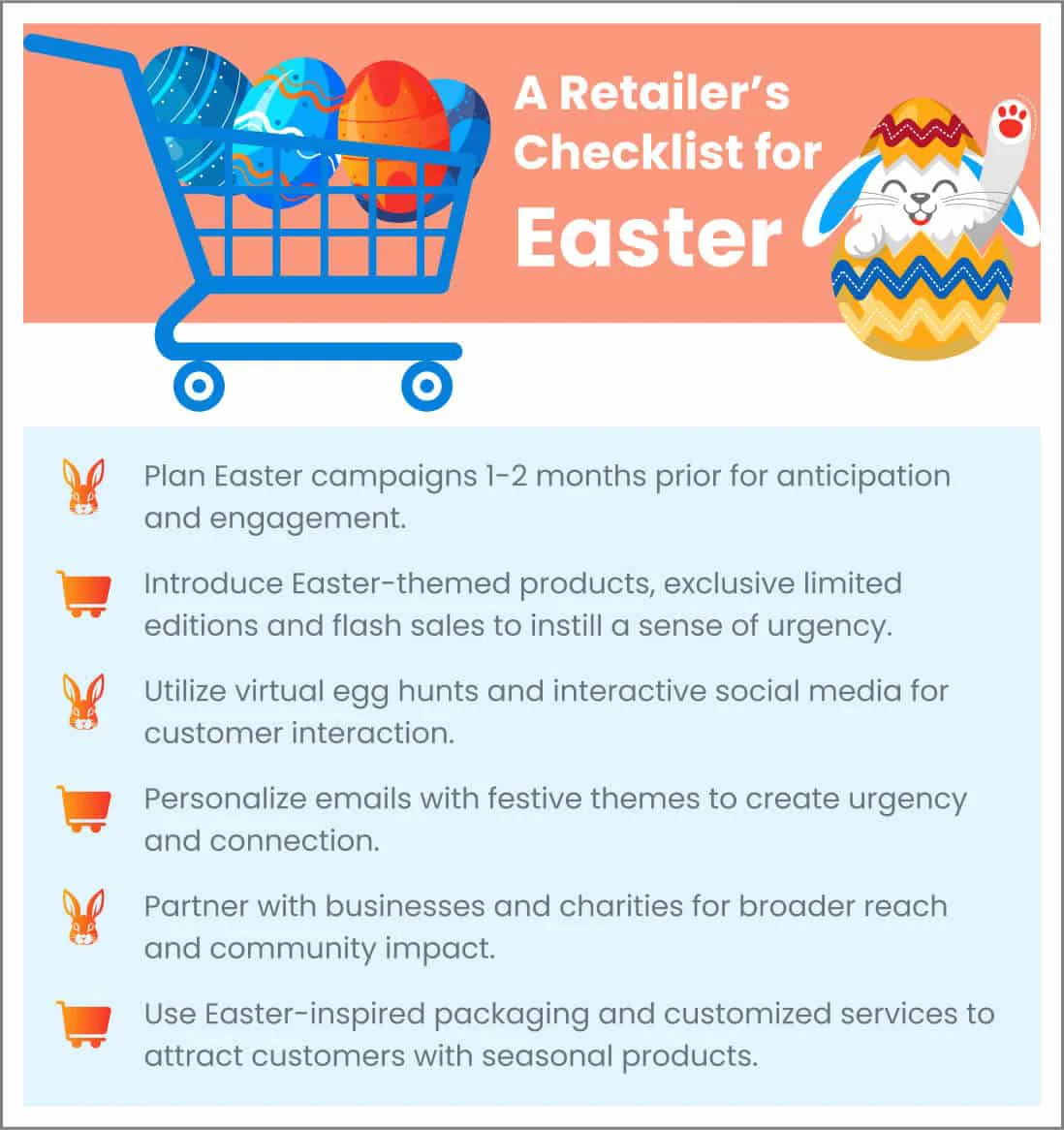
We also have a list of things that you can tick mark before planning your Easter campaign.

Here you go!

How can ADA Global Help in Planning your Easter Campaigns?

Resources:

Disclaimer: This blog does not indicate an ongoing business partnership with the brands, and all references are solely for illustrative purposes.

Table Of Contents
Easter Spending in 2024: Consumer Insights
Consumer Buying Patterns in the U.S. in 2024
Consumer Buying Patterns in the U.K. in 2024
Don’t Know Where to Begin?
1. ALDI
2. Mars
3. Asda
How can ADA Global Help in Planning your Easter Campaigns?

A Buyer’s Guide for Customer Data Platform (CDP)

Omnichannel Marketing
Blogs

A Buyer’s Guide for Customer Data Platform (CDP)

The Customer Data Platform (CDP) industry has moved from muddled definitions to a more structured industry with clearly defined types that have been bucketed based on capability and use cases they support.

There has been a lot of activity in this industry with established vendors strengthening their capabilities and positioning in the market and an influx of new players with point solutions. While the build vs. buy debate continues, the decision is more lucid with many looking to buy ready-to-deploy CDPs.

CDPs Have Evolved into Categories Owing to the Breadth and Depth of Functionality

Before we jump into what we must look for in a Customer Data Platform to make the buying decision, let’s define the types of CDPs that are available in the market.

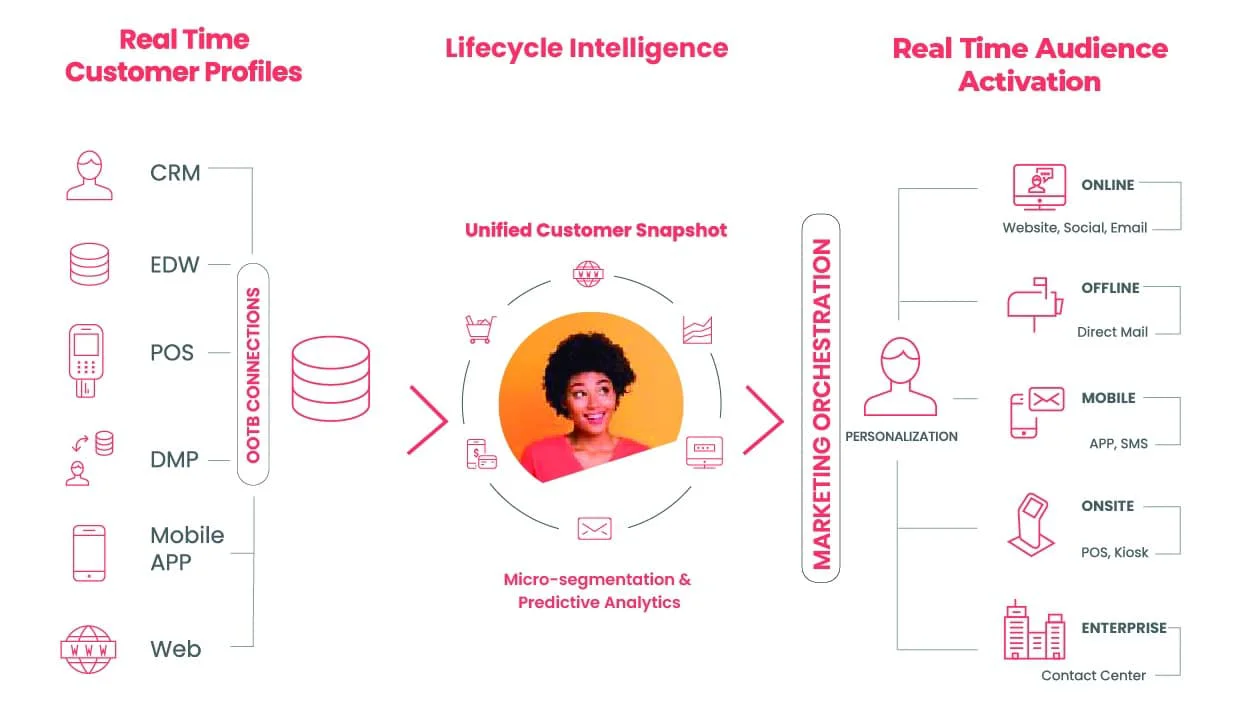
While CDPs started out with unifying customer data across systems, structuring the data for downstream analysis, they have evolved to become broader, integrated systems. CDPs enable data ingestion, segmentation and analytics, audience activation, and personalized omnichannel orchestration.

Based on the capabilities and functions, CDP Institute groups CDPs into the following categories:

  • Data CDP
    These systems gather customer data from source systems, link data to customer identities, assemble unified customer profiles, and store the results in a database available to external systems. This is the minimum set of functions required to qualify as a CDP under the CDP Institute’s definition.In practice, these systems can also extract audience segments and send them to external systems. Systems in this category often employ specialized technologies for data management and access. Some began as tag management or web analytics systems and retain considerable legacy business in those areas.
  • Analytics CDP
    These systems provide the features of a data CDP plus analytical applications. The applications always include customer segmentation and sometimes extend to machine learning, predictive modeling, revenue attribution, and journey mapping. These systems often automate the distribution of data to other systems.
  • Campaign CDP
    These systems provide data assembly, analytics, and customer treatments. What distinguishes treatments from segmentation is that treatments can be different for different individuals within a segment.Treatments may be personalized messages, outbound marketing campaigns, real-time interactions, or product or content recommendations. These systems often include features to orchestrate customer treatments across channels.
  • Delivery CDPThese systems provide data assembly, analytics, customer treatments, and message delivery. Delivery may be through email, website, mobile apps, CRM, advertising, or several of these. Products in this category often started as delivery systems and added CDP functions to support advanced analytics, personalization, or multi-channel campaigns.A Full-stack CDP Supports Data, Decisioning, and DeliveryA full-stack CDP caters to all use cases in a way that is specific to the industry. A CDP is a means to an end – with the end being contextually relevant engagement. A full-stack CDP would enable:
  • Streaming ingestion of demographic, transactional, behavioral, known and unknown customer data from online and offline systems.Identity resolution by creating a single, 360-degree view of the customer and a golden
    record by duplicating and enriching the data. Audience discovery and management with granular segmentation and advanced customer insights powered by micro-segments, segment analysis, churn, propensity and lifetime value analyses to drive next-best actions, and measure ROI with campaign and journey analytics.Real-time audience activation to drive hyper-personalized, journey-based marketing orchestration across online and offline channels and connect with customers in the moment.

Choosing the Right CDPThere is no one-size-fits-all solution to finding the right CDP. Choosing the most appropriate CDP is not about how feature-rich the CDP is but more about the need and the use cases you as a marketer are looking to address. Some of the key criteria to consider are:

  • Business Use Case Support
    Clarity of what problem you are looking to address or what gap you’re looking to fill is crucial to choosing the right CDP. This translates to use cases. One of them could be to break data silos. You have customer data flowing in from various ingress systems, from various touchpoints. You have all this data, but it is not in a form that you could make use of to win customers over.Another use case could be that you are not able to drive personalized engagement as you don’t possess deep insights on your customers. You don’t know what your customers’ affinities are, who is likely to churn, when or what offers would resonate with which customer. If you aren’t armed with these insights, your efforts to drive loyalty and improve basket size or visit frequency are unrealized.

    Mapping and prioritizing use cases are critical to determine if you need a CDP and what kind of CDP you need. Most CDPs support data unification while many don’t enable analytics or activation. Hence, it is important to understand the capabilities provided by each of the CDPs that you are evaluating to determine if the use cases are supported.Industry Understanding
    There are many generic CDPs in the market that cater to both B2B and B2C businesses. The capabilities vary hugely. While B2C requires granular individual customer profile data, B2B is about lead management and account data.

    Besides, the data structure and management needs of industry segments within B2C differ significantly too. The requirements of retail vs. banking vs. healthcare would be different. The AI layer that reads, understands, and analyzes this data needs to be trained on industry-specific data to be able to surface relevant decisioning intelligence.

    The analytics models, domain measures, and metrics considered need to cater to grocery, fashion, or QSR industries specifically. Considering this, CDPs that are specialized to cater to industry segments deliver faster time to value.Marketing Cloud vs. Best of Breed
    CDP is not an independent layer but a part of a larger suite of products. CDPs act as superchargers to existing MarTech tools like personalization, marketing automation, and journey orchestration solutions.

    The inflexible data management and profile unification features of marketing clouds were a major driver of marketer interest in CDPs from the beginning. These new modules aim to shift the integrated suite value proposition to a more open and flexible embrace of enterprise data, leveraging trusted relationships with CMOs and CIOs.

    Solutions emphasize customer data management and connecting customer profile data to orchestration and execution tools within their products. Connections to technologies outside of the integrated suite for activation and execution vary greatly from vendor to vendor.User-friendliness
    Data management has traditionally been the mainstay of the IT teams. But this is changing with end consumers of data increasingly showing interest in managing the data to leverage it for making informed decisions instantly.

    Same is the case with marketing. As they own the budget for customer data systems, it only makes sense for them to own the end-to-end process of ingesting, managing, and activating this data for their specific use cases. The budget owner owns the ROI too, removing bottlenecks and making the entire customer engagement process seamless.

    This brings us back to the usability of CDPs. Are they built for marketers?
    Many CDPs were built clunky, making it impossible for marketers to use without depending on IT teams. As the need for marketers to be self-sufficient surfaced, CDPs are increasingly focusing on improving the ease-of-use so that marketers could use the various functionalities of CDP end-to-end.

    This includes drag-and-drop data onboarding APIs, batch-loads and other methods, automated identity resolution, out-of-the-box analytics models eliminating the need for a Data Scientist to cull out segments or advanced analytics outputs, and out-of-the-box connectors to orchestration systems for seamless activation of audience for campaign purposes.

    All of this is built with a high level of automation and intelligence making it easy for the marketers to use it. This, hence, is a key consideration in your purchase decision-making.Connectors
    One of the core problems that marketers are looking to solve is unification of customer data that is sitting in various siloed systems. CDP is the go-to technology to address this issue by allowing direct data reading and automatic read extracts.

    However, it is important to evaluate the connector ecosystem that the CDP has built to ensure you are able to drive seamless integration with systems of record that are already in place in your organization.

    Automated data boarding, AI-powered data preparation, and schema-less data stores reduce the time and effort in CDP deployment.

    Likewise, integration into egress systems such as personalization engine, marketing automation, or journey orchestration systems is important as well. These systems connect directly to the CDP or to the audience extracted from the CDP that is in a format that can be used for campaigns and other communications.

    Hence, check for OOTB connectors to avoid custom integration. Know the data and the orchestration systems you need the CDP to connect so you are clear in your ask.

Start with Your Need Definition

The best place to start evaluating the need for CDP and what kind of CDP is by defining the detailed requirements. The next step is to chalk out the outcomes expected from the implementation of a CDP.

Table Of Contents
CDPs Have Evolved into Categories Owing to the Breadth and Depth of Functionality
Start with Your Need Definition

Is CDP the Answer to Your Data Woes?

Omnichannel Marketing
Blogs

Is CDP the Answer to Your Data Woes?

This question is more relevant than ever in the world of Digital Retail. While one would want to lean towards a yes, the answer isn’t that simple.

Retailers are building their digital programs around a Customer Data Platform or CDP. The utopian goal is to centralize all customer interactions (read browsing patterns and transactions) in one system. Doing so would solve all problems that arise as a result of siloed information.

The end state was clear – if I can unify all my customer data and glean insights from it, then orchestrating one-to-one personalization marketing engagement becomes a simple task.

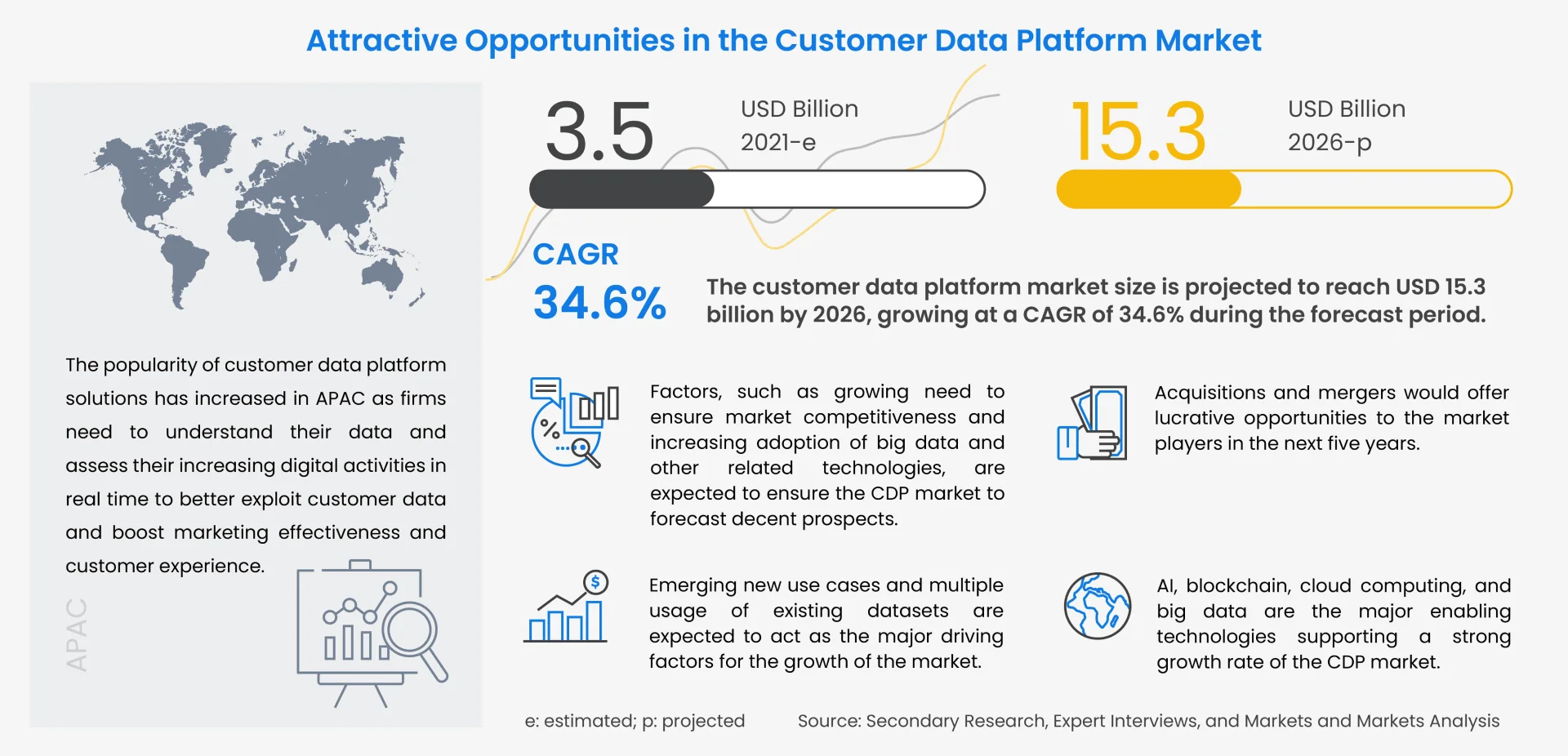
Reportedly, 88% of marketing teams are expected to invest in data-driven decisions, and they all seem to be betting on a CDP solution. With the CDP market growing rapidly at a CAGR expected at 34.6% until 2026, it’s no wonder that retail businesses are focused on getting CDP to solve their marketing teams’ data problem.

However, the reality is very different. Most senior leaders acknowledge the journey had the right intent, but the execution ended up falling short on the promises made. The reason was not a technical one. It was in clearly identifying the data strategy, the user stories it would influence, and last but not the least, executing on the outcomes of a CDP.

Most CDPs excel at providing insights into segments and near real time customer segmentation granular segments. Where they fail is to provide an easy way to operationalize those segments to drive business results.

So, where does the road take us? Well, it starts with asking the following questions:

  1. Will you drive the expected revenue lifts from the exercise?
  2. Will you improve the LTV of your clients?
  3. Will you be servicing the right segments?

Now let’s dive a little deeper into the items above to better understand the ‘how’.

How to Drive Revenue Lifts from a CDP

User stories? User stories? At risk of channeling my inner Jim Mora, they start and end with the personas defined by your journey mapping exercise (if you haven’t done one, I suggest you look at one) and the use cases for those personas – your highest LTV clients, your churn customers, your infrequent but steady customers, your advocates, etc.

Chalking out the key use cases that drive LTV allows you to concretize the actions and set goals for the organization. It also allows you to figure out gaps in your tech stack.

Yes, householding and identity resolution are needed. Now how are you leveraging them to build real time customer data profiles dynamic segments? Is there a gap between creating those segments in your retail customer data platform and delivering that ecommerce personalization experience online?

Well-written user stories allow you to follow the North Start and thus focus on what’s important.

How Do I Improve LTV?

Let’s begin with ‘Easier said than done’ – however, it’s been proven: start with best practices on conversions. Here is where AI plays a pivotal role in figuring out HOW to improve conversions.

Use pre-built models that use the individual’s past behavior (read browse and buy) and wisdom of crowds layered on top of one another to make personalized product recommendations. On average, our clients have seen 3–4% uplifts on strategic locations.

Then turn your attention to email. Is your current stack really impacting CTR? Chances are emails are not individualized. Test, repeat, and get better at new strategies. Work with your segmentation team to improve. Retailers are now spending more on Data Science than ever before. Leverage the ability to test and improve.

Are You Spending Your Energy on the Right Segments?

Modern day CDPs allow you to play around with all kinds of segment personalization rules. Love it. Now, how do we monetize that ability?

Implementing a CDP solution is not going to solve a business problem. Actionable goals do. Activation simply provides other systems the ability to leverage segments and perhaps orchestrate campaigns through the CDP capabilities. These are limited and not truly cross channel. So what gives?

Focus on stitching the segment definition to the execution. Go back to the use cases for the personas and see which ones have previously driven the best revenue/margin/KPI de jour and then align your campaign, dynamic content personalization, and goals to those segments. Personas are too high level. Have three sub-categories under personas and listen to what the engine recommends. That data doesn’t lie!

In summary, having a broader ecommerce personalization platform strategy allows better alignment of actions and technology to the well-defined user stories. Don’t hastily invest in tech. Rather, invest in a data strategy that drives individualized behaviors. Look for a solution that fills the gap rather than just buy a CDP and then figure out how to address the gaps.

Read this comprehensive guide to CDP to learn more about the technology and how to make it work for your business.

Table Of Contents
How to Drive Revenue Lifts from a CDP
How Do I Improve LTV?
Are You Spending Your Energy on the Right Segments?

The State of the Global CDP Market

Omnichannel Marketing
Blogs

The State of the Global CDP Market

Research suggests that about 40% of brands are exploring ways to expand their data-driven budgets in marketing. Realizing the true value and potential of data has been instrumental in the digital transformation of corporations, and most businesses are ostensibly data-driven today.

Marketing is one of the functions that is increasingly depending on data to personalize experiences for customers. However, data is only as useful as the tools and technologies used to augment it.

And hardly any platform enables businesses to squeeze every last ounce of value from customer data like a Customer Data Platform (CDP). Therefore, it comes as no surprise that the global CDP market, worth $3.5 billion in 2021, is projected to grow 5x at a compound annual growth rate (CAGR) of 34.6% by 2026.

CDP Market Share

To understand more about how the CDP market share is projected to grow, here are the trends based on region, sector, and type:

By Region

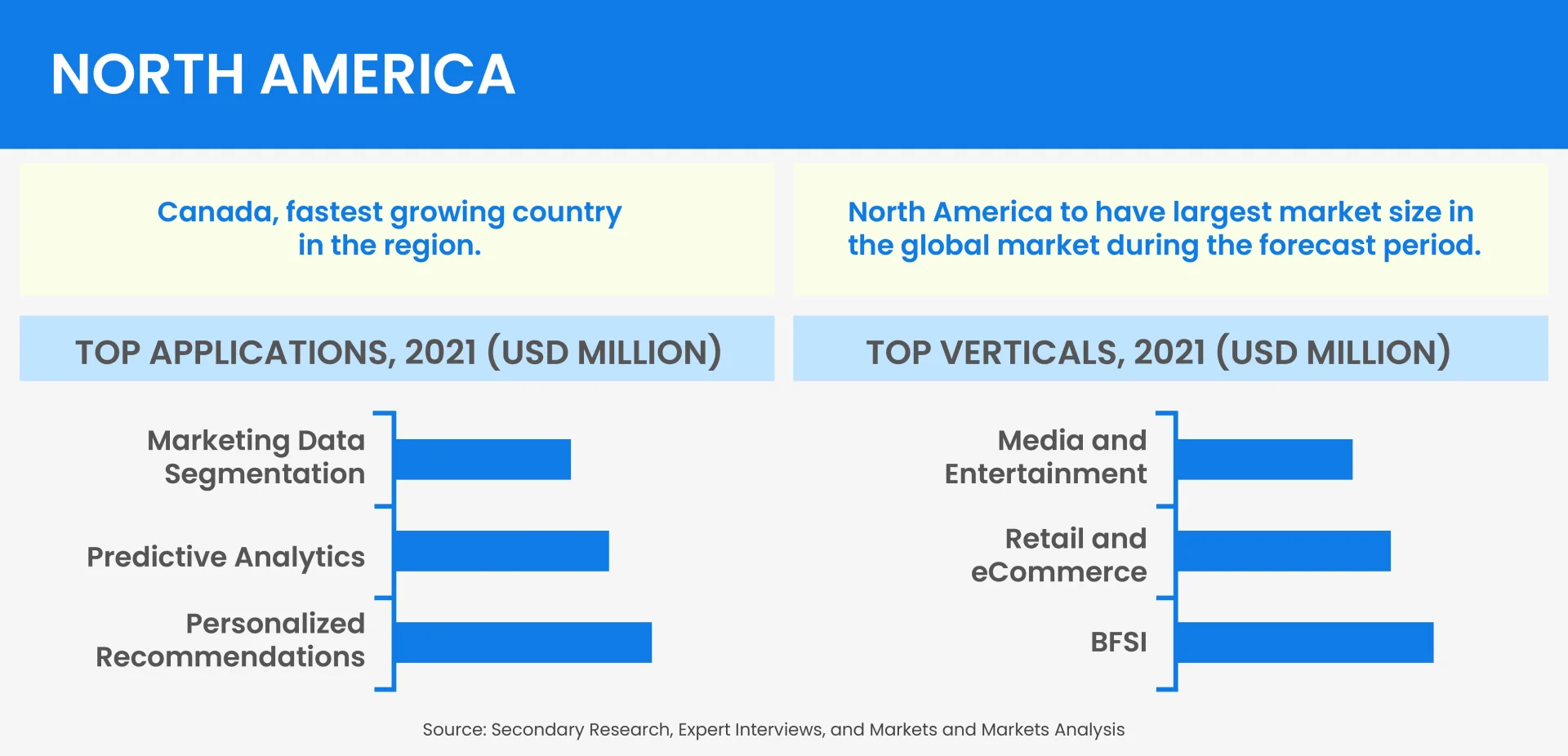
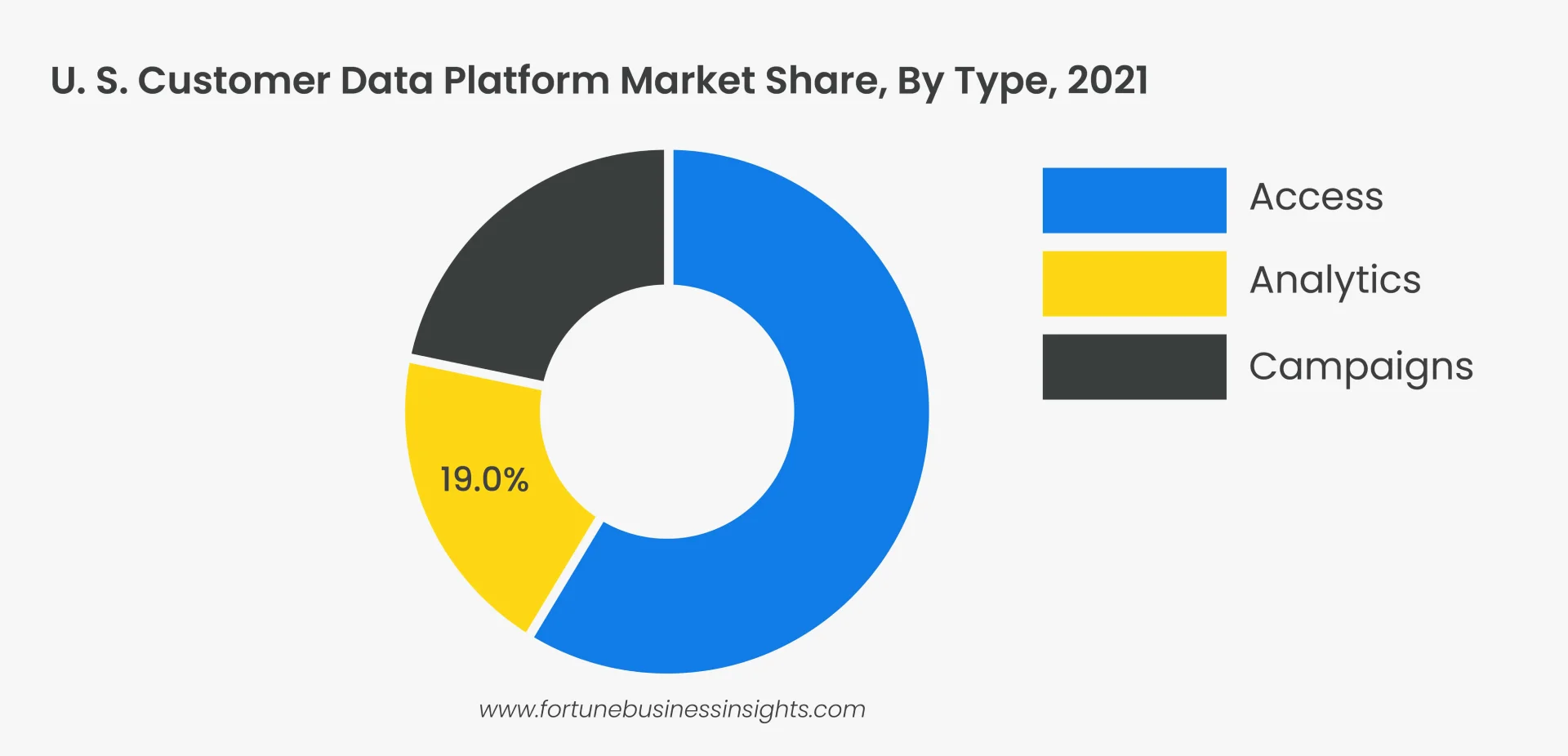
The CDP market has its most significant share of growth in North America, followed by Asia-Pacific and the European Union. Due to the high focus on technological advancement, the US accounts for 45% of companies building CDP solutions, 61% of employees working on CDP solutions, and 75% of funding. However, Asia-Pacific is expected to grow quickly, with the highest CAGR by 2026.

By Sector

Industry wise, CDP finds high usage in banking, financial services, and insurance (BFSI), retail and commerce, healthcare, IT and telecom, and hospitality sectors.

  • BFSI: With the growth of online banking in the past few years, this sector is making heavy investments in customer engagement and customer relationship management. Gartner suggests that conventional financial firms will become irrelevant by 2030, making it imperative for them to invest in customer experience technologies such as CDP.
  • Retail: The retail industry is leveraging customer data platforms to offer personalized omnichannel customer experiences. For example, if a customer wish lists a product on a brand’s online store and decides to purchase it from an offline store, the unified customer profile that is updated by a CDP in real time allows the brand to understand the customer’s current preferences and make relevant recommendations in store.
  • Healthcare: During the pandemic, the healthcare sector saw extremely high volumes of data flowing in and most customers required immediate treatments. With a CDP solution, hospitals can store that data centrally to view patients’ medical history and offer on-time personalized treatments.

By Type

Based on type, the CDP market is segmented into access, campaign, and analytics. While most marketers are still looking at data access, campaign CDP is getting traction because of its ability to activate audiences in real-time, presenting an opportunity for personalized marketing.

Meanwhile, the demand for analytics CDP is increasing due to automation of customer journey for optimized customer interaction and AI/ML-based modeling for increased personalization.

Factors Driving the Growth of the Global CDP Market

The growth of the global CDP market reflects the proliferation of engagement channels. Customers today switch between online and offline channels as they research products, complete transactions, and engage with various brands online.

In other words, customer data comes in from different sources and in different forms. It is imperative for businesses to make sense of all this data.

That’s where a customer data platform for retail comes in. The capabilities within CDP help collect and create a unified profile for each consumer, which enables businesses to keep track of their individual preferences in terms of products, services, or overall brand perception. Therefore, CDP solution helps businesses make sense of all the data they collect from their customers.

Let’s discuss the three critical reasons why more businesses, especially B2C companies, are adopting CDP to better leverage customer data.

1 Personalization in Consumer Experience

Most customers today have gotten used to personalized interactions and marketing, with nearly three out of four individuals actively expecting it from every business. Also, most consumers tend to become repeat customers of a brand that provides one-to-one personalization interactions and customer service.

Therefore, providing personalization is no longer a luxury but a necessity for businesses and marketers, making it imperative for businesses to use CDP for hyper-personalization. CDP supports personalization by providing a real time customer segmentation audience with a 360-degree view and insights of customers.

CDP gathers all kinds of data—behavioral, transactional, and demographic—before creating a dynamic, constantly evolving customer profile for each consumer. This profile gets updated with every customer interaction and enables businesses to send personalized emails and messages, provide targeted adverts, and offer other solutions tailored to customer needs.

2 Increased Emphasis on Data Security

Due to growing stringency in data protection laws across the world, such as the EU’s GDPR and China’s PIPL, businesses are expected to prioritize cyber security and data protection. Google is also phasing out third-party cookies soon to make data sharing more consensual for netizens.

CDP helps with managing opt-in and opt-out, right to forget and right to access, which is in compliance with regulations such as GDPR.

By capturing the first, second, and third-party data and providing the flexibility to adapt to changing regulations, CDP proves to be a superior consumer data management solution compared to other platforms, such as Data Management Platform (DMP), which primarily relies on third-party data. CDP helps improve the safety of personal customer data possessed by businesses, making it a major driver of the booming CDP market.

3 Omnichannel Experiences

With an increase in digitization, customers have become channel-agnostic. Therefore, it’s critical to deliver a consistent user experience even if a customer switches between online and offline channels.

Businesses must find a way to integrate offline and online channels so that consumers can seamlessly move through them and continue their journey without any friction. A CDP uses real time customer data profiles from across channels to deliver contextually relevant experiences to users across the channels of their choice.

4 Increased Technology Costs

The cost of software implementation and data augmentation is increasing in today’s data-driven marketing landscape. Marketers constantly seek ways to reduce these costs, and CDP offers a viable solution.

A CDP digitally manages several tasks, such as customer profile creation, data curation, user analysis, and more. Therefore, by implementing a one-stop solution to handle multiple marketing functionalities, marketers can save considerably on budgets.

5 Real-Time Contextual Engagement

Nearly all sectors in the world are saturated with intense competition. Amid such competition, the ability to tailor experiences as per a customer’s preferences and current context can be a big differentiator.

For instance, a quick-service restaurant sending a ‘Buy one, get one free’ offer to a person who usually buys a meal for one isn’t helpful. Instead, the person would appreciate an offer on their favorite meal. CDP helps marketers leverage such insights and make each real time customer engagement relevant and meaningful.

Elevate Your Brand’s Customer Experience with a CDP

Omnichannel dynamic content personalization experiences are more important than ever. With a paradigm shift in customer expectations, businesses across industries and geographies are investing in real-time customer data platforms.

However, to reap the benefits of CDP, you need to select the right service partner. Ada Global’s Real-time CDP enables contextually relevant engagement in the moment with capabilities around streaming data ingestion, unified customer profiles, and real-time audience activation.

Schedule a demo with our experts to learn how Ada Global can set your marketers up for success.

Table of Contents
CDP Market Share
Factors Driving the Growth of the Global CDP Market
Elevate Your Brand’s Customer Experience with a CDP